Improved Solution to Job Shop Scheduling Problem with
Delay Constraints using Genetic Algorithm
Swati Singh
Computer Science Dept IMS Engineering College
Shruti Kapoor
Computer Science Dept IMS Engineering College
Shelly Chikara
Computer Science Dept
IMS Engineering College
Vijai Singh
Astt Professor, CS IMS Engineering College
ABSTRACT
Job shop scheduling problem is one of the most difficult NP-hard combinatorial optimization problems. Therefore, determining an optimal schedule and controlling and it is considered a difficult task. To achieve high performance in manufacturing firms, a scheduling system should make the right decision at the right time according to system conditions. It is difficult for traditional optimization techniques to provide the best solution. This paper focuses on the problems of determination of a schedule with the objective of minimizing the total make span time. An attempt has been made to generate a schedule using Genetic Algorithm.
Keywords
Scheduling, Genetic Algorithm, Makespan, Machine utilization
1. INTRODUCTION
To find the best schedule can be very easy or very difficult, depending on the shop environment, the process constraints and the performance indicators [1]. The Job-shop Scheduling Problem (JSP) is considered to be one the most complex combinatorial problems in computer science belonging to the class of NP Complete problems. In JSP, a set of jobs must be processed on a set of machines. Where each job is formed by a sequence of successive operations, every operation requires exactly one machine for a specified time, and machines are constantly obtainable and can process one operation at a time without pause. The complexity of the problem statement advocates for obtaining an optimal schedule in reasonable time by the use of heuristic techniques, instead of looking for
an exact solution. Various approaches have been proposed for scheduling such as branch and bound, priority rules, Tabu search,
simulated annealing, genetic algorithms etc. In recent years, the adoption of meta-heuristics like GA has led to better results than classical dispatching or heuristic algorithms [2]. Solving scheduling problems with GA methods have been introduced by many researchers.
The rest of the paper is organized as follows. Section 2 presents the literature review pertaining to jssp. In section 3, the concept of Genetic algorithm is presented. In Section 4, we have defined our problem using Genetic Algorithm method to find the optimal schedule and its functioning. Finally, conclusions and the scope for further improvement are given in the last section
2. LITERATURE SURVEY
A comparative study of the latest algorithms and techniques has been done to gain a better insight into the problem solution space. The comparison was carried out while keeping in mind various parameters such as, selection, mutation, crossover, fitness criteria and solution space. After in- depth analysis we came to a conclusion that there is a tradeoff between optimality of solutions and computation time required. Since JSSP is a NP complete problem, there exists no specific algorithm which would give the optimal solution for all cases. We observed that, whenever a constrained JSSP was taken, the solutions obtained were near optimal when compared to the results obtained by modified crossover
2.1 Comparison of Algorithms:
3. GENETIC ALGORITHM
In the field of Computer Science “Genetic Algorithm” is a heuristic search technique that mimics the process of natural evolution to generate useful solutions to combinatorial and optimization problems. Genetic Algorithm belongs to a set of algorithms called Evolutionary Algorithms which solve a problem by taking a population of solutions and applying genetic operators in each reproduction. GA proposed by John Holland [9], uses the basic Darwinian mechanism of “survival of the fittest” and repeatedly utilizes the information contained in the solution population to generate new solutions with better performance. The presence or absence of genes and their order in the chromosome decide the characteristics of a species. Different traits are passed on from one generation to the next through different biological processes that operate on the genetic structure. He also demonstrated that a computer simulation of this process could be employed for solving optimization problems. In a GA, each solution is stored in an artificial chromosome represented by a string of binary bits or numbers. New candidates are generated
Step 1: Generate the initial population. Determine the size of the population and the maximum number of the generation. Step 2: Calculate the fitness value of each member of the initial population.
Step 3: Calculate the selection probability of each member of the initial population using the ratio of fitness value of that initial population to the summation of the fitness values of the individual solutions.
Step 4: Select a pair of members (parents) that can be used for reproduction using selection probability.
Step 5: Apply the genetic operators such as crossover, mutation, and inversion to the parents. Replace the parents with the newoffspring to form a new population.
Check the size of the new population. If it is equal to the initial population size, then go to step 6, otherwise go to step 4.
Step 6: If the current generation is equal to the maximum
Selection Crossover Mutation Fitness criteria Infeasible
solution
Characteristic
The penalty
method[4] for
constraints in
JSSP
Random Normal Hyper-
mutation
High threshold value to replace k worst chromosomes by k best
Taken Constrained JSSP using Penalty function
Generalized order crossover [5]
Neighborhoo d mating and local offspring acceptance
GOX i.e. permutatio n with repetition
Position based mutation
Active scheduling Not taken Generalized order crossover
The job-based
order crossover
(JOX) [6]
Random JOX Shift change Ranking method Taken(transfo rmation from infeasible to active)
Static JSSP and Job based order crossover
Hybrid genetic
algorithm using
random keys [7]
Random and top 10% direct
Parameteriz ed uniform crossover
Replacing bottom 20% by random generation
Minimum makespan function
Not taken Priority of operation and delay time
Variable neighborhood descent algorithm
for flexible job
shop scheduling
problems [8]
Ranking based
Order- based
Allele based and
immigration based
Roulette wheel selection
Not taken VND, local search space optimization, flexible JSSP
Order-based
Griffer and
Thompson algorithm [9] 50%ND+ 50%GT Order-based Sublist permutation using order-based
Details of input parameters used in our work are given in tables 1and 2
Table 1: Part processing time in minutes
M1
M2
M3
M4
J1
40 50 60 70J2
40 57 34 27J3
60 54 80 36J4
40 34 66 34J5
49 23 34 20J6
35 45 55 50Table 2: Delay time in minutes in processing
M1
M2
M3
M4
J1
10 12 8 7J2
3 7 13 10J3
6 4 10 12J4
7 4 10 6J5
1 4 8 10J6
2 3 1 6Following assumptions are made
1. The load/unload station capacity is unlimited.
2. Each machine completely manufactures the job assigned to it.
3. The jobs are atomic.
4. The inputs once set cannot be changed during the generation of the particular schedule.
no
yes
4.1 Selection
The selection process selects chromosomes from the mating pool directed by the survival of the fittest concept of natural genetic systems. A chromosome is assigned a number of
4.2 Crossover
Single point crossover is used at the point ceil [p/2] *n, where p is the number of pieces per job and n is the total number of jobs.
Start
Get input from the user in form of spreadsheet
Population generation
Crossover
Mutation
Generate random optimal schedule using generated chromosome
Calculate Makespan and total acceptance factor
Total acceptance factor <
Old acceptance factor
Replace old by new
Continue in loop for itr no. of iterations
Provide output schedule Gantt chart Machine utilization chart
Load generation chart
of mutation selected. For instance 100% mutation is achieved by complete permutation of the selected chromosome.
4.4 Parameter Setting
Number of iterations 1000
Crossover type: One point
Mutation type: transposition
Mutation probability 0.5
4.5 Algorithm- Chromosome Generation
function C = chromosome() global n p
C=zeros(1,n*p); for i=0:p-1 r=randperm(n); for j= 1:n C(j+i*n)=r(j); end
end end
4.5 Algorithm- Crossover
function child= crossover(c1,c2) for i=1:n*p
if i<= ceil(p/2)* child[i]=c1[i]; else
child[i]=c2[i]; end
4.6 Algorithm- Mutation
function C= mutation(C) global n p
z = randperm(n*p); C = C(z);
end
4.7 Outputs obtained
Table3. JOB SEQUENCE ON EACH MACHINE
M1
J1
J2
J4
M2
J1
J5
J6
M3
J2
J5
J6
M4
J4
J3
J3
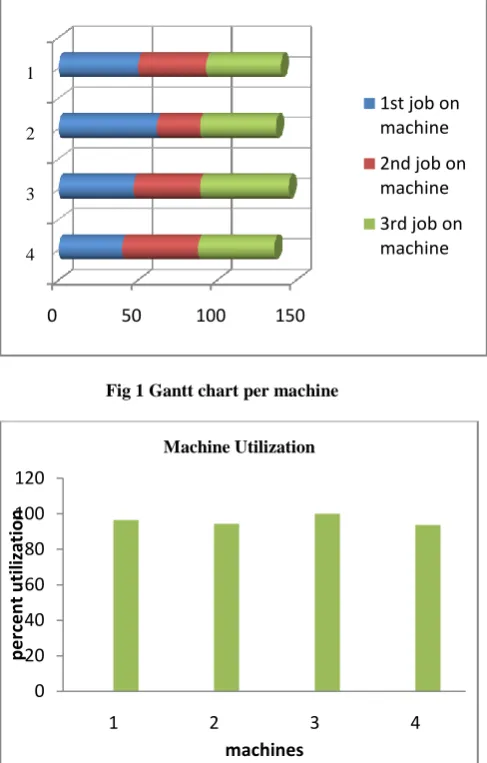
[image:5.595.317.561.72.254.2]The above matrix displays each operation that would be done on a particular machine and the sequence of the same
.
Fig 1 Gantt chart per machine
Fig 2 Machine utilization
[image:5.595.317.561.74.456.2]It is the percentage utilization of each machine according to the generated schedule
.
Fig 3. Load distribution per machine
Load distribution is the percentage of the total load that is on a particular machine.
0 50 100 150
4 3 2 1
1st job on machine
2nd job on machine
3rd job on machine
0 20 40 60 80 100 120
1 2 3 4
p
e
rc
e
n
t
u
til
ization
machines
Machine Utilization
24%
25% 26%
25%
Load Distribution per
machine
1st machine
2nd machine
3rd machine
[image:5.595.312.548.515.692.2]5. CONCLUSIONS
The jssp many type of schedules depending upon the number of jobs and machines. Since the ability and functions of modern machines have been widely extended, the scheduling plan of a part might not be unique. So on a real shop floor, many feasible schedules can be found. It can be seen that Genetic Algorithm gives better result than traditional scheduling methods. The applicability of the GA based methodology has considerable potential application to manufacturing with further refinement in certain aspects, as outlined below.
1. We have considered transportation time and setup time as constant, further work can be done using setup time and transportation time.
2. We have assumed no break down, further work can be done taking into account actual breakdown.
3. The jobs are considered to be atomic. Further work can be done by creating schedules with various parts manufactured on different machines.
6. REFERENCES
[1] K. Deep et al. (Eds.): Proceedings of the International Conf. on SocProS 2011, AISC 131, pp. 875–882. springerlink.com © Springer India 2012
[2] Li, D., Chen, L., Lin, Y.: Using functional virtual population as assistance to learn scheduling knowledge in dynamic manufacturing environment. Internation Journal of Production Research 41(17), 4011-4024 (2003)
[3] Shruti Kapoor et al Ways and Means of Applying Genetic Algorithms for Job Shop Scheduling International
Journal of Computational Intelligence Research ISSN 0973-1873 Volume 8, Number 1 (2012), pp. 19-25
[4] Liang Sun , Xiaochun Cheng, Yanchun Liang,” Solving Job Shop Scheduling Problem Using Genetic Algorithm with Penalty Function” International Journal of Intelligent Information Processing Volume 1, Number 2, December 2010
[5] Christian Bierwirth in his paper “A Generalized Permutation Approach to Job Shop Scheduling Problem with Genetic Algorithms”
[6] Isao Ono Masayuki Yamamura Shigenobu Kobayashi in their paper, “A Genetic Algorithm for Job-shop Scheduling Problems Using Job-based Order Crossover” Proc. of ICEC'96, pp.547-552 (1996)
[7] José Fernando Gonçalves, Jorge José de Magalhães Mendes, Maurício G.C. Resende in their paper “A Hybrid Genetic Algorithm for the Job Shop Scheduling Problem”
[8] Jie Gao, Linyan Sun, Mitsuo Gen in their paper, “A hybrid genetic and variable neighborhood descent algorithm for flexible job shop scheduling problems” Computers & Operations Research 35 (2008) 2892 --- 2907
[9] J. H. Holland, Adaptation in Natural and Artificial Systems. Ann Arbor, MI: University of Michigan Press, 1975.
[10] Goldberg, E. E.: Genetic Algorithms in Search, Optimization, and Machine Learning. Addison Wesley, Reading, MA 1989