ISSN: 1992-8645 www.jatit.org E-ISSN: 1817-3195
187
PERFORMANCE EVALUTION OF ENERGY-EFFICIENT
CLUSTERING ALGORITHMS IN WIRELESS SENSOR
NETWORKS
AZIZ MAHBOUB1, MOUNIR ARIOUA2, EL MOKHTAR EN-NAIMI 1, IMAD EZ-ZAZI2
1
Department of Computer Science, Faculty of Sciences and Technique, Tangier, Morocco.
2
National School of Applied Sciences, Abdelmalek Essaadi University, Tetouan, Morocco
E-mail: [email protected], [email protected], [email protected], [email protected]
ABSTRACT
One of the wireless sensor network issues that affect heavily the network’s lifetime is the energy limitation. Minimizing energy dissipation and maximizing network lifetime in wireless sensor networks are important challenges in the design of routing protocols for sensor networks. The reason why nowadays many works are interested in WSN’s energy management, taking into account the communications and the data routing algorithms. The clustering approach is one of the techniques used to minimize energy consumption and improve the system’s life duration. In this paper, we propose a study performance of LEACH, SEP and DEEC protocols through a solid comparison of key performance parameters of wireless sensor networks such as the instability and stability period, the network lifetime, the number of cluster heads per round and the number of alive nodes. We evaluate the technical capability of each protocol vis-à-vis the studied parameters.
Keywords: Wireless Sensor Network; Energy-efficiency; Clustering protocols; LEACH; DEEC; SEP.
1. INTRODUCTION
A wireless sensor network is a wireless network consisting of autonomous, spatially-distributed sensors; these sensors cooperate to monitor at different locations in physical or environmental conditions such as, temperature, vibration, pollution, pressure, movement, etc. [1]. The main challenge in the design of protocols for Wireless sensor network is energy efficiency due to the limited amount of energy in the sensor nodes. The sensors are accompanied by batteries whose energy resources are limited and often not replaceable. To prolong the lifetime of the network, several routing approaches have been proposed. The ultimate motive behind any routing protocol is to be as energy efficient as possible to keep the network running for a longer period of time. Clustering algorithm is, among these approaches, the most efficient approach adopted where the network is partitioned into small areas, and each area is monitored and controlled by a cluster head (CH). This one is responsible for the compression of the gathered data and the transmission to the base
station of the information sensed by the nodes of the area [2] [3]. The strength of this approach is the aggregation and data fusion. These operations enable the reduction of the number of messages transmitted to the sink and provide better energy efficiency [2].
In this paper, we study the performance parameters of three efficient hierarchical routing protocols, the low–energy adaptive hierarchy protocol known as LEACH, the stable election protocol (SEP) and the distributed energy efficient clustering protocol (DEEC).
ISSN: 1992-8645 www.jatit.org E-ISSN: 1817-3195
188
2. CLUSTER BASED ROUTING
ALGORITHMS
A. Radio energy model
A sensor uses its energy to carry out three main tasks: acquisition, data processing and communication. However, the energy consumed for acquisition is not prominent as much as energy expended in communication operation. Likewise, the energy consumed in the data processing operation is less important than communication energy [2] [5] [6].
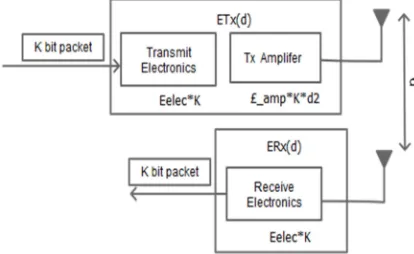
[image:2.612.91.298.267.394.2]The expended energy can be formulated as the following:
Figure 1. Energy Model In Wireless Sensor Network
The energy consumed to send data from a node to a cluster head or a base station is calculated according to equation (1) and equation (2).
E k, d E
E k, d (1)
E k, d
K ∗ E £ ∗ d if d
K ∗ E £ !"∗ d#$ if d % (2
)
To receive a message of k bits, the receiver requires:
E& k E k k ∗ E
(3)
Where: ETx is the electrical energy required to
transmit an K-bit message over a distance d, Eelec
corresponds to the energy per bit required in transmit and receive electronics to process the information. εfs and εmp are constants corresponding
to the energy per bit required in the transmit amplifier to transmit an L-bit message over a distance d2 and d4 for free space and multi-path propagation modes, respectively. By equating formula (1) and (2), we determine the distance d=d0 (equation 4) when the propagation transitions
from direct path to multi-path.
d0='
£()
£*+, (4)
B. Energy consumption in clustering approach
Nodes in a wireless sensor network adopting clustering approach are organized in subgroups (clusters). Clustering is the process of structuring the entire sensor network in a hierarchical structure that allows more efficient use of energy resource. In clustering approach, the rotation of CHs has been proved to be an important factor for organizing sensor networks. The base station is usually far from the sensor field; the CHs lose a large amount of energy to transmit data to the BS. Therefore, CHs die faster than a normal node if it is continuously used as a CH. However, efficient algorithms elect the CHs between nodes in turns in order not to wear out energy from sensors batteries of the network [2] [7].
After the CH’s election, at each round, each node sends K bit to the cluster head it belongs to. The total energy dissipated in the network during a given round is equal to [4][5] [7]:
-./012 3 2 ∗ 5 ∗ -6768 5 ∗ -9: £;<=∗ >/?@# 5 ∗ £AB∗ >/CD$
(5)
Where:
C represents the number of clusters. EDA is the data aggregation cost expended in the CH. dtoBS is the average distance between the CH and the BS (equation 6). dtoCH is the average distance between the cluster member and the cluster CH (equation7).
dtoBS = 0.765J
(6)
dtoCH =
J √ LC
ISSN: 1992-8645 www.jatit.org E-ISSN: 1817-3195
189 By setting the derivative of Eround with respect of C to zero, we obtain the optimal number of clusters as:
C = √M
√ L'
£()
£*+,
N OPQRST (8)
C. Low Energy Adaptive Clustering Hierarchy (LEACH)
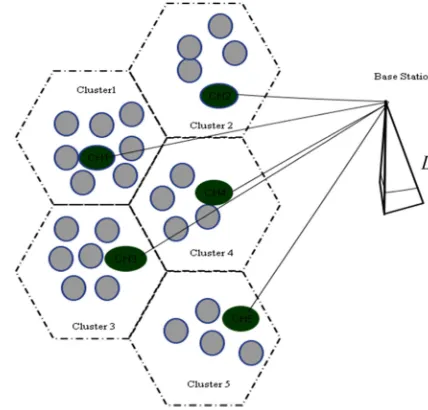
[image:3.612.83.297.322.527.2]In [2], the authors have proposed a distributed clustering algorithm (LEACH) for routing in networks of homogeneous sensors. The dynamic clustering mechanism was adopted, where a node elects itself to become a cluster head by some probability and broadcasts its status to the entire network. The main objective is to guarantee the equity of energy dissipation between nodes and reduce the amount of information transmitted to the base station.
Figure 2. Clustering Formation In Leach Protocol
Each node in the network has a chance to become a cluster head during network lifetime. A larger number of nodes may elect themselves as cluster heads than the desired number of cluster heads. This increased number may cause considerable energy consumption due to performing additional functions, which are mainly: the data reception from different members of its cluster, aggregation and the data sent to the base station. The main drawbacks of LEACH protocol are uneven distribution of cluster heads, high transmission power required in the case of large areas and lower stability period due to the early death of its nodes [8],[22].
In LEACH protocol, processing on a round-by-round basis in phases, where each round-by-round begins with an initialization phase followed by a transmission phase. The duration of a round is determined in the first phase; the clusters are organized and CHs are selected. This election is based on the desired percentage of CHs and the number of iterations in which a node has taken on the role of CH. Thus, a node s is a random value between 0 and 1. If the value is less than the threshold T(s), the node declares CH according to the equation (9).
U V W
= X =Y.</2Z[,\]
0
^AB∈`
/>a6.b^B6c
(9) Where:
p is the desired percentage of CH nodes in the sensor population and r is the current round number, where G is the set of nodes that have not been CHs in the last 1/p rounds [2][8].
D. Stable Election Protocol (SEP)
The stable election protocol (SEP) assumes that in real environment the nodes have different levels of energy [9]. Therefore, two types of nodes have been considered with the characteristic parameters of heterogeneity: the fraction of advanced nodes (m) and the additional energy factor between advanced and normal nodes (α).
In order to prolong the stable region, SEP maintain well balanced energy consumption over the network. Intuitively, advanced nodes become cluster heads more often than the normal nodes, which is equivalent to fairness constraint on energy consumption. The advanced nodes have more chances to become a CH according to the equation (12). It does not require any global knowledge of energy at every election round [4] [6] [9] [10]. Compared to LEACH, SEP protocol prolongs the time interval in stability period until the death of the first node. This period is crucial for many wireless sensor applications due to the fact that the feedback from the sensor network must be reliable.
ISSN: 1992-8645 www.jatit.org E-ISSN: 1817-3195
190 become cluster head according to the remaining energy in each node. Election probability for normal node is represented in equation (10) and for advanced node is represented in equation (11).
For normal nodes: U defghij
k l m l
n oefghij
1 q oefghij rg hf Zs1/.<;7X \t
0
uvdefghij ∈ G′
fyz{g|uV{ } l ~ l •
10
Where, G’ is a set of normal nodes which can become CH and m is the proportion of advanced nodes with α times more energy than the normal nodes [9].
oefghij X•!;€ (11)
For advanced nodes: U di ‚
k l m l
n oi ‚
1 q oi ‚ rghf Zs;2ƒX \t
0
uvdi ‚ ∈ G′′
fyz{g|uV{ } l ~ l •
12
Where, G’’ is a set of advance nodes, which can become CH and:
oi ‚ P 1 mi ∗ 1
α 13 According to equation (10) and equation (12), it is obvious that the SEP protocol has more chances to generate more cluster heads than the LEACH protocol. This contributes to reduce the consumed energy by every cluster head, thereby increasing the stability period of the wireless sensor network.
E. Distributed Energy Efficient Clustering (DEEC)
The DEEC protocol is a distributed energy efficient clustering protocol for heterogeneous wireless sensor network. The cluster-heads are selected by a probability based on the ratio between the remaining energy of each node and the average energy of the network. The round number
of the rotating epoch for each node is different according to its initial and residual energy. The DEEC protocol adapts the rotating epoch of each node to its energy. Nodes that hold high initial and remaining energy have more chances to be cluster-heads than nodes with low energy [10] [11] [12]. This procedure allows DEEC protocol to prolong the network lifetime particularly the stability period.
pi p‹ .‰ Š
Œ
(14)
The DEEC protocol uses the probability based ration, between the residual energy of the node and the average energy of the system according to equation 15. However, having a global knowledge of the average energy of the system of each node is difficult. The DEEC protocol assumes an ideal value for the network lifetime according to equation (17) used to calculate the reference energy that each node should expand during each round.
The aim of the multi-level heterogeneity is to maximize K (number of CH). The nodes with an important residual energy have the priority to become a CH. Therefore, CH formation is based on the residual energy of the entire network and the residual energy of the node that seeks to become a CH. The nodes with a higher residual energy have more chances to become a CH [4-6].
Where,
E(r) is the average energy of round is a set as follows
- g -yfyij 1 q • /5
(15)
The value of Total Energy is given as: -yfyij 5 ∗ 1 q h ∗ -f 5 ∗ h ∗ -f ∗
1 i (16)
Where: R denotes the total rounds of the network lifetime. Let Eround denote the energy
consumed by the network in each round.
R can be approximated as follow:
• ‹PQP*•
‹•Q‘’“ (17)
F.PERFORMANCE PARAMETERS
ISSN: 1992-8645 www.jatit.org E-ISSN: 1817-3195
191 based on some key performance parameters of wireless sensors network:
Stability Period: is the time interval from the start of network operation until the death of the first sensor node. It is the phase where all the nodes are still having enough energy to sense, receive, aggregate or send data to the cluster head or to the base station.
Instability Period: is the time interval from the death of the first node until the death of the last sensor node. This phase is released just after the end of the previous phase.
Network lifetime: is the time interval from the start of the operation until the death of the last alive node. It is a combination of the stability phase and the instability phase.
Number of cluster heads per round: This instantaneous measure reflects the number of nodes which would send data directly to the base station.
Number of alive nodes: This instantaneous measure reflects the total number of nodes which are still having enough energy for each round.
3.SIMULATIONSANDRESULTS
We evaluate the performance of LEACH, SEP and DEEC algorithms through Matlab simulations. We compare these energy-efficient algorithms based on the key performance parameters mentioned above. The reference networks of our simulations consist of 100 nodes, 150 nodes and 200 nodes distributed randomly in an area of 100 m × 100 m. The Base station is located at position (50m, 150m). The initial energy of all nodes takes the value of 0.5 J. This value is commonly used in the literature since it provides small enough energy to quickly see the effect of the applied algorithms. Every node transmits a 2000-bit message per round to its cluster head. P is set to 0.05, about 5% of nodes per round become cluster heads. Table 1 shows simulation parameters used in this work.
Table 1. Simulation Parameters
Simulation area 100 m * 100 m
BS location (50m ,150m)
Number of nodes 100 /150/ 200
Tx amplifier, free space εfs 10 pJ/bit/m2
Tx amplifier, multipath εmp 0.0013 pJ/bit/m4
Data aggregation energy 5 nJ/bit/message Transmit electronics ETxεfs 50 nJ
Transmit electronics ERX 50 nJ
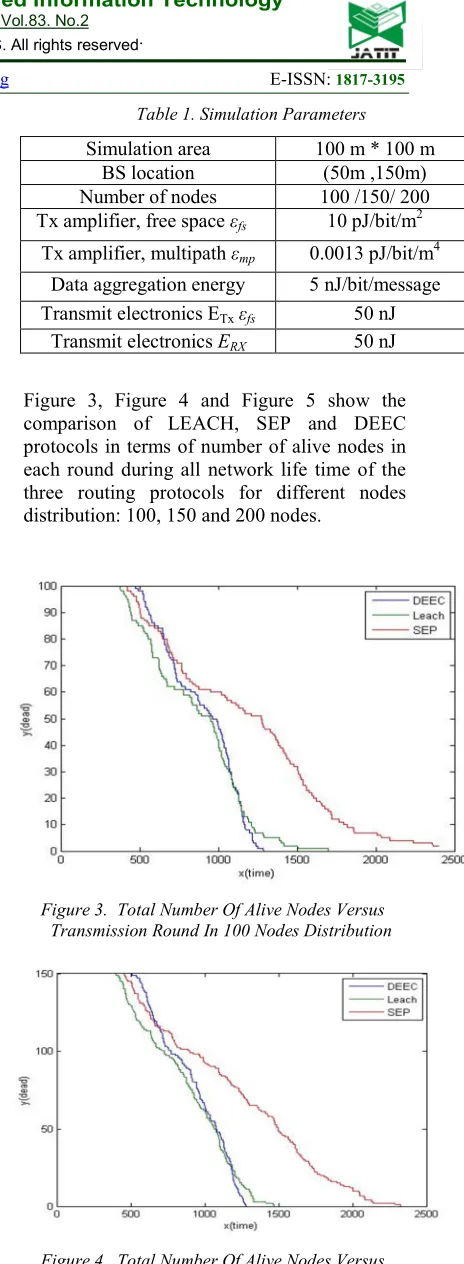
[image:5.612.319.551.42.674.2] [image:5.612.331.553.333.483.2]Figure 3, Figure 4 and Figure 5 show the comparison of LEACH, SEP and DEEC protocols in terms of number of alive nodes in each round during all network life time of the three routing protocols for different nodes distribution: 100, 150 and 200 nodes.
Figure 3. Total Number Of Alive Nodes Versus Transmission Round In 100 Nodes Distribution
[image:5.612.325.539.476.652.2]ISSN: 1992-8645 www.jatit.org E-ISSN: 1817-3195
192
Figure 5. Total Number Of Alive Nodes Versus Transmission Round In 200 Nodes Distribution
It can be observed that DEEC protocol prolong the stability period compared to SEP and LEACH protocol for 100 nodes, 150 nodes and 200 nodes distribution. However, DEEC is delicate in instability period where alive nodes start use up hastily their energy resource. On the other hand, SEP proves to be more energy-efficient algorithm than DEEC and LEACH in the instability period. In fact, SEP guarantees more cluster heads in the instability phase that allows reaching a load balanced network.
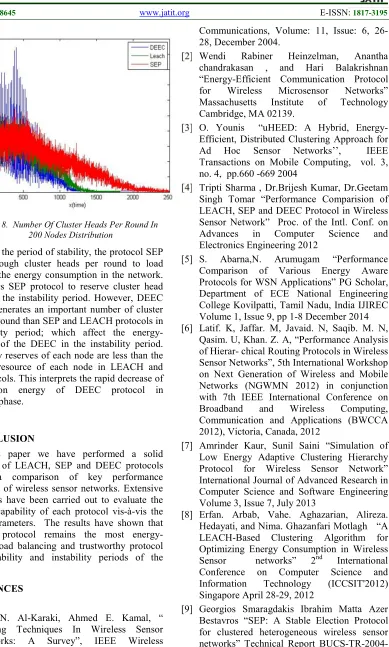
Figures 6, figure 7 and figure 8 display the number of cluster heads at each round for LEACH, SEP and DEEC protocols in 100 nodes, 150 nodes, 200 nodes distribution, respectively. In the stability period, the total of cluster heads per round generated by DEEC protocol is important than the total number of cluster heads generated by SEP and LEACH. However, SEP in the unsteady period generate sufficient cluster heads to maintain the network energy until the last the dead node. Whereas in LEACH and DEEC protocols, the generated cluster heads per rounds decrease rapidly. This lessening speeds up the energy dissipation of the network for LEACH and DEEC protocol.
The number of members affiliated to a cluster depends of the number of cluster heads generated by the network. In DEEC protocol, fewer members are created for each cluster due to the important cluster heads generated by the protocol in the stability period (Figure 6, 7, 8). Unlike DEEC, LEACH and SEP protocols generate a significant number of cluster members for each cluster owing to the unimportant number of cluster heads created per round in the stability period. This explains the energy consumption reduction in
[image:6.612.246.546.76.663.2]DEEC protocol and energy consumption increase in SEP/LEACH. The energy used in each cluster head during a round depends on the number of members of each cluster head and the distance between a cluster head and the base station, according to equations (1), (2) and equation (3). In fact, the number of members affiliated to each cluster affects the energy consumption of the cluster, consequently over the entire network.
Figure 6. Number Of Cluster Heads Per Round In 100 Nodes Distribution
[image:6.612.333.550.249.421.2] [image:6.612.331.549.464.644.2]ISSN: 1992-8645 www.jatit.org E-ISSN: 1817-3195
[image:7.612.134.523.69.716.2]193
Figure 8. Number Of Cluster Heads Per Round In 200 Nodes Distribution
During the period of stability, the protocol SEP creates enough cluster heads per round to load balancing the energy consumption in the network. This allows SEP protocol to reserve cluster head energy for the instability period. However, DEEC protocol generates an important number of cluster heads per round than SEP and LEACH protocols in the stability period; which affect the energy-efficiency of the DEEC in the instability period. The energy reserves of each node are less than the energetic resource of each node in LEACH and SEP protocols. This interprets the rapid decrease of consumption energy of DEEC protocol in instability phase.
4.CONCLUSION
In this paper we have performed a solid evaluation of LEACH, SEP and DEEC protocols through a comparison of key performance parameters of wireless sensor networks. Extensive simulations have been carried out to evaluate the technical capability of each protocol vis-à-vis the studied parameters. The results have shown that the SEP protocol remains the most energy-efficient, load balancing and trustworthy protocol in the stability and instability periods of the network.
REFERENCES
[1] Jamal N. Al-Karaki, Ahmed E. Kamal, “ Routing Techniques In Wireless Sensor Networks: A Survey”, IEEE Wireless
Communications, Volume: 11, Issue: 6, 26- 28, December 2004.
[2] Wendi Rabiner Heinzelman, Anantha chandrakasan , and Hari Balakrishnan “Energy-Efficient Communication Protocol for Wireless Microsensor Networks” Massachusetts Institute of Technology Cambridge, MA 02139.
[3] O. Younis “uHEED: A Hybrid, Energy-Efficient, Distributed Clustering Approach for
Ad Hoc Sensor Networks’’, IEEE
Transactions on Mobile Computing, vol. 3, no. 4, pp.660 -669 2004
[4] Tripti Sharma , Dr.Brijesh Kumar, Dr.Geetam Singh Tomar “Performance Comparision of LEACH, SEP and DEEC Protocol in Wireless Sensor Network” Proc. of the Intl. Conf. on
Advances in Computer Science and
Electronics Engineering 2012
[5] S. Abarna,N. Arumugam “Performance Comparison of Various Energy Aware Protocols for WSN Applications” PG Scholar, Department of ECE National Engineering College Kovilpatti, Tamil Nadu, India IJIREC Volume 1, Issue 9, pp 1-8 December 2014 [6] Latif. K, Jaffar. M, Javaid. N, Saqib. M. N,
Qasim. U, Khan. Z. A, “Performance Analysis of Hierar- chical Routing Protocols in Wireless Sensor Networks”, 5th International Workshop on Next Generation of Wireless and Mobile Networks (NGWMN 2012) in conjunction with 7th IEEE International Conference on
Broadband and Wireless Computing,
Communication and Applications (BWCCA 2012), Victoria, Canada, 2012
[7] Amrinder Kaur, Sunil Saini “Simulation of Low Energy Adaptive Clustering Hierarchy Protocol for Wireless Sensor Network” International Journal of Advanced Research in Computer Science and Software Engineering Volume 3, Issue 7, July 2013
[8] Erfan. Arbab, Vahe. Aghazarian, Alireza. Hedayati, and Nima. Ghazanfari Motlagh “A LEACH-Based Clustering Algorithm for Optimizing Energy Consumption in Wireless Sensor networks” 2nd International Conference on Computer Science and Information Technology (ICCSIT'2012) Singapore April 28-29, 2012
ISSN: 1992-8645 www.jatit.org E-ISSN: 1817-3195
194 [10]L. Qing, Q. Zhu, M. Wang, “Design of a
distributed energy-efficient clustering algorithm for heterogeneous wireless sensor
networks”. ELSEVIER, Computer
Communications 29, 2006, pp 2230- 2237 [11]Poonam Tyagi, Ravinder Prakash Gupta,
Rakesh Kumar Gill “Comparative Analysis of Cluster Based Routing Protocols used in Heterogeneous Wireless Sensor Network” International Journal of Soft Computing and Engineering (IJSCE) ISSN: 2231-2307, Volume-1, Issue-5, November 2011
[12]Liu X. “A survey on clustering routing protocols in wireless sensor networks Sensors” (Basel). 2012;12(8):11113-53. Epub 2012. [13]Valerie Galluzzi and Ted Herman “Survey:
Discovery inWireless Sensor Networks” International Journal of Distributed Sensor Networks Volume 2012
[14]K. Akkaya and M. Younis, “A survey on routing protocols for wireless sensor networks”, Elsevier Ad Hoc Network, Vol. 3, No. 3, pp. 325-349, 2005
[15]Parul Saini, Ajay.K.Sharma, “Energy Efficient Scheme for Clustering Protocol Prolonging the Lifetime of Heterogeneous Wireless Sensor Networks”, International Journal of Computer Applications (0975 8887), Volume 6 No.2, September 2010.
[16]Aslam. M, Javaid. N, Rahim. A, Nazir. U, Bibi. A, Khan. Z. A, “Survey of Extended LEACH-Based Clustering Routing Protocols for Wireless Sensor Networks”, 5th International Symposium on Advances of High Performance Computing and Networking (AHPCN-2012) in conjunction with 14th IEEE International Conference on High Performance Computing and Communications (HPCC-2012), 25-27 June, Liverpool, UK, 2012 [17]Georgios Smaragdakis, Ibrahim Matta and
Azer bestavros, “SEP: A Stable Election Protocol for clustered heterogeneous wireless sensor networks [C].” , Proc. of the Second International Workshop on Sensor and Actor Network Protocols and Applications (SANPA 2004), Boston MA, USA, August 2004 [18]Hou R. , Ren W. , Zhang Y. 2009 “A wireless
sensor network clustering algorithm based on energy and distance” in Proceedings of the 2nd International Workshop on Computer Science and Engineering Qingdao, China 439 – 442
[19]Kaj, Probabilistic analysis of hierarchical cluster protocols for wireless sensor networks, Network Control and Optimization, pp. 137151, 2009
[20]Ahlawat, A. and Malik, V., “An Extended Vice-Cluster Selection Approach to Improve
VLEACH Protocol in WSN”, IEEE
3rdconference on Advance Computing and Communication Technology, April 2013, pp. 236-240.