High Fill-Factor Imagers for Neuromorphic Processing
Enabled by Floating-Gate Circuits
Paul Hasler
Department of Electrical and Computer Engineering, Georgia Institute of Technology, Atlanta, GA 30332-0250, USA Email:[email protected]
Abhishek Bandyopadhyay
Department of Electrical and Computer Engineering, Georgia Institute of Technology, Atlanta, GA 30332-0250, USA Email:[email protected]
David V. Anderson
Department of Electrical and Computer Engineering, Georgia Institute of Technology, Atlanta, GA 30332-0250, USA Email:[email protected]
Received 29 September 2002 and in revised form 16 January 2003
In neuromorphic modeling of the retina, it would be very nice to have processing capabilities at the focal plane while retaining the density of typical active pixel sensor (APS) imager designs. Unfortunately, these two goals have been mostly incompatible. We introduce our transform imager technology and basic architecture that uses analog floating-gate devices to make it possi-ble to have computational imagers with high pixel densities. This imager approach allows programmapossi-ble focal-plane processing that can perform retinal and higher-level bioinspired computation. The processing is performed continuously on the image via programmable matrix operations that can operate on the entire image or blocks within the image. The resulting dataflow archi-tecture can directly perform computation of spatial transforms, motion computations, and stereo computations. The core imager performs computations at the pixel plane, but still holds a fill factor greater than 40 percent—comparable to the high fill factors of APS imagers. Each pixel is composed of a photodiode sensor element and a multiplier. We present experimental results from several imager arrays built in 0.5 micrometer process (up to 128×128 in an area of 4 millimeter squared).
Keywords and phrases:floating-gate circuits, CMOS imagers, real-time image processing, analog signal processing, transform imagers, matrix image transforms.
1. INTRODUCTION
In neuromorphic modeling of retinal and cortical signal
pro-cessing, we see a trade-off between large-scale focal-plane
processing and typical active pixel sensor (APS) imager de-signs in which significant processing is performed elsewhere. The APS imager designs result in high-resolution imagers
with dense pixels [1,2,3,4,5,6,7,8,9,10,11]. In current
neuromorphic imaging systems, the focal-plane processing
usually limits the number of pixels [12,13,14,15,16,17,18,
19,20,21,22,23,24,25,26]. Since both imager approaches
use photodiode (or photo BJT) devices as the element to con-vert light into electrical signals, what is needed is an architec-ture/system that combines the advantages of both types of imagers. In this paper, we present an imager approach and resulting architecture that performs computation at the pixel plane, keeps the large number of pixels typical in APS im-agers, and allows for retinal-like and cortical-like signal
pro-cessing. This imager architecture, shown inFigure 1, is
capa-ble of programmacapa-ble matrix operations for 2D transforms or filter operations on the entire image, or block-matrix opera-tions on subimages. The resulting architecture is a dataflow structure that allows for continuous computation of these matrix transform operations.
Our new imaging architecture is made possible largely by advancements in analog floating-gate circuit technology and
its application [27,28, 29]. Floating-gate devices in
imag-ing can be used to eliminate fixed pattern noise [11,30] and
to enable programmable and adaptive signal processing ap-plied toward the images. These circuits have the added ad-vantage that they can be built in standard CMOS or double-poly CMOS processes.
This paper addresses the following three areas:
(1) floating-gate circuits and their use in this imager, (2) the context for and applications of our transform
im-ager,
Dig
ital
co
n
tro
l
T
ime
basis
1
T
ime
basis
2
T
ime
basis
3
T
ime
basis
4
Basis functions
T
ime
basis
m
Im
ag
e
se
n
so
r
Iout
Vin
Image elements
Floating-gate element
Analog computing
array
Transformed output image
Figure1: Top view of our matrix transform imager. This architecture and approach allows for arbitrary separable matrix image transforms; these transforms are programmable because we use floating-gate circuits. Voltage inputs from various basis functions are broadcast along columns, and output currents are summed along lines on each row. Each pixel processor multiplies the incoming input with the measured image sensor result, and outputs a current of this result. Basis functions could be from spatial oscillators, pattern generating circuits, or arrays of stored analog values (i.e., floating-gate storage). We can also compute block image transforms with bases having a smaller region of support, digital control, and smaller block matrices for block image transforms. Finally, we can get multiple parallel results, since all of the matrix transforms could operate on the same image flow.
The paper is organized into five sections. In Section 2, we
present an overview of floating-gate devices, circuits, and sys-tems. We also discuss two key systems: floating-gate circuits for arbitrary parallel waveform generation and floating-gate
circuits for matrix multiplication. In Section 3, we present
the basic architecture design (single imager and computa-tional system) and highlight the aspects of programmability that will be enabled by using floating-gate circuits. We also present an overview of our concept of cooperative analog-digital signal processing (CADSP) and its relationship to
neuromorphic image processing. In Section 4, we present
the basic pixel elements and their characterization as well as the mathematics needed to predict performance for a given application based on experimental measurements,
includ-ing estimates on noise, speed, and so forth. InSection 5, we
present system examples and measurements, and we
con-clude inSection 6.
2. ENABLING TECHNOLOGY: FLOATING-GATE
CIRCUITS
From their early beginning, floating-gate devices have held promise for use in analog signal processing circuits and
bio-logically motivated computation [29,31,32,33]. Since these
beginnings, this technology has begun to fulfill some of the
early expectations; for a good review see [27]. One can
imag-ine many straightforward approaches to using floating-gate circuits in imagers. For example, one could eliminate circuit
offsets and dark current errors in the pixel circuits as well as
in sensing circuits [11,30]. These approaches often decrease
the fill factor of the pixel. With the signal processing poten-tial of floating-gate circuits already shown in auditory appli-cations, one might imagine the possibility of a wider set of applications.
Our transform imager and architecture is enabled by floating-gate circuits in three ways. First, we can store ar-bitrary analog waveforms enabling arar-bitrary matrix image transforms or block image transforms. Second, we can pro-gram these waveforms to account for average device mis-match along a column, thereby getting significantly higher image transform quality. Third, we can use floating-gate cir-cuits to compute additional vector-matrix computations. As a result, we can use a single, simple pixel element to perform a wide range of possible computations.
In the following sections, we will explore the issues of using floating-gate elements for the transform imager
ap-proaches. InSection 2.1, we present an overview of
Input
capacitor Floating gatetransistor Floating gate
MOS tunneling capacitor Poly2 cap
Metal 1 layer
SiO2 SiO2
n-well p-substrate n-well p+
n+
Vin
Vfg(Floating gate)
Vtun
Vs Vd
Figure2: Layout, cross-section, and circuit diagram of the floating-gate pFET in a standard double-poly,n-well MOSIS process. The cross-section corresponds to the horizontal line slicing through the layout view. The pFET transistor is the standard pFET transistor in the n-well process. The gate input capacitively couples to the floating-gate by either a poly-poly capacitor, a diffused linear ca-pacitor, or an MOS caca-pacitor, as seen in the circuit diagram (not explicitly shown in the other two figures). We add floating-gate charge by electron tunneling, and we remove floating-gate charge by hot-electron injection. The tunneling junctions used by the single-transistor synapses are regions of gate oxide between the polysilicon floating-gate andn-well (an MOS capacitor). Between Vtunand the
floating-gate is our symbol for a tunneling junction capacitor with an added arrow designating the charge flow.
we address the issues of programming a large number of
floating-gate elements. InSection 2.3, we discuss the two
im-portant floating-gate circuits/systems used in the transform imager architecture:
(i) generation of arbitrary on-chip waveforms, (ii) analog vector-matrix multiplication.
One could imagine straightforward applications of the entire spectrum of floating-gate technologies and signal processing
algorithms applied to this architecture [34].
2.1. Floating-gate circuits for imager applications
Floating-gate devices are not just for digital memories any-more, but they are used as circuit elements with analog
mem-ory and important time-domain dynamics [27]. We define
floating-gate circuits as the field where floating-gate devices are used as circuit elements and not simply as digital memory elements. Floating-gate devices and circuits typically are di-vided into three major functions: analog memory elements, part of capacitive-based circuits, and adaptive circuit ele-ments.
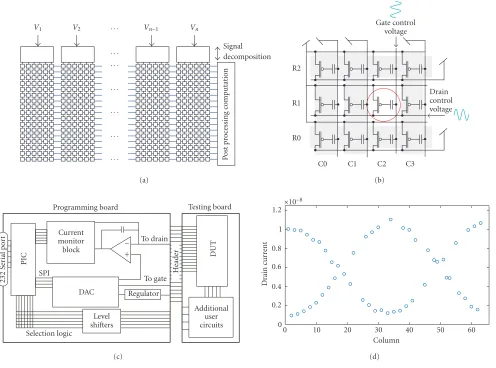
Figure 2shows the layout, cross-section, and circuit
sym-bol for our floating-gate pFET device. A floating gate is a polysilicon gate surrounded by silicon-dioxide. Charge on
the floating gate is stored permanently, providing a long-term memory, because it is completely surrounded by a high-quality insulator. From the layout, we see that the floating gate is a polysilicon layer that has no contacts to other lay-ers. This floating gate can be the gate of an MOSFET and can be capacitively connected to other layers. In circuit terms, a floating gate occurs when we have no DC path to a fixed po-tential. No DC path implies only capacitive connections to
the floating node, as seen inFigure 2.
The floating-gate voltage, determined by the charge stored on the floating gate, can modulate a channel between a source and drain, and therefore, can be used in computation. Floating-gate circuits provide IC designers with a practical, capacitor-based technology; since capacitors, rather than re-sistors, are a natural result of an MOS process. Floating-gate devices can compute a wide range of static and dynamic translinear functions by the particular choice of capacitive
couplings into floating-gate devices [35].
We modify the floating-gate charge by applying large voltages across a silicon-oxide capacitor to tunnel electrons through the oxide or by adding electrons using hot-electron
injection. The physical effects of hot-electron injection and
electron tunnelling become more pronounced as the line
widths of existing processes are further scaled down [36],
improving our floating-gate circuits. Floating-gate circuits based upon programmable (short periods of charge modifi-cation) and adaptive (continuous charge modifimodifi-cation) tech-niques have found uses in applications from programmable
on-chip biasing voltages and sensor circuits [37], to
remov-ing offsets in differential pairs and mixers [38], and to
pro-grammable filters and adaptive networks [33,38].
These floating-gate transistors provide nonvolatile stor-age, compute a product between this stored weight and the
inputs, allow for programming that does not affect the
com-putation, and adapt due to correlations of input signals.
These single transistor learning synapses [29], named
be-cause of the similarities to synapses, lead to a technology
called analog computing arrays. Figure 3 shows a general
block diagram of our floating-gate computing array. We have built analog computing arrays for auditory signal
process-ing [28,34,39], as well as for image signal processing. The
memory cells may be accessed individually (for readout or programming), or they may be used for full parallel com-putation within the array (as in matrix-vector multiplication or adaptation). Therefore, we have full parallel computation with the same circuit complexity and power dissipation as
the digital memory needed to store a 4-bit digital coeffi
-cient. This technology can be integrated in a standard dig-ital CMOS process or in standard double-poly CMOS pro-cesses. Furthermore, we only need to operate this system with
effectively one memory access per incoming sample, or in
other words, the system only needs to operate at the incom-ing data speed (maximum input frequency), thereby reduc-ing requirements on our overall system design.
2.2. Programming arrays for floating-gate elements
V1 V2 · · ·
· · · · · ·
· · ·
· · ·
· · ·
· · ·
Vn−1 Vn
Signal decomposition
P
o
st
pr
oc
essing
co
mputation
(a)
Gate control voltage
R2
R1
R0
Drain control voltage
C0 C1 C2 C3
(b)
Programming board
232
Ser
ial
por
t
PI
C
Current monitor
block −
+
To drain
SPI
DAC
To gate Regulator
Selection logic
Level shifters
He
ad
er
Testing board
DUT
Additional user circuits
(c)
×10−8
1.2 1 0.8 0.6 0.4 0.2 0
Dr
ain
cur
re
nt
0 10 20 30 40 50 60
Column (d)
Figure3: Computation and programming in floating-gate analog computing arrays. (a) Illustration of our computing in floating-gate mem-ory arrays. A typical system is an array of floating-gate computing elements, surrounded by input circuitry to precondition or decompose the incoming sensor signals, and surrounded by output circuitry to postprocess the array outputs. We use additional circuitry to individually program each analog floating-gate element. (b) Floating-gate array demonstrating element isolation by controlling the gate and drain voltage of each column and row. Selection of gate and drain voltages is controlled by on-chip mux circuitry. (c) Block diagram of our custom pro-gramming board for automatic propro-gramming of large floating-gate arrays. This board, controlled by a PIC microcontroller and interfaced with a computer through a serial (RS232) port, is capable of programming floating-gate arrays fabricated in a wide range of processes. This board allows easy integration with a larger testing platform, where programming and computation are both required. The DAC provides voltages for the gate and drain, as well as driving a voltage regulator to set the voltage of the chip to program. Level shifters shift the PIC’s logic levels to the chip’s logic levels. Currents are measured on the board as well, the SNR has been experimentally found to be equivalent to 9-bit accuracy over 2 orders of magnitude in current. (d) A single row of floating-gate multiplier blocks programmed to scaled cosine coefficients. These blocks are essential to performing analog frequency transform functions. Because the values are arbitrary, one can also set these to be linear or to increase or decrease logarithmically.
programming. We have developed such a method as a critical part of this single-chip system. We take a similar approach
as we described elsewhere [27, 28,29,40]. Our
program-ming scheme minimizes interaction between floating-gate devices in an array during the programming operation. This scheme also measures results at the circuit’s operating condi-tion for optimal tuning of the operating circuit (no compen-sation circuitry needed). Once programmed, the floating-gate devices retain their channel current in a nonvolatile manner.
Figure 3b shows that it is possible to isolate individual
for injection was 10milliseconds. We have successfully used 100microseconds, and we see no technological limitation to using one microsecond as injection time. These fast values are critical to programming mass production or large arrays of floating gates.
Programming a floating-gate element involves being able to adjust multiple control voltages for a single element. The isolation circuitry is made of multiplexors that switch the drain and gate voltages of the desired element onto a com-mon bus for each signal. Other elements are switched to a separate voltage to ensure that those devices will not in-ject. Any circuit containing programmable floating-gate el-ements must also have various switching circuitry to access each floating-gate element in a standard array.
We designed a custom programming board to program
large floating-gate arrays. The board, shown inFigure 3,
al-lows for flexible floating-gate array programming over a wide range of IC processes and allows for nearly transparent op-eration to the user. Using custom circuits to program the floating gates allows for a self-contained programmer at a lower cost than a rack of testing equipment. This program-ming board is connected to the chip via a standard header that allows the option of additional logic when used as part
of a larger testing approach.Figure 3shows the output from a
row of floating-gate multipliers that have been programmed
to perform a differential cosine scale multiplication on the
input signals.
2.3. Transform imager floating-gate systems
The transform imager architecture requires using fundamen-tal floating-gate circuits/systems for the generation of arbi-trary on-chip waveforms and for analog matrix-vector multi-plication. Other floating-gate circuits are used to further en-hance the circuit and signal processing performance of these systems.
Floating-gate basis generator
We use floating-gate circuit elements to store and to gen-erate the arbitrary basis functions needed for the matrix-vector multiplication on the imager. This approach com-putes a similar function to ISD’s audio recording ICs
[41], but uses floating-gate circuits in a standard
cess rather than analog EEPROM cells in a special
pro-cess. Figure 4 shows the top-level view of our basis
gen-eration circuitry. This system operates in both opgen-eration (basis generation) mode and programming mode. In op-eration mode, we have an array of stored values that are output in sequence. Lowpass filtering on the output re-sults in a continuous-time analog signal. In programming mode, we can easily reconfigure this circuitry on the out-side edges for programming, resulting in very high circuit density. This approach is compatible with our standard pro-gramming structure and algorithm. In operation mode, the digital logic is a shift register or a counter behind the coder, while, in programming mode, the digital logic is a de-coder.
To gate lines of imager cells n-well p-sub n-well
Figure4: Top-level view of our basis generation circuitry. In opera-tion (run) mode, we have an array of stored values that are output in sequence. Lowpass filtering on the output results in a continuous-time analog result. In programming mode, we can easily reconfig-ure this circuitry on the outside edges for programming. As a re-sult, we achieve very high circuit density. In operation mode, the digital logic is a shift register or a counter behind the decoder; In programming mode, the digital logic is a decoder to conform to current standards. The capacitors can be either double-poly capaci-tors or MOS capacicapaci-tors (single-poly process); both approaches work equally well. In single-poly, the coupling capacitor is built using an MOS capacitor.
Floating-gate vector-matrix multiplication
We use the floating-gate circuit elements to compute ana-log multiplications of a signal vector with a stored, pro-grammable matrix. We can perform vector matrix computa-tions using our existing analog computing array (ACA)
tech-nology based upon floating-gate circuits [28]. Using the
out-put image stream, this system will comout-pute a transposed ma-trix transform.
distortion. We also use current inputs, because the outputs from previous stages are usually currents. Temperature
de-pendence is based upon the difference in floating-gate charge
[32]. The programmed currents remain within 10 percent for
a factor of four range of currents over 0–40◦C, and change in
similar directions throughout the array (gains will scale).
3. TRANSFORM IMAGER SYSTEM
3.1. Cooperative analog-digital signal processing framework
Neither analog signal processing nor digital signal process-ing can exist in current technologies without the other; that is, real-world signals are analog while much of the modern control and communication is digital. Typically, one does not think of analog and programmability together—analog circuits are primarily for preamplifiers, and programmabil-ity has been exclusively in the domain of digital processing. However, new advances in analog VLSI circuits have made it possible to perform operations that more closely reflect those done in DSP applications. Furthermore, analog circuits and
systems can beprogrammable, reconfigurable, adaptive, and
at a density comparable to digital memories [27,28,29,42].
We define CADSP as looking at the issues of using com-binations of programmable analog signal processing and dig-ital signal processing techniques for real-world processing
[43]. Our goal in CADSP is to build systems that benefit
from the advantages of both types of signal processing to make something better than the sum of its parts and to en-hance the overall functionality of a system by utilizing ana-log/digital computations in mutually beneficial way. There-fore, one might wonder if we have both digital and analog signal processing available, how does one choose a particu-lar solution for a given application. The question of where to partition the analog-digital boundary is still an open research question.
3.2. Transform imager system overview
Figure 1shows the block diagram of our transform imager
technology. This approach allows for retina and higher-level bioinspired computation in a programmable architecture that still possesses similar high fill-factor pixels of APS im-agers. If the incoming voltages represent functions in time, particularly transform bases like sine and cosine, then we are performing computations analogous to matrix image trans-forms. The output is a continuous stream of each row of the transformed image, repeated at a desired frame rate. This ap-proach is enabled by floating-gate circuits in storing arbitrary analog waveforms for image transforms, in programming waveforms to account for average device mismatch, and in performing additional matrix-vector computations.
This transform imager can compute arbitrary separable 2D linear operations. These operations are expressed as two matrix multiplications on the image
Y=ATPB, (1)
wherePis the image array of pixels,Yis the computed
out-put image array, and A andB are the transform matrices
corresponding, respectively, to the transform on the image plane by the basis functions and the transform matrix cor-responding to the floating-gate-enabled transform after the
image plane. The values ofAandBare stored in an analog
floating-gate array typically on the imager IC and applied to the pixel columns. Furthermore, if the input waveforms are continuous, then the result is a continuous waveform, result-ing in added computational options. For example, the choice
of output signal sampling will result in different
discrete-time inspired computations with an identical setup.
3.3. Application of the transform imagers
The transform imager architecture is both modular and pro-grammable making it ideal for image dataflow computations. This architecture’s scalability makes it feasible to compute image operations at large-scale resolutions comparable to those in digital cameras. Furthermore, the image processing architecture computes on the image plane, thus allowing for data reduction that is compatible with machine vision and biological modeling. The image sensor can be used to sub-sample the incoming data if desired, or if the resulting sys-tem can handle the data rate, the full image can be passed on so that easier refinement can occur farther up the processing chain. The additional processing may be in analog circuitry or a digital system.
This architecture is modular because the output dataflow is a sequence of columns from an image. This image is either from a set of sensors or the output of some signal processing. We can have multiple image processing steps, where each in-termediate result can be acquired by the controlling digital system for higher levels of processing. Furthermore, the out-puts are continuous waveforms, allowing time-domain filters to be used to obtain spatial responses and image interpola-tion.
One must also consider the interface between
computa-tional blocks. A 1024×1024 imager computing at a 60 Hz
im-age rate requires a parallel data rate (1024 signals) of 60 kHz. If two blocks are adjacent on the same IC, then this data rate is trivial to accommodate. However, if these signals are being passed between chips over 100 mega analog samples per sec-ond are required, which is a more challenging specification. This rate is similar to reading out pixels from any standard CMOS array. Each pixel could be directly read out in a trans-form imager, since a column scan is equivalent to multiplica-tion by a digital value moving by one posimultiplica-tion for each step. In general, this issue is significant when interfacing to a dig-ital system, since multiple “images” could be transmitted to the controlling digital system.
Separable matrix image transforms
variable each:
A separable system can operate on the columns and rows of an image independently. As a result, a separable system can
be written as a pair of matrix operations as in (1). The
left-hand side matrixAT operates on the columns of the imageP
and the right-hand side matrixBoperates on the rows of the
image.
In image processing, the most common linear operations consist of FIR filtering and real transforms such as the dis-crete cosine transform (DCT) or wavelet transforms.
Exam-ples of the left-hand side matrices,AT, for these operations
are shown inFigure 5.
The range of operations possible within the architecture
and expressed in (1) is significant. For example, it is
possi-ble to use differentiating FIR filters to do better edge
detec-tion or lapped orthogonal transforms for image compression without blocking artifacts. Smoothing filters combined with a decimation scheme could provide simple data reduction. Arbitrary transforms can be considered, because
computa-tional complexity and efficient algorithms are not a concern.
Additionally, cascaded operations can be performed by col-lapsing the matrices describing the multiple operations:
Y=CTATPBD=AˆTP ˆB, (3)
whereAˆ =ACandBˆ =BD.
Note that even though arbitrary matrices can be used without considering traditional computational complexity, the connectivity complexity should be considered. For ex-ample, a full image transform requires the instantiation and routing of the full transform matrices while a block trans-form can be implemented using only enough elements and interconnects for the nonzero transform matrix elements.
Temporal filtering
One interesting question with this flow model is how to per-form temporal filtering. We can either build the filters di-rectly into the pixel, which would result in much larger pix-els and greatly increase the system cost for a given resolu-tion, or we can store a delayed version of the transformed image. This approach requires a temporary storage array for currents or voltages for each delay thus limiting the number
of temporal delays that can be built in practice (Figure 6).
Our approach is to build a set of current mode sample-and-hold elements into an array that can be used for tempo-ral filters. Dynamic current sources can be built that store their currents at reasonable accuracy for seconds, particu-larly with on-chip compensation of leakage through MOS-FET switches.
Applications of temporal filtering include subtraction of
constant background images, temporal differencing, motion
estimation, and, by using an array of floating-gate elements instead of the sample-and-hold elements, fixed images such
as offset errors from dark currents may be subtracted out. In
general, however, temporal filters should be used sparingly
or after spatial compression due to the number of required sample-and-hold elements.
One could imagine combining these temporal filters as well as the spatial filters of the transform imager approach to be a front-end processor to compute optical flow.
3.4. Comparison of transform imagers with existing technologies
Focal-plane processing is characterized by significant amounts of signal processing occurring at the image plane, but usually at the cost of a small fill factor. Early retina model systems used focal-plane processing to mimic the edge enhancement properties in the early retina processing based on photodiodes and phototransistors that naturally occur in
a silicon CMOS process [12,13,14]. Later designs improved
so as to be usable in systems at high density levels [14,15,16]
and for high performance [44]. From these retina chips,
sev-eral higher level processing ICs have been built to investigate
stereo processing [17,18], communication architectures for
action potentials [19], attention computations, and motion
[20,21,22,23,24,25,26]. Typically, because of the large
pixel size associated with the large number of transistors in each pixel, image sensors with retinal computation typically only have a fairly small number of pixels on a given IC.
In only a very few cases, one will see more than 50,000
image elements on a fairly large IC [14]. Therefore, retinal
processing imagers and research are focused primarily on machine vision tasks where the required pixel count can be smaller; for example, flies accomplish amazing things
with the resolution from a small number of pixels [25,26].
Although much can be explored in vision problems at the level of flies, many neuromorphic visual signal processing systems aim toward modeling much larger organisms.
APS imagers took a related route to the silicon retina models. These approaches, typically credited to Fossum, et
al., [1,2,3,4,5,6,7,8,9,11,45] worked with
photodiode-based arrays with minimal circuitry in the pixel, resulting in large imaging arrays, and therefore, a technology viable for digital cameras and more sophisticated computations. To
characterize the spatial efficiency of a pixel, the concept of
fill factor, which equals the ratio of image sensor area over the pixel area, is defined. The larger fill factor implies better spatial resolution per unit area. Typical APS imagers have fill factors from 30–50%, while typical focal-plane imagers have fill factors around 1–4%.
The question is whether one can combine the high fill factor advantages of APS imagers with the computational ca-pabilities of retinal processing imagers. A few approaches try
to bridge this gap [7,8,10,19,46,47,48], but they only begin
to unlock the potential of these approaches. For example, the introduction of floating-gate circuits can enhance the perfor-mance of imager elements, but often straightforward appli-cation of these circuits results in larger pixels, and therefore, a decreased fill factor. Furthermore, these retina approaches have not been elegantly merged into a single circuit architec-ture; therefore, even in the design of retina ICs, several hard
Figure5: Image transform matrix examples. The transform imager can perform many types of operations of the typeY=ATPB, whereAT
operates on the columns of the imagePandBoperates on the rows. Examples ofATare shown here for different types of operations. (a) A
transform of the entire image wherehi, jrepresent the windowed transform basis elements. (b) Block transform of the type more likely to be used in image compression. (c) FIR filter applied to the image, note that the corner coefficients are denoted with’s because they are often normalized to account for the shorter length of the filter at that point; or they may be changed to accomplish filtering of a symmetrically extended image withh0=h0andh1=2h1, and so forth. (d) Wavelet transform of the image, note that a block wavelet transform could be
Figure6: Imager architecture for taking image differences; we need a separate array to store one frame. An array of floating-gate de-vices (similar to the basis generation array) would implement image storage for eliminating nearly constant images such as offset errors from dark currents, or constant background images. Currents can be scaled, and typically the current from a transform imager will be scaled as well; therefore, removing dark currents, which are typ-ically in fA range, would be subtracted with a current in the high pA range. An array of sample-and-hold elements would implement image storage for temporal filtering and temporal derivatives asso-ciated with motion. This technique can be generalized for a wide range of temporal filters; the number of temporal delays propor-tionally increases the image storage. The advantage of subtracting a fixed image is that we get higher system density, since we do not need to integrate the two core cells into a single element with the supporting control logic. Also, any floating-gate elements are re-moved from potential UV light, therefore reducing any floating-gate charge drift issues.
Transform imagers borrow from both focal-plane im-agers like retinas as well as standard APS and random-access imagers to create this unique architecture. Our transform imager cell performs computation at the pixel plane, but still holds to a fill factor greater than 40%. It also allows for retinal
and advanced biological-type processing in a programmable architecture while preserving the overall high fill factor of APS imagers. Therefore, we have the best of both worlds in a single architecture. Furthermore, this approach should unify the advantages of both retina approaches in a single struc-ture.
4. BASIC TRANSFORM IMAGER PIXEL ELEMENT(S) This section describes the first block of this architecture, the basic transform imager. We discuss the basic processor struc-ture of the computation (multiplication) of the sensor signal in each pixel. This approach could include more advanced image sensor elements/circuits with a corresponding modi-fication to the resulting fill factor. We present experimental
data from an instrumented 14×14 image block, requiring
roughly 150×200µm for the array in a 0.5µm CMOS
pro-cess. We present results from a signal pixel, the resulting
com-putation, and effect of mismatch and offsets throughout this
circuit.
These experimental results become the starting point to build large pixel arrays with the resulting floating-gate cir-cuits. As a result, we need to have an analytic foundation for scaling these systems and for estimating system performance. The goal for the analytical discussions of these circuits is
1-million pixel arrays, which we configure as a 1024×1024
array of pixels, that operate at 60 frames a second. We have
already built arrays up to 512×512 in size, and have plans to
I1
V1
I2
V2
(a)
V1
V2
C1
C2
Vtun
Vfg
Vdd
Iout
(b)
Figure7: Key circuit elements for the transform imager technology. (a) Pixel element. To multiply the transduced photodiode current by incoming basis functions, we use a differential pair to modulate a fraction of the sensor current through the transistors. For suffi -ciently small differential input voltages, we get a linear multiplica-tion, as illustrated in the resulting experimental data. The simplicity of the pixel circuit results in fill factors competitive with APS im-agers. (b) Floating-gate transistor. This circuit can store a current based upon the charge at the floating-gate node. Therefore, we use this element to store the basis functions for the transform imagers. This circuit can also be used as a transistor, and when operating with subthreshold currents, this transistor computes a product of the in-put voltage with the stored current. Therefore, we use this element in the matrix-vector multiplication memory arrays.
4.1. Basic pixel element
Each pixel is composed of a photodiode sensor element and
an analog multiplier.Figure 7ashows that the circuit element
for this multiplication is an nFET differential pair. For the
differential pair operating with subthreshold bias currents
(which should always be the case due to the low-level
im-age sensor currents), we can express the differential output
current as [12]
I1−I2=Isensortanh κ
V1−V2
UT
, (4)
whereκis the gate coupling efficiency into the transistor
sur-face potential (typically 0.6–0.8), andUT iskT/q. IfV1−V2
inputs are such that the circuit is in its linear range, then
×10−10
3
2
1
0
−1
−2
−3
Di
ff
er
ent
ial
out
p
ut
cur
re
nt
(A)
−0.5 −0.4 −0.3 −0.2 −0.1 0 0.1 0.2 0.3 0.4 0.5 Differential input voltage (V)
Figure8: Differential output current versus differential input volt-age for three different uniform light illuminations. The second level is a factor of 1.8 brighter than the first level, and the third level is a factor of 2.5 brighter than the first level. We obtain a multiplication of the sensor current with the differential input voltage in the linear range of this differential pair. Furthermore, we can easily read the photosensor current by applying a large differential input voltage for the column of interest.
we get
I1−I2=Isensor κ
V1−V2
UT
(5)
or the product of the sensor output and the differential input
voltage.
The experimental data inFigure 8shows that we get a
linear multiplication within the linear range, as expected. A single pixel would result in 300-pA current levels from typ-ical room fluorescent lights at roughly 2 m from the imager without a lens to focus the light. A single pixel could include more advanced image sensor elements/circuits with a corre-sponding modification to the resulting fill factor. Addition-ally, each pixel could be directly read out by this technique, since a column scan is equivalent to multiplication by a
dig-ital value moving by one position for each step (tanh(x) 1 or
−1 for largexmagnitudes).
Offsets in differential pairs are important for most analog
design problems and are not exception for this imager. Small
input offset voltages result primarily in a DC output current
and have a small effect on the resulting algorithm. Because
each pixel value is modulated by the incoming basis wave-form, we have no signal at DC, and therefore, we filter out
the DC signal. On the other hand, large input offset voltages
result in no output signal, since one transistor of the diff
er-ential pair pulls all of the sensor current. Pixels with these
large offsets will result in significant image distortion at these
14 12
10 8 6
4 2
y
-position
2 4 6 8 10 12 14
x-position
Figure 9: Voltage offsets measured from our 14×14 array. We shined a uniform light pattern on this chip and measured the result-ing differential currents to determine the input voltage offset. The largest value (light color) was−90 mV, and the smallest value (dark color) was 10 mV. One column had significant offsets, but this col-umn is still usable, since we could program the basis function along that column to have an equivalent average offset. The average off -set for column 8 was−62.7 mV, the other elements had an average offset of 1.4 mV with a standard deviation of 3.4 mV. The standard deviation from the column averages was 6.92 mV; therefore, all de-vices would start in their linear range for zero input voltage resulting in minimal distortion.
our pixel array. We found that most of the offsets were within
10 mV of the other elements along the column. We can
ac-count for average column offsets by appropriately
program-ming the input basis functions. These offsets can be further
reduced by improving the matching of the two devices. We
used (W/L) of 1.8µm/1.8µm in a noncommon centroid
lay-out geometry. With a slight reduction in fill factor, the mis-match could be significantly reduced. In applications where
very high performance (and therefore nearly zero offsets)
is required, one can use floating-gate tuning techniques for
pixel elements [11] or differential pairs [38], with the
accom-panying decrease in fill factor.
Our measurements show that a single pixel element ex-hibits little change from DC to 100 Hz for typical fluorescent lights. This frequency response will be dependent upon the incoming light levels. We observe a corner frequency at 30 Hz for four orders of magnitude of light intensity lower than av-erage room light. From these measurements, we expect
suf-ficient bandwidth for a 1024×1024 imager performing
full-matrix operations at a 60 Hz image rate.
4.2. Modeling computation errors in transform imager computations
In practice, the elements will not be perfect multipliers and will not be exactly identical to the other elements. If we as-sume that one linearly encodes the broadcast gate voltages as the sensor modulation signal (by programming), then the
errors encountered in this architecture can be divided into three categories.
(1) Gain error—primarily due toκmismatch in the diff er-ential pair transistors.Typicallyκmatches fairly well for transistors with similar currents and for source voltages at similar voltages.
(2) Offset error—primarily due to offsets in the diff eren-tial pair transistors.As long as the modulation signal is
roughly within the linear range of the differential
am-plifier, we can eliminate offsets by eliminating the low
frequency signal (less than the frame rate) from the re-sult, because there is no signal at these low frequencies
(we are modulating the pixels) except for the effect of
offsets.
(3) Harmonic distortion—primarily due to harmonic dis-tortion in the differential pair transistors: Harmonic
distortion effectively results in spreading modulation
energy to other pixels. This spreading is independent of the sensor signals since the modulation signal stays at the same amplitude. We show below that one can modify the modulation signals to account for this
spreading such that the transform is effectively free of
this signal spreading.
We focus on multiplication errors because addition of currents by KCL is an ideal computation. Another source of error comes from the dark currents, which are typically in the fA range and therefore, are important for pixels operat-ing in low-light levels. We can use floatoperat-ing-gate elements to
eliminate them, as shown inFigure 6.
One can modify the modulation signals to account for
this spreading such that the transform is effectively free of
this signal spreading. To analyze this problem, we decompose
all modulated signals,x(t), into a finite Fourier series because
the signals repeat for each frame, and the signals have a max-imum frequency by the clock rate of the basis generator. We write the Fourier series as
xk(t)= N
=−N
akejwframe, (6)
whereaklis theth coefficient for thekth signal, andwframe
is 2πtimes the frequency of the frame rate. Note thatak0=0
because there is no DC signal component. In matrix form,
x(t) = Af(t) where f(t) = ejwframe. The output from the
imager is
y=Px=PAf(t), (7)
wherePis the matrix of sensor values. If the multiplication
distorts the computation (i.e., from the differential
transis-tor pairs), we can reformulate the result of second, third, and
higher-order harmonics by modifyingAbyA1, which takes
these terms into account. Furthermore, we can invert this
process to modify the starting matrixAto get a matrix A1,
4.3. Bandwidth of the transform imager
Since we are modulating the input pixel currents, one should consider the highest modulation frequency that a particular pixel can support. We define the bandwidth as the highest frequency (i.e, the fastest generated signal) minus the low-est frequency (i.e, the frame rate or block rate); typically assuming that the bandwidth as related to the highest
fre-quency is sufficient. This maximum frequency/bandwidth
defines a trade-offbetween the resulting frame rate and the
number of available pixel elements. We are looking at the
fre-quency response for a differential signal, therefore, the source
node of the differential pair is nearly fixed. Sensor
capaci-tance and any capacicapaci-tance in parallel with the
phototrans-duction sensor have negligible effect on the frequency
re-sponse.
For example, for a 1-million pixel imager (1k×1k-pixel
array), we need 60 kHz modulation for a 60 Hz frame rate. If the current output lines use one-stage active feedback (as
used in the adaptive photoreceptor [44]) to reduce capacitive
effects, then we could approach these frequencies for 10 pA of
sensor current. A limit of 10 pA significantly limits the range of input illumination, for lower currents either the image size must decrease or the frame rate must slow down accordingly. We can reduce this minimum current level by using stronger active feedback or by changing the phototransduc-tion method in the pixel cell. Stronger active feedback will improve the frequency response at a given current, and there-fore reduce the minimum current that can be modulated. The stronger, active feedback requires more gain, and there-fore more power consumed and increased stability issues. One can change the phototransduction element to a verti-cal BJT to amplify the current, but this approach results in a more than proportional increase in the element noise, as well as decreases in pixel-circuit fill factor. Experimental measure-ments have qualitatively verified these results.
Often, early levels of image processing are based upon block transforms rather than full image transforms, and the bandwidth behaves similarly. For block processing, we often
turn on a basis block when being used, and turn it offwhen
not being used. The frequency response of turning on or
turning offa block is fairly quick for both operations.
Turn-ing on the block, which means we are brTurn-ingTurn-ing up the result-ing output voltage, looks like a source follower, usresult-ing nFETs on the upswing. That is, we are working on the fast transition
region of this circuit. Turning offthe block, which means we
are pulling down the resulting output voltage, looks like we quickly drop the gate voltage below the source voltage, and
therefore, the current through the differential pair FETs is
very small.
4.4. Signal-to-noise issues in transform imagers
Since we are using fairly low subthreshold currents, thermal noise contributes to most of the transistor noise. Thermal
noise is modeled as [49]
ˆ
I2
I2 =
2q
I ∆f , (8)
whereIis the current level. The bandwidth (∆f) is
approx-imately the highest frequency (i.e., the fastest generated sig-nal) of the basis generator. For the 1-million pixel example in
Section 4.3,∆f =60 kHz, resulting in a relative noise level of
0.14 for a 1 pA bias current through a single transistor.
Due to the low currents (subthreshold), 1/ f noise only
becomes noticeable at low frequencies (e.g., 10 Hz). Further-more, noise generated at frequencies less than the frame rate
will be eliminated from the final computation, so the low 1/ f
noise will not affect these circuits. This property is similar to
the computation in correlated double-sampling techniques. Therefore, we only need to address thermal noise generated from the sensor circuits.
The noise comes from two sources. First, we get one
dif-ferential pair worth of noise due to the differential pair
tran-sistors on the photodiode. Second, we get two differential
pairs worth of noise at the sensor’s bias current due to the basis generation structures. For very small signals, the
sys-tem looks like a current mirror for small signals with diff
er-ent transconductances (the gain=gm2/gm1), resulting in two
differential pairs worth of noise (two because of no
common-mode rejection for this circuit component). Since each noise source is independent of the other noise sources, the noise power of each source increases linearly with the number of
sources (N). Therefore, the noise relative to the signal from a
single pixel is
ˆ
I2
I2 =
2qN
I ∆f (9)
for the 1-million pixel example above, the relative noise level
for the entire pixel sensor is 6.73 (−16.6 dB) for a 1 pA bias
current in a single sensor and 0.673 (3.43 dB) for 100 pA bias current. For a completely correlated feature, which means all 1-k elements contribute to a large output signal, we get a relative noise level of 0.0066 (43.6 dB) for 1-pA bias current level. Therefore, for this imager setup, either higher illumina-tion or more coherent features (features selected by the basis generator) result in increased higher SNR. This SNR value is better than the SNR if we acquired each pixel at the 60 Hz frame rate; therefore, correlated features have the higher SNR as reading the pixel array, but uncorrelated pixels will have lower SNR.
5. IMAGER SYSTEM RESULTS
We will discuss the overall computation using a 14×14-pixel
array in the context of DST and DCT transforms. The re-sults can be extended to arbitrary matrix transforms. For this paper, we will concentrate on computing a DST/DCT-like transforms of the image as a representative of possible matrix computations. To characterize this imager, we will compute these transforms for uniform illumination. The ideal DST would be all zeros, and the ideal DCT would be an impulse at position (1, 1).
We present experimental data from a small 14×14
im-age block, requiring roughly 150 ×200µm for the array
14 12 10 8 6 4 2
1 3 5 7
1/2 of transformed image
DCT
DST 14
12 10 8 6 4 2
2 4 6 8 10 12 14 Transpose matrix
operation: DCT
14 12 10 8 6 4 2
2 4 6 8 10 12 14 Transpose matrix operation: DST (×10 scaling)
Figure10: Experimental data from a 14×14 test imager. We present one half of the output image after transforming the image (uniform illumination) using sine waves. The output image is symmetric; therefore, we have output only the first half. Sampled at integer points. DCT transform: result of an additional cosine transform on initial sine-transformed imager data. We nearly get the ideal impulse function at (0,0) position, as predicted by taking a 2D cosine transform of an image of uniform illumination. DST transform: result of an additional sine transform on initial sine-transformed imager data. The plot of this sine transform multiplied by a factor of 10 in comparison with the cosine transform; without the scaling factor (×10), the image would look nearly white. We nearly get a zero matrix as we would expect for an input image of uniform illumination.
(a) (b)
Figure11: A representative image (output current) experimentally measured from one of our 128×128 transform imagers. We pro-jected, through a spatial light modulator, multiple X elements across the screen; Projected image was brighter towards the center; there-fore we have higher output values and higher SNR towards the cen-ter. The image quality should be further improved by closer pro-gramming of our floating-gate elements, moving the current surement setup on-chip, as well as reducing errors from the mea-surement setup. (a) An output image for a basis function to read out the projected image. (b) An output image for a 3×3 spatial averaging kernel.
DST/DCT-type transforms on a uniformly illuminated im-age. We input sine waves of integer frequencies and obtained
the first image result by sampling atπ/2 phase of the primary
harmonic. This transform is symmetric, so we show only the first half of the output waveform. From the resulting wave-forms (not sampled wavewave-forms), we computed the second
matrix transform using DST coefficients and then for DCT
coefficients. We see some distortion in the transformed
im-ages, which correlates well to harmonic distortion from the
differential pairs. Since the input patterns are fixed, the effect
of harmonic distortion is fixed and appears as an additional spatial (smoothing) filter. In practice, we can account for this additional linear spatial filter by modifying the matrix
trans-form coefficients to account for it. In the same process, we
can scale to a 128×128 imager with matrix processing for
16×16 block transforms in an area of 4 mm2.
We have built several functional imagers in 0.5µm CMOS
technology of sizes 16×16, 48×48, and 128×128. The
128×128-size imager uses a block transform window of
six-teen, therefore requires an array of 252×16 floating gates, to
store the required basis functions. All of these systems con-tain the necessary control circuits that allow for program-ming of individual floating gates. We program the floating-gate elements to arbitrary values using an external program-ming board that only requires an external power supply and standard RS-232 computer interface. We describe this board
elsewhere [28]. We test our imagers by projecting a directed
light source on our imager through a complex lens system. During our experiments, we have seen little noticeable move-ment of the floating-gate elemove-ments from their respective
pro-grammed values.Figure 11shows an output image from one
of our 128×128 transform imagers.
6. CONCLUSION
We introduced our transform imager technology and archi-tecture. Transform imagers borrow both from focal-plane imagers like retinas as well as standard APS and random-access imagers to create this unique architecture. Our trans-form imager cell pertrans-forms computation at the pixel plane, has a fill factor greater than 40%, and allows for retinal and advanced biological-type processing in a programmable ar-chitecture. Therefore, we have the best of both worlds in a single architecture.
block matrix operations. The resulting dataflow architecture directly allows computation of spatial transforms, motion computations, and stereo computations, in a straightforward on-chip or multi-chip architecture.
Each pixel is composed of a photodiode sensor element and a multiplier. We have presented experimental data from
several transform imagers (14×14, 16×16, and 128×128
arrays) showing the performance of the pixel, mismatch be-tween pixels, and basic transform results. We are currently in the process of further testing this imager architecture for various applications.
REFERENCES
[1] O. Yadid-Pecht, R. Ginosar, and Y. S. Diamand, “A random access photodiode array for intelligent image capture,” IEEE Transactions on Electron Devices, vol. 38, no. 8, pp. 1772–1780, 1991.
[2] M. Kyomasu, “A new MOS imager using photodiode as cur-rent source,” IEEE Journal of Solid-State Circuits, vol. 26, no. 8, pp. 1116–1122, 1991.
[3] E. R. Fossum, “CMOS image sensors: electronic camera-on-a-chip,”IEEE Transactions on Electron Devices, vol. 44, no. 10, pp. 1689–1698, 1997.
[4] O. Yadid-Pecht and E. R. Fossum, “Wide intrascene dynamic range CMOS APS using dual sampling,”IEEE Transactions on Electron Devices, vol. 44, no. 10, pp. 1721–1723, 1997. [5] E. R. Fossum, “Digital camera system on a chip,”IEEE Micro,
vol. 18, no. 3, pp. 8–15, 1998.
[6] K.-B. Cho, A. Krymski, and E. R. Fossum, “A 1.2 V microp-ower CMOS active pixel image sensor for portable applica-tions,” inProc. IEEE International Solid-State Circuits Con-ference (ISSCC ’00), pp. 114–115, San Francisco, Calif, USA, February 2000.
[7] R. Etienne-Cummings, Z. K. Kalayijan, and D. Cai, “A pro-grammable focal-plane MIMD image processor chip,” IEEE Journal of Solid-State Circuits, vol. 36, no. 1, pp. 64–73, 2001. [8] V. Gruev and R. Etienne-Cummings, “Implementation of
steerable spatiotemporal image filters on the focal plane,”
IEEE Trans. Circuits and Systems II, vol. 49, no. 4, pp. 65–73, 2002.
[9] S. Decker, R. D. McGrath, K. Brehmer, and C. G. Sodini, “A 256×256 CMOS imaging array with wide dynamic range pix-els and column-parallel digital output,”IEEE Journal of Solid-State Circuits, vol. 33, no. 12, pp. 2081–2091, 1998.
[10] J. C. Gealow and C. G. Sodini, “A pixel-parallel image pro-cessor using logic pitch-matched to dynamic memory,”IEEE Journal of Solid-State Circuits, vol. 34, no. 6, pp. 65–73, 1999.
[11] M. Cohen and G. Cauwenberghs, “Floating-gate
adapta-tion for focal-plane online nonuniformity correcadapta-tion,” IEEE Trans. Circuits and Systems II, vol. 48, no. 1, pp. 83–89, 2001. [12] C. A. Mead, Analog VLSI and Neural Systems,
Addison-Wesley, Reading, Mass, USA, 1989.
[13] M. Mahowald and C. A. Mead, “The silicon retina,”Scientific American, vol. 264, no. 5, pp. 76–82, 1991.
[14] A. G. Andreou, “Low power analog VLSI systems for sen-sory information processing,” inMicrosystems Technologies for Multimedia Applications, B. Sheu, E. Sanchez-Sinencio, and M. Ismail, Eds., pp. 501–522, IEEE Press, Los Alamitos, Calif, USA, 1995.
[15] K. Boahen and A. Andreou, “A contrast sensitive silicon retina with reciprocal synapses,” inAdvances in Neural Information Processing Systems 4, J. E. Moody and R. P. Lippmann, Eds., pp. 764–772, Morgan Kaufman, San Mateo, Calif, USA, 1991.
[16] K. Boahen, “The retinomorphic approach: pixel-parallel adaptive amplification, filtering, and quantization,” Analog Integrated Circuits and Signal Processing, vol. 13, no. 1-2, pp. 53–68, 1997.
[17] M. Mahowald, An Analog VLSI Stereoscopic Vision System, Kluwer Academic Publishers, Boston, Mass, USA, 1994. [18] M. Mahowald, “Analog VLSI chip for stereocorrespondence,”
inProc. IEEE Int. Symp. Circuits and Systems, vol. 6, pp. 347– 350, London, UK, May 1994.
[19] K. Boahen, “A throughput-on-demand address-event trans-mitter for neuromorphic chips,” inProc. 20th Anniversary Conference on Advanced Research in VLSI (ARVLSI ’99), pp. 72–86, Atlanta, Ga, USA, March 1999.
[20] J. Tanner and C. A. Mead, “An integrated analog optical mo-tion sensor,” inVLSI Signal Processing II, R. W. Brodersen and H. S. Moscovitz, Eds., pp. 59–87, IEEE, New York, NY, USA, 1988.
[21] T. Delbr¨uck, “Silicon retina with correlation-based velocity-tuned pixels,” IEEE Transactions on Neural Networks, vol. 4, no. 3, pp. 529–541, 1993.
[22] T. Delbr¨uck and C. A. Mead, “Time-derivative adaptive sili-con photoreceptor array,” inInfrared Sensors: Detectors, Elec-tronics, and Signal Processing, vol. 1541 ofSPIE Proceedings, pp. 92–99, San Diego, Calif, USA, July 1991.
[23] R. Sarpeshkar, W. Bair, and C. Koch, “Visual motion com-putation in analog VLSI using pulses,” inAdvances in Neural Information Processing Systems 5, S. Hanson, J. Cowan, and C. Giles, Eds., pp. 781–788, Morgan Kaufman, San Mateo, Calif, USA, 1993.
[24] C. M. Higgins and C. Koch, “A modular multi-chip neuro-morphic architecture for real-time visual motion processing,”
Analog Integrated Circuits and Signal Processing, vol. 24, no. 3, pp. 195–211, 2000.
[25] R. R. Harrison and C. Koch, “A robust analog VLSI Reichardt motion sensor,”Analog Integrated Circuits and Signal Process-ing, vol. 24, no. 3, pp. 213–229, 2000.
[26] R. R. Harrison and C. Koch, “An analog VLSI implementation of a visual interneuron: enhanced sensory processing through biophysical modeling,” International Journal of Neural Sys-tems, vol. 9, no. 5, pp. 391–395, 1999.
[27] P. Hasler and T. S. Lande, “Overview of floating-gate devices, circuits, and systems,” IEEE Journal of Circuits and Systems, vol. 48, no. 1, pp. 1–3, 2001, Special Issue on Floating-Gate Devices, Circuits, and Systems.
[28] M. Kucic, P. Hasler, J. Dugger, and D. V. Anderson, “Pro-grammable and adaptive analog filters using arrays of floating-gate circuits,” inProc. 19th Anniversary Conference on Advanced Research in VLSI (ARVLSI ’01), E. Brunvand and C. Myers, Eds., pp. 148–162, IEEE Computer Society, Salt Lake City, Utah, USA, March 2001.
[29] P. Hasler, C. Diorio, B. A. Minch, and C. A. Mead,Advances in Neural Information Processing Systems 7, chapter single tran-sistor learning synapses, pp. 817–824, MIT Press, Cambridge, Mass, USA, 1995.
[30] R. Blum, C. Wilson, P. Hasler, and S. P. Deweerth, “A CMOS imager with real-time frame differencing and centroid com-putation,” inProc. IEEE Int. Symp. Circuits and Systems, vol. 3, pp. 329–332, Phoenix, Ariz, USA, May 2002.
[31] T. Shibata and T. Ohmi, “A functional MOS transistor featur-ing gate-level weighted sum and threshold operations,”IEEE Transactions on Electron Devices, vol. 39, no. 6, pp. 1444–1455, 1992.
[33] P. Hasler, B. A. Minch, and C. Diorio, “Adaptive circuits using pFET floating-gate devices,” inProc. 20th Anniversary Confer-ence on Advanced Research in VLSI (ARVLSI ’99), pp. 215–229, Atlanta, Ga, USA, March 1999.
[34] P. Hasler, P. Smith, R. Ellis, D. W. Graham, and D. V. Ander-son, “Biologically inspired auditory sensing system interfaces on a chip,” inIEEE Sensors, Orlando, Fla, USA, June 2002. [35] B. A. Minch, P. Hasler, and C. Diorio, “Multiple-input
translinear element networks,” IEEE Trans. Circuits and Sys-tems II, vol. 48, no. 1, pp. 20–28, 2001.
[36] C. A. Mead, “Scaling of MOS technology to submicrometer feature sizes,” Journal of VLSI Signal Processing, vol. 8, no. 1, pp. 9–25, 1994.
[37] R. R. Harrison, J. A. Bragg, P. Hasler, B. A. Minch, and S. P. De-weerth, “A CMOS programmable analog memory cell array using floating-gate circuits,”IEEE Trans. Circuits and Systems II, vol. 48, no. 1, pp. 4–11, 2001.
[38] F. Adil and P. Hasler, “Offset removal from floating gate dif-ferential amplifiers and mixers,” in Proc. 45th IEEE Inter-national Midwest Symposium on Circuits and Systems, Tulsa, Okla, USA, August 2002.
[39] P. Smith and P. Hasler, “A programmable diffuser circuit based on floating-gate devices,” in Proc. 45th IEEE Inter-national Midwest Symposium on Circuits and Systems, Tulsa, Okla, USA, August 2002.
[40] P. Smith, M. Kucic, and P. Hasler, “Accurate programming of analog floating-gate arrays,” inProc. IEEE Int. Symp. Cir-cuits and Systems, vol. 5, pp. 489–492, Phoenix, Ariz, USA, May 2002.
[41] H. V. Tran, T. Blyth, D. Sowards, et al., “A 2.5 V 256-level non-volatile analog storage device using EEPROM technol-ogy,” inProc. IEEE International Solid-State Circuits Con-ference (ISSCC ’96), pp. 270–271, San Francisco, Calif, USA, February 1996.
[42] P. Hasler and B. A. Minch, “Floating-gate devices, circuits, and systems,” inProc. IEEE Int. Symp. Circuits and Systems, Phoenix, Ariz, USA, May 2002.
[43] P. Hasler and D. V. Anderson, “Cooperative analog-digital signal processing,” inProc. IEEE Int. Conf. Acoustics, Speech, Signal Processing, vol. 4, pp. 3972–3975, Orlando, Fla, USA, May 2002.
[44] T. Delbr¨uck and C. A. Mead, “An electronic photoreceptor sensitive to small changes in intensity,” inAdvances in Neu-ral Information Processing Systems 1, D. S. Touretzky, Ed., pp. 720–727, Morgan Kaufman, San Mateo, Calif, USA, 1988. [45] E. R. Fossum, “CMOS image sensors: electronic camera on
a chip,” inProc. IEEE International Electron Devices Meeting (IEDM), pp. 17–25, Washington, DC, USA, December 1995.
[46] P. Hasler, A. Bandyopadhyay, and P. Smith, “A matrix
transform imager allowing high-fill factor,” in Proc. IEEE Int. Symp. Circuits and Systems, pp. 337–340, Phoenix, Ariz, USA, May 2002.
[47] M. Schwarz, R. Hauschild, B. Hosticka, et al., “Single-chip CMOS image sensors for a retina implant system,” IEEE Trans. Circuits and Systems II, vol. 46, no. 7, pp. 870–877, 1999.
[48] T. Morris, E. Fletcher, C. Afghahi, S. Issa, K. Connolly, and J.-C. Korta, “A column-based processing array for high-speed digital image processing,” inProc. 20th Anniversary Conference on Advanced Research in VLSI (ARVLSI ’99), pp. 42–56, IEEE Computer Society, Atlanta, Ga, USA, March 1999.
[49] R. Sarpeshkar, Efficient precise computation with noisy com-ponents: extrapolating from an electronic cochlea to the brain, Ph.D. thesis, California Institute of Technology, Pasadena, Calif, USA, April 1997.
Paul Hasleris an Associate Professor in the School of Electrical and Computer Engi-neering at Georgia Institute of Technology. Dr. Hasler received his M.S. and B.S.E. in electrical engineering from Arizona State University in 1991, and received his Ph.D. from California Institute of Technology in computation and neural systems in 1997. Dr. Hasler joined Georgia Institute of Tech-nology in 1997. His current research
in-terests include low-power electronics, mixed-signal system ICs, floating-gate MOS transistors, adaptive information processing systems, “smart” interfaces for sensors, cooperative analog-digital signal processing, device physics related to submicron devices or floating-gate devices, and analog VLSI models of on-chip learn-ing and sensory processlearn-ing in neurobiology. Dr. Hasler received the NSF Career Award in 2001 and the ONR YIP award in 2002. Dr. Hasler received the Paul Raphorst Best Paper Award from IEEE Electron Devices Society, 1997 and a Best Paper Award at SCI ’2001.
Abhishek Bandyopadhyay received his B. Tech. in electrical engineering from the In-dian Institute of Technology, Kharagpur, India, in 1999. He received his M.S. in biomedical engineering from Johns Hop-kins University, Baltimore, in 2001. He is currently working towards his Ph.D. in electrical and computer engineering at the Georgia Institute of Technology. He is a Re-search Assistant at the Georgia Institute of
Technology. His research interests include low-power imagers, cur-rent mode ADCs and DACs, floating-gate MOS transistors, and biosensors.
David V. Andersonis an Assistant Professor in the School of Electrical and Computer Engineering at Georgia Institute of Technol-ogy. Dr. Anderson received his M.S. and B.S. degrees from Brigham Young University in 1993 and 1994, respectively, and received his Ph.D. from Georgia Institute of Tech-nology. Dr. Anderson’s current research in-terests include biologically and perceptually motivated signal processing in both