INTERVENTIONAL FACTORS AFFECTING INSTRUCTORS
ADOPTION OF E-LEARNING SYSTEM:
A CASE STUDY OF PALESTINE
1Fareed Al-Sayyed, 2Baker Abdalhaq
1
Department of Engineering Management, An-Najah National University, Nablus, Palestine 2
Department of Computerized Information System, An-Najah National University, Nablus, Palestine E-mail: [email protected], [email protected]
ABSTRACT
The main questions addressed in this paper are the following: what are the interventional factors that affect instructors' adoption of an e-Learning system and what are the relationships among these factors?. For this purpose a number of hypotheses were formulated. In this study, a framework was conceptualized based on an extended version of the Technology Acceptance Model (TAM) integrated with intervention factors. The findings of the study show that there is a significant positive relationship between management support, design characteristics, organizational support, training, perceived usefulness, perceived ease of use and intention to adopt e-Learning. Based on the study results, it was recommended that the Palestinian universities should intervene to promote the adoption of e-Learning system.
Keywords: e-Learning, e-Learning adoption; Interventions; Technology Acceptance Model (TAM);
Structural Equation Modeling (SEM)
1.
INTRODUCTIONElectronic learning is one of the most important outcomes of technological revolution, which driven by the internet transformation. With the rapid growth of e-Learning market worldwide rated at 35.6% [1], and due to growth rate with 8.2% of revenues for Self-paced e-Learning products in the Middle East which reached $378.4 million in 2011, and forecasted to reach $560.7 million by 2016 [2], it is clearly indicated that e-Learning is emerging as a new paradigm for educational perform in the world in general and in Palestine in particular. Therefore, there is a need to identify what drives a successful e-Learning deployment in universities of Palestine.
Investment in e-Learning systems loses its significance if there were inappropriate number of users. Therefore, it is necessary to study the impact of institutional interventions on instructors’ behavior toward the adoption of e-Learning system in order to help executives to make polices based on individual characters and environmental factors that promoting teachers to use e-Learning [3].
Jasperson et al. [4], argued that managers should develop effective interventions from managers that can lead to greater new technology acceptance. For that, there is a need to grasp how various
interventions can affect the determinants of e-Learning adoption.
The main objective of this paper is to investigate the interventional factors that affect the adoption of e-Learning in Palestinian educational setting based on an extension of Technology Acceptance Model (TAM) [5]. More specifically, this paper intends to develop a framework for e-Learning adoption for faculty members in Palestinian universities.
2.
REVIEW OF RELATED LITERATUREIn order to address the primary research question, literature has been reviewed that is related to both theory of TAM and institutional intervene factors which influencing the e-Learning adoption. The following sections provide some background on these interventional and TAM factors.
2.1. Interventional Factors Influencing e-Learning Adoption
which follows the deployment of the new system [7].
Pre-implementation interventions described as a set of organizational activities such as management support, design characteristics, and user participation, that carried out during the development and deployment of new system [6].
Post-implementation interventions represent a group of institutional support activities such as: organizational support, peer support, and training which take place after the application of the new system in order to improve the acceptability of this system to the users [6].
2.2. TAM (Technology Acceptance Model) Factors
The Technology Acceptance Model TAM (Figure 1) which was developed by Davis [5], is an adaptation of TRA which was developed by Fishbein and Ajzen [8]. TAM is considered to be “one of the most influential research models in studies of the determinants of information systems (IS) and information technology (IT) acceptance to predict intention to use and acceptance of IS and IT by individuals”[9]. So, TAM has been employed in various information system areas.
Fige. 1: Technology Acceptance Model, [9].
In this model, there are two main determinants or factors that positively affect behavioral intention to use the new technology system. Behavioral intention is defined as "a measure of the strength of one's intention to perform a specified behavior" [8]. That mean, an individual's feelings toward performing the target behavior [9][10]. There are several factors such as perceived usefulness, and perceived ease of use [5] that are positively associated with behavioral intention [11].
2.3. E-Learning Discussion
2.3.1 The subject of e-Learning
A combination of 'e' and 'Learning' created the term e-Learning, that many scholars' efforts have been made to define. There are many definitions of e-Learning already exist in the literature.
Hambrecht [12] considered the e-Learning as a general term that includes a wide range of ICT's
technological applications and processes which include education by a computer, web, digital collaboration, and networking. And Hedge and Hayward [13], considered that e-Learning as an innovative approach utilizing the digital technologies and internet to deliver to any learner electronically interactive learning environment at any place and time.
Triacca et al. [14], pointed that e-Learning was a type of learning online. And according to the other researchers the definition of e-Learning includes utilizing audio and videotape, interactive TV, and satellite broadcast [15], besides the instrumental methods introduced and delivered via internet, intranet, CD-ROM [16], and satellite TV [17].
Therefore, appeared synonyms for E-learning term such as computer-assisted learning, web-based learning, online learning, virtual learning, distance learning [18][14], and virtual classrooms [19], etc. These terminologies make it hard to achieve generic term for the e-Learning definition [20].
2.3.2 A categories of e-Learning
The use of e-Learning is mutually in a wide variety of contexts based on the nature of institutions. For example, e-Learning usage in commercial firms refers to the training courses that delivered to firm employees via their network as an innovative strategy. But, in distance education universities such as Al-Quds Open University in Palestine, it refers to the reaching learners at a distance by utilizing a wide spectrum of internet technologies. Recently in most universities, the use of e-Learning as a specific mode to attend a programs or a courses of study for the students interested in studying and accessing educational facilities on-line [21].
E-learning whether known as web-based, online, or distance learning have synchronous or asynchronous activates [22][23]. Synchronous e-Learning requires all participants, whether learners and instructors at different locations interacting simultaneously so that each learner is expected to receive instructions at the same time [22]. While asynchronous e-Learning occurs asynchronously according to time and place [24]. So, this type of learning lets learners and instructors participate their idea in the exchange of information without relying on the involvement of the other participants simultaneously.
face-to-face learning in classroom that delivered blended [17][25], hybrid, or mixed mode of learning [25].
2.3.3 E-Learning benefits:
E-learning cause changes in the economical, organizational and technical levels, especially in institutions of higher education. And practical experience has shown that the education process used in many of the institutions that used e-Learning technology in different ways, have resulted in different education quantity and quality [26].
There is a great interest in e-Learning technology at both academic and business field, and there is a concentrate on developing of e-Learning platforms in different countries [3]. One of these countries Palestine, represented by its university, in order to overcome a lot of challenges that face educational process, and keep up the great technological development which left a gap between the traditional system and the system that based on sharing knowledge as a specialists in the field of e-learning pointed out in these universities.
Over the time information technology has become strong, and heavily penetrated in academic activities in higher education due to the development of their ease of use. And teaching methods have been strengthened using the internet and web based on the forums [27].
E-Leaning caused a coup in education for being exposed a solution to time, distance, and education gaps besides the cost problems [28]. Qureshi et al. [27] based on literature review presented some benefits of e-Learning that are: the accessibility to educational material when needed, the low delivery cost of educational materials that are developed and uploaded online, the bridging the gap between theory and practice, the deep learning, the shared learning among learners from diverse backgrounds.
2.3.4 E-Learning challenges:
Andersson and Grönlund [29], conducted research on the critical challenges facing the e-Learning that valid for both developing and developed countries, with a particular focus on developing countries in their studies. In their research, they found 278 papers in the literature review describing the challenges facing the implementation of e-Learning in developing countries. After these papers were subjected to best quality, they have been reduced to 60 papers on the basis of the exclusion and inclusion criteria. Then 30 specific challenges have been identified and grouped into 4 categories that are: course design,
[image:3.612.313.534.249.689.2]individuals’ characteristics, technological challenges, and contextual factors. Accordance to this study, developing countries focuses on design characteristics, organizational support, training the staff, and other contextual factors, more than focusing on individual characteristics when compared with developed countries as shown in Table 1. This is what the focus of universities in Palestine which is one of the developing countries, as argued the experts in the field of e-learning in those universities.
Table 1:E-Learning challenges according to Andersson and Grönlund [29]
Cat. Research Focus (4) Challenges (30) D ev el o p ed C o u n tr ie s D ev el o p in g C o u n tr ie s 1 Course Course design
• Curriculum / • Pedagogical model / • Subject content / • Learning Activities • Localization / • Flexibility
Support provided
• Support for students
• Support for faculty
17 23
2 Individual Characteristics Student
•Motivation/ * Age •Conflicting priorities / •Gender /•Economy / • •Academic confidence / •Technological confidence • Social support
Teacher
•Technological confidence •Motivation and commitment •Qualification •Time
26 6
3 Technological •Access/ • Cost / •Localization •Software and interface design
7 18
4 Contextual Factors
Organizational
• Knowledge manage • Economy and funding • Training of teachers
Societal/Cultural
• Role of teacher and student
• Attitudes on e-learning and IT
• Rules and regulations
2.4. Information and Communication Technology (ICT) in Learning Sector: In the recent years, there has been an interesting to utilize computers, internet and communication networks that abolish the constraints of time and distances in the way that made the world as a small village. In light of this, there is a determined effort to recruit ITC's tools in the educational process in order to increase their efficiency and effectiveness in both formal and non-formal settings at all levels.
UNDP in 2005[30] defined ICTs as a set of tools, applications, goods, and services, on which information handled, produced, processed, stored, or exchanged. Mikre [31] refers the operational definition of ICT "to the computer and internet connections used to handle and communicate information for learning purpose". So, the effective delivering knowledge in the recent years based on utilizing e-Learning as ICT tool [22].
Noor-Ul-Amin in 2013 [32] differentiated between ICTs for education which refers to the enhancement of communication and information technology to serve teaching and learning objectives, and ICTs in education which includes the adoption main components of communication and information technology in the process of teaching and learning that related to (quality, accessibility, motivation, environment, ICT usage, and academic performance).
Tinio [33] pointed to the impact of growing capabilities of ICTs in the intension opportunities of enhancing the education's relevance and quality in developing countries; and as well facilitating knowledge acquisition and absorption. As Mikre [31] sees that many of the studies demonstrate the higher knowledge gained by learners when using ICT tools compared to those do not use.
So, in developing countries as UNDP [30] suggested, policies makers must recognize the need for linking ICT to education policies which should focus on new effective and flexible teaching paradigms that could be offered by ICT, subjecting teachers to re-training programs includes using ICTs in education, the need for local education content, the need for ICT infrastructure, and on using alternative technologies that are low cost and compensate the lack factors in education.
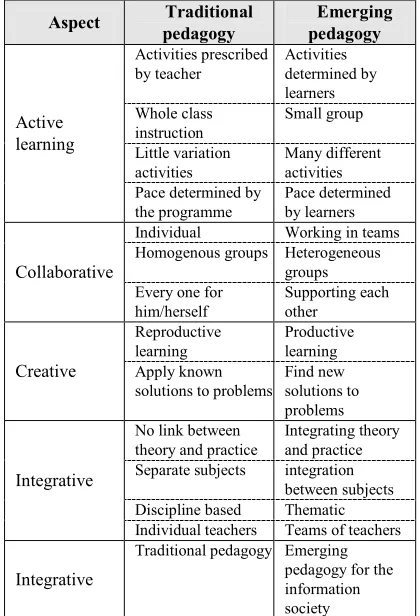
Voogt [34] described the basic roles of ICT's relevance in education as an object for study, a medium of instruction, and an aside of profession. In addition he distinguished between traditional learning and emerging pedagogy which based on
[image:4.612.318.528.153.466.2]constructivist approaches that fits to the use of computer and internet. These comparisons listed in Table 2 below.
Table 2: Overview of Pedagogy in the Traditional versus Information Society As adapted by Voogt [34].
Aspect Traditional pedagogy
Emerging pedagogy
Active learning
Activities prescribed by teacher
Activities determined by learners Whole class
instruction
Small group
Little variation activities
Many different activities Pace determined by
the programme
Pace determined by learners
Collaborative
Individual Working in teams Homogenous groups Heterogeneous
groups Every one for
him/herself
Supporting each other
Creative
Reproductive learning
Productive learning Apply known
solutions to problems
Find new solutions to problems
Integrative
No link between theory and practice
Integrating theory and practice Separate subjects integration
between subjects Discipline based Thematic Individual teachers Teams of teachers
Integrative
Traditional pedagogy Emerging pedagogy for the information society
Scheuermann and Pedró [35] urged many seasons pushed most countries to undertake considerable investments to develop technology employment in education, one of this important reason is the possess ability to fully integrate the knowledge economy driven by technology with society. In addition, ICT enable wider learners accessing to the same best practices education and course material regardless of geographical barriers and time, which have an impact on learners performance [32] and prepare them for the new global economy [36].
If we extrapolate the reality, find that the role of ICT in education will grow and develop continuously, because it becomes more important in all aspects of the life and the world engaging rapidly into digital media and information.
2.4.1 Palestinian's ICT background:
[image:4.612.318.528.155.463.2]recent four years. According to Solutions For Development Consulting Co. in 2013 [37], ICT sector employs 3% of workforce whom producing 8% of Palestinian GDP.
The reports of Solutions For Development Consulting Co. in 2013 [37], revealed that the Palestinian capabilities in the ICT sector not only harnessed locally, but also international market access in Europe, USA, North Africa, and Middle East, by enhancing export and supply some competitively experiences, services, or solutions with high quality standers. Many celebrated international firms include Cisco, Intel, Volvo, and Siemens [38].
These capabilities such as: micro processors and software development, business process outsourcing, staff augmentation, ERP customization, mobile applications, banking software, telemedicine, finance and accounting services, HR services [38]; enterprise resource management, school management, data
warehousing, courts automation,
telecommunications, internet solutions, portals, and archiving [39].
According to some statistical indicators, the outlook for the Palestinian ICT sector is promising trend. Statistics shows that:
• Approximately, 1500-1600 students specializing
in ICT fields graduated from Palestinian's Universities yearly [39].
• Approximately, 1512273 from 2622544 citizens
access to internet in Palestine (West Bank), that representing 57.7% of Palestinian population, and 1.7% of Middle East population [40].
• Percentage of enterprises used computer in 2011
was 49.6% in West Bank, and 40.8% in Gaza strip [41].
• Percentage of households own computer in 2013
was 54.1% in West Bank, and 43.5% in Gaza strip [41]. In 2011 the average became 50.9%, and in 2006 became 32.8% [42].
• Percentage of households had internet at home
in 2013 was 39.5% in West Bank, and 28.3% in Gaza strip [41]. In 2011 the average became 30.4%, and in 2006 became 15.9% [42].
• Percentage of households have mobile in 2013
was 96% in West Bank, and 97.1% in Gaza strip [41]. In 2011 the average became 95%, and in 2006 became 81% [42].
• Percentage of more than 10 years Palestinian's individuals used computer in 2011 was 53.7%, distributed as 54.8% in West Bank and 51.7% in Gaza strip [43].
• Percentage of establishments' employees who used computer in 2011 was 52.6% in West Bank, and 31.7% in Gaza strip [44].
Although, the ICT sector in Palestine growing and increasingly contributes well in Palestinian's GDP, but it still faces many challenges. The major challenges that Palestinian ICT firms faced are: skill set availability, limited market, political environment, poor ICT infrastructure, lack of funds, investment and regulations, competition, import restrictions, lack of innovation and focus, restrictions on movement of people and goods [38], limited telecommunications infrastructure, absence intellectual property law, and brain drain phenomenon [39].
AVASANT [38] analyzed the demand for ICT services based on the trade in various sectors; found that ICT services wide engaging with higher education sector, government sector, municipalities sector, tourism sector, commercial agribusiness, banking and financial services, and other professional services.
Therefore, it was necessary to study how to use ICT and IT in education process, and the achievement of its acceptance by users, in order to improve the quality of education and to share knowledge locally and globally after the world has become a small village due to the huge technological development.
2.4.2 : Palestinian universities and what
domestic ICT promised.
Higher education and universities are intending and planning to acquisition several of ICT firm's services in the foreseeable future according to AVASANT [38] final report such as: enterprise resource planning (ERP), document and content management systems, e-Learning systems, VoIP and network solutions, broadband internet, telecommunication solutions, mobile applications, storage, servers, and databases.
Wihaidi [45] pointed that there are many Palestinian specialists in diverse software-based ICT technical skills ordered from top as follow: MS Windows (53.5%), HTML (42.1%), C++ (42.1%), Oracle (37.8%), Java (35.4), Linux (29.2), Router Configuration, MySQL, Cisco, .NET, XML, C#, PHP, ISP, Shell Scripting, Novell, J2EE, Cobra, SAP, Mainframe, and COM/DCOM. These experiences could meet the various domestic and international markets demands.
2.4.3 Higher Education Sector in Palestine:
Educational system in Palestine faced many challenges due to the ongoing Palestinian and Israeli conflict, which represented in frequent closure and mobility restrictions; checkpoint barriers set up by the occupation army that separates teachers and students from their education institutions [46]; the establishment of Israeli settlements in the vicinity of Palestinian towns and villages; and the built of apartheid wall by Israelis which surrounds all governorates in Occupied Palestinian Territories and had a negative impact on the Palestinian economy and its institutions, whether educational or commercial ones.
The total number of students in Palestinian universities increased from 185011 in 2009/2010 to 201308 in 2012/2013, as shown in Table 3 below. Besides that, the teaching Staff at these Universities increased from 5557 in 2009/2010 to 6641 in 2012/2013 [43]. This is an indication of the annual increase in the number of lecturers as well as students in proportion with the increase in population, which calls for future expansion or increase the number of these universities.
Table 3: Higher Education Indicators in Palestine, 2009/2010-2012/2013 [43]
indicator
Scholastic Year
2009/ 2010
2010/ 2011
2011/ 2011
2012/ 2013
University Students*
Males 79,047 84,501 85,190 81,052 Females 105,964 116,888 119,930 120,256
Both Sexes 185,011 201,389 205,120 201,308
University Graduates*
Males 11,582 12,075 13,058 … Females 17,171 18,161 19,493 …
Both Sexes 28,753 30,236 32,551 …
Teaching Staff at Universities**
Males 4,598 5,204 5,340 5,309 Females 959 1,198 1,285 1,332
Both Sexes 5,557 6,402 6,625 6,641
*University data include students and graduates. ** Full time and part time.
Higher education in Palestine includes 53 accredited institutions in the West Bank and Gaza Strip, distributed as follows: 14 traditional universities, 1 Open University, 18 university colleges, and 20 community colleges [64]. At the university level, bachelor's degree duration at least four years. But at postgraduate level which leading to a higher diploma, a master's, or a doctorate degree programmes, the duration of these studies are normally two years at least to complete [27].
UNESCO in 2011 [27], wrote in their report a review of the main objectives of the Ministry of Education and Higher Education in Palestine that concerning with laws and basic regulations on education, structure and organization of education, administration and management of education, and the education process.
2.4.4 E-Learning Technology in Palestine:
Solutions For Development Consulting Co. [37], suggested in their report's recommendation to promote the ICT application usage in the system of basic education through collaboration of academic higher education institutions with private investments.
Shraim [53] reported that a research finding shows the positive attitudes of Palestinians higher education instructors to proceed to the e-Learning initiative. Added Shraim [53], to enable them to make full use of possibilities of e-Learning great efforts should be made.
E-Learning in the Palestinian higher education sector is growing rapidly, so that most Palestinian universities offer different forms of online education [53][48].
2.5. Structural Equation Modeling (SEM) SEM widely used in the behavioral sciences as comprehensive statistical technique to testing hypothesis about directional and non-directional relationships among latent (unobserved) and observed variables [49]. Observable (measured) variables represent the sets of responses to the survey questions, while latent variables (factors) estimated from observed variables.
The main purposes of SEM are to obtain estimates of the model parameters, and to assess whether the model provides a good fit to the data.
2.6. International Studies
e-Learning technology, whether in institutions or universities.
Phua et al. [50], provided some baseline information about the factors influencing the behavioural intention of teachers within 10 districts in the state of Selangor to use the internet as a teaching-learning tool in home economics, based on TAM.
Farahat [51], introduced a conceptual framework based on updating TAM model, in order to examine and identify the factors affecting students' behavioral intention to learn online in Egyptian Universities.
Asiri et al. [52], presented a theoretical framework based on TRA and TAM, to examine factors that influence the attitude of Saudi Arabian faculty members towards using of the Jusur Learning Management System (Jusur LMS) one of the e-Learning management tools used in public universities.
Shraim [53], investigated the factors affecting academic staff towards the adoption of e-Learning Paradigm by conducting a semi-structured interviews with different teaching staff at Birzeit University, from a cross section of different academic departments. In this research, the proposed model was based on TAM model which developed by integrating with (social/individual characteristics and technological factors, and organizational/ contextual factors).
From these researches and studies that are based on different models for technology acceptance, which presented a framework suited the nature of a particular country, we can develop and implement a comprehensive framework suited to Palestinian universities to accept e-Learning by lecturers.
3.
RESEARCH MODEL AND HYPOTHESESDEVELOPMENT
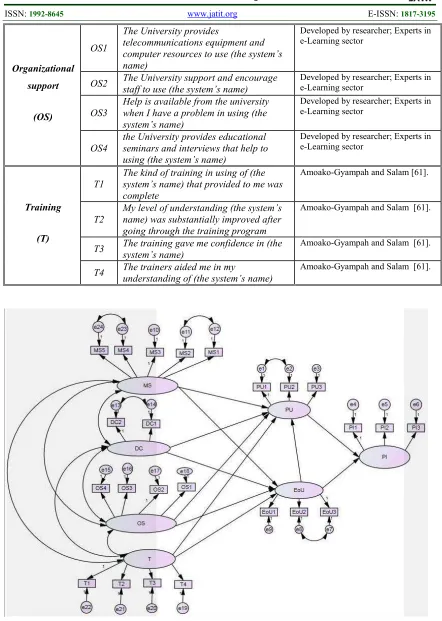
The proposed model is presented in figure 2. This model based on TAM factors which have been investigated by many of IS researchers who were agreed on its validity in predicting the users’ intention towards adopt various systems [54]. In addition, the TAM was extended to investigate the affect of intervention factors, on predicting the perceived ease of use and perceived usefulness.
Fig. 2: Research Model
3.1. Perceived Ease of Use and Perceived Usefulness
Perceived ease of use, is defined as "the degree to which a person believes that using an IT will be free of effort" [10]. To understand the determinants of perceived ease of use of any system-specific or technology, Venkatesh [11] explored how user's perceptions formed and changed over time along with growing expertise with the target system. Theoretically, perceived ease of use is closely related to individual's self-efficacy based on hands-on experience and executihands-on of skills.
Perceived usefulness is another important factor that influences lecturer's adoption of new technology which is defined as "the extent to which a person believes that using the system will enhance his or her job performance" [55].
Several studies were employed different measures to investigate the relationship among TAM factors [50] [6][55][54][11], and find that perceived ease of use and perceived usefulness have a close correlation with behavioral intention to use any new technology, and find that perceived ease of use has a close correlation with perceived usefulness. Hence the following hypotheses were developed:
Hypothesis 1: Perceived usefulness will positively affect instructor's behavioral intention to adopt and use e-Learning.
Hypothesis 2: Perceived ease of use will positively affect instructor's behavioral intention to adopt and use e-Learning.
Hypothesis 3: Perceived ease of use will positively affect instructor's perceived usefulness of using e-Learning.
3.2. Management Support
implementation success[56], and suggested to be one of the most critical success factors for the complex systems [56].
This factor refers to "the degree to which an individual believes that management has committed to the successful implementation and use of a system" [6]. So, managers such as: middle managers, senior executives, or direct supervisors are considered to be as significant sources of interventions who can intervene directly by using features of IT, incentive structures, or directing enhancement of new system applications; or indirectly by providing resources, sponsoring, or issuing guidance and directives [4][57].
Accordingly, the instructors who belief that they will gain management support pre-implementation of e-Learning system, which needs development in educational roles and universities structures, they will have a positive influence on the adoption of e-Learning system. Hence the following hypotheses were developed:
Hypothesis 4: Management support will positively affect instructor's perceived usefulness of using e-Learning system.
Hypothesis 5: Perceived usefulness will positively affect instructor's perceived ease of using e-Learning system.
3.3. Design Characteristics
Design characteristics can be categorized into information-related characteristics such as: accuracy, currency, completeness, and personalization, or system-related characteristics such as: accessibility, reliability, flexibility, adaptability, usability, and interactivity [59] [58][6].
Accordingly, the design features of the e-Learning system can positively influence instructors’ perceptions about the ease of use and the usefulness of the system. Hence the following hypotheses were developed:
Hypothesis 6: Design characteristics will positively affect instructor's perceived usefulness of using e-Learning system.
Hypothesis 7: Design characteristics will positively affect instructor's perceived ease of using e-Learning system.
3.4. Organizational Support
Organizational support constitutes institutional activities or functions whether they are formal or informal that assist users in the new system usage in various forms [6]. As well, organizational support
refers to procedures, practices, and policies that explore the importance of efforts related to training and development, such as reward systems [57].
In accordance with [6][40][60] studies, there is a positive effect of facilitating condition, post-implementation e-Learning system, on instructors’ perceptions about the ease of use and the usefulness of the system. Hence the following hypotheses were developed:
Hypothesis 8: Organizational support will
positively affect instructor's perceived usefulness of using e-Learning system.
Hypothesis 9: Organizational support will
positively affect instructor's perceived ease of using e-Learning system.
3.5. Training
Training provides users with a hands-on mechanism to deployment of useful relevant information about the new system, and allowing them to explore the system from a technical standpoint and functional perspective [61]. Furthermore, training interventions can mitigate the invoke of passive reaction from users toward the new system [6].
According to the [6][60] studies, the trainees when obtain adequate training, it would qualify their familiarities with any technology. And thus, this will affect positively on their perceptions about the ease of use and the usefulness of the system. Hence the following hypotheses were developed:
Hypothesis 10: Training will positively affect instructor's perceived usefulness of using e-Learning system.
Hypothesis 11: Training will positively affect instructor's perceived ease of using e-Learning system.
4.
METHODOLOGYA quantitative structured survey method has been used to answer the research questions and to test hypotheses. Quantitative data were related to TAM and interventional factors that influence the adoption of e-Learning collected via a survey technique which was distributed to a random sample (n=352) of full-time lecturers at twelve universities distributed in West Bank and Gaza in Palestine. The researcher retrieved 305 responses with a response rate of 86.6%.
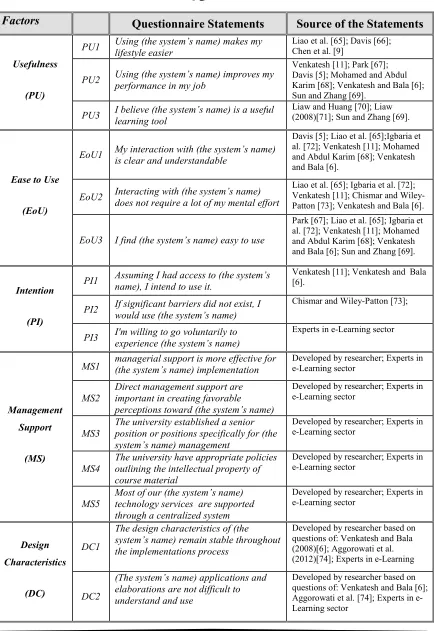
Research questionnaire was designed with closed questions which allowed respondents to make quick choices among a set of alternatives based on five-points Likert-scale that has helped in achieving the objectives of this research by providing a accurate data and results without ambiguous despite the large size of the research population. The questionnaire consisted of nine sections: Section One, represents personnel information which elicited such information as gender, age, faculty, teaching experience, and academic rank; Section Two, some questions were set to measure the computer and internet usage; Section Three, consists of twenty-four statements to examine the variables were determined in the previously proposed framework in this study. The third section statements which listed in Table 4, developed based on specific previous empirical studies as a main source, and on the viewpoint of universities' experts in e-Learning fields.
The survey content was validated by a group of experts and arbitrators who reviewed, and by a pilot test which conducted with a twenty participant who were not involved in the actual data collection process. Then the reliability of the survey was tested by using Cronbach’s alpha method that ranged from 0.70 to 0.95, bigger than 0.70 for all factors in the model (Table 5). Thus, the research tool is considered reliable.
Table 5: Reliability Statics of Factors Influencing e-Learning.
Factor Influencing e-Learning
Adoption Cronbach's alpha
Usefulness 0.780
Ease to Use 0.740
Intention 0.864
Management Support 0.754
Design Characteristics 0.700
Organizational support 0.894
Training 0.954
The research questionnaire was collected, then its variables were coded and defined in to the (SPSS v23) program by which various statistical analysis tools were employed in order to investigate factors influencing e-Learning adoption.
5.
RESULTS AND FINDINGSThe results of data analysis which were collected via survey indicate that all statements are significant and inter-item correlated (Table 6), and indicate that there are some statistical differences among participants according to their ages, colleges, universities, internet usage, and computer usage. Furthermore, the results indicated that the highest percentage of participants are males (83%), aged 40-49 years old (34.1%), from An-Najah National University (25.2%), lecturing in human faculties (50.8%), having teaching experiences 6-10 years (30.2%), ranked into assistant (43%), using internet from 1-3 hours per day (47.9%), using internet speed 2M (42.6%), and using computer at work every day from 1-3 hours (51.5%).
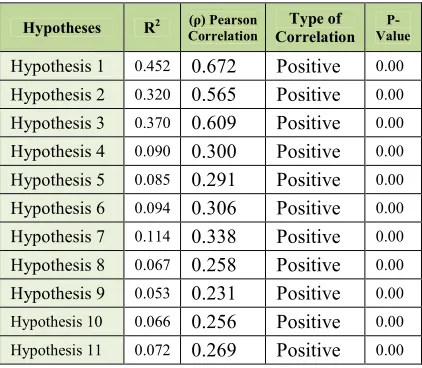
[image:9.612.308.519.474.658.2]In addition, all hypotheses that derived from TAM and that related to intervention factors were supported and significant at 99% as shown in Table 7. And the coefficient of determination of intention to use e-Learning in the research framework is 50.3%, where perceived usefulness is the strongest intention determinant as the results shown.
Table 7: Results of Hypothesis Testing
Hypotheses R2 (ρ) Pearson
Correlation
Type of Correlation
P-Value
Hypothesis 1 0.452 0.672 Positive 0.00
Hypothesis 2 0.320 0.565 Positive 0.00 Hypothesis 3 0.370 0.609 Positive 0.00 Hypothesis 4 0.090 0.300 Positive 0.00 Hypothesis 5 0.085 0.291 Positive 0.00
Hypothesis 6 0.094 0.306 Positive 0.00 Hypothesis 7 0.114 0.338 Positive 0.00 Hypothesis 8 0.067 0.258 Positive 0.00
Hypothesis 9 0.053 0.231 Positive 0.00 Hypothesis 10 0.066 0.256 Positive 0.00
Hypothesis 11 0.072 0.269 Positive 0.00
5.1. Behavioral Intention Results
(R2=0.452), and ease of use explain 32% (R2=0.320) of the variance on intention to use e-Learning, where R2 represents the coefficient of determination, their values shown in Table 6.
5.2. Perceived Usefulness Results
The results of linear regression analysis (Table 6) shows that perceived usefulness is jointly predicted by perceived ease of use (ρ=0.609, P<0.01), management support (ρ=0.300, P<0.01), design characteristics (ρ=0.306, P<0.01), organizational support (ρ=0.258, P<0.01), and training (ρ=0.256, P<0.01). These factors explain the factor usefulness of using e-Learning technology as following percentages: ease of use 37% (R2=0.370), management support 9% (R2=0.090), design characteristics 9.4% (R2=0.094), organizational support 6.7% (R2=0.067), and training 6.6% (R2=0.066).
5.3. Perceived Ease of Use Results
The results of linear regression analysis shows that perceived ease of use is jointly predicted by management support (ρ=0.291, P<0.01), design characteristics (ρ=0.338, P<0.01), organizational support (ρ=0.231, P<0.01), and training (ρ=0.269, P<0.01). These factors explain the factor perception ease of use toward using e-Learning as following percentages: management support 8.5% (R2=0.085), design characteristics 11.4% (R2=0.114), organizational support 5.3% (R2=0.053), and training 7.2% (R2=0.072), (Table 7).
5.4. Correlations Among Groups Intervention Factors
[image:10.612.312.527.270.504.2]There are significant correlations among Intervention factors. All these homogenous factors are connected with each other. The following Table 8 explores the positive correlations among these factors as empirical study shows:
Table 8: Correlations Among Intervention Factors
Intervention Factor Management Support
Design Characteristi
cs
Organiza tional Support
Training
Management Support
Pearson Correlati on
1 .433** .656** .556**
Sig.
(2-tailed) .000 .000 .000
Design Characteristics
Pearson Correlati on
1 .383**
.401**
Sig.
(2-tailed) .000 .000
Organizational Support
Pearson Correlati on
1 .628**
Sig.
(2-tailed) .000
**. Correlation is significant at the 0.01 level (2-tailed). *. Correlation is significant at the 0.05 level (2-tailed).
5.5. A Framework Testing Results
Based on the results of hypotheses, the researcher determined the framework for e-Learning adoption (Figure 4).
5.6. The Structural Model Results
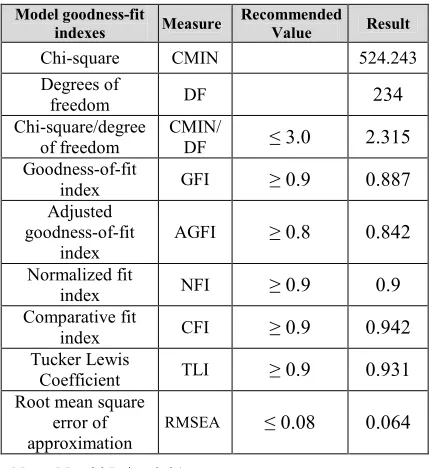
This study used the commonly measures of model fit which are summarized in Table 9, based on the analysis of the structural model by IPM SPSS AMOS v23.0 software.
According to Bollen’s [62] criteria, the results indicated an acceptance fit to the data and the model was fully identified.
Table 9: SEM Statistics of Model Fit
Model goodness-fit
indexes Measure
Recommended
Value Result
Chi-square CMIN 524.243 Degrees of
freedom DF 234
Chi-square/degree of freedom
CMIN/
DF ≤ 3.0 2.315
Goodness-of-fit
index GFI ≥ 0.9 0.887 Adjusted
goodness-of-fit index
AGFI ≥ 0.8 0.842
Normalized fit
index NFI ≥ 0.9 0.9 Comparative fit
index CFI ≥ 0.9 0.942 Tucker Lewis
Coefficient TLI ≥ 0.9 0.931 Root mean square
error of approximation
RMSEA ≤ 0.08 0.064
Note: N = 305, *p<0.01
Table 10 summarizes the standardized causal effects of the observed variables on the latent variables.
Direct effects represents those where the change in one variable (e.g. x) results on a change in variable y (x → y). While indirect effects occur
when a change in variable y contingent on a change in x operates through a mediator variable z (x → z
→ y).
[image:10.612.89.302.571.713.2]Table 10: Standardized Causal Effects
Factors Determination Direct Effect
Indirect Effect
Total Effect
Intention
PI
DC - 4.217 4.217 T - -0.606 -0.606 OS - 7.454 7.454 MS - -10.264 -10.264 EoU -1.447 1.938 0.491 PU 2.288 - 2.288
Usefulness
PU
DC 1.492 1.338 2.830 T -0.138 -0.502 -0.640 OS 3.553 -1.164 2.389 MS -4.663 0.695 -3.968 EoU 0.874 - 0.874 Ease of
Use
EoU
DC 1.638 - 1.638 T -0.592 - -0.592 OS -1.374 - -1.374 MS 0.820 - 0.820
6.
DISCUSSIONThis section presents the dissection of the research results and findings of analysis for the data collected via survey.
6.1. Hypotheses Testing Discussion
All hypotheses are supported and significant at 99%. This indicates that all results are logical and can be adopted.
6.2. Personal Information and Technology Usage Discussion
The highest percentage of participants is males who form 83.0% of respondents. This corresponds to what is indicated by the statistics of the Ministry of Education and Higher Education in 2013, which showed that the ratio of males to females who were hired in the Palestinian universities as 84% to 16%.
Furthermore, the highest percentage of participants from An-Najah National University who form 25.2% of participants. This result is expected; because An-Najah University is the largest Palestinian universities in terms of the number of lecturers and students [64].
6.3. Discussion of Statistical Differences according to Lecturer College
These Results indicates that lecturers who specialist in Human Science, have better perception about the training they received for the use of e-Learning without any of invoke passive reaction. Therefore, they realized the extent of management's commitment to the implementation of all forms of learning that are supported by emerging technologies, and they hold the e-Learning
functionality which they considered tangible and observable. So, they have a higher intention to use e-Learning.
As for the specialists in the natural sciences who are familiar with emerging technology, because of the need to use it, whether it was during the study or in the education process, they did not feel or catch the difference and did not touch the results of the use of e-Learning as the lecturers who specialize in Human Science. Perhaps their experience in employing and using of technology, made them able to identify the e-Learning quality based on the efficient of its functions, interactions, and contents.
6.4. Discussion of Statistical Differences according to Age
The results indicate that the participants aged in the forties who have dealt with various traditional systems of education and by virtue of their experience, they realized the usefulness and benefits of e-Learning and its impact on the progress of education process. This is contrary to the impression of elderly aged 50 and more who felt that e-Learning has become a burden. As it also contradicts the perception of participants aged in the twenties who are familiar with technology where they also aware of how optimal use of its application in their job, and in this area of technology there is a fact that is dealing with computer became a mandatory requirement in education, and essential to have someone the opportunity to employment, that's what made them do not feel the substantial difference toward the usefulness of e-Learning.
And, the results indicate that the participants who are in the thirties and forties have received professional developments and adequate training to handle the organizational and technical resources for use in e-Learning, more than participants who their ages crossed the fifties; that because who aged fifties and more are accustomed to the traditional education system, moreover they have awe toward culture change and technology use.
importance management support in the implementation phase will be increased.
6.5. Discussion of Statistical Differences according to University
The results of statistical differences between universities superiority appear in perception in favor of Hebron, Islamic, Al-Quds Open University, and Bethlehem universities in most factors that affect e-Learning acceptance by lecturers, especially those related to interventional factors which considered to be more tangible from the viewpoint of lecturers in those universities when compared to the others.
The lecturers of those universities clearly had received a hands-on mechanism to employing the e-Learning in education process, and to explore the emerging technologies from a technical standpoint and functional perspective.
6.6. Discussion of Statistical Differences according to Internet Usage
These results indicates that participants who represents the least of internet usage per hours per day have lowest believe that management has committed to successful implementation and use of e-Learning system when compared to others who use internet more than 3 hours per day, and thus its impact on behavioral intention toward the actual use of e-Learning technology. So, the more hours of internet use leads to better results in the e-Learning adoption.
6.7. Discussion of Statistical Differences according to Computer Usage
These results indicates that participants who represents the least of computer usage per hours per day have lowest believe that university activates or functions assist and support users in the e-Learning system usage in various forms when compared to others who use computer more than 3 hours per day. So, the more hours of computer use leads to better results in the e-Learning adoption.
6.8. Discussion of Correlations Among Grouped Factors
All interventional factors in the research framework are connected with each other with a significant correlations. This indicates for instance, increased effort to train lecturers on the use of e-Learning system will raise the level of organizational support, and thus positively push up the lecturers perceived ease of use, and this is what will increase their Intention to adopt and use the system.
7.
CONCLUSIONThe discussion results in the previous section appear that the role of institutional interventions are very important in achieving high level of e-Learning adoption among faculty members. In addition, whenever the speed of Internet be higher, and the more hours using a computer and Internet by lecturers, it will enhance their e-Learning acceptance.
And, based on the research findings, Palestinian universities should work on their enhancing operational processes, developing e-Learning infrastructure, introducing services with high quality, overcoming lecturers anxiety from using a computer and enhancing their self-efficacy in dealing with new technology, and coordinating with other entities such as government, ICT companies, and offices transfer software programs; according to new strategies to be formed for these purposes.
In addition, with regard to research results present following conclusions:
• Universities should promote their role to achieve high level of e-Learning adoption through involving lecturers and students in the development process to decline the resistance to change when applying new technology, utilizing ease of use applications and tools, showing the usefulness of e-learning and its positive outcomes in a manner that stimulates the use after presenting its result demonstrability.
• IT centers in the universities should cooperate
with internet companies in Palestine to provide lecturers with special offers in order to increase the use of internet. The study demonstrated that when the number of hours of internet usage by lecturers per day has increased, it will create a positive impression toward management support, and thus promote their intention to use e-Learning.
• Universities should train their lecturers to use
the computer and its programs effectively in order to encourage them to use a computer more hours per day when performing specific tasks or jobs. This would enhance their believes that organizational and technical resources exist to support the use e-Learning system.
• Universities management should committed to a
considered to be the weakest in the field of management support.
• Universities should mitigate the invoke passive
reaction of the lecturers toward e-Learning, and should ensure that lecturers received an adequate training to handle the organizational and technical resources for use in e-Learning at universities which are considered to be the weakest in the field of organizational support and training.
• Universities should coordinate with experts in
the field of e-Learning to make lecturers listen to success stories, especially the elderly lecturers. In this way, lecturers can be aware of the usefulness of e-Learning.
8.
RESEARCH LIMITATIONSThis study limited its scope to examining the interventional factors influencing the e-Learning adoption based on TAM model. The study population was limited to the lecturers of all universities in Palestine.
9.
FUTURE STUDIESThe following topics could be studied in the future, which may contribute on developing e-Learning and its usage: studying the factors that affecting e-Learning acceptance by students, and studying the possibility of delivering mobile learning materials or interactive content in universities.
REFERENCES
[1] Sun, P., Tsai, R., Finger, G., Chen, Y., and Yeh, D. (2008). What drives a successful e-Learning? An empirical investigation of the critical factors influencing learner satisfaction. Computers and Education 50 1183–1202.
[2] Adkins, S. (2013). The Worldwide Market for Self-paced eLearning Products and Services: 2011-2016 Forecast and Analysis. January 2013.
[3] Wang, W., and Wang, C. (2009). A System Dynamic Model Of Teacher’s Adoption Of e-Learning System By Integration Of Environment Variables And Teacher’s Characteristics.
[4] Jasperson, J., Carter, P., and Zmud, R. (2005). A comprehensive conceptualization of the post-adoptive behaviors associated with IT-enabled work systems. MIS Quarterly, 29, 525–557.
[5] Davis, F. (1989). Perceived Usefulness, Perceived Ease to Use, and User Acceptance of Information Technology. MIS Quarterly, Vol. 13, No. 3, pp. 319-340.
[6] Venkatesh, V., and Bala, H. (2008). Technology acceptance model 3 and a research agenda on interventions. Decision
Sciences, 39(2): 273-315. 11.
DOI:10.1111/j.1540-5915.2008.00192.x
[7] Cooper, R., and Zmud, R. (1990). Information technology implementation research: A technological diffusion approach. Management Science, 36, 123–139.
[8] Fishbein, M., and Ajzen, I. (1975). Belief, Attitude, Intention and Behavior: An Introduction to Theory and Research. Addison-Wesley, Reading, MA.
[9] Chen, S., Li, S., and Li, C. (2011). Recent Related Research In Technology Acceptance Model: A Literature Review. Australian Journal of Business and Management Research Vol.1 No.9 - 124-127 December. [10] Davis, F., Bagozzi, R., andWarshaw, P.
(1989). User acceptance of computer technology: A comparison of two theoretical models. Management Science, 35, 982–1002. [11] Venkatesh, V. (2000). Determinants of Perceived Ease of Use: Integrating Control, Intrinsic Motivation, and Emotion into the Technology Acceptance Model. Information Systems Research. Vol. 11, No. 4, December, 342–365
[12] Hambrecht, W. (2000). Report on e-Learning.
[13] Hedge, N., and Hayward, L. (2004). Reading roles:University e-Learning contributing to life-long learning in networked world.www.nationamaster.com.
[14] Triacca, L., Bolchini, D., Botturi, L., and Inversini, A. (2004). Mile: Systematic usability evaluation for e-Learning web applications. AACE Journal, 12(4).
approach. Personal Ubiquitous Computing. 13(3): 229-241, Mar.
[16] Clark, R. (2002). Six principles of effective Learning: What works and why. The e-Learning Developer's Journal, 1−10.
[17] Mahanta, D., and Ahmed, M. (2012). e-Learning Objectives, Methodologies, Tools and its Limitation. International Journal of Innovative Technology and Exploring Engineering (IJITEE). Volume-2, Issue-1, December
[18] Dringus, L., and Cohen, M. (2005). An adaptable usability heuristic checklist for online courses. 35th Annual FIE '05. Presented at the Frontiers in Education [19] Keegan, D., Schwenke, E., Fritsch, H.,
Kenny, G., Kismihók, G., Bíró, M., Gábor, A., Ó’Suilleabháin, G., and Nix, J. (2005). Virtual Classrooms In EducationalProvision: Synchronous Elearning Systems For European Institutions. Virtual Classrooms In Educational Provision, FernUniversität ZIFF Papiere 126 July.
[20] Gremu, C. (2012). The educational value of integrating a learning management system and a social networking platform.
[21] Guenaneche, H., and Radigales, F. (2008). E-learning Platforms. Moodle and Dokeos. Communication Software Laboratory Academic Year 2007-2008. Retrieved April, 15, 2014 from
[22] Ilechukwu, L. (2013). The Assessment Of Utilization Of e-Learning Opportunities For Effective Teaching And Learning Of Religion In Nigerian Tertiary Institutions. European Journal of Educational Studies 5(3)
[23] Marozas, V., Jegelavicius, D., Kybartaite, A., and Nousiainen, J. (2007). Review of e-teaching/e-learning practices and technologies. EVICAB project report, available at: www.evicab.eu.
[24] Lado, A. (2005). Asynchronous e-Learning. Online. Retrieved Aug 9, 2014, from
http://www.rau.ro/websites/e-society/lucrari/adrian%20lado.pdf
[25] Bates, T. (2005). Online Learning Tools and Technologies. Retrieved Aug 9, 2014, from
http://www.tonybates.ca/wp- content/uploads/2008/07/online-learning-tools.pdf
[26] Babić, S. (2012). Factors that Influence
Academic Teacher's Acceptance of e-Learning Technology in Blended e-Learning Environment. e-Learning-Organizational Infrastructure and Tools for Specific Areas, Prof. Adilson Guelfi (Ed.), ISBN: 978-953-51-0053-9, InTech.
[27] Qureshi, I., Ilyas, K., Yasmin, R., & Whitty, M. (2012). Challenges of implementing e-learning in a Pakistani university. Knowledge Management & E-Learning: An International Journal, Vol.4, No.3.
[28] Gary, J. (2004). Advantages & disadvantages of online learning.
[29] Andersson, A., and Grönlund, Å. (2009). A Conceptual framework for e-learning in Developing countries: A critical review of research challenges. The Electronic Journal of Information System in Developing Countries, 38(8).
[30] UNDP (2005). Regional Human
Development Report. Promoting ICT for Human Development in Asia: Realizing the Millennium Development Goals. New Delhi: Elsevier. Retrieved August 15, 2014 from file:///C:/Users/sameer/Downloads/rhdr.pdf
[31] Mikre, F. (2012). The Roles of Information Communication Technologies in Education: Review Article with Emphasis to the Computer and Internet. Ethiopian Journal of Education and Sciences. Ethiop. J. Educ. & Sc. Vol. 6 No 2.
[32] Noor-Ul-Amin, S. (2013). An effective use of ICT for education and learning by drawing on worldwide knowledge, research and experience: ICT as a change agent for education (A Literature review). Scholarly Journal of Education Vol. 2(4), pp. 38-45, April.
[33] Tinio, V. (2002). ICT in Education. United Nations Development Programme. Retrieved
August 14, 2014 from
http://2002.bilisimsurasi.org.tr/egitim/eprime r-edu.pdf
[34] Voogt, J. (2003). Consequences of ICT for aims, contents, processes, and environments of learning. In J.van den Akker, W. Kuiper & U. Hameyer (Eds.), Curriculum landscapes and trends (pp 217 –236). Dordrecht: Kluwer Academic Publishers.
international comparisons. Retrieved August 14, 2014 from http://www.crie.min-edu.pt/files/@crie/1278088469_AssessingTh eEffectsOfICTinEducation.pdf
[36] Kozma, R. (2005). National Policies That Connect ICT-Based Education Reform to Economic And Social Development. Human Technol. 1(2):117-156.
[37] Solutions For Development Consulting Co. (2013). Palestinian ICT Sector 2.0: Technology Sector Development Report and Recommendations Relevant to Regional and Global Market Opportunities.
[38] AVASANT (2013). Palestinian ICT Market Penetration Study, Final Report. PITA, 2013, June.
[39] Solutions for Development Consulting CO. (2012). The Palestinian ICT Private Sector 3-Year Strategy and Development Plan. PITA, 2012.
[40] Internet World Stats, (2012). Retrieved
August 16, 2014 from
http://www.internetworldstats.com/stats5.ht m
[41] Palestinian Central Bureau of Statistics, (2014a). Main Statistical Indicators in the West Bank and Gaza Strip. Ramallah-Palestine. Retrieved August 17, 2014 from http://www.pcbs.gov.ps/Statistical%20Main %20Indicators%20_E.htm
[42] Palestinian Central Bureau of Statistics, (2011). Household Survey on Information and Communications Technology. Retrieved
August 19, 2014 from
http://www.pcbs.gov.ps/Portals/_PCBS/Dow nloads/book1809.pdf
[43] Palestinian Central Bureau of Statistics, (2014b). Palestine in Figures2013. Ramallah – Palestine. Retrieved August 20, 2014 from file:///D:/Downloads/EM%20master/Theses/ E%20Learning/AAA/used/16%20education1 .pdf
[44] Palestinian Central Bureau of Statistics, (2013). Main Statistical Indicators in the West Bank and Gaza Strip. Ramallah-Palestine. Retrieved August 18, 2014 from http://www.pcbs.gov.ps/portals/_pcbs/PressR elease/Press_En_ITWD2013E.pdf
[45] Wihaidi, R. (2009). The Palestinian ICT Sector…A Three-YearOutlook…Based on Economic Indicators. PITA: The Palestine Information and Communications of
Companies.
[46] Nicolai, S. (2007). Fragmented foundations: Education and chronic crisis in the occupied Palestinian territory. Paris, France: UNESCO, International Institute for Educational Planning, and London, England: Save the Children UK.
[47] UNESCO (2011). World Data on Education. 7th edition. Retrieved 15, 2014 from http://www.ibe.unesco.org/fileadmin/user_up
load/Publications/WDE/2010/pdf-versions/Palestine.pdf
[48] Mikki, M., and Jondi, N. (2010). eLearning in Palestine. In U. Demiray, Cases on challenges facing e-learning and national development: Institutional studies and practices (Vol 2) (pp. 627–652). Eskisehir, Turkey: Anadolu University.
[49] Hoyle, H., and Panter, T. (1995). Writing about structural equation models. In R. H. Hoyle (Ed.), Structural equation modeling (pp. 158-176). Thousand Oaks, CA: Sage
[50] Phua, P., Wong, S., and Abu, R. (2012). Factors influencing the behavioural intention to use the internet as a teaching-learning tool in home economics. Procedia - Social and Behavioral Sciences 59, 180 – 187.
[51] Farahat, T. (2012). Applying the Technology Acceptance Model to Online Learning in the Egyptian Universities. Procedia - Social and Behavioral Sciences 64 95 – 104
[52] Asiri, M., bt Mahmud R., Abu Bakar K., and Mohd Ayub A. (2012). Factors Influencing the Use of Learning Management System in Saudi Arabian Higher Education: A Theoretical Framework. Published by Canadian Center of Science and Education.
[53] Shraim, K. (2010). Factors Affecting Adoption of E-learning Paradigm: Perceptions of Higher Education Instructors in Palestine. The 4th Palestinian Faculty Development Program (PFDP) Academic Colloquium 2010, Ramallah, July 31st -August 1st, 2010.
[54] AL-Ammari, J., and Hamad, S. (2008). Factors Influencing The Adoption of e-Learning At UOB. This paper presented in "International Conference and Exibition For Zaine e-Learning center".
Studies. Management Science, 46, 186-204. [56] Liang, H., Saraf, N., Hu, Q., and Xue, Y.
(2007). Assimilation of enterprise systems: The effect of institutional pressures and the mediating role of top management. MIS Quarterly, 31, 59–87.
[57] Tracey, J., Hinkin, T., Tannenbaum, S., and Mathieu, J. (2001). The influence of individual characteristics and the work environment on varying levels of training outcomes. Human Resources Development Quarterly, 12(1), 5-23.
[58] Wixom, B., and Todd, P. (2005). A theoretical integration of user satisfaction and technology acceptance. Information Systems Research, vol. 16, pp. 85-102. [59] Wang, Y., Wang, H., and Shee, D. (2007).
Measuring e-learning systems success in an organizational context: scale development and validation. Computers in Human Behavior, vol. 23, pp. 1792-1808.
[60] Allahyari, A., and Ramazani, M. (2012). Studying Impact of Organizational Factors in Information Technology Acceptance in Accounting Occupation by Use of TAM Model (Iranian Case Study). ARPN Journal of Systems and Software. VOL. 2, NO. 1, January.
[61] Amoako-Gyampah, K., and Salam, A. (2004). An extension of the technology acceptance model in an ERP implementation environment. Information and Management, 41, 731–745.
[62] Bollen, M. (1998). Structural equations with latent variables. New York: Wiley.
[63] Cohen, J. (1992). A power primer. Psychological Bulletin, 11, 155-159.
[64] Ministry of Education and Higher Education (2013). Annual Statistical Guide, 2012/2013 for Palestinian Higher Education Institutions, Ramallah, Palestine.
[65] Liao, C., Tsou, C., and Shu, Y. (2008). The Roles of Perceived Enjoyment and Price Perception in Determining Acceptance of Multimedia-on-Demand. International Journal of Business and Information. Volume 3, Number 1, June.
[66] Davis, F. (1993). User acceptance of
information technology: system
characteristics, user perceptions and behavioral impact. Int. J. Man-Machine
Studies 38, 475-487.
[67] Park, S. (2009). An Analysis of the Technology Acceptance Model in Understanding University Students' Behavioral Intention to Use e-Learning. Educational Technology and Society, 12 (3), 150–162.
[68] Mohamed, M., and Abdul-Karim, N. (2012). Open Source E-learning Anxiety, Self-Efficacy and Acceptance – A Partial Least Square Approach. International Journal Of Mathematics And Computers In Simulation. Issue 4, Volume 6, 361-368.
[69] Sun, H., and Zhang, P. (2006). Causal Relationships between Perceived Enjoyment and Perceived Ease of Use: An Alternative Approach. Journal of the Association for Information Systems Vol. 7 No. 9, pp. 618-645/September.
[70] Liaw, S., and Huang, H. (2011). A study of investigating learners attitudes toward e-learning. 5th International Conference on Distance Learning and Education. IPCSIT vol.12 IACSIT Press, Singapore
[71] Liaw, S. (2008). Investigating students’ perceived satisfaction, behavioral intention, and effectiveness of e-learning: A case study of the Blackboard system. Computers and Education, 51, 864–873.
[72] Igbaria, M., and Iivari, J. (1995). The effects of self-efficacy on computer usage. Omega, 23(6), pp. 587-605.
[73] Chismar, W., Wiley-Patton, S., (2003). Does the Extended Technology Acceptance Model Apply to Physicians. Proceedings of the 36th Hawaii International Conference on System Sciences. IEEE Comput. Soc. Press, Los Alamitos.
Table 4: Source of Questionnaire Statements.
Factors
Questionnaire Statements
Source of the Statements
Usefulness
(PU)
PU1 Using (the system’s name) makes my
lifestyle easier
Liao et al. [65]; Davis [66]; Chen et al. [9]
PU2 Using (the system’s name) improves my
performance in my job
Venkatesh [11]; Park [67]; Davis [5]; Mohamed and Abdul Karim [68]; Venkatesh and Bala [6]; Sun and Zhang [69].
PU3 I believe (the system’s name) is a useful learning tool
Liaw and Huang [70]; Liaw (2008)[71]; Sun and Zhang [69].
Ease to Use
(EoU)
EoU1 My interaction with (the system’s name) is clear and understandable
Davis [5]; Liao et al. [65];Igbaria et al. [72]; Venkatesh [11]; Mohamed and Abdul Karim [68]; Venkatesh and Bala [6].
EoU2 Interacting with (the system’s name) does not require a lot of my mental effort
Liao et al. [65]; Igbaria et al. [72]; Venkatesh [11]; Chismar and Wiley-Patton [73]; Venkatesh and Bala [6].
EoU3 I find (the system’s name) easy to use
Park [67]; Liao et al. [65]; Igbaria et al. [72]; Venkatesh [11]; Mohamed and Abdul Karim [68]; Venkatesh and Bala [6]; Sun and Zhang [69].
Intention
(PI)
PI1 Assuming I had access to (the system’s name), I intend to use it.
Venkatesh [11]; Venkatesh and Bala [6].
PI2 If significant barriers did not exist, I would use (the system’s name)
Chismar and Wiley-Patton [73];
PI3 I'm willing to go voluntarily to experience (the system’s name)
Experts in e-Learning sector
Management
Support
(MS)
MS1 managerial support is more effective for (the system’s name) implementation Developed by researcher; Experts in e-Learning sector
MS2
Direct management support are important in creating favorable perceptions toward (the system’s name)
Developed by researcher; Experts in e-Learning sector
MS3
The university established a senior position or positions specifically for (the system’s name) management
Developed by researcher; Experts in e-Learning sector
MS4
The university have appropriate policies outlining the intellectual property of course material
Developed by researcher; Experts in e-Learning sector
MS5
Most of our (the system’s name) technology services are supported through a centralized system
Developed by researcher; Experts in e-Learning sector
Design
Characteristics
(DC)
DC1
The design characteristics of (the system’s name) remain stable throughout the implementations process
Developed by researcher based on questions of: Venkatesh and Bala (2008)[6]; Aggorowati et al. (2012)[74]; Experts in e-Learning
DC2
(The system’s name) applications and elaborations are not difficult to understand and use
![Table 1:E-Learning challenges according to Andersson and Grönlund [29]](https://thumb-us.123doks.com/thumbv2/123dok_us/8909506.958533/3.612.313.534.249.689/table-e-learning-challenges-according-andersson-gronlund.webp)