A revision of the Old World Black Nightshades
(Morelloid clade of
Solanum
L., Solanaceae)
Tiina Särkinen1, Peter Poczai2, Gloria E. Barboza3, Gerard M. van der Weerden4, Maria Baden5, Sandra Knapp6
1 Royal Botanic Garden Edinburgh, 20A Inverleith Row, Edinburgh EH3 5LR, United Kingdom 2 Botany Unit, Finnish Museum of Natural History, University of Helsinki, P.O. Box 7, FI-00014 Helsinki, Finland 3 Instituto Multidisciplinario de Biología Vegetal (CONICET-Universidad Nacional de Córdoba), Casilla de Correo 495, 5000 Córdoba, Argentina 4 Experimental Garden, Radboud University, Faculty of Science Box 49, P.O. Box 9010, 6500 Nijmegen, The Netherlands 5 Max-Planck Odense Center on the Biodemography of Aging and Department of Biology, University of Southern Denmark, Campusvej 55, DK-5230 Odense M, Denmark 6 Department of Life Sciences, Natural History Museum, Cromwell Road, London SW7 5BD, United Kingdom
Corresponding author:Tiina Särkinen ([email protected]); Sandra Knapp ([email protected]);
Academic editor:Eric Tepe | Received 3 November 2017 | Accepted 22 May 2018 | Published 25 July 2018
Citation: Särkinen T, Poczai P, Barboza GE, van der Weerden GM, Baden M, Knapp S (2018) A revision of the Old World Black Nightshades (Morelloid clade of Solanum L., Solanaceae). PhytoKeys 106: 1–223. https://doi.org/10.3897/ phytokeys.106.21991
Abstract
The Morelloid clade, also known as the black nightshades or “Maurella” (Morella), is one of the 10 major clades within Solanum L. The pantropical clade consists of 75 currently recognised non-spiny herbaceous and suffrutescent species with simple or branched hairs with or without glandular tips, with a centre of distribution in the tropical Andes. A secondary centre of diversity is found in Africa, where a set of mainly polyploid taxa occur. A yet smaller set of species is found in Australasia and Europe, including Solanum nigrum L., the type of the genus Solanum. Due to the large number of published synonyms, combined with complex morphological variation, our understanding of species limits and diversity in the Morelloid clade has remained poor despite detailed morphological studies carried out in conjunction with breeding experiments. Here we provide the first taxonomic overview since the 19th century of the entire group in the Old World, including Africa, Asia, Australia, Europe and islands of the Pacific. Complete synonymy, morphological descriptions, distribution maps and common names and uses are provided for all 19 spe-cies occurring outside the Americas (i.e. Africa, Asia, Australia, Europe and islands of the Pacific). We treat 12 species native to the Old World, as well as 7 taxa that are putatively introduced and/or invasive in the region. The current knowledge of the origin of the polyploid species is summarised. A key to all of the spe-cies occurring in the Old World is provided, together with line drawings and colour figures to aid identifi-cation both in herbaria and in the field. Preliminary conservation assessments are provided for all species.
http://phytokeys.pensoft.net
Copyright Tiina Särkinen et al. This is an open access article distributed under the terms of the Creative Commons Attribution License (CC BY 4.0), which permits unrestricted use, distribution, and reproduction in any medium, provided the original author and source are credited.
Keywords
Africa, Asia, Australia, Eurasia, Europe, Madagascar, Pacific, polyploidy, Solanum nigrum complex, super-vegetables, weeds
Table of Contents
Introduction ... 3
History, taxonomy and relationships of the Morelloid clade ... 7
Morphology ... 11
Biology and natural history ... 19
Polyploidy and hybridisation ... 27
Chemistry ... 30
Uses... 31
Species concepts ... 35
Materials and methods ... 36
Taxonomic treatment ... 39
The Morelloid clade sensu Bohs (2005) and Särkinen et al. (2013, 2015a) ... 39
Artificial key to species of the Morelloid clade occurring in the Old World ... 41
Species descriptions ... 46
1. Solanum alpinum Zoll. & Moritzi ... 46
2. Solanum americanum Mill. ... 51
3. Solanum chenopodioides Lam. ... 65
4. Solanum furcatum Dunal ... 73
5. Solanum hirtulum A.Rich. ... 80
6. Solanum memphiticum J.F.Gmel. ... 85
7. Solanum nigrum L. ... 92
8. Solanum nitidibaccatum Bitter ... 105
9. Solanum opacum A.Braun & C.D.Bouché ... 112
10. Solanum palitans C.V.Morton ... 119
11. Solanum pseudospinosum C.H.Wright ... 123
12. Solanum pygmaeum Cav. ... 129
13. Solanum retroflexum Dunal ... 133
14. Solanum sarrachoides Sendtn... 141
15. Solanum scabrum Mill. ... 146
16. Solanum tarderemotum Bitter... 157
17. Solanum triflorum Nutt. ... 167
18. Solanum umalilaense Manoko... 173
19. Solanum villosum Mill. ... 176
Doubtful names ... 193
Names (designations) not validly published ... 194
Acknowledgements ... 198
References ... 198
Supplementary material 2. Specimens examined (CSV format) ... 222 Supplementary material 3. Specimens examined (PDF format) ... 223
Introduction
Solanum L., with approximately 1,400 species, is one of the largest genera of flowering plants (Frodin 2004). The genus poses a taxonomic challenge not only due to its large size, but also due to the 6,931 published names, many of which are associated with the cultivated and widespread species of the genus, including the potato (S. tuberosum L.), to-mato (S. lycopersicum L.) and the eggplant (S. melongena L.). Recent taxonomic and mo-lecular systematic efforts (http://www.solanaceaesource.org) have identified major clades within Solanum (e.g. Weese and Bohs 2007), clarified relationships and the monophyly of previously recognised morphological sections (e.g. Stern et al. 2011) and provided tax-onomic revisions for major clades with keys for species identification (e.g. Knapp 2013). The Morelloid clade of Solanum, also known as the black nightshades or “Maurella” (Morella), is amongst the 10 robustly supported major clades within Solanum (Bohs 2005; Weese and Bohs 2007). This group, that includes the type species of the genus, S. nigrum L., has a long taxonomic history dating back to the early herbals (Figures 1–2). The group has traditionally been considered difficult, due in part to the weedy nature of its species and its worldwide distribution. The clade comprises 75 currently recognised non-spiny herbaceous and suffrutescent species with simple or branched hairs with or without glandular tips (glandular or eglandular) and inflorescences usually arising from the internodes (Figure 3; Särkinen et al. 2015a). Ploidy level varies from diploid to hexa-ploid within the group (e.g. Edmonds and Chweya 1997; Moyetta et al. 2013; see Table 1), in part contributing to the difficulties in its taxonomy. While taxonomic revisions of the smaller New World sections within the Morelloids have recently been published (del Vitto and Petenatti 1999; Barboza 2003; Barboza and Hunziker 2005), the group in its entirety has not been revised since the 19th century (Dunal 1852).
General overviews of Black nightshade taxonomy and systematics have been pub-lished (Edmonds 1977, 1978, 1979a; Chakrabarti and Sharma 1994), including geo-graphically focused taxonomic treatments for South America (Edmonds 1972), North America (Schilling 1981), Australia (Henderson 1974), Africa (Edmonds and Chweya 1997; Olet 2004; Manoko 2007; Edmonds 2012), Europe (Wessely 1960) and the Indi-an subcontinent (Schilling Indi-and Andersen 1990) Indi-and detailed cytological, molecular Indi-and morphological studies (Saarisalo-Taubert 1967; Venkateswarlu and Rao 1972; Edmonds 1982, 1983, 1984a; Ganapathi and Rao 1986a, 1986b, 1986c, 1986d, 1987a, 1987b; Nandhini and Paramaguru 2014). These studies have greatly enhanced our understand-ing of the complex morphological and ploidy level variation present in the group, but much taxonomic work remains within the Morelloids especially in South America, where more than half of the known Morelloid species are found (Barboza et al. 2013).
Table 1. Chromosome counts for species of the Morelloid clade of Solanum. For references, see indi-vidual species treatments.
Species Haploid chromosome number
Solanum alpinum Zoll. & Moritzi – Solanum americanum Mill. 12 (2n=2x=24) Solanum chenopodioides Lam. 12 (2n=2x=24)
Solanum furcatum Dunal 36 (2n=6x=72)
Solanum hirtulum A.Rich. –
Solanum memphiticum J.F.Gmel. 24 (2n=4x=48)
Solanum nigrum L. 36 (2n=6x=72)
Solanum nitidibaccatum Bitter 12 (2n=2x=24) Solanum opacum A.Braun & C.D.Bouché 36 (2n=6x=72) Solanum palitans C.V.Morton 12 (2n=2x=24) Solanum pseudospinosum C.H.Wright 24 (2n=4x=48)
Solanum pygmaeum Cav. 12 (2n=2x=24, some supernumerary anomalies, see species description) Solanum retroflexum Dunal 24 (2n=4x=48)
Solanum sarrachoides Sendtn. 12 (2n=2x=24)
Solanum scabrum Mill. 36 (2n=6x=72)
Solanum tarderemotum Bitter 24 (2n=4x=48)
Solanum triflorum Nutt. 12 (2n=2x=24)
Solanum umalilaense Manoko 24 (2n=4x=48)
Solanum villosum Mill. 24 (2n=4x=48)
nigrum, S. scabrum and S. villosum, while five species currently established in the Old World are widespread weeds originally native to South America but have been taken in the reverse direction, often as contaminants of wool; S. chenopodioides, S. nitidibacca-tum, S. pygmaeum, S. sarrachoides and S. triflorum (Tables 2–6; Särkinen et al. 2015a). An overview of the entire section in the Old World, including a revision of the nomenclature and typification of the more than 370 names associated with these taxa, has never been done but is needed in order to provide identification tools for these difficult and morphologically very similar species. Here we provide a taxonomic revi-sion of all 19 species of the Morelloid clade (black nightshades) occurring in the Old World based on a detailed morphological study; we include native and introduced taxa. This is part of our molecular systematic and taxonomic work focusing on produc-ing a monographic treatment of the entire Morelloid clade which has to date focused on understanding species diversity and delimitation in the New World (e.g. Barboza et al. 2013; Särkinen et al. 2013, 2015a, b).
History, taxonomy and relationships of the Morelloid clade
The European species of black nightshades were known to the ancient Greeks and Romans, who used them medicinally. In the 1st century AD, Pliny the Elder (Riley
Materia Medica was the primary source for much of medicine in Europe until after the Middle Ages, illustrated the plant (Figure 1) and advocated it for its astringent and cooling properties. Later European herbals, building upon the work of Dioscorides (e.g. Fuchs 1542, 1543; Matthioli 1544; Dodoens 1554, 1563) all treated S. nigrum
L. as “Solanum Hortense” and recognised it as a native plant and distinct from others which they considered similar plants such as “Halicacabum [Solanum Halicacabum]”
(Alkekengi officinarum Moench), “Solanum somniferum” (Withania somnifera (L)
Pauq.) or “Solanum furiosum” (probably Atropa bella-donna L.). Fuchs (1542) listed French (Morelle) and German (Nachtschatten) common names, along with the name used in medicine “Solatrum”, stating that the name “Nigrum” given to this plant came from the berries and not from the leaves. It is clear that authors in continental Europe recognised the different fruit colours as the same plant; Matthioli (1544) describes the fruit as “fructu rotundo, uiridi, qui post maturitatem nigricat, aut fuluefcit” (round green fruit, black or yellowish-brown at maturity). Most hand-coloured editions of these early works (e.g. Fuchs 1543; Dodoens 1554) have the berries painted black and the plants in the woodcuts are identifiable as S. nigrum with the sepals more or less appressed to the berries (see species treatments). Dodoens (1583) described the fruit more clearly (“per initia virentes, maturae veròe, aut nigricantes, aut rubentes, aut lu-teo coloris” [at the beginning green, when mature black, or red, or yellow coloured]) and his illustration is clearly of S. villosum with its characteristic strongly reflexed and longer sepals in fruit (Figure 2).
The first herbal written in English was by John Gerard. He (Gerard 1597: 338– 340) extensively treated the Garden Nightshade (as “Solanum Hortense” = S. nigrum) and documented its uses (“…Physicians do worthily use it, and that seldom as a nour-ishment, but always as a medicine”) and alluded to the confusion of nightshades by earlier authors (“Apuleis, amongst the confused names of Nightshade, who compre-hending all the kinds of Nightshade together in one chapter, being so many, hath strangely and absurdly confounded their names.”). He suggested that it was safe and not poisonous – “Neither the juice hereof nor any other part is usually given inwardly, yet it may without any danger.”
By the mid-15th century, black nightshades were already becoming confused with
(Dillenius 1732). He recognised the European S. nigrum (as var. vulgare), S. villosum
(as S. nigrum var. villosum), S. americanum (as S. nigrum var. patulum) and included the African cultivated species S. scabrum (as S. nigrum var. guineenense); but he had not seen material of other species treated here (see individual species treatments for de-tails). He clearly recognised all these taxa as very similar and as variants of a worldwide species; his diagnosis reads “Habitat in Orbis totius, cultis” [Habitat in all the world, cultivated]. He also noted many of these looked like mixtures (“Tot varietates β, γ, δ,
ε, ζ videntur esse hybridae proles”). In the Species plantarum (Linnaeus 1753), he did
not cite many of the works based on non-European plants (e.g. Piso 1648; Rheede von Draakestein 1689), which he had previously cited in Hortus cliffortianus (Linnaeus 1737) and, in the Clifford herbarium (BM), only specimens of S. nigrum, S. scabrum
and S. villosum are preserved.
In the sixth edition of his Gardener’s dictionary, Philip Miller used Linnaean bi-nomials for the first time (see Stearn 1974). In this work, he (Miller 1768) described seven members of the Morelloid clade, five of these as new names (S. villosum Mill.,
S. luteum Mill., S. rubrum Mill., S. americanum Mill., S. scabrum Mill.). He did not recognise infraspecific taxa, but also did not indicate he was raising Linnaeus’s varieties to species level.
Lamarck (1794) recognised seven taxa, including some not known to either Miller or Linnaeus, such as S. radicans L.f. and S. corymbosum Jacq. (members of the clade belonging to the Radicans group, see Särkinen et al. 2015a). He additionally described
S. chenopodioides Lam., from material said to be from “île de France” (Mauritius, but see species description) and S. triangulare Lam. based in part on an illustration from Rumphius (1750, = S. scabrum). Some of these early authors re-used epithets (e.g. vil-losum used by both Miller and Lamarck), but it is not clear whether they were referring to earlier names or not; the principle of priority had not yet become established for botanical naming (see Knapp et al. 2004).
The name for the Morelloid clade is derived from Dunal’s (1813: 119) un-ranked group “Maurella” that included herbaceous or subherbaceous species with entire leaves. He included 15 species, all of which are still considered members of the clade. In his
Solanorum synopsis (Dunal 1816), he maintained this group, adding to it taxa described by himself and others, most of which (with the exception of S. quadrangulare Thunb. = S. africanum Mill., a member of the Dulcamaroid clade, see Knapp 2013) are still considered related. Dumortier (1827) used this group for his conspectus of the Bel-gian species, but with Dunal’s spelling changed to “Morella”. In general, the concept of Morella was narrow and included only those species later recognised as members of Solanum sect. Solanum, but did not include species now recognised as part of the more broadly defined group (Bohs 2005; Weese and Bohs 2007; Särkinen et al. 2013, 2015a). In the Prodromus, Dunal (1852) paid little attention to earlier names and erected an entirely new framework for Solanum mostly composed of gradi ambigui
“Morella” remained obscure and loose during most of the 19th and 20th centuries, with
many herbaceous non-spiny taxa treated as members of the group, resulting in many names associated with the Morelloid clade. Many of these names do not belong to the clade as now recognised based on phylogenetic data (Bohs 2005; Weese and Bohs 2007). An extreme example of this is S. stipuloideum Rusby from the morphologically distinct Potato clade (Spooner and Knapp 2013), which was assigned to Solanum sect.
Solanum in the original description (Rusby 1907).
The very numerous treatments of these species in European floristic works (see species descriptions) usually did not specifically treat these taxa as belonging to infra-generic groups. Often these species were the only solanums treated in these floristic works, and they were often called “black nightshades” (e.g. Opiz 1843). Von Wettstein (1895) followed Dunal’s scheme in his treatment of the European species, as did Dam-mer (1906) and Bitter (1917, 1919) for Africa and Asia. Bitter (1917) was the first to explicitly recognise the group at the sectional level. Following the rules on use of autonyms, Seithe (1962) was the first to re-name the group containing the type species of the genus (S. nigrum) Solanum section Solanum; she also recognised sects. Campan-ulisolanum Bitter, Chamaesarachidium Bitter and Episarcophyllum Bitter (all groups confined to the New World, see Barboza 2003; Barboza and Hunziker 2005), now considered part of the larger Morelloid clade (Särkinen et al. 2015a). Her sectional names were followed by Danert (1967, 1970) with little change. D’Arcy (1972) lecto-typified the infrageneric groupings in Solanum and provides an overview of the history of these infrageneric names.
Within the Morelloids, four well-supported clades have been recognised based on a detailed molecular phylogenetic study (Särkinen et al. 2015a). Prior to the use of molecular characters in phylogenetic analysis (e.g. Bohs 2005; Weese and Bohs 2007), the Morelloid clade thus defined was not recognised as a natural group. These clades loosely correspond to the previously recognised morphological sections: (1) the Radicans clade which comprises four of the species (but does not include the type spe-cies, S. triflorum Nutt.) of Solanum sect. Parasolanum A.Child (Bohs 2005); (2) the Episarcophyllum clade that includes most species of Solanum section Episarcophyllum
Bitter; (3) the Chamaesarachidium clade that includes two species of Solanum section
Chamaesarachidium Bitter; and finally the largest group (4) the Black nightshade clade, that includes all species of the traditional Solanum sect. Solanum. The first three clades are restricted to the New World, while most species of the Black nightshade clade oc-cur in the New World but with a secondary centre of diversity in the Old World that is treated in this monograph.
narrowly endemic) and not found in the Americas (Table 2; Särkinen et al. 2015a); the other seven are introductions from the New World.
Numerical taxonomic studies have been undertaken in order to resolve species relationships, parental origin of polyploids and species delimitation in these species (Soria and Heiser 1961; Heiser et al. 1965; Edmonds 1978), but the power of these methods has remained limited due to the complex and often overlapping morpho-logical variation between the closely related species. Species of black nightshades show large amounts of morphological variation, especially in growth form, leaf morphology and indumentum.
Modern regional taxonomic treatments of the Old World members of the Morel-loid clade have been done for Europe (Hawkes and Edmonds 1972), India (Ganapathi and Rao 1986a, 1988; Schilling and Andersen 1990), Africa and Madagascar (Bitter 1912a, 1912b, 1913a, 1921, 1923; Jaeger 1985; Bukenya and Hall 1988; Bukenya 1993; Bukenya and Carasco 1995; Edmonds and Chweya 1997) and Australia (Hen-derson 1974). Edmonds and Chweya (1997) remains the most thorough account of the black nightshades in the Old World, but includes only some of the species known to occur in Africa and does not treat species from Asia or those known from Australasia and the Pacific. Regional floristic treatments for regions of Africa have recently been published with detailed descriptions of local morphological variation (Edmonds 2005, 2006a, b, 2012). Schilling and Andersen (1990) clarified some of the nomenclatural problems and issues relating to misapplication of names in the Indian subcontinent in relation to the most commonly occurring species in the region.
The Old World species of the Morelloid clade do not form a monophyletic group. Phylogenetic analysis using plastid DNA sequence data (Särkinen et al. 2015a; T. Särki-nen et al. in prep.) indicates that the native Old World polyploid species (S. hirtulum,
S. memphiticum, S. nigrum, S. opacum, S. retroflexum, S. scabrum, S. tarderemotum, S. villosum, S. umalilaense) form a distinct group, to which S. alpinum does not belong. Polyploids from Africa are not each other’s closest relatives. Other species occurring in the Old World are members of distinct South American clades.
Morphology
Habit and stems
Sympodial growth is characteristic of Solanaceae, giving the stems a typical “zig-zag” appearance; details of sympodial structure have proved useful for infrageneric clas-sification within Solanum (Child and Lester 1991; Knapp 2002a). Vegetative growth is initially monopodial, but with the onset of flowering becomes sympodial. The inflo-rescence is developmentally terminal and stem continuation is initiated in the axil of the leaf below each inflorescence. Each lateral shoot with alternate leaves arranged in a 1/3 phyllotaxic spiral and a terminal inflorescence is termed a sympodial unit. In some cases, when the axes of sympodial units are fused, the inflorescences appear to originate laterally from the middle of an internode; when growth of the axes is suppressed, the leaves appear paired (geminate) at a node (Danert 1958). All of the members of the Morelloid clade have difoliate sympodial units with leaves sometimes strongly paired (geminate) at the nodes and the inflorescences often arise internodally through axis fusion (Danert 1958, 1967). Occasionally inflorescences appear to be opposite the geminate leaves (e.g. S. hirtulum) especially on very young shoots (e.g. S. americanum).
“Spinose” processes are common on herbaceous stems in many species of black nightshades. They usually occur along the angles of upper parts of larger stems and are often decurrent from leaf bases. These are not true prickles, like those found in the “spiny” solanums (Leptostemonum clade, see Knapp and Vorontsova 2016) but are similar in that they are outgrowths of the epidermis and are usually associated with tri-chomes as the enlarged basal portions of stem tritri-chomes that have fallen off. They have been used to differentiate species in this group, but these structures are variable within species where they do occur and even within stems on a single plant. In addition, they often change markedly in appearance when plants are pressed and dried. Their absence, however, can be diagnostic when combined with other characters.
Leaves
Species of the Morelloid clade have simple leaves that are generally elliptic or ovate in outline. Solanum retroflexum has a distinctive rhomboid leaf shape and S. scabrum
leaves are usually broadly ovoid with long petioles. As with other vegetative characters in this group, leaf morphology can be extremely variable within a species or even in a single plant. Many of the infraspecific names in S. nigrum are based on variation in leaf morphology, particularly with respect to lobing of the margins.
Leaf margins vary from entire to quite deeply sinuate and lobed. Most populations of S. triflorum have deeply pinnatifid leaves, but a wing of leaf blade is always present along the midrib. Other species have variously entire or toothed margins and often the teeth occur only in the basal half to third of the leaf blade. The leaf blades are usually somewhat decurrent on to the petiole and the leaf base is cuneate to attenuate. Leaf apices are acute to attenuate, but vary considerably within species.
Petiole length to some extent is related to leaf size and, on individual plants, larger leaves always have longer petioles. As Solanum scabrum tends to have long petioles with little decurrent leaf blade tissue, this character can be helpful in distinguishing it from
Pubescence
Trichomes in species of the Morelloid clade are simple or branched (e.g. S. pallidum
Rusby of the Andes), but never stellate (Seithe 1962; Roe 1971). Old World species have only simple trichomes, these being usually 1-6-celled and uniseriate. Occasion-ally the trichome base is enlarged with the lowermost cell much larger than more distal cells and these enlarged bases persist as “pseudospines” on stems (see above). Much importance has been placed on differences in density of pubescence as a taxonomic character (e.g. in Europe the densely pubescent plants of S. nigrum sometimes recog-nised infraspecifically as var. or subsp. schultesii in European floras), but pubescence within taxa is continuously variable and apparently also related to environment, with plants growing in sunny sites more densely pubescent.
The presence or absence of glandular trichomes has also been previously treated as taxonomically significant (see Edmonds 1977, 1979b), with glandular and eglandular morphotypes of the European species S. nigrum and S. villosum being treated as sepa-rate subspecies or varieties (see Edmonds 2012). Manoko (2007; Manoko et al. 2008) showed that this character did not correspond to monophyletic groups in his AFLP analyses of S. nigrum or S. villosum. Several species amongst the Old World black nightshades have both glandular and eglandular populations and individuals (e.g. S. alpinum, S. nigrum, S. tarderemotum, S. villosum). Seithe (1962, 1979) showed that in most Solanum species, glandular trichomes are found on cotyledons and hypocotyls of seedlings and are lost as plants mature; she suggested that species with glandular trichomes were more “primitive”. It is equally probable that the retention of glandular tips on trichomes is a simple paedomorphic character and that it has little taxonomic significance if not correlated with other characteristics. Modern developmental work has not been undertaken with morelloid trichomes, but work has been done with the glandular trichomes of tomatoes and their relatives (e.g. Bergau et al. 2015). These studies show that these trichomes are architecturally very invariable and suggest they play a role in pest defence through release of metabolites in response to insect contact. Local ecological and herbivore pressures may also play a role in the presence or absence of glandular trichomes in the morelloids; this may help explain the highly heterog-enous distributions of glandular and eglandular individuals in the polymorphic species in this group.
Inflorescences
As with all species of Solanum, the inflorescence of members of the Morelloid clade is developmentally terminal and later overtopped by the leading axillary shoot so that it appears lateral. The basic structure is an unbranched or variously branched scorpoid cyme. Most members of the black nightshades have unbranched (simple) or merely furcate (once-branched) inflorescences, but in populations cultivated for fruit (e.g.
from Hainan Island in southern China with highly branched inflorescences have been described as a distinct species (S. merrillianum), but we consider these to be variants of the common S. americanum (see description of S. americanum). The degree of inflores-cence branching in species of the group may also depend upon plant or infloresinflores-cence age (e.g. S. tarderemotum). In all Solanum species, the inflorescence expands from the tip producing flowers in a proliferating manner (Lippman et al. 2008).
All members of the group have distinct peduncles, usually somewhat longer than the distal flower-bearing portion, but inflorescence length and flower number vary both between and within species. Many species in the group have what are termed “sub-umbellate” inflorescences, where the flower-bearing rhachis is very short and the pedicels are all very closely spaced and congested at the very tip of the inflorescence. We use the term sub-umbelliform in the species descriptions for the extreme cases of this flower clustering. This inflorescence is not a true umbel, but is described as such in much previous literature, usually as an umbellate or subumbellate cyme (e.g. D’Arcy and Rakotozafy 1994; Edmonds and Chweya 1997; Edmonds 2012). Both peduncles and pedicels usually have pubescence that is similar to that of the stems and leaves or somewhat reduced distally.
Pedicels
Pedicels in flower are usually deflexed or spreading, but this can be very difficult to see in herbarium specimens. In fruit, pedicels are usually somewhat pendent from the weight of the berry, but are strongly (e.g. S. chenopodioides, S. tarderemotum) or weakly (e.g. S. nigrum) deflexed in some species. Solanum tarderemotum has the pedicels in fruit strongly bent at the base in an acute angle relative to the rhachis; this is a use-ful character for identification of herbarium specimens. Other species have markedly spreading pedicels in fruit (e.g. S. memphiticum). The abscission zone at the pedicel base in members of the Morelloid clade is at the very base and, if and when pedicels fall, the scars are generally flush with the rhachis. Pedicel persistence with fruit ripening is an important species character in this group. Ripe berries either fall or are taken from the plant with the pedicel still attached (e.g. S. opacum, S. tarderemotum) or the berry falls and the pedicel is left behind (e.g. S. americanum, S. nigrum, S. villosum). The presence of old pedicels can be useful for identification of non-flowering herbarium specimens.
Calyces
umalilaense) to long-triangular (e.g. S. pseudospinosum). The position of the calyx lobes in fruit is an important identification character; they can be strongly reflexed (e.g. S. americanum, S. villosum), spreading (e.g. S. nigrum, S. tarderemotum) or appressed to the berry (e.g. S. opacum). The calyces of the weedy introduced species S. nitidibacca-tum and S. sarrachoides are accrescent in fruit with the calyx lobes expanding to envelop almost the entire berry (several other New World members of the group also have ac-crescent calyces, see Särkinen and Knapp 2016).
Corollas
In common with most other species of Solanum, members of the Morelloid clade have 5-merous sympetalous corollas that are variously stellate. Floral mutants are often observed, where 4-6-merous corollas can occur on individual plants that are other-wise 5-merous (e.g. S. scabrum). Colour is generally white or pale violet-tinged, but anthocyanin pigmentation can vary depending on environmental growth conditions. In most species at least, some individuals (collections) with purple or violet flowers have been recorded. Solanum villosum often has distinctive dark purple coloration on the abaxial midvein of each corolla lobe. At the base of the corolla tube, there is a ring or irregular area of differently coloured tissue usually referred to as the “eye”. In the species of the Morelloid clade, this is usually yellow or greenish-yellow and, in some species, the eye has darker brown or blackish-purple margins (e.g. S. nitidibaccatum). The colours of the eye usually disappear in herbarium specimens and are rarely noted on labels. This eye is usually similar in texture to the rest of the corolla and not shiny as occurs in the Dulcamaroid clade (see Knapp 2013)
Corollas in the Morelloid clade are stellate to deeply stellate and corolla lobes are deltate to long-triangular. Solanum tarderemotum has deeply stellate corollas, with re-flexed corolla lobes, while S. memphiticum has corollas with the lobes approximately the same length as the tubular portion and the lobes are not strongly reflexed at anthe-sis. These characters, particularly those of the degree to which corolla lobes are reflexed, can be very difficult to see in herbarium specimens. As is seen in many other groups of solanums (e.g. Dulcamaroid clade, ANS clade, see Knapp 2013; Knapp and Voront-sova 2016) where flowers last more than one day, the corolla lobes vary in the degree to which they are reflexed through the life of the flower. Lobes often are spreading on day one, become reflexed to strongly reflexed on subsequent days and, as the flower ages, become spreading again.
Corollas of members of the Morelloid clade are usually very small, in fact repre-senting the tiniest flowers of any Solanum. Corolla diameter varies from 4–20 mm;
Androecium
The stamens of members of the Morelloid clade are ellipsoid and equal to very slightly unequal in size and length. The filament tube and filaments are variously pubescent adaxially. Most populations of S. memphiticum have completely glabrous filaments, but this is not completely consistent within the species; this was used as a species-specific character in Edmonds (2012). The trichomes on filaments are simple and uniseriate and usually weak-walled and tangled. The filament tube is generally very short to al-most absent and free portion of the filaments distinct. Filament length in comparison to anther length is a useful character for distinguishing species. In most of the Old World species of Morelloids, the free portion of the filament is more or less equal to the anther length, but in some species pairs with otherwise similar anther length (e.g.
S. americanum, S. opacum) differences in free filament length can be diagnostic (S. opacum has much longer filaments than S. americanum). The length of filaments can affect the biophysical properties of anther vibration and thus vibratile pollination (e.g. Timerman et al. 2014; Switzer and Combes 2017) and thus may be an important characteristic involved in speciation in this group.
Anthers of members of the Morelloid clade conform to the poricidal morphology of all other species of Solanum (see Knapp 2001). In common with other “non-spiny” solanums, the anther is ellipsoid and the terminal pore usually “unzips” during anthesis to become an elongate slit. The anthers are loosely connivent and not connected by either “glue” (as in S. dulcamara, see Glover et al. 2004) or elongate papillae (as in the tomatoes, see Peralta et al. 2008). Anther size is an important identification feature in the Morelloid clade and varies from less than 1 mm (S. americanum, S. opacum) to ca. 4 mm long (S. alpinum); in such small flowers, small differences can be very important.
Gynoecium
The gynoecium in members of the Morelloid clade is bicarpellate; the carpels are fused in a superior ovary with axile placentation. The ovary is glabrous and usually conical to globose. The flowers lack nectaries, as do all species of Solanum. The style is straight or slightly curved and usually sparsely to densely pubescent in the lower half to third where it is enclosed in the anther cone. It is usually exserted from the anther cone, but in some species (e.g. most populations of S. americanum, S. scabrum) only barely exceeds the length of the stamens. This may be related to self-fertilisation and thus self-compatibili-ty, as has been observed in the tomatoes (Rick et al. 1977, 1978, 1979; Rick and Tank-sley 1981; Peralta et al. 2008), but all species of the Morelloid clade tested have been self-compatible (Edmonds 1979a; Schilling and Heiser 1979; Eijlander and Stiekema 1994; Olet 2004). None of the species of the Morelloid clade has heterostylous flowers, although the style length varies along the rhachis in some individuals of S. tarderemotum
(see species description). The stigma is capitate and occasionally somewhat bilobed (e.g.
Fruits
As with all species of Solanum, the fruit is a bicarpellate berry. Fruits of members of the Morelloid clade are usually brightly coloured and juicy. Most species have globose berries, but those of S. villosum are usually somewhat longer than wide. Berry colour can be green (S. nitidibaccatum, S. opacum, some populations of S. tarderemotum), greenish-yellow or yellow (some populations of S. nigrum and S. villosum, S. palitans), bright orange (S. villosum) or varying shades of purple (many species); immature ber-ries are usually described as green on herbarium labels. Colour polymorphisms are common in species of this group; both S. nigrum and S. tarderemotum, for example, have individuals and populations with green or purple berries and S. villosum has either yellow or orange berries. Schilling and Andersen (1990) suggested there may be an en-vironmental effect on berry colour in S. villosum; accessions labelled as having yellow or orange berries in the field in India all had orange berries in cultivation. Manoko (2007) showed that mature berry colour (green or black) did not differentiate groups within
S. nigrum. Despite this variation, berry colour is an important identification aid in this group, but is often not recorded on herbarium labels, especially of older specimens.
The pericarp (epicarp) of the berries is thin and either matte (e.g. S. chenopodioides,
S. tarderemotum) or shiny (e.g. S. americanum, S. villosum). Surface characteristics are useful for species identification, especially when combined with other characters (see discussion of S. americanum). The mesocarp is always juicy and very liquid; these fruits are eaten by both birds and mammals (including people). In general, the mesocarp of fresh fruits is green or greenish-yellow, but in species with purple berries, it is some-times purplish. In the cultivated S. scabrum, this may be related to human-mediated selection in Africa and, in China, where on Hainan Island people are beginning to cultivate S. americanum (S. Knapp, pers. obs.), coloured fruit pulp is selected for by local people. This character is rarely mentioned on herbarium labels.
larger or smaller than the seeds. Sometimes stone cells of different sizes are found in the same berry, but this character is not consistent within species. The number of these is usually relatively consistent within a species and varies from absent (e.g. S. scabrum, S. villosum) to 1–4 (e.g. S. nitidibaccatum, S. memphiticum) to >10 (e.g. S. triflorum). Bit-ter (1914) reported that, in crosses involving Morelloid species with and without stone cells, hybrids had stone cells present in the fruit, indicating to him that this was an inherited character. Cultivated species (e.g. S. americanum, S. retroflexum, S. scabrum,
S. villosum) tend to lack stone cells; this may be related to human-mediated selection.
Seeds
Members of the Morelloid clade have flattened seeds, like other solanums. Unlike other groups, however, they are usually tear-drop rather than kidney shaped, with the hilum and micropyle at one of the short ends of the seed. Seed size varies from 1–3 mm long, polyploid species usually have larger seeds than diploids (e.g. S. americanum seed size is 1–1.5 mm, while that of S. scabrum is 2–2.8 mm) and hence seed size is a good feature for distinguishing S. nigrum (hexaploid) from S. americanum (diploid). Seed number per berry in the Morelloid clade is generally quite high (Särkinen et al. 2015a), with usually 30–50 seeds in each berry. Some species, however, consistently have fewer seeds (e.g. S. pseudospinosum, S. retroflexum).
Seed coat morphology has been suggested as a useful character for species-level taxonomy in Solanum (Souèges 1907; Lester and Durrands 1984) and has been use-ful in delimiting groups in some clades (e.g. Geminata clade, Knapp 2002a). All of the Old World morelloid species have sinuate-walled (digitate) testal cells. The lateral walls of these cells of the outer epidermal layer develop lignified radial thickenings that form as hair-like structures (Souèges 1907; Lester and Durrands 1984; Axelius 1992; Peralta et al. 2008). When the outer wall of the epidermis is removed, either naturally (e.g. by passage through frugivore guts, see Barnea et al. 1990) or by enzy-matic digestion (Lester and Durrands 1984; Knapp 2002a), seeds appear pubescent; seed measurements here include these projections. Edmonds (1983) examined seed coat patterns in some members of the Morelloid clade (species previously included in
Solanum section Solanum) and found no useful variation for delimiting either species or species groups.
Chromosomes
showed that S. americanum and S. nigrum have a satellite chromosome pair (Rego et al. 2009; Melo et al. 2011). The Morelloid clade, along with the potatoes, is one of the few lineages in Solanum where polyploidy is common (see the section on Polyploidy and hybridisation below). DNA amounts in unreplicated gametic nuclei (C-values) vary between 1.03 pg (1,002 Mbp) in S. americanum (as S. nodiflorum) and 3.10 pg (3,032 Mbp) in S. nigrum (Bennett and Leitch 2012).
Many chromosome counts are reported for members of this group, often as un-vouchered counts of “Solanum nigrum”. In the species treatments, we only record counts that are based on identifiable material or those that are vouchered and for which we have verified the specimen in question. Chromosome counts recorded in floras (e.g. Hawkes and Edmonds 1972) without vouchers are not listed.
Biology and natural history
Habitats and distribution
Members of the Morelloid clade are plants of disturbed habitats and occur in land-slides, along roads and stream, and at the edges of cultivated fields. Many of the species have very broad elevational ranges (e.g. S. americanum) and extremely broad distribu-tions, but a few of the Old World species are localised endemics (e.g. S. alpinum, S. hirtulum, S. pseudospinosum) primarily of montane areas.
These localised endemics are all from recent (ca. Miocene age), volcanic mountain ranges and are all probably of recent origin. Solanum pseudospinosum is a polyploid, while the ploidy levels of S. alpinum and S. hirtulum are not known. Molecular data suggests S. hirtulum to be a polyploid based on presence of multiple peaks in low copy nuclear gene sequences, similar to known polyploid species such as S. nigrum
(Särkinen et al. 2015a). Geology and origins of the floras of these mountain ranges are discussed in the individual species treatments.
Several members of the group (e.g. S. nigrum, S. nitidibaccatum) are registered as noxious weeds of agriculture (see below) in both Europe and North America (Ogg et al. 1981; Defelice 2003). Solanum triflorum is listed as a declared weed in Tasmania (Weed Management Act 1999 2000). Many herbarium collections from Africa record morelloid species as “weeds on edge of agriculture”, but it is often unclear whether these were really weedy or were being cultivated using local traditional methods (see Uses below). Confusion over the identification of individual species (Ogg et al. 1981) and the common use of “S. nigrum agg.” in describing these species makes assessment of their status very difficult in the absence of vouchers.
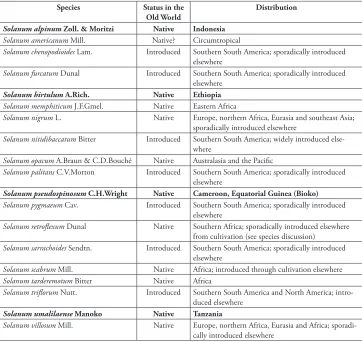
Table 2. Status and general distribution of Old World members of the Morelloid clade. Narrowly en-demic taxa are shown in boldface Type.
Species Status in the
Old World
Distribution
Solanum alpinum Zoll. & Moritzi Native Indonesia
Solanum americanum Mill. Native? Circumtropical
Solanum chenopodioides Lam. Introduced Southern South America; sporadically introduced elsewhere
Solanum furcatum Dunal Introduced Southern South America; sporadically introduced elsewhere
Solanum hirtulum A.Rich. Native Ethiopia
Solanum memphiticum J.F.Gmel. Native Eastern Africa
Solanum nigrum L. Native Europe, northern Africa, Eurasia and southeast Asia; sporadically introduced elsewhere
Solanum nitidibaccatum Bitter Introduced Southern South America; widely introduced else-where
Solanum opacum A.Braun & C.D.Bouché Native Australasia and the Pacific
Solanum palitans C.V.Morton Introduced Southern South America; sporadically introduced elsewhere
Solanum pseudospinosum C.H.Wright Native Cameroon, Equatorial Guinea (Bioko)
Solanum pygmaeum Cav. Introduced Southern South America; sporadically introduced elsewhere
Solanum retroflexum Dunal Native Southern Africa; sporadically introduced elsewhere from cultivation (see species discussion)
Solanum sarrachoides Sendtn. Introduced Southern South America; sporadically introduced elsewhere
Solanum scabrum Mill. Native Africa; introduced through cultivation elsewhere Solanum tarderemotum Bitter Native Africa
Solanum triflorum Nutt. Introduced Southern South America and North America; intro-duced elsewhere
Solanum umalilaense Manoko Native Tanzania
Solanum villosum Mill. Native Europe, northern Africa, Eurasia and Africa; sporadi-cally introduced elsewhere
Pollination and dispersal
Table 3. Country distribution of members of the Morelloid clade in Africa. Introduced species are shown in parentheses. Countries where these species are expected to occur, but from which we have seen no specimens are included, but no species listed.
Country Species
Algeria S. nigrum, S. villosum
Angola S. americanum, S. scabrum, S. tarderemotum, S. villosum
Benin S. scabrum
Botswana S. retroflexum, S. scabrum, S. tarderemotum, S. villosum
Burkina Faso S. scabrum
Burundi S. memphiticum, S. tarderemotum, S. villosum Cape Verde S. americanum, (S. nigrum), S. tarderemotum
Cameroon S. americanum, S. pseudospinosum, S. scabrum, S. tarderemotum Central African Republic (CAR) S. scabrum
Chad S. tarderemotum, S. villosum
Comoros S. americanum, S. scabrum, S. tarderemotum Democratic Republic of the Congo S. americanum, S. scabrum, S. tarderemotum Republic of the Congo S. americanum, S. scabrum
Cote d’Ivoire S. americanum, S. scabrum
Djibouti –
Egypt (incl. Hala’ib triangle) S. memphiticum, S. nigrum, S. scabrum, S. tarderemotum, S. villosum Equatorial Guinea S. americanum, S. pseudospinosum, S. scabrum
Eritrea S. americanum, S. memphiticum, S. scabrum, S. tarderemotum, S. villosum Ethiopia S. americanum, S. hirtulum, S. memphiticum, S. scabrum, S. tarderemotum Gabon S. americanum, S. scabrum
Gambia S. americanum
Ghana S. americanum, S. scabrum, S. tarderemotum Guinea S. scabrum, S. tarderemotum
Guinea-Bissau S. americanum
Kenya S. americanum, S. memphiticum, S. scabrum, S. tarderemotum, S. villosum Lesotho (S. chenopodioides), S. retroflexum, S. scabrum, S. tarderemotum Liberia S. americanum, S. scabrum, S. villosum
Libya S. nigrum, S. villosum
Madagascar S. americanum, S. scabrum, S. tarderemotum
Malawi S. americanum, S. retroflexum, S. scabrum, S. tarderemotum, S. villosum
Mali S. tarderemotum
Mauritania (S. scabrum), S. villosum
Mauritius S. americanum, (S. chenopodioides), (S. tarderemotum) Morocco S. nigrum, (S. triflorum), S. villosum
Mozambique S. americanum, S. scabrum, S. tarderemotum, S. villosum Namibia S. retroflexum, S. scabrum, S. tarderemotum
Niger S. villosum
Nigeria S. americanum, S. scabrum, S. tarderemotum, S. villosum
Rwanda S. tarderemotum
São Tome e Principe S. americanum, S. scabrum Senegal S. scabrum, S. tarderemotum Seychelles S. americanum, S. scabrum
Sierra Leone S. americanum, S. scabrum, S. tarderemotum
Table 4. Country distribution of members of the Morelloid clade in Asia. Introduced species are shown in parentheses. Countries where these species are expected to occur, but from which we have seen no specimens are included, but no species listed.
Country Species
Afghanistan S. nigrum, S. villosum Armenia S. nigrum, S. villosum Azerbaijan S. nigrum, S. villosum Bahrain S. nigrum, S. villosum Bangladesh S. americanum, S. villosum
Bhutan S. americanum, S. nigrum, S. villosum
Brunei –
Cambodia S. americanum
China S. americanum, S. nigrum, (S. scabrum), S. villosum Cyprus S. nigrum, S. villosum
Georgia S. nigrum, S. villosum
India S. americanum, S. nigrum, S. villosum
Indonesia S. alpinum, S. americanum, S. nigrum, S. opacum, (S. scabrum) Iran S. nigrum, S. villosum
Iraq S. nigrum, S. villosum Israel S. nigrum, S. villosum
Japan S. americanum, (S. chenopodioides), S. nigrum, S. opacum Jordan S. memphiticum, S. nigrum, S. villosum
Kazakhstan S. nigrum, S. villosum Kuwait S. nigrum, S. villosum Kyrgyzstan S. nigrum, S. villosum Laos S. americanum, S. nigrum Lebanon S. nigrum, S. villosum
Malaysia S. americanum, S. nigrum, S. opacum
Maldives –
Mongolia S. nigrum
Myanmar (Burma) S. americanum, S. nigrum
Nepal S. americanum, S. nigrum, S. villosum
North Korea S. nigrum
Oman S. nigrum, S. villosum
Pakistan S. americanum, S. nigrum, S. villosum Palestine S. nigrum, S. villosum
Philippines S. americanum, S. nigrum, S. opacum
Qatar S. villosum
Russian Federation S. nigrum, S. villosum
Saudi Arabia S. memphiticum, S. nigrum, S. villosum Singapore (S. scabrum)
South Korea S. nigrum
Sri Lanka S. americanum, S. nigrum Syria S. nigrum, S. villosum
Taiwan S. americanum, S. nigrum, S. opacum
Tajikistan –
Thailand S. americanum, S. nigrum
Timor-Leste –
Turkey S. nigrum, S. villosum Turkmenistan S. nigrum, S. villosum United Arab Emirates (UAE) S. nigrum, S. villosum
Uzbekistan S. nigrum
Vietnam S. americanum, S. nigrum
Table 5. Country distribution of members of the Morelloid clade in Europe. Introduced species are shown in parentheses and species added from literature sources in boldface type (Pawłowskiego 1963; Natkevičaitė-Ivanauskienė 1976; Bertová and Goliašová 1993; Hämet-Ahti et al. 1998; Fischer et al. 2005; Jauzein and Nawrot 2011; Hartvig 2015; Rottensteiner 2015). Countries where these species are expected to occur, but from which we have seen no specimens are included, but no species listed.
Country Species
Albania S. nigrum, (S. nitidibaccatum), (S. triflorum), S. villosum
Andorra –
Armenia S. nigrum, S. villosum
Austria S. nigrum, (S. nitidibaccatum), S. villosum Azerbaijan S. villosum
Belarus S. nigrum
Belgium S. nigrum, (S. nitidibaccatum), (S. triflorum), (S. villosum) Bosnia and
Herze-govina S. nigrum, S. villosum Bulgaria S. nigrum, S. villosum
Croatia (S. chenopodioides), S. nigrum, (S. nitidibaccatum), S. villosum Cyprus S. nigrum, S. villosum
Czech Republic S. nigrum, S. villosum
Denmark S. nigrum, (S. nitidibaccatum), S. villosum Estonia S. nigrum
Finland (S. americanum), S. nigrum, (S. nitidibaccatum)
France (S. americanum), (S. chenopodioides), S. nigrum, (S. nitidibaccatum), S. villosum Georgia S. nigrum, S. villosum
Germany (S. chenopodioides), S. nigrum, (S. sarrachoides), (S. triflorum), S. villosum Greece (S. chenopodioides), S. nigrum, S. villosum
Hungary (S. americanum), (S. chenopodioides), S. nigrum, (S. scabrum), S. villosum
Iceland –
Ireland S. nigrum, (S. nitidibaccatum)
Italy (S. chenopodioides), S. nigrum, S. villosum Kazakhstan S. nigrum, S. villosum
Kosovo –
Latvia S. nigrum
Liechtenstein –
Lithuania S. nigrum, (S. villosum)
Luxembourg –
Macedonia (FYROM) S. villosum Malta S. nigrum, S. villosum
Moldova –
Monaco S. villosum
Montenegro –
Netherlands (S. chenopodioides), S. nigrum, (S. nitidibaccatum), (S. triflorum), (S. villosum)
Norway S. nigrum
Poland S. nigrum, S. villosum
Portugal (S. chenopodioides), S. nigrum, S. villosum Romania S. nigrum, (S. triflorum), S. villosum Russian Federation S. nigrum, S. villosum
Country Species
Serbia S. villosum Slovakia S. nigrum, S. villosum Slovenia S. nigrum, S. villosum
Spain (S. americanum), (S. chenopodioides), S. nigrum, (S. sarrachoides), S. villosum
Sweden (S. americanum), (S. chenopodioides), S. nigrum, (S. nitidibaccatum), (S. sarrachoides), (S. triflorum), (S. villosum)
Switzerland (S. chenopodioides), S. nigrum, (S. pygmaeum), S. villosum Turkey S. nigrum, S. villosum
Ukraine S. nigrum, S. villosum
United Kingdom (UK) (S. americanum), (S. chenopodioides), S. nigrum, (S. nitidibaccatum), (S. pygmaeum), (S. sar-rachoides), (S. triflorum), (S. villosum)
Table 6. Country distribution of members of the Morelloid clade in the Pacific, including Australasia. introduced species in shown in parentheses. Countries where these species are expected to occur, but from which we have seen no specimens are included, but no species listed.
Country/Territory Species
American Samoa (USA) S. americanum
Australia S. americanum, (S. chenopodioides), (S. furcatum), S. nigrum, (S. nitidibacca-tum), S. opacum, (S. palitans), (S. retroflexum), (S. scabrum), (S. triflorum), (S. villosum)
Cook Islands (New Zealand) S. americanum, S. opacum Fiji S. americanum, S. opacum French Polynesia (France) S. americanum, S. opacum
Guam (USA) S. americanum
Kiribati –
Marshall Islands S. americanum, S. opacum
Micronesia S. americanum
Nauru –
New Caledonia (France) S. americanum, S. opacum
New Zealand S. americanum, (S. chenopodioides), (S. furcatum), S. nigrum, (S. nitidibacca-tum), S. opacum, (S. villosum)
Niue (New Zealand) S. americanum Norfolk Island (Australia) S. americanum Northern Mariana Islands (USA) S. americanum
Palau S. americanum
Papua New Guinea S. americanum, S. nigrum, S. opacum Pitcairn Islands (UK) S. opacum
Rapa Nui (Chile, Easter Island) S. americanum, S. opacum Samoa S. americanum, S. opacum Solomon Islands S. opacum
Tokelau (New Zealand) –
Tonga S. americanum, S. opacum
Tuvalu –
Vanuatu S. americanum, S. opacum Wake Island (USA) –
pollen grains is also done by various small bees and flies (Symon 1979; Knapp 1986). Buchmann et al. (1977) studied S. douglasii Dunal (a North American member of the Morelloid clade) where flowers were visited and buzzed by a wide range of bees in vari-ous families, but no recent pollination studies have been carried out specifically on any of the Old World morelloid species. Müller (1883: 426) cites syrphid flies milking the anthers from top to bottom in S. nigrum and quotes Sprengel’s (1793: 129) observa-tions of “bees and humble-bees [Bombus spp.]” visiting the flowers.
Members of the Morelloid clade have juicy berries with thin pericarps (skins) that are typical for bird-dispersed fruits (Knapp 2002b). Studies of dispersal of morelloid species have mostly been done on the species occurring in the United States of America (e.g. Tamboia et al. 1996) with native bird and mammal frugivores (quail, American robins and deer mice). Bravo et al. (2014) record great bustards as frugivores and seed dispersers for S. nigrum in central Spain and Barnea et al. (1990) record blackbirds and bulbuls as frugivores of both S. nigrum and S. villosum (as S. luteum) in Israel. Green fruits are expected to be more attractive to mammals, but Tamboia et al. (1996) found that both birds and mammals preferred the purple berries of S. americanum to the green berries of S. sarrachoides (probably = S. nitidibaccatum, no vouchers cited). The suite of characters expected to be attractive to mammals such as green colour, odour and ab-scission shortly after ripening are all found in some of the Old World morelloids such as S. tarderemotum and suggests that mammals may be important fruit dispersers for some of these species as well. Only a few ecological studies have been done on the Old World species of morelloids in their native habitats (but see Barnea et al. 1990; Bravo et al. 2014), although there are many anecdotal references to their dispersal by birds. The ecological interactions are likely to be similar to those observed in North America.
Glycoalkaloid concentrations are very low in ripe berries of S. americanum and other members of the Morelloid clade that have been tested (Cipollini et al. 2002) and levels are similar across the clade. Higher concentrations in unripe fruit (Cipollini et al. 2002) of these species make them unattractive to frugivores (Cipollini and Levey 1997a). This loss of secondary metabolites in ripe berries is common across Solanum
species with brightly coloured, fleshy fruits (e.g. Bradley et al. 1979) and is most likely related to fruit persistence (Cipollini and Levey 1997b), where risk of fungal infec-tion is balanced by probability of animal ingesinfec-tion and thus dispersal. Glycoalkaloids are known to have a constipative effect (see above, e.g. Gerard 1597) and to inhibit seed germination after ingestion (Cipollini and Levey 1997b), but Wahaj et al. (1998) found that ripe berries of S. americanum had a laxative effect on birds thus speeding seed passage through the gut. They suggested this was due to some other chemical compound (perhaps calystegines (?), see Dräger et al. 1994). Solanum nigrum germina-tion was not affected by ingesgermina-tion by bulbuls and blackbirds (Barnea et al. 1990), but germination was enhanced in S. villosum (as S. luteum). Barnea et al. (1990) suggest this is due to the more arid habitats in which S. villosum grows, where bird defecation around shrubs would enhance survival of seedlings. Bravo et al. (2014) showed that germination rates for S. nigrum were lower after ingestion by great bustards, but still concluded that the birds were likely to be efficient seed dispersal agents.
Conservation status
Most Old World morelloid species are weedy and widely distributed; many are also cultivated (e.g. S. tarderemotum, S. scabrum, S. villosum) and are distributed widely via human migration. Many introductions of species to Europe have resulted from the use of wool shoddy as protection in market gardens (Blom 1935; McClintock 1977) but even casual visitors to far-flung places have been implicated in the introduction of alien species (Chown et al. 2012). It is likely that the early explorations of the south-ern Hemisphere inadvertently carried seeds of nightshades with them, accounting for the widespread nature of many of these taxa. The genetic structure of populations of extremely widespread species such as S. americanum will need to be investigated to determine if a structure exists in the distribution that can be related to natural or human-mediated causes.
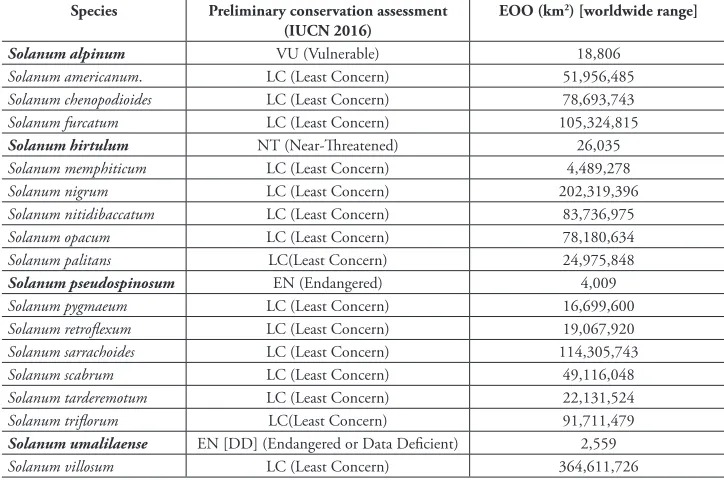
Table 7. Preliminary conservation assessments for the Old World members of the Morelloid clade. For details, see Materials and Methods and individual species treatments. Preliminary assessments are based on EOO (Extent of Occurrence) only (see Materials and Methods) and have been calculated for worldwide ranges for each species. The conservation status of species known to be introduced in the Old World has been assessed considering native range only and is discussed under each species treatments.
Species Preliminary conservation assessment
(IUCN 2016)
EOO (km2) [worldwide range]
Solanum alpinum VU (Vulnerable) 18,806
Solanum americanum. LC (Least Concern) 51,956,485 Solanum chenopodioides LC (Least Concern) 78,693,743 Solanum furcatum LC (Least Concern) 105,324,815
Solanum hirtulum NT (Near-Threatened) 26,035
Solanum memphiticum LC (Least Concern) 4,489,278
Solanum nigrum LC (Least Concern) 202,319,396
Solanum nitidibaccatum LC (Least Concern) 83,736,975
Solanum opacum LC (Least Concern) 78,180,634
Solanum palitans LC(Least Concern) 24,975,848
Solanum pseudospinosum EN (Endangered) 4,009
Solanum pygmaeum LC (Least Concern) 16,699,600 Solanum retroflexum LC (Least Concern) 19,067,920 Solanum sarrachoides LC (Least Concern) 114,305,743 Solanum scabrum LC (Least Concern) 49,116,048 Solanum tarderemotum LC (Least Concern) 22,131,524 Solanum triflorum LC(Least Concern) 91,711,479 Solanum umalilaense EN [DD] (Endangered or Data Deficient) 2,559 Solanum villosum LC (Least Concern) 364,611,726
Polyploidy and hybridisation
doubling of tetraploid species (Heiser 1963; Edmonds 1977) and three species (S. in-terandinum Bitter, S. macrotonum Bitter, S. pygmaeum) appear to have multiple ploidy levels. Eight of the Old World native morelloids are polyploid (six tetraploids and two hexaploids) and sequence data indicate that S. hirtulum is also a polyploid based on the presence of multiple double peaks in low copy nuclear sequence reads similar to known polyploid species (e.g. S. nigrum), but this needs to be confirmed with a vouchered chromosome count (see Table 1; Särkinen et al. 2015a). The ploidy level of S. alpinum
remains unknown. Natural hybridisation between sympatric species (Ganapathi and Rao 1985, 1986b) has been suggested as the reason for the large number of polyploids in the Morelloid clade, especially in the Old World, but evidence for this hypothesis is weak at best.
It is thought that most of the polyploids in the Morelloid clade are of alloploid, rather than autoploid origin, because bivalents show regular pairing at meiosis (Ed-monds 1977, 1979a; Ganapathi and Rao 1987a; Ojiewo et al. 2007). The putative parental origin of these species has been investigated using traditional crossability and hybridisation techniques (Edmonds 1977; Ganapathi and Rao 1985, 1986b, 1986c, 1986d, 1987a, 1987b) and, more recently, using molecular markers (Manoko 2007; Poczai and Hyvönen 2011). Chromosome painting or GISH (genomic in situ hybridi-sation) techniques have not been used in determining progenitor genomes in the mo-relloids as they have with great success in Nicotiana (e.g. Chase et al. 2003; Clarkson et al. 2005) and in the potatoes (e.g. Pendinen et al. 2012).
Edmonds (1977) undertook an extensive crossing programme involving morel-loid species from both the New and Old Worlds. She found that hybridisation was relatively common within ploidy level, while successful hybridisations between ploidy levels were rare. Successful crosses between tetraploids and hexaploids were postulated to have resulted due to possession of a common parental genome. She suggested that
S. sarrachoides (as S. sarachoides) was a potential diploid parent of S. nigrum, because almost half of the crosses involving it and S. nigrum were successful; she also stated that
S. americanum was the “undisputed [diploid] progenitor” of S. nigrum, probably based on the work of Nakamura (1935, 1937). Regular bivalent pairing in hybrids derived from S. nigrum × S. scabrum crosses indicate homology of parental genomes of the two hexaploids (Ganapathi and Rao 1987a). Evidence from other crossing studies suggests that the tetraploid S. villosum, S. retroflexum or one of their close relatives, has also been involved in the parentage of S. nigrum (Ganapathi and Rao 1986b, 1986c) and that S. villosum is one of the parents of S. scabrum (Ganapathi and Rao 1985, 1987a, 1987b). As only a limited set of the diploid and tetraploid species have been used in these cross-ing studies, results have to be interpreted with care in that the species tested, or any of its close relatives, could have been involved in the parentage. Detailed molecular phylogenetic studies could help to reveal closely related species to the ones used in these crossing studies to further understand potential parents that could then be tested.
only allow us to understand genetic variation but do not directly link to phylogenetic relationships. The AFLP study found that tetraploid accessions split into two distinct groups; a set of tetraploids (group A; S. retroflexum, S. tarderemotum (as S. florulentum),
S. umalilaense and S. villosum) clustered with hexaploid taxa (S. nigrum, S. scabrum) and another set (group B; S. memphiticum, S. tarderemotum and “S. patens”) clustered with diploid species used in the analysis. It was suggested that, because the tetraploids split into two clear groups in a Neighbour Joining (NJ) analysis, they were unlikely to share diploid progenitors (Manoko 2007), but as highlighted above, AFLP studies al-low the inspection of genetic variation but not phylogenetic relationships. Poczai and Hyvönen (2011) used ISSR (Inter Simple Sequence Repeat) and SCoT (Start Codon Targeted) markers in a network analysis to investigate the origin of S. nigrum. They used a limited number of species that had previously been suggested as having com-mon origins; S. americanum, S. chenopodioides, S. nigrum, S. opacum, S. nitidibaccatum
(as S. physalifolium Rusby) S. retroflexum, S. scabrum and S. villosum. Their results sup-ported the close relationship between S. villosum and the two hexaploids (S. nigrum
and S. scabrum) and they suggested that these species share a diploid progenitor. They also showed that S. villosum is most likely an autotetraploid derived from S.
ameri-canum, confirming an earlier chromosome banding study (Sultana and Alam 2007)
and hypothesised that the progenitors of S. nigrum are S. villosum and S. americanum
and that the species evolved via amphiploidy of sterile triploid progeny (Poczai and Hyvönen 2011). Solanum opacum and S. retroflexum were associated with S. chenopodi-oides and S. nitidibaccatum (as S. physalifolium) and not with S. americanum, contrary to suggestions by Edmonds 1977, who thought S. americanum was involved in the ori-gins of S. retroflexum based on crossability, suggesting their diploid progenitors are not shared with the other polyploids in the analysis. Results of previous work attempting to establish genome origins for morelloid polyploids is summarised in Table 8.
The species of black nightshades are predominantly self-compatible (Edmonds 1979a; Schilling and Heiser 1979; Olet 2004). Interspecific crosses can be produced
Table 8. Summary of putative parental origins of the polyploid species in the Morelloid clade (see text for references).
Tetraploids 2n = 4× = 48 Type Putative parental species
S. pseudospinosum Unknown Unknown
S. retroflexum autopolyploid S. chenopodioides or S. nitidibaccatum
S. umalilaense Unknown Unknown
S. memphiticum Unknown Unknown
S. tarderemotum Unknown Unknown
S. villosum autopolyploid S. americanum
Hexaploids 2n = 6× = 72
S. furcatum Unknown Unknown