ENERGY AWARE GRID RESOURCE ALLOCATION BY
USING A NOVEL NEGOTIATION MODEL
1R.SURENDRAN, 2 B.KEERTHI SAMHITHA
1Faculty of Computing, Department of Information Technology, Sathyabama University, INDIA
E-mail: [email protected], [email protected]
ABSTRACT
The grid resource allocation is the important aspect of the grid computing. They are used to meet user requirements in the resource sharing grid environment. In this paper we review literature on market based resource allocation by using novel negotiation model in the grid environment. The negotiation model is the gain percentage between the bilateral or multi lateral agents in the grid computing. In grid computing, computational grid resource allocation is a major problem. To address this problem, a new novel negotiation model is innovated by using energy aware process in grid computing. This paper is mainly guided by 7 factors in energy aware using new novel negotiation model in grid computing. They are as follows (1) The number of negotiator trading partners (2) Number of negotiator competitors or job schedulers (3) Negotiator time preferences (4) Availability in the negotiator resource brokers (5) Negotiator proposal deviation from the average of its cluster usage (6) Previous concession behavior of negotiator trading partner (7) Energy aware resource allocation process by using new novel negotiation model.
Keywords: Grid computing, Resource allocation, Energy aware process, Resource sharing, Grid lets, Negotiation process.
1.
INTRODUCTIONGrid computing merges computers from several administrative domains to reach a general goal, to solve a single task, and may then disappear just as rapidly. Grid computing engages computation in a distributed fashion, which may also engage the aggregation of large-scale clusters. A new novel negotiation model is innovated for this market based resource allocation in grid computing. Grids are a form of distributed computing . Negotiation model is the gain percentage between the two agents in the grid environment. The agents are bilateral and multilateral in the grid computing field. This technology has been used to computationally serious scientific, mathematical, and educational troubles through volunteer computing, and it is used in commercial ventures for such diverse applications as drug discovery, financial forecasting, seismic analysis, and back agency data processing in hold for e-commerce and Web service .Negotiation arises in business, non-profit institutes, government branches, legal proceedings, among residents and in personal positions such as marriage, divorce, parenting, and each day life. The study of the topic is called negotiation theory.
2.
RELATED WORKSemployed by plugging in exact information sources.
The security is exhibited by the Straightforward Authentication and Security Layer (SASL) [5] this paper proposes a writing on business based asset distribution of the Grid figuring grouping approaches as model or state-based and preemptive or non-preemptive. Three sorts of asset portion conventions are utilized, for example, the Round-Robin Protocol (RR), Continuous Double Auctions Protocol (CDA), and Corresponding Share Protocol (PSP) [6] this paper has the challenges in managing resources on the Grid computing environment and introduced some work on the adaptive negotiation strategies to the agent-based load balancing and Grid computing. The approach is to implement multiple negotiation models protocols/strategies which can be selected by the system automatically in order to adapt the computation needs as well as changing computing resource environment. [7] this paper proposed the presents an Agent-based Resource Allocation Model (ARAM) for grid computing Three types of agents, namely Job Agents (JAs), Resource Brokering Agents (RBAs), and Resource Monitoring Agents (RMAs), are used. The ARAM adapts to heavy-load conditions by dynamically varying the prices of the resources their profit by consulting the RBAs or by enhancing the resources if possible. The grid suppliers can improve their resources and can maximize. [8] This paper examines the perception of Global Environment for Network Innovations (GENI). Collaborating, Autonomous Stream Processing Systems (CLASP) is a middleware meant for cooperating data stream processing sites, which has been planed and prototyped in the perspective of System. [9] this report proposed computational economy schema which t builds the existing Grid middleware frameworks that furnish a framework for the asset administration and for the exchanging Grid nature's turf. The practice of the economic models to the resource trading in the Nimrod/G resource broker and cost-based scheduling results on the Grid. Architecture is used to built the middleware system Grid Architecture for Computational Economy (GRACE). [10] This paper propose the framework gives the mechanism for the resource provider and the user objective function as GRACE and uses the GRBS and GSPS for the resource trading. This paper also provides the bargaining model.
3.
PROPOSED WORK ON NOVELNEGOTIATION MODEL
The existing negotiation agents that consider behavior dependent function to determine the amount of concession during negotiation process. These negotiation agents using complex techniques like artificial intelligence that need more computational cost for modeling the behavior function In Existing System we have resources are provided by single agent based negotiation model. Negotiation agents using complex techniques like artificial intelligence that need more computational cost for modeling the behavior function. Behavior of negotiator’s traders is very difficult to handle. The existing calculation that is utilized within this task is Time also space imparted calculation.
where they can share the negotiation here the strategy is single client and multi-client. The inputs that are used to represent this project are Grid Sim, a set of resources that are represented as clusters, etc.
But in this paper we are mainly focusing on the strategies and on the multiple client and also focuses on the multilateral protocol. This leads to the dynamic process. This may leads to the increase in number of negotiators in the trading partners, increase the number of negotiators competitors and also increase the time performance, then increase the flexibility of the competitors and the energy aware resource allocation process. The resources can be allocated with the help of the protocol and strategy. The advantage of this paper than the existing system is synchronous and asynchronous messages can be shared between each of the negotiators. This paper generate two algorithm namely Time and space shared grid resource allocation algorithm this algorithm is mainly deals with the status of the jobs that are allocated for the negotiators. The time preferences between the clusters are identified for the negotiation process. Second is PE and Gridlets allocation algorithm which has two events internal and external this internal uses the grid let process. It is a tool kit used in the grid environment. This class is mainly responsible for initialization, running of jobs, stopping of overall simulation. Mainly represents about the PEs and Gridlet allocation process. But in this paper we are using the Gridsim as a jar file. The processing elements that are used in this paper is to perform the CPU units and CPUs rating that uses the Minute information per second (MIPS) in energy aware resource allocation process.
3.1.Experiment Design Overview
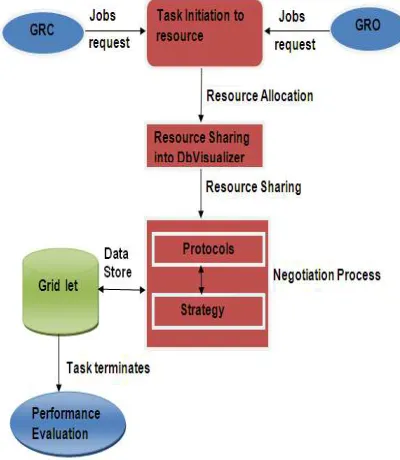
In the Fig 1, The GRC is the grid resource consumers and the GRO is the grid resource owners the both layer send job request to the task initiation to the resources this request is then send to the resource sharing in to the DB visualize where they share the resources through the protocols and also to the strategy where the negotiation process takes place. . The purpose of the grid let is to store the data and then send the data to the protocols and strategy. This then leads to the performance evaluation where the task is terminates. This process is done with the help of the protocols in this paper we are using
[image:3.595.322.522.164.394.2]the multi share protocol and multiple client where they can share large amount of data.
Figure 1:Architecture for energy aware grid resource
allocation by using a novel negotiation model
The grid resource allocation using a new novel negotiation model has mainly depended by four types of resource modules. They are as follows.
A. Task initiation. B. Resources sharing. C. Negotiation process D. Grid let resource allocation E. Task Completion
3.1.1. Task initiation
Both GRO (Grid Resource Owners) and GRC (Grid Resource Consumers) send the job request to task initiation resource .That is used to create the task Grid resources with different capability and configuration.
3.1.2. Resource Sharing
Multitasking and multiprocessing frameworks permit persistent running assignments in order to impart framework assets, for example, processors, memory, space, I/o, and arrange by planning there utilization for quite brief time interims. A reproduction of planning undertakings in the true frameworks will be perplexing and lengthy. The Grid sim assets which is utilized to send, get, or calendar occasions to mimic the execution of employments.
3.1.3. Negotiation Process
Mainly isolated into two fundamental guidelines Protocols and Strategy. Vital transaction model for both respective and multilateral arrangements. Two-sided arrangement process where assets are furnished by one operator and in this way executor is arranging with one exchanging accomplice. Multilateral transaction process where assets are furnished by different executors and in this way operator is arranging with various exchanging accomplices. In the nature, the sender operator won't proceed until the recipient executor has gained the message.
3.1.4. Grid let Resource Allocation
Grid Simulation is utilized to make Processing Elements (PEs) with different speed measured. . At point one or more PEs could be assembled to make a machine. More machines might be assembled to make a Grid resources. Hence, the resulting Grid resources could be a solitary processor, imparted memory multiprocessors (SMP), or a distributed memory group of workstations. To make a Grid Simulation User substance that makes and connects with the resource broker by scheduling the element to facilitate execution.
3.1.5. Task Completion
It is evaluated that the performance based on deadline and gain constraints. The results are demonstrate in graphs and in excel format files for developing simulators in average of system usage
and machine usage systems. Gridsim is utilized as a device for reenactment process as a jarfile and execution assessment of computational Frameworks and Grid schedulers. The GridSim is used as jar file. We are sending the list of resources as input jobs. We are mainly using five clusters in 5 different colors. Finally the dynamically output will be executed as new negotiation model by dynamic process. This includes 5 Cluster usage by per day, per hour %. We have to notify the gain % (i.e) negotiation value of input jobs.
3.2. Algorithm
1
Step1. Distinguish downright MI for every PE for the term and the amount of PE that process one Additional Gridlet.
1.Absolute MI for each and every PE = MIPS Rating of One PE()*Duration.
2.Min No of Gridlets Per PE = No of Gridlets in Execution/No of PEs
3.No Of PEs Running One additional Gridlet = No Of Gridlets In Execution % No Of PEs
Step 2. Distinguish greatest and least MI impart that Gridlet get in the Duration
1.If(no Of Gridlets In Execution<= No Of PEs), then:
2.Max Share Per Gridlet+Min Share Per Gridlet = Total MI for each and every PE
3.Max Share No Of Gridlets = No Of Gridlets In Execution
Else/*No Of Gridlets In Execution >No Of PEs*/
4.Max Share Per Gridlet = Total MI for every PE/ Min No Of Gridlets Per PE
5.Min Share Per Gridlet = Total MI for each and every PE/(min No Of Gridlets Per PE+1)
6.Max Share No Of Gridlets = (No Of PEs – No Of PEs Running One additional Gridlet)*min No
Of Gridlets Per PE Select the Gridlet to be Processed() /*e.g.,
first one in Q if FCFS procedure is used */ Allocate_PE_to_the_Gridlet() /*It ought to schedule an Gridlet completion event */
END
Step3. Repeat the above steps in anticipation of the
end of simulation event is obtained.
4.
WORK FLOW OF ENERGY AWARERESOURECE ALLOCATION BY
NEGOTIATION PROCESS
4.1. List of resources used in the Allocation Process
Figure 2 : List of Resources used in negotiation model
Figure 2 represents the list of resources in the allocation process using negotiation model. Includes gridlet packages as id, name, CPUs, CPU rating, machines and finally as props. Here five clusters or resources. Five clusters are used as five CPUs and machines. MIPS is Minutes Information
Per Second, it is the duration between the allotted resources in the grid environment by negotiation model. Properties (Props) they are the variables. The MIPS value is average of all CPUs and Machines. Props value should be null. The CPU rating will be 1 and it is common to all clusters allotted in the grid environment using energy aware of negotiation model.
4.2. Jobs allocated in the energy aware process
Figure 3 represents the jobs allocation process in the grid environment by using the negotiation process. The jobs are allocated in the multiples of ten - 10. So that we can be allocate many jobs. The queue contains only one job as waiting job. Then the time will be noted for each allotted job in the negotiation model.
Figure 3. Jobs allocation process
4.3.Average Utilization Per Cluster
Algorithm 2. PE and Gridlet Allocation algorithm
Step1. Stay for event and find the type of Event To be received
Step2. If it exterior and Gridlet entrance event, then:
BEGIN /* a new job arrived */
If the number of Gridlets in execution are less than the number of
PEs in the resource, then,
Assign_PE_to_the_Gridlet() /* It ought to schedule an Gridlet Completion event */ If not, Add Gridlet to the
Gridlet_Submitted_Queue END
Step3.If incident is interior and its tag value is the
same recently scheduled Internal event tag,
BEGIN /* a job terminate event */ Update finished Gridlet’s PE and Wall clock time parameters and launch it back to the broker
Set the position of PE to FREE Remove finished Gridlet from the Execution_Set and add to Finished_Set If Gridlet_Submitted_Queue has Gridlets in waiting,
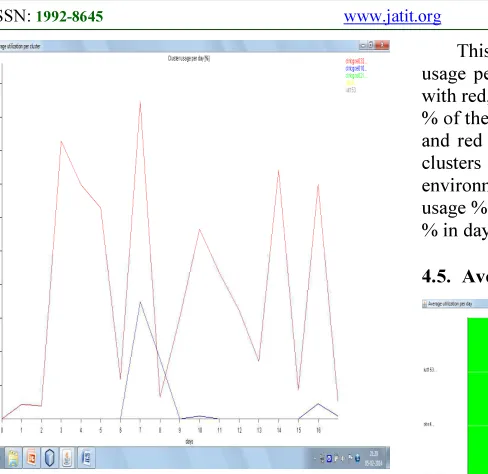
Figure 4. Average utilization per cluster
This graph [Figure 4] represents five clusters (Users) as red, yellow, blue, green, black. The yellow, green, black color represents the idle jobs in the negotiation process. Red, blue color represents the busy jobs allocated in the grid environment. The Y-Axis represents the no.of jobs and X-Axis represents no. of days. We are using five clusters in this negotiation process. The average of utilization made in per clusters. This graph mainly represents the cluster usage made in per day in %.
4.4. Clusters usage per hour
Figure5. Clusters usage per hour
This graph [Figure 5] represents the clusters usage per hour % in day. We are using 5 clusters with red, blue, green, yellow, black colors. The gain % of the cluster usage in a day will be the red color and red is busy cluster and it will be the working clusters in the negotiation process in the grid environment. The Y-axis is clusters and X-axis is usage %. This represents the clusters usage per hour % in day.
4.5. Average utilization per day
Figure6. Average utilization per day
This graph [Figure 6] is the overall chart in negotiation process. Mainly represents the cluster usage per day %. In the 5 clusters we have to identify the gain % of the particular cluster by using negotiation process. The Y-axis is no.of clusters and X-axis is no.of days.
[image:6.595.94.338.107.344.2]4.6.Resource usage of existing and proposed system
The comparison cluster usage graph represents the no. of days and no. of resources used in the grid novel negotiation process by the energy awareness process (i.e) the resource allocation process is mainly depended by the cluster usage in the grid environment.
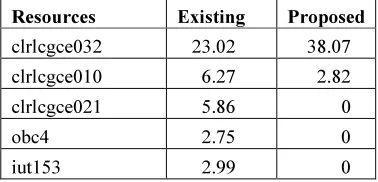
Table 1. Comparison five cluster usage in negotiation
Resources Existing Proposed
clrlcgce032 23.02 38.07 clrlcgce010 6.27 2.82 clrlcgce021 5.86 0
obc4 2.75 0
iut153 2.99 0
The [Table 1] and [Figure 7] represents the resource usage of existing and proposed work. Here five clusters are used in five different colors. The clusters are clrlcgce032, clrlcgce010, clrlcgce021, obc4, iut153. In the existing work all the five resources are in usage and jobs are allotted for all by using energy aware resource allocation process. So if any jobs are allotted then they are pending as queue. In the proposed work the allotted in the grid environment the highly usage cluster is considered as negotiation process. There is no pending job in this work. If the jobs allotted in the system they are easily processed by using energy aware new negotiation model. In this last three jobs are allocated and no value is shown and they are acting in the grid environment by energy aware resource allocation using negotiation model.
5.
CONCLUSIONGrid resources allocation is the major impact in the field of grid computing. They are used to allocate the resource sharing in the grid environment. So we review the market based novel negotiation process in this paper. In computational grids resource allocation is major problem. To address this impact mainly seven processes are discussed in this paper. This newly innovated novel negotiation model gives best result to compare with previous market based grid computing environment technology. The main advantage of our method is there is no waiting jobs and the negotiation process is mainly controls the gain % from number of clusters used in grid resources by the maintenance of energy aware resource allocation using a new novel negotiation model.
In future, this innovated negotiation model method can be enhanced for to make the grid resource allocation process very fast using some more retrieval techniques makes this negotiation model very effective and make use of many users depend upon their market based grid resources and grid computing allocation process and user requirements. This work might be further reached out to perform the grid resource allocation in the network registering in a grid computing field.
REFRENCES:
[1] Sepideh Adabi a.n, Ali Movaghar b Amir Masoud Rahmani a, Hamid Beigy b, “Market based grid resource allocation using new
negotiation model” Journal of Network and
computer applications Vol.36, 2013, pp.543-565.
[2] Massimiliano caramia and stefano
Giordani “Resource Allocation in Grid
Computing: An Economic Model”, Wseas
Transactions on Computer Research, Vol.3, No.1, 2008.
[3] Jiadao Li, Ramin Yahyapour “Learning-Based
Negotiation Strategies for Grid
Scheduling”, IEEE International Symposium
on Cluster Computing and the Grid,
2006,Vol.1, pp. 583-591.
[4] Karl Czajkowskiy Steven FitzgeraldzIan Fosterx, Carl Kesselmany, “Grid Information Services for Distributed Resource Sharing”,
IEEE International Symposium on High-Performance Distributed Computing, IEEE Press, 2001.
[5] Jacek Gomoluch and Michael Schroeder “Market- based Resource Allocation for Grid Computing: A Model and Simulation”, 2002.
[6] Weiming Shen and Yangsheng Li and Hamada
H.Ghenniwa and Chun Wang “Adaptive Negotiation
for Executor Based Grid Computing”, 2001
[7] S.manvia, M.n.birjeband Bhanuprasadc “An Executor based Resource Allocation Model for
computational grids” Multiagent and Grid
Systems – An International Journal, 2005, pp.7– 27.
[8] L. Nassif1, J.M.Nogueira1,2,M.Ahmed3,
R.Impey3, A.Karmouch4 “Agent-based
Negotiation for Resource Allocation in Grid”,
[9] Rajkumar Buyya, David Abramson, and Jonathan Giddy “A Case for Economy Grid
Architecture for Service Oriented Grid
Computing”, IEEE CS press 2000.
[10] Raj kumar byya, “Economic based Distributed Resource Management and
Scheduling for Grid Computing”