Geschke Center
Master's Theses Theses, Dissertations, Capstones and Projects
Winter 12-16-2016
The Political Economy of Conflict in Liberia, Sierra
Leone, and Côte d'Ivoire: Foreign Economic
Intervention and the Spatial Distribution of Violent
Conflict
Sarai-Anne N. Ikenze
University of San Francisco, [email protected]
Follow this and additional works at:https://repository.usfca.edu/thes
Part of theAfrican Studies Commons, and thePolitical Economy Commons
This Thesis is brought to you for free and open access by the Theses, Dissertations, Capstones and Projects at USF Scholarship: a digital repository @ Gleeson Library | Geschke Center. It has been accepted for inclusion in Master's Theses by an authorized administrator of USF Scholarship: a digital repository @ Gleeson Library | Geschke Center. For more information, please [email protected].
Recommended Citation
Ikenze, Sarai-Anne N., "The Political Economy of Conflict in Liberia, Sierra Leone, and Côte d'Ivoire: Foreign Economic Intervention and the Spatial Distribution of Violent Conflict" (2016).Master's Theses. 200.
The Political Economy of Conflict in
Liberia, Sierra Leone, and Côte d’Ivoire:
Foreign Economic Intervention and the
Spatial Distribution of Violent Conflict
In Partial Fulfillment of the
Requirement for the Degree
Master of Arts
in
International Studies
By
Sarai Ikenze
University of San Francisco
Table of Contents
Table of Contents i
Signature Page ii
Abstract iii
List of Figures iv
List of Tables v
Acknowledgments vi
Introduction ………….………... 1
Chapter 1: Literature Review and Methodology ……… 9
1.1Literature on Conflict and Conflict Spillover 1.2Methodology 1.3Concluding Remarks Chapter 2: Colonialism, State-building, and Conflict ……… 28
2.1 Conflict in Liberia 2.2 Conflict in Sierra Leone 2.3 Conflict in Côte d’Ivoire 2.4 Summary of Findings Chapter 3: Structural Adjustment and Conflict ………. 84
3.1 Overview of Structural Adjustment 3.2 Structural Adjustment in Africa 3.3 Structural Adjustment in Sierra Leone 3.4 Structural Adjustment in Liberia 3.5 Structural Adjustment in Côte d’Ivoire 3.6 Summary of Findings Chapter 4: Conflict Spillover? ………. 132
4.1 Overview 4.2 Structural Adjustment and Trade 4.3 Summaryof Findings Conclusion ………. 143
The Political Economy of Conflict in Liberia, Sierra Leone, and Côte d’Ivoire: Foreign Economic Intervention and the Spatial Distribution of Violent Conflict
In Partial Fulfillment of the Requirements for the Degree
MASTER OF ARTS
in
International Studies
By
Sarai Ikenze
November 23, 2016
UNIVERSITY OF SAN FRANCISCO
Under the guidance and approval of the committee, and approval by all the members, this thesis project has been accepted in partial fulfillment of the requirements for the degree.
APPROVED:
Advisor Date
Academic Director Date
Dean of Arts & Sciences Date
Abstract
Between 1989 and 2011, the three neighboring West African countries of Liberia, Sierra Leone, and Côte d’Ivoire each experienced at least one major civil conflict; and the combined devastation of the conflicts claimed over a million lives, generated millions of refugees, and crippled infrastructure in ways that continue to impact the development of the sub-region today. The occurrence of conflict in the three countries and the fact that they share borders has raised questions about whether the conflicts were caused by domestic factors or were the result of transborder processes of conflict diffusion. This paper will assess the causes of conflict through a political economy lens, paying particular attention to foreign economic intervention in the colonial and post-colonial period and focusing specifically on the impacts of structural adjustment programs on processes of conflict and conflict diffusion. Based on the findings of this paper, conflict in Liberia, Sierra Leone, and Côte d’Ivoire can be attributed to two factors. The first of these is the establishment and institutionalization of unequal and exclusive economic and political structures during the colonial period, and the second is the magnification and exacerbation of these inequalities that occurred as a result of neo-colonial economic intervention in the form of structural adjustment programs. Importantly, the findings of this paper also suggest that conflict spillover was not a primary cause of conflict in the case of Liberia, Sierra Leone, and Côte d’Ivoire.
List of Figures
Figure 1. Sierra Leone External Debt, Concessional ………. 106
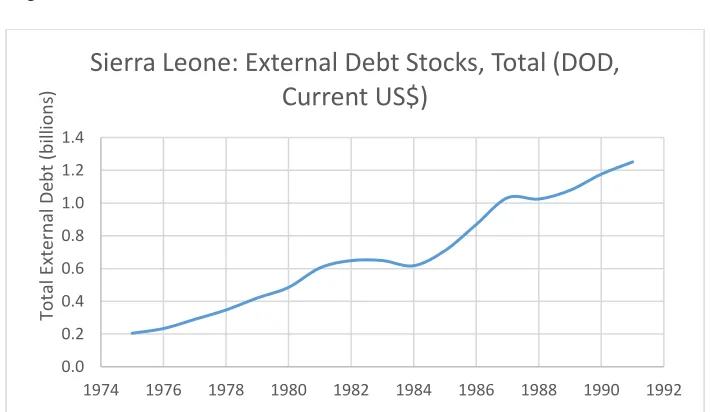
Figure 2. Sierra Leone External Debt, Total ……….. 106
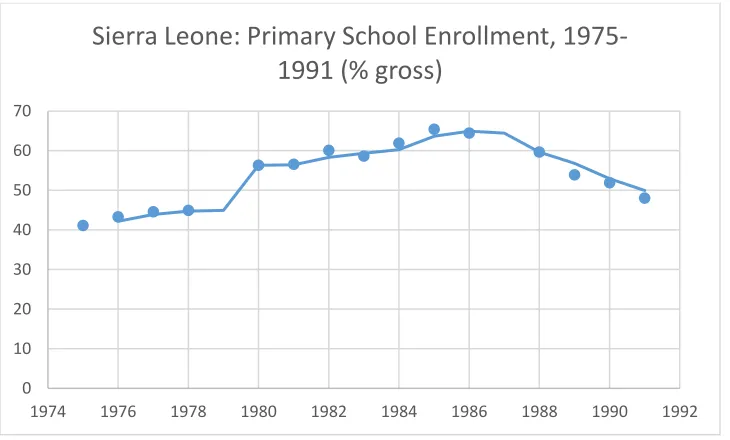
Figure 3. Sierra Leone Primary School Enrollment, 1975-1991 ……… 107
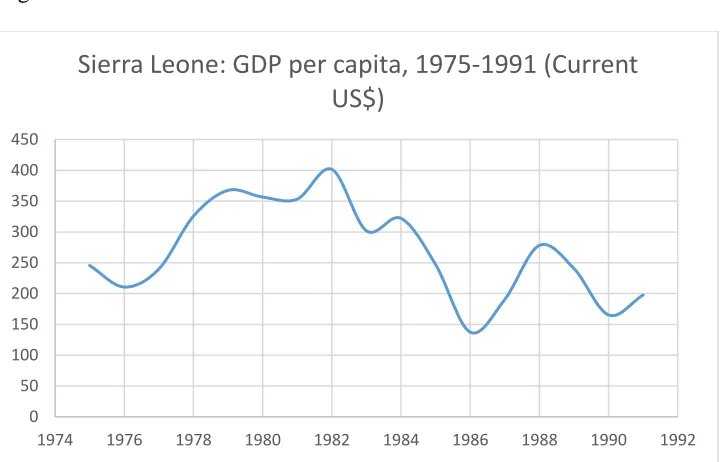
Figure 4. Sierra Leone GDP per capita, 1975-1991 ………108
Figure 5. Liberia External Debt, Concessional ……….. 114
Figure 6. Liberia GDP per capita, 1975-1991 ……… 115
Figure 7. Liberia Primary School Enrollment, 1975-1991………115
Figure 8. Liberia External Debt, Total ………...………. 116
Figure 9. Côte d’Ivoire GDP per capita, 1975-2002 ………... 120
Figure 10. Côte d’Ivoire Primary School Enrollment, 1975-2002 ………. 121
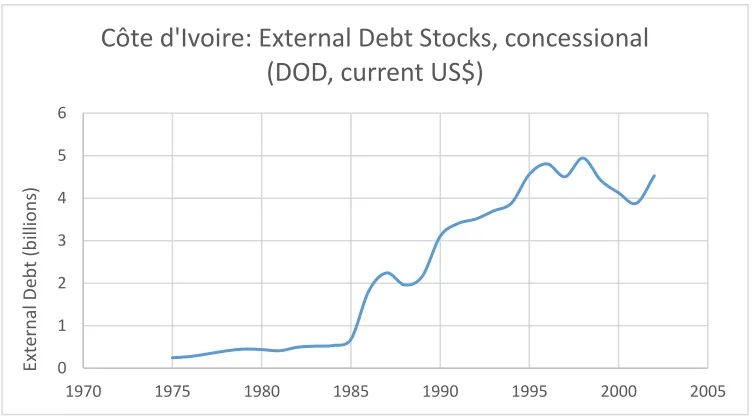
Figure 11. Côte d’Ivoire External Debt, Concessional ………... 122
Figure 12. Cote d’Ivoire External Debt, Total ……… 122
Figure 13. Sierra Leone Shadow Economy Estimates, 1984-2002 ……… 138
Figure 14. Liberia Shadow Economy Estimates, 1984-2002 ………. 139
Figure 15. Côte d’Ivoire Shadow Economy Estimates, 1984-2002 ……… 140
List of Tables
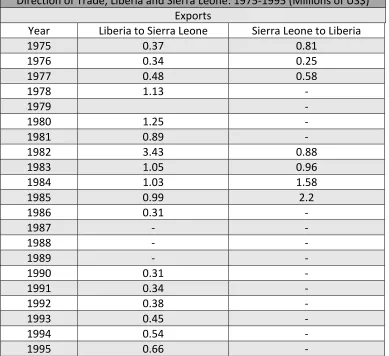
Table 1. Direction of Trade: Liberia and Sierra Leone, 1975-1995 ………. 133
Table 2. Direction of Trade: Liberia and Côte d’Ivoire, 1975-1995 ………. 134
Table 3. Direction of Trade: Sierra Leone and Côte d’Ivoire, 1975-1995 ……… 135
Acknowledgments
First, I would like to thank my advisor, Professor Annick Wibben, for providing the challenge and
support necessary to produce this work. I would also like to thank the professors of the MAIS
program, whose dedication to knowledge and teaching was a vital component to my academic
success.
Introduction
Conflict in Sub-Saharan Africa
In the decades following the Second World War, Africa saw a wave of decolonization
and the establishment of independent states across the continent. However, domestic and global
optimism about the economic and political progress of these newly independent countries was
quickly tempered by a rise of violent conflict in the post-colonial period. Beginning with
anti-colonial violence in 1946, the incidence of large-scale conflict in Sub-Saharan Africa
skyrocketed, and over 40 percent of the region’s countries were involved in a conflict at the peak
of the violence in 1993 (Marshall, 2005). After 1993, conflict trends decreased somewhat, but
they remained significantly higher than the rest of the world throughout the 1990s and the first
decade of the 2000s. In 1996 alone, war-related deaths in Africa accounted for more than half of
all war-related deaths in the world, with 14 out of 53 African countries experiencing a conflict in
that one-year period (Annan, 1998). While civil war was spread widely throughout the continent
during this period, conflict in post-colonial Sub-Saharan Africa also demonstrated a particular
pattern of regional conflict clustering in which civil war was concentrated in neighboring states
in Southern Africa, the Great Lakes Region, the Horn of Africa, and West Africa (Marshall,
2005).
In West Africa specifically, the three neighboring countries of Liberia, Sierra Leone and
Côte d’Ivoire experienced large-scale violent conflicts in the post-colonial period. Between 1989
and 2011, all three countries experienced at least one civil conflict; and the resulting death toll of
these conflicts amounted to over one million deaths. While they shared somewhat similar
experiences with domestic instability and violent conflict, a closer look at Liberia, Sierra Leone,
with regard to economic and political conditions, both in the colonial and post-colonial periods.
Each country was dominated by a different colonial power, had a unique history and experience
with ethnic and regional tensions, and had varying levels of success with domestic economic
development and integration into the global economy in the latter half of the 20th century. Given
the divergent development trajectories of the three countries, a puzzle emerges surrounding the
occurrence and persistence of violence in the region. Two related questions arise: (1) Why did
conflict develop in three neighboring countries with different economic and political histories
and circumstances at around the same time; and (2) were the civil wars isolated occurrences of
conflict caused primarily by domestic conditions or instances of conflict spillover across national
borders?
Attempts to answer such questions about the proliferation and regionalization of conflict
have been prominent across various academic disciplines in recent years, and there is a wealth of
literature on the causes of conflict and conflict diffusion in the region. The majority of
scholarship on conflict and its spatial distribution in Sub-Saharan Africa has presented three
main causes for its occurrence: (1) colonial legacy and its impact on the ability of newly
independent African states to develop and maintain strong economic and political institutions,
(2) ethnic and tribal tensions rooted in historical enmity and exacerbated by the colonial drawing
of arbitrary borders, and (3) the presence of valuable natural resources that facilitate competition
over wealth and power. However, despite relative consensus on the primary underlying causes of
conflict, there has been intense disagreement over the concept of conflict spillover, which is the
spread of civil war across international borders that causes an eruption of civil conflict in
simply thought to be occurring as a result of clustering of conflict in neighboring countries with
similar domestic characteristics.
Despite disagreement over conflict spillover, conflict theories involving colonialism,
ethnic tensions, and natural resources have provided useful lenses through which to understand
and analyze conflict in Liberia, Sierra Leone and Côte d’Ivoire. However, there are a number of
areas in which this literature falls short. One of the most important of these that it has failed to
draw sufficient connections between the separate explanations for conflict and their interactions
in creating the ideal conditions for instability and violence, instead relying on one explanation
for each individual occurrence of conflict. In the case of Liberia and Sierra Leone, theories on
conflict have largely relied on explanations involving the existence of a resource curse; and in
Côte d’Ivoire, conflict has largely been viewed through the lens of ethnic and religious tensions.
However, these explanations are somewhat simplistic and provide only a partial picture of the
causes and mechanisms through which violence erupted and progressed in the three countries.
Perhaps more importantly, however, the literature on conflict in the three countries has largely
failed to account for the role of foreign actors in facilitating conflict through the evolution and
continuation of unequal power relationships following colonialism, paying insufficient attention
to the intersections between domestic development and global economic and political processes.
Specifically, research on conflict in Liberia, Sierra Leone, and Côte d’Ivoire has
understudied the impact of colonial and post-colonial foreign involvement on processes of state
formation, economic development, and long-term stability; and it is these processes that I will
analyze through my research. Though foreign involvement in the region has taken many forms
that include political, cultural, and economic domination, I have chosen to focus on the economic
(IMF) and World Bank structural adjustment programs in promoting conflict in each of the three
countries. I will argue that, in the case of Liberia, Sierra Leone, and Côte d’Ivoire,
colonial/pseudo-colonial economic intervention both constrained and shaped domestic state
formation, facilitating the institutionalization of unequal and exclusive economic structures in the
post-colonial period. I will further argue that it was the consequent reinforcement and
magnification of these systems of exclusion through the imposition of structural adjustment
programs by neo-colonial powers that served as the true catalyst for the eruption of violent
conflict. Lastly, I will analyze the possible role of spillover effects, arguing that it is in fact
similar domestic conditions and not transborder diffusion that explain the clustering of the three
conflicts in the sub-region.
Uneven Development in a Global Capitalist System
The impact of development processes on stability and conflict in Liberia, Sierra Leone,
and Côte d’Ivoire is intricately tied to the history of development in the global South and the
ways in which that development was constrained and shaped by hegemonic Western powers.
Prominent theories on development in the global South have presented underdevelopment as a
consequence of historical processes of capitalist development and exploitation. Rodney (1982)
posits that the underdevelopment of Africa was a deliberate process facilitated by European
powers who benefitted from the raw materials and cheap labor obtained through colonial or
semi-colonial relationships with African countries. Through these relationships, Western states
used the labor of African states to produce raw materials for Northern manufactured goods,
deliberately designing a system that allowed for a continually widening gap in prosperity and
development between the two regions (Rodney, 1982). Dependency theorists such as Wallerstein
the decolonization of the global South and was characterized by the consolidation of economic
prosperity and power in the global North. Within this system, economic advances in the Western
world took place at the expense of the developing world, further widening the gap in economic
and political power and preventing the development of diverse and stable economies in the
global South (Wallerstein, 1974).
The above form of Western domination and exploitation was transformed with the oil
crises of the 1970s and the global North’s simultaneous shift away from manufacturing in favor
of the development of finance and technology markets. With this shift, the global North became
less dependent, and therefore less interested, in the extraction of physical resources from the
global South (Duffield, 2001). This prompted a significant change in the North’s approach to the
development of the global capitalist system. Relieved of their previous reliance on southern
goods, Western powers, who formed the backbone of the global economy, increasingly viewed
the global South as economically irrelevant, prompting them to isolate the economies of the
South through decreased investment and increasingly high barriers to entry in exclusive global
markets (Castells, 1996; Duffield, 2001). In describing the extent of the developing world’s
isolation and the consequences of that isolation on their development, Castells (1996) states:
“The architecture of the global economy features an asymmetrically interdependent world…
increasingly polarized along an axis of opposition between productive, information-rich, affluent
areas, and impoverished areas economically devalued and socially excluded” (p. 145). Given the
prevailing view of developing economies as having limited potential and value, development in
the global South was increasingly dependent upon the willingness of the global North to provide
development assistance through the provision of development aid and loans (Duffield, 2001).
ability to introduce domestically designed development programs, and the underdevelopment of
much of the developing world continued unabated.
One of the most salient developments of this particular period of global economic
development was the introduction of conditional structural adjustment loan programs in the
global South beginning in the early 1980s. Modeled on neoliberal market structures and
implemented by international financial institutions that were controlled by hegemonic Western
powers, these loan programs were presented to the developing world as the only solution to the
economic challenges they faced. Though marketed as the key to promoting economic growth
through the liberalization and restructuring of developing economies in order to effectively
integrate them into the global economic system and provide improved living standards and
economic conditions, structural adjustment had significant consequences in the majority of
countries in which it was introduced. The most common ‘side effects’ observed in the initial
adjustment period included large increases in the prices of essential goods, decreases in export
revenue, and decreases in government spending on public goods such as education and
healthcare (Riddell, 1992). Compounding the unpleasant shocks associated with the adjustment
period, structural adjustment largely failed to deliver the promised economic growth, and much
of the developing world continued to experience dire economic conditions throughout the
following two decades. In addition, the loans that accompanied structural adjustment agreements
contributed to rapid increases in foreign debt that further undermined the financial stability of
already struggling economies throughout much of the developing world.
Development and Conflict in Liberia, Sierra Leone, and Côte d’Ivoire
It was within the above global system that Liberia, Sierra Leone, and Côte d’Ivoire
that the three countries descended into conflict. As previously mentioned, there have been a
number of explanations for conflicts such as the ones that occurred in Liberia, Sierra Leone, and
Côte d’Ivoire, the most popular of which include colonialism, ethnic tensions, and natural
resources. In the case of these three countries, it is clear that colonialism, resources, and even
ethnic tensions to a certain extent, played a role in destabilizing the countries and facilitating the
spread of violent conflict. However, theories that rely solely on these explanations lack one vital
component, which is a connection to the global context in which these variables shaped and
directed the trajectories of the countries in the pre-conflict years. In order to account for this
global context, examination of conflict in Liberia, Sierra Leone, and Côte d’Ivoire must
recognize and explore the continuation and evolution of colonial and capitalist modes of power
in the region in the pre-war period. In these countries, the role of foreign economic intervention
did not end with the end of colonialism, but became embedded in the structures and institutions
of the state and economy in the post-colonial period. Through this process, foreign intervention
that occurred during the colonial period continued to impact and constrain the ability of the
countries’ domestic governments to pursue successful means of economic and political
development. However, it was not just the vestiges of foreign economic intervention in the state
and economic sphere that made instability and violence possible. Instead, it was the exacerbation
of these problematic legacies of colonialism through neo-colonial economic intervention in the
form of structural adjustment that made the occurrence of conflict possible in Liberia, Sierra
Leone, and Côte d’Ivoire.
Paper Organization
In the next chapter, I will briefly summarize the literature on conflict and conflict
a qualitative analysis of each of the three case study countries’ experiences with development
and conflict through individual country profiles that include the colonial, post-colonial, and
conflict periods, paying particular attention to the domestic-global interactions occurring during
each of these time periods. In Chapter 3, I will provide an overview of structural adjustment in
each of the three case study countries, and I will measure the impact of SAPs on economic
structures and conditions in the three countries. In Chapter 4, I will explore the possibility of
conflict diffusion across borders in the three conflicts to determine whether they were individual
conflicts caused by similar domestic experiences or instances of violence being transmitted
across borders. I will then conclude with a chapter summarizing my findings and their
Chapter 1
Literature Review and Methodology
1.1 Literature on Conflict and Conflict Spillover
Conflict “Spillover” or Conflict Clustering?
There is a large body of literature on conflict and its spatial distribution in the
post-colonial world. Within this literature, there is a robust debate about whether conflicts tend to
cluster in space as a consequence of shared regional economic and political characteristics or are
clustered in space as the result of a process of conflict diffusion in which violent conflict is
transmitted across national borders into neighboring countries. In assessing the prevalence of
conflict in Sub-Saharan Africa in the post-Colonial period, Collier (2003) argues that low levels
of economic development are the single most important indicator in determining whether a
country is likely to experience civil war. While he does acknowledge that civil conflict has some
spillover effects, Collier (2003) maintains that domestic conflict due to low economic
development is the primary explanation for the high incidence of conflict observed in
Sub-Saharan Africa, arguing that the occurrence of conflict in one country does not significantly
impact the likelihood of conflict in neighboring countries.
The types of underdevelopment that Collier (2003) finds are most likely to contribute to
instability and conflict include low levels of income and wealth, poverty, low rates of domestic
economic growth, and a lack of economic diversification and dependence on primary export
commodities (Collier, 2003). According to Collier and Hoeffler (2004), these forms of economic
underdevelopment facilitate conflict through their direct impact on the opportunity costs of
participating in violent conflict; and countries with low earnings and limited opportunities for
conflict. Collier’s claims about the impact of economic underdevelopment on the incidence of
civil conflict were supported by Fearon and Laitin (2003), who argue that poverty and slow rates
of economic growth create the ideal conditions for rebel recruitment and make conflict possible
through their crippling impacts on the financial and bureaucratic capabilities of developing
states. They tie these processes to the rise of insurgency, or guerrilla warfare specifically,
arguing that this type of warfare is incentivized in countries with weak states, large populations,
and economic issues such as unemployment and lack of economic opportunity (Fearon & Laitin,
2003).
In contrast to the relatively direct relationships between development and conflict posited
by the above authors, Hegre and Nome (2010) suggest that underdevelopment and conflict are
tied to the relationship between democracy and conflict; and they argue that underdevelopment
creates a greater risk of conflict in countries with lower levels of democracy. They tie this
finding to the opportunity costs and abilities of domestic governments to prevent conflict,
arguing that the opportunity costs of participating in violent conflict are lower in autocratic
regimes in which the state does not have the ability to control and enforce peace. The
relationship between development, governance, and conflict is supported by authors such as
Hegre et al. (2001), who claim that there is little evidence of conflict contagion from neighboring
states, attributing conflict clustering to domestic factors such as economic conditions and regime
types. Through a quantitative analysis, they find that levels of development, regime changes, and
regime types are the primary determinants of civil conflict, arguing that conflict diffusion
explains very few of the civil conflicts that have been observed in the post-colonial period
While theories that rely on explanations of conflict clustering and not diffusion enjoy a
significant amount of support among scholars, there is also a wide body of quantitative and
qualitative research that suggests the existence of neighborhood effects and conflict diffusion
across international borders. In a statistical analysis of conflict in Sub-Saharan Africa,
Carmignani and Kler (2014) find that, when controlled for similar regional characteristics such
as poverty and regime type, Sub-Saharan African states are three times more likely to experience
a civil conflict if they share a border with a country experiencing conflict than states in the rest of
the world. The quantitative analysis found that, in Sub-Saharan Africa specifically, sharing a
border with a state involved in a civil conflict increases the likelihood of conflict by at least one
percent (Carmignani & Kler, 2014). This suggests that, at least in the case of Sub-Saharan
Africa, conflict clustering cannot be entirely explained by domestic conditions.
State Failure
One of the prominent explanations for conflict diffusion in the post-Colonial world
focuses on the internal capacity of states and their ability to prevent conflict from erupting within
their borders. Braithwaite (2010) uses a quantitative analysis of civil conflict to assess the
relationship between state capacity and conflict contagion, arguing that the likelihood of conflict
diffusion across an international border is tied to the neighboring state’s economic and political
capacity to prevent the physical and ideological spread of conflict. Braithwaite’s (2010)
definition of state capacity includes “(1) sovereign integrity; (2) financial resources; (3) skilled
and loyal officials; (4) administrative and military control; and (5) authority and institutional
mechanisms to employ resources,” and he argues that the weaker each of these elements is in a
given state, the more likely it is that the state will be unable to maintain peace in the face of
Similarly, Iqbal and Starr (2008) argue that state failure, defined as the collapse of
central state authority, is one of the main causes of conflict diffusion across borders; and they
attribute the relationship between the two variables to several interrelated processes. First, they
argue that the outbreak of conflict in neighboring countries often exacerbates existing instability
in failed or failing states, increasingly the likelihood that violent conflict will erupt. Second, they
argue that failing states are often unable to stop the geographical spread of conflict from
neighboring countries due to a lack of physical control over the entirety of the state’s territory.
Perhaps most importantly, Iqbal and Starr (2008) find that the impact of state failure on conflict
diffusion is not limited to states that share borders, and that it is a regional phenomenon through
which conflict spreads throughout a region.
Colonial Legacy
While there is a significant amount of support for theories of conflict diffusion that focus
on domestic variables, many scholars have also criticized the lack of attention paid to
international processes in such theories. One explanation of conflict that attempts to take account
of international processes focuses on the lingering impacts of colonialism on contemporary
African states. Rodney (1982) argues that underdevelopment in Africa is the direct result of an
exploitative capitalist system in which Western powers benefit from African underdevelopment.
He then goes on to tie the underdevelopment of the region during the colonial period to a
problematic political environment and the growth of tribalism in the post-colonial period,
arguing that this directly caused a number of conflicts that occurred in Africa following
de-colonization (Rodney, 1982). While he does not explicitly tie Europe’s underdevelopment of
that colonialism in Africa impacted national and transnational political dynamics in ways that are
not limited by international borders.
The consequences of colonialism on conflict in sub-Saharan Africa are further explored
by Achankeng (2013), who argues that the inherently violent and undemocratic nature of politics
and power relations in the colonial period has become embedded in the post-colonial African
state, providing the context for the majority of inter-state and intra-state conflicts in the
post-colonial period. She suggests that post-colonialism was legitimized through the Western world’s
monopoly on violence, and that their control of colonies in the global South was only made
possible through the use of divisive strategies that took advantage of existing class, ethnic, and
religious cleavages. According to Achankeng (2013), the complete absence of non-coercive
governance experienced during the colonial period was not addressed during decolonization,
leaving newly independent African leaders to pursue state building with the same coercive
strategies of their former colonial powers. Wong (2012) further argues that the post-colonial
African state structure is virtually indistinguishable from its preceding colonial state structure,
claiming that the post-colonial African state continues to engage in an exploitative
core-periphery relationship with Western powers at the expense of domestic political and economic
development. He argues that the combination of these global power structures and domestic
tensions along ethnic, tribal, and socioeconomic lines make the neo-colonial African state
particularly vulnerable to conflict. Most importantly, the regional nature of neo-colonial
economic and political ties via resource trade and cross-border political and ethnic interests
Transnational Ties and Refugee Flows
Perhaps the most prominent explanation for conflict diffusion in Africa is transnational ethnic
ties. Carmignani and Kler (2016) argue that the high level of ethnic partitioning caused by the
arbitrary drawing of boundaries in Sub-Saharan Africa makes the diffusion of ethnic conflict
across borders much more likely in this region than the rest of the world, highlighting that ethnic
partitioning in Sub-Saharan Africa is 53 percent compared to the rest of the world’s average of
17 percent (p. 111). Some of the possible mechanisms through which ethnic ties across borders
increase the likelihood of conflict diffusion are the potential for conflict in one country to make
similar ethnic groups in neighboring countries more aware of their own marginalization, as well
as its potential to raise expectations and fears of ethnic conflict within bordering countries
(Kuran, 1998). In addition, ethnic conflict in neighboring countries can change perceptions about
the plausibility of using violence to change existing power dynamics, leading ethnic groups to
believe that they will be able to achieve similar ends through similar forms of violence (Lake &
Rothchild).
In addition, beliefs about the salience of ethnicity in politics and social life can also shift
in problematic ways when groups in bordering countries observe the conflict dynamics of ethnic
groups in neighboring countries (Lake & Rothchild, 1998). In particular, ethnic conflict in
neighboring countries may result in shifting beliefs about the ability of political safeguards to
maintain existing “ethnic contracts,” leading to increased motivation to use violence on the part
of the majority and greater fear of being targeting on the part of the minority group, both of
which may lead to the choice to participate in violence (Lake & Rothchild, 1998). Further,
authors such Forsberg (2008) argue that mobilization by ethnic groups on one side of the border
ways that permit and facilitate the outbreak of ethnic conflict. Buhaug and Gleditsch (2008)
support the findings of the above authors, adding that transnational ethnic and tribal ties tend to
make the diffusion of certain kinds of conflict more likely. Specifically, they argue that
transnational ties increase the likelihood of separatist conflict in neighboring countries more than
the likelihood of conflicts centered on control of the government (Buhaug & Gleditsch, 2008).
Another explanation for conflict diffusion that is often tied to transnational ethnic ties is
refugee flows. Salehyan and Gleditsch (2006) argue that international refugee migration often
transports conflict across borders through two related processes. The first of these processes is
the expansion of social networks from the refugees’ countries of origin to the host state through
continued ties to the homeland, which extends the geographic bounds of the conflict beyond the
country of origin. This expansion of social networks and conflict is often exacerbated by the
forging of new social networks between refugee populations and local populations who share
similar ethnic or political ties. The second process through which refugees are thought to
facilitate conflict diffusion into neighboring countries is the experience of negative externalities
associated with their arrival, such as economic decline, the spread of infectious disease, and
shifting ethnic demographics of receiving areas (Salehyan & Gleditsch, 2006).
Refugees may also facilitate conflict diffusion across borders in cases of refugee
militarization. Ansorg (2014) asserts that militarized refugees often bring conflict into the host
country by using refugee camps as bases from which to attack the country of origin, as well as
utilizing humanitarian aid to fund military campaigns. She suggests that this often leads to
violent reactions from the government of the country of origin and the host government, both of
which view the armed refugee groups as a threat to national security. In addition, she claims that
operating by raising security concerns and increasing militancy among the local population
(Ansorg, 2014).
Adding to the above theories on refugees and conflict diffusion, Fisk (2014) finds that the
manner in which refugees are settled in host states impacts the likelihood that they will
contribute to conflict spillover. She argues that refugee crises in which refugees are self-settled
rather than being placed in refugee camps are less likely to result in conflict diffusion into the
host state, attributing this finding to a decrease in the negative economic and social impacts of
refugee inflows when they are dispersed among the local population (Fisk, 2014). In this case,
the conflict-inducing nature of refugees is attributed primarily to the negative externalities
caused for host populations, rather than the expansion of social, political, and economic networks
from the country of origin to the host country.
Natural Resources and Transnational Economies
Another explanation for conflict diffusion focuses on transnational economic networks.
Ansorg (2014) argues that relatively weak state structures in Sub-Saharan Africa facilitate the
establishment of regional economic networks by non-state actors, which leads to regional
funding of armed violence and its extension into neighboring countries. She claims that
neighboring territories often become transit sites or markets for valuable resources that are a
source of conflict in the producing country, suggesting that conflict diffusion occurs when the
government of origin or neighboring government engages in conflict with armed groups in
response to illegal cross-border trade. An alternate dynamic that may occur to induce conflict is
the support of these networks and groups by neighboring governments, who have an economic
and political interest in supporting the activity of armed groups in control of regional resources
Balestri and Maggioni (2014) also assess the role of natural resources in conflict
diffusion, using an analysis of West Africa to assess the impact of diamonds, gold, and other
resources on conflict in the region. They find that resource economies driven by gold and
diamonds played an instrumental role in conflicts in neighboring countries throughout West
Africa between 1989 and 2006, arguing that the existence of porous borders between Liberia,
Sierra Leone, Côte D’Ivore, and Gineau allowed for the establishment of economic networks
through which easily exploited resources facilitated the spread of weapons, combatants, and
conflict across borders (Balestri & Maggioni, 2014). Harpviken (2010) also uses West Africa as
a case study of natural resources and regional conflict, paying particular attention to the role of
the state in instigating and supporting transnational violence. He argues that government officials
often deliberately support armed groups in their own states and in neighboring states in order to
maintain control of illegal natural resource markets, contributing to the spread of conflict
throughout the region. In addition, Harpevin (2010) suggests that governments may also become
involved in conflicts in neighboring countries in order to distract their own populations from the
failures and corruption of the state. According to Harpevin (2010), these actions on the part of
governments combine with the destablizing cross-border flow of weapons, goods, and political
ideologies to create the conditions for regional conflict systems.
Structural Adjustment
One of the least explored explanations for conflict and conflict diffusion focuses on the
role of international economic policies in Sub-Saharan Africa, particularly structural adjustment
programs and loans from supranational economic organizations. While its direct relationship to
conflict and its spatial distribution has been understudied, there is a wide body of literature on
provides a comprehensive analysis of the implications of the International Monetary Fund’s
(IMF) structural adjustment policies in Sub-Saharan Africa, arguing that they negatively alter the
lives of individuals, as well as reshaping the economic and political landscape of states in
detrimental ways. According to Riddell (1992), structural adjustment results in a decreased
standard of living, increased rural-urban divides, exacerbated poverty, and underdevelopment.
Perhaps most importantly, however, he argues that structural adjustment programs weaken the
state apparatus by causing a loss of power and removing the state from involvement in
development processes, which renders the state unable to provide services such as education and
employment. Bangura (2007) further studies the impact of IMF structural adjustment programs
on domestic governments, arguing that their structure pushes African states toward increasingly
authoritarian policies and undermines democratic development. Beckman (1989) also argues that
structural adjustment leads to authoritarian governments, further claiming that the necessity for
authoritarianism in structural adjustment makes African governments undertaking it inherently
unstable in the long run.
With regard to West Africa specifically, authors such as Meagher (2003) have tied the
impacts of structural adjustment in the region to shifting patterns in transborder trade and the
growth of the region’s informal economy. Meagher (2003) argues that structural adjustment had
a number of macro level consequences on fiscal and monetary disparities between countries, as
well as creating large price disparities for goods across the sub region. These trends resulted in
an increased incentive to use informal transborder trade to gain access to foreign exchange and
commodity markets with higher prices for goods. In addition to these structural impacts,
Meagher (2003) also suggests that the micro level impacts on employment and standard of living
both as a means to generate income and a way to cut consumer costs. Importantly, though she
does not directly tie the growth of the informal economy to conflict, Meagher (2003) does tie
structural adjustment and the shift toward informal trade that it causes to processes of state
collapse and loss of control, arguing that structural adjustment is designed to dismantle the state
and removes the ability of developing governments to provide an economic alternative to
transborder markets. Given the above arguments about the role of transnational resource
economies in the conflicts of West Africa, this link between structural adjustment, state failure,
and informal economy also suggests a possible link between structural adjustment and conflict
diffusion across borders.
While the above authors clearly outline a number of relationships between structural
adjustment and political economy conditions in Sub-Saharan Africa, they do not directly link
these outcomes to conflict in the region. However, Ndulo (2003) does extend his analysis of
structural adjustment processes to make a connection between adjustment and conflict, arguing
that structural adjustment programs exacerbate poverty and rural-urban divides, as well as
depriving governments of the resources necessary to develop strong and democratic political
institutions. When this occurs, governments and populations become vulnerable to domestic
conflict and conflict diffusion due to the lack of checks and balances on governments throughout
the region, as well as the increased political and economic incentives for participation in
conflicts in neighboring countries (Ndulo, 2003).
Adekanye (1995) also argues that international economic interventions increase the
likelihood of conflict in Sub-Saharan Africa, tying their impacts to the growth of ethnopolitical
struggles across the continent. He argues that the growing debt of African states, internationally
economic policies often lead to violent struggle over the distribution of power and wealth. He
further claims that structural adjustment programs in particular have a number of internal
contradictions that undermine their practical success and facilitate conflict in Sub-Saharan Africa
through the exacerbation of existing ethnic divides and ethnicallly driven political processes.
With this argument, Adekanye (1995) suggests that many of the African conflicts that have been
characterized as ethnic and political struggles are in reality a manifestation of resistance against
structural adjustment and its implications for African economies and political relationships
(Adekanye, 1995).
In exploring the impact of structural adjustment on ethnic conflict in particular, Storey
(1999) uses an analysis of ethnic conflict and genocide in Rwanda to assess the conditions under
which economic restructuring can lead to ethnic violence, arguing that the case of Rwanda
suggests that structural adjustment programs designed to favor one area of the economy over
another can exacerbate ethnic tensions in economies in which the division of labor occurs along
ethnic lines. For example, in the case of Rwanda, societal perceptions that one of the two major
ethnic groups was concentrated in the public sector and the other major ethnic group
concentrated in the private sector increased ethnic tensions when structural adjustment resulted
in the favoring of the private sector over the public sector (Storey, 1999). However, Storey
(1999) also found that the impacts of structural adjustment in the agricultural sector, which did
not have an ethnic division of labor, also increased ethnic tensions by creating additional
competition for already scarce land through the commercialization of agriculture. While these
findings on structural adjustment and conflict are limited to one country, they suggest that
Gaps in the Literature
While the existing bodies of literature on conflict and conflict diffusion are extensive,
there are a number of problematic tendencies and gaps in theories explaining its prevalence and
persistence in Sub-Saharan Africa. First, there is a reliance on explanations involving
transnational ethnic ties, which results from a focus on the Great Lakes region in the majority of
studies. While the Great Lakes is an important case study of the dynamics of conflict diffusion,
the region has a number of unique characteristics that do not apply to the rest of Sub-Saharan
Africa, the most important of which are a particular colonial history and experience of ethnic
tensions. Given this fact, studies including the Great Lakes tend to conclude that those particular
dynamics explain conflict diffusion throughout Sub-Saharan Africa, despite their lack of
applicability to the other sub-regions. Further, the literature that does examine cases other than
the Great Lakes overwhelmingly focuses on individual explanations in each particular case of
conflict, such as natural resource economies and state failure. While these variables may in fact
contribute to conflict, individual explanations often pay insufficent attention to the overarching
intersections between constellations of global power and domestic economic and political
dynamics, failing to capture the importance of global and regional processes in conflict
development and diffusion. This results in a lack of theoretical framing of the issue and an
overreliance on region-specific explanations.
1.2 Methodology
Case Studies
Informed by the above bodies of literature on conflict and conflict diffusion, this thesis
will explore the processes of conflict development and its possible transborder diffusion in
Africa as a region, and the above three countries in particular, was deliberate; and the case
studies are designed to avoid several biases common in studies of Sub-Saharan African conflicts.
First, the cases were selected to avoid the overreliance on ethnic tensions that often results from
studies on the Great Lakes region. Though the West Africa region has a complex history of
ethnic tensions, the dynamics at play in ethnic interactions and struggles in West Africa in the
colonial and post-colonial periods were significantly different from those experienced in the
Great Lakes region, providing alternative case studies in which ethnic tensions may have been
present without becoming a driving factor in the conflicts. In addition, the conflicts in Liberia,
Sierra Leone, and Côte d’Ivoire were contemporary to those in the Great Lakes Region but have
been understudied in comparison, providing an ideal location to reconsider questions of conflict
and conflict diffusion.
The choice of Liberia, Sierra Leone, and Côte d’Ivoire also addresses the possibility of
bias related to specific colonial powers by providing varying experiences with colonialism and
neo-colonialism under the British and the French, as well as a unique experience of
pseudo-colonialism under the United States in the case of Liberia. By analyzing countries with unique
colonial legacies, I will be able to more easily isolate the varying impacts of those experiences
on conflict and its distribution. The variation in colonial experiences also means that the three
countries experienced different pressures leading up to the introduction of structural adjustment
programs, as well as diverse experiences with types of adjustment policies and degrees of
implementation in the adjustment period. This will allow for an exploration of the degree to
which adjustment impacts conflict based upon the nature of the adjustment policies and the level
Data Collection
The analysis of conflict in the three countries is based on a combination of historical data,
ethnographic accounts, and political economy indicators. First, I provide an in-depth qualitative
analysis of the historical processes of development in each of the countries using historical texts
and scholarship on the region. This historical data will be focused on three distinct periods: (1)
the colonial period, (2) the post-colonial, state-building period leading up to the onset of conflict,
and (3) the conflict period(s) themselves. I will focus primarily on the first two periods in
analyzing potential causes of conflict, only providing a brief outline of the conflict periods in
order to ascertain whether the conflicts themselves shared similar characteristics and whether
developments in one conflict impacted developments in the others. For each of the three periods,
I will focus primarily on political and economic development, paying particular attention to the
intersections between domestic and international power dynamics. However, in order to provide
sufficient context for an analysis of the political economy contributors to conflict, I will also
provide some assessment of social aspects of life and how they were impacted during the distinct
periods of development.
Having provided the historical context for the development of the three countries as
colonial and then independent states, I conduct an analysis of structural adjustment in the three
countries and its impact on development and stability. This assessment contains analysis of
changes in living standards measured by income levels, education, health, and various other
socioeconomic indicators. I also measure the impact of structural adjustment on debt levels for
the three countries, assessing how these levels impacted economic conditions and political
stability. The political economy indicators are supplemented by qualitative analysis of changes to
order to determine whether foreign economic intervention in the form of structural adjustment
programs was a causal factor in the outbreak of civil conflict. Lastly, I use measures of formal
and informal trade to assess whether the negative impacts of structural adjustment were
transmitted across borders through shifting trade patterns, attempting to answer the question of
whether conflict diffusion or domestic conditions were the primary cause of conflict in the
sub-region.
Limitations
In conducting this research, I faced a number of limitations, one of the most important of
which was a lack of complete and accurate data on the case study countries. Due to a lack of
state capacity in all three countries in the immediate post-colonial period, the statistical offices of
Liberia, Sierra Leone, and Côte d’Ivoire did not consistently track and publish statistics on basic
development indicators such as poverty rates, primary school enrollment, and unemployment for
the time periods I will be studying. While organizations such as the World Bank and the
International Monetary Fund (IMF) have filled some of the data gap with estimates and figures
gathered by international NGOs and financial institutions, including themselves, there remain
significant gaps in these indicators from independence in the 1960s to the latter half of the 1990s.
The area with the largest information gap is poverty, and there is no comprehensive set of
poverty data for any of the three countries in the decades following structural adjustment and
leading up to the outbreak of conflict. Due to these data constraints, I have chosen to use proxy
indicators such as GDP per capita and primary school enrollment to measure changes in standard
of living caused by structural adjustment programs. I also include indicators on poverty and
health, where available, though they were not gathered or measured in a consistent manner, thus
In addition to a lack of domestic data, there is also a gap in available data on transborder
relationships, both formal and informal. IMF datasets do provide some intermittent statistics on
levels of formal trade between the three countries, but the statistics have a large margin of error
and are missing for many of the years during which structural adjustment occurred. However, I
will utilize the statistics that are available to determine whether there are any possible patterns,
addressing the additional information needed to arrive at a definitive conclusion on shifts in
formal trade. For Liberia, Sierra Leone, and Côte d’Ivoire specifically, there is also very little
measurable data on informal networks between the three countries; and this is a significant
barrier to a definitive assessment of whether informal trade between the three countries served as
a mechanism through which conflict was spread. However, there are some available statistics on
the overall size of the three countries’ shadow economies, and I will utilize these to determine
whether there is any possible relationship between structural adjustment, informal trade, and
conflict spillover.
Another important limitation in my research is the number of possible variables that may
have contributed to the occurrence and spread of conflict and the fact that the scope of this
project does not allow for a comprehensive exploration of all of those variables. As stated above,
I have narrowed my focus to the political economy in the form of foreign economic intervention;
and the primary reason for this is that it will allow me to address many of the variables outlined
in the literature review such as colonial legacy, domestic underdevelopment, natural resource
economies, and structural adjustment. However, there remain a number of factors that will not be
addressed in a comprehensive manner due to the limited scope of this research. One of those is
the role of refugees and transnational kinship networks in the occurrence of conflict and conflict
factors. First, there is a limited amount of available data on numbers of refugees and
transnational kinship networks in all three cases. Second, international political economy
explanations focusing on global power dynamics have been understudied in comparison to
explanations focusing on refugees. For these reasons, I will not conduct a comprehensive
analysis of data on those variables.
In addition to the above limitations, the exploration of structural adjustment as a causal
variable in conflict and conflict diffusion presents two important limitations. First, the complex
and varied nature of structural adjustment programs limits my ability to argue that structural
adjustment as a whole is a primary cause of conflict. As previously stated, structural adjustment
varies by country and can mean significantly different things in different countries. Given the
diversity of experiences with policies and implementation, it is difficult to determine whether the
programs as a whole drive conflict, or whether there are particular aspects of the programs that
contribute to instability and violence. Though this is a significant limitation, I will attempt to
address it by examining the differences and similarities in policies and implementation in the
three separate countries in detail in order to isolate the particular policies and processes that have
the potential to contribute to conflict. In addition, there is the issue of the counterfactual and
what would have happened had structural adjustment not been introduced. Given the absence of
comparable cases in the region in which structural adjustment was not implemented, it is not
possible to prove definitively that structural adjustment is the primary cause of conflict in the
three countries. It is, however, be possible to determine whether structural adjustment impacts
domestic and regional processes in ways that have the potential to contribute to conflict; and this
1.3 Concluding Remarks
The literature review on conflict and conflict diffusion outlines several key findings and
debates regarding the incidence of conflict in Sub-Saharan Africa. First, the literature highlights
disagreements over whether conflict clustering in neighboring countries is primarily attributable
to similar domestic conditions or a function of conflict diffusing across borders. The literature
review also highlights the wide variety of explanations for conflict that include factors such as
colonialism, state failure and underdevelopment. In studies on West Africa specifically, the most
common explanations for conflict involve natural resource economies and their impact on flows
of illegally produced valuable resources, weapons, and combatants. In addition, the literature
review highlights findings on the negative impacts of structural adjustment and how they
contribute to the growth of transborder economic networks blamed for conflict in West Africa. In
the following chapter, I will set the stage for the exploration of these possible mechanisms
through which conflict occurred in Liberia, Sierra Leone, and Côte d’Ivoire through qualitative
Chapter 2
Colonialism, State-building, and Conflict in Liberia, Sierra Leone, and Côte
d’Ivoire
This chapter is comprised of historical profiles of Liberia, Sierra Leone, and Côte
d’Ivoire that are designed to provide context for the conflicts analysis of the countries’ colonial
and post-colonial histories leading up to the outbreak of conflict. The historical analysis for each
country includes two main components. The first component is a timeline of events beginning
with the colonial period and ending with a brief summary of the conflicts themselves; and the
second component is an analysis of key factors that contributed to the immediate outbreak of
conflict in each country. I organize the countries in order of the occurrence of conflict, beginning
with Liberia, following with Sierra Leone, and ending with Côte d’Ivoire. At the end of the
chapter, I briefly summarize the findings on the three countries, highlighting the similarities
across cases and discussing their relevance for my argument on the political economy causes of
conflict in Liberia, Sierra Leone, and Côte d’Ivoire.
The profiles of the three countries demonstrate several important historical trends. First,
the country profiles suggest that the historical development of Liberia, Sierra Leone, and Côte
d’Ivoire was significantly impacted by the focus of Western colonial powers on lucrative
industries such as mining and commercial agriculture during the colonial period of economic
defelopment. The historical analysis further demonstrates that colonial experiences shaped
group dynamics based on regional, ethnic, and socioeconomic differences that were necessitated
and encouraged by the economic dynamics at play under the colonial powers. Importantly,
qualitative analysis of the three countries suggests that these developments of the colonial period
limited to certain segments of the population. Finally, the sections detailing the factors
contributing to the outbreak of conflcit suggest that the above processes resulted in the
marginalization of a significant proportion of the population, particularly youth, who were a
driving force behind the violent conflicts.
2.1 Conflict in Liberia
Introduction
Given its history as a country that was not formally colonized by a Western power but
shared a formative, and unequal, relationship with the United States, Liberia is an interesting
case study of foreign intervention in the colonial and post-colonial periods. Analysis of its
historical development highlights several key factors regarding its experiences with instability
and violent conflict. In the case of Liberia, the early period of ‘independence’ was characterized
by the solidification of settler-hinterland divisions along socioeconomic lines, which was
facilitated by external political pressures and particular economic relationships at the domestic
and global levels. These divisions were expanded along regional and ethnic lines as the country
further developed as a peripheral capitalist economy and were then highlighted by the economic
challenges of the 1970s and 1980s. By this point, inequalities between groups were deeply rooted
and institutionalized; and marginalized groups such as Liberia’s youth saw conflict as an avenue
through which to address their exclusion from economic and political opportunities.
American ‘Colonialism’ and State Formation
The territory of contemporary Liberia was first settled in 1822, with the arrival of freed
slaves from the United States, Barbados, and the Congo and the creation of a settlement in the
future capital of Monrovia (Harris, 2012). These settlers, who became known as
and interactions between the settlement and hinterland territories occupied by indigenous groups
were limited. This pattern was not significantly altered when the Americo-Liberian government
declared independence in 1847, and the newly independent state of Liberia maintained its
disinterest in the indigenous population in favor of coastal development for almost forty years.
However, following the 1884-85 Berlin Conference, the purpose of which was to regulate
European colonization and trade in Africa, Liberia’s settler leadership was compelled to attempt
the subjugation of the indigenous African community and the territory they occupied (Harris,
2012). The necessity for these actions on the part of the Liberian government was fueled by
increasingly aggressive attempts by the British and the French to acquire territories in Liberia’s
hinterlands with the justification that the government was not effectively occupying those areas;
and the resulting 19th and 20th century settlement-hinterland relations would play a large role in
shaping the political landscape of Liberia in the years leading up to the country’s two civil wars
(Akpan, 1973).
The Americo-Liberian quest for control over indigenous Liberians was characterized by
institutionalized attitudes and policies of settler superiority. This is evidenced by the inclusion of
statements of the role of the settlers in the “enlightenment of the benighted continent’ in the 1847
constitution, as well as persistent portrayals of Americo-Liberians as pinnacles of enlightenment,
progress, and democracy in artwork and statues throughout the settlement. By the early 1900s,
the combination of pressure from external colonial powers and prevailing attitudes about the role
of Americo-Liberians in the development of Liberia had resulted in paternalistic attempts to
‘civilize’ the indigenous populations and bring them into the nation-state of Liberia. One method
through which this was attempted was the conferral of citizenship on all potential Liberians and
1900s (Harris, 2012). However, increasingly aggressive threats from Britain, France, and coastal
indigenous populations soon resulted in a shift in policy on the part of the Liberian government,
and coercion rapidly replaced persuasive and paternalistic approaches to relations with
indigenous communities. Within this system, it became increasingly difficult for indigenous
Liberians to obtain wealth or political power. This was in part due to restrictive policies on
citizenship, which only allowed citizenship and the rights that accompanied it to be given to
Liberians who could prove that they were ‘civilized’ through exchanging traditional religious
practices for Christianity, adopting an Americo-Liberian “lifestyle,” and owning land (Harris,
2012).
While settlement-hinterland relations were primarily characterized by coercion and
domination, the Americo-Liberian approach to Liberia’s hinterland populations also involved a
significant amount of cooperation from indigenous rulers in a system of indirect rule. This
system of rule was solidified under President Barclay in the early 1900s and was predicated on
two main modes of control. The first of these was a provincial administrative system through
which the settler government was able to achieve control and sovereignty over the interior
through the reorganization of indigenous communities into clans and the installation of clan
chiefs in positions of political and administrative power. The central government then assigned
clan chiefs the responsibilities of maintaining order in their clan territories, collecting taxes for
the central government, and recruiting labor for public projects (Munive, 2011).
In addition to these changes, larger existing chiefdoms in the hinterland were transformed
into districts, and each district was assigned a commissioner responsible for performing both
executive and judicial functions for the territory under his control. Through these administrative
out its interests in the interior, while simultaneously transforming the hinterland into a source of
wealth and revenue for political leaders in the capital. The political transformation also provided
the opportunity for local leaders to establish economic and political hierarchies based on systems
of patronage and privilege, a process that resulted in continually widening gaps in political and
economic power among indigenous populations, as well as competition between ethnic groups
over political favor from the central government (Munive, 2011).
The second component to the central government’s control of the hinterlands was the
establishment of the Liberian Frontier Force (LFF) as a military force to support and enforce the
newly established political and administrative systems in the hinterlands (Munive, 2011). Prior to
the establishment of the LFF, Liberia’s territory was protected by a militia that was confined to a
forty-mile coastal area called the “constitutional zone”; and it was used during the nineteenth
century to defend the Americo-Liberian settlement against indigenous groups, expand the
authority of the Liberian state, and prevent slave traders from operating within the borders of
Liberia. Importantly, the Liberian militia was not comprised of full-time soldiers, but was made
up of male colonists who became combatants only in times of danger or crisis. This arrangement
was a conscious decision made to reflect the Liberian constitution, which prevented the creation
of a standing army with the justification that standing armies in peacetime posed a threat to
liberty and political stability (Nevin, 2011).
While reservations about the dangers of standing armies remained prominent throughout
the nineteenth century, increasingly contentious relations with foreign powers and persistent loss
of territory to Britain and France placed pressure on the Liberian state to extend its power and
military presence throughout its claimed territory. With the original establishment of the