INTERNATIONAL RESEARCH JOURNAL OF PHARMACY
www.irjponline.com
ISSN 2230 – 8407
Review Article
FORMULATION, EVALUATION AND APPLICATIONS OF SOLID LIPID NANOPARTICLES:
AN OVERVIEW
R. Muralikrishnan
1*, K. Devi
21
M. Pharm, Department of Pharmacy, Annamalai University, Annamalai nagar, Chidambaram, Tamil Nadu, India
2
Assistant Professor, Department of Pharmacy, Annamalai University, Annamalai nagar, Chidambaram, Tamil Nadu,
India
*Corresponding Author Email: [email protected]
Article Received on: 29/10/19 Approved for publication: 05/12/19
DOI: 10.7897/2230-8407.1012322
ABSTRACT
Solid lipid nanoparticles (SLN) is a highly developed field in nanotechnology with quite a lot of hidden applications in drug delivery, clinical medication, analysis works and alternative sciences. It is a replacement to other traditional colloidal carriers like liposomes, polymeric nanoparticles and emulsions as they have power like controlled drug release and targeted drug delivery with expended stability. This SLN embrace the spherical solid particles within the micro mille meter range, they are distributed in water or within the binary compound wetter solution; it is same as an oil-in-water emulsion. This paper provides a critique about the ingredient’s selections, aims of solid lipid nanoparticles, advantages and disadvantages of SLN, different way of production of SLN. Characteristic of SLN stability by secondary stabilization studies such as lyophilization, and spray drying etc. Particular attention is given drug embedding in SLN and unharnessed of the drug from the SLN. Some of the evaluation parameters are discussed; vital application of SLN and the problems that occurred in the preparation of SLN was discussed.
Keywords: Solid lipid nanoparticles, controlled drug release, drug incorporation, lyophilization.
INTRODUCTION
Sit targeted delivery means a drug molecule to the particular siteof the organ is one in every of the best difficult analysis areas in pharmaceutical sciences. By promoting colloidal delivery system like liposomes, micelles, nanoparticles, have gaping for developing the drug delivery. Nanoparticles have some outstanding characteristics smaller particle size; greater surface area and therefore, the ability to adjust their surface properties have countless benefits when compared with alternative systems for drug delivery.1 Nanoparticles are solid mixture particles ranges from 10-1000 nm (1.0 µm). In modern years, significant effort has been loyal to develop nanotechnology for drug delivery, since it offers a suitable means of delivering compact molecular weight drug, as well as macromolecules such as proteins, peptides or genes to cells and tissues and block them against enzymatic degradation.2 The crucial advantages of nanoparticles are perishable, non-toxic, and adequate of being held on for elongate periods as they are extra stable.
Since a decagon, trial is been built to utilize solid lipid nanoparticles (SLN) as a various carrier system to belief mixture carriers like liposomes, emulsion, polymeric microparticles and nanoparticles.3 Nanoparticles made up of from solid lipid are bringing significant attention as a unique colloidal drug carrier for blood vessel applications as they needed to be planned as a substitute particular carrier system.4 They subsist of spherical solid lipid particles within the nanometer ranges that are distributed in water or aqueous surfactant solution. Broadly, they are manufactured from solid hydrophobic core take a monolayer of phospholipids coating. The solid cores contain the dissolved drug and they are distributed within the solid high melting fat
matrix. The hydrophobic chains of phospholipids are embedded in the fat matrix. They need the potential to give lipophilic or hydrophilic drugs or sickness.
SLNs are colloidal carrier system self-assured of high melting point lipid as a solid core coated by aqueous surfactant and therefore, the drugs used are of BCS class II and IV.5 In SLNs as compared to alternative colloidal carrier liquid lipid is regained by solid lipid. The use of solid lipid as a matrix material for drug delivery is renowned from lipid pellets for oral drug delivery.6 The utilization of solid lipid instead of liquid lipid is favorable because it has been shown to boost management over the discharge mechanics of encapsulated compounds and to promote the strength of incorporated chemically-sensitive lipophilic ingredients.7 To survive the disadvantages mix in the fat liquid state of the oil droplets, the liquid lipids was repose by solid lipid that eventually remodeled into solid lipid nanoparticle.
Figure 1: Structure of solid lipid nanoparticles (SLN)
1. Oral bioavailability and decrease plasma profile fluctuation are extending by lipids.
2. Higher characterization of lipid excipients.
3. An improved ability to deal with the critical problem with technology transfer and manufacture scale-up.8
SLN joins the benefits of polymeric nanoparticles, fat liposome and emulsion and together avoid some of their disadvantages.
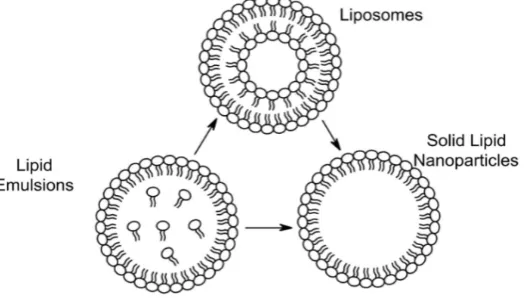
There is the difference between liposome and lipid emulsion. Lipid emulsion has the structure of inactive lipophilic oil core ringed by a single layer of amphiphilic lipid. In diversity, liposome contains an outer double layer of phospholipids is an amphiphilic molecule with an inside aqueous chamber.9
Figure 2: A diagrammatic representation on SLN over emulsion and liposomes
Advantages of SLN
• By using of perishable physiological lipids, it reduces the risk of acute and incurable toxicity.10
• It has high long-run stability.11 • Large scale manufacture is possible.
• It is often incorporated both lipophilic and hydrophilic drugs.12
• Scaling up is possible.
• Manufacture of SLN is much easier than the biopolymeric nanoparticles.
• It has versatility application. • Biocompatibility is excellent.13
Disadvantages of SLN
• Loading capability of the drug is poor.
• Throughout storage, the drug expulsion is possible. • The tendency of gelation is unpredictable. • Sometimes, detonate release occurs.
• Unexpected dynamics of polymeric transitions.14
Table 1: Comparison property of SLN, polymeric nanoparticles, liposomes, lipid emulsion
S. No. Solid lipid nanoparticles Polymeric nanoparticles Liposomes Lipid emulsion Property
1 Low >or = to SLN Low Low Systemic toxicity
2 Low > = to SLN Low Low Cytotoxicity
3 No Yes May or may not No Residues from organic solvents
4 Yes No Yes Yes Large scale production
5 Yes No No Yes Sterilization by autoclaving 6 Yes Yes <or =to SLN No Sustained release 7 Depends size and coating No Yes Yes Avoid of RES
Production methods of SLN
General ingredients
Ingredients used in the preparation embrace solid lipids, emulsifiers, and purified water. The term lipids are employed during a large sense, and it consists of triglycerides (e.g. tristearin), partial glycerides (e.g. imwitor), fatty acids, steroids, and waxes. To stabilize the lipid distribution, all categories of emulsifiers is used. Particle agglomeration is preventing by the combination of emulsifiers.
Different methods of SLN production
1. High-pressure homogenization
2. High shear homogenization and ultrasound 3. Ultrasonication
4. Membrane contactor technique 5. Double emulsion-based method
6. Supercritical fluid method 7. Solvent evaporation/emulsification 8. Solvent injection technique 9. Microemulsion based technique 10. Spray drying
11. Lyophilization or freeze-drying15
High-pressure homogenization (HPH)
particle is down to lower micron range, been applying very high shear strain and cavitation force. The lipid capacity is in the area 15-10% and, even high lipid concentration up to 40% has been homogenized to lipid Nano dispersions.
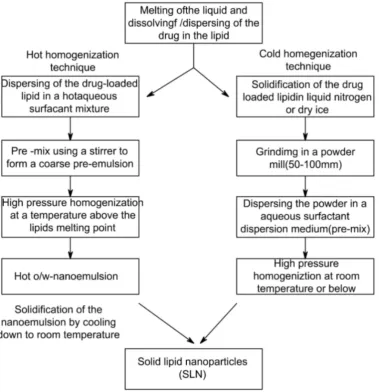
Two major paths of the blending step is the hot and cold homogenization techniques are using for the formulation of SLNs. In each technique, the production of SLN by the drug is incorporated in the bulk of lipids by dispersing the molecule in the lipid soften.18
a) Hot homogenization
Hot homogenization was administrated by the temperature of lipids above its melting point and it observes as the homogenization of an emulsion. By the help of high shear mixing equipment (e.g. ultra turrax) a pre-emulsion of drug-loaded macromolecule melt, and the hydrophilic emulsifier phase is produced. The pre-emulsion of HPH was administrated temperature higher than the lipids melting point. Since the rise temperature results in smaller size particle due to decreases the thickness of the inner section.19 The degradation rate of drug and carrier is increased by high temperature. By increasing the homogenization pressure results in increasing the particle size due to the high driving force of particles.20
b) Cold homogenization
Cold homogenization is achieving with solid lipid; it shows a high-pressure crushing of suspension. By increasing the heat during homogenization, the unmolten state of lipid maybe changed to ensure that the temperature should been controlled. This method is advanced to survive the main three issues of hot blending.
1. The degradation of drug was caused by temperature. 2. During homogenization, the drug distributed in the liquid
phase.
3. Involvement of the crystallization step in the nanoemulsion resulting in many changes and supercooled melts.
The initial is same as the hot blending procedure and hold the solubilization or scatter of the drug in the melt of mass lipid. The melted drug is apace cooled. The homogenous disposal of the drug within the lipid matrix was occurred by the high cooling rate. The solid; a drug having lipids is granulating to microparticles. The molecule size is having in the range 50-100 microns by the ball or mortar crushing. Low temperature increases the brittleness of the lipids.
The SLN was distributed in a solution of cooled emulsifier. The pre-suspension was subjected to high pressure blending at low room temperature. When it is matched with hot homogenization, bigger particle size and full-size sharing was seen in cold homogenization specimen.21
High shear homogenization and ultrasound
For the assembly of solid lipid nano-distribution by the dispersion technique such as high shear homogenization and ultrasound.22 Each technique is popular and simple to handle. Withal, dispersion aspects often negotiate by the existences of microparticles. Uses of ultrasound metal contamination are possible. In a study done by Ahlin et al., they have used a Lak Tek rotor-stator homogenizer to supply SLN by softening emulsification. They checked the effect of various method parameters, together with emulsification time, stirring rate and cooling circumstance on the particle size and zeta potential. This study was used by lipids such as trimyristin, glycerol ester, tristearin, a combination of mono, di and triglycerides and glycerin behenate and poloxamer188 is employed a steric stabilizer (0.5w %).23 Particle size did not change even a high stirring rate, but they somewhat improved the polydispersity index. The average particle size obtained from this study ranges from 100-200 nm.
Ultrasonication
The ultrasonication is also called as high-speed blend. It is a dispersion method initially utilized in the formulation of the solid macromolecule nanodispersion. The mechanism used in this technique is cavitation. The solid lipid liquefied initially, and the drug is added. In the melted lipid, the heated aqueous phases are added, and it was emulsified by the probe sonication. By using
probe sonicator, the pre-emulsion is ultrasonicated with a water bath (at 0ºC). The preparation temperature should be raised the melting point of the lipid to forestall the recrystallization. The achieved nanoemulsion (o/w) is clean through a 0.45 µm membrane to discard the contamination during the ultrasonication. The solid lipid nanoparticle is kept at 40ºC. To increases the stability of the formulation lyophilised by adding mannitol (5%) in the SLNs as cryoprotectant.24
Solvent evaporation/ emulsification
The SLNs was prepared by solvent evaporation/emulsification methods. Both hydrophilic and lipophilic drug was diffused in the water not dissolved in a polar solvent (e.g. cyclohexane, dichloromethane, chloroform and toluene) by applying high-speed homogenizer the hydrophilic phase get emulsified.25 Upon solvent is evaporated, nanoparticles dispersion was created by the settlement of the lipids in the liquid phase by giving nanoparticles of 25 nm size. The pressure was reduced under (40-60 bars) the polar solvent is ejected from the emulsion.
Micro emulsion
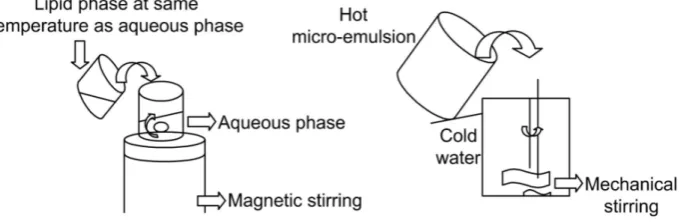
The preparation of SLNs by the dilution of the micro emulsion is invented by Gasco and colleagues. An optically clear mixture is attained by stirring at 65-70ºC that is often composed of a low melting fatty acid, emulsifier, co-emulsifier, and H2O. The warm microemulsion is dissolved in cold water (2-3ºC) under stirring.26 The capacity of hot microemulsion to the cold-water ranges from 1:25 to 1:50. In the composition of microemulsion, the dilution process is the critical step. The nanoparticles are formed only with a solvent that distributes terribly into hydrophilic phases (acetone) more lipophilic solvent produces the large particle size.27
Figure 4: Micro emulsion method
Double emulsion
The preparation of SLNs is done by double emulsion technique by two steps. The preparation of primary emulsion (w/o) the drug was dispersed in the liquid phase, and they scattered in lipid-containing equilibrium known as oil phases.28 After adding the aqueous solution of deliquescent emulsifier the double emulsion (w/o/w) is formed with continuous stirring and lastly separated by filtration.
Double emulsion method escapes the melt of lipid for the production of protein and peptide-loaded lipid nanoparticles. Steric stabilization considerably upgraded the resistances of these mixture systems in gastrointestinal fluids.29 Novel reverse particle-double emulsion technique using sodium
cholate-phosphatidyl-choline based blended micelle used for the preparation of insulin loaded SLN.
Solvent injection
Figure 5: Formation of SLN by solvent injection method
Membrane contactor
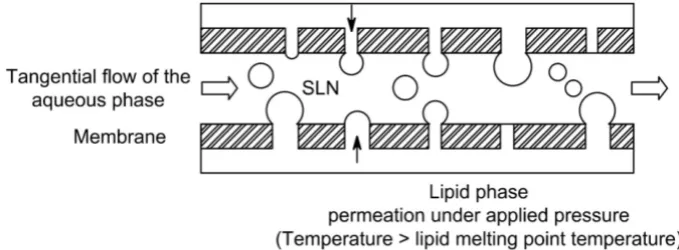
Membrane contactor may be a novel technique, for the assembly of solid lipid nanoparticles. In this technique the temperature of the liquid phases pressed above the melting point of the lipid over the membrane pores allow the construction of little droplets.32 The liquid phase interiors the membrane contactor is sweeping away
from the outlet pores. Cooling the preparation at the room temperature the SLNs was formed. For maintaining the temperature both phases are located in thermo stated. The effect of various parameters was studied. The membrane contactor technique was used in the formation of the polymeric nanoparticles. The advantages of this method preparation of SLNs is had the appropriate size of SLN and scaling is possible.33
Figure 6: Schematic drawing of the membrane contactor for SLN preparation
Supercritical fluid
This method is the fiction method for the assembly of solid lipid nanoparticles. When the pressure and temperature of the fluid exceed the critical value, then it is called as supercritical fluids. They have a particular thermo-physical property. When the pressure was increased, the thickness of the gas was raised beyond symbolic increasing in the thickness, the capability of the fluid dissolved compounds also raised. The gases have ability to dissolving a substance under ambient condition, and it was dissolved under in high pressure in the supercritical area. Several gases like CO2, ammonia, ethane, and CH2FCF3 was tested, but
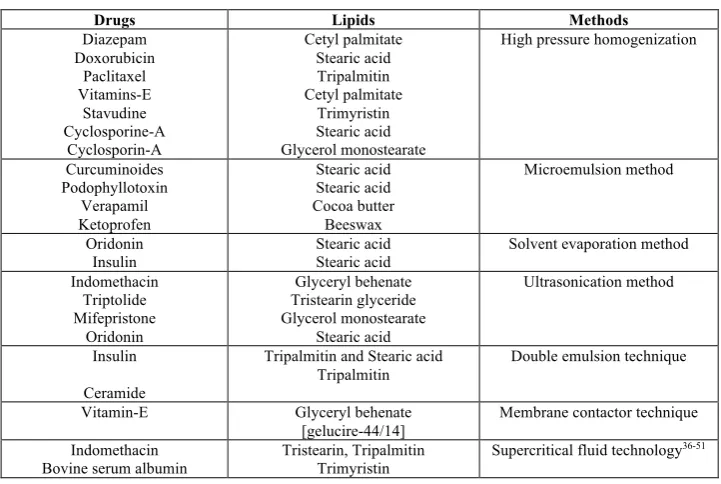
Table 2: Schedule of drugs and lipid used in the formulation of SLN by various techniques
Drugs Lipids Methods
Diazepam Doxorubicin
Paclitaxel Vitamins-E
Stavudine Cyclosporine-A
Cyclosporin-A
Cetyl palmitate Stearic acid Tripalmitin Cetyl palmitate
Trimyristin Stearic acid Glycerol monostearate
High pressure homogenization
Curcuminoides Podophyllotoxin
Verapamil Ketoprofen
Stearic acid Stearic acid Cocoa butter
Beeswax
Microemulsion method
Oridonin Insulin
Stearic acid Stearic acid
Solvent evaporation method
Indomethacin Triptolide Mifepristone
Oridonin
Glyceryl behenate Tristearin glyceride Glycerol monostearate
Stearic acid
Ultrasonication method
Insulin
Ceramide
Tripalmitin and Stearic acid Tripalmitin
Double emulsion technique
Vitamin-E Glyceryl behenate [gelucire-44/14]
Membrane contactor technique
Indomethacin
Bovine serum albumin Tristearin, Tripalmitin Trimyristin Supercritical fluid technology
36-51
Secondary production steps
Spray drying
It is a substitute and economical to the lyophilization method. These indicate the help of lipids having a high melting point more than 70ºC. When solid lipid nanoparticle concentration of 1% in a solution of trehalose in H2O, Colloidal substance size in spray drying preserved by the addition of carbohydrates and has low lipid content. Using ethanol-water mixtures rather pure H2O the melting of the lipid can be reduced.52
Lyophilization
To increases, the chemical and physical balance for prolonged duration of time, lyophilization is the most acceptable way. Lyophilization wants to achieve the long-term stability of the products having hydrolysable drugs. Oswald ripening and hydrolytic reactions was prevented by the transformation of solid-state.53 Freeze drying of the yield, all lipid matrices used, from large SLNs with a enlarge size sharing due to existence of aggregates among the nanoparticles. Removal of water and freeze-drying technique cooperate aggregation among SLNs. The SLN can be protected by adding a small amount of cryoprotectant when the freeze-drying process was started.54
Problem related with the preparation of SLN
SLN gives a lot of advantages when compared to other system, but it has some during the preparation process such as
Drug degradation induced by high pressure
The decreased molecular weight of the polymer was shown by high-pressure homogenization. The major causes and evident of free radical formation were assumed by high shear stress. Lower molecular weight compounds have low delicate than the high molecular weight molecules and long-chain compounds.55 (e.g.) it has been found that the degradation of DNA and albumin was induced by HPH. In the given data and the literature, the drug degradation induced by the HPH is not a severe problem for many
drugs. The shear delicate compounds (DNA, albumin, and erythropoietin) are not suitable for HPH.56
Drug incorporation and lipid crystallization
For identifying the lipid modifications, the two studies are used, such as X-ray and DSC. The following four key parameters should be studied for drug incorporation in SLN
1. Supercooled melts existence.
2. Existence of certain lipid modifications. 3. The model of lipid nanodispersions. 4. Gelation phenomena.57
Excipients influence
Influence of the ingredients on product quality
Several parameters such as formulation composition, preparation methods and conditions are affected the particle size of the nanoparticles. At lower process temperature, larger particle size is achieved. The smaller particle size was given by hot homogenization technique below 500 nm and a narrow particle size sharing as related to the cool homogenization. When the homogenization pressures are increasing up to 1500 bar and number of cycles (3-7 cycles), it indicates particles size and the polydispersity index value are reduced.58
Influence of the lipids
Influence of the emulsifiers
The particle size of the lipid nanoparticles is heavily affected by the combination of surfactant. The higher surfactant ratio was choosing to identify the smaller particle size. The particle size increased during storage is resulted as decreasing in the surfactant concentration. The surface tension among the interface of the particles causing portioning of the particles and developing the surface area it is done by decrease the surfactant.60
Evaluation of Solid Lipid Nanoparticles
The characterization of solid lipid nanoparticles is vital for control of the capacity of the yield. Due to the colloidal size of the particle and the complication, effective nature of the delivery system, the characterization of solid lipid nanoparticles is becoming much confronted. The essential parameters involved in the evaluation of SLNs are:
1. Zeta potential and size of the particle
2. Modification of lipid and degree of crystallinity.
3. Dynamic phenomena and co-existence of further structures.
Zeta potential and particle size
The physical and chemical strength of SLNs mainly depends on the particle range of the solid lipid nanoparticle, for identifying the particle size, the most powerful technique was used photon correlation spectroscopy (PCS)and laser diffraction. When the particle movement is occurs, the intensity of the scatted light was measured by PCS. The particle size was determined by photon correlation spectroscopy (PCS) size ranges from 3 nm to 3 µm, and the laser diffraction (LD) in size ranges from 100 nm to 180 µm. PCS is the good characterize tool of nanoparticles, but it is capable to finding the large microparticles. Narrow particles cause more intensity scattering at an elevated angle related to the larger particles.61
The evaluation of zeta potential executes by using zeta potential analyzer or zeta meter. A higher value of zeta potential may lead
to disaggregation of particles other disorder factors such as a steric mediator or hydrophilic surface appendages. The storage stability of colloidal dispersions was calculated by zeta potential.62
Electron microscopy
The nanoparticle was observed by scanning electron microscopy (SEM) and transmission electron microscopy (TEM). SEM is, however, better for grammatical examination. For small size limit of detection, TEM is used.63
Dynamic light scattering (DLS)
The change in the intensity of scatter light on the microsecond time scale is recorded by quasi-elastic light scattering (QELS) it is also known as DLS. The alteration results from the conflict of light scattered by specific particles under the effect of Brownian motion, and it was qualified by a collection of an autocorrelation function. The benefit of this technique is the speed of analysis, sensitivity to sub micrometer particles, and lack of required calibration.
Atomic force microscopy (AFM)
It is a leading microscopy approach, and it is the new identifying tool to match the model unaffected size and surface properties of the molecule. The force acting within the surface of the sample and the tip of the probe was measured by AFM. The proximity of the substance was kept in close to the probe which occurs in a spatial resolution up to 0.01 nm for the sketch.64
Static light scattering (SLS)/ Fraunhofer diffraction
From the solution of particles, the patent of scattered light is collected, and it was burst to the foundation electromagnetic equations in which the range is the initial variable. It is the rapid and rough method, because it needs more cleanliness than DLS and it has prior data of the particles optical character.65
Table 3: Main aspects of particles size measurements
Methods Principle Measured size Limitation
Light scattering Light interaction 50 nm - 1 µm Non-appropriated for very polydispersed populations Laser light diffraction Light interaction 1-1000 µm High amount sample required and indirect method Scanning and transmission
electron microscopy
Microscopy 50 nm - 100 µm Time consuming influence of the preparation of the sample
Atomic force microscopy Microscopy 10 nm - 1 µm Sampling non-automated complexity of the set-up image treatment subjective
Analytical ultracentrifugation Centrifugation --- Complex data processing Capillary electrophoresis Electrophoresis 20-500 nm Complexity of the set up66
Acoustic method
The depletion of the sound signal is a mean by certain size through the proper of the physically compatible equation it measure by acoustic spectroscopy. By the action of charged particles, the oscillating electric field is achieved. The information on the surface charge was detected by the influence of acoustic energy.
Nuclear magnetic resonance
Table 4: The drug incorporated in SLNs preparation
Pharmacological category Drugs
Anticancer drugs Camptothecin, Etoposide, Docetaxel, Vinpocetine. NSAIDS Naproxen, Ketorolac, Nimesulide, Ibuprofen. Vitamins Vitamin-A, Vitamin-E, Vitamin-K, Retinol Antidiabetic drugs Repaglinide
Antitubercular drugs Rifampicin, Isoniazid
Antiviral drugs Acyclovir, Saquinavir, Quinine, Chloroquine Antiarthritic drugs Actarit
Hormonal drugs Hydrocortisone, Cortisone, Insulin Steroidal drugs Clobetasol propionate68-70
Modification of lipid and degree of crystallinity
Differential scanning calorimetry and Powder X-ray diffraction
The degree of crystallinity was determined by the geometrical scattering of radiation from the crystal plane inside a solid. By using glass and melting point temperature, the quality and speciation of crystallinity within nanoparticles is measured by Differential scanning calorimetry.
The lipid crystallization alteration changes by highly limited, due to the presence of emulsifiers and smaller particle size. The lipid status in identifies by Differential scanning calorimetry and Powder X-ray diffraction. The structural properties of lipids can be investigated by Raman spectroscopy and infrared. The crystallinity of the lipid was calculated by crystallinity indexes (CI).71
CI (%) = Melting Enthalpy SLN
Melting enthalpy bulk × concentration lipid phase× 100
Rheology
By Brookfield viscometer the rheological measurement is performed by applying spindle number. The dispersed lipid contented of the formulation is helps to find the viscosity. The Newtonian flow becomes non-Newtonian flow when the lipid content was increased.72
Dynamic phenomena and co-existence of additional structures
The nano-compartments in the colloidal lipid dispersion were investigated by the two magnetic resonance methods like nuclear magnetic resonance (NMR) and electron spin resonance. The discharge of surfactant molecules from the surface of the particle and it generates further changes like crystallization change of lipid alteration is may cause by diluting the original SLN dispersion with water.73
Models for the incorporation of drugs into the SLN
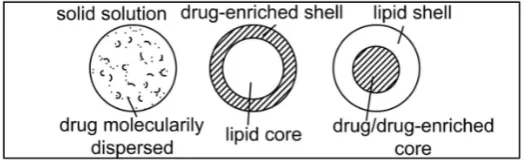
The incorporation models of drugs into SLN, they have three different models74.
1. Homogeneous matrix model 2. Drug-enriched shell model 3. Drug-enriched core model
Homogeneous matrix model was called as solid solution model. The drugs are present in an amorphous cluster or molecularly distributed it is chiefly obtained once incorporating extremely lipophilic drugs into SLN by victimization hot blend technique. In cold blend, the drug is distributed in bulk of liquefied lipid, the breakdown of molecular in nanoparticles by the mechanical force of air mass blend.
When acting the assembly of SLN, the drug increased shell with a core-shell model was obtained. The drug divided into water section throughout the formulation. The macromolecules precipitate initial, forming a practical drug-free macromolecules core due to section separation once the preparation goes on cooling. Gradually the drug concentration is increasing in the outer shell and therefore, the drug re-partition into the liquid-lipid section at an equivalent time. The drug enriched shell crystallizes illustrate finally. The drug solubility within the aqueous phase increases with increasing the number of drug partitioning to the aqueous phase. The saturation solubility of the drug in the water phase was increased with increasing the temperature of the aqueous phase and increasing wetting agent concentration. By the hot HPH, the tetracaine SLN is prepared.
The drug dissolving within the super molecule melts at saturation solubility a drug enriched core was obtained. The ready nanoemulsion results in super saturation of drug in liquid super molecules and additional leads drug precipitation before lipid precipitation once it was cooled. The super molecule is precipitated encompassing the drug enriched core as membrane once much cooling was given. The carrier system shows sustained release profile because of magnified diffusional distance and preventative effects of encompassing solid macromolecules shell.
Loading capacity and drug incorporation
By the assistance of loading capability, the drug carrier system is determined. The loading capability is broadly speaking expressed in % associated with the macromolecule part. The particle size, loading capability, and also the size distribution of SLN’s are found to vary with macromolecule (triglycerides, carboxylic acid and waxes etc.), surface-active agent (anionic, non-ionic and cationic) and also the technique of formulationetc.75
The loading capacity of the drug in the lipid is determined by following such as
• Melted lipids solubility.
• Miscibility of drug melt in the lipid melts.
• Lipid material in the polymorphic state.
• Physical and chemical structure of the lipid matrix.
The expedient to attain a sufficient loading capacity is large solubility of the drug in the lipid melt. When cooled down the melt and might even is low in the solid lipid, it decreases the solubility of drug, so higher solubility is required. By adding one of the solubilizers, the solubility of lipid is built up. The drug solubilization is rise due to the presence of mono and diglycerides in the lipid matrix. The chemical nature of lipids is also important because lipid which from more crystalline particles with a perfect lattice leads to drug expulsion.76
Evaluation of drugs integrated into the solid lipid nanoparticle
Entrapment efficiency
The release character in the drug molecules is influenced by entrapped efficiency, so it is the most important in the SLN preparations. Later the separation of the entrapped drug for the solid lipid nanoparticles preparation it able to determine the amount of drug encapsulated per unit weight of nanoparticles. Ultra-centrifugation, centrifugation filtration, and gel permeation these methods were used for the separation. The entrapment efficiency has been calculated by following equation.
𝐸𝐸 (%) =𝑊𝑒𝑖𝑔ℎ𝑡 𝑜𝑓 𝑖𝑛𝑖𝑡𝑖𝑎𝑙 𝑑𝑟𝑢𝑔 − 𝑤𝑒𝑖𝑔ℎ𝑡 𝑜𝑓 𝑓𝑟𝑒𝑒 𝑑𝑟𝑢𝑔
𝑤𝑒𝑖𝑔ℎ𝑡 𝑜𝑓 𝑖𝑛𝑖𝑡𝑖𝑎𝑙 𝑑𝑟𝑢𝑔 𝑋100
𝐷𝑟𝑢𝑔 𝑙𝑜𝑎𝑑𝑖𝑛𝑔 (%) =𝑊𝑒𝑖𝑔ℎ𝑡 𝑜𝑓 𝑖𝑛𝑖𝑡𝑖𝑎𝑙 𝑑𝑟𝑢𝑔 − 𝑤𝑒𝑖𝑔ℎ𝑡 𝑜𝑓 𝑓𝑟𝑒𝑒 𝑑𝑟𝑢𝑔
𝑤𝑒𝑖𝑔ℎ𝑡 𝑜𝑓 𝑙𝑖𝑝𝑖𝑑 𝑋100
Centrifugation filtration
In the traditional centrifugation techniques, the filter being ultra-free- mc or ultra-sort-10 was used. The amount of drug halting in the supernatant after centrifugation filtration of SLN suspension was indirectly evaluated by the degree of encapsulation.77
Drug release principles of SLN preparations
The principles of drug released from the lipid nanoparticles are as follows:
• The discharge of drug and the partition coefficient of the drug having the inverse relationship.
• The higher drug discharge occurred due to higher surface area and the particle size in the nanometer range.
• When the drug uniformly circulates in the lipid matrix, it able to attain quiet drug releases. It is depending on the types and drug entrapment model of solid lipid nanoparticles.
• The rapid drug release is existed by crystalline role of the lipid and high mobility of the drug. The degrees of crystallization and drug mobility have an inverted relationship.
Factors are providing for the faster release being large surface area, limited molecular sizes due to big diffusion co-efficient, low viscosity and the drug having shorter diffusion distance δ. When the particle size was decreased, the velocity was increased.
Estimation of drug release from SLN by In-vitro and ex-vivo
methods
A many number of the drug included very hydrophilic molecules have been suggested to been integrated into the SLN. Various methods are used to study the In-vitro drug release:
• The artificial or biological membranes are attached with parallel to the diffusion cells.
• Dialysis bag diffusion technique. • Reversed dialysis bag technique.
• Ultra-centrifugation is followed by agitation.
In vitro drug release
Dialysis tubing
Dialysis tubing is used to gain In-vitro molecules release. In pre-scrubbed dialysis tubing, which is airtight sealed in that tube of solid lipid nanoparticles dispersion was placed. The dialysis sac then dialyzed versus suitable dissolution medium at room temperature; at suitable intervals, the samples are detached from the dissolution medium, the drug content was found by using the suitable analytic method.78
Reversed dialysis
The small dialysis sacs have 1 ml of dissolution medium are located in SLN dispersed. In the medium, the solid lipid nanoparticles are moved.
Determining the permeability across the gut by ex vivo model
Stability of SLN
When prolonged storage the physical properties of SLNs was decided by seeing the changes in zeta potential, drug content, particle size, look and body. The first importance for long stability appeared by external parameters like temperature and brightness. The zeta potential ought to be generally, stay over -60 mV for dispersion to stay physically stable.81
• 4ºC - The most positive storage temperature.
• 20ºC - Loss of drug did not result in long term storage. • 50ºC - Growth of particle size was observed.
Applications of SLN
• Solid lipid nanoparticles, as a potential new ancillary for vaccines.
• SLN used as a targeted carrier for solid tumor. • Proteins and peptides are delivered by SLN. • SLN was used for tropical application.
• Cosmetic and dermatological preparations are prepared by SLN.
• SLN used for ultrasonication and gene delivery.
• SLN used as an outstanding delivery system for bioactive compounds.
• SLN used for parasitic diseases.
CONCLUSION
The SLNs is the novel drug delivery system; they get the attention from the 1990s and coming has a big arrangement for the systemic circulation and blending. For functions in drug discovery, drug delivery, and diagnostics the nanoparticles are used. The targeted and sustained effect is reached by SLNs. They have a lot of advantages such as both hydrophilic and lipophilic drug can be incorporated; the physical stability of the drug was increased, low cost, easy scale-up and construction. They SLNs were formulated by various procedures. Nanotechnology has many patented dosage forms in the medicinal field.
ABBREVIATIONS
SLN Solid Lipid Nanoparticle HPH High Pressure Homogenization SCF Supercritical Fluid
DMSO Dimethyl Sulfoxide DMFA Dimethylformamide
RESS Rapid Expansion of Supercritical Solution SAS Supercritical Antisolvent
GAS Gas Antisolvent
ASES Aerosol Solvent Extraction Solvent PCS Photon Correlation Spectroscopy LD Laser Diffraction
SEM Scanning Electron Microscopy TEM Transmission Light Scattering DLS Dynamic Light Scattering QELS Quasi-Elastic Light Scattering AFM Atomic Force Microscopy SLS Static Light Scattering NMR Nuclear Magnetic Resonance CI Crystallinity Index
REFERENCES
1. Garud A, Singh D, Garud N. Solid lipid nanoparticles (SLN): method, characterization and applications. International Current Pharmaceutical Journal 2012; 1 Suppl 11: 384-93.
2. Chowdary K, Srinivasa Rao A. Nanoparticles as drug carriers. Indian drugs 1997; 34 Suppl 10: 549-56.
3. Ramteke K, Joshi S, Dhole S. Solid lipid nanoparticle: A review. International Organization Scientific Research Journal of Pharmacy 2012; 2 Suppl 6: 34-44.
4. Chandni SV, Viral S, Umesh U. Solid lipid nanoparticles: a review. Current Pharma Research 2011; 1 Suppl 4: 351. 5. Loxley A. Solid lipid nanoparticles for the delivery of
pharmaceutical actives. Drug Delivery Technology 2009; 9 Suppl 8: 32-7.
6. Yadav N, Khatak S, Sara US. Solid lipid nanoparticles-a review. International Journal of Applied Pharmaceutics 2013; 5 Suppl 2: 8-18.
7. Sinha VR, Srivastava S, Goel H, Jindal V. Solid Lipid Nanoparticles (SLN'S)-Trends and Implications in Drug Targeting. International Journal of Advances in Pharmaceutical Sciences 2010; 1 Suppl 3.
8. Ekambaram P, Sathali AAH, Priyanka K. Solid lipid nanoparticles: a review. Scientific Reviews & Chemical Communications 2012; 2 Suppl 1: 80-102.
9. Cavalli R, Gasco MR, Chetoni P, Burgalassi S, Saettone MF. Solid lipid nanoparticles (SLN) as ocular delivery system for tobramycin. International Journal of Pharmaceutics 2002; 238 Suppl 1-2: 241-5.
10. Mukherjee S, Ray S, Thakur R. Solid lipid nanoparticles: a modern formulation approach in drug delivery system. Indian Journal of Pharmaceutical Sciences 2009; 71 Suppl 4: 349. 11. Mehnert W, Mäder K. Solid lipid nanoparticles: production,
characterization and applications. Advanced drug delivery reviews 2012; 64: 83-101.
12. Aveling E, Zhou J, Lim YF, Mozafari MR. Targeting lipidic nanocarriers: Current strategies and problems. Pharmakeftiki 2006; 19 Suppl 4: 101-9.
13. Mehnart W, Mader K. Lipid Assemblies for Drug Delivery. Advanced Drug Delivery Reviews 2001; 47: 165-96. 14. Üner M, Yener G. Importance of solid lipid nanoparticles
(SLN) in various administration routes and future perspectives. International Journal of nanomedicine 2007; 2 Suppl 3: 289.
15. Parhi R, Suresh P. Preparation and characterization of solid lipid nanoparticles-a review. Current drug discovery technologies 2012; 9 Suppl 1: 2-16.
16. Müller RH, Mäder K, Gohla S. Solid lipid nanoparticles (SLN) for controlled drug delivery–a review of the state of the art. European Journal of Pharmaceutics and Biopharmaceutics 2000; 50 Suppl 1: 161-77.
17. Lippacher A, Müller R, Mäder K. Investigation on the viscoelastic properties of lipid based colloidal drug carriers. International Journal of Pharmaceutics 2000; 196 Suppl 2: 227-30.
18. Zur Mühlen A, Mehnert W. Drug release and release mechanism of prednisolone loaded solid lipid nanoparticles. Pharmazie 1998; 53 Suppl 8: 552-5.
19. Lander R, Manger W, Scouloudis M, Ku A, Davis C, Lee A. Gaulin homogenization: a mechanistic study. Biotechnology progress 2000; 16 Suppl 1: 80-5.
20. Jahnke S. The theory of high-pressure homogenization. In: RH Mu ller, S Benita, B Bo hm, eds. Emulsions and Nanosuspensions for the Formulation of Poorly Soluble Drugs. Stuttgart: Medpharm Scientific Publishers; 1998. 21. zur Mühlen A. Feste Lipid Nanopartikel mit prolongierter
23. Domb AJ. Lipsopheres for controlled delivery of substances. Google Patents; 1993.
24. Eldem T, Speiser P, Hincal A. Optimization of spray-dried and-congealed lipid micropellets and characterization of their surface morphology by scanning electron microscopy. Pharmaceutical research 1991; 8 Suppl 1: 47-54.
25. Jin C, Bai L, Wu H, Tian F, Guo G. Radiosensitization of paclitaxel, etanidazole and paclitaxel+ etanidazole nanoparticles on hypoxic human tumor cells in vitro. Biomaterials 2007; 28 Suppl 25: 3724-30.
26. Waghmare A, Grampurohit N, Gadhave M, Gaikwad D, Jadhav S. Solid lipid nanoparticles: a promising drug delivery system. International Research Journal of Pharmacy 2012; 4 Suppl 3: 100-7.
27. De Labouret A, Thioune O, Fessi H, Devissaguet J, Puisieux F. Application of an original process for obtaining colloidal dispersions of some coating polymers. Preparation, characterization, industrial scale-up. Drug development and industrial pharmacy 1995; 21 Suppl 2: 229-41.
28. Jaganathan K, Rao Y, Singh P, Prabakaran D, Gupta S, Jain A, et al. Development of a single dose tetanus toxoid formulation based on polymeric microspheres: a comparative study of poly (D, L-lactic-co-glycolic acid) versus chitosan microspheres. International Journal of Pharmaceutics 2005; 294 Suppl 1-2: 23-32.
29. Liu J, Gong T, Wang C, Zhong Z, Zhang Z. Solid lipid nanoparticles loaded with insulin by sodium cholate-phosphatidylcholine-based mixed micelles: preparation and characterization. International Journal of Pharmaceutics 2007; 340 Suppl 1-2: 153-62.
30. Pandita D, Ahuja A, Velpandian T, Lather V, Dutta T, Khar R. Characterization and in vitro assessment of paclitaxel loaded lipid nanoparticles formulated using modified solvent injection technique. Die Pharmazie-An International Journal of Pharmaceutical Sciences 2009; 64 Suppl 5: 301-10. 31. Mishra D, Mishra H, Mishra PK, Nahar M, Dubey V, Jain
NK. Evaluation of solid lipid nanoparticles as carriers for delivery of hepatitis B surface antigen for vaccination using subcutaneous route. Journal of Pharmacy and Pharmaceutical Sciences 2010; 13 Suppl 4: 495-509.
32. Charcosset C, El-Harati A, Fessi H. Preparation of solid lipid nanoparticles using a membrane contactor. Journal of controlled release 2005; 108 Suppl 1: 112-20.
33. Parhi R, Suresh P. Production of solid lipid nanoparticles-drug loading and release mechanism. Journal of Chemical and Pharmaceutical Research 2010; 2 Suppl 1: 211-27. 34. Jovanović N, Bouchard A, Hofland GW, Witkamp G-J,
Crommelin DJ, Jiskoot W. Stabilization of proteins in dry powder formulations using supercritical fluid technology. Pharmaceutical Research 2004; 21 Suppl 11: 1955-69. 35. Dos Santos IR, Richard J, Pech B, Thies C, Benoit J.
Microencapsulation of protein particles within lipids using a novel supercritical fluid process. International Journal of Pharmaceutics 2002; 242 Suppl 1-2: 69-78.
36. Sznitowska M, Gajewska M, Janicki S, Radwanska A, Lukowski G. Bioavailability of diazepam from aqueous-organic solution, submicron emulsion and solid lipid nanoparticles after rectal administration in rabbits. European Journal of Pharmaceutics and Biopharmaceutics 2001; 52 Suppl 2: 159-63.
37. Miglietta A, Cavalli R, Bocca C, Gabriel L, Gasco MR. Cellular uptake and cytotoxicity of solid lipid nanospheres (SLN) incorporating doxorubicin or paclitaxel. International Journal of Pharmaceutics 2000; 210 Suppl 1-2: 61-7. 38. Dingler A, Blum R, Niehus H, Muller R, Gohla S. Solid lipid
nanoparticles (SLNTM/LipopearlsTM) a pharmaceutical and cosmetic carrier for the application of vitamin E in dermal
products. Journal of Microencapsulation 1999; 16 Suppl 6: 751-67.
39. Shegokar R, Singh K, Müller R. Production and stability of stavudine solid lipid nanoparticles—From lab to industrial scale. International Journal of Pharmaceutics 2011; 416 Suppl 2: 461-70.
40. Zhang Q, Yie G, Li Y, Yang Q, Nagai T. Studies on the cyclosporin A loaded stearic acid nanoparticles. International Journal of Pharmaceutics 2000; 200 Suppl 2: 153-9. 41. Müller R, Runge S, Ravelli V, Thünemann AF, Mehnert W,
Souto E. Cyclosporine-loaded solid lipid nanoparticles (SLN®): Drug–lipid physicochemical interactions and characterization of drug incorporation. European Journal of Pharmaceutics and Biopharmaceutics 2008; 68 Suppl 3: 535-44.
42. Tiyaboonchai W, Tungpradit W, Plianbangchang P. Formulation and characterization of curcuminoids loaded solid lipid nanoparticles. International Journal of Pharmaceutics 2007; 337 Suppl 1-2: 299-306.
43. Xie F, Zeng K, Li G, Lin Z, Sun L. Preparation of stearic acid solid lipid nanoparticles containing podophyllotoxin. Di 1 jun yi da xue xue bao= Academic Journal of the first medical college of PLA 2005; 25 Suppl 1: 99-101.
44. Kheradmandnia S, Vasheghani-Farahani E, Nosrati M, Atyabi F. Preparation and characterization of ketoprofen-loaded solid lipid nanoparticles made from beeswax and carnauba wax. Nanomedicine: Nanotechnology, Biology and Medicine 2010; 6 Suppl 6: 753-9.
45. Zhang D, Tan T, Gao L. Preparation of oridonin-loaded solid lipid nanoparticles and studies on them in vitro and in vivo. Nanotechnology 2006; 17 Suppl 23: 5821.
46. Zhang N, Ping Q, Huang G, Xu W, Cheng Y, Han X. Lectin-modified solid lipid nanoparticles as carriers for oral administration of insulin. International Journal of Pharmaceutics 2006; 327 Suppl 1-2: 153-9.
47. Castelli F, Puglia C, Sarpietro MG, Rizza L, Bonina F. Characterization of indomethacin-loaded lipid nanoparticles by differential scanning calorimetry. International Journal of Pharmaceutics 2005; 304 Suppl 1-2: 231-8.
48. Mei Z, Li X, Wu Q, Hu S, Yang X. The research on the anti-inflammatory activity and hepatotoxicity of triptolide-loaded solid lipid nanoparticle. Pharmacological Research 2005; 51 Suppl 4: 345-51.
49. Hou D, Xie C, Huang K, Zhu C. The production and characteristics of solid lipid nanoparticles (SLNs). Biomaterials 2003; 24 Suppl 10: 1781-5.
50. Garcıa-Fuentes M, Torres D, Alonso M. Design of lipid nanoparticles for the oral delivery of hydrophilic macromolecules. Colloids and Surfaces B: Biointerfaces 2003; 27 Suppl 2-3: 159-68.
51. Chattopadhyay P, Shekunov BY, Yim D, Cipolla D, Boyd B, Farr S. Production of solid lipid nanoparticle suspensions using supercritical fluid extraction of emulsions (SFEE) for pulmonary delivery using the AERx system. Advanced drug delivery reviews 2007; 59 Suppl 6: 444-53.
52. Freitas C, Müller RH. Spray-drying of solid lipid nanoparticles (SLNTM). European Journal of Pharmaceutics and Biopharmaceutics 1998; 46 Suppl 2: 145-51.
53. Ohshima H, Miyagishima A, Kurita T, Makino Y, Iwao Y, Sonobe T, et al. Freeze-dried nifedipine-lipid nanoparticles with long-term nano-dispersion stability after reconstitution. International Journal of Pharmaceutics 2009; 377 Suppl 1-2: 180-4.
55. Weyhers H. Feste Lipid Nanopartikel (SLN) für die gewebsspezifische Arzneistoffapplikation: Herstellung und Charakterisierung oberflächenmodifizierter Formulierungen: na; 1995.
56. Almeida AJ, Runge S, Müller RH. Peptide-loaded solid lipid nanoparticles (SLN): influence of production parameters. International Journal of Pharmaceutics 1997; 149 Suppl 2: 255-65.
57. Bunjes H, Siekmann B, Westesen K. Emulsions of supercooled melts-a novel drug delivery system: Harwood Academic Publishers, Amsterdam; 1998.
58. Abdelbary G, Fahmy RH. Diazepam-loaded solid lipid nanoparticles: design and characterization. Aaps Pharmscitech 2009; 10 Suppl 1: 211-9.
59. Chakraborty S, Shukla D, Mishra B, Singh S. Lipid–an emerging platform for oral delivery of drugs with poor bioavailability. European Journal of Pharmaceutics and Biopharmaceutics 2009; 73 Suppl 1: 1-15.
60. Siekmann B, Westesen K. Melt-homogenized solid lipid nanoparticles stabilized by the nonionic surfactant tyloxapol. I. Preparation and particle size determination. Pharmaceutical and Pharmacological Letters 1994; 3: 194-7.
61. Pandey R, Sharma S, Khuller G. Oral solid lipid nanoparticle-based antitubercular chemotherapy. Tuberculosi 2005; 85 Suppl 5-6: 415-20.
62. Luo Y, Chen D, Ren L, Zhao X, Qin J. Solid lipid nanoparticles for enhancing vinpocetine's oral bioavailability. Journal of controlled release 2006; 114 Suppl 1: 53-9. 63. Wiesendanger R, Güntherodt HJ, Baumeister W. Scanning
tunneling microscopy II: further applications and related scanning techniques: Springer; 1992.
64. Mistry S, Patel P, Bharadia P, Pandya V, Modi D. Novel drug delivery system for lipophilic agents: solid lipid nanoparticles. Journal of Pharmaceutices and Cosmetology 2011; 1: 76-89.
65. Jain NK. Controlled and novel drug delivery. New Delhi: CBS publishers and distributors pvt.Ltd.; 1997.
66. Gaumet M, Vargas A, Gurny R, Delie F. Nanoparticles for drug delivery: the need for precision in reporting particle size parameters. European Journal of Pharmaceutics and Biopharmaceutics 2008; 69 Suppl 1: 1-9.
67. Kuo Y-C, Chen H-H. Entrapment and release of saquinavir using novel cationic solid lipid nanoparticles. International Journal of Pharmaceutics 2009; 365 Suppl 1-2: 206-13. 68. Mudshinge SR, Deore AB, Patil S, Bhalgat CM.
Nanoparticles: emerging carriers for drug delivery. Saudi Pharmaceutical Journal 2011; 19 Suppl 3: 129-41.
69. Joshi MD, Müller RH. Lipid nanoparticles for parenteral delivery of actives. European Journal of pharmaceutics and biopharmaceutics 2009; 71 Suppl 2: 161-72.
70. Gonnet M, Lethuaut L, Boury F. New trends in encapsulation of liposoluble vitamins. Journal of Controlled Release 2010; 146 Suppl 3: 276-90.
71. Zhang S, Yun J, Shen S, Chen Z, Yao K, Chen J, et al. Formation of solid lipid nanoparticles in a micro channel system with a cross-shaped junction. Chemical Engineering Science 2008; 63 Suppl 23: 5600-5.
72. Pragati S, Kuldeep S, Ashok S, Satheesh M. Solid lipid nanoparticles: a promising drug delivery technology. International Journal of Pharmaceutical Sciences and Nanotechnology 2009; 2: 509-16.
73. Vivek K, Reddy H, Murthy RS. Investigations of the effect of the lipid matrix on drug entrapment, in vitro release, and physical stability of olanzapine-loaded solid lipid nanoparticles. AAPS PharmSciTech 2007; 8 Suppl 4: 16-24. 74. Jawahar N, Gowthamarajan K, Meyyanathan S, Sood S. Brain delivery by solid lipid nanoparticles for CNS drugs. International Journal of Pharmaceutical Research and Development 2011; 3: 206-16.
75. zur Mühlen A, Schwarz C, Mehnert W. Solid lipid nanoparticles (SLN) for controlled drug delivery–drug release and release mechanism. European Journal of Pharmaceutics and Biopharmaceutics 1998; 45 Suppl 2: 149-55.
76. Mehnert W, Zur Mühlen A, Dingler A, Weyhers H, Müller R. Solid Lipid Nanoparticles-ein neuartiger Wirkstoff-Carrier für Kosmetika und Pharmazeutika 2. Mitteilung: Wirkstoff-Inkorporation, Freisetzung und Sterilisierbarkeit. Pharmazeutische Industrie 1997; 59 Suppl 6: 511-4. 77. Bargoni A, Cavalli R, Caputo O, Fundarò A, Gasco MR, Zara
GP. Solid lipid nanoparticles in lymph and plasma after duodenal administration to rats. Pharmaceutical Research 1998; 15 Suppl 5: 745-50.
78. Suresh G, Manjunath K, Venkateswarlu V, Satyanarayana V. Preparation, characterization, and in vitro and in vivo
evaluation of lovastatin solid lipid nanoparticles. Aaps Pharmscitech 2007; 8 Suppl 1: E162-E70.
79. Ahlin P, Kristl J, Kristl A, Vrečer F. Investigation of polymeric nanoparticles as carriers of enalaprilat for oral administration. International Journal of Pharmaceutics 2002; 239 Suppl 1-2: 113-20.
80. Elnaggar YS, El-Massik MA, Abdallah OY. Fabrication, appraisal, and transdermal permeation of sildenafil citrate-loaded nanostructured lipid carriers versus solid lipid nanoparticles. International Journal of Nanomedicine 2011; 6: 3195.
81. Lv Q, Yu A, Xi Y, Li H, Song Z, Cui J, et al. Development and evaluation of penciclovir-loaded solid lipid nanoparticles for topical delivery. International Journal of Pharmaceutics 2009; 372 Suppl 1-2: 191-8.
Cite this article as:
R. Muralikrishnan and K. Devi. Formulation, evaluation and applications of solid lipid nanoparticles: An overview. Int. Res. J. Pharm. 2019;10(12):1-12 http://dx.doi.org/10.7897/2230-8407.1012322
Source of support: Nil, Conflict of interest: None Declared