Performance Analysis of Improved Power Quality Converter Fed
PMBLDC Motor Drive with Fuzzy Logic Controller
GURRAM LAVANKUMAR M-tech student Scholar
Department of Electrical & Electronics Engineering, Anurag Group of Institutions(Autonomous) (Formerly Known as CVSR College of Engineering),
Venkatapuram,Gatkesar(mdl); Medchal(Dt); Telangana, India.
Email:[email protected]
B.CHANDRASHEKAR Assistant Professor
Department of Electrical & Electronics Engineering, Anurag Group of Institutions(Autonomous) (Formerly Known as CVSR College of Engineering),
Venkatapuram,Gatkesar(mdl); Medchal(Dt); Telangana, India. Email:[email protected]
Abstract- In this project Fuzzy base VSI fed PMBLDC motor drive is presented. The permanent magnet brushless DC motors (PMBLDCM) are now more popular in small and medium power applications due to its wide speed range operation, high efficiency, high starting torque, better reliability, low noise level, long lifetime, brush less construction, ease of control and reduced electromagnetic interference (EMI) problems. The PMBLDCM is controlled in the current controlled mode to achieve desired performance. The proposed improved power quality PMBLDCM drive is designed, modeled and simulated. The ac-dc conversion of electric power is usually required for BLDC motor drive; nevertheless, it causes many current harmonics and results in the poor power factor at input ac mains. This project deals with a ac-dc converter as a single-stage power factor correction (PFC) converter for a permanent magnet brushless dc Motor (PMBLDCM) fed through a Rectifier from a single-phase AC mains. The buck converter show conformity to international power quality standards with improved performance of PMBLDC Motor drive, such as reduction of AC main current harmonics, near unity power factor and reduction of speed and torque ripples. A Three-phase voltage source inverter is used as an electronic commutates to operate the PMBLDC Motor. This project presents an improved power quality bidirectional voltage source converter (VSC) fed permanent magnet brush less DC motor (PMBLDCM) drive by using MAT Lab/Simulink. Keywords- Fuzzy Logic Controller, Bidirectional AC-DC converter, PMBLDCM drive, Power Quality (PQ), VSI.
I. INTRODUCTION
The permanent magnet brushless DC motors (PMBLDCM) are presently more well known in little and medium power applications because of its wide speed range operation, high proficiency, high beginning torque, better unwavering quality, low commotion level, long lifetime, brush less development, simplicity of control and lessened electromagnetic obstruction (EMI) issues. it is used for various applications in household equipments such as washing machines, fans, air conditioners, mixer, refrigerators etc., industrial and automobile sectors such as power tools, electric vehicles and medical equipments [1-5]. In PMBLDCM drive, three Hall-effect sensors are used to generate switching sequence for the voltage source inverter (VSI). The
power quality indices such as PF (Power Factor), DPF (Displacement Power Factor), THD (Total Harmonic Distortion) and CF (Crest Factor) of supply current required to control within prescribed limits framed by standards like IEEE 519-1992. Most of the existing systems use a boost converter for PFC as the front-end converter and an isolated DC-DC converter to produce desired output voltage constituting a two-stage PFC drive [6- 10].
The PMBLDCM drive fed from single-phase AC supply through diode bridge rectifier (DBR)-VSI results in power quality problems such as poor PF, increased THD, and high CF in AC supply current. it is due to uncontrolled charging of the DC link capacitor, which results in a pulsed current waveform having a peak value higher than the amplitude of the fundamental input current at AC mains.
II. SYSTEM CONFIGURATION AND PRINCIPLE OF OPERATION
Fig. I shows the system configuration of a proposed PMBLDCM drive. It consists of a bidirectional single-phase full bridge VSC and a three-single-phase VSI with a common DC link feeding to a PMBLDCM. A bidirectional single-phase VSC consists of two half bridges with insulated gate bipolar transistors (IGBTs). An inductor is used between single phase AC supply and a bidirectional Vscs. A bidirectional VSC controls to draw sinusoidal current in phase with input supply voltage along with regulating DC link voltage. The proposed drive is suitable to operate in all four quadrants. The single-phase VSC operates as a rectifier in forward and reverse motoring mode, while three-phase VSI operates as an electronic commutator during this mode. During regenerative braking, single-phase VSC operates as an inverter and three phases VSI performs as a rectifier.
P a g e | 450
inductors, intermediate DC link capacitors and switching devices for a VSC and a VSI.
Fig.1 Control Scheme for Bidirectional AC-DC Converter Fed PMBLDCM Drive
A. Selection of DC Link Voltage and Intermediate DC link Capacitor
The VSC is supplied by a single-phase 220 V AC supply. The selection of minimum DC link voltage depends on amplitude of AC voltage and desired rated DC link voltage of a PMBLDCM. It must be greater than or equal to the peak value of supply voltage and equal to desired rated DC link voltage of the PMBLDCM.
(1 ) Where Vm is peak value of single-phase supply voltage
and Vrated is desired rated DC link voltage of a power of the PMBLDCM.
A 400V DC link is selected and for maintaining the constant DC link voltage, an intermediate DC link capacitor is used. The selection of a DC link capacitor is givenas,
(2)
where I de is the DC link current which is obtained as,
(3)
w is the angular frequency (2 ) in rad/s and Vderipple
is the I % of rated DC link voltage. The DC link capacitor is obtained as 1900! IF, using Eq. (2).
B. Selection of Interface Inductor
An interface inductor is used between AC supply and AC terminals of a single-phase VSC. The inductor is used to absorb PWM voltages. The fundamental rms voltage Vc at VSC terminal is given as,
(4) Where m is modulation index, and it is considered I. Vde is the reference DC link voltage (400V). The
fundamental rms voltage at VSC terminals obtained as 282.88 V using Eq. (4). The relation between fundamental voltages at VSC terminals is given as,
(5)
Where Vs is rms value of input supply voltage which is taken as 220 V and Is is rms value of supply current as,
(6) Therefore, interface inductor is obtained using Eq. (5) Is 17 mHo
C. Design of Voltage Source converter (VSC)
The voltage source converter (VSC) is designed on the basis of apparent power through the VSC. The rms current through each leg of VSC is obtained 9.09A using Eq. (6).
Where Pin the input power at VSC terminals. The maximum current through IGBTs is calculated as [18],
(7)
Considered 10 % peak-peak ripple current, the maximum current through IGBT is obtained 17 Amp. Therefore 25A, 600V IGBT’s are used for the VSc. D. Design of Voltage Source Inverter (VS!)
from manufacturer data sheet and maximum current through IGBT in each phase is obtained as,
(8)
Considered 10% peak-peak ripple in stall current, maximum current through IGBTs is obtained as 15A. Therefore 15A, 600V IGBT's are selected for a three-phase VSI.
IV. CONTROL ALGORITHMS
A .Control Algorithm for Bidirectional AC-DC Converter The control algorithm for bidirectional AC-DC converter is based to regulate DC link voltage under change in loading condition. Equations used in mathematical modeling are as,
A.I Regulated DC link voltage:
The reference DC link voltage (V de *) is compared with the sensed DC link voltage (Vde). If, at the kth instant of time, Vde*(k) is the reference DC link voltage and Vde(k) is the voltage sensed at the DC link, then the voltage error Ve(k) is given as
(9)
The voltage error Ve (k) is fed to a proportional-integral (PI) controller. The output of a PI controller is given as,
(10) Where Kp and Ki are the proportional and integral gain constants of the PI controller.
A.2 Estimation of Reference VSC Current
The reference current for the control of a VSC is obtained as,
(11)
Where Uvs is the unit template of the voltage at input AC mains. It is generated by introducing a gain with input AC supply voltage. The gain is considered (1/325) in this study.
A.3 PWM Controller
For the control of a VSC, an unipolar switching scheme is employed. Leg A and B of the full-bridge converter are controlled separately by comparing carrier signal with reference signals. The reference input current of PWM rectifier Is* is compared with sensed current (Is) to generate the current error l* = (Is*- Is). This current error is compared with fixed frequency triangular signal md(t)to get the switching signal for the lGBT's of leg A.
When current error * > md(t) then SI = on * < md(t) then S4 = on
For the switching of TGBT's of leg 'B' the current error * is multiplied by unit negative gain and compared with triangular waveform md(t).
When the - * > md(t) then S3 = on
B. Control Algorithm for VSI
The VSI is used as an electronic commutator. The reference speed ( w/) is compared with sensed speed ( w,) . The speed error (we) is fed to the speed PT controller. The output of speed PI controller is multiplied with resolver output, to generate estimated reference current (Ia*, Ib* and Ie *) as shown in Table
1. These reference currents are compared with sensed currents (Ia, Ib and Ie) of PMBLDCM and error is
given to the PWM current controller which generates switching pulses for a VSI.
V.FUZZYLOGICCONTROLLER
L. A. Zadeh presented the first paper on fuzzy set theory in 1965. Since then, a new language was developed to describe the fuzzy properties of reality, which are very difficult and sometime even impossible to be described using conventional methods. Fuzzy set theory has been widely used in the control area with some application to dc-to-dc converter system. A simple fuzzy logic control is built up by a group of rules based on the human knowledge of system behavior. Matlab/Simulink simulation model is built to study the dynamic behavior of dc-to-dc converter and performance of proposed controllers. Furthermore, design of fuzzy logic controller can provide desirable both small signal and large signal dynamic performance at same time, which is not possible with linear control technique. Thus, fuzzy logic controller has been potential ability to improve the robustness of dc-to-dc converters. The basic scheme of a fuzzy logic controller is shown in Fig 2 and consists of four principal components such as: a fuzzification interface, which converts input data into suitable linguistic values; a knowledge base, which consists of a data base with the necessary linguistic definitions and the control rule set; a decision-making logic which, simulating a human decision process, infer the fuzzy control action from the knowledge of the control rules and linguistic variable definitions; a de-fuzzification interface which yields non fuzzy control action from an inferred fuzzy control action [10].
Fig.2. General Structure of the fuzzy logic controller on closed-loop system
P a g e | 452
automatic control strategy without any complicated mathematical model [10]. Simulation is performed in buck converter to verify the proposed fuzzy logic controllers.
Here we apply Fuzzy technique at different load conditions. Such that it sets value for the current controller and the power quality is improved without any losses.
Fig.3. Block diagram of the Fuzzy Logic Controller (FLC) for dc-dc converters
A. Fuzzy Logic Membership Functions:
The dc-dc converter is a nonlinear function of the duty cycle because of the small signal model and its control method was applied to the control of boost converters. Fuzzy controllers do not require an exact mathematical model. Instead, they are designed based on general knowledge of the plant. Fuzzy controllers are designed to adapt to varying operating points. Fuzzy Logic Controller is designed to control the output of boost dc-dc converter using Mamdani style fuzzy inference system. Two input variables, error (e) and change of error (de) are used in this fuzzy logic system. The single output variable (u) is duty cycle of PWM output.
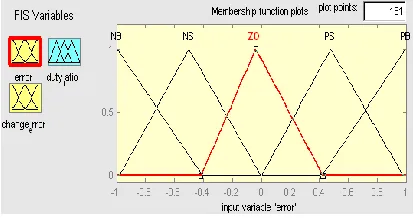
Fig. 4.The Membership Function plots of error
Fig.5. The Membership Function plots of change error
Fig.6. the Membership Function plots of duty ratio
B. Fuzzy Logic Rules:
The objective of this dissertation is to control the output voltage of the boost converter. The error and change of error of the output voltage will be the inputs of fuzzy logic controller. These 2 inputs are divided into five groups; NB: Negative Big, NS: Negative Small, ZO: Zero Area, PS: Positive small and PB: Positive Big and its parameter [10]. These fuzzy control rules for error and change of error can be referred in the table that is shown in Table I as per below:
Table I
Table rules for error and change of error
VI. SIMULATION RESULTS
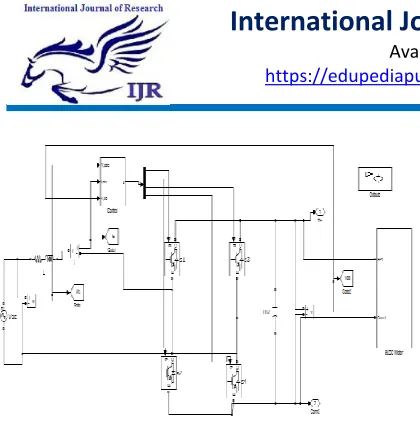
Fig.7 shows the Matlab/simulink model of Bidirectional AC-DC Converter Fed PMBLDCM Drive
Fig. 8 simulation waveforms of starting performance of the PMBLDCM with PI Load
Fig. 9 simulation waveforms of PMBLDCM drive under speed performance At ¾ Load With Load
Fig. 10: simulation waveforms of PMBLDCM drive performance At ½ Load With Load
Case 2: with fuzzy controller
Fig 11. Matlab/simulink model of Bidirectional AC-DC Converter Fed PMBLDCM Drive with Fuzzy Logic Controller
P a g e | 454
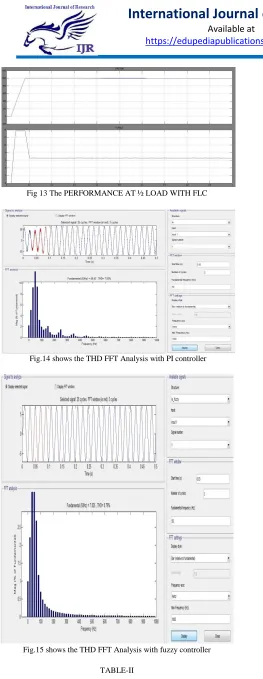
Fig 13 The PERFORMANCE AT ½ LOADWITH FLC
Fig.14 shows the THD FFT Analysis with PI controller
Fig.15 shows the THD FFT Analysis with fuzzy controller
TABLE-II
THD and Power factor comparison
% load torque
% THD Power factor
With PI With Fuzzy With PI With Fuzzy
100 8.28 0.89 0.951 0.981
75 8.07 0.82 0.956 0.989
50 7.93 0.79 0.962 0.994
VII. CONCLUSION
A single stage PFC control strategy of a VSI fed PMBLDCM drive using power quality converter using conventional PI controller and fuzzy logic controller has been validated. As a conclusion, the increasing demand for using fuzzy logic as a controller for BLDC permanent magnet motor in modern intelligent motion control of BLDC motors, simulation have provided a good dynamic performance of the fuzzy logic controller system. Be sides. The simulation model which is implemented in a modular manner under MATLAB environment allows dynamic characteristics such as phase currents, rotor speed, and mechanical torque to be effectively considered. Also, THD of system is reduced and power factor is improved. The result paired with Matlab/simulink is a good simulation tool for modeling and analyzing fuzzy logic controlled brushless DC motor drives.
REFERNCES
[1]. Kenjo and S. Nagamori, Permanent Magnet [16]
Brushless DC Motors. Oxford, U. K.: Clarendon, 1985.
[2]. J. Sokira and W. Jaffe, Brushless DC Motors:
Electronic Commutation and Control. New York: Tab, 1989.
[3]. R. Hendershort Jr and T. J. E. Miller, Design of Brushless Permanent-Magnet Motors, Clarendon Press, Oxford, 1994.
[4]. F. Gieras and M. Wing, Permanent Magnet Motor
Technology- Design and Application, Marcel Dekker.
[5]. P. Pillay and R. Krishnan, "Modelling, simulation and
analysis of a permanent magnet brushless dc motor drives, part TT: the brushless dc motor drive", IEEE Trans. Ind App. , vo!. 25, no. 2, pp. 274-279, Mar.1 Apr. 1989.
[6]. Sam-Young Kim, Chinchul Choi and Kyeongjin Lee,
[7]. Bhim Singh and Vashist Bist, "Reduced Sensor Based Improve Power Quality CSC Converter fed BLDC Motor Drive", 2012 IEEE International Corif. Power Electronic, Drives and Energy Systems, Bengaluru dEc. 2012, pp. 16-19.
[8]. S. Cuk and R. D. Middlebrook, "Advances in
switched- mode power conversion Part-I", IEEE Trans. Ind Electron. , vo!. lE-30, no. 1, pp. 10-19, Feb. 1983.
[9]. C. J. Tseng and C. L. Chen, "A novel ZVT PWM
Cuk power factor corrector", IEEE Trans. Ind Electron. , vo!. 46, no. 4, pp. 780-787, Aug. 1999.
[10]. .N. Mohan, M. Undeland, and W. P. Robbins, Power Electronics: Converters, Applications and Design. Hoboken, NJ: Wilkey, 1995.
Author’s Profile:
GURRAM LAVANKUMAR
Received B.Tech from Vidya jyothi institute of Technology, Azeeznagar, Rajendranagar in the year 2014 and now pursuing M.Tech in the stream of Power Electronics and Electrical Drives at Anurag Group of Institutions(Autonomous) (Formerly Known as CVSR College of Engineering), Ghatkesar, Medchal Dist, Telangana. His areas of interests are Electrical Machines, Power Electronics and Power systems.
B. CHANDRASHEKAR working
as Assistant Professor in Anurag Group of Institutions (Formerly known as CVSR College of Engineering), Jodimetla, Venkatapuram, Ghatkesar (m), Medchal (Dist), Telangana, B.Tech in EEE Scient Institute of Technology, M.tech in Power Electronics ST.Marys college of engineering and Technology. Teaching Experience 9 years. Areas of Interest Power Electronics, Power systems, Electrical machines & Drives. Published Papers 3 international Journals till date.