Comparative incidence of metabolic syndrome in patients with schizophrenia
being treated with second generation antipsychotics vs. first generation
antipsychotics: A Systematic Review of Literature
By
Charita Vadlamudi
A Master’s Paper submitted to the faculty of the University of North Carolina at Chapel Hill
in partial fulfillment of the requirements for the degree of Master of Public Health in
the Public Health Leadership Program.
Chapel Hill
2011
_________________________
_________________________ Date
_________________________
Acknowledgements
The author would like to thank Shane W. Rau, MD, PhD, Russell Harris, MD, MPH, and Fredrik
Jarskog, MD for their time and advice. Their support for this project and the author’s education
in medicine and public health are invaluable. The author would also like to thank Jean
Blackwell from the University of North Carolina at Chapel Hill Health Sciences Library for her
Abstract
Background: Schizophrenia is a chronic condition negatively influencing quality of life of affected people. Evidence exists that there is increased prevalence of metabolic syndrome in people with schizophrenia. Current medications used in treating schizophrenia have been implicated in further exacerbating this already increased baseline prevalence of metabolic syndrome in schizophrenia patients, specifically second generation antipsychotic agents more than first generation antipsychotic agents. This connection between developing metabolic syndrome and use of second generation antipsychotic agents is still being clarified.
Objective: To systematically review available evidence on the incidence of developing metabolic syndrome in patients with schizophrenia being treated with second generation antipsychotic agents versus those treated with first generation antipsychotic agents.
Methods: In order to review available evidence, this author searched MEDLINE, CINAHL, The Cochrane Library, and BIOSIS (January 1990 to May 2011) using MeSH terms such as
“antipsychotic agents” and “metabolic syndrome.” Additional articles were identified through a hand search of reference lists of selected articles.
Results: The initial literature search identified 326 articles. After abstract review, 9 articles underwent full text review, and finally 2 studies were included into the review after applying inclusion and exclusion criteria. The results of these 2 studies indicate fair to poor quality evidence of increased incidence of developing metabolic syndrome in patients with
schizophrenia being treated with second generation antipsychotic agents when compared to patients with schizophrenia treated with first generation antipsychotics.
Introduction
A.
Purpose
Schizophrenia and metabolic syndrome are chronic conditions that have a significant effect
on the quality of life of those affected. There is evidence of increased prevalence of
metabolic syndrome in those with schizophrenia 1. More recently, researchers and clinicians
have questioned whether the pharmacotherapies used to treat persons with schizophrenia play
a role in the development of metabolic syndrome. Additionally, researchers, and clinicians
need to know if there are differential contributions to the risk for metabolic syndrome
induced by different classes of medications. This paper will attempt to evaluate the research
thus far to determine whether there is a differential contribution of second generation
antipsychotics versus first generation antipsychotics.
B. Background
Metabolic syndrome
Metabolic syndrome as it is known today consists of a constellation of risk factors including
central obesity, hyperglycemia, hypertension, and dyslipidemia. These components of
metabolic syndrome lead to end organ damage resulting in cardiovascular disease,
retinopathy, neuropathy, renal disease and amputations 2. This causes significant morbidity
that can greatly reduce quality of life.
There are several definitions of metabolic syndrome which all share similar characteristics
however; there is some variance in the relative importance given to certain diagnostic
Cholesterol Education Program Adult Treatment Panel III criteria by the American Heart
Association (NCEP ATP IIIa) and the International Diabetes Federation (IDF) 3, 4.
Utilizing the NCEP ATP IIIa criteria, metabolic syndrome is diagnosed when 3 or more of
five criteria are met: elevated waist circumference (≥40 inches in men and ≥ 35 inches in women), elevated fasting triglycerides (≥150mg/dL), reduced HDL (<40 mg/dL in men and
<50 mg/dL in women), elevated blood pressure (≥130/85 mm Hg) or taking antihypertensive
medication, and elevated fasting glucose (≥100 mg/dL) or taking insulin or hypoglycemic
medication. The only difference between original NCEP ATP III criteria and the adapted
version (NCEP ATP IIIa) was that the original criteria used the older threshold of elevated
fasting glucose at ≥110 mg/dL and the adapted version changed this criterion based on the
American Diabetes Association lowering the criteria for elevated fasting glucose to ≥100
mg/dL.
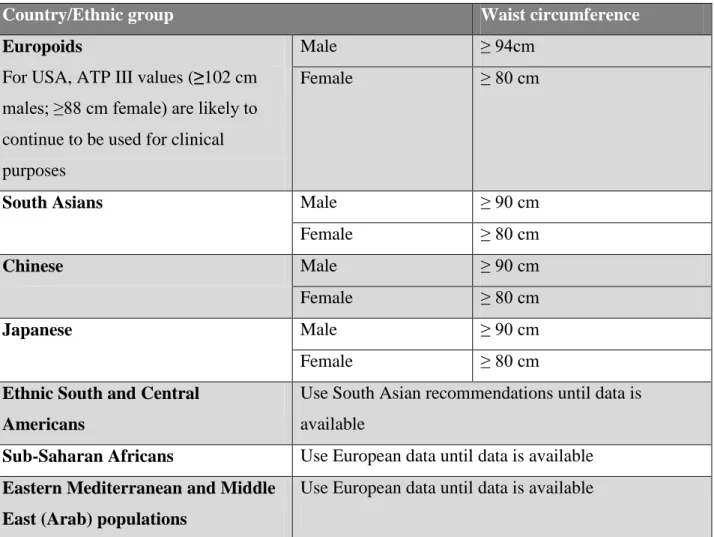
The IDF criteria require the presence of central adiposity (elevated waist circumference)
which is defined using ethnicity specific values 4. In addition, two of four other criteria also
need to be present for diagnosis of metabolic syndrome. These four criteria (elevated fasting
triglycerides, reduced HDL, elevated blood pressure, and elevated fasting glucose) are
defined in the same way as the NCEP ATP IIIa definition. As these definitions are very
Schizophrenia
Schizophrenia is a chronic and debilitating mental illness affecting 1% of the world’s
population 2. Symptoms of schizophrenia include positive symptoms (delusions,
hallucinations, disorganized speech, negative symptoms (flattened affect, alogia, and
avolition), and neurocognitive deficits (attention impairment, memory deficits, executive
dysfunction).
Patients with schizophrenia when compared to the general population have a shorter life
span. The reasons for this are currently under study. Although persons with schizophrenia
have a higher prevalence of suicide attempts as well as successful suicides, a majority of
persons with schizophrenia die of coronary heart disease, an endpoint of metabolic syndrome 5
. Furthermore, the prevalence of coronary heart disease is also higher in patients with
schizophrenia than in the general population 5.
De Hert, Schreurs, Vancampfort et al. conducted a review of thirty-eight studies on the
association of metabolic syndrome in people with schizophrenia. They found that the
increased prevalence and incidence of metabolic syndrome in people with schizophrenia is
approximately 2 to 3 times greater than in the general population 1. This increased risk is
theorized to be due to several causes including aspects of schizophrenia itself, lifestyle
issues, genetics, and finally, antipsychotic medications.
Those with schizophrenia tend to have a sedentary lifestyle without much physical activity,
such as the negative symptoms and increased stress levels further contribute to these lifestyle
issues 1. In combination, these lifestyle factors can easily result in weight gain and obesity,
hypertension, and dyslipidemia, all of which are components of metabolic syndrome.
The involvement of genetics in the association between schizophrenia and metabolic
syndrome has been purported as studies have shown that there is an increased risk of
metabolic dysregulation, specifically diabetes and glucose intolerance, in first degree
relatives of people with schizophrenia 1, 6.
Schizophrenia treatment
Treatment for schizophrenia involves the use of antipsychotic medications. These
medications can be divided into two groups: first generation or typical antipsychotics, and
second generation or atypical antipsychotics.
First generation antipsychotics are older, and mainly target positive symptoms. They are
distinguished by their high affinity for blocking D2 dopamine receptors in the brain which is
directly related to their ability to target and treat positive symptoms. However, they have a
significant side effect profile involving movement related side effects such as: parkinsonism
(rigidity or difficulty initiating movements), dystonia (strong involuntary muscle
contractions), akithisia (inner motor restlessness resulting in the inability to sit still and
causing patients to feel they need to move to be comfortable), and tardive dyskinesia
(abnormal involuntary movements that persist and can be stigmatizing or, in more severe
have been noted to cause weight gain 7. Due to these side effects, there is concern that first
generation antipsychotics are not well tolerated when used for long periods of time.
Second generation antipsychotics are newer, target positive symptoms and may result in
fewer secondary negative symptoms. Several of these drugs entered the market in the 1990s
and quickly gained popularity. They have a different side effect profile than the first
generation antipsychotics as they have a reduced incidence of movement related side effects.
In some of the second generation antipsychotic medications, this has been attributed to their
decreased affinity for D2 dopamine receptors and utilization of other neurotransmitter
systems, such as the serotonin system. They are currently the first-line therapeutic agents
used in those presenting with symptoms of schizophrenia.
It has been discovered, however, that these second generation antipsychotics can contribute
to metabolic side effects including weight gain, dyslipidemia, and impaired glucose
regulation 3. Pramyothin and Khaodhiar conducted a review of current literature evaluating
the effect of various second generation antipsychotic medications on individual metabolic
criteria 6. They found that of the seven commonly prescribed second generation
antipsychotics (clozapine, olanzapine, risperidone, quetiapine, aripiprazole, ziprasidone,
amisulpride), two (olanzapine and clozapine) were most associated with increased weight
gain, increased risk for diabetes and a worsening lipid profile. Of these factors, the two
medications had the most effect on weight gain. These results suggest that different second
Schizophrenia, in some cases, can be a truly devastating illness on its own and, when
compounded with potential adverse effects of antipsychotic medications can further diminish
the quality of life of those affected.
C. Rationale for systematic review
Persons with schizophrenia have a higher risk of developing coronary heart disease and
metabolic syndrome when compared to the general population. It is important to determine
whether using second generation antipsychotics increases the risk of metabolic syndrome
beyond the already elevated baseline risk in schizophrenia patients, and how this risk
compares to the risk conferred by first generation antipsychotic agents.
The inclusion of metabolic syndrome in the psychiatric literature is recent. The first study
detailing metabolic syndrome in patients with schizophrenia was published in 20031. The
connection between second generation antipsychotics and metabolic syndrome is even more
contemporary as their general use has been popular only for the past two decades. As such,
the long term complications of these medications are just now being realized and the question
of their implication in increasing the risk of metabolic syndrome is concerning.
Several prevalence studies have been conducted comparing metabolic syndrome in people
treated with first versus those treated with second generation antipsychotics. Most of these
studies are cross sectional with very few randomized controlled trials and prospective cohort
trials. In one study, Saddichha, Manjunatha, Ameen et al. conducted a short term
schizophrenia 8. These patients were randomized to treatment with olanzapine, risperidone,
or haloperidol. Baseline measures were completed prior to the start of treatment with
antipsychotic medication and follow up measures were completed at 6 weeks which was the
end of the study period.
The authors calculated prevalence of metabolic syndrome using NCEP ATP III and IDF for
each of the treatment groups. Prevalence of metabolic syndrome in those treated with
olanzapine was 20.0% (NCEP ATP III) and 25.7% (IDF) at the end of the trial. Prevalence
of metabolic syndrome in those treated with risperidone was 9.1% (NCEP ATP III) and
24.2% (IDF) at the end of the trial. Prevalence of metabolic syndrome in those treated with
haloperidol was 0% (NCEP ATP III) and 3.2% (IDF) at the end of the trial.
In one cross sectional study conducted in outpatient clinics in northern England, Mackin,
Watkinson, and Young found that 11.6% of subjects on second generation antipsychotics had
metabolic syndrome but 0% of those on first generation antipsychotic medication had
metabolic syndrome 9.
In another cross sectional study in long term patients at psychiatric rehabilitation facilities in
Australia, Tirupati and Chua found that the prevalence of metabolic syndrome in those taking
only one first generation antipsychotic and second generation antipsychotic was 66% and
60.3% respectively10. The prevalence of metabolic syndrome is high in both first and second
generation antipsychotic treated groups; however this study was conducted in people with
medications. Furthermore, patients who were treated with first generation antipsychotics
may have previously been treated with second generation antipsychotics which may
confound the study and lead to a decreased sensitivity of the study to find differences in the
influence of first- and second generation antipsychotics on the prevalence of metabolic
syndrome.
The results of these prevalence studies are concerning. However, these studies are not able
to causally indicate whether second generation antipsychotics confer an increased risk in
developing metabolic syndrome in comparison to first generation antipsychotics.
This emerging problem within the population of those with schizophrenia needs to be
understood. Therefore, a systematic review of available literature is needed to determine
whether treatment with second generation antipsychotics in patients with schizophrenia
results in an increased incidence of metabolic syndrome in comparison to first generation
Methods
A. Focused Question
This systematic review seeks to answer the question: “Do patients with schizophrenia
treated with second-generation antipsychotics have an increased incidence of developing
metabolic syndrome when compared to patients with schizophrenia treated with first-generation antipsychotics?”
Past studies have focused on the difference in prevalence of metabolic syndrome between
those treated with first generation antipsychotics and those treated with second generation
antipsychotics. Although, prevalence is an important measure, incidence gives us more
information about the development of metabolic syndrome itself and provides a way to
measure the attributable burden of antipsychotic agents.
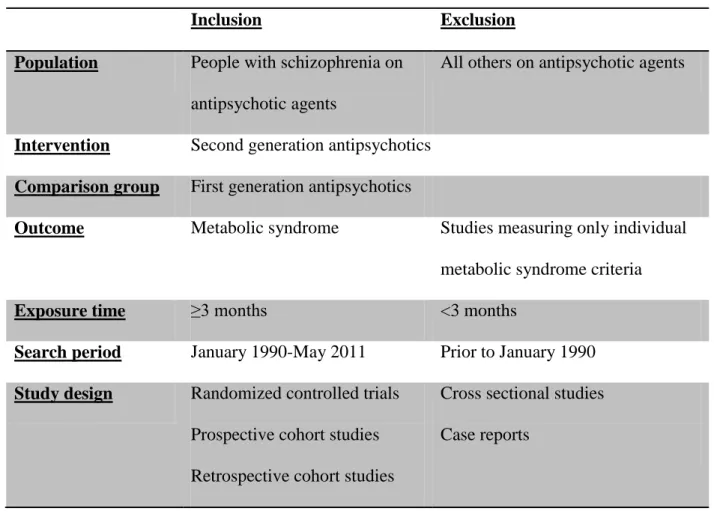
B. Eligibility Criteria (Table 1)
For the purposes of this review, the included articles had to describe a study comparing
the development of metabolic syndrome of at least one first and one second generation
antipsychotic agent in people with schizophrenia. There is data indicating that some of
the most commonly used second generation antipsychotic medications, specifically
olanzapine and clozapine, seem to have the greatest effect on individual metabolic
parameters (weight gain, impaired fasting glucose) 6. Furthermore, some of the
remaining commonly used second generation antipsychotic medications (risperidone,
quetiapine) also have a moderately increased effect on individual metabolic parameters as
antipsychotics have been implicated in causing metabolic abnormalities, this paper will
focus on examining second generation antipsychotic medications as a group instead of
specifying a few drugs from the first- and second-generation groups to compare.
The second generation antipsychotics were introduced in the United States starting with
Clozapine, in 1990. Therefore, to meet inclusion criteria, articles must have been
published between January 1990 and May 2011. Case reports and cross-sectional studies
were ineligible for this review as they would not be able to measure incidence. Study
types eligible for inclusion were randomized controlled trials (RCTs) and cohort studies
(retrospective and prospective) as these study types could potentially measure incidence.
Studies that only evaluated specific metabolic effects of antipsychotic medications were
excluded from the review. These studies generally concentrate on changes in individual
metabolic parameters such as weight gain, lipid level changes, or insulin resistance which
would not be appropriate for answering the question proposed in this systematic review.
Furthermore, studies had to define metabolic syndrome using criteria set forth by the
American Heart Association adapted National Cholesterol Education Program Adult
Treatment Panel III (NCEP ATP IIIa) or the International Diabetes Federation (IDF)
(Table 2).
The study population in the included studies had to include people with schizophrenia. If
the study population included people with schizophrenia as well as others with psychotic
of people in the study with schizophrenia. Current recommendations by the American
Diabetes Association, the American Psychiatric Association, the American Association
of Clinical Endocrinologists, and the North American Association for the Study of
Obesity recommend monitoring of lipids after 12 weeks of treatment by second
generation antipsychotic medications, therefore treatment duration of at least three
Table 1. Eligibility Criteria
Inclusion Exclusion
Population People with schizophrenia on antipsychotic agents
All others on antipsychotic agents
Intervention Second generation antipsychotics
Comparison group First generation antipsychotics
Outcome Metabolic syndrome Studies measuring only individual
metabolic syndrome criteria
Exposure time ≥3 months <3 months
Search period January 1990-May 2011 Prior to January 1990
Study design Randomized controlled trials Prospective cohort studies
Retrospective cohort studies
Cross sectional studies
Table 2. Definitions of Metabolic syndrome American Heart Association adapted National Cholesterol Education Program Adult Treatment Panel III (NCEP ATP
IIIa) criteria 3
International Diabetes Federation (IDF)criteria 4
Three of following five criteria required for
diagnosis of metabolic syndrome:
1. Elevated waist circumference (≥102 cm in men and ≥ 88 cm in women)
2. Elevated fasting triglycerides (≥150mg/dL)
3. Reduced HDL (<40 mg/dL in men and
<50 mg/dL in women)
4. Elevated blood pressure (≥130/85 mm
Hg) or on antihypertensive medication
5. Elevated fasting glucose (≥100 mg/dL)
or on insulin or hypoglycemic
medication
Required: Elevated waist circumference
according to ethnicity specific values (Table 3)
AND
Two of the following four criteria required for
diagnosis of metabolic syndrome:
1. Elevated fasting triglycerides
(≥150mg/dL) or specific treatment for
this lipid abnormality
2. Reduced HDL (<40 mg/dL in men and
<50 mg/dL in women) or specific
treatment for this lipid abnormality
3. Elevated blood pressure (≥130/85 mm
Hg) or on antihypertensive medication
4. Elevated fasting glucose (≥100 mg/dL)
or on insulin or hypoglycemic
Table 3. Ethnic specific values for waist circumference
Country/Ethnic group Waist circumference
Europoids
For USA, ATP III values (≥102 cm males; ≥88 cm female) are likely to continue to be used for clinical purposes
Male ≥ 94cm
Female ≥ 80 cm
South Asians Male ≥ 90 cm
Female ≥ 80 cm
Chinese Male ≥ 90 cm
Female ≥ 80 cm
Japanese Male ≥ 90 cm
Female ≥ 80 cm
Ethnic South and Central Americans
Use South Asian recommendations until data is available
Sub-Saharan Africans Use European data until data is available Eastern Mediterranean and Middle
East (Arab) populations
Use European data until data is available
Adapted from Table 2 of IDF Consensus Worldwide Definition of the Metabolic Syndrome
C. Search strategy
I searched four electronic databases including MEDLINE via PUBMED, BIOSIS,
Cumulative Index to Nursing and Allied Health (CINAHL), and The Cochrane Library
(Appendix 1). These databases were chosen on the recommendation of a health sciences
librarian. I used Medical Subject Headings (MeSH) terms when possible and used key
word searches where applicable (Table 4). These terms were then combined in several
ways with Boolean operators. The searches were then limited to articles written in the “English Language.”
The search criteria were limited to articles published between January1990 to May 2011.
Additional articles were identified using a hand search of reference lists of select articles.
Reference lists of review articles on metabolic syndrome in schizophrenia patients were
manually searched for other relevant citations.
All of the citations were imported into the citation manager RefWorks. Within
RefWorks, citations were consolidated and duplicate articles from the various database
searches were discarded.
Table 4. Key words used in database searches Key Words Antipsychotic agents
Atypical OR Second generation Metabolic syndrome
D. Study Selection
I reviewed all abstracts resulting from the database and hand searches. For a systematic
review, in an ideal situation, there would have been at least another reviewer, however,
for this review, I was the solitary reviewer. I then attempted to retrieve full text articles
corresponding to abstracts meeting the initial inclusion criteria using online and text
resources from the University of North Carolina at Chapel Hill, Duke University and
North Carolina State University. Retrieved full text articles underwent review and data
abstraction.
E. Data Abstraction and Synthesis
A standardized data abstraction form was created using Microsoft Excel in order to be
consistent and comprehensive when conducting quality assessments and analysis of
results. I abstracted the following data from each included study: study type; year study
was conducted; location; study population; description of intervention; sampling method;
number of participants; type of comparison group; measured outcomes; length of follow
up; definition of metabolic syndrome used; potential study bias; description of internal
and external validity; overall quality of the study.
I created standardized evidence tables to describe the included studies and answer the
proposed question. Findings of the review were qualitatively synthesized instead of
quantitatively (meta-analysis) due to the small number of studies that met inclusion
concentrated on the available evidence for the question presented in this review and the
overall consistency of the evidence.
F. Quality Assessment
The quality of the evidence, internal validity, and external validity assessments of each of
the articles was made using criteria adapted from the United States Preventive Services
Task Force (USPSTF) of the Agency for Healthcare Research and Quality (AHRQ).
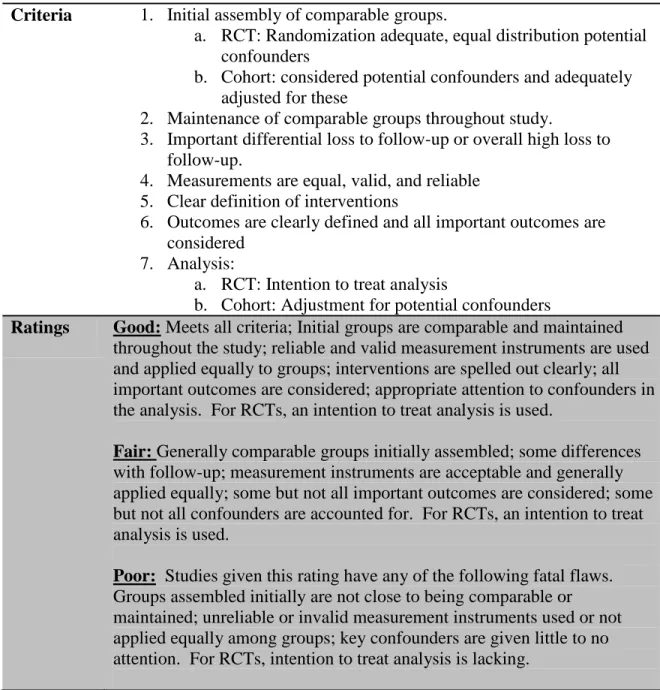
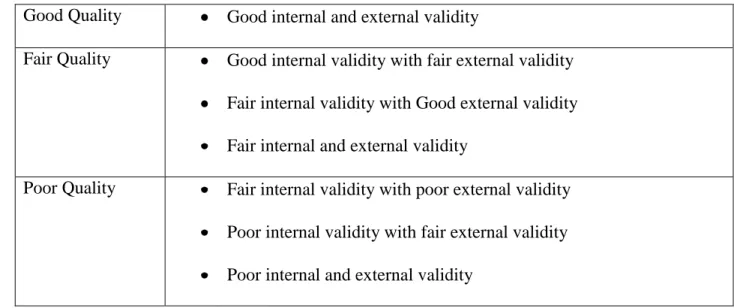
Tables 5 and 6 describe the specific criteria for internal and external validity respectively.
Table 7 describes how overall quality was determined based on internal and external
Table 5. Criteria for assessing internal validity adapted from USPSTF 12 Criteria 1. Initial assembly of comparable groups.
a. RCT: Randomization adequate, equal distribution potential confounders
b. Cohort: considered potential confounders and adequately adjusted for these
2. Maintenance of comparable groups throughout study.
3. Important differential loss to follow-up or overall high loss to follow-up.
4. Measurements are equal, valid, and reliable 5. Clear definition of interventions
6. Outcomes are clearly defined and all important outcomes are considered
7. Analysis:
a. RCT: Intention to treat analysis
b. Cohort: Adjustment for potential confounders
Ratings Good: Meets all criteria; Initial groups are comparable and maintained throughout the study; reliable and valid measurement instruments are used and applied equally to groups; interventions are spelled out clearly; all important outcomes are considered; appropriate attention to confounders in the analysis. For RCTs, an intention to treat analysis is used.
Fair: Generally comparable groups initially assembled; some differences with follow-up; measurement instruments are acceptable and generally applied equally; some but not all important outcomes are considered; some but not all confounders are accounted for. For RCTs, an intention to treat analysis is used.
Table 6. Criteria for assessing external validity adapted from USPSTF 12
Criteria 1. Study population: The degree to which the people who were involved as subjects in the study constitute a special population because they were selected from a larger eligible population. The following are features of the study population and the study design that may cause experience in the study to be different from what would be observed in the general population.
a. Demographics: age, gender, ethnicity, education, income b. Comorbidities: frequency of co-morbid conditions in study
population
c. Refusal rate: refusal rate among eligible study subjects is high, making the enrollees in the study unrepresentative
d. Adherence: run-in phase, frequent contact to monitor adherence; features of the study itself that make study participants comply with intervention that may be different than in a clinically observed population
e. Stage in natural history of the disease
f. Source and intensity of recruitment: The sources for recruiting subjects for the study and/or the effort and intensity of
recruitment may distort the characteristics of the study subjects in ways that could increase the effect of the intervention as it is observed in the study.
2. Situation: The degree to which the clinical experience in the situation in which the study was conducted is likely to be reproduced in other settings.
3. Providers: The degree to which the providers in the study have the skills and expertise likely to be available in general settings
Ratings Good: The study differs minimally from the US primary care
population/situation/providers and only in ways that are unlikely to affect the outcome; it is highly probable (>90%) that the clinical experience with the intervention observed in the study will be attained in the US primary care setting.
Fair: The study differs from the US primary care
population/situation/providers in a few ways that have the potential to affect the outcome in a clinically important way; it is only moderately probable (50%-89%) that the clinical experience with the intervention in the study will be attained in the US primary care setting.
Table 7. Overall Quality
Good Quality Good internal and external validity
Fair Quality Good internal validity with fair external validity
Fair internal validity with Good external validity
Fair internal and external validity
Poor Quality Fair internal validity with poor external validity
Poor internal validity with fair external validity
Results
A. Literature Search
The literature search identified 349 potentially relevant citations. 346 citations were
found through electronic database searches and 3 articles were found through a targeted
hand search. The initial Medline search identified 180 total abstracts. CINAHL, BIOSIS,
and COCHRANE searches identified 68, 88, and 10 abstracts respectively. Twenty-three
duplicate articles were identified across the searches and were discarded, resulting in 326
unique and potentially relevant citations (Figure 1).
I reviewed these 326 abstracts and excluded 314 articles (96%) for reasons including:
inappropriate study design, metabolic syndrome was not the measured outcome, abstract
was unavailable, second generation antipsychotics were not used as the intervention. I
attempted to retrieve the 12 remaining articles using resources from the University of
North Carolina at Chapel Hill, Duke University, and North Carolina State University. 3
of the articles were not accessible; therefore 9 articles underwent full text review.
Upon full text review, 7 of the 9 articles were excluded. Three of the excluded articles
focused on comparing individual metabolic syndrome criteria (e.g. lipid and fasting
glucose levels) between first- and second generation antipsychotics instead of metabolic
syndrome 13-15. One study was excluded because the authors calculated incidence rate of
developing diabetes instead of measuring incidence rate of developing metabolic
syndrome 16. One study was excluded because the authors did not compare development
two studies that were excluded measured prevalence of developing metabolic syndrome
instead of incidence 8, 18.
The remaining two articles met eligibility criteria and were included for data abstraction
and included in this review 19, 20. The results of the literature search are depicted in Figure
Figure 1. Results of literature search
Articles included in review: n=2
1 randomized controlled study 1 cohort study
Citations Excluded by Abstract Review:
n=314
Unable to retrieve Full Text:
n=3
Full Text retrieved: n=9
Citations Excluded by Full Text Review:
n=7 Titles and abstracts identified
through database searches: n= 346
Unique citations included in RefWorks: n=326
# of additional records identified through targeted hand search:
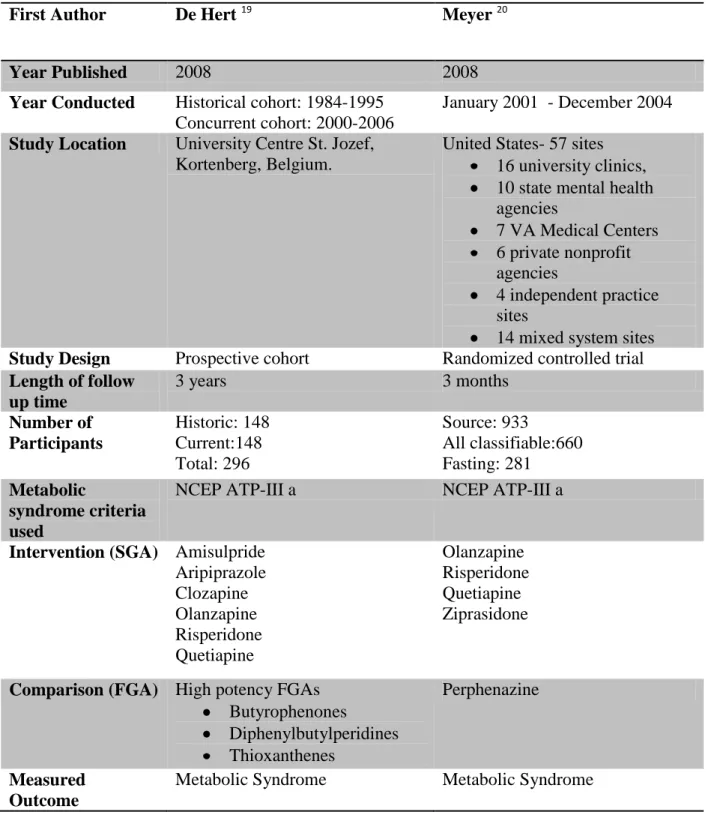
B. Description of the Included Studies
Both of the included studies were published in 2008. One of the studies, a randomized
controlled trial was conducted in the United States 20 and the other, a prospective cohort
study, was conducted in Belgium 19. The study from Belgium was restricted to patients
from one site. The study from the United States included participants from 57 different
sites across the country including university clinics, state mental health agencies, VA
Medical Centers, private nonprofit agencies, independent practice sites, and mixed
system sites 20.
Both of the included studies defined metabolic syndrome using the adapted guidelines set
by the National Cholesterol Education Program Adult Treatment Panel III (NCEP ATP
IIIa). The measured outcome in both studies was metabolic syndrome. The treatment
intervention in one study included more than one second generation antipsychotic
compared to one first generation antipsychotic 20. The other study compared the
intervention of several second generation antipsychotics with high potency first
generation antipsychotics 19. The descriptive characteristics of the two included studies
Table 8. Characteristics of Included Studies
First Author De Hert 19 Meyer 20
Year Published 2008 2008
Year Conducted Historical cohort: 1984-1995 Concurrent cohort: 2000-2006
January 2001 - December 2004
Study Location University Centre St. Jozef, Kortenberg, Belgium.
United States- 57 sites 16 university clinics, 10 state mental health agencies
7 VA Medical Centers 6 private nonprofit agencies
4 independent practice sites
14 mixed system sites Study Design Prospective cohort Randomized controlled trial Length of follow
up time
3 years 3 months
Number of Participants Historic: 148 Current:148 Total: 296 Source: 933 All classifiable:660 Fasting: 281 Metabolic syndrome criteria used
NCEP ATP-III a NCEP ATP-III a
Intervention (SGA) Amisulpride Aripiprazole Clozapine Olanzapine Risperidone Quetiapine Olanzapine Risperidone Quetiapine Ziprasidone
Comparison (FGA) High potency FGAs Butyrophenones Diphenylbutylperidines Thioxanthenes Perphenazine Measured Outcome
Metabolic Syndrome Metabolic Syndrome
Abbreviations: SGA: Second generation antipsychotic agent; FGA: First generation
C. Quality and Results of the Included Studies
De Hert, Schreurs, Sweers et al. 19
In their 2008 article in Schizophrenia Research, the authors compared two different
cohorts (historic and current) of patients with schizophrenia admitted for their first
episode of psychosis.
The historic cohort was derived from an original cohort of 1119 consecutive patients
diagnosed with schizophrenia or schizoaffective disorder admitted for their first episode
of psychosis to two treatment and rehabilitation wards at University Centre St. Jozef,
Kortenberg, Belgium between 1973 and 1992 21. Laboratory testing for HDL cholesterol
was not available until 1984; therefore the historic cohort only included patients after this
point. Furthermore, only patients with schizophrenia were included in the final study
population. Of the 301 patients admitted between 1984 and 1995, there was complete
laboratory data for all metabolic criteria for 148 patients prior to start of treatment and
these patients were included as the study population.
The concurrent cohort was derived from a prospective cohort of consecutive patients
admitted to the study between 2000 and 2006 at their first episode of psychosis in either
in- or out-patient settings at a university psychiatric hospital and its affiliated facilities 22.
De Hert, Schreurs, Sweers et al. matched the 148 patients from the historic cohort for age
At baseline measurement of the two cohorts, prior to starting antipsychotic treatment, the historic and current cohorts’ prevalence of metabolic syndrome were similar, 5.7% and
5.6% respectively. After 3 years of follow-up, the investigators of this study found that
the incidence of metabolic syndrome had risen in both cohorts, but significantly more so
in the second generation antipsychotic treated current cohort (historic: 9.8% vs. current:
27.8%). Of the 148 patients in each of the cohorts at the start of this study, complete data
was available for 122 (historic cohort) and 108 (current cohort) patients after 3 years.
Internal Validity
The authors of this study did consider some of the potential confounders (age and sex)
and adjusted for these when they assembled the current cohort to match the historic
cohort. However, this comparability was not maintained throughout the study as there
was loss to follow up in both cohorts. Specifically, the current cohort was younger at
admission into the study and had a shorter duration of follow up (shorter amount of time
on medication).
To classify metabolic syndrome in the historic cohort, waist circumference was calculated using BMI and a “conservative conversion factor” which questions the
accuracy of that variable in the historic cohort. If the conversion factor was too
conservative, then subjects who potentially had metabolic syndrome might have been
misclassified making the reported incidence over 3 years for the historic cohort to be
lower than it actually is. Another limitation is that compared to the time period of the
of medications to cause changes to individual metabolic parameters which may result in
closer monitoring of patients in the current cohort presenting a bias in measurement.
Another limitation is that the authors did not collect data on compliance to medications in
both cohorts. Non-compliance to the medications might differential measurement bias
especially if some of the drugs have worse side effects than the others. Therefore, it
would have been helpful to have information to quantify the specific effect of
non-compliance. The authors of this study provided clear definition of interventions and
outcomes. They considered qualitatively the effect of confounding by differences in age
and duration of treatment between the two cohorts in their discussion. Follow up period
was over three years which is fairly long in duration to appreciate long term effects of the
medications. This study was given a “fair” rating for internal validity.
External Validity
This study was conducted at one site in Belgium which limits the generalizability of the
results. People included in the study were of similar ethnic background (>95% Caucasian
and of native Belgian origin). The definition of metabolic syndrome used in this study
(NCEP IIIa) does not differentiate between different ethnic groups. Even when using the
IDP criteria where ethnicity is considered for waist circumference, criteria for USA
populations are the same as the ATP IIIa values. For European populations, however,
there is a lower threshold for diagnosis of central obesity. Given these definitions, the
results can be considered to be conservative in diagnosis of metabolic syndrome and
Participants in this investigation were drug-naïve patients with schizophrenia, presenting
with their first episode of psychosis. Therefore, these results are not as applicable to
patients with schizophrenia who are in a later stage of the disease, having been on
antipsychotic medications for several years. Lastly, another limitation to the
generalizability of this study was that the size of the study population was fairly small.
This study was given a “fair” rating for external validity.
Overall quality
There were some important limitations to consider with this study, including some loss of
comparability between cohorts, loss to follow up, accuracy/validity of waist
circumference measurements, and generalizability of results due to size of study
Meyer, Davis, Goff et al. 20
In their 2008 article in Schizophrenia research, Meyer, Davis, Goff et al. used data from
phase I of the Clinical Antipsychotic Trials of Intervention and Effectiveness (CATIE)
Schizophrenia trial to compare metabolic syndrome status in schizophrenia patients
treated with antipsychotic medications. Subjects in this trial were randomized to one of
five treatments: olanzapine, risperidone, quetiapine, ziprasidone, and perphenazine.
Baseline measures were completed prior to start of antipsychotic medication and follow
up measures were completed at 3 months.
Fasting measures were collected at both baseline and at 3 months for 281 subjects. To
have larger sample size, the authors created a cohort of non-fasting subjects whose
metabolic syndrome status could be classified (“all classifiable cohort”) using modified
metabolic syndrome criteria (n=660). These two cohorts had similar demographics at
baseline. The authors reported prevalence measures of metabolic syndrome however
enough data was reported in the article to determine incidence (Tables 9 and 10).
In the fasting cohort, the overall incidence of metabolic syndrome over the 3 month
period for those treated with second generation antipsychotics was 4.5% and for those
treated with the first generation antipsychotic (perphenazine), there was a reduction in
overall incidence by 3.8%. For those treated with perphenazine, the number of cases
decreased from 22 (baseline) to 20 (3 months). Within the second generation
antipsychotic groups, there was variability. The largest difference was between those
month period was 9.5% in the olanzapine treated group and a decrease in incidence in the
ziprasidone treated group by 9.7%.
In the larger “all classifiable” cohort, the overall incidence of metabolic syndrome, over
the 3 months, for those treated with second generation antipsychotics was 1.5% and for
those treated with the first generation antipsychotic (perphenazine) was 0.8%. Once
again there was great variability in the second generation treatment groups. Only
olanzapine had a positive incidence at 9.1%. Of the remaining second generation
treatment groups, there were no new cases of metabolic syndrome in the risperidone
treated group, one less case in the quetiapine group and finally, ziprasidone had the
Table 9. Results of fasting cohort
Treatment n
(n=278)
Baseline prevalence
# cases at baselinea
3 month prevalence
# of total cases at 3 monthsb
Incident cases at 3
months c
Incidence (%)d
Olanzapine 74 0.419 31 0.514 38 7 9.5
Risperidone 54 0.370 20 0.426 23 3 5.6
Quetiapine 67 0.388 26 0.433 29 3 4.5
Ziprasidone 31 0.484 15 0.387 12 -3 -9.7
Total SGA 226 10 4.5
FGA:
Perphenazine
52 0.423 22 0.385 20 -2 -3.8
Abbreviations: SGA: Second generation antipsychotic agent; FGA: First generation antipsychotic agent
Table 10. Results of the “all classifiable” cohort
Treatment n
(n=660)
Baseline prevalence
# cases at baselinea
3 month prevalence
# of total cases at 3 monthsb
Incident cases at 3
months c
Incidence (%)d
Olanzapine 164 0.348 57 0.439 72 15 9.1
Risperidone 147 0.306 45 0.306 45 0 0
Quetiapine 143 0.378 54 0.371 53 -1 -0.7
Ziprasidone 77 0.377 29 0.299 23 -6 -7.8
Total SGA 531 8 1.5
FGA:
Perphenazine
129 0.372 48 0.380 49 1 0.8
Abbreviations: SGA: Second generation antipsychotic agent; FGA: First generation antipsychotic agent
Note: The following represents calculations used in Tables 9 and 10. a. # of cases at baseline = n* Baseline prevalence
b. # of cases at 3 months = n* 3 month prevalence
Internal Validity
Meyer, Davis, Goff et al. clearly defined the interventions as well as the outcomes in this
study. Randomization to the five antipsychotic medications was conducted under double
blind conditions. The authors compared baseline demographics between the fasting cohort (n=281), the larger “all classifiable” cohort (n=660), and the source population of
all the subjects in the CATIE phase 1 trial with some data at baseline and 3 months
(n=933). Within these cohorts, there were no differences in baseline demographics. The
authors however failed to report baseline demographics within the different treatment
arm which is a significant limitation as we do not know how comparable the treatment
arms are to each other. The authors did report the baseline prevalence of each of the
metabolic criteria for the different treatment arms in the fasting cohort; the criteria were
fairly comparable between all groups.
Another limitation is that baseline data on length of previous antipsychotic use was not
collected. Subjects who may have a longer exposure to metabolically effecting
antipsychotics will more likely have metabolic syndrome. If these subjects are unequally
randomized, the results may be skewed towards the treatment arm with more subjects that
were exposed for a longer period of time prior to start of the study. Additionally, the
authors did not do an intention to treat analysis, severely limiting this readers’ ability to
determine whether randomization was intact throughout the study.
For the fasting cohort, the measurements were equal, valid, and reliable. For the “all
classification of metabolic syndrome. This cohort included patients that had non-fasting
data. Of the five metabolic syndrome criteria, serum glucose and triglycerides are
affected by fasting status. For serum glucose, the authors considered the criteria to have
been met if the subject was currently taking hypoglycemic medications or insulin or if the random glucose level was ≥200mg/dl which met the American Diabetes Association
definition for DM. Furthermore, glucose criteria was not considered met if the random
glucose was <100 mg/dl. For triglyceride levels, the criterion was considered not met if
the random triglyceride level was <150 mg/dl. Additionally, any subject not taking
anti-diabetic medication, with a random glucose value between 100-199 mg/dl and random triglyceride level ≥150 mg/dl were not considered either positive or negative for
metabolic criteria 20. These modified criteria could potentially lead to underestimation of
incidence as some people who may actually have metabolic syndrome are classified as
not having metabolic syndrome.
This study was given a rating of “poor” for inappropriately comparing the initially
assembled groups, not conducting an intention to treat analysis, and concerns of unequal
and invalid measurements.
External Validity
Data for this study were collected at 57 sites in the United States in various different
settings increasing the generalizability of the results. The fasting cohort was limited by
the small size of each of the treatment groups. As mentioned previously, the length of
determine the stage of the disease of the participants in this study. In regard to situation
and providers, they can be easily reproduced in the general settings. This study was given a “fair” rating.
Overall Quality
Given the considerable limitations of this study resulting in “poor” internal and “fair”
external validity, this study was given a “poor” overall quality rating
D. Principal Findings of this Review
In summary, one study 19found a significantly higher incidence of metabolic syndrome in
those taking second generation antipsychotics than in those taking first generation
antipsychotics. This study was given an overall quality rating of “fair.” The other study 20
showed mixed results. In one cohort of fasting patients, they found a higher incidence
of metabolic syndrome in those treated with second generation antipsychotics, whereas in
the other cohort using non-fasting criteria, the authors found a small difference in overall
incidence between first- and second-generation antipsychotics, with slightly higher
incidence in the second generation antipsychotic group. This study was given an overall quality rating of “poor” due to some significant limitations in internal and external
Discussion
A. Synthesis of Results
There is poor to fair evidence that there is increased incidence of developing metabolic
syndrome in patients with schizophrenia being treated with second generation
antipsychotics when compared to patients with schizophrenia treated with first generation
antipsychotics. Of the two studies included in this systematic review, one was of fair
quality and the other was of poor quality.
B. Secondary results
The study by Meyer, Davis, Goff et al. 20,which was given a poor quality rating, also
found differences in incidence of developing metabolic syndrome between individual
second generation antipsychotic treatments. They found that olanzapine was associated
with an increased incidence of developing metabolic syndrome over a 3 month period
over the remaining second generation antipsychotics under study (risperidone, quetiapine,
ziprasidone).
C. Limitations of review
This review has several limitations. Firstly, the search for relevant articles was limited to
only include English-language articles. Antipsychotic medications are the primary
source of treatment for schizophrenia and as such there may be studies that are published
in other languages that may be appropriate for answering the question proposed in this
Additionally, this systematic review was limited to currently published literature. There
are likely unpublished data and ongoing trials studying incidence of metabolic syndrome
in antipsychotic treated schizophrenic patients and these was not included in this review.
Furthermore, there were 3 articles identified by the abstract review that were not able to
be retrieved. Exclusion of these articles limits the comprehensiveness of this systematic
review.
D. Recommendations for future research
The two studies included in this review had several limitations. For future research, there
is a need for a more optimally constructed and conducted study. Randomized controlled
trials would work best as specific interventions and controls can be assigned randomly
and confounders can be limited easily at the start of the studies. Non-randomized cohort
trials could also be appropriate as long as there is proper control of confounders. In order
to best determine if people with schizophrenia treated with second generation
antipsychotics have a higher incidence of developing metabolic syndrome, we must first
start with schizophrenia patients that are drug naïve presenting with their first episode of
psychosis. These patients would not have any prior antipsychotic use limiting
confounding effects from different drugs.
Although follow-up of 3 months is a requirement for this review, in general, patients with
schizophrenia are treated of long periods of time; therefore, a longer follow up period
included patients. This is because drug-naïve, first episode of psychosis patients with
schizophrenia tend to be young and healthy. Furthermore, the risk of metabolic
syndrome increases with age and needs to be considered in the study. In other words,
differential risk across first generation antipsychotics and second generation
antipsychotics should be evaluated over the course of the disease process of
schizophrenia.
In terms of interventions, some studies have indicated the variable effects of different
second generation antipsychotics on metabolic parameters (weight gain, impaired fasting
glucose) 6. One of the studies included in this review randomized people to four different
second generation antipsychotics, but only randomized to one first generation
antipsychotic agent 20. Ideally, we would randomize patients to several commonly used
second generation antipsychotic agents and several first generation antipsychotic agents.
This would enable comparison of the drug class effects of first- and second-generation
antipsychotics as well as the differential effects of individual agents.
Additionally, much of the literature on this topic is in smaller sample sizes from one site.
This limits the generalizability of the results to a larger population in different locations.
Therefore, it would preferable to conduct a multi-site, multi-national study utilizing a
E. Conclusions
In conclusion, the available evidence is insufficient to determine whether treatment with
second generation antipsychotic agents results in a higher incidence of developing
metabolic syndrome than treatment with first generation antipsychotic agents in patients
with schizophrenia. Nonetheless, there is need for future studies with better design as
current studies are not of good quality.
I have described areas in future research that would improve on the current available
literature and have described an ideal study which could be readily conducted if funding
were not an issue. A long-term, large, multi-site, multi-national, randomized controlled
trial would be very expensive. Drug companies which have the funds would not be
interested in this study as the study is looking for adverse effects of medications.
Therefore, funding for the study would have to come from a source such as the NIH.
Funding for such an extensive study is further limited by the current status of the
economy. The limited numbers of studies included in this review are likely due in part to
barriers in cost.
Metabolic syndrome and schizophrenia are chronic conditions for which treatment is long
term. They both have a significant effect on the quality of life of those that are affected.
The second generation antipsychotic medications have only been on the market for the
past two decades and long-term effects of these medications are only now being realized.
Therefore, only with more studies of better quality, can we determine the specific effect
Appendix I. Search Strategy
1. PubMed Search using MeSH headings and keywords:
(("Antipsychotic Agents"[Mesh] OR ("antipsychotic agents"[MeSH Terms] OR ("antipsychotic"[All Fields] AND "agents"[All Fields]) OR "antipsychotic agents"[All Fields] OR "antipsychotic"[All Fields] OR "antipsychotic
agents"[Pharmacological Action]) OR ("antipsychotic agents"[MeSH Terms] OR ("antipsychotic"[All Fields] AND "agents"[All Fields]) OR "antipsychotic agents"[All Fields] OR "antipsychotics"[All Fields] OR "antipsychotic agents"[Pharmacological Action])) AND (atypical[All Fields] OR "second generation"[All Fields])) AND ("Metabolic Syndrome X"[Mesh] OR "metabolic syndrome"[All Fields]) AND (English[lang])
2. CINAHL via EBSCO host:
Boolean/Phrase: (MH “Antipsychotic Agents +”) AND (MH “Metabolic Syndrome X+”)
3. BIOSIS and The Cochrane Library:
Appendix 2. Evidence table of included studies
Author De Hert 19 Meyer 20
Year Published 2008 2008
Study Design 2 cohorts- prospective RCT
Selection bias Dropouts: Historic: 26 Current: 40
Historic: older and longer
Current: younger, and shorter duration
Did not collect exact drugs, switches over time between agents or eventual
polypharmacy in historic cohort
Did not conduct intention to treat analysis
Baseline demographics and characteristics between treatment arms were not discussed in the study
Measurement bias Used a conversion to calculate waist circumference from BMI for Historic cohort.
Lab techniques have changed over time. We are more careful now about
metabolic syndrome and so we look for it more
For all classifiable cohort: Modified criteria for impaired fasting glucose and triglycerides
The duration of baseline
antipsychotic use was not measured- important as those with longer exposure to more metabolically offending agents might have been randomized unequally to the different treatment arms.
Internal validity (Good, Fair, Poor)
Fair Poor
External validity Fair:
>95% Caucasian and of native Belgian origin
One hospital center Small sample size
Fair
57 sites in US. Large study.- generalizable
Small sample size of treatment groups in fasting cohort
REFERENCES
1. DE HERT M, SCHREURS V, VANCAMPFORT D, VAN WINKEL R. Metabolic syndrome in people with schizophrenia: A review. World Psychiatry. 2009;8(1):15.
2. Keltner NL. Biological perspectives. metabolic syndrome: Schizophrenia and atypical antipsychotics.
Perspect Psychiatr Care. 2006;42(3):204-207.
3. De Hert M, van Eyck D, De Nayer A. Metabolic abnormalities associated with second generation antipsychotics: Fact or fiction? development of guidelines for screening and monitoring. Int Clin Psychopharmacol. 2006;21:S11.
4. Alberti G, Sir, Zimmet P, Shaw J, Grundy SM. IDF consensus worldwide definition of the metabolic syndrome. International Diabetes Foundation; 2006. Available from:
http://www.idf.org/webdata/docs/IDF_Meta_def_final.pdf. Accessed 6/22/2011.
5. Hennekens CH, Hennekens AR, Hollar D, Casey DE. Schizophrenia and increased risks of cardiovascular disease. Am Heart J. 2005;150(6):1115-1121.
6. Pramyothin P, Khaodhiar L. Metabolic syndrome with the atypical antipsychotics. Curr Opin Endocrinol Diabetes Obes. 2010;17(5):460-466.
7. Allison DB, Mentore JL, Heo M, et al. Antipsychotic-induced weight gain: A comprehensive research synthesis. Am J Psychiatry. 1999;156(11):1686.
9. Mackin P, Watkinson HM, Young AH. Prevalence of obesity, glucose homeostasis disorders and metabolic syndrome in psychiatric patients taking typical or atypical antipsychotic drugs: A cross-sectional study. Diabetologia. 2005;48(2):215-221.
10. Tirupati S, Chua LE. Obesity and metabolic syndrome in a psychiatric rehabilitation service. AUST NZ J PSYCHIATRY. 2007;41(7):606-610. Available from:
https://auth.lib.unc.edu/ezproxy_auth.php?url=http://search.ebscohost.com/login.aspx?direct=true&d
b=c8h&AN=2010032739&site=ehost-live&scope=site.
11. ANTIPSYCHOTIC U. Consensus development conference on antipsychotic drugs and obesity and diabetes. Diabetes Care. 2004;27(2).
12. U.S. preventive services task force procedure manual.
http://www.uspreventiveservicestaskforce.org/uspstf08/methods/procmanual.htm. Accessed June,
2011.
13. McKee JR, Bodfish JW, Mahorney SL, Heeth WL, Ball MP. Metabolic effects associated with atypical antipsychotic treatment in the developmentally disabled. J Clin Psychiatry. 2005;66(9):1161-1168.
14. Wu RR, Zhao JP, Liu ZN, et al. Effects of typical and atypical antipsychotics on glucose-insulin homeostasis and lipid metabolism in first-episode schizophrenia. Psychopharmacology (Berl). 2006;186(4):572-578.
16. Lambert MT, Copeland LA, Sampson N, Duffy SA. New-onset type-2 diabetes associated with atypical antipsychotic medications. Prog Neuropsychopharmacol Biol Psychiatry. 2006;30(5):919-923.
17. Goethe JW, Szarek BL, Caley CF, Woolley SB. Signs and symptoms associated with the metabolic syndrome in psychiatric inpatients receiving antipsychotics: A retrospective chart review. J Clin Psychiatry. 2007;68(1):22-28.
18. Baptista T, Serrano A, Uzcategui E, et al. The metabolic syndrome and its constituting variables in atypical antipsychotic-treated subjects: Comparison with other drug treatments, drug-free psychiatric patients, first-degree relatives and the general population in venezuela. Schizophr Res. 2011;126(1-3):93-102.
19. De Hert M, Schreurs V, Sweers K, et al. Typical and atypical antipsychotics differentially affect long-term incidence rates of the metabolic syndrome in first-episode patients with schizophrenia: A retrospective chart review. Schizophr Res. 2008;101(1-3):295-303.
20. Meyer JM, Davis VG, Goff DC, et al. Change in metabolic syndrome parameters with antipsychotic treatment in the CATIE schizophrenia trial: Prospective data from phase 1. Schizophr Res. 2008;101(1-3):273-286.
21. De Hert M, McKenzie K, Peuskens J. Risk factors for suicide in young people suffering from schizophrenia: A long-term follow-up study. Schizophr Res. 2001;47(2-3):127-134.