Supervisor: Dr Zwelinzima Ndevu
March 2017 by
Twahafifwa Ndahekelekwa Tupavali Nghaamwa
Thesis presented in partial fulfilment of the requirements for the degree Masters in Public Administration in the faculty of
i
Declaration
By submitting this thesis electronically, I declare that the entirety of the work contained therein is my own, original work, that I am the sole author thereof (safe to the extent explicitly otherwise stated), that reproduction and publication thereof by Stellenbosch University will not infringe any third party rights and that I have not previously in its entirety or in part submitted it for obtaining any qualification.
Date: March 2017
Copyright © 2017 Stellenbosch University All rights reserved
ii
Abstract
This empirical study is based on the need to analyse how induction programmes influence the personal growth and professional development of beginner teachers in the Erongo Region, Namibia. This perceived need prompted the interest to carry out an empirical study to ascertain how induction programmes in the Erongo Region influenced the personal and professional growth of novice teachers. In order to augment the study, the following research objectives were formulated with an aim to determine the extent to which induction programmes influence the beginner teachers’ personal growth and professional development.
In operationalising the study, the qualitative research methodology in which a phenomenological research design was used, was utilized to come up with the intended outcomes. A phenomenological approach was used in an attempt to gain insights into the everyday issues novice teachers contend with. A total of 18 participants took part in the study. A purposive sampling method was employed in this study and data was collected using in-depth face to face interviews. The findings yielded eight themes and revealed: the induction programmes in the Erongo region was presented at both regional level and at school level; induction programmes benefitted the novice teachers by imparting to them classroom management skills, such as planning, teaching and learning as well as filing; novice teachers experienced adaptation challenges relating to the forging of new relationships; induction programmes at school level were largely informal and incidental and the induction support experienced by the new teachers was limited.
The data also revealed there was a weak partnership between teacher education institutions and schools in providing for teacher personal and professional development. The study concluded that the absence of a policy on induction in the country had resulted in an erosion of the significance of induction in the teacher development continuum. The study has also highlighted the haphazard manner in which issues of induction were handled. The main policy recommendations emanating from the study are that a policy in respect of induction should be put in place, for the schools in the Erongo Region (if they are to be empowered to provide induction). Such induction would in addition require supports that should be amenable in the country’s context to be fully exploited. In addition, the study proposed there should be a partnership between teacher training institutions and schools in order to provide a holistic induction programme.
iii
Opsomming
Die bestaande literatuur verwoord duidelik die unieke behoeftes van pas gekwalifiseerde onderwysers en die uitdagings wat hulle in die gesig staar tydens die beginjare van hul loopbaan.
Hierdie empiriese studie is gebaseer op die behoefte om te ontleed hoe induksieprogramme die persoonlike groei en professionele ontwikkeling van nuwe onderwysers in die Erongo-streek, Namibië, beïnvloed.
Hierdie behoefte het daartoe gelei dat 'n empiriese studie onderneem is omte bepaal hoe induksieprogramme die persoonlike en professionele groei van nuwe onderwysers in die Erongo-streek beïnvloed.
Ten einde die studie aan te vul, is die volgende navorsingsdoelwitte geformuleer met die oog daarop om te bepaal in watter mate induksieprogramme die persoonlike groei en professionele ontwikkeling van nuwe onderwysers beïnvloed. In operasionalisering van die studie is ‘n kwalitatiewe navorsingsmetodologie gevolg waarin 'n fenomenologiese navorsingsontwerp gebruik is ten einde die verlangde resultate te verkry.
Deur ‘n fenomenologiese benadering te volg is daar gepoog om insig te verkry in die alledaagse kwessies waarmee nuwe onderwysers te kampe het. Altesame 18 deelnemers het deelgeneem aan die studie. 'n Doelgerigte steekproefneming is in hierdie studiegebruik en data is ingesamel deur middel van ongestruktureerde aangesig tot aangesig onderhoude.
Die bevindinge het agt temas opgelewer en die volgende aan die lig gebring: die induksieprogramme in die Erongo-streek word op beide streeks- sowel as skoolvlak aangebied; induksieprogramme bevoordeel die nuwe onderwysers deurdat klaskamer-bestuursvaardighede aan hulle oorgedra word. Sodanige vaardighede sluit onder meer in: beplanning, onderrig en leer sowel as liassering; nuwe onderwysers ervaar uitdagings wat betref aanpassing soos die smee van nuwe verhoudings; induksieprogramme op skoolvlak was grootliks informeel van aard en lukraak en die induksieondersteuning wat die nuwe onderwysers ontvang het was beperk.
Die data het ook getoon dat daar min samewerking tussen onderwysinstellings en skole bestaan om nuwe onderwysers se persoonlike en professionele ontwikkeling te bevorder. Die studie het bevind dat die afwesigheid van 'n beleid oor induksie gelei het tot die erodering van die belangrike rol wat induksie speel in die ontwikkelingskontinuum van onderwysers in die land. Die studie het ook die lukrake wyse waarop induksie plaasvind, uitgelig.
iv
Die belangrikste aanbevelings ten opsigte van beleid wat uit hierdie studie voorspruit is dat 'n beleid ten opsigte van induksie daar gestel moet word vir die skole in die Erongo-streek ten einde hulle in staat te stel om induksie te voorsien.
Sodanige induksie sou hierbenewens ondersteuning vereis wat toeganklik is in die konteks van die land en wat dan ook ten volle benut behoort te word. Daarbenewens is een van die aanbevelings wat voortspruit uit die studie dat daar samewerking moet wees tussen onderwysinstellings en skole ten einde 'n holistiese induksieprogram in die hand te werk.
v
Acknowledgements
Firstly, I want to thank God Almighty for his guidance, for giving me courage, wisdom and strength to undertake this journey and for blessing me in ways that surpass understanding. Thank you my Lord for always answering my prayers on time.
Secondly, I wish to express my gratitude to several people who encouraged and supported me as I pursued my master’s thesis.
I wish to thank my supervisor for the support, encouragement, and his supervisory expertise throughout this study. The feedback that I received from him was reassuring and made me feel confident about my abilities. Thank you for your patience and for believing in me!
I am indebted to the newly qualified teachers and their supervisors who bravely and candidly shared their stories and experiences with me. Thank you all for recognising the importance I attached to this study, for your willingness to participate and taking your precious time to make this piece of work a reality.
I am also grateful to the Permanent Secretary and the Director of Education in the Erongo region for granting me a permission to carry out this study, as well as School Heads and HODs and senior teachers of Erongo region for allowing me access to the schools and for the many insights gained during our informal interactions.
To Gerd, my life partner, where do I begin? I am lost for words! Thanks for your emotional, social and financial support, as well as understanding. I would not have come this far if it were not for your assistance. Thanks for the air tickets and everything you provided, and I shall forever be in your debt.
My son Tangi thanks for being very understanding especially when I had to work long hours. I hope to make up for my absence which you often had to endure.
Thank you all, you were the giants on whose shoulders I stood throughout my studies. May you be blessed abundantly!
vi
Dedications
This study is whole heartedly dedicated to my life partner Gerd and my son Tangi, as well as my parents, Mr and Mrs Nghaamwa. Thanks for all the love. To all teachers in Namibia who are the pillars of the country’s education system and the nation’s unsung heroes. May you continue to be a source of inspiration to the children you interact with on a day-to-day basis. I thank you.
vii
Table of Contents
Declaration ... i Abstract ... ii Opsomming ... iii Acknowledgements ... v Dedications ... viList of Figures ... xiii
List of Tables ... xiv
List of abbreviations ... xv
CHAPTER ONE: INTRODUCTION ... 1
1.1 Background ... 1
1.2 Problem statement ... 2
1.3 Aim of the research ... 3
1.4 Main Research question ... 3
1.4.1 Sub-research questions... 4
1.5 Research objectives ... 4
1.6 Significance of the study ... 4
1.7 Theoretical framework ... .. 5
1.8 Research methodology ... 5
1.8.1 Research Design ... 6
1.8.2 Population, sampling procedures and the sample ... 7
1.8.3 Data collecting methods ... 7
1.8.3.1 In-depth interviews ... 8
1.8.4 Data analysis methods ... 8
1.9 Ethical considerations ... 8
1.10 Definition of concepts………..9
viii
1.12 Chapter summary ... 10
CHAPTER TWO: LITERATURE REVIEW ... 12
2.1 Introduction ... 12
2.2 Definition of the term “induction” ... 12
2.3 Types of induction programmes ... 14
2.4 The aims of induction programme and quality education ... 16
2.5 The benefits of an induction programme ... 20
2.6 Components of good induction programme ... 23
2.7 Roles of school principals in offering induction programme ... 26
2.8 The role of the beginner teachers in an induction programme ... 28
2.9 Induction support for beginning teachers ... 29
2.10 Mentoring………..31
2.11 Obstacles to effective induction ... 35
2.12 Challenges and needs of beginner teachers ... 35
2.13 The influence of school contexts on induction experiences ... 36
2.14 Impact of induction on beginner teachers ... 37
2.15 Research perspectives on teacher induction in Africa ... 39
2.16 Induction programme in Namibia ... 41
2.16.1 The goals and objectives of the Namibian Beginner Teacher Induction Programme...43
2.16.2 The components of the induction programme in Namibia………43
2.16.3 Key guidelines for running an induction programme………...44
2.17 Chapter Summary……….44
CHAPTER 3 ... 46
RESEARCH DESIGN AND METHODOLOGY ... 46
3.1 Introduction ... 46
3.1.1 Main-research question………...46
ix
3.1.3 Sub-research questions………47
3.2 Research methodology ... 47
3.3 Qualitative research approach ... 47
3.3.1 Advantages of qualitative research ... 48
3.3.2 Disadvantages of qualitative research ... 49
3.4 Permission to conduct a research study ... 50
3.5 Study population ... 50
3.6 Sampling ... 52
3.7 Data collection ... 53
3.8 Verification of the quality of qualitative data ... 54
3.9 Data analysis ... 54
3.10 Ethical principles ... 55
3.11 Pilot study ... 56
3.12 Chapter summary ... 56
CHAPTER FOUR: FINDINGS, INTERPRETATION AND DISCUSSION ... 57
4.1 Introduction ... 57
4.2 Data analysis ... 57
4.3 Biographical data of research participants ... 58
4.3.1 Biographical data of beginner teachers ... 58
4.3.1.1 Age group………...58
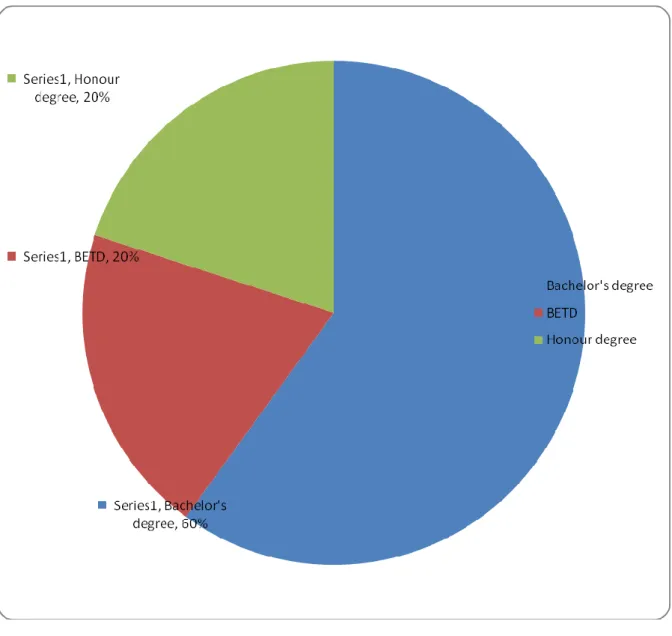
4.3.1.2 Level of education qualification………59
4.3.1.3 Years of teaching experience………...60
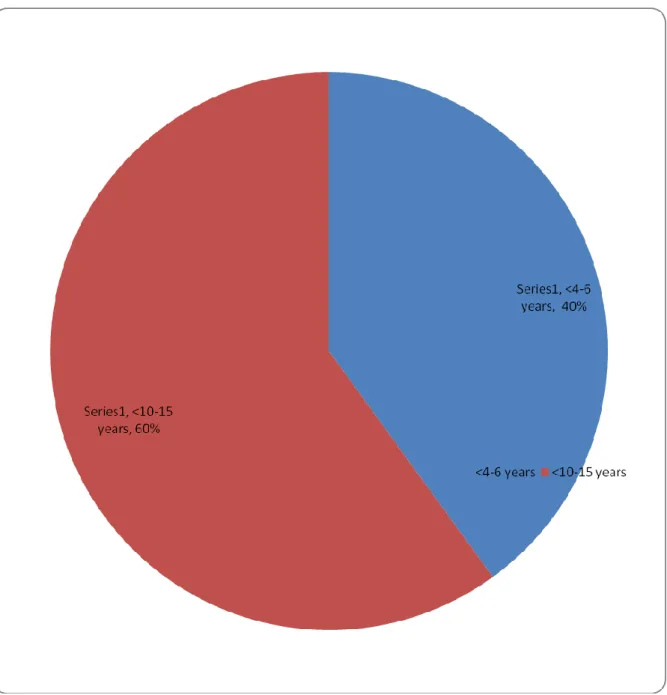
4.3.1.4 Years of teaching at the present school ………...61
4.3.2 Biographical data of Principals and head of departments ... 62
4.3.2.1 Age group……….62
4.3.2.2 Level of education qualification………...63
x
4.4 Data from in-depth interviews ... 65
4.4.1 Thematic Analysis ... 65
4.5 Themes and Sub-themes ... 66
4.5.1 Theme 1: Reception ... 68
4.5.1.1 Sub-theme 1: Welcome and introductions ... 68
4.5.1.2 Sub-theme 2: Assigning of a mentor ... 69
4.5.1.3 Sub-theme 3: Orientation of the school environment ... 71
4.5.2 Theme 2: Classroom orientation ... 72
4.5.2.1 Sub-theme 1: Planning ... 72
4.5.2.2 Sub-theme 2: Teaching and learning ... 73
4.5.2.3 Sub-theme 3: Filing... 74
4.5.3 Theme 3: Ministry and School policy orientation ... 74
4.5.3.1 Sub-theme 1: Ministry and regional goals and objectives ... 74
4.5.3.2 Sub-theme 2: Vision and Mission of school ... 75
4.5.3.3 Sub-theme 3: Duties outside the classroom ... 76
4.5.4 Theme 4: Teacher’s personal and professional growth ... 76
4.5.4.1 Sub-theme 1: Remuneration and benefits ... 77
4.5.4.2 Sub-theme 2: Skills development ... 77
4.5.5 Theme 5: Benefits of Induction ... 78
4.5.5.1 Sub-theme 1: Improved teaching skills... 78
4.5.5.2 Sub-theme 2: Make one feel at home ... 79
4.5.5.3 Sub-theme 3: Class visits keep new teachers on track ... 80
4.5.6 Theme 6: Challenges faced ... 81
4.5.6.1 Sub-theme 1: Unwelcoming environment ... 81
4.5.6.2 Sub-theme 2: Short stint for induction ... 82
4.5.6.3 Sub-theme 3: Beginner teachers refusing to get help ... 84
xi
4.5.7 Theme 7: Stakeholders ... 85
4.5.8 Theme 8: Ways to improve induction programmes ... 86
4.5.8.1 Sub-theme 1: Increase time allocation for induction ... 86
4.5.8.2 Sub-theme 2: The ministry should employ advisory teachers for induction ... 87
4.5.8.3 Sub-theme 3: The Ministry must employ qualified teachers only ... 88
4.5.8.4 Sub-theme 4: Design a tailor-made induction programme ... 88
4.5.8.5 Sub-theme 5: Induction must be part of modular content at university ... 89
4.5.8.6 Sub-theme 5: Schools should have a welcoming function for beginner teachers ... 89
4.5.8.7 Sub-theme 7: Beginner teachers should be willing to learn ... 90
4.6 Chapter summary ... 91
CHAPTER 5: CONCLUSION AND RECOMMENDATIONS ... 93
5.1 Introduction ... 93
5.2 Purpose of study ……….93
5.3 Conclusions ... 94
5.3.1 Objective 1: Type of induction programmes ... 95
5.3.2 Objective 2: How induction programmes support novice teachers ... 96
5.3.3 Objective 3: Experiences of beginner teachers about induction programme………...97
5.3.4 Objective 4: Experiences of principals and head of departments regarding induction...99
5.3.5 Objective 5: Strategies to improve induction programmes... 100
5.4 General Conclusions ... 101
5.4.1 Induction policy... 101
5.4.2 Erongo schools lack empowerment... 102
5.4.3 Meeting the needs of novice teachers ... 102
5.5 Recommendations ... 103
5.5.1 Allow novice teachers to co-lead co-curricular activities ... 103
5.5.2 Empowering schools to provide induction ... 103
xii
5.5.4 Afford mentor release time ... 104
5.5.5 Hold regular workshops for mentors and mentees ... 104
5.5.6 Universities should offer induction programmes ... 105
5.6 Limitations of the study ... 105
5.7 Recommendations for further research ... 105
5.8 Chapter summary ... 106
REFERENCES ... 107
APPENDICES ... 120
Appendix A: Interview Guide for Principals and HODs ... 120
Appendix B: Interview Guide for beginner teachers ... 122
Appendix C: Letter by the Research Ethical Committee ... 124
Appendix D: Letter from the Permanent Secretary ... 127
Appendix E: Permission letter by the Erongo Education Director ... 128
Appendix F: Consent letter to beginner teachers ... 129
xiii
List of Figures
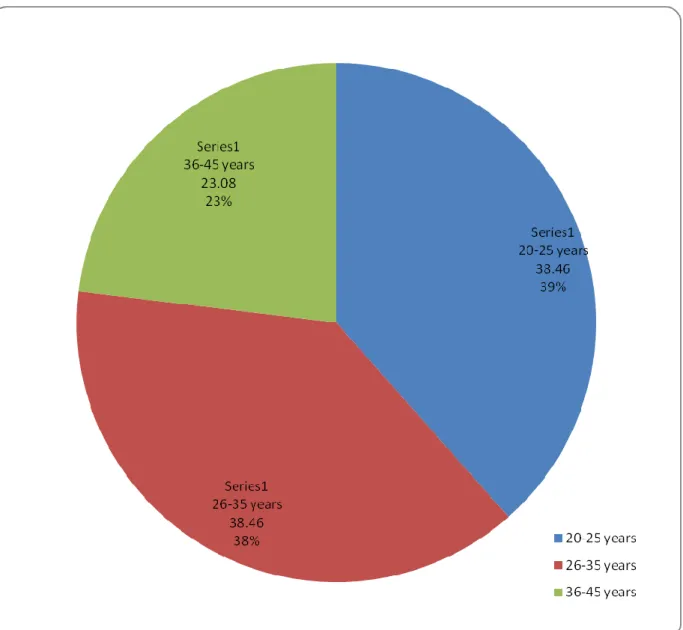
PageFigure 4.1 Age group Beginner teachers 59
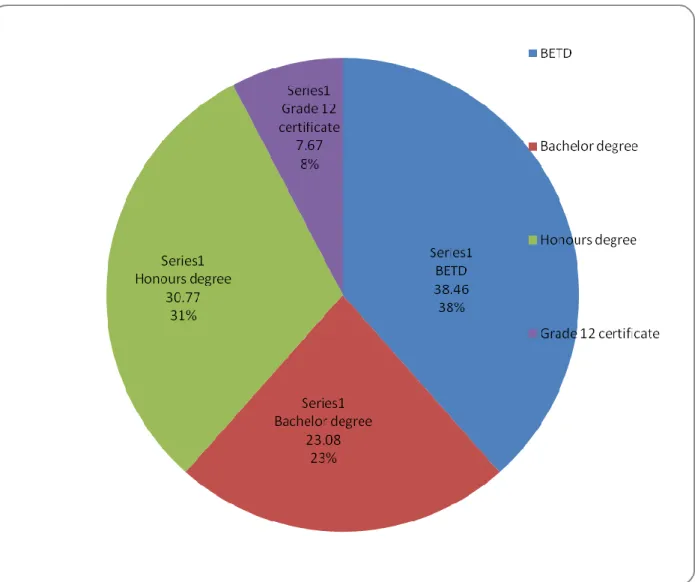
Figure 4.2 Level of qualification 60
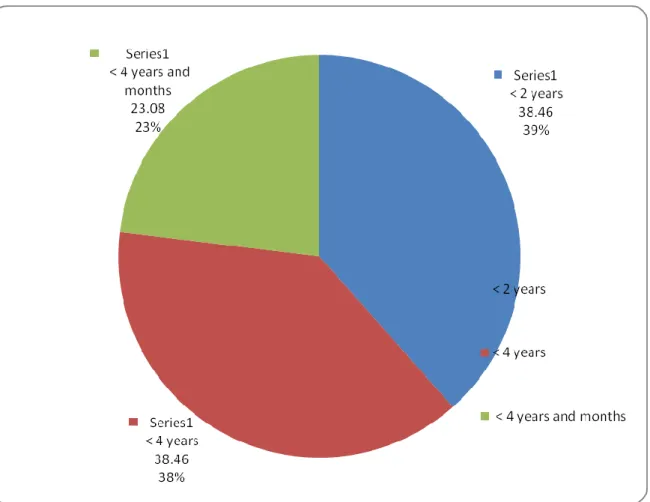
Figure 4.3 Years of experience 61
Figure 4.4 Years of experience at school 62
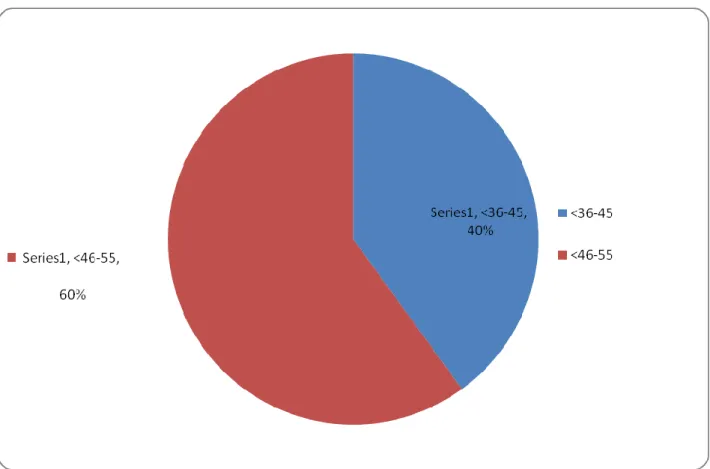
Figure 4.5 Age groups of principals and HODs 63
Figure 4.6 Level of education of principals and HODs 64 Figure 4.7 Years of experience in present position 65
xiv
List of Tables
Table Page
xv
List of Abbreviations
BETD Basic Education Teachers’ Diploma BED Bachelor Degree in Education
CPD Continuing Professional Development
EC European Commission
GRN Government of the Republic of Namibia HOD Head of Department
ILO International Labour Office
NIED Namibian Institute for Educational Development NNTIP Namibian Novice Teacher Induction Programme
1
CHAPTER ONE: INTRODUCTION
1.1 Background
The Government of Namibia has, after independence, committed itself to providing quality education to the children of this nation (Government of the Republic of Namibia 2002:2). The constitutional mandatory obligation was put in place to provide free compulsory primary education for all children of school-going age. The Constitution of the Republic of Namibia in article 20, section 2, stipulates that “primary education shall be compulsory and the state shall provide reasonable facilities to render effectively this right to every resident within Namibia, by establishing and maintaining state schools at which primary education will be provided free of charge, and guarantees that all persons shall have the right to education”. This constitutional mandate regards teachers as a central element in the provision of effective teaching and learning at all levels of the education system in Namibia, in which is an honourable yet a demanding profession.
This provision requires Government to improve access to, and participation in, basic education and to enhance teaching and learning in primary schools. This correlates with the universal aspirations of education for all and the Millennium Development Goals to which the Government is committed (Dishena 2014:2). The Government has developed four major goals, namely: Access, Democracy, Equity and Quality.
Studies in Namibia have indicated that effective teaching and learning in primary and secondary schools can be enhanced through, not only pre-service teacher preparation, but also through on-going support for teachers beginning their careers (Ministry of Education 2006:12). It is with this understanding that in 2007 the National Professional Standards for Teachers in Namibia was launched to guide primary and secondary schools on how to assist newly qualified teachers with requisite knowledge, skills and attitudes needed for effective teaching and learning.
The Government stated in support of the rationale for the introduction of the National Professional Standards for Teachers in Namibia (NPSTN), “when newly qualified teachers enter the teaching profession, they still have a lot to learn about teaching and about applying their theoretical knowledge in practice, with real learners in schools” (Ministry of Education 2006:14).
2
The Government introduced a structured induction programme in the belief that beginner teachers need an opportunity to learn. Since its introduction in 2007, limited information is available about the influence of the structured induction programme on newly qualified teachers in terms of personal growth and professional development. Also with scanty literature on teacher induction available in Namibia, it has been difficult to verify the influence of these programmes on both the primary and secondary school educators in Namibia.
Namibia’s commitment to education stems from the realisation that it cultivates the value, attitude and the conduct essential for personal growth, self-actualisation and peaceful co-existence. It provides individuals with the potential to make choices and enjoy a better life. Education is thus a strategy for poverty reduction, human development and social advancement (Government of the Republic of Namibia 2002:2).
Simuyaba, Banda, Mweemba and Muleya (2015:88) maintain “it is common knowledge the world over that quality education depends on, among other things, its delivery by teachers entrusted with that responsibility”. This implies the teacher is the pivot of any country’s education system. According to the European Commission (2010:5) the quality of teachers in a country is among the issues that determine the achievement of educational goals. It is therefore crucial to ensure a provision of adequately qualified teachers to attend to the needs of the country and those of the learners in particular. It should, however, be noted the provision of qualified teachers is one aspect and giving them sufficient and effective support and guidance to enable them deliver effective service is another.
1.2 Problem statement
Though it is an important human resource function, the induction of beginner teachers seems to be ignored in most schools in Namibia. The new teachers entering into the teaching profession for the first time are often not given adequate orientation as to their working environment; consequently, this raises frustrations among them and increases their feelings of insecurity. In addition, new teachers feel unprepared to execute their duties as stipulated by the curriculum and therefore it is inviting failure. The teachers are equally left without proper instructions of what is expected. The school therefore becomes a strange place demanding them to deliver high quality education without enough resources. Lack of teacher support
3
during the first days into the profession can have a negative impact on the teachers’ performance, which in the long run would affect learner performance.
The Minister of Education made recommendations to develop and implement induction programmes for new teachers, a move that has eventually resulted in the development of an induction and mentoring programme by the Namibian Institute for Educational Development (NIED) in support with regional education offices country wide (New Era, as cited in Dishena 2014:2). It is with this background where the mandate for the Namibian Beginner Teacher Induction Programme for newly qualified teachers was given in 2011 (Nantanga, 2014:48), with the aim to support their inexperience to be competent and professionally qualified after two years. The problem statement is thus: Does the induction programme for newly trained teachers in schools contribute towards their personal growth and professional development?
1.3 Aim of the research
The aim of this study was to analyse how induction programmes influence the personal growth and professional development of beginner teachers in the Erongo Region, Namibia.
1.4 Main research question
In relation to the research aim this study answered the following specific research question: To what extent do induction programmes influence the beginner teachers’
professional development?
1.4.1. Research sub-questions
What are the types of induction programmes undertaken by beginner teachers in both primary and secondary schools?
How are beginner teachers supported with induction programmes?
What are the experiences of beginner teachers about the influence of induction programmes?
What are experiences of principals and head of departments in relation to their roles as supervisors of beginner teachers?
What are the recommended strategies that can be employed to improve the effectiveness of the beginner teachers’ induction programme?
4
1.5 Research objectives
To determine the type of induction programmes undertaken by beginner teachers in primary and secondary schools.
To determine how beginner teachers are supported with induction programmes.
To establish the experiences of beginner teachers about the influence of induction.
To evaluate the experiences of principals and head of departments in relation to their roles as supervisors of beginner teachers.
To provide recommendations on possible strategies that can be employed to improve the effectiveness of the beginner teachers’ induction programme.
1.6 Significance of the study
This study was encouraged by the experiences faced by beginner teachers during their first few years in their profession. The beginner teachers are expected to execute their teaching-related tasks accordingly and in most cases are not provided with adequate information, motivation or training. Beginner teachers are recruited into teaching jobs but are not given proper induction relevant to what they are getting and therefore these expectations put pressure on the beginner teachers.
However, this assumption cannot be confirmed, unless it is supported by empirical evidence. This study therefore followed the knowledge gap regarding the influence that the induction programme has on the beginner teachers’ performance growth and professional development. The researcher’s experience has raised an interest to carry out this study. Having taught for over 11 years in a public school before her resignation, the researcher could relate to the reception that was accorded to her as a beginner teacher, as well as to the colleagues over the years. Findings from this study attempted to find an answer to the formulated problem on the influence of induction programmes on beginning teachers’ personal growth and professional development. In addition, by gaining insights into the ways in which newly recruited teachers in Namibia are supported by induction programmes. Moreover, the results of this study might provide useful information to policy-makers, school principals and education stakeholders on how to develop good induction programmes or how to improve the existing ones. The findings also contributed towards positive enhancement of teaching and learning outcomes in schools.
5
1.7 Theoretical framework
Unlike many other professions, teachers have limited opportunities to grow gradually into their profession. The responsibilities and duties of beginner teachers are of course the same as their senior counterparts. They have the sole responsibility to deal with a full schedule of teaching hours and ensure the learners achieve their goals. Because of this lack of experience, these teachers can hardly manage the work schedule they are expected to perform. Many beginner teachers are ill-equipped to deal with teaching issues such as classroom management and student assessment, personal problems of learners and the capacity to have conducive meetings with parents (Bullough; Odell and Veenman in Kessels, 2010:59). Adding to the instruction issues, teachers have to acclimatise to the school environment, find their own place in the institution and gain their new colleagues’ acceptance. A study by Kessels (2010:58) distinguished three important aspects of beginning teachers’ well-being on which an induction programme might have a significant influence namely, the isolation felt by these employees, their appreciation by colleagues and their level of self-confidence.
Rosenholtz; Van Petegem, Creemers, Rosseel & Aelterman; Zabel and Zabel cited in Kessels (2010:60) emphasise that “other factors such as the support from the administrators, collegiality among teachers and support in their professional development are also of importance to the well-being of beginning teachers”. Kessels (2010:60) argues that, “while such factors may come into existence as a result of an induction programme, they may also be prevalent in the absence of a formal induction programme”. Since the focus of this research is on the influence of induction programmes, it is therefore particularly relevant to accept Kessels’ framework.
1.8 Research methodology
According to Gray (2009:166) research methodology refers to approaches to systematic inquiry developed within a particular paradigm with associated epistemological assumptions. The use of qualitative methods in this study is considered appropriate in situations where the researcher feels that quantitative measures cannot adequately describe or interpret a situation in relation to the study. Qualitative research has an interpretive character, aimed at discovering the meaning events have for the individuals who experience them and the interpretation of these meanings by the researcher (Lewin & Somekh 2011:61). Qualitative methods can be used to better understand of any phenomenon about which little is yet known.
6
Additionally, they can also be used to gain new perspectives on things about which much is already known, or to gain more in-depth information that may be difficult to convey quantitatively (Lewin & Somekh 2011:61). A qualitative approach was deemed appropriate to gain answers to the formulated problem statement and accompanying objectives.
1.8.1 Research Design
A research design describes the choice of research paradigm and related procedures for conducting the study. This includes how, when, from whom and under what conditions the data are obtained. It indicates how the research is set up, what happens to the subjects and what methods of data collection are used (McMillan & Schumacher 2001:30-31). Research design refers to all issues involved in planning and executing a research project from identifying the problem through to reporting and pushing the results. Research design is also defined as a process of focusing your perspective for purposes of a particular study (De vos, Strydom, Fouche, & Delport, 2009). Gray (2009:166) defines a research design as a plan for research project setting out the broad structured and features of the research. Qualitative research is based on constructivism that assumes reality as multilayered, interactive and a shared social experience interpreted by the individuals. People’s perceptions are what they consider ‘real’ to them and what directs their actions, thoughts and feelings. For that reason the phenomenon of study is studied within its natural setting in pursuit of a deep understanding.
In this regard McMillan and Schumacher (2001:376) concur that when a study requires a contemporary focus within a real-life context, a qualitative research design is more appropriate. A qualitative approach, through a phenomenological design was employed in this study. Christensen, Johnson and Turner (2011:368) define phenomenological as a “qualitative research method where the researcher attempts to understand and describe how one or more participants experience a phenomenon”. The researcher attempts to gain access to each participant’s life world. This research approach was therefore chosen in order for the researcher to get participants to focus on their phenomenal space individually and to describe the experience on its own terms (Christen et al. 2011:368).
7
1.8.2 Population, sampling procedures and the sample
This study was conducted in the Erongo Educational Region of Namibia and focused on two populations. The first population constitutes beginner teachers who have been in the teaching profession for less than five years, while the second was management represented by principals and heads of departments at the same schools. The beginner teachers were identified as ideal participants for this study because they were able to provide information and share their experiences regarding the support that has been accorded to them since they joined teaching. Similarly, the management members (principals and head of departments) were regarded as suitable for this study, given their position of being supervisors to the beginner teachers, responsible for offering induction to the beginner teachers; and also carrying out assessment regarding beginner teachers’ progress.
A purposive sampling method was employed in this study where Creswell (2012:206) notes “researchers intentionally select individuals and sites to learn or understand the central phenomenon considering whether they are rich in information required for the study”. The participating schools were selected 30 kilometres from the base where the researcher will be stationed. Telephone calls were made to these schools to establish the availability with inclusive requirements of beginner teachers. The letters addressed to the school principals were then hand-delivered to 10 different schools and brief information about the contents was given to the selected principals. The decision on which of the identified schools to choose was made based on the time the principals took to respond; the first five schools were included in the study. Beginner teachers were selected with the assistance of the school principals with a list of the names of the beginner teachers who have been at the school for less than five years. The sample consists of a combination of seven management members (two principals and three head of departments); in addition to thirteen beginner teachers.
1.8.3 Data collecting methods
It is essential to have different vehicles available to collect the information for any research with the aim to reach to a conclusion.
8
1.8.3.1 In-depth interviews
In-depth, one-on-one interviews were used to gather data in preparation to satisfy ultimately, the objectives of the study. The one-on-one interview is defined by Creswell (2012:218) as a “data collection process in which the researcher asks questions to and records answers from only one participant in the study at a time”. Two different interview guides were used for each sample of participants that were interviewed separately which was tape-recorded and verbatim transcribed. Each interview guide had part A (biographical information of the participants) and part B (in-depth questions). The interviews were conducted differently from school to school, depending on the arrangements made with the principals. At some schools, the participants were met during their respective “off-periods” given that they were not scheduled for class invigilation and had no other responsibilities; while at other schools the participants were only available after classes. All the interviews took place in the respective school premises and no disturbance of teaching and learning was witnessed.
1.8.4 Data analysis methods
Analysing qualitative data, according to Creswell (2012:236) demands an understanding of how to make sense of texts and images in order to form answers to the research question. The Constant Comparison Analysis method of qualitative data analysis was employed in this study. This method was selected based on Onuegbuzie and Leech (2007:565) who states that, “when a researcher is interested in utilising an entire data set, to identify underlying themes presented through the data, a constant comparison analysis can be helpful”. A constant comparison analysis was undertaken inductively where the codes emerged from the collected data. All interview sessions were conducted in English, tape-recorded and transcribed thereafter analysed systematically through repeated reading with the aim to form clusters with codes and themes. The biographical data were analysed with Excel.
1.9 Ethical considerations
Christensen et al. (2011:96) stresses the importance of ethical principles of the research initiative because they assist the scientists in preventing abuses that might occur and delineate the investigators’ responsibilities. Principles of research ethics were put into considerations throughout the course of study, given their empirical investigation about people. Ethical obligations included obtaining a protocol approval to conduct this study from the Research
9
Ethical Committee at the University of Stellenbosch (see appendix C). The permission to conduct a study in the Ministry of Education was obtained from the office of the Permanent Secretary (see appendix D). In order to carry out the study in Erongo Region, the researcher was granted in the first instance permission by the Educational Director (see appendix E) and finally from the respective school principals. According to Christensen et al. (2011:114) informed consent refers to clearly communicate to the research participants about all aspects of the study. This was achieved by providing a clear explanation about the purpose, procedures and other relevant conditions regarding the study prior to volunteering to participate. Participants signed the consent forms (see appendix F and G) as an indication they understood the nature and conditions in the study. Ethical clearance is discussed in details in chapter 3.
1.10 Definition of concepts
Induction: defines induction as a structured training process that must start before the first day of school to introduce new teachers to the culture, mission, procedure, philosophy and programmes of the school or district (Wong 2004:1).
Mentor: a person who advises and helps someone with less experience (Longman South African School Dictionary 2008:434).
Mentoring: The personal, one-on-one guidance provided, usually by seasoned veterans or experienced teachers to beginner teachers in schools (Cobbold 2007).
Beginner teacher: refers to a teacher who has completed initial training and is in the first year of formal teaching (Ferguson-Patrick 2011)
Experienced teachers: refers to a qualified teacher who has had some years working.
Professional development: The continuous process of acquiring new knowledge and skills that relate to one’s profession, job responsibilities, or work environment. Its primary role is to maintain trained, informed and motivated employees. In the context of teaching, professional development refers to the development of pedagogic content knowledge (Nilsson & Van Driel 2010).
10
Continuing Professional Development (CPD): is a process that helps teachers and educational managers meet the challenges of their work and achieve their goals. CPD is also an important part of belonging to an organisation. It helps teachers build professional relationships, sharing and learning from each other, and helps managers get the best of their teachers (Cordingley et al. 2003).
1.11 Lay-out of chapters
The report on this research study is presented in five chapters:
Chapter 1 provides an introduction to the study; problem statement; aim of the research study; research question, sub-research questions and research objectives. It also includes significance of the study; and a brief description of research methodology used in this study. The key words used in this study are also explained.
Chapter 2 presents a literature review in which a discussion on induction of beginner teachers enhances the reader’s understanding of the problem statement and related work previously done in the field of employee induction.
Chapter 3 provides a holistic explanation of the qualitative research design. The population, sample and participants are discussed, as well as the research procedures. In conclusion, the chapter gives description of data collection strategies, ethical procedures and data analysis.
Chapter 4 comprises findings, interpretation and discussion emerging from the data collected.
Chapter 5 provides a summary of findings and conclusion. The limitations of the study are discussed and recommendations are made on possible strategies that can be employed in order to improve the effectiveness of the beginner teachers’ induction.
1.12 Chapter summary
This chapter captured the orientation to the study where the introduction to the phenomenon was outlined and supported by relevant sources. The problem statement, aim, research question(s), objectives of the study were also stated as well as the significance of the study. The study will play a major role for the management of schools, beginner teachers and other relevant stakeholders and contribute to the establishment of an effective and fruitful induction
11
programme for the target employees. The aim of the study was to analyse the influence the induction programme has on the beginner teachers’ professional development in the Erongo Region of Namibia. Also included in this chapter, is a brief introductions to the research methodology used in the study, and definitions of concepts. The next chapter will comprise a literature study surrounding the induction programme phenomenon.
12
CHAPTER TWO: LITERATURE REVIEW
2.1 Introduction
Generally, both the employer and employee find the first few days in a new job exciting but they realise there are many factors contributing towards the uncertainty facing them. The work place is at present mostly filled with anxiety, excitement and curiosity from both parties. The employees should as soon as possible feel part of an organisation; familiarise themselves with the goals and strategic aims of the organisation and be prepared to socialise with their counterparts. Induction has the potential to make a positive contribution to integrate not only the employees with each other but with their employer to realise unity in the company. It is therefore of great importance for the employees to go through an induction programme in order to prepare them and become valuable assets of an organisation. A detailed discussion on induction of new teachers will place the study in context. It will cover areas such as the nature and various definitions of induction, its purpose, importance as well as the effects of these programmes. The objectives of induction programmes will illustrate its importance to ensure the integration of employer together with employees in the work arena.
2.2 Definition of the term “induction”
Induction is defined by Grobler, Warnich, Carrell. Hartfield, Elbert and Hartfield as cited in Mlindazwe (2010:10) as the process of integrating new employees into the organisation, whereby they are transformed from complete outsiders to participating and are effective members of an organisation. Kleynhans, Markharm, Meyer, Pilbeam, van Aswagen, and Sullivan as cited in Mlindazwe (2010:10) see the process of induction as a platform for communicating to the employees the goals, policies, procedures and values of the organisation and, at the same time, introducing them (employees) to their co-workers. In a school perspective, Steyn as cited in Mabaso (2012:26) defines induction as “the school’s effort to enable and assist new staff members to adjust effectively to their new work environment with minimum disruption and as quickly as possible, so that the school’s functioning can proceed as effectively as possible”.
Wong (2004:1) defines induction “as a structured training process that must start before the first day of school to introduce new teachers to the culture, mission, procedure, philosophy and programmes of the school or district”. Thus, new teacher induction is more a process
13
than a programme, involving the period of transition where the new employees evolve from being students to being educators. It is therefore compulsory for teachers to be exposed to induction, not only because they are new and require support, but because of the high number of new teaching staff entering into the profession (Wong, 2004:1). Induction is further referred to as “a comprehensive, coherent, and sustained professional development organised by a school district to train, support and retain new teachers and seamlessly progress them into a lifelong learning program” (Wong 2004:42). Parallel to this, Globler, Warnich, Carrell, Elbert and Hartfield as cited in Peloyahae (2005:16) see induction as “the process whereby educators are introduced to the goals, policies and procedures of the school environment, its values and co-workers, as well as the activities and the tasks to be performed and the equipment to be used”.
According to the European Commission (2010:16) induction refers to different processes whereby new entrants into teaching professions are inducted into their profession normally during the first years upon completing their academic training programme. “School-based induction is therefore an extension of teacher preparation with the intention to sustain and support teachers who have already completed an initial programme of teacher training. The term induction may also be referred to as introduction, initiation, training and support within the teaching profession” (Dishena 2014:20).
Hulling-Austin, Odell, Isle, Kay and Edelfelt quoted in Kessels (2010:9) define the induction process in the teaching context “as a transitional period between pre-service preparation and continuing professional development, including the first few years of teaching in which teachers learn many processes, procedures and having to deal with the typical difficulties of beginner teachers”. It is therefore important that induction be conducted during the first year of the profession and the beginners be provided with encouragement and support to enable them to enjoy positive learning experiences and a pleasant start to their careers.
Dishena (2014:18) notes that “induction is a key factor for workers in different occupational fields and professions”. He further adds induction helps to speed up the adaption process of the teachers in their chosen career, because it has been designed with the aim to familiarise newly appointed educators with the community, school, learners and colleagues.
The various definitions of the term ‘induction’ do not differ much from one another where Tickle cited in Peloyahae (2005:16) concurs and defines induction “as the phase where beginner teachers are introduced and guided into the practice of teaching, with the aim to
14
facilitate the change from student to teacher, hence ensuring that the educator moves on to more advanced, effective and professional activities”. The most preferred definition of the term induction by Wong (2003:43) whereby induction is referred to “the process of preparing, supporting and retaining new teachers, which includes all the things done to support new teachers and to acculturate them to teaching”. Despite the existence of various definitions surrounding the concept of induction, Kempen (2010:27) concludes that an element central to all these definitions is the fact that “induction programmes are aimed at assisting a new employee in becoming a fully productive member of the organisation’s workforce”. The current study defines induction programmes as the process in which beginner teachers are prepared, supported and trained into the teaching practice with the main goal of transforming them from students into teachers. This is the definition that guided the researcher throughout the study.
2.3 Types of induction programmes
According to the European Commission (2010:14) there are two types of induction:
(a) Formal induction programmes, which aim to support new teachers and to ensure the quality of those teachers, and
(b) Non-formal induction programmes, which are not linked to a probation period or the gaining of full teacher status
According to Eisenschmidt as cited in European Commission (2010:14) the support for formal induction focuses on different dimensions, inter alia,:
(a) The professional dimension, which emphasises supporting the beginner teacher in acquiring more confidence;
(b) The social dimension, which focuses on supporting the beginning teacher to become a member of the learning school community; and
(c) Personal dimension, which covers the process of development of the teacher, which involves the development and elaboration of personal norms towards pupils and colleagues, the elaboration of the teachers’ view on teaching and learning and her role in these processes, the development of an attitude of lifelong learning.
15
Tickle cited in Peloyahae (2005:17), refers to non-formal induction to ‘corridor induction’, and contends that this constitutes dangers and can result into beginner teachers’ confusion by the information received from co-workers, which may be in contrast with the expectations of management. This implies formal induction is what organisations need to undertake in order to assure effective results and minimise potential negative consequences of non-formal induction. Though formal induction is being carried out in various schools experience has shown that formal induction programmes have less impact on the novice teachers. This is because the induction programme especially in Namibia, is not carried out in the proper manner that it should.
Dishena (2014:32) differs from these stated types of induction and maintains that, in the first instance, induction programmes whereby the beginner teachers are introduced to school, staff members as well as the community and have their timetable and tasks communicated. These help new employees to become familiar with the community in which they are expected to work, providing them with information about both the civic and school district (Skinner as cited in Dishena 2014:33). During the induction programmes, beginner teachers are provided with required and important information carried out in a short duration and which focus on information distribution (Dishena 2014:33). Steyn and Schulze cited in Dishena (2014:33) clarifies that information provided during these programmes may include “a tour of the school, the vision and mission of the school, policies and procedures, roles and responsibilities of the teacher, resources and school activities as well as record keeping”. Contrary to these findings by various authors on the induction programme, it is important to understand that induction programmes are not serving their intended purposes. This means that there is no link between theory and practice. This is what prompted the researcher to interrogate the influence of induction programme on beginner teachers for both primary and secondary schools in Erongo Region.
Performance-improvement programmes in the second place serve to improve the instructional effectiveness of beginner teachers. This includes preparations of the workshops in which the disciplines and classroom management procedures, orientation of a curriculum in a particular district, discussion with specialists in certain subject areas and assistance in preparing a professional development plan. Unlike orientation programmes, this category of induction could span a semester or a full year and it may include a module of mentoring (Dishena 2014:33).
16
Lastly, induction for certification is primarily evaluative and it is regarded as a state directive. Beginner teachers are required to validate their ability and capabilities for them to have their probation period established. During this programme, an assessment and assistant team is assigned to work closely with one or more beginner teachers (Dishena 2014:33).
It is important to note that though induction programmes have been regarded as beneficial to the beginner teachers on one hand, on the other hand it is important to acknowledge that induction programmes in some schools in Namibia are doing more harm than good. This is because of the reason that not all school have colleagues who can easily help the beginner teachers. Hence, induction programme in Namibia has varied results across due to a number of factors that determines its success.
2.4 The aims of induction programme and quality education
The International Labour Office (2012:29) emphasised the importance for teachers to go through an induction process to ensure they receive adequate support when beginning their career or when they move to a new role or transfer to a new school. Further, the International Labour Office (2012:29) indicates the induction process may take place during the probationary period or later.
Integration of the educator into the school with minimal problems is one purpose of induction (Peloyahae 2005:18). Wong, as cited in Peloyahae (2005:18), indicated the accomplishment and achievement of the learners is the decisive purpose of any school. Furthermore, Wong as cited in Peloyahae (2005:18) stressed the importance of a professional development programme that improves professional skills of educators throughout their careers. Grobler et al. as cited in Peloyahae (2005:12), asserts that an effective induction programme has the likelihood to decrease the possible problems for newly appointed educators by improving a sense of security, confidence and satisfaction of their social needs.
It is usual for new employees to experience doubts upon starting a new job, thus an effective induction programme could provide a certain degree of realism concerning mutual expectations (Grobler et al. cited in Mlindazwe (2010:26). According to Tracey also cited in Mlindazwe (2010:26) new employees are often uncertain of their potential success in the new job and are worried they might make mistakes and be seen as failures, thus “a good induction programme is required to develop confident, loyal, effective and productive employees. It is
17
essential to reduce the violation of rules, accidents, injuries, discharge, resignation and grievances.”
Mabaso (2012:21) notes induction is frequently used by organisations to refer to a programme of events where new entrants in the organisation are introduced to their working environments as well as their co-workers. According to Buchner and Hay as cited in Peloyahae (2005:18), induction is an essential initiation to the job and the organisation itself, as well as the profession. Thus, quality induction of newly appointed teachers plays a major role to the effective management of human resources.
According to Peloyahae (2005:18), an induction programme in sequence serves the following three major purposes: “overcoming the initial shock of the new job by adapting and getting used to it and the work environment; recognising the need to learn new skills or to re-apply learned skills; and consolidating one’s position in the school by applying new behaviours and skills or integrating newly formed attitudes with those held from the past in order to become effective”. Nel, Van Dyk, Haasbroek, Sono and Werner as cited in Mabaso (2012:12) argue that induction is the last step in the staffing process. It is further emphasised that ensuring the right people are selected and placed appropriately is of vital importance to allow top performers to heighten their knowledge and ensure progression.
According to the European Commission (2010:13) the urgent need for the creation of a conducive environment appropriate to support first time educators to address their beliefs are imperative to initiate induction programmes. Orientation facilitates the evolution into education and improves the effectiveness of individuals through training. Similarly, “induction programmes help the individual to understand the social, technical and cultural aspects of the workplace and speeds up the socialisation or phasing-in process” (Bartell; Breaux and Wong cited in Mabaso 200:25).
Initiation of an induction programme from the first day of employment through providing given that organised direction has significant consequences for their specialised obligation and also in averting these individuals from leaving the occupation after a short period of time (European Commission 2010:13).
During the student teacher’s exposure while involved in their school-based studies many opportunities are created. However, these new first-time individuals experience apprehension when they become involved in the real environment of education. Unfortunately, these new
18
teachers have limited knowledge and skills as such and due to a lack of experience they face tribulations in the class room. First-time educators find themselves being responsible for their own class room and consequently have to manage opposing and criticising outlooks about their practice, the existing historical school culture, personal experience and their trained standards (Beijaard & Papanaoum; Kelchtermans & Ballet; Tickle, as cited in Kessels, 2010:10).
Feiman-Nemser (2001:1026) contends teachers despite their academic training have to learn the skill of how to teach regardless of how complete a teacher-training programme may be; experience can only be acquired while on the platform. It is further recognised “the first year of teaching is an intense and formative time in learning to teach, influencing not only whether people remain in teaching but also what kind of teachers they will become” (Feiman-Nemser (2001:1026). Similarly, Bush cited in Feiman-Nemser (2010:1026-1027) stresses “the conditions under which a beginner teacher carries out the first years of teaching have a strong impact on the level of effectiveness which that teacher is able to achieve and sustain over the years; and, strongly, on the decision whether or not to continue in the teaching profession”. When first-time teachers begin their careers they have to face hardships which are translated eventually into feelings of low self-efficacy, stress and burnouts (Gold 1996). Further cited in Kessels (2010:10), Harris & Farrell; Ingersoll; Advies van deCommisieLeraren and Smithers; and Robinson contend beginner teachers leave the profession due to the adverse working conditions accompanied by stress that affects their self-image.
Lunenburg (2011:1) recognises positive action should be taken to prevent these new teachers from gaining negative impressions of their chosen careers by having an induction period to develop their abilities and thereby not abandoning them to sink or swim. However, in the event when internal support systems and strategies are adopted by the institutions the outcome can only benefit these beginner teachers’ professional development (Breaux cited in Lunenburg (2011:1).
Lunenburg (2011:1) emphasises beginner teachers may face the same problems and consequently have to learn by trial and error and without the support and supervision of the head or the management of the institution. Lunenburg (2011:1) further states when it is expected beginner teachers should work on their own may indicate through outcomes from false assumptions that they are in a position to accept the responsibilities for their first
19
classroom and school know-hows; can on their own develop proficient expertise on their own; and the skill of teaching can be learnt in a relatively short period of time.
An induction programme serves the main purpose of supporting new teachers to participate comfortably in the institution. Darling-Hammond as cited in Mabaso (2012:25) is of the opinion the value and importance of induction programmes could increase the retention rates of new employees by improving their attitudes, feelings of self- worth and skills operate at acceptable high levels. Parallel to this, Bartell as cited in Mabaso (2012:25), states an induction programme will assist to increase an individual’s appreciation of social, technical and cultural aspects of the organisation and enhance the ever-important socialisation process. Kleynhans et al. quoted in Mabaso (2012:28) concur: induction programmes for new employees helps to reduce absenteeism satisfy their affiliation needs, simplify policies and procedures and improve the understanding of a holistic image. Further including development plans and aims for new employees and welcome the arrival of these new employees.
According to Grobler et al. (2006:207), the objectives of induction programmes is to allow new employees to familiarise themselves with position processes, allow affiliation with co-workers together with their subordinates and supervisors. Further, by creating a sense of belonging among employees and how the roles they play affect the rest of the organisation in a positive manner. Induction programmes further help to guide employees towards the preferred means by which these goals should be achieved, recognising the basic work and authority of their function and indicating the required behaviour patterns for effective job performance. Mlindazwe (2006:18-20) articulates the objectives of induction to performance and being productive. He also indicates the importance of a job description that serves as a roadmap of a position and labour relations issues, culture seen as the glue keeping the organisation together and employee health and safety including induction serves as motivation factors once an induction programme has been introduced.
Grobler et al. as cited in Mabaso (2012:21) further state the objectives of a current induction programme should provide new employees with a platform to become productive sooner; minimise fear and insecurity, decreasing labour turnover; thereby helping employees to have realistic expectations. It will, in addition, generate job satisfaction and positive attitudes toward the employer, including saving time of supervisors and colleagues. It will also foster a better understanding of the organisation’s vision, mission and strategic aims. Steyn, as cited in Dishena (2014:22) summarises the objectives of staff induction as “orientation,
20
psychological support, teaching skills, philosophy of education, fear and security, staff turnover, realistic educator expectations and job satisfaction and positive attitude towards the school”.
Recent publications regarding the quality of education have identified teachers as the most crucial factor influencing the quality of education in schools (Abbott, Hattie, Barber & Mourshed cited in European Commission 2010:6). It is further stressed that the professional development of teachers is a lifelong process that starts at the beginning of their education and ends at retirement and which is generally divided in specific stages. The first stage, during initial training, teachers are prepared to master the rudimentary information and skills. The induction phase follows guiding teachers to take the first autonomous steps during their first year of being opposed by reality to be in this career. The third and last phase addresses the on-going specialised progress of those teachers that have overcome the initial challenges of choosing this career (European Commission 2010:6).
2.5 The benefits of an induction programme
Grobler et al. in Mlindazwe (2006:12) points out that an effective induction programme has benefits such as higher job satisfaction. It also leads to increased performance in the work place which stems from faster learning times, reduction in absenteeism of educators and enhanced understanding of school policies, vision and procedures. Mlindazwe (2006:23-25) has similar opinions and lists the benefits of effective induction programme citing improved commitment, enhanced knowledge of the organisation, cost reduction and time, efficient expectations and more knowledge of the organisation accompanied by improved productivity. The European Commission (2010:14) further outlines the importance of an induction since “it reduces the teachers’ drop-out rate; it improves teacher quality, enhances professionalism in schools and provides feedback for initial teacher education”.
Induction, as outlined in the Teacher Induction Scheme (undated: 1), helps accelerate the process of settling into teaching profession quickly and effectively. It is further noted (Teacher Induction Scheme (n.d:1) that induction enhances teachers’ commitment, enthusiasm and positive feelings about the profession and equip them better to meet the ongoing demands as their careers progress. When induction is done effectively, there is the development of early-career teachers’ capacity and confidence. It is therefore relevant to provide support for those beginning their careers as teachers through on-site sharing and
21
learning with experienced colleagues and the provision of timely feedback and review in the workplace. “Induction programmes can strengthen teacher collaboration within a school and therefore help to transform the entire school into a learning community that works professionally and cooperatively to improve student learning” (Teacher Induction Scheme, n.d:1).
Dishena (2014:1) asserts induction programmes for new teachers have been proven to be effective mechanisms in minimising attrition and are also an ideal tool to provide a foundation for professional development and support needed to prepare those beginners entering the profession of teaching. Dishena (2014:3) further emphasises an induction programme is employed to develop new teachers to their fullest academic, social and personal potential and its successful application has the potential to enhance the quality of their instructions, minimise barriers they may encounter and to help in retaining them into the profession. These researchers concur with Guarino, Santibanez & Daley; and Weiss & Weiss as cited in Dishena (2014:4) there is an indication of the previous studies where comprehensive induction programmes that include mentoring, professional development and school-based support to beginner teachers have a significant effect on their attrition. Dishena (2014:18) emphasises “supporting beginner teachers with a comprehensive induction programme could compensate for their assumed inadequate preparation and reduce high turnover.
Lack of administrative support and poor induction are (Harrell et al., as cited in Dishena 2014:18) often labelled by the new teachers as the reasons for leaving the teaching profession. This correlates with Kelley, as cited in Dishena (2014:18) when new teachers are exposed to a lack of support and poor working conditions, their commitment to stay in the profession weakens. In agreement, Menchana as cited in Dishena (2014:19) reports “providing adequate training and support for beginner teachers increases the retention of a more competent, qualified and satisfied faculty”. This was also supported by Liu and Meyer as cited in Dishena (2014:19). There is a correlation between a teacher induction programme and high morale and career commitment. Induction is seen (Amos as cited in Dishena 2014:20) as a necessary component designed to assist the beginner teachers gain important information about the new job and easily settle in their work productively. Nantanga (2014:15) outlines the effects of induction on beginners where it reduces feeling of isolation, enhances opportunities to acquire skills and knowledge, increases teacher efficacy and reduces teacher attrition and turnover.