ASSESSING QUALITY OF NON-CANCER CHRONIC CARE AND MEDICATION ADHERENCE FOR COMORBIDITIES AMONG PROSTATE CANCER SURVIVORS
Sarah Elizabeth Lewis
A dissertation submitted to the faculty at the University of North Carolina at Chapel Hill in partial fulfillment of the requirements for the degree of Doctor of Philosophy in the Department of Health Policy and Management in the
Gillings School of Global Public Health.
Chapel Hill 2016
© 2016
ABSTRACT
Sarah Elizabeth Lewis: Assessing Quality of Non-Cancer Chronic Care and Medication Adherence for Comorbidities Among Prostate Cancer Survivors
(Under the direction of Morris Weinberger)
Recent evidence suggests that cancer survivors are more likely to die from co-existing chronic conditions than from their cancer(s) or recurrences.1 This may, in part, occur because cancer survivors may be less likely than the general population to be prescribed guideline-concordant care for their comorbidities,2,3 one tenet of high-quality cancer survivorship care.4,5 Moreover, even when prescribed evidence-based
guidelines for their non-cancer conditions, cancer survivors are less likely to adhere to these recommendations than patients without cancer.4,6,7 As a result, chronic diseases that are not properly managed contribute to avoidable complications, emergency department visits, hospitalizations, and costs.8
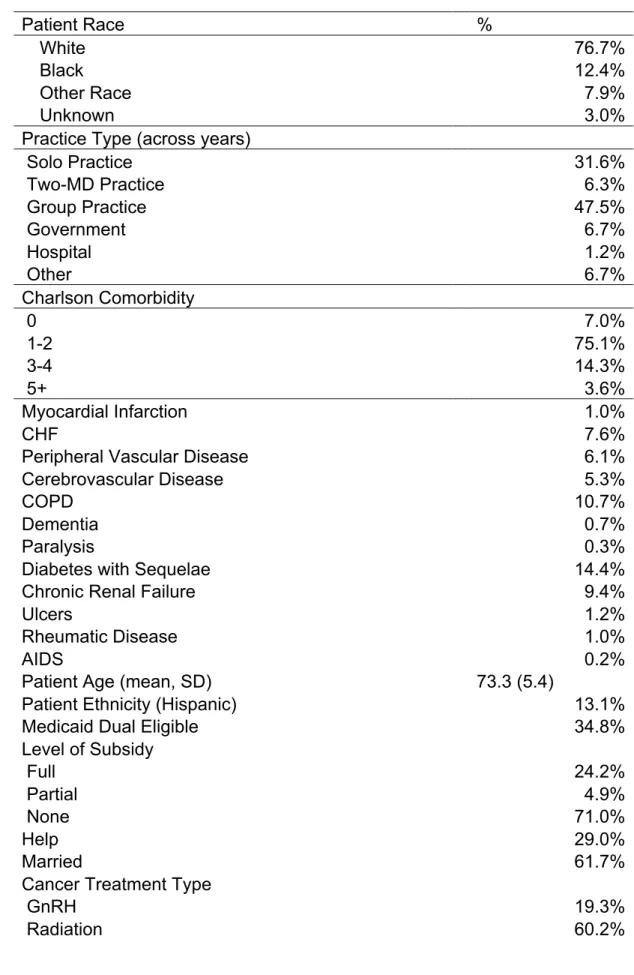
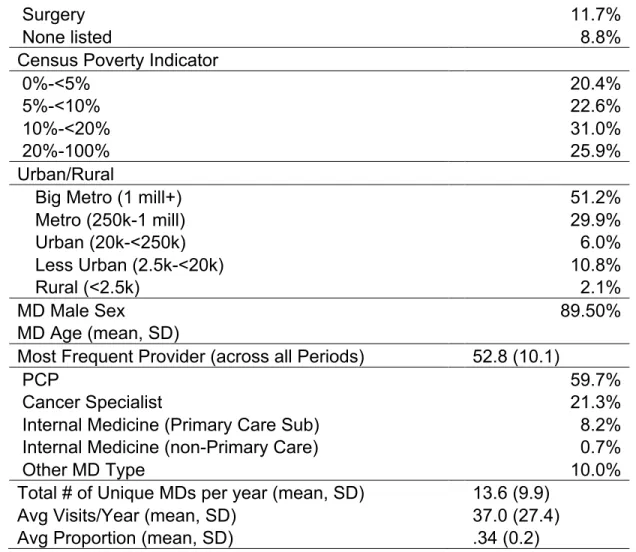
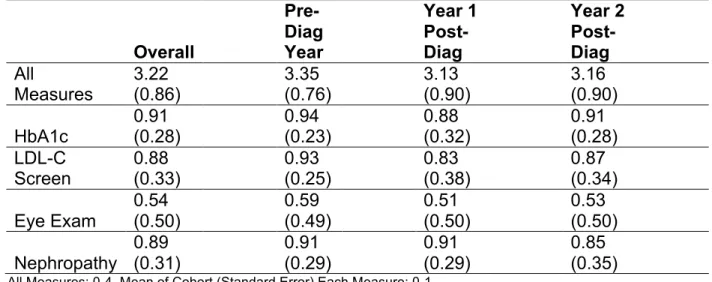
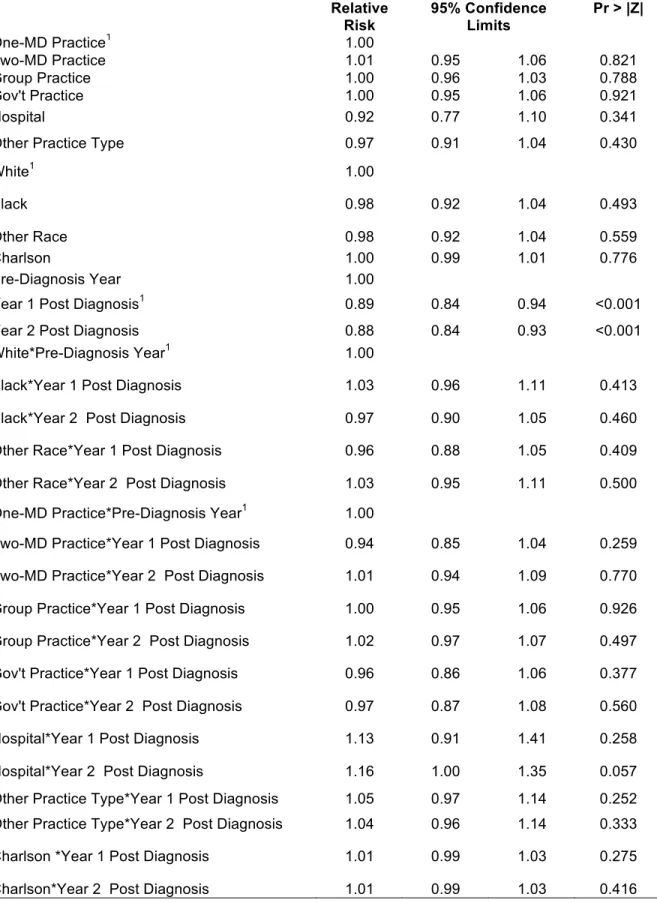
types of providers responsible for patient care during this period. Patient race and level of comorbidity had no effect on the quality of their diabetes care receipt, with site of care having a marginally significant effect. It was found however that following a prostate cancer diagnosis patients’ quality of care for diabetes declined in all areas (HbA1c testing, LDL screening, and eye exams) except for attention for Nephropathy.
Cancer survivorship is a growing area of research and clinical interest, with work and interest for considering how to care for and help manage patients’ chronic
ACKNOLWEDGEMENTS
I am thankful for so many of the mentors, faculty, friends, and family who have supported me during this PhD journey and particularly through the dissertation process. I truly cannot thank you all enough.
First, I must thank my advisor and chair, Morris Weinberger. I have wondered sometimes to an outside observer or visitor to our program if we are all part of a ‘cult of Morris’ (perhaps the T-shirts on his 60th birthday didn’t help), because the praises we sing and all of the good things we have to say for him are so positive and heartfelt, there is no way they could really be true. And yet they are. Although I to try to live my life not having regret for the choices made or the path not taken, sometimes these uncertainties creep in on reflection many years later. One thing I have no doubt about is that I made the right choice in choosing the HPM Department at UNC and to be Morris’s advisee. Even when most of the plusses were in other column, an impactful conversation I had with his current advisee at the time, Dio, convinced me how incredible he was and that I ‘had’ to take this opportunity I hadn’t realized at the time would be such a crucial one for my success (thank you, Dio!). Life has dealt me some blows over the course of this program, and yet Morris has been there with me every step of the way, providing
couple of years. I am so happy to know that he will continue to be in my life to celebrate the professional and personal milestones. Thank you, Morris, I can never repay you for how you have helped me push through. I know I tell you all of the time that I hope you sometimes take a step back and realize all of the good you do for your students and the department and that you are exceptional in this way, but maybe writing it down for you to read will help my cause. Don’t worry, I know you are just a mortal—you actually like Coach K ;)
Thank you also to the rest of my committee members. Thank you Stacie for all of your help during throughout the entire dissertation process, from early conception through completion. Your rock star status as a researcher has already grown
exponentially since I first got to know you 3 years ago, yet you still make time for and meet deadlines with us pesky students. This may not have been that significant to you, but I am so grateful for you setting up a usable dataset for me when it became clear my first dataset plan would not work out, with all of the annoying extra documentation and work that created for you during the winter/early spring of 2014. Knowing that there were still people looking out for me and helping to ensure my success at a time where a dissertation or PhD program were things I was uncertain I even cared about anymore (as I was uncertain about everything) was invaluable in getting through that time. I will truly never forget it.
issues in the literature. Thank you for helping me unpack the clinical ‘black box’ for this very non-clinical student. Thank you also to Justin Trogdon for serving as the
econometric methods guru on for my committee. I appreciate your willingness to talk through suggestions and questions with me as well as the clarity with which you explain things. Thank you for being a ‘friendly’ economist. And last but not least (only
alphabetically last), thank you to Leah Zullig. It has been great to meet you first as a prospective student in HPM, during which time I was struck how generous you were with your time and information sharing. The same has been true in your role on my committee, helping keep me informed of all of the current work in the cancer
survivorship and comorbidity fields, as well as for your timeliness and approachability. You were a true resource and it’s been great to witness you doing such a fantastic job in this early phase of your independent research career (I think every time I PubMed you to reference a past article, you have 2-3 new publications a month or so)!
Thank you to my cohort and friends here in NC for both the emotional and academic support and encouragement throughout the years. I had not necessarily thought at this point in school you still made such close friends and that everyone
things in Boston. Thank you to Ginger Liu for all of the SAS support as well as surviving the state of New Jersey support. Thank you Aaron Winn (along with Laura, Levi, and Joanna) for both the SAS and analysis support, and even more for the time-zone spanning friendship and continued laughs. Thank you Jacqueline Burgette for being a constant source of positivity and lightheartedness despite all of your hard work and grueling hours. Thank you to Caroleen Quach for being such a sweet and thoughtful friend and listener. And thank you to Yuna Kim, Evan Johnson, and Lisa Spees, our ‘policy friends’ who have provided great friendship over the years. Thank you to my friends from Kentucky and other far away locales who are still such important parts of my life.
TABLE OF CONTENTS
LIST OF TABLES ... xiii! LIST OF FIGURES ... xiv! CHAPTER 1. (SPECIFIC AIMS): ASSESSING THE QUALITY OF
NON-CANCER CHRONIC CARE AND MEDICATION ADHERENCE FOR COMORBIDITIES AMONG MEN WITH PROSTATE
CANCER: OVERVIEW ... 1! Organization of this Dissertation ... 4! REFERENCES ... 5! CHAPTER 2. ASSESSING THE QUALITY OF NON-CANCER
CHRONIC CARE AND MEDICATION ADHERENCE FOR COMORBIDITIES AMONG MEN WITH PROSTATE CANCER:
BACKGROUND AND RATIONALE ... 8! High-Quality Care for the Increasing Number of Older Cancer
Survivors Must Address Their Co-occurring Chronic Diseases ... 8! Conceptual Framework for Survivorship Care Planning Research ... 10! The Importance of Prostate Cancer and Diabetes ... 10! The Effect of Receiving a Prostate Cancer Diagnosis on
Diabetes Care ... 11! Factors Associated with the Receipt of Guideline-Concordant
Care for Type 2 Diabetes Among Patients Diagnosed
with Prostate Cancer ... 13! Receipt of Outpatient Care from a Primary Care Provider
(PCP) Affects Cancer Survivors’ Medication Adherence ... 14! Innovation ... 15! REFERENCES ... 17! CHAPTER 3. THE EFFECT OF PROSTATE CANCER DIAGNOSIS
ON ADHERENCE TO MEDICATIONS FOR PATIENTS WITH
Background ... 23!
Methods ... 24!
Data Sources ... 24!
Cohorts ... 25!
Measures ... 26!
Analysis ... 27
Sensitivity Analysis………...29
Results ... 30!
Discussion ... 32!
REFERENCES ... 40!
CHAPTER 4. FACTORS INFLUENCING RECEIPT OF TYPE 2 DIABETES CARE AMONG PATIENTS WITH PROSTATE CANCER ... 44!
Background ... 44!
Methods ... 45!
Data Sources ... 45!
Cohort ... 46!
Measures ... 46!
Analysis ... 49!
Sensitivity Analysis ... 52!
Results ... 53!
Discussion ... 54!
REFERENCES ... 63!
CHAPTER 5. THE EFFECT OF MOST FREQUENTLY SEEN PHYSICIAN TYPE ON PROSTATE CANCER PATIENTS’ ADHERENCE TO THEIR DIABETES MEDICATION ... 66!
Background ... 66!
Methods ... 68!
Patients ... 68!
Measures ... 69!
Analysis ... 71!
Sensitivity Analysis ... 73!
Results ... 73!
Descriptive Results ... 73!
Multivariate Results ... 74!
Discussion ... 75!
REFERENCES ... 87!
CHAPTER 6: DISCUSSION ... 92!
Aim 1: Effect of Cancer Diagnosis on Medication Adherence ... 92!
Aim2: Factors Affecting Quality of Diabetes Care in Prostate Cancer Survivors ... 93!
Aim 3: Issues Surrounding Medication Adherence in Prostate Cancer Survivors ... 95!
Policy and Practice Implications ... 97!
Limitations ... 98!
Future Directions ... 99!
REFERENCES ... 102!
LIST OF TABLES
Table 1. Descriptive Statistics for Patients Pre- and Post–Cancer
Diagnosis, Pre-Propensity Score Match ... 35! Table 2. Propensity Matched Patients With and Without Cancer ... 36! Table 3. Average Adherence (PDC > 80%) to OHAs among
Patients with and without Prostate Cancer ... 37! Table 4 Effect of Time on Adherence to Diabetes Medications
for Patients With and Without a Prostate Cancer Diagnosis ... 37! Table 5. Descriptive Characteristics of Cohort (n=2,159) ... 59! Table 6. Site of Care over Time ... 60! Table 7. Quality of Diabetes Care Elements, Overall Study Period
and by Year ... 61! Table 8. Average Quality of Diabetes Care Elements by Site of
Care, Race, and Charlson Comorbidity ... 61! Table 9. Effects of Site of Care, Race, Comorbidity, and Time on
Receipt of Quality of Diabetes Care ... 62! Table 10. Descriptive Characteristics of Cohort (N=1772 patients) ... 79! Table 11. Descriptive Characteristics of Cohort by Most Frequent
Physician Type ... 80! Table 12. Average Adherence (PDC >=80%) to OHAs by Most
Frequent Physician Type ... 81! Table 13. Descriptive Statistics by Most Frequent Physician Type,
Over Time ... 82! Table 14. Effect of Most Frequent Physician Type on Adherence
LIST OF FIGURES
Figure 1. Conceptual framework for survivorship care planning research. ... 10! Figure 2. Cohort timeline (for patients with and without prostate cancer). ... 38! Figure 3. Five-period adherence trend for all patients with diabetes
and a diagnosis of prostate cancer (cases) (in Month 7) along with
CHAPTER 1. (SPECIFIC AIMS): ASSESSING THE QUALITY OF NON-CANCER CHRONIC CARE AND MEDICATION ADHERENCE FOR COMORBIDITIES AMONG
MEN WITH PROSTATE CANCER: OVERVIEW
Given the aging of the U.S. population and the development of more effective cancer screening and treatments, the number of cancer survivors is rising and they are living longer.9 Recent evidence suggests that cancer survivors are more likely to die from co-existing chronic conditions than from their cancer(s) or recurrences. This may, in part, occur because cancer survivors may be less likely than the general population to be prescribed guideline-concordant care for their comorbidities,2,3 one tenet of high-quality cancer survivorship care.4, 5 Moreover, even when prescribed evidence-based guidelines for their non-cancer conditions, cancer survivors may be less likely to adhere to these recommendations than patients without cancer due to a variety of factors.4,6,7,10 This includes adherence to their some mediations for non-cancer chronic diseases.11,12 As a result, chronic diseases that are not properly managed contribute to avoidable complications, emergency department visits, hospitalizations, and costs.8
and non-cancer conditions during the survivorship (post-treatment) period;19 yet the activities of the PCP and oncologists are often not well-coordinated or defined.20,21
The long-term goal of this line of research is to improve the process and outcomes of chronic disease care among patients who have been diagnosed with
cancer. The short-term goal of this project was to examine the effect of being diagnosed with prostate cancer on receipt of guideline-concordant care and medication adherence among patients with type 2 diabetes. Moreover, I examined the role of the PCP on these outcomes. Prostate cancer is an excellent model for this study because it is prevalent and has high survival rates; diabetes is important not only because of its prevalence, morbidity, and associated health care costs but also because the androgen deprivation (hormone) therapies used to treat many prostate cancers increase the risk of diabetes, cardiovascular disease, and obesity.22,23 By using data from a large, nationally representative cohort of older patients with prostate cancer (2007–2012 SEER-Medicare), these findings research will provide U.S. policymakers, health care systems, providers, and patients with a better understanding of factors affecting cancer survivors’ quality of care. Ultimately, these findings can be used to inform interventions to improve the process and outcomes of care for this growing population. The aims are:
Aim 1: To examine the effect of receiving a prostate cancer diagnosis on
adherence to diabetes medications for up to two years post-cancer diagnosis and
treatment.
Hypothesis 1: Patients will become less adherent to their diabetes medications in
pre-diagnosis adherence levels, but their adherence levels to diabetes medications will rise
and return to similar rates starting at 13 months beyond their prostate-cancer diagnosis.
I used segmented regression analysis with generalized estimating equations to compare patients’ adherence to diabetes medications before and after their prostate cancer diagnosis. Medication adherence will be measured by fills from Medicare Part D prescription claims data as the proportion of days covered. All models were adjusted for relevant covariates.
Aim 2: To examine the factors associated with the receipt of guideline-concordant
care for diabetes among men diagnosed with prostate cancer.
Hypothesis 2: Among men with prostate cancer, those who are seen in a solo
practice, are African American, and have more comorbidity at their cancer diagnosis will
be less likely to receive guideline-concordant care than otherwise similar men.
I used generalized estimating equations to examine the factors associated with the likelihood of receiving Comprehensive Diabetes Care among patients with diabetes diagnosed with prostate cancer.
Aim 3: To examine the effect of a patient’s most frequent physician on receipt of
outpatient care from a PCP on the likelihood of his adherence to his diabetes
medication regimen.
Hypothesis 3: Prostate cancer survivors who have the most visits with their PCP
will be more likely to be adherent to their diabetes medications than those whose most
I used generalized estimating equations with Poisson distributions to examine the effect of the rate of visits to the PCP on patient’s adherence to their diabetes
medications. All models were adjusted for relevant covariates.
This research can inform health care organizations, policy makers, and providers about provider-, patient-, and system-level factors that are associated with quality of care and medication adherence for prostate cancer survivors with diabetes. Because medications are critical to the management of chronic disease, results are likely applicable to cancer survivors with other chronic conditions. As such, findings can
contribute to more informed and targeted improvements in the quality of chronic disease care for the rapidly increasing number of cancer survivors in the United States.
Organization of this Dissertation
REFERENCES
1Ning, Y., Shen, Q., Herrick, K., Mikkelsen, R., Anscher, M., Houlihan, R., & Lapane, K. (2012). Abstract LB-339: Cause of death in cancer survivors. Cancer Research, 72(8 Supplement), LB-339-LB-339.
2Warren, J. L., Mariotto, A. B., Meekins, A., Topor, M., & Brown, M. L. (2008). Current and future utilization of services from medical oncologists. Journal of Clinical Oncology : Official Journal of the American Society of Clinical Oncology, 26(19), 3242-3247.
doi:10.1200/JCO.2007.14.6357 [doi]
3Erikson, C., Salsberg, E., Forte, G., Bruinooge, S., & Goldstein, M. (2007). Future supply and demand for oncologists : Challenges to assuring access to oncology services. Journal of Oncology Practice / American Society of Clinical Oncology, 3(2), 79-86. doi:10.1200/JOP.0723601 [doi]
4Snyder, C. F., Earle, C. C., Herbert, R. J., Neville, B. A., Blackford, A. L., & Frick, K. D. (2008). Preventive care for colorectal cancer survivors: A 5-year longitudinal study. Journal of Clinical Oncology : Official Journal of the American Society of Clinical Oncology, 26(7), 1073-1079. doi:10.1200/JCO.2007.11.9859 [doi]
5Keating, N. L., Landrum, M. B., Guadagnoli, E., Winer, E. P., & Ayanian, J. Z. (2006). Factors related to underuse of surveillance mammography among breast cancer survivors. Journal of Clinical Oncology : Official Journal of the American Society of Clinical Oncology, 24(1), 85-94. doi:24/1/85 [pii]
6Zhang FF, Liu S, John EM, et al. Diet quality of cancer survivors and noncancer individuals: Results from a national survey. Cancer. 2015;121(23): 4212-4221.
7Coups EJ, Ostroff JS. A population-based estimate of the prevalence of behavioral risk factors among adult cancer survivors and noncancer controls. Preventive Medicine. 2005; 40(6):702-711.
8Jiang, H. J., Russo, C. A., Barrett, M. L. Nationwide Frequency and Costs of Potentially Preventable Hospitalizations, 2006. HCUP Statistical Brief #72. April 2009. U.S. Agency for Healthcare Research and Quality, Rockville, MD.
http://www.hcup-us.ahrq.gov/reports/statbriefs/sb72.pdf.
9Bradley, C. J., Dahman, B., & Anscher, M. (2014). Prostate cancer treatment and survival: Evidence for men with prevalent comorbid conditions. Medical Care, 52(6), 482-489.
11Cheung, W. Y., Levin, R., & Setoguchi, S. (2013). Appropriateness of cardiovascular care in elderly adult cancer survivors. Medical Oncology, 30(2), 1-9.
12Stuart BC, Davidoff AJ, Erten MZ. Changes in medication management after a diagnosis of cancer among beneficiaries with diabetes. Journal of Oncology Practice 2015; 11(6):429-434.
13Treanor, C., & Donnelly, M. (2012). An international review of the patterns and determinants of health service utilisation by adult cancer survivors. BMC Health Services Research, 12, 316-6963-12-316. doi:10.1186/1472-6963-12-316 [doi]
14 Santin, O., Mills, M., Treanor, C., & Donnelly, M. (2012). A comparative analysis of the health and well-being of cancer survivors to the general population. Supportive Care in Cancer, 20(10), 2545-2552.
15Elliott, J., Fallows, A., Staetsky, L., Smith, P., Foster, C., Maher, E., & Corner, J. (2011). The health and well-being of cancer survivors in the UK: Findings from a population-based survey. British Journal of Cancer, 105, S11-S20.
16Snyder, C. F., Frick, K. D., Kantsiper, M. E., Peairs, K. S., Herbert, R. J., Blackford, A. L., . . . Earle, C. C. (2009). Prevention, screening, and surveillance care for breast cancer survivors compared with controls: Changes from 1998 to 2002. Journal of Clinical Oncology : Official Journal of the American Society of Clinical Oncology, 27(7), 1054-1061. doi:10.1200/JCO.2008.18.0950 [doi]
17Brown, A. F., Gregg, E. W., Stevens, M. R., Karter, A. J., Weinberger, M., Safford, M. M., . . . Beckles, G. L. (2005). Race, ethnicity, socioeconomic position, and quality of care for adults with diabetes enrolled in managed care: The translating research into action for diabetes (TRIAD) study. Diabetes Care, 28(12), 2864-2870. doi:28/12/2864 [pii]
18Majumdar, S. R., Guirguis, L. M., Toth, E. L., Lewanczuk, R. Z., Lee, T. K., & Johnson, J. A. (2003). Controlled trial of a multifaceted intervention for improving quality of care for rural patients with type 2 diabetes. Diabetes Care, 26(11), 3061-3066.
19Pollack, C. E., Frick, K. D., Herbert, R. J., Blackford, A. L., Neville, B. A., Wolff, A. C., . . . Snyder, C. F. (2014). It’s who you know: Patient-sharing, quality, and costs of cancer survivorship care. Journal of Cancer Survivorship, 8(2), 156-166.
20Potosky, A. L., Han, P. K., Rowland, J., Klabunde, C. N., Smith, T., Aziz, N., . . . Stefanek, M. (2011). Differences between primary care physicians’ and oncologists’ knowledge, attitudes and practices regarding the care of cancer survivors. Journal of General Internal Medicine, 26(12), 1403-1410.
doi:10.1158/1055-9965.EPI-11-0642 [doi]
22Kintzel, P. E., Chase, S. L., Schultz, L. M., & O'Rourke, T. J. (2008). Increased risk of metabolic syndrome, diabetes mellitus, and cardiovascular disease in men receiving androgen deprivation therapy for prostate cancer. Pharmacotherapy: The Journal of Human Pharmacology and Drug Therapy, 28(12), 1511-1522.
CHAPTER 2. ASSESSING THE QUALITY OF NON-CANCER CHRONIC CARE AND MEDICATION ADHERENCE FOR COMORBIDITIES AMONG MEN WITH PROSTATE
CANCER: BACKGROUND AND RATIONALE
High-Quality Care for the Increasing Number of Older Cancer Survivors Must Address Their Co-occurring Chronic Diseases
Due to earlier detection and treatment advances in oncology, the number of cancer survivors has tripled over the past 30 years to 12 million;1,2 this number is expect to reach 18 million by 2022.3,4 The greatest growth in cancer survivors has been, and will continue to be, among adults 65 years and older,3,5 many of whom have non-cancer chronic diseases.6,7 For these reasons, there has been greater attention on care for cancer survivors, defined as “a person who has been diagnosed with cancer, from the time of diagnosis through the rest of his or her life.”1
The American Society for Clinical Oncology (ASCO) recognizes that cancer survivors are at increased risk of long-term morbidity and premature death from not only their cancer and its treatment, but also their comorbid chronic conditions.8 As such, high-quality survivorship care must also address patients’ non-cancer chronic diseases, some of which may be exacerbated by certain cancer treatments. Parry et al. concluded that improvement in cancer survival and the aging population are converging to create a fast growing population of older cancer survivors, many who have multiple complex conditions and unique survivorship requirements.5 While evidence is beginning to emerge about the quality of care among cancer survivors for both their cancer and comorbid conditions, this area remains under-studied.
cancer care continuum is an increasing focus among lead national organizations. The American Society for Clinical Oncology (ASCO) calls for research to guide effective survivorship care because this area of research is dwarfed by studies on cancer treatment.8 ASCO identifies a need for research that improves understanding of the relationship among comorbidities, genetics, treatment-related exposures, and quality of survivorship. The importance of receiving high-quality care for survivors’ cancer and non-cancer related conditions was emphasized in a 2013 IOM report on cancer survivorship.8 The Institute of Medicine (IOM) highlights important considerations that are critical to high-quality survivorship care, including the prevention of recurring cancers and the management of non-cancer chronic conditions. In 2015 ASCO endorsed the newly established American Cancer Society’s Prostate Cancer Survivorship Care Guidelines, which encourage increased communication and
coordination in treatment plans between cancer specialists and the patient’s PCP from the detection through post-treatment periods.9 Recently ASCO also released priority areas of research to help fill in current gaps in cancer survivorship research.10
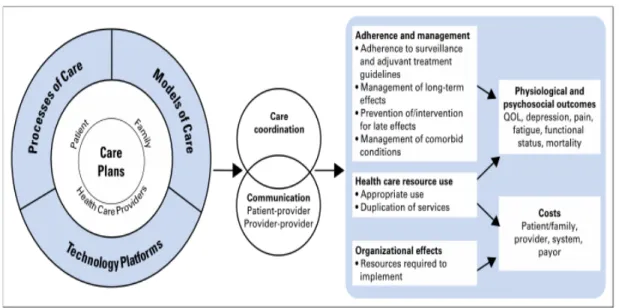
Conceptual Framework for Survivorship Care Planning Research
(Image from Parry, Kent, Mariotto, Alfano, & Rowland, 2011) 43
Figure 1. Conceptual framework for survivorship care planning research.
Recently, a conceptual framework was developed that lays out the research agenda for survivorship care.10 As can be seen in the “Adherence and management” box, the management of comorbid conditions is highlighted as a short-term outcome (along with the adherence to follow-up care protocols and physician or
self-management of late and longer term effects of cancer treatment).
The Importance of Prostate Cancer and Diabetes
Prostate cancer is the most common cancer in men and accounts for
help prevent serious adverse health outcomes. A recent study looking at common comorbidities among older prostate cancer patients found that 46% have one or more comorbidity, higher than the general population without cancer.13
Among these prevalent comorbidities, diabetes is a risk factor in incidence for many cancers.14 Diabetes is a prevalent disease in the United States. An estimated 25.8 million Americans, or 8.3% of the U.S. population, had a diagnosis of diabetes in 2011, and 1.9 million adults were newly diagnosed with diabetes in 2010.15 The prevalence of diabetes continues to rise with increased obesity in the United States. Diabetes is a major cause of heart disease and stroke—adults with diabetes have two to four times higher death rates from heart disease than those without diabetes, as well as two to four times higher risk of stroke.16 Diabetes is the leading cause of new cases of blindness in adults age 20 to 74, as well as the leading cause of end-stage renal disease (40% of cases). An estimated 60–70% of diabetes patients have neuropathy, and more than half of lower limb amputations occur among people with diabetes.17 Diabetes is the seventh leading cause of death, and this is underestimated because diabetes is underreported on death certificates as the cause of death or a comorbidity.18 In addition to its morbidity and mortality burden, diabetes is very expensive to the U.S. healthcare system. Diabetes patients have annual health care costs 2.3 times higher than patients without diabetes; in 2007, estimated diabetes direct medical costs for both controlled and uncontrolled diabetes treatment totaled $116 billion with indirect costs of $58 billion.15
The Effect of Receiving a Prostate Cancer Diagnosis on Diabetes Care
taking glucose-lowering medications. Non-adherence to diabetes medications is associated with higher HbA1c,19,20 as well as all-cause hospitalization and mortality.21 Some studies have shown increased adherence to be associated with lower medical care costs. 22,23,24 The effect of non-adherence on hospitalizations (and mortality) is mediated to some extent by improving the intermediate clinical measures (HbA1c, blood pressure, and LDL-C). However, the magnitude of the observed reductions in negative outcomes was greater than expected when patients were adherent to their medications, suggesting that adherence may be correlated with self-care behaviors that are directly or indirectly related to outcomes.25-31
Diabetes patients often have suboptimal control of critical clinical parameters: 43% achieve recommended HbA1c levels,29% for blood pressure levels, and 52% for LDL-C32,33 levels. Non-adherence to diabetes medication may be responsible for a large part of these low levels across the population,34,35 with one study finding less than 50% of patients are adherent to their new statin prescriptions after 12 months.36 Being diagnosed with and undergoing treatment for prostate cancer may interrupt patients’ efforts to manage their existing chronic conditions. Moreover, cancer survivors may seek less care for their non-cancer comorbidities because of an underlying sense that their cancer is their greatest threat to life.37,38 When this occurs, cancer survivors may have poorer clinical outcomes than patients without cancer.
One important aspect of managing diabetes is medication adherence. Medication adherence for diabetes is low, and cancer survivors are especially at risk for being non-adherent, with the first paper in this area finding that a prostate cancer diagnosis
conditions.39 A better understanding of the risk of diabetes’ duration and cancer risk is needed yet challenging and may be complicated by the (multi)drug therapy required for diabetes treatment.40 Thus, Aim 1 will examine the effect of receiving a prostate cancer diagnosis on adherence to diabetes medication regimen for up to two years post-cancer diagnosis and treatment. This proposed aim will extend previous research by being one of the first studies to examine diabetes medication adherence among prostate cancer survivors and how this dynamic changes over time pre- and post-diagnosis.
Factors Associated with the Receipt of Guideline-Concordant Care for Type 2 Diabetes Among Patients Diagnosed with Prostate Cancer
Cancer survivors have a higher incidence of comorbidities than matched non-cancer control patients,41 with 58% of survivors having at least one comorbid condition compared with 45% of patients without cancer. 6 However, cancer survivors may receive less guideline-concordant care for their non-cancer chronic diseases, which may lead to worse outcomes.42-46 To date, much of the research on survivorship care has been conducted in single sites/health systems and produced mixed results.47-49 Factors that may affect the quality of survivorship care include cancer stage, type of treatment, type of facility in which care is delivered, and patient demographic factors (e.g.,
socioeconomic status, race/ethnicity, and social support). Noting that the care delivered to cancer patients in the United States (including survivorship care) is “in crisis,”7
various stakeholders call to increase our understanding of quality of care for
Specific Aim 2 will examine factors associated with the receipt of guideline-concordant care for type 2 diabetes among patients diagnosed with prostate cancer. This aim will extend previous research by examining the factors which that influence the likelihood of receipt of guideline concordant diabetes care.
Receipt of Outpatient Care from a Primary Care Provider (PCP) Affects Cancer Survivors’ Medication Adherence
Many cancer survivors fail to receive recommended survivorship care.52,53 This can be attributed to factors including current and projected shortages of PCPs and oncologists in the United States. This shortage becomes exacerbated with the aging population54 and increased cancer survivorship.55,56 Additionally, cancer patients may look to oncologists for all of their health needs, even after completing treatment. If so, patients may look to oncologists to manage their care for both their cancer and non-cancer comorbidities. However, delivering primary care to non-cancer patients is often viewed as outside the scope of oncologists, who are unlikely to have the time or skills to manage survivors’ non-cancer care.4557
ASCO acknowledges that currently all oncologists may not feel comfortable nor interested in providing non-cancer general health guidelines,58 though efforts are being made to provide cancer specialists with information and tools to increase their
knowledge of prevention.59 Similarly, PCPs are often unfamiliar or uncomfortable with managing cancer and its treatment. This should not be too surprising because these areas of medicine fall outside of the main focus of these specialties. PCPs rarely
of definitive guidance for what constitutes best practices for cancer survivorship care, and this lack of guidance contributes to the wide variation in the quality of care patients currently receive in the United States.60 A 2004 ASCO survey found that roughly 75% of oncologists said they believe they should continue to be involved with patients during the survivorship phase, including issues surrounding general health maintenance (along with cancer screening and prevention); however, only 60% of these oncologists
reported feelings comfortable providing care relating to a patient’s general health.8,58 In a study examining the role of primary care visits in increasing the survival of breast cancer survivors, the authors found that few non-PCPs function in the normal role of primary care providers (for example, ordering routine mammograms).61
Aim 3 will examine the effect of the level of a prostate cancer survivor’s receipt of outpatient care from a PCP on the likelihood of his adherence to his diabetes
medication regimen. This aim will build on previous work on the effect of the type of physician cancer survivors see most frequently for their care and how this affects the likelihood of patients being adherent to their (diabetes) medications.
Innovation
Previous studies have compared general preventive services received by cancer survivors and patients without cancer across many types of cancers and chronic
conditions, however these studies have not focused on the quality of care for diabetes for a specific cancer. This project will be the first to study factors that influence the quality of diabetes care for prostate cancer survivors with pre-existing diabetes. Additionally, this study is unique in examining the difference in quality of care for diabetes both pre- and post- (as opposed to just post-) cancer diagnosis and the
REFERENCES
1Stovall, E., Greenfield, S., & Hewitt, M. (2005). From cancer patient to cancer survivor:: Lost in transition National Academies Press.
2Edwards, B. K., Ward, E., Kohler, B. A., Eheman, C., Zauber, A. G., Anderson, R. N., . . . Seeff, L. C. (2010). Annual report to the nation on the status of cancer, 1975!2006, featuring colorectal cancer trends and impact of interventions (risk factors, screening, and treatment) to reduce future rates. Cancer, 116(3), 544-573.
3Siegel, R., DeSantis, C., Virgo, K., Stein, K., Mariotto, A., Smith, T., . . . Fedewa, S. (2012). Cancer treatment and survivorship statistics, 2012. CA: A Cancer Journal for Clinicians, 62(4), 220-241.
4de Moor, J. S., Mariotto, A. B., Parry, C., Alfano, C. M., Padgett, L., Kent, E. E., . . . Rowland, J. H. (2013). Cancer survivors in the united states: Prevalence across the survivorship trajectory and implications for care. Cancer Epidemiology, Biomarkers & Prevention : A Publication of the American Association for Cancer Research,
Cosponsored by the American Society of Preventive Oncology, 22(4), 561-570. doi:10.1158/1055-9965.EPI-12-1356 [doi]
5Parry, C., Kent, E. E., Mariotto, A. B., Alfano, C. M., & Rowland, J. H. (2011). Cancer survivors: A booming population. Cancer Epidemiology, Biomarkers & Prevention : A Publication of the American Association for Cancer Research, Cosponsored by the American Society of Preventive Oncology, 20(10), 1996-2005. doi:10.1158/1055-9965.EPI-11-0729 [doi]
6Yabroff, K. R., Lawrence, W. F., Clauser, S., Davis, W. W., & Brown, M. L. (2004). Burden of illness in cancer survivors: Findings from a population-based national sample. Journal of the National Cancer Institute, 96(17), 1322-1330. doi:10.1093/jnci/djh255 [doi]
7Levit, L., Balogh, E., Nass, S., & Ganz, P. A. (2013). Delivering high-quality cancer care:: Charting a new course for a system in crisis National Academies Press.
8McCabe, M. S., Bhatia, S., Oeffinger, K. C., Reaman, G. H., Tyne, C., Wollins, D. S., & Hudson, M. M. (2013). American society of clinical oncology statement: Achieving high-quality cancer survivorship care. Journal of Clinical Oncology : Official Journal of the American Society of Clinical Oncology, 31(5), 631-640. doi:10.1200/JCO.2012.46.6854 [doi]
9Resnick MJ, Lacchetti C, Penson DF, et al. Prostate cancer survivorship care guidelines: American Society of Clinical Oncology practice guideline endorsement. Journal of Oncology Practice. March 31, 2015. JOP.2015.004606
10Parry, C., E. E. Kent, L. P. Forsythe, C. M. Alfano, J. H. Rowland. Can’t see the forest for the care plan: A call to revisit the context of care planning. Journal of Clinical
10Jacobsen PB, Rowland JH, Paskett ED, et al. Identification of key gaps in cancer survivorship research: Findings from the American Society of Clinical Oncology Survey. Journal of Oncology Practice. 2016. 12(3): 190-193.
11American Cancer Society. Cancer Treatment and Survivorship Facts & Figures 2012-2013. Atlanta: American Cancer Society; 2012.
http://www.cancer.org/acs/groups/content/@epidemiologysurveilance/documents/docu ment/acspc-033876.pdf. Accessed April 6, 2014.
12Ries LAG, Eisner MP, Kosary CL, et al: SEER Cancer Statistics Review, 1975-2000. Bethesda, MD, National Cancer Institute, 2003. http://seer.cancer.gov/csr/1975_2000. Accessed October 10, 2013.
13Bradley, C. J., Dahman, B., & Anscher, M. (2014). Prostate cancer treatment and survival: Evidence for men with prevalent comorbid conditions. Medical Care, 52(6), 482-489.
14Harding JL, Shaw JE, Peeters A, et al. Cancer risk among people with type 1 and type 2 diabetes: Disentangling true associations, detection bias, and reverse causation. Diabetes Care. 2015. 38(2): 264-270.
15National Diabetes Statistics 2011. National Diabetes Information Clearinghouse. http://diabetes.niddk.nih.gov/DM/PUBS/statistics/#fast. Accessed October 5, 2011. 16American Diabetes Association, Diabetes Statistics, 2011 Diabetes Fact Sheet. http://www.diabetes.org/diabetes-basics/diabetes-statistics. Accessed October 8, 2011. 17U.S. Department of Health and Human Services, Centers for Disease Control and Prevention. National diabetes fact sheet. 1998.
www.ComprehensiveDiabetesCare.gov/diabetes/pubs/facts98.htm. Accessed October 20, 2011.
18National Diabetes Fact Sheet: General Information and National Estimates on
Diabetes in the United States, 2007 [article online], 2008. Atlanta, Georgia, Centers for Disease Control and Prevention. Available from http://www.cdc.
gov/diabetes/pubs/pdf/ndfs_2007.pdf. Accessed 1 April 2010.
19Cramer, J. A. (2004). A systematic review of adherence with medications for diabetes. Diabetes Care, 27(5), 1218-1224.
20Pladevall, M., Williams, L. K., Potts, L. A., Divine, G., Xi, H., & Lafata, J. E. (2004). Clinical outcomes and adherence to medications measured by claims data in patients with diabetes. Diabetes Care, 27(12), 2800-2805. doi:27/12/2800 [pii]
22Hepke, K. L., Martus, M. T., & Share, D. A. (2004). Costs and utilization associated with pharmaceutical adherence in a diabetic population. The American Journal of Managed Care, 10(2 Pt 2), 144-151. doi:2515 [pii]
23Sokol, M. C., McGuigan, K. A., Verbrugge, R. R., & Epstein, R. S. (2005). Impact of medication adherence on hospitalization risk and healthcare cost. Medical Care, 43(6), 521-530. doi:00005650-200506000-00002 [pii]
24Balkrishnan, R., Rajagopalan, R., Camacho, F. T., Huston, S. A., Murray, F. T., & Anderson, R. T. (2003). Predictors of medication adherence and associated health care costs in an older population with type 2 diabetes mellitus: A longitudinal cohort study. Clinical Therapeutics, 25(11), 2958-2971.
25Canner, P. (1980). Influence of adherence to treatment and response of cholesterol on mortality in the coronary drug project. New England Journal of Medicine, 303(18), 1038-1041.
26Horwitz RI, Viscoli CM, Berkman L, et al. Treatment adherence and risk of death after
a myocardial infarction. Lancet. 1990;336:542-545.
27Irvine J, Baker B, Smith J, et al. Poor adherence to placebo or amiodarone therapy
predicts mortality: results from the CAMIAT study: Canadian Amiodarone Myocardial
Infarction Arrhythmia Trial. Psychosom Med. 1999;61:566-575.
28Granger BB, Swedberg K, Ekman I, et al; CHARM Investigators. Adherence to
candesartan and placebo and outcomes in chronic heart failure in the CHARM
programme: double-blind, randomised, controlled clinical trial. Lancet. 2005; 366:2005-2011.
29Heisler M, Smith DM, Hayward RA, Krein SL, Kerr EA. How well do patients’
assessments of their diabetes self-management correlate with actual glycemic control
and receipt of recommended diabetes services? Diabetes Care. 2003;26: 738-743.
30O’Donovan G, Owen A, Kearney EM, et al. Cardiovascular disease risk factors in
habitual exercisers, lean sedentary men and abdominally obese sedentary men. Int J
Obes (Lond). 2005;29:1063-1069.
31Hu G, Jousilahti P, Barengo NC, Qiao Q, Lakka TA, Tuomilehto J. Physical activity,
cardiovascular risk factors, and mortality among Finnish adults with diabetes. Diabetes
Care. 2005;28:799-805.
32Saaddine JB, Engelgau MM, Beckles GL, Gregg EW, Thompson TJ, Narayan KM. A diabetes report card for the United States: quality of care in the 1990s. Ann Intern Med. 2002;136:565-574.
33Kerr EA, Gerzoff RB, Krein SL, et al. Diabetes care quality in the Veterans Affairs
Health Care System and commercial managed care: the TRIAD study. Ann Intern Med.
34World Health Organization. Adherence to long-term therapies: evidence for action.
2003. http://www.who.int/chronic_conditions/en/adherence_report.pdf. Accessed June 29, 2006.
35Osterberg L, Blaschke T. Adherence to medication. N Engl J Med. 2005;353:487-497.
36Benner JS, Glynn RJ, Mogun H, Neumann PJ, Weinstein MC, Avorn J. Longterm
persistence in use of statin therapy in elderly patients. JAMA. 2002;288:455-461.
37Centers for Disease Control and Prevention: Behavioral risk factor surveillance system survey data. Atlanta, GA, US Department of Health and Human Services, Centers for Disease Control and Prevention, 2005
38Blanchard CM, Courneya KS, Stein K. Cancer survivors’ adherence to lifestyle behavior recommendations and associations with health-related quality of life: results from the American Cancer Society’s SCS-II. J Clin Oncol 2008;26:2198-2204.
39Stuart BC, Davidoff AJ, Erten MZ. Changes in medication management after a diagnosis of cancer among beneficiaries with diabetes. Journal of Oncology Practice 2015; 11(6):429-434.
40Giovannucci E, Harlan DM, Archer MC, et al. Diabetes and Cancer: A Consensus Report. Diabetes Care 2010. 33(7):1674-1685.
41Snyder CF, Frick KD, Herbert RJ, et al. Quality of care for comorbid conditions during the transition to survivorship: differences between cancer survivors and noncancer controls. JCO 2013; 31(9):1140-1148.
42Snyder CF, Frick KD, Herbert RJ, et al: Preventive care in prostate cancer patients: Following diagnosis and for five-year survivors. J Cancer Surviv 5:283-291, 2011 43Duffy CM, Clark MA, Allsworth JE: Health maintenance and screening in breast cancer survi- vors in the United States. Cancer Detect Prev 30: 52-57, 2006
44Snyder CF, Frick KD, Peairs KS, et al: Comparing care for breast cancer survivors to non-cancer controls: A five-year longitudinal study. J Gen Intern Med 24:469-474, 2009 45Earle CC, Burstein HJ, Winer EP, et al: Quality of non-breast cancer health
maintenance among elderly breast cancer survivors. J Clin Oncol 2003;21(8):144711451.
46Snyder CF, Frick KD, Kantsiper ME, et al: Prevention, screening, and surveillance care for breast cancer survivors compared with controls: Changes from 1998 to 2002. J Clin Oncol 27:1054-1061, 2009
48Elliott J, Fallows A, Staetsky L et al. The health and well-being of cancer survivors in the UK: findings from a population-based survey. Brit J Cancer 2011;105(Suppl 1):S11– 20.
49Khan NF, Ward A, Watson E, et al. Long-term survivors of adult cancers and uptake of primary health services: a systematic review. European Journal of Cancer 2008.
44:195-204.
50Brown AF, Gregg E, Stevens M, et al. Race, ethnicity, socioeconomic position, and quality of care for adults with diabetes in managed care. Diabetes Care. 2005;28:2864-2870
51Majumdar SR, Guirguis LM, Toth EL, et al. Controlled trial of a multifaceted
intervention for improving quality of diabetes care for rural patients with type 2 diabetes. Diabetes Care. 2003. 26:3061-3066.
52Snyder CF, Earle CC, Herbert RJ et al. Preventive care for colon cancer survivors: a 5-year longitudinal study. J Clin Oncol. 2008;26:1073–1079.
53Keating NL, Landrum MB, Guadagnoli E, et al.. Factors related to underuse of surveillance mammography among breast cancer survivors. J Clin Oncol. 2006;24:85– 94.
54Salsberg E, Grover A. Physician workforce shortages: implications and issues for academic health centers and policymakers. Acad Med. 2006;81:782–787.
55Warren JL, Mariotto AB, Meekins A, et al. Current and future utilization of services from medical oncologists. J Clin Oncol. 2008;26:3242–3247.
56Erikson C, Salsberg E, Forte G, et al. Future supply and demand for oncologists: challenges to assuring access to oncology services. J Oncol Pract. 2007;3:79–86. 57Blanchard CM, Courneya KS, Stein K. Cancer survivors’ adherence to lifestyle behavior recommendations and associations with health-related quality of life: results from the American Cancer Society’s SCS-II. J Clin Oncol 2008;26:2198-2204.
58Ganz PA, Kwan L, Somerfield MR, et al: The role of prevention in oncology practice: Results from a 2004 survey of American Society of Clinical On- cology members. J Clin Oncol 24:2948-2957, 2006
59ASCO policy statement highlights oncologist’s role in providing cancer prevention services.’ Journal of Oncology Pratice. 2009. 5(1):10-12.
60Hewitt M, Greenfield S, Stovall E (eds): From Cancer Patient to Cancer Survivor: Lost in Transi- tion. Washington, DC, National Academies Press, 2006
CHAPTER 3. THE EFFECT OF PROSTATE CANCER DIAGNOSIS ON ADHERENCE TO MEDICATIONS FOR PATIENTS WITH TYPE 2 DIABETES
Background
An estimated 29.1 million Americans (9.3% of the U.S. population) have a diagnosis of diabetes. Given the obesity epidemic in the United States, the prevalence of diabetes is rising rapidly. An estimated 30% to 50% of Americans will have diabetes by 2050.1,2 Persons with diabetes are at increased risk of developing heart disease, stroke, blindness, end-stage renal disease, neuropathy, lower limb amputations,3,4 and death.1 For patients with diabetes, glycemic control reduces the risk of these serious complications. One important aspect of managing diabetes is medication adherence. Unfortunately, adherence to diabetes medications is often poor,5 which is associated with suboptimal glucose control,6,7 as well as all-cause hospitalization and mortality.8
Given the aging of the U.S. population and the development of more effective cancer screening and treatments, the number of diabetes patients who are cancer survivors is growing.9 Prostate cancer is the most common cancer in men and accounts for approximately 43% of male cancer survivors;10 86% of men with prostate cancer are diagnosed with local or regional disease, and their 5-year relative survival rate is nearly 100%.11 Many cancer survivors, including men with prostate cancer, are more likely to die from co-existing chronic conditions than from their cancer(s) or recurrences.12 In part, this may be because even when prescribed evidence-based guidelines for their non-cancer conditions, cancer survivors may be less likely to adhere to these
diagnosed with cancer affects adherence with diabetes medications.
Being diagnosed with cancer may serve as a health wake-up call for patients,16 prompting them to become more active and engaged in their health and health care, leading to higher adherence. However, it is also possible that medication adherence decreases after a cancer diagnosis because patients and their providers focus on cancer treatment and survival.17 Using early-stage prostate cancer as a case study, we examined how adherence to diabetes medications changed during the two years after being diagnosed with cancer. We hypothesized during the first year after being
diagnosed with cancer, a period of active cancer treatment, adherence to diabetes medications will decrease, however diabetes medication adherence will return to pre– cancer diagnosis levels during the second year after being diagnosed with prostate cancer.
Methods
Data Sources
Denominator File (SUMDENOM) to provide information for patients with evidence of diabetes but with no history of cancer.
Cohorts
For this retrospective study, we restricted cases and controls to patients with type 2 diabetes, defined as having filled a prescription for an oral hypoglycemic agent
(OHA)19 during the 2007–2012 study period (see Appendix Table 1 for complete list of OHAs).
In addition to having type 2 diabetes, cases had to meet the following criteria: (1) have a diagnosis of prostate cancer (ICD-O-3 code 28010) that allows for sufficient pre- and post-follow-up time, from dates January 1, 2007, through December 31, 2010; (2) no evidence of prior diagnosis of any cancer (including prostate) as far back as the SEER registry goes (1973), nor any subsequent cancer diagnosis during the study period; (3) no metastatic (stage IV) cancer/only Gleason Scores <7 (i.e., low-risk patients); (4) continuously enrolled in Medicare Parts A, B, and D for 33 months (9 months prior to and 24 months after being diagnosed with prostate cancer); and (5) have at least one OHA fill during the 6 months prior to diagnosis.17 Additionally, to ensure that patients had a diabetes fill at the start of the study and to accurately calculate patients’ adherence during the entire study period, patients were required to have at least one OHA fill during the 3 months prior to the study period.
30-month observation period (6 30-months before and 24 30-months after the pseudo date). Controls, like cases, were required to be continuously enrolled in Medicare Parts A, B, and D for this 30-month period as well as at least one OHA fill during an additional 3 months of Part D enrollment prior to the 30-month study period (see Figure 2).
Measures
The primary dependent variable, patients’ adherence to their OHA, was
measured each month throughout the 30-month study period as the proportions of days covered (PDC), a widely used approach that uses pharmacy claims data, takes the days of medication supplied (numerator) divided by the total days (denominator) in a specified time interval.20,21 OHAs included sulfonylureas, metformin, meglitinides, thiazolidnediones, dipeptidyl peptidase-4 (DPP-4) inhibitors, sodium-glucose co-transporter 2(SGLT2) inhibitors, alpha-glucosidase inhibitors, bile acid sequestrants, and glucagon-like peptide-1 (GLP-1) receptor agonists (Appendix Table 1).22 PDC was calculated for each patient and each month within each OHA class.19 If patients
switched between OHAs in the same class within a month or prescription period (generally 30 to 60 days), patients were considered continuously adherent without interruption. For patients who took multiple OHAs simultaneously, an overall adherence measure was calculated for each patient during each month/period. For each
observation, patients were classified as adherent for each month if their PDC was > 80% for at least one of their OHAs in that month; this is consistent with previous studies on medication adherence. 5,8,23
through 6 months, 7–12 months, 13–18 months, and 19–24 months). Time periods and group (case or control) were the main independent variables.
Analysis
We compared characteristics of men with and without cancer before and after being matched by propensity scores, using Chi-square and t-tests for categorical and continuous variables, respectively. To create propensity scores, cases and controls were matched on observable, independent characteristics that were available for both groups in the SEER-Medicare data. The first step was to examine the relationship between each characteristic and the likelihood of having a prostate cancer diagnosis. The propensity score model included the following variables at time of diagnosis: race (white, black, or other), urban/rural residence,24 age, SEER region,25 or a combination of the latter two), whether or not a patient was dually eligible for Medicaid or received a low-income subsidy (full, partial, or no low-income subsidy) to help pay for prescriptions, and the Klabunde adaptation of the Charlson Comorbidity Score26,27 using claims from the 6 months prior to diagnosis. The average number of classes of OHAs a patient took during the 6-months before diagnosis was included to account for differences or
potential challenges in adherence to OHAs that may exist for different levels of polypharmacy.
process is continued without replacement28 until no more viable matches are
possible.29-31 To test the adequacy of this matching method, boxplots were produced to test common support and cumulative distributions were compared for each continuous variables to test for balance after the propensity scores were created.
We used interrupted time series analyses in which the diagnosis of prostate cancer was considered the interruption.32 Adherence to OHAs was measured from monthly prescription fills from 6 months before (pre-period) through the 2 years after (post-period) being diagnosed with prostate cancer.33 A supply tracker was created for each patient that tracked all OHAs in the patients’ possession (determined by fill days) for every day of the study period; these individual-level diaries allowed us to define consecutive fills by drug class for each patient-day for days’ supply and dispensing date.23,34
Segmented regression analysis (SRA) was used to test the effect of a prostate cancer diagnosis OHA adherence using the following equation:
Yt = B0+B1period2t +B2period3t +B3period4t + +B4period5t + B6case + B7case*period2t + B8case*period3t + B9case*period4t + B10case*period5t + et
percentage to see if many observations were potentially just below the 80% threshold and how this affected the trends in adherence and results focusing on time.
The SRA was used in a generalized estimating equation (GEE) to estimate the average effect of prostate cancer diagnosis on OHA adherence over time among patients diagnosed with prostate cancer. The cases and controls were structured for comparison in the GEE like a fixed effects/difference-in-difference model during five consecutive six-month periods beginning with the 6 months pre-diagnosis (Figure 1). GEEs were used to address clustering of observations. Relative risk (RR) ratios and 95% confidence intervals (CI) were calculated to estimate the effect of the main independent variable of interest (time period since prostate cancer diagnosis) on the likelihood of adherence to OHAs; we estimated both the effect of all patients (relative effect of being a cancer survivor on adherence over the time periods) as well as stratifying patients with and without prostate cancer.
All data were analyzed using SAS Software versions 9.3 (SAS Institute Inc., Cary, NC). The study was approved by the University of North Carolina at Chapel Hill Institutional Review Board.
Sensitivity Analysis
using the best-fit models. The final GEE model to calculate the RRs had a binomial distribution with a logit-link function and exchangeable correlation structure as it had the lowest QIC of all models. There was no collinearity detected among independent
variables through the Variance Inflation Factor (VIF).
Results
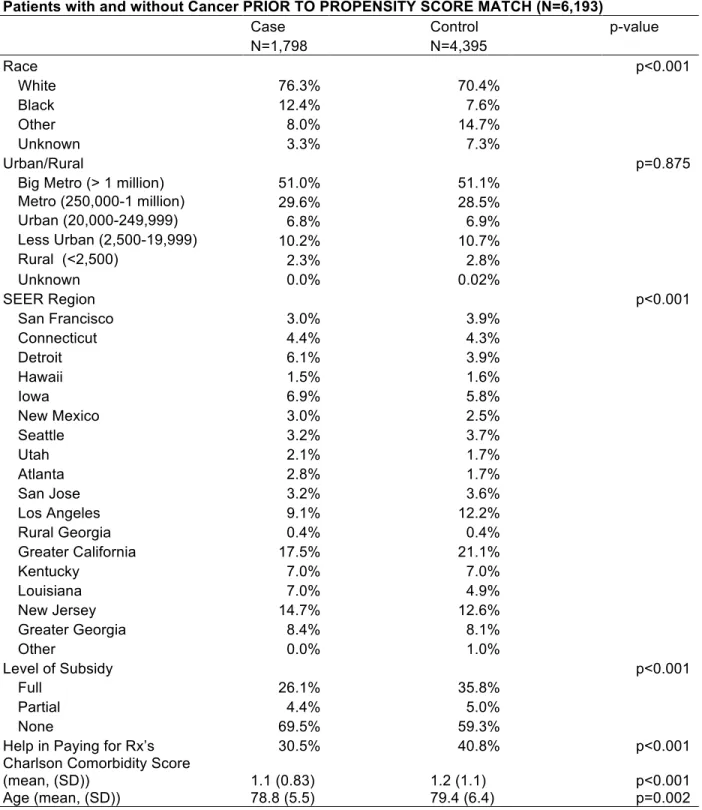
Before matching the cohort consisted of 6,193 patients (1,798 cases and 4,395 potential controls). On average, cases were slightly younger (78.8 vs 79.4 years), less likely to receive low-income subsidies for prescription drugs obtained through Medicare Part D (30.5% vs 40.8%), and had a higher proportion of white patients (76.3% vs 70.4%) (Table 1).
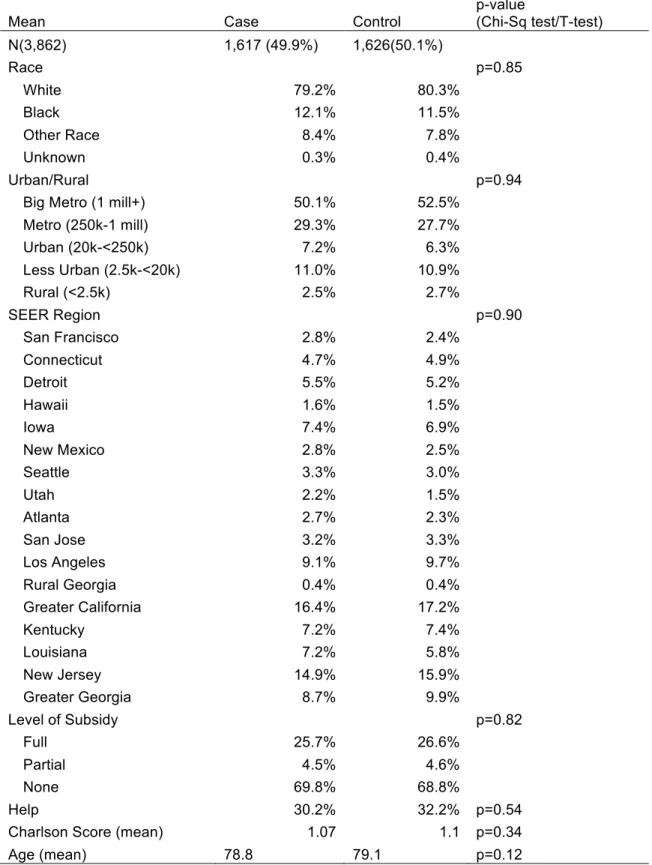
Once propensity scores were calculated, the final sample consisted of 3,243 total matched patients (there were 9 fewer cases (1,617 patients) than controls (1,626
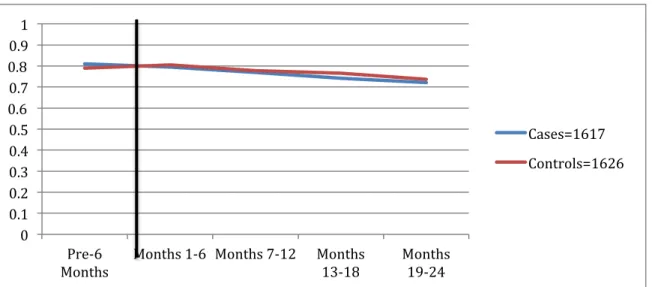
patients) due to those matched case patients not meeting both of the medication inclusions (at least one fill in the 6 months pre-diagnosis period as well as a fill in the 3 months prior to the study period) when PDC was calculated (Table 2). The tests for common support and balance both produced plots and distributions showing that the matches performed well. Average PDC was slightly lower for cases than controls (66.1% versus 67.0%) post-match. Adherence declined in the months immediately following cancer diagnosis among cases and controls. The five-period trend found cases having slightly lower adherence in the six-month period immediately following cancer diagnosis, while adherence was slightly higher among controls during this same period, with both groups gradually declining over the remaining periods (Figure 3).
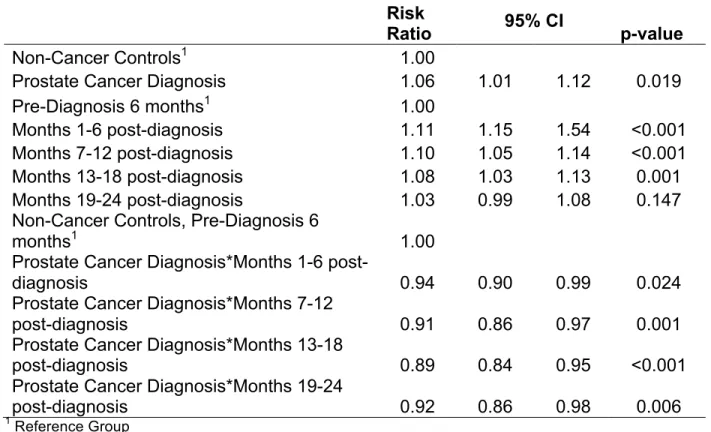
periods. Patients with prostate cancer have overall slightly lower adherence than patients without prostate cancer, though their average adherence in the period prior to cancer diagnosis is higher than that of patients without prostate cancer (66.7% versus 62.7%); this trend reverses after the first 6 months post-cancer diagnosis for the remainder of the study. Table 4 displays the RRs on the effect of time since a prostate cancer diagnosis on patients’ adherence to their OHAs, as well as how this relationship differs between patients with and without prostate cancer. While cases and controls from Period 2 (months 1-6 post cancer diagnosis) were more likely to be adherent to their OHAs compared to the pre-cancer diagnosis period (RR 1.05, 95% CI: 1.01-1.08, not shown) and (RR 1.11, 95% CI: 1.15-1.54), respectively, cases were found to have lower likelihood of adherence compared to controls in Period 2. Cases were less likely to be adherent to their medications through the remainder of the study period when compared to the control group ranging from ~6% in Period 2 to 11% in Period 4. Among controls, we observed an increase in likelihood of adherence compared to the pre-diagnosis period, Period 1, across Periods 2-4 (ranging from ~11% in Period 2 to ~8% in Period 4).
Results to the sensitivity analysis found similar trends in adherence when considering patients adherent when they were adherent to at least 1 drug when compared versus being adherent if patients were adherent to all drugs. Time was
cancer diagnosis). To remain conservative is our estimates, we used the adherence to at least one OHA measure for our final analysis.
Discussion
To date, few studies have explored whether being diagnosed with cancer interrupted medication adherence for their non-cancer chronic conditions.35-37 We examined the effect of being diagnosed with prostate cancer on adherence to OHAs among patients with type 2 diabetes. Non-metastatic, lower-risk prostate cancer is an excellent case study for studying survivorship care because it is prevalent and has high survival rates; diabetes is important not only because of its prevalence but also its morbidity and associated health care costs.
physicians and oncologists should not necessarily assume that their patients with chronic diseases will return to their baseline medication adherence levels after completing cancer treatments, particularly when patients believe controlling their diabetes or other chronic conditions is not as necessary as it truly is.38 Given the morbidity and mortality from non-cancer chronic conditions, providers should actively emphasize the importance of taking all medications.
There are several limitations to our study. First, claims data do not account for prescriptions filled outside the Medicare D benefit (i.e., if patients pay out-of-pocket or have another source of prescription coverage). Second, we did not include insulin in calculating medication adherence because our interest was in patients with type 2 diabetes. Only patients with type 2 diabetes should be prescribed OHAs and an OHA (Metformin) is the guideline-recommended first line of therapy, not insulin.22 Insulin was not included because the PDC cannot be reliably measured with administrative claims data.8 Excluding insulin in PDC calculations is common when using claims data.8,39,40 Notably, only 28.4% of type 2 diabetes patients are either diet-controlled or use only insulin1 and this percentage is smaller in older adults.41 Third, we are limited to patients covered by SEER; however, the SEER registry is demographically representative of U.S. patients.25 Fourth, we measured adherence as to whether patients filled a
prescription for at least one OHA, which may overestimate adherence for the ~29% of patients who took more than one OHA at a time. Fifth, although PDC assumes that patients are taking all prescriptions as they are prescribed, it is possible that some patients filled prescriptions but did not take all of the doses of that prescription.
adherence compared with other methods such as the Medication Event Monitoring Systems (MEMS), which record every time a medication bottle is opened.6 Finally, we could not determine from claims data due to a lack of clinical values and/or physician notes and did not control for certain hormonal treatments (such as Gonadotropin-releasing hormone (GnRH agonists)) that may elevate glucose levels and require a change or reduction in OHAs that may result in our adherence estimates to be underestimated.42
Table 1. Descriptive Statistics for Patients and Post–Cancer Diagnosis, Pre-Propensity Score Match
Patients with and without Cancer PRIOR TO PROPENSITY SCORE MATCH (N=6,193)
Case Control p-value
N=1,798 N=4,395
Race p<0.001
White 76.3% 70.4%
Black 12.4% 7.6%
Other 8.0% 14.7%
Unknown 3.3% 7.3%
Urban/Rural
p=0.875 Big Metro (> 1 million) 51.0% 51.1%
Metro (250,000-1 million) 29.6% 28.5%
Urban (20,000-249,999) 6.8% 6.9%
Less Urban (2,500-19,999) 10.2% 10.7%
Rural (<2,500) 2.3% 2.8%
Unknown 0.0% 0.02%
SEER Region
p<0.001
San Francisco 3.0% 3.9%
Connecticut 4.4% 4.3%
Detroit 6.1% 3.9%
Hawaii 1.5% 1.6%
Iowa 6.9% 5.8%
New Mexico 3.0% 2.5%
Seattle 3.2% 3.7%
Utah 2.1% 1.7%
Atlanta 2.8% 1.7%
San Jose 3.2% 3.6%
Los Angeles 9.1% 12.2%
Rural Georgia 0.4% 0.4%
Greater California 17.5% 21.1%
Kentucky 7.0% 7.0%
Louisiana 7.0% 4.9%
New Jersey 14.7% 12.6%
Greater Georgia 8.4% 8.1%
Other 0.0% 1.0%
Level of Subsidy
p<0.001
Full 26.1% 35.8%
Partial 4.4% 5.0%
None 69.5% 59.3%
Help in Paying for Rx’s 30.5% 40.8% p<0.001
Charlson Comorbidity Score
(mean, (SD)) 1.1 (0.83) 1.2 (1.1) p<0.001
Table 2. Propensity Matched Patients With and Without Cancer
Mean Case Control
p-value
(Chi-Sq test/T-test) N(3,862) 1,617 (49.9%) 1,626(50.1%)
Race p=0.85
White 79.2% 80.3%
Black 12.1% 11.5%
Other Race 8.4% 7.8%
Unknown 0.3% 0.4%
Urban/Rural p=0.94
Big Metro (1 mill+) 50.1% 52.5%
Metro (250k-1 mill) 29.3% 27.7%
Urban (20k-<250k) 7.2% 6.3%
Less Urban (2.5k-<20k) 11.0% 10.9%
Rural (<2.5k) 2.5% 2.7%
SEER Region p=0.90
San Francisco 2.8% 2.4%
Connecticut 4.7% 4.9%
Detroit 5.5% 5.2%
Hawaii 1.6% 1.5%
Iowa 7.4% 6.9%
New Mexico 2.8% 2.5%
Seattle 3.3% 3.0%
Utah 2.2% 1.5%
Atlanta 2.7% 2.3%
San Jose 3.2% 3.3%
Los Angeles 9.1% 9.7%
Rural Georgia 0.4% 0.4%
Greater California 16.4% 17.2%
Kentucky 7.2% 7.4%
Louisiana 7.2% 5.8%
New Jersey 14.9% 15.9%
Greater Georgia 8.7% 9.9%
Level of Subsidy p=0.82
Full 25.7% 26.6%
Partial 4.5% 4.6%
None 69.8% 68.8%
Help 30.2% 32.2% p=0.54
Charlson Score (mean) 1.07 1.1 p=0.34
Age (mean) 78.8 79.1 p=0.12
Table 3. Average Adherence (PDC > 80%) to OHAs among Patients with and without Prostate Cancer
Prostate Cancer (%)
No Prostate
Cancer (%) p-value
Across 30 Month Study Period 66.1 67.0 p=0.405
Pre Diagnosis 6 months 66.7 62.7 p=0.019
Months 1-6 post-diagnosis 69.7 69.6 p=0.931
Months 7-12 post-diagnosis 66.7 68.7 p=0.217
Months 13-18 post-diagnosis 64.1 67.7 p=0.035
Months 19-24 post-diagnosis 63.2 64.8 p=0.337
Table 4 Effect of Time on Adherence to Diabetes Medications for Patients With and Without a Prostate Cancer Diagnosis
Risk Ratio 95% CI p-value
Non-Cancer Controls1 1.00
Prostate Cancer Diagnosis 1.06 1.01 1.12 0.019
Pre-Diagnosis 6 months1 1.00
Months 1-6 post-diagnosis 1.11 1.15 1.54 <0.001
Months 7-12 post-diagnosis 1.10 1.05 1.14 <0.001
Months 13-18 post-diagnosis 1.08 1.03 1.13 0.001
Months 19-24 post-diagnosis 1.03 0.99 1.08 0.147
Non-Cancer Controls, Pre-Diagnosis 6
months1 1.00
Prostate Cancer Diagnosis*Months 1-6
post-diagnosis 0.94 0.90 0.99 0.024
Prostate Cancer Diagnosis*Months 7-12
post-diagnosis 0.91 0.86 0.97 0.001
Prostate Cancer Diagnosis*Months 13-18
post-diagnosis 0.89 0.84 0.95 <0.001
Prostate Cancer Diagnosis*Months 19-24
post-diagnosis 0.92 0.86 0.98 0.006
Figure 2. Cohort timeline (for patients with and without prostate cancer). Figure 1: Cohort Timeline (for Patients with and Without Prostate Cancer)
!
30$Month!Study!Period! of!Interest!(6!Months! Pre!and!2!Years!Post! Diagnosis)!(Continuous! Enrollment!in!Parts!A,! B,!D,!at!least!1!OHA!fill! required!to!be!in! Cohort)! Cancer!Diagnosis!for! Cases/’Pseudo! Diagnosis!Date’!for! Controls! 6!months!pre$Diagnosis!
(at!least!1!OHA!fill! required!to!be! measured)!
24!months!post$ Diagnosis! ‘Pre$pre’!3$month!
Figure 3. Five-period adherence trend for all patients with diabetes and a diagnosis of prostate cancer (cases) (in Month 7) along with patients with diabetes but no prostate cancer (controls).
0! 0.1! 0.2! 0.3! 0.4! 0.5! 0.6! 0.7! 0.8! 0.9! 1!
Pre06!
Months! Months!106! Months!7012! Months!13018! Months!19024!
REFERENCES
1National Diabetes Statistics Report, 2014. The Centers for Disease Control and Prevention. http://www.cdc.gov/diabetes/pubs/statsreport14/national-diabetes-report-web.pdf. Accessed 2.3.2016.
2U.S. Department of Health and Human Services, Centers for Disease Control and Prevention. ‘Number of Americans with diabetes projected to double or triple by 2050. http://www.cdc.gov/media/pressrel/2010/r101022.html. Accessed March 14, 2016. 3National Diabetes Statistics 2011. National Diabetes Information Clearinghouse. http://diabetes.niddk.nih.gov/DM/PUBS/statistics/#fast. Accessed October 5, 2011. 4U.S. Department of Health and Human Services, Centers for Disease Control and Prevention. National diabetes fact sheet. 1998.
www.ComprehensiveDiabetesCare.gov/diabetes/pubs/facts98.htm. Accessed October 20, 2011.
5Osterberg L, Blaschke T. Adherence to medication. N Engl J Med. 2005;353: 487-497.
6Cramer, J. A. (2004). A systematic review of adherence with medications for diabetes. Diabetes Care, 27(5), 1218-1224.
7Pladevall, M., Williams, L. K., Potts, L. A., Divine, G., Xi, H., & Lafata, J. E. (2004). Clinical outcomes and adherence to medications measured by claims data in patients with diabetes. Diabetes Care, 27(12), 2800-2805. doi:27/12/2800 [pii]
8Ho, P. M., Rumsfeld, J. S., Masoudi, F. A., McClure, D. L., Plomondon, M. E., Steiner, J. F., & Magid, D. J. (2006). Effect of medication nonadherence on hospitalization and mortality among patients with diabetes mellitus. Archives of Internal Medicine, 166(17), 1836-1841.
9Bradley, C. J., Dahman, B., & Anscher, M. (2014). Prostate cancer treatment and survival: Evidence for men with prevalent comorbid conditions. Medical Care, 52(6), 482-489.
10American Cancer Society. Cancer Treatment and Survivorship Facts & Figures 2012-2013. Atlanta: American Cancer Society; 2012.
http://www.cancer.org/acs/groups/content/@epidemiologysurveilance/documents/docu ment/acspc-033876.pdf. Accessed April 6, 2014.
11Ries LAG, Eisner MP, Kosary CL, et al: SEER Cancer Statistics Review, 1975-2000. Bethesda, MD, National Cancer Institute, 2003. http://seer.cancer.gov/csr/1975_2000. Accessed October 10, 2013.