Author Accepted Manuscript Journal: Acta Psychologica Date accepted: 17 May 2016
Observed bodies generate object-based spatial codes
Alison Taylor a, Maria Flynn a, Caroline J. Edmonds b and Mark R. Gardner a a Department of Psychology, University of Westminster, 115 New Cavendish Street,
London, W1W 6UW, United Kingdom
b School of Psychology, University of East London, Stratford Campus, Water Lane, London, E15 4LZ, United Kingdom
Corresponding author: Mark R. Gardner
Department of Psychology University of Westminster 115 New Cavendish Street, London
W1W 6UW
Tel: +44 (0)20 3506 9020 Fax: +44 (0)20 7911 5106
Abstract
Contemporary studies of spatial and social cognition frequently use human figures as stimuli. The interpretation of such studies may be complicated by spatial
compatibility effects that emerge when researchers employ spatial responses, and participants spontaneously code spatial relationships about an observed body. Yet, the nature of these spatial codes – whether they are location- or object-based, and coded from the perspective of the observer or the figure – has not been determined. Here, we investigated this issue by exploring spatial compatibility effects arising for objects held by a visually presented whole-bodied schematic human figure. In three experiments, participants responded to the colour of the object held in the figure’s left or right hand, using left or right key presses. Left-right compatibility effects were found relative to the participant’s egocentric perspective, rather than the figure’s. These effects occurred even when the figure was rotated by 90 degrees to the left or to the right, and the coloured objects were aligned with the participant’s midline. These findings are consistent with spontaneous spatial coding from the participant’s
perspective and relative to the normal upright orientation of the body. This evidence for object-based spatial coding implies that the domain general cognitive mechanisms that result in spatial compatibility effects may contribute to certain spatial
perspective-taking and social cognition phenomena.
1. Introduction
Effective social interaction often relies upon spatial coordination between oneself and a third party. There is current interest in whether such coordination is mediated by domain general processes or specialised information processing
mechanisms, for abilities including imitation (Catmur & Heyes, 2011; Cooper et al., 2012), mentalising (Heyes, 2014; Santiesteban et al., 2014), and spatial perspective-taking (Gardner & Potts, 2011; May & Wendt, 2012, 2013). An important aspect of these domain general accounts is stimulus-response (S-R) compatibility between spatial codes generated for an observed body and for one’s own body. Spontaneous object-based spatial coding that could drive such spatial compatibility phenomena has been demonstrated for faces and inanimate objects, using a modified Simon paradigm (Pick et al, 2014; Proctor & Pick, 1999). However, similar evidence for object-based spatial coding has yet to be demonstrated for observed human figures. Given the ubiquity of avatars, and other visual representations of human figures as stimuli in social and spatial cognition research (e.g., Cole et al., 2015; Kessler & Thomson, 2010; Lawson et al., 2009; Mazzarella et al., 2012; Pan & Hamilton, 2015; Samson et al., 2010; Zacks et al., 2000), the aim of the current study was to employ a modified Simon paradigm in order to examine the nature of the spatial codes spontaneously generated when observing visual whole body depictions of the human figure.
a stimulus is formally irrelevant to the task (Simon et al., 1970; Proctor & Vu, 2006).
Simon effects have been accounted for by the dual-route model (Komblumet al., 1990) which proposes that the irrelevant spatial location elicits an automatic spatial code which primes the congruent response. The second route involves an intentional spatial code dependent upon the task relevant feature of the stimulus and its
appropriate response. When these two spatial codes are non-corresponding it causes response competition resulting in slower reaction times, and a Simon effect is observed (Hommelet al., 2004).
Domain general processes, such as spatial S-R compatibility, have been put forward as an alternative account for findings previously ascribed to “implicit mentalising” - the unconscious and automatic representation of others’ mental states (Frith & Frith, 2012; Heyes, 2014). Heyes (2014) uses the example of experiments where participants appear spontaneously to adopt the mental states of a triangle stimulus, provided it is moving in ‘goal-directed’ patterns designed to resemble the actions of intentional ‘agents’ (Zwickel et al., 2009). Participants are asked to make left/right spatial responses about the location of a dot in relation to this stimulus, but from their own egocentric perspective. Reaction times are faster when the perspective of the participant corresponds with that of the triangular agent (upright triangles) than when they do not correspond (inverted triangles). This congruency effect was
interpreted as evidence that participants automatically and unconsciously represent mental states from the visuospatial perspective of the triangle stimulus via specialised cognitive mechanisms (Zwickel et al., 2009). However, Heyes (2014) points out that object-based spatial compatibility (Hommel & Lippa, 1995; Proctor & Pick, 1999; Pick et al., 2014) can also account for these findings. Specifically, for the inverted
the triangle (task irrelevant), and the spatial location of the dot in relation to the participant (task relevant) could generate a Simon effect (Heyes, 2014; Pick et al, 2014).
Domain general processes including spatial compatibility effects have also been advanced to account for spatial perspective-taking phenomena, such as the results from experiments employing the ‘own-body transformation’ (OBT) task (Blankeet al., 2005). The OBT task requires participants to make a left or right spatial decision regarding an object placed in the left or right hand of a front- or back- facing human figure, and made from the spatial perspective of the figure. Results have consistently shown longer reaction times for front-facing figures, when the perspective of participant and the figure differed, than for back-facing figures when perspectives matched. This finding has been interpreted as evidence that people adopt a third party perspective by a specialised process that involves mentally transforming one’s own body through space (Blanke et al., 2005; Mohr et al., 2010;Zacks et al.,
2000). By contrast, the domain general account proposes that this difference arises because stimulus-response mappings are spatially compatible for back-facing figures, and spatially incompatible for front-facing figures (Gardner & Potts, 2011; Gardner et al., 2013; Gronholm et al, 2012; May & Wendt, 2012, 2013).
Gardner & Potts (2011) report a series of experiments that provide support to the domain general spatial compatibility account of OBT task performance.
Manipulations known to influence spatial compatibility effects were found to
effect was reversed for a crossed hands manipulation that alters the direction of spatial compatibility effects (e.g., Brebner et al., 1992). Moreover, performance for the OBT task was indistinguishable from that of a ‘non-corporeal’ control task that involved the equivalent stimulus-response mappings in the absence of a representation of the human figure. Taken together, these findings imply that spatial compatibility contributes to OBT task performance. However, this domain general account assumes that the left/right spatial codes elicited for observed figures are
spontaneously coded, and specific to the viewer’s perspective (which side?) rather that of the figure (which hand?), despite the task relevance of the figure’s hand. These assumptions have yet to be tested.
The Simon paradigm offers a useful technique with which to examine these assumptions. By manipulating spatial location as a task irrelevant factor, the presence of a Simon effect can reveal the automaticity and nature of spatial coding (Lu & Proctor, 1995; Hommel, 2011). The standard Simon task asks participants to make left-right responses to a spatially irrelevant feature of a stimulus, e.g. colour, whilst stimuli are placed in varied spatial locations (Simon & Rudell, 1967). A Simon effect - a compatibility effect between the task irrelevant spatial location of the stimulus and the spatial location of the response key - indicates that actions are affected by parts of stimuli not relevant to current action goals (Hommel & Prinz, 1997).
Spontaneous coding of spatial relationships about observed whole body stimuli has yet to have been investigated using a Simon paradigm. However, a Simon paradigm has revealed evidence that observed hands and feet automatically generate ‘sidedness’ codes, representing the side that this body part is normally seen to occupy from an observer’s visuospatial perspective (Ottoboni et al., 2005). Such sidedness
correctly attached to the forearm/ankle (Tessari et al., 2012). This occurs when the hand/forearm configuration is presented in isolation (Ottoboni et al., 2005), or presented in a spatially compatible position relative to an undersized body (Ottoboni et al., 2005, or non-bodily figures (Tessari et al., 2010). Sidedness effects do not
occur when the spatial code elicited by the hand/forearm configuration is incompatible with the spatial position that the hand occupies relative to a body (Tessari et al., 2010), which may be taken to imply that people are sensitive to the biomechanical constraints of these stimuli. These findings have been interpreted as evidence of a domain specific process whereby the visual appearance of the hand-forearm configuration provides direct access to the body structural description, a representation of topological relationships about one’s own or another’s body.
By contrast, evidence for the automatic generation of object-based spatial codes has been revealed previously using the Simon paradigm for objects other than bodies, including both faces and inanimate objects (Hommel & Lippa, 1995; Pick et
whole body human stimuli independent of the contribution of the visual appearance of the hand/forearm investigated by Ottoboni and colleagues.
Evidence for object-based spatial coding for visually presented whole body stimuli would have a bearing on evidence for imagined perspective transformations in the OBT task. May and Wendt (2012) found that response times for laterality
judgments were elevated for the front-facing relative to the back-facing figures, even when the schematic figures were presented at an angle tilted by 90° from normal upright orientation. This condition was designed to be neutral with respect to spatial compatibility in that the hands of the schematic figure varied in a dimension
(up/down) orthogonal to that of the response keys. Consequently, results from the 90° condition were interpreted as evidence for imagined perspective transformations, independent of the influence of spatial compatibility. However, spatial compatibility could still have contributed to these results if left-right codes are generated for human figures with respect to the normal upright orientation of a figure, and from the point of view of the participant, in keeping with an object-based spatial coding account.
The current series of experiments employed a modified Simon procedure in order to examine the nature of the spatial codes generated for observed schematic human bodies. Schematic stimuli were used on the basis that the critical factor was that left and right should be discernable, rather the degree to which the figure
examined in two further experiments. Allocentric coding was ruled out by aligning the figure such that the ball was presented centrally (Experiment 2), and object-based coding was assessed by presenting the figures rotated by 90° so that the midline of the figure was orthogonal to that of the participant (Experiment 3). If object-based spatial codes are spontaneously generated for schematic human figures, Simon effects would be predicted in each of these experiments.
2. Experiment 1
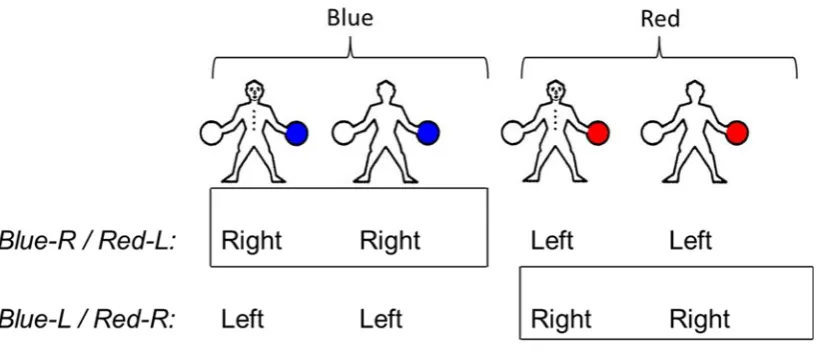
Experiment 1 was designed to examine the spatial codes spontaneously generated about visually presented schematic bodies, by presenting centrally presented figures in an adapted Simon paradigm. The stimuli were based on those employed in the OBT used by Gardner & Potts (2010, see Figure 1). If, as these authors assume, such stimuli elicit left-right codes from the point of view of the observer, rather than that of the figure, then a Simon effect would be expected for front- as well as back-view stimuli. If, on the other hand, participants spontaneously code the handedness of the figure, then a Simon effect would be expected only for back-view stimuli (when putative side and handedness codes coincide); a reversed Simon effect would be expected for front-view stimuli.
2.1. Method
Fig. 1. Illustration of the relations between stimuli (blue vs. red; front vs. back), and
correct responses (Left vs. Right) as a function of mapping in Experiments 1-3. This illustration depicts stimuli where the coloured ball appeared on right side of the body (denoted ‘sidedness’); left sidedness stimuli are not illustrated. Boxes indicate those conditions in which the sidedness is compatible with the correct response.
2.1.2.Materials. Eight stimuli were employed, adapted from those used by
Gardner & Potts (2010). Each stimulus depicted a schematic figure with balls positioned over the location of the hands that subtended a visual angle of
E-Prime software running on a personal computer was used for stimulus presentation and data collection (Schneideret al., 2002).
2.1.3. Procedure. Participants were sat 60 cm from the computer screen, with
the middle of their body aligned with the centre of the screen. They positioned their hands on the computer keyboard such that their left index finger rested on the
response key to the left of their midline (A), and their right index finger rested on the response key to the right of their midline (L).
On each trial, a black fixation cross was presented for 1400ms. This was followed immediately by the stimulus, displayed until a response had been made up to a maximum of 2100 ms, and then by visual feedback on whether the response was correct or incorrect, presented for 1500 ms. All stimuli were presented centrally, against a white background.
Mappings were counterbalanced across participants: Half were assigned to respond to the blue ball with the right key and the red ball with the left key (the blue—right / red—left mapping), and half were assigned to the reverse mapping (blue—left / red—right). Each participant received a total of 176 experimental trials organised into two experimental blocks (88 trials each) within which each of the 8 stimuli were presented 11 times in a random order. Experimental blocks were
preceded by one brief block of 16 practice trials (two presentations of each stimulus). Thus, both the variables compatibility and orientation were manipulated within participant as illustrated in Fig. 1.
Participants were told which response to make to each colour, and encouraged to respond as quickly as possible without sacrificing accuracy.
2.2. Results and Discussion
excluded from the analysis. For the remaining 24 participants, trials were excluded where the response times (RTs) were < 100 ms or > 1000 ms (2.6%). Means were computed for both correct RTs and percentage of error (PE) for each participant as a function of orientation of the figure and compatibility of response in relation to the side of the body that the ball appeared.
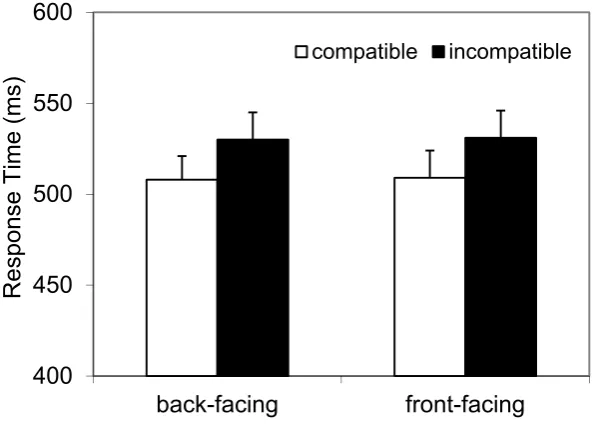
Fig. 2. Mean response times in ms in Experiment 1 as a function of orientation of the
figure (front- and back-facing) and trial compatibility. Error bars represent Standard Error of the Mean.
Response time data are illustrated in Fig. 2. These data suggest that,
irrespective of body orientation, mean RTs were shorter when the side of body was compatible with the response location than when this relationship was incompatible. These impressions were assessed using a 2-way repeated measures Analysis of Variance (ANOVA) where Compatibility (compatible vs. incompatible) and Orientation (front- vs. back- facing) were the factors. This revealed a statistically significant main effect of Compatibility, F(1,23) = 14.24, p = .001, ηp2 = .382, which did not interact with Orientation, F(1,23) = 0.002, p = .964, ηp2 = .000. The main effect of Orientation was not statistically significant, F(1,23) = 0.037, p = .849, ηp2 =
400 450 500 550 600
back-facing front-facing
Response
Time
(ms)
[image:12.595.106.404.296.508.2].002. Simple effects confirmed that a compatibility effect was present for both the back-, t (23) = 3.92, p = .001, and the front-view stimuli, t (23) = 3.92, p = .001.
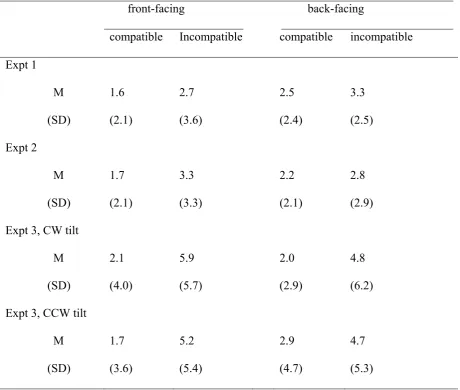
*************** Table 1 about here ***************
Percentage of error (PE) data are summarised within Table 1. Although ANOVA indicated the main effect of Compatibility was not statistically significant for PE, F(1,23) = 2.59, p = .121, ηp2 = .101, the means are in line with errors also being less prevalent within compatible trials than incompatible trials, thus indicating the absence of a speed-accuracy trade-off. Similarly, neither the main effect of Orientation, F(1,23) = 3.62, p = .070, ηp2 = .136, nor interaction between these
factors, F(1,23) = 0.097, p = .759, ηp2 = .004, were significant.
The compatibility effects observed for response times demonstrate that Simon effects occurred irrespective of whether the figure was orientated in the same or opposite direction to that of the participant. This provides evidence for the
spontaneous generation of left-right codes about a whole bodied schematic figure, even though this stimulus dimension was not relevant to current action goals. This evidence provides support for the view that spatial compatibility contributes to OBT task performance (Gardner & Potts, 2011), by substantiating the assumption that left-right codes are accessible for centrally presented schematic human figures.
codes could potentially be generated with respect to location, egocentrically or allocentrically defined, or with respect to the figure in the form of object-based coding; the present study does not discriminate between these possibilities given that the figures were centrally presented.
3. Experiment 2
Experiment 2 was designed to discriminate between interpretations based upon either location- or object- based spatial coding, adopting a method used
previously by Ottoboni et al. (2005, Experiment 4). The stimuli were offset laterally, such that the ball, rather than the figure, appeared in the middle of the screen. If left-right codes are generated with respect to the position of the figure, then a Simon effect should still occur despite this new lateral position. If, however, left-right codes are generated with respect to location (allocentrically or egocentrically defined), then central presentation of the stimuli should abolish the Simon effect.
3.1. Method
3.1.1. Participants. A fresh sample of student volunteers (N = 24, 12 female),
drawn from the same population, participated with informed consent (University of Westminster). Participant ages ranged from 20 to 31 years (mean±SD = 23.6 ± 3.42 years). All reported having normal, or corrected to normal, vision, and 20 reported being right handed.
Fig. 3. Illustration of the relationship between the midline of the screen (dashed line)
centred on the midline as a result of a 90° rotation in either the clockwise (c), or counterclockwise direction (d).
3.1.2. Materials and Procedure. The 8 stimuli used in Experiment 1 were adapted so that the task relevant coloured ball was located in the centre of the screen by repositioning the schematic figure either to the left or right. To ensure there was similar visual complexity on both sides of the screen, each stimulus was balanced by an abstract shape (comprised of reconfigured elements of the figure outline; see Fig.3), in accordance with Ottoboni et al. (2005).
In all other respects, the materials and procedure were the same as those employed in Experiment 1.
3.2. Results and Discussion
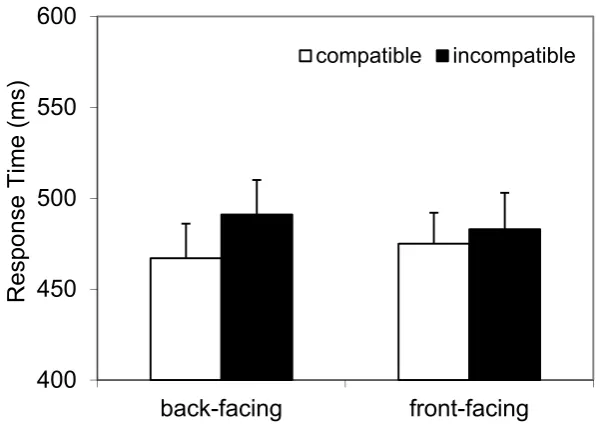
Fig. 4. Mean response times in ms in Experiment 2 as a function of orientation of the
figure (front- and back-facing) and trial compatibility. Error bars represent Standard Error of the Mean.
Response times are presented in Fig. 4. These data appear to indicate a Simon effect, particularly for back-view stimuli. A 2-way repeated measures ANOVA revealed a main effect of Compatibility, F(1,23) = 6.513, p = .018, ηp2 = .221, and an interaction between Compatibility and Orientation, F(1,23) = 5.643, p = .026, ηp2 = .197. The main effect of Orientation, F(1,23) = 0.013, p = .909, ηp2 = .001 was not
statistically significant. Simple effect analyses indicated that the compatibility effect was present for back-facing, t (23) = 3.17, p = .004, but not front-facing stimuli, t (23) = 1.16, p = .260.
Percentage of error data summarised within Table 1 revealed no evidence of a speed-accuracy trade off. ANOVA revealed neither main effects of Compatibility, F(1,23) = 2.95, p = .099, ηp2 = .1114, nor Orientation, F(1,23) = 0.00, p = .996, ηp2 = .000, nor an interaction between these factors, F(1,23) = 1.07, p = .312, ηp2 = .044.
The response time data replicates the Simon effect observed in Experiment 1 for the figures that were back-facing, but not for the front-facing. The effect for the
400 450 500 550 600
back-facing front-facing
Response
Time
(ms)
[image:16.595.104.405.156.372.2]back-facing figures suggests that this phenomenon in Experiment 1 was not driven solely by the location of the ball, egocentrically or allocentrically defined. Instead, at least for back-facing stimuli, left-right spatial codes seem to be generated with respect to the larger object, a figure, in contact with the ball.
The absence of a statistically significant effect for the front-facing orientation was unexpected. First, it should be noted that the difference between means was in the direction of a Simon effect. The absence of a reverse Simon effect does not contradict our view that spatial codes are generated from a participant’s visuospatial perspective. We speculate that the compatibility effect may have been absent for front facing stimuli if spatial codes were generated not only from the participant’s visuospatial perspective (sidedness), but also to a lesser extent from the figure’s (handedness). This account would be consistent with prior research indicating that automatically generated spatial codes for visual stimuli may be held simultaneously for multiple reference frames (Lamberts et al., 1992; Yamaguchi & Proctor, 2012). This would result in reduction/elimination of the Simon effect for front-facing figures because these codes would be in opposition. Alternatively, the abstract shape that accompanied the figure might have inadvertently diluted the spatial compatibility effects, in line with other studies that have introduced irrelevant noise or ‘diluter’ stimuli (Miles et al., 2009; Proctor & Lu, 1994).
These speculations aside, one inference that can more safely be drawn from the finding that the compatibility effect was restricted to back-facing stimuli, is that the orientation of these figures appears to have been spontaneously coded; these schematic figures appear to have been represented as objects with a front and back orientation rather than as a more generic anchor point in space.
Experiment 3 was designed to examine whether object-based spatial coding occurs with respect to the midline of the figure. Following Hommel and Lippa (1995; see also Pick et al., 2014; Proctor & Pick, 1999), the approach adopted was to present the figures tilted by 90 degrees so that left/right with respect to the figure’s midline was in an orthogonal spatial dimension (up/down) to that of the participant. If left-right codes are represented from the participant’s visuospatial perspective, but with respect to the midline of the figure, then a Simon effect would be expected
irrespective of the direction of tilt. If, however, left-right codes are not sensitive to the normal upright orientation of the object, no Simon effect would be expected. 4.1. Method
4.1.1. Participants. In total, 49 undergraduate students from the University of
Westminster, who had not taken part in Experiments 1 or 2, participated for course credit. One participant who had a high error rate was excluded, leaving a sample size of 48 (41 female), aged 18 to 43 (mean±SD: 19.9±4.3 years). All reported having normal, or corrected to normal, vision, and 41 identified as being right handed. Ethical approval was obtained from the University of Westminster, and all participants provided informed consent.
4.1.2. Materials and Procedure. The 16 stimuli used were produced by rotating each of the 8 stimuli from Experiment 1 by 90° clockwise (CW) or counterclockwise (CCW). This resulted in the coloured ball being located on the vertical midline of the screen, either above or below the location previously occupied by fixation point (see Fig. 3).
Lippa (1995), every trial within a block depicted the figure tilted in the same direction (CW or CCW); each of the 8 stimuli of that tilt was presented twice in a random order. Stimulus tilt alternated between block, and the direction of tilt for the first block in this sequence was counterbalanced across participants, as was mapping. The first block was designated practice, and was not included within the analysis.
In all other respects, the materials and procedure were the same as those employed in Experiments 1 and 2.
4.2. Results and Discussion
[image:19.595.99.398.524.729.2]One participant who made errors on more than 10% of trials (12.5%) was omitted, leaving N=48. Trials trimmed where RTs were < 100 ms or > 1000 ms comprised 2.4% of the total. For each participant, mean correct RTs and PEs were computed as a function of the Tilt of the figure (CW vs. CCW), as well as Orientation and Compatibility.
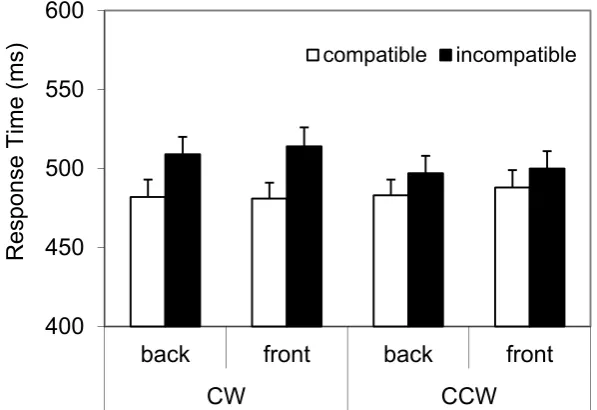
Figure 5. Mean response times in ms in Experiment 3 as a function of tilt (clockwise,
CW and counterclockwise, CCW), orientation of the figure (front- and back-facing) and trial compatibility. Error bars represent Standard Error of the Mean.
400
450 500 550 600
back front back front
CW CCW
Response
Time
Response times, presented in Fig. 5, appear to indicate the presence of a Simon effect irrespective of Orientation that was stronger at CW tilt than CCW. These impressions were assessed by a 3-way repeated measures ANOVA, which revealed a main effect of Compatibility, F(1,47) = 75.595, p < .001, ηp2 = .617, and no
main effects of Orientation, F(1,47) = 1.092, p = .301, ηp2 = .023, nor Tilt, F(1,47) = 1.357, p = .250, ηp2 = .028. Compatibility was indeed found to interact with Tilt, F(1,47) = 8.544, p = .005, ηp2 = .154, but not Orientation F < 1. No other interactions were statistically significant. Simple effect analyses confirmed the presence of Simon effect for all combinations of Tilt and Orientation: CW / back (mean ± SD) = 26 ± 40 ms, t (47) = 4.59, p < .001; CW / front = 32 ± 34 ms, t (47) = 6.64, p < .001; CCW / back = 14 ± 38 ms, t (47) = 2.81, p < .007; CCW / front = 11 ± 30 ms, t (47) = 2.58, p
< .013.
Percentage of error data summarised within Table 1 suggest that errors were more prevalent for incompatible than for compatible trials. ANOVA confirmed the presence of a main effect of Compatibility, F(1,47) = 36.43, p < .001, ηp2 = .437. Neither the main effect of Tilt, F < 1, nor that of Orientation, F < 1, nor any interactions were statistically significant.
participant (i.e., sidedness) rather than from the point of view of the figure (i.e., handedness).
The interaction between compatibility and tilt was unexpected, and is difficult to explain. Although at first glance orthorgonal S-R compatibility might seem to offer a potential account, such effects do not explain this finding. Previous work on spatial compatibility for orthogonal S-R mappings has found a performance advantage for the up-right/down-left mapping relative to up-left/down-right (e.g., Cho & Proctor, 2003; Weeks & Proctor, 1990). In the present experiment, this would translate as an advantage for the CCW compared to the CW condition, due to correspondence of the more salient codes for the up/down and right/left dimensions (Proctor & Pick, 1999). This is because when the figure is tilted by 90° in the CCW direction, stimuli that, say, appear to the right with respect the normal upright orientation of the figure are also upwards with respect to the plane of the screen. However, such orthorgonal S-R compatibility effects are not always present in experiments of this kind (Hommel & Lippa, 1995; Pick et al., 2014). Furthermore, this phenomenon would be expected to yield a main effect of Tilt, which we also did not find, rather than the interaction between compatibility and tilt that we report here.
5. General Discussion
generated that were specific to the participant’s visuospatial perspective, rather than the figure’s. Object-based spatial coding was suggested by a compatibility effect in Experiment 2 when the ball was presented in the centre of the screen in order to prevent egocentric or allocentric coding of location. However, this evidence was restricted to data for back-facing stimuli. Critically, Experiment 3 showed a Simon effect when the ball varied in a spatial dimension orthogonal to the response keys, indicating that the spatial codes were generated relative to the normal upright orientation of the body. Collectively, these findings suggest that when observing whole body human figures, spatial codes are spontaneously generated that represent object-based spatial relationships relative to the figure’s midline and from the viewers’ visuospatial perspective.
The present findings are consistent with evidence for object-based spatial coding for faces, and for inanimate objects such as road signs or cars (Hommel & Lippa, 1995; Proctor & Pick, 1999; Pick et al., 2014). This earlier work revealed spatial codes to be generated with respect to the midline of objects possessing a normal upright orientation. The presence of a Simon effect in Experiment 3
structural description (Ottoboni et al., 2005; Tessari et al., 2010; Tessari et al., 2012), or other body-specific processing.
These findings also indicate that object-based spatial codes generated relative to the body midline are not contingent upon the presence of a hand or foot, and thus may operate in addition to the ‘sidedness’ codes for visually presented body parts (Ottoboni et al., 2005; Tessari et al., 2010; Tessari et al., 2012). While the former appears to reflect domain general referential coding, the latter is taken to reflect access to the domain specific body structural description, the view-independent representation of body parts and their topological relationships derived from visual input (Coslett et al., 2002; Schwoebel & Coslett, 2005). This analysis provides an alternative explanation for research apparently showing the sidedness effect is
sensitive to biomechanical constraints (Tessari et al., 2010). These authors found that sidedness effects do not occur when the spatial code elicited by the hand/forearm configuration is incompatible with the spatial position that the hand occupies relative to a body. According to Tessari et al., the absence of an effect under these conditions is because a biomechanically implausible configuration of hand/forearm and body prevents access to the body structural description, and thus sidedness codes are not generated. Under the alternative explanation, the absence of an effect may be due simply to competition between conflicting object-based spatial codes and body-specific sidedness cues. The present evidence for object-based spatial codes
generated relative to the body lends support to this alternative explanation, as does the finding that ‘biomechanical constraints’ affect sidedness coding even when the body is replaced by an object (Tessari et al., 2010, Experiment 2).
in some circumstances. Our account proposes that the absence of a Simon effect for front-view upright stimuli may be due to competition between simultaneously held spatial codes from both the participant’s visuospatial perspective (sidedness), and from the figure’s (handedness). This account accords with prior research indicating simultaneous coding for multiple reference frames (Lamberts et al., 1992; Yamaguchi & Proctor, 2012). However, in order to accommodate the finding that a Simon effect was equally apparent for front- as well as back- view conditions for figures rotated by 90 degrees (Experiment 3), this account would need further to assume that
handedness codes are more likely to be generated when the participant and figure share a common spatial orientation. This assumption receives support from evidence that motor resonance is greater when participant and figure share a common spatial orientation (Marzoli et al., 2011).
May & Wendt, 2012) does not offer a way to control for spatial compatibility. This implies that spatial compatibility may contribute to the results of experiments that have attempted to rule out compatibility effects in this way (e.g., Conson et al., 2015).
The present results also lend support for spatial compatibility accounts of face-to-face imitation, by showing that spatial codes are spontaneously formed from the viewers’ visuospatial perspective. Such codes would result in spatially incompatible S-R mappings when reproducing behaviour in a face-to-face spatial orientation such that anatomical relationships correspond (e.g., you raise your left hand, I raise my left hand). The requirement to inhibit spatially incompatible mappings under these circumstances has been proposed as an account for the later development of anatomical relative to specular imitation (as if in a mirror; see Wapner & Cirillo, 1968), and selective impairments for anatomical imitation encountered by patients with frontal lobe lesions (Chiavarino et al., 2007). Furthermore, in neurologically normal adults, performance is enhanced under conditions in which S–R mappings are compatible, including anatomical imitation from a shared orientation (Heyes & Ray, 2004; Press et al., 2009) as well as specular imitation (Bianchi et al., 2014; Franz et al., 2007; Ishikura & Inomata, 1995; Press et al., 2009). By providing evidence that observed bodies spontaneously generate spatial codes from the viewers’ visuospatial perspective, the present work also substantiates a previously untested assumption of spatial compatibility accounts of face-to-face imitation.
automatically be incorporated by the participant (‘joint action’). This conventional interpretation has recently been challenged by a referential coding account (Dolk et al., 2013) that proposes that the confederate may merely serve as a spatial reference for the participant’s actions. Similarly, current research is examining the degree to which visual perspective-taking phenomena are subserved by dedicated implicit mentalising mechanisms, or by domain general spatial processes (Samson et al., 2010; Santiesteban et al., 2014; Nielsen et al., in press; Schurz et al., 2015; Michael & D’Ausilio, in press). Following the recommendation of an insightful review of this field (Heyes, 2014), further work could usefully focus on the extent to which domain general processes such as spatial compatibility provide a substitute or substrate, rather than merely a methodological artefact, for various spatial and social cognition
phenomena.
6. Conclusion
The present series of experiments provides evidence that observing a body spontaneously generates spatial codes that are object-based, and specific to viewers’ visuospatial perspective. These codes are taken to be domain general, and distinct from ‘sidedness’ codes elicited by body parts through access to the body structural description (Ottoboni et al., 2005; Tessari et al., 2010; Tessari et al., 2012). This finding has three main implications. First, it suggests that presenting human figures tilted by 90° from the upright orientation is not sufficient to control for spatial compatibility effects in the OBT task. Second, it lends support to spatial
make via domain general processes to a wider range of social and spatial cognition phenomena using human characters (e.g., Cole et al., 2015; Kessler & Thomson, 2010; Lawson et al., 2009; Mazzarella et al., 2012; Pan & Hamilton, 2015; Samson et al., 2010; Zacks et al., 2000), particularly when spatial responses are employed.
Acknowledgements
We are grateful to Caroline Kokczynski for assistance collecting data for Experiment 1, to Motonoro Yamaguchi for helpful suggestions regarding the interpretation of Experiment 2, and to two anonymous reviewers for constructive feedback on an earlier draft of this paper.
References
Bianchi, I., Savardi, U., Burro, R., & Martelli, M. F. (2014). Doing the opposite to what another person is doing. Acta Psychologica, 151, 117-133.
Blanke, O., Mohr, C., Michel, C., Leone, A., Brugger, P., Seeck, M., Landis, T. & Thut, G. (2005). Linking out-of-body experience and self-processing to mental own-body imagery at the temporoparietal junction. The Journal of
Neuroscience, 25(3), 550–557.
Brebner, J., Shepard, M., & Cairney, P. (1972). Spatial relationships and S–R compatibility. Acta Psychologica, 36, 1–15.
Catmur, C., & Heyes, C. (2011). Time course analyses confirm independence of imitative and spatial compatibility. Journal of Experimental Psychology: Human Perception and Performance, 37(2), 409.
Cho, Y.S. & Proctor, R.W. (2003). Stimulus and response representations underlying orthogonal stimulus–response compatibility effects. Psychonomic Bulletin & Review, 10(1), 45-73.
Conson, M., Mazzarella, E., Esposito, D., Grossi, D., Marino, N., Massagli, A., & Frolli, A. (2015). “Put myself into your place”: Embodied simulation and perspective taking in autism spectrum disorders. Autism Research.
Cole, G. G., Smith, D. T., & Atkinson, M. A. (2015). Mental state attribution and the gaze cueing effect. Attention, Perception, & Psychophysics, 77(4), 1105-1115. Cooper, R. P., Catmur, C., & Heyes, C. (2012). Are Automatic Imitation and Spatial
Compatibility Mediated by Different Processes? Cognitive Science, 1-26. Coslett, H. B., Saffran, E. M., & Schwoebel, J. (2002). Knowledge of the human
body: A distinct semantic domain. Neurology, 59(3), 357-363.
Dolk, T., Hommel, B., Prinz, W., & Liepelt, R. (2013). The (not so) social Simon effect: a referential coding account. Journal of Experimental Psychology: Human Perception and Performance, 39(5), 1248.
Franz, E. A., Ford, S. & Werner, S. (2007). Brain and cognitive processes of imitation in bimanual situations: Making inferences about mirror neuron systems. Brain Research, 1145, 138-149.
Frith, C. D., & Frith, U. (2012). Mechanisms of social cognition. Annual review of psychology, 63, 287-313.
Gardner, M. R., & Potts, R. (2010). Hand dominance influences the processing of observed bodies. Brain and Cognition, 73(1), 35-40.
Gardner, M. R. & Potts, R. (2011). Domain general mechanisms account for imagined transformations of whole body perspective. Acta psychologica, 137(3),
Gardner, M., Brazier, M., Edmonds, C. J., & Gronholm, P. C. (2013). Strategy modulates spatial perspective-taking: evidence for dissociable disembodied and embodied routes. Frontiers in Human Neuroscience.
Gardner, M.R., Stent, C., Mohr, C., & Golding, J.F. (2016). Embodied perspective-taking indicated by selective disruption from aberrant self motion,
Psychological Research, doi: 10.1007/s00426-016-0755-4
Gronholm, P.C., Flynn, M., Edmonds, C.J. & Gardner, M.R. (2012). Empathic and non-empathic routes to visuospatial perspective-taking. Consciousness and Cognition, 21(1), 494-500.
Heyes, C. (2014). Submentalizing I Am Not Really Reading Your Mind. Perspectives on Psychological Science, 9(2), 131-143.
Heyes, C., & Ray, E. (2004). Spatial SR compatibility effects in an intentional imitation task. Psychonomic Bulletin & Review, 11(4), 703-708.
Hommel, B. (2011). The Simon effect as tool and heuristic. Acta Psychologica, 136(2), 189–202.
Hommel, B. & Prinz, W. (1997). Theoretical issues in stimulus-response compatibility: Editors' introduction. Advances in Psychology, 118, 3-8.
Hommel, B. & Lippa, Y. (1995). S–R compatibility effects due to context-dependent spatial stimulus coding. Psychonomic Bulletin & Review, 2(3), 370–374.
Hommel, B., Proctor, R.W. & Vu, K. (2004). A feature-integration account of sequential effects in the Simon task. Psychological Research, 68(1), 1-17. Kessler, K., & Thomson, L. A. (2010). The embodied nature of spatial perspective
Komblum, S., Hasbroucq, T. & Osman, A. (1990). Dimensional overlap: Cognitive basis for stimulus response compatibility - A model and taxonomy.
Psychological Review, 97(2), 253-270.
Ishikura, T., & Inomata, K. (1995). Effects of angle of model-demonstration on learning of motor skill. Perceptual and Motor Skills, 80(2), 651-658.
Lamberts, K., Tavernier, G., & d’Ydewalle, G. (1992). Effects of multiple reference points in spatial stimulus-response compatibility. Acta Psychologica, 79, 115– 130.
Lawson, R. P., Clifford, C. W., & Calder, A. J. (2009). About turn: the visual representation of human body orientation revealed by adaptation. Psychological Science, 20(3), 363-371.
Lu, C. H. & Proctor, R. W. (1995). The influence of irrelevant location information on performance: A review of the Simon and spatial Stroop effects.
Psychonomic Bulletin & Review, 2(2), 174-207.
Marzoli, D., Mitaritonna, A., Moretto, F., Carluccio, P., & Tommasi, L. (2011). The handedness of imagined bodies in action and the role of perspective
taking. Brain and Cognition, 75(1), 51-59.
May, M. & Wendt, M. (2012). Separating mental transformations and spatial compatibility effects in the own body transformation task. Cognitive processing, 13(1), 257-260.
May, M., & Wendt, M. (2013). Visual perspective taking and laterality decisions: problems and possible solutions. Frontiers in human neuroscience,7.
2447-2460.Michael, J., & D’Ausilio, A. (in press). Domain-specific and domain-general processes in social perception–A complementary
approach. Consciousness and Cognition.
Miles, J. D., Yamaguchi, M., & Proctor, R. W. (2009). Dilution of compatibility effects in Simon-type tasks depends on categorical similarity between distractors and diluters. Attention, Perception, & Psychophysics, 71,
1598-1606.
Mohr, C., Rowe, A.C. & Blanke, O. (2010). The influence of sex and empathy on putting oneself in the shoes of others. British Journal of Psychology, 101(2),
277–291.
Nielsen, M. K., Slade, L., Levy, J. P., & Holmes, A. (in press). Inclined to see it your way: Do altercentric intrusion effects in visual perspective taking reflect an intrinsically social process?. The Quarterly Journal of Experimental Psychology.
Ottoboni, G., Tessari, A., Cubelli, R. & Umilta, C. (2005). Is Handedness Recognition Automatic? A Study Using a Simon-Like Paradigm . Journal of Experimental Psychology: Human Perception and Performance, 31(4), 778–789.
Pan, X., & Hamilton, A. F. D. C. (2015). Automatic imitation in a rich social context with virtual characters. Frontiers in psychology, 6.
Pick, D. F., Specker, S., Vu, K. P. L., & Proctor, R. W. (2014). Effects of face and inanimate-object contexts on stimulus–response compatibility. Psychonomic bulletin & review, 21(2), 376-383.
Proctor, R. W., & Lu, C.-H. (1994). Referential coding and attention shifting accounts of the Simon effect. Psychological Research/Psychologische Forschung (Special Issue on the Simon Effect), 56, 185-195.
Proctor, R. W. & Pick, D. F. (1999). Deconstructing Marilyn: Robust effects of face contexts on stimulus—response compatibility. Memory & cognition, 27(6), 986-995.
Proctor, R.W. & Reeve, T. G. (1990). Stimulus–response compatibility: An integrated perspective. Amsterdam, North-Holland: Elsevier.
Proctor, R.W. & Vu, K.L. (2006). Stimulus-Response Compatibility Principles: Data, Theory, and Application. Florida, USA: CRC Press.
Santiesteban, I., Catmur, C., Hopkins, S.C., Bird, G., & Heyes, C. (2014). Avatars and arrows: Implicit mentalizing or domain-general processing? Journal of
Experimental Psychology: Human Perception and Performance, 40(3),
929-937.
Samson, D., Apperly, I. A., Braithwaite, J. J., Andrews, B. J., & Bodley Scott, S. E. (2010). Seeing it their way: evidence for rapid and involuntary computation of what other people see. Journal of Experimental Psychology: Human
Perception and Performance, 36(5), 1255.
Schneider, W., Eschman, A., & Zuccolotto, A. (2002). E-Prime: User's guide.
Psychology Software Incorporated.
Schwoebel, J., & Coslett, H. B. (2005). Evidence for multiple, distinct representations of the human body. Journal of Cognitive Neuroscience, 17(4), 543-553. Sebanz, N., Knoblich, G., & Prinz, W. (2003). Representing others' actions: just like
one's own?. Cognition, 88(3), B11-B21.
Simon, J., Hinrichs, J., & Craft, J. (1970). Auditory SR compatibility. Reaction time as a function of ear–hand correspondence and ear–response–location
correspondence. Journal of Experimental Psychology, 86, 97–102. Simon, J. R. & Rudell, A. P. (1967). Auditory SR compatibility: the effect of an
irrelevant cue on information processing. Journal of Applied Psychology, 51(3), 300-304.
Tessari, A., Ottoboni, G., Baroni, G., Symes, E. & Nicoletti, R. (2012). Is access to the body structural description sensitive to a body part’s significance for action and cognition? A study of the sidedness effect using feet. Experimental Brain Research, 218(4), 515-525.
Tessari, A., Ottoboni, G., Symes, E. & Cubelli, R. (2010). Hand processing depends on the implicit access to a spatially and bio-mechanically organized structural description of the body.Neuropsychologia, 48(3), 681-688.
Wapner, S., & Cirillo, L. (1968). Imitation of a model's hand movements: Age changes in transposition of left-right relations. Child development, 887-894.
Weeks, D.J. & Proctor, R.W. (1990). Salient-features coding in the translation between orthogonal stimulus and response dimensions. Journal of Experimental Psychology: General, 119(4), 355-366.
Zacks, J. M., Mires, J., Tversky, B., & Hazeltine, E. (2000). Mental spatial transformations of objects and perspective. Spatial Cognition and Computation, 2(4), 315-332.
Table 1
Percentage of Errors by Orientation (front- vs. back- facing) and Compatibility (compatible vs. incompatible) for each experiment.
front-facing back-facing
compatible Incompatible compatible incompatible
Expt 1 M (SD) 1.6 (2.1) 2.7 (3.6) 2.5 (2.4) 3.3 (2.5) Expt 2 M (SD) 1.7 (2.1) 3.3 (3.3) 2.2 (2.1) 2.8 (2.9) Expt 3, CW tilt
M (SD) 2.1 (4.0) 5.9 (5.7) 2.0 (2.9) 4.8 (6.2) Expt 3, CCW tilt