MENSTRUAL DISORDERS AND ITS EFFECT ON
CONCEPTION AMONG STUDENTS OF SELECTED
COLLEGES, CHENNAI
Dissertation submitted to
THE TAMILNADU DR.M.G.R. MEDICAL UNIVERSITY
CHENNAI-600 032
In partial fulfillment of the requirement
for the degree of
MASTER OF SCIENCE IN NURSING
MENSTRUAL DISORDERS AND ITS EFFECT ON
CONCEPTION AMONG STUDENTS OF SELECTED
COLLEGES, CHENNAI
Certified that this is the bonafide work of
Ms. Annet Merin Abraham
II Year M.Sc., Nursing
M.A.Chidambaram College of Nursing
V.H.S., Adyar, T.T.T.I. Post,
Chennai -600 113
Signature---
Prof.,Dr.,Mrs.Shyamala Manivannan,
R.N.,R.M.,M.Sc(N).,Ph.D.
Principal and Professor in Nursing
M.A.Chidambaram College of Nursing
V.H.S., Adyar, T.T.T.I. Post,
Chennai -600 113
Dissertation submitted to
THE TAMILNADU DR.M.G.R MEDICAL UNIVERSITY
CHENNAI – 600 032
In partial fulfillment of the requirement
for the degree of
MENSTRUAL DISORDERS AND ITS EFFECT ON
CONCEPTION AMONG STUDENTS OF SELECTED
COLLEGES, CHENNAI
Approved by the Dissertation Committee in April 2013
PROFESSOR IN NURSING RESEARCH
Prof.Dr.(Mrs.)Shyamala Manivannan,
R.N., R.M., M.Sc(N)., Ph.D (N).,
………..
Principal and Professor in Nursing
M.A. Chidambaram College of Nursing
V.H.S., Adyar, T.T.T.I. Post
Chennai - 600 113.
CLINICAL SPECIALITY EXPERT
Mrs. Prema Janardan,
R.N., R.M., M.Sc(N).,
………
Reader in Nursing
M.A.Chidambaram College of Nursing
V.H.S., Adyar, T.T.T.I. Post
Chennai - 600 113.
MEDICAL EXPERT
Dr. S.Janaki,.
MBBS, DCH, MD.,
……...
Director, Clinical And Academic Affairs,
V.H.S, Tharamani, Chennai
Dissertation submitted to
THE TAMILNADU DR. M.G.R MEDICAL UNIVERSITY
CHENNAI – 600 032
In partial fulfillment of the requirement
for the degree of
ACKNOWLEDGEMENT
I praise and thank “LORD ALMIGHTY” for showering his blessings to complete the study successfully.
I express my deep sense of sincere gratitude and thanks to
Prof.Dr.(Mrs.)Shyamala Manivannan,R.N.,R.M.,M.Sc(N)., Ph.D(N)., Principal,
M.A. Chidambaram College of Nursing, for her constructive suggestions, valuable
support, and encouragement, towards this study.
I express my heartfelt gratitude and thanks to
Dr.R.Sudha,R.N.,R.M.,M.Sc(N).,Ph.D, Vice Principal, M.A.Chidambaram
Collegeof Nursing for her encouragement and guidance to complete this study.
I extend my sincere thanks to Mrs.Prema Janardan,R.N.,R.M.,M.Sc(N),
Reader in Nursing, and Mrs.Elizabeth Rani, R.N.,R.M.,M.Sc(N), Lecturer in
Nursing, M.A.Chidambaram College of Nursing for their valuable suggestions, guidance and encouragement during the study.
I thank Prof.,Mrs.Ambika Ravendran, R.N.,R.M.,M.Sc(N), Former Principal, M.A. Chidambaram College of Nursing, for her initiation, and
constructive suggestions towards the study.
I owe a profound debt of gratitude to Dr. S.Janaki, MBBS, DCH, MD
and Prof.Mrs.,Sathyasarsthy R.N.,R.M.,M.Sc(N).,Ph.D, Head of the department, OBG Department,Sree Balaji College Of Nursing, Chrompet, Chennai for validating the content of the tool for this study.
I would like to express my gratitude to Mrs.,Jayalakshmi, The Principal, Kumararani Meena Muthiah College of Arts and Science, Adyar, Chennai for permitting to conduct the Pilot study in their esteemed institution. Mrs.Kalaivani, The Principal, Chellammal College of Arts and Science for
Women,Guindy,Chennai, and Mrs,Shanthi, The Principal, Dr. M.G.R. Janaki College of Arts and Science for Women,Raja Annamalai Puram,Chennai.
My immense thanks and gratitude to Dr.R. Ravanan, Associate Professor, Department of Statistics, Presidency College, Chennai, for his statistical assistance.
I would like to thank my dear Parents for their support and encouragement throughout the study.
PAGE NO.
I INTRODUCTION 1
Background of the Study 2
Need for the Study 4
Statement of the Problem 6
Objectives of the Study 6
Hypothesis 7
Operational Definitions 7
Delimitations 9
Projected Outcome 9
Conceptual Framework 9
II REVIEW OF LITERATURE 11
III METHODOLOGY 23
Research Approach 23
Research Design 23
Setting of the Study 23
Population of the Study 24
Samples of the Study 24
Criteria for Selection of Sample 24
Sample Size 24
Sampling Technique 25
Data Collection Tool 25
Description of the Tool Scoring 25
Content Validity of the Tool 26
Reliability of the Tool 26
Protection of Human Rights and Ethical Consideration 27
Recommendations of the Pilot Study 27
Data Collection Procedure 28
Plan for Data Analysis 28
IV DATA ANALYSIS AND INTERPRETATION 30
V DISCUSSION 47
VI SUMMARY, CONCLUSION, IMPLICATIONS, AND
RECOMMENDATIONS 56
SUMMARY 56
CONCLUSION 59
NURSING IMPLICATION 59
RECOMMENDATIONS 61
LIMITATIONS 61
REFERENCES 62
TABLE NO. TITLE PAGE NO.
1a Frequency and percentage distribution of samples
based on the age, religion, course and year of study 32 1b Frequency and percentage distribution of samples
based on the type of family, family income and the
educational status of the mother 33
2 Frequency and percentage distribution of the samples
based on the menstrual history 34
3 Frequency and percentage distribution of the samples based on the source of information on menstrual
disorders 35
4a Frequency and percentage distribution of Pre-test knowledge of Arts and Science students regarding
menstrual disorders and its effect on conception 36 4b Frequency and percentage distribution of Post-test
knowledge of Arts and Science students regarding
menstrual disorders and its effect on conception 37 5 Compare the pre-test and post-test knowledge of
menstrual disorders and its effect on conception 41 6 Compare the post-test knowledge of menstrual
disorders and its effect on conception among arts and
science students 42
7a Association between post-test knowledge and with
age, religion and course of study 43 7b Association between post-test knowledge and with
the year of study, type of family, family income and
8 Association between post-test knowledge and with
menstrual history 45
9 Association between post-test knowledge with source
FIGURE NO. TITLE PAGE NO.
1 Conceptual framework based Ludewig Von
Bertalanffy General system theory 11
2
Frequency and percentage distribution of the overall knowledge regarding menstrual disorders and its effect on conception before and after
video assisted teaching of arts students 38
3 Frequency and percentage distribution of the overall knowledge regarding menstrual disorders and its effect on conception before and after
video assisted teaching of arts students 39
4 Frequency and percentage distribution of overall knowledge regarding menstrual disorders and its effect on conception before and after video assisted teaching among students studying in
APPENDIX NO. TITLE
I Letter seeking permission for conducting the study.
II Certificate for content validity.
III Informed consent form.
EFFECT ON CONCEPTION AMONG STUDENTS OF
SELECTED COLLEGES, CHENNAI.
ABSTRACT
INTRODUCTION
In women the period of growth and development extends throughout the
life cycle; however, the period in which the principle changes occur is during the
onset of menstruation, menarche is the hallmark of female pubertal development.
The menstrual cycle is a very important indicator of women’s reproductive health
and their endocrine function. Menstrual disorders are the irregularity in the normal
menstrual cycle a common presentation among females, 75% of girls experience
some problem associated with menstruation like delayed, irregular, painful, and
heavy menstrual bleeding are leading reasons for physician office visits by patient
Guerin (2009)
The most positive aspect of the menstrual cycle is ability to become
pregnant and give birth. When menstrual disorders are not treated in the early age
then it leads to difficult to conceive. The investigator found the problem as
significant one and decided to undertake the present study.
OBJECTIVE
To assess the effectiveness of video assisted teaching on knowledge of
Quasi-experimental design was used. Samples were from Arts and Science
colleges in Chennai by proportionate sampling technique, total sample size was 100,
50 samples from Arts and 50 samples from Science group. Pre-test was conducted
using structured questionnaire, video assisted teaching was administered, and post
test was conducted. Both descriptive and inferential statistics were used for analysis.
RESULTS
The findings of the study revealed that in the pre-test mean score was
37.428 with Standard deviation 14.171 and in post-test mean score was 95.171 with
Standard deviation 9.844. The paired’t’ value was 38.052 showed that there is a
statistically significant difference between the knowledge in the pre-test and the post
test at p< .001. Statistical significance. Comparing the post test knowledge score of
arts and science students shows that there was statistically significant difference in
the knowledge between the arts and science students at p<.001 level. There was a
statistical significant association between the post-test knowledge of menstrual
disorders and its effect on conception and course of study at P<0.001. Study findings
concluded that video assisted teaching was effective.
CONCLUSION
The study was conducted to assess the effectiveness of video assisted
teaching on knowledge of menstrual disorders and its effect on conception among
students studying in selected colleges. There was a statistically significant (p->0.01)
that providing video assisted teaching is an effective teaching strategy in increasing
the knowledge of menstrual disorders and its effect on conception among students
studying in selected colleges.
REFERENCES
Basavanthappa B. T., (2006), Text book of midwifery and reproductive health
Nursing, 1st edition, New Delhi: Jaypee Brothers Medical Publishers (P)
Limited.
Dutta D.C., (2008), Text Book of Gynaecology Including Contraception, 5th edition,
CHAPTER-I
INTRODUCTION
Women are the vital set up and heart of the family. Procreation is an
essential event in every woman’s life. Menstruation being a normal physiological
process in every woman’s life can be a major cause for conception difficulties due to
variations in the menstruation process.
Menstruation is shedding of the endometrial lining of the uterus. This
generally occurs monthly by releasing blood and tissues from the uterus. A healthy
menstrual cycle is a probable sign of fertility. The menstrual cycle tells all about
what is happening in the body whether the uterus is getting enough circulation,
hormones are balanced and information regarding ovulation.
Menstrual cycle is necessary for human reproduction, the uterine lining
prepares itself to receive and nourish a fertilized egg. When fertilization doesn’t
happen, the lining sheds and this is menstruation. Most women attain menarche at
the age of 14 years, and continue having them until around the age of 50 years.
Entire menstrual cycle is dynamic and intricate changes of hormonal levels and
corresponding bodily changes prepare for pregnancy. The bleeding happens
approximately every 20 to 40 days like individual clockwork. It's amazing how
complex human reproduction really is and how most of the women go through life
without fully grasping what goes on "beneath the hood". If a pregnancy does not
take place during a given cycle, then the entire process is repeated each month
Susan Wysocki, RNC, NP, FAANP, President and CEO of the National Association
of- Nurse Practitioners in Women’s Health (NPWH) said that if there is a change in
the bleeding pattern, it is an indication that something is wrong in the reproductive
cycle. Cycles may become irregular, infrequent, or stop altogether and this is called
menstrual disorder.
Menstrual disorders are irregularities or abnormalities of the menstrual
cycle, including the absence of menstrual periods (amenorrhea), discomfort
associated with the menstrual period (dysmenorrhea), excessive menstrual blood
flow (menorrhagia), and abnormal frequent bleeding (metrorrhagia). Menstruation is
affected by the severity and duration of symptoms, underlying cause, duration and
frequency of bleeding, type of treatment, response to treatment and individual's job
requirements.
Until when woman is trying to get pregnant, woman may not care whether
menstruation is regular. In fact, the only problem they might be aware of is
occasional cramps. But things change when trying to conceive. The first step to
conceive is learning about the changes in reproduction and fertility and this means
understanding the "epic story" of body and the various hormonal fluctuations that
occur during menstrual cycle. So it is important to remember that most of the
menstrual disorders will interfere with the future fertility.
BACKGROUND OF THE STUDY
Menstrual disorders can range from heavy, painful periods to no periods.
There are many variations in menstrual patterns, but in general women should be
three months apart, or if it last for more than 10 days. Such events indicate
menstrual disorders. The factors that trigger the menstrual problems are hormonal
imbalances, medical diseases, genetic factors, clotting disorders, pelvic diseases,
mental and emotional status, physical strain, environmental conditions and nutritional
status.
Menstrual disorders are common problem of woman at early ages of
fertility. Menstrual disorders account for about 20% of clinical visits and 25% of all
gynaecological conditions (Michelle, 2000). Menstrual disorders adversely affect on
personal, familial and social aspects of a woman’s life.
Menstrual disorders interfere with the sexual activity as well as conception.
The menstrual experiences vary among women being strongly affected by cultural
influences. Although these conditions are not life threatening, they are seriously
decreasing the quality of life of many women and affect their mental health and their
productivity (Dunson, 2002). The number of women seeking treatment for menstrual
disorders is on the rise especially in India and world, but the aetiology of the
condition is poorly understood.
There are several types of menstrual problems, an estimated 75 percent of
women who menstruate have some degree of menstrual problems (David Cottrell,
2002), which can make them feel irritable, depressed, angry, fatigued, or bloated.
Another menstrual problem, polycystic ovary syndrome, is found in 5 to 10
percent of women. This disorder, in which cysts form in the ovaries, is the leading
Changes in cycle, or if cycle has just always been rather erratic, ability to
get pregnant may be affected. Severe menstruation symptoms like cramps, heavy
bleeding and long periods of bleeding may be a sign of fertility problem.
(Kartha, 2000). It is important to find out what is causing these problems as they can
cause difficulty in getting pregnant or can be a sign of another disease or disorder.
There are effective treatments for menstrual disorders. Not all menstrual disorders
will affect ability to conceive, but some will, so it is important to make an
appointment with doctor to discuss any concerns about the cycle.
NEED FOR THE STUDY
Menstrual disorders are generally perceived as only minor health concern
and are not in much notice to the public heath particularly among women in
developing countries. Little attention is paid to identify and to treat menstrual
disorders. Menstrual disorders, like other aspects of sexual and reproductive health
is not included in global burden of disease estimation. In developing countries now
reproductive and child health care system approaches for more morbidity, and are
the major reason for decrease in quality of life of female. (Familly Welfare
Association Of India 2011)
This is an era of advancement in all fields where females have to pass
through a lot of stress which affect their body physiology including menstruation.
Sandeep Karol, 2004, stated that 75% of women of reproductive age suffer from
menstruation associated health problems such as irregular cycles, menorrhagia,
metrorrhagia and amenorrhea. Menstrual cycle is a vital sign for assessment of
Rich-Edwards et. al (1994) stated that about 30-40% of delay in conception
is because of menstrual disorders, Most women expect to become pregnant when
they feel the time is right to have a baby. However, (Babymed association, 2012)
states that only about eight out of ten women will achieve a pregnancy within twelve
months of trying, and about one in eight women have difficulties to concieve. This is
mainly because of the hindering problem with menstruation.
Although menstruation is a normal physiological process, many young
adults have little or no information about normal and abnormal menstruation. There
is a lack of current information concerning the knowledge and attitudes of young
adults regarding menstruation. A review was carried out among young females in
Middlesex County by Governors Task force which showed that information received
in the health education classes do not include information on normal and abnormal
menstrual cycle. Among them some of the girls complained of excessive menstrual
flow but did not take specific action. They usually did not consider the school nurse
as a resource and often used other medical excuses to leave school. They were
interested in knowing more about normal and abnormal menstruation; so that they
could make correct decisions on when to seek medical attention and also they could
support their neighbours and friends suffering with menstrual disorders . However
studies have shown that most of what they know is often information obtained from
their mothers and their peers.
The report of a study conducted on effect of menstrual symptoms and
school attendance by Smith and Sherry,(1998) among the rural adolescents in India
showed dysmenorrhea and irregular menses as the commonest menstrual problems
medications. The literature suggests that menstrual problems may be as common in
developing countries as they are in developed countries, and when services are
available, this will prompt women to seek care for menstrual complaints.
Since there is a lack of information regarding menstrual disorders among
the young college students the investigator felt the need to prepare video assisted
teaching based on the menstrual disorders, its treatment and how it will affect the
conception in future. As a Chinese proverb says, “If I hear, I forget, If I see
I remember”, investigator has selected video assisted teaching as the medium for
giving information (education) regarding menstrual disorders and its effect on
conception and to assess its effectiveness so that it can be utilized by various centers
to educate the young females on menstrual disorders and its effect on conception.
STATEMENT OF THE PROBLEM
A study to assess the effectiveness of video assisted teaching on knowledge
of menstrual disorders and its effect on conception among students of selected
colleges, Chennai.
OBJECTIVES
To assess the pre test knowledge of menstrual disorders and its effect
on conception of arts and science students.
To assess the post test knowledge of menstrual disorders and its effect
To assess the overall knowledge regarding menstrual disorders and its
effect on conception before and after video assisted teaching among
Arts and Science students.
To compare the pre test and post test overall knowledge score of
menstrual disorders and its effect on conception among Arts and
Science students.
To compare the post test knowledge score of Arts and Science students
on menstrual disorders and its effect on conception among students.
To associate the post test knowledge score of menstrual disorders and
its effect on conception with the demographic variables.
To associate the post test knowledge score of menstrual disorders and
its effect on conception with the menstrual history.
To associate the post test knowledge score of menstrual disorders and
its effect on conception with the source of information.
HYPOTHESIS
H1: There will be a significant difference between pre test and post test
knowledge regarding menstrual disorders and its effect on conception
among students.
H2: There will be a significant difference between the knowledge regarding
menstrual disorders and its effect on conception among the arts and the
H3: There will be a significant association between the post test knowledge
regarding menstrual disorders and its effect on conception with the
demographic variables.
H4: There will be a significant association between the post test knowledge
regarding menstrual disorders and its effect on conception with the
menstrual history.
H5: There will be a significant association between the post test knowledge
regarding menstrual disorders and its effect on conception with the
source of information.
OPERATIONAL DEFINITIONS
ASSESS: It refers to the act of obtaining information regarding menstrual disorders
and its effect on conception through a structured questionnaire.
EFFECTIVENESS: It refers to the extent to which the knowledge is gained as a
result of video assisted teaching.
VIDEO ASSISTED TEACHING: It is a planned schedule of teaching through
video on menstrual disorders and its effect on conception.
KNOWLEDGE: It refers to correct understanding of the particular concept
regarding menstrual disorders and its effect on conception.
MENSTRUAL DISORDERS AND ITS EFFECT ON CONCEPTION:
MENSTRUAL DISORDER: It refers to some selected conditions that would
EFFECT ON CONCEPTION: It refers to the impact of menstrual disorders on
becoming pregnant.
STUDENTS: It refers to female candidates between the age group of 18-21 years,
studying in selected colleges in Chennai.
SELECTED COLLEGES: It refers to Dr.M.G.R.Janaki College of Arts and
Science for Women, Greenways Road, Chennai, and Chellammal Women’s College
of Arts and Science, Guindy, Chennai.
DELIMITATIONS
The study period is delimited to four weeks of data collection.
PROJECTED OUTCOME
The study will help to identify the knowledge regarding menstrual
disorders and its effect on conception among students studying in
selected colleges in Chennai.
Video assisted teaching will be effective in improving the knowledge
regarding menstrual disorders and its effect on conception.
The study will help to identify the influence of demographic variables
on the knowledge regarding menstrual disorders and its effect on
conception.
CONCEPTUAL FRAMEWORK
Concept is something conceived in mind. It is a general idea derived or
as a set of broad ideas and principles taken from relevant fields of enquiry and used
to structure a subsequent presentation. (Reichel and Ramwey, 1987). It is used in
research to outline the possible course of action or to present a preferred approach to
an idea or thought .Here the conceptual framework adopted for the study is based on
the modified model of General System theory proposed by Ludewig Von
Bertalanffy, 1968.
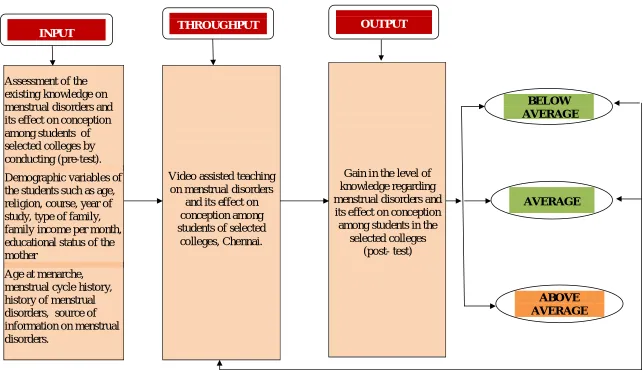
General system theory is a holistic theory that describes a complex system
by examining the interactions between its components, rather than by analyzing the
detailed structure of each component. General system theory serves as a model for
viewing people as interacting with the environment. All living systems are open in
which the system receives input and gives back output in the same form of energy,
matter, and information. Gesalt (1999) a psychologist says that “the whole is greater
than the sum of its part” an illustration which is also valid for the general system
theory. Ludewig Von Bertalannfy described living organisms as “open system” that
interacts comprehensively with their environment. Next he recognised that complex
systems have emerged properties that cannot be predicted by knowing the properties
of its components. In addition, he observed that such a system can also exert control
over its components, such as in homeostasis, by using feedback loafs.
A system is a complex of interacting elements. It can be open or closed.
Open system are open for the exchange of matters, energy and information with
their environment from which the system receives input and gives back output. Open
INPUT:
Refers to the stimuli and imported material from the external environment.
The system uses regulation to maintain the equilibrium or homeostasis. Inputs are
used always in their original state where as other process requires complex
transformation. In this study, the input is assessment of existing knowledge using
structured questionnaire regarding menstrual disorders and its effect on conception
among students in the selected colleges.
THROUGHPUT:
Refers to the use of different operational procedures implemented within
the process of system. In this study, it refers to the video assisted teaching which is
planned for a duration of 30 minutes which includes introduction, meaning of
menstrual disorders, conception, causes, signs and symptoms, diagnosis,
management, and menstrual disorders and its effect on conception among the
students studying in the selected colleges.
OUTPUT:
It refers to the result or the response to the ultimate outcome of the study.
In this study the output is the gain in the level of knowledge regarding menstrual
disorders and its effect on conception which will be assessed by the structured
questionnaire. If the output is moderate or inadequate, it would suggest that the
students studying in the selected colleges are in need of strengthening their
throughput hence, reinforcement will be given through the video assisted teaching
FIG 1. CONCEPTUAL FRAMEWOKK BASED ON GENERAL SYSTEM (LUDEWIG VON BERTALANFFY-1968)
INPUT THROUGHPUT OUTPUT
Assessment of the existing knowledge on menstrual disorders and its effect on conception among students of selected colleges by conducting (pre-test). Demographic variables of the students such as age, religion, course, year of study, type of family, family income per month, educational status of the mother
Age at menarche, menstrual cycle history, history of menstrual disorders, source of information on menstrual disorders.
Video assisted teaching on menstrual disorders
and its effect on conception among students of selected
colleges, Chennai.
Gain in the level of knowledge regarding menstrual disorders and
its effect on conception among students in the
CHAPTER-II
REVIEW OF LITERATURE
A literature is an organized written presentation of what has been published
on a topic by scholars. (Burns and Groove, 2004)
This chapter mainly deals with the review done on related materials for this
study from various sources (Texts, Journals and Internet etc). The review enabled
the researcher to develop an insight into the problem area. Various studies revealed
review also have helped the investigator in building the base for this study.
The review of literature in this chapter is presented under the following
heading.
Part-I General information on menstruation, ovulation and conception.
Part-II Studies related to menstrual disorders and its effect on conception.
PART-I GENERAL INFORMATION ON MENSTRUATION,
OVULATION, AND CONCEPTION
Shabnam (2009) stated that menstrual cycle is the cyclical shedding of
endometrium every 28 ± 7 days in response to hormones. It is a natural phenomenon
that occurs throughout the reproductive years of every woman's life during which
blood loss per cycle is not greater than 80 ± 50 ml with or without discomfort.
average menstrual cycle lasts for about 5 days, which accounts to approximately 67
months of menstrual bleeding over a lifetime.
Jabbour HN, Kelly RW, (2006)stated in an article on “endocrine regulation
of menstruation” that in women, endometrial morphology and function undergo
characteristic changes during every menstrual cycle. These changes are to prepare
the endometrium for implantation of a conceptus. In the absence of pregnancy, the
human endometrium is sloughed off during menstruation over a period of few days.
During this time tissue repair, growth, angiogenesis, differentiation, occurs to
prepare the endometrium for implantation in the next cycle. Clearer understanding
of regulation of normal endometrial function will provide an insight into causes of
menstrual dysfunction such as menorrhagia (heavy menstrual bleeding) and
dysmenorrhea (painful periods).
Diaz, Laufer (2000)stated that “menstrual cycle are vital sign for assessing
the normal reproduction in girls” Young patients and their parents often are unsure
about what represents normal menstrual patterns, It is important to educate young
patients and their parents regarding what to expect of a first period and about the
range for normal cycle length of subsequent menses and to differentiate between
normal and abnormal menstruation, and the skill to evaluate young patients'
conditions appropriately by own. Using the menstrual cycle as an additional vital
sign adds as a powerful tool to the assessment of normal development and the
exclusion of pathological conditions.
Baby Med Organisation (2011) stated that ovulation happens when the
is one of the most important thing a woman should understand about the body since
it is the determining factor in getting pregnant and preventing pregnancy.
American Pregnancy Association for Promoting Pregnancy Wellness
(2010) states that ovulation is the release of the matured egg from the ovary. In
response to a hormonal signal, the follicle (holding the egg) bursts open and frees
the egg this is ovulation. Ovulation typically occurs around 14 or 15 days from the
first day of the female's last menstruation cycle. Once you ovulate, the ovum (egg)
travels into the fallopian tube and is receptive to fertilization by a sperm.
Oravec S, Hlavacka S. (2000) stated that there is a relation between
disorders of thyroid function, menstrual disorders and conception. The treatment of
young women with menstrual cycle dysfunction by thyroid gland treating later by
pure thyroid hormones led to improvement of their menstrual cycle and frequently
also to desired conception. Therefore a functional connection between thyroid and
ovary, i.e. an effect of thyroid hormones on ovarian reproductive function was
assumed.
Jacot-Guillarmod M, Renteria SC (2010) stated that “Menstrual disorders
among adolescents an commonplace or worrisome”. The first menstrual cycles
following menarche are often characterized by irregular or heavy bleeding. In
50-80% of cases these are anovulatory bleeding due to the immaturity of the
gonadotrophic axis. Nevertheless pathologies such as Von Willebrand disease,
genital infection, polycystic ovary syndrome, eating disorders, a tumor or a
pregnancy may be diagnosed by bleeding abnormalities. Adolescents who
experience abnormal bleeding must be counseled according to their perceptions and
Jack Herrick (2013) stated that the basic to conceive is to count forward
from the first day of last period. On average, most women ovulate 14 days after they
first begin to menstruate. In regular cycles, often estimate the time of ovulation by
dividing cycle in half. For example, if menstruation usually lasts 28 days, will likely
ovulate around day 14 of cycle (14 days after begin menstruating). In longer cycle,
ovulation occurs 20 days after menstruation.
Franklin (2008) states that women with regular menstruation have between
11 and 13 menstrual periods in one calendar year, which means that up to 13
chances to conceive each year. On the other hand, women with irregular
menstruation fewer chances to conceive each year, potentially making the path to
parenthood longer time, and tiresome.With irregular menstruation it is certainly
possible to become pregnant, understanding the causes of irregular periods and how
to restore cycle regularity help to improve conception rates.
Querin (2012) states that menstruation is a fact of life. Ovulation leads to a
period (or pregnancy), so, without periods, there can be no pregnancy. The hardest
part about trying to conceive is trying to get pregnant with irregular menstruation.
Most women have menstrual cycles that average between twenty-eight and
thirty-five days, some women have irregular menstruation. For a woman with a predictable
cycle, planning the best few days to try to conceive is fairly easy. But having
irregular and unpredictable menstruation causes problems trying to conceive.
PART-II STUDIES RELATED TO MENSTRUAL DISORDERS AND
ITS EFFECT ON CONCEPTION
Khyrunnisa Begum (2012) conducted a study on Menstrual pattern among
were selected and asked to complete a questionnaire. Data regarding demographic
features, menarche age, and menstrual pattern, Source of information about
menarche and menstruation the participants depend was also elicited. Mean age of
the subject’s age at menarche was 10 to 17 years. Mean duration of menstrual flow
was 5-7 days. The most prevalent menstrual symptoms were tiredness (47.9%),
backache (38.3%), and anger (34.5%). Prevalence of menstrual irregularity was 11.9
and 78.2%. 6.7% of the participants had severe dysmenorrhea. 60.4% of the girls
were aware of menstruation prior to menarche. Mothers and friends were the main
sources of information (47.8%).
Jeyaseelan L (2010) to evaluate the effectiveness of planned teaching
programme (PTP) on knowledge and attitude on menstrual disorders among rural
high school students in Bangalore. The pre-test showed that majority 87.5% of the
students had inadequate knowledge. The planned teaching programme facilitated
them to update their knowledge and attitude related to menstrual disorders to 98.6%.
The results showed that planned teaching programme was an effective strategy to
improve the knowledge and attitude on menstrual disorders.
Shuby Nair (2009) conducted a cross sectional study to elicit information
about knowledge and practices regarding menstruation among adolescent girls in an
urban field of BLDEA’s Shri B.M. Patil Medical College, Bijapur. 342 adolescent
girls who had attained menarche were included in the study. Data was collected by
questionnaire method. The result revealed that 324(94.74%) were literate, and only
63 (18.42%) had knowledge about menstruation prior to attainment of menarche,
this association was found to be statistically significant. The main source of
lacking knowledge about menstruation prior to menarche. The study concluded that
there is lack of awareness in the society regarding menstruation.
Shreef and Shreef (2009) conducted “An experimental study was
conducted to assess the impact and suitability of menstrual education program(MEP)
for 1stand 2ndgraders at a girls' secondary school in Riyadh city”. The MEP was
conducted on 5classes, through one session and one assessment. The results revealed
that the mean scores of knowledge, attitude and practice of the intervention classes
for (1stand 2ndgraders) were significantly higher than that of the control classes.
The study recommended the replication of the same program among elementary,
preparatory, and other secondary schools for improvement of students' menstrual
knowledge, attitudes and practice.
Ekpenyong CE, Davis KJ, Akpan UP, Daniel NE (2009) conducted a study
on “Academic stress and menstrual disorders among female undergraduates in Uyo,
South Eastern Nigeria - the need for health education”. 393 female students of the
University of Uyo, ages between 16 and 35 years were randomly selected from
different departments in the University, and studied during the 2009/2010 academic
session. Menstrual history and Student's Stress Assessment Questionnaire (SSAQ)
were used for this assessment. They were distributed for participants to fill out.
Prevalence of menstrual disorder among participants was 34.6%. A direct
association between menstrual disorder and academic stress was observed.
Commonest menstrual disorder was menorrhagia (37.5%). Others were:
Pre-menstrual Syndrome (PMS 33.1%), Oligomenorrhea 19.9%, and amenorrhea
5.9%. Those who experienced academic stress had about 2 times chances of having
academic stress and menstrual disorder among females undergraduate in Uyo, South
Eastern Nigeria.
Karout. N, Hawai SM, (2009), conducted a study on Prevalance and pattern
of menstrual disorders among Lebanese college students, menstrual disorders
frequently affect the quality of life of young adult women and can be indicators of
serious underlying problems. The objective of this study was to determine the
prevalence and pattern of menstrual symptoms among college students in Beirut,
Lebanon. Of 352 students completing a written questionnaire, the most common
menstrual disorders were irregular frequency of menstruation (80.7%), premenstrual
syndrome (54.0%), irregular duration of menstruation (43.8%), dysmenorrhoea
(38.1%), polymenorrhoea (37.5%) and oligomenorrhoea (19.3%).
Wodarska M, Hartman M, Plinta R. (2008) conducted a study “To assess
the relationship between increased physical activity and menstrual disorders in
adolescent female volleyball players” among 210 Polish female volleyball players,
aged 13-17 years, using a questionnaire. The results of the study showed that
irregular menstruation occurred in 19% of girls, spotting between menstrual periods
in 27% and heavy menstruation was reported in 33% of girls. 94 girls (45%)
declared absence of menstrual periods after regular cycles. It was concluded that the
number of hours of volleyball training per week affected the regularity of menstrual
cycles in female volleyball players. The absence of menstruation might be caused by
the duration of training per week or years of training.
Abraham S, (2008) conducted a study on knowledge, attitudes and
practices of young Australian women regarding Menstruation, menstrual protection
women aged 14 to 19 years, conducted to determine their attitudes, state of
knowledge and practices with regard to menstruation, are presented. The young
women, as a group, lacked sufficient information about menstruation, about the time
of ovulation, about menstrual problems. A high proportion (80%) considered
menstruation to be inconvenient or embarrassing.
Esimai O.A (2008) conducted a study on” Awareness of Menstrual
Abnormality Among College Students in Urban Area of Ile-Ife, Osun State,
Nigeria”, A cross-sectional survey was undertaken, 400 students were selected using
stratified sampling technique and interviewed using semi-structured
self-administered questionnaire. The awareness of students on menstrual abnormalities
was significantly influenced by their age (OR = 2.33, P = 0.03); however, age at menarche and level of study did not influence their awareness (OR = 0.45, P = 0.24 and OR = 1.42, P= 0.12).
Shinha (2007) conducted a study on common gynaecological problems
among 124 girls between the age group of 13-19 years revealed that, menstrual
disorders are found to be the commonest gynecological problem 72(58.06%). They
varied from amenorrhea 21(29.16%) to dysmenorrhagia. Dysfunctional uterine
bleeding was the commonest etiology of menstrual dysfunction.
Sarkar Hussain (2007) a quasi-experimental study was conducted to
identify the level of knowledge of adolescent girls with a view to develop and
evaluate a planned teaching programme on menstrual disorders among 49 adolescent
girls in New Delhi. The results revealed that the total mean percentage scores
secured by adolescent girls on menstrual disorders was 27.36%, the mean percentage
adolescent girls regarding menstrual disorders is independent of the socio-economic
status, education status of the mother and exposure to mass media. The study
concluded that, there is a need to create awareness among adolescent girls regarding
menstrual hygiene & planned teaching programme was found to be an effective
teaching strategy.
Premji Bretwan (2007) conducted a cross sectional study to determine the
prevalence of menstrual abnormalities and the pattern of use of medical treatments
for these abnormalities among 62 secondary schools and junior colleges in
Singapore from January to December 2004. 5561 adolescent girls between the ages
of 12 - 19 years were selected for study. The study revealed that, 23.1% had
irregular cycles. Oligomenorrhea was the most frequent problem i.e, 15.3% and
polymenorrhea was much less prevalent i.e., 2.0%. Dysmenorrhea was a significant
problem with 83.2% respondents reporting in it various degrees and 24% girls
reporting school absenteeism owing to it. The study concluded that, menstrual
problems among female are common and a significant source of morbidity in this
population. However, adolescent girls are reluctant to seek medical treatment,
leading to delay in diagnosis and treatment.
Kumaresan (2006) conducted a study to identify the menstrual problems
and pattern of consultation among adolescent school girls in Pondicherry. 371
adolescent girls who attainted menarche were selected from four schools and
interviewed using predesigned pretested questionnaire. The result revealed that
181(48.79%) and 190 (51.21%) were from urban and rural schools. 193 (52.02%)
had experienced dysmenorrhea and 150 (40.43%) reported passing of clots during
73(26.84%) had sought consultation, among them majority 43(58.09%) consulted
doctors and 3(4.12%) girls consulted health workers, while 25(34.25) discussed
problems with their mother. The study concluded that, there is an urgent need for
strong health educational activities among the adolescent girls, their parents and
teachers for effective management of menstrual problems among all adolescent girls.
Kublinky (2005) conducted a study on menstrual disorders in adolescent
girls in Singapore revealed that; among 556 participants 23% reported having
irregular cycles. Oligomenorrhea 15.3% and dysmenorrhea was a significant
problem with 83.2%. Respondents reported in various degrees and 24% girls
reporting school absenteeism owing to it. Hence it concluded that, the menstrual
problems among females are common and significant source of morbidity in this
population. However, adolescent girls are reluctant to seek medical treatment,
leading to delay in diagnosis and treatment. Appropriate health education measures
need to be put into place to prevent complications in later.
Ginekol Pol. (2003) conducted a study on Casual analysis of menstrual
disorder in adolescent girl.117 girls 14-18 years old without evidence of androgen
excess (hirsutism,acne): the study group consisted of 87 adolescents with menstrual
disorders and the control group of 30 girls with regular menstrual cycles. All the
patients underwent gynecological and ultrasound examination and an analysis of the
hormonal status. The data from investigation showed that 43.7% of adolescents with
menstrual dysfunction have eating disorders, 16.1%--immaturity of
hypothalamic-pituitary-ovarian axis, 13.8%--polycystic ovary syndrome, 9.2%--hyperprolactinemia,
CHAPTER-III
METHODOLOGY
RESEARCH APPROACH
Research approach used in this study was evaluative in nature.
RESEARCH DESIGN
Research design used in this study was Quasi-experimental design.
VARIABLES
DEPENDENT VARIABLE
The dependent variable in this study is the knowledge regarding menstrual
disorders and its effect on conception.
INDEPENDENT VARIABLE
The independent variable in this study is the video assisted teaching on
menstrual disorders and its effect on conception.
SETTINGS OF THE STUDY
Study was conducted in women’s colleges in Chennai, Dr.M.G.R.Janaki
College of Arts and Science for Women, Raja Annamalai Puram, Chennai and at
POPULATION OF THE STUDY
The population of the study was the students studying in the selected Arts
and Science Colleges.
SAMPLE
Students who fulfilled the inclusion criteria were the samples for the study.
CRITERIA FOR THE SELECTION OF SAMPLE
INCLUSION CRITERIA
1. Female students in the age group of 18-21 years.
2. Undergraduates and unmarried students studying in the selected
Colleges.
3. Students those who know to read and write English or Tamil.
4. Students studying in either Arts or Science course in the selected
Colleges.
EXCLUSION CRITERIA
1. Samples who were not willing to participate.
SAMPLE SIZE
Sample size is 100, 50 samples (Arts) from Chellammal Women’s Arts
and Science College, and 50 samples (Science) from Dr.M.G.R. Janaki College of
SAMPLING TECHNIQUE
Proportionate sampling technique was used to select the samples. 50
samples from the arts and 50 samples from science group were selected by lottery
method.
Arts Science
Year Number of
Students
Sample for the Study
Year Number of
Students
Sample for the Study
FIRST 90 20 FIRST 50 20
SECOND 90 15 SECOND 50 15
THIRD 90 15 THIRD 50 15
DISCRIPTION OF THE TOOL
It consists of two parts,
PART-A: It consists of a structured questionnaire to collect the demographic data
of the samples such as age, religion, year of study, course, mother’s
educational status, type of family and family income.
PART-B: It consists of a structured questionnaire to collect the menstrual history
such as the age at menarche, frequency and duration of menstrual cycle
and history of any menstrual disorders.
PART-C: It consists of a structured questionnaire to collect the source of
information regarding menstrual disorders.
PART-D: It consists of structured questionnaire to assess the knowledge
regarding menstrual disorders and its effect on conception. This section
Section A: It consists of 12 questions on the general information regarding
menstruation, ovulation and conception.
Section B: It consists of 14 questions on information regarding menstrual
disorders.
Section C: It consists of 9 questions on information regarding the effect of
menstrual disorders on conception
TOTAL NUMBER OF QUESTIONS – 35
SCORING
Each right response is scored as one and the wrong response as zero. The
overall scores are categorized as,
S.No Category Score
1 Below average 50%
2 Average 51-75%
3 Above average > 75%
VALIDITY OF THE TOOL
Content validity was obtained from the medical and nursing experts in the
field of obstetrics and gynaecology from various colleges/Hospital.
RELIABILITY OF THE TOOL
Reliability of the tool was checked by using Cronbach Alpha score
PROTECTION OF HUMAN RIGHTS AND ETHICAL CONSIDERATION
The topic was approved by the ethical committee constituted by the
college. Permission was obtained from the head of the institutions to conduct the
study. Informed consent was obtained from the samples who participated in the
study.
PILOT STUDY
Pilot study was conducted at Kumararani Meena Muthaiah Arts and
Science College from 05-08-13 to 08-08-13. After obtaining permission from the
Principal, total 12 samples (6 samples from Arts group and 6 samples from Science
group) were selected by lottery method. After establishing good rapport with the
samples the purpose of the research study was explained and the consent for
participation in the study was obtained from the samples. The pre-test was
conducted on 05.08.12. The demographic data, menstrual history and the source of
information regarding menstrual disorders and conception was collected using
structured questionnaire. The pre-test knowledge on menstrual disorders and its
effect on conception was assessed using the structured questionnaire. The samples
took on an average 20-30 minute to answer the questionnaire. Followed by it, the
video assisted teaching for 30 minutes was given. Doubts were clarified. The
post-test was conducted on 08-08-13 using the same questionnaire.
PILOT STUDY RECOMMENDATION
The study was found to be feasible. The tool was able to elicit the required
information. Since there were no suggestions, the same tool was used for the main
DATA COLLECTION PROCEDURE FOR THE MAIN STUDY
Permission was obtained from the selected study settings. After a brief
introduction of the investigator, 100 samples who fulfiled the inclusion criteria were
selected by proportionate sampling technique using lottery method. A total of
100 samples, 50 samples from Arts group (Chellammal Women’s College of Arts
and Science) and 50 samples from Science group (Dr.M.G.R.Janaki Women’s
College of Arts and Science) were selected. The tool was given to the students and
was asked to tick the appropriate response. The demographic data such as age,
religion, year of study, mother’s educational status, family income, type of family,
information on the menstrual history such as age at menarche, frequency and
duration of menstrual cycle, history of menstrual disorders and the source of
information and knowledge regarding menstrual disorders and its effect on
menstrual were collected using the structured questionnaire. The Video assisted
teaching including information regarding menstrual disorders and its effect on
conception for 30 minutes was given and their doubts were clarified. 7 days after the
pre-test the post test was conducted and data was collected using the same
questionnaire.
PL AN FOR DATA ANALYSIS
DESCRIPTIVE STATISTICS
Frequency and percentage distribution was used to describe the
demographic data of the samples.
Frequency and percentage distribution was used to describe the
Frequency and percentage distribution was used to describe the source
of information regarding menstrual disorder and its effect on
conception of the samples.
Frequency and percentage distribution of overall knowledge regarding
menstrual disorders and its effect on conception before and after video
assisted teaching of arts students
Frequency and percentage distribution of overall knowledge regarding
menstrual disorders and its effect on conception before and after video
assisted teaching of science students
Frequency and percentage distribution of overall knowledge regarding
menstrual disorders and its effect on conception before and after video
assisted teaching among students studying in selected colleges
INFERENTIAL STATISTICS
Paired-t test was used to compare the pre-test and post-test knowledge
regarding menstrual disorders and its effect on conception.
Independent-t test was used to compare the post-test knowledge
regarding menstrual disorders and its effect on conception of the Arts
and Science students.
Chi-square was used to associate the post-test knowledge score with the
CHAPTER-IV
DATA ANALYSIS AND INTERPRETATION
This chapter describes about the analysis of collected data on effectiveness
of video assisted teaching on menstrual disorders and its effect on conception among
students of selected colleges, Chennai.
The collected data was tabulated and analyzed under 4 sections.
SECTION A Frequency and percentage distribution was used to describe the
demographic data of the samples.
SECTION B Frequency and percentage distribution was used to describe the
menstrual history of the samples.
SECTION C Frequency and percentage distribution was used to describe the
source of information regarding menstrual disorder and its effect on
conception of the samples.
SECTION D Frequency and percentage distribution of overall knowledge of
menstrual disorders and its effect on conception before and after
video assisted teaching of Arts and Science students.
SECTION E Compare the pre-test and post-test knowledge of menstrual disorders
SECTION F Compare the post-test knowledge of menstrual disorders and its effect
on conception of the Arts and Science students.
SECTION G Associate the post-test knowledge score with the demographic
variables.
SECTION H Associate the post-test knowledge score with the menstrual history.
SECTION I Associate the post-test knowledge score with the source of
SECTION-A
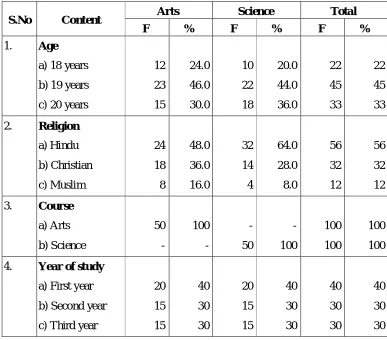
TABLE 1: FREQUENCY AND PERCENTAGE DISTRIBUTION OF THE SAMPLES BASED ON THE DEMOGRAPHIC VARIABLES
Table 1a: Frequency and percentage distribution of samples based on the age, religion, course and year of study
N=100
S.No Content Arts Science Total
F % F % F %
1. Age
a) 18 years b) 19 years c) 20 years
12 23 15 24.0 46.0 30.0 10 22 18 20.0 44.0 36.0 22 45 33 22 45 33
2. Religion
a) Hindu b) Christian c) Muslim 24 18 8 48.0 36.0 16.0 32 14 4 64.0 28.0 8.0 56 32 12 56 32 12
3. Course
a) Arts b) Science 50 - 100 - - 50 - 100 100 100 100 100
4. Year of study
a) First year b) Second year c) Third year
20 15 15 40 30 30 20 15 15 40 30 30 40 30 30 40 30 30
Table 1a shows that majority 45% of the samples were in the age group of
19years. 56% of the samples were Hindus. 50% were from arts group and 50% were
from science group. 40% of the samples were from first year, 30% from second year
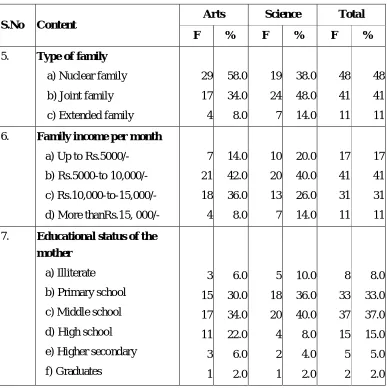
[image:46.612.117.504.229.569.2]Table 1b Frequency and percentage distribution of samples based on the type of family, family income and the educational status of the mother
N=100
S.No Content
Arts Science Total
F % F % F %
5. Type of family
a) Nuclear family b) Joint family c) Extended family
29 17 4 58.0 34.0 8.0 19 24 7 38.0 48.0 14.0 48 41 11 48 41 11
6. Family income per month
a) Up to Rs.5000/- b) Rs.5000-to 10,000/- c) Rs.10,000-to-15,000/- d) More thanRs.15, 000/-
7 21 18 4 14.0 42.0 36.0 8.0 10 20 13 7 20.0 40.0 26.0 14.0 17 41 31 11 17 41 31 11
7. Educational status of the
mother
a) Illiterate b) Primary school c) Middle school d) High school e) Higher secondary f) Graduates 3 15 17 11 3 1 6.0 30.0 34.0 22.0 6.0 2.0 5 18 20 4 2 1 10.0 36.0 40.0 8.0 4.0 2.0 8 33 37 15 5 2 8.0 33.0 37.0 15.0 5.0 2.0
Table 1b shows that majority 48% of the samples were from nuclear
family. 41% of the samples were having family income of Rs.5,000- 10,000/- per
SECTION B
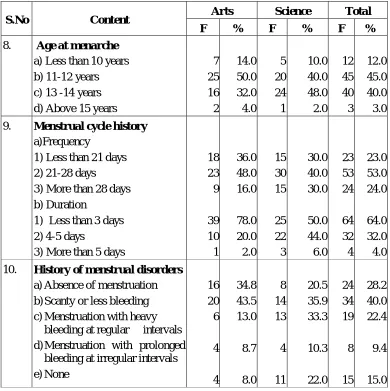
TABLE 2: FREQUENCY AND PERCENTAGE DISTRIBUTION OF THE SAMPLES BASED ON THE MENSTRUAL HISTORY
N=100
S.No Content Arts Science Total
F % F % F %
8. Age at menarche
a) Less than 10 years b) 11-12 years c) 13 -14 years d) Above 15 years
7 25 16 2 14.0 50.0 32.0 4.0 5 20 24 1 10.0 40.0 48.0 2.0 12 45 40 3 12.0 45.0 40.0 3.0
9. Menstrual cycle history
a)Frequency
1) Less than 21 days 2) 21-28 days
3) More than 28 days b) Duration 1) Less than 3 days 2) 4-5 days
3) More than 5 days
18 23 9 39 10 1 36.0 48.0 16.0 78.0 20.0 2.0 15 30 15 25 22 3 30.0 40.0 30.0 50.0 44.0 6.0 23 53 24 64 32 4 23.0 53.0 24.0 64.0 32.0 4.0 10. History of menstrual disorders
a) Absence of menstruation b) Scanty or less bleeding c) Menstruation with heavy
bleeding at regular intervals d) Menstruation with prolonged
[image:48.612.118.508.190.581.2]bleeding at irregular intervals e) None 16 20 6 4 4 34.8 43.5 13.0 8.7 8.0 8 14 13 4 11 20.5 35.9 33.3 10.3 22.0 24 34 19 8 15 28.2 40.0 22.4 9.4 15.0
Table 2 shows that majority 45% of the samples age at menarche is
11-12 years. 53%of the samples had menstrual cycles with frequency of 21-28 days.
64% of the samples had menstrual cycle with frequency less than 3 days. 40.0% of
the samples had scanty or less bleeding. 28.2% of the samples had absence of
SECTION C
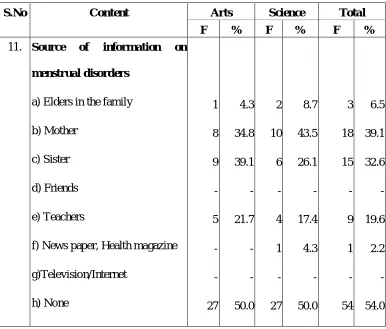
TABLE 3: FREQUENCY AND PERCENTAGE DISTRIBUTION OF THE SAMPLES BASED ON THE SOURCE OF INFORMATION ON MENSTRUAL DISORDERS
N=100
S.No Content Arts Science Total
F % F % F %
11. Source of information on
menstrual disorders
a) Elders in the family
b) Mother
c) Sister
d) Friends
e) Teachers
f) News paper, Health magazine
[image:49.612.120.506.249.578.2]g)Television/Internet h) None 1 8 9 - 5 - - 27 4.3 34.8 39.1 - 21.7 - - 50.0 2 10 6 - 4 1 - 27 8.7 43.5 26.1 - 17.4 4.3 - 50.0 3 18 15 - 9 1 - 54 6.5 39.1 32.6 - 19.6 2.2 - 54.0
Table 3 shows the majority 54% of the samples had not received any
information on menstrual disorders. 39.1% of the samples had received information
SECTION-D
TABLE 4 : FREQUENCY AND PERCENTAGE DISTRIBUTION OF THE SAMPLES BASED ON THE KNOWLEDGE OF MENSTRUAL DISORDERS AND ITS EFFECT ON CONCEPTION
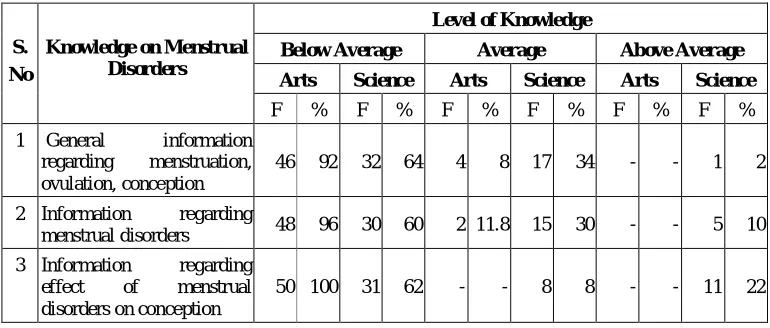
Table 4a: Frequency and percentage distribution of Pre-test knowledge of Arts and Science students regarding menstrual disorders and its effect on conception
N=100
S. No
Knowledge on Menstrual Disorders
Level of Knowledge
Below Average Average Above Average Arts Science Arts Science Arts Science
F % F % F % F % F % F %
1 General information
regarding menstruation, ovulation, conception
46 92 32 64 4 8 17 34 - - 1 2
2 Information regarding
menstrual disorders 48 96 30 60 2 11.8 15 30 - - 5 10
3 Information regarding
effect of menstrual
disorders on conception
50 100 31 62 - - 8 8 - - 11 22
In pre-test with regards to the information regarding menstruation, ovulation and conception, 92% of the arts students and 64% of the science students had below average knowledge. 8% of the arts students and 34% of the science students had average knowledge. 2% of the science student had above average knowledge.
In pre-test with regards to the information regarding menstrual disorders, 96% of the arts students and 60% of the science students had below average knowledge. 11.8% of the arts students and 30% of the science students had average knowledge. 10% of the science student had above average knowledge.
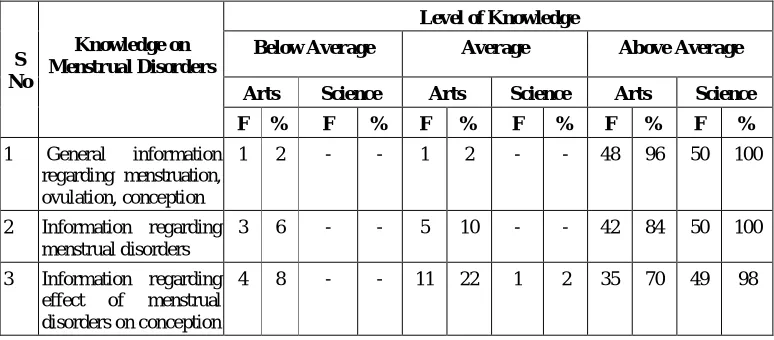
[image:50.612.120.505.243.407.2]Table 4b: Frequency and percentage distribution of Post-test knowledge of Arts and Science students regarding menstrual disorders and its effect on conception
N=100
S No
Knowledge on Menstrual Disorders
Level of Knowledge
Below Average Average Above Average Arts Science Arts Science Arts Science F % F % F % F % F % F %
1 General information
regarding menstruation, ovulation, conception
1 2 - - 1 2 - - 48 96 50 100
2 Information regarding
menstrual disorders
3 6 - - 5 10 - - 42 84 50 100
3 Information regarding
effect of menstrual disorders on conception
4 8 - - 11 22 1 2 35 70 49 98
In post test with regards to the information regarding menstruation,
ovulation and conception, 2% of the arts students had below average knowledge.
2% of the arts students had average knowledge. 96% of the Arts students and 100%
of the science students had above average knowledge.
In post test with regards to the information regarding menstrual disorders,
6% of the arts students had below average knowledge. 10% of the arts students had
average knowledge. 84% of the arts students and 100% of the science student had
above average knowledge.
In post test with regards to the information regarding effect of menstrual
disorders on conception, 8% of the arts students had below average knowledge.
22% of the arts students and 2% of the science students had average knowledge.
70% of the arts students and 98% of the science student had above average
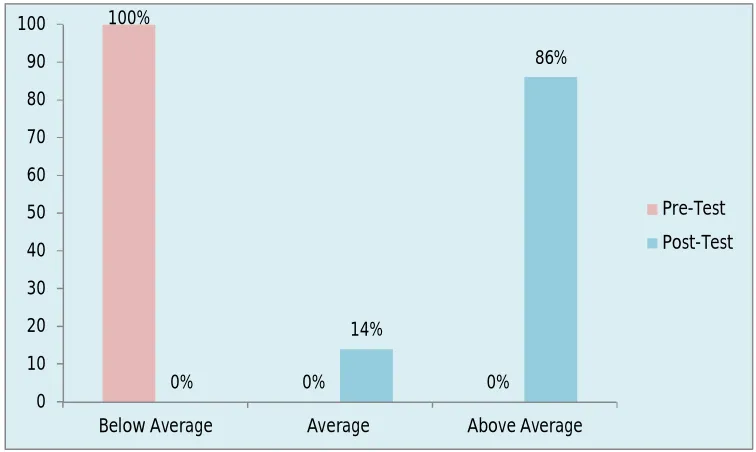
Fig.2: Frequency and percentage distribution of the overall knowledge regarding menstrual disorders and its effect on conception before and after video assisted teaching of arts students
100%
0% 0%
0%
14%
86%
0 10 20 30 40 50 60 70 80 90 100
Below Average Average Above Average
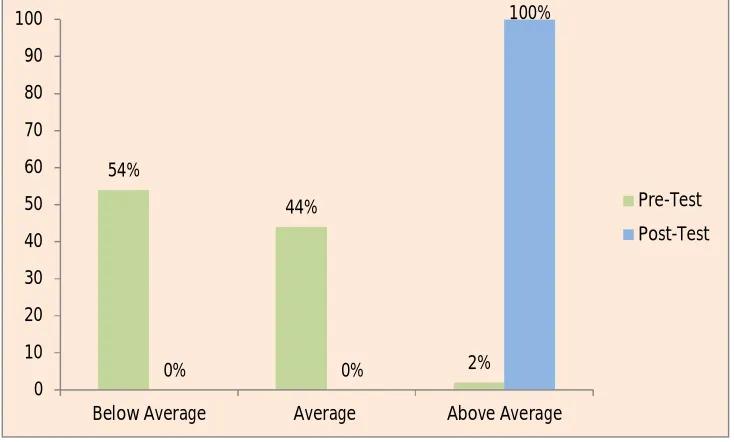
Fig. 3 Frequency and percentage distribution of the overall knowledge regarding menstrual disorders and its effect on conception before and after video assisted teaching of science students
54%
44%
2%
0% 0%
100%
0 10 20 30 40 50 60 70 80 90 100
Below Average Average Above Average
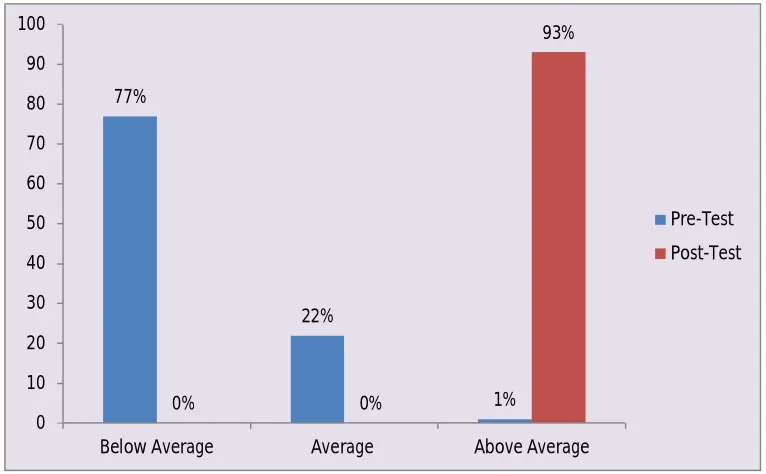
Fig. 4: Frequency and percentage distribution of overall knowledge regarding menstrual disorders and its effect on conception before and after video assisted teaching among students studying in selected colleges
77%
22%
1%
0% 0%
93%
0 10 20 30 40 50 60 70 80 90 100
Below Average Average Above Average
[image:54.612.121.504.243.480.2]SECTION-E
TABLE 5: COMPARE THE PRE-TEST AND POST-TEST KNOWLEDGE OF MENSTRUAL DISORDERS AND ITS EFFECT ON CONCEPTION
N=100
Level of
knowledge Frequency Mean
Standard
deviation
Paired
t-test
value
P-value
Pre-test 100 37.428 14.171
38.052 .000* Post-test 100 95.171 9.844
P<0.001** - Denotes significant at 0.1%, P<0.05*- Denotes significant at 5%
Table 5 shows that on comparing the overall knowledge score on menstrual
disorders and its effect on conception of the pre-test and the post test, there is an
increase in the mean value from 37.428 in the pre-test to 95.171 in the post test and
the standard deviation decreased from 14,171 to 9.844 which showed that there is a
statistically significant difference between the knowledge in the pre-test and the post
SECTION-F
TABLE: 6 COMPARE THE POST-TEST KNOWLEDGE OF
MENSTRUAL DISORDERS AND ITE EFFECT ON CONCEPTION AMONG ARTS AND SCIENCE STUDENTS
N=100
Discipline of
the students Frequency Mean
Standard
deviation
paired
t-test
value
p-value
Arts 50 91.314 12.672
4.241 .000**
Science 50 99.028 2.2063
P<0.001** - Denotes significant at 0.1%, P<0.05*- Denotes significant at 5%
Table 6 shows that comparing the post test knowledge score of arts and
science students shows that there was an increase in the mean value and a decrease
in the standard deviation of the science students compared to the arts student. There
was statistically significant difference in the knowledge between the arts and science
SECTION-G
TABLE 7: ASSOCIATION BETWEEN POST-TEST KNOWLEDGE AND WITH THE DEMOGRAPHIC VARIABLES
Table 7a: Association between post-test knowledge and with age, religion and course of study
N=100
Content Overall knowledge
Chi-Square Value
P-Value
Average Above
Average
F % F %
1. Age
a) 18 years b) 19 years c) 20 years d) 21 years
2 3 2 - 28.6 42.9 28.6 - 20 42 31 - 21.5 45.2 33.3 -
.200 .905
2. Religion a) Hindu b) Christian c) Muslim 2 2 3 28.6 28.6 42.9 54 30 9 58.1 32.2 9.7
7.011 .030*
3. Course
a) Arts, specify b) Science, 7 - 100.0 - 43 50 46.2
53.8 .012 .006* P<0.01** - Denotes significant at 1%, P<0.05*- Denotes significant at 5%
Table 7(a) shows that there was a statistically significant association found
between the overall knowledge score with religion at p< .05, and course of study at
[image:57.612.118.505.278.591.2]Table 7b: Association between post-test knowledge and with the year of study, type of family, family income and educational status of the mother
N=100 Content Overall Knowledge Chi-Square Value P-Value
Average Above
Average
F