City, University of London Institutional Repository
Citation
:
Papakonstantinou, Stylianos (2012). Technological framework for ubiquitous interactions using context–aware mobile devices. (Unpublished Doctoral thesis, City University London)This is the unspecified version of the paper.
This version of the publication may differ from the final published
version.
Permanent repository link:
http://openaccess.city.ac.uk/2984/Link to published version
:
Copyright and reuse:
City Research Online aims to make research
outputs of City, University of London available to a wider audience.
Copyright and Moral Rights remain with the author(s) and/or copyright
holders. URLs from City Research Online may be freely distributed and
linked to.
City Research Online: http://openaccess.city.ac.uk/ [email protected]
Technological Framework for Ubiquitous
Interactions using Context–aware Mobile
Devices
STYLIANOS K. PAPAKONSTANTINOU
Submitted in fulfilment of the requirements for the degree of
Doctor of Philosophy (PhD) in Information Science
School of Informatics
Department of Information Science
Volume I
Supervisors: Prof. Vesna Brujic-Okretic & Prof. Jonathan Raper
Table of Contents
VOLUME I...1
TABLE OF CONTENTS ...3
LIST OF FIGURES...7
LIST OF TABLES... 11
LIST OF EQUATIONS ... 13
LIST OF REQUIREMENTS... 14
ACKNOWLEDGEMENTS... 16
DECLARATION ... 18
ABSTRACT... 19
LIST OF ABBREVIATIONS... 20
1 INTRODUCTION ... 25
1.1 RESEARCH PROBLEM & QUESTIONS... 25
1.2 CONTEXT FRAMEWORK... 29
1.3 MOTIVATION & BACKGROUND... 30
1.4 ASSUMPTIONS & HYPOTHESES... 35
1.5 AIMS & OBJECTIVES... 37
1.6 CONTRIBUTIONS... 38
1.7 COLLABORATION STATEMENT... 41
1.8 ORGANISATIONAL STRUCTURE... 43
2 LITERATURE REVIEW ... 47
2.1 MOBILE CONTEXT-‐AWARE COMPUTING... 47
2.1.1 Context Definition... 48
2.1.2 Context-Aware Computing ... 50
2.1.3 Context Models... 54
2.2 MOBILE UBIQUITOUS & PERVASIVE COMPUTING... 57
2.3 USER-‐CENTRED MOBILE COMPUTING... 65
2.3.1 Personalisation & User Profiling... 66
2.3.2 Privacy & Trust ... 76
2.4 MOBILE MIXED REALITY INTERFACES... 80
2.4.1 Virtual Reality ... 80
2.4.2 Augmented Reality... 87
2.4.2.1 Traditional AR Approaches...91
2.5 LOCATION BASED SERVICES FOR ROUTE GUIDANCE... 95
2.5.1 Navigation and Wayfinding in Physical and Virtual Worlds... 95
2.5.2 Wayfinding Tools ... 98
3 USER MODELLING & REQUIREMENTS ENGINEERING ...103
3.1 SYSTEM DEVELOPMENT METHODOLOGY...104
3.2 DEVELOPMENT PHASES...106
3.3 USER MODELLING...107
3.3.1 Illustrative Examples of Requirement Acquisition (User) Survey Analysis ...108
3.3.1.1 Familiarity with Mobile Devices ...109
3.3.1.2 Familiarity with Information Management ...111
3.3.1.3 Familiarity with User Interfaces...113
3.3.1.4 Familiarity with Interactive Applications...113
[image:4.595.108.539.121.789.2]3.3.3 Representing the User’s Environment ...117
3.3.4 Cognitive Issues ...121
3.3.5 Collaboration and Entertainment Issues ...123
3.3.6 User-Centred Design...126
3.4 SYSTEM MODELLING...130
3.4.1 Aura’s Context Model ...132
3.4.2 Strategic Dependency Model ...134
3.4.3 Strategic Rationale Models ...136
4 PROTOTYPE DEVELOPMENT METHODOLOGY ... 141
4.1 SYSTEM ARCHITECTURE...142
4.1.1 Hardware-based Components...144
4.1.1.1 Mobile Devices ... 144
4.1.1.2 Sensors ... 152
4.1.1.3 Network Infrastructure... 159
4.1.2 Software-based Components ...169
4.1.2.1 Development Platform... 170
4.1.2.2 Software Libraries ... 172
4.2 DESIRED FUNCTIONALITY ANALYSIS...176
4.2.1 Context Acquisition & Management Requirements...178
4.2.2 Visualisation Requirements ...189
4.2.3 Interaction Requirements...198
4.3 PROPOSED SYSTEM DESIGN...204
4.3.1 Context Management System (CMS) ...205
4.3.2 Information Presentation System (IPS)...206
4.3.3 Supported Interface Paradigms ...207
4.3.4 Modes of Operation...208
4.3.5 Applied System-Engineering Techniques ...210
5 APPLYING CONTEXT-AWARENESS ON MOBILE VR & AR INTERFACES... 213
5.1 CONTEXT ACQUISITION...213
5.1.1 Location Context ...215
5.1.2 Orientation Context ...219
5.1.3 Temporal Context...221
5.1.4 User Context...222
5.2 CONTEXT MANAGEMENT...226
5.2.1 Storing Context...229
5.2.2 Normalising & Fusing Context ...233
5.3 MAP (2D) INTERFACE...238
5.4 VIRTUAL REALITY INTERFACE...240
5.4.1 Three-Dimensional Content Creation ...243
5.4.2 Information Intensity...247
5.4.3 Immersion...252
5.4.4 Interactivity...256
5.5 AUGMENTED REALITY INTERFACE...260
5.5.1 Context-Sensitive AR...260
5.5.2 Tracking the User’s Pose...263
5.5.3 Field-of-View Polygon Calculation...266
5.5.4 Point in Polygon & Polygon in Polygon Algorithms...271
5.5.5 Camera Modelling Algorithm...273
5.5.6 Scene Rendering...277
5.5.6.1 Handling the Video Stream... 280
5.5.6.2 DirectShow Filter Production... 286
5.5.6.3 Superimposing Elements... 290
5.6 NETWORKING SYSTEM...294
5.6.1 Protocol Description...295
5.6.2 Server Mode...296
5.6.5 Detailed Message Description ...300
5.6.5.1 Request Main User Profile...301
5.6.5.2 Response with Main User Profile ...301
5.6.5.3 Request Current Remote Location...302
5.6.5.4 Response with Current Remote Location...303
5.6.5.5 Instant Text Message ...305
VOLUME II...307
6 POTENTIAL CONTEXT-SENSITIVE AR APPLICATIONS ...309
6.1 POTENTIAL SOLUTIONS...312
6.1.1 Technology Licensing...312
6.1.2 Urban Navigation ...313
6.1.3 Spatial Search...314
6.1.4 Point of Interest Querying...315
6.1.5 Marketing...316
6.1.6 Confined Space Entertainment ...317
6.1.7 Open Space Entertainment...318
6.1.8 Virtual Surveillance & Exploration ...318
7 END-USER EVALUATION AND RESULTS...321
7.1 REQUIREMENTS VALIDATION PROCESS...321
7.1.1 Prototype for Validating Requirements...322
7.1.2 Impact Scenarios...324
7.1.3 Usability Factors ...327
7.2 PRELIMINARY EVALUATION...331
7.2.1 Use Case Description ...332
7.2.2 Experiment Methodology ...333
7.3 VIRTUAL REALITY FOR WAYFINDING RESULTS...335
7.3.1 Registration in the Virtual Environment...335
7.3.2 Movement with the Device...338
7.3.3 Decision Points...341
7.4 EXTENSIVE EVALUATION...343
7.4.1 Experiment Methodology ...344
7.4.2 Ethical Issues ...345
7.4.3 Use Case Description ...347
7.4.4 Experimental Environment ...349
7.4.5 Experimental Apparatus ...351
7.4.6 Experimental Software...353
7.4.7 Participant Information ...358
7.5 EXPLORING PREVIOUS EXPERIENCES (PE)...362
7.6 VIRTUAL AND AUGMENTED REALITY FOR WAYFINDING RESULTS...366
7.6.1 Statistical Techniques...367
7.6.2 Statistical Results...371
7.7 AURA USABILITY RESULTS...383
7.7.1 Statistical Techniques For Both Tasks...384
7.7.2 Statistical Results For Both Tasks (S) ...385
7.7.3 Results After Both Tasks (ABT)...394
8 DISCUSSION OF EVALUATION RESULTS...397
8.1 PRELIMINARY EVALUATION RESULTS...398
8.1.1 Mobile Device Performance...398
8.1.2 Registering Initial Location and Orientation ...400
8.1.3 Movement with the Device...404
8.1.4 Decision Points en Route...407
8.2 EXTENSIVE EVALUATION RESULTS...409
8.2.1 Effectiveness...409
8.2.2 Usability ...412
9 CONCLUSION ... 419
9.1 RESEARCH SUMMARY...419
9.2 REVIEW OF RESEARCH AIMS...422
9.3 REVIEW OF RESEARCH OBJECTIVES...424
9.4 OVERALL CONTRIBUTIONS...430
9.5 EXTERNAL CONSTRAINTS & FURTHER WORK...436
10 REFERENCES... 441
11 BIBLIOGRAPHY... 455
12 APPENDICES ... 457
12.1 APPENDIX I – REQUIREMENTS ACQUISITION QUESTIONNAIRE...457
12.2 APPENDIX II – REQUIREMENTS ACQUISITION DATA...462
12.3 APPENDIX III – REQUIREMENTS ACQUISITION ANALYSIS...462
12.4 APPENDIX IV – WINDOWS MOBILE DEVICE SPECIFICATIONS...463
12.5 APPENDIX V – AURA’S CLASS DIAGRAMS...463
12.6 APPENDIX VI – AURA’S UTILITY STRUCTURES...478
12.7 APPENDIX VII – FIELD-‐OF-‐VIEW ALGORITHM IMPLEMENTATION...480
12.8 APPENDIX VIII – POINT IN POLYGON ALGORITHM IMPLEMENTATION...482
12.9 APPENDIX IX – COMPLETE SOURCE CODE OF AURA...484
12.10 APPENDIX X – FINAL EVALUATION DIGITAL CONTENT...484
12.11 APPENDIX XI – FINAL EVALUATION INFORMATION SHEET...485
12.12 APPENDIX XII – FINAL EVALUATION CONSENT FORM...485
12.13 APPENDIX XIII – FINAL EVALUATION QUESTIONNAIRE...485
12.14 APPENDIX XIV – FINAL EVALUATION DATA...489
12.15 APPENDIX XV – FINAL EVALUATION RESULTS...489
12.16 APPENDIX XVI – POTENTIAL COMMERCIALISATION MODEL...490
12.16.1 Phase One (I) ...492
12.16.2 Phase Two (II)...492
List of Figures
FIGURE 1-‐1: THE MODEL ADOPTED DURING THE PROTOTYPING PROCESS (HOUDE AND HILL, 1997)...34
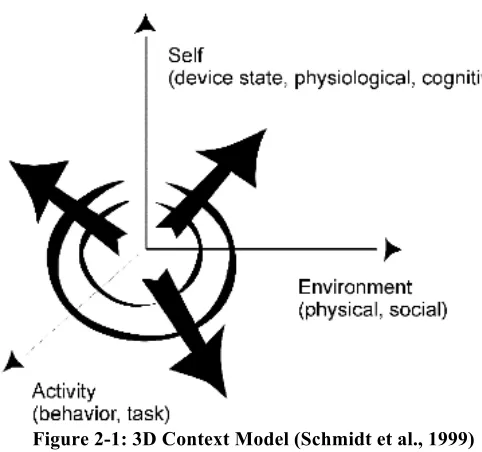
FIGURE 2-‐1: 3D CONTEXT MODEL (SCHMIDT ET AL., 1999)...49
FIGURE 2-‐2: THREE GLOBAL REQUIREMENTS THAT GUIDE THE DESIGN PROCESS OF PERVASIVE APPLICATIONS (GRIMM ET AL., 2004) ...61
FIGURE 2-‐3: TECHNOLOGIES TO ACHIEVE PERSONALISATION (ARBANOWSKI ET AL., 2004) ...67
FIGURE 2-‐4: MULTILEVEL STRUCTURE OF PROFILES (TERZIYAN, 2001)...71
FIGURE 2-‐5: FLAME2008 MODULAR ONTOLOGY ARCHITECTURE (WEIΒENBERG ET AL., 2004)...72
FIGURE 2-‐6: THE VIRTUALITY CONTINUUM (MILGRAM AND KISHINO, 1994) ...82
FIGURE 2-‐7: SAMPLE ARTOOLKIT MARKERS (HITLAB, 2007) ...91
FIGURE 2-‐8: ARTOOLKIT MARKER DETECTION (HITLAB, 2007)...92
FIGURE 2-‐9: ARTOOLKIT FUNCTIONALITY -‐ SUPERIMPOSING 3D OBJECTS ON MARKERS (HITLAB, 2007)...92
FIGURE 2-‐10: PATTERN RECOGNITION OF ROAD SIGNS A) ORIGINAL IMAGE AND B) DETECTED IMAGE...93
FIGURE 2-‐11: PATTERN RECOGNITION OF ROAD SIGNS -‐ SUPERIMPOSING 3D OBJECTS...93
FIGURE 2-‐12: THE HIERARCHICAL NATURE OF COMPOUND WAYFINDING TASKS (DARKEN AND SIBERT, 1996A) ....97
FIGURE 2-‐13: ALLOCENTRIC PLAN VIEW OF NORTHAMPTON SQUARE...100
FIGURE 2-‐14: EGOCENTRIC VIEW OF NORTHAMPTON SQUARE...100
FIGURE 3-‐1: WATERFALL PROCESS MODEL...104
FIGURE 3-‐2: PROTOTYPING APPROACH...105
FIGURE 3-‐3: MOBILE DEVICES OWNED BY SURVEY PARTICIPANTS...110
FIGURE 3-‐4: FREQUENCY OF INTERNET CONNECTIVITY THROUGH MOBILE PHONES...111
FIGURE 3-‐5: MOBILE DEVICES SUPPORT IN DAILY ACTIVITIES...111
FIGURE 3-‐6: FREQUENCY OF A) SEARCHING FOR A LOCATION B) NAVIGATING TO A LOCATION...112
FIGURE 3-‐7: NUMBER OF PERSONAL PROFILES THAT EACH PARTICIPANT MAINTAINS...112
FIGURE 3-‐8: PARTICIPANTS’ A) VR EXPERTISE AND B) AR EXPERTISE...113
FIGURE 3-‐9: FREQUENCY OF A) 3D GAME PLAYING AND B) ONLINE GAME PLAYING...114
FIGURE 3-‐10: FREQUENCY OF SOCIAL NETWORKING...114
FIGURE 3-‐11: THE RELATIONSHIP BETWEEN USABILITY AND USER EXPERIENCE (NNGROUP, USER EXPERIENCE CONFERENCE, AMSTERDAM, 2008)...127
FIGURE 3-‐12: CONTEXT MODEL FOR AURA...132
FIGURE 3-‐13: AURA’S SD MODEL...134
FIGURE 3-‐14: SR MODEL FOR CONTEXT MANAGEMENT SYSTEM...137
FIGURE 3-‐15: SR MODEL FOR INFORMATION PRESENTATION SYSTEM...138
FIGURE 3-‐16: SR MODEL FOR USER...139
FIGURE 4-‐1: HYBRID DECENTRALISED NETWORK ARCHITECTURE...165
FIGURE 4-‐2: SUPPORTED PEER-‐TO-‐PEER COMMUNICATION...165
FIGURE 4-‐4: OPENGL ES EVOLUTION (KHRONOS, 2011) ... 175
FIGURE 4-‐5: USERS CONSIDERING SECURITY AND PRIVACY SPECIFICATIONS OF AN APPLICATION BEFORE EXCHANGING A) WORK-‐RELATED AND B) SOCIAL-‐RELATED INFORMATION... 185
FIGURE 4-‐6: PROFILE CREATION PREFERENCE... 186
FIGURE 4-‐7: AN ALLOCENTRIC PERSPECTIVE IN AURA’S VR INTERFACE... 190
FIGURE 4-‐8: THE EGOCENTRIC PERSPECTIVE IN AURA’S VR INTERFACE... 190
FIGURE 4-‐9: PREFERRED VISUALISATION PERSPECTIVE FOR A) NAÏVE AND B) PRIMED SEARCH TASKS... 193
FIGURE 4-‐10: PREFERRED VISUALISATION PERSPECTIVE FOR EXPLORATION TASKS... 193
FIGURE 4-‐11: PREFERRED VISUALISATION PERSPECTIVE WHILE A) WALKING AND B) RIDING A BIKE... 194
FIGURE 4-‐12: PREFERRED VISUALISATION PERSPECTIVE WHILE A) DRIVING A CAR AND B) ON TRAIN... 194
FIGURE 4-‐13: IMPORTANCE OF PHOTOREALISM IN VR... 196
FIGURE 4-‐14: EFFECTIVENESS OF A) CONNECTED LINES AND B) RECURRING NAVIGATIONAL SYMBOLS OVERLAID ON ROUTE... 201
FIGURE 4-‐15: EFFECTIVENESS OF A) SIGNS PLACED AT DECISION POINTS AND B) VERBAL INSTRUCTIONS... 202
FIGURE 4-‐16: EFFECTIVENESS OF A VISIBLE COMPASS... 202
FIGURE 4-‐17: PREFERRED INTERACTION WHILE ROLLING THE MOBILE DEVICE... 203
FIGURE 4-‐18: PREFERRED INPUT METHOD FOR VR INTERFACE... 204
FIGURE 4-‐19: THE DESIGN BLUEPRINT OF THE PROTOTYPE PLATFORM... 205
FIGURE 4-‐20: SIMPLE CONTEXT DIAGRAM OF ALL ADJACENT SYSTEMS... 207
FIGURE 4-‐21: THE CONTEXT MENU IN THE VR INTERFACE... 209
FIGURE 4-‐22: USE CASE DIAGRAM FOR WAYFINDING IN AURA... 210
FIGURE 5-‐1: AURA'S INTERFACE FOR GPS CONNECTIVITY A) NORMAL VIEW B) SATELLITE VIEW... 216
FIGURE 5-‐2: AURA'S INTERFACE FOR ACCESSING THE LOCAL USER PROFILE... 223
FIGURE 5-‐3: AURA'S INTERFACE FOR ACCESSING THE REMOTE USER PROFILE... 224
FIGURE 5-‐4: NORTHAMPTON SQ. REPRESENTED IN THE MAP INTERFACE... 238
FIGURE 5-‐5: A USER EXPLORES THE VIRTUAL ENVIRONMENT, IN THE MANUAL MODE OF OPERATION... 242
FIGURE 5-‐6: MODELLING THE ENVIRONMENT WITH ESRI ARCSCENE... 244
FIGURE 5-‐7: THE CONTEXT MENU IN THE VR INTERFACE USED FOR A) LOADING ADDITIONAL CONTEXT B) REPRESENTING A REMOTE USER... 248
FIGURE 5-‐8: NARROW-‐ANGLE FIELD OF VIEW... 253
FIGURE 5-‐9: WIDE-‐ANGLE FIELD OF VIEW... 253
FIGURE 5-‐10: THE OPTIONS MENU IN THE VR INTERFACE... 257
FIGURE 5-‐11: SEQUENCE DIAGRAM FOR SENSOR-‐CONTROLLED VR OPERATION... 259
FIGURE 5-‐12: THE AR INTERFACE, WHILE DETECTING A POINT OF INTEREST... 261
FIGURE 5-‐13: THE USE OF AR -‐ CONTEXTUALISING LOCATION & ORIENTATION INFORMATION... 264
FIGURE 5-‐14: SEQUENCE DIAGRAM DESCRIBING THE OPERATION OF THE AR INTERFACE... 265
FIGURE 5-‐15: FIELD-‐OF-‐VIEW POLYGON UNDER INVESTIGATION... 267
FIGURE 5-‐16: LINE & CIRCLE INTERSECTION SKETCH... 268
FIGURE 5-‐17: GEOMETRIC RELATION BETWEEN 3D POINT AND ITS 2D IMAGE PROJECTION (SALVI ET AL., 2002) ... 274
FIGURE 5-‐18: AURA'S INTERFACE FOR ACCESSING CONTEXT-‐SENSITIVE AR ... 279
FIGURE 5-‐20: AURA'S INTERFACE FOR ACCESSING MARKER-‐BASED AR ...286
FIGURE 5-‐21: AURA’S AR INTERFACE POINTING TOWARDS WOOD GREEN CROWN COURT...290
FIGURE 5-‐22: AURA'S SOCIAL COMMUNICATION INTERFACE...296
FIGURE 6-‐1: A USER NAVIGATING WITH THE HELP OF THE AUGMENTED REALITY INTERFACE...315
FIGURE 7-‐1: A USER SEARCHING FOR POINTS OF INTERESTS IN THE ENVIRONMENT WITH THE AR INTERFACE...326
FIGURE 7-‐2: ALLOCENTRIC OBLIQUE VIEW WITHOUT AVATAR...342
FIGURE 7-‐3: A PARTICIPANT FAMILIARISING WITH AURA...346
FIGURE 7-‐4: THE AREA IN WHICH THE DATA COLLECTION HAS BEEN CONDUCTED (GOOGLE, 2011B) ...350
FIGURE 7-‐5: A) HTC TOUCH DIAMOND (P3700) B) PHAROS IGPS-‐360 SENSOR & BLUETOOTH ADAPTOR...352
FIGURE 7-‐6: A) HONEYWELL HMR3300 SENSOR B) SOCKET CORDLESS (BLUETOOTH) SERIAL ADAPTER...353
FIGURE 7-‐7: A) COMPONENT ASSEMBLY B) TEST APPARATUS...353
FIGURE 7-‐8: THE EGOCENTRIC PERSPECTIVE OF THE VR INTERFACE...354
FIGURE 7-‐9: THE ALLOCENTRIC OBLIQUE PERSPECTIVE OF THE VR INTERFACE...355
FIGURE 7-‐10: VR WAYFINDING IN AURA (WAYPOINT 3)...357
FIGURE 7-‐11: BOX PLOT OF PARTICIPANTS’ AGE AND GENDER...360
FIGURE 7-‐12: PREVIOUS EXPERIENCE WITH A) VR (PE-‐1) AND WITH B) AR (PE-‐3) ...362
FIGURE 7-‐13: PREVIOUS EXPERIENCE WITH REAL-‐TIME, CONTEXT-‐AWARE APPLICATIONS (PE-‐5)...363
FIGURE 7-‐14: LEVEL OF COMPUTER SKILLS (PE-‐8) ...363
FIGURE 7-‐15: THE EXTENT OF SMARTPHONE USE IN THE PARTICIPANTS’ DAILY ACTIVITIES (PE-‐7) ...364
FIGURE 7-‐16: RESPONSES ON HOW OFTEN PARTICIPANTS PLAY COMPUTER GAMES (PE-‐9) ...365
FIGURE 7-‐17: SUBJECTIVE RATING ON THE LEVEL OF PARTICIPANTS’ SENSE-‐OF-‐DIRECTION SKILLS (PE-‐10) ...365
FIGURE 7-‐18: RESPONSES ON HOW OFTEN PARTICIPANTS USE WAYFINDING APPLICATIONS (PE-‐11)...366
FIGURE 7-‐19: HISTOGRAMS FOR THE DISTANCE COVERED WITH THE A) VR INTERFACE AND B) AR INTERFACE..372
FIGURE 7-‐20: NORMAL Q-‐Q PLOTS FOR THE DISTANCE COVERED WITH THE A) VR INTERFACE AND B) AR INTERFACE...372
FIGURE 7-‐21: DETRENDED Q-‐Q PLOTS FOR THE DISTANCE COVERED WITH THE A) VR INTERFACE AND B) AR INTERFACE...372
FIGURE 7-‐22: BOX PLOT FOR THE DISTANCE COVERED WITH EACH INTERFACE...373
FIGURE 7-‐23: HISTOGRAMS FOR THE MINIMUM SPEED WITH THE A) VR INTERFACE AND B) AR INTERFACE...373
FIGURE 7-‐24: NORMAL Q-‐Q PLOTS FOR THE MINIMUM SPEED WITH THE A) VR AND B) AR INTERFACE...373
FIGURE 7-‐25: DETRENDED Q-‐Q PLOTS FOR THE MINIMUM SPEED WITH THE A) VR INTERFACE AND B) AR INTERFACE...373
FIGURE 7-‐26: BOX PLOT FOR THE MINIMUM SPEED WITH EACH INTERFACE...374
FIGURE 7-‐27: HISTOGRAMS FOR THE AVERAGE SPEED WITH THE A) VR INTERFACE AND B) AR INTERFACE...374
FIGURE 7-‐28: NORMAL Q-‐Q PLOTS FOR THE AVERAGE SPEED WITH THE A) VR INTERFACE AND B) AR INTERFACE ...374
FIGURE 7-‐29: DETRENDED Q-‐Q PLOTS FOR THE AVERAGE SPEED WITH THE A) VR INTERFACE AND B) AR INTERFACE...374
FIGURE 7-‐30: BOX PLOT FOR THE AVERAGE SPEED WITH EACH INTERFACE...375
FIGURE 7-‐31: HISTOGRAMS FOR THE MAXIMUM SPEED WITH THE A) VR INTERFACE AND B) AR INTERFACE...375
FIGURE 7-‐32: NORMAL Q-‐Q PLOTS FOR THE MAXIMUM SPEED WITH THE A) VR AND B) AR INTERFACE...375
FIGURE 7-‐34: FOR THE MAXIMUM SPEED WITH THE A) VR INTERFACE AND B) AR INTERFACE... 376
FIGURE 7-‐35: HISTOGRAMS FOR THE REQUIRED TOTAL TIME WITH THE A) VR INTERFACE AND B) AR INTERFACE ... 376
FIGURE 7-‐36: NORMAL Q-‐Q PLOTS FOR THE REQUIRED TOTAL TIME WITH THE A) VR AND B) AR INTERFACE... 376
FIGURE 7-‐37: DETRENDED Q-‐Q PLOTS FOR THE REQUIRED TOTAL TIME WITH THE A) VR INTERFACE AND B) AR INTERFACE... 376
FIGURE 7-‐38: BOX PLOT FOR THE REQUIRED TOTAL TIME WITH EACH INTERFACE... 377
FIGURE 7-‐39: ERROR BARS FOR AVERAGE SPEED COMPARISON... 378
FIGURE 7-‐40: BOX PLOT DESCRIBING THE ANSWERS PROVIDED FOR Q1, FOR EACH INTERFACE... 386
FIGURE 7-‐41: BOX PLOT DESCRIBING THE ANSWERS PROVIDED FOR Q5, FOR EACH INTERFACE... 386
FIGURE 7-‐42: BOX PLOT DESCRIBING THE ANSWERS PROVIDED FOR Q10, FOR EACH INTERFACE... 387
FIGURE 7-‐43: BOX PLOT DESCRIBING THE ANSWERS PROVIDED FOR Q31, FOR EACH INTERFACE... 387
FIGURE 7-‐44: BOX PLOT DESCRIBING THE ANSWERS PROVIDED FOR Q32, FOR EACH INTERFACE... 387
FIGURE 7-‐45: BOX PLOT DESCRIBING THE ANSWERS PROVIDED FOR Q38, FOR EACH INTERFACE... 388
FIGURE 7-‐46: BOX PLOT DESCRIBING THE ANSWERS PROVIDED FOR Q42, FOR EACH INTERFACE... 388
FIGURE 7-‐47: BAR CHART PRESENTING THE ANSWERS PROVIDED IN ABT-‐S1 ... 394
FIGURE 7-‐48: BAR CHART PRESENTING THE ANSWERS PROVIDED IN ABT-‐S2 ... 395
FIGURE 7-‐49: BAR CHART PRESENTING THE ANSWERS PROVIDED IN ABT-‐S3 ... 395
List of Tables
TABLE 2-‐1: APPROPRIATENESS INDICATION (STRANG AND LINNHOFF-‐POPIEN, 2004) ...55
TABLE 2-‐2: LAYERED CONCEPTUAL FRAMEWORK FOR CONTEXT-‐AWARE SYSTEMS (BALDAUF ET AL., 2007)...55
TABLE 2-‐3: CLASSIFICATIONS OF PERSONALISATION (JØRSTAD ET AL., 2004) ...68
TABLE 2-‐4: THE GEOVR FACTORS (WACHOWICZ ET AL., 2002) ...81
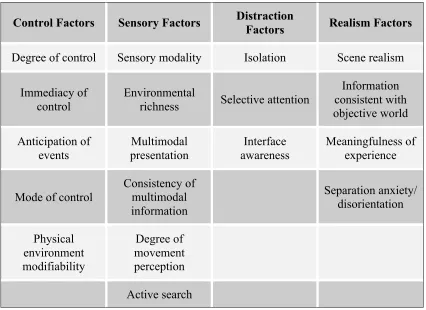
TABLE 2-‐5: FACTORS HYPOTHESIZED TO CONTRIBUTE TO A SENSE OF PRESENCE (WITMER AND SINGER, 1998)..84
TABLE 2-‐6: FIDUCIAL VS FEATURE RECOGNITION MODE (LIAROKAPIS ET AL., 2006B) ...94
TABLE 2-‐7: COMPARISON OF CHARACTERISTICS OF DIGITAL CITIES IN DIFFERENT SPACES (KODA ET AL., 2005)..102
TABLE 4-‐1: MOTIVATION REQUIRED BY USERS IN ORDER TO SHARE SENSITIVE DATA...183
TABLE 4-‐2: MOTIVATION REQUIRED BY USERS IN ORDER TO SHARE LOCATION INFORMATION...184
TABLE 5-‐1: AURA’S POSITION INFORMATION OUTPUT...216
TABLE 5-‐2: AURA’S MOVEMENT INFORMATION OUTPUT...216
TABLE 5-‐3: AURA’S GPS COMMUNICATION INFORMATION INPUT...217
TABLE 5-‐4: AURA’S SATELLITE INFORMATION OUTPUT...217
TABLE 5-‐5: DATUMS SUPPORTED BY AURA...218
TABLE 5-‐6: GRIDS SUPPORTED BY AURA...219
TABLE 5-‐7: AURA ORIENTATION INFORMATION OUTPUT...220
TABLE 5-‐8: AURA COMPASS COMMUNICATION INFORMATION INPUT...220
TABLE 5-‐9: PERSONAL INFORMATION PROCESSED BY AURA...225
TABLE 5-‐10: PRIVACY INFORMATION PROCESSED BY AURA...225
TABLE 5-‐11: REMOTE POSITION INFORMATION PROCESSED BY AURA...226
TABLE 5-‐12: AURA’S INTERNAL POSITION INFORMATION...228
TABLE 5-‐13: SAMPLE GPX FILE PRODUCED BY AURA...230
TABLE 5-‐14: SAMPLE TEXT LOG FILE PRODUCED BY AURA...231
TABLE 5-‐15: AURA’S FUNCTIONS FOR TRANSFORMING GPX TO 3D CONTENT...249
TABLE 5-‐16: ON-‐THE-‐FLY DEVELOPMENT OF 3D AURACONE OBJECTS...250
TABLE 5-‐17: ON-‐THE-‐FLY DEVELOPMENT OF 3D AURASPHERE OBJECTS...250
TABLE 5-‐18: ON-‐THE-‐FLY DEVELOPMENT OF 3D AURAVIEWPOINT OBJECTS...251
TABLE 5-‐19: ON-‐THE-‐FLY DEVELOPMENT OF 3D AURALINE OBJECTS...251
TABLE 5-‐20: ON-‐THE-‐FLY DEVELOPMENT OF 3D AURAEXALINE OBJECTS...251
TABLE 5-‐21: ON-‐THE-‐FLY DEVELOPMENT OF 3D AURAFOG...251
TABLE 5-‐22: ON-‐THE-‐FLY DEVELOPMENT OF 3D AURASIGNPOST OBJECTS...252
TABLE 5-‐23: AURA’S FUNCTIONS FOR ALTERING THE VIEWPOINT AND REPOSITIONING A SUBJECT...254
TABLE 5-‐24: CONVERTING FROM ORIENTATION COORDINATES TO VRML MATRIX COORDINATES...260
TABLE 5-‐25: COMPARISON OF POINT IN POLYGON ALGORITHMS (STEIN, 1997) ...273
TABLE 5-‐26: AURA’S COMPONENT CONTROLLER COMMANDS FOR THE AR INTERFACE...283
TABLE 5-‐28: AURA’S UTILITY COMMANDS FOR THE AR INTERFACE... 285
TABLE 5-‐29: TYPICAL MESSAGE FORMAT... 299
TABLE 5-‐30: COMPREHENSIVE DESCRIPTION OF THE AVAILABLE PROTOCOL COMMAND TYPES... 300
TABLE 5-‐31: REQUEST FOR MAIN USER PROFILE MESSAGE FORMAT... 301
TABLE 5-‐32: PROFILE EXCHANGE REJECTED BY REMOTE HOST MESSAGE FORMAT... 301
TABLE 5-‐33: VALID PROFILE HAS BEEN RECEIVED MESSAGE FORMAT... 302
TABLE 5-‐34: VALID PROFILE HAS BEEN RECEIVED DEMO MESSAGE... 302
TABLE 5-‐35: UNRECOGNISED PROFILE HAS BEEN RECEIVED MESSAGE FORMAT... 302
TABLE 5-‐36: REQUEST FOR CURRENT LOCATION MESSAGE FORMAT... 302
TABLE 5-‐37: LOCATION EXCHANGE REJECTED BY REMOTE HOST MESSAGE FORMAT... 303
TABLE 5-‐38: VALID 2D POSITION HAS BEEN RECEIVED MESSAGE FORMAT... 303
TABLE 5-‐39: VALID 2D POSITION HAS BEEN RECEIVED DEMO MESSAGE... 304
TABLE 5-‐40: VALID 3D POSITION HAS BEEN RECEIVED MESSAGE FORMAT... 304
TABLE 5-‐41: VALID 3D POSITION HAS BEEN RECEIVED DEMO MESSAGE... 304
TABLE 5-‐42: UNRECOGNISED POSITION HAS BEEN RECEIVED MESSAGE FORMAT... 304
TABLE 5-‐43: INSTANT TEXT MESSAGE FORMAT... 305
TABLE 6-‐1: AR BROWSER COMPARISON (BUTCHART, 2011)... 311
TABLE 7-‐1: NORMALITY TESTS FOR DISTANCE COVERED, MIN, AVG, MAX SPEED & TOTAL TIME REQUIRED... 371
TABLE 7-‐2: SUMMARY STATISTICS FOR AVERAGE SPEED IN BOTH INTERFACES... 379
TABLE 7-‐3: PEARSON’S CORRELATION AND THE TWO-‐TAILED SIGNIFICANCE FOR AVERAGE SPEED... 379
TABLE 7-‐4: PAIRED-‐SAMPLES T-‐TEST OUTPUT FOR AVERAGE SPEED COMPARISON... 380
TABLE 7-‐5: WILCOXON RANKED SCORES FOR THE PAIRED COMPARISON OF THE 4 OBJECTIVE VARIABLES... 381
TABLE 7-‐6: WILCOXON TEST RESULTS FOR THE PAIRED COMPARISON OF THE 4 OBJECTIVE VARIABLES... 382
TABLE 7-‐7: DESCRIPTIVE STATISTICS (I) FOR THE 7 SUBJECTIVE VARIABLES... 389
TABLE 7-‐8: DESCRIPTIVE STATISTICS (II) FOR THE 7 SUBJECTIVE VARIABLES... 389
TABLE 7-‐9: WILCOXON RANKED SCORES FOR THE PAIRED COMPARISON OF Q1 ANSWERS... 390
TABLE 7-‐10: WILCOXON RANKED SCORES FOR THE PAIRED COMPARISON OF Q5 ANSWERS... 390
TABLE 7-‐11: WILCOXON RANKED SCORES FOR THE PAIRED COMPARISON OF Q10 ANSWERS... 391
TABLE 7-‐12: WILCOXON RANKED SCORES FOR THE PAIRED COMPARISON OF Q31 ANSWERS... 391
TABLE 7-‐13: WILCOXON RANKED SCORES FOR THE PAIRED COMPARISON OF Q32 ANSWERS... 391
TABLE 7-‐14: WILCOXON RANKED SCORES FOR THE PAIRED COMPARISON OF Q38 ANSWERS... 392
TABLE 7-‐15: WILCOXON RANKED SCORES FOR THE PAIRED COMPARISON OF Q42 ANSWERS... 392
TABLE 7-‐16: WILCOXON TEST RESULTS FOR THE PAIRED COMPARISON OF 8 SUBJECTIVE VARIABLES... 392
List of Equations
EQUATION 1 ...268
EQUATION 2 ...269
EQUATION 3 ...269
EQUATION 4 ...269
EQUATION 5 ...269
EQUATION 6 ...270
EQUATION 7 ...270
EQUATION 8 ...270
EQUATION 9 ...270
EQUATION 10...270
EQUATION 11...275
EQUATION 12...275
EQUATION 13...275
EQUATION 14...276
EQUATION 15...276
EQUATION 16...276
EQUATION 17...276
EQUATION 18...276
List of Requirements
DEVICE REQUIREMENT 1 ... 148
DEVICE REQUIREMENT 2 ... 149
DEVICE REQUIREMENT 3 ... 149
DEVICE REQUIREMENT 4 ... 149
DEVICE REQUIREMENT 5 ... 149
DEVICE REQUIREMENT 6 ... 150
DEVICE REQUIREMENT 7 ... 150
DEVICE REQUIREMENT 8 ... 150
DEVICE REQUIREMENT 9 ... 155
DEVICE REQUIREMENT 10 ... 155
DEVICE REQUIREMENT 11 ... 156
DEVICE REQUIREMENT 12 ... 159
DEVICE REQUIREMENT 13 ... 159
DEVICE REQUIREMENT 14 ... 165
DEVICE REQUIREMENT 15 ... 168
FUNCTIONAL REQUIREMENT 1 ... 181
FUNCTIONAL REQUIREMENT 2 ... 182
FUNCTIONAL REQUIREMENT 3 ... 182
FUNCTIONAL REQUIREMENT 4 ... 182
FUNCTIONAL REQUIREMENT 5 ... 182
FUNCTIONAL REQUIREMENT 6 ... 183
FUNCTIONAL REQUIREMENT 7 ... 184
FUNCTIONAL REQUIREMENT 8 ... 185
FUNCTIONAL REQUIREMENT 9 ... 186
FUNCTIONAL REQUIREMENT 10... 187
FUNCTIONAL REQUIREMENT 11... 187
FUNCTIONAL REQUIREMENT 12... 188
FUNCTIONAL REQUIREMENT 13... 191
FUNCTIONAL REQUIREMENT 14... 192
FUNCTIONAL REQUIREMENT 15... 192
FUNCTIONAL REQUIREMENT 16... 194
FUNCTIONAL REQUIREMENT 17... 195
FUNCTIONAL REQUIREMENT 18... 196
FUNCTIONAL REQUIREMENT 19... 196
FUNCTIONAL REQUIREMENT 21...200
FUNCTIONAL REQUIREMENT 22...201
FUNCTIONAL REQUIREMENT 23...202
FUNCTIONAL REQUIREMENT 24...204
OPERATIONAL REQUIREMENT 1 ...166
OPERATIONAL REQUIREMENT 2 ...166
OPERATIONAL REQUIREMENT 3 ...167
OPERATIONAL REQUIREMENT 4 ...167
OPERATIONAL REQUIREMENT 5 ...168
PERFORMANCE REQUIREMENT 1...151
PERFORMANCE REQUIREMENT 2...151
PERFORMANCE REQUIREMENT 3...151
PERFORMANCE REQUIREMENT 4...156
PERFORMANCE REQUIREMENT 5...156
PERFORMANCE REQUIREMENT 6...156
PERFORMANCE REQUIREMENT 7...157
PERFORMANCE REQUIREMENT 8...188
PORTABILITY REQUIREMENT 1...148
PORTABILITY REQUIREMENT 2...148
PORTABILITY REQUIREMENT 3...158
PORTABILITY REQUIREMENT 4...158
PORTABILITY REQUIREMENT 5...170
USABILITY REQUIREMENT 1...197
USABILITY REQUIREMENT 2...197
USABILITY REQUIREMENT 3...198
Acknowledgements
I would like to express my gratitude to everyone that has contributed or has been
involved in the realisation of the research.
First, and most importantly, I would like to thank my Family and especially my Parents
who have unconditionally supported me in every possible way. Both of them stood next to me and encouraged every decision that I made, regardless of how it affected them. I am
truly obliged to them and I hope that they receive what they expect from their son. I owe them everything that I have accomplished so far and more.
Several people that I have met, discussed and collaborated with within City University London, the Department of Information Science and particularly in the giCentre have inspired me over the past few years. Dr. Vesna Brujic-Okretic, my primary supervisor, who sincerely trusted me from the beginning of this endeavour and invested in me as a researcher and as a person. Her dedication in helping me was remarkable. Prof. Jason Dykes provided valuable suggestions especially during the preliminary exploration of the subject.
Furthermore, Dr. Fotis Liarokapis planted the seed in order for me to make the decision to pursue a PhD degree. His experience and guiding proved invaluable during the course of
the project and for those reasons I need to thank him. Dr. Andrew MacFarlane was always there when I needed him, especially for clarifying any queries regarding the research
process. I must also express my gratitude to Dr. David Mountain who advised and frequently spent time with me in order to produce high quality results in every project that we collaborated. The research guidance that I received from my second supervisor,
Prof. Jonathan Raper, was invaluable for producing innovative findings and his constructive criticism added further value to the research. Likewise, I received significant
assistance from Dr. Jo Wood, especially during the last part of the research, when he helped me validate the results of the statistical analysis. Conclusively, the comments that I obtained during both preliminary examinations by Dr. Sebastian Hunt and Dr. Abdul Roudsari proved vital for the continuation of the project.
Furthermore, I am grateful to the administration of the School of Informatics, which has funded this study and invested in me as a scholar and a potential academic.
Following next, to the members of City University Research & Enterprise Unit and especially Dr. Tim Meldrum who gave me the opportunity to expose the developments of this research project to commercial investors and learn about the business trends that affect
the applicable markets.
Two individuals that I consulted, in order to overcome certain issues that affected the development aspects of the work and the final polishing of the Thesis are Nontas Chrysikos
and Sofia Papanastassiou. Furthermore, Prof. Christos Douligeris provided valuable comments regarding the final amendments. I really appreciate the effort that you put in helping me and I hope to be able to reciprocate you.
I must not forget to express my gratitude to my fellow PhD Students, who have shared their knowledge and expertise, as well as for the long creative hours that we pleasantly spent together in the office. Furthermore, I am in debt to every Individual that has trusted me and participated in the surveys that I organised for accomplishing the objectives of
this project.
In addition, I am extremely grateful to my Friends that supported my decisions and were committed to our friendship, even though I had to let them down some times. They deserve my appreciation because they realised that I had to sacrifice a lot in order to
accomplish my career goals and for their empathy. I must also be grateful to the loves of my life because they put a small stone in the development of my character and helped me reach this point in career and life, by making me more dedicated to my goals when
needed most.
I would also like to thank those who posed complications in finishing the research, which resulted in a longer than planned time scale, but also made me accomplish certain
achievements on my own. Pursuing a PhD degree was a great experience, which I will cherish and shall never forget. You were all, in one way or another, an important element
Declaration
I grant powers of discretion to the University Librarian to allow the Thesis to be copied in whole or in part without further reference to the author. This permission covers only single copies made for study purposes, subject to normal conditions of acknowledgement.
.
Abstract
This report presents research and development of dedicated system architecture, designed to enable its users to interact with each other as well as to access information on Points of Interest that exist in their immediate environment. This is accomplished through managing personal preferences and contextual information in a distributed manner and in real-time. The advantage of this system architecture is that it uses mobile devices, heterogeneous sensors and a selection of user interface paradigms to produce a socio-technical framework to enhance the perception of the environment and promote intuitive interactions. The thrust of the work has been on software development and component integration. Iterative prototyping was adopted as a development method in order to effectively implement the users’ feedback and establish a platform for collaboration that closely meets the requirements and aids their decision-making process. The requirement acquisition was followed by the system-modelling phase in order to produce a robust software prototype. The implementation includes component-based development and extensive use of design patterns over native programming. Conclusively, the software product has become the means to evaluate differences in the use of mixed reality technologies in a ubiquitous scenario.
The prototype can query a number of context sources such as sensors, or details of the personal profile, to acquire relevant data. The data (and metadata) is stored in open-source structures, so that they are accessible at every layer of the system architecture and at any time. By proactively processing the acquired context, the system can assist the users in their tasks (e.g. navigation) without explicit input – e.g. by simply creating a gesture with the device. However, advanced interaction with the application via the user interface is available for requests that are more complex.
Representations of the real world objects, their spatial relations and other captured features of interest are visualised on scalable interfaces, ranging from 2D to 3D models and from photorealism to stylised clues and symbols. Two principal modes of operation have been implemented; one, using geo-referenced virtual reality models of the environment, updated in real time, and second, using the overlay of descriptive annotations and graphics on the video images of the surroundings, captured by a video camera. The latter is referred to as augmented reality.
List of Abbreviations
2
2D TWO (2) DIMENSIONS
3
3D THREE (3) DIMENSIONS
3G THIRD (3RD) GENERATION MOBILE COMMUNICATION TECHNOLOGIES 4
4G FOURTH (4TH) GENERATION MOBILE COMMUNICATION TECHNOLOGIES A
A-‐GPS ASSISTED GPS
AAL ATM ADAPTATION LAYER AI ARTIFICIAL INTELLIGENCE
API APPLICATION PROGRAMMING INTERFACE AR AUGMENTED REALITY
ATL ACTIVE TEMPLATE LIBRARY ATM ASYNCHRONOUS TRANSFER MODE AUML AGENT UNIFIED MODELLING LANGUAGE
C
CC/PP COMPOSITE CAPABILITIES / PREFERENCES PROFILE CDC CONNECTED DEVICE CONFIGURATION
CDI CONTENT DISTRIBUTION INTERNETWORKING CE COMPACT EDITION
CD COMPACT DISC CG COMPUTER GRAPHICS
CLDC CONNECTED, LIMITED DEVICE CONFIGURATION CMS CONTEXT MANAGEMENT SYSTEM
CODEC COMPRESSOR/DECOMPRESSOR COM COMPONENT OBJECT MODEL COTS COMMERCIAL OFF-‐THE-‐SHELF CORBA COMMON OBJECT REQUEST BROKER CPU CENTRAL PROCESSING UNIT
CRM CUSTOMER RELATIONSHIP MANAGEMENT CVE COLLABORATIVE VIRTUAL ENVIRONMENTS
D
D3DM DIRECT3D MOBILE D-‐GPS DIFFERENTIAL GPS DB DATABASE
DM DATA MINING DOF DEGREES OF FREEDOM
DSSS DIRECT-‐SEQUENCE SPREAD SPECTRUM DTI U.K. DEPARTMENT OF TRADE AND INDUSTRY DTD DOCUMENT TYPE DEFINITIONS
E
EDGE ENHANCED DATA RATES FOR GSM EVOLUTION EGL EMBEDDED SYSTEMS GRAPHICS LIBRARY
EGNOS EUROPEAN GEOSTATIONARY NAVIGATION OVERLAY SYSTEM EOTD ENHANCED OBSERVED TIME DIFFERENCE OF ARRIVAL ER ENTITY RELATIONSHIP
EU EUROPEAN UNION
F
FAI FÉDÉRATION AÉRONAUTIQUE INTERNATIONALE FIPA FOUNDATION FOR INTELLIGENT PHYSICAL AGENTS FOR FRAME OF REFERENCE
FOV FIELD OF VIEW FPS FRAMES PER SECOND
G
GB GIGA BYTE
GDI GRAPHICS DEVICE INTERFACE GHZ GIGA HERTZ
GIS GEOGRAPHICAL INFORMATION SYSTEM (OR SCIENCE) GML GEOGRAPHY MARK-‐UP LANGUAGE
GNSS GLOBAL NAVIGATION SATELLITE SYSTEM GPRS GENERAL PACKET RADIO SERVICE GPS GLOBAL POSITIONING SYSTEM GPU GRAPHIC PROCESSOR UNIT GPX GPS EXCHANGE
GSM GLOBAL SYSTEM FOR MOBILE COMMUNICATIONS GUI GRAPHIC USER INTERFACE
H
H/W HARDWARE
HCI HUMAN COMPUTER INTERACTION HMD HEAD MOUNTED DISPLAY
HSDPA HIGH-‐SPEED DOWNLINK PACKET ACCESS HSUPA HIGH-‐SPEED UPLINK PACKET ACCESS HTML HYPERTEXT MARK-‐UP LANGUAGE HTTP HYPERTEXT TRANSFER PROTOCOL
I
IETF INTERNET ENGINEERING TASK FORCE IPC INTER-‐PROCESS COMMUNICATION IPS INFORMATION PRESENTATION SYSTEM IR INFORMATION RETRIEVAL
ISP INTERNET SERVICE PROVIDER ISV INDEPENDENT SOFTWARE VENDORS IT INFORMATION TECHNOLOGY
ITU INTERNATIONAL TELECOMMUNICATION UNION
J
J2EE JAVA ENTERPRISE EDITION J2ME JAVA MOBILE EDITION J2SE JAVA STANDARD EDITION JSR JAVA SPECIFICATION REQUEST
K
KBPS KILO BITS PER SECOND
KDD KNOWLEDGE DISCOVERY IN DATABASES
L
LBS LOCATION BASED SERVICE LCD LIQUID CRYSTAL DISPLAY LED LIGHT-‐EMITTING DIODE LOD LEVEL OF DETAIL
M
M3G MOBILE 3D GRAPHICS MAH MILLIAMPERE HOUR MB MEGA BYTE
MBPS MEGA BITS PER SECOND MDA MOBILE DATA ASSOCIATION
MEMS MICRO-‐ELECTRO MECHANICAL SYSTEMS MFC MICROSOFT FOUNDATION CLASSES MIDP MOBILE INFORMATION DEVICE PROFILE MMS MULTIMEDIA MESSAGING SERVICE MP MEGA PIXEL
MR MIXED REALITY
N
NMEA NATIONAL MARINE ELECTRONIC ASSOCIATION NPC NON-‐PLAYER CHARACTER
NPR NON-‐PHOTOREALISTIC RENDERING NTP NETWORK TYPE PROTOCOL NVML NAVIGATION MARK-‐UP LANGUAGE
O
OFDM ORTHOGONAL FREQUENCY-‐DIVISION MULTIPLEXING OEM ORIGINAL EQUIPMENT MANUFACTURER
OLE OBJECT LINKING AND EMBEDDING OMA OPEN MOBILE ALLIANCE
OO OBJECT-‐ORIENTED OP OPTIONAL PACKAGE
OPES OPEN PLUGGABLE EDGE SERVICES OS OPERATING SYSTEM
OSI OPEN SYSTEMS INTERCONNECTION
P
P2P PEER TO PEER
PAN PERSONAL ACCESS NETWORK (BLUETOOTH) PC PERSONAL COMPUTER
PCB PRINTED CIRCUIT BOARD PDA PERSONAL DIGITAL ASSISTANT
PDT POSITION DETERMINATION TECHNOLOGY PIE POCKET INTERNET EXPLORER
PND PERSONAL NAVIGATION DEVICE POI POINT OF INTEREST
POIX POINT OF INTEREST EXCHANGE PSE PERSONAL SERVICE ENVIRONMENT
Q
QOS QUALITY OF SERVICE QR QUICK RESPONSE
R
RAM RANDOM ACCESS MEMORY RE REQUIREMENTS ENGINEERING RFC REQUEST FOR COMMENTS
RFID RADIO FREQUENCY IDENTIFICATION RMI REMOTE METHOD INVOCATION ROM READ ONLY MEMORY
RPC REMOTE PROCEDURE CALL
S
S/W SOFTWARE
SBSOD SANTA BARBARA SENSE OF DIRECTION SCALE SD STRATEGIC DEPENDENCY MODEL
SDK SYSTEM DEVELOPMENT KIT SMS SHORT MESSAGING SERVICE SR STRATEGIC RATIONALE MODEL SVG SCALABLE VECTOR GRAPHICS
T
TCP/IP TRANSMISSION CONTROL PROTOCOL / INTERNET PROTOCOL TDOA TIME DIFFERENCE OF ARRIVAL
U
UAPROF USER AGENT PROFILE UDP USER DATAGRAM PROTOCOL UI USER INTERFACE
UML UNIFIED MODELLING LANGUAGE UMPC ULTRA MOBILE PERSONAL COMPUTERS
UMTS UNIVERSAL MOBILE TELECOMMUNICATIONS SYSTEM UTC COORDINATED UNIVERSAL TIME
UTM UNIVERSAL TRANSVERSE MERCATOR UUID UNIVERSALLY UNIQUE IDENTIFIER URL UNIVERSAL RESOURCE LOCATOR UX USER EXPERIENCE
V
VE VIRTUAL ENVIRONMENT VR VIRTUAL REALITY
VRML VIRTUAL REALITY MODELLING LANGUAGE VSWM VISUO-‐SPATIAL WORKING MEMORY
W
W-‐CDMA WIDEBAND CODE DIVISION MULTIPLE ACCESS W3C WORLD WIDE WEB CONSORTIUM
WDS WIRELESS DISTRIBUTION SYSTEM WEBI WEB INTERMEDIARIES
WGS84 WORLD GEODETIC SYSTEM 1984 WI-‐FI WIRELESS FIDELITY
WLAN WIRELESS LOCAL AREA NETWORK WP7 WINDOWS PHONE 7
WWW WORLD WIDE WEB
X
X3D EXTENSIBLE 3D
1 Introduction
This chapter constitutes an introduction to the theme of the research undertaken in this project. It introduces the motivation that has driven the research, followed by the principal aims and objectives of the project. Furthermore, the measurable contributions of the research and the contribution made to knowledge in the course of these investigations are presented. The chapter concludes with a brief presentation of the organisation of the material and an overview of the document structure.
1.1 Research Problem & Questions
However, the visualisation and interaction methods, which have been integrated to applications that try to satisfy such diverse user information needs through the use of mobile devices, have been fairly narrow, especially when compared to desktop alternatives. Early devices could represent context only in textual forms, without being technologically capable of providing interactive environmental representations. Newer devices started to make use of two-dimensional map interfaces in order to depict the user surroundings. Although this has been a positive leap, several issues surfaced regarding the visualisation and interaction features of such systems. Only recently, we have started observing mobile context-sensitive applications that utilise advanced user interfaces which not only try to achieve good utility, but also try to enhance the user experience. These interfaces are capable of representing real-time context in various forms, as well as for depicting the user’s surroundings and any potentially relevant entities, in a virtual environment. These entities can be remote objects or other users which the local user may wish to interact with and, therefore, a goal of the interface is to support this task. There are several types of such environments (Milgram and Kishino, 1994) which are capable of combining artificial and real information in a single shared space, each one presenting distinct characteristics on the development and use of the system. In this project, we will explore virtual and augmented reality as the medium to blend diverse information types. It is against this background that a research problem surrounding the project presented in this thesis started to emerge. It could be summarised as follows:
“Does seamless integration of information spaces with real-time contextual information sensitivity contribute to the satisfaction of a mobile user’s information needs?”
By considering the research problem domain presented above, several interrelated Research Questions emerge, which are explored in this thesis. They are presented at this at this point, as they naturally occur in the sequence of stages of a research process:
Our intention was to produce an extensible framework that can easily support supplementary, application-relevant functionalities. Therefore, in order to satisfy several user information needs, the proposed framework should not serve a specific application domain.
2. “Which are the users’ main expectations of a mobile mixed-reality context-sensitive framework that may have a wide range of ubiquitous applications in areas such as entertainment, marketing, wayfinding and navigation?”
Certain interface paradigms (i.e. virtual and augmented reality) were selected in this study, with distinct characteristics, to investigate how effectively do they influence the decision-making process of a user. The issues that facilitate this process include cognitive abilities, system design, applied algorithms, technological solutions and usability suggestions amongst other. This leads to the next Research Question which can be formulated as:
3. “What technical specification (to be considered in the design and implementation process) would provide effective mobile context-aware services that answer the user requirements as gathered in the first stage of the research (related to Research Question1)?”
The Research Questions as formulated above suggest that it is necessary to adopt a scenario where ubiquitous access to information is ensured in order to evaluate whether the proposed features support the task accomplishment and how easy and intuitive it is for the user to operate the proposed system. Out of the several possible application domains (as mentioned in the Research Question 2) the selected domain for the implementation was urban navigation. It is a context with which the users are widely familiar and as such it could assist in the examination of the design issues and in evaluating various interface solutions by distinguishing effectively the features of different offered paradigms, as well as consumer devices and information metaphors. Furthermore, the adoption of this scenario can present the ability of the framework to successfully operate in unfamiliar environments. The next Research Question is presented below.
4. “Is there a difference between AR and VR for urban navigation, primarily, in terms of user performance and, secondarily, in terms of user experience?”
interfaces representing the user's surroundings and the dynamical connections between and (ii) the acquisition and distribution of contextual information ubiquitously and in real time. To achieve this enrichment and enhanced context this project has sought to conduct research into the representational and communicative aspects of context-aware services, and develop and evaluate alternative user-centred approaches that attempt to make information more relevant, appropriate, comprehensible and intuitive for mobile individuals. To accomplish this goal, we had to follow an agile development approach. The first phase of the project was the requirement acquisition phase which involved an analysis of the responses provided to a survey questionnaire by potential end-users. These responses contributed to the requirement list which was also influenced by the results of other relevant research projects. The development phase focused intensively in implementing the requirements to an innovative, context-sensitive, mixed reality framework. Nevertheless, invaluable suggestions about several associated concepts sprung out of an expert user evaluation which took place when the development of one of the two interfaces (i.e. VR) has completed and collected feedback from 8 individuals.. The collected user feedback informed the following development phase, which introduced the novel context-sensitive AR interface. The last part of the process introduced an Extensive Evaluation test that took place in the field with 23 regular specialist users. This summative evaluation task objectively examined user performance between two conditions (AR vs VR) in an urban navigation scenario and also produced subjective responses to questions about the framework’s usability features.
This has required an interdisciplinary approach that has drawn upon Information Science, specifically Geographic Information Science, Information Society, Virtual and Augmented Reality, Mobile Computing, particularly Context-aware Services, and Information Communication Technologies. This section provided a brief description of the research background, the key questions, the overall character of the research method and development processes, the research outcomes, as well as the domains in which the research lies. The following sections of this chapter explain in full detail the genesis of the problem, as well as the aims and more specific objectives that have been investigated. The Contributions Chapter presents the measurable contributions of the research and the contribution made to knowledge.
1.2 Context Framework
The era we live in is often referred to as Information Age. With ever expanding mobile technologies, Location Based Services (LBS), which integrate the location information with the potentially useful and interesting content for the user, have already been successfully introduced and started to generate significant profit for service providers. A report (Fuente et al., 2005), which presents the findings of a mission organised by the former U.K. Government’s Department of Trade and Industry (DTI), shows that mass-market consumer applications based on Global Navigational Satellite System (GNSS) products are seeing significant growth, especially in developed, in terms of the use of technology, countries.
Considering the European Union (EU) initiative to develop an independent satellite positioning system (i.e. Galileo), inter-operable with the existing Global Positioning System (GPS), we can deduce that, in the future, location-based services will see further development and will become part of everyday interactions. Consumers in continental Europe have not adopted this kind of services on a significant scale and still resort to the use of basic mobile communication methods for exchanging contextual information. Initially, the operational purpose of mobile phones was limited to verbal communication, but the progress in related technological fields has produced new services for other means of communication, such as instant text messaging and robust devices like GPS-enabled Personal Digital Assistants (PDA). Currently, consumers expect easily integrated solutions to evolve, with rich content, embedded privacy & security mechanisms, advanced functionalities and well-defined business models. Japan has already produced various successful applications based on explicit mobile platforms, mainly because of the wide availability of advanced hardware solutions and infrastructure. Unfortunately, mobile devices and services with built-in positional awareness features have only recently started to become widely available in the European market. This is contradictory to the use of technology that is made on other platforms, like the cumbersome desktop configurations.
emergency management. Mike Short, Honorary President of the Mobile Data Association (MDA), argues that some of the reasons, which sustain this low rate of developmental progress, include the variable positional accuracy and the long interval that is required to obtain a position fix. Most important, however, is considered the fact that service providers have focused on advancing a wide variety of technologies and infrastructure, such as 3G/4G networks and videoconferencing solutions (Thomas, 2006), but not on the content. It seems imperative, now that the focus is placed on the area of ubiquitous operation, to design coherent mobile context-sensitive solutions, which would effectively provide advanced digital information services to their users.
According to the formal definition provided by the International Telecommunication Union (ITU), mobile applications are add-on software for handheld devices, such as smartphones and personal digital assistants (PDA) (ITU, 2011). This somewhat contradicts the concept of all LBS being truly mobile. Most LBS can hierarchically fit into two distinctive categories. Most common are those that reveal to the user the occupied position on earth, including additional information like orientation and interaction options. Less frequently and out of the scope of an average consumer, one can find applications that allow a 3rd party to examine positional and derived data of a remote subject, in real time. Out of these two types, only the second can always comply with the definition of a mobile application, because it is expected to exchange up-to-date context with a 3rd party, in real time.
1.3 Motivation & Background
attributes, also taking into account time as a variable. The nature of such a system could be characterised as context-aware and to some extent, ubiquitous and pervasive (Chen and Kotz, 2000). An advantage of a mobile system like this is that it allows its users to retrieve real-time information from remote entities and offer its services according to their latest preferences or other up-to-date user context.
It is obligatory, though, for the system to respond to certain changes of the environment or user activity by augmenting the interface towards the user to reflect those changes. Discovering and taking advantage of changes, such as the proximity of another user, may trigger collaboration between the two parties and allow for other social interactions to take place. The probability of such interactions may increase, for example, when certain predefined social criteria are in place and both actors match them. If a certain scenario is integrated in the system, and both parties have the option to accept/reject it, the application could be used to initiate interaction and communication, on a peer-to-peer basis.
knowledge about the surrounding area and they are not restricted only to a bird’s eye view. Navigation in 3D environments appears more realistic and, particularly for the young user, invites for deeper exploration of the represented area. The simulation of the wayfinding tasks becomes more fulfilling, especially if we consider that movement takes place by accumulating additional Degrees of Freedom (DOF). Using controlled overlaying of objects (e.g. images, text or other) over the imagery of the real world, allows for the provision of more information in a given display area, without increasing the complexity of the interface (Papakonstantinou and Brujic-Okretic, 2006), which can have an impact when dynamically altering the details of a modelled entity.
This work is placed in the context of a specific application developed at the Department of Information Science of City University London, in 2005: Mobile Virtual Reality Interaction with Global Positioning Systems (Papakonstantinou, 2005), as the MSc dissertation of the author. The main aim of this study was to familiarise with the technologies and methods used in the field, with a view to creating a location-aware system, which works in real-time and in which the changes are dynamically reflected on the user interface. The preliminary work concentrated on exploring this concept and the limited technical developments took place on a laptop computer, so as not to be restricted by the early mobile device limitations. The advantage of enhancing and transforming the system to its mobile version is that it can produce an application, which is technically advanced and challenging, but also actively addresses a number of cognitive and social issues involved with its exploitation. This is accomplished by integrating, in a straightforward way, a smartphone, certain sensors and a selection of information visualisation environments. If this approach was implemented at a commercial level, it could significantly extend the traditional LBS approach in a way that it would provide truly ubiquitous operation and advanced user interactions leading to collaboration and advanced information retrieval capabilities. This can be demonstrated by suggesting a number of potential, commercially viable, location-based and in extent context-aware applications, which can be developed by utilising the framework.