DIFFERENT ANALYTICAL METHODS FOR THE
DETERMINATION OF NIFEDIPINE IN THE TABLET
FORMULATION
Dissertation
Submitted to
THE TAMILNADU Dr. M. G. R. MEDICAL UNIVERSITY
,
CHENNAI
In partial fulfillment for the award of the degree of In partial fulfillment for the award of the degree ofIn partial fulfillment for the award of the degree of In partial fulfillment for the award of the degree of
MASTER OF PHARMACY
IN
PHARMACEUTICAL ANALYSIS
DEPARTMENT OF PHARMACEUTICAL ANALYSIS
K. M. COLLEGE OF PHARMACY
MELUR ROAD, UTHANGUDI
MADURAI - 625107
This is to certify that the dissertation entitled "DIFFERENT ANALYTICAL
METHODS FOR THE DETERMINATION OF NIFEDIPINE IN THE TABLET
FORMULATION" by SASI RUBA. C (Reg. No. 261230054 ) in partial fulfillment of the
degree of Master of Pharmacy in Pharmaceutical Analysis under The Tamil Nadu
Dr. M. G. R. Medical University, Chennai, done at K. M. COLLEGE OF PHARMACY,
MADURAI - 625107, is a bonafide work carried out by her under my guidance and
supervision during the academic year APRIL 2013-2014. The dissertation partially or fully
has not been submitted for any other degree or diploma of this university or other
universities.
GUIDE HOD
Mr. M. S. Prakash, M. Pharm., Dr.M.Sundarapandian, M. pharm., Ph.D.,
Professor, Professor and HOD,
Dept. of Pharmaceutical Analysis, Dept. of Pharmaceutical Analysis,
K.M College of Pharmacy, K.M College of Pharmacy,
Madurai - 625107. Madurai - 625107.
PRINCIPAL
Dr. S. Venkataraman, M. Pharm., Ph.D.,
Professor and Head,
Dept. of Pharmaceutical Chemistry,
K. M. College of Pharmacy,
Madurai - 625107.
CERTIFICATE
This is to certify that the dissertation entitled "DIFFERENT ANALYTICAL
METHODS FOR THE DETERMINATION OF NIFEDIPINE IN THE TABLET
FORMULATION" is a bonafide work done by SASI RUBA. C (Reg. No. 261230054 )
K. M. COLLEGE OF PHARMACY, MADURAI - 625107, in partial fulfillment of the
University rules and regulations for award of Master of Pharmacy in Pharmaceutical
Analysis under my guidance and supervision during the academic year APRIL
2013-2014.
GUIDE HOD
Mr. M. S. Prakash, M. Pharm., Dr.M.Sundarapandian, M. Pharm., Ph.D.,
Professor, Professor and HOD,
Dept. of Pharmaceutical Analysis, Dept. of Pharmaceutical Analysis,
K.M College of Pharmacy, K.M College of Pharmacy,
Madurai - 625107. Madurai - 625107.
PRINCIPAL
Dr. S. Venkataraman, M. Pharm., Ph.D.,
Professor and Head,
Dept. of Pharmaceutical Chemistry,
K. M. College of Pharmacy,
I humbly submit this work to the Lord Almighty, without whom it would have been
unsuccessful.
I owe a great many thanks to a great many people who helped and supported me
during the writing of this book. It affords me an immense pleasure to acknowledge
with gratitude the help, guidance and encouragement rendered to me by all those
eminent personalities to whom I owe a substantial measure for the successful
completion of this endeavor.
First and foremost, I wish to express my deepest love and thanks to my beloved
parents, T. Chandra Bose, C. Chitra, my mother"in"law Mrs. Lourdhumary, father"
T. Chandra Bose, C. Chitra, my mother"in"law Mrs. Lourdhumary, father"
T. Chandra Bose, C. Chitra, my mother"in"law Mrs. Lourdhumary, father"
T. Chandra Bose, C. Chitra, my mother"in"law Mrs. Lourdhumary, father"
in"law Mr. R. Lourdhusamy and my husband L. Charles Raja
in"law Mr. R. Lourdhusamy and my husband L. Charles Raja
in"law Mr. R. Lourdhusamy and my husband L. Charles Raja
in"law Mr. R. Lourdhusamy and my husband L. Charles Raja who left me to myself
to learn, to build, to discover my own riches and to paddle my own canoes. Though
Millions of words are too short to express my love for you, thank you for your
unconditional love and sacrifices for me.
It's my extreme privilege to honor and I have been blessed by lord to work under
the guidance of my Guru Prof. M.S. Prakash, M.Pharm.,
Prof. M.S. Prakash, M.Pharm.,
Prof. M.S. Prakash, M.Pharm.,
Prof. M.S. Prakash, M.Pharm., Department of
Pharmaceutical Analysis, K.M. College of Pharmacy, Madurai, for his valuable
guidance, inspiration, encouragement and constant suggestions which endless
helped me to complete this project work successfully.
I would like to express my sincere thanks to Prof. M. Nagarajan, M.Pharm.,
Prof. M. Nagarajan, M.Pharm.,
Prof. M. Nagarajan, M.Pharm.,
Prof. M. Nagarajan, M.Pharm.,
M.B.A.,D.M.S.,(IM).,D.M.S(BM).,
M.B.A.,D.M.S.,(IM).,D.M.S(BM).,
M.B.A.,D.M.S.,(IM).,D.M.S(BM).,
M.B.A.,D.M.S.,(IM).,D.M.S(BM)., Chairman, K.M. College of Pharmacy, who taken
I express my honorable thanks to Dr. S. Venkataraman, M.Pharm., Ph.D.,
Dr. S. Venkataraman, M.Pharm., Ph.D.,
Dr. S. Venkataraman, M.Pharm., Ph.D., Principal
Dr. S. Venkataraman, M.Pharm., Ph.D.,
and Head Department of Pharmaceutical chemistry, K.M.College of Pharmacy,
Madurai for his valuable suggestions and encouragement extended through this
work.
It would be my pleasure to express my thanks profusely to such an individual
Dr.M.Sundarapandian, M.Pharm., Ph.D.,
Dr.M.Sundarapandian, M.Pharm., Ph.D.,
Dr.M.Sundarapandian, M.Pharm., Ph.D.,
Dr.M.Sundarapandian, M.Pharm., Ph.D., Professor and Head Department of
pharmaceutical analysis, for his enthusiasm, motivation and constant
encouragement during my work.
I wish to express a special thanks to Mrs.B.Sasikala
Mrs.B.Sasikala
Mrs.B.Sasikala
Mrs.B.Sasikala Lab Attender and Mrs.J.Sri
Mrs.J.Sri
Mrs.J.Sri
Mrs.J.Sri
Devi
Devi
Devi
Devi Lab Assistant for their kind and timely help during lab work.
It is my duty to say a special word of thanks to Mrs.M.Shanthi B.A.,M.LiSc,M.Phil.,
Mrs.M.Shanthi B.A.,M.LiSc,M.Phil.,
Mrs.M.Shanthi B.A.,M.LiSc,M.Phil.,
Mrs.M.Shanthi B.A.,M.LiSc,M.Phil.,
Librarian and Mrs. Anjelo Merina Priya
Librarian and Mrs. Anjelo Merina Priya
Librarian and Mrs. Anjelo Merina Priya
Librarian and Mrs. Anjelo Merina Priya Library assistant, K.M. College of
pharmacy for their timely help during this work.
I wish to thank all teaching and non"teaching staffs for their kind co"operation
throughout my course and project work.
Words are inadequate to express my deep sense of gratitude to my lovable sisters
Mrs.C.Sasi Rekha Msc.Nursing, Er. Kamesh Prasad, Mrs.Jancy Rani Msc.Nursing,
Mrs.C.Sasi Rekha Msc.Nursing, Er. Kamesh Prasad, Mrs.Jancy Rani Msc.Nursing,
Mrs.C.Sasi Rekha Msc.Nursing, Er. Kamesh Prasad, Mrs.Jancy Rani Msc.Nursing,
Mrs.C.Sasi Rekha Msc.Nursing, Er. Kamesh Prasad, Mrs.Jancy Rani Msc.Nursing,
Mr. Deepak
Mr. Deepak
Mr. Deepak
Mr. Deepak and to my lovable brother Er. Justin Dhiravium
Er. Justin Dhiravium
Er. Justin Dhiravium
Er. Justin Dhiravium M.E (Thermal) for
their valuable suggestions and support extended throughout the course of this
Ms.Renita, Ms.Karthiga, Ms.Renjitha, Ms.Prasuna, Ms.Shobana, Ms.Kanchana,
Ms.Renita, Ms.Karthiga, Ms.Renjitha, Ms.Prasuna, Ms.Shobana, Ms.Kanchana,
Ms.Renita, Ms.Karthiga, Ms.Renjitha, Ms.Prasuna, Ms.Shobana, Ms.Kanchana,
Ms.Renita, Ms.Karthiga, Ms.Renjitha, Ms.Prasuna, Ms.Shobana, Ms.Kanchana,
Mrs.Sanitha, Ms.Asha, Mr.Niruban Chakravarthy, Mr.Santhana Kumar,
Mrs.Sanitha, Ms.Asha, Mr.Niruban Chakravarthy, Mr.Santhana Kumar,
Mrs.Sanitha, Ms.Asha, Mr.Niruban Chakravarthy, Mr.Santhana Kumar,
Mrs.Sanitha, Ms.Asha, Mr.Niruban Chakravarthy, Mr.Santhana Kumar,
Mr.Veeraiah, and Mr.Sudheer Kumar
Mr.Veeraiah, and Mr.Sudheer Kumar
Mr.Veeraiah, and Mr.Sudheer Kumar
Mr.Veeraiah, and Mr.Sudheer Kumar for their friendships and support.
It’s my pleasure to extend my sincere thanks to Mr.D.Shankar, M.Pharm., Dsm.,
Mr.D.Shankar, M.Pharm., Dsm.,
Mr.D.Shankar, M.Pharm., Dsm.,
Mr.D.Shankar, M.Pharm., Dsm.,
Assistant Professor & Research Coordinator, K.M. College of Pharmacy
Assistant Professor & Research Coordinator, K.M. College of Pharmacy
Assistant Professor & Research Coordinator, K.M. College of Pharmacy
Assistant Professor & Research Coordinator, K.M. College of Pharmacy, for helping
in my project work.
I might have forgotten to name a few people, behind this work, but still really
thank to all concerned individuals for their support to complete this work
successfully in time.
THANKS TO ALL WITH MEMORY
CONTENTS
CHAPTER NO. NAME OF THE CHAPTER PAGE NO.
1 INTRODUCTION 1
2 DRUG PROFILE 19
3 LITERATURE REVIEW 23
4 INTRODUCTION TO PRESENT STUDY 33
5 AIM OF PRESENT STUDY 36
6 METHODOLOGY 37
7 RESULTS AND DISCUSSION 72
8 CONCLUSION 75
BIBLIOGRAPHY 76
% - Percentage
QS - Quinine sulphate
l
- Lambda
g m
- Microgram
w/w - Weight by weight
v/v - Volume by volume
/
g ml m
- Microgram per milliliter
Conc - Concentration
mg - Milligram
ml - Milliliter
nm - Nanometer
UV- Vis - Ultra violet-Visible
Em - Emission
Ex - Excitation
ng - Nanogram
RP-HPLC - Reverse phase High Performance Liquid Chromatography
Std - Standard
SD - Standard Deviation
Wt - Weight
LOD - Limit of Detection
LOQ - Limit of Quantitation
NF - Nifedipine
HPTLC - High-Performance Thin Layer Chromatography
HPLC - High-Performance Liquid Chromatography
LC - Liquid Chromatography
GC - Gas Chromatography
LC-MS - Liquid Chromatography-Mass spectrometry
RSD - Relative Standard Deviation
GC-MS - Gas Chromatography-Mass Spectrometry
ICH - International Conference on Harmonization
AR - Analytical reagent
e.g. - Example gratitis
FDA - Food and Drug Administration
gm - Gram
S. No - Serial number
0
C - Degree centigrade
CE-MS - Capillary Electrophoresis-Mass Spectrometry
PMT - Photo multiplier tube
WHO - World Health Organization
INTRODUCTION
PHARMACEUTICAL ANALYSIS
Pharmaceutical analysis is an interdisciplinary subject and derives its principles from
various branches of science like chemistry, physics, microbiology, nuclear science and
electronics.
Analytical determination is based on the measurement of some physical, chemical or
structural properties which are related directly or indirectly to the amount of desired constituent
present in the sample.
DRUG
Drug is referred to as medicine or medication, can be loosely defined as any chemical
substance intended for use in the medical, diagnosis, cure, treatment, or prevention of disease.
Drugs are the chemicals which are originated from either organic or inorganic. Some property of
medicinal agent is used to measure them qualitatively or quantitatively.
The Pharmaceutical analysis is intended as a collection of all methods and procedures on
all possible pharmaceutical compounds. Both classical methods as well as instrumental methods
of analysis are required in quality control work. In modern pharmaceutical analysis separation
techniques such as HPLC, HPTLC and GC are employed nowadays for the analysis of drugs in
biological fluids, raw materials and dosage forms. The analysis of drugs by functional group
reactions may be required to provide sensitivity and selectivity purpose. The electro analytical
methods of analysis are advantageous to analyse certain group of pharmaceuticals but nowadays
the use of electrochemical methods are employed for detecting analytes in HPLC eluates.
The electronic absorption spectroscopy in near UV and Visible wavelength regions is a
familiar approach in the analysis of active pharmaceutical ingredients and the formulations
containing them. However it lacks the information of relationship of structure of analyte and the
environment of the molecule to the observed spectrum. Fluorescence spectroscopy is well known
and widely used technique in chemical analysis. This technique is limited in the quantification of
pharmaceuticals possessing fluorescent character. However in recent days non-fluorescent
Chapter 1
Introduction
tagging with a fluorescent molecule or by quenching ability of certain chemicals. Radio chemical
methods are other catogories of pharmaceutical analysis employed for radio pharmaceuticals.
Radio immuno assay promises to be a powerful analytical technique for determining trace level
of drugs in complex biological matrices. The classical methods of analysis such as titrimetric
methods and gravimetric methods have been restricted in the determination of bulk inorganic
pharmaceuticals and excipients.
Quality assurance plays a important role in determining the safety and efficacy of
medicine. Highly specific and sensitive analytical techniques are important in the design
development, standardisation and quality control of medicinal products. They are also important
in pharmacokinetics and drug metabolism studies. Modern instrumental methods are extremely
sensitive providing precise and detailed information from small samples of material. All drug
substances, their formulated dosage forms are subjected to strict quality assurance procedures.
Pharmacokinetic studies often requires measurements in the microgram, nanogram or
picogram/ml range. Powerful coupled separative-detector system such as GC-MS, LC-MS,
CE-MS are used. The above systems are extremely versatile and expensive much valuable work can
be still accomplished with the help of UV-spectrophotometry, spectrofluorimetry and
polarography.
ANALYTICAL CHEMISTRY:
It can be defined as the science and art of determining the composition of materials ,in
terms of the elements or compounds contained either qualitatively or quantitatively.(42) It is
concerned with the identification of a substance, the elucidation of its structure and quantitative
analysis of its composition. (43) It is divided into two parts,
A . Qualitative analysis
B . Quantitative analysis
Qualitative Analysis:
Qualitative analysis refers to the identity of the drug or identity of the elements radicals
Quantitative Analysis:
Quantitative analysis involves determination of percentage purity of raw drugs or
quantity of drug present in the given dose of formulation. To achieve the above aspects different
analytical methods are needed.
TYPES OF ANALYSIS:
MODERN CLASSIFICATION:
1. Classical method of analysis Acid - Base titration
Redox titration
Complexometric titration
Non aqueous titration
Diazotisation titration
Gravimetry
2. Instrumental method of analysis
Electro analytical techniques
Spectroscopic techniques
3. Separation technique
Chromatography - hyphenated techniques
4. Biological / Microbiological method of analysis
Microbiological assay
Bio assay
5. Radiochemical methods 1. Classical method of analysis:
It can be subdivided into two types titrimetry and gravimetry. Titrimetry method of
analysis involves use of standard reagent. The analyte in solution is made to react with
definite volume of the standard reagent of known concentration.
2. Instrumental method of analysis:
(a) Electro analytical techniques involves,
Potentiometry
Amperometry
Conductometry
Coulometry
Chapter 1
Introduction
Spectroscopy is the measurement and interpretation of electromagnetic radiation
absorbed, scattered or emitted by atoms, molecules or other chemical species.The
absorption or emission is associated with changes in energy states of the interacting
chemical species and since each species has characteristic energy states, spectroscopy can
be used to identify the interacting species.
The principle types of spectroscopic techniques are,
Ultraviolet and visible spectroscopy
Fluorescence and phosphorescence spectroscopy
Atomic spectroscopy (emission and absorption)
Infrared spectroscopy
X-ray spectroscopy
Nuclear magnetic resonance spectroscopy
Electron spin resonance spectroscopy
3. SEPARATION TECHNIQUES:
Chromatography:
Chromatography is a group of techniques for the separation of the compounds of
mixtures by their continuous distribution between two phases one of which is moving
past the other .(1b)
FLOW CHART TYPES OF CHROMATOGRAPHY [6]
CHROMATOGRAPHY
Dept. of Pharmaceutical Analysis 4 Adsorption
Chromatography
Partition Chromatography
Ion Exchange Chromatography
Exclusion Chromatography
Electro Chromatography
Gas-solid Chromatography
Liquid Gas-liquid
Chromatography
Liquid
Column
Cation Exchanger
Anion Exchanger
Hyphenated - Techniques :
Gas Chromatography - Mass Spectroscopy (GC - MS)
Liquid Chromatography - Mass Spectrometry (LC - MS)
Liquid Chromatography - Nuclear Magnetic Resonance
Liquid Chromatography - Fourier Transform Infrared
ULTRAVIOLET AND VISIBLE ABSORPTION SPECTROPHOTOMETRY
Spectroscopy is the study of interaction of matter with electromagnetic radiation.
A beam of photons constitute electromagnetic radiations (EMR) in which photons are
distributed in energy bundles. Based on wavelength, frequency and energy of radiation,
the electromagnetic spectrum is divided into following rays: Cosmic rays
Gamma rays X-rays
Ultra-violet rays Visible rays Infrared rays Microwave rays Radio waves
The UV region in electromagnetic spectrum is from 200 nm to 400 nm and the
visible region in electromagnetic spectrum is from 400 nm to 800 nm. The two laws
which govern the UV -Visible spectroscopy are Beer's law and Lambert's law.
Beer's law states that the rate of decrease of intensity of radiation with
concentration of absorbing species is proportional to the intensity of incident radiation. Column
Chromatography Paper Chromatography Thin layer Chromatography
Chapter 1
Introduction
The absorbance A, of a solution is defined as the logarithm to base 10 of the reciprocal of
the transmittance T, for monochromatic light, and is expressed by the equation: A = log10(I/T) = log10(I0/I)
where I = The intensity of transmitted monochromatic light,
I0 = The intensity of incident monochromatic light and T = I/I0
In the absence of other physio-chemical factors, the measured absorbance (A) is
proportional to the path length (d) through which the light passes and to the concentration
(c) of the substance in accordance with the expression
A = cd
where ε is the molar absorptivity when d is expressed in cm and c in moles per litre.
The expression A(1%, 1 cm) representing the specific absorbance of a dissolved
substance refers to the absorbance of a 1.0% w/v solution in a 1 cm cell and measured at
a defined wavelengh so that
A(1%, 1 cm) = 10εεεε/M
where M is the molecular weight of the substance being examined.
The specific absorbance is therefore the notional absorbance of a 1-cm layer of a
1% w/v solution of the absorbing solute, its value at a particular wavelength in a given
solvent being a property of the solute. The absorbance of the solution is usually measured
in a cuvette with 1 cm path length.
In measuring the absorbance of a solution at a given wavelength, the absorbance
of the reference cell and its contents should not exceed 0.4 and is preferably less than 0.2
when measured with reference to air at the same wavelength.
The absorption spectrum is plotted with absorbance or function of absorbance as
ordinate against wavelength of function of wavelength as abscissa. (8)
Apparatus :
Spectrophotometers suitable for measuring in the ultraviolet and visible range of
the spectrum consist of an optical system capable of producing monochromatic light in
the range 200 nm to 800 nm and a device suitable for determining the absorbance.
Instrument Components : Light source
Monochromator
Sample / Reference cells
Detector
Light Source :
Tungsten Filament lamp - for production of visible radiation.
Hydrogen - Deuterium discharge lamp - for production of UV radiation.
Monochromator :
The various wavelength from light source are separated with a prism or grating and then
selected by slits such that the rotation of the prism causes a series of continuously increasing
wavelengths to pass through the slits for recording purposes. The selected beam is
monochromatic which is then divided into two beams of equal intensity.
Sample / Reference cells :
Sample / Reference can be contained in cells made of a material which is transparent
throughout the region under study. Glass cannot be used since it absorbs strongly in the ultra
violet region because glass are made up of alkali earth metals. Quartz are used in UV region.
Glass can be satisfactorily used in visible region.
Detectors :
Photomultiplier tubes and photo diodes are the two important type of photo detectors.
For the determination of substances by spectrophotometric techniques, precise determinations of
the light intensities are necessary. Photoelectric detectors are most frequently used for this
purpose. They must be employed in such a way that they give response linearly proportional to
the light input and they must suffer from drift . (1b)
Signal processors and readoutsystem :
A signal processors is an ordinarily an electronic device that amplifies the electric signal
from the detector. In addition it may alter the signal from ac to dc, change the phase of signal and
filter it to remove unwanted components. The signal processors may also be called on to perform
Chapter 1
Introduction
SPECTROFLUORIMETRY
Introduction:
When the molecules are exposed to the electromagnetic radiation they exhibit
fluorescence. Fluorescence is a process of re-emission of radiation energy absorbed in the form
of visible or UV light. In this process, the light emitted is always of longer wavelength than that
absorbed. In fluorescence, absorption and emission of light takes place in short time (10-12
to 10-9
seconds). The quantitative determination of fluorescence is the basis of fluorimetric analysis. (2)
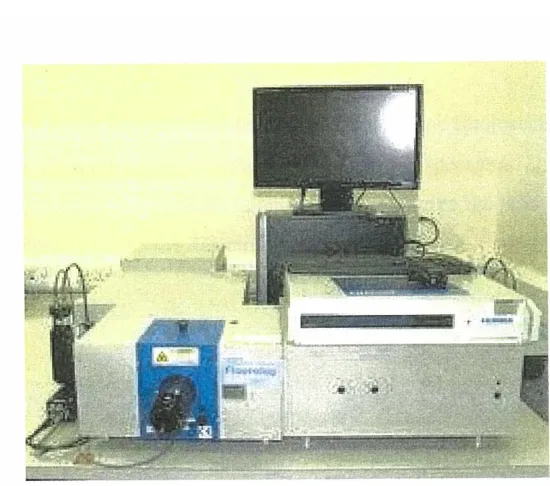
[image:17.612.168.443.393.636.2]
Figure No. 1 Spectrofluorimeter
A molecule in a ground state is considered to have three energy levels viz. rotational,
vibrational and electronic. When an electromagnetic radiation falls on the molecule it brings
changes into its changes into its energy levels and they will go to excited state. The excited
molecular species are extremely short-lived and deactivation occurs due to:
Internal collisions
Cleavage of chemical bonds, initiating photochemical reactions
[image:18.612.94.525.233.508.2]Re-emission as light (luminescence)
Figure No. 2
Molecules on excitation normally possess higher vibrational energy than they had in
the ground state. This extra vibrational energy is lost by collision, after which the molecule
returns to the ground state with the emission of light as fluorescence. Fluorescence is a rapid
process occurring within 10-6
to 10-9
seconds of the excitation. If there is any delay in the
emission of light is called as phosphorescence. The delay period may range from fraction of a
second to few days. Both these processes of re-emission are generally designated as
Chapter 1
Introduction
Factors Affecting Fluorescence :
F = 2.3 Io abc
j
For a fixed set of instrumental (Io and b) and sample (a and
j
) parameter,
the fluorescence is proportional to concentration.
F = kc where k = 2.3 Ioab
j
There are number of factors which or directly or indirectly affect the fluorescence and decrease
its intensity and sensitivity which is termed as "quenching".
1. Concentration :
Fluorescence is best in dilute solution. In concentrated solution the intensity of
fluorescence is reduced and is not quantitative. This is called as concentration quenching.
2. Quantum yield of fluorescence (
j
):
j
= no of photons emitted / no of photons absorbed
Highly fluorescent substances have
j
values near to unity, which shows that most of the
absorbed energy is re-emitted as fluorescence. Non fluorescent substance have
j
=0.
3. Intensity of Incident light :
An increase in the intensity of light incident on the sample produces a proportional
increase in the fluorescent intensity. The intensity of incident light and sensitivity of fluorescence
measurement are increased by increasing the width of the excitation slit.
4. Oxygen :
The presence of oxygen may interfere in two ways, by direct oxidation of the
5. pH :
Alteration of pH brings in the ionized and non-ionized form of fluorogenic material.
6. Temperature and viscosity :
An increase in temperature or decrease in viscosity is likely to decrease fluorescence
by deactivation of the excited molecules by collision. Low temperature and appropriate dilute
solution are necessary for quantitative analysis.
7. Quenchers :
Collisional quenchers :
Collisional quenchers reduce fluorescence by dissipating absorbed energy as heat due
to collisions with the quenching species.
e.g. Quinine is highly fluorescent in 0.05 M Sulphuric Acid but non-fluorescent in 0.1
M Hydrochloric Acid or in presence of halide salt.
Static quenchers :
Static quenchers form a chemical complex with the fluorescent substance and alter its
fluorescence characteristics.
e.g. Caffeine reduces the fluorescence of riboflavin by static quenching.
Instrumentation :
Two primary kind of instruments are used to measure the fluorescence
Filter fluorimeter
Spectrofluorometer
Instruments that measure the intensity of fluorescence are called fluorimeters. Those
that measure the fluorescence intensity at variable wavelength of excitation and emission and are
Chapter 1
Introduction
Figure No. 3 Components of a spectrofluorimeter
1. Source of light :
Mercury vapour lamp (or)
Xenon-arc lamp
Providing light output from 190 - 1200 nm Versatile and powerful
In spectrofluorometer, excitation and emission monochromators are used
Excitation Monochromator :
Provides a suitable radiation for excitation of the molecules
Emission Monochromator :
Isolate only the radiation emitted by the fluorescent molecule
3. Cuvettes/cells :
Four sides polished cuvettes are used. Made up of borosilicate or quartz glass.
4. Detector :
Photo multiplier tube (PMT) is used as detector.
Advantage :
• Standard device • Large signal
• Fast rise time possible
Disadvantage :
High voltage required Sensitive to magnetic field
The light source produces light photons over a broad energy spectrum, typically ranging
from 200 to 900 nm. When photons falls on the excitation monochromator, which selectively
transmits light in a narrow range. The transmitted light passes through adjustable slit that control
magnitude and resolution by further limiting the range of transmitted light. The filtered light
passes in to the sample cell causing fluorescent emission by fluorophores with in the sample.
Emitted light enters the emission monochromator, which is positioned at 900
angle from the
Chapter 1
Introduction
emitted light is transmitted through adjustible slits, finally entering the PMT. The signal is
amplified and create a voltage that is proportional to the measured emitted intensity. (7)
Advantages of fluorimetry :
Hundred to thousands times more sensitive than absorbance techniques
Possible to analyse sample in the nanogram to picogram level
VALIDATION
Validation of an analytical method is the process by which it is established, by
laboratory studies, that the performance characteristics of the method meet the
requirements for the intended analytical applications. (37)
Validation is not a method development tool and it does not make a method good
or efficient. (38)
Validation is a team effort. It will involve people from various functions in the
plant. (39)
Validation is defined as follows by different agencies,
Food and Drug administration (FDA) (40)
:
Establishing documentation evidence, which provides a high degree of assurance
that specific process, will consistently produce a product meeting its predetermined
specification and quality attributes.
World Health Organization (WHO) :
Action of providing that any procedure, process, equipment, material, activity,
or system actually leads to the expected results.
European Committee (41)
:
Action of providing in accordance with the principles of good manufacturing
practice that any procedure, process, equipment, material, activity, or system actually
leads to the expected results. In brief validation is a key process for effective quality
assurance.
Reasons for Validation :
There are two important reasons for validating assays in the pharmaceutical
industry. The first, and by for the most important, is that assay validation is an integral
part of the quality-control system. The second is that current good manufacturing practice
regulation requires assay validation.
2. Precision
3. Repeatability
4. Intermediate precision
5. Reproducibility
6. Range
7. Specificity
8. Linearity
9. Limit of detection ( LOD )
10. Limit of quantitation ( LOQ )
11. Ruggedness
12. Robustness
1. Accuracy :
The closeness of agreement between the value, which are accepted either as a
conventional true value or accepted reference value and the value found. The accuracy of
the method is tested by recovery studies at three different levels by adding a known
amount of pure drug to the pre-analysed formulation of definite concentration.
2. Precision :
The precision of an analytical procedure expresses the closeness of agreement
between a series of measurements obtained from multiple sampling of the homogenous
sample under the prescribed conditions. ICH divides precision into three types. 1. Repeatability
2. Intermediate precision 3. Reproducibilty
3. Repeatability :
Repeatability is the precision of method under the same operating conditions over a
short period of time. One aspect of this is instrumental precision. A second aspect is
sometimes termed intra-assay precision and involves multiple measurements of the same
sample by the same analyst under the conditions.
4. Intermediate precision :
Intermediate precision is the agreement of complete measurements when the same
method is applied many times within the same laboratory. This can include full analysis
samples and standards.
Chapter 1
Introduction
Reproducibility examines the precision between laboratories and is often determined
in collaborative studies or method transfer experiments.
Precision often is expressed by the standard deviation or relative standard deviation
of the data set.
6. Range :
The range of a method can be define as upper and lower concentration for which the
analytical method has adequate accuracy, precision and linearity. The range of
concentration examined will depended on the type of method and its use.
7. Specificity :
Specificity is the ability to assess unequivocally the analyte in the presence of
components, which may be expected to be present. Assuring specificity is the first step in
developing and validating a good method. If specificity is not assured, method accuracy,
precision and linearity all are seriously compromised. Method specificity should be
reassessed continually during validation and subsequent use of method.
8. Linearity :
The linearity of an analytical procedure is its ability to obtain test result, which are
directly proportional to concentration of analyte in the sample. Linearity can be assessed
by performing single measurements at several analyte concentration. A linearity
correlation coefficient above 0.999 is acceptable for most methods, especially for major
components in assay method.
9. Limit of detection (LOD) :
The limit of detection an individual analytical procedure is the lowest amount of
analyte in the sample which can detected but not necessarily quantitated as an exact
value. The limit of detection (LOD) may be expressed as; LOD = σ 3.3 / S
Where
σ = the standard deviation of the response
S = the slope of the calibration curve of the analyte
The limit of quantitation of an analytical procedure is the lowest amount of analyte
in the sample which can be quantitatively determined with suitable precision and
accuracy.
Limit of quantitation (LOQ) can be expressed as; LOQ = σ10 / S
Where,
σ = standard deviation of the response
S = slope of the calibration curve of the analyte
11. Ruggedness :
Method ruggedness is defined as the reproducibility of result when the method is
performed under actual use conditions. This includes different analysts, laboratories and
instruments. Method ruggedness may not be known when a method is first developed, but
insight is obtained during subsequent use of that method.
12. Robustness :
The concept of robustness of an analytical procedure has been defined by the ICH as
“a method of its capacity to remain to unaffected by small, but deliberate variation in
method parameters”. The robustness of the method was tested by changing wavelength
Chapter 2
Drug profile
2. DRUG PROFILE
NIFEDIPINE
2.1 NOMENCLATURE
Structure :
Chemical Formula :
3,5-dimethyl 2,6-dimethyl-4-(2-nitrophenyl)-1,4-dihydropyridine-3,5-dicarboxylate
CAS Registry number :
21829-25-4
Molecular Formula :
17 18 2 6
C H N O
Molecular Weight :
346.335 g/mol
Category :
Antianginal and Antihypertensive
ATC code :
2.2 PHYSICAL PROPERTIES :
Nifedipine is a yellowish crystalline powder. It is stored at room temperature. It melt in
the range of 171 - 175 o
C. It is insoluble in water, freely soluble in ethanol, methanol, and in
acetone.
2.3 DOSAGE FORMS :
Formulations currently available are Nifedipine in ordinary capsules (5 and 10
milligrams), soft gel capsules (5 mg and 10 milligrams), coated tablets (10, 30, 40 and 60
milligrams) and extended release tablets (5, 10, and 20 milligrams).
2.4 PHARMACOLOGY :
Indication :
Nifedipine is indicated in angina (chest pain ), high blood pressure and abnormal heart
rhythms. Nifedipine works by relaxing blood vessels.
Mechanism of Action :
Nifedipine is a calcium channel blocker. It has two mechanism of action. They are,
• Relaxation and Prevention of Coronary Artery Spasm • Reduction of oxygen utilization
Relaxation and Prevention of Coronary Artery Spasm :
Nifedipine dilates the main coronary arteries and coronary arterioles, both in normal and
ischemic regions, and is a potent inhibitor of coronary artery spasm, whether spontaneous or
ergonovine-induced. This property increases myocardial oxygen delivery in patients with
coronary artery spasm, and is responsible for the effectiveness of nifedipine in vasospastic
Chapter 2
Drug profile
Reduction of Oxygen Utilization :
Nifedipine regularly reduces arterial pressure at rest and at a given level of exercise by
dilating peripheral arterioles and reducing the total peripheral resistance (afterload) against
which the heart works. This unloading of the heart reduces myocardial energy consumption and
oxygen requirements and probably accounts for the effectiveness of nifedipine in chronic stable
angina.
Contraindication :
It is contraindicated in patients with very low blood pressure or shock due to heart
problems and hypersensitivity.
Special Precaution :
It should not be given to patients over the age of 65 and above and pregnancy cases.
Adverse Effects :
The adverse drug reactions are headache, feeling of lightheadedness, sleepy, blurred
vision, and lowered concentration, hot flushes, headache, sudden change of position may cause
dizziness, nausea and vomiting, constipation or diarrhea, swelling of extremities, and gum
problems.
Drug Interactions :
Alcohol - It will increase drowsiness
Grapefruit - This will increase the incidence of side effects
Cyclosporin - It increases risk for gingivitis
2.5 PHARMACOKINETICS :
Absorption :
Nifedipine is rapidly and fully absorbed in oral administration.
Nifedipine is detectable in serum 10 minutes after oral administration. Peak blood level occurs approximately in 30 minutes.
Distribution :
92-98 % of Nifedipine is bound to serum protein.
Metabolism :
The drug is bio transformed in liver. The principal metabolite is
2,6-dimethyl-4-(2-nitrophenyl)-5-methoxycarbonyl-pyridine-3-carboxylic acid .
Excretion :
Chapter 3
Literature review
LITERATURE REVIEW
SPECTROSCOPIC METHODS :
R K Sheladia et al., [2011] have reported spectrophotometric determination of nifidipine in
bulk and tablet dosage form. The method was based on reduction of the nitro group of nifedipine
to amino group by treatment with zinc dust and hydrochloric acid. The reduced molecule was
diazotized with sodium nitrite and coupled with Bratton-Marshall reagent N-(1-naphthyl)
ethylenediamine dihydrochloride. The absorbance was measured for the magenta coloured
derivative at 430 nm. The method was validated in terms of precision, specificity and lineatity
range. 9
R.Revathi et al., [2010] developed a spectroscopic determination of nifedipine using 40 %
sodium salicylate solution as hydrotropic solubilizing agent. The drug showed λ‐max at 350 nm
and beer’s law was obeyed in the concentration range of 20 – 100 µg/ml. The result of analysis
for tablet dosage form obtained by the proposed method was compared with pharmacopoeial
method. The proposed method was statistically validated as per ICH guidelines. The percentage
content and percentage recoveries estimated for Nifedipine marketed tablet formulations were
close to 100 with low %RSD. 10
Sathis Kumar Dinakaran et al., [2013] have studied and reported a simple, economic, accurate
absorption ratio method for the simultaneous estimation of atorvastatin calcium and nifedipine
HCl in bulk and tablet dosage form. Methanol was used as a diluent. The absorption maxima
were observed at 237 nm and 297 nm which were selected based on overlap spectra of
atorvastatin calcium and nifedipine HCl.. The proposed method was validated. 11
Sheikha M.Al-Ghannam et al., developed a spectrofluorometric determination of
nicardipine,nifedipine and isradipine in pharmaceutical preparations and in biological fluids.
The method was based on the reduction of nicardipine, nifedipine and isradipine with Zn/HCl
and measuring the fluorescence intensity of reduction product (λem/λex) at 460/364, 450/393 and
446/360 nm, respectively. The factors affecting the development of the fluorophore and its
stability were studied and optimized. The effect of some surfactants such as β-cyclodextrin
fluorescence intensity was also studied. The fluorescence intensity-concentration plots of
nicardipine, nifedipine and isradipine were rectilinear over the ranges 0.4–6.0, 0.2–4.0 and 0.1–
9.0 µg ml−1 with detection limits of 0.0028, 0.017 and 0.016 µg ml−1, respectively. The proposed
method was successfully applied to commercial tablets containing the compounds and the
percentage recovery agreed well with those obtained using the official methods. The method was
further extended to the in vitro determination of the compounds in spiked human plasma and
urine samples. 12
B.Hemmateenejad et al., [2008] have reported a simple, accurate, sensitive and economical
colorimetric procedure for the estimation of amlodipine besylate and nifedipine, both in pure and
dosage forms. The method was based on the reduction of iron(III) by the studied drugs and
subsequent interaction of iron(II) with ferricyanide to form prussian blue. The reaction developed
through a slow kinetics and completes in about 10 min. Both initial slope and fixed time methods
were used to derive calibration graphs. The resulted calibration equations were linear in the
concentration ranges of 1.0-20.0 and 3.0-19.0 µg ml-1 for AML and NIF, and the detection limits
were 0.10 and0.19 µg ml-1, respectively. Seven replicate analyses of solutions containing three
different levels of each drug resulted in very low relative error of prediction (less than 1.6%) and
relative standard deviation (less than 4%) confirming accuracy and precision of the proposed
method. 13
Sable Kunal et al., [2012] have described UV-Spectrophotometric method for the simultaneous
determination of nifedipine and atenolol in combined dosage form as well as in laboratory
mixture was studied under this paper. Nifedipine and Atenolol are used in combined dosage form
for Cardiovascular System Diseases. The developed method was validated as per ICH guidelines.
The stability study of combined dosage form was carried out by using the IR spectrum of both
the drug. 14
Normaizira Hamidi et al., [2008] have reported analysis of nifedipine content in transdermal
drug delivery system using non-destructive visible spectrophotometric technique. The
applicability of visible spectrophotometry technique as a tool to determine the drug content of
polymeric film was investigated. Hydroxypropylmethycellulose (HPMC) was selected as the
matrix polymer and nifedipine as the model drug. Blank and nifedipine-loaded HPMC films
were prepared using the solvent evaporation method. The absorbance spectra of these films
Chapter 3
Literature review
drug content values obtained by means of the conventional destructive UV spectrophotometry
technique. The results indicated that the absorbance values, attributed to nifedipine, at the
wavelengths of 545, 585, 638 and 755nm were significantly correlated to the drug content values
obtained using the chemical assay method (Pearson correlation value: r ≥ 0.990 and p < 0.01).
The visible spectrophotometry technique was potentially suitable for use to determine the
nifedipine content of films. The samples were recoverable from test and analysis of the entire
batch of samples was possible without the need of solvents and chemical reagents. 15
Joaquim C.G. Esteves da Silvab et al., [2010] have investigated fluorescence derivatization
reaction and quantification of the antihypertensor nifedipine. A fluorescence derivatization
reaction based on the reaction of Nifedipine with o-phthalaldehyde after a previous reduction of
the nitro group to a primary amine and photooxidation of the dihydropyridine to pyridine was
optimized. Chemometric data analysis was done by parallel factor analysis 2 (PARAFAC2)
multivariate calibration model of a three way data structure obtained by the acquisition of
complete excitation-emission matrices (EEMs) of a Nifedipine fluorescent derivate following a
standard addition method. The results found in the quantification of Nifedipine in different
pharmaceutical formulations were compared with the official US Pharmacopeia high
performance liquid chromatography - ultraviolet method (USP HPLC-UV). For each of the
pharmaceutical formulations, a fortified sample was also analysed. Good results were found with
the PARAFAC2 spectrofluorimetric methodology. Generally, similar PARAFAC2 models were
needed for the adequate decomposition of the unfortified and fortified samples of the same
pharmaceutical formulation. 16
Nafisur Rahman et al., [2005] have described two simple , sensitive and economical
sepctrophotometric methods were developed for the determination of nifedipine in
pharmaceutical formulations. Method A was based on the reaction of the nitro group of the drug
with potassium hydroxide in dimethyl sulphoxide (DMSO) medium to form a coloured product,
which absorbed maximally at 430 nm. Method B used oxidation of the drug with ammonium
molybate and subsequently reduced molybdenum blue was measured at 830 nm. Beer’s law was
obeyed in the concentration range of 5.0-50.0 and 2.5-45.0 µg ml−1 with methods A and B
,respectively. Both methods have been successfully applied for the assay of the drug in
adjuvants. The reliability and the performance of the proposed methods were established by
point and interval hypothesis tests and through recovery studies.17
Olajire Aremu Adegoke et al., [2012] have described a new sensitive colorimetric method for
nifedipine following azo dye formation with 4-carboxyl-2,6-dinitrobenzenediazonium ion
(CDNBD). Judging from the various generic brands currently available, this research was
conceived as a means of developing an alternative cost-effective and readily adaptable method
for the assay of nifedipine in tablets and for which official high performance liquid
chromatographic technique may not be readily available. Nifedipine was reduced with Zn/Hcl
reduction system and then the diazo coupling reaction was carried out with the CDNBD reagent
to generate a new azo adduct with optimal wavelength at 470nm representing a bathochromic
shift relative to nifedipine, reduced nifedipine and CDNBD reagent. Optimal temperature and
time for coupling were selected as 500
C and 15 minutes. A linear response was observed
over2.9-14.5microgram per ml of nifedipine. The developed spectrophotometric method is of equivalent
accuracy (p>0.005) with USP 2007 HPLC method.18
Sayed M.Derayea et al., [2013] have reported spectrophotometric method for determination of
five 1,4-dihydropyridine drugs using N-Bromosuccinimide and Indigo carmine dye by
determining residual of NBS through its ability to bleach the colour of the used dye. Beer’s law
was obeyed in concentration range 1.25-13.00µg/ml. Good correlation coefficient was found
between absorbance value and concentrations. Limit of detection ranged from 0.141 to
0.500µg/ml. This method was applied to the analysis of dosage forms, % recovery ranged from
97.31 to 99.4% without interference from common excipients. The comparision by student’s
t-test and variance ratio F-t-test showed no difference between the proposed and official methods.19
Mohamed Abo EI-Hamd et al., [2010] have investigated spectrophotometric and
spectrofluorimetric methods for determination of 1,4-dihydropyridine (1,4-DHP) drugs based on
the oxidation of the investigated 1,4-DHP drugs with acidic KMnO4(method I) or Ce (IV)
(method II). First method was based on decrease in colour of permanganate solution due to the
presence of the studied drug and measured at 525nm. Second method was based on monitoring
the fluorescence of the produced cerium (III) at emission 355nm and excitation at 255nm. The
Chapter 3
Literature review
method was applied for the determination of drugs in commercial tablets and capsules. The result
of the proposed procedures were statistically compared with reference method obtained.20
Y. Awad Uday et al., [2011] have developed a simple, selective, rapid, precise, sensitive and
accurate HPLC method for the estimation of nifedipine using methanol and water (70:30 v/v) as
mobile phase; pH was adjusted to 3.0 with orthophosphoric acid. Detection was carried out using
UV detector at 238 nm. The method was carried out on a Shim-Pack CLC, ODS (C-18), 5 µ
column and dimension of column was 250×4.6mm. The retention time of nifedipine was 3.401
min. The developed method was validated in terms of linearity, precision, accuracy, precision,
limit of detection and limit of quantitation. The method was found to be linear in the range of
5-40 µg/ml.21
Ravin Jugade et al., [2011] have established A simple and rapid differential pulse polarographic
method was developed for the trace determination of Nifedipine. A well-defined single peak with
Ep value of -0.51 V was obtained in 0.1M acetate buffer (pH 5.0). The linearity was valid up to
5×10 -5
M (r =0.9995) with minimum detection limit of 3.5×10 -8
M. Precision of the method
developed was implied from the values of relative mean deviation, standard deviation and
coefficient of variation, which were 2.05%, 1.1 and 3.2% respectively. Marketed formulations of
Nifedipine have been analyzed by calibration and standard addition methods. Recovery
experiments have been found to be quantitative and analysis to determine the mass per tablet was
obtained within ±0.2% of the expected value.22
Bengi Uslu et al., [2010] have studied and reported a square wave voltammetry (SWV), which
was presented in this mini review, had a several advantages such as high speed, increased
analytical sensitivity and relative insensitivity to the presence of dissolved oxygen. Also it was
an electrochemical technique used in analytical applications and fundamental studies of electrode
mechanism. This paper delivered both the underlying theory and the practical guidance needed
to apply square wave techniques and also provided a wide collection of data for the description
of diverse tendencies that characterized several electrochemical reactions analyzed by SWV. This
review summarized some of the recent developments and application of direct and stripping
Dragica Zendelovska et al., [2006] have studied a HPLC method for the determination of
nifedipine in human plasma followed after solid-phase extraction. A selective, sensitive and
accurate high-performance liquid chromatographic method has been developed, validated and
applied for determination of nifedipine in human plasma samples. The method involved
solid-phase extraction on C18 cartridges. The chromatographic separation was accomplished on a
Lichrocart Lichrospher 60 RP select B column with a mobile phase composed of 0.020 mol/L
KH2PO4 (pH 4.8) and acetonitrile (42:58, v/v). UV detection was set at 240 nm. The calibration
curve was linear in the concentration range of 5.0–200.0 ng/mL for nifedipine in plasma and the
limit of quantification was 5.0 ng/mL.24
Arindam Mukhopadhyay et al., [2012] have studied LCMS/MS method for the determination
of Nifedipine and Nifedipine D6. They were extracted from the plasma by precipitation method
and then seperated on a reverse phase chromotography using the mobile phase mixture of
ammonium acetate and methanol at a flow of 1.0 ml/min. The analytes were detected in API
4000 mass spectrometer in the positive atmospheric pressure chemical ionization (APCI) mode
with mutiple reaction monitoring (MRM). The MRM transitions were monitored by following
m/z for parent ion 347.2 & daughter ion 315.1 (nifedipine), and m/z 353.2 & daughter 318.2
(nifedipine D6). A linear calibration plot of nifedipine was achieved in the concentration ranges
of 1.558 ng/ml to 360.561 ng/ml. Mean recovery was 93.2%. The assay was specific, precise,
accurate and reproducible.25
Madhuri Ramteke et al., [2010] have development an accurate and precise high performance
thin layer chromatographic method for simultaneous estimation of atenolol and nifedipine in
their combined dosage form was developed. The study employed Kieselghur 60, GF254 on
aluminium foil and a mobile phase comprising cyclohexane: methanol: ethyl acetate: ammonia
(5:1.5:3:0.5 v/v). The detection was carried out at 230 nm. The linear detector response for
atenolol was observed between 5.7-18.9 / g mL m
. The recovery study was carried out by
standard addition method. The results of recovery were 99.76 ± 0.216, 100.72 ±0.216 for
Chapter 3
Literature review
Shubhini A. Saraf et al., [2010] A rapid and sensitive RP-HPLC method has been developed for
the purpose of analysis of antihypertensive: nifedipine (NF), antidiabetic: nateglinide (NG) and
hypolipidemic: lovastain (LT) drugs simultaneously in cardiovascular polypill based synthetic
ternary mixture. Analysis was performed on
18
C
(125 ´ 4.6 mm id, 5 m
m particle) column with
acetonitrile- 10mM phosphate buffer (pH 3.5) 60:40 (v/v) as mobile phase, started at a flow rate
of 1 mL
1
min
-continued for 4 min and further 6 min at a flow rate of 2 mL
1
min
-. UV detection
was performed at 208 nm for NF, NG and at 236 nm for LT. The run time under these
chromatographic conditions was less than 10 min. The method was linear in the range of
0.125-8.0 g
m 1
mL
for NG and LT. Acceptable precision and accuracy were obtained for
concentrations over the standard curve ranges. The sensitivity of the method, as the limits of
detection (LOD) and quantification (LOQ) for each active ingredient was also determined. The
validated method was successfully applied to the analysis of synthetic mixture and of three
drugs. The percentage recoveries obtained were 100.23% for NF, and 100.93% for LT.27
Hisham S. Abou-Auda et al., [1999] have studied sensitive, selective and reproducible
reversed-phase high-performance liquid chromatographic method was developed for the determination of
nifedipine in human plasma with minimum sample preparation. The method was sensitive to 3
ng/ml in plasma, with acceptable within and between day reproducibilities and linearity (r2
>0.99)
over a concentration range from 10-200 ng/ml. Acidified plasma samples were extracted using
diethylether containing diazepam as internal standard and chromatographic separation was
accomplished on C18 column using a mobile phase consisting of acetonitrile, methanol and water
(35:17:48, v/v). The within-day precision ranged from 2.22 to 4.64% and accuracy ranged from
102.4-106.4%. The day-to-day precision ranged from 2.34-7.07% and accuracy from
95.1-100.1%. The relative recoveries of nifedipine from plasma ranged 91.0-107.3% whereas
extraction recoveries were 88.6-93.3 %. Following eight 6-week freeze-thaw cycles, nifedipine
in plasma samples proved to be stable with accuracy ranging from 0.64 to 3.0 % and precision
ranging from 3.6 to 4.15%. Nifedipine was also found to be photostable for at least 120 min in
plasma, 30 min in blood and for 60 min in aqueous solutions after exposure to light. The method
nifedipine in humans after the oral administration of immediate-release capsules and
sustained-release tablets to five healthy subjects.28
M.L. Avramov Ivic et al., [2013] have examined the electrochemical behaviour of inclusion
complexes of nifedipine (Nif) and amlodipine (Aml), a long-acting calcium channel blockers
dihydropyridine (DHP) class, with b
-cyclodextrin ( b
CD) and (2-hydroxypropyl)- b
-cyclodextrin (HP b
CD), was examined using cyclic and square wave voltammetry in 0.05 M
NaHCO3 and phosphate buffer (pH=11) on a gold electrode. The voltammograms showed a
single irreversible anodic wave with the current controlled by adsorption. It was found that
phosphate buffer was favourable in the electrochemical activity of both complexes of Nif with
the linear dependency of the oxidative currents on their concentrations. In phosphate buffer, only
HP b
CD-Aml complex showed linear dependency of the oxidative apparent currents maximum
of all the examined complexes in both electrolytes were shifted to the positive direction
compared to their standards. In addition, the value of anodic currents decreased.29
Albetro S. Pereira et al., [2008] have analyzed the fragmentation of dihydropyridine
calcium-channel antagonists were compared by electrospray ionization (ESI) and atmospheric pressure
photonization (APPI). The results demonstrated that in ESI the preferred ionization process is in
positive mode, with the mass spectra of [M+H]+
showing base peak ions probably formed by loss
of alcohols from carboxyl groups. Conversely, in APPI, a high intense peak is observed in
negative mode due to deprotonated molecule [M+H]
-after two serial 1,2-hydride shifts leading to
a rearranged deprotonated molecule [M-H]
-. These ions suffered another 1,2-hydride shifts to
produce a nitro-phenyl product ion of m/z 122. The APPI was also used to develop a method for
the quantitation of dihydropyridines (e.g., nifedipine) in human plasma.30
Morteza Pirali et al., [1999] have performed a experiment using a simple normal phase high
performance liquid chromatography (HPLC) method for determination of nifedipine in human
plasma. The method was based on ultraviolet detection at 235 nm and acidic plasma extraction
by a mixture of dichloromethane (30%) and n-hexane (70%) using nimodipine as an internal
standard. The system was stabilized with the use of n-hexane (80%), chloroform (17%) and
Chapter 3
Literature review
the method was satisfactory. The procedure could be used effectively to quantitative in the
drug.31
Luis J. Nunez-Vergara et al., [2002] have studied a gas chromatography/mass spectrometry
(GC/MS) method for the qualitative and quantitative determination of the calcium-channel
anatagonists C-4-substituted 1,4-dihydropyridines and their corresponding N-ethyl derivatives,
was presented. Also, the electrochemical oxidation and the reactivity of the compounds with
alkyl radicals derived from 2,2-azobis-(2-amidinopropane) were monitored by GC/MS. Mass
spectral fragmentation patterns for the C-4-substituted 1,4-dihydropyridine parent drugs were
significantly different from those of their oxidation products, generated either by electrochemical
oxidation or by reaction with alkyl radicals. However, for N-ethyl-1,4-dihydropyridine
compounds it was not possible to detect the final products (pyridinium salts) using these
experimental conditions.32
R.L.C. Sasidhar et al., [2012] have developed a simple precise and economical reverse phase
high performance liquid chromatographic method for the estimation of atenolol and nifedipine
simultaneously in combined dosage form. The method was developed using agilent ODS C18
column with a mobile phase constituting of methanol: acetonitrile: phosphate buffer (60:20:20)
finally adjusted to pH 3.0 with o-phosporic acid at a flow rate of 1.0 ml/min and detection was
carried out at 235 nm. The selected chromatographic conditions were found to separate atenolol
(Rt: 2.80 min) and nifedipine (Rt: 4.40 min) having a resolution of 12.307. The developed
method was validated for linearity, accuracy, precision, LOD, LOQ, robustness and for system
suitability parameters as per ICH guidelines. Linearity for atenolol and nifedipine were found in
the range of 5-25 ig/ml and 2-10 ig/ml, respectively. The percentage recoveries for atenolol and
nifedipine ranged from 99.38-100.56% and 99.16 - 99.71%, respectively. The proposed method
could be used for routine analysis of atenolol and nifedipine in their combined dosage forms.33
V. Venkata Rajesham et al., [2008] have developed a simple and sensitive high performance
liquid chromatographic method for the simultaneous estimation of simvastatin (lipid lowering
agent) and nifedipine (calcium channel blocker) in rat plasma and also to calculate possible
pharmacokinetic parameters of these drugs after oral administration in hyperlipidemic condition.
The plasma samples were precipitated with methanol and after centrifugation (5000-6000 rpm
for 10 min), the acetonitrile was added to the ethanol and the organic mixture was taken to near
and water. The drug was monitored at 237nm. The run time was 15 minutes. The good linearity
was found to be in the range of 0.05 to 40 / g ml m
for two drugs. This developed method was
rapid, sensitive, reproducible and successfully applied to the measurement of simvastain and
nifedipine in rat plasma for studying of pharmacokinetic interaction between these two drugs.34
XingJie Guo et al., [2007] have determined a sensitive atmospheric pressure chemical ionization
liquid chromatographic-mass spectrometric (APCI-LC-MS) assay with positive ion mode was
developed for the determination of nifedipine in human plasma. In this method, nifedipine was
extracted from human plasma using diethyl ether with dimethoxanate as the internal standard.
Analysis was achieved on a BDS C18 column with methanol-water (66:34, v/v) as the mobile
phase. Sustained-release nifedipine tablets from Disha (test, Weihai, China) from GuoFeng
(reference, Qingdao, China) were evaluated following a single 20 mg oral dose to 20 healthy
volunteers. Bioequivalance between the products was determined by calculating 90% confidence
intervals (90% CI) for the ratio of Cmax , AUC0-t and 0
AUC- ¥
values for the test and reference
products, using logarthmic transformed data. The 90% confidence intervals for the ratio of Cmax
(86.6 - 105.2%), AUC0-t (97.8 - 110.9%) and 0
AUC - ¥
(96.5 - 110.4%) values for the test and
reference products were within the interval (80 - 125% for AUC, and 70 - 143% for Cmax)
proposed by state of food and drug administration [SFDA, 2005 guidence for bioavailability
studies for chemical drug products in human being, China, p.19]. It was concluded that the two
sustained-release nifedipine tablets are bioequivalent in their rate and extent of absorption and
thus may be used interchangeably.35
C.M. Andersen et al., [2003] have expreimented a dedicated investigation and pratical
description of how to apply PARAFAC modelling to complicated fluorescence
excitation-emission measurements. The steps involved in finding the optical PARAFAC model were
described in detail based on the characteristics of fluorescence data. These steps included
choosing the right number of components, handling problems with missing values and scatter,
detecting variables influenced by noise and identifying outliers. Various validation methods were
data-Chapter 3
Literature review
specific problems and their solutions were explained. Fina