CONTROLLER OF PH PROCESS BASED ON FUZZY
NEURAL NETWORK
1 GANG LIU, 2WANG HUAN, 1DUAN BINGLONG
1 Department of Automatic Control, Henan Mechanical and Electrical Engineering College, Xinxiang
453003, Henan, China.
2
Library Xinxiang Medical University, Xinxiang 453003, Henan, China.
ABSTRACT
A fuzzy neural network controller which is the combination of the fuzzy control and neural network technology, is presented based on the severe nonlinearity and large hysteresis of the pH value control process. It shows that,by digital simulation, the control effect of the proposed FNNC's control algorithm is much better than it of the conventional PID control and ecumenic fuzzy control algorithm.The proposed control algorithm of the FNNC is applied to DSP, and the feasibility of the controller is proved by the simulation at the same time.
Keywords: Ph Process, Nonlinearity, Fuzzy Neural Networks Control (Fnnc), Dsp
1.
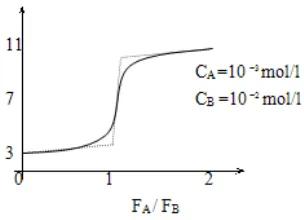
INTRODUCTION [image:1.612.116.268.502.612.2]PH process control has been widely applied to chemical industry, light industry, effluent treatment and environment protection. It plays a very important part in improving the quality and output of chemical products and body products. What’s more, it is also crucial to improving the safety of production equipment and environmental protection[1, 2] . pH process control is a problem of nonlinear control, its titration curve is Non-linear curve, as figure 1 shows.
Fig .1. Acid-Base Titration Curve
PH process has severe nonlinearity and large hysteresis; and it is difficult to obtain accurate mathematical model of pH process[3] ; In addition, the external disturbance of pH process has complexity and so on, which makes pH process control one of the difficult problems in IPC (Industry Process Control). And because of these facts, it is difficult to achieve ideal control effect for
conventional PID control and nonlinear PID control[4] .
It can achieve much better control effect that to use Fuzzy Neural Network Controller (FNNC) instead of the traditional PID controller (or non-linear PID controller) on the pH process, for it can make the fuzzy neural network control system of the pH process more dynamic and steady, and have strong anti-interference ability and robustness at the same time. It completes the DSP implementation of the fuzzy neural network pH controller successfully using high-speed digital signal processor TMS320VC33 (DSP) hardware as the controller operation unit, for the specialty of the large operation and slow convergence of it[5, 6, 7,].
2.
THE STRUCTURE OF THE SYSTEMPI
Go(s)
proterties
The
of pH
value
pH
du/dt
FNNC
pHo
+
-
+
+
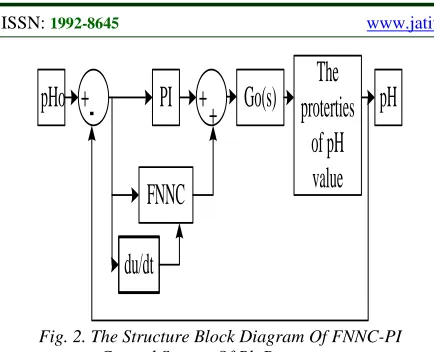
[image:2.612.90.307.70.246.2]Fig. 2. The Structure Block Diagram Of FNNC-PI
Control System Of Ph Process
As seen from Figure 2, the proposed fuzzy neural network control system of pH process with simple structure is single-loop. In order to improve the steady state of the system, we use a PI controlling unit link FNNC parallel to form a FNNC-PI controller[8] .
The way proposed in this paper to combine the fuzzy logic and neural network is to control the memorizing the fuzzy rules with neural network. That is to convey an abstract concept value through the different levels of excitement of a group of neurons, by which the abstract experience rules can be transformed into neural network input-output samples, through which the controller can use these experiences in the way of associative memory, which is similar to people’s way of thinking in a sense.
There should be an algorithm for training network weights when the mult-layer forward network of the neural network is applied to specific problems of real-time control, that is BP algorithm. This kind of algorithm is simple and clear, it has the function of adapting, learning and self-organizing. What’s more, BP network has been applied to the control system successfully with its simple structure which is easy to implement. This is a three-layer design of a 2-5-1 BP network, of which the input layer has two nodes, namely E,EC; the middle layer has 5 nodes, but it is not fixed, actually, it can be adjusted according to the actual situation, and it is usually about 5; the output layer has only one node, namely U.
3.
THE ALGORITHM OF FNNCThe control algorithm of the proposed BP network is as follows:
The input layer:
I10=E
,
I =EC1
1
,
i i
I
O1 = 1
,
i=0,1The middle layer:
i j i j I W
I2=∑ , 2 ( , 2)
j j j I P f
O = , j=0,1,2,3,4 (1)
The output layer:
(2)
Where, (1 )
) 1 ( ) , ( PI PI e e I P f − − + − =
is a hyperbolic tangent function. W 、 V are weight vectors, P is a constant in closed interval of [0,1]. Its performance index function is:
Learning algorithm is BP algorithm with damping terms, that is,
(3)
Of which,
(4)
As to the stepwise η(t), it would be dealt with the method of changing the step length. That is to say, when e(t)≤0.95e(t−1), η(t+1)=1.25η(t).And
) 1 ( 05 . 1 )
(t ≥ et−
e , η(t+1)=0.75η(t). As to the others,
) ( ) 1
(t η t
η + = .
Then,
The initial value of the neural network can be obtained off-line, with the fuzzy control table which is constituted of the input and output of the fuzzy controller with self-adjusting factors as the learning samples. That is,
( 0) 0
1 ) 1 ( α α α α α α + − = > − + < − = E N EC E U S (5)
In the expressions, 0≤α0 ≤αs ≤1,α∈
[
α0,αs]
,{E}={EC}={U}={-N,…-1,0,1,…N}. {E},{EC},{U} are fuzzy discourse domains of error, error change and controlled quantity.
The FNNC, which is constituted of the initial weights obtained after studying the samples, is endowed with human operating experience at the initial control.
U I O3= 3=
j jO
V U=
∑
22 0 ()]
[ 2
1
∑
−= pH pH t
J ) ( ) ( ) ( ) 1
( V t
V J t t V t V j j j
j ∂ + ∆
∂ − =
+ η α
) ( ) ( )] (
[ 0 2
4.
THE EXPERIMENT AND RESULTThis experiment was divided into two phases: the first is to design a well-functioned FNNC with simple structure to do the simulation study based on theoretical analysis using MATLAB software; and then, apply the theory to practice, to design a well-functioned FNNC with simple structure, based on DSP technology, striving to make sure that the controller is with simple parameter adjustment, stable performance and is convenient to use.
A.Simulation
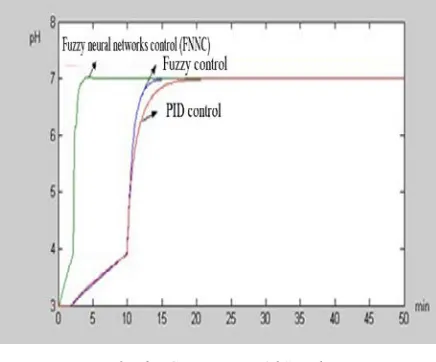
[image:3.612.315.547.170.295.2]In order to test and verify the control effect of the fuzzy neural network control, an emulation of the system shown in Figure 2 is made with MATLAB, and at the same time, a fuzzy control system is constructed to be compared with the conventional PID. The simulation curve is shown in Figure 3. Go(S) referred in Figure 2 is :
Fig .3. The Comparison Of Simulation
Figure 3 shows the simulation curve of the comparison between FNNC with the conventional PID control and general fuzzy control. The fuzzy control should be dealt with the fuzzy control rules which is with self-adjusting factor. Simulation results show that this system can deal with the severe nonlinearity and large hysteresis of the pH process, what’ s more, it shows the strong robustness and disturbance.
B. Experiment Research
TMS320VC33 High-speed digital signal processor is adopted as the control and operation unit in this project, which uses C language to compile the program of the fuzzy neural network and complete the DSP implementation of the fuzzy neural network pH controller successfully. In
addition, build the corresponding analogous circuit and design photoelectric coupling circuit, limiter circuit and other peripheral circuit based on the characteristics of pH objects to form a separate closed-loop control system, which is shown as Figure 4:
Compare circuit
Limiting
circuit A/D DSP D/A electric Photo-coupling
pHprocess
Photo-electric coupling
TMS320VC33
Fig.4. The Fuzzy Neural Network Ph Controller Based
On DSP Technology
C.Nonlinear Element Circuit Design
[image:3.612.90.308.340.521.2]When constructing a simulative control system practically, it constructs object link with Operational ampliflers , and constructs nonlinear element which has the characteristics shown in Figure 1 with Operational ampliflers and Switch circuit .The principle of nonlinear circuit module is shown in Figure 5:
Comp -are Link
2.9V
3.1V
Input is less than 2.9 volts, 0.53 times the signal amplification
10 times input signal which is between 2.9V and 3.1V.
Input is greater than 3.1 V, 0.53 times the signal amplification
Input Output
Fig 5. The Flow Chart Of The Principle Of Nonlinear Circuit
D.The Principle Of The Linear photoelectric
coupler And Circuit Design
[image:3.612.338.555.462.581.2]and output and the large changes with temperature limit its application in the analog signal isolation. To use the linear photoelectric couple is a better choice for analog signal isolation. There’s no big difference between the isolation principle of the linear photoelectric couple and the common photoelectric couple. When the the common photoelectric couple’s shot and single-receival mode is changed a little, and added a light-receiving circuit for feedback at the same time, it would become a linear photoelectric coupler. Then it would offset the nonlinearity of the forward access though the nonlinearity of the feedback path for that the nonlinear characteristics of the two light-receiving circuits are the same, though they are both nonlinear. Thus, it would complete the linear isolation. The HCNR200 light-coupled device made by Agilent Company is adopted in this paper to complete the analog signal isolation and the design of the peripheral circuit, which is shown as Figure 6:
1
2
3
4 5
6 7 8 HCNR200
Vin
Vout
VCC
+5V
R1
R3 R2
[image:4.612.345.489.264.495.2]VCC
Fig. 6. Optical Coupling Circuit
Vcc=5V, input is between 1~5V, output equals input. R3=200Ω; R1=R2=32KΩ. After tested, this optical coupling circuit with LMN324 chip and upper circuit has good linearity and it also can fully meet the design requirements.
E.DSP As The Controller Hardware
In order to meet the needs of the proposed fuzzy neural network control system, it takes the TMS320VC33 chips made by TI. After compiling and linking the algorithm edited by the C language and transforming it into Common Object File Format (COFF), which can be accepted by DSP, with the CC3X development tool, it can be loaded
into the DSP chip to control. This object code can be written into the FLASH of the DSP System, and directed to the high-speed RAM to execute though BOOT process after the DSP system is powered on.
Transform the sensor’s return signal which is collected through the A/D converter to digital signal. Then VC33DSP gets the control signal through the fuzzy neural operation. PC machine can capture the state variable and data by the JTEG interface of the TDS-TMS320 Emulator in the process, with D/A channel output controlling the object and real-time monitoring the function of the control system, to provide effective analytic basis for the debugging and improving of the algorithm.
start
system initialization
Controller parameter Settings (ke,ku,kc)
Enable Interrupt
Waiting interrupt
time is out?
interrupt service routine
N
Y
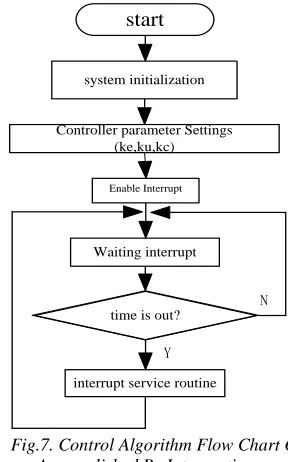
Fig.7. Control Algorithm Flow Chart Of Accomplished By Interruption
[image:4.612.114.307.373.519.2]Fig.8. Response Curve Of The System Output (Ph Value)
5.
CONCLUSIONThe response curve of the control system shown by Figure 8 indicates that, the proposed FNNC solves preferably the control problems in the nonlinear process of this kind of pH process. Compared with the conventional PID control, it has good effect of control, simple parameter adjustment, adaptability, good robustness and some other excellent characteristics. What’s more, it has feasibility and great practical value.
REFRENCES:
[1] W.XUE. Study of FNNC-PI Controller of pH Process Based on DSP. Control and
Instruments In Chemical Industry, vol. 32, n.
1,pp. 58-61,2005.
[2] W.XUE . The FNNC-PI Control Study of pH Process. Chinese Journal of Scientific
Instrument ,vol.6,n.4: pp. 721-724,2004.
[3] R. Babuska , et al. Fuzzy self-tuning PI control of pH in fermentation. Engineering
Applications of Artificial Intelligence.,vol.15:
pp. 3-15,2002 .
[4] A. Aoyama ,et al. Control-affine fuzzy neural network approach for nonlinear process control. J. Proc. Cont.,vol.6: pp. 375-386,1995. [5] T.L.seng,M.B.Khalid,R.Yuso.f Tuning of a Neuro-Fuzzy Controller by Genetie Algorithm.IEEE Trans.Syst.Man,Cybern., vol.29, n. 2,pp. 226-236,1999.
[6] Zadeh L.A.Fuzzy Sets as a Basis for a Theory of Possibility.Fuzzy Sets and Systems,vol.1,1) :pp. 13-28,1978.
[7] W.A.Farag,V.H.Quintana ,G.L.Torres.A Genetie-Based Neuro-Fuzzy Approach for Modeling and Control of Dynamical
Systems.IEEE Trans. Neural
Networks,vol.9,n.5,pp. 756-767,1998.
[8] T.C.WandT.J.5.Robust Fuzzy Control for a Plant with Fuzzy Linear Model. IEEE Trans