www.jneurology.com
Review Article
Open Access
Journal of Neurology & Neuromedicine
Recent advances in multiple system atrophy
Kurt A. Jellinger
Institute of Clinical Neurobiology, Vienna, Austria
Article Info Article Notes
Received: 11/03/2016 Accepted: 23/03/2016
Keywords
Multiple system atrophy
Α-synuclein
Glial/neuronal inclusions Oligodendrogliopathy Neurodegeneration Etiopathogenesis
Fluid biomarker
Treatment options Correspondence: Kurt Jellinger
Institute of Clinical Neurobiology Vienna, Austria
Phone & Fax: +43-1-5266534 E-mail: [email protected]
© 2016 Jellinger K. This article is distributed under the terms of the Creative Commons Attribution 4.0 International License
ABSTRACT
Introduction
Multiple system atrophy (MSA) is a rare, adult-onset,
progressive, fatal neurodegenerative disorder of uncertain
etiology that presents clinically with a variable combination
of autonomic, parkinsonian, cerebellar and pyramidal
features
1. Together with Parkinson disease (PD) and Lewy
body dementia (DLB), MSA belongs to the neurodegenerative
group of α-synucleinopathies, which are characterized by
accumulation of misfolded α-synuclein (αSyn)
2,3. MSA
is subdivided into (1.) a parkinsonian variant (MSA-P)
associated with striatonigral degeneration (SND) (2.) the
cerebellar subtype with olivopontocerebellar atrophy (OPCA)
if cerebellar features predominate
4and (3.) a combination of
the two, referred to as mixed MSA
5. The annual incidence
in the 50-99 years age group is 3 cases/100,000 persons; the
estimated point prevalence is 1.9 to 4.9 cases, increasing to
7.8/100,000 persons per year over age 50 (PD is about 45
times more common). In the Western hemisphere, MSA-P
involves about 70%, whereas in Asian populations, the
cerebellar subtype (MSA-C) predominates in two-thirds of the
patients, with genetic or epigenetic factors possibly exerting
an influence
1. The different symptom assessment scales for
MSA have been compared
6. Motor symptom onset is 56±9
years, however, non-motor features including cardiovascular
autonomic failure, respiratory and urogenital disorders may
precede the motor symptoms by some years
7,8. The prevalence
of rapid eye movement (REM) sleep disorders in MSA is up to
88%
9. The mean survival from symptom onset of 6 to 10 (mean
9.5) years
10is similar for both phenotypes
11, while in Japan,
MSA-C had a better prognosis than patients with parkinsonism
or autonomic failure at onset
12.
Recent consensus criteria differentiate possible, probable
and definite MSA, the latter confirmed by postmortem
examination
4,13. Two or more of six red flags (warning signs)
had a specificity of 98.3% and a sensitivity of 84.2%
14. Several
subtypes, e.g., “minimal-change” aggressive and prolonged
“benign” forms do not fit into the current classification
10,15-19.
Due to overlapping clinical presentation, the distinction
between MSA, early disease PD or atypical parkinsonian
disorders (DLB, progressive supranuclear palsy/PSP) may be
difficult
20-22. A recently described atypical MSA (aMSA) was
identified as frontotemporal lobar degeneration with αSyn
(FTLD-synuclein)
23,24.
Etiology
The causes of MSA are unknown. Epidemiological studies
are limited by low case numbers and diagnostic difficulties
25,26.
MSA is generally a sporadic disorder, but there are familial
cases, and in some pedigrees, the disease has been transmitted
in an autosomal dominant or recessive inheritance pattern
27,28.
A recent genome-wide estimate suggested MSA heritability
due to common risk variants at 2.9 to 6.65%
29. No definite risk
factors have been identified, although mutations of the COQ2
gene have been linked to MSA in Japanese families
30-32, and
SNCA (encoding αSyn and other loci) have been associated
with increased risk for MSA
33,34. However, these findings
were not replicated by others
29,35,36. The presence of
GCI-like oligodendroglial inclusions in familial PD due to SNCA
mutations also suggests that PD and MSA form a continuum of
αSyn pathology
37. Gaucher disease causing glucocerebrosidase
gene (GBA) variants
38but neither association with GBA
mutations
39nor with C9orf72 hexanucleotide repeat expansions
have been found
40, whereas contribution of LRRK2 exonic
variants to susceptibility of MSA are under discussion
41,42. RNA
sequencing analyses of MSA brain have revealed alterations in a
number of genes including α and β hemoglobin
43and uncovered
disruption of line RNAs along with protein coding genes related
to iron metabolism and immunological response regulation,
indicating complexity in transcriptional pathology of MSA
44.
RNA analysis of MSA brain uncovered a wide dysregulation
of microRNAs (mRNA) resulting in downregulation of the
carrier protein family SLC1A1 and SLC6A6
45. The role of
mRNA in the pathogenesis of neurodegenerative disorders
has been summarized recently
46. Genome-wide changes of
αSyn mRNA expression may be important for the increased
deposition of αSyn in MSA brain
30,47, but the lack of causative
mutations makes generating valid models of MSA difficult
48.
G51D SNCA and A53E single point mutations, as well as
SNCA triplications, give rise to a histopathological phenotype
with inclusions in both neuronal and oligodendroglial cells
comparable to both PD and MSA
49-51. Sparse evidence supports
the notion that epigenetic factors or environmental toxins may
play a role in MSA development
26,52, which was not confirmed
in a tg MSA mouse model
53.
Neuropathology
The histological core features of MSA are (1) four types
of cellular αSyn immunoreactive inclusions, i.e. GCI within
oligodendrocytes (the presence of which is required for
the postmorten diagnosis of definite MSA
13, less frequent
glial nuclear (GNI), neuronal cytoplasmic (NCI), and
neuronal nuclear inclusions (NNI), (2) astroglial cytoplasmic
inclusions and neuronal threads, also composed of αSyn
54,
(3) selective neuronal loss and axonal degeneration involving
multiple regions of the nervous sytem
2,55, and (4) myelin
degeneration with reduction of myelin basic protein (MBP),
both with accompanying astrogliosis
2. GCIs and the resulting
neurodegeneration occur in typical multisystemic distribution
encompassing the striatonigral and OPC systems, autonomic
nuclei of the brainstem (locus ceruleus, nucleus raphe, dorsal
vagal nuclei, etc.), spinal cord and sacral visceral sensory
pathways
56-59.
The biochemical composition and distribution of GCIs and
other inclusions have been summarized recently
2,60-62. Based
of both systems
64. The number of GCIs increases with disease
duration, and there is a positive correlation between their density
and the degree of neurodegeneration
60,65. Region-specific
astrogliosis is positively correlated with αSyn pathology in
MSA in contrast to PD
66. Glial and neuronal inclusions also
involve many other parts of the central and peripheral nervous
system underpinning the multisystem character of MSA
2,36,67.
The thickness of the retinal fiber and macular ganglion cell
complex is reduced
68. Accumulation of phosphorylated
αSyn also occurs in subpial and periventricular astrocytes
after long disease duration
69,70. Cortical and subcortical gray
matter atrophy in MSA-P and neocortical neuronal loss may
underly cognitive impairment in MSA
71-75, which may also
be associated with the presence of Lewy-body like inclusions
in neocortex
67, while others found no pathological changes
related to cognitive impairment in MSA
76.
Demyelination in MSA mainly involves the striatonigral
and OPC regions and is associated with reduction of myelin
proteins
77, but no portion of the nervous system appears to
be spared. Whether myelin loss is secondary to neuronal or
axonal loss or whether it is a primary lesion, which in turn
leads to neuronal and axonal loss, is unknown. White matter
degeneration causes a destruction of neuronal loops, resulting
in dysfunction of the whole-brain network
78, and may be
related to disorders of cerebral autoregulation
79. Differences in
expression of a disease-related metabolic pattern correlate with
disease severity in MSA
80.
αSyn pathology has also been detected in Schwann
cells of cranial, spinal and autonomic nerves
70,81, inducing
postganglionic sudomotor denervation
82, and in neuronal
cytoplasm and processes of sympathetic ganglia (in 42.3%
of MSA cases
83), causing multidimensional autonomic failure
84. In the peripheral nervous system, αSyn aggregates have
been observed in sympathetic ganglia, skin nerve fibers
85,86and Schwann cells
70, which have also been described in
MSA models
53, whereas other studies showed absence of
phosphorylated αSyn immunoreactivity in dermal nerve fibers
in contrast to PD
85,87.
α-Synuclein in MSA
αSyn, a heat stable cytosolic protein, primarily located in
presynaptic nerve terminals, when present in oligodendrocytes
in MSA and tg models, has undergone post-translational
modifications (oxidation, nitration, phosphorylation, etc.)
enhanced by oxidative stress (OS)
88-90. αSyn in GCIs of MSA
is phosphorylated at residue Ser-129 and ubiquinated as is the
case in Lewy bodies (LBs)
91,92.
Elevated levels of membrane-associated detergent-soluble
αSyn were seen in disease-affected regions of MSA brains
containing both neuronal and glial inclusions 5- to 10-fold
higher than in patients with PD
93. However, most of the soluble
αSyn was also present in areas with few GCIs, suggesting that
altered solubility precedes the formation of GCIs and that
increased soluble monomeric αSyn may result in a conversion
into insoluble, filamentous αSyn aggregation, which could result
in neurodegeneration
94. MSA brain contains various levels
of αSyn isoforms, 140 and 112 isoforms being significantly
increased, whereas αSyn 126 isoform was decreased
95,96.
This corresponds to the regional pathology, including GCI
distribution, although accumulation of monomeric αSyn
may not be merely caused by the formation of GCIs. MSA
brain also contains increased levels of parkin isoforms and
an aggregation-prone synphilin-1A isoform. This suggests
alterations in protein-protein interactions that may be important
in aggregation processes and may result in neurotoxicity and/
or neuroinflammation
95. Autophagy is involved in the protein
aggregate formation in MSA oligodendroglia
97. There is
widespread mRNA dysregulation in MSA patients, which
is recapitulated in murine models
45, and circulating mRNAs
discriminate MSA from PD
98. Inhibition of UCH-L1 in
oligodendrocytes resulting in microtubule stabilization may
prevent αSyn aggregate formation by activating the autophagic
pathway
99.
Accumulation of αSyn in oligodendrocytes may induce
their dysfunction resulting in reduced trophic support and
demyelination, as suggested by the MBP-hαSyn tg mouse
model
100,101. Most affected regions are basal ganglia and
cerebellum, with loss of myelin staining, astrogliosis, and
axonal alterations, correlating with the severity of both the GCI
pathology and the level of αSyn expression. The leading role
of GCI pathology is supported by the “minimal change”
(MC-MSA) forms, where severe GCI burden is associated with less
severe neuronal loss but shorter disease duration
18.
Changes in MBP levels in MSA brains suggest myelin
lipid dysfunction and instability
77,101,102, which, together with
an aberration in protein distribution may lead to myelin
dysfunction in MSA
103. Region-specific increased matrix
metalloproteinase activity may contribute to the disease
progress by promoting blood-brain barrier dysfunction and
myelin degradation
104.
Oligodendrocytes differentiated from MSA-derived stem
cells have been suggested to express αSyn in contrast to those
derived from healthy controls or PD patients, but suppress its
expression during maturation
105,106, indicating the possibility
that an endogenous intra-oligodendroglial αSyn source may
contribute to the GCI formation and thus they may play a
primary role in triggering neurodegeneration. Oligodendroglial
precursor cells (OPCs) show increased density in MSA white
matter affected by GCI pathology and myelin degeneration
suggesting repair (remyelination) efforts
107. While αSyn has
been shown to impair oligodendrocyte progenitor maturation
in MSA preventing the formation of mature oligodendroglial
cells
108,109, others have shown a link between the intracellular
level of human αSyn and the maturation of primary OPCs
108.
demyelination and lack of trophic support by GCI-bearing
oligodendroglia.
Transgenic animal models of MSA
The causative role of GCI-like pathology for the induction
of neurodegeneration in MSA was confirmed experimentally
in tg mice expressing human αSyn in oligodendrocytes under
various oligodendroglia-promotors
90,100,110,111. The selectivity of
glial and neuronal degeneration in human MSA and in these
models is still unresolved, since there are regional disparities
between mouse lines. While one model demonstrated
most severe pathology in the spinal cord, PLP-αSyn tg
mice
90showed the classical distribution with basal ganglia,
cerebellum and autonomic centers severely affected
110-113. The
regional disparities between mouse lines sharing the same
basic defect could result from different efficiencies of the
promoter expressing αSyn or because the various promoters
target different subtypes of oligodendrocytes. Since none of the
available tg mouse lines reproduced the specific predominace
of SND or OPCA in human disease
62, a more accurate
characterization of the mouse models of MSA is required.
Prion-like transmission of αSyn
The source of αSyn in GCIs in oligodendrocytes and the
role of many of their polypeptides and protein components is
enigmatic, although these have been shown to express αSyn
mRNA
105. αSyn, previously suggested to be an exclusively
neuronal protein, can be transferred to grafted oligodendrocytes
from host rat brain neurons overexpressing αSyn, supporting a
neuron-to-oligodendrocyte transfer
114. Three possible causes
were discussed – redistribution of αSyn from neurons to
oligodendrocytes, suppression of neuronal expression from
oligodendrocytes, and neuronal clearance of αSyn. αSyn
released from degenerating neurons both mediates formation
of abnormal inclusion bodies and induces neuroinflammation,
which might also favor the formation of intracellular αSyn
aggregates as a consequence of cytokin release and the shift
to a pro-inflammatory environment
115. Pathogenic mechanisms
leading to elevated αSyn in neurons underlie neuronal secretion
and subsequent uptake of αSyn by oligodendroglia in MSA
116.
Recent evidence suggests that – similar to preclinical models
of PD – αSyn spreads through the brain in a “prion-like” manner
in MSA to other functionally connected neuronal networks
117,
resulting in a system-like pattern of neurodegeneration that is
typical of MSA
118. “Prion-like” seeding, introduction of toxic
environment, and intrinsic disruption of proteostasis may
synergetically contribute to the induction and spread of αSyn
inclusions
119. MSA may be caused by a unique strain of αSyn
proteins, which is different from the putative prions causing
PD and from those causing spontaneous neurodegeneration
in TgM83(+/+) mice
120. However, the same studies failed in
wildtype/healthy mouse brain and no oligodendroglial αSyn
aggreation was seen, therefore the core pathology of MSA
could not be reproduced. Experimental studies showed that
oligodendrocytes may take up αSyn from the extracellular
space
114, but no typical GCI-like aggregations were observed.
Primary oligodendroglial dysfunction may therefore result in
ectopic accumulation of αSyn in these cells
60. Alternatively,
specific αSyn conformational strains were proposed to be
responsible for the degeneration of MSA-like αSyn seeding
121.
However, this needs further verification, as inoculation of
MSA-derived αSyn into brains of healthy, non-tg mice did
not induce GCI-like pathology
120, and none of the available
models has so far achieved the phenotypic resemblance
to true MSA
122. Hence, aside from α-SYN strains that can
expose distinct interaction surfaces and spread between cells,
additional factors are required in order to drive a complete
MSA phenotype. These processes are likely multifactorial
and potentially driven by the presence of αSyn strains on a
background that promotes but also sustains the formation of
GCIs
123.
Pathogenic mechanisms of MSA
Evidence from animal models and human postmortem
studies suggest that the accumulation of misfolded αSyn
plays a central role in the disease process
58,62, which can be
considered a synucleinopathy with specific glioneuronal
degeneration, associated with early myelin dysfunction and
neuronal degeneration related to retrograde axonal disease
55,124.
Although one may speculate that primary neuronal pathology
leads to secondary oligodendroglia degeneration as suggested
by the finding that NCIs exist in areas lacking GCIs
67, the fact
that distribution and severity of neurodegeneration reflect
subregional GCI densities supports the hypothesis of a primary
oligodendrogliopathy
60,62. In early stages of the disease, in
addition to GCIs, diffuse homogenous αSyn staining in neuronal
nuclei and cytoplasm was observed in many parts of the central
nervous system. The density of the GCIs is unrelated to that of
NNIs
125. The number of NNIs was much larger than the NCI
count in the pontine nuclei in some MSA cases, suggesting that
NCI formation is accelerated by the progression of the disease
process and that NNI formation may be an earlier phenomenon
than NCI formation
15.
The earliest stages of MSA pathogenesis are likely to
involve a relocation of p25α (TPPP - tubulin
polymerization-promoting protein), an oligodendroglia-specific phosphoprotein
and stabilizer of microtubules and myelin integrity
126, from
the myelin sheaths to the oligodendroglial soma. This is
associated with myelin dysfunction, reduction of full-length
MBP, demyelination of small-caliber axons and an increase in
oligodendroglial soma size, preceding αSyn aggregation
127. The
interaction between p25α and αSyn promotes phosphorylation
and aggregation into insoluble oligomers and GCIs implies
that mitochondrial dysfunction can lead to secondary p25α
relocation, probably linked to dysregulation of lipid metabolism
and dysfunctional myelination, probably a fundamental event
in MSA pathogenesis
128.
process of oligodendrogenesis, preventing the formation of
mature oligodendroglia cells
108,109. Transgenic oligodendroglial
expression of human αSyn causing a phenotype that resembles
human MSA demonstrated that accumulation of αSyn in
oligodendroglia induces subsequent degeneration of both
oligodendroglia and neurons
100,129. Enhanced FAS (Fas cell
surface death receptor) gene expression is an early hallmark
of oligodendroglial pathology in MSA that may be related
to αSyn-dependent degeneration
130,131. Predegenerative
expression of the transcription factor IƙBα as an early event in
the course of MSA may cause destructive neuroinflammation
tissue responses, and thus contribute to cellular demise
130.
Recently, differential involvement of the cysteine protease
inhibitor cystatin C, associated with increased risk for
neurodegeneration, has been observed in MSA phenotypes,
suggesting its role in the pathogenesis of this disorder
132.
Formation of GCIs interferes with oligodendroglial
and neuronal trophic support leading to death of these cells
and to initiation of neuroinflammation by activation of
quiescent microglia
133, suggesting that pathological αSyn
triggers neuroinflammatory responses in the MSA brain
60,134.
Microglial activation may contribute to the progression of
the neurodegenerative process in MSA via increased levels
of reactive oxygen species in degenerating areas
135. Currently
available data support the hypothesis that misfolded αSyn
contributes to OS through a pathway that induces microglia
activation as well as antioxidant responses and requires an
additional protein structure
136, but OS appears unlikely to be
the sole mechanism for αSyn aggregation.
The cell death mechanisms in MSA are poorly understood.
Increased iron levels in degenerating brain areas suggest that
OS may play a significant role in the selected neuronal loss in
MSA, and microglial activation may contribute to the increased
levels of reactive oxygen species in the degenerating areas
135.
Loss of phosphoprotein DARPP-32 and calbindin-D 28k in
areas of less prominent / absent neuronal loss indicates calcium
toxicity and disturbance of the phosphorylated state of proteins
as relatively early events
137. While experimental studies support
the dysfunction of the proteasome and autophagosome systems
in oligodendroglial α-synucleinopathy
97,138, excitotoxic cell
death was not aggravated by GCI pathology
53.
Various mechanisms possibly related to cell death include
X-linked inhibitor of apoptosis protein (XIAP) that is
upregulated in GCI- and NCI-bearing oligodendrocytes and
neurons
139, proteasomal
140or autophagosomal dysfunction
141,
supported by experimental studies
97,101,135. Neuronal death may
also be related to an altered communication between neurons
and oligodendrocytes due to perturbation of their neurotrophic
transport
142.
The burden of neuronal pathology appears to increase
multifocally as an effect of disease duration associated with
increasing overall αSyn burden. A correlation between
neuronal pathology and GCIs and NIs in the severely affected
brain regions suggests a link between these phenomena
5,
although the underlying mechanisms remain to be elucidated.
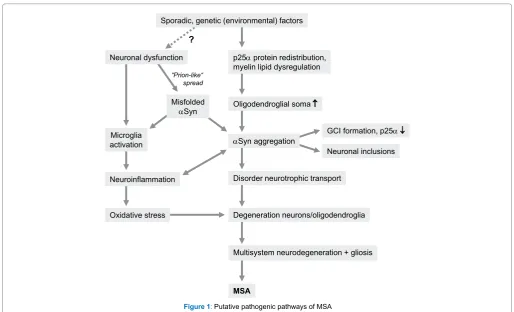
In conclusion, although the pathogenesis of MSA is
currently poorly understood, evidence from animal models and
human postmortem studies suggest that the accumulation of
misfolded αSyn plays a central role in the disease process
58,62,
which can be considered a synucleinopathy with specific
glioneuronal degeneration, associated with early myelin
dysfunction and neuronal degeneration related to retrograde
axonal disease
55,124(Figure 1). Although one may speculate that
primary neuronal pathology leads to secondary oligodendroglia
degeneration as suggested by the finding that NCIs exist in
areas lacking GCIs
67, the fact that distribution and severity of
neurodegeneration reflect subregional GCI densities supports
the hypothesis of a primary oligodendrogliopathy
60,62.
MSA has also been suggested to be a primary neuronal
disease, the formation of GCIs probably resulting from
secondary accumulation of pathological αSyn that may be
neuronal in origin
142. However, strong evidence against a
primary neuronal pathology is the fact that GCIs are the
hallmark of MSA and not in PD, a disease with similar
lesion pattern of αSyn immunoreactive neuronal inclusions
in many overlapping circuits but few GCIs, which
differentiates these two disorders
133. Although the source
of αSyn is under discussion, “prion-like” spreading of this
protein, OS, proteasomal and mitochondrial dysfunction
45and proteolytic dysbalance, dysregulation of myelin lipids,
demyelination, neuroinflammation and energy failure and
genetic polymorphism
47are suggested to contribute to the
pathogenesis of systemic neurodegeneration in this unique
proteinopathy
143,144.
Potential biomarkers of MSA
Recent international consensus criteria allow the diagnosis
of MSA with three levels of certainty: a diagnosis of possible
and probable MSA is based on the presence of clinical core
features, while that of definite MSA requires postmortem
confirmation
4. In a series of neurodegenerative diseases, the
presence of neuroimaging and/or fluid (serum, cerebrospinal
fluid/CSF) biomarkers has improved the diagnostic accuracy,
prognostic guidance and may serve as efficacy measures or
surrogates of target engagement for clinical trials (e.g.
145-152.
Biomarkers include those based on neuroimaging, in particular
multimodal magnetic resonance imaging (MRI), diffusion
tensor imaging (DTI), MR spectroscopy, and positron emission
tomography (PET), peripheral biomarkers (skin, peripheral
nerve and other biopsies) and fluid biomarkers from serum,
plasma and CSF. In general, there is no single biomarker that
will satisfy all requirements, whereas combinations are likely
to be of great value in improving the diagnostic accuracy
and prognostic guidance
146. Unfortunately, despite growing
Modern neuroimaging techniques have improved clinical
accuracy in differentiating MSA and PD. MRI abnormalities
in PD are subtle, whereas MSA shows more obvious
imaging abnormalities such as the “hot cross bun” (HBC)
sign (selective loss of myelinated transverse pontocerebellar
fibers in the pontine raphe with selective preservation of the
corticospinal tracts), atrophy of the pons, cerebellum, and
globus pallidus
153,154, although no single feature is completely
sensitive and specific. The same holds for MR spectroscopy
and PET
155. Multimodal MRI reveals different patterns of
nigro-striatal involvement between PD and MSA
156, while
others found significant differences of FA/RD values in
bilateral corticospinal tract (CST) and left anterior thalamic
radiation (ATR) in MSA-P versus PD and controls
157,158.
Hypointensity of the dorsolateral putamen in T2-weighted
MRI due to iron deposition and more severe white matter
abnormalities differentiate MSA-P from MSA-C
75, while
dopamine transporter single-photon emission computerized
tomography (DAT-SPECT) cannot differentiate MSA from PD
159
. Automated subcortical volume measurement can be used for
differentiating MSA from PD and PSP with high accuracy
160.
Since sympathetic denervation in PD involves postganglionic
neurons, while in MSA affects preganglionic neurons, cardiac
123I
metaiodobenzylguanidine (MIBG) scintigraphy may also be
useful for the differential diagnosis of these disorders
161, but
this test has suboptimal diagnostic accuracy
1.
The diagnostic validity of skin punch biopsies for the
demonstration of αSyn deposits in Schwann or other cells in
peripheral nerves in MSA patients is under discussion and needs
further evaluation in pathologically confirmed cases
69,85,86.
The MSA Biomarker Initiative has recently published
a critical review of fluid markers based on the evaluation of
60 studies
162, suggesting that combining several CSF fluid
biomarkers may be more successful than using single markers.
Currently, clinically most useful is a combination of the
light chain of neurofilaments, which is consistently elevated
in MSA compared to controls and PD
163, metabolites of the
catecholamine pathway (dopamine and norepinephrine) and
proteins such as αSyn, DJ-1, and total-tau (t-tau). A panel
associating DJ-1 + t-tau + phosphorylated tau (p-tau) yielded
high sensitivity (82%) and specificity (91%) for the distinction
between MSA and PD or controls
164,165. The best performance
was achieved by combining NFL and FLT3 ligand
163, while the
combination of DJ-1 + t-tau + p-tau protein in CSF improved the
discrimination between MSA from PD and controls
164,166. The
results of proteomics for biomarker discovery and of miRNA
expression need validation using independent technologies
162.
Only a few studies revealed a relation between fluid
biomarker levels and clinical features, while most did not
collect detailed clinical data to allow such and almost no studies
had postmortem confirmation. Further research to elucidate the
molecular background of the development and progression of
the disease process of MSA are urgently needed in order to
unmask the interplay of the various pathobiological changes
as a basis for the development of reliable biomarkers and as an
Sporadic, genetic (environmental) factors
p25αprotein redistribution, myelin lipid dysregulation
Oligodendroglial soma ↑
αSyn aggregation
Disorder neurotrophic transport
Degeneration neurons/oligodendroglia
Multisystem neurodegeneration + gliosis
MSA Neuronal dysfunction
“Prion-like“ spread
Misfolded αSyn
Microglia activation
Neuroinflammation
Oxidative stress
?
GCI formation, p25α ↓
Neuronal inclusions
emerging template for the development of disease-modifying
treatment options of this hitherto incurable disorder.
Modern treatment strategies in MSA
Currently, there is neither an effective neuroprotective
nor a disease-modifying therapy in MSA. Although several
pharmacological approaches have been tried in transgenic
mouse or cellular models of MSA, including riluzole,
rasagiline, minocycline, rifampicin, stem cells, etc., treatments
that can halt or reverse the disease progression in humans
have not yet been identified
167-170. Symptomatic approaches
include dopaminergic and anticholinergic agents, amentadine,
paroxetine, non-pharmacological treatment, treatment of
orthostatic hypotension, urinary and erectile dysfunction as
well as palliative care
171,172. Active immunization against αSyn
has been shown to ameliorate the degenerative pathology
and to prevent demyelination in a mouse model of MSA
173,
while a modified brain-targeted neurosin (kallikrein-6) that
reduces αSyn accumulation in an MSA mouse model may
warrant further investigations as potential therapy for MSA
174,
postmortem assessment of the short- and long-term effects of
gene delivery of the trophic factor neurturin in patients with
α-synucleinopathies (including one MSA-P case) showed
its mild but persistent expression over 4 years
175. Prominent
targets for disease therapy include (1) pathological αSyn
accumulation, (2) microglia activation and neuroinflammation,
(3) oligodendroglial dysfunction, and (4) cell death
58.
Combination therapies, eg, immunotherapy against αSyn +
antiinflammatory agents or multi-target drugs may be the next
step for the treatment of synucleinopathies
176. A new European
project (SYMPATH) is currently assessing a vaccine targeting
αSyn (AFFITOPE) in PD and MSA in humans
168.
Deep brain stimulation could not be recommended for MSA
patients
177. Emerging targets for interventional therapies of
MSA were summarized recently
58, and therapeutic strategies
targeting αSyn
in vivo and in vitro
models of MSA (αSyn
expression, aggregation, degradation and clearance as well as
cell-to-cell propagation) as possible basis for effective
disease-modifying alternatives were critically reviewed
168,178.
Further research on the pathogenic mechanisms, the
interplay of the disease process with various molecular
changes, and the nature of possible genetic and environmental
triggers that unmask its pathogenesis will be needed to develop
optimal animal models, and to clarify the relations between the
development of pathomorphology and clinical manifestations
as a basis for early diagnosis and a disease-modifying treatment
of this hitherto incurable devastating disorder.
Acknowledgements
The study was supported in part by the Society for the
Promotion of Research in Experimental Neurology, Vienna,
Austria. The author thanks Mr. E. Mitter-Ferstl, PhD, for
secretarial and computer work.
Abbreviations
αSyn
α-synuclein
CSF
cerebrospinal fluid
DLB
Lewy body dementia
GBA
glucocerebrosidase gene
GCI
glial cytoplasmic inclusion
GCIs
glial cytoplasmic inclusions
LB
Lewy body
MBP
myelin basic protein
MRI
magnetic resonance imaging
MSA
multiple system atrophy
MSA-C cerebellar variant
MSA-P parkinsonian variant
NCI
neuronal cytoplasmic inclusion
NNI
neuronal nuclear inclusion
OPCA olivopontocerebellar atrophy
OPC
oligodendroglial precursor cell
OS
oxidative stress
PD
Parkinson disease
PET
positron emission tomography
PSP
progressive supranuclear palsy
SND
striatonigral degeneration
tg transgene
TPPP
tubulin polymerization promoting protein
References
1. Fanciulli A, Wenning GK. Multiple-system atrophy. N Engl J Med. 2015; 372:249-263.
2. Jellinger KA. Neuropathology of multiple system atrophy: New thoughts about pathogenesis. Mov Disord. 2014; 29:1720-1741. 3. Spillantini MG, Goedert M. Synucleinopathies: past, present and future.
Neuropathol Appl Neurobiol. 2016; in print: doi 10.1111/nan.12311. 4. Gilman S, Wenning GK, Low PA, Brooks DJ, Mathias CJ, Trojanowski JQ,
et al. Second consensus statement on the diagnosis of multiple system atrophy. Neurology. 2008; 71:670-676.
5. Ozawa T, Paviour D, Quinn NP, Josephs KA, Sangha H, Kilford L, et al. The spectrum of pathological involvement of the striatonigral and olivopontocerebellar systems in multiple system atrophy: clinicopathological correlations. Brain. 2004; 127:2657-2671. 6. Matsushima M, Yabe I, Oba K, Sakushima K, Mito Y, Takei A, et al.
Comparison of different symptom assessment scales for multiple system atrophy. Cerebellum. 2016; 15:190-200.
8. Xie T, Kang UJ, Kuo S-H, Poulopoulos M, Greene P, Fahn S. Comparison of clinical features in pathologically confirmed PSP and MSA patients followed at a tertiary center. npj Parkinson’s Dis. 2015, 1.
9. Palma JA, Fernandez-Cordon C, Coon EA, Low PA, Miglis MG, Jaradeh S, et al. Prevalence of REM sleep behavior disorder in multiple system atrophy: a multicenter study and meta-analysis. Clin Auton Res. 2015; 25:69-75.
10. Petrovic IN, Ling H, Asi Y, Ahmed Z, Kukkle PL, Hazrati LN, et al. Multiple system atrophy-parkinsonism with slow progression and prolonged survival: a diagnostic catch. Mov Disord. 2012; 27:1186-1190. 11. Roncevic D, Palma JA, Martinez J, Goulding N, Norcliffe-Kaufmann L,
Kaufmann H. Cerebellar and parkinsonian phenotypes in multiple system atrophy: similarities, differences and survival. J Neural Transm. 2014; 121:507-512.
12. Sakushima K, Nishimoto N, Nojima M, Matsushima M, Yabe I, Sato N, et al. Epidemiology of multiple system atrophy in Hokkaido, the northernmost island of Japan. Cerebellum. 2015; 14:682-687. 13. Trojanowski JQ, Revesz T. Proposed neuropathological criteria for the
post mortem diagnosis of multiple system atrophy. Neuropathol Appl Neurobiol. 2007; 33:615-620.
14. Köllensperger M, Geser F, Ndayisaba JP, Boesch S, Seppi K, Ostergaard K, et al. Presentation, diagnosis, and management of multiple system atrophy in Europe: final analysis of the European multiple system atrophy registry. Mov Disord. 2010; 25:2604-2612.
15. Wakabayashi K, Mori F, Nishie M, Oyama Y, Kurihara A, Yoshimoto M, et al. An autopsy case of early (“minimal change”) olivopontocerebellar atrophy (multiple system atrophy-cerebellar). Acta Neuropathol. 2005; 110:185-190.
16. Kon T, Mori F, Tanji K, Miki Y, Wakabayashi K. An autopsy case of preclinical multiple system atrophy (MSA-C). Neuropathology. 2013; 33:667-672.
17. Masui K, Nakata Y, Fujii N, Iwaki T. Extensive distribution of glial cytoplasmic inclusions in an autopsied case of multiple system atrophy with a prolonged 18-year clinical course. Neuropathology. 2012; 32:69-76.
18. Ling H, Asi YT, Petrovic IN, Ahmed Z, Prashanth LK, Hazrati LN, et al. Minimal change multiple system atrophy: An aggressive variant? Mov Disord. 2015; 30:960-967.
19. McCann H, McGeachie AB, Silberstein P, Lewis SJ, Halliday GM. Restricted disease propagation in multiple system atrophy with prolonged survival. Neuropathol Appl Neurobiol. 2015; 41:681-685. 20. Kim HJ, Jeon BS, Jellinger KA. Diagnosis and differential diagnosis of
MSA: boundary issues. J Neurol. 2015; 262:1801-1813.
21. Kim HJ, Stamelou M, Jeon B. Multiple system atrophy-mimicking conditions: Diagnostic challenges. Parkinsonism Relat Disord. 2016; 22 Suppl 1:S12-15.
22. Koga S, Aoki N, Uitti RJ, van Gerpen JA, Cheshire WP, Josephs KA, et al. When DLB, PD, and PSP masquerade as MSA: an autopsy study of 134 patients. Neurology. 2015; 85:404-412.
23. Aoki N, Boyer PJ, Lund C, Lin WL, Koga S, Ross OA, et al. Atypical multiple system atrophy is a new subtype of frontotemporal lobar degeneration: frontotemporal lobar degeneration associated with alpha-synuclein. Acta Neuropathol. 2015; 130:93-105.
24. Rohan Z, Rahimi J, Weis S, Kapas I, Auff E, Mitrovic N, et al. Screening for alpha-synuclein immunoreactive neuronal inclusions in the hippocampus allows identification of atypical MSA (FTLD-synuclein). Acta Neuropathol. 2015; 130:299-301.
25. Seo JH, Yong SW, Song SK, Lee JE, Sohn YH, Lee PH. A case-control study of multiple system atrophy in Korean patients. Mov Disord. 2010; 25:1953-1959.
26. Vanacore N, Bonifati V, Fabbrini G, Colosimo C, De Michele G, Marconi R, et al. Case-control study of multiple system atrophy. Mov Disord. 2005; 20:158-163.
27. Hara K, Momose Y, Tokiguchi S, Shimohata M, Terajima K, Onodera O, et al. Multiplex families with multiple system atrophy. Arch Neurol. 2007; 64:545-551.
28. Wullner U, Schmitt I, Kammal M, Kretzschmar HA, Neumann M. Definite multiple system atrophy in a German family. J Neurol Neurosurg Psychiatry. 2009; 80:449-450.
29. Federoff M, Price TR, Sailer A, Scholz S, Hernandez D, Nicolas A, et al. Genome-wide estimate of the heritability of multiple system atrophy. Parkinsonism Relat Disord. 2016; 22:35-41.
30. Chen YP, Zhao B, Cao B, Song W, Guo X, Wei QQ, et al. Mutation scanning of the COQ2 gene in ethnic Chinese patients with multiple-system atrophy. Neurobiol Aging. 2015; 36:1222 e1227-1211.
31. Ogaki K, Fujioka S, Heckman MG, Rayaprolu S, Soto-Ortolaza AI, Labbe C, et al. Analysis of COQ2 gene in multiple system atrophy. Mol Neurodegener. 2014; 9:44.
32. Kasai T, Tokuda T, Ohmichi T, Ishii R, Tatebe H, Nakagawa M, et al. Serum levels of coenzyme Q10 in patients with multiple system atrophy. PLoS One. 2016; 11:e0147574.
33. Scholz SW, Houlden H, Schulte C, Sharma M, Li A, Berg D, et al. SNCA variants are associated with increased risk for multiple system atrophy. Ann Neurol. 2009; 65:610-614.
34. Ross OA, Vilarino-Guell C, Wszolek ZK, Farrer MJ, Dickson DW. Reply to: SNCA variants are associated with increased risk of multiple system atrophy. Ann Neurol. 2010; 67:414-415.
35. Sun Z, Xiang X, Tang B, Chen Z, Peng H, Xia K, et al. SNP rs11931074 of the SNCA gene may not be associated with multiple system atrophy in Chinese population. Int J Neurosci. 2015; 125:612-615.
36. Ahmed Z, Asi YT, Sailer A, Lees AJ, Houlden H, Revesz T, et al. The neuropathology, pathophysiology and genetics of multiple system atrophy. Neuropathol Appl Neurobiol. 2012; 38:4-24.
37. Fujishiro H, Imamura AY, Lin WL, Uchikado H, Mark MH, Golbe LI, et al. Diversity of pathological features other than Lewy bodies in familial Parkinson’s disease due to SNCA mutations. Am J Neurodegener Dis. 2013; 2:266-275.
38. Mitsui J, Matsukawa T, Sasaki H, Yabe I, Matsushima M, Durr A, et al. Variants associated with Gaucher disease in multiple system atrophy. Ann Clin Transl Neurol. 2015; 2:417-426.
39. Srulijes K, Hauser AK, Guella I, Asselta R, Brockmann K, Schulte C, et al. No association of GBA mutations and multiple system atrophy. Eur J Neurol. 2013; 20:e61-62.
40. Schottlaender LV, Holton JL, Houlden H. Multiple system atrophy and repeat expansions in c9orf72. JAMA Neurol. 2014; 71:1190-1191. 41. Heckman MG, Schottlaender L, Soto-Ortolaza AI, Diehl NN, Rayaprolu
S, Ogaki K, et al. LRRK2 exonic variants and risk of multiple system atrophy. Neurology. 2014; 83:2256-2261.
42. Scholz SW, Majounie E, Revesz T, Holton JL, Okun MS, Houlden H, et al. Multiple system atrophy is not caused by C9orf72 hexanucleotide repeat expansions. Neurobiol Aging. 2015; 36:1223 e1221-1222. 43. Mills JD, Kim WS, Halliday GM, Janitz M. Transcriptome analysis of
grey and white matter cortical tissue in multiple system atrophy. Neurogenetics. 2015; 16:107-122.
44. Mills JD, Ward M, Kim WS, Halliday GM, Janitz M. Strand-specific RNA-sequencing analysis of multiple system atrophy brain transcriptome. Neuroscience. 2016; 322:234-250.
-disease-related alteration in miR-96. Eur J Neurosci. 2014; 39:1026-1041.
46. Prendecki M, Dorszewska J. The role of microrna in the pathogenesis and diagnosis of neurodegenerative diseases. Austin Alzheimers Parkinsons Dis. 2014; 1:10.
47. Chen J, Mills JD, Halliday GM, Janitz M. Role of transcriptional control in multiple system atrophy. Neurobiol Aging. 2015; 36:394-400. 48. Bleasel JM, Wong JH, Halliday GM, Kim WS. Lipid dysfunction and
pathogenesis of multiple system atrophy. Acta Neuropathol Commun. 2014; 2:15.
49. Kiely AP, Asi YT, Kara E, Limousin P, Ling H, Lewis P, et al. alpha-Synucleinopathy associated with G51D SNCA mutation: a link between Parkinson’s disease and multiple system atrophy? Acta Neuropathol. 2013; 125:753-769.
50. Kiely AP, Ling H, Asi YT, Kara E, Proukakis C, Schapira AH, et al. Distinct clinical and neuropathological features of G51D SNCA mutation cases compared with SNCA duplication and H50Q mutation. Mol Neurodegener. 2015; 10:41.
51. Pasanen P, Myllykangas L, Siitonen M, Raunio A, Kaakkola S, Lyytinen J, et al. A novel alpha-synuclein mutation A53E associated with atypical multiple system atrophy and Parkinson’s disease-type pathology. Neurobiol Aging. 2014; 35:2180 e2181-2185.
52. Sturm E, Stefanova N. Multiple system atrophy: genetic or epigenetic? Exp Neurobiol. 2014; 23:277-291.
53. Kuzdas-Wood D, Fellner L, Premstaller M, Borm C, Bloem B, Kirik D, et al. Overexpression of alpha-synuclein in oligodendrocytes does not increase susceptibility to focal striatal excitotoxicity. BMC Neurosci. 2015; 16:86.
54. Wenning GK, Jellinger KA. The role of alpha-synuclein in the pathogenesis of multiple system atrophy. Acta Neuropathol. 2005; 109:129-140.
55. Jellinger KA. Neuropathology and pathogenesis of multiple system atrophy: an update. Curr Trends Neurol. 2015; 9:45-54.
56. Benarroch EE, Schmeichel AM, Low PA, Parisi JE. Differential involvement of the periaqueductal gray in multiple system atrophy. Auton Neurosci. 2010; 158:111-117.
57. Ozawa T. Morphological substrate of autonomic failure and neurohormonal dysfunction in multiple system atrophy: impact on determining phenotype spectrum. Acta Neuropathol. 2007; 114:201-211.
58. Stefanova N, Wenning GK. Multiple system atrophy: emerging targets for interventional therapies. Neuropathol Appl Neurobiol. 2016; 42:20-32.
59. VanderHorst VG, Samardzic T, Saper CB, Anderson MP, Nag S, Schneider JA, et al. alpha-Synuclein pathology accumulates in sacral spinal visceral sensory pathways. Ann Neurol. 2015; 78:142-149.
60. Wenning GK, Stefanova N, Jellinger KA, Poewe W, Schlossmacher MG. Multiple system atrophy: a primary oligodendrogliopathy. Ann Neurol. 2008; 64:239-246.
61. Jellinger KA, Lantos PL. Papp-Lantos inclusions and the pathogenesis of multiple system atrophy: an update. Acta Neuropathol. 2010; 119:657-667.
62. Bleasel JM, Halliday GM, Kim WS. Animal modeling an oligodendrogliopathy - multiple system atrophy. Acta Neuropathol Commun. 2016; 4:12.
63. Jellinger KA, Seppi K, Wenning GK. Grading of neuropathology in multiple system atrophy: proposal for a novel scale. Mov Disord. 2005; 20 Suppl 12:S29-36.
64. Halliday GM, Holton JL, Revesz T, Dickson DW. Neuropathology
underlying clinical variability in patients with synucleinopathies. Acta Neuropathol. 2011; 122:187-204.
65. Ozawa T. Pathology and genetics of multiple system atrophy: an approach to determining genetic susceptibility spectrum. Acta Neuropathol. 2006; 112:531-538.
66. Tong J, Ang LC, Williams B, Furukawa Y, Fitzmaurice P, Guttman M, et al. Low levels of astroglial markers in Parkinson’s disease: relationship to alpha-synuclein accumulation. Neurobiol Dis. 2015; 82:243-253. 67. Cykowski MD, Coon EA, Powell SZ, Jenkins SM, Benarroch EE, Low
PA, et al. Expanding the spectrum of neuronal pathology in multiple system atrophy. Brain. 2015; 138:2293-2309.
68. Mendoza-Santiesteban CE, Palma JA, Martinez J, Norcliffe-Kaufmann L, Hedges TR, 3rd, Kaufmann H. Progressive retinal structure abnormalities in multiple system atrophy. Mov Disord. 2015; 30:1944-1953.
69. Nakamura K, Mori F, Kon T, Tanji K, Miki Y, Tomiyama M, et al. Accumulation of phosphorylated alpha-synuclein in subpial and periventricular astrocytes in multiple system atrophy of long duration. Neuropathology. 2015; in print: doi 10.1111/neup.12243.
70. Nakamura K, Mori F, Kon T, Tanji K, Miki Y, Tomiyama M, et al. Filamentous aggregations of phosphorylated alpha-synuclein in Schwann cells (Schwann cell cytoplasmic inclusions) in multiple system atrophy. Acta Neuropathol Commun. 2015; 3:29.
71. Kim JS, Yang JJ, Lee DK, Lee JM, Youn J, Cho JW. Cognitive impairment and its structural correlates in the parkinsonian subtype of multiple system atrophy. Neurodegener Dis. 2015; 15:294-300.
72. Cao B, Zhao B, Wei QQ, Chen K, Yang J, Ou R, et al. The Global Cognition, Frontal Lobe Dysfunction and Behavior Changes in Chinese Patients with Multiple System Atrophy. PLoS One. 2015; 10:e0139773. 73. Salvesen L, Winge K, Brudek T, Agander TK, Lokkegaard A, Pakkenberg
B. Neocortical neuronal loss in patients with multiple system atrophy: a stereological study. Cereb Cortex. 2015; in print: doi 10.1093/ cercor/bhv1228.
74. Salvesen L, Ullerup BH, Sunay FB, Brudek T, Lokkegaard A, Agander TK, et al. Changes in total cell numbers of the basal ganglia in patients with multiple system atrophy - A stereological study. Neurobiol Dis. 2015; 74:104-113.
75. Lee JH, Kim TH, Mun CW, Han YH. Progression of subcortical atrophy and iron deposition in multiple system atrophy: a comparison between clinical subtypes. J Neurol. 2015; online 2015 May 28: 10.1007/ s00415-00015-07785-00415.
76. Asi YT, Ling H, Ahmed Z, Lees AJ, Revesz T, Holton JL. Neuropathological features of multiple system atrophy with cognitive impairment. Mov Disord. 2014; 29:884-888.
77. Don AS, Hsiao JH, Bleasel JM, Couttas TA, Halliday GM, Kim W. Altered lipid levels provide evidence for myelin dysfunction in multiple system atrophy. Acta Neuropathol Commun. 2014; 2:150.
78. Lu CF, Wang PS, Lao YL, Wu HM, Soong BW, Wu YT. Medullo-ponto-cerebellar white matter degeneration altered brain network organization and cortical morphology in multiple system atrophy. Brain Struct Funct. 2014; 219:947-958.
79. Indelicato E, Fanciulli A, Poewe W, Antonini A, Pontieri FE, Wenning GK. Cerebral autoregulation and white matter lesions in Parkinson’s disease and multiple system atrophy. Parkinsonism Relat Disord. 2015; 21:1393-1397.
80. Poston KL, Tang CC, Eckert T, Dhawan V, Frucht S, Vonsattel JP, et al. Network correlates of disease severity in multiple system atrophy. Neurology. 2012; 78:1237-1244.
82. Provitera V, Nolano M, Caporaso G, Stancanelli A, Manganelli F, Iodice R, et al. Postganglionic sudomotor denervation in patients with multiple system atrophy. Neurology. 2014; 82:2223-2229.
83. Sone M, Yoshida M, Hashizume Y, Hishikawa N, Sobue G. alpha-Synuclein-immunoreactive structure formation is enhanced in sympathetic ganglia of patients with multiple system atrophy. Acta Neuropathol. 2005; 110:19-26.
84. Iodice V, Lipp A, Ahlskog JE, Sandroni P, Fealey RD, Parisi JE, et al. Autopsy confirmed multiple system atrophy cases: Mayo experience and role of autonomic function tests. J Neurol Neurosurg Psychiatry. 2012; 83:453-459.
85. Zange L, Noack C, Hahn K, Stenzel W, Lipp A. Phosphorylated alpha-synuclein in skin nerve fibres differentiates Parkinson’s disease from multiple system atrophy. Brain. 2015; 138:2310-2321.
86. Doppler K, Weis J, Karl K, Ebert S, Ebentheuer J, Trenkwalder C, et al. Distinctive distribution of phospho-alpha-synuclein in dermal nerves in multiple system atrophy. Mov Disord. 2015; 30:1688-1692. 87. Haga R, Sugimoto K, Nishijima H, Miki Y, Suzuki C, Wakabayashi
K, et al. Clinical utility of skin biopsy in differentiating between Parkinson’s disease and multiple system atrophy. Parkinsons Dis. 2015; 2015:167038.
88. Beyer K, Ariza A. Protein aggregation mechanisms in synucleinopathies: commonalities and differences. J Neuropathol Exp Neurol. 2007; 66:965-974.
89. Chavarria C, Souza JM. Oxidation and nitration of alpha-synuclein and their implications in neurodegenerative diseases. Arch Biochem Biophys. 2013; 533:25-32.
90. Kahle PJ, Neumann M, Ozmen L, Muller V, Jacobsen H, Spooren W, et al. Hyperphosphorylation and insolubility of alpha-synuclein in transgenic mouse oligodendrocytes. EMBO Rep. 2002; 3:583-588. 91. Fujiwara H, Hasegawa M, Dohmae N, Kawashima A, Masliah E, Goldberg
MS, et al. alpha-Synuclein is phosphorylated in synucleinopathy lesions. Nat Cell Biol. 2002; 4:160-164.
92. Hasegawa M, Fujiwara H, Nonaka T, Wakabayashi K, Takahashi H, Lee VM, et al. Phosphorylated synuclein is ubiquitinated in alpha-synucleinopathy lesions. J Biol Chem. 2002; 277:49071-49076. 93. Tong J, Wong H, Guttman M, Ang LC, Forno LS, Shimadzu M, et al. Brain
alpha-synuclein accumulation in multiple system atrophy, Parkinson’s disease and progressive supranuclear palsy: a comparative investigation. Brain. 2010; 133:172-188.
94. Campbell BC, McLean CA, Culvenor JG, Gai WP, Blumbergs PC, Jakala P, et al. The solubility of alpha-synuclein in multiple system atrophy differs from that of dementia with Lewy bodies and Parkinson’s disease. J Neurochem. 2001; 76:87-96.
95. Brudek T, Winge K, Rasmussen NB, Bahl JM, Tanassi J, Agander TK, et al. Altered alpha-synuclein, parkin, and synphilin isoform levels in multiple system atrophy brains. J Neurochem. 2016; 136:172-185. 96. Kikuchi A, Takeda A, Okamura N, Tashiro M, Hasegawa T, Furumoto
S, et al. In vivo visualization of alpha-synuclein deposition by carbon-11-labelled 2-[2-(2-dimethylaminothiazol-5-yl)ethenyl]-6-[2-(fluoro) ethoxy]benzoxazole positron emission tomography in multiple system atrophy. Brain. 2010; 133:1772-1778.
97. Schwarz L, Goldbaum O, Bergmann M, Probst-Cousin S, Richter-Landsberg C. Involvement of macroautophagy in multiple system atrophy and protein aggregate formation in oligodendrocytes. J Mol Neurosci. 2012; 47:256-266.
98. Vallelunga A, Ragusa M, Di Mauro S, Iannitti T, Pilleri M, Biundo R, et al. Identification of circulating microRNAs for the differential diagnosis of Parkinson’s disease and Multiple System Atrophy. Front Cell Neurosci. 2014; 8:156.
99. Pukass K, Richter-Landsberg C. Inhibition of UCH-L1 in oligodendroglial
cells results in microtubule stabilization and prevents alpha-synuclein aggregate formation by activating the autophagic pathway: implications for multiple system atrophy. Front Cell Neurosci. 2015; 9:163.
100. Shults CW, Rockenstein E, Crews L, Adame A, Mante M, Larrea G, et al. Neurological and neurodegenerative alterations in a transgenic mouse model expressing human alpha-synuclein under oligodendrocyte promoter: implications for multiple system atrophy. J Neurosci. 2005; 25:10689-10699.
101. Ubhi K, Rockenstein E, Mante M, Inglis C, Adame A, Patrick C, et al. Neurodegeneration in a transgenic mouse model of multiple system atrophy is associated with altered expression of oligodendroglial-derived neurotrophic factors. J Neurosci. 2010; 30:6236-6246. 102. Ubhi K, Rockenstein E, Mante M, Inglis C, Adame A, Patrick C, et
al. Alpha-synuclein deficient mice are resistant to toxin-induced multiple system atrophy. Neuroreport. 2010; 21:457-462.
103. Wong JH, Halliday GM, Kim WS. Exploring myelin dysfunction in multiple system atrophy. Exp Neurobiol. 2014; 23:337-344. 104. Bassil F, Monvoisin A, Canron MH, Vital A, Meissner WG, Tison F, et
al. Region-specific alterations of matrix metalloproteinase activity in multiple system atrophy. Mov Disord. 2015; 30:1802-1812. 105. Asi YT, Simpson JE, Heath PR, Wharton SB, Lees AJ, Revesz T, et al.
Alpha-synuclein mRNA expression in oligodendrocytes in MSA. Glia. 2014; 62:964-970.
106. Djelloul M, Holmqvist S, Boza-Serrano A, Azevedo C, Yeung MS, Goldwurm S, et al. Alpha-synuclein expression in the oligodendrocyte lineage: an in vitro and in vivo study using rodent and human models. Stem Cell Reports. 2015; 5:174-184.
107. Ahmed Z, Asi YT, Lees AJ, Revesz T, Holton JL. Identification and quantification of oligodendrocyte precursor cells in multiple system atrophy, progressive supranuclear palsy and Parkinson’s disease. Brain Pathol. 2013; 23:263-273.
108. Ettle B, Reiprich S, Deusser J, Schlachetzki JC, Xiang W, Prots I, et al. Intracellular alpha-synuclein affects early maturation of primary oligodendrocyte progenitor cells. Mol Cell Neurosci. 2014; 62:68-78. 109. May VE, Ettle B, Poehler AM, Nuber S, Ubhi K, Rockenstein E, et al. alpha-Synuclein impairs oligodendrocyte progenitor maturation in multiple system atrophy. Neurobiol Aging. 2014; 35:2357-2368. 110. Stefanova N, Reindl M, Neumann M, Haass C, Poewe W, Kahle PJ,
et al. Oxidative stress in transgenic mice with oligodendroglial alpha-synuclein overexpression replicates the characteristic neuropathology of multiple system atrophy. Am J Pathol. 2005; 166:869-876.
111. Stemberger S, Poewe W, Wenning GK, Stefanova N. Targeted overexpression of human alpha-synuclein in oligodendroglia induces lesions linked to MSA-like progressive autonomic failure. Exp Neurol. 2010; 224:459-464.
112. Kuzdas D, Stemberger S, Gaburro S, Stefanova N, Singewald N, Wenning GK. Oligodendroglial alpha-synucleinopathy and MSA-like cardiovascular autonomic failure: experimental evidence. Exp Neurol. 2013; 247:531-536.
113. Stefanova N, Wenning GK. Animal models of multiple system atrophy. Clin Auton Res. 2015, 25:9-17.
114. Reyes JF, Rey NL, Bousset L, Melki R, Brundin P, Angot E. Alpha-synuclein transfers from neurons to oligodendrocytes. Glia. 2014; 62:387-398.
115. Vieira BD, Radford RA, Chung RS, Guillemin GJ, Pountney DL. Neuroinflammation in multiple system atrophy: response to and cause of alpha-synuclein aggregation. Front Cell Neurosci. 2015; 9:437.
Increased neuronal alpha-synuclein pathology associates with its accumulation in oligodendrocytes in mice modeling alpha-synucleinopathies. PLoS One. 2012; 7:e46817.
117. Masuda-Suzukake M, Nonaka T, Hosokawa M, Kubo M, Shimozawa A, Akiyama H, et al. Pathological alpha-synuclein propagates through neural networks. Acta Neuropathol Commun. 2014; 2:88.
118. Watts JC, Giles K, Oehler A, Middleton L, Dexter DT, Gentleman SM, et al. Transmission of multiple system atrophy prions to transgenic mice. Proc Natl Acad Sci U S A. 2013; 110:19555-19560.
119. Sacino AN, Brooks M, Thomas MA, McKinney AB, McGarvey NH, Rutherford NJ, et al. Amyloidogenic alpha-synuclein seeds do not invariably induce rapid, widespread pathology in mice. Acta Neuropathol. 2014; 127:645-665.
120. Prusiner SB, Woerman AL, Mordes DA, Watts JC, Rampersaud R, Berry DB, et al. Evidence for alpha-synuclein prions causing multiple system atrophy in humans with parkinsonism. Proc Natl Acad Sci U S A. 2015; 112:E5308-5317.
121. Peelaerts W, Bousset L, Van der Perren A, Moskalyuk A, Pulizzi R, Giugliano M, et al. alpha-Synuclein strains cause distinct synucleinopathies after local and systemic administration. Nature. 2015; 522:340-344.
122. Rey NL, George S, Brundin P. Review: Spreading the word: precise animal models and validated methods are vital when evaluating prion-like behaviour of alpha-synuclein. Neuropathol Appl Neurobiol. 2016; 42:51-76.
123. Peelaerts W, Baekelandt V. a-Synuclein strains and the variable pathologies of synucleinopathies. J Neurochem. 2016; in print: doi 10.1111/jnc.13595.
124. Jellinger KA. Multiple system atrophy - a synucleinopathy with specific glioneuronal degeneration. Austin J Clin Neurol. 2015; 2:1071.
125. Armstrong RA, Cairns NJ, Lantos PL. A quantitative study of the pathological changes in ten patients with multiple system atrophy (MSA). J Neural Transm (Vienna). 2004; 111:485-495.
126. Ovadi J, Orosz F. An unstructured protein with destructive potential: TPPP/p25 in neurodegeneration. Bioessays. 2009; 31:676-686. 127. Song YJ, Lundvig DM, Huang Y, Gai WP, Blumbergs PC, Hojrup P, et al.
p25alpha relocalizes in oligodendroglia from myelin to cytoplasmic inclusions in multiple system atrophy. Am J Pathol. 2007; 171:1291-1303.
128. Ota K, Obayashi M, Ozaki K, Ichinose S, Kakita A, Tada M, et al. Relocation of p25 inverted question mark/tubulin polymerization promoting protein from the nucleus to the perinuclear cytoplasm in the oligodendroglia of sporadic and COQ2 mutant multiple system atrophy. Acta Neuropathol Commun. 2014; 2:136.
129. Yazawa I, Giasson BI, Sasaki R, Zhang B, Joyce S, Uryu K, et al. Mouse model of multiple system atrophy alpha-synuclein expression in oligodendrocytes causes glial and neuronal degeneration. Neuron. 2005; 45:847-859.
130. Kragh CL, Gysbers AM, Rockenstein E, Murphy K, Halliday GM, Masliah E, et al. Prodegenerative IkappaBalpha expression in oligodendroglial alpha-synuclein models of multiple system atrophy. Neurobiol Dis. 2014; 63:171-183.
131. von Bernhardi R, Eugenin-von Bernhardi L, Eugenin J. Microglial cell dysregulation in brain aging and neurodegeneration. Front Aging Neurosci. 2015; 7:124.
132. Urbizu A, Canet-Pons J, Munoz-Marmol AM, Aldecoa I, Lopez MT, Compta Y, et al. Cystatin C is differentially involved in multiple system atrophy phenotypes. Neuropathol Appl Neurobiol. 2015; 41:507-519.
133. Halliday GM. Re-evaluating the glio-centric view of multiple system
atrophy by highlighting the neuronal involvement. Brain. 2015; 138:2116-2119.
134. Rockenstein E, Ubhi K, Inglis C, Mante M, Patrick C, Adame A, et al. Neuronal to oligodendroglial alpha-synuclein redistribution in a double transgenic model of multiple system atrophy. Neuroreport. 2012; 23:259-264.
135. Stefanova N, Georgievska B, Eriksson H, Poewe W, Wenning GK. Myeloperoxidase inhibition ameliorates multiple system atrophy-like degeneration in a transgenic mouse model. Neurotox Res. 2012; 21:393-404.
136. Beraud D, Hathaway HA, Trecki J, Chasovskikh S, Johnson DA, Johnson JA, et al. Microglial activation and antioxidant responses induced by the Parkinson’s disease protein alpha-synuclein. J Neuroimmune Pharmacol. 2013; 8:94-117.
137. Hayakawa H, Nagai M, Kawanami A, Nakata Y, Nihira T, Ogino M, et al. Loss of DARPP-32 and calbindin in multiple system atrophy. J Neural Transm (Vienna). 2013; 120:1689-1698.
138. Stefanova N, Kaufmann WA, Humpel C, Poewe W, Wenning GK. Systemic proteasome inhibition triggers neurodegeneration in a transgenic mouse model expressing human alpha-synuclein under oligodendrocyte promoter: implications for multiple system atrophy. Acta Neuropathol. 2012; 124:51-65.
139. Kawamoto Y, Ito H, Ihara M, Takahashi R. XIAP immunoreactivity in glial and neuronal cytoplasmic inclusions in multiple system atrophy. Clin Neuropathol. 2014; 33:76-83.
140. Furukawa Y, Vigouroux S, Wong H, Guttman M, Rajput AH, Ang L, et al. Brain proteasomal function in sporadic Parkinson’s disease and related disorders. Ann Neurol. 2002; 51:779-782.
141. Tanji K, Odagiri S, Maruyama A, Mori F, Kakita A, Takahashi H, et al. Alteration of autophagosomal proteins in the brain of multiple system atrophy. Neurobiol Dis. 2013; 49:190-198.
142. Ubhi K, Low P, Masliah E. Multiple system atrophy: a clinical and neuropathological perspective. Trends Neurosci. 2011; 34:581-590. 143. Jellinger KA. What’s new in multiple system atrophy. Curr Neurobio.
2015; 6:11-14.
144. Jellinger KA, Krismer F. Aetiopathogenesis. In: Wenning GK, Fanciulli A,editors. Multiple System Atrophy. Vienna: Springer-Verlag; 2014: 57-81
145. Kang J-H, Mollenhauer B, Coffey CS, Toledo JB, Weintraub D, Galasko DR, et al. CSF biomarkers associated with disease heterogeneity in early Parkinson disease: the Parkinson’s Progression Markers Initiative study. Acta Neuropathol. 2016; in print: doi 10.1007/ s00401-00016-01552-00402.
146. Simonsen AH, Kuiperij B, El-Agnaf OM, Engelborghs S, Herukka SK, Parnetti L, et al. The utility of alpha-synuclein as biofluid marker in neurodegenerative diseases: a systematic review of the literature. Biomark Med. 2016; 10:19-34.
147. Blennow K, Zetterberg H. The past and the future of Alzheimer’s disease CSF biomarkers-a journey toward validated biochemical tests covering the whole spectrum of molecular events. Front Neurosci. 2015; 9:345.
148. Parnetti L, Cicognola C, Eusebi P, Chiasserini D. Value of cerebrospinal fluid alpha-synuclein species as biomarker in Parkinson’s diagnosis and prognosis. Biomark Med. 2016; 10:35-49.
149. Delenclos M, Jones DR, McLean PJ, Uitti RJ. Biomarkers in Parkinson’s disease: Advances and strategies. Parkinsonism Relat Disord. 2016; 22 Suppl 1:S106-110.