International Journal of Emerging Technology and Advanced Engineering
Website: www.ijetae.com (ISSN 2250-2459,ISO 9001:2008 Certified Journal, Volume 4, Issue 6, June 2014)
387
Multistage Three Layers Image Steganography Using LSB
with Enhanced Security
Ruchi Jain
1, Prof. Bhanu Pratap Singh
21M Tech Research Scholar Computer Science Engineering, All Saints College of Science & Technology, Bhopal
2
HOD, Department Of Computer Science Engineering, All Saints College of Science & Technology, Bhopal
Abstract-- Now-a-days a fast growth of internet in the present world, social networking websites like Twitter& Facebook are being increasingly used by individuals of all over the world to share their life activities and events via images. But this vastly popular observable fact of image sharing on internet is exposed to a lot of risks. At present, these social networking websites are not bounded by stringent privacy and copyright laws. Thus original image, once shared, could be easily downloaded and edited by the miscreants. For Secret data, Image Steganography is the science that provides communication of secret data in an appropriate multimedia carrier, e.g., image. It comes under the assumption that if the feature is visible, the point of attack is evident, therefore the goal here is always to conceal the very existence of the embedded data. This work is concerned with implementing Steganography for images, with an improvement in security and image quality. This paper presents a novel technique for image steganography based on three layers Image Steganography & Least significant bit (LSB) of each of the pixel's intensity of cover image. In addition with LSB and three layers the secret image is converted into text so that no one can understand the message and then this text is embedded in cover image. The experimental result shows that the our methodology has a high capacity and a good invisibility with security. The experimental results showed that the anti-detection robustness of image steganography combined with pre-processing of two stage scheme is found much better than the way using LSB steganography algorithms directly. To improve the robustness of steganography, The proposed method shows good enhancement to Least Significant Bit technique in consideration to security as well as image quality.
Keywords-- Steganography, LSB, Multi Layer Steganography, Encoding.
I. INTRODUCTION
Steganography is the invisible communication. The goal of steganography is to secure communication. The general idea of hiding messages in common digital contents, interests a wider class of applications that go beyond steganography. The methods involved in such applications are collectively referred to as information hiding.
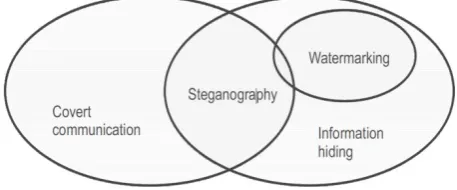
[image:1.595.319.548.467.562.2]For example, while it is possible to add metadata about an image in special tags (exif in JPEG standard) or file headers, this information would be lost when the image is printed, because metadata inserted in tags on headers are tied to the image only as long as the image exists in digital form and are lost as soon as the image is printed. By using information hiding methods, it is possible to fuse the digital content within the image signal regardless of the file format and the status of the image (digital or analog). Moreover, we will refer to the secret message as stego-message or hidden message. Depending on the meaning and goal of the embedded metadata, various information hiding fields can be defined, even though in literature the term „information hiding‟ is often used as a synonym for steganography. In the digital watermarking, for instance, the information is used for copy prevention, copy control, and copyright protection. In that case the embedded data should be robust to malicious attacks in order to preserve its goal.
Figure 1.1: Relationship between steganography and related fields.
International Journal of Emerging Technology and Advanced Engineering
Website: www.ijetae.com (ISSN 2250-2459,ISO 9001:2008 Certified Journal, Volume 4, Issue 6, June 2014)
388 Figure 1.1 graphically shows connections between steganography and related fields. The intersection between steganography and watermarking comprises active steganography and some kinds of watermarking for authentication applications. From an Information Theory point of view, we can introduce steganography by adopting a slightly different point of view [2]. In [3] Shannon was the first that considered secrecy systems from the viewpoint of information theory. Shannon identified three types of secret communications which he described as
1. „concealment systems, including such methods as
invisible ink, concealing a data message in an innocent
text, or in a fake covering cryptogram or other methods in which the existence of the message is concealed from
the enemy‟,
2. privacy systems,
3. cryptographic systems.
With regards to concealment systems, i.e.
steganography, Shannon stated that such „systems are
primarily a psychological problem‟ and did not consider
them further. Afterwards the concept of steganography was recovered by Simmons [4] in his famous explanation of steganography described by mean of the prisoners‟ problem. According to the prisoners‟ scenario two accomplices in a crime have been arrested and are about to be locked in widely separated cells. Their only the means of communication after they are locked up is by way of messages conveyed for them by trustees - who are known to be agents of the warden. The warden is keen to allow the prisoners to exchange messages. However, since he has every reason to suspect that the prisoners want to coordinate an escape plan, the warden will only allow the exchanges to occur if the information contained in the messages is completely open to him and presumably innocuous. The prisoners are willing to accept some risk of deception in order to be able to communicate at all because they need to coordinate their plans. To do this they have to deceive the warden by finding a way of communicating secretly in the exchanges, i.e., of establishing an hidden channel between them in full view of the warden, even though the message themselves contain no secret (to the warden) information.
Today steganography is also seen as a way of ensuring freedom of speech in military dictatorship countries or connected to homeland security. Steganography has been supposed to be used by terrorists to design terroristic attacks.
Example about the terrorism are the technical jihad manual [5] that is part of a terrorist manual and the color of the Osama Bin Laden‟s beard in its clips: military investigators think that secret messages are associated each color of the beard to coordinate terrorist cells. Another topical target of steganography is computer warfare. Latest worms and spywares stole a lot of information about users and then they have to find a way to carry out this data by preventing any suspicion of transmission existence by antivirus, firewall or data stream analysis. From a different viewpoint, we sometimes know that there are some forbidden transmissions [6] and we want to know who is sending secret information, for example, to the press. Apparently, during the 1980‟s, British Prime Minister Margaret
Thatcher became so irritated at press leaks of cabinet documents that she had the word processors programmed to encode the identity of secretaries in the word spacing of documents, so the disloyal ministers could be traced. Later, steganography has being used by some HP and Xerox printers [7] which embed small yellow dots during the printing phase, by writing a coded message in which the serial number of the printer and the print time is embedded. This security has been initially forced onto printer manufacturers by the Federal Government because American dollar bills were easily forged with such printers (one of the weakest currency at the time). During the last few years image steganography research has raised an increasingly interest. A variety of techniques have been proposed especially for a given image file format like gif, jpeg or images represented in the pixel domain. In actual fact, the main idea behind steganography undetectability is: less embedding changes to the cover Work means a less detectable stego object. Even though this statement is not entirely true [8], it represents a good starting point to develop and to improve initial steganographic techniques proposed in the literature. Moreover, new channel coding techniques have been proposed to reduce the embedding changes as the introduction of matrix embedding [9, 10] and Wet Paper Coding [11].
Other techniques [12, 13], especially in JPEG domain, use a subset of support to adjust in some way image statistics that are changed by the message embedding. Recently in [14] authors try to estimate the payload upperbound for a perfect undetectability by using common JPEG steganalysis.
International Journal of Emerging Technology and Advanced Engineering
Website: www.ijetae.com (ISSN 2250-2459,ISO 9001:2008 Certified Journal, Volume 4, Issue 6, June 2014)
389 For each steganographic technique, various techniques
(i.e. targetsteganalysis) [15, 16, 17, 18, 19] have been
proposed, however the current state of art is moving to
blind steganalysis [20, 21, 22, 15], i.e. techniques that are
designed to detect the widest possible range of steganography.
Modern steganalyzers summarize the image by a set of features which are able to reveal the presence or the absence of a secret message embedded within the Work, then these features are used to train a classifier like a Linear Discriminant classifier.
II. PROPOSED METHODOLOGY
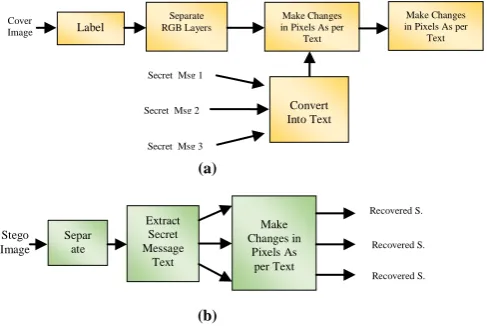
In this paper a novel method of image steganography is proposed, and the block diagram of it is shown in the below figures. The whole system is divided into two parts i.e. Embedding Process and Retrieval Process.
(a)
[image:3.595.270.509.106.621.2](b)
Fig. 2.1. Block Diagram of Proposed Methodology (a) Secret Messages Embedding Process, (b) Secret Messages Retrieval
Process
In Fig. 2.1 (a) shows the block diagram of Embedding Process of image steganography system where secret images is hide behind red, green and blue layers of cover image secret images is converted into text before embedding. After hiding process the stego image is found which is the output of embedding process.
(a)
(b)
Fig. 2.2. Flow chart of Proposed Methodology (a) Embedding Process, (b) Retrieval Process
Select Stego Image Start
Pre-processing of Image
Separate R, G & B Layers
Extract Changes Made by Embedding Algorithm Form Binary String
Convert Binary String into Characters
End
Convert Characters into Image (i.e. Secret Image)
Select Cover Image Start
Load Secret Message Images
Convert Secret Message into Test
Separate All Three Layers of (RGB)
Embedded Secret Message Behind R, G and B Layers of Cover Image
End
Combine All the Layers and form (Same) Stego Image
Stego Image
Separ ate Layer
s
Extract Secret Message
Text
Make Changes in
Pixels As per Text
Recovered S. M. 1 Recovered S.
M. 2 Recovered S.
M. 2 Cover
Image Label
Separate RGB Layers
Make Changes in Pixels As per
Text
Make Changes in Pixels As per
Text
Convert Into Text
Secret Msg 1
[image:3.595.60.304.341.504.2]International Journal of Emerging Technology and Advanced Engineering
Website: www.ijetae.com (ISSN 2250-2459,ISO 9001:2008 Certified Journal, Volume 4, Issue 6, June 2014)
390 In Fig. 2.1 (b) shows the block diagram of the secret information retrieval process, where stego image is separated into red, green and blue layers and secret information is extracted from it after that the recovered text is converted back into secret image.
In Fig. 2.2 the flow chart of proposed methodology execution is shown. (a) shows the flow of embedding process and (b) shows the flow of retrieval process.
III. SIMULATION RESULTS
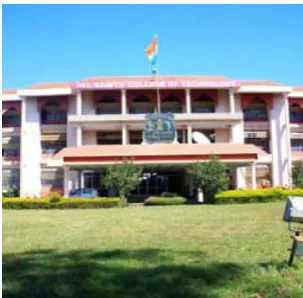
[image:4.595.355.507.231.380.2]The proposed methodology has been simulated on MATLAB R2011a v7.12. We have taken two colour images as cover images for simulation test and six different secret messages in the form of image to hide behind cover image. As explained in the proposed methodology the whole algorithm is divided into two parts one is embedding secret messages behind cover image and form stego image and second retrieval of secret images from stego image and compare them.
Fig. 3.1. Test Cover Image
(a) (b)
Fig. 3.2. (a) First Secret Image to be hide behind Red Layer of the Cover Image (b) Text converted from Secret Image
(a) (b)
Fig. 3.3. (a) Second Secret Image to be hide behind Green Layer of the Cover Image (b) Text converted from Secret Image
(a) (b)
[image:4.595.71.254.363.613.2]Fig. 3.4. (a) Third Secret Image to be hide behind Blue Layer of the Cover Image (b) Text converted from Secret Image
Fig. 3.5. Stego image after embedding secret messages behind cover image
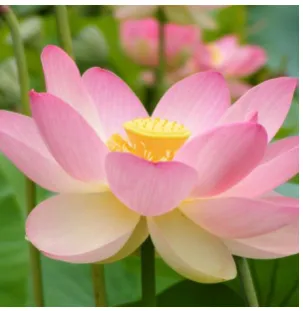
Fig. 3.6. Test Cover Image
(a) (b)
Fig. 3.7. (a) First Secret Image to be hide behind Red Layer of the Cover Image (b) Text converted from Secret Image
(a) (b)
[image:4.595.316.540.387.782.2]International Journal of Emerging Technology and Advanced Engineering
Website: www.ijetae.com (ISSN 2250-2459,ISO 9001:2008 Certified Journal, Volume 4, Issue 6, June 2014)
391
(a) (b)
[image:5.595.106.546.102.360.2]Fig. 3.9. (a) Third Secret Image to be hide behind Blue Layer of the Cover Image (b) Text converted from Secret Image
Fig. 3.10. Stego image after embedding secret messages behind cover image
The PSNR , RMSE and MSE values are calculated as a figure of merit of cover and stego image and original secret messages and retrieved messages. A detailed comparison given in below tables.
Table - I
Comparison of Cover and Stego Images
Cover Image Stego Image PSNR RMSE MSE
81.7495 dB 0.02093 0.00044
81.2247 dB 0.02223 0.00049
81.2611 dB 0.02214 0.000490
Table - II
Comparison of Original Secret Messages and Retrieved Secret Messages
Secret Image Retrieved Secret Image PSNR RMSE MSE
Inf Inf Inf
Inf Inf Inf
Inf Inf Inf
Inf Inf Inf
Inf Inf Inf
Inf Inf Inf
IV. CONCLUSION AND FUTURE SCOPE
In this work image steganography is implemented with the two stage pre-processing i.e. the secret image is taken in the form on image and this secret image is converted in to text and after this text hide behind image and after retrieval the recovered images are equal as original secret message so that we can say that the proposed methodology is 100% efficient in terms of technique to embed and retrieval of secret information.
In future this proposed methodology can be equipped with more efficient encoding or encryption technique which makes secret data encoded, before embedding process and only authorized person recover secret information from stego image.
REFERENCES
[1] Moerland, T., “Steganography and Steganalysis”, Leiden Institute of Advanced Computing Science, www.liacs.nl/home/ tmoerl/privtech.pdf
[2] Simmons, G., “The prisoners problem and the subliminal channel”, CRYPTO, 1983.
[3] Chandramouli, R., Kharrazi, M. & Memon, N., “Image steganography and steganalysis: Concepts and Practice”, Proceedings of the 2nd International Workshop on Digital Watermarking, October 2003
[4] William Stallings. Cryptography and Network Security. Pearson education, Inc. 2011.
[5] L. Reyzen And S. Russell , “More efficient provably secure Steganography” 2007.
[image:5.595.305.557.162.347.2] [image:5.595.90.242.234.390.2] [image:5.595.42.287.480.667.2]International Journal of Emerging Technology and Advanced Engineering
Website: www.ijetae.com (ISSN 2250-2459,ISO 9001:2008 Certified Journal, Volume 4, Issue 6, June 2014)
392 [7] Johnson, N. F. and Jajodia, S, “Exploring Steganography: Seeing
the Unseen.” IEEE Computer, 31 (2): 26-34, Feb 1998.
[8] Artz, D., “Digital Steganography: Hiding Data within Data”, IEEE Internet Computing Journal, June 2001
[9] Handel, T. & Sandford, M., “Hiding data in the OSI network model”, Proceedings of the 1 st International Workshop on Information Hiding, June 1996.
[10] Ahsan, K. & Kundur, D., “Practical Data hiding in TCP/IP”, Proceedings of the Workshop on Multimedia Security at ACM Multimedia, 2002.
[11] Shunquan Tan; Bin Li, "Targeted steganalysis of adaptive pixel-value differencing steganography," Image Processing (ICIP), 2012 19th IEEE International Conference on , vol., no., pp.1129,1132, Sept. 30 2012-Oct. 3 2012.
[12] Shunquan Tan; Bin Li, "Targeted Steganalysis of Edge Adaptive Image Steganography Based on LSB Matching Revisited Using B-Spline Fitting," Signal Processing Letters, IEEE , vol.19, no.6, pp.336,339, June 2012.
[13] Yamini, B.; Sabitha, R., "Steganalytic attack for an adaptive steganography using support vector machine," Emerging Trends in Robotics and Communication Technologies (INTERACT), 2010 International Conference on , vol., no., pp.56,58, 3-5 Dec. 2010.
[14] Xiang Yang; Zhang Wen-hua, "Effective Steganalysis of YASS Based on Statistical Moments of Wavelet Characteristic Function and Markov Process," Computer Science and Electronics Engineering (ICCSEE), 2012 International Conference on , vol.1, no., pp.606,610, 23-25 March 2012.
[15] Xiaofeng Li; Xiangwei Kong; Bo Wang; Yanqing Guo; Xingang You, "Generalized transfer component analysis for mismatched JPEG steganalysis," Image Processing (ICIP), 2013 20th IEEE International Conference on , vol., no., pp.4432,4436, 15-18 Sept. 2013.
[16] Aly, H.A., "Data Hiding in Motion Vectors of Compressed Video Based on Their Associated Prediction Error," Information Forensics and Security, IEEE Transactions on , vol.6, no.1, pp.14,18, March 2011.
[17] He, Lu; Gui, Xiao-lin, "An active attack on chaotic based text zero-watermarking," Conference Anthology, IEEE , vol., no., pp.1,4, 1-8 Jan. 2013.
[18] Yun Cao; Xianfeng Zhao; Dengguo Feng, "Video Steganalysis Exploiting Motion Vector Reversion-Based Features," Signal Processing Letters, IEEE , vol.19, no.1, pp.35,38, Jan. 2012. [19] Tasdemir, K.; Kurugollu, F.; Sezer, S., "Video steganalysis of
LSB based motion vector steganography," Visual Information Processing (EUVIP), 2013 4th European Workshop on , vol., no., pp.260,264, 10-12 June 2013.
[20] Liping Ji; Xiaolong Li; Bin Yang; Zhihong Liu, "A Further Study on a PVD-Based Steganography," Multimedia Information Networking and Security (MINES), 2010 International Conference on , vol., no., pp.686,690, 4-6 Nov. 2010.
Author’s Profile