R E S E A R C H A R T I C L E
Open Access
Development and initial testing of a GDM
information website for multi-ethnic
women with GDM
Mary Carolan-Olah
1*, Cheryl Steele
2and Gillian Krenzin
2Abstract
Background:Gestational diabetes mellitus (GDM) affects approximately 5–15 % of pregnant women in Australia. Highest rates are seen among women who are obese, from specific ethnic backgrounds and low socio-economic circumstance. These features also impact on uptake of self-management recommendations. GDM that is not well managed can give rise to serious pregnancy complications. The aim of this project was to develop and test an intervention to improve knowledge of GDM and GDM self-management principles.
Methods:A web-based intervention, consisting of resources aimed at a low level of literacy, was developed and tested among multi-ethnic women at a metropolitan hospital in Melbourne Australia. A basic one-group pre-test/post-test design was used to explore the impact of the intervention on knowledge, in 3 domains: (1) Knowledge of GDM; (2) food values, and;(3) GDM self-management principles. Questionnaire data was analysed using Statistical Package for the Social Sciences (SPSS), version 21.0. Fisher’s exact test was used to test for an improvement in each knowledge scale.
Results:Twenty-one women with GDM, from multi-ethnic backgrounds, participated in the testing of the intervention. Results indicated that the intervention was effective at improving knowledge scores and this effect was greatest in the first domain, knowledge of GDM. Although some improvement of knowledge scores occurred in the other two domains, food values and self-management principles, these improvements were less than expected. This finding may relate to a number of misunderstandings in the interpretation of the web resource and survey questions. These issues will need to be resolved prior to proceeding to a clinical trial.
Conclusion:Initial results from this study look promising and suggest that with some improvements, the intervention could prove a useful adjunct support for women with GDM from multi-ethnic and low socio-economic backgrounds. Conducting a randomised controlled trial is feasible in the future and will provide a useful means of examining efficacy of the intervention.
Keywords:Gestational diabetes, Self-management, Knowledge, Intervention, Internet
Background
In Australia, Gestational Diabetes Mellitus (GDM) af-fects approximately 5 % of pregnant women overall [1] and figures are considerably higher among women from specific ethnic backgrounds, such as Asian and South Asian. In such groups, GDM rates may be 2–3 times higher than national rates [2, 3]. These high rates are a concern as GDM is linked to a number of adverse
outcomes for mothers and infants. Mothers are more likely to experience: induction of labour; pre-term birth, caesarean section, hypertension and extended hospital stay [1]. Infants of mothers with GDM are predisposed to hypoglycaemia [4], higher rates of stillbirth, macroso-mia and birth injury [5], low apgar scores, admission to special care nursery, and longer hospital stays [1, 4]. Careful management of GDM reduces these risks [4, 6].
Self-care is the most usual approach to GDM manage-ment and women are taught to: monitor their blood glucose levels; adjust their dietary intake to GDM recommenda-tions, and; increase physical activity, in a bid to maintain * Correspondence:[email protected]
1
Nursing and Midwifery, College of Health and Biomedicine, Victoria University, St Alban’s Campus, PO Box 14228, Melbourne 8001, Australia Full list of author information is available at the end of the article
blood glucose levels within normal limits. These changes can be very difficult and, for some women quite extensive, due to previous dietary and exercise habits. For these rea-sons, many women struggle to adhere to GDM recommen-dations [7–10], particularly as changes must be adopted immediately [8, 11]. Additionally, in order to successfully self-manage the condition, women need to understand GDM, the importance of self-management [4], what consti-tutes a healthy diet, the impact of different foods on blood glucose levels, and the amount and type of exercise to undertake [8]. Emotional support is critical to motivation and a number of studies indicate that such support contrib-utes positively to GDM skills development [7, 10]. Con-versely, a number of factors are identified as likely to impact negatively on the adoption of health recommendations. These factors include: low educational attainment [12], lim-ited health literacy [13], and low levels of English language proficiency [14]. Each of these features increase the likeli-hood that women will experience significant difficulty self-managing their GDM.
Overall, there is a need for GDM interventions that target low income, ethnically diverse and low literacy groups, as these groups are at high risk of developing GDM. However, despite this clear need, such programs are rare, and only two published studies were identified that reported on in-terventions to improve levels of knowledge and GDM out-comes among low socio-economic and minority groups [15, 16]. In the first instance, Hoppichler and Lechleitner [16] tested an intervention, which involved repeated inten-sive dietary counselling, among locally born women with GDM, compared to low literate migrant Turkish women, also with GDM, in Austria. Secondly, Mendelson et al., [15] used a similar approach for low income Mexican-American women with GDM, in California, USA. Both studies con-sidered their interventions successful and also emphasised the importance of ensuring acceptability of educational re-sources [15, 16]. Furthermore, the literature suggests that in order for GDM interventions to be effective in low in-come groups, resources need to be pitched at a low level of health literacy [17] and experts in the field recommend using strategies such as pictorial representation of import-ant information and repetition of simple instructions [18]. The provision of culturally sensitive resources is also recog-nised as important and as likely to improve acceptability and uptake of the intervention [15, 19].
With this information in mind, the website intervention, reported in this paper, aimed to address such issues as cul-tural sensitivity, low health literacy and low levels of English proficiency, in the belief that women with GDM need re-sources that they understand and that are culturally relevant to them. The intervention was developed for use in a low socio-economic area of Melbourne [20], where women incur a higher GDM incidence than that recorded nationally [21]. In this area, there are high levels of obesity [22], and as
many as one third of the population speak a language other than English at home [23]. In this paper, development and initial testing of the intervention, is discussed. The interven-tion was planned to serve as an adjunct to routine educa-tional sessions by the dietician and diabetes educator. The team also aimed to test ease of use, relevance and accept-ability of the website for the target group of women, and to consider the feasibility of proceeding to a clinical trial.
Theoretical model
One of the difficulties with GDM is a tendency for women to underestimate the seriousness of the condition, based on it’s transient quality and we aimed to address this difficulty by re-iteration of the impact, for the baby, of un-managed GDM. We choose this approach, as in our earlier study, we found that ‘thinking about the baby’ was a powerful motivator for women to manage their GDM [10]. The overall challenge was to convey the urgency of behav-ioural change without unnecessarily alarming the women.
Methods
A basic pre-test/post-test survey questionnaire design was used to measure differences, if any, in knowledge of GDM, food values and GDM self-management princi-ples before and after the intervention. This particular ap-proach was chosen as it is considered suitable for measuring changes in behaviours or attitudes [30] and it has been successfully used in a number of nursing and health related studies [31, 32]. Additionally, we intended this testing of the intervention as a means of identifying any weaknesses in the design, and any deficits in general user-friendliness and acceptability for the target group of women. For these reasons, we included three additional questions in the post-test questionnaire, where partici-pants were asked to give feedback on the intervention, in terms of (1) ease of use; (2) value of the information on the website; and (3) any changes or inclusions they would recommend.
Data collection
Instruments
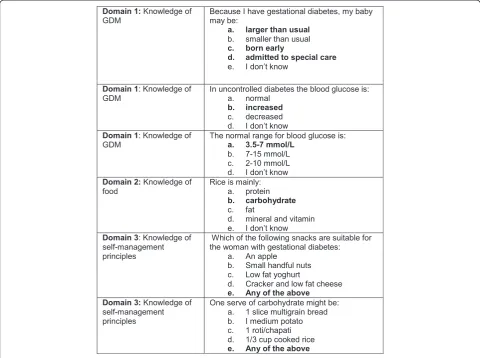
The instrument used was the Knowledge of GDM ques-tionnaire [33] which is based on an earlier validated questionnaire, the Diabetes Knowledge Scale, developed to measure knowledge and understanding of diabetes types 1 and 2, food values, and maintenance of blood glucose levels [34]. A number of modifications were made to the earlier questionnaire in a bid to make it more relevant to GDM and changes were informed by an expert panel, as reported elsewhere [33]. The Knowledge of GDM questionnaire, has now been used successfully among women with GDM from a number of ethnic groups, including Vietnamese, Indian and locally born Australian women [33], and White American, African American and Asian women in America [35]. The questionnaire is composed of twenty-four questions, which fall into three main domains: (1) Knowledge of GDM, including the impact of GDM on mother and baby, and recognising normal glycemic levels; (2) Knowledge of food, including food values; and, (3) Knowledge of GDM self-management principles (see Fig. 1 for sample questions). The majority of questions had one correct answer and were scored simply as correct/ incorrect. Four questions had more than one
correct answer, and were scored as correct (all correct answers identified) or incorrect (did not identify all correct answers). The additional 3 questions which sought the women’s views of the website, as above, completed the post-test questionnaire.
Description of intervention
In earlier studies, we found that most pregnant women in the area, despite their low income status, had access to smart phones and/or computer and that this was their preferred medium for learning about GDM [33]. For these reasons, we developed a web-based intervention, for use on home computers, tablets and smart phones. Women accessing the intervention progress through a series of information sheets, which address topics such as ‘what is GDM’ and ‘what is healthy eating’. The intervention also of-fers practical advice and instruction such as what to do if you are hungry between meals. Instructions are phrased simply as short sentences, with a green tick, for acceptable foods, and a red x for poor choices. There are a large number of pictures and minimal amounts of text, and these are recognized as useful approaches for addressing low levels of literacy [36, 37]. An explanation of the amount of exercise that is required, and the type of exercise that is safe in pregnancy, is also included. Representation of ethnic specific food (Western, Vietnamese, Indian, Chinese) and portions appropriate for pregnant women, is placed alongside an explanation of the amount of exercise that is required to burn up the calories contained in the food, as below:
Recruitment and data collection
A convenience sample of 21 women from the hospital diabetes clinic tested the first version of the intervention. We used the following inclusion criteria:
Pregnant
Diagnosis of GDM
More than 18 years of age
Conversational English, as this initial website is in English
Ethics approval was granted by the Western Health (Sunshine Hospital) low risk ethics panel (HREC/11/ WH/81). Women were given a verbal description of the intervention and advised that participation was volun-tary. Interested women were invited to go through the website using the touchscreen or computer in the clinic waiting room. Those who agreed to participate, pro-vided written consent. Participants filled in a pre-test questionnaire (approximately 5 min), perused the web-site while waiting for their clinic appointments, and filled in the post-test questionnaire (approximately 5 min) at their next appointment one week later. A research assistant was available to assist the women to navigate the website and to read out the questionnaire and record the participant’s responses, if the participant wished. Five participants requested this level of assistance.
Data analysis
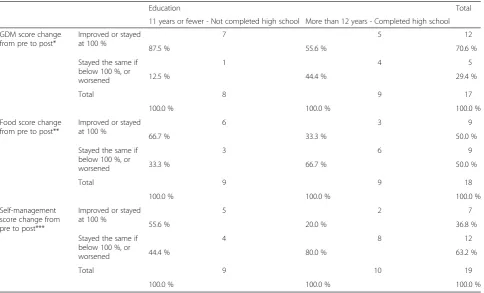
A cross table was created comparing the improvement in each of the three scores (GDM, Food, Self-management) against the participant’s level of education (Table 2). Fisher’s Exact test was used to test for an association between each scale’s improvement and the education variable as this test is suitable for small data sets [38]. TheP-values for these tests are provided below each sub-table.
Results
Demographic characteristics
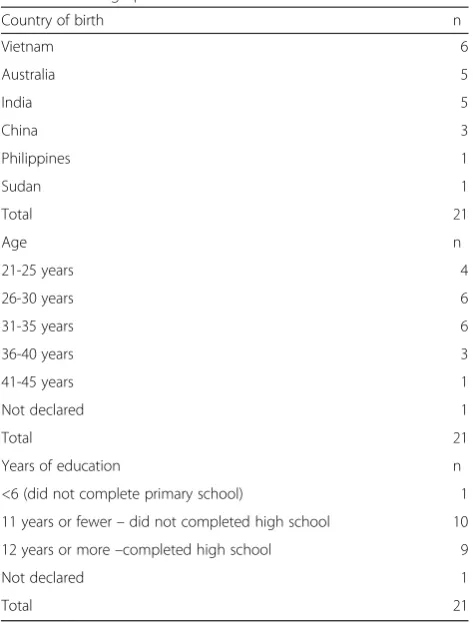
Twenty one women were included in the pre-test/ post-test evaluation. Participants were predominantly from Vietnamese, Australian, Indian and Chinese backgrounds, which is reflective of the population presenting for gesta-tional diabetes services in our region. Age distribution is also typical, with most women aged < 35 years. Completed years of schooling varied from less than 6 years to more than 12 years, with most participants having attended some high school (Table 1).
A small number of questions were left unanswered, and overall, there were 17 complete sets of GDM and Food improvement scores and 19 complete sets of Self-management improvement scores. Although data analysis suggests insufficient evidence to support an association between education level and improvement of any of the three scales, patterns in the results may suggest otherwise. For example, there were more women who improved in the11 years or fewereducation group compared toMore than 12 years(Table 2).
It was also possible consider the sample as a whole. The percentage of those who improved (or stayed at 100 % correct) post-intervention is given in Table 3, along with its 95 % confidence interval. The 95 % confi-dence intervals in Table 3 are wide, showing the impreci-sion of the percentage estimate, in this small sample. Nonetheless, it is clear that the intervention had the great-est impact on the first domain: Knowledge of GDM with 70 % of women improving their knowledge or staying at 100 % post-intervention. The smallest change was in the area of self-management and little more than one third of women improved or stayed at 100 %.
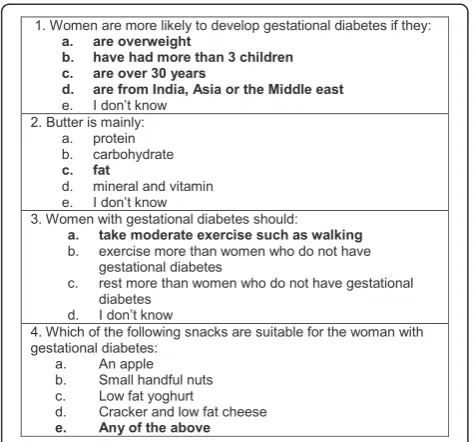
The initial testing identified a number of questions that participants particularly misunderstood (Fig. 2) and which were answered incorrectly more often in the post-test than in the pre-post-test. A number of factors
contributed to this situation. For example, question 1 (Fig. 2) had more than one correct answer and partici-pants were likely to identify being overweight and specific ethnicity as predictors of GDM, but did not recognise ma-ternal age and parity >3, as predictors. For question 2, many women were unable to recognise the food value of butter and very often choose (a.) protein or (e.) I don’t know.In question 3, participants choose (b.) should exer-cise more than women who do not have gestational dia-betes more often than (a.) should take moderate exercise such as walkingand in question 4, many women identified one or two snacks as suitable for women with GDM, but not all.
In the final group of questions, results indicated that the majority of participants found the intervention acceptable and pertinent to their information needs around GDM (Table 4). Almost all (20/21) found the intervention easy/ fairly easy to use and useful/fairly useful. Comments in the final free text question provide some additional in-sights and participants indicated a number of improve-ments that they would like, including larger pictures (10 out of the sample of 21 women (10/21), more ethnic spe-cific foods (11/21), less ethnic spespe-cific foods (7/21), less text (3/21), more information (6/21), including specifically recipes suitable for GDM. Areas the women identified as particularly useful were the‘healthy shopping list’and in-formation about‘what to do if I am still hungry?
Discussion
This paper reports on the development and initial test-ing of a new intervention, which aims to support women, from multi-ethnic and low health literacy back-grounds, to self-manage their GDM. This intervention has been developed in English initially and there are plans to later amend the program for the Vietnamese community, who have low levels of English language flu-ency. The aim of this stage of the project was to test the acceptability, ease of use, and usefulness of the interven-tion for the target populainterven-tion. We also aimed to identify any issues with the website and content and to ascertain both the improvements necessary and the feasibility of proceeding to a clinical trial. Overall, the findings sug-gest that women found the intervention useful and easy to use. The testing also revealed a number of areas that were effective at promoting greater knowledge scores and a further number of areas that required some im-provement. Both of these findings are discussed below.
In the first instance, the intervention proved effective at increasing women’s knowledge scores. The largest im-provement occurred in domain 1: Knowledge of GDM and over 70 % of women improved their knowledge scores or stayed at 100 % post-intervention. This is an important effect as knowledge acquisition is established as a necessary first step in understanding and motivation
Table 1Demographic detail
<6 (did not complete primary school) 1
11 years or fewer–did not completed high school 10 12 years or more–completed high school 9
Not declared 1
for behavioural change [39]. Moreover, a number of prior studies indicate that women with GDM often com-plain that the information they receive is insufficient, in-complete or does not meet their needs [11, 33, 40]. Participants in these studies indicate that their efforts to self-manage their GDM are often frustrated by a lack of such knowledge [10, 11]. Feedback in this study suggests that our intervention assists by providing material that participants consider useful and accessible.
In the second domain, knowledge of food, there was a modest improvement in knowledge scores, although the improvement was less than anticipated. This finding may in part be explained by two factors. Firstly, a number of women answered question 2 (Fig. 2, food value of butter) incorrectly, and the percentage getting the question wrong increased considerably in the post-test, which had a nega-tive impact on overall improvement scores. This finding
may relate to the fact that many women in the area do not use butter for cooking or food preparation, and therefore may be unfamiliar with this food. However, this explan-ation does not explain why scores disimproved so mark-edly from pre-test to post-test. For the future, we plan to simplify and change this question to butter/oil/ghee, which is more in line with local cooking practices. Sec-ondly, a further explanation of repeated incorrect answers about food values may reflect entrenched cultural beliefs about food, and this is something that requires further ex-ploration. In particular, a qualitative exploration of food beliefs and taboos is planned among pregnant women, from specific ethnicities, in our area.
The smallest improvement was recorded in the third domain, knowledge of self-management, where little more than one third of women improved their know-ledge scores or remained at 100 %. This finding is in part
Table 2Knowledge scores by education level
Education Total
11 years or fewer - Not completed high school More than 12 years - Completed high school
GDM score change from pre to post*
Improved or stayed at 100 %
7 5 12
87.5 % 55.6 % 70.6 %
Stayed the same if below 100 %, or worsened
1 4 5
12.5 % 44.4 % 29.4 %
Total 8 9 17
100.0 % 100.0 % 100.0 %
Food score change from pre to post**
Improved or stayed at 100 %
6 3 9
66.7 % 33.3 % 50.0 %
Stayed the same if below 100 %, or worsened
3 6 9
33.3 % 66.7 % 50.0 %
Total 9 9 18
100.0 % 100.0 % 100.0 %
Self-management score change from pre to post***
Improved or stayed at 100 %
5 2 7
55.6 % 20.0 % 36.8 %
Stayed the same if below 100 %, or worsened
4 8 12
44.4 % 80.0 % 63.2 %
Total 9 10 19
100.0 % 100.0 % 100.0 %
*Fisher’s Exact testP-value for an association between GDM score improvement and Education = 0.294 **Fisher’s Exact testP-value for an association between Food score improvement and Education = 0.347
***Fisher’s Exact testP-value for an association between Self-management score improvement and Education = 0.170
Table 3Knowledge scores composite
Percentage of sample who improved 95 %
Confidence interval or stayed at 100 % correct post-intervention
GDM 70.6 % (44.0 %, 89.7 %)
Food 50.0 % (26.0 %, 74.0 %)
explained by the misinterpretation of question 3 (Fig. 2), where many women got the answer correct in the first instance and then incorrect in the post-test. Based on this feedback, we plan to amend the text about exercise both in the intervention and in the questionnaire. Partic-ipants also got some questions, with more than one cor-rect answer, partially corcor-rect, by identifying one variable rather than all correct variables. As these questions re-quired identification of all correct variables to score, this partial knowledge was not recorded. Question 4 (Fig. 2) provides a good example and many women identified one or two healthy snacks but not all four. Nonetheless, these questions provide valuable feedback and allow identification of areas where the required knowledge up-take is insufficient. For example, for question 4, most participants recognise an apple and yoghurt as appropri-ate snacks, while many do not recognise nuts or crackers and cheese as appropriate. To address this deficit, we may need to further clarify the section, in the
intervention, outlining snacks and perhaps add some additional ethnic specific snacks to the questionnaire.
Greater improvement of scores were seen among women with lower rather than higher educational levels. It is not immediately clear what this finding means, however, one possible explanation is that women of lower educational levels may be the most likely to bene-fit from this intervention, as they are the most likely to have low levels of health literacy [41]. They may also have limited access or ability to decipher health informa-tion [42]. Thus, the interveninforma-tion may offer more support for learning for women with lower educational levels compared to higher levels.
In the literature, fostering knowledge and beliefs, is seen as a necessary first step to health related behavioural change [39] and self-management skill development [43]. This approach is also considered to be in line with adult learning theory [39], where the individual is empowered and motivated by understanding the importance of change [26]. Similarly, a number of studies have found that women are highly motivated to adopt healthy behaviours, in pregnancy to protect the unborn baby [44]. This effect may be even stronger during GDM self-management, if women fully understand the implications of GDM for the child’s future health [8, 45]. Additionally, knowledge of food values, and the basic constituents of a healthy diet, have been positively associated with good nutritional prac-tices, such as eating sufficient fruit and vegetables [46, 47]. Worsley suggests that education may play a part in effect-ing such behavioural change by encourageffect-ing a different set of beliefs about food ([46], p. 583).
However, caution is also advised and a number of studies suggest that knowledge of prudent health behav-iours alone, is not sufficient to bring about behavioural change [9, 46, 48]. These studies recognise that dietary changes are difficult and impacted by many factors such as food preferences, cravings and social eating [9] and socio-economic circumstance, food habits and food availability [48].
Strengths and limitations
The aim of this basic one-group pre-test/post-test study was to explore the impact of the newly developed inter-vention on knowledge scores in three domains: Know-ledge of GDM; food values, and GDM self-management principles. The study has been successful in that it has provided useful feedback that will enable the researchers to improve the intervention. In particular, we plan to clarify the content, amend inconsistencies and ambigu-ities and add additional information where indicated. These efforts will lead to an improvement of the inter-vention and a tailoring of the interinter-vention to the needs of the target population. Nonetheless, although the study has achieved the stated aims, some limitations are also Fig. 2Questions commonly misunderstood
Table 4Ease of use
Easy to use n Percent %
Very easy 18 85.7
Fairly easy 2 9.5
Quite difficult 1 4.7
Total 21 100 %
Useful n Percent %
Very useful 18 85.7
Fairly useful 2 9.5
Not very useful 1 4.7
present and the small sample size has limited the value of statistical evaluation. For example, p values are very large and although differences in knowledge scores are evident, a larger sample size is required in order to be confident that the associations observed are not just chance. Similarly, there were more women who im-proved in the 11 years or fewer education group com-pared to more than 12 years and the meaning of this finding might also be clearer in a larger sample. Finally, only women who spoke conversational English were eli-gible to participate in this initial testing of the interven-tion, and this is a limitation that we aim to address in the next phase of the project.
Implications for practice
The development and testing of the intervention de-scribed here has a number of important implications for practice. In the first instance, the demographic profile of GDM, with increased risk factors for multi-ethnic, low socio-economic and poorly educated women, highlights the need for culturally acceptable educational resources pitched at a low level of literacy. Addressing this need is very important as rates of GDM are continuing to in-crease dramatically in these groups with potentially dev-astating consequences for mothers and infants and multi-generational effects for families.
Conclusion
In conclusion, the intervention was effective at improv-ing knowledge scores for women with GDM in the three tested domains: Knowledge of GDM; knowledge of food; and, knowledge of GDM self-management principles, and also that the intervention is a useful adjunct to the routine education sessions women with GDM attend, in our area. Testing has revealed a number of issues, such as ambiguity of information around physical exercise in GDM and some foods. These issues require attention prior to proceeding to a trial.
Competing interests
The authors declare that they have no competing interests.
Authors’contributions
MCO conceived of the study, and participated in its design and coordination and drafted the manuscript. CS contributed to the day to day management of the project and contributed intellectually to the manuscript development. HM and GK advised and assisted with development of the project, data collection and analysis and contributed intellectually to the manuscript. All authors read and approved the final manuscript.
Acknowledgements
Many thanks to dietetics team at Western Health, Sunshine Hospital for their assistance, recommendations and advice during the development of dietary resources. Thanks also to the participants who were involved in testing the intervention. This study was made possible through funding from the Ian Potter Foundation, Melbourne, grant reference 201200017.
Author details
1
Nursing and Midwifery, College of Health and Biomedicine, Victoria University, St Alban’s Campus, PO Box 14228, Melbourne 8001, Australia. 2
Western Health, Diabetes Education Service, Western Hospital, Gordon St., Footscray, VIC 3011, Australia.
Received: 22 October 2014 Accepted: 28 May 2015
References
1. Australian Institute of Health and Welfare (AIHW). Diabetes in pregnancy: its impact on Australian women and their babies. Canberra: AIHW; 2010. 2. Carolan M. Gestational diabetes mellitus among women born in South East
Asia: A review of the evidence. Midwifery. 2013;29(9):1019–26. 3. Carolan M, Davey MA, Biro MA, Kealy M. Maternal age, ethnicity and
gestational diabetes mellitus. Midwifery. 2012;28(6):778–83.
4. Cheung NW. The management of gestational diabetes. Vasc Health Risk Manag. 2009;5:153–64.
5. Yogev Y, Visser GHA. Obesity, gestational diabetes and pregnancy outcome. Semin Fetal Neonatal Med. 2009;14(2):77–84.
6. Glastras S, Fulcher G. Guidelines for the management of gestational diabetes in pregnancy. Clin Pract. 2012;9(2):161–70.
7. Persson M, Winkvist A, Mogren I. 'From stun to gradual balance'- women's experiences of living with gestational diabetes mellitus. Scand J Caring Sci. 2010;24(3):454–62.
8. Carolan M. Women's experiences of gestational diabetes self-management: A qualitative study. Midwifery. 2013;29(6):637–45.
9. Hui AL, Sevenhuysen G, Harvey D, Salamon E. Food choice decision-making by women with gestational diabetes. Can J Diabetes. 2014;38(1):26–31. 10. Carolan M, Gill GK, Steele C. Women's experiences of factors that facilitate
or inhibit gestational diabetes self-management. BMC Pregnancy Childbirth. 2012;12:99.
11. Evans MK, O'Brien B. Gestational diabetes: the meaning of an at-risk pregnancy. Qual Health Res. 2005;15(1):66–81.
12. Chung JH, Voss KJ, Caughey AB, Wing DA, Henderson EJ, Major CA. Role of patient education level in predicting macrosomia among women with gestational diabetes mellitus. J Perinatol. 2006;26(6):328–32.
13. Zanchetta MS, Poureslami IM. Health literacy within the reality of immigrants’ culture and language. Can J Public Health. 2006;97 Suppl 2:S26–30. 14. Pope C. Addressing limited English proficiency and disparities for hispanic
postpartum women. J Obstet Gynecol Neonatal Nurs. 2005;34(4):512–20. 15. Mendelson S, McNeese-Smith D, Koniak-Griffin D, Nyamathi A, Lu MC. A
community-based parish nurse intervention program for Mexican American women with gestational diabetes. JOGNN/NAACOG. 2008;37(4):415–25. 16. Hoppichler F, Lechleitner M. Counseling programs and the outcome of
gestational diabetes in Austrian and Mediterranean Turkish women. Patient Educ Couns. 2001;45(4):271–4.
17. Rosal MC, Goins KV, Carbone ET, Cortes DE. Views and preferences of low-literate hispanics regarding diabetes education: Results of formative research. Health Educ Behav. 2004;31(3):388–405.
18. Negarandeh R, Mahmoodi H, Noktehdan H, Heshmat R, Shakibazadeh E. Teach back and pictorial image educational strategies on knowledge about diabetes and medication/dietary adherence among low health literate patients with type 2 diabetes. Prim Care Diabetes. 2013;7(2):111–8. 19. Rosal MC, Ockene IS, Restrepo A, White MJ, Borg A, Olendzki B, et al. Randomized
trial of a literacy-sensitive, culturally tailored diabetes self-management intervention for low-income Latinos: Latinos en control. Diabetes Care. 2011;34(4):838–44.
20. ABS: Australian Bureau of Statistics. 2033.0.55.001 - Census of Population and Housing: Socio-Economic Indexes for Areas (SEIFA). Canberra: Australian Bureau of Statistics; 2006.
21. Department of Human Services. Well being and lifestyle - the evidence 2006, North West Region. Melbourne, Victoria: Department of Human Services; 2008.
22. INWMML. Inner North West Melbourne Medicare Local. Inner North West Melbourne Medicare Local Whole of Region Needs Assessment. 2012. 23. Department of Human Services. Western Metropolitan Region Health and
24. Homko CJ, Sivan E, Reece EA. The impact of self-monitoring of blood glucose on self-efficacy and pregnancy outcomes in women with diet-controlled gestational diabetes. Diabetes Educat. 2002;28(3):435–43.
25. Murphy A, Guilar A, Donat D. Nutrition education for women with newly diagnosed gestational diabetes mellitus: small-group vs. individual counselling. Can J Diabetes. 2004;28(2):147–51.
26. Speck M. Best practice in professional development for sustained educational change. Spring: ERS Spectrum; 1996. p. 33–41.
27. Knowles MS. Andragogy, not pedagogy. Adult Leader. 1968;16(10):350–2. 10. 28. Leventhal H, Meyer D, Nerenz D. The common-sense representation of illness
danger. Contributions to medical psychology. 2nd ed. New York: Pergamon; 1980. 29. Hagger MS, Orbell S. A meta-analytic review of the common-sense model
of illness representations. Psychol Health. 2003;18(2):141–84.
30. Polit DF, Beck CT. Nursing Research:Generating and Assessing Evidence for Nursing Practice. 9th ed. Philadelphia: Wolters Kluwer/ Lippincott; 2012. 31. Wallström A, Frisman GH. Facilitating early recovery of bowel motility after
colorectal surgery: A systematic review. J Clin Nurs. 2014;23(1–2):24–44.
32. Wilkinson A, Whitehead L, Ritchie L. Factors influencing the ability to self-manage diabetes for adults living with type 1 or 2 diabetes. Int J Nurs Stud. 2014;51(1):111–22.
33. Carolan M, Steele C, Margetts H. Knowledge of gestational diabetes among a multi-ethnic cohort in Australia. Midwifery. 2010;26(6):579–88.
34. Dunn SM, Bryson JM, Hoskins PL, Alford JB, Handelsman DJ, Turtle JR. Development of the diabetes knowledge (DKN) scales: forms DKNA, DKNB, and DKNC. Diabetes Care. 1984;7(1):36–41.
35. Gastrich MD, Peck S, Janevic T, Bachmann G, Lotwala N, Siyam A. Gestational diabetes mellitus: An educational opportunity. J Diabetes Nurs. 2013;17(6):220–4.
36. Nicolas-Rocca TS, Schooley B, Joo SJ. Design and development of a patient-centered e-health system to improve patient understanding at discharge. Comm Assoc Inform Syst. 2014;34(1):453–76.
37. Yin HS, Gupta RS, Tomopoulos S, Wolf MS, Mendelsohn AL, Antler L. Readability, suitability, and characteristics of asthma action plans: Examination of factors that may impair understanding. Pediatrics. 2013;131(1):e116–26.
38. Preacher KJ, Briggs, NE. Calculation for Fisher's Exact Test: An interactive calculation tool for Fisher's exact probability test for 2 × 2 tables. Available from: http://www.quantpsy.org/fisher/fisher.htm. 2001.
39. Porcheret M, Main C, Croft P, McKinley R, Hassell A, Dziedzic K. Development of a behaviour change intervention: A case study on the practical application of theory. Implement Sci. 2014;9(1):42.
40. Heuberger R. Increasing empathy, knowledge, and skills regarding gestational diabetes. Top Clin Nutr. 2010;25(3):250–5.
41. Nutbeam D. Health literacy as a public health goal: a challenge for contemporary health education and communication strategies into the 21st century. Health Promot Int. 2000;15(3):259–67.
42. Morahan-Martin JM. How internet users find, evaluate, and Use online health information: a cross-cultural review. CyberPsychology and Behavior. 2004;7(5):497–510.
43. Ryan P. Integrated theory of health behavior change: background and intervention development. Clinical nurse specialist CNS. 2009;23(3):161–70. quiz 71–72. 44. Bassett-Gunter RL, Levy-Milne R, Naylor PJ, Symons Downs D, Benoit C, Warburton
DER. Oh baby! Motivation for healthy eating during parenthood transitions: A longitudinal examination with a theory of planned behavior perspective. Int J Behav Nutr Phys Act. 2013;10:88.
45. Nielsen KK, Kapur A, Damm P, de Courten M, Bygbjerg IC. From screening to postpartum follow-up - the determinants and barriers for gestational diabetes mellitus (GDM) services, a systematic review. BMC Pregnancy and Childbirth. 2014;14(1).
46. Worsley A. Nutrition knowledge and food consumption: can nutrition knowledge change food behaviour? Asia Pac J Clin Nutr. 2002;11 Suppl 3:S579–85. 47. Wardle J, Parmenter K, Waller J. Nutrition knowledge and food intake.
Appetite. 2002;34:269–75.
48. Rutherford L, Reid S. Knowledge, attitudes and motivations to health: A module of the Scottish Health Survey 2008–2011. Edinburgh: NHS Health Scotland; 2013.
Submit your next manuscript to BioMed Central and take full advantage of:
• Convenient online submission
• Thorough peer review
• No space constraints or color figure charges
• Immediate publication on acceptance
• Inclusion in PubMed, CAS, Scopus and Google Scholar
• Research which is freely available for redistribution