Western University Western University
Scholarship@Western
Scholarship@Western
Electronic Thesis and Dissertation Repository
6-21-2019 11:00 AM
Enhanced Multimedia Exchanges over the Internet
Enhanced Multimedia Exchanges over the Internet
Fuad Shamieh
The University of Western Ontario Supervisor
Dr. Xianbin Wang
The University of Western Ontario
Graduate Program in Electrical and Computer Engineering
A thesis submitted in partial fulfillment of the requirements for the degree in Doctor of Philosophy
© Fuad Shamieh 2019
Follow this and additional works at: https://ir.lib.uwo.ca/etd
Part of the Digital Communications and Networking Commons
Recommended Citation Recommended Citation
Shamieh, Fuad, "Enhanced Multimedia Exchanges over the Internet" (2019). Electronic Thesis and Dissertation Repository. 6271.
https://ir.lib.uwo.ca/etd/6271
This Dissertation/Thesis is brought to you for free and open access by Scholarship@Western. It has been accepted for inclusion in Electronic Thesis and Dissertation Repository by an authorized administrator of
Abstract
Although the Internet was not originally designed for exchanging multimedia streams, con-sumers heavily depend on it for audiovisual data delivery. The intermittent nature of multi-media traffic, the unguaranteed underlying communication infrastructure, and dynamic user
behavior collectively result in the degradation of Service (QoS) and Quality-of-Experience (QoE) perceived by end-users. Consequently, the volume of signalling messages is inevitably increased to compensate for the degradation of the desired service qualities. Im-proved multimedia services could leverage adaptive streaming as well as blockchain-based so-lutions to enhance media-rich experiences over the Internet at the cost of increased signalling volume. Many recent studies in the literature provide signalling reduction and blockchain-based methods for authenticated media access over the Internet while utilizing resources quasi-efficiently. To further increase the efficiency of multimedia communications, novel signalling
overhead and content access latency reduction solutions are investigated in this dissertation in-cluding: (1) the first two research topics utilize steganography to reduce signalling bandwidth utilization while increasing the capacity of the multimedia network; and (2) the third research topic utilizes multimedia content access request management schemes to guarantee throughput values for servicing users, end-devices, and the network.
Signalling of multimedia streaming is generated at every layer of the communication pro-tocol stack; At the highest layer, segment requests are generated, and at the lower layers, byte tracking messages are exchanged. Through leveraging steganography, essential signalling in-formation is encoded within multimedia payloads to reduce the amount of resources consumed by non-payload data. The first steganographic solution hides signalling messages within multi-media payloads, thereby freeing intermulti-mediate node bu↵ers from queuing non-payload packets.
Consequently, source nodes are capable of delivering control information to receiving nodes at no additional network overhead. A utility function is designed to minimize the volume of overhead exchanged while minimizing visual artifacts. Therefore, the proposed scheme is designed to leverage the fidelity of the multimedia stream to reduce the largest amount of
control overhead with the lowest negative visual impact. The second steganographic solution enables protocol translation through embedding packet header information within payload data to alternatively utilize lightweight headers. The protocol translator leverages a proposed util-ity function to enable the maximum number of translations while maintaining QoS and QoE requirements in terms of packet throughput and playback bit-rate.
As the number of multimedia users and sources increases, decentralized content access and management over a blockchain-based system is inevitable. Blockchain technologies suf-fer from large processing latencies; consequently reducing the throughput of a multimedia network. Reducing blockchain-based access latencies is therefore essential to maintaining a decentralized scalable model with seamless functionality and efficient utilization of resources.
Adapting blockchains to feeless applications will then port the utility of ledger-based networks to audiovisual applications in a faultless manner. The proposed transaction processing scheme will enable ledger maintainers in sustaining desired throughputs necessary for delivering ex-pected QoS and QoE values for decentralized audiovisual platforms. A block slicing algorithm is designed to ensure that the ledger maintenance strategy is benefiting the operations of the blockchain-based multimedia network. Using the proposed algorithm, the throughput and la-tency of operations within the multimedia network are then maintained at a desired level.
Keywords:Multimedia, adaptive streaming, signalling overhead, processing latency, blockchain, steganography, embedded signalling exchange
Lay Summary
The Internet was not initially designed for exchanging multimedia streams but for sending and receiving bytes of data. The consumer Internet is heavily utilized for exchanging audio-visual data while it is not the best medium for transmitting said data. The intermittent nature of multimedia traffic, the unguaranteed underlying communication infrastructure, and dynamic
user behaviour collectively result in the degradation of perceived multimedia quality by end-users. To compensate for the decreased perceived quality, the volume of signalling messages increases to attempt pushing the quality metrics to the desired levels. To improve the utility of the Internet in delivering multimedia, adaptive streaming solutions as well as blockchain-based solutions are utilized to cope with the Internet’s environment. Many recent studies at-tempt reducing the volume of signalling overhead generated by the aforementioned streaming solution quasi-efficiently. To further increase the efficiency of multimedia communications,
novel signalling overhead and content access latency reduction solutions are investigated in this dissertation including: (1) the first two research topics utilize covert channels to reduce signalling bandwidth utilization while increasing the capacity of the multimedia network; and (2) the third research topic utilizes multimedia content access request management schemes to guarantee throughput values for servicing users, end-devices, and the network.
To my father Dr. Jamal Shamieh, and my mother Naila Farraj: it is impossible to
ade-quately thank you both for everything you have done and sacrificed. I could not have hoped
for more inspiring, patient, and kind parents.
Acknowlegements
First and foremost, I would like thank my supervisor, Dr. Xianbin Wang, for his continuous support, guidance, patience, and motivation. He encouraged me to pursue a deeper understand-ing of my areas of interest.
I would also like to acknowledge the Faculty of Engineering, especially the Department of Electrical and Computer Engineering at Western University for the excellent facilities, libraries, and resources available to graduate students.
In addition to my supervisor, I would like to thank Dr. Aydin Behnad for his mentorship, guidance, and knowledgeable/insightful conversations. I would like to thank Dr. Tadilo Bogale
for his valuable insights, the countless co↵ee meetings, and research guidance. I would like
to thank Dr. Ahmed Refaey for guiding and supporting me throughout my academic career. I would like to thank Dr. Hao Li for his continuous guidance and support as well as the countless hangouts and conversations that made the days go by easier.
I would like to thank Dr. Auon Akhtar for the countless meetings and phone calls as well as his full-time guidance and mentorship throughout my graduate academic career. Thank you for helping even when you were extremely busy and a few hundred kms away. I will always be grateful for your time. I would like to thank Dr. Mohamed Abu Sharkh for his continuous mentorship and guidance. I will always be thankful for guiding me through the tough times and for our wonderful chats on C-137. I would like to thank Dr. Mohamad Kalil for always looking out for me and guiding me whenever I needed help. I would like to thank Dr. Abdallah Al-Moubayed, Dr. Khaled Alhazmi, Dr. Mohamed Hussein, Dr. Tamer Abd El-lateef, Dr. Samantha Gamage, Dr. Fadi Salo, Dr. He Fang, MohammadNoor Injadat, and Anas Saci for the numerous conversations, their continuous guidance and mentorship. I am deeply grateful for my friends and colleagues. Special thanks to my brother and amino acid Dr. Antoan Antoun for being a true comrade, Weldon-trench partner, grass cutter, and a motivator for getting over obstacles. Special thanks to Hung Pham for being a true friend, spending countless
hours listening to my ingenious ideas, and supporting me on my adventures. Special thanks to Steven Andrews for helping through some of the toughest times and being someone I can count on. Steven, you saved me a number of times in the past and I am eternally grateful. Alfred Kenny, Ali Al-Saady, Walid Ali, Sorin Popa, Asma Khalil, Allan McCulloch, Jennifer Reid, Scott Van Heesch, Hassan Hawilo, Manar Jammal, Elena Uchiteleva, Soroush Arghavan, Ester Ture˘ckov´a, Bilal Al-Bataina, Mike Zylstra, Cesar Suarez, and Sabin Bhandari; your friendship and presence positively and greatly contributed to my life and for that I am eternally grateful. Special thanks to Nadine Abdulkarim for supporting me throughout my research, motivating me to achieve my goals, and being my rock. This work would not have been possible without your love and support; you are a blessing from the skies.
Special mention to Twix, Missy, Moomba, Xena, Daria, and Lucy, my 3- and 4-footed fur babies.
Last but certainly not least, I would like to thank my parents and family for their endless love, support and encouragement.
Contents
Abstract ii
Acknowledgments vi
Contents viii
List of Figures xi
List of Tables xvii
Abbreviations xviii
1 Introduction 1
1.1 Research Motivation . . . 1
1.1.1 Gauging Signalling Overhead Volume in Multimedia-based Applications 3 1.1.2 Efficient Multimedia Signalling Exchange Methods for Payload
Deliv-ery Over the Internet Medium . . . 5 1.1.3 Decentralized Multimedia Access Management and Copyright Protection 6 1.2 Dissertation Contributions . . . 7
1.3 Dissertation Organization . . . 8
2 Challenges and Solutions of Multimedia Streaming Technologies over IP-based
Networks 10
2.1 Interoperable Visual Encoding and Network Signalling Formats . . . 10 2.1.1 Adaptive Multimedia Streaming Sporadic Traffic and Signalling Sources 12
2.1.2 Cost E↵ective Signalling Overhead Reduction Solutions . . . 20
2.1.2.1 Subsiding HTTP Redundancies and Payload Sizes of Request-Response Interactions . . . 20
2.1.2.2 TCP Alternate Configurations and Transport Layer Delivery Protocols . . . 23
2.2 Multimedia-based Steganography and its Applications . . . 25
2.2.1 Data Hiding Basics in Bandwidth-Rich and Restricted Mediums . . . . 26
2.3 Basic Concepts of Blockchain-based Networks . . . 32
2.3.1 Decentralized Multimedia Content Access and Management Solutions . 36 2.4 Summary . . . 38
3 Tapering Multimedia Bandwidth Utilization through Steganographic-based Sig-nalling Overhead Mitigation 40 3.1 Introduction . . . 41
3.2 System Model Description, Assumptions, and Problem Formulation . . . 45
3.3 Proposed Real-time Cost Savings Evaluation . . . 50
3.3.1 Systematic Multi-service Identification Mechanism . . . 56
3.3.2 Enabling Data Embedding in HTTPS-based Flows . . . 59
3.4 Simulation and Implementation Evaluation and Analysis . . . 61
3.4.1 Numerical and Discrete Event Simulation Results and Analysis . . . 62
3.4.2 NS3 Emulated Proof-of-concept Implementation . . . 69
3.5 Summary . . . 70
4 Reducing Protocol Header Sizes for Enhanced Network Adaption of Request-Response Interactions 72 4.1 Introduction . . . 73
4.2 System Model Description and Preliminaries . . . 76
4.2.1 Simplified Routing Address Allocation and Zone Identification . . . 78
4.2.3 Problem Formulation, Constraints, and Network Assumptions . . . 81
4.3 Steganographic-based Protocol Translation Scheme . . . 83
4.3.1 Evaluating Base Station O✏oading within One-hop Networks . . . 86
4.4 Simulation and Implementation Configurations and Results . . . 88
4.4.1 MATLAB and NS3 Simulation Results and Analysis . . . 89
4.4.2 Virtualization-based Implementation on a Portable Resource Limited Device . . . 93
4.5 Summary . . . 95
5 Increasing Decentralized Network Throughput of Multimedia Content Access and Rights Management Systems 96 5.1 Introduction . . . 97
5.2 System Model Description and Problem Formulation . . . 101
5.3 Proposed Block Slicing Algorithm for Decentralized Throughput Provisioning . 104 5.4 Simulation and Implementation Platforms and Configurations . . . 109
5.4.1 Simulation Results and Analysis . . . 110
5.4.2 NetEM and WLAN-based Implementation of Feeless Mining . . . 116
5.5 Summary . . . 119
6 Conclusion and Future Work 121 6.1 Conclusion . . . 121
6.2 Future Work . . . 124
Bibliography 126
Curriculum Vitae 139
List of Figures
2.1 As clients request additional media representations, the media fidelity is en-hanced. Layering video streams using SVC enables the receiver to progres-sively enhance received video quality as additional descriptions are received. The most important layer in SVC is known as the base layer (BL) and each additional layer is known as an enhancement layer (EL). . . 12
2.2 The client will utilize HTTP GET requests to choose di↵erent fidelities of
mul-timedia descriptions suited for observed network conditions. . . 14
2.3 HAS utilizing HTTP as well as cache servers for efficient delivery. . . 15
2.4 An MPD file is provided to the client for driving request-response interactions. . 16
2.5 The TLS protocol rests above the transport layer in the application layer where it encapsulates all application generated data when enabled for a specific ser-vice. Due to being an application layer service, TLS will not encrypt any in-formation observed at the transport layer and below. . . 17
2.6 A TLS session begins with a handshake process and then moves to exchang-ing payloads. The TLS handshake process occurs after the TCP connection is established. In the TLS handshake process, source-destination pairs exchange sessions keys to cipher all application layer data. . . 19
2.7 Server push technology available with HTTP 2.0 will reply to every request received from a destination node withksegments. . . 21
2.8 The TCP protocol is an ACK-based protocol that depends on the number of bytes successfully exchanged to transmit new segments. . . 24
2.10 Trade-o↵triangle of steganographic features used in covert multimedia channels. 27
2.11 Performing a data hiding process within DT-CWT coefficients. . . 28
2.12 Nodes communicate with each other using P2P networks to enable blockchain-based applications and decentralized services. . . 34
2.13 Transactions are signed using the private key and verified using the public key counterpart. . . 35
2.14 Blocks of transactions appended to a ledger by miners and shared across a blockchain-based network. . . 36
3.1 The proposed scheme promotes a cross-layer steganographic solution where data from di↵erent layers is embedded in payloads from other layers. . . 44
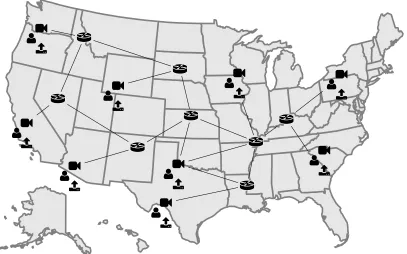
3.2 N users communicating simultaneously over the Internet to stream multimedia and complete file exchanges. . . 46
3.3 Two streaming approaches: (a) Traditional streaming involves separate sig-nalling and data streams. (b) The proposed scheme will combine the sigsig-nalling and data streams into a single stream using steganography. . . 47
3.4 The packet arrival and departure rates are expressed by ↵(t) and (t), respec-tively, where each packet spends a delay ofW(t) in a given queue. . . 54
3.5 Using the embedded codes, the receiver will be able to identify the type of message embedded, the phase of transmission the message belongs to, and the stream it belongs to. . . 57
3.6 The total number of bits needed is found by using (3.22) subsequently format-ting it to nearest multiple of 8-bit words. . . 59
3.7 A sample packet with a payload containing an embedded signalling message also includes a unique identification code related to said message. . . 59
3.8 The IM bus will enable local communication between TLS-based flows. The IM bus is essentially exploiting the locality of the exchanged symmetric keys to access the payload information. Applicationiwill utilize the keys of appli-cationjto decrypt application j’s data and perform an embedding process. . . . 60
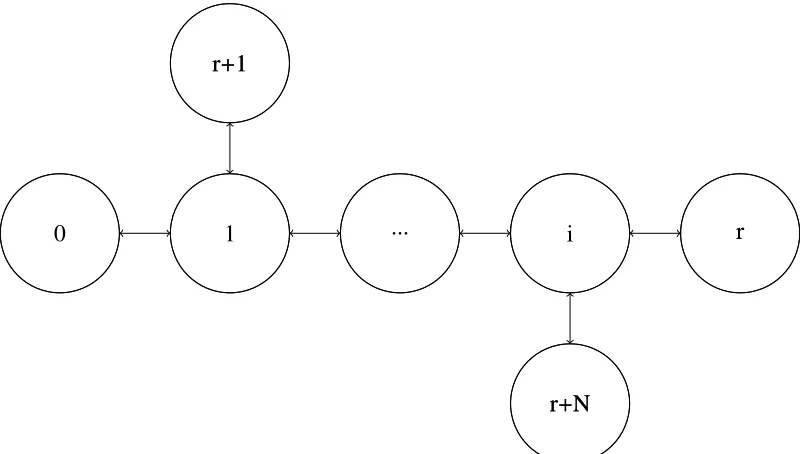
3.9 Simulated parking-lot topology with N source and destination nodes. . . 62
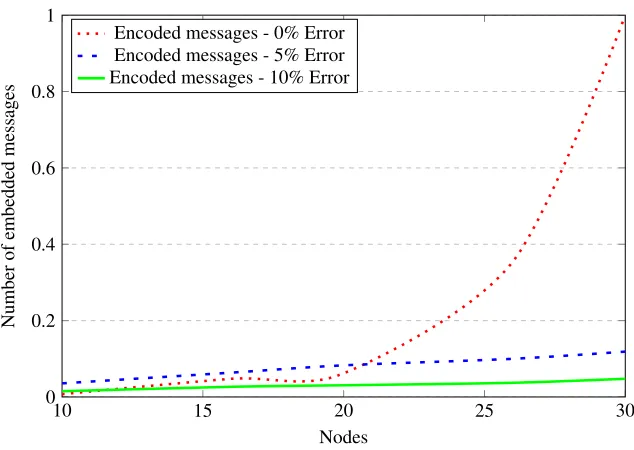
3.10 The number of embedded messages tends to increase as the size of the topol-ogy increases. During the 0.00% induced channel error, the most substantial increase is observed, specifically at the largest topology size. During the 5.00% and 10.00% induced error, the number of messages embedded is significantly less than that of the 0.00% error, however steadily increases as the topology size increases. . . 64
3.11 The optimal and approximate formulations were evaluated in MATLAB using the OPTI toolbox [154] and compared to the results achieved in NS3. Due to TCP’s unpredictable greedy behavior, the NS3 results attempt to remain sit-uated between the approximated and optimal results achieved in MATLAB. While the network was simulated in smaller topologies, TCP’s competition for network access is far more aggressive than when the network is simulated in larger topologies. . . 66
3.12 The proposed embedding scheme was compared to and extended ak-push and signalling message frequency manipulation schemes. The proposed solution achieved the most considerable reductions in the signalling overhead volume. The embedding scheme was also used to further increase the Push scheme in reducing the amount of signalling information generated during the session. . . 68
3.13 The open-source Big Buck Bunny video in H.264 format was used to test the proposed scheme. (a) The image on the left and on the (b) right is a side-by-side comparison of a frame containing embedded data and a frame from the original video, respectively. . . 70
timedia streams where ideally (b) a longerOFFslot is desired. . . 74
4.2 Mobile nodes requesting a multimedia file from nearby devices through one-hop connections. . . 77
4.3 The first half of the address represents the cluster while the second half repre-sents a node within the given cluster. . . 79
4.4 The shorter bursts will allow radios of resource constrained devices to enter the
OFF statefor a longer duration or exchange packets at an earlier point in time. 82
4.5 Multimedia streaming will utilize (a) HTTP/TCP from end-to-end or (b) HTTP/UDP
during flight as enabled through the protocol translator. . . 84
4.6 Due to the cross-layer commitment, the application layer and transport layer are summed into a single layer declared as the translation layer. . . 84
4.7 Using the embedded codes, the receiver will be able to identify the type of header that is embedded. . . 85
4.8 Simulated wireless topology where the dashed lines represent D2D connections and the solid line represents BS connections. . . 89
4.9 The proposed schemes successfully extended signalling reductions solutions [10, 17] to further decrease the bandwidth consumed by non-payload data. Using the proposed protocol translator and SR, an additional 6.5% in sig-nalling overhead reductions was achieved in addition to the sigsig-nalling reduction achieved by the solutions proposed in [10, 17]. . . 90
4.10 Nodes are capable of participating within the network for an extended period of time due to utilizing the proposed solutions. However, the cooperation time of nodes decreases as the number of established D2D links increases. The e↵ects
of the number of established links per nodes on the node availability period is demonstrated. The node availability time increased significantly while using both the translator and SR solutions simultaneously due to the largest decrease in packet size. . . 92
4.11 Using a configuration of a VLC media player within LXC containers on a Linux host machine, the proposed protocol translator was implemented. The D2D-capable devices where behaving as media servers and sinks connected to each other using a wireless channel contained in NS3. The devices establish a direct D2D connection to exchange live and cache multimedia segments. . . 94
4.12 The (a) original frame is compared to (b) a frame containing embedded data where a superimposed (c) figure of the two frames is used to highlight their di↵erences. . . 94
5.1 Processes at earlier stages are the most valuable due to enabling a large amount of future processes to take place. . . 99
5.2 All transactions from class i must not occupy more than their class allocated sliceSi. . . 109
5.3 Simulated network topology where nodes are placed randomly with a miner, node labelled M, in the center. . . 110
5.4 The denial of service probability experienced by low priority transaction com-ing as part of an aggregate rate of . . . 112
5.5 The aggregate transactions arrival rate, , directly a↵ects the utilization rates
of a miner. . . 113
5.6 The throughput of high priority transactions as the number of transactions within the mining pool increased. . . 114
the mining pool increased. . . 115 5.8 Each transaction published is necessary for the operation of the industrial
set-ting and therefore adds a value to the network when published. . . 116 5.9 The temperature sensor is connected to the RPi through the on-chip GPIO. . . . 117 5.10 The miner and the virtual nodes shared a host device and exchanged data over
a NetEM [166] simulated channel. . . 117 5.11 The low priority transaction throughput increased when compared to the
bench-mark values. . . 118
List of Tables
3.1 Summary of the most significant notation used in this section. . . 48 3.2 Sent and received packet sizes were observed at the encoding node. The
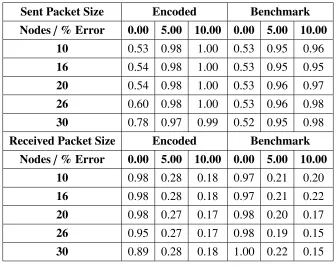
en-coding node was consistently sending larger number of payloads and therefore achieved larger packet sizes on the up-link. . . 63
4.1 Frequently used notations in this section. . . 78
5.1 Summary of frequently used notations in this section. . . 101
List of Abbreviations
ACK
Acknowledgment
AIMD
Additive Increase Multiplicative Decrease
BCH
Bose-Chaudhuri-Hochquenghem
BL
Base Layer
BS
Base Station
CDN
Content Distribution Network
D2D
Device-to-Device
DCCP
Datagram Congestion Control Protocol
DCT
Discrete Cosine Transform
DRM
Digital Rights Management
DT-CWT
Dual-tree Complex Wavelet Transform
DWT
Discrete Wavelet Transform
EL
Enhancement Layer
H.264
MPEG-4 Advanced Video Coding
HVEC
High E
ffi
ciency Video Codec
HAS
HTTP Adaptive Streaming
HTTP
HyperText Transfer Protocol
ICT
Information and Communication Infrastructure
IP
Internet Protocol
IPv4
Internet Protocol version 4
IPv6
Internet Protocol version 6
ISP
Internet Service Provider
LSB
Least Significant Bit
LXC
Linux Containers
MPD
Media Presentation Description
NAC
Network Address Code
NAT
Network Address Translation
NS3
Network Simulator 3
PVD
Pixel Value Di
↵
erence
P2P
Peer-to-Peer
PPBP
Poisson Pareto Burst Process
PPS
Packets Per Second
PSNR
Peak Signal-to-Noise Ratio
QoS
Quality-of-Service
QoE
Quality-of-Experience
RGB
Red Green Blue
RTCP
RTP Control Protocol
RTSP
Real-time Streaming Protocol
RTP
Real-time Transport Protocol
RTT
Round-Trip Time
RTO
Retransmission Timeout
SR
Simplified Routing
SVC
Scalable Video Coding
TCP
Transmission Control Protocol
TPVD
Tri-way Pixel Value Di
↵
erence
URL
Uniform Resource Locater
UDP
User Datagram Protocol
VLC
VideoLan Media Player
Chapter 1
Introduction
High fidelity multimedia streaming over the Internet has proliferated in modern society due to the ever-increasing ties amongst people and businesses, thereby occupying the majority of all exchanged traffic. The Internet is a popular multimedia exchange medium due to its wide
access availability; however, it is being used outside of its original design. In the next few years, the Information and Communication Technology (ICT) infrastructures, particularly the Internet, is expected to service traffic that is 80% from multimedia origins with at least 82% in
high definition [1]. However, due to the inherent properties of the Internet, there is a mismatch between the underlying infrastructure and the diverse nature of multimedia streams resulting in unwanted Quality-of-Service (QoS) and Quality-of-Experience (QoE) degradation.
1.1 Research Motivation
Initially, Internet Protocol (IP)-based networks are designed to transfer bytes of data in a one-size-fits-all fashion over their non-deterministic paths; however, they are currently used for exchanging multimedia streams in ubiquitous manner [2]. To overcome the non-deterministic paths of the Internet while servicing a large user-base, adaptive multimedia streaming technolo-gies [3] and blockchain-based systems [4] are employed to their full potential. The outcome of utilizing adaptive multimedia streaming is a cost-e↵ective service deployment in terms of
hardware availability, however, it is costly in terms of total generated signalling overhead from
every layer of the IP communication stack. Similarly, utilizing blockchain-based solutions to enable decentralized content access will service a large number of users, however, at the cost of induced processing latencies and reduced service throughput. The lack of initiative from Internet Service Providers (ISPs) to upgrade the inadequate infrastructure to better service multimedia traffic promoted the proliferation of signalling overhead reductions mechanisms at
every layer of the IP stack and enhanced decentralized multimedia access technologies. The mismatch between the Internet and audiovisual applications is the primary driver behind in-ducing non-payload overhead as well as processing latencies; therefore, appropriate mitigation will provision resources to deliver expected QoS and QoE requirements.
Traditional approaches to reducing control overhead traffic and enabling large scale
central-ized source-client multimedia models include the use of caching nodes and distribution centres located near concentrations of users [5, 6]. Although cache nodes are the ideal choice for adap-tive multimedia streaming services due to their simplicity, they are extremely costly, require continuous upgrades, and are not sufficient to overcome the rapid growth of multimedia
appli-cations. Recently, signalling overhead reduction methods designed to decrease the generated overhead costs at every layer of the IP communication stack have emerged. The layer-specific solutions are e↵ective tools in improving the efficiency of multimedia streams while
comple-menting traditional caching approaches as well as alleviating intermediate node bu↵ers. To
further improve control overhead reduction schemes, cross-layer solutions are needed and im-plemented through using steganography within multimedia streams. The inherent data hiding properties of multimedia payloads are being actively exploited by Content Distribution Net-works (CDNs) to deliver enhanced services to end-users or to combat theft as well as illegal distribution of intellectual property. Due to the nature of multimedia payloads, they are ideally suited for data hiding and creation of covert communication channels with large bandwidth ca-pacity. The unique data hiding properties of multimedia are not only appropriate for enhancing user experience but also for improving the communication efficiency over the erratic paths of
1.1. ResearchMotivation 3
HyperText Transfer Protocol/Transmission Control Protocol (HTTP/TCP) is a
combina-tion of mature IP protocols that enable adaptive multimedia streaming services, such as HTTP Adaptive Streaming (HAS), due to their ability to leverage existing hardware as well as wide device interoperability. However, HAS-based streaming services are susceptible to packet loss, network congestion, and non-deterministic behaviour due to the underlying infrastructure. The existing control overhead reduction methods found in the literature [7–27] operate individually at each layer of the IP communication stack without coordinating with each other. Further-more, they are inefficient in terms of responding to change in network conditions as well as
on-demand requested fidelities. Overcoming the limitations of existing signalling overhead re-duction techniques is achievable through cross-layer cooperation of the IP stack. Cross-layer overhead mitigation will require exploiting the steganographic capacity of multimedia streams to embed and exchange control overhead thereby alleviating delivery networks from processing non-payload data. In terms of content access, server-client models of managing multimedia are expensive as more hardware and infrastructure is needed as the demand increases, and there-fore blockchain-based solutions [28–35] have emerged. Blockchain-based technologies enable scalable multimedia access, however, the processing latency of said management systems are inherently large due to the secure nature of ledger-based networks. Without undermining se-curity features of a blockchain-based system, efficient ledger processing disciplines are needed
to reduce content access latency and enable throughput provisioning. It is therefore of great importance to enhance the efficiency of multimedia systems through improved communication
streams as well as seamless access to content.
1.1.1 Gauging Signalling Overhead Volume in Multimedia-based
Appli-cations
end-to-end multimedia delivery through sophisticated and coordinated signalling overhead traffic
flows [36]. At the application layer, the employed adaptive streaming technologies require re-ceiving processes to request multimedia chunks through signalling messages on a segment-by-segment basis. Subsequently, every byte of data generated at the application layer is transported utilizing lower-layer protocols that commission additional signalling messages to guarantee the delivery of said bytes. Consequently, due to the Internet’s inherent time-varying properties as well as a client’s changing demands, generated signalling overhead volume is shifting accord-ingly. The time-varying properties of network paths will induce packet losses, retransmissions, multimedia segment size change, and multimedia fidelity requests, at the expense of addi-tional inefficient signalling overhead exchanges. Furthermore, multimedia request-response
transactions and traffic are intermittent in behaviour with bursty tendencies. As a result, the
signalling overhead generated needs to be mitigated to alleviate source-destination pairs as well as intermediate nodes from having resources consumed to process non-payload data. Un-like centralized server-client models, decentralized content access management schemes are necessary to enable efficient distribution models that are able to scale to meet significant
multi-media demands efficiently. Through using blockchains, service providers are utilizing a secure
and Peer-to-Peer (P2P) capable technology that enables efficient service scalability [37]. The
security features of a blockchain, however, introduce large processing overheads resulting in reduced perceived QoS values.
To properly mitigate the signalling overhead volume in adaptive multimedia streaming technologies, such as HAS, the inducing processes must be identified. HAS is HTTP/TCP
trans-1.1. ResearchMotivation 5
mission is inevitably large. Furthermore, all packet losses and retransmissions will generate another round of ACK messages to close the gap of missing packets. It can be seen that due to the nature of multimedia streams, HAS generates a large amount of control overhead at the transport layer of the IP communication stack.
Reducing signalling overheard does not reduce the processing overhead introduced by us-ing blockchains for scalable multimedia content access management, and by extension, user authentication. The inherent security features built into a blockchain-based system introduce a significant processing overhead and therefore pose as an inefficient method of driving system
and network events. In blockchain-based financial systems, processing fee structures are used to increase the efficiency of a system. However, blockchains used in multimedia services are
not capable of using fee-based structures, and therefore, appropriate processing schemes need to be investigated. An event driving mechanism is needed to reduce the processing overhead introduced by the security features of a blockchain system for specific network tasks.
1.1.2 E
ffi
cient Multimedia Signalling Exchange Methods for Payload
De-livery Over the Internet Medium
size of the headers used, and using alternative protocols, to name a few [39].
The end-to-end delivery is conditional on the network paths, perceived congestion, inter-and intra-ISP agreements, inter-and node bu↵ers, among others. The inherent multimedia data
hid-ing capacity can be leveraged beyond providhid-ing auxiliary services or piracy combathid-ing water-mark schemes to create efficient signalling exchanges. The covert channels are used to either
transport complete control messages from any layer in the IP protocol stack or to be used as a protocol translator. The protocol translator can hide important protocol information within the multimedia payload and use a lightweight alternative protocol for end-to-end delivery. In one-hop communications, inflated routing protocols and their headers are not necessary for end-to-end delivery. Due to the limitations of hop communication networks, a simple one-hop routing scheme needs to be investigated. Finally, a blockchain-based multimedia content access management system is capable of handling a degree of fault tolerance. The fault tol-erance induces processing latencies and reduces throughputs for di↵erent components of the
system. Efficient event validation is performed through appropriate event-by-event processing
where a feeless tiered structure is needed to introduce a network driving mechanism.
1.1.3 Decentralized Multimedia Access Management and Copyright
Pro-tection
Multimedia transmissions over the Internet should not only be efficient in exchanging
con-trol overhead but should also be efficient in scaling to meet demand volume, essentially
man-aging processing overhead. Blockchains play a vital role in enabling secure decentralized technologies, however, they lack the proper methods of processing events and reducing related overhead. Existing solutions providing methods for processing blockchain events are geared towards blockchain-based digital currency services [41–60] and are therefore not suitable for multimedia services. The incompatibility between the available blockchain processing meth-ods and need of multimedia services promotes the investigation of an efficient event driving
1.2. DissertationContributions 7
feeless, priority-driven scheme, for processing multimedia system and network events. The priority-driven blockchain processing scheme will be designed to further enable blockchains outside of digital currency applications while reducing processing overhead as well as increas-ing the efficiency of multimedia services.
1.2 Dissertation Contributions
The main contributions of this dissertation are summarized as follows:
• In order to reduce the amount of signalling overhead exchanged in multimedia streams, it is necessary to identify all entities contributing to the signalling stream. Once the sources are identified, a novel cross-layer steganographic-based solution is proposed and utilized to embed the generated signalling messages in a unique manner within multi-media payloads to reduce the amount of exchanged overhead. The proposed scheme utilizes the data hiding capacity of multimedia files to embed control messages within audiovisual data where the receiving node will perform a decoding process to extract the hidden signalling data. A utility function is designed to reduce the amount of over-head exchanged while ensuring a low amount of visual artifacts perceived by a user. The proposed scheme is capable of extending existing overhead reduction methods to further decrease the amount of exchanged control messages.
header. A utility function is designed to reduce the size of packets through performing translations while guaranteeing low visual artifacts.
• A novel blockchain ledger maintenance algorithm is proposed to increase the efficiency
of decentralized content access management systems used in multimedia services. Exist-ing ledger maintenance schemes utilize digital currencies for efficient tiered processing
and therefore limited to currency based applications. The proposed algorithm is feeless and designed to be used in any industrial blockchain-based application free from digital currencies. The proposed solution will increase the efficiency of multimedia services
through selecting the appropriate events to process at the correct time. The proposed al-gorithm is a block slicing technique designed to allow ledger maintainers in provisioning throughputs and reducing latencies as needed.
• The aforementioned solutions are capable of cooperating with existing methods to further enhance their performance. More specifically, the steganographic-based schemes are designed to work solely on their own or through extending existing solutions. A test-bed is designed and used as a proof-of-concept implementation to demonstrate the proposed steganographic schemes. Finally, the blockchain-based solution is capable of enabling additional tiered processing for currency as well as non-currency-based applications.
1.3 Dissertation Organization
The following details the organization of the remaining chapters of this dissertation: Chapter 2 provides the details of adaptive multimedia streaming technologies, multimedia encoding formats, existing solutions to reducing exchanged signalling overhead, steganogra-phy in multimedia, fundamentals of blockchain technologies, and existing blockchain-based multimedia services.
1.3. DissertationOrganization 9
reduce the visual artifacts perceived by users.
Chapter 4 focuses on the proposed steganographic-based header size-reduction scheme en-abled through protocol translation as well as the simplified routing solutions. Furthermore, a utility function, as well as a heuristic algorithm, are given to evaluate the cost savings while maintaining a low visual error.
Chapter 5 details a feeless blockchain processing scheme designed for industrial application of blockchain technologies, such as multimedia content management and user authentication services. A blockchain processing algorithm is given to ensure the driving of system and network events to achieve desired request throughputs. The designed processing algorithm is an efficient way of reducing processing overhead while attaining specific throughputs for
events from di↵erent priority classes.
Chapter 2
Challenges and Solutions of Multimedia
Streaming Technologies over IP-based
Networks
This chapter summarizes the signalling overhead generating sources found in multimedia services as well as the e↵ects of the lacking underlying communication infrastructure used for
exchanging audiovisual data. Adaptive multimedia streaming, data hiding, and blockchain-based systems enable digital multimedia services and therefore are widely adopted by content providers as secure solutions for end-to-end delivery of segments. The aforementioned tech-nologies, the insights into control overhead reduction solutions as well as scalable multimedia rights management systems are addressed in this chapter.
2.1 Interoperable Visual Encoding and Network Signalling
Formats
The Advanced Video Coding (H.264/AVC) format is the most popular video compression
representations used to decrease multimedia storage and transmission bandwidth [61]. All exchanged multimedia on all devices and services is compressed using an encoder and decom-pressed using a decoder. Prior to performing the compression process, the source multimedia input is first processed in the prediction block where it is treated in blocks of 16x16 pixels
2.1. InteroperableVisualEncoding andNetworkSignallingFormats 11
termed as Macroblocks (MBs). Using previous blocks and data within the current frame, the encoder will try to predict a related block and correct the prediction using MB subtraction pro-cesses. The prediction phase essentially forms MBs based on the previously coded data from the current (intra) frame or previously (inter) coded frames. The predication phase performs a motion estimation process to find a suitable inter- and intra-predication frame descriptions. Subsequently, a motion compensation process subtracts a prediction block from the current MB block to construct a residual MB description. In doing so, the encoder is only informing the decoder of residual blocks where the decoder will reconstruct the frames using the inverse method of forming residual blocks.
Residual blocks are generated subsequent to the subtraction process where a 4x4 or an 8x8 Integer Transform (IT), an approximate form of the Discrete Cosine Transform (DCT), is per-formed on said block of residual samples. The DCT process provides insights on parts of the image that have di↵erent importance with respect to the image’s quality through a
transforma-tion from the spatial domain to the frequency domain. Each of the output coefficients of the
forward transform phase are weighted values of standard basis patterns. The inverse transform uses the combination of coefficient values and basis patterns to reconstruct image blocks. The
H.264 format is designed to provide network friendliness through Network Abstraction Layer (NAL) packet units. The NAL units are capable of mapping H.264 Video Coding Layer (VCL) information generated through the encoding process to organized packets. The organized NAL units are also used with non-VCL information to exchange playback control information. Non-VCL NAL units will contain data, such as Sequence Parameter Set (SPS) and Picture Parameter Set (PPS), to enable the decoder in performing a correct playback [62].
in Scalable Video Coding (SVC) form or they are individually decodable and are sent in Mul-tiple Descriptions Coding (MDC) form [63]. If a video stream is layered using MDC, each description sent must carry enough information about the original video in order for the decod-ing process to occur. Carrydecod-ing additional information about the original source video results in a reduction of compression efficiency and combining multiple MDC descriptions together
requires a high computational power [64]. The reduced compression efficiency and the need
for a high computational power to combine multiple descriptions of MDC promoted the use of SVC instead.
Server
Base Layer Layer 0 Temporal enhancement
Layer 1 Spatial enhancement
Layer 2
Client Bandwidth
High
Moderate
Low All Layers
Layer 0+Layer 1
Layer 0
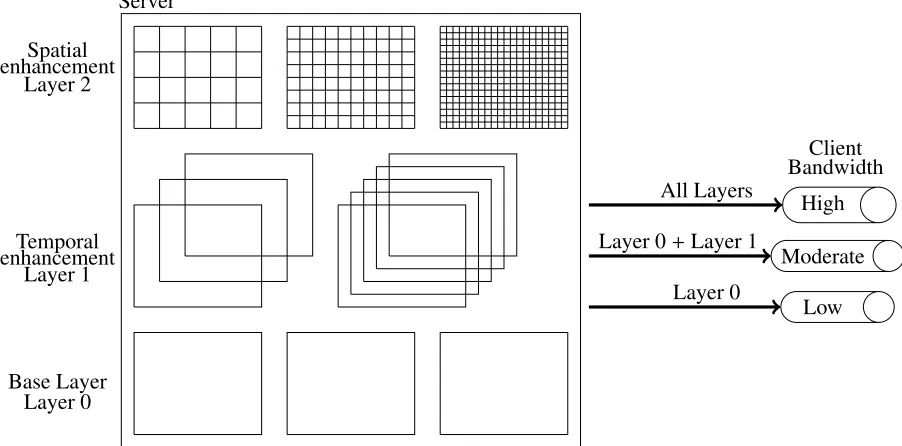
Figure 2.1: As clients request additional media representations, the media fidelity is enhanced. Layer-ing video streams usLayer-ing SVC enables the receiver to progressively enhance received video quality as additional descriptions are received. The most important layer in SVC is known as the base layer (BL) and each additional layer is known as an enhancement layer (EL).
2.1.1 Adaptive Multimedia Streaming Sporadic Tra
ffi
c and Signalling
Sources
Real-2.1. InteroperableVisualEncoding andNetworkSignallingFormats 13
time Streaming Protocol (RTSP) [68], and Hypertext Transfer Protocol (HTTP) [69]. The RTP protocol transfers media segments over User Datagram Protocol (UDP) where the RTCP pro-tocol is used for congestion control as well as configurations to meet Quality-of-Service (QoS) requirements. Since multimedia is an error-tolerant function, intuitively, UDP will seem to be the optimal transport layer protocol for streaming as it is a mature protocol, with a small header size, and is inherently connectionless where data is not tracked nor retransmitted. All of the mentioned UDP-based streaming paradigms fail at traversing Network Address Trans-lation (NAT) tables and firewalls and also require investments in network infrastructures and dedicated servers to manage separate streaming sessions. The dedicated servers are needed to compensate for UDP’s stateless nature where no connection information is retained by the source-destination pairs [70]. Although initially deemed unsuitable for multimedia streaming [71], Transmission Control Protocol (TCP) is the preferred transport layer protocol for deliv-ery due to inherently being stateful, connection-oriented, byte-oriented, and as a result reliable. The preferred application layer protocol to be used with TCP is HTTP where HTTP/TCP-based
streaming is formally known as HTTP Adaptive Streaming (HAS).
The design of RTP/RTCP promotes functionality that is well suited for UDP but not for
TCP-based connections and therefore are not used alongside TCP. Although RTSP utilizes TCP, it is a stateful protocol, which unlike stateless HTTP, is expensive to scale and conse-quently not as popular as HAS-based streaming. HAS virtually enables multimedia deliv-ery to all devices connected to the Internet due to leveraging existing hardware and popular HTTP/TCP protocol combination, thereby minimizing deployment costs. TCP’s features
in-cluding: built-in feedback and congestion control mechanisms, are enabled by Acknowledge-ment (ACK) messages returned from receiving clients to source nodes [18]. Due to HTTP’s need of TCP’s features, the TCP ACK messages are overlooked since an HTTP-based stream-ing service is far less complex and therefore cost-e↵ective. The benefits of HTTP are twofold;
firstly, HTTP is designed to service clients at large scales e↵ortlessly; secondly, firewalls and
of scaling due to the use of caches, widespread protocol use, and efficient hardware support
as a result of HTTP’s maturity. A significant contributor to HTTP’s scalability is shifting the multimedia stream control to the client from the server-side through having clients send HTTP control messages, such as GET requests. A client in control of the stream will adapt the multi-media quality according to the observed network conditions to maintain a filled bu↵er, thereby
reducing playback interruptions. A simple method for a client to detect the need for reducing playback quality is by using TCP’s built-in congestion control mechanisms.
Period 1 Period 2 Period 3
...
...
...
...
Video
5.0 Mbps
2.0 Mbps
0.5 Mbps
Trick Mode 1
2 3
4 5
6 Audio
Surround
128 kbps
48 kbps
1
2 3
4
Time
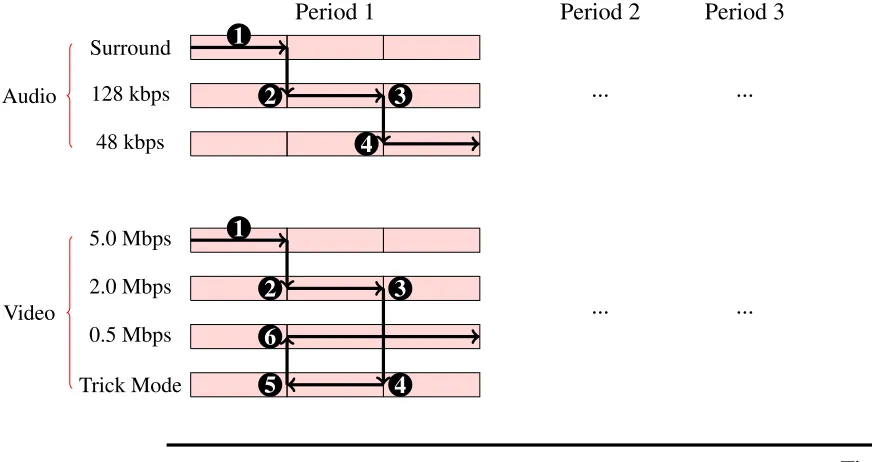
Figure 2.2: The client will utilize HTTP GET requests to choose di↵erent fidelities of multimedia
descriptions suited for observed network conditions.
Clients will request multimedia descriptions of di↵erent qualities when needed, where each
2.1. InteroperableVisualEncoding andNetworkSignallingFormats 15
HTTP Server Cache Client
... ... ...
Available Segments Media Presentation Description
HTTP Client Media Player MPD Parser MPD Delivery
Segment Request/Delivery
HTTP/TCP
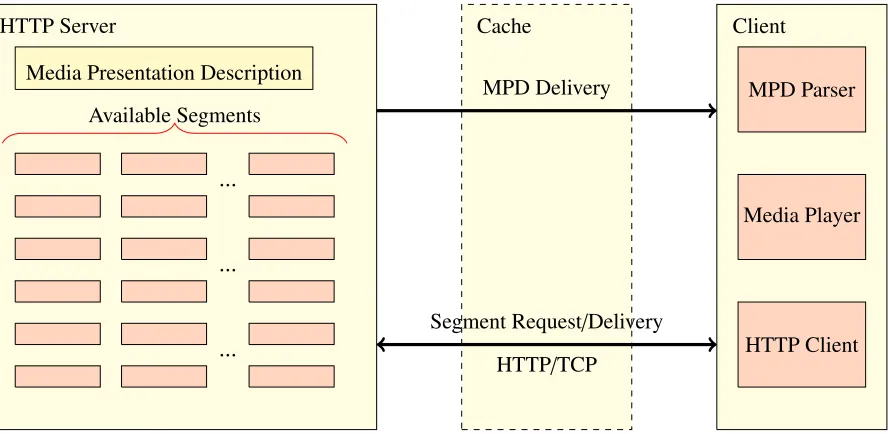
Figure 2.3: HAS utilizing HTTP as well as cache servers for efficient delivery.
the di↵erent video adaptations of the same segment, along with the di↵erent representations,
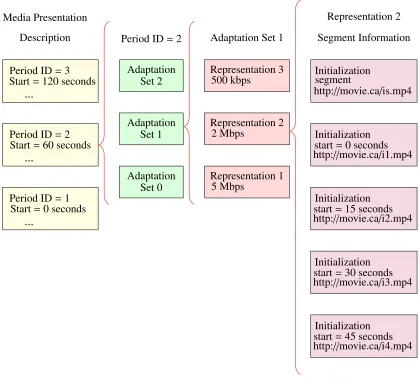
available at the server during each period. For each segment identified belonging to all the rep-resentations described in the MPD file, a URL is available for the client to complete a desired segment retrieval. An MPD file is illustrated in Fig. 2.4 to show the hierarchical data structure that is used to represent deliverable versions of multimedia. The ability of seamlessly switching between segments with di↵erent representations is made possible with the media content being
mapped to a global synchronization presentation timeline. For on-demand content, all segment availability and duration times are primarily identical with minor variations. For live content, segment availability occurs over time and are ideally short in length to meet end-to-end latency constraints. The simplicity of streaming multimedia using HTTP/TCP-based methods placed
HAS as the underlying solution for content delivery at large multimedia enablers including Apple’s HTTP Live Streaming, Microsoft’s Smooth Streaming, and Adobe’s HTTP Dynamic Streaming technologies.
def-Media Presentation Description
Period ID=1
Start=0 seconds
...
Period ID=2
Start=60 seconds
...
Period ID=3
Start=120 seconds
...
Period ID=2
Adaptation Set 0 Adaptation Set 1 Adaptation Set 2
Adaptation Set 1
Representation 1 5 Mbps Representation 2 2 Mbps Representation 3 500 kbps Representation 2 Segment Information Initialization segment
http://movie.ca/is.mp4
Initialization
start=0 seconds
http://movie.ca/i1.mp4
Initialization
start=15 seconds
http://movie.ca/i2.mp4
Initialization
start=30 seconds
http://movie.ca/i3.mp4
Initialization
start=45 seconds
http://movie.ca/i4.mp4
Figure 2.4: An MPD file is provided to the client for driving request-response interactions.
inition. Content providers are also capable of using new media codecs, such as SVC, on the fly. An ongoing challenge in the digital media rights protection world [73] is combating piracy where content providers are capable of doing so by extending HTTP-based streaming services as needed. The decoupling further enables a content provider in using di↵erent
2.1. InteroperableVisualEncoding andNetworkSignallingFormats 17
Layer Service
Application HTTPTLS
Transport TCP
Network IPv4/IPv6 Data-link
Physical
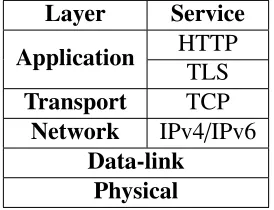
Figure 2.5: The TLS protocol rests above the transport layer in the application layer where it encap-sulates all application generated data when enabled for a specific service. Due to being an application layer service, TLS will not encrypt any information observed at the transport layer and below.
are encrypted using an asymmetric and symmetric key cryptography with a key known only to the source-destination pair. The cryptographic Transport Layer Security (TLS) [87] proto-col encrypts (decrypts) application layer information on-the-fly and is therefore easily utilized with multimedia flows. To verify that the ownership of a set of asymmetric cryptography keys, including the public keys of a service provider, Certificate Authorities (CA) are widely used. A digital certificate issued by a third-party CA is utilized to assert the public keys of a service to verify the signature of the author of the exchanged payloads. To verify a digital signature, asymmetric cryptography plays a vital role. The true author of a message initially encrypts and signs a message using a private key that is known only to the author. The receiver is capable of verifying the author using the author’s known public key. Once the TLS session is established using the asymmetric keys, the TLS protocol cryptographically encapsulates all HTTP mes-sages and payloads using the exchanged symmetric key. Therefore, TLS encryption is limited to the application layer, leaving transport layer data unencrypted as illustrated by Fig. 2.5. The TLS protocol supports multi-service configurations where end-nodes will request specific servers (services) in plain-text while establishing the TLS-session. However, in order to estab-lish a TLS session, a TCP connection is first initiated between source-destination pairs. All of the messages generated by the TLS protocol will then be exchanged using the underlying TCP protocol.
handshaking process will introduce a delay in establishing a communication session. Further-more, additional signalling messages are exchanged between source-destination pairs to main-tain the encrypted session, including key updates and session identification changes. Clients will initially send a Client Hello message to a server with the TLS version used, the available cipher suites, and the name of the requested server. The server will respond to the client with a Server Hello message that contains information on the supported TLS versions and session identification information. The server will then send a digital certificate that can be easily ver-ified using information from CAs. Once the certificate is verver-ified, the client-server pair can now communicate using asymmetric cryptography to exchange the key utilized for the sym-metrically encrypting the payload. The client and server will utilize asymmetric cryptography to encrypt and exchange random strings and bytes of data that is utilized in generating the ses-sion key used in the symmetric cryptography sesses-sion. Once the client and the server compute the key, the client will send the server a Finished message that is encrypted using the com-puted key; similarly, the server will send the client a Finished message that is encrypted using the computed key. All of the application layer payloads generated subsequent to computing the symmetric key is now exchanged in an encrypted format using the aforementioned keys. The symmetric key, however, is periodically renegotiated between source-destination pairs to enhance the security precautions. Due to the utilization of asymmetric and symmetric cryp-tography, the integrity of the data is verified using author signatures and verifications. Since clients utilize CAs to verify servers, service providers are now capable of signing all generated payloads using their private key. Consequently, a client will need to verify the signed payloads using the server’s known and verified public key.
Whether HAS is used alone or alongside a topological delivery solution, the continuously growing overhead needed in order for a multimedia exchange to occur will occupy interme-diate node bu↵ers and increase processing time; As a result, reduced service performance is
mul-2.1. InteroperableVisualEncoding andNetworkSignallingFormats 19
Source Destination
Time Time
Client Hello Server Hello
Server Certificate
Client encrypts key information using the server’s verified
public key Client finished Server finished
Encrypted Payloads
Figure 2.6: A TLS session begins with a handshake process and then moves to exchanging payloads. The TLS handshake process occurs after the TCP connection is established. In the TLS handshake process, source-destination pairs exchange sessions keys to cipher all application layer data.
timedia services to signalling plane handling. The excess overhead will lead to congestion and inevitably forcing multimedia applications to perform retransmissions. As the number of Round Trip Times (RTTs) needed to complete a transaction increases, the latency will behave accordingly. T. Flach et al. [88] demonstrate the e↵ects of packet loss on TCP connections
to inefficient use of network resources. The network will employ intermediate node bu↵ering
and increased end-to-end delivery time to compensate for the current lacking conditions [2].
2.1.2 Cost E
↵
ective Signalling Overhead Reduction Solutions
The wide adoption and deployment of HTTP/TCP adaptive multimedia streaming
pro-moted the development of numerous signalling overhead reduction solutions. The proposed solutions address overhead generated at the application layer and at the lower layers in ad-dition to using advanced multimedia compression schemes. A combination of the aforemen-tioned solutions from each layer can be used simultaneously, however, as multimedia fidelity and service complexity increases, additional header mitigation solutions are needed.
2.1.2.1 Subsiding HTTP Redundancies and Payload Sizes of Request-Response Interac-tions
2.1. InteroperableVisualEncoding andNetworkSignallingFormats 21
Source Destination
Time Time
GET Request
Payload
...
...
...
Payload
Figure 2.7: Server push technology available with HTTP 2.0 will reply to every request received from a
destination node withksegments.
reduced network adaptability, and will promote over-pushing. Xiao et al. propose an adap-tive push scheme where the value of k changes dynamically by having the system alternate betweenk-push and no-push states. Huysegemset al. [14] propose ten di↵erent server push
schemes including: safety push, layered push, full push, and pull many, among others, to be used in adaptive streaming and as soon as the MPD request is received. The server responding with segments as soon as the MPD request is received eliminates startup delays. Clients will experience a small representation switching delay since the server leaped ahead by transmit-tingk segments of a previously requested fidelity. Therefore, when thek-push mechanism is employed, requesting a di↵erent bitrate and by extension, thek parameter method will incur
additional delays. The results show that the incurred switching delays subsequent to using the
kparameter are much more significant than the expected delay. Finally, the receiving nodes are
withr⇤Kaudio/video segments.
To overcome the storage and bandwidth limitations, video encoding [62] is the first part of a bigger multi-part solution. Video encoding is a cost-saving tool that allows Content Delivery Networks (CDNs) to deliver higher-quality media to numerous users while reducing costs by virtue of using reduced amounts of bandwidth. As technological advances are made, such as cheaper and low-power chips, higher compression ratios are achievable through increasingly complex algorithms. Subsequent to capturing videos, uncompressed files are subject to video processing and signal analysis techniques prior to transmission in order to exploit the cost sav-ings of video encoding. The uncompressed video consists of a sequence of ordered frames of real-world scenes where the aforementioned frames might have a high degree of statistical redundancies within themselves or with their neighbouring frames [65]. Video compression processes remove spatial and temporal redundancies from a sequence of frames where they are based on the perception limitations of the Human Visual System (HVS). Additional redundan-cies that are not perceptible by HVS are found through exploiting the high degree of inter- and intra-frame similarities [90].
With the proliferation of digital video and new emerging technologies that use the Internet and other non-deterministic communication channels, varying encoding bitrates of media are used to reduce bandwidth usage. Large CDNs including YouTube, Google, Apple, and Netflix, currently rely on employing HAS over TCP/IP [3, 5, 91], to adapt video services to current
network conditions, end-device capabilities, and server load [92]. HAS operates based on client feedback, where the client measures available bandwidth and bu↵er status and the server
provides videos in multiple representations to meet the various clients’ capabilities. Overhead costs in HAS vary according to segment size, desired coding efficiency, and client feedback.
Small segments will allow the HAS based systems to respond to network changes rapidly at a higher overhead cost, however, larger segments will be slower at responding to network changes while enabling higher coding efficiency at a lower overhead cost. Therefore it is
2.1. InteroperableVisualEncoding andNetworkSignallingFormats 23
overhead cost [66].
2.1.2.2 TCP Alternate Configurations and Transport Layer Delivery Protocols
Reducing and manipulating ACK exchange behaviour as well as varying other transport layer configurations are promoted to decrease signalling overhead [16–19]. The aforemen-tioned literature identifies the e↵ects of manipulating TCP options as a means of reducing
session overhead by varying the frequency of TCP ACK messages as well as employing Selec-tive Acknowledgements (SACK). Manipulating the frequency of ACK messages will directly a↵ect the growth of the congestion window accordingly. Delaying ACKs negatively a↵ects
the slow start phase of the congestion window since there are fewer ACKs being received in the slowest growth phase of the window. Using TCP SACK will reduce the number of ACK messages, however, while streaming real-time media, the packet being retransmitted may ex-pire [19]. Allman in [18] propose two primary di↵erent delayed ACK schemes to reduce the
number of exchanged signalling messages. The first proposed method is designed to generate delayed ACK messages once the TCP congestion window escapes the slow-start phases. There-fore, while in the slow-start phase, ACK messages are needed for growth until the congestion avoidance phase is reached. Once at the congestion avoidance phase, ACK message frequency
is reduced where an ACK is exchanged every n segments. The second method utilizes
reset due to the repeated occurrence of the slow-start phase.
Landstromet al.[17] proposed a scheme that is designed to reduce the frequency of gener-ated TCP ACK messages by manipulating the settings of the protocol. The aim of the proposal is to show that a stream’s performance can be maintained when a reduced number of ACKs is transmitted. Furthermore, Landstrom et al. show that a source-destination pair does not achieve the best results when using the default TCP delayed ACK strategy, and therefore, a di↵erent ACK delay strategy is needed. Landstromet al. show that in certain scenarios with
favourable conditions, there is the potential to further reduce the number of ACKs transmitted from one ACK for every two-in-order segments to one ACK for every four-in-order segments. By reducing the frequency, the ACK messages are essentially delayed for delivery as illustrated in Fig. 2.8. In the default scenario, an ACK message is expected to be sent by a destination node for every segment successfully received from a source node. Furthermore, in [17], the proposed frequency manipulation solution utilizes ABC [18] to compensate for the reduced frequency of ACK messages to maintain the desired performance.
Source Destination
Time Time
Segment
...
...
Segment
ACK
Figure 2.8: The TCP protocol is an ACK-based protocol that depends on the number of bytes success-fully exchanged to transmit new segments.
ec-2.2. Multimedia-basedSteganography and itsApplications 25
tive way of decreasing signalling overhead. The compression schemes include: Robust Header Compression (ROHC) [20], IP Header Compression (IPHC) [21], Compressed RTP (CRTP) [22], Enhanced Compressed RTP (ECRTP) [23], and Tunneling Multiplexed Compressed RTP (TCRTP) [24]. The proposed compression schemes are stream-based and designed to com-press a variety of used protocols including UDP, TCP, and IP. Stream-based comcom-pression is sensitive to packet loss and therefore is not suitable for networks with non-deterministic be-haviours, such as the Internet. Additionally, if header stripping is performed on a compressed packet at an intermediate node, a receiver will not be able to decompress the packet. The al-ternative to compression schemes is to use protocols that behave in a similar manner as TCP with a reduced header size [25, 26]. The Datagram Congestion Control Protocol (DCCP) is designed to replace and mimic TCP behaviour with 12 byte header. The DCCP protocol is not a mature protocol and lacks features found in TCP, such as tracking the receiver’s bu↵er size
and therefore is not as reliable [25].
2.2 Multimedia-based Steganography and its Applications
multi-media is shared across the Internet. Digital steganography, watermarking, or data hiding in the most abstract sense can occur at any level in the TCP/IP abstraction as illustrated by Fig. 2.9
and is an inherent part of a multimedia system. The TCP/IP model inherently supports network
steganography where protocol headers and behaviour are exploited for covert communications [99].
Application Payload Steganography Transport
Network Steganography Network
Data-link
Physical Physical Layer Steganography
Figure 2.9: TCP/IP stack separated into regions defined by the type of steganography used.
2.2.1 Data Hiding Basics in Bandwidth-Rich and Restricted Mediums
Digital steganography is implemented in multimedia using slightly less complex meth-ods such as Least Significant Bit (LSB) embedding within pixel channels and more advanced methods such as LSB within the DCT and Dual-tree Complex Wavelet Transform (DT-CWT) coefficients. The di↵erent data embedding and data hiding techniques are measured using three
factors including: capacity, transparency, and robustness as shown in Fig. 2.10. The three fac-tors influence each other based on the desired quality, and hence, there is a tradeo↵between
2.2. Multimedia-basedSteganography and itsApplications 27
the LSB values describing the intensities found within said channel are changed as necessary. Using the LSB method on a 512x512 image will allow approximately 33,000 bytes of data to be hidden per channel. Changing the value of an LSB in some pixels of a channel does not degrade the image quality significantly, however, the generated signal is susceptible to noise [96].
Capacity
Robustness Transparency
Figure 2.10: Trade-o↵triangle of steganographic features used in covert multimedia channels.
Advanced data embedding techniques used for embedding watermarks, such as methods that embed data within the DT-CWT transform coefficients, are more robust to noise and can
withstand geometric attacks [100]. Watermarks are used in the multimedia industry for com-bating piracy by embedding an imperceptible payload in the content. The payload is detected in either a blind or non-blind fashion where the former does not need any reference frames and the latter will need some reference frames to extract the watermark [40]. Blind watermark extraction is a difficult process in comparison to its counterpart due to the absence of
refer-ence frames. A multitude of schemes are proposed in the literature to embed watermarks in audio and video content using di↵erent types of transformers including DCT, Discrete Wavelet
(YUV) channels using 2 66666 66666 66666 6664 Y U V 3 77777 77777 77777 7775 = 2 66666 66666 66666 6664 0 127 127 3 77777 77777 77777 7775 + 2 66666 66666 66666 6664
0.299 0.587 0.115
0.169 0.331 0.500
0.500 0.418 0.082
3 77777 77777 77777 7775 2 66666 66666 66666 6664 R G B 3 77777 77777 77777 7775 . (2.1)
The source will then process YUV according to the encoding process as necessary. Once the forward transform stage is reached, the watermark is embedded in the low frequency com-ponents of the DT-CWT coefficients as shown in Fig. 2.11. The extraction can be performed
in a blind fashion by using the same embedding key in the decoder and following the DT-CWT procedure [101].
Input
Frame DT-CWTn-level
UH n,d UH
2,d UH
1,d UL Inverse DT-CWT Watermark Watermarked Frame
Figure 2.11: Performing a data hiding process within DT-CWT coefficients.
Using the aforementioned steganographic mechanisms, a number of algorithms and proce-dures [103–110] detailing how to embed data within real-time and on-demand H.264 streams are found within the literature. Furthermore, the steganographic methods are used in [111–115] to provide di↵erent services for and through multimedia transmission sessions including
ses-sion key exchange and censorship bypass using covert channels. In [103], Priya and Amritha test steganoraphic operations including: Least Significant Bit (LSB), Pixel Value Di↵erence
(PVD), and Tri-way (TPVD), on H.264, H.265, and High Efficiency Video Coding (HEVC)
2.2. Multimedia-basedSteganography and itsApplications 29
(PSNR) is found to evaluate the quality of the video post embedding. In [103], the embedding process occurs in the I, B, and P frames and is distributed between the Luma and Chroma chan-nels of a 14 s long video available in various definitions and aspect ratios. The test performed on the H.265 multimedia formats showed that H.265 is the most resilient for data hiding es-pecially when TPVD is used. In terms of H.264, LSB and PVD-based encoding operations achieved relatively the same quality changes for all embedding sizes. In [105, 105], Bose-Chaudhuri-Hochquenghem (BCH) codes are proposed to encode steganographic data prior to embedding within H.264 multimedia formats. The BCH-based code utilizes LSB to embed data within the DCT coefficients of multimedia frames. The proposed algorithm encodes data
in the Luma DCT channel blocks of the I-frame. The proposed scheme is able to embed 280 bytes in 20 I-frames. Using BCH to encode data that will reside within H.264 prior to encod-ing to improve robustness against quantization attacks, an essential feature when watermarkencod-ing multimedia against piracy.
Nguyenet al.[106] propose an algorithm for hiding data in H.264 multimedia format. The proposed algorithm hides data within the Quantized Discrete Transform (QDCT) coefficients
of I-frames. The proposed algorithm uses DCT coefficients for data embedding through LSB
and intra-frame prediction modes to determine whether to extract an encoded payload or not. Kapotaset al. [107] propose exploiting the inter prediction phase of the H.264 video encoder to embed data. The motion estimation process found in the inter prediction encoding phase treats frames in chunks of blocks to evaluate the motion compensation value. The frames are chunked according to 7 di↵erent block sizes where the proposed steganographic algorithm logically
ties sizes to binary codes. The proposed steganographic scheme will force an H.264 encoder to choose di↵erent block sizes to represent a specific hidden message. Chen et al. [109]
propose using LSB on the quantized DCT coefficients to embed data in a high capacity and in
a reversible manner. The proposed scheme hides data in the high frequency coefficients through
histogram shifting to achieve reversibility. Using affine rules, the coefficient values correspond