R E S E A R C H
Open Access
Performance analysis of two-way
full-duplex relay with antenna selection
under Nakagami channels
Baofeng Ji
1,2,3*, Yuqi Li
1, Yinghui Meng
4, Yi Wang
5, Kang Song
6, Congzheng Han
3, Hong Wen
2and Liang Song
1Abstract
This paper focuses on a full-duplex (FD) two-way relay network with one base station (BS), one FD amplify-and-forward (AF) relay, and one user, and the BS is equipped with massive multiple-input multiple-output (MIMO) antennas. To reduce the complexity and cost of BS, the paper proposes a practical antenna selection way in BS to complete transmission in two-way FD relay networks to optimize the system performance of outage probability or bit error ratio (BER). In the proposed scheme, BS can implement transmit antenna selection (AS) based on the instantaneous channel state information (CSI), thereby improving the system performance compared to the traditional FD relay networks. Furthermore, closed-form expressions for the outage probability and average BER are derived under Nakagami-mchannels. The analytical results show that the superiority of proposed scheme compared with the conventional AF relay scheme and the correctness of the theoretical analysis verified by the Monte Carlo simulations.
Keywords:Full-duplex relay, Amplify-and-forward relay, Antenna selection, Outage probability, Bit error rate
1 Introduction
MIMO has been adopted by various wireless standards, such as Third Generation Partnership Project (3GPP), long-term evolution (LTE), and 5G communications, as a promising way to boost system throughput and im-prove coverage range. Massive MIMO systems employ-ing simple linear precodemploy-ing and combinemploy-ing schemes can offer significant performance gains in terms of bandwidth, power, and energy efficiency compared to conventional multiuser MIMO systems, as impairments such as fading, noise, and interference are averaged out for very large numbers of base station (BS) antennas. Antenna diversity is one of the most effective tech-niques to combat the multipath fading and shadowing
in wireless communications [1–3]. However, each
add-itional antenna comes along with an addadd-itional radio frequency (RF) chain and power consumption, which may increase the transmission cost and complexity of
the system as a whole. A remedy for this crucial issue is the use of antenna selection, which can reduce system cost and complexity and improve the system error performance considerably through selecting a single an-tenna or a group of anan-tennas [4–8].
Relay technologies are also included in the current standard for wireless metropolitan area networks such as IEEE 802.16j and IEEE 802.16 m and are adopted by cellular communication systems such as 3GPP and LTE-Advanced [9, 10]. There has been lots of research on antenna selection in AF relay networks recently [11–15]. In another study, Zheng provided a semi-analyt-ical result on the error performance of the fractionally spaced frequency domain and minimum mean square
error receiver over flat Nakagami-m fading channels
and derived the bit error rate (BER) and outage prob-ability [16]. You and co-authors proposed dual antenna selection strategies for MIMO scenarios with partial
feedback based on system outage probability
minimization and sum rate maximization of two-way
MIMO AF relay networks [17–19]. Some authors also
investigated the beamforming schemes and interference alignment in cognitive networks [20,21].
* Correspondence:[email protected]
1
School of Information Engineering, Henan University of Science and Technology, Luoyang 471023, China
2School of Aeronautics and Astronautics, University of Electronic Science and
Technology of China, Chengdu 611731, China
Full list of author information is available at the end of the article
In more recent years, one-way DF relay considered with AS has also garnered a great deal of research interest. Lv and co-author investigated the max-min method for relay AS in two-way DF relay systems and proposed a single antenna system with receiver
optimization [22, 23]. Their approach can be
imple-mented in a distributed manner without acquiring full channel state information (CSI) at the relay node. Meanwhile, some authors also investigate other key technologies about 5G except the full-duplex system [24–27].
For conventional bidirectional communications, most researchers to date have focused primarily on half-duplex (HD) relay. Recently, with the advent of multi-antenna technologies, there has been a renewed interest in the use of the FD relay [28,29]. In one such study, Krikidis proposed an optimal relay selection procedure that in-corporates a hybrid relaying strategy which dynamically switches between FD and HD relaying according to the instantaneous channel conditions [28]; this system well outperformed the conventional FD relay system. In an-other study, Riihonen attempted to maximize the D2D information rate from the source to the destination for the FD-AF relay with multiple antennas of transmitter and receiver [29]. The optimal transformation matrix of the relay was derived under the assumption that the self-interference is perfectly canceled by time domain digital signal processing.
The remainder of the paper is organized as follows. First, in Section2, we elaborate the research methods and contributions in the paper. Section3describes the system model. Then, we propose the max-min antenna selection scheme in Section4. In Section4, we derive the perform-ance of antenna selection for two-way FD-AF relay net-works in the flat Nakagami-mfading channel. Simulation results are given in Section5, and Section6concludes the paper.
2 Methods/experimental
There has been very extensive research on FD relay in 5G networks. Merra et al. analyzed the multiband cogni-tive radio full-duplex relay and obtained the outage probability expressions [30]. Zhang et al. explored the performance of light communication networks with full-duplex optical links and proposed two contention protocols to utilize the FD capability effectively [31]. Atzeni used stochastic geometry to analyze the perform-ance of wireless networks with FD multi-antenna small cells and emphasis on the probability of successful trans-mission [32]. It is important to note that all of these studies explored transmission protocol and performance through stochastic geometry; performance analyses on the two-way FD-AF relay with antenna selection in 5G systems are, at present, few and far between. This paper
emphasizes this perspective from which we attempted to achieve outage probability and BER expressions.
The full-duplex system can achieve two times the spectrum gains of the half duplex. However, how does the performance of the FD relay system fare in terms of antenna selection? To the best of our knowledge, per-formance analyses of two-way FD-AF relay networks in terms of antenna selection are scarce in recent studies. The performance analysis of massive MIMO combined with antenna selection in the FD relay network was de-rived in this study with various channel models. In our previous work, we have investigate the performance of antenna selection with AF and DF half-duplex relay net-works [3], our main contributions in this paper can be summarized as follows.
1) We propose an antenna selection scheme for FD-AF relay networks based on the max-min criterion. 2) We derived the closed-form outage probability and BER expressions in flat Nakagami-mfading chan-nels. Our analysis shows that the proposed scheme achieves superior performance compared to other conventional schemes.
3 System model
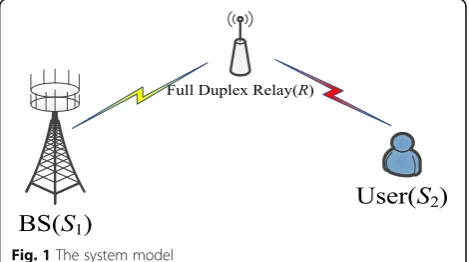
We consider two-way FD-AF relay networks as shown in Fig.1, whereS1, R, andS2are equipped with N1, NR,
and N2 antennas, respectively. H and G are channel
matrix of links S1→R and S2→R, respectively. We
as-sume all elements ofHandGare independent and
iden-tically distributed (i.i.d.) flat Nakagami-m fading. It is
worth noting that the Nakagami-m fading is a general
case, which can cover Rayleigh fading or Rician fading
and so on, such asm= 1 means Nakagami-mis equal to
Rayleigh fading. There is no direct link between S1and
S2, and all nodes are working in a full-duplex mode.
Based on known CSI, the BS select one of their antennas separately for transmission. The work process of the two-way FD-AF relay networks can be seen as follows.
The relay always amplifies and forwards the received signal in every time slot because of its full-duplex mode.
Therefore, we denotenas time slot number. Innth time slot, the BS S1and user S2send their information x1[n]
and x2[n] simultaneously, then the relay node R
ampli-fies and forwards the received signal in the (n+ 1)th time slot. In time slot n, BS selects the ith antenna through the max-min criterion in the following, then the received signal in relayRcan be expressed as follows:
yR½ ¼n nal, andnRis additive Gaussian white noise ofRand sat-isfies nR CN ð0;σR2Þ, where CN ðμ;σ2Þ represents circular symmetric complex Gaussian distribution of μ mean andσ2variance.
For the full-duplex relay network, the forward signal
t[n] is determined by the received signal yR[n−1]. Due to the power constraint of the relay node, the received signalyRthen needs to multiply factorαas follows:
α¼
In the nth time slot, R sends the amplified signal
αyR[n].
Based on the channel reciprocity in the TDD (time division duplex) system, the signal in nth time slot can be rewritten as follows:
y1½ ¼n ffiffiffiffiffiffiPR
where (⋅)∗stands for the conjugate transpose andn1and n2represent the additive white Gaussian noise forBand U, respectively, and satisfyn1 CN ð0;σ21Þand n2 CN
ð0;σ2 2Þ.
After self-cancelation for B and U, the equivalent sig-nal can be expressed as follows:
~
Without loss of generality, we assume σ2
R¼σ21¼σ22
¼1 and the self-interference channel of each node
var-ies slowly relative to the transceiver channel. The SNR
ofBandUcan be obtained as follows:
γ1¼
The corresponding channel variance can be defined
as ðσðjRÞÞ2¼EfkhðRÞk2g , ðσði1ÞÞ2¼Efkhði1Þk2g , and
The BS works under an optimal antenna selection scheme where the optimal antenna as selected can be used to transmit and receive signals. The selection cri-terion can be expressed as follows:
i
The selection criterion can be modified as follows via some mathematical manipulation: large when massive MIMO BS includes optimal antenna selection. Therefore,γ1andγ2can be approximated as:
γ1≈
4.1 PDF of end-to-end SNR
khik2 CN ð0;σ2hÞand ‖g‖
It is worth noting that channel g follows Nakagami
channel, and its norm square obeys the Gamma
distribu-tion. Nakagami-m channel can be equivalent to other
wireless multipath fading channels with different param-etersm∈ð12;∞Þ, which present that Nakagami-mchannel can cover other fading channels generally. In other words, Nakagami channel model has become a general channel model and thus has a high application value such as
Nakagami‐mchannel¼
Unilateral Gaussian channel; m¼1 2
The BS can achieve optimal antenna selection after finishing the antenna selection scheme. The PDF and CDF of equivalent channel ‖h‖2= maxi‖hi‖2can then be expressed as:
Because channels h and g are independent, then the
joint probability density function of hand g can be cal-culated as follows:
We can define two new variables to derive the PDF of
γ1andγ2.
We can definez¼axxyþby,ω¼ ax2
axþby. The Jacobian deter-minant can then be expressed as follows [34]:
detðJFðz;ωÞÞ ¼ det
Then, the integral of pZ(z) can be divided into three parts:
where I1, I2, and I3 can be represented as follows:
pZð Þ ¼z NB
where the special function Kα(x) of PDF is modified Bessel function, the Bessel functions are valid even for complex arguments x, and an important special case is that of a purely imaginary argument. In this case, the solutions to the Bessel equation are called the modified Bessel functions of the second kind. It is worth noting that the parameterαin the special functionKα(x) is not an integer, when αis an integer, then the limit is used, these are chosen to be real-valued for real and positive argumentsx.
4.2 Outage probability
As established by the researchers referenced above, any link SNR lower than the threshold can result in system outage. The outage probability of the system model can be expressed as: bution function (CDF) of two end nodes’SNR.
The CDF of Pγ1ðxÞ and Pγ2ðxÞ can be obtained based on the derived PDF; however, the expressions of Pγ1ðxÞ and Pγ2ðxÞare complex. We can achieve the
approxima-tion expression of Poutusing the relationship between
system outage probability and parameters:
Pout¼1− 1− 1−e−
The BS antenna number is greater than users’ in
massive MIMO system, so we can obtain the following corollary:
Corollary 1 When the BS antenna number is larger than users’(NB> > 1), then the outage probability can be approximated as follows:
Pout ≈1−Γ α;βγth
Γð Þα ð25Þ
It can be elaborated the proof process in a simple
mode, whenNB> > 1, then 1−e
Then, the corollary can be achieved normally.
It is worth noting that the outage probability of a massive MIMO full-duplex system is limited to the link between relay and user, the reason being that the link between the BS and relay tends to be idealized when the BS antenna number grows to infinity. The link quality between relay and user shows unobvious improvement, however.
4.3 Average BER
It is known that the average BER can be defined as the average level of each link BER. We assume thatP1is the
BER of link B→R→Uand P2is the BER of linkU→
R→B. The average BER is decided by the worst link
BER. We can then rewritePeas follows:
Pe ≈ 1
2 maxðP1;P2Þ ð26Þ
Theorem 2 The average BER of the optimal antenna selection scheme can be expressed as:
Pe≈
The proof can be seen asAppendix. Where the special
function 2F1(a,b;c;z) in the Pe is the hypergeometric
function, the Gaussian or ordinary hypergeometric func-tion2F1(a,b;c;z) is a special function represented by the
hypergeometric series, that includes many other special functions as specific or limiting cases. It is a solution of a second-order linear ordinary differential equation and can be defined as2F1ða;b;c;zÞ ¼
Therefore, this section derived the full-duplex two-way
relay system end node’s SNR PDF. On the basis of this
5 Results and discussion
This section focuses on verifying the effectiveness of the proposed scheme and the correctness of said perform-ance analysis as well as the discussion of the results.
The outage probability and BER of the two-way FD-AF relay network with antenna selection were simu-lated and analyzed in detail. The simulation scenario is
depicted in Fig. 1, where the FD-AF relay network
con-sists of BS, relay, and user; BS is equipped with a massive antenna and the relay and user have single an-tennas. It is assumed that the channel between BS and relay follows Rayleigh fading, and the channel between
relay and user follows Nakagami-m fading. The
simula-tion target is to select one antenna from the BS to complete transmission and verify the correctness of our theoretical analysis. As shown in Fig. 1, the parameterβ increasing can bring about the improvement of the
sys-tem performance, because the parameter β represents
the strength of line-of-sight.
Figure 2 plots the PDF of end-to-end SNR results of
the FD-AF relay network, where β¼α=Ω~1¼1;2 repre-sents the line of sight level of direct link, (σ(R))2= (σ(1))2 = (σ(2))2= 0.1. As shown in Fig.2, the proposed approxi-mation method is effective when BS antenna number is high. Moreover,βhas a certain influence on the approxi-mation result: The gap between analytical results and
simulation reduces gradually as BS antenna number and
βincrease. The parameterβ represents the line of sight between transmitter and receiver; therefore, the param-eterβis bigger and the system performance is better.
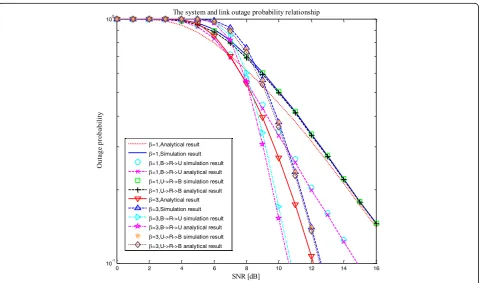
Figure 3 compares the system outage probability
ten-dency with different parameters, where outage threshold
R0= 1bit/s/Hz. As shown in Fig.3, the asymptotic curves
drawn via Eq. (25) approach the simulation result as BS antenna number grows. Moreover, the system outage probability decreases as SNR increases, as well asβ, the reason being thatβrepresents the line of sight level with fixed Ω~iði¼1;2Þ, so SNR or β augment may result in an equivalent increase in SNR at the receiver.
Figure 4 shows the analytical results alongside the
Monte Carlo simulations, which demonstrate the correct-ness of our outage probability analysis. We also found that insofar as the system outage probability is almost equiva-lent to the worst link outage probability, it is similar to the
“bucket effect”in practice.
Figure5displays the tendency of asymptotic, analytical, and simulation system outage probability results as SNR increases. In particular, Fig.5reveals that the system out-age probability curves coincide with increase in BS anten-nas; in effect, high SNR or transmit power has significant impact on the outage probability and other system per-formance factors. It is worth noting that system outage
Fig. 3The tendency of system outage probability withNB
Fig. 5The tendency of outage probability with SNR
probability degrades considerably as the BS antenna orβ decrease.
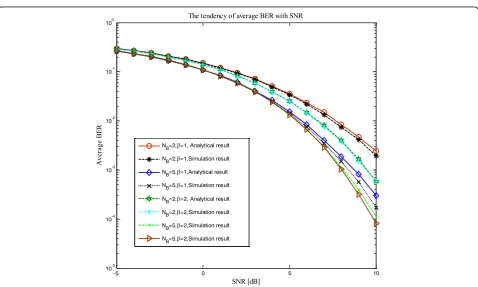
Figure6 describes the correctness of the system aver-age BER analytical results with Monte Carlo simulations.
Several situations are compared in Fig. 6 to show that
BS antenna number and channel parameter β have a
consistent influence on the system’s average BER. Simi-larly, system average BER decreases dramatically asNBor
βincrease.
6 Conclusion
The full-duplex system can achieve two times the spectrum gains compared to the half-duplex. In this paper, we proposed an antenna selection scheme for FD-AF relay networks based on max-min criterion. The closed-form outage probability and BER of FD-AF relay systems in flat Gamma fading channels also were derived completely. The performance analysis results revealed that the proposed scheme is superior to the conventional scheme. We also verified our results via Monte Carlo simulations.
Appendix
This appendix mainly derives the average BER expression in the paper as follows:
Based on the approximation expression, the equivalent channel CDF after BS antenna selection can be expressed as (28):
Then, the Pγecan be calculated through binomial
the-orem as:
The general average BER mathematical expression can be defined as [30]:
tail function of normal distribution and satisfies:
Q xð Þ ¼ 1
Therefore,Pecan be rewritten as:
Pe≈
3GPP:Third Generation Partnership Project; AF: Amplify and forward; AS: Antenna selection; BER: Bit error ratio; BS: Base station; CDF: Cumulative distribution function; CSI: Channel state information; FD relay: Full-duplex relay; HD: Half duplex; LTE: Long-term evolution; MIMO: Multiple-input multiple-output; PDF: Probability density function; TDD: Time division duplex
Funding
This work was supported by the National Thirteen Five National Defense Fund under Grant 6140311030207; National Natural Science Foundation of China under Grants 61801170, 61501405, U1504619, U1404615, 61271018, 61801435, and 61671144; China Postdoctoral Science Foundation under Grant 2018M633351; Natural Science Foundation of Henan under Grant 162300410096 and 182102110401; Program for Science & Technology Innovation Talents in the University of Henan Province (17HASTIT025); Tibet National University Tibet cultural heritage development Collaborative Innovation Center 2018 tender twenty-first topic and Tibet Natural Science Foundation.
Availability of data and materials
The simulation data supporting this paper can be found and part source files can be shared.
Authors’contributions
BF J, YW, and HM are commonly derived the outage probability and BER expressions, especially the series and integrals. YQ L and GZ simulate the system performance and verify the correctness of the derivations. HW and LS modify the paper writing and smooth the words in the paper. All authors read and approved the final manuscript.
Competing interests
The authors declare that they have no competing interests.
Publisher’s Note
Springer Nature remains neutral with regard to jurisdictional claims in published maps and institutional affiliations.
Author details
1
School of Information Engineering, Henan University of Science and Technology, Luoyang 471023, China.2School of Aeronautics and
Astronautics, University of Electronic Science and Technology of China, Chengdu 611731, China.3LAGEO, Institute of Atmospheric Physics, Chinese
Academy of Sciences, Beijing 100029, China.4School of Computer and Communication Engineering, Zhengzhou University of Light Industry, Zhengzhou 450002, China.5Zhengzhou University of Aeronautics,
Received: 23 May 2018 Accepted: 1 November 2018
References
1. C. Li, H.J. Yang, F. Sun, J.M. Ciofffi, L. Yang, Multi-user overhearing for cooperative two-way multi-antenna relays. IEEE Trans. Veh. Technol.99(99), 1–6 (2015) 2. C. Li, S. Zhang, P. Liu, F. Sun, J.M. Cioffi, L. Yang, Overhearing protocol
design exploiting inter-cell interference in Cooperative GreenNetworks. IEEE Trans. Veh. Technol.65(1), 441–446 (2016)
3. K. Song, B. Ji, Y. Huang, L. Yang, Performance analysis of antenna selection in two-way relay networks. IEEE Trans. Signal Process.63(10), 2520–2532 (2015)
4. S. Sanayei, A. Nosratinia, Antenna selection in MIMO systems. IEEE Commun. Mag.42(10), 68–73 (2004)
5. J. Zhu, R. Schober, V.K. Bhargava, Linear precoding of data and artificial noise in secure massive MIMO systems. IEEE Trans. Wirel. Commun.15(3), 2245–2261 (2016)
6. J. Zhu, W. Xu, Securing massive MIMO via power scaling. IEEE Commun. Lett.20(5), 1014–1017 (2016)
7. K. An, M. Lin, J. Ouyang, et al., Performance analysis of beamforming in two-hop AF relay networks with antenna correlation and interference. Int. J. Electron. Commun.68(2014), 587–594 (2014)
8. X. Zhang, G. Zhao, Q. Liu, et al., Enhanced M-algorithm-based maximum likelihood detectors for spatial modulation. Int. J. Electron. Commun.
70(2016), 1361–1366 (2016)
9. Y. Yang, H. Hu, J. Xu, G. Mao, Relay technologies for WiMAX and LTE-advanced mobile systems. IEEE Commun. Mag.47(10), 100–105 (2009) 10. IEEE P802.16j/D9. Draft Amendment to IEEE Standard for local and
metropolitan area networks part 16: air interface for fixed and mobile broadband wireless access systems: multihop relay specification. 2009 11. M. Eslamifar, W.H. Chin, C. Yuen, G.Y. Liang,Performance analysis of two-way
multiple-antenna relaying with network coding, in Proceeding IEEE 70th Vehicular Technology Conference Fall(2009), pp. 1–5
12. B. Bai, W. Chen, K.B. Letaief, Z. Cao,RBG matching based optimal relay selection and subchannel allocation. IEEE ICC 2011(2011), pp. 1–5 13. C. Xing, S. Ma, Y.-C. Wu, T.S. Ng, Linear transceiver design for dual hop
nonregenerative MIMO-OFDM relay systems under channel uncertainties. IEEE Trans. Signal Process.58(12), 6325–6339 (2010)
14. K. Song, B. Ji, Y. Huang, M. Xiao, L. Yang,Performance analysis of antenna selection in two-way decode-and-forward relay networks. 2014 IEEE 80thVehicular Technology Conference (VTC2014-Fall)(2014), pp. 1–5
15. M. Ding, S. Liu, H. Luo, W. Chen, MMSE based greedy antenna selection scheme for AF MIMO relay systems. IEEE Signal Process Lett
17(5), 433–436 (2010)
16. J. Zheng, Y. Sun, Two-way amplify forward relaying using frequency domain oversampling on frequency selective fading channels. IEEE Trans. Veh. Technol.63(4) (2014)
17. C. You, I. Hwang, Y. Kim, V. Tarokh, Dual antenna selection algorithms and feedback strategies with reduced complexity for input multiple-output systems. IET Microwaves Antennas Propag3(6), 906–936 (2009) 18. X. Tang, Y. Cai, W. Yang, et al., Outage analysis of buffer-aided underlay cognitive relay networks with outdated CSI. Int. J. Electron. Commun.
70(2016), 359–366 (2016)
19. V.S. Krishna, M.R. Bhatnagar, A joint antenna and path selection technique in single relay based DF cooperative MIMO networks. IEEE Trans. Veh. Technol.
65(3), 1340–1353 (2016)
20. C. Yuan, M. Lin, J. Ouyang, e. Al, Beamforming schemes for hybrid satellite-terrestrial cooperative networks. Int. J. Electron. Commun.69(2015), 1118– 1125 (2015)
21. Y. He, H. Yin, N. Zhao, Multiuser-diversity-based interference alignment in cognitive radio networks. Int. J. Electron. Commun.70(2016), 617–628 (2016) 22. H. Gao, T. Lv, S. Zhang, X. Su, Y. Lu,Zero-forcing based MIMO two-way relay
with relay antenna selection: transmission scheme and diversity analysis, in proceeding IEEE International Conference on Communications(2012), pp. 4165–4170
23. R. Cao, H. Gao, T. Lv, S. Yang, S. Huang, Phase rotation aided relay selection in two-way decode and forward relay networks. IEEE Trans. Veh. Technol.
65(5), 2922–2935 (2016)
24. Y. Huang, C. Zhang, J. Wang, Y. Jing, L. Yang, X. You, Signal processing for MIMO-NOMA: present and future challenges. IEEE Wirel. Commun. Mag.
25(2), 32–38 (2018)
25. Y. Huang, J. Zhang, M. Xiao, Constant envelope hybrid precoding for directional millimeter-wave communications. IEEE J Sel Areas Commun
36(4), 845–859 (2018)
26. J. Zhu, J. Wang, Y. Huang, S. He, X. You, L. Yang, On optimal power allocation for downlink non-orthogonal multiple access systems. IEEE J Sel Areas Commun35(12), 2744–2757 (2017)
27. B. Ji, B. Xing, K. Song, et al., Performance analysis of multihop relaying caching for internet of things under Nakagami channels. Wirel. Commun. Mob. Comput.2018, 1–10 (2018)
28. I. Krikidis, H.A. Suraweera, P.J. Smith, C. Yuen, Full-duplex relay selection for amplify-and-forward cooperative networks. IEEE Trans. Wirel. Commun.
11(12), 4381–4393 (2012)
29. T. Riihonen, S. Werner, R. Wichman, Mitigation of loopback selfinterference in full-duplex MIMO relays. IEEE Trans. Signal Process.59(12), 5983–5993 (2011) 30. M. S. Meera, P. G. Velmurugan, S. J. Thiruvengadam, Performance analysis of
multiband cognitive radio full duplex relay system with physical layer network coding, IEEE ICACCCT pp.823–827, 2014
31. Z. Zhang, X. Yu, L. Wu, J. Dang, V.O.K. Li,Performance analysis of full-duplex visible light communication networks, IEEE ICC 2015(2015), pp. 3933–3938 32. I. Atzeni, M. Kountouris,Full-duplux MIMO small cell networks: performance
analysis, IEEE Globecom 2015(2015), pp. 1–6
33. I.S. Gradshteyn, I.M. Ryzhik,Table of integrals, series, and products, 6th edn. (Academic, San Diego, 2000)