www.technology.matthey.com
Mark D. Ashton, John G. Hardy*
Department of Chemistry and Materials Science Institute, Faraday Building, Lancaster University, Lancaster, LA1 4YB, UK*Email: [email protected]
The formulation and delivery of the biologically active ingredients (AIs) (for example, agrochemicals and active pharmaceutical ingredients (APIs)) is an inherently interdisciplinary area of research and development. In this short review we discuss the evolution of AI and API delivery systems towards smart stimuli-responsive formulations
with precisely controlled delivery for specific
applications. We also highlight a few examples of such systems using AIs from Johnson Matthey’s controlled substance and API portfolio.
Introduction
The study of medicine has a long history, with the
first records of physicians in Egypt (Hesy-Ra the first
recorded male physician in ca. 2700 BCE; Peseshet the first recorded female physician in ca. 2400 BCE)
and important examples of prescriptions for
medications (for example the Ramesseum medical
papyrus in ca. 1800 BCE; the Kahun Papyrus in
ca. 1800 BCE; the Ebers Papyrus in ca. 1550 BCE and the Edwin Smith Papyrus, 1500 BCE) also from Egypt. Important contributions to medicine
have been made by researchers worldwide, with Nobel Prizes in Physiology or Medicine awarded to
researchers from Africa, Asia, Australasia, Europe,
North America and South America (see Table I). While early medications were all natural products, the industry supporting the production of medications on large scales is inextricably linked to the chemical sciences, with companies in
Europe (for instance, Merck & Co, Bayer and BASF in Germany; Ciba-Geigy, Roche and Sandoz in Switzerland; and Beecham Group, GlaxoSmithKline,
Burroughs and Wellcome in the UK) and the USA
(Eli Lilly and company, Pfizer and Squibb) making
important early contributions (1). While the scale of the industry and complex developments in regulations and mergers are outside the scope of this review, it is noteworthy that the industry has a
hugely beneficial economic impact (worldwide the
pharmaceutical industry employs millions of people and has a revenue that exceeded US$1000 billion
Progress in Active Ingredient Formulations
Towards smart stimuli-responsive formulations
Table I First Examples of Nobel Laureates in Physiology or Medicine from Specific Geographic Regions
Year Laureate Country Justification Geographic region
1901 Emil Adolf von Behring Germany For work on serum therapy Europe
1902 Ronald Ross UK, India For work on malaria Europe, Asia
1923 Fredrick Grant Banting, John James Rickard Macleod Canada, UK For the discovery of insulin North America, Europe
1945 Alexander Fleming, Ernst Boris Chain, Howard Waiter Florey UK, Australia For the discovery of penicillin Europe, Australasia
1947 Carl Ferdinand Cori, Gery Theresa Cori, Bernardo Alberto Houssay USA, Argentina For their discovery of the course of the catalytic conversion of glycogen
North America, South America
[image:1.595.57.543.598.766.2]every year from 2014) and health and societal impacts (such as improvements in life expectancy).
The success of this industry is contingent
on significant investment in research and development (R&D) processes (2). The bioactive molecule discovery process involves identification
of lead compounds plus design and synthesis of variants to screen their therapeutic potential. The bioactive development process is used to establish the suitability of the bioactive manufacturing process, including: appropriate design of
synthetic route answering such questions as whether it is affordable and if the building blocks are available from a reliable source, identification
and toxicology of intermediates and impurities
(3). Early stage bioactive discovery (technology readiness levels (TRLs) 1–4) is carried out by researchers in academia and industry; late
stage development (particularly to increase the selectivity, bioavailability and therapeutic
efficiency of the compounds) (4) is most often
carried out by industry, with formulation studies and in vitro and in vivo validation studies carried out either in house or outsourced to an academic or industrial contractor prior to clinical trials in collaboration with health services (for example,
the National Health Service (NHS) in the UK) and regulatory bodies depending on the specific
market (5). The bioactive molecule industry is constantly evolving to deal with national and international regulations and the scrutiny of healthcare organisations (6). New synthetic strategies and analytical and computational
techniques allow for the exploration of an
ever-wider range of bioactives which pose both challenges and opportunities for companies active in this highly competitive market.
The remainder of this review will focus on the formulation of AIs in agrochemical and
pharmaceutical formulations (also known as active substances, bioactives, bulk actives, APIs and drugs), primarily for application to humans (cognisant of the vast market for formulations of bioactives for agrochemical and veterinary
applications and different requirements in terms of
formulation methodology and regulations).
API Delivery System Development
Organisms are controlled on the cellular level by a multitude of bioactive molecules. It is highly likely that throughout an organism’s lifetime one of these systems will falter due to disease or injury and a therapeutic API could be employed to aid in the recovery of normal function (7). The complex nature of an organism’s cells and physiology provide many opportunities for API intervention
(for instance, specific intracellular functions) when required to affect the desired response (7).
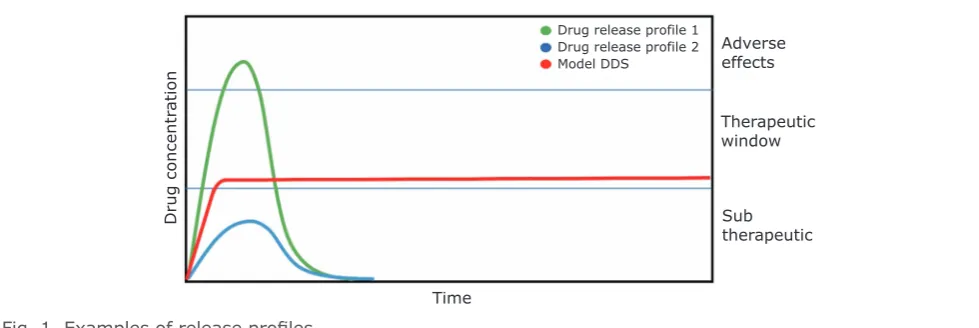
APIs have a therapeutic window (as depicted in
Figure 1). Below the therapeutic window we observe the subtherapeutic region in which an
API is ineffective at providing the desired effect,
whereas above the therapeutic window unwanted
side effects and toxicity may be observed (8). The formulation of APIs to deliver quantities
of the API within the therapeutic regime is of key importance to their clinical translation and success. Formulations can be divided into two broad categories: non-synthetic formulations (the
most common) where the API is used unmodified
in combination with other ingredients in order
to achieve the desired effect (see Table II for
examples); or synthetic formulations, where the API is synthetically modified to impart the
[image:2.595.53.543.582.746.2]desired properties, for example, prodrugs (14). Formulations need to be tailored to suit their route of administration such as inhalation, injection,
Fig. 1. Examples of release profiles
Drug concentr
atio
n
Time
Drug release profile 1 Drug release profile 2 Model DDS
Adverse effects
Therapeutic window
oral or transdermal. For humans, oral intake is by far the most popular, providing fast release, cost
effectiveness and relatively high patient compliance
(15). The fast release provided by traditional methods of API delivery such as inhalation,
injection, oral and transdermal can be beneficial for pain relief, however they often require the patient
to take a relatively high dose of an API to ensure a small amount of the API reaches the desired location to elicit the desired therapeutic response (16). This may also result in issues related to API clearance from the body (metabolised or excreted via the renal system) which can limit the duration the API is within the therapeutic window. Other factors including the biological and physicochemical properties of the APIs (such as
solubility and absorption) (17, 18) and patient compliance (of growing importance with ageing populations worldwide) highlight the market need for controllable API delivery systems for medical or veterinary applications, similarly for agrochemical applications (19). Indeed, API delivery systems
that reduce the number of administrations required offer potentially significant economic, health and
societal impacts (20).
Researchers based in industry and academia have therefore invested significant effort in
the development of API delivery systems to
address these issues, which are often classified generationally, with first generation delivery
systems developed between 1950–1980, second generation delivery systems developed between 1980–2010 and third generation delivery systems developed from 2010
onwards (21–23). The first case of controlled API release was published by Smith, Kline &
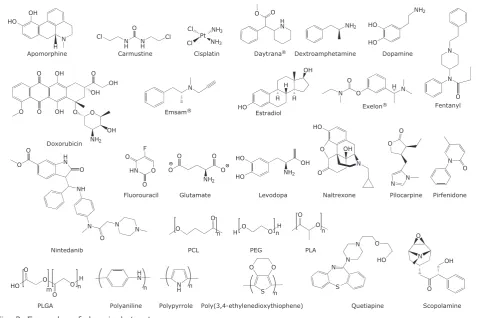
French, USA, when they demonstrated the ability to release dextroamphetamine (Figure 2) over a 12 h period in 1952 (24). The success of this breakthrough prompted an investigation of new controlled API delivery systems designed to reduce intake to once or twice a day and mechanisms of
API release (osmosis, ion-exchange, diffusion and
OH HO N ApomorphineH N H N H O Cl Cl Carmustine H N O O Daytrana® NH2 Dextroamphetamine HO HO Dopamine NH2 O NH2 OH OH O OH O O O OH O OH Doxorubicin N
Emsam® HO
H OH H H Estradiol O N Exelon® O N H N N Fentanyl H N O O O NH N O N N Nintedanib HN O O O F Fluorouracil NH2 O O O O Glutamate OH NH2 HO HO Levodopa HO O O N Naltrexone OH O O N N Pilocarpine O N Pirfenidone OH O Scopolamine N O N S N N HO O Quetiapine O O n PLA H O OnH
[image:3.595.58.539.427.745.2]O PEG O n Polyaniline N H Polypyrrole S O O n n H N n H O O HO O O m n NH3 Pt Cl NH3 Cl Cisplatin PCL Poly(3,4-ethylenedioxythiophene) PLGA O
Fig. 2. Examples of chemical structures
Table II Examples of Clinically Translated Stimuli-Responsive Formulation Systems
Stimulus Treatment Reference
Radiation Radiotherapy (9)
Light Photodynamic therapy (10) Electricity Electroconvulsive therapy (11)
Ultrasound Sonograms (12)
dissolution) (25). By understanding these release mechanisms it was possible to begin to control the physicochemical characteristics of API delivery
systems and thereby the release profiles of the APIs. While first generation API delivery systems
delivered their payloads at a predetermined rate that was often short and did not account for patient needs or varying physiological conditions (8), second generation API delivery systems are characterised by attempts to control the level of API within target tissues above the minimum
effective level for prolonged periods. The maintenance of the minimum effective level is important not only to ensure the benefit of the
API to the patient over an extended period of
time, but also to prevent the onset of side effects
and immune responses. An interesting example of this is a formulation capable of sustained
release of quetiapine (Figure 2, which is used in the treatment of schizophrenia) that has reduced the administration regime to a single dose per day, diminishing problems with patient compliance (26, 27).
Second generation API delivery systems also include examples capable of delivering high molecular weight APIs (peptides, proteins and DNA) potentially from hydrogel- or nanoparticle-based API delivery systems, that were optionally cell-targeted or stimuli-responsive (25). The third generation API delivery systems are characterised
by efforts to: deliver poorly soluble APIs;
tightly control release kinetics (for example via
application of one or more external stimuli); and
overcome biological barriers (such as the blood-brain barrier) (23, 25).
An ideal API delivery system would be a source of
a specific amount of API to a precise location with
temporal control, thereby allowing maintenance of
a minimum effective level of the API for the duration required to have its therapeutic effect (illustrated
in Figure 1) (28). Different situations require different API release profiles and application- or patient-specific API delivery profiles are desirable
for the medical, veterinary and agrochemical industries (29).
API delivery systems incorporating polymers have been developed for first, second and third generation of delivery systems and polymers of various architectures are key components of both non-synthetic (such as aerosols, dispersions, emulsions, foams and suspensions) and synthetic formulations (for instance, as a polymer prodrug). The pioneering research of
Robert Langer and coworkers underpins the
development of polymer- based drug delivery systems (DDS) in academic and industrial settings (30–32). Polymer chemistry and engineering
to tailor the structures of polymers for specific
applications is an area of intense ongoing research interest (33), particularly with a view to developing API delivery systems that provide control over the
quantity, location and time of API delivery (34).
Polymer-based API delivery systems can enhance the duration of activity for APIs with short half-lives (28). API delivery systems that encapsulate a payload of API and break down at a predictable rate can be utilised for a variety of therapeutic agents, particularly when displaying a moiety
that targets the API to specific cells or tissues (35). Poly(ethylene glycol) (PEG, Figure 2) is a polymer often conjugated to macromolecular APIs
(commonly known as PEGylation) (36) to enhance
their half-lives by reducing their rate of clearance via the renal system and eliciting minimal
inflammatory response (37).
The utilisation of biodegradable and bioerodible polymers such as poly(caprolactone) (PCL,
Figure 2), poly(D,L-lactic-co-glycolic acid) (PLGA, Figure 2) and PEG that respond to
enzymes such as esterases and lipases are now very popular as a result of their biocompatibility in vivo reducing the immune response and averting systemic toxicity (38, 39). Cisplatin (Figure 2) (40) is a common anticancer API that has proved
effective in the treatment of a variety of tumours
however its inherent toxicity and resistance limitations have prevented the full potential of this API being reached (41). A recent study into the construction of platinum(IV)-encapsulated
prostate-targeted nanoparticles of PLGA-PEG functionalised with prostate-specific membrane
antigen (PSMA) targeting aptamers was found to help optimise the delivery of a lethal dose of cisplatin to prostate cancer cells (41). The use of these polymeric agents in this manner not only provides controlled breakdown of the DDS giving
slow release of the API but also provides specific
targeting of cancer cells.
Other physicochemical triggers (for instance,
pH) are also of interest for API delivery
systems. Cancer cells are associated with a
lower pH (normally ca. 5/6) than normal cells
thus making pH sensitive API delivery systems
desirable as damage to healthy cells can be minimised (42). Likewise, the acidic milieu within dental caries-producing biofilms are
another situation in which pH can be a useful
API Delivery Systems for Specific
Contexts
Oral API Delivery Systems
Oral administration of APIs necessitates the stability of the API and its respective acidic and basic
components in the digestive tract and effective
permeation of cell membranes (44). Ion-exchange systems have been investigated for their ability to act as API delivery systems, wherein once the API reaches the gastrointestinal tract the body’s salts displace the API allowing it to pass through the cell membrane in a controlled manner (20).
However, human physiology makes API delivery
via gastrointestinal (GI) tract challenging (45). The short GI transit time (ca. 12 h) makes the delivery of macromolecular therapeutics such as proteins
and nucleic acids difficult (45). The limitations
of API delivery in the GI tract (44) have helped to shape the development of polymer-based API delivery systems to deliver macromolecules such as insulin orally or via inhalation (46, 47).
An ideal API delivery system would allow a patient to monitor and administer drugs (such as insulin) on demand with control over the dose and no need for invasive injections. Variations of these are currently being developed for the self-regulated treatment of diabetes (48).
Transdermal API Delivery Systems
Transdermal patches were amongst the first
systems to be available to patients with APIs being attached to an adhesive patch before delivering
a specific dose through the patient’s skin and
into the bloodstream (49). Transdermal patches enable controlled release via a porous membrane slowly releasing an API from a reservoir within
the patch. The first transdermal patch was FDA
approved in 1979 for the delivery of prescription API scopolamine (Figure 2) for the treatment of motion sickness (50). Nowadays, many APIs are administered via transdermal patches (for example, Daytrana, EMSAM, Exelon and
fentanyl, Figure 2) covering a wide range of medical conditions from Alzheimer’s to attention
deficit hyperactivity disorder (ADHD) (51).
Whilst API delivery from transdermal patches
is effective, the skin is a barrier to entry from
external bodies which results in a high proportion of the API being prevented from entering the
body and a reduced therapeutic efficiency (49).
One solution to this problem is the utilisation of chemical enhancers (49) to alter the permeability
of an API, for example, the skin permeability of oestradiol (Figure 2) can be increased twenty-fold via formulation with ethanol (52). A common
side effect of the use of chemical enhancers is
skin irritation at the site of the patch which may make the use of the enhancer non-viable. Another method is to chemically modify the structure of the
API to improve its permeability; however, this can be difficult, expensive and time consuming (53).
The use of arrays of microneedles for transdermal delivery is increasingly popular because of their broad applicability and minimal pain (54).
The use of microneedles in drug delivery began in the 1990s as a result of the emergence of
microfabrication techniques that enable their
manufacture (55). Microneedles are used in a variety of medical systems including skin pre-treatment for increased permeability, drug coated needles and drug encapsulated needles (55). Microneedles are now widespread in drug delivery having shown the ability to give controlled release of a wide range of low molecular weight drugs
and vaccines (55). The delivery of the influenza
vaccine using a microneedle is common in modern medicine (56). Microneedle delivery depends on a variety of factors including skin permeation, drug stability, drug storage and patient response (55). This emerging field of medicinal chemistry shows great promise in forwarding the field of drug delivery.
Injectable and Implantable API
Delivery Systems
Injectable and implantable API delivery systems
are particularly useful for conditions requiring the delivery of APIs to specific sites within the organism. Many APIs suffer from an inability to reach the required site of action due to a biological barrier
(for example, the blood-brain barrier). Parkinson’s
disease caused by dopamine deficiency cannot be
treated by administration of dopamine because it does not cross the blood-brain barrier, however, the prodrug levodopa (Figure 2) is capable of crossing the blood-brain barrier after which it is metabolised to dopamine (Figure 2) (57).
Implanting API delivery systems at or near the desired site helps to maximise local delivery and
minimise undesirable side effects. A polymer-based
API delivery system known as Ocusert which controls the release of pilocarpine (Figure 2) and reduces
pressure in the eyes (59); implantation of pilocarpine
encapsulated between two polymer membranes controlled the release at a rate of 20 mg h–1 for
up to a week (59). Several polymeric versions of the Ocusert delivery system exist, all capable of delivering pilocarpine in a controlled manner with
differing release profiles. Early uses of this system
were limited by poor biodegradability, however, new formulations of biodegradable polymers have helped
to improve degradation profiles (60).
Biodegradable polymers (such as poly(anhydrides) and polyesters) used for polymer-based API delivery systems can slowly degrade and release APIs (for example, carmustine (Figure 2) a chemotherapeutic treatment for brain cancer) and
carmustine-loaded polyanhydride films directly at the tumour site were shown to significantly improve
patient survival rates when treating glioblastoma multiforme (61).
PGLA has also been used in the controlled delivery of the API apomorphine (Figure 2) which is used in the treatment of Parkinson’s disease (62). Apomorphine has poor oral availability and a short half-life, resulting in multiple administrations
being required which limits its widespread usage,
therefore controlled release methods are used to overcome this shortcoming (62). The use of PGLA prevents the burst release of apomorphine and increases longevity of the API within the target tissues (62). This system demonstrated controlled release of the API over ten days, releasing 90% of the payload.
Stimuli-Responsive API Delivery
Systems
The investigation of smart devices in medicine has probed the use of API delivery systems that can control API release using an external stimulus or by interactions between the API delivery systems and changes in their environment. By implanting a biocompatible device within the patient and then triggering API release externally, the patient
would be provided with the therapeutic benefit over
an extended period of time. An ideal API delivery system would allow control of the dosage, timing, duration and site of API release, resulting in delivery of the therapeutic agent in a remote and non-invasive manner. A range of stimuli can be used to
trigger API release including pH, infrared (IR) (63),
ultraviolet (UV)-visible light (64, 65) magnetism (66), temperature (67), ultrasound (68), electric
fields (69) and radiation (70). Many of these stimuli
are already utilised in clinically translated API delivery systems (Table II). The development of API delivery systems that respond to these stimuli and provide the controlled release of loaded APIs potentially
improves treatment efficiency and diminishes or prevents the onset of side effects. There are API
delivery systems that respond to multiple stimuli
to further improve selectivity for specific functions
(71), see below for a fuller discussion.
Another emerging aspect of formulation science involves the use of shape memory materials (SMMs). SMMs demonstrate plastic deformation when stimulated by an external stimulus and return to their original shape upon removal of the stimuli (72). Shape memory polymers (SMPs) are stimuli responsive compounds which are able to demonstrate mechanical action in response to a range of stimuli depending on the material make up.
SMPs offer a range of advantages including; wide glass transition states, tailored stiffness, high shape
recovery, high elastic deformation, biodegradability, biocompatibility and low thermal conductivity (72). The ability of these materials to assume a
specific shape upon triggering can be utilised for
drug delivery. PCL and poly(lactide) (Figure 2) are often utilised in medical SMPs as they have distinctive glass transition states and are inherently biodegradable and biocompatible (73). The use of these polymers in SMPs can assist in drug delivery via two mechanisms: either the shape recovery of the polymer enhances drug release or the polymer facilitates delivery of the drug delivery device to the body in a minimally invasive manner (73). The incorporation of a drug into a SMP delivery system
has been demonstrated to affect performance of the
DDS however controlled release is still possible. The use of SMPs in urethral stents has been demonstrated using the SMP as a method of controlled release
of anti-inflammatory drugs (74). This method
demonstrated the ability of SMPs to show controlled release of a drug and upon completion degradation into non-toxic products (74). This example highlights the potential use of SMPs in drug delivery and wider medicinal applications (75).
Light-Responsive API Delivery
Systems
provide temporal and spatial control, functioning via various mechanisms including photochemical, photoisomerisation and photothermal (76). Photodynamic therapy (PDT) is one of the most
well-established techniques and uses light in
the UV-visible spectrum to treat skin and throat
cancers (77). PDT is less effective when attempting to affect deeper set tumours such as prostate and liver cancers for which light in the IR spectrum is
preferable as a result of its relatively low absorption by mammalian tissues (63).
Photochemical API delivery systems release a therapeutic payload upon covalent bond cleavage in response to light irradiation (76). An example of such chemistry is the cleavage of an o-nitrobenzyl ester derivative releasing a carboxylic acid (Figure 3). The carboxylic acid-displaying molecule was released over several hours at surface power of 1.3 mW cm–2, however when increasing the
power to 20 mW cm–2 release was only observed
over 5 min (78). This system demonstrates a high degree of control that shows promise in being utilised in API delivery studies.
A library of photo-responsive units have been explored for API delivery including coumarin, pyridylmethyl esters and porphyrins, all of which contain readily cleavable covalent bonds (79). Photo-responsive API delivery systems function
on the requirement of light with a wavelength that possess sufficient energy per photon to affect
the breakage of covalent bonds (80), making UV (81) and visible light (79) popular triggers. One of the most prevalent problems with light triggered API delivery systems is the relatively poor tissue penetration of UV and visible light, this has been addressed by the development of near-infrared
(NIR) API delivery systems (82). NIR is only
fractionally adsorbed by biological tissues thus allowing it to trigger API release in deeper areas of the body (82). Almutairi et al. report the use of a UV responsive nanoparticle DDS in which nintedanib (Figure 2), a drug used in the treatment
of idiopathic pulmonary fibrosis, is released over
ten weeks (83). The nanoparticles were shown to
be biocompatible with no adverse effects observed
despite the extended period of implantation (83). Photo-responsive hydrogel-based API delivery
systems (84) offer the opportunity to deliver
sensitive bioactive macromolecules (84) and minimise the body’s immune response. A recent trend in the literature points towards the
development of systems that do not require the
use of UV as a result of the risk it poses to the skin
and eyes. The use of NIR and visible light triggered
systems are increasingly popular in photochemical API delivery due to reduced risk associated with these triggers (85).
Whilst a great deal of progress has been made
in the field of photochemical API delivery many
problems still persist and must be overcome before these systems are fully utilised in modern medicine.
Early attempts at photochemical triggering often resulted in one effective dosage of the API before
the system is empty, however new innovative systems have demonstrated pulsatile delivery
with few adverse effects. Tissue penetration is still a problem in this field with visible light-based
systems limited to the skin, throat and nose (63). As with all new systems being introduced to the body, biocompatibility is a huge stumbling block.
Even the most biocompatible systems generate
some form of immune response, sometimes in
the form of inflammation but others can be more
serious and so systems must be vetted fully before use. Despite these problems, photochemical API delivery remains a very popular research area with
huge progress being made throughout this field.
Electro-Responsive API Delivery
Systems
Early attempts to develop stimuli responsive
systems included the development of conducting polymers which were theorised to be able to release an API upon triggering with an electrical stimulus. Polypyrrole (PPy) in its conducting (oxidised) form allows oppositely charged ions to be doped into the polymer backbone which was pioneered by the Miller Group in 1984, who demonstrated their ability to release glutamate ions (Figure 2) via the reduction of PPy (Figure 4) films (86). The
cationic PPy is doped with anionic or neutral API molecules. When an electric current is applied to the system the polymer changes redox state and the API is released in order to charge balance the system (87).
The sensitivity of electroactive species can be manipulated to create a range of API release Fig. 3. Photochemical cleavage of an o-nitrobenzyl
ester yielding an o-nitrosobenzaldehyde derivative and an API displaying a carboxylic acid
NO2
O
R1 O
R2
hv NO2
O
R1
+ R2
[image:7.595.57.282.655.711.2]profiles through redox switching. Despite the
widespread usage of PPy as an API delivery agent
it is difficult to process due to its poor solubility in
most solvents. Many attempts have been made to improve the solubility of PPy with limited success (88). PPy is also non-biodegradable and therefore
can be difficult to remove from the patient’s
system once all the loaded API has been used (89).
The success of utilising PPy films as API delivery
agents prompted an investigation into other polymers such as polyaniline (PANi, Figure 2) (90)
and poly(3,4-ethylenedioxythiophene) (PEDOT,
Figure 2) (91) with varying degrees of success. The biocompatibility of the polymers and the amount and molecular weight of API that can be
loaded onto these films are areas of current research
(92, 93), as is the generation of biodegradable versions (94, 95).
Multi-Responsive API Delivery
Systems
Whilst single stimuli responsive systems are very
useful, they are restricted to certain release profiles based on the stimuli in question. The complex
nature of the human body and the conditions which
affect it often require additional more complex
solutions than single stimuli-responsive DDS. Multi-stimuli responsive DDS are being explored for their ability to create more varied release
profiles, providing an improvement in tuneability
and selectivity versus single responsive systems (96). In theory multi-responsive DDS allow for the treatment of a wider range of complex conditions by regulating release by one or more stimuli based on patient needs (96).
When constructing multi-responsive DDS separate
units, each of which is responsive to a specific stimulus, are blended together without affecting
each unit’s responsiveness. Several systems are currently in development based on the ability of one stimulus to act as a targeting moiety whilst the other stimuli are responsible for producing a response in the desired tissue.
pH is one of the most commonly used stimuli in dual
responsive DDS. The ability of these systems to be
selective based on the targeting of the lower pH of
cancer cells makes them desirable in modern cancer
treatments (97–100). pH is often combined with a
variety of other stimuli including light, electricity and magnetism to create a desired response in
cancerous tissues. pH and light responsive materials
are popular dual responsive DDS. Nie et al. have demonstrated the ability of these systems to show controlled release of the chemotherapy agent doxorubicin hydrochloride (Figure 2) via
photothermal drug release (101). The use of a pH
responsive group ensured selectivity towards cancer
cells over healthy cells with an NIR responsive group
providing photothermal release of doxorubicin hydrochloride in a controlled manner (101).
Dual responsive DDS which incorporate multiple stimuli capable of creating the desired drug release response are less common, however several examples exist in the literature. Argouz et al. have developed such a system with the use of sodium
alginate gel beads in a pH or magnetic drug release system (102). In this system pH sensitive sodium
alginate is combined with methyl cellulose which
has shown to be responsive to magnetic fields.
Sodium alginate is a biodegradable, biocompatible, non-toxic polysaccharide and can be readily
modified making it a useful tool in drug delivery
(103). It has been combined with chitosan, pectin and gelatin for use in drug delivery with all systems displaying a high degree of biocompatibility (103). The resulting material has demonstrated the ability to show controlled release of the anticancer drug
5-fluorouracil (Figure 2) over extended periods of time (102). This system is comprised of both a targeting stimulus and two active delivery stimuli providing a high degree of impact when attempting
to affect cancer tissues.
Kyriakides et al. took a different approach to
multi-responsive DDS being able to generate constructs via simultaneous electrospinning and electrospraying, generating compartmentalised storage of multiple drugs (104). The use of this
method provides a PCL fibre structure with a
hyaluronic acid core, allowing drugs to be loaded in
the polymer film (104). Further studies have shown
the ability to trap other spheres of drug within an electrospun mat, allowed for delivery of multiple
drugs with differing solubilities demonstrating various release profiles (104). A minimal immune
response was found when using pirfenidone (Figure 2), an anti-fibrotic drug, in one of the
release compartments (104).
[image:8.595.57.285.56.113.2]Multi-responsive systems are becoming more prevalent in the literature with many systems
Fig. 4. Redox switching of PPy releasing API dopants
N H
A
n m NH
A
n m +
demonstrating effectiveness in drug delivery, particularly when attempting to affect cancerous tissues. This field will continue to grow as scientists find more ways to incorporate more stimuli into
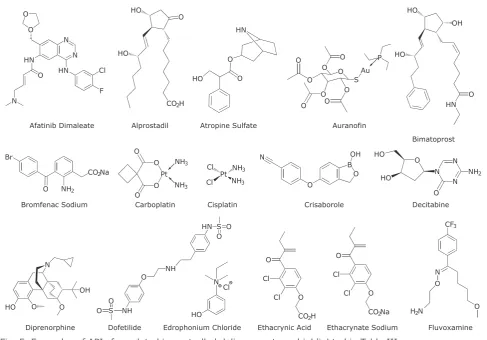
existing systems, providing ample opportunity to treat a variety of conditions and improve patient care. Some examples for APIs displayed in Figure 5
and Figure 6 are highlighted in Table III.
Future Outlook and Conclusions
Significant progress has been made in the field
of API delivery over the past sixty years and the scope of controlled API delivery systems has greatly increased. Many challenges still remain in
this field, such as delivering APIs to specific cells,
targeting genes and designing systems to cross complex barriers such as the blood-brain barrier (42). New materials are being developed aimed at improving biocompatibility, generating new
release profiles and improving patient care (142). Continued investment and effort in this field will
lead to the development of API delivery systems
capable of the delivery of APIs to specific tissues to the benefit of patients and the healthcare industry.
Advancements in the field of API delivery and
controlled release have had a direct impact on
other fields of chemistry such as synthetic and
polymer chemistry, chemical engineering, materials science, chemical biology and bioengineering (33). Many API delivery systems exist generating a
variety of release profiles and targeting different
conditions. Conditions can now be treated at the
required site of action leading to more effective
treatments and broadening our understanding of
biological mechanisms that affect diseases. Despite
the increase of treatments and the deepening of our understanding of API release, clinical needs are still unmet and many challenges still remain. Administrative demand has forced new methods of API delivery to be formulated that protect sensitive molecules as well as targeting deep set regions of the body which are often unreachable by oral delivery systems. Advances in synthetic chemistry have allowed for the development of new classes of therapeutic agents that aim to address administrative demands and in tandem with materials science, have allowed release of APIs to occur over extended periods to treat chronic conditions.
CO2Na
N N O
HN O
HN O
N
F Cl
O HO
HO
CO2H
Afatinib Dimaleate
O
O HO
HN
Atropine Sulfate
O O
Au P
OH HO
HO
HN O
Bimatoprost Auranofin
Br
O
Bromfenac Sodium
O
O O O
Pt
NH3
NH3
Carboplatin
NH3
Pt
Cl NH3
Cl
Cisplatin N
O
B O OH
N N
N NH2
O O
HO HO
Decitabine
O
HO O
OH N
Diprenorphine Edrophonium Chloride
HO
O
CO2H
O
Cl Cl
Ethacrynic Acid
O
CO2Na
O
Cl Cl
Ethacrynate Sodium
CF3
N
O O
H2N
Fluvoxamine O
S O O O O
O O
Alprostadil
Crisaborole
NH2
NH S O O
O NH
HN S O O
Dofetilide
[image:9.595.54.542.405.745.2]N Cl
Fig. 6. Examples of APIs formulated in controlled delivery systems highlighted in Table III
OH
OH OH
N
H N
O
NH O O
NH2
S N N N N
O
O
N HO
OH HO
HO
O O
H N
O
NH
N O
N N
O O N
N
F3C
NH
O
NH N
N
N
O OH
N O
HO O
O
N
N O
O O
O
O
O N
O O
CF3
N O
O
NH2
NH O
O N
N H
O
O
O F
F
N HO
H2N
O
NH
O
O
CF3
N HN
O
O
NH HN
O
F3C Cl
HO OH
O O
O
F3C
HO
NH2
HN NH
H2N
HN O
N O O
S H N O O
O N
HN
N N
Cl
O
Isoproterenol Lenalidomide Lurasidone Miglustat
Ivabradine Nitisinone
Naloxone
Nilotinib Nintedanib
Roflumilast Pomalidomide
Silodosin Sorafenib Travoprost Trientine Venetoclax
Phytonadione
Table III Examples of API Formulations
API CAS number Shown in figure number Examples Reference
Afatinib dimaleate 850140-72-6 Figure 5 Injection (105)
Alprostadil 745-65-3 Figure 5 N/A –
Apomorphine hydrochloride 41372-20-7 Figure 2 Various (106, 107)
Atropine sulfate 5908-99-6 Figure 5 Inhaler (108)
Auranofin 34031-32-8 Figure 5 Oral (109)
Bimatoprost 155206-00-1 Figure 5 Implant (110)
Bromfenac sodium 120638-55-3 Figure 5 N/A –
Carboplatin 41575-94-4 Figure 5 Oral (111)
Carmustine 154-93-8 Figure 2 Implant (112)
Cisplatin 15663-27-1 Figure 2 Various (113, 114)
Crisaborole 906673-24-3 Figure 5 N/A –
Decitabine 2353-33-5 Figure 5 Various (115)
Diprenorphine 14357-78-9 Figure 5 N/A –
Dofetilide 115256-11-6 Figure 5 Oral (116)
Edrophonium chloride 116-38-1 Figure 5 Various (117, 118)
Table III Continued
API CAS number Shown in figure number Examples Reference
Ethacrynic acid 58-54-8 Figure 5 Various (119)
Ethacrynate sodium 6500-81-8 Figure 5 Various (103)
Fluvoxamine maleate 54739-20-7 Figure 5 Oral (120)
Isoproterenol hydrochloride 51-30-9 Figure 6 Oral (121)
Ivabradine hydrochloride 148849-67-6 Figure 6 Implant (122)
Lenalidomide 191732-72-6 Figure 6 Oral (123)
Lurasidone hydrochloride 367514-88-3 Figure 6 Oral (124)
Miglustat 72599-27-0 Figure 6 Inhaler (125)
Naloxone hydrochloride dihydrate 51481-60-8 Figure 6 Hydrogel (126)
Naltrexone hydrochloride 16676-29-2 Figure 2 Various (127)
Nilotinib 641571-10-0 Figure 6 N/A –
Nintedanib 656247-17-5 Figure 6 Various (128, 83)
Nitisinone 104206-65-7 Figure 6 Various (129, 130)
Phytonadione 84-80-0 Figure 6 Various (131)
Pirfenidone 53179-13-8 Figure 2 Various (132, 133)
Pomalidomide 19171-19-8 Figure 6 Various (134)
Roflumilast 162401-32-3 Figure 6 Various (135, 136)
Silodosin 160970-54-7 Figure 6 N/A –
Sorafenib 284461-73-0 Figure 6 Various (137–139)
Travoprost 157283-68-6 Figure 6 Implant (110, 140)
Trientine hydrochloride 38260-01-4 Figure 6 Oral (141)
Venetoclax 1257044-40-8 Figure 6 N/A –
The field of controlled delivery of APIs is
broadening with new emerging concepts such as systems based on three-dimensional (3D) printed technologies and gene delivery systems becoming useable alternatives (143).
It is important that we continue to strive for a greater understanding of the human body and the DDS we are trying to input. We can begin to
exploit expressions exhibited by specific diseases
to improve targeting and tailor our systems to
maximise therapeutic efficiency. The field of
API delivery forms the intersection of chemistry, materials science, medicine and bioengineering. This has proved to be an extremely fruitful area with wide scope for exciting future work.
Acknowledgements
We thank the Engineering and Physical Sciences Research Council (EPSRC) National Productivity Investment Fund (EP/R512564/1) for a PhD
studentship for Mark Ashton. We thank the following
sources for financial support of research aligned with the topics discussed in this review: EPSRC
(EP/R003823/1); the Biotechnology and Biological Sciences Research Council (BBSRC) “Glycoscience
Tools for Biotechnology and Bioenergy” (IBCarb) Network in Industrial Biotechnology and Bioenergy
(NIBB, BB/L013762/1); the BBSRC “FoodWasteNet” NIBB (BB/L0137971/1), the BBSRC “From Plants
to Products” (P2P) NIBB (BB/L013819/1) and the
Royal Society (RG160449 and NF151479).
References
1. A. G. Atanasov, B. Waltenberger, E.-M.
Pferschy-Wenzig, T. Linder, C. Wawrosch, P. Uhrin,
V. Temml, L. Wang, S. Schwaiger, E. H. Heiss, J. M. Rollinger, D. Schuster, J. M. Breuss, V. Bochkov, M. D. Mihovilovic, B. Kopp, R. Bauer, V. M. Dirsch and H. Stuppner, Biotechnol. Adv., 2015, 33, (8), 1582
2. A. C. Anselmo and S. Mitragotri, J. Control. Release, 2014, 190, 15
3. S. J. Dixon and B. R. Stockwell, Nature Chem. Biol., 2010, 6, (5), 318
4. W. Sneader “Drug Discovery: A History”, John
5. D. R. Kirsch, ‘Therapeutic Drug Development and Human Clinical Trials’, in “Biotechnology Entrepreneurship: Starting, Managing, and
Leading Biotech Companies”, ed. C. Shimasaki,
Ch. 23, Elsevier Inc, Waltham, USA, 2014,
pp. 315–330
6. M. A. Turner, M. Catapano, S. Hirschfeld and C. Giaquinto, Adv. Drug Deliv. Rev., 2014, 73, 2 7. G. Tiwari, R. Tiwari, B. Sriwastawa, L. Bhati,
S. Pandey, P. Pandey and S. Bannerjee, Int. J. Pharm. Investig., 2012, 2, (1), 2
8. P. M. Sinha, G. Valco, S. Sharma, X. Liu and M. Ferrari, Nanotechnol., 2004, 15, (10), S585 9. L. Lutgens, J. van der Zee, M. Pijls-Johannesma,
D. F. M. De Haas-Kock, J. Buijsen, G. A. P. G. van Mastrigt, G. Lammering, D. K. M. De Ruysscher
and P. Lambin, Cochrane Database Syst. Rev., 2010, (3), CD006377
10. A. Lieder, M. K. Khan and B. M. Lippert, Cochrane Database Syst. Rev., 2014, (6), CD009810 11. P. Tharyan and C. E. Adams, Cochrane Database
Syst. Rev., 2005, (2), CD000076
12. J. G. Woolcock, R. M. Grivell and J. M. Dodd,
Cochrane Database Syst. Rev., 2014, (11), CD011371
13. A. L. Shada, L. T. Dengel, G. R. Petroni, M. E. Smolkin, S. Acton and C. L. Slingluff, J. Surg. Res., 2013, 182, (1), e9
14. J. Khandare and T. Minko, Prog. Polym. Sci., 2006, 31, (4), 359
15. A. Vashist, A. Vashist, Y. K. Gupta and S. Ahmad, J. Mater. Chem. B, 2014, 2, (2), 147
16. A. R. Maity and D. Stepensky, Mol. Pharmaceutics, 2016, 13, (1), 1
17. C. Dhand, M. P. Prabhakaran, R. W. Beuerman, R. Lakshminarayanan, N. Dwivedi and S. Ramakrishna, RSC Adv., 2014, 4, (62), 32673
18. R. C. Toon, E. C. Preedy and P. Prokopovich,
Eurasian Chem. Tech. J., 2012, 14, (4), 271 19. M. W. Walter, Nat. Prod. Rep., 2002, 19, (3),
278
20. R. K. Verma, B. Mishra and S. Garg, Drug Dev. Ind. Pharm., 2000, 26, (7), 695
21. K. Park, J. Control. Release, 2014, 190, 3 22. K. Park, Mol. Pharmaceutics, 2016, 13, (7),
2143
23. K. Park, J. Control. Release, 2016, 240, 2 24. D. P. van Kammen, J. P. Docherty, S. R. Marder,
J. N. Rayner and W. E. Bunney Jr, Arch. Gen. Psychiatry, 1982, 39, (3), 275
25. Y. H. Yun, B. K. Lee and K. Park, J. Control. Release, 2015, 219, 2
26. ‘Highlights of Prescribing Information – SEROQUEL® (Quetiapine Fumarate) Tablets, for
Oral Use’, Reference ID 4060088, AstraZeneca,
Wilmington, USA, February, 2017: https:// www.accessdata.fda.gov/drugsatfda_docs/ label/2017/020639s065lbl.pdf (Accessed on 31st May 2019)
27. C. Figueroa, M. Brecher, J. E. Hamer-Maansson and H. Winter, Prog. Neuro-Psychopharmacol. Biol. Psychiatry, 2009, 33, (2), 199
28. W. R. Good and A. J. Piraino, J. Control. Release, 1990, 11, (1–3), 315
29. H. Zhong, G. Chan, Y. Hu, H. Hu and D. Ouyang,
Pharmaceutics, 2018, 10, (4), 263
30. “Biodegradable Polymers as Drug Delivery Systems”, eds. M. Chasin and R. Langer, Drugs
and the Pharmaceutical Sciences, Vol. 45, Marcel Dekker Inc, New York, USA, 1990, 347 pp 31. L. Shieh, J. Tamada, Y. Tabata, A. Domb and
R. Langer, J. Control. Release, 1994, 29, (1–2), 73 32. J. Kost and R. Langer, Adv. Drug Deliv. Rev.,
2012, 64, 327
33. K. E. Uhrich, S. M. Cannizzaro, R. S. Langer and K. M. Shakesheff, Chem. Rev., 1999, 99, (11), 3181
34. A. S. Hoffman, J. Control. Release, 2008, 132, (3), 153
35. F. Dosio, S. Arpicco, B. Stella and E. Fattal, Adv. Drug Deliv. Rev., 2016, 97, 204
36. J. M. Harris and R. B. Chess, Nat. Rev. Drug Discov., 2003, 2, (3), 214
37. R. B. Greenwald, Puerto Rico Health Sci. J., 2002, 21, (2), 113
38. K.-S. Lee, D. S. Kim and B. S. Kim, Biotechnol. Bioprocess Eng., 2007, 12, (2), 152
39. H. Seong, T. K. An, G. Khang, S.-U. Choi, C. O. Lee and H. B. Lee, Int. J. Pharm., 2003,
251, (1–2), 1
40. C. Barnard, Johnson Matthey Technol. Rev., 2017, 61, (1), 52
41. S. Dhar, F. X. Gu, R. Langer, O. C. Farokhzad
and S. J. Lippard, Proc. Natl. Acad. Sci., 2008,
105, (45), 17356
42. A. Srivastava, T. Yadav, S. Sharma, A. Nayak, A. A. Kumari and N. Mishra, J. Biosci. Med., 2016, 04, (01), 69
43. Z. Zhao, C. Ding, Y. Wang, H. Tan and J. Li,
Biomater. Sci., 2019, 7, (4), 1643
44. L. M. Ensign, R. Cone and J. Hanes, Adv. Drug Deliv. Rev., 2012, 64, (6), 557
45. Z. Liu, S. Wang and M. Hu, ‘Oral Absorption Basics:
Pathways, Physico-chemical and Biological
Factors Affecting Absorption’, in “Developing
Solid Oral Dosage Forms – Pharmaceutical
Theory and Practice”, eds. Y. Qiu, Y. Chen, G. G. Z. Zhang, L. Liu and W. R. Porter, Ch. 11, Elsevier
46. G. P. Carino, J. S. Jacob and E. Mathiowitz, J. Control. Release, 2000, 65, (1–2), 261
47. R. I. Henkin, Nutrition, 2010, 26, (1), 33 48. S. Mutalik, Venkatesh and N. Udupa, Indian
Drugs, 2002, 39, (6), 305
49. K. S. Paudel, M. Milewski, C. L. Swadley, N. K. Brogden, P. Ghosh and A. L. Stinchcomb, Ther. Deliv., 2010, 1, (1), 109
50. A. C. Parrott, Psychopharmacol., 1986, 89, (3), 347
51. J. M. Moon and B. J. Chun, J. Emerg. Med., 2011, 40, (1), 37
52. W. R. Good, M. S. Powers, P. Campbell and L.
Schenkel, J. Control. Release, 1985, 2, 89 53. B. Godin and E. Touitou, Adv. Drug Deliv. Rev.,
2007, 59, (11), 1152
54. P.-T. Ko, I.-C. Lee, M.-C. Chen and S.-W. Tsai, J. Taiwan Inst. Chem. Eng., 2015, 51, 1
55. Y.-C. Kim, J.-H. Park and M. R. Prausnitz, Adv. Drug Deliv. Rev., 2012, 64, (14), 1547
56. S. P. Sullivan, D. G. Koutsonanos, M. del Pilar Martin, J. W. Lee, V. Zarnitsyn, S.-O. Choi,
N. Murthy, R. W. Compans, I. Skountzou and M. R. Prausnitz, Nature Med., 2010, 16, (8), 915
57. S.-P. Khor and A. Hsu, Curr. Clin. Pharmacol., 2007, 2, (3), 234
58. N. Goonoo, A. Bhaw-Luximon, R. Ujoodha, A. Jhugroo, G. K. Hulse and D. Jhurry, J. Control. Release, 2014, 183, 154
59. M. F. Armaly and K. R. Rao, Investig. Ophthalmol. Vis. Sci., 1973, 12, (7), 491
60. K. P. Sampath Kumar, D. Bhowmik, G. Harish, S.
Duraivel and B. Pragathi kumar, Pharma Innov., 2013, 1, (12), 1
61. H. Brem, Biomater., 1990, 11, (9), 699 62. C. Regnier-Delplace, O. Thillaye du Boullay,
F. Siepmann, B. Martin-Vaca, N. Degrave, P. Demonchaux, O. Jentzer, D. Bourissou and J. Siepmann, Int. J. Pharm., 2013, 443, (1–2), 68 63. G. Yang, J. Liu, Y. Wu, L. Feng and Z. Liu, Coord.
Chem. Rev., 2016, 320–321, 100
64. R. Tong, H. D. Hemmati, R. Langer and D. S.
Kohane, J. Am. Chem. Soc., 2012, 134, (21), 8848
65. C. Alvarez-Lorenzo, L. Bromberg and A. Concheiro, Photochem. Photobiol., 2009, 85, (4), 848
66. P. Yang, S. Gai and J. Lin, Chem. Soc. Rev., 2012, 41, (9), 3679
67. S. Mura, J. Nicolas and P. Couvreur, Nature Mater., 2013, 12, (11), 991
68. R. Deckers and C. T. W. Moonen, J. Control. Release, 2010, 148, (1), 25
69. D. J. Schmidt, J. S. Moskowitz and P. T.
Hammond, Chem. Mater., 2010, 22, (23), 6416 70. P. Lambin, J. Zindler, B. G. L. Vanneste, L.
Van De Voorde, D. Eekers, I. Compter, K. M. Panth, J. Peerlings, R. T. H. M. Larue, T. M.
Deist, A. Jochems, T. Lustberg, J. van Soest,
E. E. C. de Jong, A. J. G. Even, B. Reymen, N. Rekers, M. van Gisbergen, E. Roelofs, S. Carvalho, R. T. H. Leijenaar, C. M. L. Zegers, M.
Jacobs, J. van Timmeren, P. Brouwers, J. A. Lal,
L. Dubois, A. Yaromina, E. J. Van Limbergen, M. Berbee, W. van Elmpt, C. Oberije, B. Ramaekers, A. Dekker, L. J. Boersma, F. Hoebers, K. M.
Smits, A. J. Berlanga and S. Walsh, Adv. Drug Deliv. Rev., 2017, 109, 131
71. C. Alvarez-Lorenzo and A. Concheiro, Chem. Commun., 2014, 50, (58), 7743
72. S. Erkeçoğlu, A. D. Sezer and S. Bucak, ‘Smart
Delivery Systems with Shape Memory and
Self-Folding Polymers’, in “Smart Drug Delivery
Systems”, ed. A. D. Sezer, Ch. 1, InTech, London, UK, 2016, 29 pp
73. G. I. Peterson, A. V Dobrynin and M. L. Becker, Adv. Healthcare Mater., 2017, 6, (21), 1700694
74. C. Wischke, A. T. Neffe and A. Lendlein, ‘Controlled Drug Release from Biodegradable Shape-Memory Polymers’, in “Shape-Memory
Polymers”, ed. A. Lendlein, Advances in Polymer Science, Vol. 226, Springer-Verlag Berlin
Heidelberg, Dordrecht, The Netherlands, 2010,
pp. 177–205
75. J. G. Hardy, M. Palma, S. J. Wind and M. J.
Biggs, Adv. Mater., 2016, 28, (27), 5717 76. C. S. Linsley and B. M. Wu, Ther. Deliv., 2017,
8, (2), 89
77. A. E. O’Connor, W. M. Gallagher and A. T. Byrne,
Photochem. Photobiol., 2009, 85, (5), 1053 78. M. S. Kim and S. L. Diamond, Bioorg. Med.
Chem. Lett., 2006, 16, (15), 4007
79. A. M. L. Hossion, M. Bio, G. Nkepang, S. G.
Awuah and Y. You, ACS Med. Chem. Lett., 2013,
4, (1), 124
80. R.-M. Ion, ‘Porphyrins and Phthalocyanines:
Photosensitizers and Photocatalysts’,
in, “Phthalocyanines and Some Current
Applications”, ed. Y. Yilmaz, Ch. 9, InTech, London, UK, 2017, pp. 189–221
81. Y. Shamay, L. Adar, G. Ashkenasy and A. David, Biomater., 2011, 32, (5), 1377
82. H. J. Cho, M. Chung and M. S. Shim, J. Ind. Eng. Chem., 2015, 31, 15
83. V. A. N. Huu, J. Luo, J. Zhu, J. Zhu, S. Patel, A. Boone, E. Mahmoud, C. McFearin,
M. Huynh, K. Zhang and A. Almutairi, J. Control. Release, 2015, 200, 71
84. I. Tomatsu, K. Peng and A. Kros, Adv. Drug Deliv. Rev., 2011, 63, (14–15), 1257
85. E. R. Ruskowitz and C. A. DeForest, Nature Rev. Mater., 2018, 3, (2), 17087
86. B. Zinger and L. L. Miller, J. Am. Chem. Soc., 1984, 106, (22), 6861
87. S. Sirivisoot, R. Pareta and T. J. Webster,
Nanotechnol., 2011, 22, (8), 85101
88. Y. Shen and M. Wan, Synth. Met., 1998, 96, (2), 127
89. J. Pokki, O. Ergeneman, K. M. Sivaraman,
B. Özkale, M. A. Zeeshan, T. Lühmann, B. J. Nelson and S. Pané, Nanoscale, 2012, 4, (10), 3083
90. L.-M. Huang, C.-H. Chen and T.-C. Wen,
Electrochim. Acta, 2006, 51, (26), 5858 91. A. Peramo, M. G. Urbanchek, S. A. Spanninga,
L. K. Povlich, P. Cederna and D. C. Martin, Tissue Eng. Part A, 2008, 14, (3), 423
92. K. F. A. Clancy and J. G. Hardy, Curr. Pharm. Des., 2017, 23, (24), 3614
93. J. G. Hardy, J. Y. Lee and C. E. Schmidt, Curr. Opin. Biotechnol., 2013, 24, (5), 847
94. J. G. Hardy, M. N. Amend, S. Geissler, V. M. Lynch and C. E. Schmidt, J. Mater. Chem. B, 2015, 3, (25), 5005
95. J. G. Hardy, D. J. Mouser, N. Arroyo-Currás,
S. Geissler, J. K. Chow, L. Nguy, J. M. Kim and
C. E. Schmidt, J. Mater. Chem. B, 2014, 2, (39), 6809
96. F. Li, Y. Zhu and Y. Wang, Microporous Mesoporous Mater., 2014, 200, 46
97. R. Cheng, F. Meng, C. Deng, H.-A. Klok and Z.
Zhong, Biomater., 2013, 34, (14), 3647 98. M. S. Strozyk, S. Carregal-Romero, M.
Henriksen-Lacey, M. Brust and L. M. Liz-Marzán,
Chem. Mater., 2017, 29, (5), 2303
99. W. Zhao, J.-S. Wei, P. Zhang, J. Chen, J.-L. Kong,
L.-H. Sun, H.-M. Xiong and H. Möhwald, ACS Appl. Mater. Interfaces, 2017, 9, (22), 18474 100. X. Chen, Q. Zhang, J. Li, M. Yang, N. Zhao and
F.-J. Xu, ACS Nano, 2018, 12, (6), 5646
101. W. Zhang, J. Dai, G. Zhang, Y. Zhang, S. Li and D. Nie, Nanoscale Res. Lett., 2018, 13, 379 102. D. Nikjoo and A. Z. Aroguz, J. Appl. Polym. Sci.,
2017, 134, (33), 45143
103. H. H. Tønnesen and J. Karlsen, Drug Dev. Ind. Pharm., 2002, 28, (6), 621
104. A. H. Morris, R. S. Mahal, J. Udell, M. Wu and T. R. Kyriakides, Adv. Healthcare Mater., 2017,
6, (19), 1700370
105. X. Lu, S. Liu, X. Yang, M. Han and K. Sun, J. Pharm. Biomed. Anal., 2019, 164, 181
106. T.-L. Hwang, Y.-K. Lin, C.-H. Chi, T.-H. Huang and
J.-Y. Fang, J. Pharm. Sci., 2009, 98, (10), 3735 107. D. Mittal, A. Ali, S. Md, S. Baboota, J. K. Sahni
and J. Ali, Drug Deliv., 2014, 21, (2), 75 108. S. W. Stein and C. G. Thiel, J. Aerosol Med.
Pulm. Drug Deliv., 2017, 30, (1), 20
109. Z. Y. Pessetto, B. Chen, H. Alturkmani, S. Hyter, C. A. Flynn, M. Baltezor, Y. Ma, H. G. Rosenthal,
K. A. Neville, S. J. Weir, A. J. Butte and A. K. Godwin, Oncotarget, 2017, 8, (3), 4079
110. A. A. Aref, Curr. Opin. Ophthalmol., 2017, 28, (2), 169
111. E. Nuxoll, Adv. Drug Deliv. Rev., 2013, 65, (11–12), 1611
112. A. B. Fleming and W. M. Saltzman, Clin. Pharmacokinet., 2002, 41, (6), 403
113. E. R. Gillies and J. M. J. Frechet, Drug Discov. Today, 2005, 10, (1), 35
114. R. C. Huxford, J. D. Rocca and W. Lin, Curr. Opin. Chem. Biol., 2010, 14, (2), 262
115. I. Naldi, M. Taranta, L. Gherardini, G. Pelosi, F. Viglione, S. Grimaldi, L. Pani and C. Cinti, PLoS One, 2014, 9, (5), e98101
116. H. N. E. Stevens, C. G. Wilson, P. G. Welling,
M. Bakhshaee, J. S. Binns, A. C. Perkins, M. Frier,
E. P. Blackshaw, M. W. Frame, D. J. Nichols, M. J. Humphrey and S. R. Wicks, Int. J. Pharm., 2002, 236, (1–2), 27
117. T. Daniels, N. Mills and P. Whitaker, Cochrane Database Syst. Rev., 2013, (4), CD007639 118. P. T. Wong and S. K. Choi, Chem. Rev., 2015,
115, (9), 3388
119. T. M. Allen and P. R. Cullis, Adv. Drug Deliv. Rev., 2013, 65, (1), 36
120. M. H. De Vries, J. Van Harten, P. Van Bemmel and M. Raghoebar, Biopharm. Drug Dispos., 1993, 14, (4), 291
121. K. E. Thummel, Adv. Drug Deliv. Rev., 1997,
27, (2–3), 99
122. M. Lodhi, A. Dubey, R. Narayan, P. Prabhu and
S. Priya, Int. J. Pharm. Investig., 2013, 3, (1), 47
123. T. Gomathi, C. Govindarajan, M. H. Rose, P. N.
Sudha, P. K. M. Imran, J. Venkatesan and S.-K. Kim, Int. J. Pharm., 2014, 468, (1–2), 214 124. Y. Miao, J. Sun, G. Chen, R. Lili and P. Ouyang,
Drug Dev. Ind. Pharm., 2016, 42, (8), 1234 125. B. Lubamba, J. Lebacq, P. Lebecque, R. Vanbever,
A. Leonard, P. Wallemacq and T. Leal, Am. J. Respir. Crit. Care Med., 2009, 179, (11), 1022 126. S. S. Satav, S. Bhat and S. Thayumanavan,
Biomacromolecules, 2010, 11, (7), 1735 127. K. Rostamizadeh, M. Vahedpour and S. Bozorgi,
128. J. Tang, J. M. Li, G. Li, H. T. Zhang, L. Wang,
D. Li and J. S. Ding, Int. J. Nanomedicine, 2017,
12, 6687
129. M. J. Balunas and A. D. Kinghorn, Life Sci., 2005, 78, (5), 431
130. L. R. Ranganath, A. M. Milan, A. T. Hughes, J. J. Dutton, R. Fitzgerald, M. C. Briggs, H. Bygott, E. E. Psarelli, T. F. Cox, J. A. Gallagher, J. C. Jarvis, C. van Kan, A. K. Hall, D. Laan, B. Olsson, J. Szamosi, M. Rudebeck, T.
Kullenberg, A. Cronlund, L. Svensson, C.
Junestrand, H. Ayoob, O. G. Timmis, N. Sireau, K.-H. Le Quan Sang, F. Genovese, D. Braconi,
A. Santucci, M. Nemethova, A. Zatkova, J.
McCaffrey, P. Christensen, G. Ross, R. Imrich and J. Rovensky, Ann. Rheum. Dis., 2014, 75, (2), 362
131. R. J. Patel, D. M. Witt, J. J. Saseen, D. J. Tillman
and D. S. Wilkinson, Pharmacotherapy, 2000,
20, (10), 1159
132. R. Trivedi, E. F. Redente, A. Thakur, D. W. H. Riches and U. B. Kompella, Nanotechnology, 2012, 23, (50), 505101
133. T. Ji, J. Lang, J. Wang, R. Cai, Y. Zhang, F. Qi, L. Zhang, X. Zhao, W. Wu, J. Hao, Z. Qin, Y. Zhao
and G. Nie, ACS Nano, 2017, 11, (9), 8668 134. A. Detappe, H. Nguyen, C. Mathieu, Y. Jiang,
M. Agius, O. Zavidij, B. Berrios, Y. Shen, J. A. Johnson, P. Peter Ghoroghchian and I. M. Ghobria, Blood, 2018, 132, Suppl. 1, 4681
135. M. A. Mastrodicasa, C. A. Droege, A. M. Mulhall,
N. E. Ernst, R. J. Panos and M. A. Zafar, Expert Opin. Investig. Drugs, 2017, 26, (2), 161 136. É. Y. Suzuki, M. I. Amaro, G. S. de Almeida, L.
M. Cabral, A. M. Healy and V. P. de Sousa, Int. J. Pharm., 2018, 550, (1–2), 89
137. W. Park, J. Chen, S. Cho, S. Park, A. C. Larson, K.
Na and D.-H. Kim, ACS Appl. Mater. Interfaces, 2016, 8, (20), 12711
138. D. H. Kim, M.-D. Kim, C.-W. Choi, C.-W. Chung, S. H. Ha, C. H. Kim, Y.-H. Shim, Y.-I. Jeong and D. H. Kang, Nanoscale Res. Lett., 2012, 7, 91 139. A. Grillone, E. R. Riva, A. Mondini, C. Forte,
L. Calucci, C. Innocenti, C. de Julian Fernandez,
V. Cappello, M. Gemmi, S. Moscato, F. Ronca, R. Sacco, V. Mattoli and G. Ciofani, Adv. Healthc. Mater., 2015, 4, (11), 1681
140. 140. P. Denis, Expert Opin. Pharmacother., 2011, 12, (3), 463
141. F. K. Tanno, S. Sakuma, Y. Masaoka, M. Kataoka,
T. Kozaki, R. Kamaguchi, Y. Ikeda, H. Kokubo
and S. Yamashita, J. Pharm. Sci., 2008, 97, (12), 5341
142. R. Balint, N. J. Cassidy and S. H. Cartmell, Acta Biomater., 2014, 10, (6), 2341
143. D. Brambilla, P. Luciani and J.-C. Leroux, J. Control. Release, 2014, 190, 9
The Authors
Mark David Ashton received his MChem in Chemistry from the University of Hull, UK, and is currently studying for his PhD under the supervision of Dr John G. Hardy at Lancaster University, UK. From 2015–2016 he spent time working at Procter & Gamble, USA, in
the fabric care department and obtained his Master’s degree (2017) after working with
Professor Ross W. Boyle on the synthesis and development of porphyrin radiosensitisers for use in cancer treatments. His current PhD project focuses on the synthesis of DDS with a specific interest in the use of non-invasive methods of controlling drug release.
John George Hardy received his MSci and PhD in Chemistry from the University of Bristol,
UK, and the University of York, UK, respectively. Thereafter he undertook postdoctoral
research in Biochemistry, Biomedical Engineering, Materials Science and Pharmacy (in