
STUDY
Panel for the Future of Science and Technology
EPRS | European Parliamentary Research Service
A governance
framework for
algorithmic
accountability
and transparency
EPRS | European Parliamentary Research Service
A governance
framework for
algorithmic
accountability and
transparency
Algorithmic systems are increasingly being used as part of decision-making processes in both the public and private sectors, with potentially significant consequences for individuals, organisations and societies as a whole. Algorithmic systems in this context refer to the combination of algorithms, data and the interface process that together determine the outcomes that affect end users. Many types of decisions can be made faster and more efficiently using algorithms. A significant factor in the adoption of algorithmic systems for decision-making is their capacity to process large amounts of varied data sets (i.e. big data), which can be paired with machine learning methods in order to infer statistical models directly from the data. The same properties of scale, complexity and autonomous model inference however are linked to increasing concerns that many of these systems are opaque to the people affected by their use and lack clear explanations for the decisions they make. This lack of transparency risks undermining meaningful scrutiny and accountability, which is a significant concern when these systems are applied as part of decision-making processes that can have a considerable impact on people's human rights (e.g. critical safety decisions in autonomous vehicles; allocation of health and social service resources, etc.).
This study develops policy options for the governance of algorithmic transparency and accountability, based on an analysis of the social, technical and regulatory challenges posed by algorithmic systems. Based on a review and analysis of existing proposals for governance of algorithmic systems, a set of four policy options are proposed, each of which addresses a different aspect of algorithmic transparency and accountability: 1. awareness raising: education, watchdogs and whistleblowers; 2. accountability in public-sector use of algorithmic decision-making; 3. regulatory oversight and legal liability; and 4. global coordination for algorithmic governance.
AUTHORS
This study has been written by the following authors at the request of the Panel for the Future of Science and Technology (STOA) and managed by the Scientific Foresight Unit, within the Directorate-General for Parliamentary Research Services (EPRS) of the Secretariat of the European Parliament.
Ansgar Koene, main author, University of Nottingham Chris Clifton, Purdue University
Yohko Hatada, EMLS RI
Helena Webb, Menisha Patel, Caio Machado, Jack LaViolette, University of Oxford Rashida Richardson, Dillon Reisman, AI Now Institute
ADMINISTRATOR RESPONSIBLE
Mihalis Kritikos, Scientific Foresight Unit (STOA)
To contact the publisher, please e-mail [email protected]
LINGUISTIC VERSION
Original: EN
Manuscript completed in March 2019.
DISCLAIMER AND COPYRIGHT
This document is prepared for, and addressed to, the Members and staff of the European Parliament as background material to assist them in their parliamentary work. The content of the document is the sole responsibility of its author(s) and any opinions expressed herein should not be taken to represent an official position of the Parliament.
Reproduction and translation for non-commercial purposes are authorised, provided the source is acknowledged and the European Parliament is given prior notice and sent a copy.
Brussels © European Union, 2019. PE 624.262
ISBN: 978-92-846-4656-2 doi: 10.2861/59990 QA-03-19-162-EN-N
http://www.europarl.europa.eu/stoa (STOA website) http://www.eprs.ep.parl.union.eu (intranet)
http://www.europarl.europa.eu/thinktank (internet) http://epthinktank.eu (blog)
Executive summary
This report presents an analysis of the social, technical and regulatory challenges associated with algorithmic transparency and accountability, including a review of existing proposals for the governance of algorithmic systems and the current state of development of related standards and consideration of the global and human rights dimensions of algorithmic governance.
Motivation
Algorithmic systems are increasingly being used as part of decision-making processes with potentially significant consequences for individuals, organisations and societies as a whole. When used appropriately, with due care and analysis of its impacts on people's lives, algorithmic systems, including artificial intelligence (AI) and machine learning, have great potential to improve human rights and democratic society. In order to achieve this however it is vitally necessary to establish clear governance frameworks for algorithmic transparency and accountability to make sure that the risk and benefits are equitably distributed in a way that does not unduly burden or benefit particular sectors of society. There is growing concern that unless appropriate governance frameworks are put in place, the opacity of algorithmic systems could lead to situations where individuals are negatively impacted because 'the computer says NO', with no recourse to meaningful explanation, a correction mechanism, or a way to ascertain faults that could bring about compensatory processes. As with the governance of any other aspect of society, the extent of algorithmic accountability required should be considered within the context of the good, harm, and risks these systems present.
Background definitions and drivers for algorithmic transparency and accountability
The study presents two 'conceptual landscapes' that explore the conceptual roles and uses of transparency and accountability in the context of algorithmic systems.
The primary role of transparency is identified as a tool to enable accountability. If it is not known what an organisation is doing, it cannot be held accountable and cannot be regulated. Transparency may relate to the data, algorithms, goals, outcomes, compliance, influence and/or usage of automated decision making systems (i.e. algorithmic systems), and will often require different levels of detail for the general public, regulatory staff, third-party forensic analysts and researchers. The degree of transparency of an algorithmic systems often depends on a combination of governance processes and technical properties of the system.
An important difference between transparency and accountability is that accountability is primarily a legal and ethical obligation on an individual or organisation to account for its activities, accept responsibility for them, and to disclose the results in a transparent manner. The challenges for algorithmic accountability arise from: the complex interactions between sub-systems and data sources, which might not all be under the control of the same entity; the impossibility of testing against all possible conditions when there are no formal proofs for the system's performance; difficulties in translating algorithmically derived concepts into human understandable concepts, resulting in incorrect interpretations; information asymmetries arising from algorithmic inferences; accumulation of many small (individually non-significant) algorithmic decisions; difficult to detect injections of adversarial data.
When considering the governance of both transparency and accountability it is important to keep in mind the larger motivating drivers that define what is meant to be achieved. While recognising that fairness is an immensely complex concept with different, sometimes competing, definitions it is nevertheless seen as a fundamental component underpinning responsible systems and it is suggested that algorithmic processes should seek to minimise their potential to be unfair and maximise their potential to be fair. Transparency and accountability provide two important ways in which this can be achieved. Fairness is discussed through the lens of social justice, highlighting the
potential for algorithmic systems to systematically disadvantage, or even discriminate against, different social groups and demographics. A series of real life case studies is used to illustrate how this lack of fairness can arise, before exploring the consequences that lack of fairness can have plus the complexities inherent to trying to achieve fairness in any given societal context. The study describes ways in which lack of fairness in the outcomes of algorithmic systems might be caused by developmental decision-making and design features embedded at different points in the lifecycle of an algorithmic decision making model. A connection is made between the problem of fairness and the tools of transparency and accountability, while highlighting the value of responsible research and innovation (RRI) approaches to pursuing fairness in algorithmic systems.
Technical challenges and solutions
Viewing transparency as 'explaining the steps of the algorithm' is unlikely to lead to an informative outcome. On the one hand, it could result in a description that only captures the general process used to make a decision. At the other extreme would be to provide the complete set of steps taken (e.g. the complete detailed algorithm, or the machine learned model.) While this may enable the outcome to be reconstructed (provided the input data was the same), the complexity is such that even experts may be unable to provide satisfying explanations as to why a particular result was obtained. In order to appreciate the nature of the challenges confronting algorithmic transparency and accountability it is necessary to take into consideration the technical properties of algorithmic decision systems that can give rise to opacity. Key issues are complexity (linked to scale of data, the modularity of algorithms, iterative processing and randomised tiebreaking), the interconnection of decisions, and processes that are learned from data. As a result of these issues, simply releasing the source code of an algorithmic system would often not provide meaningful transparency.
There are also other reasons why simply releasing a model (or the learning algorithm and the data) is often not a feasible solution to transparency: data privacy could be compromised since it may be possible to 'reverse engineer' a model to determine the data used to construct it; continuous, or frequently updated, learning to capture and incorporate new data and changing trends also poses a challenge.
There are, however, technical methods for reducing algorithmic opacity, or extracting explanations for system behaviour despite a lack of transparency. To consider these, it is helpful to divide transparency and explanation into two categories: Understanding the overall system, and understanding a particular outcome. These may require quite different approaches. A key idea to keep in mind is the goal of transparency. Is it to understand how the system works? Or how it behaves?
For understanding the overall system the goal is to obtain a general understanding of the process by which an algorithmic system makes decisions. Approaches include: design/code review; input data analysis; statistical analysis of outcomes; and analysis of sensitivity to inputs. One challenge with these approaches is that they are likely to be difficult or impossible without the direct involvement of system developers. Or at least provision of a 'sandbox' testing environment.
Understanding how a system works is likely of little value for the transparency of individual outcomes. In that case approaches providing explanation become more important. Systems can be designed to provide explanation of the basis of individual outcomes. This can be either a specific design criteria incorporated into the entire system, or accomplished through techniques such as sensitivity analysis.
Meaningful transparency into how outcomes are reached is technically challenging given modern computing systems; regulatory requirements for such transparency may significantly limit the ability to use advanced computing techniques for regulated purposes. Meaningful transparency into the behaviour of computing systems is feasible, and can provide important benefits.
Mechanisms for behavioural transparency may need to be designed into systems, and typically require the participation of the developers or operators of systems.
Technical issues in algorithmic accountability are largely a question if the system behaves according to specifications. Accountability issues such as redress are beyond the technical challenges of the algorithm; these are more a question about the actions implied by the specifications. While accountability for actions taken by algorithmic systems may need to be different than for human actions, those differences are largely governed by the particular application.
Governance frameworks
The review of the governance frameworks of algorithmic transparency and accountability is structured hierarchically. It begins from a high-level perspective on fundamental approaches to technology governance, then provides a detailed consideration of various categories of governance options, and finally reviews specific proposals for governance of algorithmic systems that have been discussed in the existing literature.
At the higher level two aspects are considered, principles vs rules-based approaches and regulation related to algorithms as a single regulatory category or rather as a kind of helper technology that should be regulated as a component of other technologies.
Consideration of principles vs rules-based approaches in the context of technology-related governance reveals that much of the existing literature/practice focuses on risks-oriented principles-based approaches. Methods emphasise maximising the benefits and minimising the risks that arise from the use of the technology by allocating resources in proportion to risks to society, considering both the impacts themselves and the likelihood that they happen, in order to establish appropriate levels of control. One common tool used to support risk-based approaches is an impact assessment. When considering whether algorithms should be considered as a single regulatory category or, rather, as a component of other kinds of technologies, there are arguments in favour of both, but at the very least, there would need to be strong coordination between agencies when regulating algorithms in order to ensure that lessons learned in developing regulatory solutions for one set of algorithms are readily available to other agencies developing solutions to identical or highly similar algorithms.
At the level of governance mechanisms an analysis is made for each of five governance categories: demand side market solutions; supply side market solutions; companies' self organisation; branches' self-regulation; co-regulation; and state intervention. For each of these a review is made of the current practices related to algorithms or associated technologies, and their likely role in governing algorithmic transparency and accountability. In brief, it is concluded that both demand and supply side market solutions are mostly not effective as regulatory mechanisms for algorithmic transparency or accountability. While there is some movement towards self organisation and self-regulation, much of this appears to be reactive in response to threats to company reputation due to media reports from whistleblowers or investigative journalism. Self-regulation at the level of industry standards setting has started to take shape, but is still in the development stages. Once completed, industry Standards may provide a useful vehicle for co-regulation. At the level of state intervention consideration is given to possible roles for: information measures, e.g. public algorithmic literacy; incentives by funding and taxes, such as strategic investment to increase research into algorithmic methods that are transparent and accountable, as well as technical/infrastructure support for investigative tech-journalism; legislative measures; and a possible role for a regulatory body.
Among legislative measures consideration is given to the role of the General Data Protection Regulation (GDPR), concluding that is not likely to be sufficient. Proposals to maintain 'goal and outcomes' transparency are noted as a means to provide for third-party auditing, while there is also
a suggestion based on applying no-fault/strict tort liability with possible modification of liability levels depending on the transparency and criticality of the algorithmic systems.
Possible roles for a regulatory body include: involvement in standards-setting, along the lines of co-regulation with the regulatory body involved in monitoring the use of best-practice standards; a regulator with powers to intervene ranging from 'light touch' nudging of the algorithm designer by means of low-cost incentives to 'hard' intervention by requiring pre-market approval testing. Existing governance proposals
In the review of existing governance proposals for algorithmic systems attention is given to proposals on: 'a right to reasonable inferences'; a possible role for consumer protection agencies; the establishment of 'an FDA for algorithms'; proposals based on tort liability in combination with algorithm certification by a regulatory agency; an algorithmic impact assessment-based proposal for accountability of algorithmic systems used by public authorities.
Development of industry standards
The development of industry standards relating to algorithmic transparency and accountability methods is important in shaping the potential for branch self-regulation, co-regulation and as reference for the possible setting of regulatory requirements. The review of the current status of standards development in this area however suggests that it will take between 1.5 and four years before the first international standards are completed.
Human rights
While many in the technical and academic communities discussing algorithmic accountability and transparency have framed these in the language of 'ethics', human-rights NGOs and researchers have started to pick up these issues as a matter of human rights. In early 2018 the 'Toronto Declaration: Protecting the right to equality and non-discrimination in machine learning systems' was published with the aim of drawing attention to the relevant and well-established framework of international human rights law and standards as binding and actionable laws that provide tangible means to protect the human rights of individuals. At implementation level human rights impact assessments provide a framework designed to identify the intended and unintended impact on the enjoyment of human rights, and the State's ability to protect and fulfil them.
Global dimensions of algorithmic governance
As with much of the digital economy, the use of algorithmic systems is characterised by the highly cross-border nature and global reach of the services that are built on these technologies. To successfully govern algorithmic systems therefore requires global dialogue and collaboration across borders and among rich and poor countries to avoid a patchwork of country-specific or regional approaches. In the context of the global dialogue attention is drawn to the tensions arising from the 'winner-takes-all' narrative around the development of artificial intelligence (AI). As a counter point however note is made of the global response to the GDPR, with an increasing number of states enacting GDPR-inspired data privacy legislation, suggesting that the EU may be well positioned to take the lead in establishing a new framework for international coordination for algorithmic accountability and transparency.
Policy options
Based on the review and analysis of current literature regarding algorithmic transparency and accountability, and the successes, failures and challenges of different governance frameworks that have been applied to technological developments (especially in ICT), a set of four policy options is proposed, each of which addresses a different aspect of algorithmic transparency and accountability:
1. awareness raising: education, watchdogs and whistleblowers; 2. accountability in public-sector use of algorithmic decision-making; 3. regulatory oversight and legal liability in the private sector; and 4. the global dimension of algorithmic governance.
Table of contents
1. Introduction _________________________________________________________________________ 1 1.1. Motivation ________________________________________________________________________ 1 1.2. Scope ____________________________________________________________________________ 2 1.3. Objective _________________________________________________________________________ 2 2. Methodology and resources used ________________________________________________________ 3 2.1. Resources ________________________________________________________________________ 3 3. Synthesis of the research work and findings ________________________________________________ 4 3.1. Definitions: _______________________________________________________________________ 4 3.2. Conceptual landscape 1: The uses of transparency _______________________________________ 4 3.2.1. Transparency of what? ____________________________________________________________ 5 3.2.2. By and for whom? _______________________________________________________________ 6 3.2.3. Why transparency?_______________________________________________________________ 6 3.2.4. Fit to purpose ___________________________________________________________________ 7 3.2.5. Conclusion _____________________________________________________________________ 8 3.3. Conceptual landscape 2: Accountability ________________________________________________ 8 3.4. Algorithmic Fairness: a guiding purpose for transparency and accountability _________________ 10 3.4.1. How can we understand algorithmic fairness? ________________________________________ 10 3.4.2. Sources of unfairness ____________________________________________________________ 20 3.4.3. Opportunities and barriers towards achieving fairness in algorithmic systems ______________ 21 3.4.4. A Responsible approach to thedesign of Algorithms ___________________________________ 24 3.4.5. Fair vs. Political and Legal ________________________________________________________ 25 3.4.6. Human vs machine bias __________________________________________________________ 26 3.5. Technical Challenges for Transparency ________________________________________________ 27 3.5.1. Complexity ____________________________________________________________________ 28 3.5.2. Relationship among decisions _____________________________________________________ 28
3.5.3. Machine Learning ______________________________________________________________ 28 3.5.4. Conclusions ___________________________________________________________________ 31 3.6. Technical solutions for reducing opacity _______________________________________________ 31 3.6.1. Understanding the Overall System _________________________________________________ 31 3.6.2. Transparency of Individual Outcomes ______________________________________________ 33 3.6.3. Reverse engineering the 'Black-Box' - putting it all together _____________________________ 34 3.6.4. Conclusions ___________________________________________________________________ 35 3.7. Collateral implications of imposing Fairness, Accountability and/or Transparency requirements __ 35 3.8. High-level perspective on governance frameworks for algorithmic systems ___________________ 36 3.8.1. Principles vs. Rules based governance ______________________________________________ 36 3.8.2. Governance of algorithmic systems vs. systems with algorithmic components ______________ 38 3.9. Governance framework options ______________________________________________________ 39 3.9.1. Demand side Market solutions ____________________________________________________ 39 3.9.2. Supply side Market solutions ______________________________________________________ 40 3.9.3. Companies’ self-organisation _____________________________________________________ 41 3.9.4. Branches self-regulations ________________________________________________________ 42 3.9.5. Co-regulation __________________________________________________________________ 43 3.9.6. State intervention ______________________________________________________________ 45 3.10. Existing proposals for governance of algorithmic systems ________________________________ 50 3.10.1. A right to reasonable inferences __________________________________________________ 50 3.10.2. Consumer Protection authorities _________________________________________________ 51 3.10.3. An 'FDA' for algorithms _________________________________________________________ 51 3.10.4. Agency certification with tort liability ______________________________________________ 52 3.10.5. Accountability Measures for Algorithmic System use by Public Authorities ________________ 52 3.11. Development of Industry Standards for algorithmic decision-making systems ________________ 63 3.12. Human Rights as foundation for algorithm governance __________________________________ 64 3.13. Global dimension to algorithm governance ___________________________________________ 65
4. Policy options _______________________________________________________________________ 69 4.1. Awareness raising: education, watchdogs and whistleblowers _____________________________ 69 4.2. Accountability in public sector use of algorithmic decision-making _________________________ 71 4.3. Regulatory oversight and Legal liability ________________________________________________ 72 4.4. Global coordination for algorithmic governance ________________________________________ 74 5. Conclusions ________________________________________________________________________ 76 References ___________________________________________________________________________ 78
1.
Introduction
1.1.
Motivation
Algorithmic systems are increasingly being used as part of decision-making processes with potentially significant consequences for individuals, organisations and societies as a whole. Because the ways in which these systems reach their 'conclusions' may reflect or amplify existing biases, or may not offer explanations that satisfy our accustomed social and judicial expectations, there is growing concern that the traditional frameworks for implementing transparency and accountability may not suffice as mechanisms of governance.
One of the key areas of concern centres around the opacity of algorithmic systems that can be highly complex and potentially involve machine learning, by which the system behaviour can come to depend not only on design choices at the time of creation but also on the data is it trained on and the input that is being evaluated [1, 2]. Unless appropriate governance frameworks are put in place there is a real risk that situations may arise where individuals are negatively impacted because 'the computer says NO', with no recourse to meaningful explanation, correction mechanism, or way to ascertain faults that could bring about compensatory processes [3, 4].
When linked with pervasive and automated data collection, where the individual is no longer asked to explicitly provide the data that is used by the algorithmic system, it can become difficult or impossible for individuals to identify which data were used to reach particular decision outcomes, and thus impossible to correct faulty data or assumptions, or to even ascertain if an error was made [5, 6, 7].
An important element of concern is the inherent consequence of algorithmic decision-making which implicitly biases social value as being limited to only those things that are measured, since algorithmic decision systems can only take into account those things that are measured and fed in to the system [8, 9]. If blindly applied without democratic and human rights safeguards, this risks driving ever increasing levels of (corporate) surveillance in the name of improved algorithmic decision outcomes [10,11].
Some voices in the academic/research community are also expressing concern that the current high reliance on purely empirical methods (i.e. methods that rely observing responses to sampled test data) for evaluating system performance, with no underlying formal model to support the validity of the system behaviour, is sacrificing scientific rigour for rapid ad-hoc gains with potential long-term costs to the reliability of resulting systems [12]. This could be compared to concerns in school education about teaching methods that produce students who are increasingly good at taking school exams, without truly understanding the material they are being taught. Increased requirements for algorithmic transparency and accountability might contribute to greater focus on scientifically rigorous algorithm evaluation methods, which could lead to significant gains for the future developments in algorithmic systems and Artificial Intelligence [13].
At the same time, algorithmic systems are permeating more and more aspects of our lives -- handwriting analysis, real-time navigation systems, hurricane prediction, medical diagnosis, logistics … -- for the simple reasons that they work better than the systems they are replacing or augmenting. As with the governance of any other aspect of our lives, the extent of algorithmic accountability required should be considered within the context of goods, harms, and risks these systems provide. They require decisions — made by the appropriate stakeholders — that involve often difficult and particular questions of social goals and values, rights, models of fairness, compensatory structures, risk tolerance, etc. [14, 15, 16]
When used appropriately, with due care and analysis of its impacts on people’s lives, algorithmic systems, including AI and Machine Learning, have great potential to improve human rights and democratic society [17, 18]. In order to achieve this however it is vitally necessary to establish clear governance frameworks for algorithmic transparency and accountability to make sure that the risk and benefits are equitably distributed in a way that does not unduly burden or benefit particular sectors of society [19]. Such frameworks should not assume that transparency by itself is an ultimate goal, but is a means to support social values; the governance of AI and Machine Learning should therefore also have a tolerance for non-transparent systems when they bring desirable social benefit and carry demonstrably limited and acceptable risks. Transparency is one tool in the governance toolbox. As with any tool, it is crucial that its wielder understand its uses, its limitations [20], and any trade-offs involved in its use.
1.2.
Scope
This report reviews possible governance frameworks for accountability and transparency of algorithmic systems, including discussion of the challenges and opportunities associated with their implementation, based on an assessment of the current status of algorithmic system governance and comparison with the governance of other technological systems.
We view the question to be three dimensional: 1. The multiple points in the process and multiple structural elements of algorithmic systems that might be made transparent; 2. The various tools and implements by which algorithmic systems can be governed; 3. The benefits, harms, and risks of governing or leaving ungoverned any of the first two dimensions.
The review includes governance frameworks in terms of legal regulatory mechanism (e.g. impact assessments and auditing requirements for high-impact systems), internal frameworks at the organisational level within public or private sector organisations (e.g. rules governing public procurement of algorithmic systems; adoption of industry standards for algorithmic transparency), and supporting frameworks for promoting third-party investigatory oversight (e.g. support mechanisms for public interest investigative journalism into the use of algorithmic systems).
1.3.
Objective
Beyond providing an up-to-date review of current and potential governance frameworks for algorithmic accountability and transparency, the report aims to provide an understanding of the technical challenges and solutions for algorithmic transparency, clarify the relationship between accountability/transparency and fairness, and provide recommendations for an algorithmic impact assessment metric for assessing the degree of regulatory scrutiny of an algorithmic system that would be appropriate/necessary for a particular context of use.
2.
Methodology and resources used
The methodology is based on a literature review sourcing primary and secondary scientific literature, including white papers, reports from government inquiries and civil-society investigations into the current state, and proposed future directions, of algorithmic governance. News articles are included as part of the discussion on the role of investigative journalism, as well as illustration of perspectives and concerns in the wider population.
The first step involved a review of technical approaches to algorithmic transparency and algorithmic accountability, including concepts of accountability by design and remedial accountability. The second step included a review of the types and degrees of impact that algorithmic systems have on social justice, fair decision-making and the associated technological and societal need/limits for algorithmic literacy, transparency, oversight and information symmetry. The third step was a review of existing proposals for governance frameworks for algorithmic systems, including relevant sections of EU directive/regulations (e.g. GDPR), national laws/proposals (e.g. French Digital Republic), local government legislation (e.g. New York City law creating a task force to review government use of algorithmic systems) and industry self-regulation (e.g. standards).
2.1.
Resources
Literature databases: Google Scholar; Web of Science (key phrase searches for 'algorithmic governance', co-regulation of technology', 'AI ethics regulation', Algorithmic literacy', Algorithmic disclosure'). Key phrase searches were followed by citation and reference based searches.
Types of literature: Primary Literature and Review papers in Computer Science, Law, Social Science; grey literature (Standards documents [e.g. IEEE Standards]; industry reports; media reports [e.g. ProPublica COMPAS]; government reports [e.g. French law for the Digital Republic]);
3.
Synthesis of the research work and findings
Here we present an analysis of the social, technical and regulatory challenges associated with algorithmic transparency and accountability, including a review of existing proposals for governance of algorithmic systems, the current state of related Standards development and a considerations of the global and human rights dimensions of algorithmic governance.
We start with definitions for algorithmic transparency and accountability, which are further elaborated through two 'conceptual landscapes' that explore the conceptual roles and uses of transparency and accountability in the context of algorithmic systems. The underlying motivation for a governance framework for algorithmic transparency and accountability is explored further through a review of issues regarding algorithmic fairness. Rounding off this background context setting is an overview of the technical challenges and possible technical solutions that have been identified for algorithmic transparency.
Our review of the governance of algorithmic transparency and accountability is structured hierarchically. We start from a high-level perspective on fundamental approaches to technology governance, then provide a detailed consideration of various categories of governance options, and finally review specific proposals for governance of algorithmic systems that have been discussed in the existing literature.
In the final two subsections we take a more detailed look at the current state of international Standards development related to algorithmic decision-making systems and consider the global and human rights dimensions of algorithmic governance.
3.1.
Definitions
The following concise definitions of 'Transparency' and 'Accountability' are provided for reference to clarify the meaning of these key terms as used in this document.
Transparency - Depending on the type and use of an algorithmic decision system, the desire for algorithmic transparency may refer to one, or more of the following aspects: code, logic, model, goals (e.g. optimisation targets), decision variables, or some other aspect that is considered to provide insight into the way the algorithm performs. Algorithmic system transparency can be global, seeking insight into the system behaviour for any kind of input, or local, seeking to explain a specific input - output relationship.
Accountability - 'A set of mechanisms, practices and attributes that sum to a governance structure which involves committing to legal and ethical obligations, policies, procedures and mechanism, explaining and demonstrating ethical implementation to internal and external stakeholders and remedying any failure to act properly' (derived from [21] as used in [22]).
A more detailed consideration of the nuances and meanings associated with the terms is provided in the subsequent 'conceptual landscape' sections.
3.2.
Conceptual landscape 1: The uses of transparency
In the context of ensuring responsible development and use of algorithmic systems such that they improve human rights and benefit society, transparency is a tool.
Tools have four properties that are directly relevant to transparency’s use as a mechanism of governance of algorithmic systems:
1. A tool is valuable not in itself but because of the goals its serves; a can-opener is only useful if there are cans to be opened.
2. No tool is right for every job. Misusing a tool has costs. Even using it appropriately often requires trade-offs.
3. It cannot be simply assumed that it is a matter of indifference who uses the tool.
So, what is transparency a tool for? What are the limits of its use? What are the costs and trade-offs? What others tools might sometimes be better at the job than transparency?
3.2.1.
Transparency of what?
Transparency is implied by the most basic conception of accountability: if we cannot know what an organisation is doing, we cannot hold it accountable, and cannot regulate it.
But the demand for transparency of algorithmic systems goes beyond that simple and assumed sense. We ask for transparent algorithmic systems because they are becoming so central to our lives and economies, and yet some of them use models and algorithms the workings of which are too complex for the human mind to follow.. While the 'black box' metaphor [23] is clearly evocative of this sense of impenetrable mystery of the systems acting upon us, it is important to consider if making the box transparent, so that we can see the gears within, is truly what is needed to satisfy our concerns with these systems. Depending on which aspect of an algorithmic system is in question, that is usually not what the calls for the transparency really aim at [24].
There are seven broad areas of machine learning systems about which transparency might be demanded:
1. Data. The transparency of the data used by the algorithmic system -- in particular by machine learning and deep learning algorithms -- can refer to the raw data, to the data’s sources, to how the data were preprocessed, to the methods by which it was verified as unbiased and representative (including looking for features that are proxies for information about protected classes), or to the processes by which the data are updated and the system is retrained on them.
2. Algorithms. The transparency of the systems' algorithms can refer to testing its output against inputs for which we know the proper output, reducing the variables to the most significant so we can validate them, testing the system with counterfactuals to see if prejudicial data is infecting the output, a third party code review, analysis of how the algorithms work, inspection of internal and external bug reports, or assurance the software development processes are sound.
3. Goals. Algorithmic systems can also be transparent about their goals. When a system has multiple goals, this would mean being transparent about their relative priorities. For example, the AI driving autonomous vehicles (AVs) might be aimed at reducing traffic fatalities, lowering the AVs’ environmental impact, reducing serious injuries, shortening transit times, avoiding property damage, and providing a comfortable ride. A manufacturer could be required to be transparent about those goals and their priority.
4. Outcomes. Manufacturers or operators could be required to be transparent about the outcomesof the deployment of their algorithmic systems, including the internal states of the system (how worn are the brakes of an AV? how much electricity used?), the effects on external systems (how many accidents, or times it’s caused another AV to swerve?), and computer-based interactions with other algorithmic systems (what communications with other AVs, what data fed into traffic monitoring systems?).
5. Compliance. Manufacturers or operators may be required to be transparent about their overall compliance with whatever transparency requirements have been imposed upon them. In many instances, we may insist that these compliance reports are backed by data that is inspectable by regulators or the general public.
6. Influence. Just as the public has an interest in knowing if an article in a newspaper was in fact paid for by an interested party, the public may have an interest in knowing if any element of the AI process was purposefully bent to favour a particular outcome. For example, if a trusted search platform is artificially boosting some results because they were paid to, and if it is not flagging that fact to users, users can be manipulated. Regulators might want to insist that such influence be conspicuously acknowledged.
7. Usage. Users may want to know what personal data a system is using, either to personalise outcomes or as data that can train the system to refine it or update it. Knowing what personal data is used, they may then want to control that usage, perhaps to make their personalised results more accurate, or, more urgently, because they feel that usage violates their privacy, even though the data in question may already be a desired part of the system, such as a purchase or search history. There are grey areas here as well: collecting anonymised, highly detailed information about trips made by autonomous vehicles — how often the car brakes or swerves, for example — could be important to optimizing traffic for safety or fuel efficiency. Regulators may face some difficult decisions as well as drawing relatively obvious lines
Note that 'transparency' has different meanings in this categorisation. It can mean: access upon request to the public or authorised people; public posting of information; direct inspection of internal processes; the results of the manufacturer’s or operator’s tests of the system for accuracy and fairness; delivery of complete subsystems and their data for testing by authorised people, with the results reported to the public or to regulatory bodies; access to computer scientists and managers to explain algorithmic or operational processes.
Transparency is therefore not a single property to be applied blindly to every element of every algorithmic system. It should be applied differently to different systems depending upon the nature of the algorithmic system, the complex circumstances that lead to the need for governance, and the goals of that governance.
3.2.2.
By and for whom?
Because transparency often, if not always, has costs and risks, it matters who gets to see what illuminated. When considering regulating transparency the potential viewers include:
● Everyone: fully open access to data, algorithms, outcomes, etc.
● Regulatory staff.
● Third-party forensic analysts whose reports are made public, made selectively public, or kept
private.
● Researchers, possibly limited to those affiliated with accredited organisations and/or funding bodies.
3.2.3.
Why transparency?
We want systems to be transparent not to satisfy idle curiosity, but to help achieve important social goals related to accountability:
● Check for bias in the data and algorithms that affects the fairness of the system. (The
mechanics, costs, and secondary effects are different when checking data vs. algorithms).
● Check that the system is drawing inferences from relevant and representative data.
● See if we can learn anything from the machine’s way of connecting and weighting the data - perhaps there’s a meaningful correlation we had not been aware of.
● Look for, and fix, bugs.
● Guard against malicious/adversarial data injection.
We want the hierarchy of goals and outcomes to be transparent so:
● It can be debated and possibly regulated.
● Regulators and the public can assess how well an algorithmic system has performed relative
to its goals, and compared to the pre-algorithmic systems it may be replacing or supplementing.
We want an organisation's compliance status to be public so:
● Regulators can hold the organisation accountable in case of failure.
● The public can evaluate the trustworthiness of the organisation, so people can make
informed decisions as users about the services offered, and so citizens can become better informed about the benefits, risks, and trade-offs of algorithmic-based services overall.
3.2.4.
Fit to purpose
Transparency is not a good in itself, as the struggle for online personal privacy makes evident. Transparency of algorithmic systems is not even clearly a prima facie good, that is — a practice that does not need any special justification, but does require justification for its denial — for transparency of algorithmic systems can have costs associated with it, some of them substantial. Potential costs include:
● Regulatory bodies have to have staff sufficient to oversee compliance.
● Businesses and other organisations have to create and maintain the processes, code, and
legal oversight required by the regulatory bodies.
● Transparency might put justifiable trade secrets at risk.
● Public access to data can flame interest-driven controversies via the untutored or unscrupulous misuse of data [25].
● The requirement for transparency can lead to the use of algorithms that are suboptimal for their purposes, resulting in what can be serious harms when compared with achievable goods.
● Access to data that seems innocuous can lead to breaches of personal privacy by clever and
determined hackers.
● Increased transparency of algorithms can make them easier to hack for malicious purposes. Some of these potential costs can be mitigated by choosing where and how transparency interventions are necessary. For example, rather than providing direct public access to the data being used to train a machine learning system, independent data scientists could examine the data in private and publish the conclusions of their forensic research. Transparency is not an absolute
good and thus needs to be negotiated depending on its purpose and the balance of benefits and costs.
Such considerations should include an examination of other tools and remedies to achieve the desired goals. For example, if a system is producing results that replicate, or even amplify, existing biases, allowing the owners of the system to adjust it so that it rights itself might be an acceptable solution. This could be done on the basis of transparency of the system’s results, without requiring transparency of the data or algorithms used [26].
Or, if an individual believes that s/he has been discriminated against by a black-box algorithmic system, but there is no evidence of systematic bias, the system might be tested to see if discriminatory factors were determinative in that particular outcome. Such testing might not require transparency. For example, inputting counterfactual data [27] — say, a loan application in which only a factor is changed at a time — can identify the impact of possibly prejudicial data without requiring full transparency.
The costs and benefits of requiring transparency therefore should be weighed based on the benefits and costs, direct and indirect, of using it, and the availability of alternatives.
3.2.5.
Conclusion
Transparency is a tool. As with any tool, whether and how it should best be used depends upon:
● The goals of requiring transparency.
● Which elements of the process should be made transparent. ● What type of transparency is most beneficial and least costly. ● Alternative ways of achieving the goal.
● A judgement of the potential trade-off between risk and the benefit an AI system could bring compared with the system it is replacing or augmenting.
Transparency is a tool to be used responsibly, which means accepting that applying it means being sensitive to the complex contexts in which it is used, and the balance of benefits and harms its use inevitably entails.
3.3.
Conceptual landscape 2: Accountability
Accountability, like transparency, is ultimately a tool. Accountability serves to ensure responsible development and use of algorithmic systems such that they improve human rights and benefit society [28]. An important difference between transparency and accountability is that accountability is primarily a legal and ethical obligation on an individual or organisation to account for its activities, accept responsibility for them, and to disclose the results in a transparent manner. Transparency, logs of data provenance, code changes and other record keeping are important technical tools but ultimately accountability depends on establishing clear chains of responsibility. Accountability ultimately lies with a (legal) person [29].
In the context of algorithmic systems, the challenges arise from:
● Complex interactions between sub-systems and data sources, some of which might not be under the control of the same entity (e.g. systems relying on data acquired through data brokers who rely on data sources that use algorithmic inference to aggregate over 'similar' data subjects).
● Unexpected outcomes associated with the impossibility of testing against all possible input
conditions when there are no methods for generating formal proofs for the system’s performance.
● Difficulties in translating algorithmically derived concepts (e.g. clustering algorithm results that segment populations based on large numbers of input variables) into human understandable concepts (e.g. ethnic affiliation) resulting in incorrect interpretations of the meaning of algorithmic results.
● Information asymmetries arising from algorithmic inferences and black box processes that
make it all but impossible for data subjects to gage which, potentially false, information might have resulted in a particular algorithmic outcome affecting them (including lack of knowledge that algorithmic processes were even involved).
● Ubiquity of (small) algorithmic decisions which, if systematically biased, may accumulate to have significant impacts on people even though no single decision would have achieved that legal threshold (e.g. impact on personal development due to reinforcement of racial/gender stereotypes by algorithmic recommendations).
● Purposeful injections of adversarial data to fool a system into making errors, often in ways that can be very difficult to detect. [30]
In addition to the basic function of accountability, which is to act as a deterrent to reckless, irresponsible or illegal behaviour on the part of humans deploying/using algorithmic systems, accountability in algorithmic systems has the potential to generate a self-reflective feedback loop for citizens and society, exposing existing biases and power dynamics [31].
Andrew Tutt [32] summarised the challenge as follows: 'Even if algorithms were programmed with specific attention to well-defined legal norms, it could be extremely difficult to know whether the algorithm behaved according to the legal standard or not in any given circumstance'. This is highlighted with the following example from [33]: 'Algorithms that engage in discrimination offer a good example. Suppose a company used a machine-learning algorithm to screen for promising job candidates. That algorithm could end up discriminating on the basis of race, gender, or sexual orientation—but tracing the discrimination to a problem with the algorithm could be nearly impossible. To be sure, the discrimination could be a result of a bug in the design of the training algorithm, or a typo by the programmer, but it could also be because of a problem with the training data, a by-product of latent society-wide discrimination accidentally channelled into the algorithm, or even no discrimination at all but instead a low-probability event that just happened to be observed.'
In regards to pinpointing human responsibility once illegal or unethical decisions by an algorithmic system have been identified, algorithmic system can again pose challenges since they can be 'sliced-and-diced in a number of ways that many other products are not' [34]. 'A company can sell only an algorithm’s code or even give it away. The algorithm could then be copied, modified, customised, and reused or put to use in a variety of applications its initial author never could have imagined. Figuring out how much responsibility the original developer bears when any particular harm arises down the road will be a difficult question. Or consider a second company that sells training data for use in developing one’s own learning algorithms, but does not sell any algorithms itself. Depending on the algorithm the customer trains, and the use to which the purchaser wishes to put the data, the data’s efficacy could be highly variable, and the responsibility of the data seller could be as well. Or imagine a third company that sells algorithmic services as a package, but the algorithm it offers relies partially or extensively on human interaction when determining its final decisions and outputs (e.g., a stock trading algorithm where a human must confirm all of the proposed trades). Divvying up responsibility between the algorithm and the human is likely to prove complicated.' [32]
Further, as AI systems become more prevalent and more integrated, they will increasing use input from other AI systems, perhaps in highly dynamic ways. For example, as autonomous vehicles are networked, their decisions may result from the AI embedded in scores or hundreds of vehicles, each of which also relies upon independent AI systems providing predictions of micro-weather, traffic congestion, pedestrian flow based on local events, etc. Tracing errors and assessing responsibility may be surpassingly complex — especially since those errors may arise not from individual sources but from the state of transient networks of passing vehicles.
3.4.
Algorithmic Fairness: a guiding purpose for transparency and
accountability
Fairness is an immensely complex concept with different, sometimes competing, definitions. In contrast to transparency and accountability, we do not suggest that fairness is to be considered as a tool to facilitate best practice in algorithmic systems. Rather we see it as a fundamental component underpinning responsible systems and suggest that algorithmic processes should seek to minimise their potential to be unfair and maximise their potential to be fair. Transparency and accountability provide two important ways in which this can be achieved.
In this section we emphasise the importance of assessing and questioning the fairness of algorithmic systems used for decision-making. We discuss fairness through the lens of social justice and highlight the potential for algorithmic systems to systematically disadvantage, or even discriminate against, different social groups and demographics. We draw on a series of real life case studies to illustrate how this lack of fairness can arise and then go on to explore the consequences lack of fairness can have plus the complexities inherent to trying to achieve fairness in any given societal context. We describe the ways in which lack of fairness in the outcomes of algorithmic systems might be caused by developmental decision-making and design features embedded at different points in the lifecycle of an AI model. We connect the problem of fairness to the tools of transparency and accountability and also highlight the value of responsible research and innovation (RRI) [35] approaches to pursuing fairness in algorithmic systems.
3.4.1.
How can we understand algorithmic fairness?
Fairness is an everyday concept that all of us are able to understand at an intuitive level — at least, we usually feel confident about recognizing unfair situations, which, does not mean we have or share a coherent idea of fairness. Fairness turns out to be a multi-faceted, and inherently complex concept. Given this, it is difficult to articulate in a single definition and may also be subject to competing definitions. Fairness reflects the appreciation of a situation based on a set of social values, such as promoting equality in society [36]. The assessment of fairness depends on facts, events, and goals, and therefore has to be understood as situation or task-specific and necessarily addressed within the scope of a practice. Therefore, for the purposes of this report 'fairness' appreciates the social effects of algorithms in sociotechnical structures, while considering how case-specific actions and consequences fit into broad social values. Given the importance of understanding fairness within context, we present a series of relevant case studies of recent controversies regarding the ‘fair’ operation of algorithms in contemporary society. We then use these cases to highlight the core, general issues that require careful attention in discussions of fairness in algorithmic systems.
The concept of fairness in the context of algorithmic implementations appears as a balance between the mutual interests, needs and values of different stakeholders affected by the algorithmic decision. However, these will have varying levels of importance depending on the final application and purpose. As Friedler et al. [37] claim, it is important to have a stated purpose of a given deployment of algorithmic decision-making. The articulated purpose serves both as a benchmark
of the algorithmic performance and a legitimizing force, since the relationship between means and ends becomes verifiable.
In this section we are interested in the impact of algorithmic systems on citizens – as individuals and collectively at societal level. Therefore, we also understand fairness within the lens of social justice, as opposed to individual cases in which there is a perceived imbalance of goods or penalties ('Why did she get more cookies than me?), an uneven applications of a rule ('You let him throw the ball out of turn'), a case of discrimination based on irrelevant factors that are not subject to rights claims ('You didn’t pick me for the team even though I’m faster than the person you did pick'), etc. Social justice is another complex term with many potential definitions [38, 39, 40, 41, 42]. Broadly speaking, over the course of the 20th century it has come to be understood as referring to a framework that provides the means to achieve a 'fair distribution of societal goods—tangible and intangible' [43]. Discussions of social justice (in academic, policy and public discourses) typically recognise that ensuring a fair distribution is complicated by inherent inequalities in contemporary society; there are various differences of perspective over the extent to which a fair distribution should accommodate for, or attempt to address, such inequalities [44,45]. It has also been pointed out that the values of the goods being distributed are themselves part of complex social systems of practice and values [46]. In the context of this report it is worth noting that new technologies – regardless of their application – are generally dominated by elites such as wealthier social classes and large corporations [47]. In the case of algorithmic systems for decision-making, the design and knowledge of these systems, access to them and ability to influence them are concentrated into the hands of a few. This can be a hindrance to ensuring that they are socially just. Similarly, popular disdain for technocratic domination – real or perceived – can also form a serious impediment.
The following are a number of examples of algorithmic decision-making applications that are most urgently driving the pursuit of a governance structure for algorithmic systems. We ask how useful a tool transparency could be for addressing these issues. What type of transparency? Applied to which parts of the AI system?
Facial recognition systems
Facial recognition technologies identify and/or verify human faces from a digital or video image. Typically, they work via algorithms that identify facial features from the source image and compare them across a dataset. Facial recognition technologies have numerous applications; they are particularly used for security purposes, including in policing and national security activities – including counter terrorism [48, 49]. In recent years, advances in Artificial Intelligence and Machine Learning have increased the capacity and sophistication of these technologies, making them a standard part of consumer goods such as the Apple iPhone which lets users 'sign in' with their faces. The increasing competency and scalability of this function has given rise to various controversies and concerns. In recent years, several companies—including Microsoft and IBM—have been criticised for rolling out facial recognition software that is more accurate for some demographics than others. Specifically, these systems tend to accurately identify fair-skinned men far more often than they identify darker-skinned women [50]. Similarly, controversy arose when Google’s automatic photo-tagging software identified many pictures of African Americans as 'gorilla' or 'monkey' [51]. As discussed later in this section, the cause of these errors is likely to lie in the development of the algorithmic models. The models were presumably trained with datasets of photos of predominantly white people, and thus had not been trained with sufficient data to identify non-white people, particularly women. These inaccuracies have been labelled as (re)producing inequalities by a variety of activists [52, 53]. One high-profile campaigner is Joy Buolamwini, computer scientist at MIT and founder of the Algorithmic Justice League [54]. Her work has prompted multiple companies to release statements addressing criticisms and reform their models [55].
Publicity about the shortcomings of these services can motivate the service providers to do whatever is necessary to fix the problem. Because these are public services, informal outcome transparency is likely enough: users and activists can vet the systems [56]. For services that do not face the public, such as a facial recognition systems used by police forces to identify criminals or dissidents, requiring forensic analysis of outcomes might be called for [57].
The inverse of facial recognition is represented by 'deepfake' videos. In essence, an AI model is trained on footage of a celebrity’s face, and can then dynamically superimpose that face onto the body of another person, often with a verisimilitude far beyond the prior generation of faked celebrity nudes. Deepfakes gained widespread infamy in 2017 when users on the social media platform Reddit.com distributed pornographic videos with famous actors’ faces superimposed on pornographic actors’ bodies [58]. Forging videos of celebrities in this way raises obvious legal concerns about personal data protections, sexual and cyber-harassment, and defamation, and copyright. It is also possible that the same technology could be used to forge political speeches and soundbites, creating photorealistic videos of politicians doing and saying things that never occurred. For example, researchers at the University of Washington have developed an AI system that manipulates the video of a speaker — in their demo, Barack Obama — so that the speaker 'lipsyncs' whatever audio is provided [59].
Deepfakes aim at being non-transparent about being deepfakes, as does fake news in general. Where a society feels that fakes are degrading trust in public institutions, that society may demand transparency, just as governments might require ads that look like news articles to be labelled as ads. This could be a version of influence transparency that does not necessarily require any inspection or knowledge of the processes by which the fakes were created, although such inspection might be required in order to determine that undue influence has been exercised. Search
In recent years a number of concerns have been expressed that the results of searches made on internet search platforms can mirror wider societal stereotypes or prejudices. This is best illustrated through examples of image searches. In June 2016 Kabir Alli posted a video of himself conducting Google Image searches [60]. He showed that when he searched for images of ‘three white teenagers’ this query returned results showing smiling and wholesome looking individuals. By contrast when he searched for ‘three black teenagers’ the query returned images of mug shots (see Figure 1a). Also in 2016, an MBA student contrasted the results she received for searches of ‘unprofessional’ versus ‘professional’ hairstyles [61] (see Figure 1b). The images suggested a difference along racial lines.
Figure 1: bias in image search results. a) ‘three white teenagers’ vs. ‘three black teenagers’. b) ‘professional hairstyles’
Commentators have also noticed that image search results reflect gender stereotypes. For instance a search for ‘nurses’ will show more women than men and a search for ‘doctors’ more men than women [62]. The results for a search for CEO consisted of only 11% women, at a time when 27% of CEOs in the USA were female [63].
These search algorithms are not creating content but simply ranking the content that already exists online. These kinds of stereotyped or prejudicial results are a reflection of existing societal inequities expressed in what content is posted, how often it’s linked to, viewed, and tagged by users.
However, the public’s reliance on search engines as a source of information has raised concerns about their influence. Some commentators have argued that search results have the capacity to alter users’ perception and reinforce societal prejudices [64]. This in turn leads to questions about whether platforms such as Google therefore have a responsibility to monitor the results of their search algorithms and ‘correct’ them if necessary. In the section 'Conceptual Landscape I', we have referred to this as outcome transparency.
Algorithmic transparency may also be called for but the problem may not be with the algorithm. Plus, there is a clear trade-off here. Search platforms tend to give little information about exactly what criteria their algorithms use, at least in part because doing so would enable commercial interests to 'game' the system, making the results ranking less useful and reliable. Therefore, algorithmic transparency can be at odds with the public (and commercial) interest in producing reliable, accurate search results. This can be addressed by keeping the algorithmic inspection limited to trusted experts who are not permitted to disclose what they learn. This of course also has some risks: disclosure by accident or corruption.
There is another issue with algorithmic transparency when it comes to search engines, however. Even when the algorithms can be understood by humans, unless there are relatively clear signs of corrupt intent or wilful tampering, the processing of these algorithms are incredibly complex. How is the inspection of an algorithm going to lets us predict that fake news is going to slip through or women are going to be under-represented in searches for images of professionals? Rigorous testing of outcomes is more likely to flag a problem. The service provider could then be required to ameliorate the outcomes without requiring algorithmic transparency to the regulators or to the public. This is a case where outcome transparency, goals transparency, and influence transparency seem likely to be more effective tools than algorithmic transparency.
Personalised online content
Personalisation algorithms on online platforms are designed to sift through data in order to supply users with content that is apparently most personally relevant and appealing to them. For instance, the results of a Google search may be influenced by past searches a user has made; the content and order of items in a user’s personal Facebook newsfeed will be shaped by what Facebook’s algorithms have calculated is of most interest to that user and Amazon recommends products based on past purchases and searches on the platform. Personalisation mechanisms therefore curate and shape much of the browsing experience [65]. This can be seen as helpful to online users as it avoids them having to sort through the vast amounts of content that are available online and instead directs them towards what they might find most useful or interesting [66]. It helps local businesses by preferring search results for services within the user’s local vicinity. It also brings many advantages to internet companies as it can increase user numbers and drive up purchasing and/or advertising revenues [67]. However, concerns have been raised around the ‘gatekeeping’ role played by personalisation algorithms [68]. Issues include:
● The creation of online echo chambers. On a social network such as Facebook personalisation algorithms ensure that we are more likely to see content similar to what we have previously ‘liked’ or commented on. This can mean that we repeatedly see content that reaffirms our existing views and we are not exposed to anything that might challenge our own thinking [65,69]. Recent political events such as the election of Donald Trump to the US presidency have led to much debate over the role of echo chambers in modern democratic societies [70,71].
● The results of personalisation algorithms may be inaccurate and even discriminatory.
Despite the sophisticated calculations underpinning them, the algorithms that recommend or advertise a purchase to us or present us with content we might want to see, might not in fact reflect our own interests. This can be an annoyance or distraction. More seriously, algorithms might alternatively curate content for different users in ways that can be perceived as discriminatory against particular social groups [65,72]. For instance, researchers at Carnegie Mellon University [73] ran experimental online searches with various simulated user profiles and found that significantly fewer female users than males were shown advertisements promising them help getting high paid jobs. Similarly, a researcher at Harvard [74] experimented with entering over 2000 names into the Google search platform and observing what kinds of advertisements were shown alongside the results of the search. The results indicated that searches for names associated with African-Americans were more likely to be accompanied by advertisements including the word ‘arrest’ (suggesting that the name in the search may be someone who has been arrested in the past) than searches for ‘white sounding’ names.
● Personalisation algorithms function to collate and act on information collected about
the online user. This means that large amounts of information about individual users might be collected. Users are often unaware of the amounts of personal information being collected about them [75] or if they are, or become, aware they may feel uncomfortable about this, for instance feeling that it constitutes a breach of their privacy [76]. The impact of this perception can be seen in the emergence of options to opt out of personalisation advertisements on platforms such as Google [77] and the growth of platforms that claim not to track you [78,79].
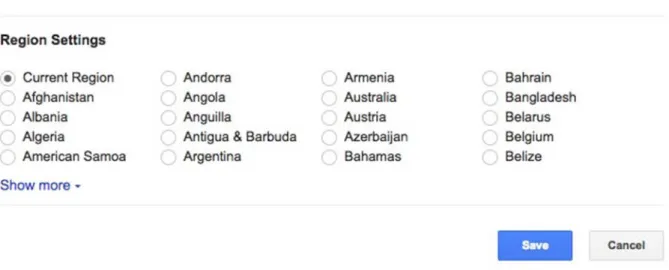
These concerns are exacerbated by the opaque nature of most personalisation algorithms and the lack of regulation protecting the users [23]. In some cases, providers offer a weak form of algorithmic transparency by telling users at least some of what the personalisations are based on — search or purchase history, location, etc. — and may provide some control to users about what is considered in the algorithmic decisions. For example, Amazon lets users exclude purchases from consideration, and Google lets users exclude their search history from the computations (see Figure 2). These are all forms of usage transparency. In the absence of third-party verification of these explanations however concerns have been raised that incomplete transparency regarding the reasons for a personalisation outcome can be misleading [80].
Figure 2: A portion of Google’s 'Search Settings' page, United States version.
There are further concerns over the use of targeted advertising in connection to personalised content. This is discussed next, in the context of the Cambridge Analytica case.
![Figure 4: Machine Learning Modelling Process [135]](https://thumb-us.123doks.com/thumbv2/123dok_us/361470.2539825/41.892.166.658.136.602/figure-machine-learning-modelling-process.webp)
![Figure 5: Machine-generated decision tree for diagnosing Breast Cancer [132]](https://thumb-us.123doks.com/thumbv2/123dok_us/361470.2539825/42.892.131.776.130.478/figure-machine-generated-decision-tree-diagnosing-breast-cancer.webp)
![Table 1: Distinguishing characteristics of Rules and Principles by 'dimensions' [183]](https://thumb-us.123doks.com/thumbv2/123dok_us/361470.2539825/49.892.111.772.625.833/table-distinguishing-characteristics-rules-principles-dimensions.webp)

