Gutierrez Alcantara, Flor Monica (2013) Building a
performance measurement internal auditing framework
for the ISO 9001 quality management system. PhD
thesis, University of Nottingham.
Access from the University of Nottingham repository:
http://eprints.nottingham.ac.uk/13353/1/Thesis_final_version_may_2013.pdf Copyright and reuse:
The Nottingham ePrints service makes this work by researchers of the University of Nottingham available open access under the following conditions.
· Copyright and all moral rights to the version of the paper presented here belong to the individual author(s) and/or other copyright owners.
· To the extent reasonable and practicable the material made available in Nottingham ePrints has been checked for eligibility before being made available.
· Copies of full items can be used for personal research or study, educational, or not-for-profit purposes without prior permission or charge provided that the authors, title and full bibliographic details are credited, a hyperlink and/or URL is given for the original metadata page and the content is not changed in any way.
· Quotations or similar reproductions must be sufficiently acknowledged.
Please see our full end user licence at:
http://eprints.nottingham.ac.uk/end_user_agreement.pdf A note on versions:
The version presented here may differ from the published version or from the version of record. If you wish to cite this item you are advised to consult the publisher’s version. Please see the repository url above for details on accessing the published version and note that access may require a subscription.
Building a Performance Measurement Internal
Auditing Framework for the ISO 9001 Quality
Management System
Flor Mónica Gutiérrez Alcántara, BEng., MEng.(Hons.)
Thesis submitted to the University of Nottingham for the
degree of Doctor of Philosophy
ii
This thesis is dedicated to the memory of my father
I never dreamt that I would get to be The creature that I always meant to be But I thought in spite of dreams
You d be sitting somewhere here with me
(Tennant & Lowe, 1990)
iii
ABSTRACT
During the last two decades, ISO 9000 standards have become one of the most important management approaches in the world. Currently, the standards are used by more than one million companies in more than 170 countries. ISO 9001 audits are the most widely used performance measurement (PM) method to assess ISO 9001 quality management systems (QMS). However, in recent years the effectiveness of ISO 9001 quality auditing has been questioned for: (1) only focusing on compliance; (2) failing to detect problems in products and processes; (3) failing to predict QMS failures; and (4) failing to provide added value to organisations.
To overcome these problems, two main conversations have taken place in the literature. The first advocates changing the current compliance focus of auditing for a performance oriented one, to promote improvements in business processes and the QMS. The second theme seeks to develop different methods, guidelines, tools and techniques to improve auditing practice. In order to generate a change of focus from compliance towards improvement, some recent research has also advocated incorporating concepts and techniques from the PM field into the ISO 9000 world. However, there have been no substantial previous attempts to provide internal quality auditing with a performance focus, which was the aim of this research. Hence, this thesis intends to establish how ISO 9001:2008 certified organisations can better measure their QMS performance using internal audits.
In order to provide answers to this question, an empirical study using mixed methods research was conducted. Firstly, the current state of the art of the ISO 9001:2008 internal auditing process was determined using a mixed methods study, including two surveys of 272 ISO 9001 experts and 25 interviews. This allowed the identification of the current problems that ISO 9001 certified organisations face when conducting audits, as well as the impacts on the performance of the QMS due to deficient internal auditing. Secondly, using the statistical technique of path analysis, a model identifying the relationships between internal audit problems and their impacts on QMS performance was developed. The model indicated that an intricate network of individual and organisational deficits link auditing and QMS
performance. F A for
conducting ISO 9001:2008 internal audits with a focus on the performance of the QMS was developed. The procedure was thoroughly tested and validated by a further mixed methods study, including three in-depth case studies and a survey of 174 ISO 9001 auditors. Although some minor changes were recommended, the results of the Audit+ validation were encouraging, showing that PM approaches can be successfully incorporated into the ISO 9001 world, to help organisations to better measure their QMS performance.
iv
ACKNOWLEDGEMENTS
I wish to express my gratitude to all those who helped make this research possible. First of all, I would like to thank Dr. James Tannock for directing this thesis. His guidance and support were crucial to the completion of this work, I will always be indebted to him. I am also indebted to Dr. Kim Tam, who made important contributions to this work and to Professor Bart McCarthy and Dr. Ram Ramanathan who reviewed this research throughout its initial development and enriched it with their valuable comments.
It would not have been possible to make this thesis without the strong support of Dr Mercedes Irueste, Jorge Davila, Rafael Rodríguez at the Mexican Institute of Standardisation and Certification (IMNC), who helped me at every stage of this research. Similarly, without the support of Dr Pedro Morales at the National Autonomous University of Mexico (UNAM) this thesis would not have been possible. I am also deeply indebted to all the ISO experts who helped me throughout this research: Charles Corrie from the British Standards Institution (BSI) and ISO/TC 176; Joana dos Guimarães Sá from the Portuguese Association for Certification (APCER); Sean McCurtain from ISO/CASCO; José Luis Valdés from the Spanish Association for Standardisation (AENOR) and ISO/TC 207; Tony Di Palma from the International Certification Network (IQNet); René Wasmer from the Swiss Association for Quality
and Management Systems (SQS); C F L ‘ Q
Assurance; David Fenn and Samantha Hicks from the British Assessment Bureau; Neil Hannah from the certification arm of the British Standards Institute (BSI); Sandy Sutherland and Sara Walton from the British Quality Assessment and Management Committee (QS1); Professor Kevin Foley from the Australian Quality Committee; Irene Barberena from the National Autonomous University of Mexico (UNAM); Bob Alisic from the ISO/TC 176; Veronica Castellanos from Jas Forwarding; Ariel Mendieta from the Mexican Institute from Standardisation and Certification (IMNC); Javier Alain Morones from the Mexican Council for Culture and Arts (CONACULTA); Alejandro Kasuga and Aldo Verde from Yakult; Dr Suemi Rodríguez and Dr Esther Agacino from the National Autonomous University of Mexico (UNAM) at Cuautitlán; Miguel Ángel Reyes from SPS; Paulina Alvarado from the Mexican Centre for Technology Development (CIATEC); Graciela León from the Mexican Standards Office (DGN); Dr. Nydia Lara from the National Autonomous University of Mexico (UNAM); and Alejandro Vigueras from the Mexican Institute for Petroleum (IMP).
Finally, I would like to thank the Mexican Council for Science and Technology (CONACYT) and the Mexican Government who believed in the importance of this research for helping Mexican organisations. Thank you for making this research possible.
v
TABLE OF CONTENTS
ABSTRACT ... iii
ACKNOWLEDGEMENTS ... iv
TABLE OF CONTENTS ... v
LIST OF FIGURES ... x
LIST OF TABLES ... xi
ABBREVIATIONS ... xii
CHAPTER 1 ... 1
INTRODUCTION ... 1
1.1 Background ... 11.2 The research gap and research question ... 6
1.3 Research objectives ... 6
1.4 Scope, intended audience and contribution of the research ... 7
1.5 Structure of the thesis ... 8
CHAPTER 2 ... 9
THE ISO 9000 FAMILY OF INTERNATIONAL QUALITY MANAGEMENT
SYSTEMS STANDARDS ... 9
2.1 The ISO 9000 family of international standards ... 10
2.1.1 Background ... 10
2.1.2 The ISO 9000 standards ... 11
2.1.3 The ISO 9000 QMS process-based model ... 13
2.1.4 The ISO 9000 PM system ... 15
2.1.4.1 Management reviews ... 16
2.1.4.2 Customer satisfaction measurement... 19
2.1.4.3 Audits ... 20
2.2 The state of the art of the ISO 9001 audit process ... 23
2.2.1 The debate between compliance versus performance ... 27
2.2.2. The current trends to improve internal quality audits ... 31
2.3 Conclusions of the chapter ... 34
CHAPTER 3 ... 35
THE PERFORMANCE MEASUREMENT FIELD ... 35
3.1 Background ... 36
3.2 The PM System ... 39
vi
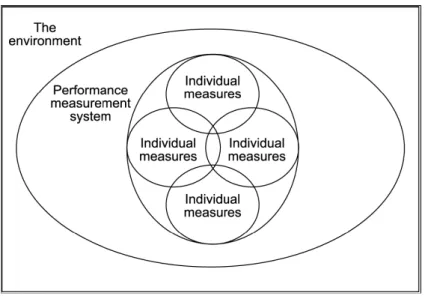
3.2.2. The PM system as an entity ... 41
3.2.3 The PM system and its environment ... 43
3.3 The relationship between the PM field and the ISO 9000 world ... 46
3.4 Conclusions of the chapter ... 49
CHAPTER 4 ... 50
RESEARCH METHODOLOGY ... 50
4.1 Theoretical foundations and research philosophy ... 51
4.2 Research design ... 53
4.3 The identification and explanation of the current position ... 55
4.3.1 The quantitative mixed method: surveys ... 60
4.3.2 The qualitative mixed method: semi-structured interviews ... 63
4.3.3 Construction of a path model to understand the relationship between audit problems and their impact on QMS performance ... 65
4.4 The development of the procedure for conducting ISO 9001:2008 audits to measure QMS performance ... 66
4.4.1 The qualitative research method: case study research ... 67
4.4.2 The quantitative research method: survey ... 70
4.5 Conclusions of the chapter ... 71
CHAPTER 5 ... 73
THE CURRENT STATE OF THE ART OF ISO 9001:2008 INTERNAL AUDITS: A
MIXED METHODS APPROACH ... 73
5.1 The quantitative mixed method: surveys ... 74
5.1.1 Survey instrument pilot testing ... 74
5.1.2 Survey samples ... 75
5.1.3 Data analysis ... 77
5.2 The qualitative mixed method: semi-structured interviews ... 87
5.2.1 The interviewees perspective ... 87
5.2.2. Summary of the findings ... 92
5.3 Merging the two methods ... 92
5.5. Conclusions of the chapter ... 102
CHAPTER 6 ... 103
A PATH MODEL TO UNDERSTAND THE RELATIONSHIP BETWEEN AUDIT
PROBLEMS AND THEIR IMPACT ON QMS PERFORMANCE ... 103
6.1 Research hypotheses and methodology... 104
6.2 Data analysis ... 108
6.3 Results ... 110
vii
CHAPTER 7 ... 117
PROPOSAL OF A PROCEDURE FOR CONDUCTING ISO 9001:2008 AUDITS
WITH A FOCUS ON QMS PERFORMANCE ... 117
7.1 Rationale for the development of the procedure ... 118
7.2 The procedure ... 119
7.2.1 Rationale of performance auditing ... 120
7.2.2 Purpose of the procedure ... 122
7.2.3 Scope of the procedure ... 123
7.2.4 Responsibility and authority ... 123
7.2.5 Description of activities ... 123 7.2.6 Records ... 128 7.2.7 Appendices ... 128 7.2.8 Identification of changes ... 128 7.2.9 Bibliography ... 128 E ... 128
7.4 Conclusions of the chapter ... 129
CHAPTER 8 ... 130
TESTING THE AUDIT+ PROCEDURE ... 130
8.1 Approach to testing ... 131
8.1.1 Case study approach ... 131
8.1.2 Investigating the wider applicability of Audit+ by a survey ... 132
8.2 Case studies ... 133
8.2.1 Background of the selected case studies ... 133
8.2.2. Execution of the case studies ... 134
8.2.3 The evaluation of the procedure ... 137
8.2.3.1. Feasibility ... 137
8.2.3.2. Usability ... 137
8.2.3.3. Utility ... 139
8.2.4 Summary of the findings from the cases ... 145
8.3 Survey ... 146
8.3.1 Background of the workshops ... 146
8.3.2 Survey instrument pilot testing ... 148
8.3.3 Survey sample ... 148
8.3.4 Data analysis ... 148
8.3.5 Summary of the results of the survey ... 155
8.4 Conclusions of the chapter ... 155
CHAPTER 9 ... 156
CONCLUSIONS ... 156
9.1 The research process ... 157
viii
9.3 Contribution to the body of knowledge ... 164
9.4 Limitations of the study and further research ... 165
9.4 Conclusions ... 167
REFERENCES ... 168
APPENDICES ... 180
APPENDIX A ... 181
THE INTERNAL AND THIRD PARTY AUDITING PROCESSES ... 181
APPENDIX B ... 185
LIST OF INTERVIEWEES ... 185
APPENDIX C ... 188
SURVEY QUESTIONNAIRES AND RESULTS OF THEIR PILOT ... 188
APPENDIX D ... 205
INTERVIEW PROTOCOLS ... 205
APPENDIX E ... 207
INTERVIEWS CONTENT ANALYSIS ... 207
APPENDIX F ... 223
THE AUDIT+ PROCEDURE ... 223
APPENDIX G ... 255
FEEDBACK FORM FOR REVIEWING THE PROCEDURE... 255
APPENDIX H ... 256
FEEDBACK FROM EXPERTS ABOUT THE PROCEDURE ... 256
APPENDIX I ... 263
CASE STUDY PROTOCOL OF THE PILOT CASE ... 263
APPENDIX J ... 266
CASE STUDY REPORT OF THE PILOT CASE ... 266
APPENDIX K ... 278
SUMMARY OF THE CASE STUDIES ... 278
Case X1... 278
Case X2... 281
Case X3... 283
APPENDIX L ... 287
ix
APPENDIX M ... 292
QMS AND QUALITY TOOLS AND TECHNIQUES ... 292
x
LIST OF FIGURES
Figure 1.1 The ISO 9000 performance measurement system ... 2
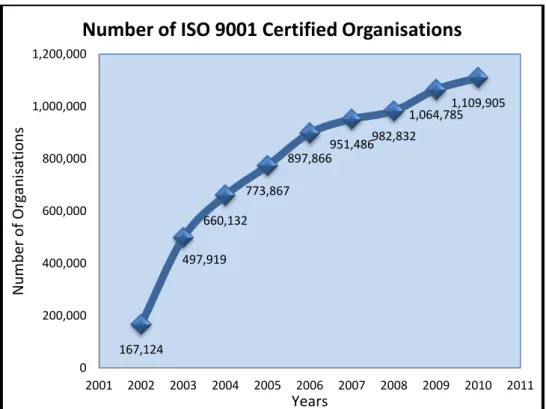
Figure 2.1 The growth of ISO 9001 certification ... 13
Figure 2.2 Generic schematisation of a process ... 13
Figure 2.3 The ISO 9000 QMS process-based model ... 14
Figure 2.4 ISO 9000 PM methods for QMS ... 16
Figure 2.5 Overlap of ISO 9001 PM methods ... 17
Figure 2.6 Management review flowchart ... 18
Figure 3.1 A framework for PM system design ... 39
Figure 3.2 The balanced scorecard ... 42
Figure 3.3 A framework for performance measurement design ... 43
Figure 3.4 The Pettigrew change management framework ... 44
Figure 3.5 The relationship of critical factors affecting a PM system... 45
F T conditions of the environment ... 47
Figure 4.1 The epistemology and theoretical perspectives of this research ... 52
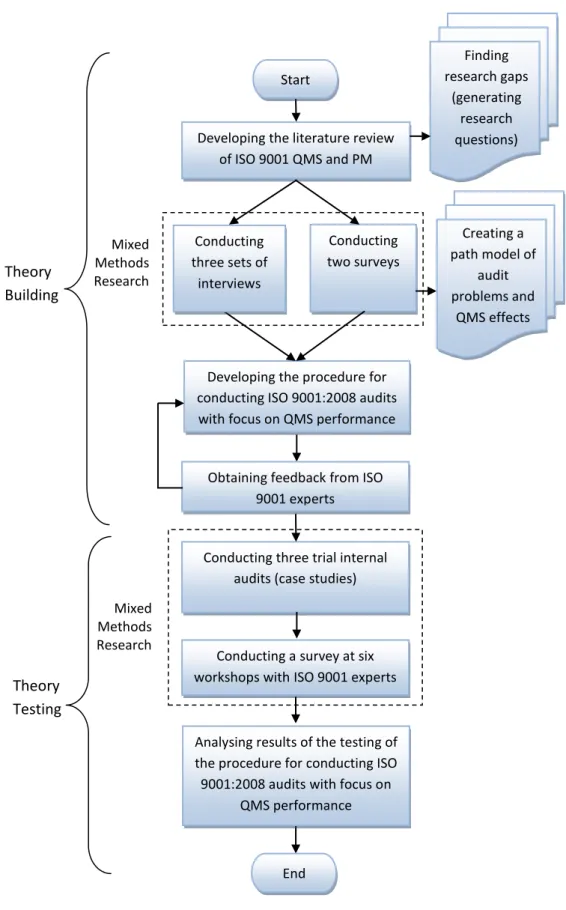
Figure 4.2 Flow diagram of the research design of this study ... 56
Figure 4.3 The triangulation design ... 58
Figure 4.4 Concurrent data analysis procedures in triangulation ... 59
Figure 4.5 Identification of the ISO 9001 audit actors by survey ... 61
F O I“O ... 76
Figure 5.2 Improvement approaches implemented with the ISO 9001 standard ... 77
F C CB ... 84
F C CO ... 85
F ‘ D C B A I“O rgeted performance ... 86
F ‘ D pay A I“O ... 87
Figure 6.1 Postulated path diagram of relationships between audit problems and their impacts on the QMS ... 106
Figure 6.2 Revisited path diagram of the relationships between audit problems and their impacts on QMS performance ... 112
Figure 7.1 Typical QMS documentation hierarchy... 118
Figure 7.2 Structure of the procedure for conducting ISO 9001:2008 audits with a focus on performance (Audit+) ... 120
Figure 7.3 The framework for performance measurement of ISO 9001:2008 QMS ... 121
Figure 7.4 Performance Auditing Triangle (Audit+ Triangle) ... 122
Figure 8.1 Demographic profile of survey respondents ... 149
xi
LIST OF TABLES
Table 2.1 Audit problems indentified in the literature in the period 2002-2012 ... 26
Table 2.2 Main impacts on the QMS and organisations due to poor auditing as reported in the literature during the period of 2002-2012 ... 27
Table 3.1 The multiple dimensions of quality, time, cost and flexibility ... 40
Table 3.2 The individual performance measures for QMS ... 46
Table 4.1 Summary of the surveys and interviews conducted for the triangulation stage ... 65
Table 5.1 D C B CB“ ... 75
Table 5.2 Demographic profile of the Certified Organisations CO“ ... 75
Table 5.3 Main reasons why CO decided to implement an ISO 9001 QMS... 76
Table 5.4 The standards, methods, guidelines and tools that ISO 9001 CO use to conduct internal audits ... 79
Table 5.5 The stages/tasks of the ISO 19011 internal audit process that present certified organisations with the most problems ... 79
Table 5.6 Problems that organisations face when conducting ISO 9001 audits (mean of both surveys) ... 80
Table 5.8 Impacts on QMS performance due to audit problems (both datasets) ... 81
Table 5.10 Actions needed to improve ISO 9001 internal audits ... 83
Table 5.11 PM techniques used by certified organisations ... 84
Table 5.12 Mean of individual performance measures ... 86
Table 5.13 Classification of interviews ... 88
Table 5.14 Feedback from interviews with external auditors and CB managers ... 89
Table 5.15 Feedback from interviews with internal auditors, quality managers and ISO 9000 consultants ... 90
Table 5.16 Feedback from interviews with ISO/TC 176 experts ... 92
Table 5.17 Comparison matrix of quantitative vs. qualitative data regarding the current problems that the ISO 9001 internal audit process is facing ... 96
Table 5.18 Comparison matrix of quantitative vs. qualitative data regarding the impacts on the QMS due to problems in internal audits ... 99
Table 5.19 PM techniques and models used by CO according to interviewees ... 101
Table 6.1 Path analysis of audit problems and their impacts on QMS performance ... 111
Table 6.2 Decomposition for each path illustrated in Figure 6.2 ... 113
Table 7.1 Example of an Audit+ report - Internal process assessment ... 126
Table 8.1 Background of the participant organisations in the Audit+ testing ... 134
Table 8.2 Comparison of the results of the two previous internal audits and the Audit+ regarding improvement opportunities ... 140
Table 8.3 Criteria for assessing Audit+ through semi-structured interviews ... 141
Table 8.4 List of the Audit+ workshops ... 146
Table 8.5 Feasibility assessment of the Audit+ procedure ... 150
Table 8.6 Usability assessment of the Audit+ procedure ... 152
xii
ABBREVIATIONS
BEM Business Excellence Models
BSI British Standards Institution
CB Certification Bodies
CBS Certification Bodies Survey
CMMI Capability Mature Model Integration
CO Certified Organisations
COS Certified Organisations Survey DIS Draft of International Standard FDIS Final Draft of International Standard IAF International Accreditation Forum
ISO International Organisation for Standardisation ISO/CASCO ISO Technical Committee for Conformity Assessment ISO/COPOLCO ISO Technical Committee for Consumers
ISO/DEVCO ISO Technical Committee for Developing Countries IS0/TC ISO Technical Committee
ISO/TC 176 ISO Technical Committee for Quality Assurance and Quality Management
ISO/TC 207 ISO Technical Committee for Environmental Management
KPIs Key Performance Indicators
MS Management systems
PM Performance Measurement
QM Quality Management
QMS Quality Management Systems
SME Small and Medium Enterprises
1
CHAPTER 1
INTRODUCTION
1.1 Background
Quality Management is a major business activity which has developed strongly in recent decades. The most important themes of Quality Management (QM) are: Total Quality Management (TQM), Six Sigma, the Business Excellence Models and Quality Management Systems (QMS). This study is focussed on QMS, which is defined as a
management system to direct and control an organization
(ISO 9000, 2005, pp. 8). The purpose of a QMS reference points to ensure that every time a process is performed the same information, methods, skills and controls are used and applied in a consistent D In addition to internal benefits, organisations that have implemented a QMS are able to demonstrate that they have the capabilities to supply the same goods and services to clients all around the world. Those organisations with certifications to a recognised QMS such as ISO 9001 are able to export their products to international markets more easily than those that do not have it. During the last two decades the ISO 9000 family of international standards has become the most successful QMS in the world (Martínez-Costa et al., 2009). More than 1 million companies in around 170 countries have implemented the standards (ISO Survey, 2010). Furthermore, it has been taken as the basis for many other management systems, such as the Capability Maturity Model Integration (CMMI) for IT and the Telecommunications TL 9000 QMS.
One of the reasons for the success of the ISO 9000 QMS is its approach that customer requirements, define processes that contribute to the achievement of a product which is acceptable to the customer, and
I“O H I“O QM“
can become a foundation for increased customer satisfaction through continuous improvement, leading to increased competitiveness for the organisation. In fact,
Dale (2007 I“O QM“
framework on which to build a company-wide approach to a process of continuous (pp. 281). Although ISO 9001 does not specifically require the improvement of product and process, it states that a certified company "shall continually improve the effectiveness of the quality management system through the use of the quality policy, quality objectives, audit results, analysis of data,
2
C F
purpose, the standard includes clauses which address different levels of scrutiny towards product, processes and QMS (i.e. Clauses 8.2.3, 8.2.4 & 5.6.3). Figure 1.1 suggests how the QMS improvement process could help to enhance processes and products through its Performance Measurement (PM) System.
Adapted from ISO 9001:2008
Figure 1.1 The ISO 9000 performance measurement system
The ISO 9001 standard requires that Certified Organisations (CO) implement controls, to assure that they are appropriately assessing each level of their QMS. Hence, companies must implement and maintain three QMS performance measurement methods: top management reviews, customer satisfaction measurement and audits. In theory, the implementation of these methods ensures
QM“
with the information needed to improve the QMS (ISO 9001, 2008). Nevertheless, organisations, especially Small and Medium Enterprises (SME), experience considerable problems with the measurement of their QMS (Briscoe et al., 2005). This is due to the lack of standards and guidelines regarding QMS performance measurement. For example, even if the ISO 9004:2009 standard suggests that organisations should implement key performance indicators (KPIs) in their processes to control their operations, many organisations face problems in identifying and implementing KPIs for effectively measuring their QMS performance because the ISO 9004 does not address how to implement KPIs.
The three QMS performance measurement methods (management reviews, customer satisfaction measurement and audits) are granted the same importance within the ISO 9001 standard. Nevertheless, in practice, audits are the most
QM“
are used to assess the effectiveness of the quality management system and to I“O 5). Audits are used by Certification Bodies (CB) to grant ISO 9001 certification (external audits), as well as
Management Reviews Customer Satisfaction Audits
QMS
Processes
Product
3
being used as a self-assessment tool by certified companies (internal audits). This dual usage of audits makes them the primary PM method in the ISO 9000 context. Moreover, the use of audits as a PM method for QMS is reinforced in the management process of the ISO 9001 standard, where the results of both internal and external audits are used as an input for conducting management reviews (see ISO 9001:2008, Clause 5.6.2).
Hence, audits are of great importance for evaluating the performance and improvement of QMS in CO, and this is precisely the reason why companies and CB need to be certain that they are conducting effective audits, which are providing the top management with correct inputs. Nevertheless, during the last decade the current auditing process, internal and external, has been criticised for failing to:
focus on anything more than compliance and missing a clear improvement approach (Karapetrovic &Willborn, 2000a, 2000b, 2001b and 2002; Dalgleish, 2003; Ni &Karapetrovic, 2003; Beckmerhagen et al., 2004; Privka, 2004; Biazzo, 2005; Rajendran &Devadasan, 2005; Power &Terziovski, 2007; Terziovski &Power, 2007; Kaziliunas; 2008; Alic &Rusjan; 2010 and 2012; Gupta, 2010);
detect problems in products/services and processes (Dalgleish, 2002; Karapetrovic &Willborn, 2002; Beckmerhagen et al., 2004; Vouzas &Gotzamani, 2005; Kaziliunas; 2008; Gupta, 2010);
identify faults in the QMS (Karapetrovic &Willborn, 2001a; Ni &Karapetrovic, 2003; Beckmerhagen et al., 2004; Alic &Rusjan; 2010 and 2012; Le Saux, 2010); and
provide added-value to organisations (Liebesman, 2002; Karapetrovic &Willborn, 2002; Ni &Karapetrovic, 2003; Beckmerhagen et al., 2004; Privka, 2004; Rusell, 2004; Biazzo, 2005; Power &Terziovski, 2005 and 2007; Alic &Rusjan; 2010 and 2012; Gupta, 2010).
Due to the fact that this thesis aimed to explore the relationship between QMS performance and the audit process, this study was focused on internal auditing whose primary objective is detecting problems and improvements in the QMS (ISO 9001, 2008). Because the main objective of external auditing is assessing compliance with the standard, this type of auditing was not included in the scope of this thesis. Askey and Dale (1994) were the first to list detailed failings of the internal audit process at an ISO 9000 certificated organisation. They found nine specific failings ranging from lack of auditor commitment to lack of action on audit results. Later, Karapetrovic and Willborn (2000b) identified 16 failings in quality auditing, mostly at a detailed level (such as absence of opening meetings and deficient verification of evidence). This list included failing in both types of audits: internal and external. Comparing these two very different lists for internal audit failures shows that it is possible to catalogue a number of audit process failings from empirical studies or anecdotal sources, that these may be established at different levels of detail, but also suggests that such lists are not readily related to theory.
4
Acknowledging these problems with the audit process, the ISO Technical Committee for Quality Assurance and Quality Management (ISO/TC 176) published in 2002 a revisited audit standard for quality and environment management systems, the ISO 19011 which is used to conduct internal and third party audits. Also, in 2003 the
ISO/TC 176 and I A F IAF I“O
A P G
audit guidance for the ISO 9001 standard. The first output of this group was the “ M I“O Auditing Practices Group, 2004b), which proposed the identification of organisational objectives to be assessed in the audit against organisational results, using a gap analysis. The ISO 9001 Auditing Practice Group expected to solve most of the failures in the audit process including a PM oriented approach to audits with the Sydney Model.
Nevertheless, in 2004 Beckmerhagen et al. (2004) released a study which incorporated the 16 audit problems identified by Karapetrovic & Willborn (2000b) in the context of the new ISO 19011 standard. However, because ISO 19011 was only one year old at the time, it is likely that other audit problems were missed because the audit process in organisations using the new standard was not mature enough. Due to these problems, some researchers have tried to deepen the understanding of the audit process in two main areas: 1) compliance versus performance focus auditing (Karapetrovic & Willborn 2000a and 2000b; Biazzo, 2005; Power & Terziovski, 2007; Kaziliunas, 2008; Alic & Rusjan, 2010)); and 2) developing methods, guidelines, tools and techniques to improve internal auditing as a whole (Kazuliunas, 2008; Mors, 2008; Bernardo et al., 2010; Alic & Rusjan, 2010 and 2012; Wells, 2010; Le Saux, 2010).
However, the impetus among scholars and practitioners for trying to identify and understand the problems in internal auditing has apparently been lost. It is important to resume this initial conversation on the basis of empirical research because only with accurate knowledge about the current state of the art of the internal audit process, can effective methods to improve it be developed.
The ISO 9001 audit performance measurement problem
The main criteria for conducting both internal and third party audits are within the ISO 9001 standard itself. Organisations may include other criteria when conducting internal audits, but the standard identifies the minimum which they must use. For CB, the ISO 9001 standard provides the mandatory criteria when conducting certification or surveillance audits. Unfortunately, the ISO 9001 standard is insufficient to correctly evaluate the performance of a QMS, due to its lack of clarity
F
requires an organisation to
to whether the organization has met customer requirements. The methods for
5
In an ISO 9001 audit, the auditor will ask what kinds of methods for evaluating customer satisfaction the organisation has implemented in order to fulfil this requirement. Nevertheless, using only clause 8.2.1 as audit criteria, he/she will not be able to determine if the methods or outputs are correct because the clause is vague and does not specify them. Unfortunately, the ISO 9001 standard contains many clauses such as 8.2.1, where the lack of clarity and focus does not permit the performance or improvement of the QMS to be correctly evaluated using audits. As a result, some ISO 9001 CO are dissatisfied with the current audit results they are receiving (Power & Terziovski, 2007).
With the current ISO 9001 audit criteria, the auditor is only able to evaluate QMS compliance with the ISO 9001 standard, rather than measure QMS performance. This compliance audit approach misses the opportunity to effectively add value to organisations, because it does not help them to improve their QMS. Indeed, in a study by Power & Terziovski (2007) on third party auditors and ISO 9001 CO in Australasia, it was found that clients perceive that third party auditors mainly focus on checking compliance with the requirements of the standard instead of profoundly reviewing the whole QMS in order to provide feedback that helps organisations to improve their performance. Power & Terziovski (2007) also argue that the audit approach of compliance with the ISO 9001 standard should be expanded to focus upon organisational performance, as part of a continuous improvement process.
Some academics and practitioners have tried to tackle this problem by providing a more PM oriented focus for the ISO 9000 series of standards. For instance, Najmi & Kehoe (2000) attempted to connect the ISO 9000 QMS with the PM body of knowledge by developing a PM system framework for ISO 9000 CO. However, the proposed framework was not properly linked with ISO 9001 clauses and referred to an outdated version of the standard.
Biazzo (2005) undertook a study in order to understand to what extent third party auditors focus on PM when they conduct external audits. The author concludes that
I“O
ceremonial conformity and made it necessary to move from the traditional B also highlights that a performance focus in audits is necessary to provide credibility to ISO 9001 certification.
Despite the advances achieved with these studies, the main problem of how to improve ISO 9001 audits (internal and third party) through changing the focus from compliance to performance still persists in the body of QMS knowledge and in audit practice.
6
1.2 The research gap and research question
Hence, in order to change the approach from compliance to PM auditing, the ISO 9000 family must upgrade its approach to provide additional PM audit criteria (for internal and external auditing). The recent ISO 9004:2009 standard includes some relevant PM concepts. However, as these are not specified in the current certification standard (ISO 9001:2008), it is not clear how organisations should implement and evaluate them. Furthermore, in the absence of explicit PM audit criteria, auditors may be basing their decisions on subjective judgements. This is a very important consideration in the context of internal audits1 because top management needs internal audits to provide valuable information in order to review and change the QMS and company strategies and policies; this is not possible with the current compliance focus of ISO 9001 internal audits.
Thus, an academic research study which aims to clarify how to measure the performance of the ISO 9001:2008 QMS through internal audits is needed. In the practical context, this requires the development of a performance oriented internal audit approach, and this research attempts to cover this gap through answering the following question:
H I“O QM“
perform
Thus, the aim of this work is to help ensure that ISO 9001:2008 certified companies will be able to use internal audits to correctly measure the performance of their QMS.
In order to answer the research question other intermediate questions related to the current start of the art of the internal audit process and its linkages with PM need to be addressed:
1. What problems do ISO 9001 certified organisations experience when conducting internal audits?
2. How do audit problems impact product/services, processes and QMS performance?
3. How and to what extent are the internal audit problems affecting the performance of the QMS?
4. What are the PM techniques currently most used by ISO 9001:2008 certified organisations?
1.3 Research objectives
In order to answer these questions, the following specific research objectives were identified:
1
7
1. Conduct a literature review which identifies the key concepts of both the QMS and PM bodies of knowledge together with relevant operations management theories;
2. Investigate the views of ISO 9001 experts in order to establish the current state of the art of internal audit practice, including the state of PM knowledge, awareness and application within this professional group; 3. Develop a procedure for conducting ISO 9001 internal audits with a focus
on the performance of QMS; and
4. Validate the procedure by means of trial internal audits using the proposed document in real company audits and investigate its generalisation by a survey of ISO 9001 experts.
1.4 Scope, intended audience and contribution of the
research
This research aims to develop and validate a generic internal audit procedure for the ISO 9001 standard. Nevertheless, this study does not attempt to develop any type of international standard or mandatory requirements for ISO 9001 CO. Therefore, the research has the following scope, intended audience and contributions:
Scope
It is focused on the application of PM (i.e. the procedure for conducting ISO 9001 audits with a focus on the performance of the QMS) at company level in the ISO 9001 internal audit context, using existing PM approaches.
Intended audiences
The results of this work may be interesting for two types of audience, academics and practitioners. The study regarding the current state of the art of internal audits should be of interest to quality and operations management scholars. Whereas, the developed internal audit procedure is designed to be used by internal auditors, quality managers, top management representatives, top management, consultants and ISO 9000 experts. Also third party auditors and certification managers may be interested in using the procedure to conduct an impartial assessment of the QMS when required by CO.
Contributions
The proposed contributions of this work in terms of theoretical knowledge and practical application will be:
Theoretical
1. A literature review covering the ISO 9000 core of standards, their relationship with the PM field and the creation of a new synthesis between these two bodies of knowledge;
2. An assessment of the current state of the art of the ISO 9001:2008 internal audit process;
8
3. A path model of the relationships between the current internal audit problems and their impacts on the performance of both the QMS and organisations; and
4. The identification of how ISO 9001:2008 QMS can be improved through a novel application of PM approaches in the ISO 9001 audit context, based on empirical data.
Practical
5. The development, refinement and testing of a procedure to conduct ISO 9001:2008 audits with a focus on the performance of the QMS.
1.5 Structure of the thesis
This work is divided into the following chapters for ease of understanding:
1. The introduction, describes the research background as well as the research objectives, scope, intended audience and structure of the thesis; 2. A literature review about the ISO 9000 family of international standards
highlights the research gap;
3. A literature review about the field of performance measurement (PM) and how some of the concepts from PM can be incorporated into ISO 9000 QMS;
4. The methodology used to address the research question;
5. An explanation of the current state of the art of ISO 9001:2008 internal audits from the data gained by conducting a mixed methods study including two surveys and 25 interviews with ISO 9000 experts;
6. A path model to understand the relationships between the current internal audit problems and their impacts on the performance of both QMS and organisations;
7. A proposal of a procedure for conducting ISO 9001:2008 internal audits with a focus on the performance of the QMS;
8. The testing of the procedure thorough mixed methods research including three in-depth case studies and a survey of 174 ISO 9001 auditors; and 9. The conclusions which discuss the research outcomes and findings, the
accomplishment of research objectives, limitations, the contribution to the body of knowledge and proposes future research.
9
CHAPTER 2
THE ISO 9000 FAMILY OF INTERNATIONAL QUALITY
MANAGEMENT SYSTEMS STANDARDS
The aim of this chapter is to conduct a review of the literature published during the last decade in relation to ISO 9001 internal audits, in order to address the first research objective of this work:
conduct a literature review which identifies the key concepts of both the QMS and PM bodies of knowledge together with relevant organisational theories
To provide the reader with the necessary background to delve into this subject, the first section of this chapter, 2.1, is dedicated to the ISO 9000 family of international standards. It describes how ISO standards are developed, how the ISO 9000 series is constituted and the impact of ISO 9001 in organisations.
Section 2.2 explains the current state of research in the ISO 9001 audit process, including the current debate about compliance versus performance auditing and the current trends to try to improve the internal audit process.
10
2.1 The ISO 9000 family of international standards
2.1.1 Background
The International Organisation for Standardisation (ISO2) is the body responsible for developing and publishing ISO 9000 standards. The ISO is a non-governmental network of 161 national standards institutes, one member per country. Since its foundation in 1947, it has developed over 17500 international standards on different subjects. Currently, the organisation publishes 1100 new standards every year and it
I“O 12).
The ISO develops new standards in response to sectors and stakeholders that express a need for them. The proposals of new standards are typically communicated to one of the ISO's national members, who proposes the new work item to the relevant ISO Technical Committee (ISO TC) developing standards in that area (ISO, 2010). When work items do not relate to existing ISO TC, ISO national members may propose to set up a new ISO TC to address it (ISO, 2010).
To be accepted for development, a proposed work item must receive majority support from the participating members of the ISO TC which, amongst other criteria, verify that the proposed item responds to an international need and will be suitable for implementation worldwide (ISO, 2010).
ISO standards are developed by ISO TC, (subcommittees or project committees) comprising experts from industrial, technical and business sectors as well as by representatives of government agencies, testing laboratories, consumer associations, non-governmental organisations and academic circles (ISO, 2010). Experts participate as national delegates, chosen by the ISO national member body for the country concerned. National delegations are required to represent not just the views of the organisations in which their participating experts work, but those of other stakeholders too. National delegations are usually based on and supported by national mirror committees to which the delegations report.
The ISO also has policy development committees addressing the standardisation needs of developing countries (DEVCO), consumers (COPOLCO) and conformity assessment (CASCO). These committees may recommend the development of new standards for their stakeholder groups, which are then submitted to the approval process described above, or in the case of CASCO, develop new standards itself (ISO, 2010).
The national delegations of experts of an ISO TC meet to discuss until they reach consensus on a draft agreement. The organisations in liaison also take part in this
2A I O “
IO“ E OIN F Organisation Internationale de
Normalisation I“O G
11
work. When they have agreed a draft, the resulting document is circulated as a draft international standard (DIS) to of all ISO's member bodies for voting and comment. If the voting is in favour, the document, with eventual modifications, is circulated to the ISO members as a final draft international standard (FDIS). If that vote is positive, the document is then published as an international standard (ISO, 2010).
For a document to be accepted as an ISO international standard, it must be approved by at least two-thirds of the ISO national members that participated in its development and not be disapproved by more than a quarter of all ISO members who vote on it (ISO, 2010).
2.1.2 The ISO 9000 standards
During the 20th century, organisations increasingly needed to demonstrate to customers that their products were reliable and processes to manufacture them were effective and controlled. Dale (2007) traces the origins of QMS standards to
U“ D Defence NATO
for greater reliability in purchased products and a reduced reliance on customer or
T U“
NATO military standards were taken as the basis for national civil QMS standards
and of supplier auditing
J
pooling results of audits into some common data bank, and customers generally were unwilling to accept the findings of audits conducted by personnel other than their own. The resulting multiple audits were especially burdensome to small
I B “
Institution (BSI) published the British Standard BS 5750 for quality systems which was developed from the original defence standards. Later, this standard was taken as the basis for the first set of international standards for QM, the ISO 9000 family (Dale & Oakland, 1991), which set the scene for the current global system of ISO 9001 accreditation, third party auditing and certification with international customer acceptance.
The vast majority of ISO standards are highly specific to a particular product, material or process. However in 1987, the ISO, through the ISO Technical Committee of Quality Management and Quality Assurance (ISO/TC 176), published the ISO 9000 family of standards, its first QMS Standards. The ISO 9000 family has experienced some changes during last 25 years and nowadays it is integrated by:
16 published standards; internet based documents;
the ISO Handbook: ISO for small business; and
the ISO Handbook: Guide to the integrated use of management systems standards.
12
Nevertheless, the most used standards of the family are the following four, also
ISO 9000:2005 Quality management systems - Fundamentals and vocabulary;
ISO 9001:2008 Quality management systems - Requirements;
ISO 9004:2009 Managing for the sustained success of an organization - A quality management approach; and
ISO 19011:2011 Guidelines for auditing management systems3.
The core standards are designed to complement each other despite the fact that ISO 9001 is the only certifiable standard in the family. The ISO 9000 standard provides the whole set of QMS principles and the reference vocabulary used in the core standards. Whereas ISO 9001 specifies the QMS requirements that organisations need to achieve, in order to demonstrate their ability to provide product and services that fulfil customers and regulatory requirements. ISO 9004 provides complementary guidance for improving the performance of the organisation and satisfaction of stakeholders. Finally, ISO 19011 is used to conduct internal and external audits.
ISO 9001 is a generic4 standard and it is the only one in the family for which organisations can be certified although certification is not a compulsory requirement of the standard (ISO 9000 Essentials, 2009). Until now, the ISO has published four versions of the ISO 9001 standard (ISO 9001:1987, ISO 9001:1994, ISO 9001:2000 and ISO 9001:2008). It is expected that another version will be published in 2015.
According to the ISO Survey (2010), in December 2003 there were 497,919 ISO 9001:2000 certified organisations in 146 countries but at the end of 2011 this figure had increased to more than 1 million companies in 175 countries (see Figure 2.1). Martínez-Costa, et al. (2009) point out that the number of ISO 9001:2000 certified organisations has grown in the period of 2003 to 2006 at a higher rate than economic growth. This increase is a clear indication of the importance of the standard in the QMS field. In fact, the number of organisations using the standard should be higher than the official ISO figure if it is considered that many organisations may be using the standard without being certified. As De Ascarraeta (2008) states, an organisation is free to implement the standard for the internal and external benefits that it brings to them and their clients without being certified, because it is not a requirement of the standard to grant the certification.
Many authors have studied the benefits of ISO 9000 series implementation and their effects on organisational performance. While some, especially earlier, research
3
A complete list of the whole family of ISO 9000 standards and supporting documents can be found at www.iso.org/iso/iso_technical_committee_176
4I
13
suggested that organisations did not improve their performance (e.g. Terziovski et al., 1997; Martínez-Lorente and Martínez-Costa, 2004), most recent studies agree that it does (Naveh et al., 2004; Corbett et al., 2005; Martínez-Costa et al., 2007; Singh, 2007; Benner and Veloso, 2008; Martínez-Costa et. al., 2009; Hannah, 2011). One possible explanation for this change, are the improvements to the 2000 version
I“O T organisations to
define, control and manage their QMS as a set of interrelated processes, in order to develop products and services to satisfy customer needs. A good QMS helps to stabilise the internal organisational environment, enabling the operational and business processes of the organisation to operate repeatably and efficiently, with minimum waste and non-conformance, within a business environment that may be
turbulent, in ord
Figure 2.1 The growth of ISO 9001 certification
2.1.3 The ISO 9000 QMS process-based model
One of the major changes to the ISO 9000 core of standards in 2000 was the inclusion of the process approach. A process is a set of interrelated activities which use resources to transform inputs to outputs (ISO 9001, 2008). Figure 2.2 shows a generic schematisation of a process.
Figure 2.2 Generic schematisation of a process 167,124 497,919 660,132 773,867 897,866 951,486 982,832 1,064,785 1,109,905 0 200,000 400,000 600,000 800,000 1,000,000 1,200,000 2001 2002 2003 2004 2005 2006 2007 2008 2009 2010 2011 N u m b e r o f O rg an is a ti o n s Years
Number of ISO 9001 Certified Organisations
Process
14
To illustrate this concept, consider the number of basic activities that any organisation conducts to buy a product. Firstly, the buyer reviews and analyses the purchase-order requested (input). Later, he or she requests the prices of the product from suppliers. Then, he performs a comparison table and selects the best supplier. Finally, he agrees with the supplier the delivery date and conditions, which the buyer has to register in the purchase-order (output). This series of steps that describes the purchase of a product is called the of purchase. Frequently in organisations, the output of one process becomes the input of another. Using the same example, one of the outputs of the purchase process is the purchase-order which in turn is the input to the inspection process. The systematic identification, management and control of the processes and their interactions within an
organisation are known as the I“O
The ISO 9000 core of standards state that organisations can group all of their processes into four main sets: product realisation; resource management; measurement, analysis and improvement; and management responsibility. This process configuration is known as the ISO 9000 QMS process-based and is shown in Figure 2.3.
Source: ISO 9000:2005
Figure 2.3 The ISO 9000 QMS process-based model
The cycle of quality management in the ISO 9000 QMS process-based model begins with the understanding of customer requirements, which is the input of the product realisation process. Therefore, the output of this process will be the product or service expected by the customer. The product realisation process (section 7 of ISO 9001) interacts closely with the processes of resource management (section 6) and
15
measurement, analysis and improvement (section 8). In the resource management process all those activities related to infrastructure, equipment, supplies and human resources will be involved. If this process is not performing correctly, then the product realisation process will hardly deliver the desired result. In a similar way, if the measurement, analysis and improvement process is not efficient, the organisation will not be able to detect failures in its QMS, which will lead to deficient products and processes, high reworking costs and customer dissatisfaction. The cycle of quality management continues with the above processes interacting with the process of management responsibility (section 5). The top management of the organisation has to have an explicit commitment to address all of the activities regarding the QMS, from establishing the quality policy of the organisation to providing the necessary resources for the QMS. Finally, the last element of the ISO 9000 QMS process-based model is the continual improvement of the QMS. In the ISO 9000 context, all of the QMS processes must be measurable and quantifiable to ensure the system operates properly and is improving as expected. The ISO 9000 core of standards establishes three methods to measure the performance of the QMS: management reviews, customer satisfaction measurement and audits. In the following paragraphs these methods will be discussed.
2.1.4 The ISO 9000 PM system
The ISO 9000 core of standards considers three different levels of PM: product,
processes and QMS (i.e. clauses 8.2.3, 8.2.4 & 5.6.3). Performance measures of product are mainly stated in section 8 of the ISO 9001 standard, whereas different performance measures of processes can be found in sections 4-8, depending on the type of process. Section 8 mainly addresses QMS PM methods, however management review is found in section 5.
Since its 2000 version, the ISO 9001 standard considers four methods of measuring QMS performance in organisations: management reviews (clause 5.6), customer satisfaction measurement (clause 8.2.1), internal audits (clause 8.2.2) and external audits (third party assessment) (see Figure 2.4). It is important to point out that ISO 9004:2009 suggests another two additional performance methods: self-assessment (clause 8.3.4) and benchmarking (clause 8.3.5). Nevertheless, because these methods are not included in ISO 9001:2008 as mandatory requirements, organisations usually do not implement them.
16
Source: ISO 9001:2008 and ISO 9004:2009 Figure 2.4 ISO 9000 PM methods for QMS
In the following sections, the three methods for measuring the performance of ISO 9001 QMS will be analysed. The discussion is limited to ISO 9001 because the requirements of this standard are used to grant certification, whereas ISO 9004 is an optional standard. Additionally, a discussion about the importance of audits in the ISO 9001 context, as a method of self-assessment for CO, as well as external evaluation is included.
2.1.4.1 Management reviews
Management reviews are a mandatory requirement of the standard and this requirement is part of the process of management responsibility. This process requires that the top management of the organisation is committed to the development, implementation and improvement of the QMS of the organisation for gaining and maintaining the certification (clause 5.1). In order to demonstrate their commitment, top management have to conduct the following mandatory activities (ISO 9001, 2008):
communicating to all the personnel of the organisation the importance of meeting customer, regulatory and statutory requirements;
establishing the quality policy;
ensuring that quality objectives are established; ensuring the availability of resources; and conducting management reviews.
Regarding the last point, the standard also states that top management is responsible for conducting periodic management reviews. In fact, clause 5.6.1 states that (ISO 9001, 2008, pp. 5): Performance Measurement Methods for QMS Internal Audits (8.2.2) ISO 9001 External Audits (3rd Party Assessment) ISO 9001 Management Reviews (5.6) ISO 9001 Customer Satisfaction (8.2.1) ISO 9001 Self-assessment (8.3.4) ISO 9004 Benchmarking (8.3.5) ISO 9004
17 T
system, at planned intervals, to ensure its continuing suitability, adequacy and effectiveness. This review shall include assessing opportunities for improvement and the need for changes to the quality management system,
However, the standard does not state how top management should conduct a management review. The ISO 9001:2008 standard only provides guidance about the possible inputs (clause 5.6.2) and outputs (clause 5.6.3) that top management should consider when conducting a review. Regarding the inputs, the ISO 9001:2008 standard states that management reviews should include: results of audits, customer feedback, process performance and product conformity, status of preventive and corrective actions, follow-up actions from previous management reviews, changes that could affect the quality management system, and recommendations for improvement. It is important to highlight that audit results and customer satisfaction feedback, which are also the other QMS PM methods, are key inputs to management review. Hence, there is natural overlap in the ISO 9000 QMS PM methods to complement each other (see Figure 2.5).
Figure 2.5 Overlap of ISO 9001 PM methods
After conducting the management review activities, it is expected that top management will take actions related to (ISO 9001, 2008):
improvement of the effectiveness of the QMS and its processes; improvement of the product related to customer requirements; and resource needs.
There is no official ISO standard for conducting management reviews. However, the flowchart shown in Figure 2.6, describes how a typical management review would be conducted.
As far as ISO 9004 is concerned, the concept of management reviews has slightly changed in the 2009 version. Management reviews are now included in the new clause 8.5 entitled ‘eview of information from monitoring, measurement and
Management Reviews Audits Customer Satisfaction Measurement
18
C specifically requires that top management use a systematic approach to reviewing available information regarding (ISO 9004, 2009):
monitoring of the organisation's environment;
measurements of the organisation's performance, including KPIs; assessments of the integrity and validity of the measurement processes; results of internal audit, self-assessment and benchmarking activities; risk assessment; and
feedback from customers and other interested parties.
Figure 2.6 Management review flowchart
Start
Establish the date of the management review
Determine of the objectives and scope of the review
Appoint the reviewers
Check information
Create management report
Conduct the presentation for top management
Establish corrective, preventive and improvement actions
Conduct follow-up
End
Results of audits; customer feedback; process performance and product conformity; status of preventive and corrective actions; follow up from previous
management reviews; changes that could affect the QMS
Improvement actions and resources needed
19
Thus, the focus of ISO 9004 now goes beyond the traditional approach of the ISO 9001 standard, with the inclusion of input elements such as KPIs, measurements of mance and risk assessment. Therefore following the ISO 9004 guidance, top management would be provided with a greater range of objective performance information, not only regarding the QMS but the organisation as a whole.
2.1.4.2 Customer satisfaction measurement
Customer satisfaction measurement is one of the most important features of the ISO 9000 QMS concept. In fact, the principle of 'customer focus' is the first quality management principle of the ISO 9000 core of standards (ISO 9000, 2005). The ISO 9000 standard provides a description of this principle (ISO 9000, 2005, pp. v):
O d understand
current and future customer needs, should meet customer requirements
Also, the customer focus principle is used as the QM“
of the ISO 9000 core. Moreover, the rationale for QMS section points out that QMS
ISO 9000, 2005, pp. 1).
Customers require products which satisfy their needs and expectations. These needs and expectations are expressed in product specifications and are commonly known
O
measure customer satisfaction in order to improve their product and processes because customer requirements change constantly (ISO 9000, 2005). The ISO 9000 standard argues that a QMS can provide the framework for the continuous improvement of the product and processes of the organisation to increase the probability of enhancing customer satisfaction (ISO 9000, 2005). However, these
intentions are not clearly expressed customer s of
ISO 9001, which merely states (ISO 9001, 2008, pp.12):
management
systems, the organization shall monitor information related to customer
As with the management review, the customer satisfaction measurement clause of ISO 9001 is very general and does not provide guidelines on how to accurately measure customer satisfaction. Clause 8.2.1 only includes one note clarifying that monitoring customer perception can be done through different methods such as customer satisfaction surveys, customer data on delivered product quality, user opinion surveys, lost business analysis, compliments, warranty claims and dealer reports. However, no more guidance is provided in the standard on ways to fulfil the ISO 9001:2008 requirement.
20
As far as the ISO 9004 standard is concerned, its previous version had a special section that provided guidance about methods to measure customer satisfaction. However in the 2009 version, this section has disappeared and the customer satisfaction concept has been included as a method for collecting information regarding KPIs of organisation (clause 8.3.1). This change may be partly due to the fact that the ISO/TC 176 developed the technical specification ISO/TS 10004 in 2010, addressing precisely the topic of customer satisfaction.
2.1.4.3 Audits
Finally, the last method for measuring the performance of QMS in the ISO 9001 context is audits. The ISO 9000:2005 defines the word (ISO 9000, 2005, pp. 16):
evidence and evaluating it objectively to determine the extent to which
There are two different types of audits, internal and external. Internal audits are those conducted by, or on behalf of, the organisation itself for management review and other internal purposes (ISO 9000, 2005). Whereas external audits are also classified into second and third party audits. Second party audits are conducted by parties having an interest in the organisation, such as customers. Third party audits are conducted by external organisations, such as certification bodies (see Figure 2.7). An ISO 9001 organisation has to conduct internal audits on a periodic basis (ISO 9001, 2008) and has to receive periodic (usually annual) third party audits to maintain its certification (IAF MD5, 2009). It is important to consider that, despite third party audits not being a requirement of the standard, most organisations use them to give their clients confidence that the organisation is capable of delivering products or services that will meet their requirements (ISO 9000 Essentials, 2009). Moreover, as Karapetrovic & Willborn (2000a) state, quality audits are of great importance to managers who can call for an internal or external audit to conduct an impartial examination of the compliance of the QMS with the standard, as well as an
QM“
That is why nowadays, conducting quality audits is one of the most important activities for ISO 9001 organisations. In fact, Power & Terziovski, (2007) suggest that one of the most significant developments in the operations management field, over the last twenty years, has been the implementation of quality audits to measure the effectiveness of QMS in organisations.
21
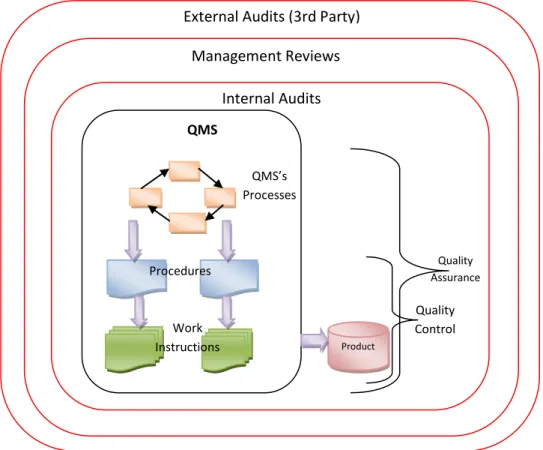
Figure 2.7 The relationships of PM methods in ISO 90015
Conducting internal audits has been a mandatory requirement of ISO 9001 since 1984. The 2008 version includes clause 8.2.2 which states (ISO 9001, 2008, pp. 12):
T
determine whether the quality management system
a) conforms to the planned arrangements (see 7.1) [those related to develop all the processes needed for realising the products and services], to the requirements of this international standard and to the quality management system requirements established by the organization, and
b) is effectively implemented and maintained.
An audit programme shall be planned, taking into consideration the status and importance of the processes and areas to be audited, as well as the results of previous audits. The audit criteria, scope, frequency and methods shall be defined. The selection of auditor and conduct of audits shall ensure objectivity and impartiality of the audit process. Auditors shall not audit their own work.
5
Customer satisfaction measurement is usually documented as a process in a ISO 9001 QMS, however it may be a method or procedure
QM“ Processes QMS Product Procedures Work Instructions Quality Control Quality Assurance Internal Audits Management Reviews External Audits (3rd Party)
22
A documented procedure shall be established to define responsibilities and requirements for planning and conducting audits, establishing records and reporting results.
The logic behind the standard requiring organisations themselves to audit their QMS is to verify that the organisations are managing their processes effectively or, as the ISO 9001 has stated, to check that they are fully in control of their activities (ISO 9000 Essentials, 2009). It is important to note that ISO 9001 contains several clauses to control and assure the quality of products, services and processes on a daily basis. When carrying out audits, it is necessary to verify that these clauses are correctly carried out, this will ensure that the QMS is operating properly. Thus, quality audits are oriented towards measuring QMS performance, process capability and product quality.
Moreover, the ISO 9001 standard demands that organisations implement a procedure in order to conduct internal audits and an annual auditing program which includes internal and external audits. The standard also suggests that organisations use the ISO 19011 standard for developing these tasks.
The ISO 19011:2011 Audit Standard
ISO 19011:2011 is a generic set of guidelines for auditing management systems. The standard was prepared by the ISO/TC 176 and provides guidance on the management of audit programmes, the conduct of internal or external audits of management systems, as well as on the competence and evaluation of auditors. The ISO 19011 standard is divided into four main clauses (ISO 19011, 2011):
Clause 4describes the principles of auditing. These principles help the user to understand the nature of auditing;
Clause 5provides guidance on managing audit programmes. This section covers such issues as assigning responsibility for managing audit programmes, establishing the audit programme objectives, coordinating auditing activities and providing sufficient audit team resources;
Clause 6provides guidance on conducting audits of management systems, including the selection of audit teams; and
Clause 7provides guidance on the competence needed by an auditor and describes a process for evaluating auditors.
The 19011 standard was the result of the integration of six previous standards (ISO 10011-1:1990, ISO 10011-2:1991, ISO 10011-3:1991, ISO 14010:1996, ISO 14011:1996 and ISO 14012:1996) and it was released as a consequence of continuous user pressure to integrate the audit process of the ISO 9001 and the ISO 140006 standards (Mors, 2008). When it was first rel