2018 International Conference on Computer, Communication and Network Technology (CCNT 2018) ISBN: 978-1-60595-561-2
Name Entity Recognition and Binary Relation
Detection for News Query
Dan YE
Department of Computer Science and Information Engineering, National Taiwan University Taipei, Taiwan
Keywords: Named entity extraction, Binary relation detection, News query, MITIE, Stanford classifier, Weka.
Abstract. This paper proposes an innovative slant on name entity recognition (NER) and binary relation detection (BRD) for current news search and retrieval. The main contribution is to apply MITIE tools to find relevant news according to the given news stories. BRD can retrieve relevant news according to the relationship between given query term and news dataset. Another salient contribution is to accomplish news story agency classification with Stanford classifier and automatic document classification tool WEKA. Given training data, many news stories with agency class labels, WEKA can predict and identify the test news stories’ class labels. The evaluation of relevant news is based on MAP@100 in 20 queries given 160000 news story dataset. The retrieved results of all the queries can demonstrate up to 100 relevant stories in terms of theirs IDs. The evaluation of news agency classification is based on accuracy with correct classified news stories. Scoring with NER yields the better performance.
Introduction
This paper applies multiple kinds of advance information retrieval and extraction tool in the state of art information extraction tools. The MITIE [1] includes tools for performing named entity extraction and binary relation detection as well as tools for training custom extractors and relation detectors.
For query generation, it is common in the IR literature [2] the inverse document frequency idf of a term is a function of the frequency f of term in the collection and the number N of documents in the collection. They use the function log (N/(f+1)).
Baseline algorithm A1-BASE [3] is a simple tf.idf based algorithm. It weights each term by tf.idf, where tf is the frequency of term in the text segment T. This result in larger weights for terms that appear more frequently in T, and larger weights for more distinctive terms of the news story is more likely to find articles related to the story. The baseline algorithm returns two terms with largest weight as the query.
Another baseline algorithm is that Term is weighted by tf.idf2. Named entities are important for issuing focused queries. Idf component is more important than tf. The stem of a word is approximated by taking the first 5 letters of the word. Congress and congressional would share the same stem, congr. The intention is to aggregate the weight of terms that describe the same entity. The weight of a term is c.tf.idf2, where c=1 if term was a noun and c=0.5 otherwise. We use this weighting scheme since nouns are often more useful in queries than others. The weight of a stem is the sum of the weights of its terms.
To issue a query, algorithm determines the two top-weighted stems and top-weighted term for each of these stems. These two terms form the query. Stems are computed by stemming both words. It finds the top-weighted term for two top-weighted stems.
The main contributions can be summarized as below.
1). The innovative application of NER and BRD into news retrieval is proposed. 2). MITIE tools have been applied to find relevant news.
MITIE tools to support Chinese news retrieval.
4). The large amount of news data in text format or html format should change them into ARFF files that Weka can read. Weka automatic tool input file default format are ARFF files.
5). The detailed analysis of several classifiers in Weka tool is presented.
The rest of the paper is organized as follows. In section 2, MITIE NER and BRD are elaborated. The analysis model for performance evaluation is also shown. Stanford classifier is employed in section 3. IllinoisSL structured prediction model is depicted in section 4. In section 5, WEKA makes prediction in agency labels, which is recapitulated. In section 6, the evaluation of NER model and WEKA prediction accuracy is analyzed. Experiment results and performance analysis of prediction classifier algorithm are carried out. In section 7, related work is discussed. Finally, conclusions are reiterated in the last section 8.
Named Entity Recognition
The state of art classifier methods have been successfully applied, e.g. Bayesian classifiers, decision trees, k-Nearest Neighbor (kNN), rule learning algorithms, neural networks, fuzzy logic based algorithms, maximum entropy and support vector machines.
Multi-label document classification becomes a popular research field. Three classifiers are successfully used for document classification: Naïve Bayes (NB), Maximal Entropy (ME) and Support Vector Machines (SVMs). Implement two approaches give the best classification scores. Automatic document classification includes document analysis, generation of document and class vectors based on document and class representatives, and matching document and class vectors to determine the class where a document belongs.
Stanford Word Segmenter
This tool can split Chinese text into a sequence of words based on some word segmentation standard. It is a Java implementation of the (Conditional Random Field) CRF-based Chinese Word Segmenter [4]. With external lexicon features [5], the segmenter segments more consistently and also achieves higher F measure when training and testing on the bakeoff data.
Stanford Named Entity Recognizer (NER)
Stanford NER [6] is a Java implementation of a Named Entity Recognizer. NER labels sequences of words in a text, which are the names of things, such as person and company names, or location names. It comes with well-engineered feature extractors for Named Entity Recognition, and many options for defining feature extractors. Included with good named entity recognizers for Chinese, particularly for the 3 classes (PERSON, ORGANIZATION, LOCATION), Chinese models trained on just the 160000 news story as Chinese training data.
Stanford NER is also known as CRFClassifier. The software provides a general implementation of (arbitrary order) linear chain Conditional Random Field (CRF) sequence models. That is, by training models on labeled data, you can actually use this code to build sequence models.
The software provided is similar to the baseline local+Viterbi model in [7], but adds new distributional similarity based features (in the distSim classifiers). The distributional similarity features in some models can improve performance.
NER GUI
Type./ner-gui.sh on MacOSX to run an NER GUI demonstration. Then using the top option from the classifier memu, load a CRF classifier Stanford classifiers directory of the distribution. Then load a text file from the File menu, finally press the Run NER button to tag the text on named entity. Stanford Named Entity Tagger needs to load CRF classifier.
Binary Relation Detector
Stanford Classifier [8]
A classifier is a machine learning tool that will take data items and place them into one of k classes. A probabilistic classifier, like this one, can also give a probability distribution over the class assignment for a data item. This software is a Java implementation of a maximum entropy classifier. Maximum entropy models are otherwise known as softmax classifiers and are essentially equivalent to multiclass logistic regression models (though parameterized slightly differently, in a way that is advantageous with sparse explanatory feature vectors). In other words, this is the same basic technology that you're usually getting in various of the cloud-based machine learning APIs. The classification method is described in [9].
The software requires Java 8. As well as API access, the program includes an easy-to-use command-line interface, ColumnDataClassifier, for building models. Its features are especially suited to building models over text data, but it also supports numeric variables.
IllinoisSL [10]
IllinoisSL is a Java library for learning structured prediction models [11]. It supports fast parallelizable variants of commonly used models like structured Support Vector Machines and structured Perceptron. The library consists of a core learning module and several applications, which can be executed from command-lines, a well-known C++ implementation of Structured SVM [12] in one-sixth of its training time. Comparison with other structured learning libraries, IllinoisSL is efficient, general, and easy to use.
Given a set of training data
D
=
{
x
i,
y
i}
i=1 l
, where instances are annotated with structured outputs , and
Y
iis a set of feasible structures for the i-th instance. Structured SVM learns aweight vector by solving the following optimization problem:
where is a feature vector extracted from both input x and output y. The constraints force the model to assign higher score to the correct output structure than
y
i to others. is a slackvariable and we use L2 loss to penalize the violation in the objection function. IllinoisSL supports
two algorithms, a dual coordinate descent method (DCD) and a parallel DCD algorithm, DEMI-DCD. IllinoisSL also provides an implementation of Structured Perception. At each step, Structured Perception updates the model using one training instance (x
i,yi) by
where is a learning rate. This implementation includes the averaging trick.
IllinoisSL Library [13] provides command-line tools to allow users to quickly learn a model for problems with common structures, such as linear-chain, ranking, or a dependency tree. The user can implement a custom structured prediction model through the library interface. IllinoisSL requires users to implement IInstance, IStructure, Abstract FeatureGenerator, and AbstractInfSovler. IInstance includes the input x, e.g., sentence in POS tagging. IStructure includes the output structure y, e.g., tag sequence in POS tagging. AbstractFeatureGenerator contains a function FeatureGenerator to extract features
and for loss-augmented inference
In POS tagging, this class will include implementations of a Viterbi decoder and hamming loss. Once these classes are implemented, the user can seamlessly switch between different learning algorithms. IllinoisSL package contains implementations of several common NLP tasks including a sequential tagger, a cost-sentive multiclass classifier, and an MST dependency parser.
Weka Prediction Classifier
Weka [14] is a collection of machine learning algorithms for data mining tasks. The algorithms can either be applied directly to a dataset or called from own Java code. Weka contains tools for data pre-processing, classification, regression, clustering, association rules, and visualization. It is also well suited for developing new machine learning schemes.
The Weka machine learning is a modern platform for applied machine learning. Weka is an acronym, which stands for Waikato Environment for Knowledge Analysis. Weka makes learning applied machine learning easy, efficient and fun. It is a GUI tool that allows you to load datasets, run algorithms and design and run experiments with results statistically robust enough to publish.
Weka GUI allows you to output predictions [15] based on a previously saved model. After a data model has been saved, one can make predictions [16] for a test set, whether that set contains valid class values or not. The output will contain both the actual and predicted class. The AddClassificationfilter(packageweka.filters.supervised.attribute) can either train a classifier on the input data and transform this or load a serialized model to transform the input data.
For training the classifier, e.g., J48, on the input data and replacing the class values with the ones of the trained classifier. The Explorer section can save and load models article to setup the Explorer. Additionally, it is necessary to check the Output predictions options in the More options dialog. Right clicking on the respective results history item and selecting Re-evaluate model on current test set will output then the predictions as well (the statistics will be useless due to missing class values in the test set, so just ignore them).
Experiment Results and Evaluation
To test Chinese text, first run Stanford Chinese Word Segmenter, and then run NER on the output of that. The usage of MITIE examples cpp code is to implement relation detector to make evaluation on relevance of query news.
The performance results of the proposed evaluation scheme and highlight its advantage over NER and prediction classifier is evaluated in this section. Afterwards, the experiment-based accuracy for Weka OneR classifier model compared with different classifiers is presented.
For NER relevance detection [17-22], test sets are 20 queries based on MAP@100 evaluation. Mapi: mean value precision for query qi
(5) There are 1805 test news files and 16000 training news files labeled with news agency APD, CTS and LTN. For prediction classifier labels on test set should use accuracy as a criterion:
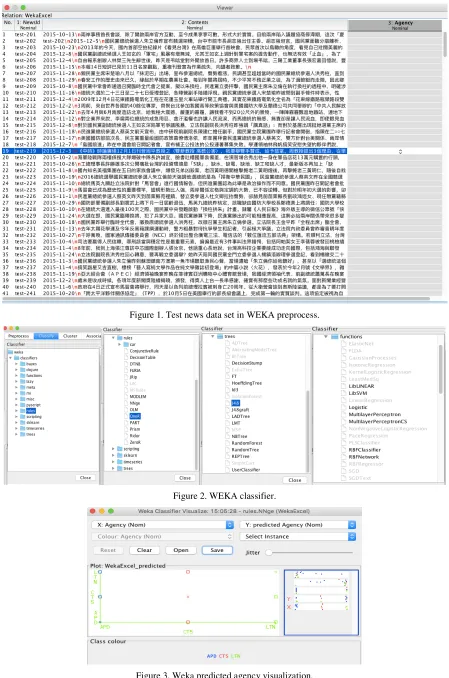
Figure 1. Test news data set in WEKA preprocess.
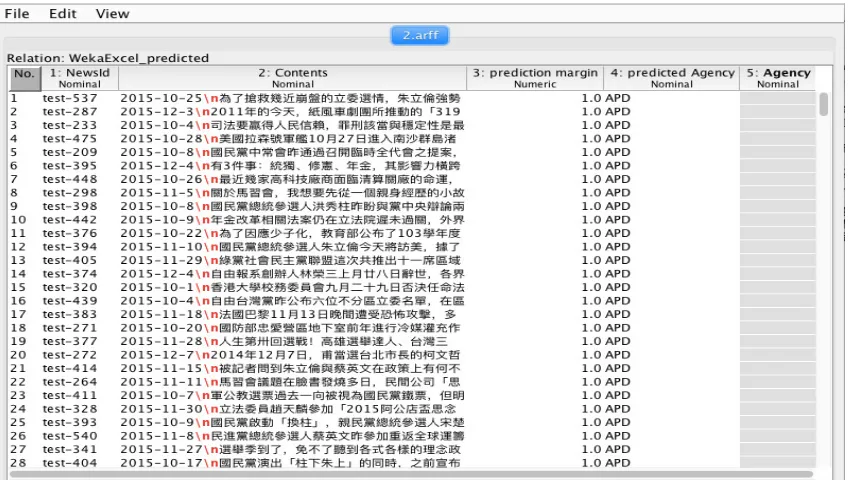
[image:5.612.81.530.63.741.2]Figure 2. WEKA classifier.
Figure 4. Predicted agency results in ARFF viewer.
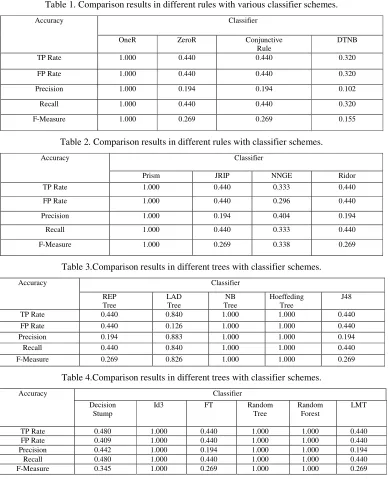
[image:6.612.94.517.422.642.2]Figure1 shows test news data sets input into WEKA preprocess system. Agency item is predicted content, which can be set up by manually with APD, CTS or LTN. Figure2 indicates that multiple classifier schemes in WEKA classification. Meantime, it can configure different functions such as LibLinear, LibSVM or RBFNetwork, RBFClassifier. Figure3 demonstrates that visualized classifier errors in graph representation with predicted agency. Figure4 describes that the final predicted results in news agency. Figure5 indicates that NNGE classifier output in several evaluation performance results.
Figure 5. NNGE classifier running results.
Rate, Precision, Recall, F-measure standard evaluation in different trees schemes, e.g. REPTree, LADTree, NBTree, HoeffedingTree, J48. NBTree and HoeffedingTree have superior performance than others. LADTree is better than REPTree and J48 schemes. The Latter two schemes possess the same performance results. Table.4 shows the comparison performance of TP Rate, FP Rate, Precision, Recall, F-measure standard evaluation in different trees schemes, such as DecisionStump, id3, FT, RandomTree, RandomForest, LMT. The statistics can be seen that RandomTree, RandomForest, and id3 have high performance than others. DecisonStump is better than LMT.FT and LMT also have same evaluation results in running experiments. All in all, we should choose which one scheme has the best overall performance among the tradeoff of all the accuracy criterions.
Table 1. Comparison results in different rules with various classifier schemes.
Accuracy Classifier
OneR ZeroR Conjunctive
Rule
DTNB
TP Rate 1.000 0.440 0.440 0.320
FP Rate 1.000 0.440 0.440 0.320
Precision 1.000 0.194 0.194 0.102
Recall 1.000 0.440 0.440 0.320
F-Measure 1.000 0.269 0.269 0.155
Table 2. Comparison results in different rules with classifier schemes.
Accuracy Classifier
Prism JRIP NNGE Ridor
TP Rate 1.000 0.440 0.333 0.440
FP Rate 1.000 0.440 0.296 0.440
Precision 1.000 0.194 0.404 0.194
Recall 1.000 0.440 0.333 0.440
F-Measure 1.000 0.269 0.338 0.269
Table 3.Comparison results in different trees with classifier schemes.
Accuracy Classifier
REP Tree LAD Tree NB Tree Hoeffeding Tree J48
TP Rate 0.440 0.840 1.000 1.000 0.440
FP Rate 0.440 0.126 1.000 1.000 0.440
Precision 0.194 0.883 1.000 1.000 0.194
Recall 0.440 0.840 1.000 1.000 0.440
F-Measure 0.269 0.826 1.000 1.000 0.269
Table 4.Comparison results in different trees with classifier schemes.
Accuracy Classifier
Decision Stump
Id3 FT Random
Tree
Random Forest
LMT
TP Rate 0.480 1.000 0.440 1.000 1.000 0.440
FP Rate 0.409 1.000 0.440 1.000 1.000 0.440
Precision 0.442 1.000 0.194 1.000 1.000 0.194
Recall 0.480 1.000 0.440 1.000 1.000 0.440
F-Measure 0.345 1.000 0.269 1.000 1.000 0.269
Related Work
summarization. The time-based summarization has also been studied [3], but to the best of our knowledge there is no prior work on time-based keyword extraction.
The just-in-time IR project at MIT [23] has focused on retrieving personal files such as notes and archived email messages that a user would currently find useful. This project first produced the Remembrance Agent, which looks at a document the user is editing in Emacs and matches fragments of this document such as the last 50 words against a corpus of personal files. The follow Margin Notes system performs a similar task, but observes the web pages that a user views in a web browser.
The research on keyphrase extraction [24] and specifically the algorithm in the language model for information retrieval by [25-29] is the most related to this work.
Conclusion
In this paper, WEKA creates prediction analysis method is proposed to make news classification. The key contribution is to choose the maximum prediction accuracy by comparing performance in different classifiers of WEKA. Experiment results were shown to demonstrate that MITIE NER and BRD could obtain better relevance performance. WEKA can make prediction more powerful in practice, which enjoys superior classified performance and accuracy.
References
[1]https://github.com/mit-nlp/MITIE
[2]G. Salton. The SMART System–Experiments in Automatic Document Processing. Prentice Hall, 1971.
[3]J. Allan, R. Gupta, and V. Khandelwal. Temporal summaries of news topics. In Research and Development in Information Retrieval, pages 10–18, 2001.
[4]Huihsin Tseng, Pichuan Chang, Galen Andrew, Daniel Jurafsky and Christopher Manning. 2005. A Conditional Random Field Word Segmenter. In Fourth Sighan Workshop on Chinese Language Processing.
[5]Pi-Chuan Chang, Michel Galley and Chris Manning. 2008. Optimizing Chinese Word Segmentation for Machine Translation Performance. In WMT.
[6]http://nlp.stanford.edu/software/CRF-NER.shtml
[7]Jenny Rose Finkel, Trond Grenager, and Christopher Manning. 2005. Incorporating Non-local Information into Information Extraction Systems by Gibbs Sampling. Proceedings of the 43nd Annual Meeting of the Association for Computational Linguistics (ACL 2005), pp. 363-370.
[8]http://nlp.stanford.edu/software/classifier.shtml
[9]Christopher Manning and Dan Klein. 2003. Optimization, Maxent Models, and Conditional Estimation without Magic. Tutorial at HLT-NAACL 2003 and ACL 2003.
[10]K.-W. Chang, S. Upadhyay, M.-W. Chang, V. Srikumar, D. Roth (preprint), IllinoisSL: A JAVA Library for Structured Prediction, arXiv:1509.07179v1 [cs.LG], 23 Sep 2015.
[11]A. C. Muller and S. Behnke. pystruct - learning structured prediction in Python. JMLR, 2014.
[12]K.-W. Chang, V. Srikumar, and D. Roth. Multi-core structural SVM training. In ECML, 2013.
[13]http://cogcomp.cs.illinois.edu/page/software_view/illinois-sl
[14]https://weka.wikispaces.com/Use+WEKA+in+your+Java+code
[16]http://www.ibm.com/developerworks/library/bd-javaweka/
[17]S. Robertson and H. Zaragoza. The probabilistic relevance framework: Bm25 and beyond. Found. Trends Inf. Retr., 3(4):333–389, 2009.
[18]V. Lavrenko and B. Croft. Relevance-based language models. In 24th ACM SIGIR Conference on Research and Development in Information Retrieval (SIGIR’01), 2001.
[19]J. Rocchio. Relevance feedback in information retrieval. In The SMART Retrieval System: Experiments in Au- tomatic Document Processing, pages 313–323. Prentice- Hall Inc., 1971.
[20]Y. Ganjisaffar, R. Caruana, and C. V. Lopes, QuickScorer: A Fast Algorithm to Rank Documents with Additive Ensembles of Regression Trees, In Proc. ACM SIGIR, pages 73–82, Santiago, Chile, 2015. ACM.
[21]L. Wang, J. J. Lin, and D. Metzler. Learning to efficiently rank. In Proc. ACM SIGIR, pages 138–145, 2010.
[22]L. Wang, J. J. Lin, and D. Metzler. A cascade ranking model for efficient ranked retrieval. In Proc. ACM SIGIR, pages 105–114, 2011.
[23]B. J. Rhodes. Just-In-Time Information Retrieval. PhD thesis, MIT Media Laboratory, Cambridge, MA, May 2000.
[24]P. D. Turney. Learning algorithms for keyphrase extraction. Information Retrieval, 2(4):303– 336, 2000.
[25]J. Ponte. A Language Modeling Approach to Information Retrieval. PhD thesis, Univ. of Massachusetts at Amherst, 1998.
[26]J. Lafferty and C. Zhai. Document language models, query models, and risk minimization for information retrieval. In 24th ACM SIGIR Conference on Research and Development in Information Retrieval (SIGIR’01), 2001.
[27] D. H. Miller, T. Leek, and R. Schwartz. A hidden Markov model information retrieval system. In 22nd ACM SIGIR Conference on Research and Development in Information Retrieval (SIGIR’99), pages 214–221, 1999.
[28]F. Song and B. Croft. A general language model for information retrieval. In 22nd ACM SIGIR Conference on Research and Development in Information Retrieval (SIGIR’99), pages 279– 280, 1999.