281
©IJRASET: All Rights are Reserved
Spectral Coding System for High Speed Optical
Communication Network
Ashish Hariyale1, Abhilash Sharma2
1, 2
Digital Communication Department, KNP College of science & Technology, Under RGPV, Bhopal
Abstract: This paper shows the development of new code for OCDMA system. The characteristics of code based on the unit cross correlation. The code is such that it follows the minimum cross correlation. The direct detection method is used to recover the information at the receiving end. The result and analysis shows that system has better performance compare to existing method such as MDW, RD Method. Simulation is performed at high data rates from 10Gbits/s to 20 Gbits/s.
Keywords: Communication Network, Optical Network, MS Code, MAI, Signal Processing, Unipolar Code, OCDMA
I. INTRODUCTION
In optical communication three multiplexing techniques available, define as WDM.TDM and OCDMA. In Optical code division multiple access technique, each user assigns a specific code in term of spectral chips. OCDMA network having the many advantages comparative to WDM, TDM. The OCDMA is a more secure network with easy availability at every corner of the optical network [1-2]. At the receiver end de correlate the code of the corresponding uses. The code of users is such that they possess the ideal in phase cross correlation[3]. There are various codes available on systems such as MDW, RD and MS code [4-6]. These codes are based on the ideal in phase unit cross correlation. The limited factor of these codes is longer length of code. So there is need of a new design of code with less complexity and shorter length. The proposed code having the ability of the shorter length of the code and apply with direct detection technique. The paper divides in four section I explore the design of code. Section II explains the mathematical analysis of the design. Section IV discusses the results and paper ends with the conclusion.
II. PROPOSEDMETHOD
The proposed code is characterized by the (L, W, λC) where the N length of code, W is the weight of code and λC is the ideal in phase cross correlation.
Code construction
The code construction is defined as (1) P weight is assigned to the first user
(2) The position of the weights of other user is arranged at the (q P1) 1 position.
The P is given as
1 2
1 1 2 K
K Even q
K
K Odd
(1)
(3) The weight of an even number of user is arranged in the right position from the last weight of first user, is given as
1 2
right
K q
Where K is the odd number of users
(4) The weight of an odd number of users is arranged in the left position of the first weight of first user, is given as1111II 1
1 2
Left
K q
282
©IJRASET: All Rights are Reserved
Figure1 Basics design of detection technique
Figure2 Encoder and decoder design of proposed code
Table 1. Code construction of N users.
λ1 λ2 . . . ΛL
User1 0 0 0 1 1 1 0 0 0 0
User2 0 1 1 1 0 0 0 0 …. ….
…… .. 0 0 0 0 1 1 1 …. ….
‘… … 0 0 0 0 0 , … … …
…. .. 0 0 0 0 0 0 , … …
UserN 1 …. …. …. …. …. …. 1 1 1
Table 2. Code construction of N=3, W=4 λ1 λ2 λ3 λ4 λ5 λ6 λ7 λ8 λ9
User1 0 0 0 1 1 1 1 0 0
User2 1 1 1 1 0 0 0 0 0
283
©IJRASET: All Rights are Reserved
III.MATHEMATICALANALYSIS
Gaussian approximation is used in calculation for analysis of system [6,7]. The Direct detection technique is applied code detection at the receiver end so we only consider the thermal noise (Rth) and shot noise (Rsn) in respect to PIIN. The SNR for
electrical signal is the average signal power to noise power.SNR
I/ R
Let CK(i) denotes the ith element of K user in this code. The following assumptions are made each light source spectrum is flat over
the bandwidth
vo v/ 2, vo– v/ 2
where is central frequency and ∆V is the optical source bandwidth in Hertz. Each powerspectral component has an identical spectral width. Each user has nearly equal power at the transmitter the power spectral density of the received signals can be given as
1 1 k sr k i k L kP
r v
d
c i rect i
v
(2)
0
2 2
0
2
2 2
v v
rect i u v v L i u v v L i
L L
(3)
( )
v
u v
L
(4)1,
0
( )
0,
0
v
u v
v
(5)
1 1 1 0 0 k srk k I k i
L
P
G v dv d C i C i rect i dv v
(6) 1 1 0 ( ) . . . k k sr k k k kP v v
G v dv d W d
v L L
(7)
2 21 1 1
0
( ) .
L k K
sr
l k K m m
i k M
P
G v dv C i d C i d c i
L v
(8)The value of 1
k k k d
is equal to the1 and for above then
0
sr
P
G v dv p
L
(9) The photo current I can be expressed as
0dd
I G v dv
(10)
sr dd P I L p (11)
The variation of photocurrent due to detection of an ideally un polarized thermal light can be expressed as
2 2 2
1 th
I I I
(12)
2 4
2 dd b n
L
K T B I eB I
R
284
©IJRASET: All Rights are Reserved
2
0
4
2 ( ) b n
L
K T B
I eB G v dv
R
(14)When all users transmitting 1 than probability of each user sending 1 is ½ then Eq. (13) from Eq.(9) become
2 4
( 1 )
sr b n
B
L
P eB K T B
I K p
L R
(15)
The number of users in basic code (N) is same as the weight (W) of code.
The signal to noise ratio of direct detection technique is given by the following equation
2 2
/
dd
SNR I I
(16) When putting Eq.(10) and Eq.(17) in Eq (19) then the new formula for SNR will be
2 2 2
2
( )
4 1
sr
sr b n
B
L
P p
L SNR
P eB K T B
p K
L R
R
R (17)
BER of design-
1
2 8
SNR BER erfc
(18) Typical parameters used in the calculation as below:
Photo detector quantum efficiency ( ) 0.6
Line-width broadband source (∆V) 3.75 THz Operating wavelength (k0) 1552 nm
Electrical bandwidth (B) 311 MHz Data bit rate (Rb) 622 Mbps
Receiver noise temperature (Tn) 300 K
Receiver load resistor (RL) 1030Ω
Responsivity ( ) 0.748
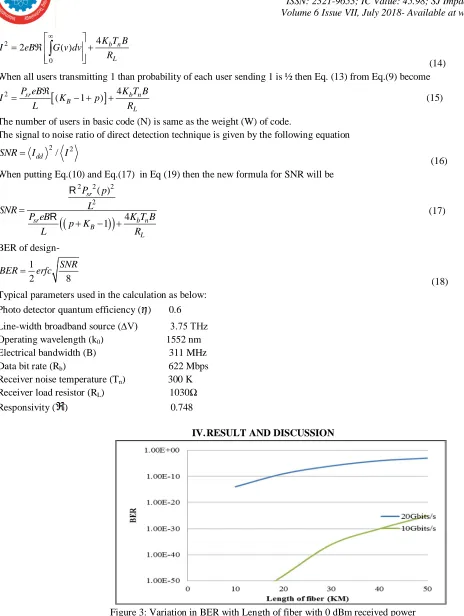
[image:4.612.43.507.40.656.2]IV.RESULT AND DISCUSSION
Figure 3: Variation in BER with Length of fiber with 0 dBm received power
285
[image:5.612.150.498.70.322.2]©IJRASET: All Rights are Reserved
Figure 4: Variation in BER with received power for 30 numbers of users
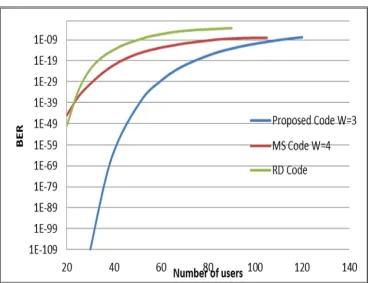
Figure 5: Variation in BER with number of users for 622Mbits/s data rate and -10dBm received power
V. CONCLUSION
[image:5.612.140.508.344.627.2]286
©IJRASET: All Rights are Reserved
REFERENCES
[1] Shin-Pin Tseng and Jingshown We, A new code family suitable for high-rate SAC OCDMA PONs applications,IEEE J. Select. Area Commun.,28, 2010,827-837.
[2] M. R. Kumar, S.S. Pathak and N.B. Chakrabarti, Design and performance analysis of code families for multi-dimensional optical CDMA,IET Commun.,3,2009, 1311-1320.
[3] M. Noshad and K. Jamshidi, Code family for modified spectral-amplitude-coding optical CDMA systems and performance analysis, J. Opt. Commun. Netw, 2 ,2010, 344-354.
[4] N. Ahmed, S.A. Aljunid, A. Fadil, R.B. Ahmad and M.A. Rashid, Performance enhancement of OCDMA system using NAND detection with modified double weight (MDW) code for optical access network, Optik., 124, 2013,1402 1407.
[5] M. H. Kakaee, S. Seyedzadeh, H.A. Fadhil,S.B.A Anas and Makhfudzah Mokhtar, Development of Multi-Service (MS) for SAC-OCDMA systems, Optics&LaserTechnology, 60, 2014, 49–55.
[6] H.A. Fadhil, S.A. Aljunid and R.B. Ahmad, Performance of random diagonal code for OCDMA systems using new spectral direct detection technique, J. Opt. Fiber Technol., 15,2009,283–289.
[7] T.H. Abd, S.A. Aljunid, H.A. Fadhil, R. Badlishah Ahmad and M.A.Rashid, New approach for evaluation of the performance of spectral amplitude coding-optical code division multiple access system on high-speed data rate, IET Commun., 6 (12), 2012, 1742–1749.
[8] S. Seyedzadeh, R. K. Z. Sahbudin, A. F. Abas and Siti Barirah Ahmad Anas , Weight optimization of variable weight ocdma for triple-play services: proc. 4th IEEE international conference on photonics (ICP), Melaka,2013, 99 - 101.
[9] N. Ahmed, S. A.Aljunid, R. B .Ahmad, Hilal A. Fadhil, Improvement of the bit error rate of a non-coherent OCDMA system for FTTH network applications, Opt Quant Electron, 45, 2013,1307–1318.