ISSN-L: 2501 - 1235 Available on-line at: www.oapub.org/edu
doi: 10.5281/zenodo.1465058 Volume 4 │ Issue 9 │ 2018
EFFECTS OF AN 8-WEEK INTERMITTENT AEROBIC EXERCISE
ON THE ELECTROCARDIOGRAM AND PHYSIOLOGICAL
PARAMETERS OF INSTITUTIONAL SECURITY
PERSONNEL IN NIGERIA
O. O. Akinbiolai,
S. A. Adeniran, O. Ogunlade
Department of Kinesiology, Health Education and Recreation, Obafemi Awolowo University, Ile-Ife, Nigeria
Abstract:
This study determined the effects of an 8-week intermittent aerobic exercise training on the resting electrocardiogram and physiological parameters of institutional security personnel in Obafemi Awolowo University Teaching Hospitals Complex (OAUTHC). The study adopted a pretest-posttest-control group experimental design. The population for the study were male security personnel of OAUTHC, Ile-Ife. Forty middle-aged volunteers who met the inclusion criteria were randomly assigned to either of Intermittent Training Group, ITG (n = 20) or control (n = 20). A structured exercise training programme, Intermittent Exercise Training Programme was used to train the ITG for 8 weeks. Resting ECG was recorded pre and post-intervention with a 12-lead Electrocardiograph, weight and height were measured with an electronic BMI scale. Blood pressure was recorded before and after exercise sessions. Participants in ITG performed the 12-minutes run/walk test before and after the 8 weeks intervention. Borg’s rating of perceived exertion scale was used to gauge exercise intensity and a structured data sheet was used for recording data. Paired- sample t- Test statistics was used to analyse data. The results showed that intermittent aerobic exercise training neither produced significant effect on the resting ECG parameters in terms of intervals; RR interval (t = 0.79; p > 0.05), P wave duration (t = 0.64; p > 0.05), PR interval (t = -0.08; p > 0.05), QRS- Complex (t = -0.99; p > 0.05) and QTC (t = -1.20; p > 0.05) nor axes P- Axis (t = -0.06; p > 0.05), QRS- Axis (t = 0.78; p > 0.05) and T- Axis (t = 0.60; p > 0.05). It however affected participants’ heart rate (t = 4.41; p < 0.05) and VO2 max (t = -11.25; p < 0.05). The study concluded that intermittent aerobic exercise training produced no
significant effect on the resting ECG parameters but significantly reduced heart rate and increased VO2 max.
Keywords: intermittent exercise, electrocardiogram, physiological parameters, security
personnel
1. Introduction
The increase in the number of sudden deaths and stroke occurring at the workplace or after a brief visit to the hospital confirms that cardiovascular diseases (CVDs) are on the increase. Majority of the global mortality and disease burden from CVD is borne by low and middle-income countries. Ogedengbe, Kolawole, Alfa, Onaadepo, and Adelaiye (2012) corroborated this assertion when they said that cardiovascular diseases are becoming more frequent occurrence in the developing countries. The World Health Organization (WHO, 2012) reported that nearly one billion people have high blood pressure (hypertension) globally and two third of these are in developing countries. Several studies have suggested that cardiovascular disease is no longer restricted to any particular population, but has been found to be very rampant among diverse populations such as the athletes, non-athletes, military, the police, paramilitary, aged and even the youth. Early diagnosis is key in the treatment and management of cardiovascular diseases, the World Heart Federation (2015) therefore advised that individuals should go for periodic electrocardiographic evaluation and blood pressure check. One of the useful diagnostic and prognostic tools for early detection of cardiovascular diseases as well as the ability of the heart to cope under stressful conditions is electrocardiogram.
Electrocardiogram (ECG or EKG) is a graphic tracing of the electric current generated by the heart muscle during a heartbeat (Sajjan, 2014). The Electrocardiogram is recorded by applying electrodes at 10 different locations of the body, one on each of the four limbs and six at different locations on the anterior surface of the chest to record the electrical activity of the heart (Hampton, 2013). The normal electrocardiogram shows typical upward and downward deflections which correspond with the alternate contraction of the atria (the two upper chambers) and of the ventricles (the two lower chambers) of the heart (Hampton, 2013). According to the American College of Sports Medicine (ACSM, 2014) the electrocardiogram is of greatest use in diagnosing cardiac arrhythmias, acute and prior myocardial infarctions (heart attacks), pericardial disease, and cardiac enlargement.
on security personnel. Studies have shown that good physical conditioning play an important role in health maintenance. Regular physical activity decreases the occurrence of hypertension, coronary artery disease, diabetes mellitus, stroke, osteoporosis and depression (Senchina and Kohut, 2007). The correlations between physical activity, good work capacity and healthy lifestyle have long been established in the work of Aldana, Sutton, Jacobson and Quirk (1996).
Aerobic exercise sometimes called cardio exercise includes physical activities of low to high intensity that depends primarily on the aerobic energy system. It consist of physical activities that are longer in duration but moderate in intensity which are performed in the presence of oxygen. The American Heart Association (2013) and the American College of Sports Medicine (2014) recommends 30 minutes of moderately intense aerobic exercise for five days a week or 20 minutes of high intensity aerobic exercise three days a week to maintain good health and reduce risk of chronic disease. Low level cardio-respiratory function is a strong and independent marker of cardiovascular disease and total mortality. The benefits of good aerobic capacity are associated with low blood pressure, lowered resting heart rate and lowered heart rate during sub-maximal exercise (Ritvanen, Louhevaara, Helin, Halonen and Hanninen, 2007). Aerobically fit individuals may require less sympathetic activation to perform the same absolute physical workload than unfit individuals. Accurate measurement of fitness parameters in a population may help in determining health status and help prognosticate later risks to health.
2. Methods
2.1 Participants
The study adopted a pre-test-posttest- control group experimental design. The study population was the male security personnel of Obafemi Awolowo University Teaching Hospitals Complex (OAUTHC). Forty middle-aged (35-50 yrs.) male security personnel who met the inclusion criteria (no history of cardiovascular diseases) were randomly assigned to Intermittent Training Group, ITG (n = 20) and Control (n = 20).
2.2 Data Collection
regimes. A digital BMI stadiometer (Seca 220) was used to measure height and weight of participants. The Borg’s Rating of Perceived Exertion scale was used for gauging the intensity of exercise and a structured data sheet: ECG and Physiological Parameters Profoma was used to record data. Resting ECG, blood pressure and Heart rate of participants were recorded at the beginning of the training programme as baseline (pre-test) values. The cardio- respiratory endurance (VO2max) of participants in the
intermittent exercise group was estimated at week one and at week eight of the training programme, using the Cooper 12 min Run/Walk test. Participant in the intervention group participated in a 45 - 60 minutes structured training programme, three times per week, for eight weeks. Pulse rate and Blood pressure of participants were measured before and after every exercise session.
2.3 Recording of resting electrocardiogram
A 6-channel, 12-lead resting Electrocardiograph (SCHILLER Cardiovit AT-2 plus.) in the Human Performance Laboratory of Department of Physical and Health Education, Obafemi Awolowo University was used to record ECG. The resting ECG parameters of interest to the current study were the RR- interval, P-wave duration, PR-interval, QRS-interval, QT-QRS-interval, corrected QT (QTc), P-Axis, QRS-Axis and the T-Axis. Participants in the intermittent exercise training group and the control had their resting ECG recorded as described in the protocol of the American College of Sports Medicine (ACSM, 2014). Bio-data; age, sex, height and weight were recorded before the test. Blood pressure was measured while sitting with an aneroid sphygmomanometer. Four limb electrodes and six chest (precordial) electrodes were fixed on participant’s body as indicated in the ACSM’s guideline. The four limb electrodes were attached to the four limbs in the following order; RA affixed to the anterior surface of the right arm, LA on the anterior surface of the left arm, LL on the anterior aspect of the left leg and RL was placed on the anterior aspect of the right leg. The six chest electrodes were affixed to the chest as follows; V1 on the 4th intercostal space directly next to the right margin of the
sternum, V2 placed on the 4th intercostal space directly next to the left margin of the
sternum, V3 was placed directly between V2 and V4, V4 was placed on the 5th intercostal
space on the left midclavicular line, V5 placed horizontal to V4, anterior on the left
anterior axillary line and V6 placed horizontal to V4 and V5 on the left midaxillary line.
2.4 Test of Maximal Oxygen Uptake (VO2 max)
The Cooper 12- Minute run/ walk was used to estimate VO2max of participants in the
to the nearest meter. VO2 max was estimated using Cooper (1968) formula; (VO2 max =
0.0225 x meters covered – 11.3).
2.5 The 8- weeks Intermittent Aerobic Training Programme
The target Heart rate zone was used to determine exercise intensity for the intermittent group. Participants stretched and warmed up for 8-10 minutes before performing a range of long intermittent exercises at 85- 90% HR for 3 days in a week interspersed with a light to moderate pace walking. An exercise set comprised jogging (4 mins.), stair climbing (4 mins.), rope-skipping (4 mins.) and sprinting between 5 cones positioned 5 meters apart (4 mins). Activities were performed with rest intervals of 40-50 seconds for the first three weeks and the interval was reduced by 5 seconds every week from week four through week eight. The work to rest ratio was also increased from the fourth week by introducing activities such as light jogging and walking during the rest phase till the end of the programme. The Borg’s scale of perceived exertion rating was administered to participants in the intervention groups at the end of the 1st, 4th and 7th
weeks to gauge individual participant’s perceived rating of the intensity of the exercise sessions.
3. Results and Discussion
Table 1: Demographic Characteristics of Participants
Variables ITG (n = 20)
( ± SD)
CON (n = 20)
( ± SD)
Total (n = 40)
( ± SD) Age (yrs.) 41.3 ± 5.28 41.0 ± 4.64 41.1 ± 5.68
Height (cm) 170.1 ± 8.96 168.2 ± 6.74 169.0 ± 7.12
Weight (kg) 67.7 ± 7.36 67.3 ± 6.38 67.5 ± 7.08 ITG = Intermittent Training Group; CON = Control
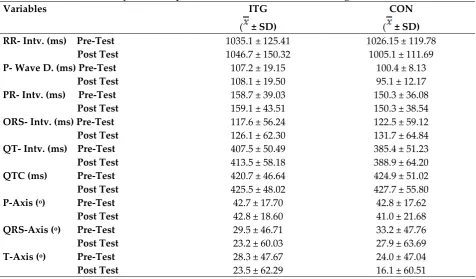
Table 2: Summary of Participants’ Pre-test and Post-test Resting ECG Parameters
Variables ITG
( ± SD)
CON
( ± SD) RR- Intv. (ms) Pre-Test
Post Test
1035.1 ± 125.41 1046.7 ± 150.32
1026.15 ± 119.78 1005.1 ± 111.69
P- Wave D. (ms) Pre-Test Post Test
107.2 ± 19.15 108.1 ± 19.50
100.4 ± 8.13 95.1 ± 12.17
PR- Intv. (ms) Pre-Test Post Test
158.7 ± 39.03 159.1 ± 43.51
150.3 ± 36.08 150.3 ± 38.54
ORS- Intv. (ms) Pre-Test Post Test
117.6 ± 56.24 126.1 ± 62.30
122.5 ± 59.12 131.7 ± 64.84
QT- Intv. (ms) Pre-Test Post Test
407.5 ± 50.49 413.5 ± 58.18
385.4 ± 51.23 388.9 ± 64.20
QTC (ms) Pre-Test Post Test
420.7 ± 46.64 425.5 ± 48.02
424.9 ± 51.02 427.7 ± 55.80
P-Axis (o) Pre-Test
Post Test
42.7 ± 17.70 42.8 ± 18.60
42.8 ± 17.62 41.0 ± 21.68
QRS-Axis (o) Pre-Test
Post Test
29.5 ± 46.71 23.2 ± 60.03
33.2 ± 47.76 27.9 ± 63.69
T-Axis (o) Pre-Test
Post Test
28.3 ± 47.67 23.5 ± 62.29
24.0 ± 47.04 16.1 ± 60.51 ITG = Intermittent Training Group; CON = Control
Table 3: t-Test Summary of Pretest and Post-Test resting ECG parameters of
Participants in the Intermittent Training Group
Variables ITG
( ± SD)
df t p
RR- Intv. (ms) Pre
Post
1035.1 ± 125.41 1046.7 ± 150.32
19
19 -0.79 0.437
P- Wave D. (ms) Pre
Post
107.2 ± 19.15 108.1 ± 19.50
19
19 -0.64 0.533
PR- Intv. (ms) Pre
Post
158.7 ± 39.03 159.1 ± 43.51
19
19 -0.08 0.936
ORS- Intv. (ms) Pre
Post
117.6 ± 56.24 126.1 ± 62.30
19
19 -0.99 0.331
QT- Intv. (ms) Pre
Post
407.5 ± 50.49 413.5 ± 58.18
19
19 -1.20 0.245
QTC (ms) Pre
Post
420.7 ± 46.64 425.5 ± 48.02
19
19 -1.29 0.214
P-Axis (o) Pre
Post
42.7 ± 17.70 42.8 ± 18.60
19
19 -0.06 0.953
QRS-Axis (o) Pre
Post
29.5 ± 46.71 23.2 ± 60.03
19
19 0.78 0.443
T-Axis (o) Pre
Post
28.3 ± 47.67 23.5 ± 62.29
19
The Paired sample t- Test showed that there was no significant difference in all the resting ECG parameters among participants of the intermittent exercise training group. Significant difference was not found in the ECG intervals at Pre- test and Post Test levels, RR- interval (t = -0.79; p > 0.05), P- wave duration (t = -0.64; p > 0.05), PR- interval (t = -0.08; p > 0.05), QRS- Complex (t = -0.99; p > 0.05) and QTC (t = -1.20; p > 0.05). No significant difference was also found in axes of the resting ECG of the participants in the ITG. The P- Axis (t = -0.06; p > 0.05), QRS- Axis (t = 0.78; p > 0.05) and T- Axis (t = 0.60; p > 0.05) all showed that there were no significant differences between pre- test and post-test values. This finding suggested that intermittent exercise may have no significant effect on resting ECG parameters in terms of rate, interval and axes.
The finding of the current study did not agree with the finding of Hemida, Rahmy, Mohamed and Kaddah (2016) who reported that intermittent aerobic exercise training had positive effect on glucose level, Heart rate, blood pressure, RR- interval and QT- interval in a cohort of Type 1 Diabetic patients with autonomic neuropathy. The participants in the current study were apparently healthy with no history of diabetes. When the ECG strips were physically examined for ST segment morphology, participants’ ST segment appeared to be normally configured and did not show significant difference at pre-test and post-test. Table 4 presents the summary of participants’ physiological parameters at pre-test and post-test.
Table 4: Participants’ Heart rate, Systolic Blood Pressure, Diastolic Blood Pressure and
VO2 max in the intermittent exercise training group and Control
Variables ITG
( ± SD)
CON
( ± SD) Heart rate (bpm): Pre
Post
64.15 ± 9.18 58.50 ± 9.45
64.85 ± 7.60 66.10 ± 6.65
Systolic BP (mmHg) : Pre Post
119.50 ± 8.26 119.00 ± 3.08
123.00 ± 5.71 121.00 ± 7.18
Diastolic BP (mmHg): Pre Post
78.50 ± 6.71 78.25 ± 6.34
82.00 ± 7.68 81.00 ± 7.18
VO2 max (ml.kg-1min-1): Pre
Post
39.29 ± 6.68 43.05 ± 7.11
36.52 ± 3.08 37.16 ± 3.20
The means of resting Heart rate, systolic blood pressure, diastolic blood pressure and VO2 max for the ITG group were 64.15 ± 9.18 /min, 119.50 ± 8.26 mmHg, 78.50 ± 6.71
mmHg and 39.29 ± 6.68 ml. kg-1 min-1 respectively at pre- test and 58.50 ± 9.45 /min,
119.00 ± 3.08 mmHg, 78.25 ± 6.34 mmHg and 43.05 ± 7.11 ml. kg-1 min-1 respectively at
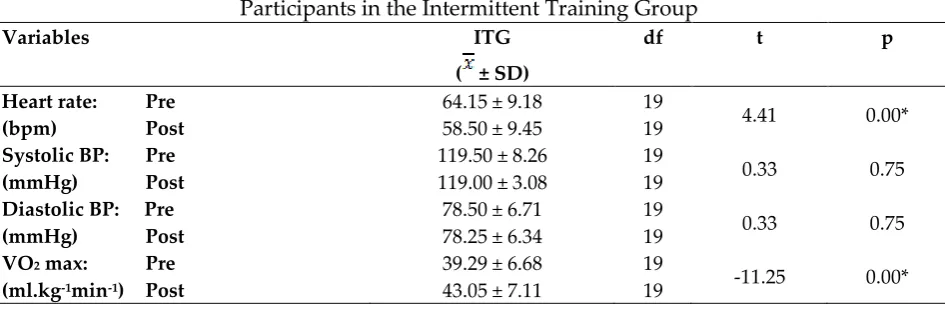
Table 5: t-Test Summary of Pretest and Post-Test Physiological Variables of Participants in the Intermittent Training Group
Variables ITG
( ± SD)
df t p
Heart rate: Pre (bpm) Post
64.15 ± 9.18 58.50 ± 9.45
19
19 4.41 0.00*
Systolic BP: Pre (mmHg) Post
119.50 ± 8.26 119.00 ± 3.08
19
19 0.33 0.75
Diastolic BP: Pre (mmHg) Post
78.50 ± 6.71 78.25 ± 6.34
19
19 0.33 0.75
VO2 max: Pre
(ml.kg-1min-1) Post
39.29 ± 6.68 43.05 ± 7.11
19
19 -11.25 0.00* * Sig = p < 0.05
The result of the t- Test statistics showed that there was significant effect of intermittent exercise training on the Heart rate of participants (t = 4.41; p < 0.05). This finding is similar to that of Hottenrott, Ludyga and Schulze (2012) who found that resting Heart rate reduced significantly in both intermittent aerobic exercise group and continuous aerobic exercise groups post exercise intervention. The authors attributed the improvement in Heart rate to increased vagal tone, improved efficiency of peripheral muscles and higher stroke volume.
Significant difference was also found in the VO2 max (t = -11.25; p < 0.05) of
participants in the intermittent exercise training group after the 8- week training programme. The t- Test statistics however found no significant effect of intermittent exercise training on blood pressure of participants. No significant difference was found between pre- test and post-test Systolic blood pressure (t = 0.33; p > 0.05) and Diastolic blood pressure (t = 0.33; p > 0.05). The current finding concerning intermittent exercise training and blood pressure differed from the one reported by Gunjal, Shinde, Kazi and Khatri (2013) who reported that a 12-week aerobic intermittent exercise reduced systolic blood pressure and diastolic blood pressure by 12mmhg and 8mmhg respectively among a cohort of hypertensive. The disparity in the result of the current study and that of Gunjal et al. (2013) could be due to the fact that participants in the current study were apparently healthy with no history of hypertension. Also, the current study was for duration of 8-weeks compared to the 12-weeks of Gunjal and colleagues.
This study found that intermittent exercise training significantly affected the maximum oxygen uptake of participants. This finding supports the submission of Smart and Steele (2012) who reported a significant increase (21%) in VO2 max of
Foster, Meyer, Georgeakopoulos, Ellestad, Fitzgerald, Tilman, Weinstein, Young and Roskamm (1999) compared the cardiovascular responses of a group of adults in two separate aerobic exercise trials involving continuous exercise and intermittent exercise. They reported that no significant difference was found for any of the variables. Scribbans, Vecsey, Hankinson, Foster and Gurd (2016) in a meta-analysis of twenty eight studies involving healthy volunteers reported that training at any intensity above 60% of VO2 max is likely to improve maximal oxygen uptake in healthy adults.
The study concluded that intermittent aerobic exercise training produced no significant effect on the resting ECG parameters but significantly reduced heart rate and increased VO2 max.
Acknowledgements
This investigation was supported in part by the Tertiary Education Trust Fund (TETFUND), through an Institutional Research Grant released in 2014 for a Doctoral Research.
About the Authors
Oluwabusayo Odunayo Akinbiola (B.Ed., M.A., M.P.A., PhD.) is an Exercise
Physiologist whose research interests are, cardiovascular exercise physiology, resting and stress ECG, anthropometry and body composition, physical fitness and biomechanics. His current research activities focus on effects of various exercise training modalities on electrocardiogram of elite and non-elite athletes. Dr Akinbiola teaches exercise physiology to undergraduate and postgraduate students in the Department of Kinesiology, Health Education and Recreation, Obafemi Awolowo University, Nigeria.
Samuel Adebisi Adeniran (BSc. MSc., PhD.) is a Professor of Exercise Physiology and
Biomechanics with a lecturing career spanning an upward of 40 years, in the Department of Kinesiology, Health Education and Recreation, Obafemi Awolowo University, Ile-Ife, Nigeria. He teaches exercise physiology, kinesiology, biomechanics, human biodynamics, research and statistical methods in kinesiology, to students at undergraduate and postgraduate levels. He has supervised scores of masters and doctoral theses and dissertations in areas of exercise physiology and biomechanics. Professor Adeniran established the Human Performance Laboratory of the Department of Kinesiology, Health Education and Recreation, Obafemi Awolowo University, Ile-Ife, Nigeria, where he worked from 1974 till date.
Oluwadare Ogunlade (MBChB. MSc., PhD., FWACP) is a Consultant Cardiologist and
cardiovascular physiology, cardiology, electrocardiography in the young and application of electrocardiography for sex verification.
References
Aldana, S. G., Sutton, L. D., Jacobson, B. H., & Quirk, M. G. (1996). Relationships between leisure time physical activity and perceived stress. Perceptual and Motor
Skills, 82, 315–321.
American College of Sports Medicine (2014). ACSM's Guidelines for Exercise Testing and
Prescription: Ninth Edition. Philadelphia (PA), Wolters Kluwer Lippincott
Williams & Wilkins, pp. 19-137
American Heart Association (AHA, 2013). Guideline on the Assessment of Cardiovascular Risk: A Report of the American College of Cardiology/American Heart Association Task Force on Practice Guidelines. Circulation, 32, 313-320 Foster, C. K., Meyer, N., Georgakopoulos, A. J., Ellestad, D. J., Fitzgerald, K., Tilman,
Weinstein, H. Y. and Roskamm, H. (1999). Left ventricular function during interval and steady-state exercise. Medicine and Science in Sports and Exercise, 31(8): 1157-1162
Gunjal, S., Shinde, N., Kazi, A. & Khatri, S. (2013). Effect of Aerobic Interval Training on Blood Pressure and Myocardial Function in Hypertension in Hypertensive Patients. International Journal of Pharmaceutical Science Invention: Vol. 2 (6): PP. 27-31
Hampton, J. R. (2013). The ECG in Practice: Sixth Edition. Nottingham, UK, Churchill Livingstone, Elsevier: p. 23-48
Hemida, M. A., Rahmy, A. F., Mohamed, G. S. and Kaddah, A. F. (2016). Effect of Aerobic Exercise Training on Cardiovascular Responses in Type 1 Diabetic Autonomic Neuropathy. Global Journal of Medical Research: F Diseases: 16 (1) online ISSN: 2249-4618.
Hottenrott, K., Ludyga, S. & Schulze, S. (2012). Effects of high intensity training and continuous endurance training on aerobic capacity and body composition in recreationally active runners. Journal of Sports Science and Medicine: 11, 483-488. Ogedengbe, J. O., Kolawole, O. V., Alfa, J., Onaadepo, O. & Adelaiye, B. A. (2012). ECG
findings in young Nigerian medical students. International Journal of Biosciences (IJB). Vol. 2, No. 9, p. 71-76
Ritvanen, T.L. Louhevaara, V, Helin, P. Halonen, T, Hanninen, O. (2007). Effect of aerobic fitness on physiological stress responses at work. Int J Occup Med Environ Health, 20 (1): 1-8
Scribbans T. D., Vecsey S., Hankinson P. B., Foster W. S. & Gurd B. J. (2016). The Effect of Training Intensity on VO2 max in Young Healthy Adults: A Meta-Regression
and Meta-Analysis. International Journal of Exercise Science 9(2): 230-274.
Senchina, D.S. & Kohut, M.L. (2007) Immunological outcomes of exercise in older adults; Clinical Interventions in Aging: 2(1) 3–16
Sloth M., Sloth D., Overgaard K. & Dalgas U. (2013). Effects of sprint interval training on VO2 max and aerobic exercise performance: A systematic review and
meta-analysis. Scandinavian Journal of Medicine & Science in Sports. 23. 10. 1111/sms. 12092
Smart, N. A. & Steele, M. (2011). A comparison of 16 weeks of continuous vs. intermittent exercise training in chronic heart failure patients. Congest Heart Fail.
18 (4):205-211
World Health Organization (2012). Regional Office for Southeast Asia: Hypertension fact sheet.
Creative Commons licensing terms