TEMPORAL PROCESSING OF ONGOING EVENT REPRESENTATIONS
by
Victoria L. Scharp
B.S., Speech-Language Pathology and Audiology, Miami University, 2000 M.A., Speech-Language Pathology, Miami University, 2002
Submitted to the Graduate Faculty of
School of Health and Rehabilitation Sciences in partial fulfillment of the requirements for the degree of
Doctor of Philosophy in Communication Science and Disorders
University of Pittsburgh 2016
UNIVERSITY OF PITTSBURGH
SCHOOL OF HEALTH AND REHABILITATION SCIENCES
This dissertation was presented
by
Victoria L. Scharp
It was defended on July 15, 2016 and approved by
Malcolm McNeil, PhD, Chair, Department of Communication Science and Disorders Michael Walsh Dickey, PhD, Associate Professor, Department of Communication Science
and Disorders
Stephanie Huette, PhD, Assistant Professor, Department of Psychology, The University of Memphis
Dissertation Advisor: Connie A. Tompkins, PhD, Professor, Department of Communication Science and Disorders
Copyright © by Victoria L. Scharp 2016
TEMPORAL PROCESSING OF ONGOING EVENT REPRESENTATIONS Victoria L. Scharp, PhD, CCC-SLP
University of Pittsburgh, 2016
Time cues are ubiquitous in language and the ability to interpret them is essential for understanding events during discourse comprehension. Temporal markers that signal ongoing versus completed events, like the progressive and simple past tense, prompt distinct mental event representations. However, the detailed properties of ongoing event representations remain unexplored. Drawing from both the simulation and semantic association approaches to knowledge representation, this study examines the novel prediction that ongoing events engender incremental discourse representation updating processes. Experimental sentences cued either early or late phases of an ongoing event (e.g. Alice had recently started/almost finished baking a cake). Targets in a post-sentential lexical decision task were strongly associated with either early or late event phases (e.g. EGGS/AROMA). Facilitation priming was predicted for congruent sentence-target pairs, however, priming was found for the early event phase exclusively. The results have implications for models of knowledge representation, theories of semantic priming, and discourse model updating.
TABLE OF CONTENTS 1.0 INTRODUCTION ... 1 2.0 SITUATION MODELS ... 3 2.1 EVENT MODELS ... 3 2.2 TIME PROCESSING ... 7 2.2.1 Psychological time... 7 2.2.2 Narrative timeline ... 10
3.0 TIME PROCESSING CUES ... 13
3.1 TIME SHIFT EFFECT ... 14
3.2 TIME: DURATION... 23
3.3 EVENT CONTINUITY... 25
3.3.1 Grammatical verb aspect ... 26
3.3.1.1 Perceptual studies ... 33
3.3.1.2 Temporal phases within event models ... 36
3.3.2 Lexical aspect ... 39
3.3.3 Limitations in the event continuity literature ... 42
3.3.4 Parallels to the spatial domain ... 44
3.4 CURRENT STUDY RATIONALE ... 47
4.0 EVENT REPRESENTATION THEORIES ... 51
4.1 SIMULATION PERSPECTIVE ... 51
4.2 SEMANTIC ASSOCIATION PERSPECTIVE ... 54
4.2.1 Semantic association approach to ongoingness... 57
4.2.2 Limitations of the semantic association approach ... 58
4.3 SUMMARY OF THEORETICAL CONTRIBUTION ... 58
5.0 METHODS ... 61
5.1 PILOT STUDY ... 61
5.1.1 Participant characteristics (pilot) ... 62
5.1.2 Participant recruitment (pilot) ... 62
5.1.3 Experimental procedure (pilot) ... 63
5.1.4 Experimental stimuli (pilot) ... 63
5.2 SELECTION CRITERIA FOR EXPERIMENTAL STIMULI... 64
5.2.1 Potential results and interpretations (pilot) ... 66
5.2.1.1 Pilot study results ... 68
5.2.2 Rating task for experimental trials ... 69
5.3 STUDY PARTICIPANTS ... 71
5.3.1.1 Participant recruitment and screening ... 71
5.3.1.2 Participant sample size ... 71
5.3.2 Participant Demographics ... 72
5.3.3 Experiment summary ... 73
5.4 DATA ANALYSIS OUTLINE ... 80
5.4.1 Proposed post hoc analyses ... 82
6.0 RESULTS ... 84
6.2 IDENTIFICATION OF REACTION TIME OUTLIERS ... 85
6.3 MULTILEVEL MODEL BUILDING ... 86
6.3.1 Predicted Outcome 1 ... 94
6.3.2 Predicted Outcome 2 ... 95
6.3.3 Predicted Outcome 3 ... 95
6.4 CONTROL CONDITION RESULTS ... 95
6.4.1 Across condition comparisons ... 98
6.5 POST HOC TESTING ... 100
6.6 SUMMARY OF RESULTS ... 102
6.7 POST HOC POWER ANALYSIS ... 102
7.0 DISCUSSION ... 104
7.1 IMPICATIONS FOR THEORIES OF EVENT REPRESENTATION ... 105
7.1.1 Simulation theory ... 107
7.1.2 Semantic association theory ... 112
7.2 IMPLICATIONS OF CONGRUITY EFFECT ... 115
7.3 POTENTIAL CLINICAL IMPLICATIONS... 116
7.4 INDIVIDUAL DIFFERENCES ... 117
7.5 STRENGTHS AND LIMITATIONS ... 120
7.6 FUTURE DIRECTIONS... 122
APPENDIX A ... 128
APPENDIX B ... 130
APPENDIX C ... 132
APPENDIX E ... 139 APPENDIX G ... 145 APPENDIX H ... 146 APPENDIX I ... 148 APPENDIX J ... 150 BIBLIOGRAPHY ... 153
LIST OF TABLES
Table 1. Demographic characteristics for event association generation pilot study ... 68
Table 2. Average number of associates generated for 50 events (N=81) ... 69
Table 3. Relatedness judgements of early and late targets ... 70
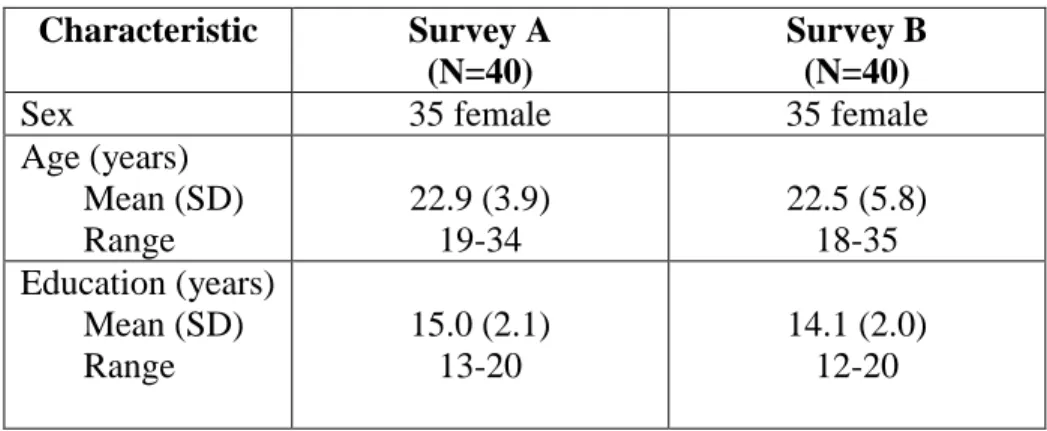
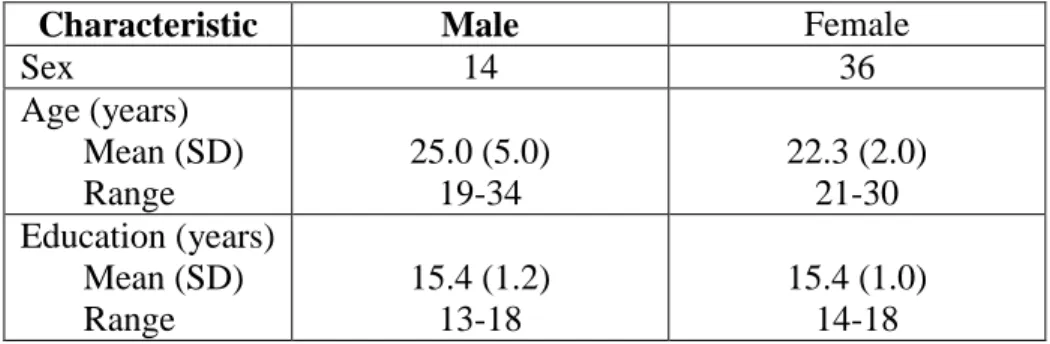
Table 4. Demographic characteristics for experimental event processing study ... 73
Table 5. Stimulus examples ... 79
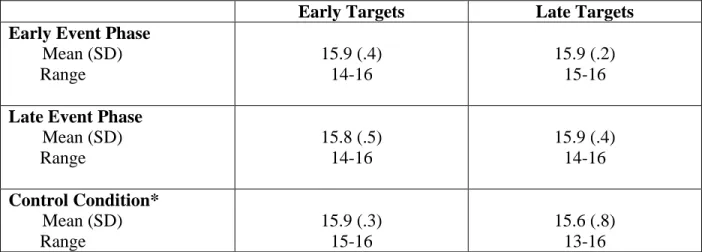
Table 6. Accuracy results for Early and Late targets for event phases and control condition... 85
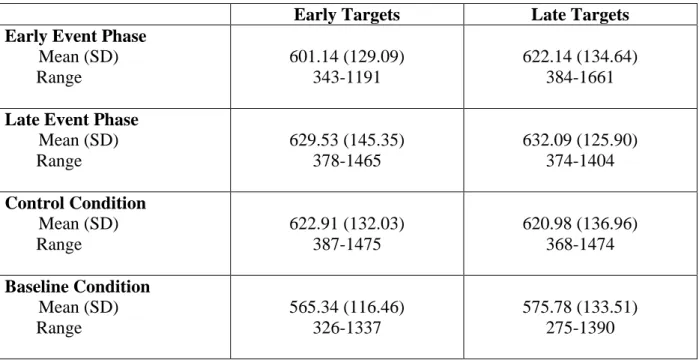
Table 7. Mean RTs (in msec) with standard deviations and ranges for all conditions ... 86
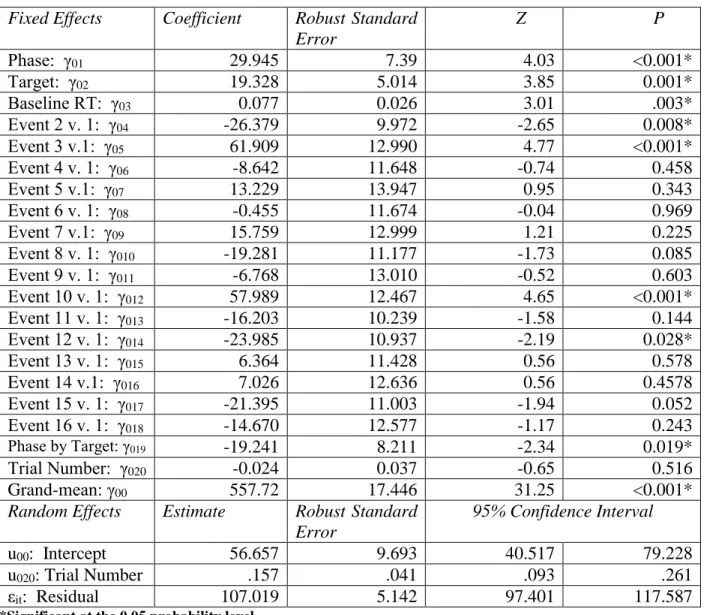
Table 8. Analytic model results for experimental trials ... 93
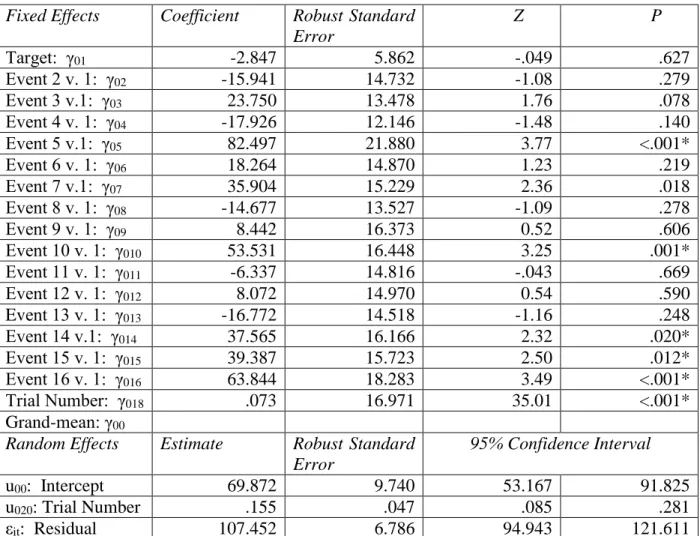
Table 9. Analytic model results for control trials ... 97
Table 10. Predicted model based means, standard errors, and 95% confidence intervals for all conditions ... 99
LIST OF FIGURES
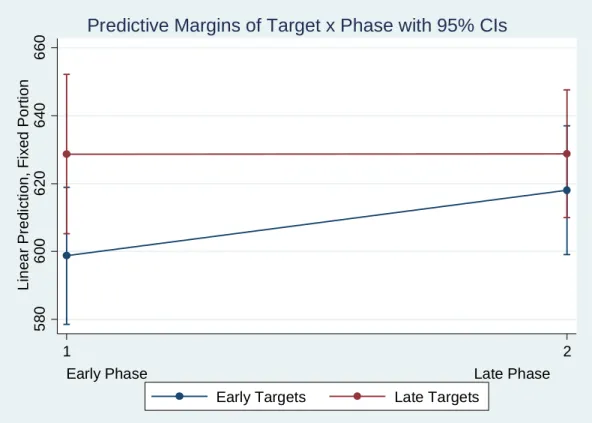
Figure 1. Plotted data from analytic model for experimental trials ... 94
Figure 2. Plotted data from analytic model for control trials ... 98
Figure 3. Plotted data from analytic model for all conditions ... 100
LIST OF EQUATIONS
Equation 1. Level 1 of analytic model ... 89 Equation 2. Level 2 of analytic model ... 90 Equation 3. Composite analytic model ... 90
1.0 INTRODUCTION
Forming and updating mental event representations are essential pieces of the language comprehension puzzle, however, their underlying nature remains elusive. The theoretical rationale for the current study stems from two prominent event representation perspectives, simulation (e.g. Barsalou, 1999; Gallese & Lakoff, 2005; Glenberg & Kaschak, 2003; Zwaan, 2003) and semantic association (e.g. Coll-Florit & Gennari, 2011; Gennari, 2004). Simulation theories propose that primary sensory and motor networks are activated during semantic processing in a pattern similar to actually experiencing what is read or heard. The semantic association perspective suggests that specific concepts and/or attributes become linked to a given event through knowledge and associations acquired during real-world experiences. In their current forms, these perspectives are not mutually exclusive, but instead offer critical insights which shape the theoretical arguments of this study.
One key facet of event representation formation and updating relates to time. Comprehenders rely on a multitude of default frameworks and temporal cues in order to understand when events occur in relation to one another and to infer the completion status of an event. The temporal processing literature currently conceptualizes events as either in progress or completed, resulting in the treatment of event continuity as an all or nothing phenomenon. However, it is highly likely there is a dynamic nature to event model updating, specifically that in progress events engender an incremental updating process. This novel prediction is derived from
unexpected and contradictory empirical findings, contributions from event representation theories, and an integration of threads from research in both the temporal and spatial processing domains.
This dissertation document begins by outlining critical concepts including event models, temporal processing cues, and the narrative timeline in Chapter 2. The evolution of research on temporal processing cues and critiques of empirical findings from this domain will be considered in the first part of Chapter 3. Then the document shifts to a more thorough examination of event continuity, the primary area of interest. More specifically, pertinent studies of grammatical aspect, lexical aspect, and event-specific cues will each be reviewed in turn. Rounding out Chapter 3, evidence from the spatial domain provides an additional thread to the theoretical rationale leading to the detailed study rationale described in Section 3.4. A more detailed consideration of the aforementioned event representation perspectives, simulation and semantic association, follows in Chapter 4. Chapter 5 includes the methods and potential results for the investigation along with the results from a pilot study conducted to assist with stimulus development. Chapter 6 summarizes the empirical findings for the primary outcome measures, control condition, and baseline condition from the multilevel analysis. Chapter 7 places the results into the larger context of the temporal processing literature and connects the findings to theories of event representation. The document concludes with a summary of the contribution to the literature, strengths and limitations of the current study, and future directions.
2.0 SITUATION MODELS
Most researchers agree that the overarching goal of discourse comprehension is to build a coherent mental representation of what is read or heard (Gernsbacher, 1990). A situation model (Kintsch & van Dijk, 1978) is the mental representation of what is happening during discourse and theoretical and empirical characteristics of situation models have been widely used to understand how comprehenders construct mental representations. A situation model does not include every word or concept that is mentioned, but instead portrays an integration of the content to facilitate the understanding of the events described. Although the notion of situation models is rather vague and underspecified, extensive investigation suggests that there are several elements that contribute to situation model formation including the specific text or discourse to be understood and a comprehender’s linguistic, pragmatic, and world knowledge (Glenberg, Meyer, & Lindem, 1987). Ultimately these elements are combined to construct the representation of the situation or “mental microworld” described in the discourse (Magliano & Schleich, 2000, p. 83). As discourse comprehension proceeds, situation models are constructed and updated as additional information accumulates.
2.1 EVENT MODELS
Events are the proposed building blocks for creating and updating situation models during comprehension (Zwaan, Langston, & Graesser, 1995). A commonly used operational definition of an event is “a segment of time at a given location that is conceived by an observer to have a
beginning and an end” (Zacks & Tversky, 2001, p. 17). The place on a narrative timeline and the location of an event may be specified or inferred by the comprehender depending on the surrounding context. Event models are a type of situation model where the verb is often the driving force for what types of knowledge are mentally activated (Ferretti, Kutas, & McRae, 2007). In theories of sentence processing, verbs and their morphosyntactic properties are critical ingredients that stimulate comprehension processes (e.g. MacDonald, Pearlmutter, & Seidenberg, 1994; Trueswell, Tanenhaus, & Garnsey, 1994). For example, when an event verb is read or heard, the conceptual knowledge of a comprehender is tapped, mentally activating prototypical event properties such as agents, actions, objects/instruments, time course, and duration (Ferretti, et al., 2007). Critically, these event attributes are available very quickly during on-line sentence processing. Different types of verb-based time cues and their influence during event processing will be discussed in Chapter 2.
Events are characterized as dynamic occurrences in time. There is strong empirical evidence that comprehenders mentally activate distinctly different event attributes when an event is perceived as ongoing versus completed (e.g. Carreiras, Carriedo, Alonso, & Fernandez, 1997; Coll-Florit & Gennari, 2011; Ferretti et al., 2007; Madden, & Ferretti, 2009; Magliano & Schleich, 2000; Section 3.3). However, when an event is perceived as ongoing, it is an open question whether the mental activation of event attributes is maintained or fluctuates across the time course of the event. To date, the event processing literature conceptualizes a dichotomy between the mental activation of event attributes linked to ongoing and completed events. This leaves an empirical gap for making specific predictions about the dynamic and incremental nature of the progression of time during event processing. More specifically, the models in the literature have not addressed the potential for degrees of “ongoingness” during ongoing events which could promote a different
progression or activation pattern of event attributes. One challenge to fully understanding this event continuity facet of event processing is that events and their attributes are highly variable. For example, an event can end almost as quickly as it began (e.g., opening a can of soda) or it can last for many hours (e.g., a day at the beach). How comprehenders appear to be able to easily build, update, and recall information from event models has been the focus of a considerable amount of psycholinguistic research.
Within this vast literature base, one influential theoretical framework introduced by Zwaan and colleagues (1995) accents five specific dimensions of an event model that comprehenders track during narrative level comprehension. The framework is called the Event-indexing model, and the five aspects that are cataloged by a comprehender are: time, space (location), causation, intentionality/motivation, and protagonist/object. The Event-indexing model specifies that during comprehension memory nodes are activated and then that activation pattern is calibrated based on the amount of overlap between one of the indices and new incoming events from a described situation. The original instantiation of the model focuses on explicating how quickly new information is integrated into the model if it is congruent with the established events of one of the indices.
A central finding throughout the Event-indexing model literature is that shifts or discontinuities in any of the five dimensions result in increased processing time, suggesting that integration or updating of the event model is occurring. This slower processing is typically indexed by longer reading or response times (RTs; e.g. Zwaan et al., 1995). The longer RTs correspond to probes of events attributes that are introduced before a shift and longer reading times have been found for the actual words or phrases in the sentence or narrative where the discontinuity is introduced. For example, in the time domain, readers take longer to read the phrase an hour later
compared to the phrase a moment later in the following sentence from Zwaan’s seminal 1996 article on how time shifts are processed:
• The professor started analyzing the data. A moment/hour later, her phone rang.
Studies of the Event-indexing model have addressed how world knowledge is used for interpreting causation (Singer, Halldorson, Lear, & Andrusiak, 1992) and how accessible objects are to a protagonist as narratives progress (Glenberg et al., 1987). One limitation of the model is the independent way it approaches the dimensions by not considering the potential influences a change in one index might have on another index. For example, a change in the spatial index can have a direct influence on the perceived time elapsed during the location change (e.g. walking across the room versus walking across town). Prior investigations (e.g. Anderson, Garrod, & Sanford, 1983; Speer & Zacks, 2005) have implemented a location shift and a time shift simultaneously so it is not clear if the resulting increased RTs to probes of event attributes that were introduced prior to the time shift are due to the time shift itself or to a combined time and location shift effect. While understanding the processing contributions when the different indices are combined is essential to extending the event processing literature, there are still open questions about the potential influences of the individual indices. The index of interest for the research questions in this document was time. Specifically, this study considered how time cues that signal early and late time points within an individual event influence event model construction and updating.
2.2 TIME PROCESSING
One part of the event processing picture that is not well understood is how different types of time cues influence the mental activation of concepts within event models. As outlined above, time is one of five indices that comprehenders track according to the Event-indexing model (Zwaan et al., 1995). Tests of this model have indicated that comprehenders routinely monitor both implied or specified positions of an event on the narrative timeline and the prototypical durations of everyday events (e.g. Rapp & Taylor, 2004). To more fully explore the impact of the contribution of these specific temporal properties for event processing, a closer inspection of the conceptualization of time is warranted.
2.2.1 Psychological time
Multiple conceptualizations of time have been considered in the literature. Time is a psychological construct that is unique because it not connected to a specific sense organ (Block, 2014). As humans, we are able to experience the passage of time but we cannot hold it, taste it, and so on. Researchers have grappled with what type of mechanism might be responsible for how humans perceive and track time. Early theories of time perception and tracking include the internal clock model where pulses are generated and tracked via an internal pacemaker, (Treisman, 1963) and the scalar expectancy theory that examines time estimation performance (in animals) using temporally structured reinforcement schedules (Church, 1984; Gibbon, 1997). These models are often cited and continue to be refined (Tresiman, 1993), however, it remains unclear how these types of models can account for levels of abstraction in language comprehension. In addition, in
their current form, these models do not address the potential influences of attentional allocation or the complexities of real-time processing (Zakay & Block, 1994).
One prominent debate in the temporal processing literature concerns teasing apart the mechanisms that support inherent differences between how events are experienced in real-time and how events are experienced via language. Using linguistic cues, comprehenders can be transported to the past or the future and discuss events that have never been experienced first-hand. This ability to transcend the here and now perspective connects to the consideration of whether prospective and retrospective timing enact the same or different processing mechanisms. One explanation is that prospective timing taps into the premise of the internal clock while retrospective timing is linked to more general cognitive-linguistic processing that does not directly connect to conceptualization of time (Zakay & Block, 2004).
Scholars who explore questions related to different theories of time perspective often use spatial metaphors (i.e. my best years are ahead of me) due to a strong correspondence between time and space (see Section 3.3.4, i.e. Lehrer, 1990). For example, two different time-space metaphor systems have been proposed for the English language, an ego-moving and a time-moving metaphor (Genter, Imai, & Boroditsky, 2002). For the ego-moving metaphor, the perspective is that of an observer navigating forward on a timeline toward the future. This viewpoint mimics the Dynamic Mental Representation framework (see Section 2.2.2) of progressing forward on a narrative timeline. In contrast, in the time-moving metaphor, the observer remains in a constant location and the events themselves are perceived as moving from the future to the past like a conveyer belt. At least one study has found that priming participants with either an ego-moving or time-moving context results in a strong preference to interpret ambiguous statements like “Next Wednesday’s meeting has been advanced by two days” (p. 556, McGlone & Harding, 1998) using
the space-time metaphor perspective that was primed. Extending the possible predictions from the space-time metaphors perspectives, Walsh (2003) has proposed A Theory Of Magnitude (ATOM), a conceptual framework that links space, time, and quantity into a generalized magnitude system. This theory will be discussed next.
Walsh (2003) has proposed a magnitude mechanism in which time, space, and quantity all operate of out the same common system. One example of how this theory has been tested is a study by De Long (1981) where participants completed tasks in scaled down environments (i.e. 1/6 or 1/24 actual size) and were asked to discontinue their efforts after 30 minutes. As predicted, the scale of the environment affected the stopping times proportionately. As ATOM has been refined and tested, additional parameters have been proposed to be part of the same generalized magnitude processing mechanism including both speed and size (Bueti & Walsh, 2009). Much of the literature examining ATOM stems from animal studies, (i.e. Dehaene, Dehaene-Lambertz, & Cohen, 1998) and it is not clear how different levels of abstraction could emerge from this type of mechanism. This notion of a common magnitude framework is an intriguing one, and it could provide one explanation for the pattern of results demonstrated frequently in the temporal and spatial processing domains. Specifically, this notion is relevant to the finding that a change in one parameter (i.e. across the street versus across town) prompts a change in another (i.e. a duration estimate, Rapp & Taylor, 2004).
Temporal information is ubiquitous across languages and can be conveyed via all word classes and forms (Miller & Johnson-Laird, 1976). One way to manage this elusiveness is to use labels for segments of time (e.g. minutes, hours, years). For event processing, understanding references to time is fundamental to comprehending the context and order of events within a narrative. These references are used by comprehenders to sequence events, track event completion,
and update the event or narrative timeline. Block’s (2014) approach to conceptualizing time was to propose three different aspects of psychological time. These include the following:
1) Time duration: how long an event lasts or a length of time between events 2) Time succession: the temporal order of events in a sequence
3) Time perspective: how an individual conceptualizes past, present, and future time. Each of these aspects of time can contribute to how comprehenders incorporate time concepts and the progression of time into their mental representation of events. In the literature, each of these aspects is linked to a specific type of time cue (e.g. changing the grammatical aspect of a verb is a time cue that corresponds to duration). Empirical data specific to the temporal property of duration and its corresponding time cues will be discussed in Chapter 2 following a brief consideration of the narrative timeline.
2.2.2 Narrative timeline
Another critical factor for understanding how time is conceptualized during language comprehension is the nature of the narrative timeline. It is widely accepted that the narrative timeline for an event begins at a “here and now” reference point and progresses forward toward an endpoint (unless otherwise indicated in the discourse; Dry, 2009). This universally accepted view of the narrative timeline appears to be rooted in the psychological arrow of time (Savitt, 1996). The phrase “time’s arrow” dates back to Sir Arthur Eddington (1928, p. 34), who purports that most events and event sequences are organized and experienced in a unidirectional (i.e. forward) manner consistent with how time is perceived (e.g. the growth of a plant from a seedling to a mature plant).
In the time processing domain, the concept of directionality linked to time’s arrow is included in and expanded upon in the iconicity assumption (Fleischman, 1990; Hopper, 1979). This is a default framework for how comprehenders interpret the narrative timeline by assuming that events described are presented in chronological order and that successive sentences describe successive events. Various aspects of the iconicity assumption have been tested, including how it relates to shifts in the narrative timeline (Zwaan, 1996), contributes to understanding event sequences (Stanfield & Zwaan, 2001), and influences actions that are described successively or simultaneously in a text (de Vega, Robertson, Glenberg, Kaschak, & Rinck, 2004). The pattern of results for these studies provides strong evidence that individuals rely on default frameworks like the iconicity assumption during event model construction and that violations of the assumption result in increased reading times or RTs. The increased processing time found in studies that test the iconicity assumption is one example of the prominent finding across the Event-indexing literature of longer processing times for discrepancies in any of the dimensions comprehenders track (Section 2.1).
One framework that incorporates the notion of time’s arrow is the Dynamic Mental Representation framework proposed by Freyd (1987, 1992). While her theory has its origins in handwriting, she includes two specific assumptions related to the temporal dimension which have been applied to event processing. These assumptions are that the temporal dimension 1) cannot be extracted from the mental representation of the external world and 2) is directional. The “dynamic” piece of this theory describes her conceptualization of the direct parallel between how humans experience time during real-life events and its role in a mental representation. In this theory, because the temporal dimension mimics how real time progresses, it is directional (i.e. forward moving on the narrative timeline). This Dynamic Mental Representation theory has connections
to more recent explanations of how individuals mentally represent what is read or heard, namely simulation theories (e.g. Barsalou, 1999; Gallese & Lakoff, 2005; Glenberg & Kaschak, 2003; Zwaan, 2003). Briefly, simulation theories propose that a distributed network of areas within the primary sensory and motor systems is activated during semantic processing, as if the comprehender were simulating the actual experience described. Simulation theory is discussed further in Sections 3.3.1.1 and 4.1 as it provides one possible theoretical basis for the predictions in the present study.
The narrative timeline clearly plays an essential part in event processing and individuals must be able to navigate it in order to understand when events occur in relationship to other events and the nature and progression of individual events. This dual role for the mental timeline provides some insight into its complexity. A comprehender is often required to entertain multiple timelines at once. For example, one timeline may be established for an event at the beginning of a sequence of events while another must be tracked for an intervening or overlapping event (Hinrichs, 1986). Event duration and continuity are crucial aspects of event processing and correctly interpreting them is necessary for managing one or more event timelines. Because time is a psychological phenomenon, comprehenders must rely on different types of cues (e.g. temporal adverbials, lexical or grammatical markers, and event knowledge) when building and updating timelines for their mental representations. Several different types of time cues are discussed in the next chapter, along with the applicable empirical evidence.
3.0 TIME PROCESSING CUES
Time processing cues are routinely used when event models are constructed and updated. Some types of time processing cues prompt a comprehender to establish an event boundary (e.g. Speer & Zacks, 2005; Zwaan & Radvansky, 1998). Event boundaries are used by comprehenders to segment incoming event information and to prompt an update of the current event model. Using terminology from the Structure Building Framework (Gernsbacher, 1990), new events initiate new mental substructures and then additional information either 1) is mapped onto that established structure (model) or 2) prompts a shift to a new substructure. Shifting to a new substructure often triggers an event boundary and elicits an increase in processing time. One consequence to establishing an event boundary is that event information from before the boundary may become less accessible to the comprehender. Critically, readers perceive temporal changes as event boundaries when reading about successive activities within a text (e.g. Speer & Zacks, 2005; Zwaan & Radvansky, 1998).
Some early work proposes rigid event boundaries, a result of which is that access to prior event content degrades uniformly after the boundary is established (e.g. Zacks & Tversky, 2001). However, a more recent consensus is that that readers tend to trigger flexible event boundaries (e.g. Rapp & Taylor, 2004). This means that triggering an event boundary does not necessarily mandate a decrease in availability of prior event attributes. Instead, some event properties may be maintained across an event boundary based on the context and background knowledge related to the event. Exactly which properties are maintained across event boundaries is an open question, but one possible factor is event continuity (i.e. whether an event is described as ongoing or
Different types of time cues are discussed in this chapter along with the relevant empirical evidence. Section 3.1 summarizes the literature on how certain types of time cues elicit a time shift effect. This effect is reflected by longer RTs to probes of event attributes that are mentioned prior to a time shift (e.g. an hour later). However, emerging evidence will also be described that is contrary to the time shift effect. Section 3.2 discusses how event duration (e.g. the prototypical length of routine events) links to the question of what concepts may remain mentally activated or more readily available to a comprehender in a given event model. Section 3.3 provides a synopsis of the event continuity literature. Specifically, it addresses how event completion status is cued (e.g. grammatically, lexically) and the types of event attributes that are activated when an event is signaled as ongoing or completed. Limitations in the event continuity literature are considered in Section 3.3.3. Finally the rationale for the current study is introduced in Section 3.4.
3.1 TIME SHIFT EFFECT
Much of the time processing literature has focused on processing influences associated with cues that explicitly signal shifts forward in the narrative timeline (e.g. an hour later). These studies generally have found a time shift effect, manifested in longer reading times for sentences that contained these time shift cues and/or increased RTs to probes of event attributes that were described prior to the time shift cues (Anderson et al., 1983; Bestgen & Vonk, 1995, Kelter, Kaup, & Claus, 2006; Zwaan, 1996). The increased processing time has been interpreted to reflect the time it takes for a comprehender to establish an event boundary. The time shift effect initially appeared to be quite robust until a few researchers from independent labs began to report data that were inconsistent with it (Radvansky & Copeland, 2000; Ditman, Holcomb, and Kuperberg, 2008;
Weingartner & Myers, 2013). In three studies using different methods, the expected time shift effect was not found if the event could be perceived as ongoing after the time shift cue occurred. This section will outline the results, authors’ interpretations, and critiques of these specific studies as a bridge to the theoretical frameworks, considerations for the study design, and research questions outlined later in this document.
Ditman et al. (2008) used event–related potentials (ERPs) to study neural activity while adults read brief narratives containing time shift cues and repeated noun phrase anaphors. The N400, a negative deflection of the waveform with a centroparietal scalp distribution, has been interpreted as a signal of increased difficulty with semantic integration (Holcomb, 1993). Characteristics of the N400 have also been used to make inferences about the ease of semantic integration into prior context at both sentence and discourse levels (e.g. van Berkum, Brown, & Hagoort, 1999). Critically, the N400 is also sensitive to anaphor resolution processes across sentences. Ditman and colleagues (2008) had 12 participants wear a 29 channel elastic cap while reading 180 two-sentence scenarios like the following:
• The maid polished the silverware. After one second/hour/year, the silverware sparkled brilliantly.
The first sentence set up the noun phrase which was probed (repeated) in three temporal conditions: following the continuation of the current timeline (i.e., after one second, referred to here as the no shift condition), a moderate time shift (i.e. after one hour), or a large shift forward on the timeline (i.e. after one year). A main effect of temporal condition was found for the ERPs collected at the time word (i.e. second, hour, and year) at the expected centroparietal sites. The
pattern of results for the planned comparisons was also as expected: The largest N400 amplitude occurred in the after a year shift condition followed by the moderate shift condition and then the smallest N400 amplitude was observed in the after one second condition. The declining N400 amplitudes from the largest shift to the no shift condition were interpreted to reflect a decreased need for integration for each shift condition. Based on these data, the authors concluded that readers use temporal information within the first 300 ms of sentence onset to structure event models. A second set of 12 participants provided plausibility judgments for the event durations and there were no differences between the no shift and moderate shift conditions, but the large shift scenarios were judged to be implausible. The authors did not consider whether the different levels of plausibility may have shaped the results at the time word or whether absolute shift durations (e.g. year versus hour) signal similar event boundaries and updating processes.
Turning to the ERPs collected at the repeated anaphor, a distinctly different pattern emerged. Contrary to the data collected at the time word where the largest time shift forward elicited the largest N400 amplitude, the repeated noun phrase anaphor elicited a larger negativity for the no shift and moderate shift conditions. Based on planned comparisons of the N400 amplitudes, the no shift and moderate shift conditions did not significantly differ from one another, but the large shift condition N400 was significantly smaller (i.e. less negative) than those in the other conditions. The authors speculated that this result was driven by the implausibility of the largest shift scenarios due to the mismatch between the absolute duration of the shift (i.e. after one year) and the expected duration of the event described in the scenario.
Ditman and colleagues (2008) concluded that readers continued to build on the current model for the no shift and moderate shift conditions and only shifted to constructing a new event model for the scenarios in the largest shift condition of after a year. These results do not
disentangle event plausibility influences from time shift effects, however, the authors’ interpretation suggests another potential critical variable during temporal processing: Activity-defined duration as derived from world knowledge. This topic will be discussed below in the upcoming critique of the Weingartner and Myers (2013) study and later in Section 3.2.
A second study that found evidence contrary to the time shift effect was reported by Radvansky and Copeland (2010). While this study’s primary research question emphasized whether and when readers update the spatial dimension of an event model, the authors targeted the temporal dimension in their second experiment. Time shifts of a moment later (essentially a continuation of the narrative timeline and thus referred to as the no shift condition) and a day later were embedded into short stories with probe words interspersed throughout each narrative. The probe words referred to objects introduced in the text prior to the shift and were used to track the availability of event attributes within current event models. Longer reading times were found for the day later condition sentences compared to the no shift condition as predicted. However, the time shift effect was not evident in the RT data.
Additional analyses were conducted by Radvansky and Copeland (2010) based on two different types of object probes that were embedded throughout the stimuli. These probes included references to objects associated with the protagonist which were expected to be maintained across the time shift (e.g. a credit card in a pocket) and to objects that were removed or discarded by the protagonist (e.g. a sweater that was taken off). Participants’ probe responses were highly accurate for both maintained and discarded object types. As expected, there was no RT difference between the no-shift and shift conditions for the maintained objects, however there was also no difference for the discarded or removed objects. The authors’ interpretation of this unexpected finding was that readers were still in the process of updating the event attributes/entities in the current event
model when the probe of the removed object occurred. Because the updating process was still ongoing, the removed object was still quickly accessible to the comprehender after the time shift. Based on a careful review of the example stimulus item, however, it is plausible that the ‘removed’ objects (e.g. a phone number the protagonist gave to a woman who put it in her purse) may have continued to be relevant to the protagonist and the storyline and thus were not tagged for removal from the event model. The protagonist’s phone number still belonged to him even though he wrote it down and gave it to a friend.
There are several other study design elements and limitations to note in Radvansky and Copeland’s (2010) Experiment 2. Changes occur in multiple dimensions of the situation model (e.g. a location change from someone tanning outside in the sun to an interaction held inside a bank) in addition to shifts that range between a moment later and a few weeks later. The wide variety of time shifts coupled with shifts in other dimensions make the storylines challenging to follow and the results difficult to interpret. In addition, the referents for the probe words were mentioned more than once so the stimuli were not controlled for repeated exposure to probe words when collecting RTs. Finally, the majority of the prior literature on the time shift effect investigated a shift of exactly an hour later while the shift in Radvansky and Copeland’s study was a day later. It is unclear if the absolute duration of the time shift (e.g. an hour versus a day later) differentially impacts how likely a comprehender is to start a new event model, however, it is likely that the day later cue is more likely to signal a new event model than the hour later cue.
A third investigation with results contrary to the time shift effect was a reading study conducted by Weingartner and Myers (2013). These authors examined the processing consequences of time shifts signaled by adverbial phrases (e.g., after a moment/an hour) at the narrative level. In Experiment 1, eye fixation times were collected for both time shift phrases and
the phrases immediately following them to assess for carryover effects. In Experiment 2, manual RTs were measured to probes of the attributes of events that were introduced prior to the time shift. The stimuli for this study were borrowed from Zwaan, Madden, and Whitten’s (2000) experiment, one of the first to examine event continuity.
Zwaan and colleagues (2000) used stimuli that included events that could be perceived as ongoing after a time shift forward on the narrative timeline. Here is a sample stimulus item, which includes both a time shift and a verb manipulation to indicate whether the activity was ongoing or completed:
• Wayne was watching a football game. After an hour/An hour later/A moment later, he made a sandwich.
• Wayne stopped watching a football game. After an hour/An hour later/A moment later, he made a sandwich.
Zwaan et al. found increased RTs to recognition probes if the event was described as discontinued (e.g. stopped watching) for the shift condition, but no difference if the event was described as ongoing (e.g. was watching). The authors’ interpretation was that readers maintain activation for relevant event information, therefore the event attributes related to the football game were maintained for the “was watching” condition. Deactivation only occurs if the event and its attributes are perceived as no longer relevant to the described situation. This conclusion is generally consistent with the predictions from both the Event-indexing model (Zwaan, et al., 1995) and the Structure Building Framework (Gernsbacher, 1990), however one open question is how quickly event information is deactivated. Recall that in the Radvansky and Copeland study (2010) described above, discarded objects that were expected to be tagged for removal from the event model were maintained in the model after the time shift. Other open questions include whether
there are patterns or uniformities to deactivation processes and what types of information might be deemed relevant and continue to be easily accessed after a time shift.
Extending the methods from the Zwaan et al. (2000) study, Weingartner and Myers (2013) collected eye tracking measurements while young adults read 24 short narratives. Experiment 1 used the same stimuli as Zwaan et al. and an anaphor resolution task. The authors predicted that if a discontinued event is indeed deactivated following a time shift, then there should be an increase in fixation time for the anaphoric reference to that event. Conversely, the authors predicted no difference in fixation times for the no shift and shift conditions for events that were described as ongoing, because the events and their attributes would still be relevant to the described situation. Mean fixation times on the anaphor were collected to measure the accessibility of an event that was introduced prior to the timeframe conditions.
Both the first pass and total fixation times were reported for three regions of interest including the temporal adverbial phrase, the post adverbial region, and the anaphor. An example of the anaphor in this task was the word PAINTING in a story about an art gallery opening as a prior allusion to the implicit referent ‘making additions to a portrait.’ Results were consistent with the time shift effect until the anaphor resolution analysis was conducted. Critically, the fixation data for the anaphor resolution aspect of the narratives did not reflect a time shift effect. There was no difference between the no shift and shift conditions for reading times of anaphoric references to prior event attributes. One interpretation was that establishing an event boundary does not necessarily trigger a decrease in the activation of prior event information, consistent with the flexible boundary hypothesis (Section 3.0). It is also possible that the link to a referent that was only implicit was too weak to generate the time shift effect. An alternative explanation given by the authors is that anaphor resolution and probe recognition promote different underlying
processing mechanisms. In the time processing literature, probe recognition tasks are the most commonly used method when the time shift effect has emerged. To explore this possibility further, the authors made a modification to the Zwaan et al. stimuli. The sentence that included the anaphoric reference to the critical event was eliminated in the second experiment. The sample stimulus provided for Experiment 2 was:
INTRODUCTION: Maurice was nervous about the opening of his new art gallery. The big day was quickly approaching and he had a lot to do. First he called the caterers to confirm the cocktail menu. Then he went to do some work in his studio.
CRITICAL EVENT:
Discontinued condition: Late in the afternoon he finished painting a portrait. Ongoing condition: Late in the afternoon he was painting a portrait.
ADVERBIAL PHRASE: After a moment/an hour he heard a siren outside. PROBE: PAINTING
When the alternative explanation was tested, the time shift effect (shift RTs > no shift RTs) was found. The authors concluded that a probe recognition task likely induces the post-comprehension process of searching the prior representation and may cue the comprehender to more fully consider the relevance of a given probe in the prior event model (Keenan, Baillet, & Brown, 1984; O’Brien, Duffy, & Myers, 1986).
The Weingartner and Myers (2013) study adds to the emerging literature which points to a need for more refined predictions related to the time shift effect. Limitations of this work included implicit referents to the anaphor like in the original Zwaan et al. study (2000) and inconsistencies
in the types of probes used for the anaphor resolution task compared to the probe recognition task. For the anaphor resolution task, the anaphor was an object (e.g. “piece” as anaphor for sculpture) while the recognition probe often referred to an activity (e.g. “painting”). The authors did not provide any predictions or discussion about how different types of event attributes (e.g. objects versus activities) that remain accessible following a time shift might vary, although this variation could influence study results and interpretation. For example, “piece” in the anaphor resolution task may not have been as salient a referent as “painting” was in the probe recognition task. It is possible that comprehenders tag event concepts differently during event model updating making it difficult to predict which event attributes remain relevant after a time shift. The authors did acknowledge that the explicit discontinuation of an event activity interrupted the protagonist’s originally stated goal and perhaps this provided an additional cue to create an event boundary (see, e.g. Linderholm et al., 2004). Clearly, further work is needed to refine the predictions for when event boundaries are established, what types of event attributes may remain available or accessible after a shift forward on the narrative timeline, and the status of event completion during comprehension.
In addition to probe recognition as the primary task when a time shift effect was found, a closer inspection of the verb types in the sample stimuli from the primary studies of the time shift effect indicates that verbs and the events that were selected may have unintentionally inflated the likelihood of the effect. For example, whether an event could plausibly be perceived as ongoing after the time shift appears to strongly influence whether or not the time shift effect emerges as demonstrated in Zwaan’s (1996) seminal article. Strengthening this argument, Zwaan, Madden, and Whitten (2000) continued their work by conducting a reanalysis of the items used in the original 1996 study. The three stimuli that included the word “started” paired with an action probe
word (i.e. started typing/watching/talking) did not produce the time shift effect even though there was a reliable difference between the moment and hour texts across all stimuli. The importance of event continuity echoes a central claim of the scenario model (Anderson, et al., 1983), one of the original models proposed for time processing which will be discussed in the next section of this document. Moreover, the type of verb (i.e. activity or accomplishment) appears to influence the contents of the event model and will also be addressed in the next section. Further investigation is needed to provide a richer understanding of event continuity as a contributing phenomenon to the formation of event representations.
The remaining sections of this chapter discuss how comprehenders may perceive the different ways time cues are signaled. The literature pertaining to event continuity will be emphasized, an area that is not fully considered in Block’s (2014) categories. It should be noted that the terms event duration and event continuity often have been used interchangeably in the time processing literature. In this document, event duration is defined using Block’s psychological time meaning: how long an event lasts or a length of time between events. Event continuity refers to the completion status of an event (i.e. whether the event is perceived as in progress or completed). Each will be discussed in turn in the following sections.
3.2 TIME: DURATION
In the time processing literature, duration is a multifactorial concept. Event duration can be explicitly stated using a temporal adverbial (e.g. an hour later), accented using grammatical or lexical cues (e.g. imperfective), or implied via a location change or other pragmatic cue (e.g. the long journey). Event duration has a proven influence during investigations that use off-line
measurements (e.g. Yap et al., 2009; Zwaan, 1996) and for studies using on-line measurements such as word-by-word reading times (Coll-Florit & Gennari, 2011) and ERP (e.g. Becker, Ferretti, & Madden-Lombardi, 2013). In addition, a few researchers have proposed that event duration is stored with other event related concepts similar to the attributes or perceptual features of objects (Barsalou & Sewell, 1985; Nottenburg & Shoben, 1980). Based on the evidence, event duration is clearly a critical element that contributes to event model formation and updating.
Anderson et al. (1983) have shown that a comprehender’s background knowledge about the prototypical duration of an event is one type of cue that comprehenders use to determine the completion status of an event. In the study on which the scenario model is based, the temporal duration of the activity or scenario described in the narrative provided natural endpoints or boundaries for the beginning and end of an event model. For example, if the protagonist was watching a movie, a time shift of ten minutes later was clearly within the bounds of the scenario, but a time shift of seven hours later was clearly out of bounds of the scenario. Specifically, the authors demonstrated that general knowledge about the durations of events impacts anaphor resolution. This study spawned much of the time shift research discussed in the prior section of this document, and the few investigations pertaining to rigid versus flexible event boundaries.
The most relevant and persistent conclusion from the scenario model relates to the deictic shift hypothesis. This hypothesis states that events and their attributes that are “in” the current model are more accessible than those connected to a prior model (Zwaan et al., 2000). For example, a probe of WAITER would be responded to more quickly when the characters were still in the RESTAURANT scenario (e.g. during a 1-2 hour span) compared to when the narrative timeline has exceeded the prototypical duration of a meal (e.g. several hours later). While this model provides a starting point for identifying how event boundaries might be established with respect
to typical event durations, a finer-grained approach is necessary to better understand how comprehenders process event attributes and properties within the boundaries of individual events.
3.3 EVENT CONTINUITY
As outlined in Section 2.2.2, comprehenders routinely use a narrative now point to locate and sequence events (Almeida & Shapiro, 1983; Duchan, Bruder, Hewitt, 1995; Hopper, 1979). Both verb tense (e.g. past, present, and future) and temporal adverbials (e.g. before, after) provide necessary pieces to the comprehension puzzle which facilitate the understanding of when an event(s) takes place on the narrative timeline. Verb aspect contributes by conveying the time course and the completion status of an event or activity. The completion status of an event, whether an event is perceived as ongoing or completed, appears to strongly influence the contents of a mental representation of that event.
Within the time processing literature, different types of temporal cues have been used to signal to a comprehender that an event is ongoing or completed (e.g. Carreiras et al., 1997; Coll-Florit & Gennari, 2011; Ferretti et al., 2007; Madden & Ferretti, 2009; Magliano & Schleich, 2000). These cues include grammatical and lexical verb aspect and prototypical event semantics. Each type of time cue has been shown to affect the contents of mental event representations and will be discussed in the following sections.
3.3.1 Grammatical verb aspect
Grammatical verb aspect is one type of time processing cue that highlights event information pertaining to onset, duration, and event continuity. Even subtle syntactic changes promote distinctly different mental representations (e.g. Ferretti, McRae, & Hatherell, 2001). Despite its apparent critical contribution to the formation of an event representation, there are relatively few studies which have examined the role of verb aspect in event continuity during language comprehension. The bulk of the literature addressing verb aspect emerges from linguistics (Comrie, 1976; Dowty, 1986; ter Meulen, 1995; Vendler, 1967) but cross-pollination to psycholinguistic theories of event processing is underway.
In the event continuity literature, grammatical aspect is the type of temporal cue that has been studied most frequently. One way an event is signaled as ongoing or completed is by changing the grammatical aspect of the verb (e.g. Ferretti et al., 2007; Magliano & Schleich, 2000; Yap et al., 2009). Specifically, imperfective aspect is used to indicate an event that is ongoing (e.g. was fishing) while the perfective aspect portrays the event as completed (e.g. had fished). Distinct mental event representations emerge even though both of these verbs are in the past tense. Researchers infer based on RTs and reading times that verbs and verb phrases in the imperfective (i.e. ongoing) aspect highlight attributes within the event as if it is in process. Conversely, the perfective aspect signifies a completed event where the end state of that event is emphasized as if the comprehender is envisioning a static model of the completed event. If an event is perceived as completed, longer RTs are expected to probes of attributes or objects from that event.
Digging a little deeper into how grammatical aspect influences the perception of event completion status, Moens and Steedman (1988) propose a close connection between the temporal
event: 1) a set of initiating conditions, 2) the actual event, and 3) the resultant states. Critically, Ferretti et al. (2007) extend this proposal by predicting specific categories of activated event attributes linked to each event phase. For instance, agents and instruments are integral to setting up an event, therefore, those attributes are strongly associated with the initiating conditions phase. The actual event (i.e. the second phase) promotes a broader set of attributes which could include the initial agents and instruments but also patients and locations. Finally, the resultant phase emphasizes the role of patients at the end of an event. Differential activation for categories or types of event attributes based on aspect connects to the two theoretical perspectives of how event knowledge shapes mental representations that will be discussed in Chapter 3.
One influential study of grammatical aspect used the categories of event attributes described above to demonstrate the connection between temporal and causal properties of events (Ferretti et al., 2007). That study built on prior results showing systematic priming effects from verbs to patients, instruments, and agents, but not to locations. The authors proposed that the expected priming effect for locations was not found because the sentences did not emphasize the correct event phase (i.e. the actual event). As previously indicated, the imperfective aspect cues the comprehender to focus on the internal structure of an event as if it were underway. When the stimuli were modified to incorporate the imperfective aspect, priming for locations emerged. This result is one example of a trend in studies of grammatical aspect, which are outlined next.
Across studies of event processing, contrasts between perfective and imperfective aspect yield systematic findings. An early series of studies by Morrow (1985, 1990) examined the availability of concepts within the mental representation while comprehenders tracked a character moving from one room to another in a house. Participants associated different locations for a given character depending on the grammatical aspect used to describe the movement. When the
imperfective tense was used (e.g. was walking) the character was inferred to be “en route” between the two rooms. However, when the perfective tense was used (e.g. walked) participants consistently responded that the character was in the destination room. This pattern of results also lines up with predictions about location changes from the Event-indexing literature discussed in Section 2.1.
The type of studies conducted by Morrow (1985, 1990) highlight one possible function of verb aspect, to cue the comprehender when to update an event model as completed (i.e. perfective) or when to emphasize the ongoing event (i.e. imperfective) (Magliano & Schleich, 2000). Another possible function of verb aspect is that it may differentially “tag” information depending on whether or not the comprehender might need to have it available as the discourse proceeds (Magliano & Schleich, 2000). This is particularly relevant when considering the role of the imperfective aspect. Two studies (Carreiras et al., 1997; Schramm, 1998) link the use of the imperfective tense with an increase in mental activation and subsequent availability of target concepts at a later point when compared to either the perfective or past perfect tense. This possible function of verb aspect connects to the open questions related to what types of events and their attributes may be more or less available after an event boundary. Finally, Hopper (1979) claims that verb aspect may highlight which story elements are in the foreground or the background on the narrative timeline. Hopper’s proposal is that events described using the imperfective tense provide the background of a story while the foreground is defined by events in the perfective tense.
One seminal investigation into these possible functions of grammatical verb aspect is a narrative level study conducted by Magliano and Schleich (2000). Using a situation model framework, the authors manipulated verb aspect to address whether the imperfective/perfective distinction affects 1) the perception of event duration and 2) the availability of event information
in the mental representation. In the first of four experiments, participants completed a self-paced sentence by sentence reading task of short narratives that included an introduction to an activity, critical sentences that manipulated verb aspect (perfective, imperfective), three temporally ambiguous sentences that continued the story, and a conclusion. Below is an example stimulus item provided by the authors. A critical test question (CTQ) was asked at one of four possible positions throughout the story as indicated below.
CRITICAL TEST QUESTION (CTQ): Has the baby been born yet?
INTRODUCTION: Jack’s wife Betty was expecting a baby, and boy was he excited. He was planning to be her coach when she gave birth. He went to all the Lamaze classes. Every night, Jack made Betty practice her breathing. Finally, the big night was here.
ASPECT SENTENCES:
Betty was delivering their first child. (imperfective) CTQ or Betty delivered their first child. (perfective) CTQ
POST ASPECT SENTENCES: Jack fainted dead on the spot. (CTQ) The video recorder went crashing to the ground. (CTQ) A nurse had to stop what she was doing and help Jack. (CTQ) CONCLUSION: Jack recorded about 10 seconds of the birth of their child. He was never more embarrassed in his life.
For the critical test question, participants were asked to respond Yes/No to whether the activity was completed (incomplete/ongoing = no; completed = yes). Additional comprehension questions were included to encourage careful reading.
This series of four experiments produced multiple results, however, one of the most relevant for the current study included a contrast between short and long duration events in Experiment 2. Participants were asked to indicate (yes/no) 1) whether a verb phrase (target activity) was part of the prior narrative and 2) if the critical activity was still ongoing at four time points after the activity was introduced. Critically, for the imperfective aspect, there was a significant difference between sentence position 1 and 4 but only for the long duration events. This could be indicative of a progressive nature to the mental representation for longer duration events that are cued by the imperfective tense. This finding provides a hint toward more fine-grained incremental processing occurring for events that are perceived as ongoing, particularly if the events have a longer duration (e.g. at least two hours in this study). This experiment is one of the first to demonstrate an interaction between event duration and grammatical verb aspect.
Prior to discussing another pertinent set of results from Magliano and Schleich (2000), a brief turn is needed to the role of working memory in building and updating mental event representations. To promote discourse coherence, the mental activation level of event information appears to fluctuate with a tradeoff between what is in the foreground and background at a given point in time (Glenberg et al., 1987; Sanford & Garrod, 1981). Comprehenders use cues (e.g. grammatical aspect) to tag events and their attributes that should be maintained in working memory or removed from the current event model. It is well established that there are both limitations and individual differences in working memory capacity (e.g. Just & Carpenter, 1992). The Structure Building Framework (Gernsbacher, 1990; 1997) and the Event-indexing model (Zwaan et al., 1995) highlight working memory as a key determinant of how incoming information is tagged during comprehension processes. If the content is deemed relevant, it is mapped onto the current developing structure or incorporated into the existing event model. However, incoming
information might promote a shift to a new substructure or a discontinuity in one of the event indices prompting the system to update the current event model. Shifting and updating processes can be resource consuming and often result in increased reading times or RTs. Quickly interpreting cues such as grammatical aspect becomes a critical factor for comprehension efficiency.
To test grammatical aspect as a cueing system, Magliano and Schleich (2000) used two word verb phrases (e.g. deliver baby or change tire) as probes for a recognition task while participants completed sentence level self-paced reading of the narratives from Experiment 1. Participants were asked to decide as quickly and accurately as possible whether the given verb phrase was part of the activities that had occurred in the story, so there was no explicit consideration of the temporal status of the probed activity. A computerized working memory span task (Kim, Millis, & Langston, 1999) was administered after the verb phrase recognition task. Readers were divided into high span (N=39) or low span (N=42) groups based on their performance.
There was a significant interaction for the working memory span by aspect by sentence position mixed analysis of variance (ANOVA) for both items and subjects. Post hoc analyses showed that working memory span was differentially related to RTs for the critical test question at sentence position 1 and 4. For high span readers, there was no difference between in progress and completed stories at sentence position 1. For sentence position 4, the high span group responded faster to the verb phrase probes for the in progress condition compared to the completed condition. This pattern suggests a higher degree of mental activation was maintained through sentence position 4 for the verb phrases in the in progress condition. The low span group did not evidence this activation advantage for the in progress stories. The investigators linked the low span
group’s performance to a presumed inability to maintain activation for the in progress condition at the same level as the high span group.
This study by Magliano and Schleich (2000) is one of the very few studies examining the role of grammatical verb aspect during discourse level processing and therefore it is ubiquitously cited throughout the event processing literature. The results are generally consistent with both the Structure Building Framework and the Event-indexing model and show that comprehenders are sensitive to subtle syntactic cues such as verb aspect. This study provided some preliminary evidence that the influence of grammatical aspect remains for up to three sentences after the activity is introduced. However, there is no additional evidence from this study or in the broader literature base to corroborate this finding. Event duration was also implicated in this study via its interaction with verb aspect in the second of the series of four experiments. In particular, differences between sentence positions 1 and 4 emerged exclusively for in progress stories with long duration events.
Several study limitations merit discussion. One potentially important limitation of this study is that the authors investigated only a single verb type, activities with “duration” (p. 91), to try to provide the strongest test of verb aspect. This choice included activity verbs with a high rate of variability in duration as determined via an event duration estimation task (e.g. short event range: 10.29 seconds for scratching your nose to 32.08 minutes for packing a suitcase; long event range: 2 hours for watching a movie to 1.17 years for writing a novel). Considering the strong effect of duration reported in Experiment 2, it is likely that collapsing activities across various durations may have influenced the results for this series of experiments.
3.3.1.1Perceptual studies
Briefly mentioned in Section 2.2.2, simulation theory is one proposal for how mental event representations are constrained during comprehension. A vast number of psycholinguistic investigations have emerged from this perspective, including studies of verb aspect. Simulation theories propose that during semantic processing, the primary sensory and motor networks are activated in a similar pattern as if the comprehender were actually experiencing what is read or heard. Zwaan (2003) is one strong proponent of simulation theory, extending his predictions from the Event-indexing model into what he calls the Immersed Experiencer Framework. A quote that exemplifies Zwaan’s position is “Language is a set of cues to the comprehender to construct an experiential (perception plus action) simulation…the comprehender is an immersed experiencer of the described situation and comprehension is the vicarious experience of the described situation” (Zwaan, 2003, p. 37). More specifically, the neural traces of the perceptual experiences are activated in a systematic manner to facilitate linguistic processing. A brief outline is provided next of key studies outlining trends from the simulation theory perspective, with an emphasis on the findings from investigations of verb aspect.
Zwaan (2003) proposes that there is a specificity to perceptual activation patterns during reading or listening, calling on an economy of processing principle (Graesser, Singer, Trabasso, 1994). In essence, for comprehension processes to function efficiently, a comprehender should not activate more information than is necessary to understand a given situation. One classic comparison from his work involves the following sentences:
• The ranger saw the eagle in the SKY. • The ranger saw the eagle in the TREE.
Simulation theories predict distinctly different perceptual traces when reading the word “eagle.” For instance, the shape of the bird (wings outstretched/wings folded in) and the perceived height of the bird (sky/tree) would provide a unique set of experiential traces to the comprehender. These select traces are then used to form the appropriate (visual) representation of the event. Much of the simulation theory literature focuses on a constrained set of traces that are activated using action or motion verbs. For example, Hauk and colleagues (2004) used event-related fMRI to examine activation of brain regions when participants passively read action words with specific body part referents (e.g. lick, pick, and kick). In addition to the expected activation of typical language network regions, adjacent and overlapping brain areas along the motor strip were activated for body parts consistent with the areas that are active during actual movement. The stimuli in this study carefully controlled for psycholinguistic attributes of the words, a potential confound in other studies. Other researchers have also found this pattern of adjacent and overlapping brain area activation (e.g. Pulvermüller, Shtyrov, & Ilmoniemi, 2003) including when action words were embedded in sentences (Tettamanti, Buccino, & Saccuman, 2005). Zwaan (2003) further emphasizes the differential activation patterns for tool words in motor areas versus animal words activating predominantly visual areas (Chao & Martin, 2000).
A common finding across the simulation theory literature is a congruity effect. An assumption of this perspective is that there is immediate activation of an object’s implied perceptual attributes during language comprehension (Dahan & Magnuson, 2006). Further, general knowledge is used to inform and constrain the activated experiential perceptual traces (e.g. eagle-SKY/TREE example above). Prototypical responses for the congruity effect include faster RTs to pictures that match the shape, orientation, and/or color of objects in a target sentence when compared to a mismatched picture (e.g. Zwaan & Pecher, 2012). One example is a faster RT to a