University of South Carolina
Scholar Commons
Theses and Dissertations
1-1-2013
A Constructivist Examination of Counselors'
Conceptualization of "Sexuality": Implications for
Counselor Education
Wenndy Dupkoski Mallicoat University of South Carolina
Follow this and additional works at:https://scholarcommons.sc.edu/etd Part of theEducational Methods Commons
This Open Access Dissertation is brought to you by Scholar Commons. It has been accepted for inclusion in Theses and Dissertations by an authorized administrator of Scholar Commons. For more information, please [email protected].
Recommended Citation
A CONSTRUCTIVIST EXAMINATION OF COUNSELORS’
CONCEPTUALIZATION OF “SEXUALITY”: IMPLICATIONS FOR COUNSELOR EDUCATION
By:
Wenndy Dupkoski Mallicoat Bachelor of Science Lander University, 2000
Master of Science
Western Carolina University, 2003
_______________________________________________________________ Submitted in Partial Fulfillment of the Requirements
For the Degree of Doctor of Philosophy in Counselor Education and Supervision
College of Education University of South Carolina
2012 Accepted by:
Dr. Donna M. Gibson, Committee Chair Dr. Moody Crews, Committee Member
Dr. Kathy Evans, Committee Member Dr. Susan T. Marciano, Committee Member
© Copyright by Wenndy Duploski Mallicoat, 2013 All Rights Reserved.
DEDICATION
For
My Grandmothers, Velma and Mary
Through their life and their death, these women emulated grace and humility, strength and determination. Their character commanded my respect without ever demanding it.
My Children
Connected by blood, love, or dedication, both those who have been brought into my life and those yet to be born, have both humbled and inspired me.
My Husband
When you entered my life, you brought an abundance of unexpected blessings for which I am so thankful. No matter where we are, I am home.
ACKNOWLEDGEMENTS
The completion of this process is a result of a combination of hard work and the encouragement of friends, family, and colleagues.
I am indebted to my committee members Drs. Kathy Evans, Susan T. Marciano, and Moody Crews. Thank you for your interest in this study. Your feedback and insights have been very much appreciated.
To my chair, Dr. Donna Gibson, thank you so much for your dedication to expanding awareness in the area of sexuality wellness and sexuality counseling. I have very much appreciated working with you and enjoyed your perspective and mentorship. Thank you so much for your encouragement, flexibility, and support as I encountered personal and professional obstacles along the way.
When I struggled, the encouraging words from friends and family have kept me moving forward. I appreciate the cheerleading of those amazing women in the Counselor Education program, the support and flexibility of the counselors, social workers, nurses, and psychiatrist I worked with, and other amazing women I have met through dance and yoga. All of you have helped me remember to take care of myself. I am especially thankful for Amy and Toni, who reminded me of why I chose to pursue my Ph.D. Finally, thank you to my husband, Bobby, for his ability to put things into perspective and supporting me in so many ways while I pushed through the final part of this journey.
ABSTRACT
Due to the dialectical dilemma between meeting the demands of the managed health care industry through the adherence to the medical model while promoting an emphasis on wellness, the counseling profession does not promote a consistent definition of sexuality. Using a qualitative, phenomenological approach from a constructivist lens, this study was conducted to examine the construct “sexuality” and “sexuality counseling” from
counselors’ perspectives. One synchronous online focus group and two online individual interviews were conducted with counselors predominantly in the Southeastern United States. Themes from the data include: Sexuality is multi-dimensional; sexuality is developmental; sexuality counseling is dialectical; and sexuality training in counseling is insufficient. Implications of these findings for counselors, counselor education, training, and supervision are discussed.
TABLE OF CONTENTS
DEDICATION ………....iii
ACKNOWLEDGEMENTS ………....iv
ABSTRACT ………v
LIST OF FIGURES……….…x
CHAPTER I: INTRODUCTION …..………..1
PROBLEM STATEMENT ……….3
NEED FOR THE STUDY ………..5
PURPOSE OF THE STUDY ………...9
SIGNIFICANCE OF THE STUDY ……….10
DEFINITION OF TERMS ………12
ORGANIZATION OF STUDY ………..…………13
CHAPTER 2: LITERATURE REVIEW ……….15
CONCEPTUAL MODELS OF SEXUALITY ………...16
WELLNESS AS A CONSTRUCTIVIST PERSPECTIVE………...35
SEXUALITY IN THE COUNSELING PROFESSION………40
SEXUALITY,LANGUAGE, AND MEANING IN COUNSELING….………….45
SUMMARY………..……….48
CHAPTER III: METHODOLOGY………49
RESEARCH QUESTION ……….…………50
PARTICIPANTS …….………..………...51
PROCEDURE……….53
TRUSTWORTHINESS………...………...64
CONCLUSION ………….………...………..65
CHAPTER IV:RESULTS...….………67
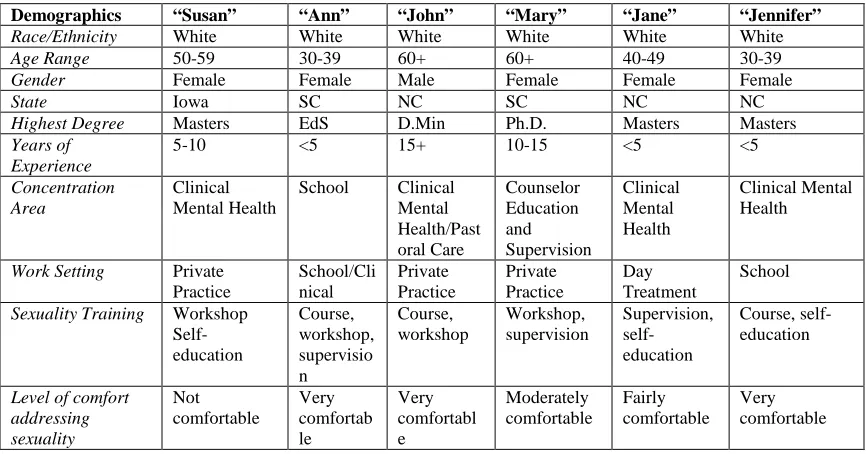
DESCRIPTIONOFPARTICIPANTS.……….…………67
ANALYSISOFRESEARCHFINDINGS………...69
SUMMARY………83
CHAPTERV:DISCUSSION………85
OVERVIEW………...………85
LIMITATIONSOFTHESTUDY………...…..86
DISCUSSIONOFTHEMES……….……..…..90
IMPLICATIONSOFTHESTUDY…...………102
CONCLUSION……….107
REFERENCES ………...……….109
APPENDIX A: FOCUS GROUP PARTICIPATION DEMOGRAPHICAL SURVEY...115
APPENDIX B:LETTER OF INVITATION TO PARTICIPATE IN THE STUDY ...………122
APPENDIX C:INFORMED CONSENT FOR STUDY PARTICIPATION ……….123
APPENDIX D:24IM SITE INSTRUCTIONS FOR PARTICIPANTS………....126
LIST OF FIGURES
FIGURE 3.124IM SITE SCREENSHOT………57 FIGURE 4.1 REALMS OF SEXUALITY FROM COUNSELORS’ PERSPECTIVE………..72
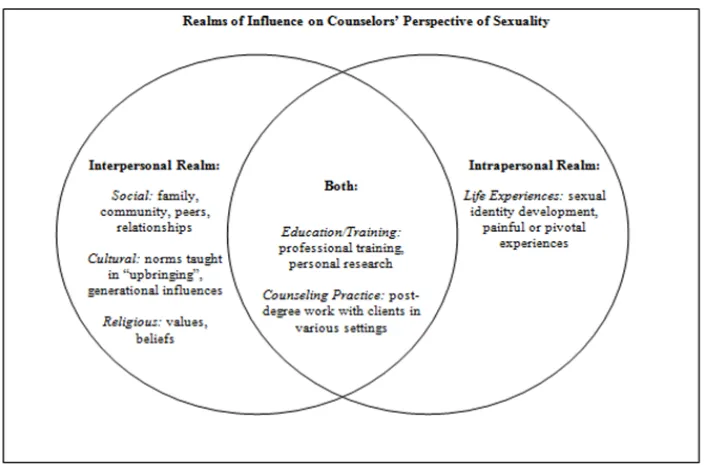
FIGURE 4.2 REALMS OF INF.ON COUNSELORS’ PERCEPT.OF SEXUALITY……….74 FIGURE 4.3 DIALECTICS IN SEXUALITY COUNSELING PRACTICE………..76
CHAPTER I
INTRODUCTION
Floating on a river, I am pushed by currents on either side. If the current is too strong on one side, I become stuck on the bank. If the opposing currents become entangled in a swirl, I become stuck in an eddy. However, if the two opposing forces meet with equal or alternating strength, then I am pushed down the river through the shimmering water in the sunshine and through the shadows beneath the trees, alternating between warmth and chill, clarity and darkness, but definitely moving forward. The force and temperature of the water, my confidence as a swimmer, and my ability to navigate, as well as the water and air creatures I encounter, all influence my experience (Toporek, 2011, p. 405).
Like the currents in the river, the personal experiences, socialization, and training of each counselor influence his/her perceptions and determine how each aspect of human experience is conceptualized and defined. These conceptualizations are expressed
through language. Language, in turn, serves to maintain the meaning of experiences and shapes the perceptions of others, which is then accepted as reality (Prawat, 1996; Prawat & Floden, 1996; Warmoth, 2000). In Counseling, contrasting conceptualizations of the definition of health have led to a dialectical dilemma in the profession, particularly as it
relates to sexuality (Beasley, 2008; Bullough, 1975; Diamond & Huebner, 2012; Larson, 1999; Myers, 1991; Swarbrick, 2006; Tiefer, 2010; Zalaquett, et al, 2008). While the tension in the Wellness and Medical Model approaches to health has persisted for an extensive period of time, the recent “sexuomedicalization” (Tiefer, 2010, p. 198) or the phenomenon of sexuality being medicalized has resulted in a “sexual socialization” (Paiva, 2005, p. 346), the normalization of sexual dysfunction.
The logical result of the sexual dysfunction lens is the determination that an individual requires a specialist to address sexual concerns and the oversimplification of sexuality in terms of mechanical function (Beasley, 2008; Bradley & Fine, 2009; Bullough, 1975; Murray, 2006), while omitting other aspects and factors that influence sexuality (Hogben & Byrne, 1998; Sachs & Duffy, 1976; Simon & Gagnon, 1984, 1986; Tiefer, 2006, 2010; Trimble, 2009; van der Kwaak, Ferris, van Kats, & Dieleman, 2010). In contrast, wellness approaches have emphasized a developmental perspective of human behavior but have not included a clear definition of the role of sexuality in overall
wellness (Myers, 1991; Myers & Sweeney, 2005, 2008; Myers, Sweeney, & Whitmer, 2000; Nosek, et al, 1994; Roscoe, 2009). At either extreme, the understanding and role of sexuality in Counseling has been limited. As sexuality is one aspect of human experience caught in the conflict between wellness and dysfunction, further examination of the experience of sexuality in counseling may provide perspective into how the meaning of sexuality is conceptualized for counselors.
According to the social psychological constructivist viewpoint, experiences and behaviors are expressed and maintained through the language created to communicate them, leading to the focus for exploring meaning being the words chosen by a community
for the construct of interest (Prawat, 1996). The language used to express a construct has a powerful influence over the members of a community because it shapes the overall worldview (Prawat, 1996; Toporek, 2011). Therefore, efforts to impact the philosophy of sexuality training and interventions must begin with a discussion of the language used to express these concepts (Diamond & Hubener, 2012; Elders, 2010; Paiva, 2005; Trimble, 2009). From this perspective, framing sexuality in terms of dysfunction, through
providing instruction based predominantly on the Diagnostic and Statistical Manual of Mental Disorders (DSM), would inevitably have an impact on the meaning that
counselors place upon sexuality (American Psychiatric Association (APA), 2000; Beasley, 2008; Council for the Accreditation of Counseling and Educational Related Programs (CACREP), 2009).
Although counselor education programs may not directly emphasize the sexual dysfunction schema, the medical model perspective may be reinforced with respect to sexuality, due to the emphasis in counselor education on DSM-focused diagnostic training while omitting required training in sexual wellness for many counselors in training (CACREP, 2009). With an emphasis on the DSM in training programs,
counselors may rely on a sexual dysfunction model and either avoid the topic or refer to a sex therapist, leading to perpetuation of stigma surrounding sexuality and lack of
opportunity to increase competency in sexuality counseling.
In Counseling, sexuality has been treated as a specialty area for which extensive training is required (Gill & Hough, 2007; Nasserzadeh, 2009; Southern & Cade, 2011). Lack of training may be one reason many counselors reported feeling uncomfortable addressing sexual issues with their clients (Parritt & O’Callaghan, 2000; Southern &
Cade, 2011). To complicate matters, the nature of sexuality interventions has been consistently unclear with regards to who provides the interventions and what treatments require specialized training (Elders, 2010; Gill & Hough, 2007).
Wellness approaches have been suggested as a framework for addressing sexuality in counseling with specific populations, such as women with disabilities and female childhood sexual abuse survivors (Hodges & Myers, 2010; Myers, 1991; Nosek, et al, 1994). Wellness approaches affirm that the definition of health goes beyond not having a disease or disorder to include “a state of complete physical, mental, and social well-being” (Nosek, et al, 1994; Roscoe, 2009, p. 216). However, wellness models also limit the definition of sexuality to a couple experience and emphasize gender identity and intimacy over sexual expression (Myers & Sweeney, 2005, 2008; Roscoe, 2009).
The narrowly-focused arguments regarding sexuality, focus on sexual
dysfunction, and the lack of clear definition about what sexual behavior constitutes health and what constitutes dysfunction leaves counselors professionally unarmed in addressing sexuality, leading to lack of intentionality and awareness. Lack of intentionality and awareness increase the risk of harm through infusing personal biases, values, and
judgments into interventions, perpetuating both the sexual myths and the incompetence of counselors to address sexuality with clients. To truly adopt theoretical perspectives
regarding sexuality, whether medical or wellness focused, the ambiguity of the construct of sexuality in counseling has to be clarified.
Problem Statement
When the information provided in Counselor Education programs focuses on dysfunction and social taboos, the potential for several consequences arises. Counselors
may internalize a view of sexuality rooted in dysfunction, leading to the invalidation of clients’ experiences through the use of language rooted in a binary conceptualization (Beasley, 2008; Tiefer, 2010; Trimble, 2009). Counselors may also be more likely to avoid training and clinical opportunities in sexuality due to personal discomfort, leading to a self-fulfilling prophecy of incompetence (Bogey, 2008; Fyfe, 1980; Giami & Pacey, 2006; Gill & Hough, 2007; Jackson, 2010; Southern & Cade, 2011). Finally, counselors and clients may overlook sexuality in the counseling process due to socially imposed stigma that they may both accept as reality.
Sexuality interventions in counseling are perceived as a specialization, leading to many counselors providing a referral rather than an intervention (Giami & Pacey, 2006; Nosek, et al, 1994; Paiva, 2005; Tiefer, 2006). In spite of periods of focus on sexual health and wellness in the literature, there has not been a significant shift to reject the sexual dysfunction lens in practice (Fyfe, 1980; Giami & Pacey, 2006; Nosek et al, 1994; Tiefer, 2006; Trimble, 2009). To date, research has either been philosophical or
quantitative in nature, and no research has been conducted on counselors’ perceptions of sexuality in their clinical practice. From the social psychological constructivist
perspective, understanding the language counselors use to express their perceptions of sexuality will provide insight into the way that the counseling profession conceptualizes sexuality, leading to an opportunity to clarify professional values regarding sexuality counseling.
While the literature has emphasized the need for further research in sexuality counseling (Hays, 2000; Parritt & O’Callaghan, 2000), no research to date has been conducted on the meaning and language that counselors attribute to sexuality. Defining
sexuality and sexuality counseling from this lens is essential to begin to establish
consensus within the profession regarding the degree and manner in which counselors are trained to provide sexuality counseling. In addition, an exploration of the meaning of sexuality will assist in the development of a sexual wellness model to structure sexuality interventions with clients and provide an alternative to the medical model approach currently dominating sex therapy (Nasserzadeh, et al, 2009; Southern & Cade, 2011).
Need for the Study
As consistency in the conceptualization and definition of sexuality is lacking in the counseling profession, the construct of sexuality from counselors’
perspectives will be explored. The dialectical dilemma in sexuality counseling appears to be rooted in the conflict between medical model and wellness-based approaches in the profession (Beasley, 2008; Diamond & Hubener, 2012; Elders, 2010; Myers & Sweeney, 2005, 2008; Nosek, et al, 1994; Swarbrick, 2006; Tiefer, 2010). This conflict is evident in and perpetuated by the language that is utilized to conceptualize sexuality (Beasley, 2008; Lazarus, 2008; Paiva, 2005; Prawat, 1996; Tiefer, 2010). The meaning associated with sexuality varies depending on the lens from which it is viewed.
From a developmental perspective, sexuality is determined to vary throughout the lifespan based upon age and stage of life (Southern & Cade, 2011). The most prominent developmental perspective of sexuality can be attributed to Sigmund Freud, the author of the theory of psychosexual development. Freud perceived the life stages as defined by an individual’s sexual development. Specifically, Freud perceived sexual urges as the foundation for sexual interest and behavior, with particular attention to abnormal sexual behavior (Lazarus, 2008). His work had a significant influence on the psychology
profession and established language specific to sexuality. For example, Freud defined healthy sexual functioning for women as the ability to move from clitoral to vaginal orgasm (Irvine, 1990).
From a sociological perspective, sexuality is viewed as a social behavior with norms determined by social and cultural factors (Diamond & Hubener, 2012; Lazarus, 2008; Paiva, 2005; Southern & Cade, 2012; Trimble, 2009). The social learning theory asserts that sexual pleasure is a powerful reinforcer for sexual behavior, learned through modeling (Hogben & Byrne, 1998; Petersen & Hyde, 2010; Sachs & Duffy, 1976). Because sexuality is viewed as a subjective experience, the sociological research emphasizes the fluidity of sexuality without clarifying the construct.
The medical model focuses on the biological aspects of sexual functioning and behavior based upon the sexual response cycle (APA, 1952; APA, 1968; APA, 1980; APA, 1994; APA, 2000; Bradley & Fine, 2009; Sexuality Encyclopedia, 2012). In addition, sexuality is defined as an experience shared within a couple context (Lazarus, 2008). In the medical model, the emphasis is placed upon the rapid alleviation of symptoms contrary to the sexual response cycle (Bullough, 1975; Southern & Cade, 2011). While the definition of sexuality is consistently focused on objective
physiological aspects, the social and cultural influences are omitted in the definition of sexual functioning (Tiefer, 2006; Trimble, 2009).
Wellness approaches show some consistency in perceiving sexuality as a holistic and developmental experience, embracing sexual expression as a key aspect of
personality and emphasizing variation from the binary system of conceptualizing gender identity and roles (Roscoe, 2009; Southern & Cade, 2011; Trimble, 2009). While
sexuality is viewed as essential to overall wellness (Beasley, 2008; Paiva, 2005), it is not highlighted as a core dimension in wellness models (Myers & Sweeney, 2005, 2008; Roscoe, 2009). According to the Indivisible Self Model, healthy sexuality is viewed in terms of love/relationships and gender/sex roles, neglecting the sexuality of other stages across the lifespan (Myers & Sweeney, 2005, 2008). In spite of the emphasis on
expanding the definition of sexuality beyond the binary perspective, wellness models lose the consistency found in the medical model in favor of extremely general
conceptualizations.
Inconsistencies in defining sexuality contribute to lack of clarity regarding the nature and scope of sexuality counseling. Although sexuality is perceived as
developmental, sexuality counseling is perceived as a specialization without clear parameters (Southern & Cade, 2011). The term sexuality counseling is used across disciplines, and it is viewed as the promotion of sexual health (van der Kwaak, van Kats, & Dieleman, 2010). In contrast, emphasis in sexuality training is focused on sex therapy programs, which focus on medicalized interventions for sexual dysfunction (Southern & Cade, 2011). In counseling, the Council for the Accreditation of Counseling and Related Educational Programs (CACREP) does not require sexuality counseling training for any concentration except marriage and family counseling, which further reinforces both the perception that sexuality only pertains to couples and that sexuality interventions are a specialty (CACREP, 2009).
Professional standards for sexuality counseling are outlined by the American Association of Sex Educators, Counselors, and Therapists (AASECT). Although the organization provides a clear definition for sexuality counseling and outlines specific
training and practice criteria, these criteria are not intended for masters-prepared
clinicians. Instead, professionals with a graduate degree are required to seek certification as a sex therapist instead (AASECT, 2012; Southern & Cade, 2011). From this lens, sexuality counselors are not qualified to treat sexual dysfunction, and the sex therapy field is focused on medical interventions, leaving counselors in a position of professional confusion regarding qualification to provide intervention and education regarding sexual concerns with clients.
Much education and training on sexuality focuses on deviance, risk, and
physiological functions in sexual behavior (Bradley & Fine, 2009; Giami & Pacey, 2006; Weerakoon, Sitharthan, & Skowronski, 2008; Zwibelman & Hinrichsen, 1977), whereas research emphasizes focusing on sexual pleasure and health (Beasley, 2008; Diamond & Hubener, 2012; Elders, 2010; Nosek, et al, 1994). Use of the term “sexual health” is confusing due to the content often being based on risk and dysfunction (Southern & Cade, 2011). As language is the vehicle to communicate the meaning associated with sexuality (Murphy, 1997; Prawat, 1996; Prawat & Floden, 1994; Warmoth, 2000),
counselors may become stuck in the conceptualization of sexuality between language that implies risk and dysfunction and trying to provide interventions based on developmental and wellness perspectives.
Counselors appear to be confused regarding the nature and scope of sexuality interventions. While some believe that sexuality counseling is a specialization (Nasserzadeh, 2009; Southern & Cade, 2011), others are of the opinion that it is an essential skill for all counselors (Bogey, 2008; Fyfe, 1980; Jackson, 2010; Parritt & O’Callaghan, 2000; Tiefer, 2006; Trimble, 2009; van der Kawaak, Ferris, van Kets, &
Dieleman, 2010). Inconsistency in the perception of providing interventions related to sexuality could contribute to feelings of incompetency and avoidance of addressing sexuality with clients (Parritt & O’Callaghan, 2000). To clarify the nature of sexuality counseling, it is first necessary to explore the meaning that counselors attribute to sexuality. Exploring the language and meaning associated with sexuality will allow a discourse to take place within the counseling profession about perceptual inconsistencies. An increase in dialogue could lead to the determination of terminology that is consistent with the developmental roots of the profession and conceptualize sexuality from a holistic perspective. Establishing a common language alternative to the medical model could enhance sexuality training and interventions by empowering counselors to assess and address sexuality with clients with the intention of incorporating sexual functioning into a client’s overall wellness rather than only addressing sexuality when there is suspicion of dysfunction.
Purpose of the Study
The purpose of this phenomenologicial study is to investigate the meaning and language that counselors attribute to the construct “sexuality” and “sexuality counseling” from a social psychological constructivist perspective. Exploring the lived experiences of counselors regarding the provision of sexuality interventions will give insight into the dialectical experience of providing those interventions. To date, research has been focused on quantitative or philosophical inquiry (Parritt & O’Callaghan, 2000).
To access the meaning that counselors attribute to sexuality, it is essential to examine the language used to express the construct. Research questions were developed to determine how counselors experience sexuality from a personal and professional
perspective. The specific research questions that I will seek to answer from a social psychological constructivist perspective are:
1. What language and meaning to counselors attribute to sexuality?
2. What influences the language/meaning counselors attribute to sexuality? 3. Based upon counselors’ lived experience, how is sexuality experienced in
the counseling process?
4. What implications do these meanings have for Counselor Education and training?
The researcher’s goal is to identify themes in the conceptualization of sexuality and sexuality counseling with the intention to highlight areas of concentration for future training and research and provide a basis for developing a wellness-based model for sexuality interventions.
Significance of the Study
The current study is significant in that it offers three contributions to the existing body of research. First, this study provides information regarding the language and meaning attached to the construct “sexuality” in counseling. Second, this study increases awareness and insight regarding counselor experiences regarding the impact of their perceptions on providing sexuality counseling to clients. Finally, this study provides an opportunity to make recommendations for the improvement of sexuality training practices in Counselor Education programs.
The language and meaning associated with sexuality in counseling is significant in clarifying the professional stance as it relates to the human sexual experience, which in turn provides a basis for conceptualizing the role of sexuality in the counseling process,
how to assess sexual functioning in clients, the most appropriate counseling interventions with regards to sexuality, and the role of counselors in addressing the range of sexual concerns with which clients may present. It is also important to identify how counselors’ personal experiences impact their conceptualization of clients’ sexuality from an ethical perspective to ensure that no harm is being inflicted on clients as a result of counselors’ personal views.
Much emphasis is placed upon self-awareness in counselors. Understanding counselors’ perspectives of their sexuality interventions with clients is significant in assessing the needs of counselors related to sexuality training and supervision. When sexuality is not discussed extensively in counselor education programs or in supervision, it is less likely that counselors will then address sexuality with clients. Creating a
dialogue about the role of sexuality in counseling can assist counselor educators and supervisors in developing ways to incorporate sexuality into discussions with counselors.
Finally, determining where on the wellness-dysfunction continuum counselors place sexual experiences is significant in determining whether counselor education programs should continue to teach counselors in training about sexuality based on DSM diagnoses and recommend referral for intensive interventions or if new sexuality training practices and competencies need to be developed within the counseling profession based upon a wellness perspective.
Overall, sexuality has not been addressed in the literature from the perspective of counselors, and the current study will begin a dialogue that raises additional research questions for further examination. Encouraging focus on counselors highlights the responsibility to advocate for the incorporation of sexuality into counseling with greater
intentionality and less stigmatization than presently exists. It further encourages a
dialogue that negates waiting for clients to bring up their sexual concerns or immediately referring clients to a specialist, who will inevitably approach the sexual concern from a medical rather than a developmental perspective.
Definition of Terms
Dialectic—A method of argument or exposition that systematically weighs contradictory facts or ideas with a view to the resolution of their real or apparent contradictions (American Heritage Dictionary, 2012)
Medical Model—The traditional approach to the diagnosis and treatment of illness as practiced by physicians in the Western world since the time of Koch and Pasteur. The physician focuses on the defect, or dysfunction, within the patient, using a problem-solving approach. The medical history, physical examination, and diagnostic tests provide the basis for the identification and treatment of a specific illness. The medical model is thus focused on the physical and biologic aspects of specific diseases and conditions (Mosby’s Medical Dictionary, 2009)
Sexuality—a central aspect of being human throughout life and encompasses sex, gender identities and roles, sexual orientation, eroticism, pleasure, intimacy, and
reproduction. Sexuality is experienced and expressed in thoughts, fantasies, desires, beliefs, attitudes, values, behaviors, practices, roles, relationships, and so on. Sexuality is influenced by the interaction of biological, psychological, social, economic, political, cultural, legal, historical, religious, and spiritual factors (World Health Organization, 2012).
Sexual Dysfunction—The disruption of sexual functioning, defined as the ability to experience desire, arousal, orgasm, and satisfaction. Primary sexual dysfunction has always been a difficulty, and secondary sexual dysfunction is a problem that emerged at some point (Bradley & Fine, 2009).
Sexuomedicalization—The medicalization of sexuality (Tiefer, 2010)
Medicalization—The complex process of transforming a social situation or personal experience, especially one that is culturally abnormal or ‘deviant’, into a medical problem that requires treatment by medical experts (Tiefer, 2010)
Wellness—the merging of body, mind, and spirit, with an emphasis on a balanced life-style as both a process and a goal (Myers, 1991)
Organization of the Study
As the meaning of sexuality is created and maintained by the language agreed upon among counselors within the Counseling profession, it is not surprising to observe a dialectical dilemma within the profession between sexual dysfunction and sexual wellness, perpetuated by the adoption of the DSM and exacerbated by
sexuomedicalization in the United States. Although attempts have been made to reframe the use of the DSM through introducing alternative interpretations of diagnoses or to reject the medical model in favor of a wellness model, counselors’ meaning of sexuality remains unclear. This study will seek to use a social psychological constructivist
perspective to conduct a qualitative study with a phenomenological design to examine counselors’ perceptions of sexuality and sexuality counseling through the language they use. Chapter 2 will provide an expanded exploration about the literature on sexuality counseling. Chapter 3 will include an explanation of the research design method used.
Chapter 4 will be a report of the results, and chapter 5 will include a discussion of the implications of the study for counselor education, training, practice and future research.
CHAPTER II
LITERATURE REVIEW
A dialectical dilemma has existed between the medical model and wellness-based approaches to mental health care provision, with sexuality being a recipient of the
consequences (Beasley, 2008; Diamond & Huebner, 2012; Elders, 2010; Myers & Sweeney, 2005, 2008; Nosek, et al, 1994; Swarbrick, 2006; Tiefer, 2010). Although the counseling profession had adhered to a wellness-oriented philosophy, it has remained loyal to the language imposed by the Diagnostic and Statistical Manual (Bradley & Fine, 2009; Dougherty, 2005; Smith & Robinson, 1995; Southern & Cade, 2011; Wampold et al., 2001; Zalaquett et al., 2008). The medicalization of sexuality has contributed to the determination that sexuality is a specialization in counseling (Nasserzadeh et al., 2009; Southern & Cade, 2011), in spite of affirmation of sexuality’s developmental nature (Diamond & Huebner, 2012; Elders, 2010; Fyfe, 1980; Gill & Hough, 2007; Southern & Cade, 2011; Trimble, 2009). As a result, efforts to increase training regarding sexuality in Counselor Education programs have not resulted in significant changes in programming (Fyfe, 1980; Paiva, 2005; Trimble, 2009), and little has been presented about how counselors conceptualize sexuality and sexuality counseling and incorporate it into practice (Hays, 2008; Parritt & O’Callaghan, 2000).
In this chapter, the definitions and standards of sexuality, sexuality counseling, and training will be explored within the context of medical and wellness model
perspectives, with an emphasis on the language and meaning attributed to sexuality. Also,
the movement toward a constructivist perspective of sexual wellness will be highlighted. This chapter concludes with a summary of the language and meanings attributed to sexuality in the counselor and counselor education literature.
Conceptual Models of Sexuality
While the definition of sexuality and sexuality counseling has been unclear across disciplines, perspectives of sexuality can be viewed along a continuum between the medical and wellness models. Specific definitions, standards, and interventions of sexuality counseling have been based upon where on the continuum sexuality is placed, indicated by the language used by professionals, both influenced by and an indicator of attitudes about sexuality (Beasley, 2008; Lazarus, 2008; Paiva, 2005; Prawat, 1996; Tiefer, 2010).
In the United States, the presentation of wellness and medical models of health have appeared to contradict rather than complement each other, with the medical model pre-dating wellness approaches in service provision (Bullough, 1975; Gladding, 1992). In Psychology, Counseling’s “mother discipline, ” (Urofsky & Engels, 2003, p. 126), the language used to conceptualize sexuality was established by the Diagnostic and
Statistical Manual of Mental Disorders (DSM), originally identified as sexual deviation, including sexual immaturity, sex offenses, and sexual perversion (APA, 1952). The second edition of the DSM expanded the categories of sexual deviation to include homosexuality, fetishism, pedophilia, transvestitism, exhibitionism, voyeurism, sadism, masochism, and other sexual deviations (APA, 1968). The third edition of the DSM included a shift from sexual deviations to Psychosexual Disorders (APA, 1980). Psychosexual dysfunctions outlined a perception of deviant sexual experience based
solely upon “dysfunction” as determined by Helen Singer Kaplan’s adaptation of the sexual response cycle observed by Masters & Johnson (APA, 1980; Sexuality
Encyclopedia, 2012). The counseling profession adopted the DSM as the standard for conceptualizing client concerns and structuring interventions to meet the demands of the United States’ mental health industry in the 1970s-1980s (Murray, 2006; Smith & Robinson, 1995). By doing so, the counseling profession also embraced the medical model, and therefore, its definition of sexuality. Many have asserted that the medical model is in direct contrast with the philosophy and values of the profession, which
refuted the universal problem-centered approach (Urofsky & Engels, 2003) and expanded mental health services to include prevention and wellness (Myers, 1991; Smith &
Robinson, 1995). From that point, the Counseling profession became enmeshed in a dialectical dilemma between emphasizing wellness and treating dysfunction, in which sexuality became entangled.
Perhaps the culmination of the vacillation between extreme views regarding sexuality in America throughout the country’s young history (Lazarus, 2008), there has appeared to be a recent emerging consensus across disciplines that sexuality is more complex than mere biological function (Bogey, 2008; Fyfe, 1980; Gill & Hough, 2007; Jackson, 2010; Lazarus, 2008; World Health Organization, 2012), with new
conceptualizations of sexuality including both the physiology of and the meanings associated with sexual behavior (Bogey, 2008; Lazarus, 2008; World Health Organization, 2012). Although the complexity of sexual behavior has recently been acknowledged, there continued to be little clarity and agreement regarding a concrete definition of sexuality (Jackson, 2010; Tiefer, 2006), and most research on sexuality has
focused on dysfunction rather than health (Kleinplatz, et al., 2009; Lazarus, 2008) based upon research on American sexuality and sexual behavior conducted half of a century ago (Lazarus, 2008).
Defining Sexuality
Sexuality is more than what we do; it is a part of who we are. According to Long, Burnett, and Thomas (2006), sexuality could be defined as “an integral part of self-expression that is informed by our views of self, our sexual choices, our identification as male or female, and our physical selves” (p. 2). Many have agreed that sexuality is developmental in nature, with sexual expression differing between children and adolescents, which in turn differ from adults (Southern & Cade, 2011). Perhaps the largest influence on the developmental perception of sexuality could be attributed to Sigmund Freud, whose theory of psychosexual development provided a foundation for understanding the human psyche based upon his conceptualization of normal and abnormal sexual development across the life span. Although Freud was given credit for sexualizing mental illness, his work merely provided structure for the perspectives of his time and offered an alternative to the medical interventions that were being provided— the talking cure. Freud’s theory highlighted that when an individual acted on his/her sexual urges, there was an increase in both sexual interest and behavior, particularly in abnormal sexual behavior (Lazarus, 2008).
From a sociological perspective, sex is a social behavior, with norms being defined within a social and cultural context (Diamond & Hubener, 2012; Lazarus, 2008; Paiva, 2005; Southern & Cade, 2012; Trimble, 2009). In Western culture, the foundation of sexual values was based upon Puritanism, which promotes sexual expression within
the confines of a marital relationship, defined in America as the union between one man and one woman (Beasley, 2008; Jackson, 2010; Lazarus, 2008). Adhering to this ideal required that society placed significant effort on the promotion of defining sexual health and dysfunction within the scope of a binary perspective (i.e. male/female,
heterosexual/homosexual, risk/safety; private/public) (Beasley, 2008; Lazarus, 2008). The Social Learning Theory has asserted that sexual pleasure is a powerful reinforcer for engaging in sexual acts (Hogben & Byrne, 1998), with sexual behavior learned through conditioning (Hogben & Byrne, 1998; Petersen & Hyde, 2010; Sachs & Duffy, 1976) and sexual development influenced by parental behavior and interactions. The result of these conclusions was that sexuality “[could] be taught” (Hogben & Byrne, 1998, pg. 61). Influences on the social theories of sexuality have included Kinsey, Simon, and Gagnon. Alfred Kinsey’s descriptive survey of American male and female sexual behavior provided comprehensive information regarding the contrast between ideal American sexual values and the reality of American sexual behavior, challenging the binary sexual construct and demonstrating that American sexual expression fell along a continuum instead (Lazarus, 2008). His research provided valuable information for sexuality researchers to develop theories regarding sexuality (Hogben & Byrne, 1998). Gagnon & Simon’s research on sexual scripts highlighted the influence of culture on sexual expression by determining both the meaning associated with and the actions of sexual behavior (Lazarus, 2008; Simon & Gagnon, 1984, 1986). These authors’ findings negated previous notions that sexual behavior was predetermined by biological drives.
Recently, sexuality has been defined in holistic manner, including biology, psychology, morality, and social aspects (Bogey, 2008). Sexual stigmatization has led to
increased advocacy for the recognition of sexual rights and an emphasis on a more holistic approach to sexuality counseling that includes addressing social, cultural, and political influences on sexual functioning (Tiefer, 2010). Unfortunately, the sexual rights advocacy movements have largely focused on women’s rights and lack gender neutrality in their criticisms of the medical model.
Medical Model and the DSM
The term “medical model” has been used in psychology to emphasize the belief that abnormal behavior should be addressed with medical interventions due to a
biological cause (Bradley & Fine, 2009; Dougherty, 2005; Wampold, Ahn, & Coleman, 2001). Although its roots date back to Hippocrates’ theory of imbalance in the four humours being the source of illness, the modern medical model was introduced in 1971 by psychiatrist Ronald Laing in response to criticism regarding diagnosing human behavior without sufficient physical evidence. From this model health was defined as “the absence of disease or infirmity,” and illness was measured objectively based upon a mechanical perspective of the human body. As the dominant model in the United States, medical research has largely relied upon this lens in the conceptualization of health (Dougherty, 2005; Larson, 1999; Peele, 2008; Wampold, Ahn, & Coleman, 2001). Overall, the medical model focus has been on the alleviation of symptoms (Tiefer, 2006; Zalaquett, et al, 2008), and interventions have five components: the presentation of a disorder/problem/complaint; an explanation of the problem in psychological terms; a warranted, theoretically-based psychological intervention; provision of a therapeutic intervention by a psychologist; and the attribution of the alleviation of the problem to the intervention (Wampold et al., 2001).
Several limitations have been identified in the medical model approach. The emphasis on deficiencies may overlook aspects of health. Focus on rapid stabilization may create bias in the assessment process, and the exclusion of spirituality omits a significant cultural influence on the conceptualization of problems. In mental health, the medical model perspective that therapy is “a pill” rather than recognizing the impact of the therapeutic relationship on change also minimizes the healing process while
emphasizing the end result (Wampold et al., 2001).
In psychology, the structure of the medical model became standardized through the publication of the DSM in 1952. The initial DSM categorized specific types of pathological behavior patterns stemming from “mental health problems” based upon observations made in the military. Although revisions have occurred periodically since its original publication, the DSM has remained loyal to the medical model to conceptualize psychological complaints (Peele, 2008). Currently, the DSM-IV-TR is depended upon in a variety of mental health service delivery settings, often with payment for services contingent upon a DSM diagnosis generated from this text and medical model approach to treatment (Zalaquett et al, 2008). Due to the assumption that all disorders have a
biological basis, symptom alleviation often includes psychotropic medications, at times in spite of conflicting or minimal evidence of effectiveness (Murray, Jr., 2006). As the Counseling profession expanded in its scope of practice beyond educational settings in the 1970s-1980s, it incorporated training based upon the DSM into training programs (Gladding, 1992).
In conflict with the mission statement of the Counseling profession, criticisms of the DSM also have included limited consideration for social and cultural influences on
mental dysfunction and an assumption that the behaviors outlined in the DSM are truly deviations from the norm without clearly defining the parameters of normality (Zalaquett et al, 2008). In addition, the symptoms outlined in each category are not mutually
exclusive from each other, and the diagnostic process is not free of clinical subjectivity (Dougherty, 2005; Zalaquett et al, 2008), leading to susceptibility to abuse for the purposes of payment and accessing services (Dougherty, 2005).
Regarding sexuality, the emphasis placed upon a biological foundation of sexual dysfunction has been criticized for excluding social, cultural, and experiential influences on sexual expression (Tiefer, 2006). However, the shift of government funding from educational services to the military sector led to counselors competing in the mental health marketplace with social workers, psychologists, and psychiatrists (Gladding, 1992). Under pressure, counselors had to demonstrate proficiency in the existing language and conceptualization of the mental health arena in the treatment of mental illness (Myers, 1991). As a result, the Counseling profession incorporated medical model language, structure, and training into Counselor Education programs (Murray, 2006; Smith & Robinson, 1995; Urofsky & Engels, 2003). There has been some criticism of this decision as a significant shift away from the developmental roots of the profession (Dougherty, 2005; Urofsky & Engels, 2003). In spite of the fact that the ACA does not specifically endorse the medical model as the method of diagnosis and conceptualization in Counseling, the Council for Accreditation of Counseling and Related Educational Programs (CACREP, 2001) began to require training in the current DSM (Dougherty, 2005). However, criticism of the medical model led the counseling profession to explore new conceptual models of intervention.
Sexuality and the Medical Model
The medical model has been infused into the conceptualization of sexual behavior for hundreds of years. As early as 1728, Hermann Boerhaave addressed the risks
associated with excessive orgasm on men’s health, infusing Christian theological bias into medical practice. The pattern of equating sexuality with illness has persisted since that time (Bullough, 1975). As sexuality accounts for approximately 30% of health care costs in the United States (Elders, 2010), the result of the impact of the medical model of sexuality has been the sexuomedicalization of American culture (Tiefer, 2002).
From the medical perspective, sexuality is a health concern, with an emphasis on alleviating disease, dysfunction, and disorder to regain a state of health and functioning (Bradley & Fine, 2009). Sexual function is defined as “the ability to experience desire, arousal, orgasm, and satisfaction” (Bradley & Fine, 2009, p. 76). This definition is based upon the sexual response cycle as defined by psychiatrist, Helen Singer Kaplan, a
specialist in human sexuality who modified the cycle originally proposed by Masters and Johnson (Sexuality Encyclopedia, 2012). Her work served as the foundation for the sexual disorders outlined in the third edition of the DSM (1980) and was based on the physiological sexual experiences observed within the female and male partner in
heterosexual couples in a laboratory setting (Nasserzadeh, 2009; Sexuality Encyclopedia, 2012). The DSM emphasized objective measures in diagnosing sexual dysfunctions, such as the amount of sex and details regarding physiological performance (Southern & Cade, 2011). In addition to symptom alleviation, the medical model of sexuality has focused on a quick resolution of undesirable symptoms through medication administration
(Bullough, 1975; Southern & Cade, 2011).
Several criticisms have been published about the perspective of the medical model regarding sexuality. First, the focus on the physiological experiences of
heterosexual couples omits social and cultural influences on sexuality (Southern & Cade, 2011), which is incompatible with recognizing sexual diversity and an expansion to conceptualizing sexuality as an aspect of a person’s identity (Griffin, 1995; Tiefer, 2006). Second, only seven percent of sexual problems are actually shown to be due to medical factors. Additionally, medical interventions implemented for psychiatric symptoms cause sexual side effects, raising a question regarding the source of the sexual problems in that seven percent (Southern & Cade, 2011), Third, the medical model has a history of imposing stereotypes about sexual behavior that are perpetuated in spite of knowledge to the contrary, with sexual dysfunctions being viewed as more common in women than men (Bradley & Fine, 2009; Bullough, 1975). Criticisms have led to the introduction of alternative models of sexuality, such as the New View of Women’s Sexual Problems, which takes into account biopsychosocial influences on sexuality (Southern & Cade, 2011; Tiefer, 2006). Even in the medical community, the perspective of sexuality has shifted from rigid adherence to physiological sexual functioning to perpetuate the human species to a social health behavior (Elders, 2010). Although sometimes criticized as being unscientific and insensitive to multicultural factors (Zalaquett, et al, 2008), the DSM became the standard by which mental health professionals continue to diagnose mental “dysfunction” and develop treatment in continue to diagnose mental “dysfunction” and develop treatment interventions (Peele, 2008).
As sex therapy became increasingly focused on using medicalized treatment approaches, counselors’ discomfort in addressing sexuality with clients increased
(Bradley & Fine, 2009; Hays, 2008; Southern & Cade, 2011; Tiefer, 2006). Recent literature expressed disapproval of sexuomedicalization, with specific concerns raised in the dismissal of other contributing factors in sexual health and emphasis on short term resolution of the sexual “dysfunction” promoted by the pharmaceutical companies and managed care (Bradley & Fine, 2009; Southern & Cade, 2011; Tiefer, 2006). The discontent with medicalized conceptualizations of sexuality may be rooted in the historical emphasis on wellness rather than dysfunction in the counseling profession.
Sexuality and Wellness Models
In contrast to the very specific medical conceptualization of sexuality, wellness approaches have defined sexuality in broad terms, with some acknowledgment that it is a fundamental dimension of the personality (Fyfe, 1980) and includes all degrees of
“ability, disability, and has many variations” (Gill & Hough, 2007, p. 75). Southern and Cade (2011) indicated that “sexual health represents more than the relative absence of symptoms, duress, or impairment” (p. 247) and that it “takes into account increasing opportunities to find fulfillment and make meaning from sexuality” (p. 247). Diamond and Huebner (2012) asserted that sexuality is a “health behavior with wide-ranging implications for mental and physical well-being” (p. 57). Other authors emphasized the impact of sexuality on overall wellness (Beasley, 2008; Paiva, 2005), as well as its overall complexity (Trimble, 2009). Considering the criticism of the medical model’s specificity and standardization of sexual experience, these explanations of sexuality from a wellness perspective are vague.
Wellness models have been inconsistent in their views of how sexuality fits into overall wellness, with four specific patterns of interest. First, like the medical model
perspective, wellness models have also defined sexuality as a couple experience with optimal sexuality viewed as involving intimacy between two partners (Kleinplatz, et al, 2009; Lazarus, 2008). Myers and Sweeney (2005, 2008) eluded to sexuality in their Indivisible Self model when they described the love aspect of the social self as involving intimacy. Sexuality in this model was undefined, yet assumed to include sexual activity based on the friendship aspect of the social self being described as involving the absence of sexual commitment. Therefore, the model insinuated that a difference between
friendship and love is the level of intimacy/sexual commitment.
The second pattern regarding sexuality in wellness models was that sexuality was excluded as its own dimension of wellness. While both the Wheel of Wellness and Indivisible Self models of wellness included gender identity as one of their components of wellness, with the implication that androgyny is the highest level of functioning, sexual expression was not explicitly discussed as a noteworthy component in its own right (Myers & Sweeney, 2005, 2008). In Roscoe’s (2009) description of the dimensions of wellness, there was an implication that sexuality was an aspect of the social realm and the physical realm. It was defined in terms of safe sex practices and the absence of disease, which contradicted the overall definition of wellness (Roscoe, 2009). Although Myers and Sweeney (2008) claimed that “studies on wellness represent every aspect of the entire life space,” (p. 490), there was a deficit regarding the inclusion of sexuality, particularly in their own model of wellness. An example of how their wellness model simultaneously includes and excludes sexuality is an article outlining the promotion of the wellness approach with female sexual abuse survivors. Although the author
specifically stated that sexual symptoms were a common experience of this population,
sexuality was not included in the assessment or treatment process (Hodges & Myers, 2010).
The third pattern regarding sexuality in wellness models is the emphasis on using this approach with women. As previously noted, the wellness model has been promoted for working with women with histories of sexual abuse (Hodges & Myers, 2010). This approach has also been suggested for implementation with women with disabilities as well (Parritt & O’Callaghan, 2000). There are currently no studies that examine this approach specifically applied to male sexuality.
The final pattern noted in sexuality in wellness models is the attempt to focus on sexual wellness while still maintaining loyalty to the medical model language and
conceptualization of sexuality. Sexuality counseling has been perceived as a specific type of counseling that implemented only when the client enters treatment for a sexual
problem (Southern & Cade, 2011). The new view of women’s sexual problems is based upon the same concept. It was anticipated that the client would introduce a sexual problem rather than incorporating sexuality as part of a wellness assessment, using language that implied a positive experience and inviting clients to talk about their experiences. Furthermore, there has been an assumption that counselors need to “coexist with the medicalization of sex therapy for the benefit of our clients and our profession” (Bradley & Fine, 2009, p. 77). When criticisms have been raised about the medicalization of sexuality, the wellness argument becomes weaker upon emphasizing this benefit, particularly without exploring what that specific benefit is to clients and to the profession of sex therapy. The statement implied that counselors should not challenge the current status quo where it pertains to sexuomedicalization.
In the helping professions, there has been an increase in endorsement of a paradigm shift toward studying positive, normative, and pleasurable dimensions of sexuality and sexual functioning, with the perspective that sexual activity is a health behavior connected to overall well-being (Diamond & Hubener, 2012). However, the literature has simultaneously demonstrated a continued ethical struggle within the Counseling profession as efforts have been made to elevate its reputation as a science (Dougherty, 2005; Wampold, Ahn, & Coleman, 2001; Urofsky & Engels, 2003) that are reflected in addressing sexuality. Balancing maintaining courteous relationships with psychiatry and psychology with asserting the distinct professional values on which Counseling was founded led to a “more than” position (Smith & Robinson, 1995), in which counselors were expected to navigate the dialectical dilemma of treating sexual dysfunction while also helping clients attain sexual wellness. One lens from which to view the conflict, dialectical philosophy perceives that “opposing forces provide a rich environment for growth and change” as long as counselors are actively engaged in resolving the dilemma (Toporek, 2011, pg. 406). To resolve the inconsistent messages regarding sexuality and clarify the profession’s sexual values and efforts in providing effective sexuality counseling, discussion is needed with regards to counselors’ current perceptions of sexuality, stemming from their own personal histories, as well as societal and professional messages received (Gill & Hough, 2007; Hays, 2008; Rohleder, 2010; Tiefer, 2006; Toporek, 2011; Trimble, 2009; Weerakoon, Sitharthan, & Skowronski, 2008).
Sexuality Counseling
Sexuality counseling is currently viewed as a specialization (Southern & Cade, 2011) in spite of counselors acknowledging sexuality as a developmental experience. Because “counselors in both agency and school settings are repeatedly involved in counseling situations that involve sex-related problems” (Fyfe, 1980, p. 147), it is necessary to clarify the nature of sexuality counseling to determine what aspects are specialties and what aspects are, in fact, core competencies.
Defining Sexuality Counseling. Possibly because counselors view that sex is more personal than suicide, drugs, or death (Lazarus, 2008), sexual interventions have been a neglected part of the counseling process. Instead, sexual interventions became focused in the sex therapy discipline, with emphasis on medicalization and quick fixes (Southern & Cade, 2011). Whereas sex therapy is designed to address sexual dysfunction and dissatisfaction, sexuality counseling has come to be defined as focused on sexual satisfaction and optimal sexual functioning (Southern & Cade, 2011). Sexuality counseling is a cross-disciplinary term that describes any action aimed to provide sexuality interventions. Characteristics of sexuality counseling in the medical discipline involve the “promotion of sexual health” through client-centered, non-discriminatory discussions of sexuality that emphasize establishing a trusting relationship, paying attention to space, place, and context, communication, and cultural beliefs (van der Kwaak, Ferris, van Kats, & Dieleman, 2010). In counseling, sexuality interventions are expected to focus on emotional aspects of human sexuality (Fyfe, 1980).
Standards for Sexuality Counseling Training. The Council for Accreditation of Counseling and Related Educational Programs (CACREP) established standards of training for counselors in 1981, with eight different areas of focused training and the relative absence of sexuality counseling training in counselor education programs (Dupkoski, 2012; Liles & Wagner, 2010). Training for issues related to sexuality have included addressing professional boundaries regarding sexual contact with clients in ethics courses; sexual minority issues in diversity-focused courses, and sexual disorders in assessment courses (Dupkoski, 2012). Within the specific counseling program areas of concentration, only marriage and family programs require a sexuality counseling course as part of masters’ level training (CACREP, 2009).
Although sexuality training is incorporated into marriage and family counseling programs, the focus on sexual problems in the context of relationships and marriage neglects the sexuality of all others, including children, adolescents, and single persons. In spite of training being “irrefutably the first step in the acquisition of knowledge…[that] underpins professional competence” (Giami & Pacey, 2006, p. 267), it is not the
knowledge itself that impacts counselors but how counselors “experience knowledge related to sex” (Trimble, 2009, p. 59). Without training, counselors are left to their own devices to develop the necessary skills to address sexuality with their clients.
The prevalent standard for sexuality counseling, training, and practice is outlined by the American Association for Sexuality Counselors, Educators, and Therapists (AASECT), the largest organization on credentialing guidelines and training (Gill &
Hough, 2007). In training, AASECT endorses the Sexual Attitude Restructuring (SAR) Model, originally developed by the Institute for Advanced Study of Human Sexuality in San Francisco, CA. This model involves systematic exposure to sexual material for the purpose of increasing awareness of one’s sexual values and biases (Stayton, 1998). AASECT also endorses a specific model for sexuality interventions, with specific roles and boundaries designated to sexuality counselors and sex therapists. AASECT endorses the PLISSIT model, which outlines a behavioral treatment protocol for sexual concerns based upon levels of competency, with specifications that sexuality counselors provide the first three levels and provide assessment and referral to sex therapists for the final level of interventions. In the first level, the counselor demonstrates comfort with the topic. At this level, permission is granted to clients to talk about sexuality (“P”). At the second level, the counselor recognizes sexual problems and provides limited information and education regarding sexuality (“LI”). At the third level, the counselor is able to evaluate sexual problems for intervention and referral, providing specific suggestions to clients to address sexuality concerns (“SS”). Should a counselor determine that sexual dysfunction is present through the assessment process, he/she would then refer the client to a sex therapist for level four, intensive therapy for severe sexual problems (“IT”) (ASSECT, 2012; Southern & Cade, 2011). According to AASECT,
Sex counselors represent a variety of professions, ranging from medicine to the clergy. Examples of sex counselors are Planned Parenthood counselors, nurses and other health professionals, school counselors, and clinical pastoral care and counseling providers. Counselors assist the client to
realistically resolve concerns through the introduction of problem solving techniques of communication as well as providing accurate information and relevant suggestions of specific exercises and techniques in sexual expression. Sex counseling is generally short term and client centered, focusing on the immediate concern or problem (AASECT, 2012).
AASECT does not require master’s level preparation for certification as a sex counselor, with masters prepared professionals not eligible for certification as a sex counselor and required to apply for certification as a sex therapist instead (AASECT, 2012). Therefore, a licensed professional counselor must become a certified sex therapist and provide interventions for sexual dysfunctions. The training for sex therapy
certification includes: membership in AASECT, a master’s degree plus two years of experience or a doctorate plus one year, professional licensure, human sexuality education, sex therapy training, attitudes and values training, clinical experience, and supervision (AASECT, 2012). Given the limitations regarding options for certification, the requirement that counselors treat sexual dysfunction may contrast with the
perspective of viewing sexuality from a perspective of wellness, while highlighting the need to also understand the sex therapy discipline.
The current trend in sex therapy is to focus on medical interventions for sexual dysfunction. Sex therapy’s emphasis on medical issues may ignore the systemic and relational issues, and underlying issues and opportunity to enhance sexuality and life satisfaction (Bradley & Fine, 2009). In addition, it continues to be unclear who is a sex
therapist and what they offer (Nasserzadeh, 2009). In spite of the training and standards provided by AASECT, more robust and systematic training requirements are
recommended (Nasserzadeh, 2009; Southern & Cade, 2011). How a sexuality training program is designed is based on the definition of human sexuality (Bogey, 2008), with training manuals and protocol based upon treating dysfunction, trauma, and gender disorders (Bogey, 2008). Variations in training and biases/beliefs can lead to variation in mental health services and a tendency to avoid sexuality with clients (Gill & Hough, 2007; Jackson, 2010).
While one author stated that “sexuality counseling is a professional specialization in transition” (Southern & Cade, 2011, p. 247), ambiguity in defining the professional expectations and limits may also deter counselors from addressing sexuality with clients. Three conclusions result from the literature: Counselors do not feel competent addressing sexuality with clients; Counselors seem to agree that sexuality is more than biological; and Counselors demonstrate preference toward a perception of sexual health rather than dysfunction. To further understand these results, it is necessary to examine how this dialectical dilemma manifests itself in sexuality training and counseling.
Dialectical Dilemmas in Action
Many sexuality education programs in the community have relied upon a medical conceptualization to educate about sexuality (Giami & Pacey, 2006; Zwibelman &
Hinrichsen, 1977). In these programs, the emphasis has often been placed upon
physiology and risks of sexual behaviors (Beasley, 2008; Elders, 2010; Southern & Cade, 2011), whereas counseling researchers have emphasized focusing on sexual pleasure, surmising that doing so will lead to more egalitarian sexual practices (Beasley, 2008).
Alternatively, the medical approach to sexuality education has promoted safe sex practices without educating about sexual pleasure, an indicator of wellness, and abstinence without addressing relationship skills and alternative sexual behaviors (Beasley, 2008). In addition, sexuality education has often been termed sexual health while using language and techniques rooted in sexual dysfunction (Southern & Cade, 2011). Although some medical professionals have begun to promote a developmental perspective of sexuality, promoting abstinence contradicts the validation that “humans are sexual beings from birth to death” (Elders, 2010, p. 248).
The medical model has shown a significant influence on the perception of sexuality that perpetuates the wellness/illness dilemma. In society, pharmaceutical companies have influenced individuals to self-diagnose sexual dysfunction and seek medication while wellness counseling has intended to empower individuals to pursue their own wellness instead of highlighting dysfunction (Tiefer, 2010). In fact, there has been a normalization of sexual dysfunction (Murray, 2006), and teaching that less [sex] is better while the advertisements and media emphasize more sex (Diamond & Huebner, 2012). Although there has been an increased emphasis on promoting holistic perspectives and interventions for sexual concerns in the counseling profession, the literature has simultaneously excluded men from alternative perspectives of sexuality in spite of men being a primary target for sexuomedicalization (Tiefer, 2010).
Counselors have existed in a dialectical dilemma of balancing wellness
approaches with the mandated medical model philosophy, with the dilemma providing “a rich environment for growth and change” (Toporeck, 2011, p. 406) as long as counselors are willing to accept the challenge. The Counseling profession has simultaneously offered
opposing endorsements of wellness/prevention and mandated diagnostic training based on the medical model through the CACREP requirement to teach the DSM (CACREP, 2009; Dougherty, 2005). Although the wellness and medical models have appeared to be in opposition to each other, it is the language used to conceptualize sexual behavior that perpetuates the rift. Counseling could rectify this dilemma by developing a diagnostic manual of its own or other standardized alternative to the current case conceptualization from a wellness, developmental perspective. In the meantime, there is a need to further examine the language and meaning that counselors and counselor educators attribute to behaviors and interventions to move away from extreme positions into a new, more dialectical understanding of the illness/wellness paradigms.
Wellness as a Constructivist Perspective
Wellness models are inherently consistent with constructivist philosophy. To examine the overlap between wellness approaches and constructivism, constructivist philosophy will be described before exploring wellness as constructivism. Wellness as constructivism can be observed through meaning, language, and learning aspects of wellness.
Constructivist Philosophy
Constructivist philosophy asserts that knowledge is dependent upon the context in which it is created, communicated, and maintained and is the opposite of objectivism (Murphy, 1997; Warmoth, 2000). Constructivism has been particularly influential in education and training settings, due to its emphasis on the learning process. Social constructionist epistemiology posits further that knowledge is not the property of the individual but the community in which it is created, known as a knowledge/discourse
community. From this lens, truth is established when a group of people agree on it as truth, which is communicated in turn through symbols such as language or art (Prawat & Floden, 1994). Thus, an individual may have an idea about a construct that would then assume different meanings based upon the social and cultural influence of the
individual’s discourse community. Discourse communities are fluid, fluctuating
throughout an individual’s life, beginning with the nuclear family unit, then to schools, peer groups, and larger communities. When an individual enters a new discourse community, “truth” will be re-negotiated based upon the interactions within that community. Due to technological advances in the modern and post-modern eras,
discourse communities are changed more rapidly, leading to a “continuous” reinvention of the meaning of constructs (Warmoth, 2000). The reinvention process is observed through the negotiation of new language regarding the construct (s) of interest.
Language as Meaning in Constructionism
Whereas social constructionism is a theory that emphasizes that knowledge is determined by social arenas and psychological constructivism asserts that an individual actively constructs knowledge through learning (Yilmaz, 2008), social psychological constructionism emphasizes that all experiences and behaviors are linguistic in that the language attributed to the experiences is negotiated and agreed upon between the individual and the discourse community when it becomes reality (Prawat, 1996).
Therefore, the only way to understand the language attributed to a construct is to engage in discourse about it.
The process of negotiating meaning through language is apparent within the medical model view of psychology in that “common language” was the motivator for the