Developing, implementing and evaluating an internet
curriculum for Egyptian teachers.
EL-GAMAL, Ahmed Ali Hussein.
Available from Sheffield Hallam University Research Archive (SHURA) at: http://shura.shu.ac.uk/19609/
This document is the author deposited version. You are advised to consult the publisher's version if you wish to cite from it.
Published version
EL-GAMAL, Ahmed Ali Hussein. (2003). Developing, implementing and evaluating an internet curriculum for Egyptian teachers. Doctoral, Sheffield Hallam University (United Kingdom)..
Copyright and re-use policy
See http://shura.shu.ac.uk/information.html
Sheffield Hallam University Research Archive
REFERENCE
ProQuest Number: 10694490
All rights reserved
INFORMATION TO ALL USERS
The quality of this reproduction is dependent upon the quality of the copy submitted.
In the unlikely event that the author did not send a com plete manuscript and there are missing pages, these will be noted. Also, if material had to be removed,
a note will indicate the deletion.
uest
ProQuest 10694490
Published by ProQuest LLC(2017). Copyright of the Dissertation is held by the Author.
All rights reserved.
This work is protected against unauthorized copying under Title 17, United States C ode Microform Edition © ProQuest LLC.
ProQuest LLC.
789 East Eisenhower Parkway P.O. Box 1346
Developing, Implementing and Evaluating an Internet
Curriculum for Egyptian Teachers
Ahmed Ali Hussein El-Gamal
A thesis submitted in partial fulfilment of the requirements of Sheffield Hallam University
For the degree of Doctor of Philosophy
October 2003
Collaborating Organisations: Egyptian Ministry of Higher Education.
Abstract
This research aimed to develop, implement and evaluate an Internet curriculum for pre-service teachers in Egypt within a constructivist learning environment. Accordingly, this study included the development of the content and objectives of the Internet curriculum, the design of a web-based learning environment, the trialling with groups of pre-service teachers and the evaluation of the effectiveness of both the Internet curriculum and the Web-based learning environment.
The methodology used in this study is considered to be a case study and it was also influenced by an action research methodology involving cycles of development, design, implementation and evaluation of the Internet curriculum. A number of methods were used in order to collect research data including questionnaires, observations, interviews and a learning styles inventory (Kolb, 1981). Furthermore, a content analysis was carried out of Internet users’ guides and teachers’ guides and a Web-based questionnaire was used in order to develop the objectives of the Internet curriculum.
A Web-based learning environment namely ‘Internet-Tutoring System’ was designed in order to provide the students with cognitive tools, information resources and authentic activities.
The implementation of the study took place in two phases. The first phase was conducted with a group of students’ teachers in Sheffield and the second phase was conducted with another group in Egypt. These phases aimed to identify the issues that emerge from using a Web-based learning environment based on the students’ feedback on both the learning environment and the Internet curriculum.
This study led to significant results in relation to the content of the Internet curriculum, student learning within a Web-based learning environment, the roles of the teacher, the design of the web-based learning environment and the students’ progress in the use of the Internet. The models of constructivist learning environments, particularly Jonassen’s (1997a) model, influenced the development of the Internet curriculum and its structure. Accordingly, several content structures were developed in order to take into consideration the different needs and expectations of the students. These included well-structured content with teacher-centred learning, semi-structured content with teacher-student learning and ill-structured content with learner-centred learning. In addition, the Web-based learning environment was designed in order to provide the students with cognitive tools, information resources and authentic activities. As a consequence, a range of tools and resources were integrated in order to encourage the students to play an active role in knowledge construction. This integration is considered to be a key aspect of this study and it was developed in order to accommodate the preferred learning styles of the students. Moreover, a range of roles for the teacher were illuminated in this study such as those of mentor, facilitator and orchestrator. These roles developed due to the integration of a number of teaching methods alongside the use of the Web-based learning environment. They were also influenced by the different content structures of the Internet curriculum and the different types of control over the learning process.
Acknowledgments
First of all, I would like to give a special thanks to my supervisory team for all their efforts during this period of my life. I wish to present all words of thanks and gratitude to my Director of Studies, Professor Brian Hudson for all his support to myself during this research. He was very supportive and encouraging throughout my study and I learnt a lot from him. I would like to thank also Alison Hudson for her supervision. She provided me with support and guidance throughout my study and particularly during the design and the implementation of the learning environment. I’m also very grateful to Dr. John Chatterton for his supervision and support especially during the implementation of this research.
Secondly, I would like to thank all the people who agreed to participate in this study especially all the students at Sheffield Hallam University and the students at Menofia University. I wish to thank also all the staff working in the Technological Development Centre in Menofia, Egypt for all their support and for all the facilities that they provided me with during this study. Particularly, I wish to thank Mr. Abd El-Razek Naser El-Din and Emad El-Mazar for their efforts, enthusiasm and support.
Thirdly, I wish to thank Professor Mostafa Abd El-Samea for his support and encouragement especially during the implementation of this research. I wish to thank also all my colleagues who assisted me in the implementation of this research in Egypt particularly Ahmed Asr for his support during the main trial in Egypt. I wish to thank also Ehab Gado and Mohamed Faty for providing me with training materials and for their support.
List of Contents
Topic
Pages
Title page
i
Abstract
ii
Acknowledgments
iii-iv
List of Contents
v-xii
List of Figures
xiii-xvi
List of Tables
xvii
Chapter one: Introduction
1-14
1.1. Introduction.
1-3
1.2. An overview of the educational system and the
technological development project in Egypt.
3-6
1.3. Research aim and objectives.
7
1.4. Original contribution to knowledge.
8-9
1.5. Action plan.
9-10
1.6. Thesis structure.
11-12
1.7. Programme of research.
13-14
Chapter two: Background Literature
15-57
2.1. Introduction
15-17
2.2. Constructivism
18-20
2.3. Constructivist teaching and learning principles
21-22
2.4. Models of constructivist teaching and learning
23-32
2.4.1. Constructivist learning environment model
- ■(Jonassen, 1999)
25-27
2.4.2. Selection, organisation and integration (SOI)
model (Mayer, 1999a)
28-29
2.4.3. Cognitive flexibility model (Spiro et al., 1991)
30
2.4.4. Open learning environment model (Hannafin et
Topic
Pages
2.5. Teaching and learning the use of the Internet
33-36
2.6. Web-based learning environments
37-41
2.7. Integrated learning environment
42-44
2.8. The roles of the teacher within Web-based
learning environments
45-48
2.9. Learning styles
49-53
2.10. Cognitive load
54-57
Chapter Three: Research Methodology
58-86
3.1. Methodology
58-66
3.1.1. Case study methodology
58-62
3.1.2 Action research methodology
63-66
3.2. Triangulation
66-67
3.3. Research ethics
68-69
3.4. Research method
70-86
3.4.1. Research sample
70
3.4.2. Data collection
71-81
3.4.2.1. Content analysis
72-73
3.4.2.2. Questionnaires
73-76
3.4.2.3. Learning style inventory
77
3.4.2.4. Observations
78-79
3.4.2.5. Interviews
80-81
3.4.3. Data Analysis
---
---82-86---3.4.3.1. Data analysis resulting from the content
analysis
82-83
Topic
Pages
Chapter four: Developing the Internet
curriculum
4.1. Introduction
87-117
87-89
4.2. The content analysis of the Internet users' and
teachers' guides
90-98
4.2.1. The main procedures for conducting the content
analysis in this research
91-92
4.2.2. The Analysis of Internet users’ guides, teachers’
guides and teacher training materials in Egypt
92-94
4.2.3. Software and hardware
94-98
4.3. Developing the main objectives for the Internet
curriculum
99-109
4.3.1. Introduction
99
4.3.2. The questionnaire reliability
100
4.3.3. Alpha if item deleted
101
4.3.4. Corrected item total correlation
101
4.3.5. Multiple Responses
102
4.3.6. Descriptive statistics
103-106
4.3.7. The main findings of the Internet curriculum
questionnaire
107
4.3.8. Selecting the objectives
108-109
4.4. The Units of the Internet curriculum
110-116
4.4.1. Unit one: Introduction to the Internet
110-111
4.4.2. Unit two: Searching the Internet for information
111-113
4.4.3. Unit three: Internet communication utilities
113-114
4.4.4. Unit four: Transferring files from the Internet
114-115
4.4.5. Unit five: Designing web pages
115-116
Pages
Chapter five: The impact of constructivist
learning environment on developing an
Internet curriculum
118-139
5.1. Introduction
118
5.2. The content structure
119-120
5.3. Identification of the content
120
5.4. Types of content structure
121-130
5.4.1. Ill-structured content
123-125
5.4.2. Well-structured content
126-127
5.4.3. Semi-structured content
128-130
5.5. Stages of knowledge acquisition
131-132
5.6. The structure of the Internet curriculum
133-139
5.6.1. A suggested model for the structure and the
stages of knowledge acquisition for the Internet
curriculum
135-139
Chapter six: Designing the Web-based
learning environment
140-170
6.1. Introduction
140-142
6.2. Characteristics of the Web and Web-Based
teaching and learning
143-144
6.3. Web design principles and guidelines
145-146
6.4. Design phases of the Web-based learning
environment
147-170
6.4.1. Planning the overall learning environment
structure and organisation
147-150
6.4.2. Web-based learning environment prototype
151-153
6.4.3. User interface design
154-157
Topic
Pages
6.4.5. Enabling and providing communication tools
161-164
6.4.6. Designing course activities
165
6.4.7. Designing and enabling the use of digital
portfolios
166-168
6.4.8. Evaluation of the design of the Web-based
learning environment
169-170
Chapter seven: Implementing the Web-based
learning environment
171-199
7.1. Introduction
171-175
7.2. Initial trial phase (Sheffield Group)
176-182
Summary of the initial trial outcomes
181-182
7.3. Main trial phase (Menofia Group)
183-199
7.3.1. Students’ characteristics
184-185
7.3.2. Students’ levels of ability of computer use
186-187
7.3.3. Students' levels of ability in the use of the
Internet
188-189
7.3.4. Students' resources and facilities for using the
Internet
190-191
7.3.5. Phases of the implementation of the main trial
192-199
Chapter eight: Discussion
200-243
8.1. Introduction---
---200---8.2. Section one: Objectives and content of the Internet
curriculum
201-205
8.2.1. Course objectives
201-202
8.2.2. Content organisation
202-203
Topic
Pages
8.2.4. Learning resources
204-205
8.3. Section two: Student learning within a Web-based
learning environment
206-214
8.3.1. Students’ motivation
206-207
8.3.2. Cognitive overload
208-210
8.3.3. Peer interaction
211
8.3.4. Learning difficulties
212-214
8.4. Section three: The roles of the teacher within a
Web-based learning environment
215-224
8.4.1. Introduction
215
8.4.2. Mentor role
215-217
8.4.3. Facilitator role
218
8.4.4. Mature partner role
219-221
8.4.5. Guide and advisor roles
222
8.4.6. Orchestrating and managing roles “key roles”
223-224
8.5. Section four: An evaluation of the Web-based
learning environment 'Internet Tutoring System'
225-233
8.5.1. Internet Tutoring System guidance
225-226
8.5.2. Internet Tutoring System characteristics
226-229
8.5.3. Technical issues
230-231
8.5.4. Students' Suggestions for future development of
the 'Internet Tutoring System'
___ 232-233___
8.6. Section five: Students' progress in the use of the
Internet
234-243
Pages
8.6.5. Students’ progress levels in the course
238-242
8.6.6. Suggestions for future development of the
course
243
Chapter nine: Conclusions and
recommendations
244-261
9.1. Conclusions
244-251
9.1.1. Objectives and content of the Internet
curriculum
244-246
9.1.2. Student learning within Web-based learning
environments
246-247
9.1.3. The role of the teacher within a Web-based
learning environment
248-249
9.1.4. Web-based learning environment
249-250
9.1.5. Students' progress in the use of the Internet
251
9.2. Recommendations
253-259
9.2.1. Objectives and content of the Internet
curriculum
252-253
9.2.2. Student learning within Web-based learning
environments
254-255
9.2.3. The role of the teacher within a Web-based
learning environment
255-256
-9:2:4-Web-based learning environment
---256-258---9.2.5. Students' progress in the use of the Internet
258-259
9.3. Further research
260
9.4. Summary reflections
260-261
Topic
Pages
Appendices
Appendix (A): The content analysis of the users’
guides and teachers’ guides
Appendix (B): The content analysis of the Internet
training materials in Egypt
Appendix (C): The questionnaire for the objectives
of the Internet curriculum
Appendix (D): The statistical analysis for the
questionnaire
Appendix (E) Internet Tutoring System
Appendix (F) Internet Tutoring System materials and
resources
Appendix (G) Evaluation resources
Appendix (H) List of codes for the questionnaires
Appendix (I) Observation Sheet
Appendix (J) Associated published papers
I-CIV
I-XXXII
XXXIII-XXXVI
XXXVII-XLI
XLII-LI
LII-LXV
LXVI-LXXVII
LXXVIII-LXXXIII
List of Figures
Figure
Pages
Figure 1. The continuum between behaviourism and constructivism
(Adopted from Jonassen, 1991). 16
Figure 2. The continuum of the different views of constructivism. 20
Figure 3. Jonassen’s (1999) model for designing constructivist learning
environment. 26
Figure 4. The SOI model of constructivist learning presented by Mayer
(1999a). 28
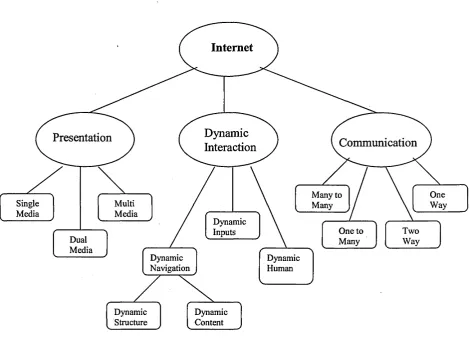
Figure 5. The key features of the Internet (summarised by Doherty, 1998). 34
Figure 6. A comparison between Internet resources-based model of
learning and the traditional model of learning (presented by Rakes, 1996). 38 Figure 7. The Integrated electronic leaning environment from a systems
perspective (adopted from Kirschner, 2001). 43
Figure 8. Pedagogical relation in the Didaktik triangle. 46
Figure 9. The Didaktik relation in the Didaktik triangle. 47
Figure 10. Kolb's (1981) learning style schema. 51
Figure 11. The spiral of cycles according to Lewin's (1946) Model of
action research. 64
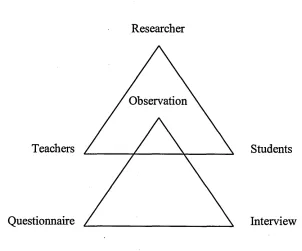
Figure 12. The different processes in cyclical research according to Bassey
(1995). 65
Figure 13. The different phases for conducting this research. 65
Figure 14. The notion of triangulation as visualised by Macintyre (2000). 67
Figure 15. The research ethics framework in relation to the recruitment of participants, the conduct of fieldwork, and the presentation of research
reports by Flinders (1992). 69
Figure 16 . A summary of the commonly used techniques for data collection
in case study by Robson (1993). 71
Figure 17. Flowchart of the procedures for developing the Internet
curriculum. 88
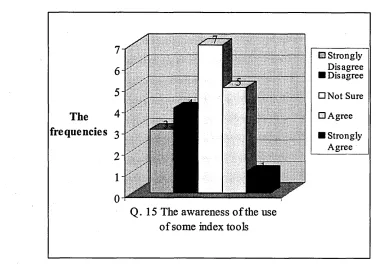
Figure 18. The responses on the awareness of the use of some index tools. 104
Figure
Pages
Figure 20. The responses on the ability to avoid inappropriate materials on
the Internet. 105
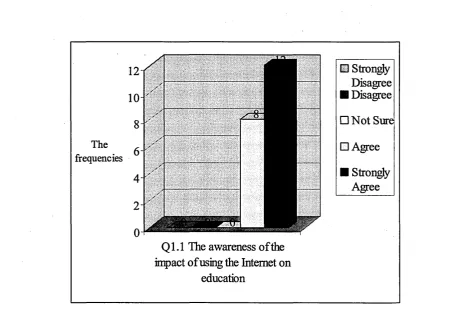
Figure 21. The responses on the awareness of the impact of using the
Internet on education. 106
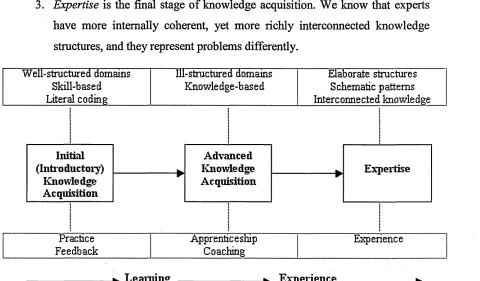
Figure 22. The three stages of knowledge acquisition presented by
(Jonassen, 1991). 132
Figure 23. The relationship between the content structure and the learners’
understanding. 134
Figure 24. Model for the structure and the stages of knowledge acquisition
for the Internet curriculum. 135
Figure 25. The relationship between the content structure and the level of
control over the learning process. 138
Figure 26. The main Web-based learning environment elements. 149
Figure 27. The four-way educational interactions model. 154
Figure 28. The technical assistance form. 157
Figure 29. The information resources categorised into Internet resources
and educational resources. 159
Figure 30. The Web resources search tool. 160
Figure 31. The main discussion areas in the discussion forum 'Discuss©’. 163
Figure 32. The uploading file screen in the portfolios section. 168
Figure 33. The link to the 'Internet Tutoring System'. 177
Figure 34. The two main discussion forums during the initial trial phase. 178 Figure 35. The different threads that were sent by the students concerning
the educational use of the Internet. 179
Figure 36. An example of the students' discussions of the educational use
---of the Internet. 179
Figure 37. An example of a student message concerning 'Netiquette'. 180
Figure 38. The levels of the students’ computer use. 186
Figure 39. The percentage of students who used the Internet prior to the
course. 188
Figure
Pages
Figure 41. The places in which the students usually use the Internet. 190
Figure 42. The resources for learning the use of the Internet. 191
Figure 43. The tutorial for using the internet Tutoring System. 192
Figure 44. The different course activities. 193
Figure 45. The different students’ views about the use of the Internet in
education. 195
Figure 46. The area for accessing the email accounts in the Internet
Tutoring System. 196
Figure 47. The section for linking files and Web sites. 199
Figure 48. The students’ feedback toward the course activities. 204
Figure 49. The students’ description of the learning resources. 205
Figure 50. The percentage of students who were motivated by using the
learning environment. 207
Figure 51. The percentage of students who felt disoriented during the
course. 208
Figure 52. The students' feeling toward the amount of information. 210
Figure 53. The effect of the interaction with the peers on the students'
learning. 211
Figure 54. The students' feedback on the course timetable. 214
Figure 55. The students' comments on the course discussions. 216
Figure 56. The students' feedback on the individual study during the
course. 218
Figure 57. The students' feedback on their peers cooperation and support. 219
Figure 58. The students' need for more face-to-face sessions. 220
Figure 59. The students' comments on the use of the demonstrations. '222
Figure 60. Teacher’s multiple roles within the Web-based learning
environments. 224
Figure 61. The students' comments on the Internet Tutoring System. 226
Figure 62. The students' comments on the reliability of connection speed. 229
Figure 63. The students' feedback on the technical support. 230
Figure
Pages
Figure 65. The students' progress levels in unit one. 234
Figure 66. The students' progress levels in unit two. 235
Figure 67. The students' progress levels in unit three. 236
Figure 68. The students' progress rates in unit five. 237
Figure 69. The course fulfilment to the students' expectations. 238
Figure 70. The students' progress rates in the overall course. 239
Figure 71. The total percentages of the students' high and very high
progress levels. 240
Figure 72. Integrated Learning and Teaching Environments (ILTE): A
List of Tables
Table
Pages
Table 1. The development in the total number of classrooms, students and
teachers from 1992/1991 to 2001/2000. 4
Table 2. The increase in the total number of schools’ buildings in Egypt. 4
Table 3. The number of technologically developed schools in Egypt. 6
Table 4. The actual and the target number of Egyptian schools connected to
the Internet and the type of Internet connection. 6
Table 5. The main characteristics of behaviourist and constructivist
instructional models. 16
Table 6. A comparison between behaviourist, cognitivist and constructivist
theories (Adopted from Seels, 1989). 17
Table 7. Reliability coefficients for the Internet curriculum questionnaire. 76 Table 8. Reliability coefficients for the course evaluation questionnaire. 76
Table 9. The different target audience of the Internet guides. 93
Table 10. The different platforms, connection programs, browsers and the
other programs used in the Internet users’ guides. 95
Table 11. Reliability coefficients for section one of the questionnaire. 100
Table 12. Reliability coefficients for section two of the questionnaire. 100
Table 13. Multiple responses for the questionnaire. 102
Table 14. Multiple responses for the general objectives. 102
Table 15. Multiple responses for the educational objectives. 102
Table 16. Statistics for the rejected general objectives. 108
Table 17. Statistics for the rejected educational objectives. 109
Table 18. The main units of the Internet curriculum and the number of
objectives in each unit. 133
Table 19. Instructional Mode Matrix. 162
Table 20. The techniques of synchronous and asynchronous communication. 173
Table 21. Summary of the different characteristics of the students. 185
Table 22. The students' progress levels in using the Internet before the course
and after the course. 240
Chapter one: Introduction
1.1. Introduction
At the present time we are witnessing an increasing use of information technology and the Internet in different domains in our lives. According to Williams (1995) and Cooper (1996), the Internet is defined as a large collection of networks that are tied together so that many users can share their vast resources. It is also defined by Pitter (1995) as the network of networks. The Internet began in 1960 when the US Defence Department launched the 'Advanced Research Projects Agency (ARPA)' in order to design a computer network to connect the different research centres and colleges (Wingate, 1997). In 1969, ARPANET was established by the Defence Department in order to begin research into computer networking. For several years after that, the development in this network was continued and the first email program was created and sent across the network in 1972. For about two decades after that, the development in using the network was mainly for research purposes across different academic institutions. The first school to connect to the Internet was a K-12 school in the United states in 1988 (McLain et al., 1998). Then in 1990 the network was opened up to everyone and it was officially named the Internet. One of the major advents of the Internet is the World Wide Web (WWW), which was created in 1992 at 'CERN' -an institute for particle physics in Switzerland- by a British scientist called Tim Bemers-Lee. Since 1992 the Internet and the World Wide Web have become used widely across different disciplines. Subsequently, teachers and students have started to use the Internet e.g. they have used it as a 'virtual reference desk', as a way for students and faculty to communicate with peers worldwide and as a way to share lesson plans (Wiggins, 1995).
It is self evident that the use of the Internet has become widespread in recent years, and it has become essential for all teachers to know how to use the Internet. In fact, the Internet can make a real difference in teaching and learning in schools by using it to enhance and enrich the classroom experience according to Williams (1995).
developing countries according to a study by Al-Mohaissin (1997), which presents a serious difficulty for the introduction of computers into subject teaching. Moreover, Mohaiadin (1997) found that there is a lack of knowledge and skills in using the Internet, and this could be a consequence of the fact that the use of the Internet has been typically learned through friends rather than through formal curriculum or instruction. A study by Shezhang (1998) also found that 73% of a group of social studies’ students learned how to use the Internet from friends. In most cases, there is no curriculum for the Internet that determines specific goals and contents. Therefore, this research focuses on developing an Internet curriculum for Egyptian teachers in order to enable them to use the Internet effectively in teaching and learning. Moreover, this research focuses on implementing this curriculum and evaluating both the Internet curriculum and the implementation processes. Subsequently, a Web- based learning environment namely 'Internet Tutoring System' was designed in order to represent the Internet curriculum. After designing the Web-based learning environment, the Internet curriculum was trialled with a group of ICT students in the School of Education at Sheffield Hallam University. Subsequently, it was trialled with a group of students in the Faculty of Specific Education at Menofia University in Egypt.
For example, these models influenced the development of the Internet curriculum and also the design and the implementation of the Web-based learning environment. The internet curriculum and its structure were developed within the framework of a constructivist theory of learning. Furthermore, this theory underpinned the pedagogical assumptions of both the design and the implementation of the Web- based learning environment by providing a range of cognitive tools and resources to enable the students to construct their own knowledge about the use of the Internet. The following parts in this chapter highlight an overview of the educational system and the use of the Internet in Egyptian schools; research aim and objectives; the action plan and programme of research.
1.2. An overview of the educational system and the technological
development project in Egypt
Table 1. The development in the total number of classrooms, students and teachers from 1992/1991 to 2001/2000
No./Year 1991/1992 2000/2001
Classrooms 291428 374481
Students 12101846 15179246
Teachers 568818 795195
Table (1) illustrates the fact that although there are a growing number of students in Egyptian schools, there is an increasing effort to increase the number of teachers and classrooms that are required for these students. However, according to the 2000/2001 statistics which are shown in table (1), it can be noticed that the average number of students per classroom is 40. This average number varies from school to school, e.g. while the average number of students in some schools is 35 students per classroom, some other schools have an average of over 55 students per classroom. The large numbers of students per classroom is considered to be one of the major problems facing education in Egypt.
In recent years, the Egyptian government -the Ministry of Education- has been seen to be providing an increasing effort to solve the educational problems. For example, the Ministry of Education in Egypt started to increase the number of schools by building new schools in order to solve the problem of the increasing numbers of students (see table 2). In addition, it increased the number of teachers year by year.
Table 2. The increase in the total number of schools' buildings in Egypt since 1995.
95/96 97/98 98/99 99/00 01/02
29753 30570 31179 32150 32985 33880
Subsequently, the Ministry of Education (ibid) aims to use educational technology in order to improve the quality of instruction and increase its effectiveness through:
• "Solving the problems related to the crowded classrooms. • Facing the shortage o f qualified teaching staff.
• Considering the individual differences between students.
• Training teachers in the fields o f preparing instructional objectives and instructional materials and appropriate instruction methods." (This quote is a translation of the Ministry of Education (2000) objectives)
The policy and the objectives of the Egyptian Ministry of Education influenced the teaching and learning process in Egyptian schools. Subsequently, the predominant approach to teaching and learning is considered to be the behaviourist approach. As a result, the main teaching method that is used in Egyptian schools is the 'lecture' approach. As a consequence, the teacher role is mainly seen to be as a dispenser of information while the learner role is mainly seen to be as a receiver of information. These roles do not give the learners the opportunity to actively engage in the learning process. Accordingly, the current pedagogical approaches in Egyptian schools do not support the students to develop higher cognitive abilities such as analysing, synthesising and integrating knowledge in new situations.
The current pedagogical practices in the Egyptian educational system were taken into account in this research. For example, different content structures of the Internet curriculum were designed in order to change the students' perception of the teaching and learning processes by transforming their learning experiences gradually from a teacher-centred approach to a student-centred approach where they take the responsibility and the control of their own learning.
Table 3. The number of technologically developed schools in Egypt.
Type of school Primary Schools Prep Schools Secondary Schools Total No. of schools 5500 4203 1100 10803 It can be concluc ed from table (3) and the total number of schools in table (2) that only one third of the schools in Egypt were provided with the information and communication technologies facilities. These schools were provided with a small computer lab to use multimedia and to connect to the Internet. Each school has one or two computers inside these labs and each school was provided with a television, video player, computer data projector, a screen and an overhead projector. A few schools around the country were provided with bigger labs that have around ten computers or more. Moreover, there are different types of Internet connections that are provided in these schools (see table 4).
Table 4. The actual and the target number of Egyptian schools connected to the Internet and the type of Internet connection.
Type of connection
Direct or leased connections Dial-up connections
Current no. Target no. Current no. Target no.
No. of schools 175 943 3200 6000 It can be noticed from table (4) that a few schoo s have 'direct or leased line' connections which are far faster than the ’dial-up' connections that can be found in the majority of schools. The slow type of connection is seen to create difficulties in using the Internet in teaching and learning in Egyptian schools.
1.3. Research aim and objectives
1.3.1. Research aim
This research aims to:
Develop, implement and evaluate an Internet curriculum for teachers in Egypt within a constructivist learning environment.
1.3.2. Research objectives
This research aims to attain several objectives:
• To investigate the development of an Internet curriculum for pre-service teachers in Egypt.
This development involves determining the main objectives for learning the basic knowledge and skills that are prerequisites for teachers to be able to use the Internet effectively.
• To investigate the impact of the constructivist learning environment on the development of an Internet curriculum.
An emphasis is given to the different structures of content in the constructivist learning environment and its impact on the structure of the Internet curriculum i.e. developing a structure for the Internet curriculum. Moreover, the stages for knowledge acquisition in constructivist learning environments are discussed. The procedures for developing the Internet curriculum are also presented.
• To design a constructivist learning environment to represent the Internet curriculum for pre-service teachers.
A Web-based learning environment namely the 'Internet Tutoring System' is developed in the light of the characteristics of the constructivist learning environments.
• To implement the new Internet curriculum with a group of pre-service teachers using the designed learning environment.
• To evaluate the different aspects that are related to the Internet curriculum.
• To evaluate the effectiveness of the use of the 'Internet Tutoring System' in teaching and learning the use of the Internet.
1.4. Original contribution to knowledge
This research highlights the different issues that are related to the development, implementation and evaluation of an Internet curriculum for Egyptian pre-service teachers within the framework of constructivist theory of learning.
The Egyptian education system is considered to be a unique context for this study particularly in relation to the different settings for this system. The different settings in the Egyptian education system include for example the predominant underpinning theory of learning (i.e. behaviourist), the available facilities, resources, the limited access to learning resources for teachers etc.
As highlighted earlier in this chapter, the main perspective for teaching and learning that underpins the education system in Egypt is considered to be the behaviourist theory of learning. Subsequently, the introduction of the constructivist theory of learning through this research is considered to be a challenging task. This is seen to be as a result of the students’ perceptions, ideas and expectations about the teaching and learning process which is more influenced by the behaviourist theory of learning. For example, the students predominantly expect the teacher to lead the teaching and learning process and they usually act as receivers of information which is dispensed by the teacher.
Within the Egyptian context, the different models of constructivist learning environments, especially those developed by Jonassen (1997a), Spiro et al. (1991), Mayer (1999) and Hannafin et al. (1999), influenced the development of the Internet curriculum and its structure. As a consequence, the pedagogical and epistemological assumptions of these models were critically analysed in order to develop the content structure of the Internet curriculum. Accordingly, several content structures were developed in order to take into consideration the different needs and expectations of the students. This included well-structured, semi-structured and ill-structured content. Well-structured content has well-defined and specific objectives; and the learning process is mainly teacher-centred. Semi-structured content has general objectives and both the teacher and the students share the control over the learning process. Ill-structured content has ill-defined objective and the learning process is mainly student-centred (see chapter five).
Web-based learning environment was designed in order to provide the students with cognitive tools, information resources and authentic activities. As a consequence, a range of tools and resources were integrated along with different teaching methods in order to encourage the students to play an active role in their learning. This integration is considered to be a key aspect that emerged from this study and it was used in order to accommodate the different learning styles of the students.
Moreover, several roles for the teacher were illuminated in this study such as the roles of mentor, facilitator and orchestrator. These roles emerged due to the integration of a number of teaching methods alongside the use of the Web-based learning environment. These roles were also influenced by the different content structures of the Internet curriculum and the control over the learning process.
The different aspects that were highlighted in this study are seen to make an original contribution to knowledge. Moreover, the findings of this study are also seen to have major implications for policy and practice in Egyptian education.
1.5. Action plan
The action plan for this research was influenced by the approach of action research and in particular the cycle of planning, implementing and evaluating (Elliott, 1991). Therefore, it included three main phases: developing the Internet curriculum, implementing this curriculum, and evaluating both the curriculum and the implementation itself. These phases are explained in the following sections.
The first phase of this study was concerned with the development of the Internet curriculum. In order to develop this curriculum, a content analysis of Internet teachers' guides and users' guides was made. This content analysis was conducted according to a set of criteria which is discussed later in chapter four. After that a Web-based questionnaire was developed in order to inform the results of the content analysis. Based on the content analysis and questionnaire results, a list of objectives for the Internet curriculum was developed.
'Internet Tutoring System'. The main purpose for designing this learning environment was to implement the Internet curriculum and to present it for students within the framework of constructivist learning environments. After designing this learning environment, two trials took place in order to evaluate the impact of both the Internet curriculum and the Web-based learning environment on students. These two trials can be seen as two cycles of the process of action research as highlighted by Elliott (ibid). Each trial (cycle) included three key processes which are planning, implementing and evaluating. Accordingly, the second phase of this study (i.e. the implementation phase) led to the third phase which is the final evaluation.
The third phase included the evaluation of both the Internet curriculum and the teaching and learning process using the Web-based learning environment. In order to conduct the evaluation, a set of methods was used in order to collect data from different perspectives through the use of triangulation. Among these methods were the use of questionnaires, observations, and interviews. Finally, the data collected from this evaluation was interpreted and reported in this thesis.
1.6. Thesis structure
The structure of this thesis was influenced by the guidelines stated by both Bell (1999) and Sheffield Hallam University (2000). Accordingly, the thesis starts with the title page followed by an abstract and lists of contents, figures and tables.
Chapter one is the introduction chapter. This chapter gives a clear statement about the research rationale and its aim and objectives. Furthermore, the introduction chapter gives an overview of the education system and the technological development project in Egypt.
Chapter two is the background literature chapter. This chapter looks critically into the background literature relevant to this research. For example, it looks into the different models of constructivist learning which influenced this research. It also investigates the different studies that are related to the design of the Web-based learning environments.
Chapter three is the methodology chapter. This chapter highlights the methodology that was used in this research. This methodology involves an action research approach within a case study framework. In addition, the research techniques that were used in order to collect data are discussed such as questionnaires, interviews etc.
Chapter four is the Internet curriculum development chapter. This chapter focuses on the different processes that were used in order to develop the Internet curriculum in this research. These processes included the content analysis of the relevant Internet users' guides and teachers' guides. They also involved the development of a Web- based questionnaire in order to verify the results of the content analysis and in order to identify the objectives of the Internet curriculum.
impact on the structure of the Internet curriculum in this research. This chapter highlights the different stages for knowledge acquisition in this research.
Chapter six is the design of the Web-based learning environment chapter. This chapter focuses on the different phases that were involved in the design of the Web- based learning environment namely 'Internet Tutoring System'. These phases include designing a prototype, user interface, communication tools etc.
Chapter seven is the implementation of the Web-based learning environment chapter. This chapter highlights the two different trial phases that were involved in this research. Therefore, this chapter aims to highlight the main issues that emerged from the different trial phases.
Chapter eight is the discussion chapter. Consequently, this chapter includes a discussion of the main findings of this research. This chapter is divided into six sections which are student characteristics; objectives and content of the Internet curriculum; learning process within a Web-based learning environment; teacher's roles within Web-based learning environment; an evaluation of the Web-based learning environment 'Internet Tutoring System; and students' progress in using the Internet.
Chapter nine is the conclusions chapter. This chapter highlights the main conclusions of this study. Furthermore, it includes recommendations that were drawn upon the study conclusions.
1.7. Programme of research
May 99 - August 99
The research proposal for this study was developed. Subsequently, the programme of research was developed in the light of the different objectives of this research.
September 99 - December 99
Conducting an intensive review of the relevant background literature and maintaining an ongoing review of the updated literature. The contents of the Internet users’ guides, and teachers’ guides were analysed. These included for example getting connected to the internet (Cooper, 1996), the wide use of the internet e.g. email, FTP (Wingate, 1997) and the use of the WWW e.g. the use of search engines (Kalbag, 1997).
January 99 - June 2000
A Web-based questionnaire was designed in order to verify the findings of the content analysis and in order to identify the main objectives of the Internet curriculum. In addition, the data that were obtained from the questionnaires were analysed. At the end of this phase of this research, a list of objectives for the Internet curriculum was developed.
July 2000 - December 2000
The content structure of the Internet curriculum was determined according to the different content structures within constructivist learning environment models. The initial prototype of the Web-based learning environment namely ’Internet Tutoring System' was started.
January 2001-September 2001
October 2001- December 2001
During this time, the initial trial took place at the School of Education at Sheffield Hallam University. This phase of the research aimed to prepare and implement the first initial trial phase in order to feed into both the design of the learning environment and the implementation of the final phase. It also included the analysis of the findings of this trial.
January 2002 - March 2002
During this phase, the preparation for the final trial was made. This trial phase took place in Egypt and it was conducted with a group of students in the Instructional Technology Department in the Faculty of Specific Education at Menofia University in Egypt.
April 2002 -July 2002
During this stage, the data that were collected during the final trial were analysed. These data were obtained from different sources such as questionnaires, interviews, observations etc. The results of the final trial were attained.
August 2002 - July 2003
Chapter two: Background Literature
2.1. Introduction
This chapter aims to highlight the background literature that has underpinned this study. Therefore, it includes a critical review of the theoretical basis for this research. It focuses on constructivist learning theory as the underpinning theory for this research. Firstly, an overview of constructivist learning theory - as interpreted in this study - is made. Secondly, the main principles of constructivist learning are highlighted. Thirdly, the relevant models of constructivist learning are critically discussed. These models are discussed in order to highlight their influence on the model of constructivist learning used in this research. Moreover, a review of the literature related to teaching and learning, the use of the Internet and Web-based learning environments is made in order to reflect on the development of the Web- based learning environment developed in this research. Additionally, a review of literature relevant to the learning styles is made in order to use this framework later in identifying the different learning styles of the students who participated in this research.
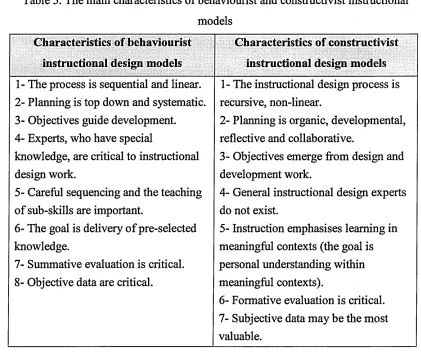
These two theories of learning yield different models for instructional design. The characteristics of these models are highlighted by Willis (1995) in table (5). It can be seen from table (5) below that he highlights the characteristics for both behaviourist instructional design models and constructivist instructional design models.
Table 5. The main characteristics of behaviourist and constructivist instructional models
Characteristics of behaviourist instructional design models
Characteristics of constructivist instructional design models
1- The process is sequential and linear. 2- Planning is top down and systematic. 3- Objectives guide development. 4- Experts, who have special
knowledge, are critical to instructional design work.
5- Careful sequencing and the teaching of sub-skills are important.
6- The goal is delivery of pre-selected knowledge.
7- Summative evaluation is critical. 8- Objective data are critical.
1- The instructional design process is recursive, non-linear.
2- Planning is organic, developmental, reflective and collaborative.
3- Objectives emerge from design and development work.
4- General instructional design experts do not exist.
5- Instruction emphasises learning in meaningful contexts (the goal is personal understanding within meaningful contexts).
6- Formative evaluation is critical. 7- Subjective data may be the most valuable.
According to Jonassen (1991), behaviourism and constructivism are often described as polar extremes on a continuum in order to contrast their assumptions. However, most designers and theorists assume positions that fall somewhere between the extreme views (see figure 1). For instance, while programmed instruction (PI) and instructional design (ID) possess more behaviouristic assumptions, Piagetian and discovery learning tasks tend to be more constructivistic.
Behaviourism PI ID ITS----Piagetian— Constructivism
Externally mediated reality internally mediated reality
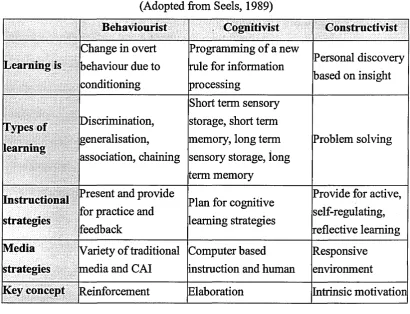
According to a study made by Seels (1989), she investigates the instructional design movement and its influence on the field of instructional technology. In table (6), she also contrasts constructivism with two other traditional learning theories.
Table 6. A comparison between behaviourist, cognitivist and constructivist theories (Adopted from Seels, 1989)
Behaviourist . Cognitivist Constructivist
Learning is
Change in overt behaviour due to conditioning
Programming of a new rule for information processing
Personal discovery based on insight
Types of learning
Discrimination, generalisation, association, chaining
Short term sensory storage, short term memory, long term sensory storage, iong term memory
Problem solving
Instructional strategies
Present and provide for practice and feedback
Plan for cognitive learning strategies
Provide for active, self-regulating, reflective learning Media
strategies
Variety of traditional media and CAI
Computer based instruction and human
Responsive environment
Key concept Reinforcement Elaboration Intrinsic motivation
Williams and Burden (1997) state that in contrast to behaviourism, cognitive psychology is concerned with the way in which the human mind thinks and learns. Cognitive psychologists are therefore interested in the mental processes that are involved in learning. This includes such aspects as how people build up and draw upon their memories and the ways in which they become involved in the process of learning.
2.2. Constructivism
Constructivism is a philosophy of learning based on the idea that knowledge is constructed by learners (Kirschner, 2001). Therefore, learners are active in seeking meaning. Consistent with this view, learning should be situated in a rich context and reflective of real world contexts for this constructive process to occur and for transfer to environments beyond the school to be possible.
According to Richardson (1997), constructivism is a learning or meaning-making theory. It suggests that individuals create their own new understandings, based upon the interaction of what they already know and believe, and the phenomena or ideas with which they come into contact. Constructivism is also seen by Richardson (ibid) as a descriptive theory of learning (this is the way people learn or develop), and it is not a prescriptive theory of learning (this is the way people should learn).
Honebein et al. (1993) state that constructivism proposes that knowledge or meaning is not fixed for an object, but is rather constructed by individuals through their experience of the object in a particular context. Moreover, constructivism affirms that in order to learn, learning needs to be situated in problem solving in real-life contexts (Brown et al., 1989) where the environment is rich in information. Cunningham (1991) also mentions that constructivism emphasises that learning is a process of building up structures of experience. Therefore, learners do not transfer knowledge from the external world into their memories; rather, they create interpretations of the world based upon their past experiences and their interactions in the world.
by individuals as sensory data are given meaning in terms of prior knowledge. Therefore, learning is an interpretive process, involving constructions of individuals and social collaboration. Based on their view of learning, knowledge is created through social interaction as individuals test the fit or usefulness of their conceptual understandings in interactions with others and in the contexts in which knowledge is applied.
The different views about constructivism have been categorised by Salomon (1997) into two main views, which can be summarised in the following:
1. Cognitivist Constructivism: This approach to learning is influenced by Piagetian cognitive development. Knowledge is believed to be actively constructed, tightly connected to the individual’s cognitive repertoire and to the context within which this activity takes place and hence it is situated. Learning activities are designed to increase an individual’s skill and knowledge and emphasise the solo effects of constructivist learning activities. 2. Sociocultultural Constructivism: This approach to learning is influenced by
the Soviet school of thought (Vygotsky). Concern focuses on the social process of interaction and participation, the socially-based appropriation of meaning. How does the situative social system (not just the individual) interactively operate to construct shared knowledge? Learning activities are designed to enhance and explore the social process of participation and changes that take place while students are engaged in collaboration, problem solving and team-based activities.
Mathews (1998) also states that educational constructivism of the personal variety stresses the individual creation of knowledge and construction of concepts. Educational constructivism of the social variety stresses the importance of the group (be it the immediate of classroom or the wider culture) for the development and validation of ideas. This has its origins in Vygotsky’s work in linguistics and language acquisition. Lerman (1994) also distinguishes between two views of constructivism. These are social constructivism (based on Vygotsky’s work) and radical constructivism (based on von Glasersfeld's work). Although Lerman (ibid) sees these views as two extreme views of constructivism, the diverse views about constructivism tend to share two common beliefs according to Lefoe (1998), these are:
2. Instruction is a process of supporting that construction rather than communicating knowledge.
In this research, the different constructivism views are seen to be sharing common principles, which are highlighted in the next section. Moreover, the two main extreme views of constructivism can be illustrated as a continuum (see figure 2). Therefore, the different models of constructivism are seen to fall somewhere between these two diverse views.
< ►
Social constructivism Radical constructivism
Figure 2. The continuum of the different views of constructivism.
Subsequently, the different views of constructivism and the constructivist view of learning and knowledge have influenced the constructivist pedagogies in this research. Constructivist theory emphasises the individual's construction of knowledge as well as the social interaction. Constructivist pedagogies are seen by Holt-Reynolds (2000) to be emerging from an intellectual world where knowledge is seen as created rather than received, mediated by discourse rather than transferred by teacher talk, explored and transformed rather than remembered as a uniform set of positivistic ideas. Tenenbaum et al. (2001) identify four types of constructivist “strategies”, which are: project-based learning environments, case-based learning environments, computer-based supports, and cognitive tools (mind tools). They also highlight the following seven components of constructivist teaching and learning: (1) arguments, discussions, debates, (2) conceptual conflicts and dilemmas, (3) sharing ideas with others, (4) materials and measures targeted toward solutions, (5) reflections and concept investigation, (6) meeting student needs, and (7) making meaning, real-life examples.
As discussed earlier, there are several models of instructional design which are based on the constructivist theory of learning. Although these models are different, they tend to share some common principles of constructivist teaching and learning, such as the individual's ability to construct knowledge and the role of social interaction in constructing shared knowledge.
2.3. Constructivist teaching and learning principles
There are many studies that highlight the different principles for constructivist teaching and learning. This section aims to highlight the main principles for constructivist teaching and learning, which have underpinned the development of the Internet curriculum and the design of the constructivist learning environment in this research. These principles are interpreted further in chapter five in relation to the impact of constructivist learning on the development of the Internet curriculum and in chapter six which is related to the design of the constructivist learning environment.
The main principles of constructivist teaching and learning are seen to be interpreted in different ways in the literature. This is seen to be mainly because of the different views about constructivist theories of teaching and learning.
Merrill (1991) refers to collaborative learning and 'situated* learning as the main principles of constructivism. According to him, collaborative learning proposes that meaning is negotiated from multiple perspectives. Therefore, conceptual growth comes from the sharing of multiple perspectives and the simultaneous changing of our internal representations in response to those perspectives. Furthermore, the perspective of situated learning recognises that learning occurs in realistic settings. Accordingly, learning should be situated in a rich context, reflective of real world contexts. In this research the perspective of 'situated learning' is seen to have influenced instructional design since it was first proposed by Brown et al. (1989). Merrill (1991) also states that constructivists subscribe to the following basic assumptions that: learning is constructed, interpretation is personal, learning is active, learning is collaborative, learning is situated, and testing is integrated.
Jonassen (1993) summarises the main principles of constructivist teaching and learning in the context of constructivist learning environments in the following:
• "Engaging learners in authentic, context-sensitive learning tasks. • Supporting collaborative learning activities and socially negotiated
interpretations o f domain knowledge.
• Facilitating problem identification, definition and solving. • Emphasising knowledge construction, rather than reproduction. • Using hypermedia as a delivery technology.
• Engaging learner control o f activities.
• Presenting multiple perspectives.
• Providing alternative means for reflecting on personally constructed meaning.
• Offering experientially (situationally) indexed meaning (prior knowledge o f seminars).’' p.36
2.4. Models of constructivist teaching and learning
This section involves a discussion of the main models of constructivist teaching and learning. Four main models are seen to have influenced this research. These models are outlined by Spiro et al. (1991); Hannafin et al. (1999); Mayer (1999) and Jonassen (1999). Particular attention has been given to the model developed by Jonassen (1999) namely the ’constructivist learning environment' model, as it is seen to have been the major influence on the theoretical basis for this research. These models influenced this research in many aspects such as the development of the Internet curriculum and the structure of its content. Moreover, they affected the design of the Web-based learning environment.
There are several models for constructivist learning which have evolved from the field of instructional design as stated by Seels (1989). Instructional design, according to Willis (1995), is the process of designing instructional materials. The term instructional design model refers to a model or theory that can guide the instructional design process.
FitzPatrick (2001) also states that constructivist learning models reflect the diversity of their theoretical foundations. He categorises constructivist models of instruction into two main categories: general holistic instructional applications such as constructivist learning environments model (Jonassen, 1999) and specific theoretical/instructional models such as cognitive flexibility model (Spiro et al., 1991). Moulder (1998) also categorises learning models according to three types of learning objective:
1- Instructor-centred learning emphasises transferring information. It assumes that learning is about memorising information rather than interpreting or changing it, and that instructors should control the pace of learning and the material that is studied. Therefore, creating a curriculum is the key element.
2- Learner-centred learning emphasises acquiring skills. It assumes that learning is about individuals actively creating knowledge rather than passively receiving it, and that instructors should coach students and stimulate their curiosity. Therefore, creating learning experiences is the key element.
3- Team-centred learning emphasises changing mental models. It assumes that learning is about teams creating and sharing knowledge and that instructors should assist students in creating and sharing it. Therefore, giving and receiving feedback is the key element.
Constructivist learning models are seen to be influenced more by the learner-centred model of learning, while the sociocultural models of constructivist learning are seen to be influenced more by the team-centred model of learning. Consequently, most constructivist learning models stand in direct opposition with the instructor-centred model of learning. Since this research has considered learning from a constructivist perspective, both learner-centred and team-centred models of learning have been highly relevant. In addition, this research has considered the use of the instructor- centred model of learning in some situations, especially those at the beginning of the course when the students did not have the prerequisite knowledge and skills to deal with the Internet. Therefore, the students were seen to be in need of instructor assistance in order to make sure they had the prerequisite knowledge and skills.
These models of constructivist learning can be categorised into two main groups: 1- General-purpose constructivist learning models, which are not designed for a particular context and that guide the general design and development of the constructivist teaching and learning such as Jonassen's (1999) constructivist learning environment model and Mayer's (1999a) selection, organisation and integration (SOI) model.
2- Context-based constructivist learning models, which are designed in and for a particular context such as the context of hypermedia in the model of cognitive flexibility as proposed by Spiro et al. (1991) and the open learning environment model by Hannafin et al. (1999).
2.4.1. Constructivist learning environment model (Jonassen, 1999)
The theoretical and epistemological foundations of Jonassen's (1999) model of a constructivist learning environment have influenced this research in many aspects. First of all, since this model was seen to be a general-purpose instructional model, it affected the overall instructional design in this research such as the use of information resources, collaboration tools etc. Secondly, the different components of this model were carefully considered in this research and critically integrated into the design of the Web-based learning environment. Thirdly, this model alongside that of Spiro et al. (1991) emphasised the need to present ill-structured content for the students in this course to enable them to construct their own knowledge. Jonassen (1994b) states that a constructivist design process should be concerned with designing environments which support:
• The construction of knowledge, which is based on internal negotiation, social negotiation and facilitated by exploration of real-world environments and invention of new environments.
• It should also provide a meaningful, authentic context for learning and using the knowledge they construct, which should be supported by case-based problems. • It should also support collaboration among learners and with the teacher, who is
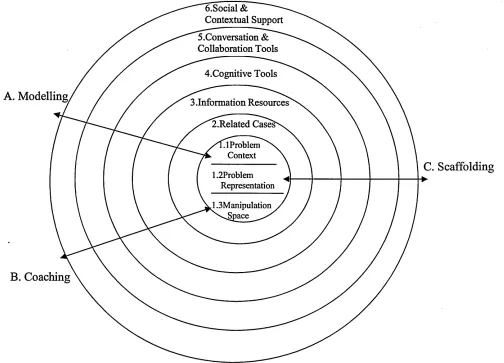
These principles led Jonassen (1999) to the design of a constructivist learning environment model, which is illustrated in figure (3) and explained below:
6.Social& " -Contextual Support 5.Conversation & Collaboration Tools
4.Cognitive Tools
A. Modelling 3.Information Resources
2.Related Cases'
.1 Problem Context
C. Scaffolding 1.2Problem
Representation
1.3Manipulation
\^Space ^
[image:45.612.55.559.70.433.2]B. Coaching
Figure 3. Jonassen’s (1999) model for designing constructivist learning environment This model consists of six essential components
1. Question/Case/Problem/Project
According to Jonassen (1999), the focus of any constructivist learning environment is the question/issue/case/problem/project that learners attempt to solve or resolve. It also constitutes the learning goal. Furthermore, a constructivist learning environment can be constructed to support many types of learning. The key to learning is the ownership of the problem/learning goal. Therefore, interesting, relevant and engaging problems must be provided for students to solve. Problems in a constructivist learning environment should address three components: problem context, problem representation and problem manipulation space.
2. Related Cases
constructivist learning environment support learning in two ways: they scaffold student memory and enhance cognitive flexibility.
3. Information Resources
Learners need information to construct mental models and formulate hypotheses that drive the manipulation of the problem. Information may be included in the problem representation, information banks and repositories (text documents, graphics, sound resources, video and animations) Information should be relevant and readily accessible.
4. Cognitive (Construction) Tools
Cognitive tools are generalisable computer tools that are intended to engage and facilitate specific kinds of cognitive processing. Jonassen (ibid) identifies some types of cognitive tools such as problem/task representation tools and static & dynamic knowledge modelling tools.
5. Conversation & Collaboration Tools
Constructivist learning environments should provide access to shared information and shared knowledge building tools to help learners collaboratively construct socially shared knowledge, thus forming discourse communities. Constructivist learning environments can also support communities of learners. Therefore, when learners collaborate, they share the same goal, requiring shared decision-making, consensus building activities, etc.
6. Social/Contextual Support