T “ASSE TEACHIN REGAR R THE In part
ESS THE E NG PROG RDING W RESIDING M, Sc BR E TAMILN tial fulfillm MAS EFFECTI GRAMME WEANING G AT SAM
c., (NURSIN RANCH II-C COLL MADURA MA A Disse NADU DR CH ment of the STER OF
A
VENESS E ON KN G AMONG
MAYANA
NG) DEGRE CHILD HEA
LEGE OF N AI MEDICAL ADURAI 60 ertation su R.M.G.R. M HENNAI-6 e requirem F SCIENCE
APRIL 20
OF STRU NOWLED
G MOTHE ALLUR , M
EE EXAMIN ALTH NURS NURSING L COLLEG 00020 bmitted to MEDICAL 00032 ment for aw
E IN NUR
012
UCTURED DGE AND
“
ASSESS THE EFFECTIVENESS OF STRUCTURED VIDEO TEACHING PROGRAMME ON KNOWLEDGE AND ATTITUDE REGARDING WEANING AMONG MOTHERSOF INFANTS RESIDING AT SAMAYANALLUR, MADURAI”.
Approved by dissertation committee on____________________ Expert in Nursing Research_______________________________ Ms. JENETTE FERNANDES, M, Sc (N),
Principal,
College of Nursing, Madurai Medical College, Madurai-20.
Expert in Clinical Specialty_______________________________
Mrs.R.JEYASUNDARI,M,Sc(N).,M.A(pub.admn).,M.A(socio).,M.A(JMC).,M.Phil,
Faculty in Child Health Nursing, College Of Nursing,
Madurai Medical College, Madurai-20.
Expert in Pediatric Medicine _______________________________ Prof.Dr.P. AMUTHA RAJESWARIM.D, D.CH.,
Director,
Institute of Child Health and Research Centre, Govt. Rajajihospital.Madurai-20.
CERTIFICATE
This is to certify that this dissertation titled“Assess the effectiveness of structured video teaching programme on knowledge and attitude regarding weaning among mothers of infants residing atsamayanallur , Madurai.”is the bonafide work done by Mr. R.Ravi, College of Nursing, Madurai Medical college, Madurai-20 submitted to THE TAMILNADU DR.M.G.R. MEDICAL UNIVERSITY CHENNAI-32 towards the partial fulfillment of the requirement for the award of the degree of MASTER OF SCIENCE INNURSING, Branch–II Child Health Nursing, under our guidance and supervision during the academic period from 2010-2012.
Ms.A.JENETTE FERNANDESM.Sc(N)., DR. EDWIN JOE M.D (F.M) PRINCIPAL, DEAN,
College of Nursing, Madurai Medical College, Madurai Medical College, Madurai -20.
ACKNOWLEDGEMENT
I Praise and thank the God almighty for his abundant grace and blessing showered upon me throughout my study.
With profound joy and gratitude, I acknowledge the help of all those who have contributed towards the successful completion of this endeavor.
I extend my sincere thanks to Dr.Edwin Joe,M.D (F.M)., Dean, Madurai Medical College, for his acceptance and approval for the study.
I express my sincere thanks to Dr.Sivakumar,M.S.,former Medical superintendent and Head of Ethical committee, Government Rajaji Hospital, Madurai for providing permission and necessary facilities to conduct the study.
I wish to express my sincere heartfelt thanks and gratitude to Prof.Dr.P.Amutharajeswari M.D,D.CH.,Director, Department of paediatric medicine, Institute of child health and research centre, Government Rajaji Hospital, Madurai for granting permission to conduct the study and his valuable suggestions and guidance.
My deep sense of gratitude to Ms.Jenette Fernandes,M.Sc(N)., Principal, college of nursing, Madurai Medical College, Madurai for her unequivocal concern, constant support, encouragement, guidance and blessings during the study.
I extend a special thanks to Mrs. S. poonguzhali M.Sc (N), M.A.,Reader, college of nursing, Madurai Medical College, Madurai for her advice and encouragement in completing the study.
I offer my earnest gratitude to Dr.Mrs.Prasanna baby M.Sc (N).,Ph.D former principal, for her valuable guidance, constant encouragement and moral support.
I convey my special thanks to Miss.A.R.SudharmaDevi, M.Sc (N).,Faculty in Child Health Nursing for her valuable guidance, constant encouragement and moral support.
I offer my earnest gratitude to Mrs.N. Maheswari M.Sc (N).,M.A Faculty in Child Health Nursing for her valuable guidance, constant encouragement and moral support.
My sincere thanks to all the faculty members , for their enlightening suggestions, constructive criticism, valuable judgments and recommendation while validating the content of tool.
I wish to express my heartfelt thanks and gratitude to Dr. G.Mathevan M.D, D.CH Professor , Department of Pediatrics, Institute of child
health and research centre, Government Rajaji Hospital, Madurai for validating research tool and suggestions to carry out the study.
I wish to express my heartfelt thanks and gratitude to Dr.Suresh M.B.B.S.,D.A Block Medical Officer, Samayanallur, Madurai for his valuable
guidance, constant encouragement and suggestions to carry out the study.
My special thanks to Mr.A.Venkatesan, M.Sc(stat), P.G.D.C.A Lecturer in statistics, Madras Medical College, Chennai for his expert guidance in the statistical analysis procedure.
My earliest gratitude to all my subjects who have participated in my study for their support and kind co-operation to complete my study successfully. My affectionate thanks to friends, classmates and juniors for their encouragement, support and good wishes.
ABSTRACT
“Assessthe effectiveness of structured video teaching programme on knowledge and attitude regarding weaning among mothers of infants residing at Samayanallur, Madurai” was conducted as a partial fulfillment of requirement for the degree of Master of Science in Nursing, at College of Nursing, Madurai Medical College, Madurai under Tamil Nadu .Dr.M.G.R.Medical University, Chennai during the year 2010-2012.
OBJECTIVES OF THE STUDY:
1. To assess the level of knowledge of mothers of infants regarding weaning 2. To assess level of the attitude of mothers of infants regarding weaning
3. To evaluate the effectiveness of structured video teaching programme on weaning.
4. To correlate the knowledge and attitude of mothers of infants regarding weaning.
5. To determine the association between post test knowledge among mothers of infants regarding weaning with their selected variables.
6. To determine the association between post test attitude among mothers of infants regarding weaning with their selected variables.
HYPOTHESIS
H1: The mean post-test knowledge scores of mothers will be significantly higher than mean pretest knowledge scores regarding the weaning.
H2: The mean post-test attitude scores of mothers will be significantly higher than mean pre-test attitude scores regarding the weaning
H3: There will be significant relationship between knowledge and attitude of mothers of infants regarding weaning.
H4: There will be significant association between post-test knowledge score of mothers of infants regarding weaning with their selected demographic variables.
Conceptual framework for the study was based on Daniel Stuffle Beam model. Research design used for the study was pre experimental design. The study was conducted at Samayanallur Madurai. The population for this study consisted of mothers of infants residing at Samayanallur during the period of study. Convenient sampling technique was used to select the samples.
Data collection instrument consisted of demographic variables,self administered multiple choice questionnaire to assess the knowledge and 5 point rating scale to assess the attitude regarding weaning. The video teaching consists of detail about weaning.
The tool was given to four experts for content validity.Reliability of structured questionnaire was obtained by test retest method r=0.81(Knowledge),0.83(Attitude) which was highly reliable. Pilot study was conducted at Samayanallur to find out the feasibility of the study.
The collected data were tabulated ,analyzed ,and interpreted by using descriptive (frequency, percentage,mean,standard deviation ) and inferential statistics (correlation coefficient,paired ‘t’ test, chi square test).
Major findings of the study:
The mean score of knowledge in the post test 20.57 was significantly higher than the pre test score 12.37. The ‘t’ test value is 33.28 highly significant at 0.001 level. Hence the stated hypothesis was accepted.
The mean score of attitude in the post test 80.07was significantly higher than the pre test score 48.23. The ‘t’ test value is 68.45 highly significantat 0.001 level. Hence the stated hypothesis was accepted.
There was a poor correlation between the knowledge and attitude among mothers regarding weaning before video teaching program ‘r’ = 0.19 (P=0.11).
There was a significant association between the knowledge of mothers of infants with their selected demographic variables such as age, education of motherandnumber of children. Hence the stated hypothesis was accepted
There was a significant association between the attitude of mothers of infants with their selected demographic variables such as age, education of mother and number of children. Hence the stated hypothesis was accepted.
INTERPRETATION AND CONCLUSION
Above findings suggest that the structured video teaching programmewill help to change the knowledge and attitude regarding weaning among mothers of infants. Above findings portray that there was moderate relationship between knowledge and attitude,it means the knowledge can moderately modify the attitude among mothers of infants.
Based on the findings ,the following recommendations were suggested.
A similar study can be undertaken by utilizing other domain.
A similar study can be undertaken on larger scale.
A comparative study can be done in the urban and rural areas.
A similar study can be undertaken with control group.
Studies are needed to develop standardized tool on knowledge on weaning.
TABLE OF CONTENTS
S.No CONTENT Page
No I INTRODUCTION
Need for study Statement of problem Objectives of study Hypotheses Operational definitions Assumptions Delimitations Projected outcomes 04 07 07 07 08 09 09 09
II REVIEW OF LITERATURE Studies related to Weaning
Studies related toKnowledge on weaning Studies related to Attitude on weaning Studies related toVariables that influences the knowledge and attitude on weaning.
Conceptual framework 10 19 21 23 28
III RESEARCH METHODOLOGY Research approach
Research design
Schematic representation of research design Setting of the study
Population Sample
Criteria for selection of sample
Inclusion criteria
Exclusion criteria Description of tool
CONTENT Page No Testing of tool
Validity
Reliability Pilot study
Data collection procedure Method of data analysis Ethical considerations
34 35 35 35 36 36 IV DATA ANALYSIS AND INTERPRETATION 37
V DISCUSSION 69
VI SUMMARY AND RECOMMENDATIONS Summary of the study
Major study findings Conclusion
Implications of the study Recommendations BIBLIOGRAPHY APPENDICES
LIST OF TABLES
Table Title Page
No. 1.
2.
3.
4.
5.
6. 7.
8.
9.
Frequency and percentage distribution of mothers of
infants
Frequency and percentage distribution of mothers of
infants according to level of knowledge in the pre test
and post test.
Frequency and percentage distribution of mothers of
infants according to the level of attitude in the pre test
and post test.
Mean , SD and ‘t’ value of knowledge regarding
weaning among mothers of infants
Mean , SD and ‘t’ value of attitude regarding weaning
among mothers of infants.
Effectiveness of structured video teaching programme.
Mean , standard deviation, ‘r’ value of knowledge and
attitude regarding weaning among mothers of infants.
Frequency, percentage and x² distribution of knowledge among mothers of infants.
Frequency, percentage and x² distribution of attitude among mothers of infants.
38
50
52
54
56
58 60
63
LIST OF FIGURES
Figure Title Page
1. 2. 3. 4. 5. 6. 7. 8. 9. 10. 11. 12. 13 14. 15. 16. 17. 18. 19. 20.
Conceptual frame work based on Daniel Stuffle Beam’s model Schematic representation of research design
Percentage distribution of mothers according to age Percentage distribution of mothers according to religion Percentage distribution of mothers according to marital status Percentage distribution of mothers according to educational status Percentage distribution of mothers according to Occupation Percentage distribution of mothers according to Income Percentage distribution of mothers according to type of family Percentage distribution of mothers according to number of Children
Percentage distribution of mothers according to Source of information
Knowledge on weaning among mothers infants Attitude on weaning among mothers of infants
Comparison of each mother pretest and posttest mean weaning knowledge score.
Comparison of each motherwise pretest and posttest mean attitude score.
Comparison of pre and posttest percentage of score
Scatter Plot with regression estimate between pretest knowledge score and pretest attitude score among infants mothers on weaning.
Scatter Plot with regression estimate between posttest knowledge score and posttest attitude score among infants mothers on weaning.
Association between posttest level of knowledge score and their demographic variables
CHAPTER I
INTRODUCTION
“Healthy children make a healthy nation.”
Breast milk is a best and safest food for young babies. It is important that babies
should be given extra foods as well as breast milk at the right age in sufficient amounts to
enable them to grow and stay healthy.
Weaning is practiced from the ancient period. According to Indian tradition the
ceremony of ‘Annaprasanam’ (feeding the baby first time) is performed at time of giving
first food to the baby. Generally the first food is cooked food. This can be prepared from
porridge, wheat, rice, maize or ragi flour. Weaning has crucial role in the child
development.
The term ‘wean’ means to accustom and it describes the process by which the
infant gradually becomes accustomed to the full adult diet. The world health organization
has given this definition of weaning as “Weaning is the process by which an infant
gradually becomes accustomed to an adult diet WHO (2003).” Another historical
definition is, “To replace mothers milk with other nourishment”. Or “To accustom the
young of a mammal to take nourishment other than by suckling (from the old English
word ‘wenian’).Collins Dictionary (1982). Weaning and supplementary feeding are often
used interchangeably. The dictionary meaning of weaning includes something that
supplies a want or makes an addition.
During the weaning period the young child’s diet changes from milk alone to one
based on regular family meals.Weaning allows the infant to meet changing nutritional
There is an importance of weaning for a growing child to meet the additional
requirements of nutrients such as iron,protein, calcium, vitamins, and minerals. When the
babies sense of taste develops she will be more inclined towards new foods, tastes and
textures. The main purpose of weaning was to attain growth and development.
The present day oxford dictionary defines weaning as introducing the food
otherhan from the breast. Now-a- days, the word is often applied little indiscriminately to
any change from one type of diet to another in infancy.
Weaning is a difficult period in infant’s life, because if food supplements or
substitutes are not adequate in quantity or quality, the child becomes malnourished.
Hence these changes should be made gradually for they should provide a pleasant
experience, not a conflict for mothers and infants. Praise, loving, attention, and cuddling
are vital to successful weaning.
During the first 6 months of life, infants need only breast milk to meet all their
nutritional needs. After that, it is essential for mothers to give weaning foods in addition
to breast feeding because several developmental milestones takes place in the child, such
as good control of head and neck, birth weight doubles, baby can sit up with some
support, and showing interest in food when others are eating etc will indicate an infant is
ready to eat solid foods. Apart from nutritional requirements, by the age of 6 months,
something to bite upon is helpful in teething. The child is also ready to develop the skills
of eating from a spoon and drinking from a cup.
Difficulties may be experienced later if the opportunity to learn these skills is not
given at this stage. Children under the age of five years are considered biologically
vulnerable and needs special attention from the health workers. Almost one half of the
total deaths in our country occur in this age group.
Although the iron content of breast milk is low, few exclusively breast fed infants
and infant iron reserves help to meet the needs of these young babies. So start a source of
iron (supplemental iron at 1 mg/kg/day or ironfortified infant cereal or meat) at age 4
months. Recently, the World Health Assembly and the American Academy of Pediatrics
recommended that weaning foods or iron enriched solids be given from the age of about
six months.
Protein energy malnutrition has been identified as a major health and nutritional
problem in India. It occurs particularly during weaning and children in the first years of
life. It is common among children below five years of age of lower income groups. The
major cause for child malnutrition is the birth of low birth weight babies.
Birth weight of less than 2,500 grams is very closely associated with poor growth
not just in infancy but throughout child hood. A major factor adversely affecting the birth
of healthy babies is the poor nutritional status of women. In India 51% of all children
below five years age are undernourished. It is estimated that around 50-60% of children
are malnourished by the age of two years due to lack of exclusive breast feeding and
improper weaning. The protein energy malnutrition in India in pre school age children is
1-2%.
Progress in terms of reducing child malnutrition has been extremely slow.
Massive low birth weight, lack of health care and immunization, under nutrition and
malnutrition were major causes leading to infant mortality in children in developing
countries. According to a recent study conducted by the United Nations Children's
emergency Fund (UNICEF), India is ranked 53rd among 199 in terms of IMR.
The UNICEF study has revealed that the IMR and the under 5 mortality rate
(U5MR) is on the decline in India. During the past 80 years, there has been a steady
decline in infant mortality all over the world.
Sl.No YEAR Infant mortality rate
1 2003 59.59/1000 live births
2 2004-2005 56.29/1000 live births
3 2006 54.63/1000 live births
4 2007 34.61/1000 live births
5 2008 32.31/1000 live births
6 2009 30.15/1000 live births
7 2010 49.13/1000 live births
8 2011 47.57/1000 live births
The decline in infant mortality has been attributed to
(a) Improvement in standard of living trends in the society.
(b) Better control of communicable diseases.
(c) Better obstetrics and other health care services.
Need for the study
“The children of today are citizens of tomorrow”.
Unless the nutritional needs of the children are adequately met, we cannot ensure
healthy citizens of future.The death rate is highest in the age group 0-4 years. This is
result of malnutrition and infection. About 21% of total deaths are estimated to be in the
age group 0-1 year.On the basis of unit body weight, the infant as well as the young child
has need for the greater amounts of nursing food than adult.
In developing countries average infant growth is satisfactory until about three
months of age. Due to poor environmental conditions, it begins to fall off Growth
In introducing weaning foods , there is difference in timing that is early or late
weaning and the difference in types of food used and it has great geographic and cultural
variation.
In rural areas, under nutrition in various forms is a major problem particularly
among the landless.Harmful lifestyles, overcrowding, and unhygienic environmental
conditions,inadequate diets, leave city people prone to infection and various forms of
malnutrition.
Two factors play major roles in the occurance of protein energy malnutrition are
inadequate breast feeding ,early or late initiation of weaning and the combined effect of
stress and infections, which may interfere with the intake, absorption, and assimilation of
nutrients.
Societal changes like increasing numbers of women in urban and rural areas
engaged for regular employment outside the home during day time as well as in night
time.There is no opportunity for breast feeding and broken family, ill health and
commercial advertisement through press and mass media all contribute to early
abandonment of breast-feeding and greater use of commercial baby foods.
High percentages of infants in developing countries are continue breast-fed for
very short periods. Moreover, weaning foods are introduced much earlier than the
recommended age of 4-6 months, often even in the first month of life. Such foods are
usually bulky and thus low in energy density.
Early introduction of cereals and particularly vegetables can interfere with the
absorption of breast-milk iron, thus potentially resulting in iron deficiency. In addition,
weaning foods prepared under unhygienic conditions are frequently contaminated with
pathogens and thus are a major factor causing diarrhoea and associated malnutrition in
In rural areas, under-educated mothers,culture, taboos, and customary food
attitudes seem are the causative factors for malnutrition in young children. It is crucial
that the underlying beliefs and attitudes should be gradually modified by promoting
maternal well-being and breast-feeding through maternal education and literacy and also
should empower mothers to breast feed their infants exclusively till six months of age and
to continue breast-feeding with the addition ofweaning foods for up to two years or
longer.
Improving feeding and weaning attitudes like appropriate timing and quality of
weaning foods, adequate in protein, high content of vitamins A and D, iron, and zinc
should be emphasized. To prevent diarrhoea caused by bacterial contamination, freshly
cooked or freshly peeled foods should be used.
The faulty feeding attitudes stated above requires to be remedied immediately, if
Indian children have to be saved from disease and death arising out of wide spread of
malnutrition to develop as healthy adults.
The investigator observed the limited knowledge of rural women and the poor
attitudes of weaning to their children. It was felt that weaning attitudes were non
beneficial like delayed starting ofweaning food, prolonged breast feeding, improper hand
washing, utensils of infants, not giving water to children and not givingweaning food
until they perform ‘Annaprasanam’.
Hence the investigator felt the need to assess the knowledge of mother regarding
weaning attitudes, and also to apprise how far these attitudes were beneficial to children.
No systematic study was done on this topic and in the selected villages. Thus it was
expected that a study would help to impart knowledge regarding weaning and its attitudes
to be adopted to prevent complications.
There fore the need to conduct such a study was felt. It needs no reiteration that
the problem of malnutrition can be solved to a large extent by educating people especially
the rural communities to effectively utilize inexpensive locally available food which they
STATEMENT OF THE PROBLEM:
“
Assess the effectiveness of structured video teaching programme on knowledgeand attituderegarding weaning among mothers of infants residingat samayanallur ,
madurai”.
OBJECTIVES OF THE STUDY
1. To assess the level of knowledge of mothers of infants regarding weaning
2. To assess level of the attitude of mothers of infants regarding weaning
3. To evaluate the effectiveness of structured video teaching programmeon weaning.
4. To correlate the knowledge and attitude of mothers of infants regarding weaning.
5. To determinethe association between post test knowledge among mothers of
infants regarding weaning with their selected variables.
6. To determine the association between post test attitudeamong mothers of infants
regarding weaning with their selected variables.
HYPOTHESIS
H1: The mean post-test knowledge scores of mothers will be significantly higher
than mean pretest knowledge scores regarding the weaning.
H2: The mean post-test attitude scores of mothers will be significantly higher than
mean pre-test attitude scores regarding the weaning.
H3: There will be significant relationship between knowledge and attitude of
mothers of infants regarding weaning.
H4: There will be significant association between post-test knowledge score of
mothers of infants regarding weaning with their selected demographic
variables.
H5: There will be a significant association between post-test attitude score of
mothers of infants regarding weaning with their selected demographic
OPERATIONAL DEFINITIONS: 1.Effectiveness:
It refers to producing intended result. In this studyIt refers to the extent to which
the Video assisted programme on weaninghas achieved the desired effect as expressed
by mother’s gain in knowledge.
2.Video teachingprogramme:
It refers to programme on weaning which is focussed on group of mothers and
is implemented with various methods like the use of computer, video etc.
3.
KnowledgeIt refers to awareness of mothers of infants regarding weaning as measured by
knowledge scale.
4. Attitude
It refers to the opinions, values, feelings expressed by mothers of infants
regarding weaning .
5. Weaning
The process of introducing any feeding along with breast-feeding at appropriate
time, with appropriate food under hygienic conditions in order to improve the infants
health.
6. Mothers
Mothers who have children from 6-12 months of age.
7. Infants
ASSUMPTIONS
1. The mothers of infants may have inadequate knowledge regarding weaning.
2. The selected demographic variables have an influence on mothers knowledge and
attitude regarding weaning.
3. The adequate knowledge of mothers regarding weaning have influence on
promotion of infants health.
4. Knowledge and attitude of mothers of infants regarding weaning may varies from
One mother to another mother.
5. Structured video teaching programme will enhance the knowledge and attitude
of mothers regarding weaning.
DELIMITATIONS:
1. This study is limited to Mothers of infants residing at samayanallur, Madurai.
2. This study is limited to 4 weeks.
3. This study is limited to infants with 6 to 12 month of age.
PROJECTED OUTCOMES
1. The study will determine the knowledge and attitude of mothers regarding
weaning .
2. The findings of the study will identify the demographic factors which are
influencing the knowledge and attitude of mothers regarding weaning.
CHAPTER –II
REVIEW OF LITERATURE
Review of the literature refers to an extensive, thorough and systematic examination of publications relevant to the research project.
Review of literature is a key step in research process. It helps the investigator to develop deeper insight into the problem and gain information on the problem and on what has been done before. It provides basis for future investigation, justifies the need for replication, throws light on the feasibility of the study, constrains of data collection relates the findings from one study to another with a hope to establish a comprehensive body of scientific knowledge in a professional discipline from with valid and pertinent theories may be developed. (Polit and hungler1999).
In order to accomplish the goal of the present study, the review has been organized under the following headings.
1. Weaning and weaning practices 2. Knowledge on weaning
3. Attitude on weaning
4. Variables that influences the knowledge and attitude on weaning.
1. Weaning and weaning practices
According to Achar 2000 weaning literally means to be taken off or alienated
from an accustomed pursuit. In infant feeding it means the addition of other foods to diet of just milk from the breast or the bottle, on which the baby has been fed since birth. The term may also to the process of accustomed to solid foods. The term weaning means to take of the breast or introduction of top food.
Heath AL, Tuttle CR et.al(2002) conducted a study on breastfeeding and
weaning practices in the first year of life in New Zealand.Prospective study of infants from birth to 12 months of age.A self-selected sample of 74 white mothers and their infants born in Dunedin, New Zealand.Among mothers, 88% (n=65) initiated breastfeeding, 42% (n=31) were exclusively breastfeeding at 3 months, and 34% (n=25) were partially breastfeeding at 12 months. Our findings suggest that women should be taught how to increase their breastmilk supply. Parents should also be intimated the importance of delaying the introduction weaning foods until their infant is 4 to 6 months of age and cow's milk until they are 12 months of age.
Sarwar T.(2002) conducted a study on Infant weaning practices of Pakistani
mothers in England and Pakistan.Ninety mothers were interviewed, forty five were in England and forty five in Pakistan.Infants Characteristics showed no differences between the two groups.. Mothers in Pakistan demonstrated more confidence in weaning practices than in England .More advice from health professionals was requested and is needed by all mothers in order to improve weaning practices of the infants.
Donath SM, Amir LH(2005) conducted a study on Breastfeeding and the introduction
Shamim S.(2005) conducted a Cross-sectional study on Weaning practices in
peri-urban low socioeconomic groups in Karachi.One hundred and fifty infants were included in the study.Ninety (60%) infants were receiving semi-solids/solids (weaning foods) in addition to milk. The recommended age (between 4 to 6 months) was noted in 37 (25%) cases, while early weaning was present in 9 (6%) cases and delayed weaning in 44 (29 %) cases. The quality, type and choice of food was not ideal for adequate growth.Incorrect weaning practices is an issue of public health in developing countries.
Shamim S, Naz F et.al (2006) conducted a Cross-sectional study on Effect of
weaning period on nutritional status of children.The study was conducted in rural areas in Karachi, Pakistan.Three hundred and fifty-nine children were included in the study. weaning was started at the age of 4-6 months were found to be less malnourished than weaning was started at an earlier or later age. Inappropriate feeding practices leads to delay in growth as noted in the present study. Programmes should be launched for education of mothers regarding weaning practices.
Subba SH, Chandrashekhar TS et.al(2007)A study was conducted among
mothers who attended the immunization clinics in Nepal. A total of one hundred and sixty eight mothers were interviewed. 40% of the mothers were started weaning before the recommended age of 6 months and 22.5 % delayed introduction of weaning beyond the recommended age. There is a need to educate the mothers regarding weaning.
Lindsay AC et.al (2008) conducted a study on weaning practices among
Brazilian mothers.Prolonged breastfeeding and delayed weaning of infants with semisolid foods resulted in a problem among low income women.The results showed common problems related to weaning practices, such as the early introduction of solid foods and the use of commercial food for weaning. Cultural factors appeared to have an important influence on mothers weaning practices and eating patterns of their children.
Sloan S, Gildea A et.al(2008) conducted a study on Early weaning is related to
weaned at 4 months or after.Weaning practices assessed through interviews with mothers of 1-year-old infants. Weight at birth, eight weeks and seven months were taken and an measure of weight was taken at fourteen months.Infants weaned early were heavier at 7 and 14 months, and gained more weight between 8 weeks and 14 months, even after breastfeeding was controlled.Early weaning is related to rapid weight gain in infancy. This may have implications for childhood obesity.
Meyer R.(2009) conducted a study on feeding practices from 6-12 months of life
. The nutrition in infants below six months of age is breast milk. Infants aged between six and twelve months require additional sources of nutrition. Numerous milestones have to be achieved to support normal development of feeding skills. Requirements increase during this period for protein, vitamin and minerals . Weaning should be started by six months of age, but not earlier than 4 month. Wheat, egg, fish and dairy beyond six months of age contribute for growth and development. It is necessary that parents receive evidence-based guidance on optimal nutrition during this period.
Tarrant RC, Younger KM et.al(2010) conducted a study on Factors related to
weaning practices in term infants in Ireland. 539 pregnant women selected from the Coombe Women and Infants University Hospital, Dublin, 401 eligible mothers were followed at 6 weeks and 6 months postpartum.. Only one mother complied exclusively breastfeed up to 6 months. 91 infants were prematurely weaned solids at ≤ 12 weeks with predictive factors after adjustment, including mothers' antenatal reporting that infants should be weaned onto solids at ≤ 12 weeks, formula feeding at 12 weeks and mothers reporting of the maternal grandmother as the important source of advice on infant feeding.
Coulthard H, Harris G (2010) conducted a prospective, longitudinal study
collected from 7866 mothers of infants.The findings support the concept that exposure to Fruit and Vegetable is important in the early weaning period.
Shi L, Zhang J.(2011) conducted a study on inappropriate weaning practices
have been identified as the major causes of malnutrition in young children in developing countries.. This studies supports that educational programme can effectively improve weaning practices and child nutrition and growth. The intervention should be culturally sensitive, accessible and integrated with local resources.
Caton S, Ahern S et.al(2011) conducted an exploratory study on the
introduction of vegetables in the weaning period. Few studies have examined in detail weaning practices and how mothers introduce vegetables into the diets of their infants. 75 mothers of infants aged 24-72 weeks filled out a postal questionnaire regarding infant feeding during the weaning period.. Mothers introduced solid food to their infants at around 20 weeks of age and those who breast-fed their infants tended to introduce solid foods later compared to formula feeding mothers . Mothers demonstrated high concern about the nutrient quality of their child's diet and perceived vegetables to be an integral part of the diet.
Agarwal KN.(2011) conducted a study on Infant feeding and weaning practices
in India .weaning for semisolids is delayed . The infant weaning foods are inadequate in energy-protein and micronutrients ,weaning foods and feeding utensils are contaminated with bacteria, leads to frequent episodes of diarrhoea.Thus fetal malnutrition, poor initiation of breastfeeding, inadequate and delayed weaning, and contaminated food and water demand urgency to develop affordable hygienicweaning foods, education to clean utensils, timely weaning and available potable chlorinated water to prevent and control malnutrition.
Dibley MJet.al (2011) conducted a study to assess the weaning practicesand
to weaning and meet the minimum dietary diversity . Infants aged 6-11 months were also significantly less likely to meet minimum dietary diversity,minimum meal frequency and minimum acceptable diet. Public health interventions to improve weaning.
Baturin AK.(2011) conducted a study to evaluate infant feeding
and weaning practices and anthropometric characteristics of 2-to 24-month-old children in Russia.A comprehensive analysis of data collected from random sample of 2,500 mothers of children by interviews.Specially designed questionnaire that includes sections on health, especially feeding practices, food intake from the previous day and the measurement of height and weight.
The most common weaning food was fruit juice (59.4% of children), followed by fruit puree and cereals . 4.4% of respondents used cow's milk as the first weaning food. It was found that examined children were slightly taller and heavier than the WHO standards.Evaluation of feeding and weaning practice will help to develop guidelines and educational programs to prevent nutrition-related diseases in Russia.
1.1 Time of weaning
W.H.O 2002 recommended that signs that indicate the child is ready for solid
foods. Have the babies tongue trust reflex disappear? This reflex causes babies to instinctively push objects out of their mouth. It is still present the child gags whenever the food is given, it shows he is not ready to be weaned.
Does the baby looked at or grab food when he sees it? It means shows interest in the food on plate and ready to have more solids. Can the baby sit up and hold his head up by himself? If so he will be able to sit in an upright position for feeding.
600-700 cal per day. At 5 months around 600 ml of breast milk supply only 400 cal. By 4 months of age, the baby achieves head control and develops hand mouth co ordination and starts enjoying mouthing. Intestinal amylase matures and the gut becomes ready to accept cereals and pulses. Gum hardens prior to tooth eruption and the baby enjoys gumming semisolids. Thus the baby is biologically accept semisolids by 4-6 months of age.
Sachedev (2004) revealed that the weaning process varies from culture to culture
and is regulated by the child’s individual needs like nutritional needs, physiological maturation and immunological safety. Foods other than breast milk before 4 months of age are unnecessary and harmful. Many infants some additional feeding by about 6 months of age.
White JM.(2009) conducted a study on nutrition during infancy is essential for
optimal growth and development. Two hundred and three families with infants aged between 7 and ten months., More than half of infants had commenced weaningby the age of four months. The most common reported reasons for weaning were infant was ready. The most of the mothers had received formal advice from their health visitor.
1.2 Feeding related problems
Venter Cet.al (2009) conducted a study on factors associated with maternal
dietary intake, feeding and weaning practices, and the development of food hypersensitivity in the infant. Pregnant women were recruited and family history of allergy was obtained by means of a questionnaire. Maternal dietary intake during pregnancy, and breast-feeding duration did not influence the development of sensitization to food allergens or food hypersensitivity. In contrast, children who were not exposed to a certain food allergen before the age of 3-6 months were less likely to become sensitized or develop food hypersensitivity. Women with a family history of allergic disease were more likely to breastfeed exclusively at 3 months and avoid peanuts from the infant's diet at 6 months. Maternal dietary intake during pregnancy, and breast-feeding duration did not appear to influence the development of sensitization to food allergens or food hypersensitivity. Weaning age may affect sensitization to foods and development of food hypersensitivity. A history of allergic disease has very little impact on maternal dietary, feeding, and weaning practices.
Hidalgo-Castro EMet.al (2009) conducted a study on Food allergy or
allergic food hypersensitivity is defined as an adverse immunologic reaction caused by immunologic mechanisms mediated or not by IgE. It is a complex disease influenced by polygenetic heritance and environmental factors. Many risk factors have been investigated, pre natal and post natal, and variable and controversial results have been obtained. The most important risk factors associated with food allergy are atopy, lack of breast feeding at least three to six months and early weaning (before four-six months).
1.3 Hygiene and weaning food
Lanata CF.(2003) conducted a study on contamination of weaning foods and
sewage-containing irrigation water, by washing produce and fruits in contaminated water, and how they are processed at home. In most studies reviewed, the level of contamination is higher in weaning foods than in drinking water. It is postulated that weaning foods are probably more important than drinking water for transmission of diarrhoeal diseases in developing countries.
Sachdev (2004)All weaning foods need to be prepared stored and fed to the baby
under the most hygienic conditions. Hands of the mother and child should be washed before feeding. Clean utensils should be used food and utensils should be covered. The baby weaning foods must be carefully and safely stored to prevent the food from spoiling. Readymade foods are unsafe, mostly can cause malnutrition.
Potgieter Net.al (2005) conducted a Bacterial contaminants of weaning food,
and domestic drinking-water in South Africa, were determined. One hundred and twenty-five samples of children were assessed for Escherichia coli, Campylobacter jejuni, Salmonella, and Shigella. The microbiological quality of 125 drinking-water samples was also evaluated using total coliforms, faecal coliforms, and faecal streptococci as indicators. The frequency of isolation of E. coli, Salmonella, Shigella, and C. jejuni was 70%, 5%, 5%, and 2% respectively. The frequent contamination of water and food samples in this study has important implications for the health of children from impoverished communities.
Oluwafemi F, Ibeh IN (2011) conducted astudy on Microbial contamination of
2. Knowledge on weaning
Barton SJ(2001)conducted adescriptive study was carried out in U.S.A among
low income rural mothers on infant feeding attitudes. The findings revealed that breast feeding mothers need additional support to continue breast feeding beyond the 1ST month.
Mothers and grand mothers need education to discourage attitude of early introduction of weaning. Nutrition teaching should be provided.
Lucas (2004) conducted a study on the age of introducing solid foods and
consequences associated with early and late weaning. They collected data from 1600 infant mothers and found infants weaned before 12 weeks were heavier at twelve weeks of age, but showed slower gain in weight, length and head circumference between 12 weeks and 18 months, than those weaned after 12 weeks. By eighteen months there were no differences in size between the two groups.
Karim N et.al.(2005) conducted a community based study was carried out on
effect of weaning period on nutrition status of children among mothers of 359 children under three in Karachi, Pakistan. Findings showed that malnutrition is of multipleorigin beyond only poverty and food shortage. In appropriate feeding attitudes can result in growth faltering .Programmes should be implemented for education of mothers regarding weaning attitudes.
knowledge related to weaning was significantly higher among mothers of college/university graduate than mothers of high school graduate. 86.1% of mothers disagreed with the questionnaire in which breast-fed infants aged over 4 months needed to be fed iron sufficient food.
Mohammed Khalil (2005), who conducted a study on Assessment of knowledge
and weaning practices among mothers of infants. He concluded that weaning practices were not adequate due to a number of reasons including low income of the family, poor educational status, lack of knowledge about how, when, what to give during weaning period.
Appoh LY (2005), conducted a study on maternal nutritional knowledge and
child nutritional status; he concluded that mother’s practical knowledge about nutrition may be more important than formal maternal education for child nutrition outcome. As indicated in the above mentioned studies, there is a need for more elaborated assessment of knowledge regarding different aspects of weaning practices, which may intern help to get a widened data base on knowledge of weaning practices.
Ijarotimi OS, Ogunsemore MT.(2006) conducted a study was carried out in
Nigeria on weaning foods and their impact on child feeding attitudes. A total of 294 low income mothers were interviewed and the results were high proportion of the nursing mothers used local ingredients to formulate weaning foods for their babies.
Aggarwal A et.al(2008) conducted a study on the practice of weaning (CF) in
present in 46% of children, adequate quantity in 46.5% and thick consistency in 25.5%. Only 16(8%) mothers had proper knowledge of all three aspects of CF. Knowledge regarding appropriate timing and consistency varied significantly with maternal education and paternal education . CF practices were inappropriate and knowledge inadequate in majority of the children studies.
3. Attitude on weaning
Anderson ASet.al (2001) conducted a study to examine the attitudes and beliefs
which influence the timing of introduction to solid food. Five group discussions were undertaken within a maternity hospital setting in 22 primiparous and seven multiparous mothers with babies aged 8–18 weeks. 1/3 of the mothers had introduced solid food to their infants. All mothers know the current recommendations to avoid the introduction of solid food until four months.
Sarwar T.(2002) conducted a study was carried out on infant feeding attitudes
among 45 Pakistani mothers in England and 45 mothers of Pakistan. The study revealed that no significance difference between two groups in characteristics of the infant in term of current age, gender distribution birth order of baby and age of weaning. But mothers in Pakistan have more confidence in weaning attitudes than in England because of experiences with other sibling and advice from relatives.
Kruger R, Gericke GJ. (2003) conducted an exploratory qualitative
Mennella JAet.al (2005) conducted a study was carried out on maternal beliefs
and attitude related to pregnancy breastfeeding, and infant feeding in several regions of Mexico. A total of 101 women of infants 6 days to 9 months were interviewed. Results revealed that breastfeeding during the first week of life were not exclusive approximately 1/3 of the infants were also fed teas, water. Hence it was concluded that the foods eaten by the mother during pregnancy and lactation form child’s weaning pattern.
Al-Jassir MS et.al (2006) conducted a study was conducted on knowledge and
attitude towards infant feeding among mothers in Saudi Arabia. Information was collected from 4872 mothersthrough cross sectional survey. Findings showed that approximately 92% fed colostrums to new born but 76.1% had introduced bottle feeding by 3 months. This was significantly related to nationality and education level.
Walker RB et.al(2006) conducted a longitudinal study was described women’s
views about infant’s diet in Adelaide, South Australia. A total of 505 mothers were interviewed. Results showed that (37%) cow’s milk was considered as the main drink by 14% of women. The (84%) of women viewed fruit juices as suitable and it was widely believed (77%) that additives in food could cause health problems like allergies Many women thought that giving their child food that was high in fat would encourage a linking for junk food or lead to fatness in adult hood.. Hence it was concluded that mothers need further education to promote health of the infants.
Abdulraheem R, Binns CW.(2007) conducted a cross sectional survey among
Saldiva SR et.al.(2007) was conducted a cross sectional study on feeding
attitudes of children aged 6 -12 months and associated maternal factors at Sao Paulo and Brazil. A total of 24,448 mothers were interviewed. The results showed that 50% of the sample were being given breast milk, 77% other types of milk, 63% porridge, 87% fruit, 78% soups, 64% the family meal, 58% meals including beans and 36% soup or meals containing meat. Hence it was concluded that mothers need appropriate guidance on weaning , taking into account age, primi parity, education and employed mothers.
Griffiths LJ et.al (2007) was carried a cohort study out in UK to examine ethnic
variations in infant feeding attitudes. A total of 18150 mothers were interviewed. The results showed that 70% of UK mothers started to breast-feed, of whom 62% stopped before 4 months. 36% of UK mothers (34% in England) introduced solids before 4 months.White mothers were more likely to discontinue breast-feeding (62%) and introduce solids early (37%) than most other ethnic minority groups; Socio-economic status was positively associated with breast-feeding. Hence it was concluded that the important geographic, ethnic and social inequalities in breast-feeding continuation and introduction of solids within the UK, many of which have not been reported previously.
4. Variables that influence knowledge and attitude on weaning
Musaiger AO, Abdulkhalek N.(2000) was conducted a study in Baharin to find
out the current attitudes of infant feeding and the impact of educational level of the mothers on these attitudes. Total samples of 200 mothers of children less than 2 years were interviewed. The study revealed that the attitude of sound infant feeding was less among highly educated mothers when compared to low and middle education mothers. This is mainly due to socioeconomic factors rather than lack of awareness.
Wright CMet.al.(2004) was carried out a study to examine the age of weaning
after 6 weeks was unrelated to age of weaning babies weaned before 3 months compared to after 4 months, had an increased risk ofdiarrhea.
Kalanda BF, Verhoeff FH et.al(2006) conducted a study on Breast and weaning
practices in relation to morbidity and growth in Malawian infants to compare growth, morbidity incidence and risk factors for undernutrition between infants receiving weaning practices early, before three months of age, with those receivingweaning foods after three months in a poor rural Malawian community.Over 40% of infants had received weaning foods by two months and 65% by three months. Infants with early weaning practices had lower weight for age at 3 and 6 months , and at 9 months and at 2 months they were approximately 200 g lighter. Early weaning practices was significantly associated with increased risk for respiratory infection and marginally increased risk for eye infection and episodes of malaria. Maternal illiteracy was associated with early weaning .
Liaqat et.al (2007) was conducted a study to examine the association between
mothers’ education status, weaning attitudesand malnutrition amongst mothers attending out patient clinics in Islamabad. The results revealed that a positive relationship was found between the nutritional status of infants and educational status of mothers .A similar relationship was observed between the educational status of respondents and the introduction of weaning foods at an appropriate age (6 months) ofinfants. Hence it was concluded that mother’s education plays aimportant role in nutritional needs of their infants. .
Saldiva SR, Escuder et.al(2007) conducted a study on Feeding habits of children
between milk-based meals and primiparous mothers, mothers employed outside the home and mothers who had spent longer in education..Excessive consumption was observed of liquid and semi-solid foods, suggesting that appropriate guidance on weaning is needed, taking into account age, primiparity, education and employed mothers.
Alves CRet.al (2008) conducted a study on Risk factors for weaning among users
of a primary health care unit in Belo Horizonte, Minas Gerais State, Brazil. Five retrospective longitudinal studies (historical cohorts) were performed with the same questionnaire, and 790 mothers of children less than two years of age were interviewed. The statistical analysis was conducted year-by-year using the Kaplan-Meier method and Cox model. The conditions significantly associated with risk of weaning were: primiparity,unknown uneducated paternal opinion concerning breastfeeding and weaning.
Wijndaele K et.al(2009) conducted a study on association between health risk
and initiation of weaning before 4-6 months of age. Six factors for early weaning were identified. Age, education, socio-economic status, duration of breast feeding , smoking, lack of advice.
Tarrant M et.al(2010) conducted a study on the weaning practices of Hong
CONCEPTUAL FRAMEWORK OF THE STUDY
Conceptual framework is the conceptual underpinning of the study. It isa group of concepts and a set of propositions that spell out the relationship between them.
POLIT and HUNGLER (2000) states that a conceptual framework is
interrelated concepts that are assembled together in some rational scheme by virtue of their relevance to common theme. The purpose is to make research meaningful and generalize.
A conceptual framework is used in research to outline possible courses of action
or to present a preferred approach to a system analysis project. The framework is built from a set of concepts linked to a planned or existing system of methods, behaviors, functions, relationships, and objects. A conceptual framework might, in computing terms, be thought of as a relational model.
The study was aimed at assessing the knowledge and attitude regarding weaning before and after the video teaching program.. The conceptual framework for this study was derived from the concepts of Danielstuffle beam model (CIPP MODEL) and was
presented in (Fig-1).It is a comprehensive framework for evaluating the programmes.
The Model Include
Context Evaluation
Highlights the environment in which the proposed program exists describes the plan for decisions and collection of data apart from providing rationale for determination of objectives .In this study it refers to age, religion, marital status. Educational status, type of occupation, monthly income, type of family, No of children, source of information.
Input Evaluation
Serve as a basis for structuring decision. In this study it refers to existing knowledge and attitude of mothers of infants regarding weaning.
Process Evaluation
Evaluates implementing decisions, involves identifying decision and limitation. In this study it refers to administration of video teaching programmere garding weaning.
Product Evaluation
CHAPTER – III
RESEARCH METHODOLOGY
Research methodology is a way to systematically solve the researchproblem. Research methodology has many dimensions and research methods do constitute a part of the research methodology. The scope of research methodology is wider than the research methods. Thus, when we talk of research methods but also consider the logic behind the methods. So that the research results are capable of being evaluated either by researcher himself or by others.
According to Sharma (1990) research methodology involves the systematic procedures by which the research starts from initial identification of the problem to its final conclusion. The roleof methodology consist of procedures and techniques for conducting the study.
This chapter deals with the research approach, research design, setting of the study, population of the study, sample, sampling techniques, criteria for sample selection, inclusion criteria and exclusion criteria, development and description of the tool, pilot study, data collection and plan for data analysis as a part of the study.
RESEARCH APPROACH
RESEARCH DESIGN
The research design is a blue print for conducting the study that maximum control over factors that could interfere with the validity of the findings. It guides the researcher in planning and implementing the study in a way than intended goal (Nancy Burns).
Pre experimental design was used for the study.
Group Pre Test Intervention Post Test
Experiment X O Y
x = Assessment of knowledge and attitude. (Pre test) o = Structured Video Teaching Programmeon weaning. y = Assessment of knowledge and attitude. (Post Test) y-x = Teaching effect
VARIABLES
1. Dependent variables:
Knowledge and attitude of mothers of infants regarding weaning. 2. Independent variables:
Structured video teaching programmeon weaning. 3. Attributed variables:
Structured Video Teaching
[image:44.612.130.519.63.582.2]Programme on Weaning.
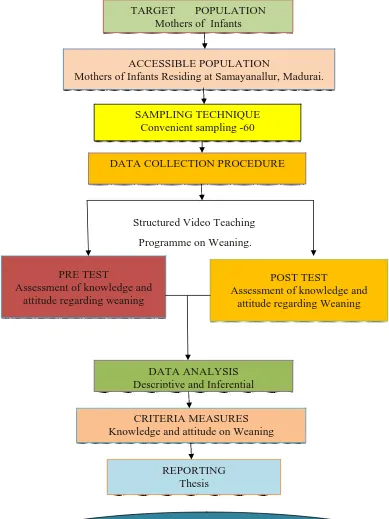
Fig – 2 : DIAGRAMMATIC REPRESENTATION OF RESEARCH DESIGN
TARGET POPULATION Mothers of Infants
ACCESSIBLE POPULATION
Mothers of Infants Residing at Samayanallur, Madurai.
SAMPLING TECHNIQUE Convenient sampling -60
DATA COLLECTION PROCEDURE
DATA ANALYSIS Descriptive and Inferential PRE TEST
Assessment of knowledge and attitude regarding weaning
POST TEST
Assessment of knowledge and attitude regarding Weaning
CRITERIA MEASURES Knowledge and attitude on Weaning
SETTING OF THE STUDY
The study was conducted at Samayanallur, Madurai ,considering the proximity, availability of samples and cooperation from the hospital management. The Samayanallur is situated at a distance of 20 km away from Government Rajaji hospital, Madurai.
POPULATION
A population is the entire aggregation of cases in which the researcher is interested (Polit and Hungler 1999). The target population selected for this study was mothers of infants. The accessible population selected for this study was mothers of infants residing at samayanallur, Madurai.
SAMPLE
The sample selected for the present study was 60 mothers of infantsresiding atSamayanallur, Madurai during the period of data collection.
CRITERIA FOR SAMPLE SELECTION Inclusion criteria
• Mothers of infants residing at Samayanallur, Madurai.
• Mothers having 6-12 month infant.
• Mothers who are willing to participate.
• Mothers who can understand Tamil. Exclusion criteria
• Mothers of infants with other medical problems.
• Mothers who are not available at the time of data collection.
• Mothers who are not willing to participate.
• Mothers who can not understand Tamil. SAMPLING TECHNIQUE
DEVELOPMENT OF THE TOOL
The research tool was developed in English and tamil after extensive review of literature and 1 medical expert and 3 nursing expert opinion. The structured self administered multiple choice questionnaire was used as an instrument to assess the knowledge and self administeredfive point rating scale was used to assess the attitude of mothersof infants regarding weaning.
DESCRIPTION OF THE TOOL The tool consists of three parts
Part-1
It consists of demographic variables of mothers of infants. (Age,Religion, Marital status, Educational status, Occupation, Income, Type of family, Number of children, Source of information.etc)
Part-2
The self administered questionnaire consists of multiple choice questions to assess the knowledge of mothers of infants regarding weaning.
Part -3
The self administeredfive point rating scale to assess the attitude of mothers of infants regarding weaning.
STRUCTURED VIDEO TEACHING PROGRAMME
SCORING PROCEDURE Tool-1
The maximum possible score is 25 for 25 items. A score of ‘1’ mark was given for every correct answer and a score of ‘0’ was given to every wrong answer.
For the purpose of study the total score was classified as follows >75% adequate knowledge
51 -74% moderately adequate knowledge <50% inadequate knowledge.
Tool-2
The rating scale to assess the attitude of mothers of infants regarding weaning.
For a positive statement highest scores were given (5,4,3,2,1) For a negative statement scores were reversed (1,2,3,4,5) For the purpose of study the total score was classified as follows >75% satisfactory attitude
51-74% moderately satisfactory attitude <50% unsatisfactory attitude.
VALIDITY AND RELIABILITY
A) VALIDITY OF THE TOOL
HustingsTolsma 1989 stated that content validity is a judgementregarding how well the instrument represents the characteristics to be assessed. Judgments are based on prior research in the field and on the opinion of the experts.
B) RELIABILITY OF THE TOOL
Reliability of the tool concerns its ability to produce similar results when repeated measurements are made under identical conditions (Kenneth and Bordens) Reliability was established through test retest method. The tool was administered to six samples representing the characteristics of the population. After a gap of one week the retest was given. Coefficient correlation score of knowledge and attitude was calculated and found to be reliable r=0.81(Knowledge) and 0.83 (Attitude)
PILOT STUDY
Polit and Hungler (1999) denoted that pilot study is a small scale revision on trial run done in preparation for a major study.Pilot study was conducted at Samayanallur, Madurai afterobtaining the permission from the Block medical officer. Six mothers of infants were selected using convenience sampling.
After getting oral consent from the subjects pre testquestionnaire was administered. Structured video teaching was administered by means of video show to the individual mothers, after 1weeks post test was conducted. The pilot study revealed that the study is feasible. Data was analyzed to find out the suitabilityof the statistical methods.
Sl.No Pre-test Experiment Interval Post-test
1.
Mothers Per day
No of days
Total
3 days 6 days
Mothers Per day
No of
days Total
2 3 6 2 3 6
DATA COLLECTION PROCEDURE
After obtaining the oral consent, self administered questionnaire and rating scale were given to the study samples to assess the pretest. After collecting the pretest questionnaire the video teaching on weaning was given. After one weekinterval again the same self administered questionnaire and rating scale was given to the same samples to assess the post test.
The same duration was givento the study samples. All samples were very cooperative and investigator expressed his gratitude for their cooperation .The tool was checked for computation.
Sl.No Pre-test Experiment Interval Post-test
1.
Mothers Per day
No of days
Total
7 days 7 days
Mothers Per day
No of days
Total
10 6 60 10 6 60
PLAN FOR DATA ANALYSIS
The demographic variables were analyzed by using descriptive statistics(frequency and percentage) The knowledge and attitude were assessed by using mean and standard deviation. The effectiveness of video teaching programme was assessed by using paired ‘t’ test.
Correlation between knowledge and attitude was assessed by using correlation coefficient. Association between knowledge and attitude of mothers with their selected demographic variables was analyzed by using inferential statistics (chisquare).
ETHICAL CONSIDERATIONS
CHAPTER IV
DATA ANALYSIS AND INTERPRETATION
This chapter deals with the description of sample analysis andinterpretation of the collected data from the mothers of sixty infants with reference to their knowledge and attitude regarding weaning.
According to Denis Polit (2005) analysis is the method of organizing, sorting, and scrutinizing data in such a way that the esearch question can be answered.The analysis and interpretation of the study was based on the data collected through structured multiple choice questionnaire to assess theknowledge and rating scale to assess the attitude of the mothers of infants regarding weaning The result was computed by using descriptive and inferential statistics based on the objectives of the study.The study findings are presented in sections as follows.
SECTION I : Deals with the distribution of the demographic variables of mothers of infants regarding weaning.
SECTION II : Deals with the pretest and post test score of knowledge of mothers of
infants regarding weaning
SECTION III : Deals with the pretest and post test score of attitude of mothers of
infants regarding weaning
SECTION IV : Deals with the data on the effectiveness of structured video teaching
programme in improving the knowledge and attitude of mothers of infants regarding weaning.
SECTION V : Deals with the correlation coefficient between knowledge and attitude
of mothers of infants regarding weaning.
SECTION VI :Deals with the association between post test knowledge and attitude
SECTION I
[image:51.612.158.489.205.689.2]Distribution of demographic variables of mothers of infants
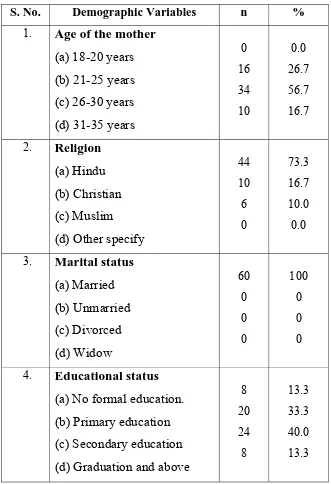
Table -1
Frequency and percentage distribution of mothers of infants
S. No. Demographic Variables n %
1. Age of the mother
(a) 18-20 years (b) 21-25 years (c) 26-30 years (d) 31-35 years
0 16 34 10 0.0 26.7 56.7 16.7 2. Religion (a) Hindu (b) Christian (c) Muslim (d) Other specify
44 10 6 0 73.3 16.7 10.0 0.0
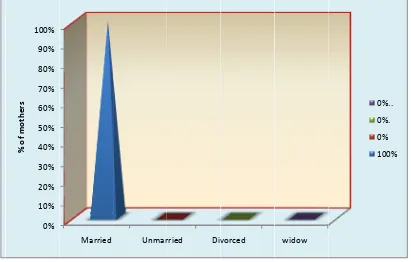
3. Marital status (a) Married (b) Unmarried (c) Divorced (d) Widow 60 0 0 0 100 0 0 0
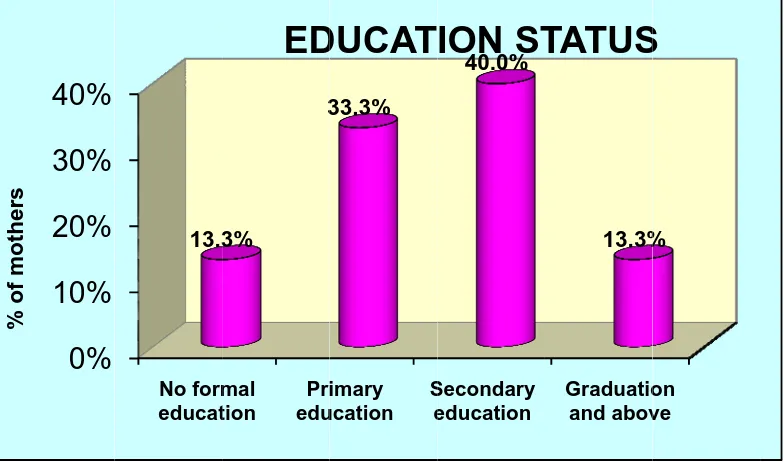
4. Educational status (a) No formal education. (b) Primary education (c) Secondary education (d) Graduation and above
5. Type of occupation
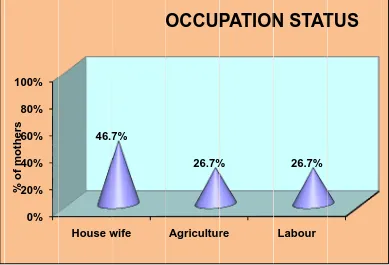
(a) House wife (b) Agriculture (c) Labourer (d) Skilled worker
28 16 16 0 46.7 26.7 26.7 0.0
6. Income of the family per month (In Rupees)
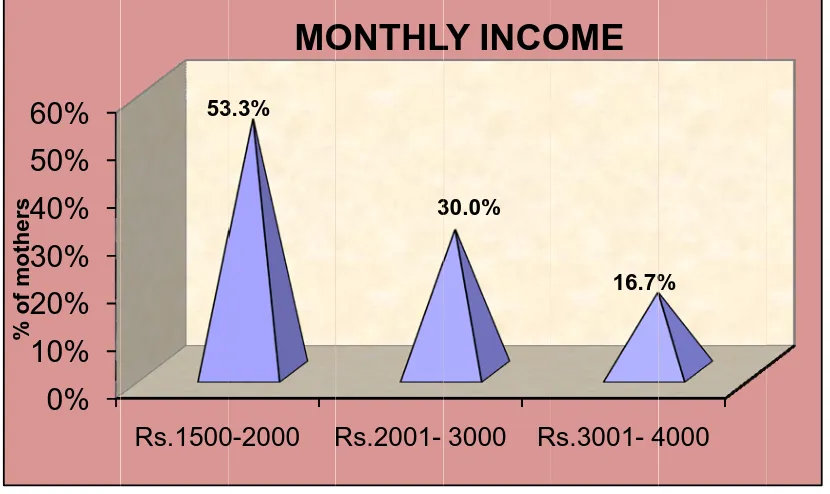
(a) 1500-2000 (b) 2001-3000 (c) 3001- 4000 (d) Above 4000
32 18 10 0 53.3 30.0 16.7 0.0
7. Type of family (a) Nuclear family (b) Joint family (c) Extended family
40 20 0 66.7 33.3 0.0 8. Number of children
(a) One (b) Two (c) Three (d) Above 3
18 38 2 2 30.0 63.3 3.3 3.3 9. Source of information
(a) Mass media (c) Magazine (d) Peer group
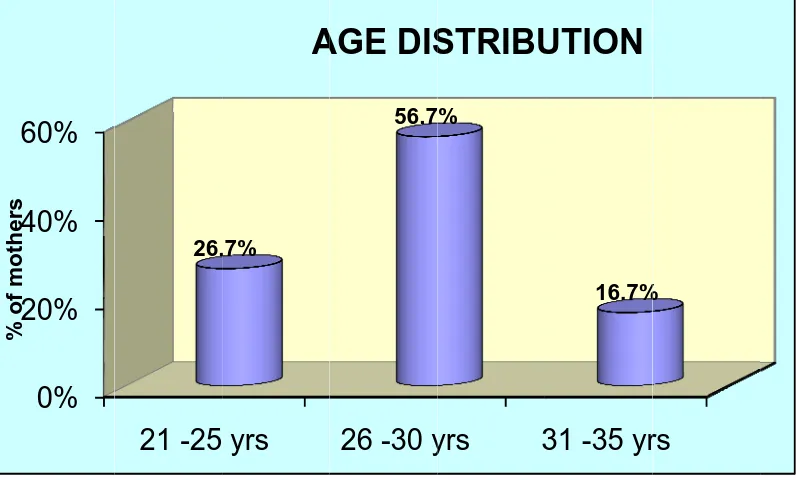
Table 1 shows that regard to age, among 60 mothers of infants 16(26.7%) mothers were in the age group of 21-25 years ,34(56.7%) mothers were in the age group 26-30 years and 10( 16.7%) mothers were in the age group of 31-35 years.
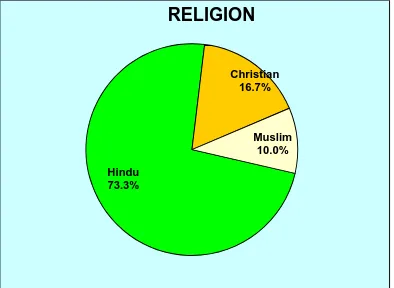
Regarding Religion, Majority of mothers 44 (73.3%) are hindu ,10 (16.7%) are Christian 6 (10%) are muslims. Regarding marital status , all mothers 60 (100%) are married .
Regarding education of mothers, 8 (13.3%) of mother had no formal education 20 (33.3%) of mothers had primary education, 24 (40%) of mothers had higher secondary education ,8 (13.3%) mothers were graduate.
Regarding type of occupation , 28(46.7%)mothers are House wife,16 (26.7%) mothers are agriculturer, 16 (26.7%)mothers are labourer, none of mother have skilled work.
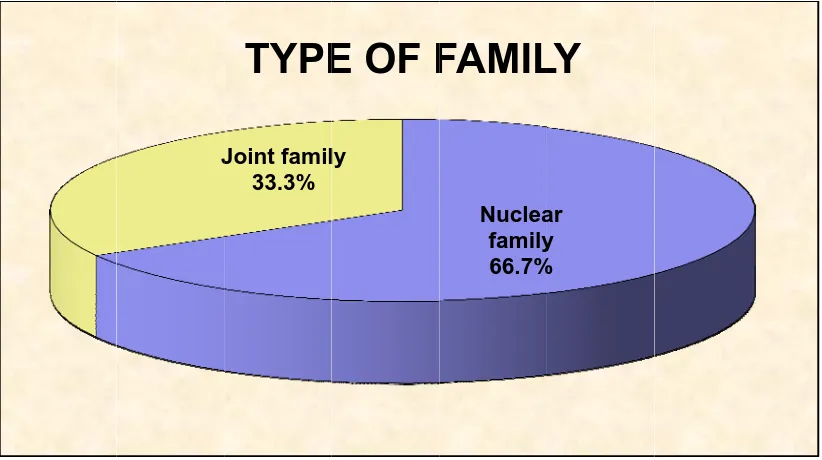
Regarding income of the family 32(53.3%) of family earn 1500-2000/ month.18(30%) of family earn 2001-3000/ month.10(16.7%) of family earn 3001-4000/month.Regarding the type of family majority 40(66.7%) having nuclear family and 20(33.3%) having joint family.
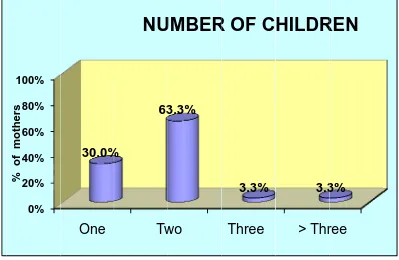
Regarding number of children 18(30%)of mothershad 1child,38(63.3%) of mothers had two children and 2( 3.3%) of mothers had 3 children and 2 (3.3%) of mothers had more than 3 children.