University of South Carolina
Scholar Commons
Theses and Dissertations
1-1-2013
The Use of Applets For Developing Understanding
In Mathematics: A Case Study Using Maplets For
Calculus With Continuity Concepts.
Raymond Ellis Patenaude University of South Carolina
Follow this and additional works at:https://scholarcommons.sc.edu/etd
Part of theSecondary Education and Teaching Commons
This Open Access Dissertation is brought to you by Scholar Commons. It has been accepted for inclusion in Theses and Dissertations by an authorized administrator of Scholar Commons. For more information, please [email protected].
Recommended Citation
THE USE OF APPLETS FOR DEVELOPING UNDERSTANDING IN MATHEMATICS:
A CASE STUDY USING MAPLETS FOR CALCULUS WITH CONTINUITY CONCEPTS
by
Raymond E. Patenaude
Bachelor of Arts
State University of New York at Buffalo, 1987
Master of Education
State University of New York at Buffalo, 1989
Submitted in Partial Fulfillment of the Requirements
For the Degree of Doctor of Philosophy in
Secondary Education
College of Education
University of South Carolina
2013
Accepted by:
Edwin M. Dickey, Major Professor
Craig Kridel, Committee Member
Douglas B. Meade, Committee Member
Jan A. Yow, Committee Member
ii
iii Dedication
Andrew and Jonathan Patenaude, my sons, are the inspiration behind, and
constant reminders of why I sought the Doctor of Philosophy degree.
This work is dedicated to my wife, Laurie Ann Patenaude, for your commitment
iv
Acknowledgements
It pleases me to acknowledge the efforts of the following people who helped with
the preparation of this manuscript and my journey at the University of South Carolina
(USC):
My advisor and mentor Dr. Ed Dickey, USC, for his constant review, critique, and
suggestions during the process of preparing, investigating, and writing the results of this
investigation.
Dr. Jan Yow, USC, who received her Ph.D. shortly before I enrolled at USC, has
been a mentor to me; her advice and insight during this process is appreciated. Dr. Yow
reviewed evidence and provided guidance with qualitative inquiry methods.
Dr. Craig Kridel, USC, is recognized for his participation on my dissertation
committee, guidance in qualitative inquiry, and for his support; his description of me as a
‘colleague’ challenged and changed the way I viewed myself as a Ph.D. student.
Dr. Doug Meade, USC, co-creator of the Maplets for Calculus applets, for
allowing them to be the focus of this study, his expertise in reviewing the Three Worlds
rubric developed for continuity concepts, and for service on my dissertation committee.
Dr. Phil Yasskin, Texas A&M University, co-creator of Maplets for Calculus, is
recognized for allowing them to be used in this study, and review of student feedback.
Dr. Robert Petrulis, Principal Consultant, Evaluation, Policy and Research in
Education Consulting, conducted a peer review of this study. He also provided much
v
Paula Adams, Ph.D. candidate, USC, recruited students, reviewed the continuity
rubric, and provided support during the data collection phase of this investigation.
Dr. Michelle Jay, USC, provided resources about the Think Aloud method and
encouraged me to pursue qualitative investigation during my time in her class.
Dr. Ralph Howard, USC, mentored my journey through the mathematics
department and provided support and encouragement which is greatly appreciated.
The principals of the high schools graciously allowed me to conduct this research
in their facilities.
The AP Calculus teachers of the two classes whose students were the participants
in this study helped recruit and schedule data collection sessions.
The students who participated in this study – I enjoyed working with you all.
Mr. Tony entertained me during the 90 minute drives back and forth to Columbia.
All my students, past and present, are recognized for questions about and
vi Abstract
The Common Core State Standards for Mathematics (CCSSM) are founded on a
long history of mathematics education research emphasizing the importance of teaching
mathematics for understanding. The CCSSM along with the National Council of
Teachers of Mathematics (NCTM) recommend the use of technology in the teaching of
mathematics. New mobile technologies in society facilitate use in mathematics
classrooms, and these technologies rely on software applications called applets. Certain
applets have been developed for use in teaching mathematics.
This study investigated the questions: Is it possible to determine the
characteristics of applets that lead students toward greater understanding of mathematical
concepts? And, can we determine specific actions and strategies learners develop while
using applets that increase their understanding?
Using a case study methodology, continuous motion, screen capture and audio
recordings of seven high-school AP Calculus students were made while each used five
Maplets for Calculus applets developed for continuity concepts. Audio and screen
capture recordings were transcribed and analyzed to determine increases in understanding
of continuity concepts using a rubric based on Tall’s Three Worlds model of mathematics
understanding. Using Drijvers and Trouché’s Instrumental Approach theory this
evidence was also analyzed to determine the features of the Maplets and strategies used
vii
The findings relevant to teachers of mathematics included: evidence about the
features of and strategies used by the students with the Maplets that developed students’
embodied and symbolic understanding of left and right continuity; evidence for how the
proceptual-symbolic understanding of the definition of continuity is developed; evidence
of students using the concepts of left and right continuity to develop a formal ‘rule’ for
determining the overall continuity of a function; evidence of formal thinking in the
embodied world for epsilon-delta continuity; and evidence that supports the contributions
of Maplets in developing procedural understanding.
A finding of relevance to applet developers included recommendations based on
evidence for the sequencing of Maplets along with features and learner strategies that
viii
Table of Contents
Dedication ... iii
Acknowledgements ... iv
Abstract ... vi
List of Tables ... xi
List of Figures ... xii
I. Introduction to the Problem ... 1
Introduction ... 1
Problem Statement ... 6
Conceptual Framework ... 7
Objectives ... 12
Research Questions ... 12
Logical Structure ... 13
Definitions... 14
Significance of the Study ... 17
Delimitations ... 20
II. Literature Review ... 21
Introduction ... 21
A History of Mathematics Educators Focusing on Understanding ... 22
Technology, Applets, and Mobile Technologies ... 32
ix
Think Aloud Method... 41
Hierarchy of Understanding and Continuity ... 46
Summary ... 56
III. Methodology ... 57
Introduction ... 57
Sample... 58
Data Collection ... 60
Description of Maplets ... 65
IV. Results ... 81
Introduction ... 81
Documenting Student Understanding of Continuity Concepts ... 83
Features Used by Students Working With Maplets ... 92
Utilization Schemes Used by Students Working with Maplets ... 98
Student Interview Responses to Maplet Features ... 114
Results from the Epsilon-Delta Maplet... 119
Findings... 125
Summary ... 140
V. Conclusion ... 143
Introduction ... 143
Summary ... 143
Conclusions and Discussion ... 147
Recommendations ... 155
x
References ... 164
Appendix A – USC IRB Approval Letter ... 176
Appendix B – Parent Consent and Student Assent Forms ... 177
Appendix C –High School Consent for Research Letters ... 181
Appendix D – Protocol for M4C Recording Sessions ... 182
xi List of Tables
Table 4.1 Frequency of use of Maplet features ...92
Table 4.2 Summary of utilization schemes developed by students
working with continuity Maplets ...100
Table 4.3 Summary of student responses to interview questions
about Maplet features… ...118
Table 4.4 Items referred to or used in explaining discontinuity during
Epsilon-Delta follow-up activity...122
Table 4.5 Indicators of student understanding of continuity
using epsilon-delta method ...123
Table G.1 Schemata used for coding transcripts for
features of Maplets used ...192
Table G.2 Schemata used for coding transcripts for
xii List of Figures
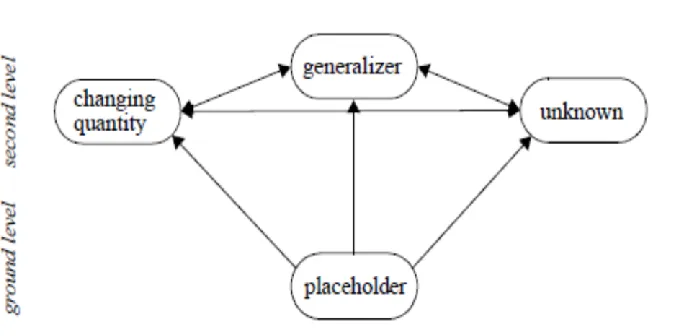
Figure 2.1 Drijvers’ levels of understanding the concept of parameter ...48
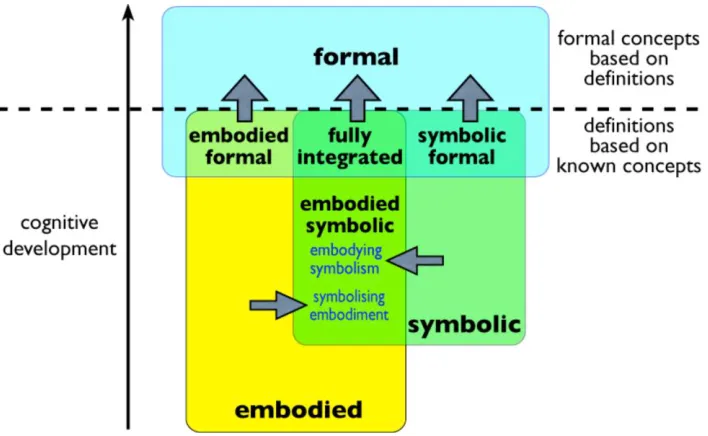
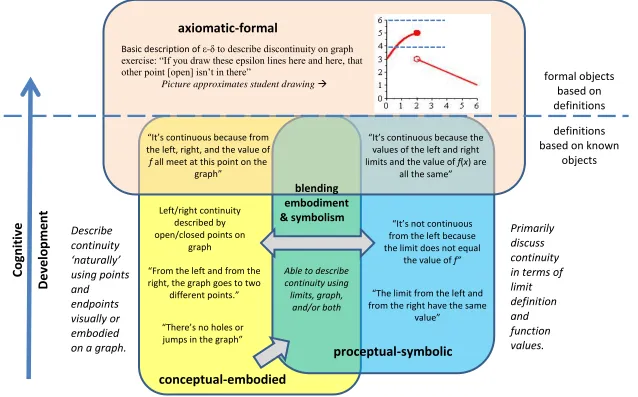
Figure 2.2 Tall’s Three Worlds model of cognitive development of mathematics concepts ...51
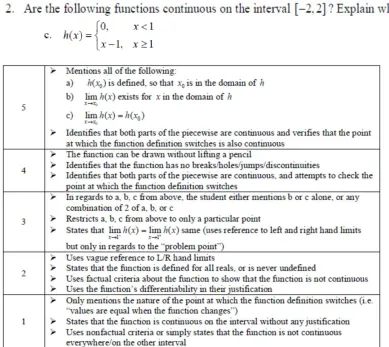
Figure 2.3 Item 2.c. and CUR from Chan’s assessment on continuity ...55
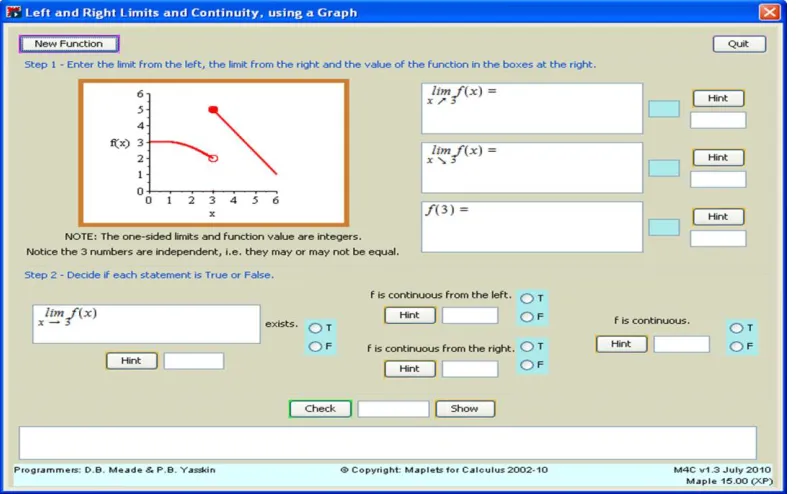
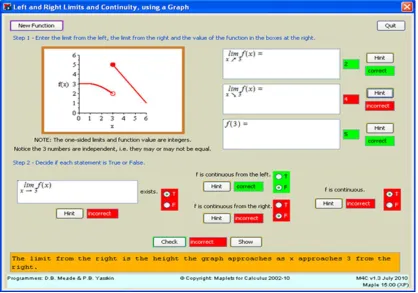
Figure 3.1 Beginning screen shot of Continuity given a Graph Maplet ...65
Figure 3.2 Screen shot of Continuity given a Graph Maplet after using ‘check’ and ‘hint’ for right limit… ...67
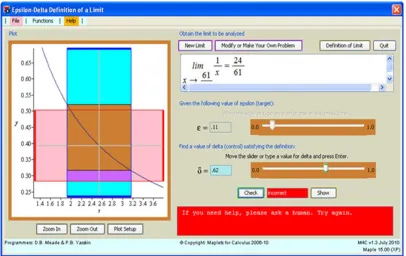
Figure 3.3 Screen shot of the Epsilon-Delta Maplet after ‘check’ for δ = 0.62 ...68
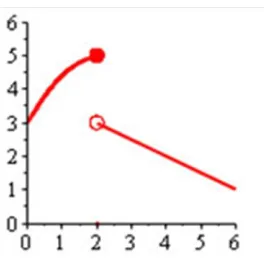
Figure 3.4 Graph used in the Epsilon-Delta Continuity Maplet follow-up activity ...69
Figure 3.5 Hahkiöniëmi’s hypothesized learning framework for derivative ...70
Figure 4.1 Students’ level of understanding of continuity within Tall’s Three Worlds model ...85
Figure 4.2 Graph from epsilon-delta follow-up activity with example of student drawn line at y = 2… ...91
Figure 4.3 Screen shot of Maplet graph feature with cross-hair ...94
Figure 4.4 Epsilon-Delta Continuity Maplet after correct input of delta ...121
Figure 5.1 Screenshot of Finding the Value of C Maplet ...154
Figure E.1 Beginning screen shot of Continuity using a Graph Maplet ...184
Figure E.2 Beginning screen shot of the Continuity using a Piecewise Function Maplet ...185
Figure E.3 Beginning screen shot of Continuity using a Black Box Function Maplet ....186
xiii
Figure E.5 Beginning screen shot of the Finding the Value of C Maplet ...188
Figure E.6 Screen shot of the Finding the Value of C Maplet
after using the ‘show’ and ‘check’ feature ...189
Figure E.7 Screen shot of the Epsilon-Delta Continuity Maplet
after using ‘check’ feature ...190
Figure E.8 Screen shot of the Epsilon-Delta Continuity Maplet
1
I. Introduction to the Problem
Introduction
During the early 20th Century, mathematics education in the United States focused
on repetition and the increase in proficiency and accuracy of arithmetic procedures on
numbers (National Research Council [NRC], 2001). However, research by Brownell
(1935) questioned the reliance on rote memorization and repetition. In reviewing the
performance of students on arithmetic tasks, he found that those instructed with methods
that focused on the conceptual understanding of addition and subtraction, performed as
well as students who had been exposed to drill and repetition of addition facts (p. 9). “In
the 1950s and 1960s, the new math movement defined successful mathematics learning
primarily in terms of understanding the structure of mathematics together with its
unifying ideas, and not just as computational skill. This emphasis was followed by a
‘back to basics’ movement that proposed returning to the view that success in
mathematics meant being able to compute accurately and quickly” (NRC, 2001, p. 115).
In its Agenda for Action: Recommendations for School Mathematics of the
1980’s, the National Council of Teachers of Mathematics (NCTM) recommended that
school mathematics curriculum should be problem solving based; part of their reasoning
for this emphasis being, “true problem-solving power requires a wide repertoire of
knowledge, not only of particular skills and concepts but also of the relationships among
them and the fundamental principle that unify them” (NCTM, 1980). The second
2
Must Encompass More Than Computational Facility,” includes this statement regarding
basic skills:
The higher-order mental processes of logical reasoning, information processing,
and decision making should be considered basic to the application of
mathematics. Mathematics curricula and teachers should set as objectives the
development of logical processes, concepts, and language, including:the
identification of likenesses and differences leading to
classification; understanding, making, and applying definitions; the development
of a feeling for informal proof including counterexamples and generalizations
(NCTM, 1980).
This emphasis on mathematical understanding included in the Agenda for Action
continued in subsequent reports released by the NCTM, other organizations, and
researchers. An outcome of these reports was the release of the Curriculum and
Evaluation Standards for School Mathematics by the NCTM in 1989. Often referred to
as the NCTM Standards, this report included thirteen curriculum standards that addressed
both content and emphasis in teaching mathematics. A common theme throughout the
standards is summarized by the statement, “the study of mathematics should emphasize
reasoning so that students can believe that mathematics makes sense” (NCTM, 1989, p.
29).
In 2000, the NCTM published the Principles and Standards for School
Mathematics (PSSM). The Learning Principle includes the statement, “unfortunately,
learning mathematics without understanding has long been a common outcome of school
3
teaching for understanding in describing many math classroom lessons as ones where
students are told about facts or steps in a procedure, guided through some practice
problems, then given exercises or problems to complete on their own (p. v).
According to the PSSM Learning Principle, the practice of teaching mathematics
by focusing on definitions and procedures opposes research findings:
In recent decades, psychological and educational research on learning complex
subjects, such as mathematics has solidly established the important role of
conceptual understanding in the knowledge and activity of persons who are
proficient….One of the most robust findings of research is that conceptual
understanding is an important component of proficiency (NCTM, 2000, p. 20).
In the late 2000’s, the Common Core State Standards (CCSS) were developed by
the National Governors Association Center for Best Practices (NGA) and the Council of
Chief State School Officers (CCSSO) in order to provide a consistent framework for
primary and secondary school curricula throughout the United States. The standards for
English language arts and mathematics were presented in 2010.
The CCSS Mathematics (CCSSM) focuses on students’ understanding of
mathematics structure and concepts. The educational reform group, Achieve,
commenting on the mathematics standards, stated: “the high school standards set a
rigorous definition of college and career readiness, not by piling topic upon topic, but by
demanding that students develop a depth of understanding” (CCSSO & NGA, 2010, p.
2). The CCSSM section on connecting mathematical practice to the standards for
4
Students who lack understanding of a topic may rely on procedures too heavily.
Without a flexible base from which to work, they may be less likely to consider
analogous problems coherently, justify conclusions, apply the mathematics to
practical situations, use technology mindfully to work with the mathematics,
explain the mathematics accurately to other students, step back for an overview,
or deviate from known procedure to find a shortcut. In short, a lack of
understanding prevents a student from engaging in the mathematical practices
(p. 8).
The CCSSM being grounded in “evidence and research” (CCSSO & NGA, 2010, p. 1) in
formulation, emphasize the need for building the conceptual knowledge base of students.
Given this renewed emphasis on understanding mathematical concepts, through the
CCSSM, how can teachers move toward developing greater mathematical understanding
with their students?
One of the tools that can be used to help foster greater understanding of
mathematical concepts, endorsed by both the CCSSM and the PSSM, is technology.
“Students can learn more mathematics, more deeply with the appropriate use of
technology,” states the PSSM Technology Principle. “Students who have trouble with
basic procedures can develop and demonstrate other mathematical understandings, which
in turn can help them learn the procedures” (NCTM, 2000, p. 27). The CCSSM Standard
for Mathematical Practice #5: Use Appropriate Tools Strategically, states that,
“mathematically proficient students consider the available tools when solving a
mathematical problem. These tools might include…a calculator, a spreadsheet, a
5
& NGA, 2010, p. 7). Throughout the CCSSM standards for mathematical content, uses
of technology are encouraged in the understanding of mathematical concepts. One
example, from the high school algebra, “reasoning with equations and inequalities”
domain, under the “represent and solve equations and inequalities graphically” cluster
suggests using technology to graph functions or make a table of values to find and
explain why the x-coordinates of the points where the graph of y = f(x) and y = g(x)
intersect are solutions to the equation f(x) = g(x) (p. 66).
One result of the proliferation of mobile technology during the early 2000’s is the
increased use of applets. Applets are software applications that are executed in the
context of another program, usually a web browser or other application (Trigo, Oguin, &
Matai, 2010). Of the many applets developed, Maplets for Calculus (M4C) are a series of
applets (over 140 as of this writing) providing users with typical examples and exercises
on a variety of topics covered in precalculus and the traditional three-semester calculus
courses. The M4C applets allow for computer generated or user entered problems.
Maplets provide users with an interactive graphic interface that provide immediate
feedback, hints, and step by step checking of solutions/entries. These applets are
designed using Maple software (the fusion of Maple and applets accounts for the name
Maplets) and have been developed to increase student technical skill and understanding
(Meade & Yasskin, March 2008 and December 2008).
The CCSSM includes an end note on transitions, one of which is the transition
from high school to post-secondary/college education (CCSSO & NGA, 2010, p. 84).
Precalculus and calculus are typical courses offered to high school students planning on
6
for understanding of all concepts within these courses would be worthwhile, it is beyond
the scope of any single study. Continuity of functions is an important topic in calculus,
yet is often difficult to learn and challenging to teach (Tall & Vinner, 1981; Robert, 1982;
Núñez, 1993). In preparation of this manuscript, a search for studies considering
continuity yielded a limited number of results when compared to the number of studies
regarding topics such as functions and limits. It appears that investigations into the
understanding of the concepts of continuity are underrepresented. M4C offer five
different Maplets that address topics included in the study of continuity, including
addressing continuity from a graphic, algebraic, and numeric perspective. For these
reasons, it is the intent of this study to investigate the use of Maplets for Calculus for
developing understanding of the concept of continuity.
Problem Statement
The NCTM Principles and Standards for School Mathematics (PSSM) state that,
“students must learn mathematics with understanding” (NCTM, 2000, p. 20). Building
on this and released in 2010, the Common Core State Standards for Mathematics
(CCSSM) endeavor to stress conceptual understanding and the organization/structure of
mathematical ideas.
Research supports the use of technology as a way for students to focus on
understanding the underlying structure and concepts of mathematics (Borwein & Bailey,
2003; Kaput, 1992; NCTM, 2000). Further, the NCTM PSSM asserts technology
enhances learning, supports effective teaching, and influences what mathematics is taught
(2000, p. 24). The CCSSM also include Standards for Mathematical Practice that
7
Mathematically proficient students consider the available tools when solving a
mathematical problem. These tools might include pencil and paper, concrete
models, a ruler, a protractor, a calculator, a spreadsheet, a computer algebra
system, a statistical package, or dynamic geometry software (CCSSO & NGA,
2010, p. 7).
More and more, these technologies include applets that are available on computers,
tablets, and smart phones. Maplets for Calculus are specific applets that have been
developed to assist students in the learning of calculus, and five Maplets have been
developed for addressing the conceptual understanding of continuous functions.
Is it possible to determine the characteristics of applets that lead students toward
greater understanding of mathematical concepts? Can we determine specific actions and
strategies learners develop while using applets that increase their understanding? In
particular, which features of Maplets for Calculus lead students toward greater
understanding of continuity of functions? Can we determine specific actions and
strategies students develop while using Maplets that increase their understanding?
Conceptual Framework
In this study, the following approaches and theories provided the framework for
investigating the problem stated and its objectives: instrumental approach, think aloud
methodology and David Tall’s Three Worlds of mathematics.
The instrumental approach as developed by Drijvers and Trouché (2008) is
grounded, in part, by the work of Vygotsky (1930/1985) and Rabardel (2002). It
concerns the use of artifacts, a material or abstract ‘tool’ that can be used to sustain a
8
employing the artifact. During this process, the artifact develops into an instrument
whose use becomes second nature to the user (Drijvers & Trouché, 2008, p. 368).
Though the ideas for the instrumental approach were developed before the proliferation
of technology, researchers of mathematics education have found this framework useful
for investigating the teaching and learning of mathematics using technology. Though
discussed in a study investigating the use of computer algebra systems (CAS) to learn
algebraic concepts, Drijvers and Trouché justified their use of the instrumental approach
theory in writing:
It allows for an analysis of the learning process in technological environments of
increasing complexity, and takes into account the non-trivial character of using
computerized environments. Furthermore, it stresses the subtle relationship
between machine technique and mathematical insight, and provides a conceptual
framework for investigating the development of schemes, in which both aspects
are included. This is helpful for designing student activities, for observing
interaction between students and the computer algebra environment, for
interpreting it and for understanding what works well and what does not
(2008, p. 375).
As the primary question to be answered by this research is exactly the “what works well
and what does not” for students using applets to learn about concepts, the instrumental
approach provides the researcher with a means for examining the impact of the applets.
Drijvers, Doorman, Boon, Van Gisbergen, and Gravemeijer (2007) state that
instrumentation theory may be used by researchers in priori hypothetical investigations to
9
analysis and forming conclusions (p. 118). Qualitative research approaches involve
systematic investigation of human behavior, social phenomena, and interaction; they rely
on verbal and visual communication to answer questions. Case study research can be
indicated when a researcher sets out to investigate particular people, programs,
curriculum, or techniques; and can provide rich detail and insight into the cases being
studied (Lichtman, 2013).
One method used to collect and analyze data from subjects while solving
problems is the think aloud method. According to van Someren, Barnard, and Sandberg
(1994):
The think aloud method consists of asking people to think aloud while solving a
problem and analyzing the resulting verbal protocols. This method has
applications in psychological and educational research on cognitive processes but
also for the knowledge acquisition in the context of building knowledge-based
computer systems. In many cases the think aloud method is a unique source of
information on cognitive processes. Think aloud protocols are collected by
instructing people to solve one or more problems while saying ‘what goes through
their head’, stating directly what they think (p. 1).
While developed before the proliferation of technology and its use in studying and
learning mathematics, the think aloud method has been used to analyze the thought
processes of students while solving mathematics problems (e.g. Kintsch & Greeno, 1985;
Riley, Greeno, & Heller, 1983; Sandberg & de Ruiter, 1985). More recently, researchers
have employed think aloud procedures in their investigations of student use of technology
10
Reed, 2012). The think aloud method is indicated for this research by Drivers and
Trouché’s (2008) observation regarding the use of instrumental approach: “A difficulty is
that we cannot observe mental schemes directly. Our observations are limited to
techniques students carry out with the artifact, and to the way they report on this in
written or oral form. From these data we try to construct schemes...” (p. 371). As the
think aloud method calls for the subject to verbalize their thought processes while solving
problems, application to this study is indicated for analyzing both the subjects’
development of schema while using Maplets to solve continuity problems, and in order to
determine students’ understanding of continuity. The determination of this level of
understanding leads to the third framework that guides this study: Tall’s Three Worlds of
mathematics.
Núñez, Edwards, and Matos (1999) discussed two ways in which continuity is
addressed in textbooks and classroom teaching. A natural continuity refers to the
informal/intuitive definition that characterizes a continuous function as one that can be
graphed without gaps or jumps. Formal definitions of continuity are presented using
limits, limit and function symbolism, and are ‘rigorous’ or precise in definition. Núñez
describes most teaching patterns for continuity as introducing students to the idea of
natural continuityusing ideas and examples from their lived experiences, then moving
towards more formal definitions. Núñez et al. argues that students’ difficulty with
continuity concepts is inherent, as the two definitions of continuity are “radically
different cognitive concepts” (p. 55) and that the natural continuity definition involves an
embodied cognition that would serve teachers and students better than formal treatments.
11
framework that accounts for provisions of both the natural and formal continuity
definitions.
Tall’s (2008) Three Worlds of Mathematics framework guided this research in
documenting students’ understanding of continuity. Tall’s Three Worlds include: (1)
conceptual-embodied world based on the perception, reflection, and investigation of
properties of objects seen and experienced in the real world; (2) proceptual-symbolic
world developed from the embodied world through actions (processes) that can be
symbolically represented and can themselves be thought of as concepts, thus the term
procept; and (3) axiomatic-formal world is characterized by the formal world of
mathematical knowledge construction by using set-theoretic definitions and deducing
other properties and schema using formal proof (pp. 7-8). The Three Worlds model
accounts for overlap between the embodied-conceptual and the proceptual-symbolic as
understanding in either or both of these worlds develops toward the axiomatic-formal
level of understanding, which can inform this study with regard to the Núñez et al. (1999)
concerns listed. Further reasoning for the use of the Three Worlds of mathematics comes
from Tall’s (2008) discussion of calculus. “Calculus builds in three very different
worlds,” Tall states before providing that calculus is a blend of the world of embodiment
(drawing graphs) and symbolism (manipulating formulae) and formalism (proof) (p. 15).
While Tall provided examples of limit and derivative concepts, a parallel blending of
worlds involving continuity could include: embodiment (investigating graphs);
12 Objectives
Global Objective
This study sought to determine the properties of applets and the actions of
students while using applets that foster the development of conceptual understanding of
mathematics.
Local Objectives
The following ‘local’ objectives informed the global objective of this study:
1. Determine the particular characteristics of the Maplets for Calculus applets
that promote student understanding of the mathematical concept of continuity
of a function.
2. Determine the particular actions and strategies a student develops while using
the Maplets, which promote the understanding of continuity.
Research Questions
Questions investigated during the course of this research were:
1. The Maplets for Calculus that present continuity exercises include interactive
graphics, hints, “check” answer, and other features. To what degree do each of
these features help promote conceptual understanding of continuity with respect
to Tall’s Three Worlds?
2. These Maplets on continuity also allowed students to use multiple features
simultaneously. Are there particular combinations of features, e.g. utilization
schemes,students developed that lead to a more ‘formal’ understanding of
13
continuity? With respect to Drijvers and Trouché (2008), “what works well and
what does not” (p. 375)?
3. In addition to the computer and Maplet software, students were allowed the use of
paper, pencil, and a calculator. Are there any other patterns of behavior or thought
that students exhibited while engaged with the Maplets that promote/inhibit the
development of conceptual understanding?
Logical Structure
The structure for this investigation derived logically from the instrumental
approach that accounts for actions and schema development of the student-user as he or
she engaged with Maplets to complete exercises about continuity. The instrumental
approach has framed investigations using a variety of technologies (spreadsheets,
dynamic geometry software, CAS, etc.) and is beneficial to this study, as the use of
computer applets is the primary artifact being employed (Drijvers & Trouché, 2008). In
this study, actions of students, and characteristics of the Maplets that lead toward greater
understanding for continuity were documented.
The development of more sophisticated schemes might indicate, as it did in
Drijvers’ (2003) study, a higher level of understanding. For example, if a student used a
particular series of keystrokes and inputs to solve an exercise, and later repeated this
sequence to answer subsequent exercises; this could be considered a utilization scheme
that contributes to the understanding of the concept. A schema developed using
particular features of the Maplet repeatedly provided evidence of that characteristic of the
applet as contributing to the increase in understanding. The think aloud method provided
14
schema developed that helped increase understanding. For example, during a Maplet
session, one student stated a function was not continuous because the value of the left and
right limits did not equal the value of the function for the given value of x; demonstrating
understanding of the definition of continuity. Tall’s Three Worlds informed this study by
providing the framework for which student understanding of the concepts of continuity.
The example regarding left/right limits and the function value above indicates
understanding in the proceptual-symbolic world for the concept of continuity – the use of
properties and mathematical objects to form a new/greater understanding of the concept.
Definitions
Terms and definitions used throughout this study include:
Applets - Applets are software applications that are executed in the context of
another program, usually a web browser or other application (Trigo, Oguin, & Matai,
2010).
Artifact – An artifact is a particular thing or an abstract object that can be used to
perform particular tasks (Rabardel, 2002).
Axiomatic-formal world – Part of Tall’s Three Worlds of mathematics theory.
The formal world (abbreviated title) represents mathematics based on set-theoretical
definitions of concepts. Knowledge and properties about these concepts are represented
by theorems (axioms) and are developed through the use of formal proof (Tall, 2008).
Concept-embodied world – Part of Tall’s Three Worlds of mathematics theory.
The embodied world (abbreviated title) is based on the perception of and reflection on
15
mental image (embodied). It refers to the perceptual representations of concepts (Tall,
2008).
Conceptual knowledge – Conceptual knowledge refers to:
…knowledge that is rich in relationships. It can be thought of as a connected web
of knowledge, a network in which the linking of relationships are as prominent as
the discrete pieces of information. Relationships pervade the individual facts and
propositions so that all pieces of information are linked to some network (Hiebert
& Lefevre, 1986, pp. 3-4).
Conceptual understanding – “Conceptual understanding refers to an integrated
and functional grasp of mathematical ideas. Students with conceptual understanding
know more than isolated facts and methods. They understand why a mathematical idea is
important and the kinds of contexts in which is it useful. Such students have organized
their knowledge into a coherent whole, which enables them to learn new ideas by
connecting those ideas to what they already know” (NRC, 2001, p. 118).
Formal definition of continuity – The definition of continuity that involves the
limit of a function and the value of a function being equal at a given point included the
use of limit and function notation and implies a more rigorous definition than natural
continuity (Núñez et al., 1999).
Instrument – An instrument represents the combination of an artifact and the
mental schemes a user develops while using the artifact to perform a specific task
(Drijvers & Trouché, 2008).
Instrumental approach theory - Concerns the use of artifacts, a material or
16
development of schemes by a user for employing the artifact. During this process, the
artifact develops into an instrument whose use becomes second nature to the user
(Drijvers & Trouché, 2008, p. 368).
Maplet - A Maplet is a computer applet designed using the computer software
Maple. Maplets use an interactive graphic user interface to provide typical examples and
exercises on topics in single variable calculus. Individual Maplets are designed to focus
on a particular concept or topic to encourage understanding and procedural skill (Meade
& Yasskin, 2008, March).
Maplets for Calculus – The collective set of over 140 Maplets designed to provide
exercises for topics of single variable calculus (Meade & Yasskin, 2012, March).
Natural continuity – Continuity defined by intuitively thinking of a function
without gaps, jumps, or holes (Núñez et al., 1999).
Procedural knowledge – Procedural knowledge: “consists of rules or procedures
for solving mathematical problems. Many of the procedures that students possess are
probably chains of prescriptions for manipulating symbols” (Hiebert & Lefevre, 1986,
pp. 7-8).
Proceptual-symbolic world – Part of Tall’s Three Worlds of mathematics theory.
The symbolic world (abbreviated title) “grows out of the embodied world through action
(such as counting) and is symbolized as thinkable concepts (such as number) that
function both as processes to do and concepts to think about (procepts)” (Tall, 2008, p.
7). Key to this world is the use of mathematical symbols that can represent a process to
17
Three Worlds of mathematics theory - A framework to represent the transition in
thinking from “school mathematics” (elementary and secondary school) to “pure” or
“formal” mathematics represented axiomatic systems and mathematical proof (university
and research level) (Tall, 2008).
Think aloud method – Think aloud method is characterized by asking a subject to
think (talk) out loud while engaged in a problem solving exercise. What they say is
recorded and used as data for analysis. It is used to gain insight to the cognitive process
of a subject during the problems solving task (van Someren et al., 1994, pp. 1-2).
Think aloud protocols – The transcribed verbalizations of subjects obtained after
using the think aloud method. (van Someren et al., 1994)
Tool – A tool may either be a physical object, such as a hammer, calculator, or
computer, or it may be a non-physical cognitive tool such, such as a letters, equations, or
language (Vygotsky, 1930/1985).
Utilization scheme - “A mental scheme that involves the global solution strategy,
the technical means that the artifact offers, and the mathematical concepts that underpin
the strategy.” This definition is used in the context of solving mathematics problems
with a tool, which in this study is applet technology (Drijvers & Trouché, 2008, p. 369).
Verbal cues – Verbal statements, fragments, or utterances of subjects that may be
used to determine underlying cognitive processes (van Someren et al., 1994).
Significance of the Study
This study is significant for high school and college instructors, software
developers, researchers investigating the use of technology for building understanding,
18
This study has implication for mathematics teachers both at the high school and
college levels. Technology is a tool that if used strategically can help educators teach
math for understanding, as called for by the CCSSM. Tablets, notebook computers, and
smart phones are all technologies that can support applet use. In order to effectively and
strategically harness the potential these devices offer for mathematics classes, instructors
can use the findings regarding the features found to promote understanding when
evaluating and selecting applets for use in their mathematics classes. For example, based
on the findings of this study, a teacher may consider selecting applets that allow students
to check their answers and change incorrect responses. The successful strategies that
students employed while using Maplets can help teachers specifically with regard to the
CCSSM Standard for Mathematical Practice number 5 (Use appropriate tools
strategically). This knowledge can inform the guidance given to students by their
teachers when introducing applet technologies, and for giving advice to students using
applets during class sessions. For example: the findings of this study suggest students
who read and followed the directions and prompts given by the applets saw an increase in
their understanding of continuity concepts.
This study also has important implications for the developers and innovators of
mathematics education software, as the documented knowledge of features of applet
technology leading to increased understanding for mathematics concepts provides a guide
for improving current applets and in the development of new ones, comparable to the
work of Jacobse and Harskamp’s (2009) whose investigation showing that cognitive hints
included in one particular computerized learning environment increased elementary
19
features that appear to be worthwhile to developers, may provide little evidence of
effectiveness when used by students or teachers. The findings regarding the
presentation and variety of exercises included in applets can inform software developers
of the importance of these ‘subtle’ features.
Researchers investigating the use of technology benefit from this systematic
investigation of applet technology; it fills a documented need by the mathematics
education community. Researchers have raised concern for the proliferation of
technology, programs, and money spent on software prior to its proper evaluation and
documented effectiveness in classroom use (Zbiek, 2003; Epper & Baker, 2009). Others
have raised concerns for studies that use technology as a before and after treatment
without delving into how students use technology and the impact it has on their
understanding of mathematics (Zbiek, Heid, Blume, & Dick, 2007; Drijvers et al., 2007).
This work helps fill both needs, as well as providing guidance to the methods used in
future research considering other software and different populations of students. In
documenting schemes developed by students as they used applet technology, this
research moves the knowledge base established by Drijvers and Trouché (2008) by
providing results tied to the instrumental approach.
This work benefits researchers investigating learners’ understanding of
mathematics by providing model for documenting understanding of the concepts of
continuity using Tall’s (2008) Three Worlds framework. The methods presented for
building this model and its use for determining student understanding can be used by
researchers considering the development of understanding of mathematical concepts
20 Delimitations
This study sought to determine the properties of computer applets, and the actions
of student users, as they used these technologies, and the contributions the properties had
to the increase of students’ understanding of mathematical concepts. In this particular
study, the properties of Maplets that foster greater understanding of the concept of
continuity of a function were the focus. The results of this investigation can only be
applied to the Maplets used in this study and the individual subjects using them. Any
generalization to other technologies or software packages cannot be assumed. Likewise,
given the limited number of subjects in this case study, any documented changes in
understanding are limited to the particular subjects of this study, and hence, may not be
21
II. Literature Review
Introduction
This study sought to determine the properties of applets and the actions of
students while using applets that foster the development of conceptual understanding for
mathematics, by considering the following objectives:
1. Determine the particular characteristics of the Maplets for Calculus applets
that promote student understanding of the mathematical concept of continuity
of a function.
2. Determine the particular actions and strategies a student develops while using
the Maplets, which promote the understanding of continuity.
Questions guiding this investigation included:
1. The Maplets for Calculus that present continuity exercises include interactive
graphics, hints, “check” answer, and other features. To what degree does each
of these features help promote conceptual understanding of continuity with
respect to Tall’s Three Worlds (embodied, symbolic, and formal)?
2. Maplets on continuity also allow students to use multiple features
simultaneously. Are there particular combinations of features, e.g. utilization
schemes,students develop that lead to a more ‘formal’ understanding of
continuity? Are there utilization schemes that inhibit understanding of
22
3. In addition to the computer and Maplet software, students were allowed the
use of paper, pencil, and a calculator. Are there any other patterns of behavior
or thought that students exhibit while engaged with the Maplets that
promote/inhibit the development of conceptual understanding?
The review of the research literature and scholarship relevant to this study will
begin with a brief historical outline of United States mathematics educators and
researchers work emphasizing the importance of mathematics teaching to focus on the
understanding of concepts, not just proficiency with computation and procedures. Next,
a section reviews studies and reports on technology, applets, and mobile technology that
call for the inclusion of technology in the teaching of mathematics as well as examples of
research considering applets and mobile technologies that informed this study. Specific
to the conceptual framework on which this study is ground, a review of the instrumental
approach and the use of this theory for investigating the relationship between technology
and the users of technology in learning mathematics will then be presented. Think aloud
methodology, its development as a research tool and investigations using this method will
also be presented. Finally, since developing methods for evaluating a level of
understanding of continuity was a goal of this study, research about mathematical
understanding and continuity will be reviewed.
A History of Mathematics Educators Focusing on Understanding
During the twentieth century, the meaning of successful mathematics learning
underwent several shifts in response to changes in both society and schooling.
For roughly the first half of the century, success in learning the mathematics from
23
procedures of arithmetic, with many educators emphasizing the need for skilled
performance and others emphasizing the need for students to learn procedures
with understanding (NRC, 2001, p. 115).
The work of W. A. Brownell is often credited for leading this call for teaching
understanding of mathematical concepts behind the procedures (i.e. NRC, 2001). His
1929 work included a case study which documented work with four students (ages 7 –
10) identified by their teachers as having ‘special difficulty’ (p. 100) in arithmetic.
Intelligence test classified the children in the ‘normal’ to ‘above normal’ (86 – 141), yet
evaluation using Pittsburg Arithmetic Scale, Form A determined their ‘arithmetic age’ to
be one to three years below their chronological age. As intervention, Brownell and his
team met with each student 30 – 45 minutes daily and devised learning activities for
arithmetic that emphasized “systemization, recognition of relationships, and
generalization” (p. 105). This approach opposed popular classroom approaches that
emphasized ‘drill and practice’ for learning arithmetic. While Brownell was careful to
point out that this experiment ended before “the most desirable degree of improvement
had been attained” (p 103), final evaluation of the students using the Pittsburg Arithmetic
Scale saw students improve their ‘arithmetic age’ by one to two years.
Thiele’s (1938) work provided evidence that addition facts were learned better by
children who developed relationships with numbers. In this experiment, one group of
students were given a specific set of addition facts and prompted to discover for
themselves generalizations about numbers and operations. This experimental group was
24
who developed generalizations performed better on tests of math facts than those who
learned by drill.
Brownell’s 1938 review of studies considered the readiness of children to learn
arithmetic. Citing work by Ballard (1912), Taylor (1916), Wilson (1930), and Benezet
(1935), Brownell stated that young children (age 7 or less) are “incapable of learning
(they are unready to learn) abstract arithmetic when presented through the usual
mechanical drill techniques and devices. On the other hand...primary-grade children can
learn (are ready for) much arithmetic when that arithmetic is met incidentally and
informally...” (p. 348-349) and suggested arithmetic curriculum be rearranged so that
‘abstract’ approaches (i.e. drill) be reserved for later grades and replaced with approaches
emphasizing “concrete numbers experiences for children in the first grades” (p. 351).
Brownell offered Wilson’s “social uses of number” and Thiele’s (1935) “understanding
of arithmetic” as theory upon which this curriculum could be constructed.
Brownell (1947) later defined and defended teaching for understanding in the
context of arithmetic by stating:
From the standpoint of the pupil meaningful arithmetic [emphasis added] -
1. Gives assurance of retention.
2. Equips him with the means to rehabilitate quickly skills that are temporarily
weak.
3. Increases the likelihood that arithmetical ideas and skills will be used.
4. Contributes to ease of learning by providing a sound foundation and
transferable understandings.
25
6. Safeguards him from answers that are mathematically absurd.
7. Encourages learning by problem-solving in place of unintelligent memorization
and practice.
8. Provides him with a versatility of attack which enables him to substitute
equally effective procedures for procedures normally used but not available at the
time.
9. Makes him relatively independent so that he faces new quantitative situations
with confidence.
10. Presents the subject in a way which makes it worthy of respect. (pp. 263-264)
The “New Math” movement of the 1950s and 1960s further emphasized the
learning of mathematics in terms of understanding the structure of mathematics and
relational connections (NRC, 2001, p 115). According to Klein (2003), “the New Math
groups introduced curricula that emphasized coherent logical explanations for the
mathematical procedures taught in the schools.” Influential during this time was Jerome
Bruner’s (1960) work, The Process of Education, which emphasized that educational
experiences should result in understanding, not just performance. Understanding, to
Bruner, included the placement of facts and ideas within a structure of knowledge and the
ability to point to such items exemplars of broader concepts and principles. Bruner’s
claim that “any subject can be taught effectively in some intellectually honest form to any
child at any stage of development” (p. 33) is based on teaching based in logic and
understanding. However, researchers point that the New Math curriculum relied too
heavily on these logical structures and understanding, to the detriment of basic skills
26
In reaction to this, the ‘Back to Basics’ movement of the 1970s returned the focus
of mathematical instruction to basic skills, particularly computational and procedural
skills (Hekimoglu & Sloan, 2005). Skemp (1971) challenged this movement in laying
blame for the widespread negative attitude towards mathematics being a result of
teaching mathematics without understanding. In later work, Skemp (1977) named two
types of mathematical understanding: instrumental understanding and relational
understanding. Instrumental understanding regarded the learning of rules and the ability
to use them without understanding the mathematics concepts underlying them; and
relational understanding considered both the ability to use mathematical rules and the
understanding for the concepts and reasons for which the rules were being applied.
In 1980, the NCTM released An Agenda for Action: Recommendations for School
Mathematics of the 1980s. In this report, the NCTM described a set of eight
recommendations for guiding the teaching of mathematics. The second recommendation
called for redefining what ‘basic skills’ in mathematics education represent:
There must be an acceptance of the full spectrum of basic skills and recognition
that there is a wide variety of such skills beyond the mere computational if we are
to design a basic skills component of the curriculum that enhances rather than
undermines education...Some groups narrowly limit [basic skills] to routine
computation at the expense of understanding, applications, and problem solving.
This would leave little hope of developing the functionally competent student that
all desire (NCTM, 1980).
This recommendation outlined the skills to be considered basic (problem solving,
27
classroom emphasis (i.e. mental estimation of computations, using technological aids to
calculate) and a list of activities that should be de-emphasized (i.e. isolated drill with
numbers separate from problem context). The final point in this recommendation called
for the following action:
The higher-order mental processes of logical reasoning, information processing,
and decision making should be considered basic to the application of
mathematics. Mathematics curricula and teachers should set as objectives the
development of logical processes, concepts, and language (NCTM, 1980).
The call for a balance of computational/procedural skills along with
understanding outlined by the Agenda for Action would be further supported by work of
Hiebert and Lefevre (1986). The terms conceptual knowledge and procedural knowledge
are attributed to them (Star, 2005). Procedural knowledge refers to the rules, steps, or
procedures for solving mathematical problems (Hiebert & Lefevre, 1986, p. 8).
Conceptual knowledge emphasizes the connection and relationship between ideas in
mathematics (p. 3-4) and includes the abilities to reason and communicate knowledge
(Davis & Barnard, 2000). Hiebert and Lefevre (1986) indicate that the distinction
between procedural and conceptual knowledge is a distinction between skill and
understanding, and that knowledge of symbols and procedures does not equate to
‘knowledge of meaning’ (p. 6). They go on to state that, “mathematical knowledge in its
fullest sense includes relationships between procedural and conceptual knowledge” (p. 9).
Hiebert’s later works included statements regarding understanding based on structure,
similar to Bruner’s ideals, such as: “we understand something if we see how it is related
28
should be the most fundamental goal of mathematics instruction, the goal upon which all
other depend” [emphasis added] (Hiebert et al., 1997, p. 2).
In 1989, the NCTM presented their Curriculum and Evaluation Standards for
School Mathematics (Standards). This document presented curriculum standards for
what math students should know from kindergarten to twelfth grade as well as standards
for assessing students and school math programs. The K-12 standards are divided into
standards for grades K-4 (13 standards), 5-8 (13 standards), and 9-12 (14 standards). The
fourth standard for each strand is labeled Mathematical Connections. In the introduction
to the document, the NCTM noted this because:
This label emphasizes our belief that although it is often necessary to teach
specific concepts and procedures, mathematics must be approached as a whole.
Concepts, procedures, and intellectual processes are interrelated. In a significant
sense, "the whole is greater than the sum of its parts." Thus, the curriculum should
include deliberate attempts, through specific instructional activities, to connect
ideas and procedures both among different mathematical topics and with other
content areas (NCTM, 1989).
The NCTM continued this call for focus on teaching mathematics with understanding
with its 2000 publication Principles and Standards for School Mathematics (PSSM)
(considered in the introductory chapter of this paper).
The National Research Council (NRC) report, Adding It Up: Helping Students
Learn Mathematics (2001) was written for the purpose of, “attempt[ing] to address the
29
portrayal of the mathematics children need to learn, how they learn it, and how it might
be taught to them effectively” (p. xiv). This proposal was written in part to address:
...consistent and compelling weaknesses in the mathematical performance of U.S.
students. State, national, and international assessments conducted over the past 30
years indicate that, although U.S. students may not fare badly when asked to
perform straightforward computational procedures, they tend to have a limited
understanding of basic mathematical concepts (p. 4).
In describing the “expertise, competence, knowledge, and facility in mathematics” (p. 5)
students successful in mathematics possess, the term mathematical proficiency is used.
Mathematical proficiency includes five “strands” that are intertwined:
• conceptual understanding—comprehension of mathematical concepts,
operations, and relations
• procedural fluency—skill in carrying out procedures flexibly, accurately,
efficiently, and appropriately
• strategic competence—ability to formulate, represent, and solve mathematical
problems
• adaptive reasoning—capacity for logical thought, reflection, explanation, and
justification
• productive disposition—habitual inclination to see mathematics as sensible,
useful, and worthwhile, coupled with a belief in diligence and one’s own efficacy
30
In presenting this definition of mathematical proficiency, the report emphasized that “the
five strands are interwoven and interdependent in the development of proficiency in
mathematics” (p. 116).
In discussing the importance of conceptual understanding to learning
mathematics, Adding It Up makes the following points:
learning with understanding is more powerful than simply memorizing
because the organization improves retention, promotes fluency, and
facilitates learning related material
having a deep understanding requires that learners connect pieces of
knowledge, and that connection in turn is a key factor in whether they can
use what they know productively in solving problems
when students have acquired conceptual understanding in an area of
mathematics, they see the connections among concepts and procedures
and can give arguments to explain why some facts are consequences of
others
conceptual understanding frequently results in students having less to
learn because they can see the deeper similarities between superficially
unrelated situations (NRC, 2001, p. 118-120).
In the concluding remarks in the chapter describing mathematic proficiency, the NRC
states that “many people in the United States consider procedural fluency to be the heart
of the elementary school mathematics curriculum” (p. 144) and ends with this
31
We conclude that during the past 25 years mathematics instruction in U.S. schools
has not sufficiently developed mathematical proficiency in the sense we have
defined it. It has developed some procedural fluency, but it clearly has not helped
students develop the other strands very far, nor has it helped them connect the
strands. Consequently, all strands have suffered (p. 145).
Both the NRC Adding It Up (2001) and the NCTM Principles and Standards
(2000) are cited in the Common Core State Standards for Mathematics (CCSSM)
(CCSSO/NGA, 2010) (considered in the introductory chapter of this paper). Daro,
McCallum, and Zimba (2010), members of the CCSSM working group, stated the
CCSSM delineate both skills to master and concepts to understand. They also
commented that “conceptual understanding intertwines with procedural skill to develop
mathematics achievement. To make solid progress, students need not only skills to tackle
mathematics problems, but also the mathematical concepts that give coherence and
substance to the subject” (p. 285).
This section presented a brief historic outline of the call for emphasizing the
teaching of conceptual understanding in school mathematics. Evidence suggesting
teaching concepts leads to improved mathematical learning from Brownell (1935, 1947)
and Thiele (1938) were presented as well as reports grounded in research that emphasized
the teaching of concepts (NRC, 2000; NCTM, 1989, 1980, 1989, 2000; CCSSO/NGA
2010). Despite continued recommendations, reports and research proclaim that typical
United States school math experiences continue to focus on the acquisition of procedural
skills (i.e. Cangelosi, 2003; NRC, 2000; NCTM, 1989, 1980, 1989, 2000; CCSSO/NGA
32
constructs of conceptual knowledge and procedural knowledge as they apply to the
teaching and learning of mathematics. Their work is credited with giving the field of
mathematics education terminology with which to express these ideas, as well as the
importance of each in developing mathematical knowledge.
Technology, Applets, and Mobile Technologies
The NCTM Agenda for Action called for “mathematics programs take full
advantage of the power of calculators and computers at all grade levels” (1980). In
developing the Principles and Standards for School Mathematics the NCTM included as
one of its five ‘principles’ The Technology Principle that begins by stating: “Technology
is essential in teaching and learning mathematics; it influences the mathematics that is
taught and enhances students' learning” (2000). In 2010, the NGA/CSSO wrote the
Common Core State Standards for Mathematics to include the use of technology within
the standards without the need for a special statement – the assumption being technology
is available for student use. The challenge now is that access to technological tools is
easier and software development moves more quickly than our ability to evaluate how to
use these tools effectively (Fey, Hollenbeck, & Wray, 2010). As Zbiek (2003) wrote in
regard to the proliferation of computer algebra systems (CAS), “CAS research has lagged
behind the implementation of CAS projects. As a result, the emerging pool of research is
minimal and fractured” (p. 197).
The wide range of [technological] tools available for...mathematics learning
include tools for data collection and visualization, modeling programs, simulation
programs, multi-user virtual environments, online search tools, communication
33
probeware, dynamic geometry software, calculators, interactive whiteboards,
virtual manipulatives, and online publishing (Dani & Koenig, 2008; Heid, 2005;
Wofford, 2009). [in Donnelly & Mikusa, 2010]
In this environment of exponential growth in technology, applets have found a particular
favor. Applets are software applications executed in the context of another program.
Applets are very flexible and can be used on a variety of technologies, including
computers, smart-phones, and tablet technologies. Two properties that make applets
appealing for use in education settings are visualization and manipulation. Graphics can
be built into applets that bring concepts to students in a visual medium. Manipulation of
variables, inputs, graphics, etc. can also help students understand concepts (Trigo,
Olguin, & Matiai, 2010).
D. Young (2006) described some benefits for the use of applets in mathematics
education, including: (1) they are easily availability on the internet; (2) their focus on
specific concepts; (3) applets allow students to engage with math in ways that are
impossible with physical manipulatives; (4) applets provide instantaneous and corrective
feedback; (5) applets allow for multiple representations of mathematical ideas; (6) they
may be helpful for students with disabilities; and (7) applets increase motivation and
attention in students and teachers.
Studies reviewed regarding applet use in teaching mathematics include:
Doorman, Drijvers, Gravemeijer, Boon, and Reed (2012) investigation into the
conceptual development of functions using the computer applet, AlgebraArrows,
determined that the representations of the applet led students to increased levels of
34
Ke (2008) used math applets, a series of games called ASTRA EAGLE, during a
summer math camp. Results indicated improved student attitude toward
mathematics and increased mathematical engagement of students using ‘situated
learning’ applets (problems embedded within a storyline).
Hoffkamp’s (2010) investigation included the use of two applets to determine the
development of understanding of concepts regarding the fundamental theory of
calculus and properties of functions. In this study, Hoffkamp used the phrase
interactive visualization to denoted functions of applets that allowed students to
manipulate the visual representations presented; a trait that allowed for the
development of greater understanding of the mathematical concepts considered in
the study.
Heck, Boon, Bokhove, and Koolstra (2007) described the GALIOS project in
which the authors were involved in developing and implementing applets in
school settings to teach concepts of algebra and calculus in secondary schools.
Findings included: increased student motivation; ability to address individual
student needs; interactive and dynamic features promote understanding of
concepts; and the development of student creativity with math.
Studies considered that investigated the use of ‘mobile’ technologies, included:
Franklin and Peng (2008) presented a case study in which middle school students
used and iPod Touch learning the algebra concepts. Using this technology,
students made videos to represent math concepts. The authors noted one benefit
of using this technology was the ability to continue math learning outside of the