THE ROLE OF PARENT AND PEER ATTACHMENT IN THE RELATIONSHIP BETWEEN ABUSE HISTORY AND ADOLESCENT SOCIAL AND BEHAVIORAL OUTCOMES
Anna Christine Stagg
A dissertation submitted to the faculty at the University of North Carolina at Chapel Hill in partial fulfillment of the requirements for the degree of Doctor of Philosophy in the School of
Education (School Psychology).
Chapel Hill 2015
ABSTRACT
Anna Christine Stagg: The Role of Parent and Peer Attachment in the Relationship between Abuse History and Adolescent Social and Behavioral Outcomes
(Under the direction of Rune J. Simeonsson)
Although associations between abuse and social and behavioral outcomes, abuse and attachment relationships, and attachment and social and behavioral outcomes are well
documented in the literature, little research has examined all three of these variables together. The current study addresses gaps in past research by examining relationships between the experience of physical abuse, attachment to parents and peers, and social and behavioral outcomes in adolescents. Analyses were conducted using follow-up data from a large study examining outcomes of children with a history of abuse first studied in pre-adolescence and their case matched, non-abused classmates. The sample consisted of adolescents (N=153) with and without a history of abuse. Sociometric assessments were conducted to assess adolescent outcomes including interpersonal competence, internalizing and externalizing behaviors, total behavior problems, and attachment relationships to parents and peers. Findings revealed
significant associations between abuse history, attachment, and social and behavioral outcomes. When adolescents with and without a history of abuse were examined separately, attachment was found to be predictive of outcomes only in adolescents without a history of abuse. When the sample was examined as a whole, significant mediation effects were found for parent attachment. Specifically, parent attachment was a mediator of the relationship between abuse and
ACKNOWLEDGEMENTS
I would first like to thank my advisor and the chair of my dissertation committee, Dr. Rune J. Simeonsson, for his guidance and support on this project. I would also like to thank the members of my committee: Dr. Sandra Evarrs, Dr. Steve Knotek, Dr. Lebo Darrah, and Dr. Crowson. I appreciate the feedback and suggestions offered from the time I proposed this project through the completion of the final document. I want to also acknowledge my fellow doctoral candidate, Genna Durante, for her support throughout the journey of graduate school including the dissertation process and for reminding me of the light at the end of the tunnel.
Thanks to my family for believing in me without fail. I am appreciative of my friends who supported me and encouraged me throughout this process and reminded me of how far I have come. Thank you to Clay, for your love and patience, and for going above and beyond to allow me to focus on this project.
ACKNOWLEDGEMENT OF SOURCE
TABLE OF CONTENTS
LIST OF TABLES...ix
LIST OF FIGURES...x
CHAPTER 1: INTRODUCTION Introduction...1
CHAPTER 2: LITERATURE REVIEW...5
Physical Abuse and Behavior Problems...5
Physical Abuse and Interpersonal Relationships...8
Long Term Effects of Physical Abuse...11
Neglect...13
Attachment...15
Parent Attachment and Adolescent Outcomes...19
Peer Attachment and Adolescent Outcomes...23
Abuse and Attachment Relationships...25
Statement of Purpose for the Current Study...28
CHAPTER 3: METHOD...29
Design...29
Data...30
Measures ...32
Analysis...37
CHAPTER 4: RESULTS...38
Preliminary Analyses...38
Hypothesis 1: Relationships Among Abuse, Attachment, and Outcomes...38
Hypothesis 2: Group Differences in Outcomes by Rater...41
Hypothesis 3: Attachment as a Predictor of Outcomes...43
Hypothesis 4: Attachment as a Mediator of the Relationship between Abuse and Outcomes...49
CHAPTER 5: DISCUSSION...59
Abuse History and Adolescent Outcomes...59
Attachment and Adolescent Outcomes...61
Abuse History and Attachment in Adolescence...62
Parent and Peer Attachment as Predictors of Adolescent Outcomes...63
Relationships between Abuse History, Attachment, and Adolescent Outcomes...64
Limitations...67
Conclusions...71
APPENDIX A: MEANS AND STANDARD DEVIATIONS OF STUDY VARIABLES ...74
APPENDIX B: BIVARIATE CORRELATIONS OF STUDY VARIABLES...75
LIST OF TABLES
Table 1. Parent reported outcomes: inter-correlations and descriptive statistics...39
Table 2. Teacher reported outcomes: inter-correlations and descriptive statistics...40
Table 3. Adolescent self-reported outcomes: inter-correlations and descriptive statistics...41
Table 4. Univariate effects for abuse history on parent reported behavioral outcomes...42
Table 5. Univariate effects for abuse history on attachment outcomes...43
Table 6. Total problems: Summary of regression for adolescents without abuse history...45
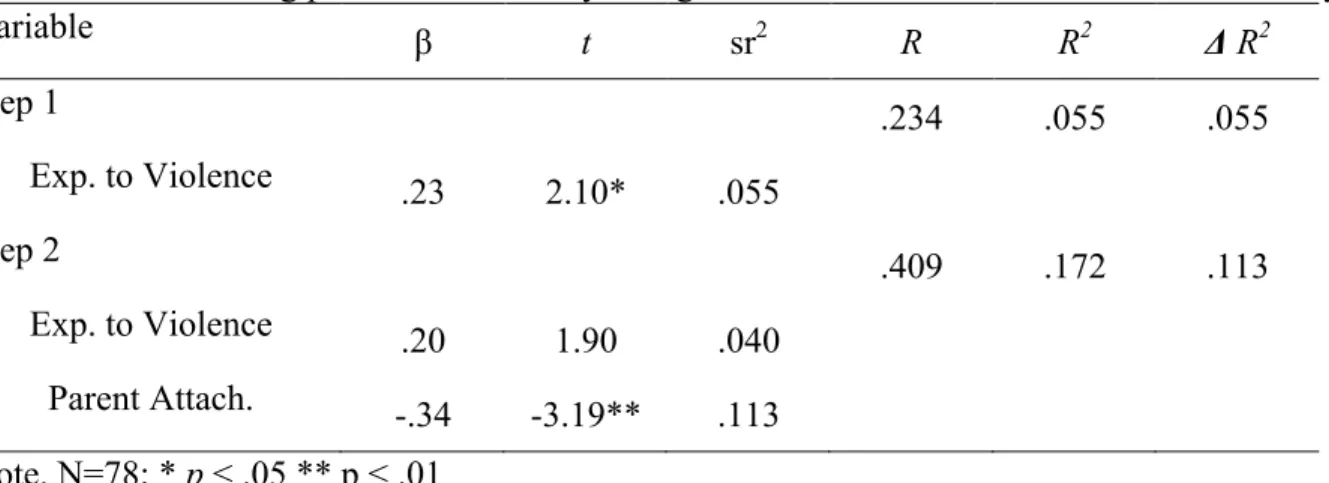
Table 7. Externalizing problems: Summary of regression for adolescents without abuse history...45
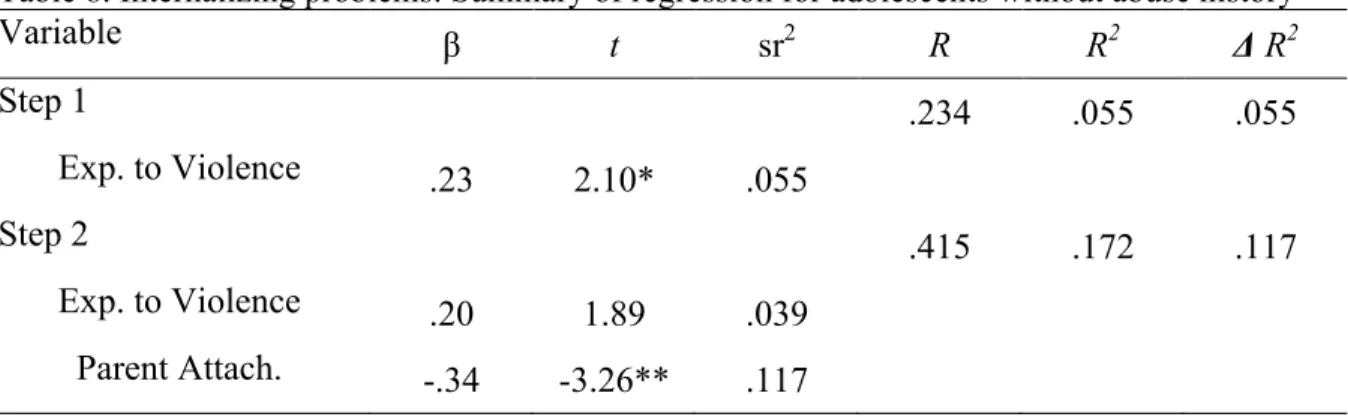
Table 8. Internalizing problems: Summary of regression for adolescents without abuse history...46
Table 9. Total problems: Summary of regression for adolescents without abuse history...48
LIST OF FIGURES
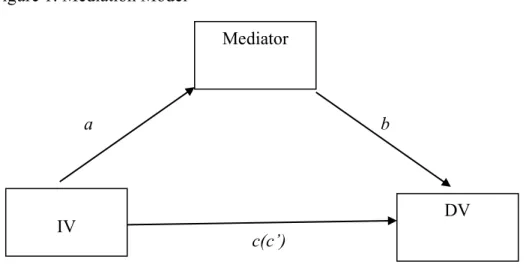
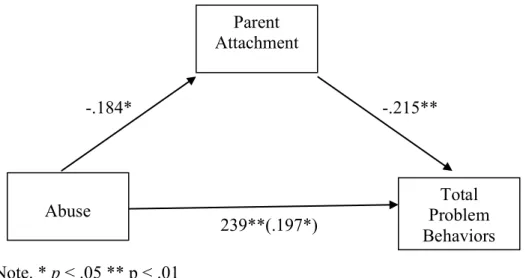
Figure 1. Mediation Model...50 Figure 2. Parent Attachment as a Mediator of the Relationship between
Abuse and Total Problems...53 Figure 3. Parent Attachment as a Mediator of the Relationship between
Abuse and Internalizing Problems...54 Figure 4: Parent Attachment as a Mediator of the Relationship between
Abuse and Externalizing Problems...56 Figure 5: Parent Attachment as a Mediator of the Relationship between
CHAPTER 1: INTRODUCTION
Child abuse and maltreatment is a social problem of pressing concern. According to the U.S. Department of Health and Human Services, in 2012 approximately 686,000 children were victims of maltreatment (Child Welfare Information Gateway, 2013a). Over 18% of these children suffered physical abuse, generally defined as the infliction of physical injury on a child by non-accidental means (U.S. Department of Health and Human Services, 2012; Child Welfare Information Gateway, 2013b). This form of maltreatment was first brought into the realm of social awareness in the1960s when physicians began referring to children who had been physically harmed or injured by their parents as suffering from “battered child syndrome.” Increased awareness of the problem and growing knowledge of the detrimental impact of abuse on child development resulted in the passing of federal legislation to protect children and federal programs to provide services and supports to victims and their families (Trickett, Negriff, Ji, & Peckins, 2011).
Catellier, Winsor, Dufort, Hunter, & Amaya-Jackson, 2002) and internalizing symptomology including depression and anxiety (Toth, Manly, & Cicchetti, 1992; Johnson et al., 2002). Not surprisingly, maltreatment is also associated with maladaptive social outcomes including problematic peer relationships (Salzinger, Feldman, Hammer, & Rosario, 1993; Manly,
Cicchetti, & Barnett, 1994; Dodge, Pettit, & Bates, 1997; Flisher, Kramer, Hoven, Greenwald, Alegria, Bird, Canino, Connell, & Moore, 1997). Perhaps of most concern, victims of
maltreatment are at heightened risk for becoming perpetrators and perpetuating the cycle of abuse (U.S. Department of Health and Human Services, 2013).
Although a direct relationship between child abuse and later negative outcomes has been well documented in the literature, there are many potential factors that may help explain this relationship. Attachment theory (Bowlby, 1969/1982; Ainsworth, Blehar, Waters, & Wall, 1978) offers a lens through which to explore possible pathways between the experience of abuse and maladaptive development. According to attachment theory, the development of a secure
attachment relationship between the child and the primary caregiver in early life is critical to the integration of cognitive, affective, and behavioral abilities that have an impact on the
development of the child’s self-image and capacity for social relationships. Individuals who experience secure early attachment relationships view the world as positive and predictable and themselves as worthy of love. In contrast, individuals with insecure attachment styles tend to view the world as unpredictable and hostile, and themselves as unworthy of love (Buist, Dekovic, Meeus, & van Aken, 2004).
1989). Interactions with caregivers in early life influence the construction of experience based mental representations of attachment relationships, known as internal working models. These internal working models establish expectations for future social interactions and affect the formation of a self-image (Bowlby, 1973; Cicchetti & Toth, 2005; Dykas & Cassidy, 2011). Due to their abusive experiences with attachment figures, maltreated children and youth develop internal working models that lead them to be hyper-vigilant to threat and hostility. As a result, they may be more likely to misinterpret the actions of others and respond with aggression due to biased patterns of processing social information (Dodge, Pettit, Bates, & Valente, 1995; Dodge et al., 1990). More research is needed to fully understand the role of attachment in social and behavioral outcomes, particularly in individuals who have experienced abuse.
Less research has focused on the role of attachment in the adolescent years and the impact of past abuse on attachment relationships during this critical period of development. A review of existing evidence suggests that attachment quality to parents may be protective against the development of externalizing and internalizing behavior problems in adolescence and related to increased social competence (Buist et al., 2004; Duchesne & Larose, 2007; Engels,
Finkenauer, & Dekovic, 2001). Research on peer attachment in adolescence has shown mixed findings. Some studies provide support for the importance of peer attachment and suggest that close attachment relationships to peers may be more protective than parent attachment
in a population who had experienced abuse; therefore research is needed to understand the impact of past abuse on attachment relationships during adolescence.
Although past research has focused on effects of abuse on social and behavioral functioning, of abuse on attachment, and of attachment style on social and behavioral
functioning, little research has examined the relationships between all of these variables together (Lowell, Renk, & Adgate, 2014). The current study attempts to build on and address gaps in past research in an attempt to learn more about the mechanisms contributing to the different
manifestations of adverse outcomes in victims of physical abuse by exploring the relationships between parent and peer attachment quality, social competence, and internalizing and
externalizing behavioral outcomes in adolescents who experienced physical abuse in pre-adolescence. Quality of parent and peer attachment and social competence are predicted to mediate the effects of abuse on behavioral outcomes.
CHAPTER 2: LITERATURE REVIEW Physical Abuse and Behavior Problems
A large body of research has demonstrated an association between the experience of child abuse and a range of internalizing and externalizing behavior problems that have been shown to persist into adolescence (Moylan, Herrenkohl, Sousa, Tajima, Herrenkohl, & Russo, 2010). For example, a great deal of research exists to link abuse and externalizing behavior problems, specifically aggression. According to the work of Dodge et al. (1990), two major theories can be used to explain how the experience of abuse leads to aggressive behavior in the child.
Attachment theory (Crittenden & Ainsworth, 1989) posits that insecure attachment relationships lead victims of abuse to develop internal working models based on their view of the world as a threatening place. As a result, these individuals may become hyper-vigilant toward threat and hostile social cues and ultimately respond in an aggressive manner. According to social learning theory (Bandura, 1973), the experience of physical abuse leads children to respond aggressively as a result of their own experiences and the salience of aggressive responses in their repertoire of social behaviors. These individuals may also be more likely to see aggressive responses as efficacious and leading to their desired outcomes.
Dodge et al. (1990) tested the relationship between the experience of early physical abuse and aggression empirically using data from a longitudinal multi-site study. In addition to
in school six months later. Their findings showed that early childhood physical abuse places children at risk for the development of chronic aggressive behavior. The association between abuse and aggression was found to hold true above and beyond the effects of family and environmental context variables such as poverty, deprivation, and marital conflict. Dodge et al. also discovered that social information processing patterns mediated the association between the experience of physical abuse and aggressive behavior. Their work has important implications for intervention by suggesting that targeting biased social information processing patterns may ameliorate the effects of abuse on aggressive behavior.
Shields and Cicchetti (1998) also found empirical support for the association between abuse and aggressive behavior. They studied impoverished, inner-city youth in the context of a summer day camp and compared the maltreated group to the non-maltreated group on a variety of outcome domains. Shields and Cicchetti concluded that maltreated children were more likely than the non-maltreated children to show aggressive behavior. The youth in their study who were victims of physical abuse were more likely to engage in reactive aggression. This finding
supports Dodge et al.’s (1990) theory of social cognition as a possible mechanism by which abuse leads to aggressive behavior by providing evidence that physically abused children react with higher levels of arousal and aggression in potentially threatening situations and attribute hostile intent even in ambiguous social situations.
between each of the three predictor variables and negative mental health outcomes. Child self-reports of witnessed violence were related to heightened scores for each outcome variable. The effects of victimization through physical abuse were also significant. Overall, children who experienced physical victimization scored higher than average on the outcome variables of depression, anxiety, and anger when compared to the population at large. Johnson et al.
concluded that physical abuse is a strong predictor of child depression and aggression. Compared to children who only witnessed violence, children in their study who had experienced direct physical abuse had more severe behavioral and emotional problems.
The work of Kaufman (1991) provides additional evidence linking abuse to the presence of internalizing behavior problems. Kaufman compared pre-adolescents who had experienced different forms of maltreatment on the prevalence of depressive disorders. Findings indicated that children who met criteria for depression had higher scores on the experiences of physical abuse and emotional maltreatment. This association did not hold true for the experience of sexual abuse or neglect, but Toth et al. (1992) found support for the association between abuse and depression. Their study examined depressive symptomology in children from low
socioeconomic status families who had experienced physical abuse, physical neglect, or no maltreatment. Toth et al. found that victims of physical abuse had significantly higher levels of depressive symptomology than the other two groups of children. These studies provide growing evidence that maltreatment in childhood is associated with depressive symptomology. This link appears to be especially strong for physical abuse. Although neither of the above studies
In summary, the review of studies on the impact of abuse on behavior indicated that abuse is associated with externalizing behavior problems. Specifically, physical abuse appears to be related to the development of aggressive behavior. Empirical evidence supports social
information processing as a possible mechanism through which the experience of abuse influences aggressive behavior. Evidence also exists to support a relationship between the
experience of abuse and internalizing behavior problems including depression and anxiety. More research is needed to better understand the pathways through which the experience of early physical abuse impacts these behavioral outcomes during adolescence.
Physical Abuse and Interpersonal Relationships
In addition to affecting internalizing and externalizing behavioral outcomes, research indicates that the experience of abuse is also related to impairments in social functioning. The work of Flisher, Kramer, Hoven, Greenwald, Alegria, Bird, Canino, Connell, and Moore (1997) examined the relationship between physical abuse and outcomes on a variety of psychosocial measures in a community based probability sample of children and adolescents ranging from 9-17 years. Their results revealed a relationship between a history of physical abuse and a variety of maladaptive outcomes including poor social competence, depression, anxiety, and conduct problems. Their findings held true even when controlling for the possible confounding variables of family income, family psychiatric history, perinatal problems, physical health, and sexual abuse.
Research conducted by Salzinger et al. (1993) provides additional support for the
Salzinger et al. found that physically abused children were perceived by their peers to be more aggressive and less cooperative. Abused children also had lower overall peer status and less positive reciprocity with peers chosen as friends. Teachers and parents rated these children as more disturbed, and their social networks were characterized by greater atypicality, insularity, and negativity than their non-maltreated counterparts.
In an attempt to clarify how the experience of abuse impacts social outcomes, Manly et al. (1994) investigated the impact of subtype, frequency, chronicity, and severity of child maltreatment on social competence and behavior problems in children aged 5-11 years who participated in a summer camp program. Child victims of physical neglect, physical abuse, and sexual abuse were identified through reports from Child Protective Services and classified into three groups—those who had experienced sexual abuse with or without other forms of
maltreatment, those who had experienced physical abuse with no sexual abuse, but who may or may not have experienced physical neglect, and those who experienced physical neglect without physical or sexual abuse.
Children who were victims of sexual abuse had higher scores on social competence than the victims of physical abuse and physical neglect.
Social information processing is a possible mechanism through which abuse affects social relationships and behavior, particularly aggression. A body of research conceptualizes aggressive behavior as a form of social incompetence and is grounded in the belief that children’s way of interpreting their experiences influences the way they respond to adversity (Dodge, Pettit, McClaskey, & Brown, 1986). To test this model empirically, Dodge et al. investigated individual differences in response to provocation as related to social information processing skills. Their findings provided evidence that a child’s encoding, interpretation, and response generation in the face of provocation are indicative of the manner in which the child would respond in actual situations (as confirmed by observation). Children who attributed hostile and aggressive intentions to a peer, who easily accessed negative behavioral responses, and who viewed aggression positively were more likely to respond with aggressive behavior in the face of conflict than children who did not interpret peer cues in this way.
harsh discipline in early life would develop deviant patterns of processing social information when they reached school age.
Dodge et al. (1995) found that physical abuse was related to a fourfold increase in teacher ratings of children’s externalizing behavior problems in third and fourth grade. Additionally, abuse was related to later patterns of social information processing which was predictive of externalizing behaviors. Abused children were more likely to attribute hostile intent to others in ambiguous social situations than typical children and would not have had large repertoires of non-aggressive responses to interpersonal problems. These findings suggest that through
impacting patterns of processing social information, the experience of physical abuse can lead to the development of chronic aggressive behavior.
Overall, these studies provide evidence for the relationship between abuse and
impairments in social functioning. In addition to internalizing problems and aggressive behavior, the experience of abuse has been linked to overall poor social competence and lower social status. The factors of severity and frequency may impact the degree to which abuse affects these social and behavioral outcomes. Research is needed to examine aspects of the complex
relationship between physical abuse, behavioral outcomes, and social outcomes and the ways in which each influences the others.
Long Term Effects of Physical Abuse
as well as social outcomes (Moylan et al., 2010; Malinosky-Rummell & Hansen, 1993; Lansford, Dodge, Pettit, Bates, Crozier, & Kaplow, 2002).
Malinosky-Rummell and Hansen (1993) reviewed extant literature on the long-term consequences of physical abuse in childhood on externalizing, internalizing, and social outcomes in adolescents. They found a strong link between physical abuse and aggressive behavior, particularly for adolescent males. The literature they reviewed showed that female victims of physical abuse had higher incidences of anxiety and depression than their non-abused peers. The effects of early physical abuse on interpersonal relationships were less clear. The studies
reviewed by Malinosky-Rummell and Hansen revealed mixed findings on peer relationships in maltreated children and adolescents. While several studies using parent and teacher reports concluded that physically abused children were less socially competent than their peers, other studies found no difference.
More recently, Lansford, Dodge, Pettit, Bates, Crozier, and Kaplow (2002) conducted a longitudinal study in order to determine whether early physical abuse has an enduring role in the development of adolescent behavior problems or if the effects fade over time. They collected data annually from 1987 to 1999 using a community-based, non-clinical sample of adolescents who experienced physical abuse prior to beginning kindergarten and their non-abused
counterparts. Lansford and his colleagues found early maltreatment to be predictive of
psychological and behavioral problems in adolescence. These effects persisted at least 12 years. The adolescents who experienced early physical abuse missed more school, were less likely to plan to attend college, and differed from their non-maltreated peers on a wide range of
controlled for, the abused group had higher scores on measures of aggression, anxiety, depression, social problems, and social withdrawal, among others.
Taken together, these studies provide evidence that the experience of childhood physical abuse has a long-term detrimental impact on a variety of adolescent outcomes. More research is needed in order to specify the long-term impact of early physical abuse including adolescent outcomes. Research on the impact of abuse on social relationships in adolescents and young adults is especially necessary due to inconclusive and mixed findings in past studies. Neglect
Neglect is the most prevalent form of child maltreatment and often co-occurs with other forms of abuse. Although the research that has been done on neglect suggests that its effects are just as detrimental as those of physical abuse, sexual abuse, and exposure to domestic violence, it has been the least studied form of maltreatment (DeBellis, 2005; Hildyard & Wolfe, 2002). One reason is that it is difficult to examine the impact of neglect independent of other forms of
maltreatment and environmental and emotional factors such as parenting including parent mental health, poverty, educational opportunities, and the presence of family or community violence (DeBellis, 2005). Additionally, defining neglect and measuring it in a reliable and valid way is challenging. Both Federal and state law provide basic definitions of neglect. According to the Federal Child Abuse Prevention and Treatment Act (CAPTA), neglect is any significant
Research has shown that child neglect can have a wide range of negative effects on children’s health and physical development, cognitive development, emotional and
psychological development, and social and behavioral development (Child Welfare Information Gateway, 2012). Neglect tends to differ from physical or sexual abuse which may be incident-specific in that it is typically the result of a chronic situation which often begins at an early age and has a cumulative effect on a child’s development (Hildyard & Wolfe, 2002). Because neglect often co-occurs with other forms of abuse, children who experience both neglect and physical or sexual abuse may be at risk for the worst outcomes. Indeed, research indicates that experiencing neglect along with other forms of maltreatment worsens its impact (Smith & Fong, 2004).
In an investigation of developmental issues and outcomes in child abuse and neglect, Hildyard and Wolfe (2002) reviewed literature and found both theoretical and empirical support for association between neglect and a range of adverse across stages of life. Similar to research on the impact of physical abuse on attachment, they found evidence that neglect is associated with insecure attachment to primary caregivers in infancy (Crittenden & Ainsworth, 1989). They also found evidence for cognitive delays and social problems during the preschool years including social withdrawal. Research shows that neglected preschoolers are more aggressive than their non-maltreated counterparts, however they tend to be less aggressive than young children who have experienced physical abuse (Crittenden, 1992).
neglect (physical and emotional), physical abuse, and sexual abuse and found that although all groups were rated higher than their non-maltreated peers in externalizing problems, the
distinctive feature of the neglected children was an elevation in internalizing symptomatology. Although few studies have looked at the long-term impact of neglect in childhood by studying adolescents and adults, research to date suggests that both childhood physical abuse and neglect in childhood are associated with long term negative outcomes including deficits in cognitive functioning, delinquent and criminal behavior, increased risk of personality disorders, and internalizing problems (Hildyard & Wolfe, 2002; Perez & Widom, 1994; Widom, 2001). In a study of adolescent outcomes, Johnson, Smailes, Cohen, Brown, & Bernstein (2000) found evidence that neglect is associated with higher rates of anxiety and depression even when other forms of maltreatment were controlled for statistically.
Overall, research suggests that neglect is often a chronic form of maltreatment that negatively impacts child development. Neglect is associated with a range of maladaptive outcomes including risky behaviors and psychopathology, and appears to have an especially detrimental impact in the areas of social and emotional wellbeing across stages of development. More research is needed to understand the ways in which the impact of neglect in childhood persists into adulthood and how neglect interacts with other forms of maltreatment such as physical and sexual abuse.
Attachment
anxious-ambivalent, and avoidant. Children who form a secure relationship with a primary caregiver (often the mother) are trusting that the caregiver will be available, helpful, and comforting towards them. Secure relationships are formed when adults are responsive and sensitive to the needs of the child. Parents of securely attached infants have good parenting skills and the ability to immediately respond to the needs of the infant. In contrast, insecure attachment relationships, which can be further broken down into avoidant and anxious-ambivalent attachment styles, stem from a lack of responsiveness on the part of the caregiver when the child attempts to seek
comfort or protection. Parents of avoidant infants neglect to meet their child’s needs leading the child to detach from the relationship. Parents of anxious-ambivalent infants alternate between adequately meeting the needs of the infant and neglecting his or her needs, leading the child to be uncertain, cry frequently, and resist attempts to sooth his or her distress (Ainsworth et al., 1978; Bowlby, 1988).
Attachment is theorized to affect social and behavioral functioning based on the concept that parents serve as models for their children of how to organize relationships with others and their representations of themselves (Engels et al., 2001). It is through attachment experiences that children learn to predict both their own and their caregivers’ behaviors (Muller, Thornback, &
Bedi, 2012). Therefore, attachment not only influences children’s interactions with primary
caregivers, but also has implications for peer relationships. Children internalize early relationship experiences with primary caregivers into what is known in attachment theory as internal working models, or cognitive frameworks for understanding the world, self, and others that ultimately influence behavior in future social interactions (Ainsworth et al. 1978; Bowlby, 1982).
autonomy and independence respected (Bowlby, 1973, 1982). With the foundation of a secure relationship with a primary caregiver, children develop the ability to integrate cognitive,
affective, and behavioral capacities that impact social relationships and understanding of the self through the formation of an internal working model of the self as appreciated and autonomous and others as dependable and trustworthy. In contrast, insecure attachment results when caregivers ignore the needs of the child for comfort or autonomy. These early experiences contribute to a view of the self as incompetent and unworthy of love and to a view of others as rejecting and unreliable (Bowlby, 1982; Cicchetti & Toth, 2005). These internal working models for self-other relationships tend to remain relatively stable into adulthood although adjustments may occur as the result of interactions with others throughout the child’s development. Overall, literature generally supports the idea that early attachment relationships formed through
interactions with primary caregivers in childhood continues to impact views of self and others in interpersonal relationships across the lifespan (Bretherton, 1992; Sroufe, 1988).
Empirical evidence provides support for the association between secure attachment and positive outcomes and the association between insecure attachment and maladaptive outcomes, including aggression. A large body of research indicates that children who have strong, positive relationships with their parents have a host of better outcomes than those whose relationships with their parents are characterized by negative interactions (Lansford, Malone, Stevens, Dodge, Bates, & Pettit, 2006). For example, research shows that children with secure attachments with primary caregivers tend to have better social, academic, and emotional outcomes than children with insecure attachment relationships (Hamre & Pianta, 2001).
symptomology and perceived competence (scholastic, social, and behavioral) in a sample of 8 to 12 year old children identified through public records as having experienced maltreatment (neglect, physical, or sexual abuse) and non-maltreated comparisons. They considered positive, optimal patterns of relatedness to be representative of secure attachment relationships, whereas non-optimal patterns of relatedness were viewed as consistent with an insecure attachment relationship. Findings showed that maltreated children with non-optimal patterns of relatedness (insecure attachment) to their mothers, teachers, and best friends had higher levels of depressive symptomology. They also found that each subgroup of maltreated children had lower perceived competence in scholastic, social, and behavioral domains. Non-maltreated children with optimal or adequate patterns of relatedness (secure attachment) were found to have less depressive symptomology and more perceived competence. Toth and Cicchetti’s findings suggest that relatedness, representative of the quality attachment relationships, may be a protective factor and decrease the likelihood or intensity of adverse outcomes including depression in victims of child maltreatment.
Both theory and research provide evidence that attachment is important across the
developed based on early attachment relationships (Ainsworth et al., 1978; Bowlby, 1982). Therefore, attachment theory would suggest that adolescents who have better attachments to their parents should be better able to develop these social skills required for healthy relationships with peers and romantic partners (Engels, Finkenauer, Meeus, & Dekovic, 2001).
Parent Attachment and Adolescent Outcomes
Research suggests that the influence of attachment security to parents in adolescence is similar to its impact on development and behavior in early childhood. Although adolescence is a period in which time spent with parents often decreases while time spent with peers increases, there is a body of evidence linking secure, strong parent attachment relationships in adolescence to social, emotional and behavioral competence (Moretti & Peled, 2004). For example, Raja, McGee, and Stanton (1992) examined the impact of perceived attachment to parents and peers on psychological health and well-being in a large sample of adolescents and found a significant association between low well-being scores and lower perceived attachment to parents. Although the adolescents who had the highest scores on measures of psychological health and wellbeing had a high level of perceived attachment to both parents and peers, their findings revealed that high peer attachment did not compensate for the impact of low parent attachment scores. These findings highlight the important role of parent attachment in adolescent psychological wellbeing.
Participants provided self-reports of their parental attachment relationships as measured by the Inventory of Parent and Peer Attachment (IPPA) and problem behavior at three time points with one-year intervals between reporting periods.
Buist et al.’s (2004) results showed stability in indicators of attachment and problem behavior over time. Attachment and internalizing problem behaviors were negatively related within measurement waves as well as longitudinally. Adolescents who reported higher quality attachment relationships had fewer internalizing problems one year later, while adolescents who reported more internalizing problems reported lower quality attachment relationships one year later. The findings were similar for externalizing behavior problems. Not only was attachment relationship quality related to externalizing problems within measurement waves, attachment quality was found to have a significant inhibitory effect on externalizing problems one year later. These findings suggest that high quality parental attachment in early adolescence may serve as a protective factor against the development of internalizing and externalizing behavior problems.
In addition to internalizing and externalizing behavior problems, research provides evidence for the relationship between the quality of parent attachment relationships in
adolescence and social competence. Based on the belief that adolescents learn how to interact socially with peers through their interactions with their parents, Engels, Finkenauer, Meeus, & Dekovic (2001) examined the relationship between parental attachment and emotional
attachment on social skills and relational competence was found for 12 to 14 year olds, in the 15-18 year old age group parental attachment was moderately related to social skills which in turn affected social competence. Engels et al. (2001) explain the age effects of parental attachment in adolescence by suggesting that in early adolescence, youth begin secondary school and develop new friendships that may cause them to distance themselves from their parents. Later in
adolescence, they may have fewer reasons to question parental values and norms thus parental attachment plays a more significant role than in early adolescence.
The processing of social information may be a possible mechanism through which attachment impacts social relationships and interpersonal competence. A body of research indicates quality of parental attachment relationships is related to adolescents’ attention to social information, memory for social information as well as their perceptions, expectations and attributions within social relationships (Dykas & Cassidy, 2011). Zimmermann (2004) studied attachment and friendship in adolescence using the Adult Attachment Interview (AAI) as a measure of attachment representations of primary caregivers during childhood and interview techniques to assess friendship characteristics. Data was collected within three months of participants’ sixteenth birthdays. Results showed that adolescents with secure attachment
Dykas and Cassidy (2011) presented a theoretical life-span model to explain ways in which experiences in close interpersonal relationships may affect social information processing from childhood through adulthood. According to attachment theory, individuals develop internal working models of attachment relationships that help them interpret social information related to parents, peers, and romantic partners. The model developed by Dykas and Cassidy is grounded in the belief that experiences in individual’s close personal relationships are related to individual differences in the processing of social information. They propose that individuals who have secure-based internal working models of attachment process a wide range of positive and
negative attachment-relevant social information. Secure individuals draw on positive attachment experiences and process social information in positively biased schematic way. On the other hand, those who have experienced insecure attachment either fail to process information further because they think it will cause them psychological pain, or process it in a negatively biased schematic fashion based on their past negative attachment related experiences. Insecure
adolescents tend to be negatively biased in their expectations and attributions about others versus securely attached adolescents who have more positive expectations and attributions of others.
potential pathways through which attachment relationships affect social and behavioral outcomes, particularly in children who have experienced abuse.
Peer Attachment and Adolescent Outcomes
Relationships with peers, close friends, and romantic partners become especially influential during the adolescent years and begin to take over some of the attachment functions previously fulfilled by parents and guardians. Adolescents may not only transfer attachment functions to peers, but it is also possible that peer attachment has a differential influence to parent attachment in adolescent functioning (Nelis & Rae, 2009). Research on peer attachment in adolescence has shown mixed findings. While some studies have failed to find support for an association between peer attachment and adolescent outcomes, others provide evidence suggesting that peer attachment plays a more important role.
In contrast, there are also studies suggesting that parent attachment has a greater impact on adolescent outcomes than peer attachment. In a study of the role of attachment relationships in adolescent psychosocial adjustment, Noom, Dekovic, and Meeus (1999) found a relationship between peer attachment and social competence in adolescence, however they also found that peer attachment was related to increased engagement in problem behavior. The results of their study indicated that the quality of relationship with parents is more important than peer
relationships for overall adolescent psychosocial adjustment. Research conducted by Wilkinson and Walford (2001) also provides evidence that parent attachment may be more influential in adolescence than peer attachment. They examined the role of personality characteristics, positive and negative life events, and quality of parent and peer attachment in predicting psychological well-being in adolescents and found weak relationship between peer attachment and adolescent well-being. However, quality of attachment to parents was predictive of increased well-being independent of other study variables such as personality characteristics and life events. They concluded that parental attachment is clearly an important factor in adolescent psychological health, but the role of peer attachment relationships was unclear.
Other studies provide evidence for the important role of both parent and peer attachment relationships. For example, Armsden and Greenberg (1987) studied the Inventory of Parent and Peer Attachment (IPPA) as a measure of attachment relationship quality in college students (aged 16-20 years) and found a significant relationship between psychological well-being and perceived quality of both parent and peer attachment. Tambelli et al. (2012) used the same measure, however rather than looking at overall attachment relationship quality, they examined the three dimensions of attachment captured by the IPPA: Alienation, Trust, and
parental attachment dimension of Alienation and by low scores on the peer attachment dimension of Trust. Externalizing problems were only predicted by parental attachment
relationship quality. Adolescents with comorbid internalizing and externalizing problems scored significantly lower on overall parental attachment than adolescents who only exhibited
internalizing problems, adolescents who only exhibited externalizing problems, and the control group. The adolescents who had scored high for purely internalizing problems also scored
significantly lower on peer attachment than all other groups. The work of Tambelli et al. expands on the findings of Armsden and Greenberg by providing additional evidence that secure
attachment relationships with both parents and peers may be a protective factor for adolescent adjustment, but by also suggesting that each type of attachment relationship may have a differential impact on adolescent behavioral outcomes. Further research is needed in order to better understand the role of peer attachment in adolescent outcomes and the ways in which the impact of peer relationships may differ from parent relationships.
Abuse and Attachment Relationships
Not surprisingly, the experience of abuse has a detrimental impact on attachment relationships. The attachment security of children who experience abuse is challenged and they may have difficulty trusting the adult who hurt them or trusting other adults in the future.
Subsequent experiences of rejection and criticism may lead abused children to develop schemas
that strengthen a tendency toward anxiety and/or avoidance in relationships. These negative
schemas are carried with the child unless they are challenged by future relationships or in a
therapeutic setting (Muller et al., 2012). Research provides support for this finding. In a
18, and 24 months of age. In later childhood, they were at heightened risk for insecure and conflict-ridden relationships with their parents, which could contribute to the development of aggressive behavior (Crittenden & Ainsworth, 1989; Dodge et. al, 1995).
The experience of abuse also negatively impacts peer relationships because patterns of behavior modeled by parents and witnessed by abused children at home are likely to be
generalized to interpersonal interactions within a wider peer network (Bandura, 1973). In order to form positive social relationships, victims of abuse must overcome a lack of trust and learn not to behave in aggressive ways even though they have been treated aggressively (Lansford et al., 2006). It is possible that during adolescence when peer relationships take on increasing
importance, abused adolescents may be able to separate from negative family relationship models and form healthy peer relationships, which may protect against negative outcomes (Muller et al., 2012).
relationships as a potential mediator of the relationship between childhood abuse perpetrated by parents and outcomes in adulthood. They found that adult attachment relationships partially mediated the effects of psychological maltreatment on externalizing, internalizing, and trauma-related symptoms.
A recently published study by Lowell et al. (2014) contrasts with Muller et al.’s (2012)
findings. In a retrospective study, Lowell and colleagues investigated the role of attachment in the relationship between childhood maltreatment and later emotional and behavioral functioning in a college student population. Their results showed that both childhood maltreatment,
particularly the experience of emotional abuse, and attachment relationships, particularly to mothers and peers, were significant predictors of emotional and behavioral outcomes in early adulthood. Additionally, they found that attachment contributed unique and significant variance to the relationship between childhood maltreatment experiences and outcomes. They did not find evidence of attachment as a mediator of the relationship between maltreatment and later
outcomes. Instead, childhood abuse remained a significant predictor of later behavior problems
even when the role of attachment relationships were considered in analyses, suggesting that the experience of abuse was strongly linked to later behavioral functioning even when close
attachment relationships were considered as a potential protective factor.
Overall, the results of these studies underscore the importance of attachment relationships and suggest that secure attachment relationships may be protective against negative outcomes in children who have experienced maltreatment. Little research has focused on the role of
needed to examine the role of attachment in impacting later outcomes for victims of childhood
maltreatment, particularly during the critical developmental period of adolescence, in order to
provide a clearer understanding of whether attachment may function as a mediator of the
relationship between abuse and maladaptive behavioral outcomes.
Statement of Purpose for the Current Study
The purpose of the present study was to explore the relationships between parent and peer attachment, social competence, and internalizing and externalizing behavior problems in
adolescents who experienced physical abuse in pre-adolescence compared to their non-maltreated peers. This study attempted to close gaps in the current literature by exploring the role of attachment as potential mediator of the well-documented relationship between the
CHAPTER 3: METHOD Design
A quantitative approach was used to answer questions about the relationship between attachment, social competence, and internalizing and externalizing behavior problems in adolescents physically abused in pre-adolescence and a control group of matched, non-abused peers. First, the strength of associations between variables was explored in an attempt to better understand the relationship between the experience of physical abuse in preadolescence and the variables of internalizing and externalizing behavior problems, social competence, and
dimensions of parent and peer attachment in adolescence. Next, the group with a history of abuse and the control group were compared on each outcome measure to answer the following
question: Is there is a significant difference between adolescents with a history of physical abuse and adolescents with no abuse in quality of parent and peer attachment relationships, social competence, and internalizing and externalizing behavior problems? The role of attachment as a predictor of social competence and behavioral outcomes was also examined in each group separately. Finally, parent and peer attachment were examined as potential pathways through which the experience of abuse leads to adverse outcomes. Hypothesized outcomes were as follows:
2. The quality of parent and peer attachment relationships and social competence of adolescents who have experienced physical abuse will be significantly lower and their rate of internalizing and externalizing behavior problems will be higher than those of peers without the experience of abuse.
3. The quality of attachment relationships with parents and peers will significantly predict social competence and behavior problems of adolescents with and without a history of abuse.
4. Attachment relationships with parents and peers will significantly mediate the effects of physical abuse on adolescent social and behavioral outcomes.
Data
The proposed study utilizes the dataset “Adolescent Outcome of Physically Abused Schoolchildren” obtained through the National Data Archive on Child Abuse and Neglect (Salzinger, Feldman, & Ng-Mak, 2008). This dataset is from a follow-up phase of a larger project on the social relationships of abused children conducted at the New York State
The children composing the abused group were identified through entries the New York State Register for Child Abuse in the four urban boroughs of New York City (including Bronx, Brooklyn, Manhattan, and Queens) between 1992 and 1996. Children who were victims of sexual as well as physical abuse were excluded from the sample. However, because neglect and physical abuse frequently co-occur, children who experienced neglect in addition to physical abuse were included in the sample. Out of the 100 physically abused subjects, 60 of the
children’s records indicated some form of neglect in addition to physical abuse. The majority of children with a history of neglect (49) were classified under inadequate guardianship. Eight were classified under inadequate guardianship along with another category of neglect, and eleven were identified as distributed between one or two categories of neglect, with 8 in the category of parental drug and alcohol abuse.
The sampling pool for the initial phase of the study was composed of 354 families meeting study inclusion criteria. Out of the sampling pool of 354 families, 124 could not be reached, 130 refused, and 100 agreed to participate. Comparisons between families who refused to participate and those who consented using CPS data showed the demographic characteristics of these two groups to be similar. In the follow-up phase assessing adolescent outcomes, the sampling pool consisted of the 200 families studied when the children were preadolescents. One hundred fifty-three of these families were re-recruited resulting in a retention rate of 76.5%. Three abuse families and 7 control families declined participation in the follow-up phase of the study, and the remainder of families could not be located. There was no differential loss of abuse versus control families.
matched pairs. Seventeen abused subjects and 20 control subjects remain in the sample without a match. The gender composition of the follow-up sample is 61% male and 39% female. The ethnic composition is 38% Black, 7% White, 54% Hispanic, and 1% Asian. The ethnic and sex distributions closely approximate the distributions on the New York City Abuse Register for the boroughs of the Bronx, Brooklyn, Manhattan, and Queens. In terms of socioeconomic status, 32% of families in the sample received welfare or some form of public assistance during the past year. Of the adolescents in the follow-up sample, 64% lived with a single parent, 11% with one biological and one non-biological parent, and 24% lived with two biological parents. Forty-three percent of mothers in the sample had not completed high school at the time the families were initially recruited. Seventy-two percent of adolescents in the sample had never moved out of their original household between the initial study phase and the follow-up.
Adolescent outcomes in behavioral, social, and academic domains were measured as close as possible to age 17 through parent, teacher, peer, and self reports, interviews, and questionnaires. Data from all guardians and adolescents in families re-recruited is complete. However, there is less than complete data from adolescents' peers and teachers.
Measures
Abuse status. In this study, physical abuse was treated as a dichotomous variable.
& Stockhammer, 2001).
Salzinger et al. (2001) examined the impact of variations in severity of abuse by creating severity ratings in the form of an index of abusive behavior and a severity of abuse rating using the dataset utilized in the present study. An index of abusive behavior score was calculated using information from parent interviews about relationships within the household and the number of types of physically aggressive behavior directed toward the child by household adults. Frequency of physically assaultive behavior, the age of the child when any physical punishment, spanking, and more than an ordinary spanking first occurred; and the number of perpetrators of these behaviors. Subjective severity ratings were also calculated based on discrete indicators of abusive behavior and parent narratives describing the worst conflicts experienced with their children. Neither of these indexes showed stronger bivariate relationships to other variables in their study than the experience of abuse itself (abuse vs. no abuse) using an agency-defined abuse criterion. Additionally, they found that approximately 25% of the parents of children in the abused group did not report abusive behavior directed toward their child during parent
interviews. Therefore, in the present study the decision was made to treat abuse as a dichotomous variable in all analyses.
Demographics and Sample Characteristics. The Guardian Demographics Interview and Adolescent Demographics Instrument (Salzinger, Feldman, & Ng-Mak, 1993) were used to measure information about the demographics of the sample including household composition, education and occupational status, socioeconomic status, household composition, ethnicity/race, and gender.
Achenbach Childhood Behavior Checklist (Achenbach, 1991a), Achenbach Teacher Report Form (Achenbach, 1991b), and Youth Self-Report (Achenbach, 1991c). The Achenbach rating scales were designed as a comprehensive measure of adaptive and maladaptive functioning in children and youth aged 6-18 years. Responses are recorded on a Likert scale: 0 = Not True, 1 = Somewhat or Sometimes True, 2 = Very True or Often True. The school-age checklist contains
120 questions. T-scores (M=50, SD=10) for Total Problems and Internalizing and Externalizing
Problems were used in analyses. Internalizing Problems combines the Social Withdrawal, Somatic Complaints, and Anxiety/Depression scales, while Externalizing combines the
Delinquent Behavior and Aggressive Behavior scales. The Total Problems scale was included in analyses to provide a measure of overall problem behavior because it adds the social problems, thought problems, and attention problems scales to the Internalizing and Externalizing scales scores. The scores on the problem items were summed and converted to normalized T scores (M=50, SD=10).
Attachment. Attachment was measured using the Inventory of Parent and Peer Attachment (IPPA; Armsden & Greenberg, 1987), a self-report questionnaire designed to
measure the affective-cognitive dimensions of attachment by assessing adolescents’ (aged 12-19 years) relationships with their parents and close friends. Attachment to parents is represented by the adolescent’s primary parent figure during high school and peer attachment is represented by the adolescent’s “close friends.” The IPPA is composed of twenty-five items measuring parent attachment (e.g., “I like to get my parent’s point of view on things I’m concerned about”; “I get upset a lot more than my parent knows about.”) and 24 peer items (“When I am angry about something, my friends try to be understanding”; “I feel alone or apart when I am with my friends.”). Each item is rated for increasing attachment on a 5-point Likert-type scale (1= almost never or never true, 2 = seldom true, 3 = sometimes true, 4 = often true, 5 = almost always or always true). Degree of attachment was represented by the summary score (mean attachment scores, score range 1-5) for both Parent (M=3.60, SD=.81) and Peer (M=3.97, SD=.63) scales.
violence was taken as a measure of exposure to community violence. The Total Witnessed Violence self-report score was used in analyses as a control variable (score range 0-36, M=11.51, SD=6.26).
Procedure
In the context of the larger New York State Psychiatric Institute study, subjects were recruited in pre-adolescence (between the ages of 9-12) and data was collected over the course of 5 years from 1992-1996. The data collection procedure consisted of the researchers contacting families of all eligible confirmed cases of abuse via mail or phone and asking them if they would agree to be interviewed as part of a study of children’s friendships and social development. If they agreed, informed consent was obtained from the child’s guardian. The control group of peers without an abuse history was recruited by working through lists of classmates in the nearly 100 schools the children constituting the abused group attended.
To ensure control group participants had not experienced abuse, the children’s caretakers were interviewed regarding the way disputes are handled in their household and by a scan of the New York City Abuse Register. Same-gender children matched as closely as possible on age and ethnicity were recruited by mail or phone and informed consent was obtained from guardians. Arrangements were then made with school superintendents, principals, and teachers to conduct sociometric assessments of target children’s entire classes in order to protect the identity of the participants of interest. Students in each class were not informed that two classmates were the target subjects in the study. Data collectors were blind to the abuse status of subjects and
The adolescent data used in the present study were collected over a 6-year period from 1997-2002 as part of the follow-up study conducted by Salzinger and colleagues at the New York State Psychiatric Institute. Each adolescent and guardian was contacted by mail and phone and informed consent was obtained for participation in the follow-up phase of the study. A variety of instruments were used to examine adolescent outcomes including interviews, rating scales, and self-report measures. Teacher ratings of adolescent problem behavior were also collected. Follow-up assessments were conducted with the oldest subjects from the pre-adolescent sample first because investigators required subjects to have completed at least two years of high school and to be as close to age 17 as possible.
Analysis
The Statistical Program for Social Sciences (SPSS) version 22.0 was used in all analyses. First, demographic variables were analyzed, descriptive statistics were obtained, and
correlational analyses were run between all study variables. Multivariate Analysis of Variance (MANOVA) was used to determine if there were significant differences among raters
(parent/guardian, teacher, self) on outcome variables of interest for adolescents with a history of abuse versus those with no abuse history. Simple regression and hierarchical multiple regression analysis were then used to determine the predictive ability of parent and peer attachment
CHAPTER 4: RESULTS
Preliminary Analyses
Means and standard deviations of all study variables were examined and are presented in Appendix A. No extreme values were identified and standard deviations represent reasonable homogeneity given the range of measures. Additionally, bivariate correlations among all study variables are presented in Appendix B. A p-value of less than .05 was required for significance.
Modifications were made to several variables for interpretive purposes. Gender was recoded from the original dataset (male=1, female=2) to allow for female gender to serve as the control (female=0, male=1) when interpreting the analyses. Ethnicity, a categorical variable with multiple levels (Hispanic, Black, White, Asian) was dummy coded for the purpose of inclusion in the regression models where membership in one of the ethnic groups showed a significant association with the outcome variable of interest. Hispanic, the largest ethnic group, was used as the control variable in regression analyses because it was the most prevalent ethnic group in the sample.
Hypothesis 1: Relationships Among Abuse, Attachment, and Outcomes
The experience of physical abuse in preadolescence was hypothesized to have a
associations between variables, separated by rater (parent, teacher, self) and results are presented in Tables 1-3 below.
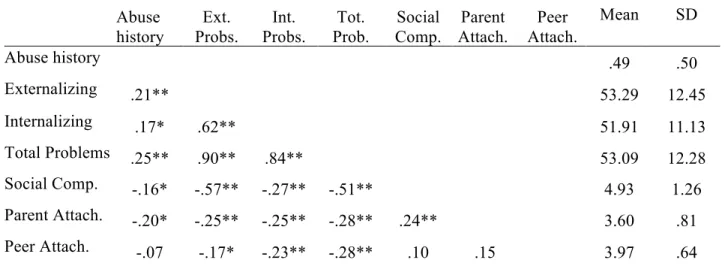
Attachment. As predicted, there was a significant negative relationship between abuse and parent attachment relationship quality (r=-.20, p<.05), however there was no significant relationship between abuse history and youth self-reported peer attachment relationship quality (See Appendix B).
Parent/guardian reported outcomes. As predicted, abuse history was significantly positively related with the guardian reported outcomes of total behavior problems, externalizing problems, and internalizing problems. Abuse history was also significantly negatively associated with guardian reported interpersonal competence as predicted (Table 1).
Table 1. Parent reported outcomes: inter-correlations and descriptive statistics
Note. N=153 for abuse history, attachment, and social competence, N=152 for guardian reported behavioral outcomes; * p < .05 ** p < .01
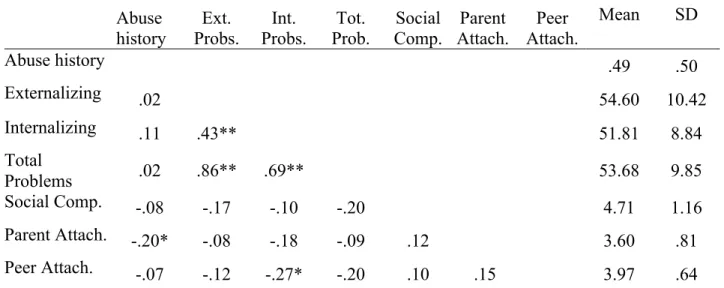
Teacher reported outcomes. Abuse history was not significantly associated with teacher reported behavioral and social outcomes, although teacher reports of adolescent internalizing problem behaviors were found to have a significant negative relationship with peer attachment (See Table 2).
Abuse
history Probs. Ext. Probs. Int. Prob. Tot. Comp. Social Attach. Parent Attach. Peer
Mean SD
Abuse history .49 .50
Externalizing .21** 53.29 12.45
Internalizing .17* .62** 51.91 11.13
Total Problems .25** .90** .84** 53.09 12.28
Table 2. Teacher reported outcomes: inter-correlations and descriptive statistics
Abuse
history Probs. Ext. Probs. Int. Prob. Tot. Comp. Social Attach. Parent Attach. Peer
Mean SD
Abuse history .49 .50
Externalizing .02 54.60 10.42
Internalizing .11 .43** 51.81 8.84
Total
Problems .02 .86** .69** 53.68 9.85
Social Comp. -.08 -.17 -.10 -.20 4.71 1.16
Parent Attach. -.20* -.08 -.18 -.09 .12 3.60 .81
Peer Attach. -.07 -.12 -.27* -.20 .10 .15 3.97 .64
Note. N=153 for abuse history, attachment, and social competence, N=63 for teacher reported behavioral outcomes; * p < .05 ** p < .01
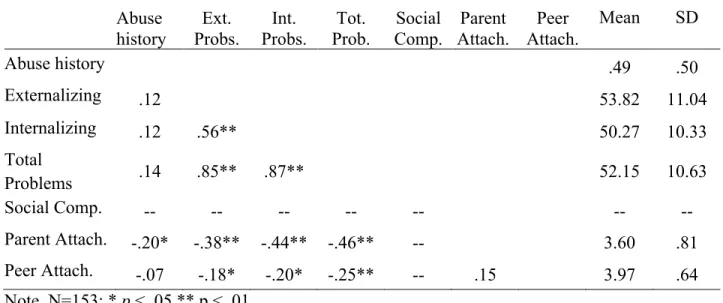
Table 3. Adolescent self-reported outcomes: inter-correlations and descriptive statistics Abuse history Ext. Probs. Int. Probs. Tot. Prob. Social Comp. Parent Attach. Peer Attach.
Mean SD
Abuse history .49 .50
Externalizing .12 53.82 11.04
Internalizing .12 .56** 50.27 10.33
Total
Problems .14 .85** .87** 52.15 10.63
Social Comp. -- -- -- -- -- -- --
Parent Attach. -.20* -.38** -.44** -.46** -- 3.60 .81
Peer Attach. -.07 -.18* -.20* -.25** -- .15 3.97 .64
Note. N=153; * p < .05 ** p < .01
Interrater correlations. The relationships between parent, teacher, and self reported behavioral outcomes and between parent/guardian and teacher reported social outcomes were also examined (see Appendix B). Parent reports were significantly correlated with youth self reported total problems (r=.278, p<.01), externalizing problems (r=.258, p<.01), and
internalizing problems (r=.218, p<.01). There were also significant positive relationships between teacher ratings and parent/guardian ratings of total problem behavior (r=.425, p<.01), internalizing problems (r=.215, p<.05) , externalizing problems (r=.352, p<.01), and social competence (r=.327, p<.01). No significant relationships were found between teacher reported behavior problems and youth self reported behavior problems.
Hypothesis 2: Group Differences in Outcomes by Rater
and social competence. The MANOVA containing parent-rated outcomes was significant (F (4,147)=3.102, p<.05, η²=.078) indicating a difference in behavioral and social outcomes between adolescents with and without a history of abuse.
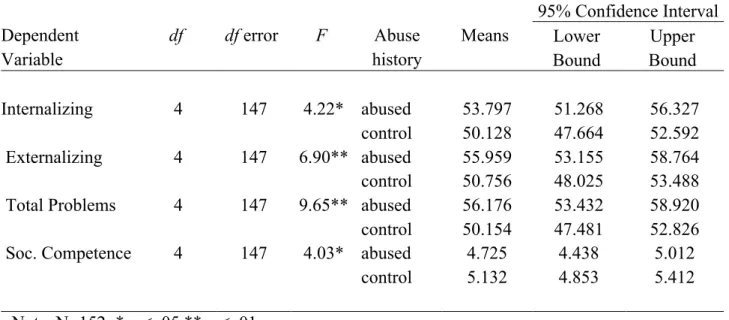
Confirming Hypothesis 2, significant univariate effects were found indicating a significant difference in the abused and non-abused groups on parent-reported social and behavioral outcomes (See Table 4). On behavioral outcomes, adolescents experiencing abuse had significantly higher levels of internalizing (F(4,147)=4.22, p<.05, η²=.027), externalizing (F(4,147)=6.90, p<.01, η²=.044),, and total problem behaviors (F(4,147)=9.65, p<.01, η²=.060), than the non-abused group. There were also significant differences in guardian rated social competence such that the non-abused control group had higher levels of social competence than their counterparts with a history of abuse (F(4, 147)=4.03, p<.05, η²=.026).
Table 4: Univariate effects for abuse history on parent reported behavioral outcomes
Dependent Variable
df df error F Abuse history
Means
95% Confidence Interval Lower
Bound
Upper Bound
Internalizing 4 147 4.22* abused 53.797 51.268 56.327
control 50.128 47.664 52.592 Externalizing 4 147 6.90** abused 55.959 53.155 58.764 control 50.756 48.025 53.488 Total Problems 4 147 9.65** abused 56.176 53.432 58.920 control 50.154 47.481 52.826
Soc. Competence 4 147 4.03* abused 4.725 4.438 5.012
control 5.132 4.853 5.412
Note. N=152; * p < .05 ** p < .01
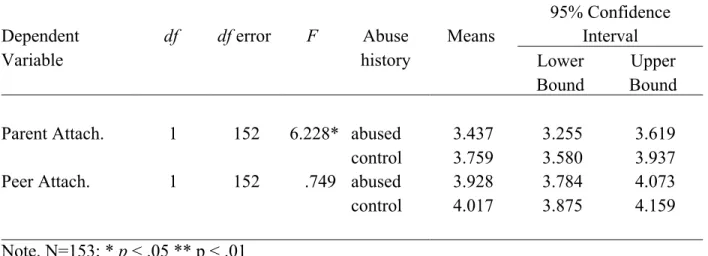
between adolescents experiencing abuse and their peers without that experience, F(2,150)=3.226, p<.05, η²=.041. Univariate tests revealed a significant difference in parent attachment (F(1, 152)=6.228, p<.05, η²=.040) confirming the hypothesized outcome that adolescents without a history of abuse would have higher levels of parental attachment than adolescents with a history of abuse (Table 5). No significant difference was found between groups on peer attachment. Table 5: Univariate effects for abuse history on attachment outcomes
Dependent Variable
df df error F Abuse history
Means
95% Confidence Interval Lower
Bound
Upper Bound
Parent Attach. 1 152 6.228* abused 3.437 3.255 3.619
control 3.759 3.580 3.937
Peer Attach. 1 152 .749 abused 3.928 3.784 4.073
control 4.017 3.875 4.159
Note. N=153; * p < .05 ** p < .01
Hypothesis 3: Attachment as a Predictor of Outcomes
Regression analyses were performed to investigate the role of parent and peer attachment in predicting behavioral outcomes and social competence of adolescents. To this end, effects were examined separately for adolescents with and without the experience of abuse in order to determine whether attachment relationships would predict social and behavioral outcomes based on guardian reported outcome variables. Guardian reported outcomes were used in all analyses because there were guardian reports for all outcome variables available in the dataset and because of the finding that only guardian reported outcomes showed significant differences in outcomes for the abused and non-abused groups.
analyses were run with outcome variables for the two groups separately to determine their significance and the variables significantly correlated with each dependent variable were controlled for in subsequent regression analyses.
Parent attachment. To test Hypothesis 3, the role of parent attachment in predicting the outcomes of total, internalizing, and externalizing problems was examined for each group
independently. For adolescents with a history of abuse, parent attachment was not significantly correlated with any of the outcome variables. No further analyses were conducted in that the correlational data indicated that parent attachment was not predictive of social and behavioral outcomes for this group.
Next, the predictive contribution of parent attachment on outcomes was tested for adolescents without a history of abuse. In this group, parent attachment quality was found to have a significant negative correlation with each behavioral outcome. The correlations between the predictor variable and the dependent variables were weak to moderately strong, ranging from r=-.279, p<.05 to r=-.365, p<.001. This indicates that the correlated nature of variables with the dependent variable justified linear regression analysis. However, there was not a significant relationship between parent attachment and interpersonal competence; therefore no further analyses were conducted for that outcome domain.