AN EFFICIENT PEOPLE TRACKING SYSTEM USING
THE FFT-CORRELATION AND OPTIMIZED SAD
1
ABDERRAHMANE EZZAHOUT, 2MOULAY YOUSSEF HADI AND 1RACHID OULAD HAJ THAMI
1RIITM research group, ENSIAS, Souissi, Mohamed V University, Rabat, MOROCCO
2Faculty of Sciences, Ibn Tofail University, Kenitra, MOROCCO
E-Mail: [email protected], [email protected],[email protected]
ABSTRACT
The research questions which this study addresses are resumed in obtaining the picks of Optimized SAD and FFT-Correlation function. These values allow us to detect and track the blocs corresponding to the moving person. This Bloc-Matching system of our tracked bloc 8x8, simplify the process of detecting and tracking all the representative matrix of foreground. Practically, in this correspondence, we propose an implementation technique for detection and tracking system which detect and track people’s in motion using a fixed single camera. These bi-techniques simplify the process of people tracking and give a new way for people tracking. Moreover, in this system we choose to detect moving people with the more robust algorithm (Gaussian Mixture Model) in term of misclassified pixels. Thereafter, we track a bloc 8x8 from the bounding box containing the moving person by returning the position of the similar bloc in the next frame. This bloc position is detected by maximization of the Fast Fourier Transform-Correlation (FFT-Corr) and minimizing the error: optimized Sum of Absolute Difference (OSAD) between the bloc reference
and the similar bloc.
Keywords: Moving People Detection, Mog, FFT-Correlation, Optimized-SAD, Bounding Box,
1. INTRODUCTION
The desire of safety applications in public environment has been increasing rapidly since September 11. Especially at sensible environments such as banks, airports, government buildings and in all other area where many people gather. For security purposes, this environment usually uses a fixed camera. This video surveillance system adopted should be monitored by human operators. Practically, monitoring large places requires many operators at the same time and along 24 hours, and it’s not a simple task.
People tracking is the process of locating a moving people (or multiple peoples) over time using a camera. Tracking people in a video sequence is to determinate the position of the center of gravity and trace the trajectory, or to extract any other relevant information. There are a variety of algorithms used to perform video tracking, target representation and localization is mostly a bottom-up process. Locating and tracking the target object successfully is depend on the algorithm; for example, using blob tracking is used for identifying human motion etc.
The following common are some target representation and localization methods:
- Mean-shift tracking: an iterative localization
procedure based on maximization of a similarity measure (Bhattacharyya coefficient).
- Contour tracking: detection of object
boundary box (active contours …).
- Visual feature matching
- Blob tracking : segmentation of object
interior ( for example block based correlation )
of trajectory which gives the spatio-temporal coordinates of the moving person.
Yang and Waibel in [8] and Wang and Chang in [9] focus on tracking using a single camera and both use skin color for segmentation. M. A. Ali, S. Indupalli and B. Boufama [10] proposes a correlation based matching technique for feature-based tracking, and many other techniques using histogram etc.
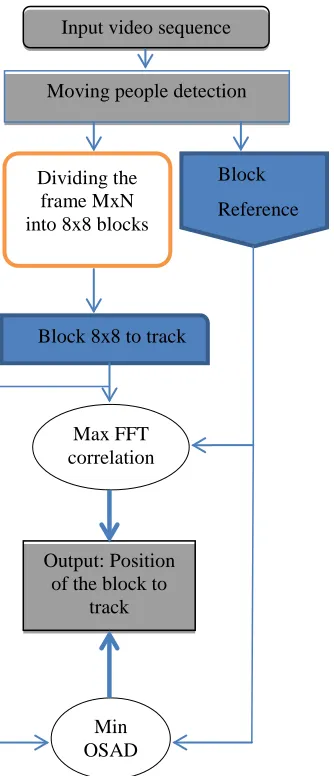
[image:2.612.100.267.266.654.2]Different researchers use different algorithms for tracking moving person, our design process of people tracking system has been described as the block given bellow.
Figure. 1 The People Tracking Cycle
As seen from the above blocks, in this paper, we attempt to extract moving people with the Mixture of Gaussian algorithm, then we search the similar block to block reference, then we search the Max
(Corr_FFT) and the Min (OSAD) for all blocks in the frame. The system return the position of our block tracked.
The remainder of this article is organized as follows. Section 2 gives a brief discussion in term of related work in order to explain the real issues of this study. Section 3 presents the process of moving people detection, we choose the Gaussian Mixture Model in order to do the process of detection, because it return a minimal misclassified pixels [15]. Section 3 gives the mathematical formulation of Bounding Box area of the people in motion; we surround the moving people by the bounding box in order to limit the search area in the Bloc Matching process. Fast Fourier Transform Correlation and the Optimized Sum of Absolute Difference formulas are used to determine the position of the searching bloc. The results of its application between blocs in Bounding Box of moving people are discussed in Section 4, in this section FFT-Correlation and OSAD curve are presented to explain the choice of the corresponding bloc tracked in the moving people matrix. The paper concludes and presents our perspective in Section 6.
2. RELATED WORK
There has been a considerable study activity on the people tracking systems from capturing video sequences over the last years. This section briefly reviews the process of people tracking in term of detecting the moving objects firstly and secondly tracking them with analyzing many types of significant information and related work to this project.
The people detection is the first important step in any surveillance system, in this process of motion segmentation; the pixels of each moving people are detected. Generally, the motion detection or motion segmentation consists of separating the background and foreground pixels. Frame differencing [16], medium filter [17] are simple and common techniques for background subtraction. Stauffer and Grimson [18] use the mixture of Gaussians to apply a two pass grouping technique to segment foreground pixels.
Following the process of background extraction, the moving people are tracked. Tracking people algorithm is very important in video surveillance domain and it can be categorized as either deterministic or stochastic based on their mechanism of searching. Stauffer and Grimson [18] use a linearly predictive multiple hypotheses to track moving objects. Yang et al [16] employ a Input video sequence
Moving people detection
Dividing the frame MxN into 8x8 blocks
Block
Reference
Block 8x8 to track
Max FFT correlation
Min OSAD Output: Position
correspondence matrix and splitting algorithm to relate the measured foreground regions to the tracked objects. In [19], a technique for dynamically updating the models to accommodate changes in apparent color due to varying lighting conditions was used to track people in varying lighting conditions. In [20], many other techniques are proposed in video processing domains. Especially, for motion estimation, object tracking and segmentation. Tracking people in motion is a complex task and a variety of algorithms have been established to solve this problems. Until now, this task has not been definitively resolved and several workshops are open around. In this context, our work is born to help affectively to track people efficiently.
3. PEOPLE DETECTION
Among the high complexity methods, the Gaussian Mixture Model dominates the literature; it has their advantages and inconvenient. It returns a foreground with minimal errors in term of misclassified pixels, in this model the each pixel location is represented by a number (or mixture) of Gaussian functions that sum together to form a probability distribution.
In the MoG formulation [11], each pixel is modeled by K-Gaussians distributions, the probability of observing the current pixel value (pixel intensity variation) is:
(1)
Where k is the number of distributions, each Gaussian is represented by their values (µk, σk, wk) respectively, the mean vector, the covariance matrix and the weights.
Where η is a Gaussian probability density
function:
(2)
µk, σk, and wk are estimated by the Expectation
Maximization algorithm (EM) [12] which
maximizes the log-likelihood criterion.
4. MATHEMATICAL FORMULATION FOR
TRACKED WINDOW
3.1 Bounding box for interest moving people
In this paragraph, we have to minimize the search window with surrounding the people in motion by a bounding box rectangle. The bounding box can be
determined by computing the maximum value of x
and y coordinates of interest moving object
according to the following equation:
(3)
(4)
Where Oi denotes the set of the coordinate of
points in the interest moving object i, is the
left-top corner coordinates of the interest moving
object i and is the right-bottom corner
coordinates of the interest moving object i.
After surrounding the moving people in our sequence, we look for dividing the reduced matrix MxN from size (frame).
3.2 Correlation with Fast Fourier Transform
Correlation is the close mathematical cousin of convolution [13]. The model of FFT-Correlation applied in our work is written as in the equation:
(5)
The correlation between a reference bloc frame and another in searching window form the interest moving object, it is maximal if we have a similarity between elements. We compute the correlation as follows: FFT the two data sets of blocs, multiply one resulting transform by the complex conjugate of the other, and inverse transform the product. The result will formally be a complex vector of length N. But, it will turn out to have all imaginary values zero since the original data. The values of the complex vector are the values of the correlation.
3.3 Optimized Sum of Absolute Differences
Recently, this algorithm is widely used; it’s very easy and simple in order to find the similarity and each other relationship between the image blocs. It based on the corresponding point in the template bloc will be used for comparison. We can use this algorithm in many applications such as: object recognition, video compression, motion estimation and tracking. The following equation gives Optimize Sum of Absolute Differences (OSAD) [14]:
(6)
Generally, the OSAD maximize the error rate.
5. EXPERIMENTAL RESULTS
The proposed technique for tracking the template block in interest moving people was tested in video sequence extracted from video PETS2006 (Ninth IEEE International Workshop on Performance Evaluation of Tracking and Surveillance) between different frames.
In this section, we present results of frames extracting from our PETS scene used and diagrams for Fast Fourier Transform and Optimized Sum of Absolute Differences.
[image:4.612.91.299.243.387.2]
-a- -b-
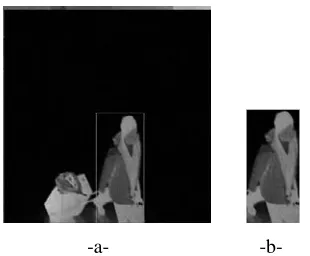
Figure.2 –A- Original Frame And –B- After Bounding Box Surrounding The People In Motion
During this step, we convert the original RGB frames to Gray Scale system with the following equation:
G_S_I[] = 0.229*R + 0.587*G + 0.114*B
In the last, we have to play with one matrix. Our tracking bloc is narrow at the bottom-right of view, and then only the window containing people is considered as in the following images:
-a- -b-
Figure. 3 -A- Extracting View And –B- Window For Tracked People
The bloc searched in the window of interest moving people is:
Bref1 =67 67 67 67 71 56 47 55
73 74 76 78 78 63 52 58
71 74 77 78 80 62 51 61
69 73 75 77 74 58 48 60
73 75 76 76 75 58 48 60
75 75 75 74 83 65 53 62
70 75 80 83 82 69 60 69
70 73 77 78 86 71 60 69
We have to calculate the Optimized error SAD; all values are saved in a vector, in parallel, we calculate the Correlation basing Fast Fourier Transform and save their values in one other vector. Finally, by extracting of the maximal of the OSAD and the minimal value of our vector OSAD of Corr_FFT as in the followings diagrams:
[image:4.612.322.519.321.474.2]
Figure .4 Correlation FFT Values
As we conclude in the above curve maximal values: Corr_FFT [bloc (292)] = 98.8218) are centered in the bloc number 292.
[image:4.612.119.274.512.640.2] [image:4.612.324.518.531.691.2]
The minimal error value is in the same bloc 292.
Applying the Optimized SAD we return the same similar block to our block reference number 292 with minimal OSAD. The structure and position of the tracked block changes with displacement of our interest people in the scene.
[image:5.612.321.521.73.256.2]-a- -b-
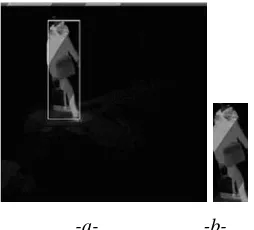
Figure .6 PETS2006 Video, -A- View Frame In Grayscale And –B- Extracted People In Motion In
Boundary Box Rectangle
Bref2 =
149 150 143 134 124 98 61 36
147 150 147 142 135 113 78 52
144 149 148 146 144 132 102 78
145 148 146 145 150 144 120 99
145 146 143 144 148 140 117 98
143 143 139 141 141 126 99 79
147 143 140 140 138 115 84 68
155 149 143 145 138 113 83 70
Figure .7 Correlation FFT values
Figure .8 OSAD Errors
In this diagrams, we notes that the
max(Corr_FFT) = 48.7904 and min(VOSAD) = 20 are obtained in block number 1.
CONCLUSION
In this paper, we have proposed a new technique which uses the Correlation based Fast Fourier Transform and the Optimized Sum of Absolute Difference error in order to track simply a person in a captured video sequence. Our method resume the time of procuring all frames in the captured video sequence into a short time of limited region of bounding box. This minimal bounding box is considered composed by the maximal of pixels of moving person.
Finally, we conclude from experimental results that all tracked bloc coincides with the minimal value of OSAD error and the peak in the big value of FFT-Correlation returned during the bloc matching process.
In the future studies we will attempt to generalize this technique to many peoples in motion with resolving the problem of occlusion in first time. Secondly, we will take different sizes of our tracked block, testing them in many video sequences.
REREFRENCES:
[1] G.D. Hager and P. N. Belhumeur,”Efficient Region Tracking with Parametric Models of Geometry and Illumination”, IEEE Trans. On Pattern and Analysis Machine Intelligence, Vol. 20, N°. 10, pp. 1025-1039, October 1998
[image:5.612.100.227.174.289.2][3] A. Blake, M. Isard, “Active Contours”, Springer, London, England, 1998.
[4] A. Koschan,S. K. Kang, J. K. Paik, B. R. Abidi and M. A. Abidi, “Video Object Tracking Based on Extended Active Shape Models with
Color Information”, Proc. 1st European Conf.
Color in Graphics, Imaging, Vision, pp.
126-131, University of Poitiers, France, April, 2002.
[5] I. Haritaoglu, D. Harwood and L. S. Davis, W4 : Rea l-Time Surveillance of People and Their Activities,” IEEE Trans. On Pattern Analysis and Machine Intelligence, Vol. 22, No. 8, pp. 809-830, August 2000.
[6] F. Dellaert and R. Collins, “Fast Image-Based Tracking by Selective Pixel Integration,” ICCV 99 Workshops on Frame-Rate Vision, Sept, 1999.
[7] J. Segen and S. Pingali, “A Camera-Based System for Tracking People in Real Time,” IEEE Proc. of Int. Conf. Pattern Recognition, Vol.3, pp.63-67, 1996.
[8] J. Yang and A. Waibel, “A Real Time Face Tracker, ”IEEE Workshop Appl. Comput. Vision, pages 142–147, Los Alamitos, CA USA 1996
[9] H. Wang and S. Chang, “ A Highly Efficient
System for Automatic Face Region Detection in MPEG Video,” IEEE Transactions on Circuits and Systems for Video Technology, 7(4):615– 628, August 1997.
[10]M.A.Ali,S.Indupalli and B. Boufama,”Tracking Multiple People for Video Surveillance,”VP4-S06 The first international workshop on video processing for security, June 7-9 /2006, Quebec, Canada
[11] C. Stauffeer and W. E. L. Grimson : Adaptive Background Mixture Models for Real-Time Tracking in: Computer Vision and Pattern Recognition Fort Collins, Colorado (Jun.1999) pp. 246-252.
[12] A Dempster, N. Laird, and D. Rubin. Maximum Likelihood from Incomplete Data via the EM Algorithm,” Journal of the Royal Statistica l Society, 39 (Series B): 1-38, 1977 [13] Numerical Recipes in C: The art of Scientific
Computing (ISBN 0-521-43108-5) Cambridge University Press Programs Copyrights ©1988-1992
[14] N. N. Dawoud, B. B. Samir and J. Janier,” Fast Template Matching Method based Optimized sum of Absolute Difference Algorithm for face Localization. International Journal of Computer Applications (0975 – 8887) Volume 18-N°. 8, March 2011
[15] A. Ezzahout, R. Oulah Haj Thami and M. Y. Hadi,”Quantitative and Qaulitative evaluation based on misclassified pixels for people’s detection” 2012 International Conference on Complex Systems, Agadir, Morocco. [16] T. Yang, S. Z. Li, Q. Pan, and J. Li, “Real-time Multiple Objects Tracking with Occlusion Handling in Dynamic Scenes,” in Proceeding of the 2005 IEEE Computer Society on Computer Vision and Pattern Recognition, vol. 1, 2005, pp. 970–975
[17] R. Cuccharina, C. Grana, M. Piccardi, and A. Prati, “Detecting Moving Objects, Ghosts, and Shadows in Video Streams, ” in Transactions on Pattern Analysis and Machine Intellegence, 2003.
[18] C. Stauffer and W. E. L. Grimson, “Learning Patterns of Activity Using Real-Time Tracking, ” in IEEE Transactions on Pattern Analysis and Machine Intelligence, 2000, pp. 747–757.
[19[19] Y. Raja, “Tracking and segmenting people in varying lighting conditions using colour” Pages : 228 - 233, in Automatic Face and Gesture Recognition. 1998 Proceedings, Third IEEE International Conference 14-16 Apr 1998