University of Warwick institutional repository: http://go.warwick.ac.uk/wrap A Thesis Submitted for the Degree of PhD at the University of Warwick
http://go.warwick.ac.uk/wrap/56906
This thesis is made available online and is protected by original copyright. Please scroll down to view the document itself.
Please refer to the repository record for this item for information to help you to cite it. Our policy information is available from the repository home page.
New Product Development within Small-Medium
sized Enterprises
INNOVATION REPORT
Jennifer Nonyelum Udeh, MEng
WMG
The University of Warwick
Abstract
Innovation is of increasing importance for raising the productivity, competitiveness and growth potential of modern economies (BIS 2010). New products are a form of innovation and New Product Development (NPD) is the term used to describe the innovation process of commercialising a new product idea. Due to the nature of innovation small-medium sized enterprises (SMEs) produce, typically ‘novel’ new-to-the world offerings that provide the highest potential contribution to the economy and businesses themselves, there is an increasing emphasis on NPD within SMEs. Despite this, there is a gap between existing knowledge of the requirements of success and their application in practice. Furthermore, there is increasing recognition within the literature that the process of innovation requires on-going maintenance, disciplined audit and renewal (Leonard-Barton 1995). SMEs in particular are finding the implementation of NPD success factors challenging(Humphreys, McAdam et al. 2005; Owens 2007) and there are limited in-depth studies on how this is achieved in practice.
The research provides an understanding of the challenges SMEs face in adopting NPD success factors and develops an approach to overcome these challenges and support sustained success. The research consists of two cycles of action research involving active engagement within two independent SME contexts. The first cycle provided practical insights into challenges including factors relating to: people, process, politics and technology within SMEs. As a result the research focus was refined to consider learning as a mechanism to support the implementation and the renewal of successful NPD practices. A new model is developed, namely Logical Learning, which facilitates the development of: knowledge, skills and attitude within SMEs, for this purpose. The second cycle of action research developed a unique NPD programme that implemented the Logical Learning model within SMEs. Moreover, a comprehensive and rigorous framework for learning evaluation is developed and formally validated the significance of the model. Evidence has been generated that links the application of the model to learning within SMEs, learning to changes in behaviour and NPD practices, and changes in behaviour to organisation results. Logical Learning was initially applied through a regional programme in the West Midlands, UK, which supported innovation within SMEs. Following success over an 18 month period, the programme competed for and won a national contract to continue to deliver this support. Therefore a nationwide roll-out is currently planned. The implementation of the model has impacted on the commercial success of SMEs, so far resulting in 8 new product introductions to market. These product innovations have generated actual sales of between £50,000 and £14 million within individual SMEs for the period 2011-2012, with businesses forecasting significant increases of over 400% in the year ahead. Collectively these SMEs have generated 93 additional jobs within the West Midlands, which contribute to economic development within the UK. Additionally the SMEs have developed NPD capabilities including the implementation of more formalised approaches and effective resource management. Moreover, these SMEs report further business development achievements including establishing partnerships with market-leading organisations, international distribution agreements and further private investment to support business growth. The research proves how learning is at the heart of these achievements and provides a new perspective on how it is facilitated, to successfully improve: knowledge, skills and attitudes and ensure SMEs are better equipped to sustain NPD success.
Acknowledgements
I would like to recognise an appreciation for the help and support I have received from a number of people, throughout the Engineering Doctorate (EngD) programme.
Firstly, I would like to thank my family and friends, my Mum, Dad, Frank, Melvin, Jacquelyn, Odette, Nina, Aunty Antonia, Aunty Brigid, Edo, ‘The Girls’ and all my Aunties and Uncles at home and abroad. All the encouragement, support and prayers, especially during the last few years when I needed it the most have been greatly appreciated. I am so blessed to have all of you by my side.
Thank you to my mentors: Dr John Garside for sharing his knowledge, his guidance, commitment and encouragement particularly, in delivering the practical contributions of my research; Dr Steven Maggs for his continued guidance and support throughout my research. Special thanks to Mairi MacIntyre and Judy Walton for being great friends and an invaluable academic support throughout and during the completion of my research portfolio.
I also want to show my gratitude to all of the people involved in the industrial projects during my research. To all at Magal Engineering Limited, especially: Peter Lee, David Shewan, Rob Hawkins, Barry Titcomb and Chris Jones. To all at the Manufacturing Advisory Service, West Midlands, UK, including the entire NPD Gateway Team managed by Roy Pulley and the NPD Gateway Panel chaired by Professor Derek Sheldon.
Additionally, I would like to acknowledge the financial support provided by the EPSRC Warwick Innovative Manufacturing Research Centre (EP/G049971/1).
Declaration
I confirm that the work contained in this submission is my own unless otherwise stated.
……….. Jennifer N. Udeh
Table of Contents
Abstract ... i
Acknowledgements ... ii
Declaration ... iii
List of Figures ... vii
List of Tables ... ix
1 Introduction ... 1
1.1 The Research Question and Objectives ... 3
1.2 The Research Portfolio ... 4
1.3 Structure of the Innovation Report ... 6
2 Review of Literature ... 8
2.1 New Product Development ... 8
2.1.1 The Importance of Innovation ... 9
2.1.2 The Determinants of Successful New Product Development ... 12
2.2 The Importance of Innovation within Small-Medium sized Enterprises... 15
2.2.1 Innovation Capabilities of Small and Large Enterprises ... 17
2.3 Summary of Review of Literature ... 21
3 The Research Methodology ... 22
3.1 Justification of the Action Research Approach ... 22
3.2 The Research Design ... 24
3.2.1 Action Research Cycle 1 ... 25
3.2.2 Action Research Cycle 2 ... 26
3.3 Summary of the Research Methodology ... 27
4 Exploratory Study Investigating Organisational Challenges ... 28
4.1 The NPD Improvement Project within Magal Engineering Limited ... 29
4.1.2 The New ‘Product Realisation’ Process ... 35
4.2 Organisational Challenges ... 44
4.2.1 The People, Process, Political and Technology Challenge ... 44
4.3 Re-framing the Research Question ... 48
4.4 Summary of Exploratory Study ... 49
5 Development of the Logical Learning Model ... 51
5.1 Review of Existing Approaches to Organisational Learning... 51
5.1.1 The Three Learning Modes ... 51
5.1.2 Action Learning and Action Research ... 53
5.1.3 Focus, Will, Capability Performance System ... 54
5.1.4 Audit Tools ... 56
5.2 The Requirements for a New Learning Model ... 59
5.3 The Logical Learning Model ... 62
5.3.1 Bottom-up Relationship within Logical Learning ... 62
5.3.2 Identification of NPD Success Factors ... 67
5.3.3 Learning-by-Doing Mechanism to Facilitate Learning ... 68
5.4 Summary of the Development of Logical Learning ... 71
6 Application of the Logical Learning Model ... 73
6.1 The Development of New Product Development Gateway ... 74
6.1.1 The Implementation of the Logical Learning Model within the Process ... 77
6.1.2 The New Product Development Gateway Process ... 81
6.1.3 Dissemination and Case Study Evaluation ... 85
6.2 Summary of the Application of Logical Learning ... 86
7 Validation of the Logical Learning Model ... 87
7.1 NPD Gateway Evaluation of Participant Learning ... 87
7.1.1 Justification of the use of The Four-level Model for Evaluation ... 88
7.1.3 The Results and Analysis ... 98
7.2 Summary of the Validation of Logical Learning... 110
8 Final Reflection and Recommendations for Future Work ... 112
8.1 Achievement of Research Objectives ... 112
8.1.1 Understanding Organisational Challenges within SMEs ... 112
8.1.2 Developing a Mechanism to Overcome Challenges and Influence NPD practice within SMEs ... 115
8.1.3 Demonstrating Validity and Value in the Application of the Mechanism . 117 8.2 Recommendations for Future Work ... 120
8.2.1 Generalisation of Research Outcomes ... 121
8.2.2 The Role of Logical Learning in the Context of an Intervention ... 121
8.2.3 Further Development of the Logical Learning Model ... 122
8.3 Summary of Final Reflection and Recommendations for Future Work ... 123
9 Conclusions ... 125
10 References ... 129
List of Figures
Figure 1-1 Research Outputs and Achievements ... 4
Figure 1-2 Research portfolio map and key outcomes ... 5
Figure 1-3 Suggested Reading Order... 6
Figure 2-1 Determinants of innovation (percentage of strict innovators rating determinants "high") ... 10
Figure 3-1 the research design ... 24
Figure 4-1 APDT Business Process Structure ... 32
Figure 4-2 Metallifacture Business Process Structure ... 32
Figure 4-3 Metallifacture NPD Flow Diagram ... 33
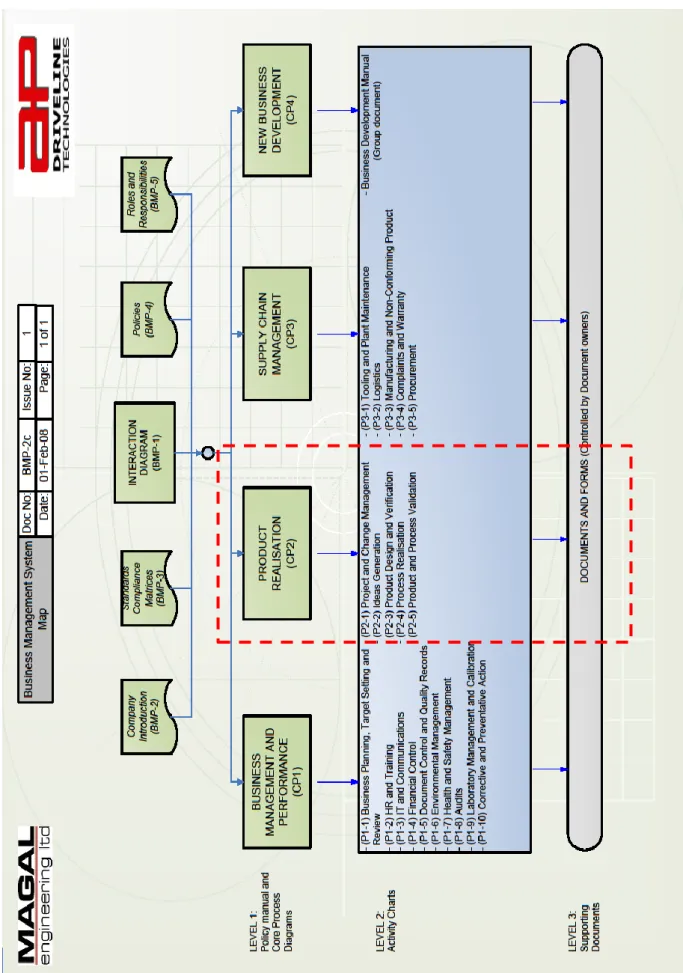
Figure 4-4 Magal Business Management System Map... 36
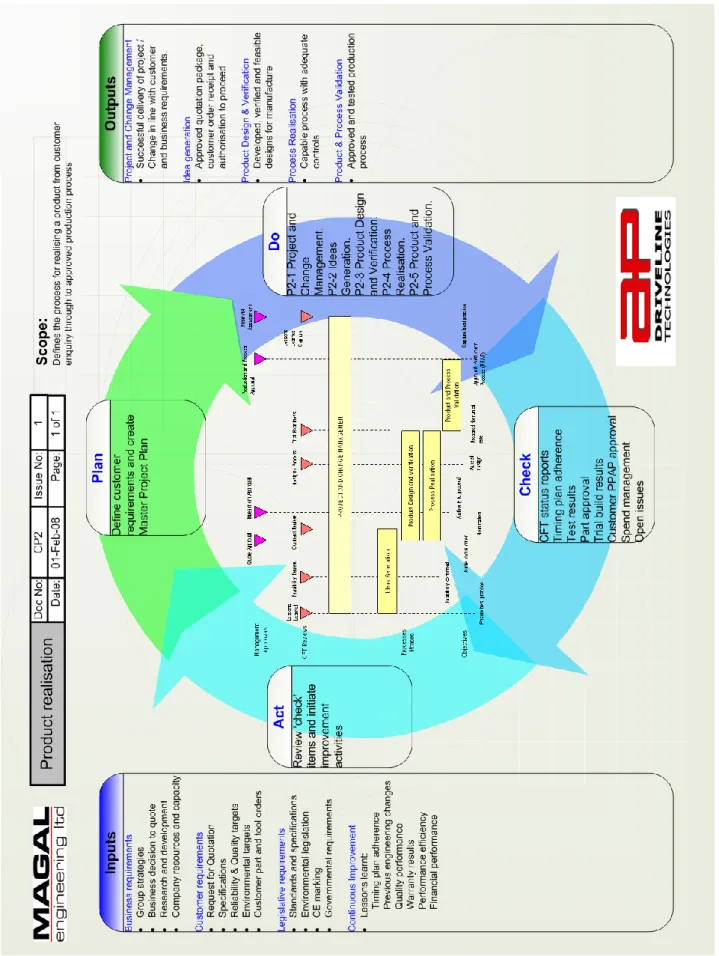
Figure 4-5 Product Realisation Core Process Diagram ... 37
Figure 4-6 Product Realisation flow diagram ... 39
Figure 4-7 Extract from Product Design and Verification Activity Chart... 41
Figure 4-8 Key Elements of the Product Realisation Process ... 42
Figure 4-9 Organisational challenges within SMEs ... 45
Figure 5-1 the three learning modes ... 52
Figure 5-2 The performance system ... 55
Figure 5-3 Linking Corporate and Project Strategy ... 66
Figure 5-4 NPD Strategy-Portfolio-Project Hierarchy ... 67
Figure 5-5 the conceptual model - Logical Learning ... 71
Figure 6-1 Stages of the development of NPD Gateway ... 76
Figure 6-2 NPD Gateway process flow diagram ... 84
Figure 7-1 Chain of impact assessed ... 90
Figure 7-2 Evaluation Sample ... 98
Figure 7-3 Efficiency of delivery methods ... 99
Figure 7-4 Planned action/transfer expectations ... 100
Figure 7-5 Overall reaction ... 101
Figure 7-6Participant learning as a result of NPD Gateway ... 102
Figure 7-7 Development of knowledge ... 103
Figure 7-9 Development of attitudes ... 104 Figure 7-10 Changes within business as a result of NPD Gateway ... 105
List of Tables
Table 2-1 Percentage of enterprises who were innovative active, by firm size and type of
activity, 2006-2008 ... 12
Table 2-2 Percentage of enterprises that were wider innovators, by firm size and type of activity, 2006-2008 ... 12
Table 2-3 New Product Development Success Factors ... 14
Table 2-4 Types of product development programmes ... 16
Table 2-5 the characteristics of small and large businesses ... 18
Table 2-6 the potential capability of small and large businesses to adopt organisational characteristics that facilitate innovation ... 20
Table 4-1 Four core business processes within the MBMS ... 35
Table 4-2 Stages within the product realisation process ... 38
Table 5-1 Approaches to auditing processes ... 57
Table 5-2 Four existing approaches to learning ... 59
Table 5-3 Strategy-Portfolio-Project hierarchy ... 65
Table 7-1 Structure of the evaluation ... 92
1
Introduction
The overall purpose of this research was to demonstrate innovation in the application of knowledge within an engineering business. The scope of this research is New Product Development (NPD) within Small-Medium sized Enterprises (SMEs) and the theme is learning and capability development to support sustained NPD success.
New Product Development (NPD) is the term used to describe the innovation process that results in the commercialisation of a new product. Innovation is of increasing importance as it contributes to the productivity, competitiveness and growth potential of modern economies (BIS 2010). Between 2000-2007, investment in innovation was responsible for two-thirds of the UK’s private sector labour productivity growth, increasing the productivity by an average of 1.8 per cent per year (NESTA 2009). This contribution was largely due to improvements relating to the innovation process within businesses.
For businesses, the value of innovation is in the commercial opportunities that come from new and improved products and services (BIS and NESTA 2011). Innovation has also been linked to supporting business growth (NESTA 2009). During 2006-2008, 20 per cent of turnover for all businesses came from product innovation. The share of UK businesses with a product innovation also increased for the same period compared to 2004-2006, showing that more businesses are engaging in innovation activities.
Novel, new-to-the-world offerings provide the highest potential contribution of all the innovation types (Annacchino 2007). Therefore increasing numbers of businesses are engaging in this type of innovation. BIS (2010) report that within the periods 2006-2008, nearly 50 per cent of product innovations within innovation active businesses were ‘leading edge or novel’. Small-medium sized enterprises (SME) are typically associated with this type of innovation due to their entrepreneurial characteristics. However, the practice of innovation within SMEs is also challenging. There is a gap between existing knowledge of the success factors for innovation and their adoption in
practice (Humphreys, McAdam et al. 2005; Owens 2007). Furthermore SMEs are failing to achieve sustained NPD success.
This research began within an SME, namely Magal Engineering Limited, who sought to implement improvements to their approach to NPD in order to sustain success. Hence, the initial objective of the research was to understand and overcome the challenges the SME faced in adopting NPD success factors.
Two cycles of action research were conducted and are described in this report; the first cycle addresses the initial objective and provides practical insights into the organisational challenges the SME (Magal Engineering Limited) faced in adopting critical NPD success factors and sustaining success. As a result, the research question was re-framed to consider learning within the SME as an appropriate approach to developing the understanding, capabilities and commitment necessary to overcome organisational challenges, and ensure the successful implementation of good NPD practices. The Logical Learning model was developed and defined as an appropriate approach for learning within the SME. The model captured existing knowledge and insights of good NPD practices and directed implementation efforts.
The initial outcomes led to the development of a further objective, to apply and validate the Logical Learning model as an approach for learning to support the implementation of good NPD practice and sustained NPD success within any SMEs. This was achieved during the second cycle of action research. Logical Learning was implemented through a regional programme that was developed in the West Midlands, UK to support innovation within SMEs. The regional programme has been successfully implemented and the results of a rigorous evaluation demonstrate that the programme has facilitated learning within SMEs. Moreover, this learning has impacted NPD practices and organisational results within participant SMEs and ensured they are better equipped to sustain NPD success. In October 2011, the programme was included in a winning bid to deliver innovation support nationally and therefore a national roll-out is currently planned.
1.1 The Research Question and Objectives The research question is defined as follows:
How is existing knowledge of the requirements of successful NPD translated into practice within SMEs?
To this end three research objectives (RO) are defined:
RO1. To develop an understanding of the organisational challenges in implementing NPD success factors and sustaining good practice, within an SME context.
RO2. To develop a mechanism that overcomes these challenges and translates existing knowledge of success factors into appropriate organisational practices.
RO3. To demonstrate validity and value in the application of the mechanism within an SME context.
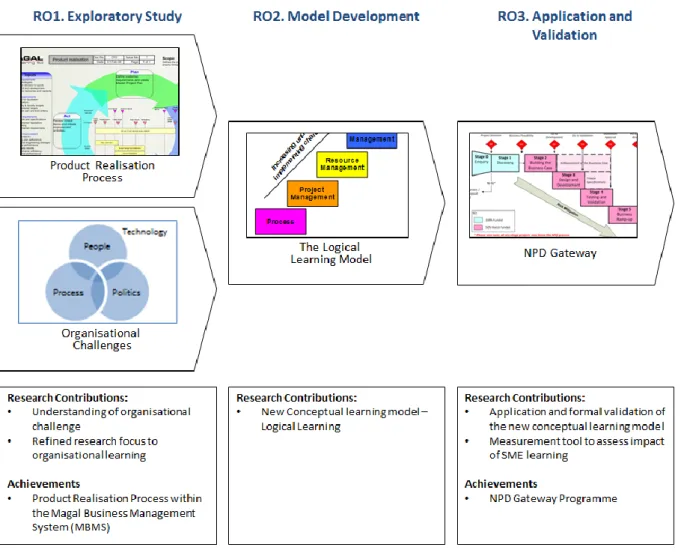
Each research objective was addressed in turn and the results informed subsequent actions taken as illustrated in Figure 1-1 Research Outputs and Achievements. The key outputs and achievements are discussed further in this report.
Figure 1-1 Research Outputs and Achievements
1.2 The Research Portfolio
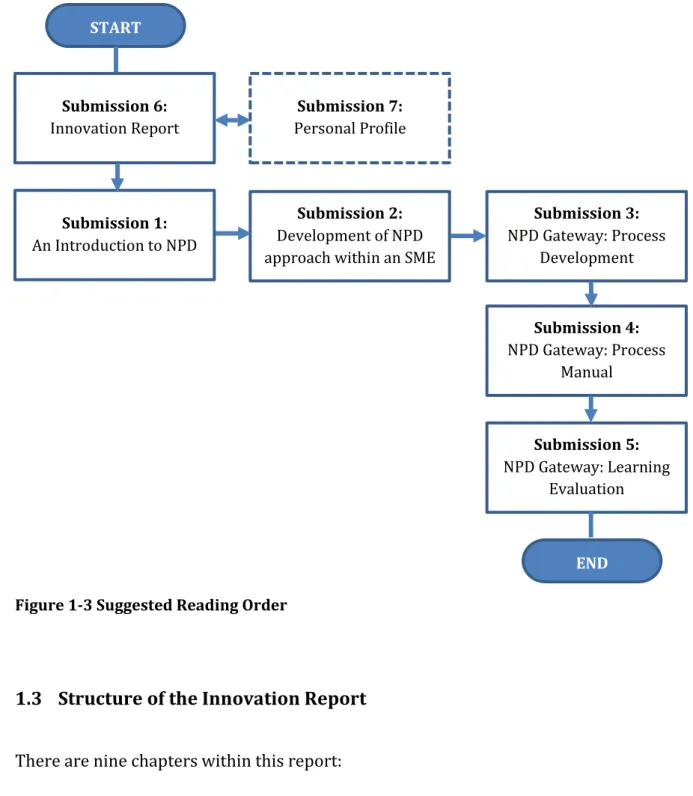
This innovation report brings together the complete journey of actions and research that have resulted in the development and application of the Logical Learning model. This journey has made a significant contribution to knowledge and practice. This report represents the final submission in the research portfolio that consists of six submissions in total. The purpose and key outcomes of each submission within the portfolio are illustrated in Figure 1-2 Research portfolio map and key outcomes. It is suggested that the reader begins by reading the innovation report and subsequently follows the reading guide illustrated in Figure 1-3 Suggested Reading Order.
1. Introduction to NPD
2. Development of NPD
approach within an SME 6. Innovation Report
4. NPD Gateway: Process Manual 3. NPD Gateway: Process development 5. NPD Gateway: Learning Evaluation 7. Personal Profile
Purpose: Develop knowledge of the challenges SMEs face in implementing NPD success factors
Purpose: Tell the research story, including: research methodology, development and application of the model, significance and validity of the research contributions. Purpose: Describe the
application of the conceptual model within SMEs via NPD Gateway Purpose: Implement
conceptual model within NPD Gateway
Purpose: Validate the application and value of the conceptual model
Purpose: Describe personal learning and development of engineering doctorate competencies
Achievements:
Contribution within Magal Engineering Limited:
The development and
implementation of the Business Management System - NPD Process - Project Management Strategy Research Outcomes: - Knowledge of organisational challenges - Research question - Development of an new conceptual model Achievements:
Complete description of the development application and significance of the model
Research Outcomes:
- Identification of the research contributions to knowledge and practice
- Validation of the research
Achievements:
Contribution within the Manufacturing Advisory Service, West Midlands, UK:
The development and implementation of the New Product Development Gateway programme which has achieved ISO 9000:2002.
Dissemination of research to academics and practitioners: - APMS Conference, Bordeaux, France, September 2009
- PDMA Conference, California, USA, October 2009
- POMS Conference, Vancouver, Canada, May 2010
- IMechE Lecture, London, UK, June 2010
- IET Prestigious Sir Alan Veale Lecture, Coventry, UK, November 2010
- MAS-WM NPD Gateway Showcase, Coventry, UK, April 2011 Research Outcomes:
- Application and validation of the conceptual model
Purpose: Review of Literature surrounding the research focus: NPD within SMEs
Abbreviations:
NPD New product development SME Small-medium sized enterprise
ISO International organisation for standardisation APMS Advances in production and management systems POMS Production operations and management systems IMechE Institute of mechanical engineering
Figure 1-3 Suggested Reading Order
1.3 Structure of the Innovation Report There are nine chapters within this report:
Chapter 2 provides a summary a review of literature that ‘set the scene’ by providing an introduction to New Product Development (NPD) within Small-Medium sized Enterprises (SMEs). The term NPD is defined and its importance to businesses and the economy is discussed. The importance of NPD within Small-Medium sized Enterprises is established and the characteristics and capabilities of SMEs are identified.
Submission 1: An Introduction to NPD
Submission 2: Development of NPD approach within an SME
Submission 3: NPD Gateway: Process Development Submission 4: NPD Gateway: Process Manual Submission 5: NPD Gateway: Learning Evaluation Submission 6: Innovation Report Submission 7: Personal Profile END START
Chapter 3 defines the methodology used to conduct this research. An action research approach is justified and the research design is identified.
Chapter 4 discusses the first stage of the research, which involved the exploratory study within Magal Engineering Limited (Magal). The study identified organisational challenges the SME faced in implementing NPD success factors. The key achievements of the study are presented and the implications this had on subsequent research efforts are determined.
The main contribution of the research is discussed in Chapter 5. A reflection of the achievements of the exploratory study within Magal and a review of literature led to the development of the Logical Learning model. The model provides a new approach that overcomes the organisational challenges facing SMEs by facilitating learning within SMEs to support the implementation of NPD success factors.
Within Chapter 6 the application of the model within a regional business support programme is discussed.
Chapter 7 discusses the validation of the model. The results of a learning evaluation are presented. Evidence has been generated that the application of the model to learning within SMEs, learning to changes in behaviour and NPD practices, and changes in behaviour to organisational results.
A final reflection on the research outcomes is discussed in Chapter 8 and finally Chapter 9 presents the conclusions of the research, which highlights the key contributions of the research.
2
Review of Literature
The term ‘new product development’ (NPD) is defined and its importance to businesses and the economy established. Existing knowledge of how new products are developed and the structures and processes that lead to success are identified. Finally, the characteristics of NPD within small-medium sized enterprises (SMEs) are identified and the implication organisational size has on the capability to innovate is discussed.
2.1 New Product Development
New product development (NPD) is a term that refers to the complete business process of developing and commercialisation a new product idea. It is a multi-disciplinary process (Clark and Wheelwright 1993) involving most functions within a business. The functions must collaboratively implement appropriate NPD strategies and tactics (Cooper 2001) in order to ensure success. Strategies refer to activities involved in determining which direction an organisation’s NPD efforts should follow. It answers questions such as: what products should be developed and what marketplace should be targeted? Tactics refer to the tools by which the strategy is implemented and answers questions such as: how should NPD be undertaken and what capabilities are required to bring the new product to market?
Although there is no common definition for NPD, the Product Development and Management Association (PDMA) offer a comprehensive definition which aids an understanding of the breath of the business process:
“[New product development is] the overall process of strategy, organisation, concept generation, product and marketing plan creation and evolution, and commercialisation of a new product” (www.pdma.org)
However it is the strong relationship between NPD and innovation that characterises the importance of continued research within this area. In his seminal work, Schumpeter (1934) identifies new products as one on five types of innovation, such that NPD is
considered an innovation process. This perspective is supported by NESTA (2009), who adopt the following definition of innovation as: “the design, invention, development and/or implementation of new or altered products, services, processes, systems, organisational structures, or business models for the purposes of creating value for customers and financial returns for the firm” (US Advisory Committee).
2.1.1 The Importance of Innovation
Innovation such as NPD within businesses is a vital ingredient in raising the productivity, competitiveness and growth potential of modern economies (BIS 2010). In the UK innovation remains a central topic for achieving economic growth, with a number of government bodies engaged in encouraging and facilitating innovation. These include: Technology Strategy Board (TSB), National Endowment for Science, Technology and the Arts (NESTA) and the UK Department for Business Innovation and Skills (BIS).
Continued investment in innovation contributes to the economy and businesses themselves. This investment generates revenues and profits that are paid out to suppliers and personnel who go on to contribute to other enterprises through purchasing goods and services (Annacchino 2007). Furthermore, retained earnings fund business growth and development, which safeguards jobs and creates employment for the good of the economy. Between 2000-2007, investment in innovation was responsible for two-thirds of the UK’s private sector labour productivity growth, increasing the productivity by an average of 1.8 per cent per year (NESTA 2009). This contribution was largely due to investments in “better way of doing things” and included the broader benefits of technology advances and improved processes. Moreover, during 2006-2008, 20 per cent of turnover for all businesses came from product innovation.
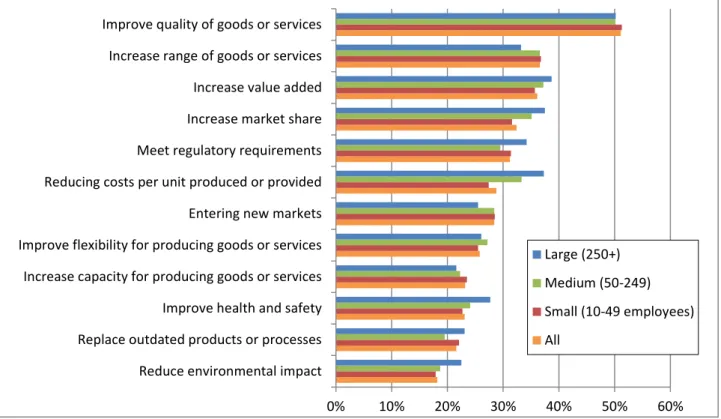
Additional to the intrinsic value of innovation, its importance to businesses is driven by a number of factors. This includes: seeking competitive advantage, responding to competition and improving customer satisfaction. Each of these factors can lead to a need for changes in products, processes or business practices (BIS 2010). Figure 2-1
Determinants of innovation (percentage of strict innovators rating determinants "high"), identifies recent determinants of innovation. The most significant factors include a need to:
Improve the quality of goods and services, due to diverse and rapid advancements in technology and changing customer requirements.
Increase the range of goods and services, due to an increase in the speed of competitive new product being introduced to market.
Increase value added and market share, in order to remain competitive.
Reduce the costs per unit produced or provided, due to the increasing threat of globalisation, which has introduced the low-cost manufacturing alternative and created hypercompetitive global markets.
The latest figures show that product related factors continue to be the most frequent driver of innovation (BIS 2012), which reiterates the importance of product innovation and furthermore, reinforces a customer focused approach to innovation.
Figure 2-1 Determinants of innovation (percentage of strict innovators rating determinants "high")
Source: reproduced from BIS “UK Innovation Survey 2009” (BIS 2010)
0% 10% 20% 30% 40% 50% 60%
Reduce environmental impact Replace outdated products or processes Improve health and safety Increase capacity for producing goods or services Improve flexibility for producing goods or services Entering new markets Reducing costs per unit produced or provided Meet regulatory requirements Increase market share Increase value added Increase range of goods or services Improve quality of goods or services
Large (250+) Medium (50-249) Small (10-49 employees) All
Businesses are also experiencing pressures to innovate in order to meet regulatory requirements, which in the UK have focused on promoting innovation and particularly NPD on both a regional and national level.
The exploitation of innovative offerings such as NPD is increasingly becoming essential for sustained economic development. In a Government White Paper, “Building the knowledge driven Economy” (published by the DTI in 2008), the then Prime Minister Rt. Hon. Tony Blair, advocated the evolution of a knowledge-driven society, based on the exploitation of knowledge, skills and creativity. NPD has since been emphasised as an important stimuli within this new economic structure. It is recognised that commercial success will depend on organisations abilities to acquire and utilise knowledge and apply this to the development of new products (Trott 2008).
The UK’s current government policy for innovation, as defined in ‘The Innovation and Research Strategy for Growth” (BIS 2011) published on 8th December 2011, identifies a continuing focus on the development of the new knowledge economy by encouraging collaborations and knowledge-sharing to support innovation within businesses. Evidently, the practice of NPD is increasing within businesses. The share of UK businesses with a product innovation increased during the 3 year period 2006-2008 compared with 2004 – 2006. BIS (2010) report for the period 2006-2008, product innovation represented the second highest share of innovation activity across all businesses. 24 per cent of all businesses were product innovators (Table 2-1 Percentage of enterprises who were innovative active, by firm size and type of activity, 2006-2008). The new economic structure is also demanding that companies assess their business processes and organisation in order to sustain success. Table 2-2 Percentage of enterprises that were wider innovators, by firm size and type of activity, 2006-2008 identifies how enterprises in the UK have undertaken significant business process changes in pursuit of competitive advantage. Overall 26 per cent of all businesses adopted changes within areas including: organisation, advanced management techniques and marketing strategy. These areas all involve a business’s NPD process.
Table 2-1 Percentage of enterprises who were innovative active, by firm size and type of activity, 2006-2008
Type of activity All Small Medium Large
Innovation active 58.2 57.3 62.5 61.2
Product innovator 23.9 23.0 28.5 31.5
Process innovator 12.6 12.0 15.4 18.9
Abandoned innovation projects 3.5 3.3 4.5 6.6
On-going innovation projects 5.6 5.1 8.1 9.2
Activities related to innovation 55.0 54.2 59.0 55.9
Source: reproduced from BIS “UK Innovation Survey 2009” (BIS 2010)
Table 2-2 Percentage of enterprises that were wider innovators, by firm size and type of activity, 2006-2008
Type of activity All Small Medium Large
Wider innovators 26.5 24.5 36.5 39.0
New or significantly changed corporate strategy
12.4 11.4 17.0 19.6
New management techniques 10.1 8.9 15.6 19.3
Major changes to organisational structures 16.4 14.8 23.4 27.5 Changes to marketing concepts or strategy 15.7 15.0 19.8 18.3
Source: reproduced from BIS “UK Innovation Survey 2009” (BIS 2010)
2.1.2 The Determinants of Successful New Product Development
The literature continues to advocate the implementation of a ‘process approach’ to ensure the success of business processes such as new product development (NPD) (Hammer 1990; Davenport 1993; Garside 1998; Raymond, Bergeron et al. 1998; Balbontin, Yazdani et al. 2000; Cooper 2005; Humphreys, McAdam et al. 2005; Mackay, Bititci et al. 2008; MacCormack, Crandall et al. 2012). This refers to the appropriate definition and structuring of the activities or tasks within a process and involves the
management of the inputs, outputs and interactions within the process. More specifically, a NPD process typically consists of three components (Castellion 2005):
1. Decision making
2. Cross-functional workflows 3. Supporting systems and practices.
The decision-making component ensures the right products are developed by the organisation in a way that provides the desired value to both the customer and the business. At the heart of the decision making component is the ‘NPD Strategy’ for the business. The strategy is informed by and guides decisions regarding the selection of project, the management of individual and multiple project and the organisation of the business for NPD.
Cross-functional workflows consider the information or insights needed to aid decision-making and the methods and activities required to generate this knowledge (Castellion 2005). This component begins to describe the operational features of the NPD process and the characteristics of cross-functional project teams.
Supporting systems and practices assist an organisation’s NPD effort. There are a range of systems and practices that organisation can effectively use, including (Belliveau, Griffin et al. 2002):
Tools for engineering and design, e.g. Quality Function Deployment and Computer aided design.
Strategic tools for improving NPD performance, e.g. NPD metrics and measures.
Tools for effective management during NPD projects, e.g. knowledge and product data management.
There is substantial body of knowledge which investigates the factors that determine successful NPD. Table 2-3 New Product Development Success Factors, identifies the most widely accepted business characteristics and practices that determine NPD
Table 2-3 New Product Development Success Factors
Cooper and Kleinschmidt (2007) Cooper (2001)
Strategy The company’s total new product strategy A unique superior product: a differentiated product that delivers unique benefits and superior value to the customer.
A strong market orientation – a market-driven and customer focused new product process.
Look to the world products: an international orientation in product design, development, and target marketing.
Leveraging core competencies
Focus on products aimed at attractive markets
A well-conceived, properly executed launch and a solid marketing plan at the heart of the launch.
Process The company’s new product development process and specific activities within this process
More predevelopment work (homework) before product development. Sharp and early product and project definition.
Touch go/kill decision points, where projects really do get killed: better focus on results
More emphasis on completeness, consistency, and quality of execution of key tasks from the beginning to the end of the project.
Speed but not at the expense of quality
A multistage and disciplined new product process.
Organisation The way the projects are organised The right organisational structure, design, and climate for NPD. Culture The company’s internal culture and climate for
innovation
Commitment Senior management’s involvement with and commitment to new product development
Top management support
Significantly, the literature establishes that the NPD success factors identified a decade ago still apply (Brown and Eisenhardt 1995; Cooper 1999; Kanter 2006).Furthermore Humphreys, McAdam et al. (2005) cite Leonard-Barton (1995) who states that the process of innovation requires on-going maintenance and renewal because the capability to innovate is much easier lost than it is to acquire. Therefore there has been an increasing emphasis on managing and sustaining the effective implementation of established success factors within businesses e.g. the investigation of process governance conducted by Cooper and Edgett (2012).
2.2 The Importance of Innovation within Small-Medium sized Enterprises Businesses of all sizes engage in innovation, however this research project adopts a focus on the small-medium sized enterprise (SME). SME is a term predominantly used in Europe to defined businesses that have up to 250 employees. The definition includes sub-categories for micro, small and medium sized enterprises, which are defined as consisting of less than 10, 50 and 250 employees respectively (Europa 2010).
Innovation within SMEs is important because of the nature of innovation this type of business produces. The management of SMEs is often associated with entrepreneurship, which is defined as:
“the process of planning, organising, operating, and assuming the risk of a business venture” Low and MacMillan (1988) cited in Trott, 2008)
It is a practice that leads to high level innovations that are typically ‘novel’ new-to-the world offerings due to the nature of the opportunity and the attributes of the entrepreneur. Although all innovation contributes to businesses and the economy, ‘novel’ new-to-the-world offerings are significant as these provide the highest potential contribution as identified in Table 2-4 Types of product development programmes. Evidently, businesses are recognising the significance of novel new-to-the-world product offerings to support their development and sustained success. BIS (2010)
report that within the periods 2006-2008, nearly 50 per cent of product innovations within innovative active businesses were ‘leading edge or novel’.
Table 2-4 Types of product development programmes Type of New Product Time to
Introduce Potential Revenue Contribution to Economy
Potential Revenue Contribution to Company New-to-the-world Longest Highest potential Highest potential New product lines Long High potential High potential Additions to existing lines Medium Medium potential Medium potential Improvements Short Little potential Medium potential Repositioning Shortest Little potential Medium potential Cost reductions Shorter Little potential Medium potential
Source: Reproduced from “The pursuit of new product development” (Annacchino 2007)
In the UK an increasing number of SMEs are engaging in innovation than ever before. While the share of enterprises that are ‘innovative active’ tend to increase with business size, BIS (2010) report that smaller businesses are narrowing the gap with large businesses on levels of engagement across a range of innovation related behaviours. However despite the importance of innovation within SME and an increasing focus on innovation relating to this context, there is a gap between existing knowledge of the success factors and their adoption in practice. Businesses are finding the implementation of the success factors challenging (Barclay 1992; Klein and Sorra 1996; Klein and Knight 2005). This is particularly true for SMEs (Humphreys, McAdam et al. 2005; Owens 2007).
NPD research has generally focused on large, well established enterprises and there have been relatively limited in-depth studies on how SMEs practically incorporate innovation principles and practices within their businesses (McAdam 2000; Millward and Lewis 2005). Furthermore, few authors have considered how SMEs effectively sustain the implementation of NPD success factors. It cannot be assumed that
innovation implementation principles within large enterprises are transferable to SMEs. Therefore in order to ensure sustained NPD success within SMEs there is a need to study how innovation is implemented within the constraints and characteristics of this context (Humphreys, McAdam et al. 2005).
2.2.1 Innovation Capabilities of Small and Large Enterprises
The characteristics of SMEs are different to those that exist within large enterprises. Trott (2008) established a comprehensive set of organisational requirements and capabilities that facilitate the innovation process. With consideration to the characteristics of small and large enterprises (as identified in Table 2-5 the characteristics of small and large businesses) these organisational requirements are used to provide an assessment of innovation capabilities. The assessment is illustrated Table 2-6 the potential capability of small and large businesses to adopt organisational characteristics that facilitate innovation’.
A growth orientation is associated with engagement in innovation as innovation provides a means for the development and growth of enterprise (Cox 2005; Annacchino 2007; NESTA 2009; BIS 2010). Small businesses have a moderate potential to adopt a growth orientation as some small businesses are lifestyle businesses, where the owners are more concerned with establishing a comfortable living for themselves. In contrast, large businesses are traditionally motivated by maximising the value of the company, which supports a high potential to adopt a growth orientation.
The characteristics of the organisation and management of small businesses suggest a high potential to adopt innovation capabilities including: organisational heritage and innovation experience, space for creativity, and cross-functional cooperation and coordination within organisational structure. They tend to have a more informal nature of communication, relatively less bureaucracy and a flatter management structure. This suggests an environment within a small business that is favourable to effective team working and the sharing of ideas and knowledge. This ability also provides a speed and flexibility edge over larger businesses, which are typically more bureaucratic in nature, with more formal lines of communication.
Table 2-5 the characteristics of small and large businesses
Small Businesses Large Businesses Typical
Characteristics High risk of failure makes organisation more focused on short-term survival (cash rather than profit). Also makes some small businesses want to grow fast to minimise risk.
Diverse motivations of owners – some are ‘lifestyle’ owners and may focus on obtaining a comfortable living for themselves, while others may want to grow the business rapidly.
Provide less formal training and recruit new staff through informal channels
Able to commercialise innovations quicker, but less likely to adopt innovations.
Lower risk of failure.
More influence within the marketplace and brand can be a major positive factor influencing sales.
Traditionally the motivation of the owner or shareholder is to maximise the value of the company
More likely to provide formal training and use formal channels to recruit new staff.
Large businesses’ innovation capitalises on heavy expenditure on formal Research and Development.
Advantages Disadvantages Advantages Disadvantages
Management Typically a dynamic Manager
Often have strong commitment of the innovation
Quicker decision making
Less professional
Often emotionally linked to the innovation
Can be technically rather than market focused
Typically qualified ‘professional’ managers Typically ‘objectively’
appraise and innovation
Managers may be risk averse or lack dynamism
Market Position
Potentially closer to the market
Able to focus on small market niches
Lack market power/
influence Bargaining power with suppliers/more influence Potentially ‘distant’ from the market (innovate from the ‘top’ down) Organisation / People More informal communication Less bureaucracy Flatter management structures
Lack highly skilled personnel Able to call on specialists cross-functional resources
Lack of internal flexibility More formal communication
and bureaucracy
Resourcing More likely to use R&D finance efficiently
Fewer resources invested so less likely to ‘fear’ failure.
Reliant on (usually limited)
internal sources of finance Have financial resources necessary to conduct R&D Greater marketing resources
Bureaucratic nature of the business may mean that it takes longer to introduce innovation
However, the characteristics of large businesses suggest that they are more able to adopt innovation capabilities including: vigilance and external links and commitment to technology and R&D. This refers to the business’s ability to maintain awareness of the external environment in order to effectively pursue the most effective opportunity (Trott 2008).This also refers to the business’s commitment to resources in terms of input from, science, technology and engineering.
Moreover, large businesses have an advantage over small businesses in that they possess the financial resources and ability to draw on specialist skills and expertise to commercialise an innovative idea. Their professionalism allows them to take a more holistic approach to innovation which considers marketing and commercial factors, therefore maintaining their awareness of the external environment. This increases their likelihood of successful innovation.
Although small businesses typically have a strong focus on technology they have limited resources, which suggest a relatively moderate capability in terms of receptivity i.e. the capability to invest in externally developed of technology. Furthermore, while small businesses are potentially closer to the market, limited marketing resources is impeding their strategy towards innovation.
However, a major advantage a small business has over a large business is the capability to accept risk. Small businesses typically have a dynamic manager who often has a strong commitment to innovation and is less likely to ‘fear’ failure. In contrast, large business managers tend to be risk averse, which can be attributed their high investment in R&D and the bureaucratic nature of the organisation.
In summary, both large and small businesses have the capability to innovate, however the attributes of small businesses allow them to act more entrepreneurially and engage in higher level innovation activity. This entrepreneurial tendency is hindered by a resource constraint in terms of knowledge, skills and finance. These areas represent key strengths within large organisations and support a conclusion that with regard to innovation: “a small business enjoys a behavioural advantage whist a large business has a
Table 2-6 the potential capability of small and large businesses to adopt organisational characteristics that facilitate innovation1
Organisational Requirements Characterised by Small Business Capability Large Business Capability Growth Orientation A commitment to long-term
growth rather than short-term profit
Moderate High Organisational heritage and
innovation experience Widespread recognition of the value of innovation High Moderate Vigilance and external links The ability of the organisation
to be aware of its threats and
opportunities Moderate High
Commitment to technology and R&D intensity
The willingness to invest in the long-term development of
technology Moderate High
Acceptance of risk The willingness to include risky opportunities in a balanced portfolio High Low Cross-functional cooperation and coordination within organisational structure
Mutual respect among
individual and a willingness to
work together across functions High Moderate Receptivity The ability to be aware of, to
identify and to take effective advantage of externally developed technology
Moderate High
Space for creativity An ability to manage the innovation dilemma and provides room for creativity
High Moderate Strategy towards innovation Strategic planning and selection
of technologies and markets Low High Coordination of a diverse
range of skills
Developing a marketable product requires combining a wide range of specialized knowledge.
Low High
1Note: Colours indicate the potential capability of business adopting the respective organisation
requirement based on the characteristics establishes in Table 2-5 the characteristics of small and large businesses: red refers to low capability, yellow (Y) refers to moderate capability, green (G) refers to high capability.
2.3 Summary of Review of Literature
New Product Development (NPD) is an innovation process and is important for sustained economic and business success. Novel, new-to-the-world NPD offerings make the highest potential contributions to businesses and the economy, and are typical of the type of innovation small-medium sized enterprises (SMEs) produce. There is an increasing emphasis on innovation and NPD within the SME context.
There is a substantial body of knowledge of the principles and practices for successful NPD. Significantly, the NPD success factors identified a decade ago still apply (Brown and Eisenhardt 1995; Cooper 1999; Kanter 2006) and continue to be reiterated within the literature. A potential reason for this is that the capability to innovate is much easier lost than in is acquired and therefore the process of innovation required on-going maintenance and renewal (Leonard-Barton 1995).
However, there is a gap between existing knowledge of the success factors and their adoption in practice and businesses are experiencing implementation challenges (Barclay 1992; Klein and Sorra 1996; Klein and Knight 2005). This is particularly true for SMEs (Humphreys, McAdam et al. 2005; Owens 2007).
NPD research has generally focused on large, well established enterprises and there are relatively limited in-depth studies on how SMEs practically incorporate the principles and practices of innovation within their businesses (McAdam 2000; Millward and Lewis 2005). Moreover, few authors have considered how SMEs effectively sustain the implementation of NPD success factors. As a result, there is a need to study how innovation is implemented within the constraints and characteristics of an SME context (Humphreys, McAdam et al. 2005) and furthermore how SMEs sustain success. Typically, SMEs are characterised as having behavioural advantages over large business which support the achievement of higher level innovations i.e. new-to-the-world, however they are typically constrained in terms of resources.
3
The Research Methodology
The action research methodology used during the research is justified and research design is defined.
3.1 Justification of the Action Research Approach
The research question and objectives required the researcher to develop an understanding of challenges within an SME, namely Magal Engineering Limited, in order to intervene and improve practice. The research purpose required a constructivist perspective that justifies an interdependent relationship between the actions of the researcher and the phenomenon under study. In contrast to other theoretical perspectives, the fundamental aim of constructivism is to “construct reality”, whereas positivism explains reality and interpretativism seeks above all to understand it (Girod-Seville and Perret 2001).
A constructivist perspective was supported by an action research approach that promoted the researchers interaction within a social setting. Action research is justified in its application to this research where action is central to the research (Herr and Anderson 2005) i.e. an intervention within an SME. It further supported the purpose and objectives of the research as it focuses on practical issues with the aim of creating knowledge that is useful and contributes to improving practice.
Reason and Brandbury (2008) provide a comprehensive definition of action research which considers the existing research and thinking within the field:
“Action Research is a participatory process concerned with developing practical knowing in the pursuit of worthwhile human purposes. It seeks to bring together action and reflection, theory and practice, in participation with others, in pursuit of practical solutions to issues of pressing concern to people, and more generally the flourishing of individual persons and their communities”
The authors define five characteristics of this research approach that reflect the characteristics of the design of the present research:
1. Emergent developmental form - good action research emerges over time in an evolutionary and developmental process. The present research process was conducted over a four year period where interpretations and the knowledge developed were strengthened as understanding increased.
2. Practical issues - Action research has a practical emphasis and focuses on issues which are significant to the research participants. The present research aimed to contribute to NPD practice within SMEs and therefore focuses on practical issues.
3. Knowledge-in-action - During action research knowledge is conceived in action and is based on the experiences of the participants. The present research was based within two SME contexts where actions provided insights and learning that have shaped the research outcomes.
4. Participation and democracy - Action research is participatory in that it involves groups of individuals working together through various stages of action and reflection. The present research consists of active involvement in collaborative projects within two SME contexts.
5. Human flourishing– action research effectively supports learning, development and practice. By considering relevant practical issues it enables the creation of practical knowledge and reflection which can guide and inspire practice. The present research demonstrates innovation in the application of knowledge within a business environment. In doing so the researcher also demonstrates the development of various competencies (refer to Submission 7 – Personal Profile). The creation of practical knowledge, learning and the development of practice are inherent in requirements and outcomes of the research.
In action research, change is the only certain object (Checkland and Holwell 1998) and the researcher is seen as an agent of change (Gray 2009). Reason and Brandbury (2008) argues that action research starts from an orientation of change ‘with other’ and may eventually result in changing others ‘out there’. The latter was the original intent of the
improving social behaviour and encouraging social change (Gray 2009). This research demonstrates how change has been facilitated within two SME contexts and generates knowledge that provides a new perspective of how sustained NPD success can be support within SMEs.
3.2 The Research Design
Figure 3-1 the research design, illustrates the phases of this research, from the identification of the research question through to the validation of a new model, namely Logical Learning. The model was developed to facilitate learning and the implementation of NPD success factors within SMEs to ensure sustained success.
Figure 3-1 the research design
The action research cycles included an iterative process of: planning, acting, observing and reflecting (Altrichter, Kemmis et al. 2002). Two cycles have been progressed through in order to make a distinct contribution to knowledge and practice (Zuber-Skerritt and Perry 2002). Each cycle involved working groups within different SME contexts including Magal Engineering Limited (Magal) and the Manufacturing Advisory Service in the West Midlands, UK (MAS-WM). The learning developed in the reflection phase of the first cycle i.e. Magal, was transferred to planning phase of the second cycle i.e. MAS-WM. The validity of the research has been ensured by following a disciplined process of enquiry (Gray 2009), where methods data collection and interpretations
Validation Cycle 2: Model Application Model Development Cycle 1: Exploratory Study Research Question
have been strengthen and revised as understanding increased. Appendix 1 Validity of the Research identifies the validity and quality of this research with consideration to five validity criteria that are linked to the five characteristics of action research identified above.
3.2.1 Action Research Cycle 1
Exploratory Study
The research question asked “How is existing knowledge of the requirements of successful NPD translated into practice within SMEs?” “How” type questions such as this are suited to exploratory case based research approaches (Yin 2003) therefore the first cycle of action research involved an exploratory study within Automotive Product Driveline Technologies, an SMEs that was part of Magal Engineering Limited. Active involvement in a NPD improvement project within the SME resulted in the development and implementation of the Magal Business Management System (MBMS). The MBMS included a new improved approach to NPD. An evaluation administered by self-completing questionnaire assessed the impact of actions and determined the value of the outcomes of the project.
Reflection of Actions and Outcomes
During the reflection phase practical insights into the challenges SMEs face in adopting NPD success factors and sustaining good practice were established. This was achieved by reflecting on actions and outcomes with consideration to data gathered from various sources including: semi-structured interviews, observations and an internal evaluation within Magal. Knowledge of: people, process, political and technology challenges were generated and lead to a refinement of the research question to a focus on organisational learning as a mechanism to support the implementation of good NPD practices within SMEs and sustained success.
Development of the Logical Learning Model
A new conceptual model - Logical Learning – was developed to facilitate learning within SMEs to support the implementation of good NPD practices and sustained success. The model captures existing knowledge of the requirements of successful NPD. It is original in its focus on NPD within SMEs and its identification of a “bottom-up” relationship between the success factors. This relationship defines incremental stages of a SMEs journey of learning and the implementation of NPD success factors. The journey is enabled by a learning-by-doing approach i.e. Action Learning, which begins with the implementation of a structured NPD process and ends with the implementation of a NPD strategy for sustained success.
3.2.2 Action Research Cycle 2
Application of the Logical Learning Model
The learning from the first cycle of action research was transferred to the planning phase of the second cycle, where the Logical Learning model was implemented within a regional programme in the West Midlands, UK that supports innovation within SMEs. Active involvement in a project with the Manufacturing Advisory Service in the West Midlands, UK (MAS-WM) led to the development of the New Product Development Gateway process (NPD Gateway). NPD Gateway has been developed to support SMEs in commercialising new product ideas and in doing so facilitate learning to support the implementation of NPD success factors. This ensures participant SMEs are better equipped to sustain NPD success. Logical Learning is at the heart of NPD Gateway and has been applied to over 40 SMEs within the West Midlands, UK.
Validation of the Logical Learning Model
A formal evaluation of the Logical Learning Model was conducted using Kirkpatrick’s Four-Levels model for learning evaluation (Kirkpatrick 1959; Kirkpatrick 1998). The comprehensive and rigorous summative evaluation model was administered in the form of an online self-completing questionnaire. The evaluation proved the significance of the application of the Logical Learning model within NPD Gateway. The results have generated evidence that links the application of the model to learning within SMEs,
learning to changes in behaviour and NPD practices, and changes in behaviour to organisation results.
Final Reflection of Actions and Outcomes
A final reflection of the actions and outcomes of the research identified the extent to which the objectives of the research were met. Opportunities for the further development of the Logical Learning model were identified and established a greater scope for innovation. Additionally the limitations of the research are recognised.
3.3 Summary of the Research Methodology
The purpose of this research was to consider how existing knowledge of the requirements of successful NPD is translated into practice within SMEs. The research was initiated within a real organisational setting with the intention of contributing to improving their NPD practice. Therefore adopting a constructivist perspective to research an action research approach was implemented. The researcher collaborated with working groups within two SME contexts. The process of action and reflections generated knowledge and insights of the organisational challenges SMEs face in adopting NPD success factors and sustaining success. As a result an innovative model has been developed, namely Logical Learning. The model facilitates organisational learning within SMEs to support the implementation of NPD success factors. The model identifies critical NPD success factors and promotes a ‘bottom-up’ approach to learning and the implementation of the factors within SMEs, which is enabled by a learning-by-doing approach i.e. Action Learning. Logical Learning was applied to SMEs through its implementation within the NPD Gateway process in the West Midland, UK. A formal evaluation validated the significance of the application of the model. Using a rigorous framework for learning evaluations a significant contribution to practice is demonstrated.
4
Exploratory Study Investigating Organisational Challenges
The first research objective was to investigate the organisational challenges that Small-Medium sized Enterprises (SMEs) face in implementing NPD success factors and sustaining good practice. This was achieved during the first cycle of action research (ARC1) through an exploratory study within an SME context. The exploratory study took place over a two year period (January 2007 – 2009) within Magal Engineering Limited (Magal). The researcher led a collaborative NPD improvement project within Magal that enabled practical insights of NPD practices and challenges within the organisation.
Magal Engineering Limited was a privately owned UK-based group of eight SMEs that specialise in the design and manufacture of components for the global automotive market. Magal were 1st tier suppliers to automotive manufacturers including: Jaguar
Landrover, Ford and Lotus. Collectively their product portfolio included: Clutches, Flywheels, Pedal boxes, Handbrakes, Cable systems, Jacks and Tyre Carriers. The organisation was formed in 2003 and had since grown through the acquisition and re-structuring of companies which were either in liquidation or administration. These companies were rapidly turned around into stable and profitable enterprises by focusing on the deployment and adoption of lean manufacturing techniques.
The companies within Magal had been independently recognised for the speed and scale of these changes by the Institute of Mechanical Engineers through the Manufacturing Excellence awards scheme (Mx). Between 2004 and 2006 the companies within Magal had achieved several commendations in Change management and also won categories of Process innovation, Financial Performance and best Small-Medium Sized Enterprise (SME) (http://www.mxawards.org/awards/past-winners). Despite these successes Magal recognised that in order to sustain success and remain competitive they needed to renew their NPD process and implement improvements to their approach to New Product Development (NPD).
The NPD improvement project was predominantly based within Automotive Project Driveline Technologies (APDT), an SME within the Magal group specialising in the design and manufacture of automotive clutches. The project resulted in the development and implementation of the Magal Business Management System (MBMS) at APDT. This system included a new and improved approach to NPD, namely the Product Realisation process, which was the focus of the present research study.
During the NPD improvement project, the researcher took actions to implement NPD success factors within the SME. Various methods and media were used to collect, analyse and disseminate data. Evidence has been gathered, enabling knowledge of the organisational challenges SMEs face in adopting and sustaining good NPD practices.
4.1 The NPD Improvement Project within Magal Engineering Limited
Magal Engineering Limited initiated a NPD improvement project in January 2007 with the aim of developing a best practice NPD process for their group of Small-Medium sized Enterprises. The organisation anticipated that the process should be flexible enough to accommodate a wide variety of customers and products whilst ensuring that any legal requirements and quality expectations were not compromised. Having established the NPD process in theory the improvement project would then seek to deploy the process across the group of Magal companies within the UK. Hence implement a common business-wide approach to NPD.
An action research approach was adopted during the project and facilitated the direct involvement of the researcher as a change agent within Magal, devoted to the study and improvement of the organisation. The initial emphasis of the improvement project was placed on gaining access, developing relationships and the formation of a project team. Brief informal introductions were made to establish the role of the researcher within the organisation. Additionally, the researcher shadowed each department to gain familiarity of the business operations. This allowed for informal discussions with members of the SME and initiated relationships building.