Volume 2010, Article ID 468737,14pages doi:10.1155/2010/468737
Research Article
Modelling and Implementation of QoS in Wireless Sensor
Networks: A Multiconstrained Traffic Engineering Model
Antoine B. Bagula
Intelligent Systems and Advanced Telecommunication (ISAT) Laboratory, Department of Computer Science, University of Cape Town, Private Bag X3 Rondebosch 7701, South Africa
Correspondence should be addressed to Antoine B. Bagula,[email protected]
Received 16 February 2010; Accepted 12 June 2010
Academic Editor: Edith C.-H. Ngai
Copyright © 2010 Antoine B. Bagula. This is an open access article distributed under the Creative Commons Attribution License, which permits unrestricted use, distribution, and reproduction in any medium, provided the original work is properly cited.
This paper revisits the problem of Quality of Service (QoS) provisioning to assess the relevance of using multipath routing to improve the reliability and packet delivery in wireless sensor networks while maintaining lower power consumption levels. Building upon a previous benchmark, we propose a traffic engineering model that relies on delay, reliability, and energy-constrained paths to achieve faster, reliable, and energy-efficient transmission of the information routed by a wireless sensor network. As a step forward into the implementation of the proposed QoS model, we describe the initial steps of its packet forwarding protocol and highlight the tradeoffbetween the complexity of the model and the ease of implementation. Using simulation, we demonstrate the relative efficiency of our proposed model compared to single path routing, disjoint path routing, and the previously proposed benchmarks. The results reveal that by achieving a good tradeoffbetween delay minimization, reliability maximization, and path set selection, our model outperforms the other models in terms of energy consumption and quality of paths used to route the information.
1. Introduction
Sensor Networks (SNs) are a family of networks which are currently deployed in our daily living environment to
achieve different sensing activities with the objective of
delivering services to both civil and military applications. These activities include seismic, acoustic, chemical, and
physiological sensing to enable different applications such
as battlefield surveillance and enemy tracking, habitat mon-itoring and environment observation and forecast systems, health monitoring and medical surveillance, home security, machine failure diagnosis, chemical/biological detection, animal tracking, plant monitoring, and precision agriculture. Sensor networks can be deployed using a fixed infrastructure called fixed sensor network (FSN) where the packets of infor-mation collected from sources are routed to the destination by having the sensor nodes connected to endpoints of a fixed network such as an ADSL or Ethnernet network. When connected to a wireless infrastructure, the nodes of the SN referred to as wireless sensor network (WSN) communicate wirelessly using radio wave, satellite or light. While FSNs
are usually energy-rich networks that rely on a stable and constant power supply, WSNs are energy-poor networks operating unattended sometimes in harsh environmental conditions with intermittent power supply. As depicted by
Figure 1 illustrating the architecture proposed by Akyildiz
et al. in [1], a WSN is a network communicating using a
many-to-one model with a number of sensor nodes scattered into a target observation area with objective of collecting and routing data to the end users via a single sink node also called base station. Wireless sensor nodes are usually low energy, low-range devices requiring multihop deployment to extend their reach. To ensure that the data collected from the environment is successfully relayed to the sink, wireless sensor network implements a co-operative multi-hop routing scheme where each sensor may play one of
the three different roles: (1) sensing node used to sense
Internet and satellite
Task manager node
User
Gateway Sink node
Sensor field
Sensor nodes
Figure1: Sensor nodes scattered in a sensor field.
the target environment is forwarded to the end users by a multi-hop infrastructureless network via the sink node which passes this information to a gateway communicating with the task manager node using the Internet, wireless communication such as WiFI, WiMax, or a satellite link as illustrated byFigure 1.
When deployed in a sensor field to perform sensing operations, a sensor node may fall into one of the following states [2].
(1)Sensing.A sensing node monitors the source using an integrated sensor, digitizes the information, processes
it, and stores the data in its on-board buffer. This
information will be eventually sent to the base station.
(2)Relaying. A relaying node receives data from other nodes and forwards it towards their destination. (3)Sleeping. For a sleeping node, most of the device is
either shut down or works in low-power mode. A sleeping node does not participate in either sensing or relaying. However, it “wakes up” from time to time and listens to the communication channel in order to answer requests from other nodes. Upon receiving a request, a state transition to “sensing” or “relaying” may occur.
(4)Dead. A dead node is no longer available to the
sensor network. It has either used up its energy or has
suffered vital damage. Once a node is dead, it cannot
re-enter any other state.
A typical WSN deployment scenario consists of placing sensor devices into a given environment to sense what is happening in that environment and report the results wirelessly to a processing place where appropriate decisions are taken about the environment being controlled. This can be applied, for example, in Precision agriculture by using sensors to measure the humidity and temperature levels at
different points of the ground and take appropriate irrigation
decisions. In a region-wide emergency situation, a sensor network could also be deployed in a gas contaminated urban area by air-dropping chemical sensors from Unmanned Aerial Vehicles (UAVs) to achieve real-time situation assess-ment, report the extent and movement of gas back to nearby UAVs and take appropriate decisions concerning an evacuation plan. Embedding sensors in roadbeds, alongside
highways, or bridge structures and placing cameras at
street intersections to measure traffic flow and detect traffic
violations have become common practice in many modern cities. These devices are networked to build a smart road network infrastructure used to make roads safer, reduce congestion, help people find the nearest available parking space in an unfamiliar city, achieve routing assistance, or provide early warnings on weather-related road conditions.
The efficiency of such deployments may be measured by (1)
the lifetime of the WSN often expressed by the time spanning from the outset of the WSN and the time when the first sensor is battery depleted, (2) the throughput expressed by the proportion of the information sensed in the environment which has successfully reached the gateway, and (3) the delay and time taken by the information collected by the WSN to travel from the sensing area to the gateway where the information is processed.
Life Time. Energy conservation is a key parameter upon which the lifetime of WSNs depends since the sensor nodes often operate unattended in unrecoverable locations where the labor and costs associated with the batteries use and replacement may outweigh the ROI (Return on Investment) that the sensor network could deliver.
Throughput. WSNs are by nature broadcasting networks which require tight control to avoid duplication of the same information on the network which might waste bandwidth and reduce the throughput of the network. Furthermore, the uncontrolled deployment of a WSN may lead to the unwanted behavior where high packet drop may arise from competition on the mac layer between sensor nodes trying to send information on a shared medium (channel) using the CSMA protocol.
Delay. Many of the emerging WSN deployments involve delay sensitive applications with real-time delay constraints. Meeting such delay constraints may require both hardware
efficiency at the level of the clock of the WSN and software
efficiency by deploying efficient routing techniques that can
improve delay and on-time packet delivery.
Traffic engineering (TE) is a network management
technique which, once the preserve of fixed networks, will be reinvented to address the issues associated with the
moves the traffic (information collected in the WSN) to where the network resources are available to achieve QoS
agreements between the offered traffic and the available
resources.
1.1. Related Work. Single path (SP) routing approaches using
different schemes have been proposed as TE approaches
for energy efficient communication in wireless networks.
Some are based on data-centric routing schemes such as directed diffusion [3] using the flooding of interest by sinks to allow gradients to be set up within the wireless network. Other approaches rely on routing metrics (costs) such as the distance to the destination or the node residual energy
level [4] to reduce energy consumption in WSNs. These
follow the work of Stojmenovic and Lin [5] where routing
algorithms for wireless networks are discussed with the goal of increasing the network lifetime by defining a new power-cost metric based on the combination of both node’s lifetime and distance-based power metric, thus proposing power aware routing algorithm that attempts to minimize the total power needed to route a message between a source
and a destination. In [6], a protocol is proposed which,
given a communication network, computes a sub-network
such that, for every pair (u,v) of nodes connected in the
original network, there is a minimum-energy path u and
vin the subnetwork where a minimum-energy path is the
one that allows messages to be transmitted with a minimum
use of energy. Liu and Li [7] considered the problem of
topology control in a network of heterogeneous wireless
devices with different maximum transmission ranges, where
asymmetric wireless links are not uncommon. P. X. Liu and
Y. Liu [8] developed a novel energy-efficient routing called
the THEEM (Two Hop-Energy-Efficient Mesh) protocol
for wireless sensor network. However, though appearing simple, flexible, and scalable, SP routing might result in the faster depletion of the nodes energy supply and subsequent shorter lifetime, higher transmission delays and are unreli-able.
Multipath routing is a TE strategy which provides the potential to increase the likelihood of reliable data delivery of information from source to destination by sending multiple copies of the same data along different paths [9]. It can also
increase the throughput of a network by sending different
pieces of the information in parallel over different paths
and restoring the entire information at the destination. This might result in better playback delay (the maximum delay taken by all the pieces of information to arrive to the destination) and minimized on-time packet delivery. Multipath routing algorithms minimizing the energy con-sumption to extend the lifetime of a network while satisfying
the QoS traffic requirements such as delay and reliability are
important parameters upon which the wide deployment of
WSNs depend. The routing protocols proposed in [10,11]
use multiple path routing with network reliability as design priority. They are implemented by having data transmission relying mostly on an optimal primary path and an alternative path reserved as an emergency path used only when the nodes on the primary route fail. The energy-aware routing
proposed in [10] uses localized request messages flooding
to find all possible routes between the sources and sinks, as well as the energy costs associated to these paths. By using a sensor node routing table where every neighbor is associated with a given transmission probability computed based on the cost of the path passing through it, the scheme maintains multiple paths but uses only one of them at a time, in order to avoid stressing a particular path and extend the network
lifetime. Pointed out by Ganesan et al. [11], the traditional
disjoint paths (node disjoint paths) have the same attractive
resilience properties, but they can be energy inefficient.
Alternate node-disjoint path can be longer and therefore expends significantly more energy than that expended on the primary path. Since this energy can adversely impact the lifetime and the performance of a sensor network, they have
considered a slightly different kind of multipath, namely, a
braided multi-path, which relaxes the requirement for node disjointedness. Alternate paths in a braid are partially disjoint from the primary path, not completely node-disjoint. The
multipath routing approach proposed in [11] expands on
directed diffusion [3] to improve the resilience to node
failures by exploring the possibility of finding alternate paths connecting the source and sink nodes when node
failures occur. Sue and Chiou [12] explored the possibility of
extending the braided multi-path routing method proposed
by Servetto and Barrenechea [13] to the case of more general
random geometric graphs. The Barrenechea et al. scheme is based on constrained random walks and achieves almost stateless multi-path routing on a grid network. The works
presented in [14,15] revisit multipath routing to extend the
Dynamic Source Routing (DSR) and Ad hoc On-demand Distance Vector (AODV) routing protocols to improve the
energy efficiency of ad hoc networks using frequency of route
discovery reduction. Using a retransmission probability function to reduce redundant copies of the same event
data, Directed transmission [16] is proposed as one of the
probabilistic routing techniques built around the flooding mechanism. This mechanism uses the hop distance to the destination and the number of steps that the data packets have traveled as routing parameters. It is also based on a retransmission control mechanism to avoid intensive usage of the shortest path. Assuming sources transmitting data
packets at a constant rate, [17] proposes a multipath routing
scheme formulated as a linear programming problem with the objective of maximizing the time until the first sensor
node runs out of energy. The work presented in [18] uses
a multipath routing algorithm where the routing process is formulated as a constrained optimization problem using
deterministic network calculus. Reference [19] highlights the
issue of sensor coverage as a major challenge in wireless sensor network through the investigation of two algorithms
that address the energy efficient communication in wireless
sensor network using multipath routing while preserving coverage. They also propose a metric referred to as Standard Deviation of Source Partition times to measure coverage and show that their proposals outperform previously proposed
algorithms proposed in [20] in terms of network coverage
1.2. Contributions and Outline. Taking into account the
unpredictability of network topology, Huang and Fang [21]
proposed a braided multi-path routing scheme that delivers packets to the sink on time and at desired reliability with the objective of trying to minimize energy consumption. This scheme referred to as Multi-Constrained Multi-Path routing (MCMP) addresses the issue of multi-constrained QoS in wireless sensor networks by mapping a path-based model into a probabilistic routing scheme. Using the work
done in [21] as benchmark, we proposed in [22] the
Energy Constrained Multipath (ECMP) Routing scheme which fine-tunes the MCMP model to achieve better energy performance.
This paper revisits the problem of Quality of Service (QoS) provisioning to (1) assess the relevance of using mul-tipath routing to improve the reliability and packet delivery in wireless sensor networks while maintaining lower power consumption levels and (2) proposing an implementation model supporting QoS in WSNs. The main contributions of this work are twofold.
WSN QoS Modelling. Firstly, building upon the works done
in [21, 22], we formulate the problem of QoS routing in
WSNs as an energy-aware traffic engineering model relying
on delay, reliability and energy constraints to route the information collected from sources to the sink of a WSN. We also propose its algorithmic solution under the ECMP umbrella. Our work reveals through an illustrative example the relevance of integrating energy-awareness in the routing process and adds to the MCMP model a new constraint
which translates into an efficient path set selection. Using
extensive simulation, we demonstrate the robustness of our
model and expand the initial work done in [22] on several
performance parameters. These include the assessment of
the tradeoffbetween delay and reliability constraints and the
impact of the sensing intensity on the network performance.
WSN QoS Implementation. Multipath routing has been widely studied for wireless ad hoc networks. However, it is widely known that multipath routing solutions proposed for ad hoc network do not apply to sensor networks since while the former can be implemented with global identity (ID), wireless sensor networks lack global ID. Furthermore, the complexity of QoS models proposed for wireless sensor net-works may become a limiting factor for the implementation of these solutions in real-world sensor network platforms. Building upon the breadth-first routing nature of the ECMP solution, we propose a simple and easy to implement packet forwarding protocol solution and discuss its implementation
in modern WSN platforms. The proposed traffic engineering
model is, to the best of our knowledge, a first step towards QoS routing implementation in real world testbed platforms.
2. The Proposed Traffic Engineering Model
In a wireless sensor network, a path p is a series system of
links while a path setP is represented by a parallel system of
paths which can split the traffic offered to a source and carry
the information concurrently to the destination in order to achieve load balancing and rapid delivery of the information. In a wireless sensor network, both single paths and path sets are associated with performance parameters such as delay, energy consumption, and reliability which define the quality of service (QoS) received by the information carried by a path or a path set.
2.1. Path Delay, Energy, and Reliability
Path Delay. The path delay, that is, the delay between the
nodes1andsis given by the sum of link delays:
Path Energy. Similarly, the energy consumption between nodes1and nodesis given by [1]
by si as transmitter and α12 the energy per bit consumed
as receiver, and α2 accounts for the energy dissipated in
the transmitting operation. Typical values for α1 and α2
are, respectively,α1 =180nJ/bit and α2 =10pJ/bit/m2 for the path loss exponent experienced by a radio transmission
n = 2 or α2 =0.001pJ/bit/m4 for the path loss exponent
experienced by a radio transmissionn=4.xsiis the location
of the sensor nodesi, andxsi−xsi+1is the euclidean distance
between the two sensor nodessiandsi+1,i=1,. . .,−1.
Path Reliability. Under the assumption that the links of a
path are independent, the path reliabilityR(p) is defined by
2.2. Path Set Delay, Energy, and Reliability
Path Set Delay. The delay experienced by a data source f
routed over the path setP = {p1,. . .,pM}is given by
D(P)=maxDp:p∈P, (6)
whereD(p) is given by (1). Note that as expressed above, the delay expresses the play-back delay, defining the delay before all the packets of the data source carried over parallel paths reach the destination.
Path Set Energy. The energy consumed by a data source f
routed over the path setP = {p1,. . .,pM}is given by
W(P)=
p∈P
Wp, (7)
whereW(p) is expressed by (2).
Path Set Reliability. From [23], the reliability of the data
source routed overP is given by
R(P)=1−
p∈P
1−Rp, (8)
whereR(p) is the path reliability defined by (5).
2.3. Multi-Path Routing Advantage
Multipath Reliability Advantage. As defined by (8), the reli-ability expression reveals the advantage related to multipath routing by showing the following.
(i) As 0 <1−R(p)<1, the product ni=1−1R(si,si+1) is reduced with the increase of the path set multiplicity (the number of paths carrying the information). It thus increases the path set reliability.
(ii) On the other hand, the expression of the path reliability reveals that the reliability of the links can increase the path reliability when high or reduce the path reliability when low.
(iii) Therefore, the reliability of a path set carrying infor-mation on a source-destination pair increases with the reliability of the links composing the associated paths and the path set multiplicity.
We define the relative reliability gain resulting from using multipath routing by
Multipath Delay Advantage. Routing traffic over parallel paths presents the advantage of moving the information faster than when routed using a single path. We define the
relative playback delay gain resulting from multipath routing by
increases with the reduction of the play-back delay. Note however that while multipath routing may result in playback delay gain, increasing the path multiplicity can increase the average delay of the network as expressed by
Davgr=
Multipath Power Consumption. While resulting in reliability and delay gains, multipath routing may increase power con-sumption by allowing many receptions and transmissions
on many several paths. As expressed by (7), the energy
consumed in a multipath setting is the sum of the energy consumed by the paths. It thus increases with the path multiplicity and the energy consumed on the paths. When deployed, multipath routing should therefore be carefully controlled to avoid high path multiplicity resulting in higher consumption. While sleeping and wake-up mechanisms are widely recognized as powerful mechanisms allowing high energy savings in wireless sensor networks, their deployment in multi-path settings is irrelevant in order to avoid the routing instability which might result from some packets of the same flow arriving later than the others because the path used by these packets was in sleeping mode while the other packets were routed by paths which were awake.
2.4. The Energy Constrained Routing Paradigm. Current generation WSN technology allows energy-aware routing by allowing sensor nodes to exchange reachability information such as the geospatial information related to the position of the neighbors using GPS. Building upon this finding,
we proposed in [22] a location-aware multipath scheme
referred to as ECMP that accounts for geospatial energy
consumption by minimizing the distance between neighbors when selecting a forwarding link. As illustratated by the
four nodes WSN ofFigure 2(a), when choosing between the
link (ı,j) and the link (ı,k) or equivalently the nodejand
nodek to be added to the subsetN0 of the setN[ı] of the
neighbors ofı, the ECMP would prefer the closest neighbor
kassuming that the two candidatesjand k satisfy the QoS
requirement for data source. This result form a combination of (1) Pythagoras’ theorem which reveals that the distance
between node ı and node j is longer than that between ı
andk, and (2) the formula in (4) showing that as a function
of the euclidean distance, the energy transmission betweenı
andjis higher than the energy transmission betweenıand
k.The link (ı,k) is thus preferred by the ECMP algorithm
since it leads to the lower energy consumption. In contrast to the ECMP model, the MMCP algorithm might select the link (ı,j) leading to the situation depicted byFigure 2(b)as it
Si
(b) Myopic multipath routing
Figure2: Energy-aware paradigm.
As proposed in [22], the ECMP model builds its
forward-ing links preferentially on the least energy consumforward-ing paths by ensuring that data is transmitted by a node to its closest
neighbor. For each nodeı, the ECMP scheme was designed
to find the subset N0 ⊆ N[ı] of neighbors of ı satisfying
QoS requirement of data source and minimizing the total energy transmission by including in its set of constraints a geo-spatial constraint expressed by
F(ı,j)≤Fı,j|Eı(j)≤Eı
j, (12)
where F(ı,j) is the forwarding preference between ı and
j when routing the traffic coming from ı and Eı(j) is
the transmitting power from ı to j. Note that for ease
of implementation, the geo-spatial constraint (12) can be
translated into a path set selection model defined by a
forwarding queueFq[ı] defined by
whereFq[ı] is implemented as a priority queue of neighbors
of the links of the neighbor ısorted in ascending order of
their distances toı. We observe the following.
(i) These neigbhors belong to the set
N[ı]=j|lıj∈Fq[ı]
(14)
(ii) As expressed by (13), the forwarding queue Fq[ı]
discards higher energy consuming links by having
successive links differ by a predefined energy
thresh-oldδ.
2.5. The Traffic Engineering Problem. Let us consider a
wireless sensor network represented by a directed graphG=
(N,L), where N is the set of sensor nodes and Lis the
set of wireless links between nodes. Huang and Fang [21]
proposed a distributed link-based QoS routing model where
a data source f located at a given locationxssensed by the
nodesis routed with some QoS requirements expressed in
term of delayDand reliabilityR.
The ECMP Problem. At each nodeı, find the subsetN0 ⊆ N[ı] of neighbors of nodeıthat solves the following problem:
min
whereαandβare, respectively, the probabilities of meeting
the delay and reliability constraints;RıjandDıjare, respec-tively, the reliability and delay of the linkıjwhilerıjanddıj are their related time averages. In this model. the reliability and delay are assumed to be random variable depending
on timet omitted for simplicity sake and the links of the
network are assumed to be independent of the delay and reliability. We haveLd
ı =(D−Dı)/hıas the hop requirement
at node ıwithDıthe actual delay experienced by a packet
at node ı,hı the hop count from node ı to the sink, and
Lr ı = hı
Rıhop requirement for reliability at nodeı, andRı
is the portion of reliability requirement assigned to the path
through nodeıdecided by the upstream node ofı.TheQ
-function in (18) is defined by
andRıjcomputed adaptively usingRTTestimation for timer
management in TCP, that is, the current Δd
with tunable forgetting parametersρandγfor smoothing the variations ofdıjandrıjin time. Note the following.
(i) While (16) expresses the energy-awareness
con-straint, (17) is the delay constraint and (18), (19) and (20) express the reliability constraints. Equation (21) is an expression of the zero-one optimization.
(ii) As formulated in this section, the QoS routing model
borrows from [21] the delay and reliability
con-straints but adds the energy-awareness requirement to the set of constraints.
As proposed in [21], at each node ıof a network, the
MCMP problem aims to find the subset N0 ⊆ N[ı] of
neighbors of nodeıthat solves the following zero-one linear
program:
min
j∈N[ı]
xj, (24)
subject to the constraints (17), (18), (19), (20), and (21).
3. The Algorithmic and Protocol Solution
Routing consists of moving information across an inter-network from a source to a destination using a multi-hop process where at least one intermediate node is used as transit along the way to the destination. The topic of routing has been covered in computer science literature for more than two decades, but for WSN, routing is just emerging as a main concern because of the need for the deployment of relatively large-scale wireless sensor networks. There are two basic activities involved in the routing process: optimal routing paths determination using routing algorithms and packets transportation using the optimal routing paths found through the paths determination process. Routing protocols are used to implement these two processes by having the paths determination using routing algorithms and packets transportation implemented using a packet forwarding algorithm. In both fixed and wireless networks, the paths determination lead to the creation of routing tables and the packet forwarding to the creation of forwarding tables, both used to determine the next hop that packets coming from a given source to a destination will follow.
While [21] proposed only an algorithmic solution to the
paths selection process, our work takes the QoS problem some steps ahead by both looking at the algorithmic path finding solution and proposing an implementation model revealing how to build the sensor nodes forwarding tables.
3.1. The Algorithmic Solution. The ECMP and MCMP prob-lems are deterministic linear zero-one probprob-lems which can be solved using several methods proposed by the literature
such as in [25, 26]. In both problems, the number of
constraints is 2|N[ı]|+ 2, and the number of the decision
variables is |N[ı]| which is the size of N[ı]. Thus, the problem size is relatively small and might be proportional to the node density. Building upon the zero-one framework
Table1: The ECMP key features.
(1)
Use of a simple ad hoc routing protocol which creates a breadth-first spanning tree rooted at the sink through recursive broadcasting of routing update beacon messages and recording of parents.
(2)
The beacon messages are (1) broadcasted at periodic intervals called epochs, (2) propagated progressively to neighbors, and (3) received by a few nodes which are in the vicinity of the source of the beacon message.
(3)
The transmission of the beacon is build around a source marking, progressive propagation to neighbors and rebroadcasting progress which sets up a
breadth-first spanning tree rooted at the sink.
(4)
The energy-aware routing is integrated into the process by selecting a subset of neigbhors which is sorted by distance and includes only a minimum number of close neighbors. This subset excludes neighbors that largely increase the path set power consumption.
proposed in [25], an implementation of the two local routing
problems MCMP and ECMP may be solved using the Bala’s
Algorithm but with different path set selection strategies:
(1) a random selection for the MCMP algorithm where the next hop to the sink is selected arbitrarily among the
neigbhors of a node and (2) energy-efficient selection where
a set of well-chosen closest neighbors in terms of euclidean distance is used by a node as next hops to the sink. This
path selection algorithm has been presented inSection 2.4,
and the efficiency of the two algorithms is evaluated in
Section 4.
3.2. The Implementation Model. The ECMP algorithm uses a breadth-first model which can be implemented using a simplified table-driven approach based on a many-to-one data-centric routing paradigm. The implementation model
is based on the key features described inTable 1.
The ECM forwarding protocol follows the main steps
described inAlgorithm 1.
Note that current generation sensor nodes may be broadly classified into two types: some being endowed with a high hardware processing capabilities and a rich set of software instructions allowing them to compute complex functions such as those involved in the constraints used in this paper while other have poor hardware processing capabilities with only a set of software instructions allowing to compute only an elementary set of functions. While our implementation model fits well for the former, the set of steps proposed above may be used in a more elementary processing context assuming some approximations to the functions used in the constraints.
4. Performance Evaluation
In this section, we evaluate the efficiency of the ECMP
scheme by comparing its performance to the performance of baseline single path routing, MCMP and LDPR algorithms
(1) For each epoch, the sink of a WSN broadcasts a route update beacon with itself as the transmitting node and a hop count set to 0;
(2) All the nodes hearing the beacon from either the sink or another node mark the source of the beacon as probable parent and build their forwarding tables as described below
(3) Build the Forwarding queueFq[ı];
(4) forwarding=φ;
(13) Checkforwardingfor reliability constraints (18) and (19).
(14) Node forwards the beacon message with its address as source of the beacon, increment the hop count, adjustrıj,dıjand broadcast the update beacon.
(15) Recursively, nodes will mark as their probable parent the node from which they hear the beacon from and broadcast the beacon.
Algorithm1: The ECM forwarding protocol.
0
(a) Average packet delay
0
(b) Packet delivery ratios
Figure3: Comparing delay and packet delivery.
0
(a) Average energy consumed (n=2)
0
(b) Average energy consumed (n=4)
0
1 2 3 4
Nr of links Route lengths
5 6 7
5
Ro
u
te
s
(%
)
15 20 25
10 30
(a) Route lengths
0
2 3 4
Nr of route used by OD pairs
Nr of route used
5 6 7
0.05
OD
pairs
(%)
0.2 0.25 0.3 0.35
0.1 0.15 0.4
(b) Route multiplicity
0
0–10 11–20
MCMP touting ECMP routing
21–30 31–40 41–50 Intervals (%) Usage of the most used route
51–60 61–70 71–80 81–90 91–100
OD
pairs
(%) 60 80
20 40 100
(c) Route usage
Figure5: Quality of path: path length, multiplicity, and usage.
25%
16% 58%
16%
1%
Weak
MCMP ECMP Strong
Figure6: Quality of path: path correspondence.
sensing intensity (number of sensor nodes generating data)
and the probability of meeting the reliability constraints (β)
on the efficiency of the ECMP model. LDPR is a multipath
routing algorithm that uses node disjoint paths. For some experiments, we assume a test network of 100 sensor nodes
randomly deployed in a sensing field of 100 m×100 m square
area and the transmission range is 25 m. Among these sensor nodes, approximately 70% to 80% are chosen to generate data. We conducted other experiments using a 50-node test network with similar configuration parameters.
In our experiments, the link reliability and delay are random variables with the reliability uniformly distributed in the range [0.9, 1] and the delay in [1, 50] ms range. As consid-ered, the delay includes the queuing time, transmission time, retransmission time and the propagation time. The delay requirements are taken in the range of [120, 210] ms with an interval of 10 ms, which produces 10 delay requirement
levels and the threshold of reliability is set to 0.5. The
probability of meeting the delay and reliability constraintsα
andβis set to 95%.The size of a data packet is 150 bytes
and is assumed to have an energy field that is updated during the packet transmission to calculate the total energy
0
(a) Reliability versus average delay
0
(b) Reliability versus packet delivery
0
(c) Reliability versus flow acceptance
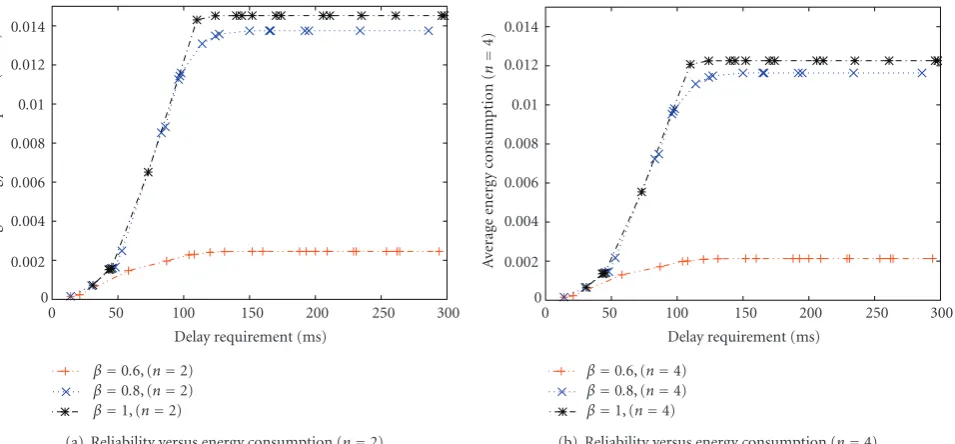
Figure7: The impact of reliability on TE parameters.
random seeds to generate different network configuration
during the 10 runs. Each simulation lasted 900 sec where in the same run the four algorithms are simulated for comparison.
4.1. Experimental Results. The performance parameters
con-sidered in our experiments include the average energy
con-sumption, thepacket delivery ratio, theaverage data delivery delay, the average energy consumption, and the quality of pathsused by the algorithms.
(i)Average Energy Consumption. As a certain number of nodes are selected to transmit results to the gateway, the network might consume energy dif-ferently depending on the network topology and the number of information transmitting nodes. The average energy consumed is an indication of the energy consumption in transmission and reception
of all packets in the network. This metric reveals the
efficiency of an approach with respect to the life time
of a wireless sensor network.
(ii)Packet Delivery Ratio. The packet delivery ratio is one of the most important metrics in real-time applications which indicates the number of packets that could meet the specified QoS level. It is the ratio of successful packet receptions referred to as received packets, to attempted packet transmissions referred to as sent packets.
(iii)Average Data Delivery Delay.The average data
deliv-ery delay is the end-to-end delay experienced by suc-cessfully received packets. In our case, we consider the play-back delay which is expressed by the maximum
time taken by different packets of the same flow
travelling on different parallel paths in a multipath
0
(a) Reliability versus energy consumption (n=2)
0
(b) Reliability versus energy consumption (n=4)
Figure8: The impact of reliability on TE parameters.
(iv)Quality of Paths.The quality of paths used by MCMP and ECMP schemes indicates the path length (num-ber of hops of paths used), path usage (frequency of reuse of the same paths), and path multiplicity (average number of paths used to send data to the base station). The value of these parameters provides an indication on the reliability and stability of the algorithms used.
4.2. Experiment1: Comparing the Four Routing Algorithms.
Using 100nodes with a sensing intensity of 80%, we
con-ducted a first set of experiments to compare the performance of the four algorithms when looking at three performance parameters: average packet delay, packet delivery ratio, and
average energy consumption for both n = 2 and n =
4. The results are depicted by Figure 3. As illustrated by
Figure 3(a), while as expected the shortest path routing (SP) performs better than the other algorithms in terms of average delay, the ECMP algorithm outperforms MCMP on all delay requirements and LDPR under loose delay requirements. We note that the relative performance of the SP algorithm is balanced by its poor performance in terms of average number of undelivered packets revealed by
Figure 3(b). Looking at the packet delivery, we find from
Figure 3(b)that the MCMP algorithm performs better than
the other algorithms since it routes its traffic over more
paths as revealed by the path correspondance between ECMP and MCMP. When compared to the ECMP algorithm, this relative performance is in agreement by the quality of paths
of both algorithms depicted by Figure 6 which reveal that
the MCMP algorithm routes its traffic on more routes than
ECMP.Figure 3(b)reveals that while performing better than
LDPR under stringent delay constraints, ECMP performs worse under loose delay constraints. Shortest path routing
delivers the least packets since it uses only one path to route its traffic.
Figures4(a)and4(b)reveal that ECMP outperforms the
other algorithms in terms of energy consumption except the SP algorithm. This results from its capability to maintain the forwarding links on the least energy transmitting paths by selecting only a small set of closest neighbors to node.
These energy patterns are in agreement with Figure 6
which show the percentage of paths which are identical to both algorithms (Strong correspondence), the number
of paths where both algorithms differ by one hop (weak
correspondence), and the percentage of paths used by ECMP only and those used by MCMP only. This figure reveals that
the MCMP algorithm splits its traffic on more paths than
the ECMP algorithm: while there is only 1.00% of routes used by the ECMP algorithm only, the MCMP algorithm has 16.00% more routes than ECMP. This reveals that, by using smaller path sets, the ECMP algorithm can achieve more energy savings compared to the MCMP scheme.
4.3. Experiment 2: The Quality of Paths. The results in
Figure 5(a) reveal that in general the ECMP scheme uses more longer paths (in terms of number of hops) compared to the MCMP scheme. Thus, the paths used by ECMP scheme are more likely to lead to higher end-to-end delays. However this is balanced by the impact of path multiplicity revealing that the ECMP scheme uses smaller path sets resulting in lower energy consumption. This justifies the results depicted
by theFigure 4on average energy revealing that the ECMP
algorithm performs better than the other algorithms. Finally,
the two schemes use approximately 99.6% single paths, and
when these algorithms start using more than one path, the
results depicted byFigure 5(b)reveal that the ECMP scheme
0
(a) Intensity versus average delay
0
(b) Intensity versus packet delivery
0
(c) Intensity versus flow acceptance
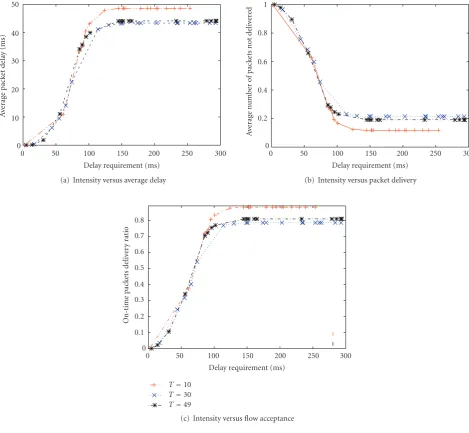
Figure9: The impact of sensing intensity on TE parameters.
the MCMP scheme tends to consume more energy than the ECMP scheme. This is in agreement with the design of
each of these schemes and justifies the results in Figures4(a)
and4(b)concerning the network energy consumption. The
results depicted byFigure 5(c)on the route usage reveal that
the ECMP scheme uses its preferred paths more often than the MCMP scheme. This reveals the stability of the ECMP scheme compared to the MCMP scheme.
4.4. Experiment3: The Impact of Reliability on ECMP. Using
a 50-nodetest network, we conducted another set of
exper-iments to evaluate the impact of the probability of meeting the reliability constraints on the ECMP algorithm. The
results depicted byFigure 7(a) show that the average delay
increases with the probability of meeting the reliability con-straints. This reveals that reliability and delay may become
two competing constraints in a QoS routing model where both constraints are at stake increasing the probability of meeting the reliability constraints worsens the average delay.
Figure 7(b)reveals a different performance pattern where the number of undelivered packets decreases with the increase
of probability β. This is in agreement with the reliability
as defined in this paper since higher reliability is expressed by higher path multiplicity providing the potential to carry
much more traffic. Figure 7(c) follows the same positive
trend as the packet delivery by showing that higher reliability results in a higher ratio of packets delivered on time.
Both Figures8(a)and8(b)reveal the same performance
0
(a) Intensity versus energy consumption (n=2)
0
(b) Intensity versus energy consumption (n=4)
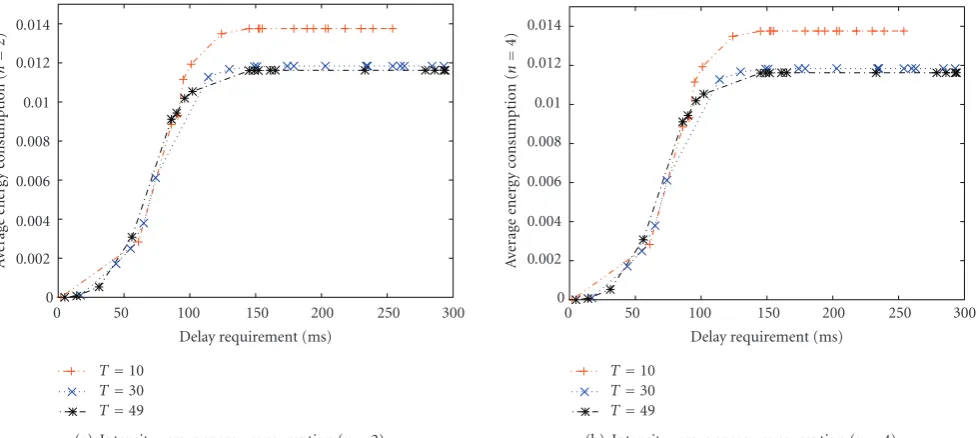
Figure10: The impact of sensing intensity on energy.
4.5. Experiment4: The Impact of Sensing Intensity on ECMP.
We conducted a fourth set of experiments to evaluate the impact of sensing intensity on the performance of the ECMP algorithm. These experiments were conducted using a
50-nodetest node where the number of data generating nodes
(sensing intensity) were varied. The results presented in
Figure 9 reveal that while ECMP performs higher average packet delivery under high sensing intensity as depicted by
Figure 9(a), the performance achieved by ECMP in terms of packet delivery and on-time packet delivery is better under
low sensing intensity. The results presented inFigure 10also
reveal that ECMP achieve lower energy consumption under lower sensing intensity.
5. Conclusion and Future Work
This paper proposed and evaluated the performance of
an energy-aware traffic engineering algorithm for wireless
sensor networks referred to as Energy Constrained Multipath (ECMP). In contrast to a previously proposed benchmark
in [21] referred to as MCMP, the ECMP algorithm selects
its forwarding links based on a location-aware model that uses preferably the closest neighbors to reduce transmission power with the expectation of routing packets on the least energy consuming paths. Using simulation, we evaluated
the efficiency of both algorithms compared to single path
routing and a link disjoint path routing in terms of several
performance parameters. The results revealed the efficiency
of the ECMP algorithm and its relevance as an efficient
algorithm to be used in wireless sensor networking settings. As modelled in this paper, the ECMP algorithm minimizes energy consumption through closest neighbour selection to reduce the transmission power. We also proposed the first steps for the implementation of the model in terms of a simple packet forwarding protocol which is built upon
the breadth-first nature of the ECMP model. It is expected that further energy improvements may be achieved by the ECMP by including into the ECMP picture the remaining energy of receiver in order to energy balance the wireless sensor network. The design and implementation of such an energy balancing algorithm/protocol has been reserved for future research work. As traditionally deployed, sensor nodes are energy- and range-limited devices sharing a single communication channel to achieve energy saving and scalability. Multichannel wireless sensor networks another option that has been recently investigated by researchers such
as in [27]. Multi-path routing in wireless sensor networks
may lead to different issues and provide different results
depending on whether multi-channel or single-channel deployment has been considered. The evaluation of the QoS provided by our model by considering the issue of contention in single channel routing and comparing single-and multi-channel deployments is another avenue for future work.
Acknowledgments
The author would like to acknowledge the help of colleagues of the intelligent systems and advanced telecommunication (ISAT) laboratory of the department of computer science of the University of Cape Town for proofreading and reviewing an initial version of this paper. He is grateful to Muthoni, Ashish, and Pheeha for helping to make this paper more readable.
References
[2] W. Li and C. G. Cassandras, “A minimum-power wireless sensor network self-deployment scheme,” in Proceedings of the IEEE Wireless Communications and Networking Conference
(WCNC ’05), pp. 1897–1902, March 2005.
[3] C. Intanagonwiwat, R. Govindan, and D. Estrin, “Directed diffusion: a scalable and robust communication paradigm for sensor networks,” in Proceedings of the ACM/IEEE Annual International Conference on Mobile Computing and Networking
(MOBICOM ’00), pp. 56–67, Boston, Mass, USA, August 2000.
[4] Y. Xu, J. Heidemann, and D. Estrin, “Geography-informed energy conservation for ad hoc routing,” in Proceedings of the ACM/IEEE Annual International Conference on Mobile
Computing and Networking (MOBICOM ’01), pp. 70–84,
Rome, Italy, July 2001.
[5] I. Stojmenovic and X. Lin, “Power-aware localized routing in wireless networks,” IEEE Transactions on Parallel and
Distributed Systems, vol. 12, no. 11, pp. 1122–1133, 2001.
[6] L. Li and J. Y. Halpern, “Minimum-energy mobile wireless net-works revisited,” inProceedings of the International Conference
on Communications (ICC ’01), vol. 1, pp. 278–283, June 2000.
[7] J. Liu and B. Li, “Distributed topology control in wireless sensor networks with asymmetric links,” inProceedings of the
IEEE Global Telecommunications Conference (Globecom ’03),
vol. 3, pp. 1257–1262, 2003.
[8] P. X. Liu and Y. Liu, “A two-hop energy-efficient mesh protocol for wireless sensor network,”International Journal of
Information Acquisition, vol. 1, no. 3, pp. 237–247, 2004.
[9] S. Dulman, J. Wu, and P. Havinga, “An energy efficient multipath routing algorithm for wireless sensor networks,”
in Proceedings of the IEEE Wireless Communications and
Networking Conference (WCNC ’03), 2003.
[10] R. Shah and J. Rabaey, “Energy aware routing for low energy ad hoc sensor networks,” inProceedings of the IEEE Wireless
Communications and Networking Conference (WCNC ’02), pp.
350–355, Orlando, Fla, USA, March 2002.
[11] D. Ganesan, R. Govindan, S. Shenker, and D. Estrin, “Highly-resilient, energy-efficient multipath routing in wireless sensor networks,”ACM SIGMOBILE Mobile Computing and
Commu-nications Review, vol. 5, no. 4, pp. 11–25, 2001.
[12] C.-C. Sue and R.-J. Chiou, “A hybrid multipath routing in mobile ad hoc networks,” inProceedings of the 12th Pacific Rim International Symposium on Dependable Computing (PRDC ’06), pp. 399–400, December 2006.
[13] S. D. Servetto and G. Barrenechea, “Constrained random walks on random graphs: routing algorithms for large scale wireless sensor networks,” in Proceedings of the 1st ACM International Workshop on Wireless Sensor Networks and
Applications, pp. 12–21, September 2002.
[14] A. Nasipuri and S. Das, “On-demand multipath routing for mobilead hoc networks,” in Proceedings of the International Conference on Computer Communications and Networks (IC3N ’99), Boston, Mass, USA, October 1999.
[15] M. Marina and S. Das, “On-demand multipath distance vector routingin ad hoc networks,” in Proceedings of the
9th International Conference forNetwork Protocols (ICNP ’01),
Riverside, Calif, USA, November 2001.
[16] C. L. Barrett, S. J. Eidenbenz, L. Kroc, M. Marathe, and J. P. Smith, “Parametric probabilistic sensor network routing,” in
Proceedings of the 2nd ACM International Workshop on Wireless
Sensor Networks and Applications (WSNA ’03), pp. 122–131,
San Diego, Calif, USA, September 2003.
[17] J.-H. Chang and L. Tassiulas, “Energy conserving routing in wireless ad-hoc networks,” in Proceedings of the Annual Joint Conference of the IEEE Computer and Communications
Societies (INFOCOM ’00), vol. 1, pp. 22–31, Tel-Aviv, Israel,
March 2000.
[18] S. Mao, S. S. Panwar, and Y. T. Hou, “On optimal traffic parti-tioning for multipath transport,” inProceedings of the Annual Joint Conference of the IEEE Computer and Communications
Societies (INFOCOM ’05), vol. 4, pp. 2325–2336, Miami, Fla,
USA, March 2005.
[19] V. Ponduru, D. Ghosal, and B. Mukherjee, “A distributed coverage-preserving multipath routing protocol in wireless sensor networks,” inProceedings of the IEEE Global
Telecom-munications Conference (Globecom ’04), 2004.
[20] S. Singh, M. Woo, and C. S. Raghavendra, “Power-aware routing inmobile ad hoc networks,” in Proceedings of the 4th Annual ACM/IEEE International Conference on Mobile
Computing and Networking, October 1998.
[21] X. Huang and Y. Fang, “Multiconstrained QoS multipath routing in wireless sensor networks,”ACM Wireless Networks, vol. 14, no. 4, pp. 465–478, 2008.
[22] A. B. Bagula and K. G. Mazandu, “Energy constrained multipath routing in wireless sensor networks,” inProceedings of the 5th International Conference on Ubiquitous Intelligence
and Computing (UIC ’08), vol. 5061 of Lecture Notes in
Computer Science, pp. 453–467, Oslo, Norway, June 2008.
[23] K. S. Trivedi,Probability and Statistics with Reliability, Queuing
and Computer Science Applications, John Wiley & Sons, New
York, NY, USA, 2002.
[24] K. K. Leung, T. E. Klein, C. F. Mooney, and M. Haner, “Methods to improve TCP throughput in wireless networks with high delay variability,” inProceedings of the 60th IEEE
Vehicular Technology Conference (VTC ’04), vol. 4, pp. 3015–
3019, September 2004.
[25] H. A. Taha, Integer Programming: Theory, Applications, and
Computations, Academic Press, New York, NY, USA, 1975.
[26] W. Kocay and D. L. Kreher,Graphs, Algorithms, and Optimiza-tion, Chapman & Hall/CRC, Boca Raton, Fla, USA, 2005. [27] O. D. Incel,Multi-channel wireless sensor networks: protocols,
design and evaluation, Ph.D. thesis, Pervasive Systems Research