Theses and Dissertations
1-1-2013
Non-offending Mothers of Sexually Abused
Children: How They Decide Whom to Believe
Lynn McMillan
University of South Carolina - Columbia
Follow this and additional works at:https://scholarcommons.sc.edu/etd Part of theSocial Work Commons
This Open Access Dissertation is brought to you by Scholar Commons. It has been accepted for inclusion in Theses and Dissertations by an authorized administrator of Scholar Commons. For more information, please [email protected].
Recommended Citation
NON-OFFENDING MOTHERS OF SEXUALLY ABUSED CHILDREN: HOW THEY DECIDE WHOM TO BELIEVE
by
Lynn McMillan
Bachelor of Social Work East Carolina University, 1979
Master of Social Work University of South Carolina, 1986
__________________________________
Submitted in Partial Fulfillment of the Requirements
For the Degree of Doctor of Philosophy in
Social Work
College of Social Work
University of South Carolina
2013
Accepted by:
Arlene Bowers Andrews, Major Professor
Erica Gibson, Committee Member
Rita Rhodes, Committee Member
Terry Wolfer, Committee Member
D
EDICATIONTo my son, Andrew John Thacker. You are my sunshine and my joy every day.
To my mother, Hilda N. McMillan, and in memory of my father, John C. McMillan.
Your constant love is my strength. Thank you for always believing in me.
To my husband, Marc S. Finley. Thank you for supporting this late-in-life journey and
A
CKNOWLEDGEMENTSI am thankful for the 20 women who told me their stories and helped me understand their
lives.
I am thankful for my Committee, especially my Chair, Dr. Andrews. You have been my
inspiration, guide, and mentor throughout this journey. Thank you for your wisdom,
insight, and support on all matters pertaining to the safety and well-being of all our
children. To Dr. Wolfer, thank you for wading with me through my early writings and
shedding light on what was important to understand for this study, even before I could
articulate it. To Dr. Gibson and Dr. Rhodes, I appreciate your continuous support,
perspective, and good humor.
I am thankful for my brother, Brian, who knew just when to inject this serious endeavor
with his unique sense of humor.
I am thankful for my friends and colleagues who have been steadfast in their love and
support. Thank you for listening and listening and listening.
A special thanks to all the Children’s Advocacy Centers and their many community
partners who are dedicated to child abuse response and prevention. And another special
A
BSTRACTProfessionals continue to study and refine their understanding of the complex
dynamics of child sexual abuse and the role of the non-offending mothers. Of particular
clinical and research interest is the response of the mother once she learns that her child
disclosed being sexually abused and named the mother’s intimate partner as the
perpetrator. This qualitative study (n=20) uses in-depth interviews and constructivist
grounded theory methods. The focus is how women decide about believing their
children’s disclosures of sexual abuse, both in terms of what happened to the children and
who perpetrated the abuse. The study addresses various factors that 1) contribute to a
mother’s belief, b) create barriers to her ability or willingness to believe, and c)
contribute to any uncertainty or fluctuation in her belief. Findings highlight that in the
context of unresolved trauma histories themselves, the women are unable to accurately
discern risks in intimate relationships which then impose risks for their children. Their
beliefs in their children’s disclosures are inextricably associated with acceptance of the
need to sever their relationships with the accused.
T
ABLEO
FC
ONTENTSDEDICATION ... iii
ACKNOWLEDGEMENTS ... iv
ABSTRACT ...v
LIST OF TABLES ... vi
CHAPTER 1 INTRODUCTION ...1
CHAPTER 2 LITERATURE REVIEW ...5
CHAPTER 3 METHODOLOGY ...33
CHAPTER 4 FINDINGS: MOTHER’S BACKGROUND AND CONTEXT OF DISCLOSURE ...68
CHAPTER 5 FINDINGS: MOTHER’S RESPONSE ...106
CHAPTER 6 DISCUSSION, IMPLICATIONS, STRENGTHS, AND LIMITATIONS ...143
REFERENCES ...164
APPENDIX A—MOTHERS OF SEXUALLY ABUSED CHILDREN ...177
APPENDIX B—PRELIMINARY INTERVIEW GUIDE ...179
APPENDIX C—INTERVIEW GUIDE ...182
APPENDIX D—STUDY INTAKE FORM ...187
APPENDIX E—INFORMED CONSENT FOR MOTHER INTERVIEW ...189
APPENDIX F—AGREEMENT ASSESSMENT AND RESOURCE CENTER ...192
APPENDIX I—SAMPLE MEMO TO AGENCY DIRECTOR ...196
APPENDIX J—INTERVIEW QUESTIONS ...198
APPENDIX K—DESCRIPTION OF PARTICIPANTS...203
APPENDIX L—INTERVIEW QUESTIONS TO CONFIRM/DISCONFIRM
THEORY ...214
L
ISTO
FT
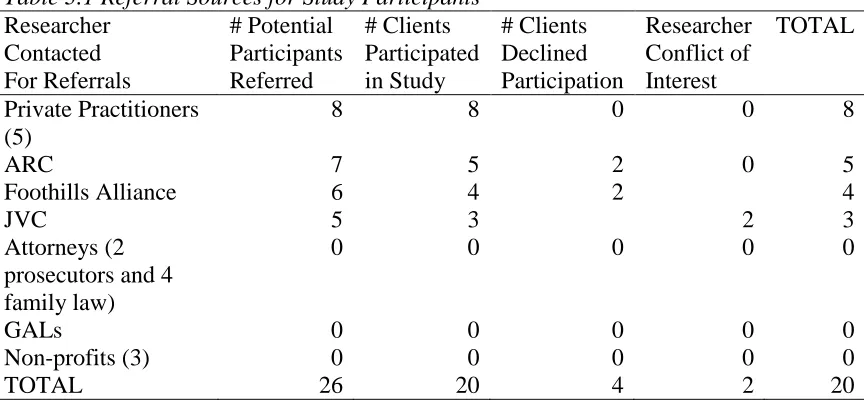
ABLESTable 3.1 Referral Sources for Study Participants ...41
L
ISTO
FF
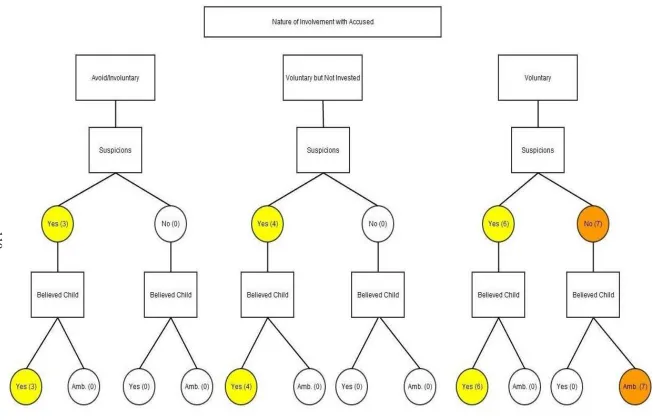
IGURESFigure 5.1 Pattern of Believing in Relation to Suspicions and Nature of Involvement with Accused ...119
CHAPTER 1
INTRODUCTION
Professionals continue to study and refine their understanding of the complex
dynamics of child sexual abuse and the role of non-offending mothers, from the point at
which the mother first learns about the abuse, during the investigation, and throughout
the child’s abuse recovery process. Of particular clinical and research interest is the
response of the mother once she learns that her child has disclosed being sexually abused
and names a perpetrator. Maternal responses vary, though researchers and practitioners
have been particularly concerned with these elements of the response: believing the
allegation, providing emotional support to the child, and protecting the child from the
alleged offender (Alaggia, 2002; Cyr, 2003; Everson, Hunter, Runyon, Edelsohn, &
Coulter, 1989). Attempts to isolate the variables related to maternal response have
yielded inconsistent research findings, likely related to methodological differences (e.g.
sampling, measures) and the complexities of human experiences. For instance, it seems
clinically and intuitively correct to consider that a maternal history of child abuse, mental
illness or substance abuse may affect maternal response although findings across studies
are inconsistent (Elliot & Carnes, 2001).
So we are left to wonder, in general, what factors are associated with maternal
response and, more specifically, does one factor associated with maternal response (i.e.
believe, support, protect) matter more than another in ensuring child safety and
protective services (Coohey & O’Leary, 2008) indicate that mothers who consistently
believe that the abuse occurred and attribute responsibility for the abuse to the perpetrator
are the mothers who consistently protect their children. The concept of consistency
suggests that mothers believe and protect over time rather than at one particular point in
time (e.g., time of investigation). Since consistent belief precedes consistent protection,
the core element of maternal response may lie within the mother’s belief about her child’s
disclosure of sexual abuse and who her child identifies as the perpetrator.
Moving beyond maternal, victim, perpetrator, or abuse characteristics as distinct
variables, researchers are attempting a deeper and richer approach that a) considers the
context within which the abuse occurs (Cyr, Wright, Toupin, Oxman-Martinez, McDuff,
& Theriault, 2003) , b) follows participants over time (Kim, Noll, Putnam, & Trickett,
2007), c)accounts for additional victimizations (Finkelhor, Ormrod, & Turner, 2007), and
d) highlights intergenerational risk and protective factors (Kim et al., 2007; Leifer,
Kilbane, Jacobsen & Grossman, 2004) and the commonality of violence across
generations (Bowen, 2000; Hamby, Finkelhor, Turner, & Ormrod, 2010; Kellogg &
Menard, 2003).
The research methods of qualitative inquiry are consistent with the values and
principles of social work practice that honor the voice and experience of each individual.
Findings from more recent qualitative studies contribute to the unbundling of the lives of
mothers whose children have been sexually abused (Alexander, 2009; Alaggia, 2004,
2002; McCallum, 2001) so that researchers, practitioners, and the mothers, themselves,
can appreciate the very complex lives they lead. Schon (as cited in Darlington & Scott,
high ground of technicality (e.g., quantitative research and evidence-based practice) or
the swampy lowlands (e.g., qualitative research) of messy situations that defy technical
solutions and yet are most important to our clients. The swampy lowlands seem a fertile
base to expand our knowledge and develop solutions.
As the literature reflects our increased interest in and understanding of the
intricacies of these categories of maternal response, general comments about believing,
supporting, and protecting are no longer adequate to describe the cognitive, emotional,
and behavioral processes of any particular mother as she strives to make sense of what
she is learning: that her child has been sexually abused. Crittenden (2008) suggests that
we need a new way to organize our thinking about parents whose psychological
dysfunction endangers their children and that this is necessary in order to accurately
assess the parents and then select a viable treatment modality. Crittenden calls for a new
theory of treatment because theories that underlie most current treatment modalities seem
insufficient to her in explaining the effects of psychological dysfunction on parenting. I
hope this study contributes to a new way of thinking based on what these mothers taught
me.
The focus of this study is how the non-offending mothers of sexually abused
children decide about believing their children’s disclosures, including both what
happened to them and who perpetrated the abuse. The study addresses various factors that
a) contribute to a mother’s belief, b) create barriers to a mother’s ability or willingness to
believe, and c) contribute to a mother’s change in her belief. The study is an exploratory,
qualitative study using constructivist grounded theory methods. A pilot study was
I believe social workers offer a unique perspective to the development of
comprehensive, holistic system responses to children’s disclosures of sexual abuse,
including prevention and intervention with family systems that either provide a safe
haven from abuse or contribute to further risk. Findings from the proposed study will
inform our understanding of non-offending mothers by further refining the dimensions of
maternal response and the psychological, social, and/or systemic (e.g., child welfare, law
enforcement, legal) barriers that interfere with mothers fully believing, protecting, and
supporting their children. The significance for social work practice is the increased
knowledge about the experiences of non-offending mothers to shape a more empathic
alliance between social worker and mother as a foundation for risk assessment, advocacy
for resources, and collaborative relationships within the larger system of response. When
incorporated into social work curriculum, both coursework and field practicum, social
workers will begin their careers with a stronger theoretical and practical base for
engaging mothers and their children involved in the child welfare and legal systems
CHAPTER 2
LITERATURE REVIEW
Background
In most families, mothers remain the primary caretakers of their children under
the age of 18 years old and thus are uniquely positioned to be the primary protectors of
their children. Turner, Finkelhor, and Ormrod (2007) suggest that children are the safest
when they live with both of their biological parents and those parents are married to each
other. Conversely, they note that children are most at risk for maltreatment when they
live without one or both of their biological parents and are at specifically increased risk
of sexual abuse when there is the presence of a stepfather in the home.
Child sexual abuse data is gathered from various national sources although no one
source offers a complete picture of the prevalence of sexual abuse. Crime (FBI Uniform
Crime Reports, National Criminal Victimization Survey) and child maltreatment
(National Child Abuse and Neglect Data System) data reflect only cases that are reported
to authorities. Community population surveys with nationally representative samples
offer useful insight related to prevalence as well as characteristics of sexual abuse
experiences. Two such studies are the National Women’s Study (NWS; survey of adult
women only) (Saunders et al, 1999) and the National Violence Against Women Survey
(NVAWS; survey of adult women and adult men) (Tjaden & Thoennes, 2000). Findings
from these studies indicate that most victims of child sexual abuse are females, most
acquaintance, family member, or mother’s current or former intimate partner. It is
uncommon (11-14%) that perpetrators are complete strangers.
The experience of child sexual abuse is associated with other types of childhood
victimizations as well as future victimization. If they experienced familial sexual abuse as
a child, females are twice as likely to experience subsequent victimization in childhood,
adulthood, or both (Barnes, Noll, Putnam, & Trickett, 2009; Tjaden & Thoennes, 2000).
Child sexual abuse may be imbedded within a broader range of trauma experiences and
accumulated lifetime trauma experiences negatively affect psychological and social
functioning (Banyard, Williams, & Siegel, 2001; Turner & Lloyd, 1995). Finkelhor’s
study (2007) of a nationally representative sample of juveniles, ages 2-17, assessed the
role of “poly-victimization” to explain trauma symptomatology. Poly-victims are children
who report four or more victimization experiences within one year (e.g., sexual or
physical victimization, bullying, other maltreatment, witness victimization of others or
other criminal activity, exposure to domestic violence). Significant findings from this
study include: 1) most victims of child rape (92%) are victims; and 2)
poly-victimization is highly predictive of traumatic symptoms, more so than any single
victimization, even with repeated incidents of one kind of victimization (e.g., sexual
abuse). Other family violence is also associated with child sexual abuse victimization.
Violence and trauma seem concentrated in a subset of child victims. In a nationally
representative study, 70% of youth who reported sexual abuse by a known adult also
reported witnessing violence between a parent or caregiver and another adult (Hamby,
Disclosure of Sexual Abuse
Based primarily on surveys of representative groups of adults, researchers and
professionals commonly agree that most sexually abused children do not tell anyone
about their own abuse as children, although they may eventually tell about it as adults
(Finkelhor, 1994, 1990; Saunders et al., 1999; Smith, Letourneau, Saunders, Kilpatrick,
Resnick, & Best, 2000; Tjaden & Thoennes, 2000). Some victims never tell anyone.
Telling about the abuse, referred to as disclosure, is the critical first step in alerting
someone about the child’s experience so that safety and protection measures are initiated
to stop the abuse and potentially stop poly-victimization. There may be multiple points of
disclosure (to a friend, adult, authority figure, investigative authorities) so that use of the
term requires clarification between mere disclosure versus disclosure that launches an
investigation. Studies may not make that distinction and, depending on the study, the
distinction may or may not be significant (Alaggia, 2004). Disclosure of sexual abuse by
children, then, is considered a process whereby children share their abuse experience over
time, typically beginning tentatively (e.g., sharing a portion of information to gauge a
response) or even accidently (e.g., excited utterance, medical exam, sexualized
play/behaviors) and may even deny the abuse when initially asked (Sorenson & Snow,
1991; Summit, 1983). Of those who disclose, there is often a delay in disclosing (London,
Bruck, Ceci, & Shuman, 2005; Sorenson & Snow, 1991) and delays are longer when
relationships between child and perpetrator are closer (London, Bruck, Wright, & Ceci,
2008). Adult survivors of childhood sexual abuse offer unique insight into factors that
either inhibit or promote a child’s ability to disclose, as seen in the results of Alaggia’s
findings support previously established categories of disclosure (purposeful, accidental,
elicited/prompted) and identify emergent categories that expand the framework for
understanding the disclosure process. Emergent categories include: behavioral (attempts
to tell non-verbally through behavior or indirect verbal hints); purposely withheld
(despite opportunity to tell, child does not and may falsely deny); and triggered
(disclosure precipitated by forgotten or recovered memory). These sometimes gradual
attempts to disclose are likely affected by the initial response of the person to whom the
child discloses. Thus, maternal response may be critical for the child to reveal enough
information to initiate protection and healing. Even with denials and recantations, most
children who begin the disclosure process eventually progress to a point of active
disclosure, providing a detailed account of their abuse experience (Alaggia, 2004;
Sorenson & Snow, 1991).
System Response
While various community organizations comprise an overall child protection
system, the local child welfare agency is generally considered the center point of that
system for investigation of alleged child abuse and protection of child victims. Law
enforcement agencies investigate allegations of abuse and neglect that meet identified
criteria suggesting that the abuse rises to the level of criminal activity. Criminal
prosecution may result. Numerous other professionals are also involved in reporting and
investigating child abuse and neglect, including medical providers (e.g., physicians,
nurses, allied health); mental health clinicians; legal representatives (e.g., child protective
educators (e.g., teachers, principals, guidance counselors). Still other professionals
provide physical and mental health intervention services to children and families.
Child Welfare System
The passage of the Child Abuse and Prevention Act of 1974 established the federal
government as a leader for setting minimum definitions for child maltreatment and
authorizing federal funding to states to improve their reporting, investigation, and
intervention systems. Today, all states have both civil and criminal statutes specific to
child maltreatment. Specific to child sexual abuse, child protective services (CPS)
becomes involved when the alleged perpetrator is a biological parent or someone acting
in a parental/caretaker role, which excludes juvenile and extra-familial perpetrators (e.g.,
mother’s boyfriend who resides elsewhere).
CPS also investigates when the non-offending parent, usually the mother (90.9%
of non-offending caregivers are the biological mothers; Malloy, Lyon, & Quas, 2005),
allegedly fails to protect the child from sexual abuse, in that she knew of the abuse and
allowed continued contact between the child and the perpetrator. As part of the CPS
assessment, the mother’s efforts to keep the child safe from the alleged perpetrator, as
well as her readiness to believe the abuse and support to the child, are crucial to initial
and subsequent decisions whether to remove the children from the home. Maternal
non-support, ambivalence, and partial support are indicators for removal (Everson et al., 1989;
Malloy et al., 2005), suggesting to CPS the potential inability or unwillingness to protect.
Even mothers who protect may experience the removal of their child from their home
(Leifer, Shapiro, & Kassem, 1993; Runyon, Hunter, & Everson, 1992). In a
results show that the likelihood of CPS case substantiation was increased when mothers
did not consistently act protectively, did not consistently believe that abuse occurred,
wavered in her belief, and had a problem with either substance abuse, mental health, or
victimization from domestic violence (Coohey, 2006).
When CPS determines that the mother, indeed, knew about the abuse and did not
take protective action on behalf of her child (e.g., make perpetrator leave the home, stop
all contact between child and perpetrator, cooperate with investigation), CPS may
substantiate their case against the mother for failure to protect. The failure to protect, an
act of omission, is then interpreted by CPS as neglectful behavior on the mother’s part,
which is an act of commission. When the mother is identified as being neglectful because
of her failure to protect, she is then considered an offender, or co-offender (along with
perpetrator), in terms of possible court outcomes. This obviously skews CPS data in
terms of numbers of female perpetrators and is inconsistent with outcomes from national
prevalence studies and criminal prosecutions about who actually commits direct acts of
sexual abuse. Bolen (2003) suggests that this over-identification of mothers as
perpetrators of sexual abuse may be institutionalized sexism and urges a paradigm shift
within CPS toward a more humanistic approach. Some may see the mother’s failure to
protect as alliance with the perpetrator and, indeed, that may be so. There may be
alternative explanations for the mother’s failure to protect. One explanation may be that
she only suspected abuse but did not have confirmation. Another explanation may be that
her efforts to protect her child were insufficient or the perpetrator successfully outwitted
Demands on the CPS system (e.g., high caseloads, poorly trained workers,
decreased funding for services and personnel, conflicting political agendas) can interfere
with agency decisions that are in the best interests of children and families in terms of
placements, intervention, and reunification (Mennen & O’Keefe, 2004) as well as
alienate non-offending mothers who are already experiencing fear, isolation, and
estrangement from their partners and families (McCallum, 2001). Little or no resources
are available to support the mother as she copes with the overwhelming realization about
harm to her child and behavior of the accused offender with whom she has had an
intimate relationship.
Law Enforcement and Criminal Prosecution
Law enforcement investigates allegations of child sexual abuse regardless of the
child’s relationship to the alleged perpetrator. Investigations, then, include both
intra-familial and extra-intra-familial perpetrators (e.g., perpetrators who are strangers to the
victims, juvenile perpetrators). As such, more child sexual abuse cases are represented
within the criminal justice system (broader scope of perpetrators) than the child welfare
system alone (limited to intra-familial perpetrators). Sometimes cases are represented in
both systems. In South Carolina, for instance, CPS is statutorily required to notify law
enforcement within 24 hours of all reported cases of child sexual abuse.
Finkelhor’s (1984) early review of the scope and nature of child sexual abuse
finds that the criminal justice system prosecutes proportionately fewer cases of child
sexual abuse compared to other violent crimes, but, of those prosecuted, convicts at a
high rate. A later meta-analysis of 24 studies of child abuse prosecutions (Cross, Walsh,
somewhat less likely be prosecuted, compared to other felonies, but more likely to
proceed without dismissal once accepted for prosecution (charged or indicted). Further
findings from the meta-analysis indicate that while overall conviction rates for child
abuse cases (94%) and guilty pleas (82% of convictions are through plea negotiations, as
opposed to trials) are almost identical to other felonies, convicted perpetrators of child
abuse are sentenced to less time in prison, compared to other felonies.
Once abuse is reported to investigative authorities, those professionals rely
primarily on the statements of the child in order to make a decision about the initial
truthfulness of the allegation. The child’s statements are of such significance because
actual physical findings are rare, even when there is penetration of the child’s genitalia
(American Academy of Pediatrics, 2006; De Jong & Rose, 1991) and rarely are there any
witnesses to the abuse. To proceed with any investigation, authorities require minimal
facts about the abuse, which are likely contained within the child’s statements: who
perpetrated the abuse; what the perpetrator did; where the abuse occurred.
False Allegations
Among professionals, as well as the general public, concern remains about the
possibility of intentionally false allegations despite consistent empirical literature
supporting that false allegations of sexual abuse are uncommon (Everson & Boat, 1989;
Mikkelsen, Gutheil, & Emens, 1992; Oates, Jones, Denson, Sirotnak, Gary, & Krugman,
2000). Deliberate false allegations directly from the child usually involve a teenage
victim, but still remain low, ranging from two to four percent (Jones & McGraw, 1987;
Faller & Devoe, 1995). Allegations of sexual abuse that arise during divorce and child
Beliefs about rates of false allegations vary by professional groups, with judges and law
enforcement officials more likely to believe children are lying and mental health and
child protection workers more likely to believe they are truthful. All groups report that
adolescent females are the least likely to be believed (Everson, Boat, Bourg, &
Robertson, 1996). Any lying about sexual abuse by children, however, is most often seen
in the form of “intentional omission of their victimization” (Veith, 2009, p.2), including
denial and minimization (Lawson & Chaffin, 1992; Sjoberg & Lindblad, 2002). Such
omission of their victimization (“false negative”) may also be the result of dissociative
symptoms present when interviewed (Chaffin, Lawson, Selby, & Wherry, 1997).
Recantation
Recantation refers to children denying the very abuse they previously disclosed.
Although rates of recantation vary across studies, even as low as 4% in a CPS sample
(Bradley & Wood, 1996), it is commonly understood that recantation does occur during
the disclosure process and most children who recant will eventually reaffirm their initial
disclosure (Sorenson & Snow, 1991). Early research suggests that familial factors
influence a child’s willingness to disclose (Cross, Martell, McDonald, & Ahl, 1999).
Beyond the disclosure, later research suggests that familial factors also influence children
to recant (Bradley & Wood, 1996; Lovett, 2004; Malloy, Lyon, & Quas, 2007). Malloy,
Lyon, and Lovett (2007) reviewed case files for sexual abuse cases that were
substantiated by CPS, resulting in a dependency court filing, and found a recantation rate
of less than 50%. The authors note children’s vulnerability to family influences that
predict the likelihood of recantation and specifically identify three familial factors:
biological parent, stepparent parent, or intimate partner of non-offending caregiver) and
children whose non-offending caregiver is unsupportive. They defined this as
documentation in at least one of the following areas: “initial disbelief or skepticism about
the allegations, verbal pressure on child to recant, blame placed on child, still in
relationship with alleged perpetrator post-disclosure, or behaved in an unsupportive
manner” (Malloy et al., 2007, p. 164). Their alternative hypothesis, that the recantations
may have been the result of including cases of false allegations, was not supported.
Maternal Response
Professionals continue to study and refine their understanding of the complex
dynamics of child sexual abuse and how mothers respond to the disclosure. This maternal
response is categorized as varying levels of maternal support, defined as believing the
allegation, providing emotional support, and protecting the child from the alleged
offender (Alaggia, 2002; Cyr, Wright, Toupin, Oxman-Martinez, McDuff, &Theriault,
2003; Everson, Hunter, Runyon, Edelsohn & Coulter, 1989).
Most non-offending mothers do believe at least some part of the allegation, while
some do not believe any of it (Cyr et al., 2003; Elliott & Carnes, 2001). In their review
of the literature related to reactions of non-offending parents to their child’s disclosure of
sexual abuse, Elliott and Carnes (2001) recognize that “belief, support, and protection are
overlapping constructs that are difficult to separate” (p. 315) and sometimes to define.
Their findings indicate that overall, 52% of the mothers did protect. More specifically,
41% both believed the allegation and protected their children, 27.3% were ambivalent
further indicate that levels of belief, support, and protection may vary over time and
situations.
When mothers are ambivalent about the allegations, they hold allegiance to both
the child and the offender (Bolen & Lamb, 2004, 2007). Law enforcement and child
protection workers often rely on the initial response of the mother to make immediate
intervention decisions, such as allowing the child to remain with the mother or
determining an alternative placement. Investigative authorities may interpret an
ambivalent response as non-believing and make assumptions that the mother cannot be
counted on to protect. Actual out-of-home placement rates for sexually abused children
vary considerably (17% to 73%) likely related, in part, to differences in state mandates
and local policies and procedures about foster care and kinship placements (Cross,
Martell, McDonald, & Ahl, 1999) although children are more likely to be removed from
their homes when child protective services personnel perceive a low level of maternal
support for the child (Everson, Hunter, Runyon, Edelsohn, & Coulter, 1999).
Any meaningful discussion about maternal response to child sexual abuse requires
consensus on the definitions of the components: believe; support; protect. Results from
cross-sectional studies that rely on a point-in-time response may offer a range of
responses in an attempt to measure maternal response (Everson et al., 1999; Plummer,
2006). One such study developed the Parental Reaction to Incest Scale (PRIDS) which
adds clinical ratings in three areas (emotional support, belief of child, and action toward
perpetrator) that together measure maternal support within a range of most supportive to
least supportive (Everson et al., 1999). Plummer (2006) used a 6-point Likert scale to
“completely certain” (p. 1233). Such measures about certainty fail to capture any reasons
for the mother’s degree of certainty.
Other studies may use a Likert-type scale (Plummer, 2006) to measure various
aspects of maternal response, including a middle-ground of response that can be
interpreted as ambivalence (Bolen & Lamb, 2007). Use of scales and ranges suggests that
mothers may fluctuate in their reactions to learning about their child’s abuse, both in the
beginning and over time. Considering such fluctuations in maternal response over time,
other studies focused on the mother-child relationship from the point of disclosure
forward. Their findings indicate the mother-child relationship is strengthened when the
mother shifts to a position of increased belief in what the child disclosed, takes
demonstrable action to secure continued protection of the child, and appropriately
attributes blame to the perpetrator (Alaggia, 2002; Coohey & O’Leary, 2008; Malloy &
Lyon, 2006).
Alaggia (2002) notes inconsistency in the literature related to which components
of maternal response (belief, support, protect) are studied, how each component is
measured, and at what point in time(s) it is measured. Her grounded theory study of 24
mothers whose children disclosed sexual abuse by the mother’s intimate partner sought to
identify factors contributing to maternal response and further define aspects of more
supportive or less supportive responses. Broad areas were probed, including details of the
child’s disclosure, mother’s relationship with both child and perpetrator, mother’s own
family history, and elements of culture and religion, social supports, and self-image.
Alaggia reconceptualizes maternal response as belief, affective support, and behavioral
the allegations contributes to both her affective and behavioral support. Alaggia defines
the dimensions of each category (p.46-48), as follows:
Belief
mother’s unconditional belief of the child’s report
mother questions veracity of the child’s report (overt or covert)
mother questions identity of perpetrator
mother relies on physical evidence to believe the child’s report fully
mother questions some aspects of the child’s report
mother does not believe the child initially
mother does not believe child over time
Affective Support
mother acknowledges seriousness of abuse and psychological distress of
the child
mother seeks and supports post-disclosure treatment for child and family
problems when indicated
mother minimizes seriousness of abuse and dismisses the child’s
psychological distress
mother assigns a measure of blame to child for the abuse
mother exhibits anger at the child for disclosing or delaying disclosure
mother displays rejection of the child
Behavioral Support
mother takes action to protect the child from re-abuse by the alleged
perpetrator
mother insists perpetrator leave the family but mother maintains contact
with him
mother permits perpetrator to have access to the child, therefore child
remains at risk
Each category indicates a continuum of response such that a shift in level of
maternal belief may alter affective and/or behavioral response. Alaggia recommends a
framework for assessing mothers related to level of support not only at the time of the
disclosure, but over a period of time post-disclosure so that safety and treatment
interventions may be adjusted accordingly.
Predictors of Maternal Support
Elliott and Carnes (2001) conducted an extensive review of the literature related
to reactions of non-offending parents to the sexual abuse of their child and observed that
“research concerning variables that affect parental levels of belief, support, and
protection following a child’s disclosure of sexual abuse is still in its infancy” (p. 319),
even then. Specific to predictors of belief, support, and protection, four variables
consistently received empirical examination: mother’s relationship to the perpetrator;
mother’s own history of childhood abuse; child victim’s age; and child victim’s gender.
Findings across studies were inconsistent and sometimes contradictory, except for
maternal history of childhood abuse which was consistently found to be unrelated to
maternal support. Maternal substance abuse and social isolation were important
the four variables as well as examination of other variables, such as whether perpetrator
admitted guilt, elements of the disclosure (e.g., who child told, mother’s prior knowledge
or suspicion, severity of abuse, attachment relationships).
Cyr et al. (2003) organized Elliott and Carnes’ recommendations into four
categories of predictors: maternal characteristics; victim characteristics; abuse
characteristics; and disclosure characteristics. Their study of 120 adolescents (aged 12 to
17 years) and their mothers, recruited from CPS, yielded findings that suggest the
characteristics of the abuse itself is less of an influence on maternal support than
characteristics of the mother, victim, and disclosure. As identified by both mothers and
adolescents, the variables with the greatest influence on maternal support included who
the adolescent first disclosed to, whether the perpetrator admitted guilt, and whether the
mother was living with the perpetrator at the time of the disclosure.
Efforts to identify characteristics of non-offending mothers and other predictors of
maternal support have mostly yielded inconsistent findings (Bolen, 2002; Bolen & Lamb,
2004, 2007; Cyr et al., 2003; Elliott & Carnes, 2001; Kim, Noll, Putnam, & Trickett,
2007; Malloy & Lyon, 2006; Plummer, 2006). Much of the inconsistency may be related
to methodological differences, such as: relying on clinical samples where substantiation
of the abuse may be unknown (Plummer, 2006); retrospective studies of adults that rely
on memory event accuracy; absence of comparison or control groups; focus on a specific
child victim age group (Cyr et al., 2003); and participant samples from child protective
services only, which excludes maternal intimate partners who do not reside in the home,
often categorized as extra-familial. Other inconsistencies evolve from varying definitions
support in terms of belief, support, and protection but did not distinguish overall support
from a specific supportive response. Other authors focused more narrowly on belief
(Sirles & Franke, 1989), protectiveness (Heriot, 1996), and protection and emotional
support (Faller, 1988). Maternal response may fluctuate over time so whether measures
of maternal support were taken at one or more points in time may also influence findings.
Examples include measures of support at the time of the allegation only (Faller, 1988),
both immediately and at two months post-disclosure (Everson et al., 1989), at the
beginning and the end of a child protective services investigation (Coohey & O’Leary,
2008), multiple measurements up to 467 days post-disclosure (Heriot, 1996), or
prospective studies that followed sexually abused girls and their mothers through
adolescence (Kim et al., 2007).
Domestic Violence
The common ground between domestic violence and other forms of violence,
including youth violence and child maltreatment, are well documented in terms of risk
and protective factors (personal, socioeconomic, environmental (Daro, Edleson, &
Pinderhughes, 2004). The co-occurrence of domestic violence and other childhood
victimizations is also well documented in the literature (Bowen, 2000; Hamby, Finkelhor,
Turner, & Ormrod, 2010; Kellogg & Menard, 2003). Specific to child sexual abuse,
findings from Bowen’s study (2000) of families seen in a child sexual abuse clinic
(n=402) indicate that domestic violence occurred in over half (54%) of the children’s
homes and mothers reported their own histories of physical abuse (28%) and sexual
abuse (42%). Kellogg and Menard (2003) also interviewed families seen in a child sexual
disclose sexual abuse are more likely (80%) than not to live in homes with adult or child
violence and that child sexual abuse is concurrent (77%) with family violence when the
sex offender is also the offender of the violence. Alaggia and Turton (2005) departed
from mere acknowledgment of the co-occurrence of woman abuse in families
experiencing child sexual abuse to explore the impact of woman abuse specifically on
maternal response to their child’s disclosure of sexual abuse. The findings from this
secondary data analysis of two qualitative studies indicate that mothers who were
physically abused by their partners acted more supportively and less ambivalently toward
their children’s disclosures than did mothers who were verbally or emotionally abused
only.
Intergenerational Transmission of Risk
Multigenerational studies offer rich insight into factors that distinguish families of
sexually abused children from families who do not experience child sexual abuse,
particularly in terms of what a mother brings forward from her own childhood
experiences that may affect her ability to adequately assess potential threats to her own or
her children’s safety and so impede a safe and appropriate response. Kim et al. (2007)
examined the psychosocial characteristics of the non-offending mothers of sexually
abused girls aged 6-16, as compared to mothers of girls who were not sexually abused.
Findings indicate significant differences in the two groups of mothers in that more
non-offending mothers of sexually abused girls: reported their own emotional and/or sexual
abuse (45%) and identified the perpetrator of their abuse as their father or a father figure
(41%; only 15% were non-family members); reported more separation from their own
enjoying their child and their parental role; scored higher on depression and anxiety
scales; and reported family relationships that were more conflictual and with higher
family stress. Leifer, Kilbane, Jacobsen, and Grossman (2004) conducted a
three-generational study to investigate histories of attachment relationships and abuse
experiences to determine any differences in families of sexually abused children that
imply transmission of risk for sexual abuse. Their findings support three predictors of
child sexual abuse and are specific to a child’s mother: maternal problems in adult
functioning; negative relationship between mother and grandmother; and a disrupted
pattern of caregiving in mother’s childhood. These mothers of sexually abused children
reported more severe histories of their own abuse and neglect, more serious problems in
their childhood family, and less positive relationships with their own mothers. As adults,
these mothers reported more problems in their adult intimate relationships, had more
children by multiple fathers, more domestic violence, and more substance abuse. Using a
lens of attachment relations for both the mother and the grandmother, their findings
support the role of disrupted or conflicted attachment in transmission of sexual abuse
risk.
A closer look at domestic violence in terms of multiple abusive adult partners,
Alexander’s study (2009) of 92 battered women compared their childhood trauma
histories (physical abuse by either or both parents, sexual abuse, witnessing intimate
partner violence), affect dysregulation (dissociation or borderline personality disorder
traits), and attachment characteristics. In this study, 56% (52) of the women reported
multiple abusive partners in adulthood and of those 52 women, 77% also reported
Interestingly, the one woman who did not report any form of childhood trauma did report
having an alcoholic mother, suggesting childhood dynamics of neglect, which were not
measured in this particular study. Findings suggest that women who experience abuse by
multiple adult partners were significantly more likely to have been sexually abused or
witnessed violence in childhood and experienced parent-child role reversal, suggestive of
unresolved attachment. This role reversal may be in the form of a parent who excessively
elicits attention and care from the child (Alexander, 2009) or a child who seeks to protect
the mother, who is the victim of the violence and unable to protect herself (Leiberman,
Zeanah, & McIntosh, 2011).
Self-efficacy
The mother’s attachment relations and childhood experiences, then, may
influence how she perceives her own ability to care for her child, manage her own and
her child’s environment, and appropriately respond to threatening cues, problems,
stressors, or opportunities, as they arise. Findings from a study of 76 at-risk mothers to
determine whether childhood maltreatment, adult attachment relations, and depression
would predict parental self-efficacy (Caldwell, Shaver, Li, & Minzenberg, 2011) suggest
that childhood maltreatment, adult attachment insecurities, and maternal depression affect
parenting behavior, in part through their deleterious effects on parental self-efficacy.
Perceptions of one’s own ability are developed in childhood. In a review of attachment
theory related to its use and misuse in clinical practice, Allen (2011) focused on
school-age children who still require the availability of their caregiver although no longer the
secure attachments demonstrate more effective social skills, increased self-esteem, and
increased self-efficacy as compared to children with insecure attachments.
Discovery Process
Just as a child’s disclosure of sexual abuse is a process that may include
ambivalence, as evidenced by denial, delayed disclosure, and even recantation at some
point, it seems reasonable to consider that a mother’s discovery of the abuse is also a
process that may include ambivalence, as evidenced by denial, delayed protective action,
and even continued contact with the perpetrator, either by her own volition or because of
pressure from him or others. Recognizing that her discovery of the abuse is a process, it is
reasonable to consider that her initial response is not an enduring one so may change over
time (Alaggia, 2002; Malloy & Lyon, 2006). The process of discovery of sexual abuse
begins with how the non-offending mother first learns about the abuse and what sources
of information increase or decrease her certainty that the abuse occurred. Most mothers
(57%, n=125) learn about their child’s abuse from the child, either verbally from the child
or by the child’s behavior, while only 18.4% learned about the disclosure from a
professional or a doctor’s examination (Plummer, 2006). This information from their
child, verbally and behaviorally, contributes most to their certainty that the abuse had
occurred and led to further action on the part of the mother. The mother’s thinking that
she would have or should have known about the abuse and the perpetrator’s denial of the
abuse both increased her doubt about whether the abuse occurred (Plummer, 2006).
Coohey and O’Leary (2008) used an information-processing perspective, based
on a Cognitive Theory of Information Processing related to child neglect (Crittenden,
children. Using this theory and considering a discovery process, mothers first learn about
the abuse through some signal or source and then either continue processing the
information or ignore the signal. To protect her child, she must successfully interpret the
information or signal so that she believes her child was sexually abused by the person
identified by the child and she attributes the responsibility for the abuse to the
perpetrator. Her ability to accurately perceive and organize this information may be
compromised when she, herself, experienced a distorted view of reality based on her own
childhood attachment experiences (Crittenden, 1993). In this study, protection was rated
from inconsistent to consistent based on the specific actions of the mother. Also
examined were factors that enhanced or interfered with how the mother processed
information once she learned about the abuse such as: to whom they attributed
responsibility for the abuse and who they asked about the abuse (child, perpetrator or
someone else), timing and sources of information, abuse characteristics and relationship
with the perpetrator, mother’s mental health, substance abuse, or domestic violence. They
concluded that mothers who believed consistently (measured as believing both at the
beginning and end of a CPS investigation) and attributed responsibility to the perpetrator
(as identified by the child) were more likely to consistently protect their children.
Mothers were less likely to believe consistently and attribute responsibility to the
perpetrator, however, if they learned about the abuse from CPS previously, did not ask
their children directly about the abuse, were in the home at the time of the abuse, were in
an intimate relationship with the perpetrator, and knew about the abuse for more than one
year without reporting it. Coohey and O’Leary (2008) concluded that “the most potent
consistently her child was abused” (p.255; 8.4 times more likely to protect consistently).
Whether the mother was currently in a domestically violent relationship was the next
most important factor (6 times more likely to protect consistently if not in such a
relationship currently).
Ecological Perspective
While much focus is provided on the beliefs, thoughts, and actions of the mother,
it is important to remember that she does not believe, think, and act in isolation. In
addition to the mother-child dyad, the mother may have other children in the home and
have adult friendships and intimate partners, as well as extended family members with
whom she interacts. She lives in some kind of neighborhood, may be employed, and has
social contacts, however limited or extensive they may be. So, beyond the individual
response of the mother in learning that her child has been sexually abused, there are
family, community, and societal levels of response to a child’s disclosure of sexual abuse
that affect the mother, as well as the child. Such an ecological perspective recognizes the
multidimensionality of child maltreatment, interpersonal violence, and revictimization in
terms of both risk and protective factors (Little & Kantor, 2002; Obasaju, Palin, Jacobs,
Anderson, & Kaslow, 2009).
Such multidimensionality is evident in cases of intra-familial abuse when the
non-offending mother experiences change or loss post-disclosure, separate and apart from her
individual response to the disclosure. Massat and Lundy (1998) coined the term
“reporting cost” to describe tangible changes and losses in their study of 104
non-offending parents (100 mothers, 4 fathers). Their findings suggest that the non-non-offending
friends), reduced income (usually loss of perpetrator’s income), increased dependence on
government programs, problems with their job (distracted, missed days due to
appointments related to the investigation), and change of residence. The authors suggest
that the secondary emotional trauma of disclosure of sexual abuse is aggravated by these
concrete changes and losses. These findings are supported by a qualitative study of
mothers (n=19) who report the “costs” such as loss of family support, loss of personal
identity, and financial strain as well as the additional “costs” of dealing with a
disappointing and insensitive investigative system in which they felt blamed, judged, and
ostracized (Plummer & Eastin, 2007). Assuming that a mother responds in an
appropriately protective manner that minimizes the child’s risk for further abuse and
maximizes the child’s safety, she nevertheless remains at risk for losses that result from
such protectiveness.
As noted previously, the child welfare system, with its focus on intrafamilial
abuse, is the centerpoint of investigations and interventions for children and families who
experience child sexual abuse. Given that focus, it may be tempting to focus only at the
microsystem level of individuals and families to explain the abuse, assess future risk, and
require intervention. To do so without regard to sociocultural and sociopolitical values
and attitudes surrounding child sexual abuse may unfairly blame children and their
mothers for the abuse and its aftermath (Bolen, 2002). Maintaining an ecological
perspective anchors us in the multidimensionality of life’s experiences, both for
Integrative Conclusion about Prior Literature
What we know:
A mother’s discovery of her child’s sexual abuse is a process just as the
child’s disclosure is a process and how she discovers, or learns about, the
abuse influences her response.
A mother’s response is variously defined in terms of believing the child’s
disclosure in terms of what happened and who did it, protecting her child by
separating the child from the perpetrator, and supporting her child throughout
the investigation and therapeutic recovery process.
Both the discovery of the abuse and a mother’s response is a dynamic process
and may be viewed in terms of a continuum on which the mother may shift
her location.
In addition to the way in which she learns about her child’s sexual abuse (e.g.,
told by child, told by someone else), various personal, familial, and social
factors may negatively influence her response and may compromise her
child’s safety.
o Personal factors include: cognitive ability; mental illness; substance
abuse; faith in own ability to successfully intervene
o Family-of-origin factors include: mental illness; substance abuse;
domestic violence; history of childhood trauma; conflictual family
relationship or high family stress; absent or disrupted parental
o Current family factors include: living with perpetrator at time of
disclosure; domestic violence; mental illness; substance abuse
o Social factors include: problematic adult relationships; social isolation
What we don’t know:
What aspects of the mother’s intimate relationship with the perpetrator
influence her response once she learns about the abuse and what particular
factors have more or less influence (e.g., how she chose him, their own
intimacy, how he treats her, how he provides for her or contributes to the
household, what he says or does when confronted about the abuse).
What other childhood experiences influence attachment between mother and
grandmother/child/other adults other than child maltreatment (e.g., chronic
illness, death, abandonment/separation, family tragedy).
What experiences contribute to a disrupted pattern of caregiving such that it
becomes a risk factor for child sexual abuse.
How coping mechanisms used in the family-of-origin to manage any effects
of trauma, tragedy, or negative experiences either helped or hindered family
cohesion then and affect a mother’s coping patterns now.
How do the mother’s own childhood experiences influence her decisions
when faced with the abuse of her child by her intimate partner.
What we need to confirm:
How a mother processes the information about her child’s disclosure of sexual
How she processes and incorporates verbal and behavioral information from
the perpetrator, what verbal or behavioral factors are influential, and in what
way those factors are influential.
How various childhood experiences affect her ability to process the
information.
How the information-processing results in a decision about whom she believes
(child or perpetrator) and whether she takes protective action.
Conceptual Framework
The conceptual framework for this qualitative study of non-offending mothers
considers that childhood events and experiences create a pathway toward adult
functioning, both personally and socially, for each mother. The mother’s experiences
within her family of origin demonstrate how to respond to negative events (coping),
interact with others, choose friends and intimate partners, and raise her children. This
accumulation of experiences contributes to her world view and provides valuable insight
to her process of gathering and processing information and then making decisions based
on that information.
My previous review of findings from multigenerational studies highlights the
challenges for mothers who learn that their child has been sexually abused (Kim et al.,
2007; Leifer et al., 2004) when they are victims of childhood trauma, too. These mothers
may already be involved in negative and abusive adult relationships, facing problems
associated with depression, anxiety, and/or substance abuse, while lacking the support of
To understand the role of childhood sexual abuse and other negative childhood
experiences on adult relationship quality, researchers analyzed cross-sectional data of
over 15,000 individuals in marital or cohabiting relationships (Walker, Holman, &
Busby, 2009). The data came from the RELATionship Evaluation (RELATE), gathered
on-line between 1999 and 2007. The authors assumed two things: 1) a relationship
between childhood sexual abuse and the quality of adult relationships; and 2)
intrapersonal and interpersonal factors that would mediate this. In considering other
negative childhood events, the authors added two categories to include childhood
violence as well as other childhood stressors (e.g., family mental illness, addictions,
physical disabilities, financial strains; childhood violence). In considering the impact of
the negative childhood experiences, the authors developed scales to measure: 1) current
impact of childhood events and processes; 2) depressed mood; 3) emotional flooding
during conflict; and 4) adult relationship quality. Their findings suggest that the
transmission of negative symptoms (resulting from child experiences) to adult
relationships is through a series of mechanisms that begins with adult perceptions of the
current impact of the past on the present situation and that depression plays a key role in
this transmission, as does negative emotional coping and conflict interactions.
In a comprehensive literature review of attachment and the processing of social
information across the life span, Dykas and Cassidy (2011) described studies that
illustrate these patterns of processing information, from childhood to adulthood, within
the social environment (parents, peers, romantic partners). The authors cite Bowlby
(1969/1982, 1973, 1980, 1988), the originator of attachment theory, to highlight how
relationships based on their early experiences with caregivers and that such models assist
in processing information. Such patterns of information-processing, then, emerge from
ways individuals have mentally internalized their experiences. For instance, individuals
with secure attachments will likely process information fully, incorporating both positive
and negative information. Individuals with insecure attachments, however, may exclude
or suppress attachment-related information to avoid any resulting psychological pain that
would otherwise arise if acknowledged.
On any journey from childhood to adulthood that incorporates childhood
experiences into an adult world view, it seems important to consider how an individual
develops coping strategies related to the adverse childhood experiences, what type of
coping strategies emerge, and whether these coping strategies successfully mitigate
potentially detrimental outcomes. Successful coping strategies, such as cognitive
restructuring for adults addressing childhood sexual abuse, have shown to improve
relationships, increase marital satisfaction, decrease isolation, and improve parenting
(Wright, Crawford, & Sebastian 2007). A coping framework may be helpful in
preventing revictimization by enhancing women’s ability to detect threats and self-protect
(Macy, 2006). Coping strategies such as avoidance and distraction may be mediators
between trauma events, including childhood sexual abuse, and psychological distress, as
findings suggest in a study of 970 sexually abused teenagers (males and females) in
CHAPTER 3
METHODS
This research study is an exploratory, qualitative study using constructivist
grounded theory methods (Charmaz, 2006). This systematic, yet flexible, approach
allows the researcher to join with the participant in a shared experience of understanding
and interpretation. I begin with a discussion of a pilot study with two mothers whose
children were sexually abused, then proceed to the pertinent questions being asked of the
research along with specific methodologies and ethical considerations
Pilot Study
A key component of qualitative research, and specifically grounded theory
development, is to take into account the theories and perspectives of the participants in
the study (Maxwell, 1995). Understanding the unique perspectives of mothers whose
children have disclosed sexual abuse, including what meaning they have now made of
their experience, is an essential component, then, of this study. Because the mother’s
decision-making process about whom to believe is a relatively unexplored topic, framing
the initial questions for an interview was a challenge. I decided to conduct a pilot study
and consulted the Office of Research Compliance, University of South Carolina, to
discuss whether this pilot study required IRB approval. Mr. Thomas Coggins, Director,
determined that it was exempt from IRB approval because the purpose of the pilot study
was to inform my conceptual model and develop my interview guide for the dissertation
and gain perspective of potential participants as I formed the approach for initial
interviews in the study, I selected two mothers already known to me from my work at the
Children’s Advocacy Center of Spartanburg and requested their participation in a pilot
study (see Appendix A). Both provided written informed consent and agreed to an
audio-taped interview, using a preliminary interview guide (see Appendix B) developed for the
study, and were compensated for their time with a $30 Wal-Mart gift card. Here are their
case backgrounds:
1. Rosie (not her real name), then 41 years old, was the mother of four children (2
boys and 2 girls) who were all sexually abused by her former husband (their
stepfather) in another state for over a year. When the children accidently disclosed
the abuse in 2008, this mother had been already been separated from him for
several years and was living in SC. She believed the children immediately,
reported to authorities, cooperated with the out-of-state investigation, and
followed through with counseling for all four children (although never for herself
despite numerous referrals to do so, including again at the conclusion of my pilot
study interview). With the publicity of the perpetrator’s arrest, other victims came
forward (10+, including the young daughter of his then-girlfriend, with the most
recent abuse incident being the night before the police went to talk with him), he
confessed, and is now serving a 55 year sentence in an Ohio prison with no
chance of parole.
2. Josie (not her real name), then 24 years old, was the mother of a young girl (5
years old at the time of the disclosure) who was sexually abused in 2010 by her
father’s girlfriend during a weekend visit. The father and girlfriend first took the
child to a therapist, who then made the mandated report to authorities. Josie did
not initially believe the allegations against her husband (citing her contentious
relationship with the biological father and his family as the reason the allegations
were maliciously false) although she made him leave the home during the
investigation and prohibited any access to her daughter. Once she came to the
Children’s Advocacy Center and learned the details of her daughter’s disclosure,
she shifted her stance to one of full belief and support, apologized to her daughter
for what had happened to her, filed for and was granted a divorce and full custody
of their infant child (including no contact with perpetrator), cooperated with the
investigation, and followed through with counseling for her daughter. The
perpetrator is awaiting trial.
I felt I was asking a great deal of both women in my effort to validate their subjective
experiences (Oakley, 1981) as mothers whose children were sexually abused by their
intimate partners. Both immediately consented to participate and their insights were
valuable.
I learned from them that context matters in understanding their initial response to
learning about the abuse: the situation with either a current or former intimate partner at
the time the abuse occurred and at the time of the disclosure, in terms of relationship
dynamics and his presence or absence in her life; how they met and how he treated her
during the relationship; how she first learned about the abuse; how she learned more
While both mothers denied their own abuse history (sexual or physical), they both
shared what I believe may be clinically significant family-of-origin experiences of
traumatic losses (Rosie was 12 years old when her teenage brother was killed in an
automobile accident; Josie was 5 years old when her mother left to visit family in her
native country and never returned and she has not seen her since) affecting how they
were parented themselves, how they learned to cope with adversity, and perhaps affecting
their own adult relationship and parenting styles.
I learned that the aftermath of their experience of learning their child was sexually
abused is such that they are easily transported to that emotional place of first learning
about the abuse and that those effects can be long-lasting (Rosie has significant
depressive symptoms and she often believes life is not worth living, but she still gets up
day after day and tries to go forward; Josie’s contentious relationship with her daughter’s
father and his family is even worse, although she herself is overall doing well).
I also identified opportunities to improve the Interview Guide (see Appendix C).
One was to develop a clear transition from discussion of the current allegations to asking
about her childhood experiences. I attempted this transition by asking, “When you first
learned about what happened to your child, what experiences from your own childhood
did it make you think about?” While my attempt to link their current situation to their
childhood experience was appropriate, the placement of the question in the interview
sequence was insufficient to prompt an elaboration of what their childhood was like. The
question was also somewhat leading and may have created a barrier for any connection to
her childhood events, rather than merely a transitional prompt, as I intended. I missed an
mentioned and so when I interviewed Josie, I intentionally asked her to tell me about her
“growing up years”, which she did. I further learned that interview questions related to
their own mental health, physical health, and substance or medication use/abuse are
important and those questions are also important related to their family of origin for
insight into the parenting and coping styles of their own parents and family that may
affect perceptions of themselves as women and mothers.
In summary, the pilot study influenced my research in several ways: 1) the
women’s responses suggested that childhood experiences and relationships with the
perpetrators may be related; 2) how those childhood experiences relate to adult intimate
relationships may contribute to women’s decisions about whom to believe; 3) my
interview questions should explore both areas separately and without expectation that the
women may make connections between their current situations and past experiences; and
4) my interview questions should contain clear statements to transition the participants
from section to the next to announce the next section and allow the women time to
refocus.
Research Questions
Considering what I learned from the pilot study, I framed the research questions,
as follows:
1. In cases of child sexual abuse, how does a mother decide whether to believe
her child or the alleged perpetrator?
2. What factors contribute to a mother’s ability or willingness to believe her