University of South Carolina
Scholar Commons
Theses and Dissertations
1-1-2013
The South Carolina Sanatorium: The Landscape of
Public Healthcare In the Segregated South
Amanda Noll
University of South Carolina - Columbia
Follow this and additional works at:https://scholarcommons.sc.edu/etd
Part of theHistory Commons
This Open Access Thesis is brought to you by Scholar Commons. It has been accepted for inclusion in Theses and Dissertations by an authorized administrator of Scholar Commons. For more information, please [email protected].
Recommended Citation
THE SOUTH CAROLINA SANATORIUM
THE LANDSCAPE OF PUBLIC HEALTHCARE IN THE SEGREGATED SOUTH
by
Amanda Noll
Bachelor of Arts Florida State University, 2011
Submitted in Partial Fulfillment of the Requirements
For the Degree of Master of Arts in
Public History
College of Arts and Sciences
University of South Carolina
2013
Accepted by:
Robert Weyeneth, Director of Thesis
Lydia Brandt, Reader
ii
iii
ABSTRACT
This site-specific study examines the development of the South Carolina
Sanatorium, which operated as a state-funded tuberculosis treatment center between 1915
and 1953. Using the South Carolina Sanatorium as a case study, this thesis draws upon
the history of the Progressive Era, medicine, and architecture to analyze the influence of
segregation on public healthcare in the South. By looking at the development of
individual buildings and the site as whole, the built environment of the South Carolina
Sanatorium is used as a framework to assess the effects of segregation on tuberculosis
iv
TABLE OF CONTENTS
ABSTRACT ... iii
LIST OF FIGURES ... v
INTRODUCTION ... 1
CHAPTER 1 DISEASE, RACE, AND PUBLIC HEALTHCARE IN THE PROGRESSIVE ERA ... 9
CHAPTER 2 THE SOUTH CAROLINA SANATORIUM ... 18
2.1 PALMETTO DIVISION: SEGREGATION IN PUBLIC HEALTHCARE ... 23
2.2 CAMPBELL HALL: ADVANCING HEALTHCARE AND WOMEN ACTIVISTS ... 27
2.3 STAFF HOUSING: EMPLOYEES AND THE BUILT ENVIRONMENT ... 29
2.4 EARNEST COOPER COMMUNITY BUILDING: PATIENTS AND THE BUILT ENVIRONMENT ... 33
2.5 WPA BUILDING: MODERN MEDICINE AND FEDERAL ASSISTANCE ... 35
2.6 NEGRO WOMEN’S WARD: PRIVATIZATION AND SEGREGATION ... 38
CONCLUSION ... 59
v
LIST OF FIGURES
Figure 2.1 Map of the South Carolina Sanatorium, 1938 ... 41
Figure 2.2 Farm at the South Carolina Sanatorium ... 42
Figure 2.3 Patient Pavilion ... 43
Figure 2.4 Porch View of a White Women’s Ward ... 44
Figure 2.5 Interior View of Black Men’s Ward ... 45
Figure 2.6 Campbell Hall ... 46
Figure 2.7 Superintendent’s House ... 47
Figure 2.8 Nurse’s House ... 48
Figure 2.9 Employee Housing, Condemned Building ... 49
Figure 2.10 Cooper Community Building ... 50
Figure 2.11 Ceremony at Cooper Community Building ... 51
Figure 2.12 Interior View of the Cooper Auditorium ... 52
Figure 2.13 Aerial View of Sanatorium, 1938 ... 53
Figure 2.14 Front of PWA Building ... 54
Figure 2.15 Ceremony at PWA Building ... 55
Figure 2.16 Back of PWA Building ... 56
Figure 2.17 Chart of Patient Admissions Percentages ... 57
1
INTRODUCTION
Tuberculosis became a disease of the past in American’s collective memory after
the development of effective antibiotic treatments in the 1950s. Today, few fear the
ferocious cough and blood stained sputum that defined “consumption,” as it was called
prior to Robert Koch’s discovery of the tubercle bacillus in 1882. Yet, in the nineteenth
century tuberculosis was responsible for one in every five deaths. It was a disease
everyone feared. By the turn of the twentieth century, tuberculosis infections declined in
the general population because of the improved living conditions accompanying the rise
of the middle class. Medical advances increased the understanding of the disease,
minimizing the spread of tuberculosis through contagion. But for the impoverished
populations of immigrants and the racial underclass, tuberculosis continued to spread
rapidly through the increasingly overcrowded slums of the industrial age.1
Despite South Carolina’s principally rural population, tuberculosis was a
considerable public health concern throughout the first half of the twentieth century in
large part because of the substantial African-American population living in poverty under
the Jim Crow system. In a 1906 national survey of nine American cities, Charleston,
South Carolina, ranked the highest in African-American tuberculosis deaths, estimated at
1 Sheila Rothman, Living in the Shadow of Death: Tuberculosis and the Social
2
680 per 100,000 populations.2 As the Progressive Era called for an increasing level of
government responsibility for public health, sanatoriums became the favored prescription
for tuberculosis treatment and disease control.3 In the midst of the national sanatorium
trend, the State Board of Health opened the South Carolina Sanatorium in 1915. The
property was originally comprised of one open-air pavilion with the capacity for sixteen
white male patients. In 1953 the state transferred responsibility to the sanatorium’s board
of trustees, greatly reducing the political influence over the property. By that time the
facilities could accommodate over 600 patients with separate spaces designated by
gender, health, and race. Through examining the development of the South Carolina
Sanatorium, politically, socially, and architecturally, this thesis will explore the
relationship between government and public healthcare in the segregated South.4
Ultimately, the built environment of the South Carolina Sanatorium illustrates the
link between tuberculosis treatment, architecture, and segregation in the first half of the
twentieth century. Addressing an absence in previous studies, this thesis examines the
significance of segregation as a contributing factor to the built environment of
sanatoriums. Exploring the relationship between landscapes and healthcare more broadly,
architectural historian Annmarie Adams defines architecture as an important part of
medical technology. She argues that physical structures and landscapes significantly
2 Samuel Roberts, Infectious Fear: Politics, Disease, and the Health Effects of Segregation (Chapel Hill:
University of North Carolina Press, 2009), 28.
3 Ruth Clifford Engs, The Progressive Era’s Health Reform Movement: A Historical Dictionary (Westport,
CT: Praegar Publications, 2006), 292.
4 This thesis uses the British spelling of “healthcare” as opposed the American separation of the words
“health” and “care.” British welfare literature defines “healthcare” as a public service. Since this thesis
analyzes a period in American public health services, I have chosen to use the term “healthcare” for its
3
shape the experience and quality healthcare.5 Additionally, analyzing the process in
which healthcare facilities were designed and built further illuminates the relationship
between medicine and society. Experts (architects and medical professionals), users
(patients), and social pressures influenced the designing process both formally and
informally.6 These multifaceted influences are legible in the built environments of
hospitals and significantly shaped the experience and quality of healthcare. Taking a
southern focus, the history of the South Carolina Sanatorium demonstrates the statewide
negotiations between the social, political, and personal interests that influenced the
development of a segregated public healthcare institution. Just as these interests groups
and social pressures shaped the built environment of the South Carolina Sanatorium, the
built environment in turn greatly influenced the healthcare of state tuberculosis patients.
In addition to the relationship between architecture and tuberculosis treatment,
this thesis also builds upon the history of disease contextualized within the Progressive
and Jim Crow eras. Early histories of tuberculosis privileged narratives of scientific
progress. Scientists and doctors often play leading roles in histories of disease, depicted
as engineers of progress.7 Until recently, the literature of tuberculosis largely overlooked
the essential social construction of disease. Shelia Rothman’s Living in the Shadow of
Death: Tuberculosis and the Social Experience of Illness in American History (1994)
focuses on the experience of illness rather than retelling the dominant narrative of
medical progress. As one of the first works to privilege the voices of the ill, Rothman
5 Annmarie Adams, Medicine by Design: The Architect and the Modern Hospital 1893-1943 (Minneapolis:
University of Minnesota Press, 2008), 129. For further reading on the history of medicine and architectural design see J. T. H. Connor’s “Hospital History in Canada and the United States” (1990).
6 Adams, Medicine by Design, xix.
7 For further reading see Selman Waksman, M.D. The Conquest of Tuberculosis (1964). In 1944
4
explicitly examines the role of class and gender in the treatment of tuberculosis. Utilizing
this social framework by which a disease is defined and treated, Rothman illustrates the
powerful relationship between medicine and society.8 Illuminating the experience of
tuberculosis through diaries, letters, and other personal accounts, Rothman greatly
expands the source material used to interpret the history of tuberculosis. Although
providing a more inclusive discussion of tuberculosis by emphasizing the voices of the
sick, Rothman acknowledges the racial and regional limitations of her work, which
focuses nearly exclusively on white northerners.9
The relationship between race and disease is often absent from the early histories
of tuberculosis and broader studies of disease. Yet, blacks were disproportionally affected
by tuberculosis. In 1900 blacks comprised 11.6 percent of the national population but
contributed 20.12 percent of all tuberculosis deaths, nearly twice that of the national
rate.10 Increased housing regulations, public health initiatives, and the rising middle class
contributed to a continuous decrease in the tuberculosis mortality rate amongst the white
population. However, the mortality rate among African Americans remained high into the
mid-twentieth century. In South Carolina, for example, 913 of the 1,195 tuberculosis
deaths reported in 1933 came from the African-American population, over three times
that of the white mortality rate.11 Dedicated to discerning the relationship between race
and tuberculosis, Samuel Roberts’ Infectious Fear: Politics, Disease, and the Health
8 Rothman, Living in the Shadow of Death, 3.
9 For further reading on the social construction of disease see Susan Sontag, Illness As Metaphor (1978).
Sontag asserts the language of disease greatly influences the social treatment of the ill, both
contemporaneously and throughout historical interpretation. For further reading on the patient experience
of tuberculosis see Barbara Bates, Bargaining for Life: A Social History of Tuberculosis (1992).
Bargaining for Life is one of the earliest works in the history of disease to use an interpretive framework of
race, class, and gender. Bargaining for Life focuses exclusively on tuberculosis treatment in Philadelphia.
10 Roberts, Infectious Fear, 27.
11“Facts About TB in South Carolina,” c. 1940, Speeches and Reports, State Park Health Center Collection,
5
Effects of Segregation (2009) explores the politics of the Progressive Era in relation to
segregation and public healthcare. Examining the Jim Crow era politics of both white and
black communities in Baltimore, Roberts situates the tuberculosis experience in a
“landscape of health.” Rather than a tangible built environment, Roberts defines the
landscape of health as a product of demographics and politics. Roberts argues the
distribution of health inequality associated with racial underclasses is intrinsically linked
to the broader political economy.12 By expanding Roberts’ definition of the landscape of
health, the history of the South Carolina Sanatorium uses the built environment as
another source to interpret the relationship between race and tuberculosis treatment.
In combination with the social and political insights into the history of
tuberculosis, material culture provides a valuable framework in which to better
understand the history of the South Carolina Sanatorium. Katherine Ott’s Fevered Lives:
Tuberculosis in American Culture since 1870 engages the material environment to
explore the cultural construction of disease. Ott argues “sites of illness” provide context
for understanding the experience of illness and the relationship between the ill and their
caregivers.13 From sputum cups to photographs of loved ones, the material objects that
filled these sites of illness culturally contextualize the experience of suffering from
tuberculosis. Building upon this framework, the landscape of southern sanatoriums must
be examined in relation to the prevailing culture of Jim Crow in the twentieth century. As
sites of illness in the segregated South, sanatoriums are often discussed in terms of either
mono or multiracial institutions. However, this notion of a strict dichotomy obfuscates
the political and social negotiations that shaped race relations within multiracial facilities.
12 Roberts, Infectious Fear, 70.
13 Katherine Ott, Fevered Lives: Tuberculosis in American Culture since 1870 (Cambridge, Massachusetts:
6
Here architecture provides a new framework in which to interpret the quality of the
healthcare provided at the South Carolina Sanatorium as a public institution serving both
white and black communities.
A comprehensive history of the South Carolina Sanatorium has not been done to
date. Much of the research in this thesis draws upon the Annual Reports of the institution
compiled for the South Carolina State Board of Health between the years 1914-1968.
Other sources include historic photographs, administrative notes and speeches, articles
from The State newspaper, and the South Carolina’s State Historic Preservation Office
resource files. With the sanatorium’s government affiliation, the South Carolina
Department of Archives and History holds the largest collection of material for the site.
Also located in Columbia, South Carolina, the Richland Library Walker Local History
Room and the University of South Carolina’s Caroliniana Library proved helpful
resources as well. One apparent void in the archival record of the South Carolina
Sanatorium is the absence of a detailed site plan of the property. To address this
limitation, I created a basic map drawing upon photographic and textual evidence (Figure
2.1). This map is referenced throughout the thesis to provide a visual orientation for the
spatiality of segregation at the sanatorium.
The thesis is divided into two chapters that address the themes of disease, race,
and public healthcare. Chapter 1 discusses the national context of the antituberculosis
movement, including the advances in tuberculosis treatment like the discovery of
disease’s origins and the development of specialized treatment facilities. Additionally,
7
reform movement, the codification of Jim Crow, and the treatment of tuberculosis at the
beginning of the twentieth century.
Chapter 2 examines the development of the South Carolina Sanatorium as a
public institution between the years of 1915 to 1953. The chapter is then divided into six
loosely chronological sections. Rather than dictate a strict institutional history, each
section examines the development of a specific building or group of buildings on the site.
Each building reveals a different aspect of the relationship between the political, social,
and medical motivations that shaped tuberculosis treatment in South Carolina. The
chapter opens by analyzing the origins of the South Carolina Sanatorium and the
influences of medical technology and segregation, both racial and medical, on the
development of the institution’s landscape. Palmetto Hall, the first African-American
ward, is the subject of Section 2.1. This section looks at the early strategies of segregation
on the site and the subsequent inequalities. Section 2.2 surveys the addition of Campbell
Hall, which highlights the improving medical technology of the 1920s and women’s role
as public healthcare advocates. Discussing staff housing on the property, Section 2.3
examines the institution’s social structure and segregation amongst the staff. Section 2.4
assesses patient involvement in the development of the sanatorium with the examination
of the Earnest Cooper Community Building. Exhibiting the change in segregation
policies at the site in the late 1930s, Section 2.6 chronicles the effects of the Public
Works Administration (PWA) Building on patient care. As a final point, Section 2.7
looks at the New Negro Women’s Ward built in 1954. This modern building
demonstrates the changing medical and social influences on the site, such as antibiotic
8
addresses the changes at the South Carolina Sanatorium after privatization of tuberculosis
treatment in South Carolina and the decline of the disease in the state’s population.
All of the architectural elements discussed in Chapter 2 represent the influences of
medical advancements, Progressive Era reforms, and segregationist ideals on tuberculosis
treatment during the first half of the twentieth century. By looking at the built
environment of the South Carolina Sanatorium we can see how architecture and the use
9
CHAPTER 1
DISEASE, RACE, AND PUBLIC HEALTHCARE IN THE PROGRESSIVE ERA
Public healthcare in South Carolina was greatly influenced by broader national
trends at the onset of the twentieth century, including advances in medical technology,
Progressive Era social reforms, and the codification of racial segregation.14 Beginning
with the disease itself, contextualizing the history of the tuberculosis is essential to
understanding South Carolina’s relationship to the sanatorium movement. Often
described as “the great white plague” or “the white death,” consumption was never
confined by geographic or temporal boundaries. Unlike other diseases that offered their
victims a quick release from suffering, consumption was a gradual process of wasting
away.15 While acknowledging the disease’s ancient roots, consumption gained new
notoriety as a harbinger of death throughout the eighteenth and nineteenth centuries as
the Industrial Revolution spawned rapid urbanization. Densely populated urban
environments, poor housing conditions, and confined workspaces increased consumption
14 International hospital design and global advances in tuberculosis treatments also influenced the
sanatorium movement in America. Thirty years prior to the discovery of tubercle bacillus, Swiss physician Hermann Brehmer was treating consumption patients with a regiment of fresh air, rest, and nutrition in the Swiss Alps. Brehmer’s Gobersdorf Camp greatly influenced American physician Edward L. Trudeau, who founded the first sanatorium in the U.S. in 1885. As the sanatorium movement developed in the twentieth century, doctors and architects from Western Europe, Canada, and America continued to influence a nearly unified Western medicine approach to treating tuberculosis. Annmarie Adams, Kevin Schwartzman, and David Theodore, “Collapse and Expand: Architecture and Tuberculosis Therapy in Montreal, 1909, 1933,
1954,” Technology and Culture 49, no. 4 (2008): 914.
10
mortality rates in industrializing areas. However, without a substantiated microbial
understanding of contagion, the medical profession proposed a hereditary explanation for
the disease. As heredity could not account for all cases of consumption, doctors also
considered the behavioral practices of unhealthy living a causal factor. The notion of
“health,” unlike modern definitions, encompassed both physical and moral components.
Many nineteenth century doctors and social reformers believed immoral behavior caused
disease. Drinking, smoking, and sexual promiscuity were among many actions deemed
illicit enough to trigger the dreaded consumption.16
By the mid-nineteenth century, scientists gradually questioned hereditary and
moral rationalizations of disease. Louis Pasteur’s preclusive work in microbiology and
bacteria studies provided the foundation to study both the causes and cures for infectious
diseases. Robert Koch, a German general practitioner, was the first to decipher the
relationship between bacteria and consumption. By testing samples from consumption
victims on guinea pigs and rabbits, Koch isolated the bacterial strand he named tubercle
(rod-shaped) bacillus. Consumption was thus proven to be a communicable disease. Koch
presented his findings to the Berlin Physiological Society in1882. Reports of the
discovery of the tubercle bacillus circulated amongst the international medical
community rapidly and spread across popular news outlets in Europe and the U.S within
the month. Some praised Koch for his breakthrough in microbial studies. Others
questioned his findings. Despite mixed opinions, the entire medical community wondered
16Thomas Dormandy, The White Death: A History of Tuberculosis (New York: New York University
11
what this would mean for the prevention and treatment of the ancient, yet newly
redefined disease: tuberculosis.17
Koch’s discovery of the tubercle bacillus transformed the medical and social
conception of the disease. Precipitated by Koch’s discovery, the term “tuberculosis”
largely replaced “consumption” by the turn of the twentieth century. Despite this change
in vocabulary, leading medical scholars continued to question the principle of
communicable disease. Based in part on the notion of hereditary predispositions to
disease, studies of scientific racism and eugenics proliferated at the end of the century. A
leading opponent to the notion of communicable disease, Frederick Hoffman’s Race
Traits and Tendencies of the American Negro (1896) created a template for racialized
statistics and a standard for extinctionist scholarship that lasted well into the twentieth
century.18 Utilizing examples from around the Atlantic World, including Charleston,
South Carolina, Hoffman asserted “…race and heredity [were] the determining factors in
the upward and downward course of mankind,” including the susceptibility to disease.19
Hoffman theorized the black populace’s increase in consumption rates post-Emancipation
were a direct cause of removing the paternal protections of slavery. As demonstrated by
Hoffman, employing disease theory to “prove” racial hierarchies was one strategy
adapted by white supremacist to legitimize segregation and other forms of racial
oppression.
17 Dormandy, The White Death, 128-134. For further reading on Robert Koch and contextualizing the
scientific community of the late nineteenth century see Thomas Brock’s Robert Koch, A Life in Medicine
and Bacteriology (1999).
18 Roberts, Infectious Fear, 48.
19 Fredreick L. Hoffman,
Race Traits and Tendencies of the American Negro (New York: Macmillan & Co., 1886), 73, 310. Hoffman believed his Garman citizenship and medical training provided his work an
unbiased prospective on American race relations. Preaching Aryan racial superiority, Race Traits and
12
Along with many social reformers and African-American intellectuals, W.E.B.
Du Bois rejected Hoffman’s assertions of physiological predispositions to disease.
Rather, Du Bois favored an environmental and socioeconomic explanation for the rise of
tuberculosis amongst blacks at the turn of the twentieth century, more in line with Koch’s
notion of a communicable disease.20 Attacking Hoffman’s irresponsible use of statistics,
Du Bois sought to refute the assertion of racial susceptibility to diseases. Instead, Du Bois
argued that the assumptions of racial inferiority were constructed manifestations of the
politically and economically empowered race. Du Bois contended:
Particularly with regard to consumption it must be remembered that Negros are not the first people who have been claimed as its peculiar victims; the Irishman were once
thought to be doomed by that disease – but that was when Irishmen were unpopular.21
Socioeconomic arguments, like Du Bois’s, brought the medical debates of race and
disease in conversation with the rapidly changing landscape of health during the
formation of the Progressive Era.
Usually defined between the years of 1890 and 1920, the Progressive Era is noted
as a period of great social and political reform aimed at increasing the standard of living
as well as improving government accountability and responsibility. Public health
campaigns, including the antituberculosis movement, linked these issues together.
Reformers believed social ills, such as poverty and disease, could be overcome through
legislative reform, public welfare programs, and educational outreach.22 Women were
active leaders and participants in the political and social reforms of the Progressive Era.
Even without the right to vote, women shaped public policy through clubs and
20 Environmental arguments were also used by white supremacists to account for higher tuberculosis rates
among blacks; however, they did not define the environment by socioeconomic factors. Rather, poor personal and household hygiene was attributed to the concept of the intellectual and moral inferiority of
minority races. Roberts, Infectious Fear, 53.
21 W.E.B. Du Bois, The Philadelphia Negro: A Social Study (Boston: Ginn & Co., 1899), 160.
13
organizations at the national and local level, such as the Young Women’s Christian
Association and Jane Addam’s Hull-House. Additionally, Progressive Era reformers
encouraged the rise of professional women in specialized fields, such as social work and
nursing. As professionals and as activists women helped define the political and social
agenda of reform in the early twentieth century. They also influenced the architectural
landscape the Progressive Era, including sites like the South Carolina Sanatorium.
Tenement houses, playgrounds, and hospitals were just a few of the built elements that
helped implement Progressive ideals of healthy and enlightened lifestyles in American
communities. Although men dominated the architectural profession, women nonetheless
shaped the built environment of the Progressive Era by influencing local politics,
fundraising for building projects, and managing the organizations that created and used
these community spaces.23
As a part of this larger trend in public health, the antituberculosis movement of
the Progressive Era advocated for a combination of legislation, education, and medical
treatment to combat the disease.24 Antituberculosis initiatives were strongest in New
York, Pennsylvania, and other industrial areas, but efforts could be seen across the
country by the early 1900s. Common legislative actions aimed to prevent the spread of
disease, ranging from stricter guidelines for the pasteurization of milk to legal penalties
23 Daphne Spain,
How Women Saved the City (Minneapolis: University of Minnesota Press, 2001), 237.
24 Michael Teller, The Tuberculosis Movement: A Public Health Campaign in the
14
for spitting in public spaces.25 Educational efforts promoted the public understanding of
communicable disease through informative pamphlets, silent films, and community
outreach programming. Lastly, the antituberculosis movement advocated for both state
and privately operated facilities dedicated to the treatment of tuberculosis patients:
sanatoriums.
A product of the built environment of healthcare during the Progressive Era,
sanatoriums were specialized hospitals associated with the long-term care of tuberculosis
patients. With no medical cure for tuberculosis, the facilities were designed to encourage
remission of the disease by providing patients with a regiment of fresh air, rest, nutritious
food, and moderate exercise. Adhering to these principles, Edward Trudeau founded the
first American sanatorium in Saranac Lake, New York in 1885. Modeled after the
architectural design of Trudeau’s Adirondack Cottage Sanatorium, many sanatoriums
prominently featured screen porches and large windows in order to provide patients with
the medically recommended fresh air and sunshine. Often in rural settings, sanatoriums
also isolated the tuberculous from healthy populations.26 Sanatoriums were more than
repositories for the terminally ill. These hospitals incorporated advances in modern
medicine into their design and functionality. Sanatorium construction burgeoned
nationally in the first two decades of the twentieth century. In 1900 the National
Association of the Study and Prevention of Tuberculosis (NASPT) estimated a national
25 Bovine tuberculosis, a strand of the tuberculosis bacillus found in cows, is communicable to humans
through digestion of infected milk and meat. Sanatoriums, including the South Carolina Sanatorium, often
had their own dairies to reduce the risk of exposure to bovine tuberculosis. Teller, The Tuberculosis
Movement, 18.
26 Edward Trudeau continued as a leader in the anti-tuberculosis movement, helping to found the National
Tuberculosis Association (NTA) in 1904. The NTA was an instrumental advocate for the public funding
sanatorium construction, helping spark the sanatorium boom in the early twentieth century. Engs, The
15
total of 19 sanatoriums and 1,450 patient beds. By 1920 the number grew to 407
sanatoriums and 48,596 patient beds.27
The sanatorium movement, however, did not spread evenly across the country.
The dense population and industrial centers of Northeast made tuberculosis treatment
facilities a high priority. Under the contemporary guidelines for tuberculosis care the
moderate climate of the Midwest provided ideal locations for treatment, also sparking a
boom in sanatorium construction there.28 Tuberculosis patients in the South, however,
faced greater challenges finding accessible treatment. The South’s rural demographics
made it difficult for any one sanatorium to effectively serve large portions of the
geographically dispersed ill. In addition to an insufficient number of facilities, the social,
political, and economic barriers of the Jim Crow system further hindered access to
tuberculosis treatment for the black communities across the South. Demonstrating the
gross inequality of public healthcare, of the 4,130 beds reported available in southern
public sanatoriums in 1917, only 114 beds were available for black patients.29
Both white and black public health advocates saw the need for expanding
tuberculosis treatment to African-American populations; however, the question remained
how to provide these services. One option was to provide entirely separate state operated
sanatoriums. Virginia was the first state to provide a sanatorium solely for black patients,
opening the Piedmont Sanatorium for Negros in 1917. Maryland followed this model of
segregation, opening the Henryton State Sanatorium for Colored Consumptives in 1923.30
27 Figures account for construction of facilities, but they do not take into account closings. Figures refer to
both public and private institutions. Roberts, Infectious Fear, 174.
28 Rothman, Living in the Shadow of Death, 19, 203.
29 Roberts, Infectious Fear, 174.
30 Private sanatoriums also dealt with the question of segregation. Private donors and community
16
Although opposition most certainly existed, members of the black community in both
Virginia and Maryland also supported the creation of segregated sanatoriums as a means
to provide access to healthcare.31While the vast majority of African Americans lived in
the South prior to World War I and the onset of the Great Migration, northern cities also
faced a similar question of segregation and healthcare. After the founding of an
African-American municipal tuberculosis clinic in Chicago TheChicago Defender declared: “the
Colored people…would rather die as they have been than to be Jim Crowed” into
segregated facilities. “Give us a clinic for all the people, we ask nothing more and will
accept nothing less.”32 For sanatoriums and clinics opening across the country, the issue
of race and healthcare was a constant concern.
Along with the sanatorium movement, the entrenchment of segregation at the turn
of the twentieth century deeply influenced the development of South Carolina’s public
healthcare. After years of weakening the comprehensive reforms of Reconstruction,
South Carolina adapted a new constitution in 1895 that formally codified segregation in
education. This established a precedent for mandating segregation in places of work,
recreation, transportation, and hospitals. In 1896, one year later, segregation was legally
justified at the national level. The Supreme Court ruled in Plessy v. Ferguson that racial
segregation did not conflict with the Constitution so long as segregated facilities were
community. Financial difficulty was common. Other states had smaller private institutions, clinics, or
dispensaries accessible to the black community. Roberts, Infectious Fear, 102.
31 Lindset Dene Gertz, ”The Tuberculosis Experience of African Americans in Virginia,” University of
Virginia, Web, 20 November 2012 <http://www.faculty.virginia.edu/blueridgesanatorium/piedmont.html.>.
Roberts, Infectious Fear, 173. Like the Gertz website, many of the resources available on the history of
southern sanatoriums are not published in academic presses. There is an apparent trend in creating websites and wikis (collaborative websites) to document the history of medical institutions, such as asylums and sanatoriums, across the US.
17
“separate but equal.”33 As seen by the architectural record of the South Carolina
Sanatorium, the promise of “separate but equal” was not upheld with regards to public
health. Although the Progressive Era incited significant social change at the beginning of
the twentieth century, these reforms spread unevenly across America’s fractured social
structure.
33Resources Associated with Segregation in Columbia, South Carolina, 1880-1960, Nomination to the
18
CHAPTER 2
THE SOUTH CAROLINA SANATORIUM
The South Carolina Sanatorium exemplifies the promises of health reforms during
the Progressive Era, as well as the shortcomings of public healthcare in a segregated
society. Motivated by the national antituberculosis movement, the General Assembly of
South Carolina allocated $10,000 to fund a state sanatorium in 1914.34 As the state
capital, both the medical community and the legislators in Columbia influenced the
development of the sanatorium as a publicly funded institution. Dr. Earnest Cooper
represented the medical profession’s interest and advocated heavily for the formation of a
state sanatorium as well as remained influential in the development of the hospital for
over two decades. A veteran of public health initiatives in Columbia, Dr. Cooper began
his career at the South Carolina State Hospital, originally the S.C. Lunatic Asylum.35
Founded in 1821, the South Carolina State Hospital provided a model of public
healthcare for the sanatorium as well as a spatial model for a segregated, self-sufficient
hospital complex. Originally, the property of the sanatorium, located seven miles outside
of Columbia, was purchased with the intention of expanding black patient facilities for
the South Carolina State Hospital. However, with the growing interest in the
34 South Carolina Sanatorium, Annual Report for the Fiscal Year 1938-1939, (Columbia, SC).
35 The South Carolina State Hospital represents an early trend in South Carolina State politics to provide
moderate forms of public healthcare. The asylum was the first of its kind in the lower South and the third of
its kind in the country. Walter Edgar, South Carolina: A History (Columbia: University of South Carolina
19
antituberculosis movement and the influence of Dr. Cooper, portions of the land were
reallocated in 1914 for the use of tuberculosis treatment.
As part of the broader public health movement of the Progressive Era, members
of the medical profession began to work with legislative officials towards the goal of
improved public healthcare. Along with Dr. Cooper, George R. Rembert, a State
Representative from Richland County, led the initiative to provide state funding for a
public sanatorium. Suffering from tuberculosis himself, Rembert believed the privately
funded and county operated “open-air camps” that dotted the state were insufficient
facilities to treat and control tuberculosis in South Carolina. After Rembert’s death in
1913, his widow, Annie Iredell Rembert, continued to work actively in the community to
support the state sanatorium initiative. Women’s organizations, such as the South
Carolina Federations of Women’s Clubs, provided a platform for Annie Rembert as she
continued to advocate and fundraise on behalf improved tuberculosis treatment.36 As seen
through the creation of the South Carolina Sanatorium, antituberculosis efforts were a
combination of medical, state, and community initiatives.
The sanatorium opened in 1915 with one “open-air ward of frame construction”
and the capacity for sixteen white male patients. A wood-frame Administration Building,
a private residence for the superintendent, and a small farm completed the complex.37
Located in State Park, the property consisted of two hundred acres. By 1919, the
legislature appropriated funding for the addition of a women’s pavilion for sixteen
patients as well as an infirmary with the capacity for twelve male and twelve female
patients. The infirmary was designed for the care of bedridden patients. Also operating as
36 “SC State Sanatorium; State Park, SC,” (Columbia: R.L. Bryan Co., 1932), SCDAH, 3.
20
a communal resource the building included a kitchen and dining room with a capacity for
100 people. The fully operational farm also served the entirety of the sanatorium. It
produced dozens of crops, raised chickens and pigs, and later featured a 200-ton tile
silo.38 The dairy, originally comprised of one cow, was another area of early expansion
for the property. Some strands of tuberculosis were spread through unpasteurized milk,
making the modern diary facility an important medical feature for the sanatorium (Figure
2.2).
While the South Carolina Sanatorium was expanding, the issues of tuberculosis
care for African Americans continuously sparked conversations between the hospital
administration, the State Board of Health, community interest groups, and those suffering
from tuberculosis. The sanatorium remained a racially segregated institution throughout
its thirty-eight year history as a state operated facility. The method of segregation,
however, often varied. Legally employed in the South, and to a lesser extent in the North,
segregation was often implemented by differing means of racial isolation or partitioning.
Examining the multiple methods of spatial segregation necessarily complicates
interpretations of the Jim Crow segregation, which often focus on inequality.39
The original method of segregation at the South Carolina Sanatorium was
isolation by exclusion, as no blacks were admitted from 1915 to 1919. Despite the
hospital’s exclusionary policies, the black community continuously requested
tuberculosis treatment from the state by submitting patient applications to the South
38 The modern 200-ton silo replaced a smaller silo in 1925. South Carolina Sanatorium, Annual Repot
1924-1925.
39 Robert Weyeneth, “The Architecture of Racial Segregation: The Challenges of
Preserving the Problematic Past,” The Public Historian 27 no. 4 (Fall 2005): 11-44, 13. In this article
21
Carolina Sanatorium. Prior to the creation of the Palmetto Division, detailed in the
following section, Superintendent Cooper advocated for state funded medical treatment
for African-American patients at small, county operated tuberculosis camps. This was an
attempt to meet the growing healthcare demands of the black community while still
maintaining the exclusionary segregation of the state’s sanatorium. Only four
African-American men received state funded tuberculosis treatment in 1919, making Dr.
Cooper’s initiative a short-term solution for statewide healthcare.40 When the South
Carolina Sanatorium did expand to meet the healthcare needs of African Americans, the
method of segregation was constantly negotiated with the hospital’s growth and
development of the built environment.
In addition to the racialized system of Jim Crow, the notion of segregation was
also used within the contemporary medical literature of the antituberculosis movement.
At least partially divorced from racial connotations, segregation in medical terminology
referred to a separation between the tuberculous and the non-infected population in the
context of treatment. This notion of ‘medical segregation’ within sanatoriums also
referred to the spatial separation between patient and employee. Lastly, medical
segregation applied to spatial separation between differing types of patients determined
by age, gender, class, and illness.41
Several tactics of this medical segregation were employed simultaneously at the
South Carolina Sanatorium.As noted previously, the sanatorium grounds were seven
miles from the population center of Columbia. Architecturally, the complex was also
40 South Carolina Sanatorium, Annual Report 1919-1920.
41 Adams, Medicine by Design, 26. Adams argues architecture facilitated separating patients by class in
22
designed to adhere to the guidelines of medical segregation, utilizing partitioned spaces
and separate buildings for staff and differing types of patients. Also known as
pavilion-plan hospitals, these multi-building sites were designed to separate the different functions
of a hospital into individual buildings, or pavilions, and accommodate future additions to
the site (see figure 2.1).42 In 1919 the South Carolina Sanatorium built its first separate
infirmary for severely ill patients, following the national trends pavilion-plan of
sanatorium construction. As the sanatorium continued to grow, multiple infirmaries were
built to segregate bedridden patients from those with more moderate cases of
tuberculosis. Medical specialist believed segregating terminally ill patients would reduce
anxiety and depression levels in patients with moderate cases of tuberculosis, enhancing
their ability to recover.43 Significantly, the South Carolina Sanatorium never allocated
sufficient resources to maintain the recommended level of medical segregation within the
hospital’s African-American facilities, reducing the quality of care for African-American
patients.
Also drawing from national medical trends for tuberculosis treatment, the
landscape of the South Carolina Sanatorium was an essential element to healthcare at the
facility. “Situated in the rolling sand hills of Richland County, overlooking undulating
valleys and a panoramic spread of pine-crested ridges,” the scenic location of the
sanatorium ascribed to the predominant trends in tuberculosis treatment, including access
to fresh air, sunshine, and environments of relaxation.44 Most patients spent long portions
of their days on sun porches and screened porches with views of the surrounding
42 Thomas Spees Carrington, Tuberculosis Hospital and Sanatorium Construction (New York: National
Association for the Study and Prevention of Tuberculosis, 1911), 70.
43 Carrington,
Tuberculosis Hospital and Sanatorium Construction, 92.
44“South Carolina and Palmetto Sanatoria, State Park, South Carolina,” (Columbia: South Carolina State
23
landscape (Figure 2.3). Some patients were prescribed outdoor exercise and walks around
the grounds. Regular requests for appropriations to improve the sanatorium’s landscape
were seen as attempts to improve the quality of healthcare by improving patient morale.45
As an early improvement to the landscape, the South Carolina Sanatorium
installed paved walkways in 1920. These sidewalks, which included covered and
uncovered segments, were praised by the administration for reducing the health risks of
dust and dirt and improving the aesthetics of the grounds.46 Despite these benefits,
portions of the black facilities remained without sidewalks through the 1940s.47 While
sidewalks may seem trivial in comparison to today’s standard of medical technology,
seemingly simple improvements to the landscape of the sanatorium were considered
important medical strategies against a disease with no cure.48 As one of many examples,
this disparity in the built environment demonstrates an inequality in tuberculosis
treatment in South Carolina.
2.1 THE PALMETTO DIVISION
SEGREGATION AND PUBLIC HEALTHCARE
The development and growth of the African-American facilities at the South
Carolina Sanatorium highlights the relationship between government, community interest
groups, and medical professionals in the Jim Crow South. Under rising pressure from
community organizations and the sanatorium’s staff, the legislature allocated $10,000 to
45The State (Columbia, SC), March 13, 1938. Landscape planning at sanatoriums also drew from planning
and architectural movements in the Progressive Era. City Beautiful Movement, for example, sought to use architectural design and city planning to create orderly, healthy, and beautiful communities. This
philosophy was used to combat tuberculosis in cities by regulating tenement housing and creating
community spaces to help address issues of poverty and health. For more on the City Beautiful Movement
see Daphne Spain’s How Women Saved the City.
46 South Carolina Sanatorium, Annual Report1919-1920.
47 South Carolina Sanatorium, Annual Report1919-1920.
48 Carrington,
24
the South Carolina Sanatorium for the construction of an African-American ward in
1919. Creating greater access to tuberculosis treatment, the South Carolina Sanatorium
admitted their first black patients in 1920 with the opening of the Palmetto Hall. Later
known as the Palmetto Division, the eventual expansion of state funded healthcare
necessitated the institution’s need to spatially accommodate both medical and racial
segregation.
The expansion of the South Carolina Sanatorium was a topic of great interest to
both white and black communities across the state. The administration of the sanatorium
believed a black division would “be of great use in preventing the spread of tuberculosis
among both races.”49 After all, every untreated case of tuberculosis was a threat to state
population as a whole. The Richland Anti-Tuberculosis Association, later incorporated
into the South Carolina Tuberculosis Association, also lobbied to increase state-funded
healthcare for both races. Annie Iredell Rembert, employed at the time as the field
secretary for the sanatorium, organized biracial community fundraising initiatives.
Rembert worked with Rebecca Walton, an African-American laundress, to secure
donations from women’s organizations in the both white and black communities.50
Rembert also worked with Reverend Richard Carroll, a prominent African-American
community leader in Richland County. Considered an accommodationist, Carroll
supported segregation so long as the state promoted equality, albeit separation, among the
races.51 Addressing the apparent inequality in public healthcare, Rembert spoke in
support of the Palmetto Division at a race relations conference coordinated by Carroll in
49The State, July 26, 1919.
50 Sanatorium employee handwritten notebook,Speeches and Reports, State Park Health Center Collection,
SCDAH.
25
1918.52 Through churches, women’s clubs, and various other community organizations of
both races, the statewide community raised the necessary $7,000 to augment the limited
legislative appropriations for the construction of Palmetto Hall.53
The original Palmetto Hall was a wood-frame cottage with open interior wards for
ten males and ten females and screen porches. Planned to be partially self-sufficient,
Palmetto Hall also featured a dining room, pantry, kitchen, as well as living quarters for
black nurses.54 With an addition in 1921, three beds were added per sex in an isolated
wing of the cottage for advanced cases of tuberculosis.55 The segregation of races was
accomplished on site by separate buildings. As the “the Palmetto division [was] on the
extreme point of the horseshoe,” spatial planning was a tactical strategy of the
sanatorium’s administration to secure segregated facilities (see figure 2.1).56 With the
expansion of the complex over the next two decades, the sanatorium’s management
continued to use terrain and landscape as planned spatial divisions to support racial
segregation on the property. Serving as one example, sidewalks did not directly connect
the white and black facilities for over twenty years.57
The pavilion-plan design of the South Carolina Sanatorium accommodated
growth, such as the expansion of African-American facilities, with the addition of new
buildings. Built over several decades, each building’s design varied. Some buildings
offered more personal privacy like individual lockers; others offered more comfortable
social spaces like communal living rooms. Despite the eclectic composition of building
52The State, March 18, 1918.
53 A sanatorium employee handwritten notebook indicates $13,000 was raised by the black community. All
other records consulted list the figure closer to $7,000. Sanatorium employee handwritten notebook, Speeches and Reports, State Park Health Center Collection, SCDAH.
54 South Carolina Sanatorium, Annual Report 1919-1920.
55 South Carolina Sanatorium, Annual Report 1919-1920.
26
styles, one consistency remained throughout the sanatorium: racial inequality was
apparent. This is not a profound realization for the history of American race relations.
However, the built environment of segregation has only recently been used to explore the
lived experience of the Jim Crow era.58 Furthermore, the architectural disparity between
segregated buildings gains a new significance in relation to the history of disease.
During the development of the South Carolina Sanatorium, structural decisions
were more than aesthetic choices; they were essential to the treatment of tuberculosis
patients.59 Before surgical alternatives became more widely used at the sanatorium in the
1930s, sunlight and fresh air remained the recommended treatment for patients. The
sanatorium purposefully incorporated sun porches and large windows into their
architectural designs in adherence to contemporary medical advice. Significantly, the
pavilions designated for black patients were not afforded the same architectural amenities
as white facilities. Featuring sash windows, white pavilions were designed to promote
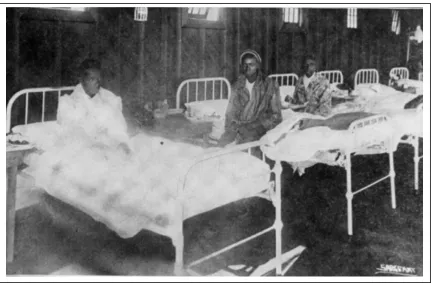
ample airflow for patients (Figure 2.4). Presumably to reduce construction costs, the
Palmetto Hall was built with substantially smaller awning windows. The hinged design of
awning windows supplied substantially less airflow (Figure 2.5). By the standards of the
time, the quality of healthcare was diminished for African-American patients. Through
the architecture and built environment of the South Carolina Sanatorium, the inequality
of the antituberculosis movement in the segregated South took visible form.
Throughout the 1920s and 1930s the Palmetto Division of the South Carolina
Sanatorium expanded its attempts to meet the needs of the state’s African-American
population. Lengthy patient waitlists, particularly for the Palmetto Division, remained a
58 Weyeneth, “The Architecture of Racial Segregation,” 11.
27
constant concern for the administration during these early decades.60 With state funding
largely limited to operational costs, the South Carolina Sanatorium often depended on
community donations to expand the hospital’s facilities. Considering the racial wealth
disparity in South Carolina, this reliance on private donations caused great inconsistency
in the quality of healthcare provided to the state’s tuberculous. Fundraising for the
Palmetto Division gained some national attention, drawing donations from famed
African-American entrepreneur Madam C. J. Walker; however, statewide donations
could never meet the needs of the hospital.61 So while the white division had funding to
incorporate newly constructed buildings, the Palmetto Division relied on temporary
structures and repurposed buildings.
2.2 CAMPBELL HALL
ADVANCING HEALTHCARE AND WOMEN ACTIVISTS
As a continuation of gender roles in the Progressive Era, the women of the state
were particularly active in advocating for the addition of a children’s ward at the South
Carolina Sanatorium. Additionally, medical advances in the 1920s shaped the design the
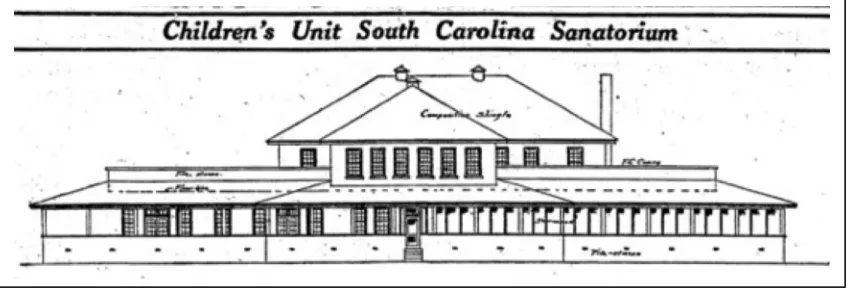
new facility for children. In 1927, the institution opened Campbell Hall, a children’s ward
for white patients (Figure 2.6). There was no equivalent facility for black children in the
state. Instead the South Carolina Sanatorium and SC Tuberculosis Association jointly
funded mobile clinics operated by the sanatorium’s staff and targeted impoverished
communities around the state, a large percentage of which were African American.62
These outreach initiatives were significant public healthcare programs. Nonetheless, the
60 South Carolina Sanatorium, Annual Report 1929-1930.
61Southern Indicator (Columbia, SC), June 13, 1914.
28
addition of Campbell Hall highlighted racial segregation as a limiting factor to the quality
of public healthcare provided to African-American children in the South Carolina.
Campbell Hall offered white children the most medically advanced tuberculosis
treatment facility in the state. The legislature appropriated $25,000 for the project and
architect Arthur B. Hamby was hired for the design.63 Selecting a hill on the western
corner of the property, the two-story building featured good views of the surrounding
countryside with sun porches and decks on both floors.64 While these design features
prescribed to the standard treatment of tuberculosis in the early-twentieth century, the tile
and terrazzo used in Campbell Hall relied on modern notions of hospital design and
sanitation.65 A complete hospital within itself, the building included patient wards,
operating and consultation rooms, a dining room, doctors and nurses’ quarters, a
playroom, and a schoolroom.
Like many of the building campaigns at the sanatorium, Campbell Hall highlights
the significant relationship between the state government and charitable organizations.
The South Carolina Federation of Women’s Clubs and the South Carolina Council of
Farm Women lobbied the legislature to fund a children’s ward. After securing
government funds, women’s clubs organized statewide fundraising campaigns to provide
furnishings for the building.66 Despite government’s increasing involvement in healthcare
during the Progressive Era, public healthcare services still relied on the private and
charitable sector to ensure fiscal livelihood.
63 “Children’s Unit South Carolina Sanatorium,”
The State, August 2, 1925; “Members of Building
Committee Agree Upon Site at Meeting Here,” The State, May 16, 1925.
64 “Children’s Unit South Carolina Sanatorium,” TheState, September 02, 1925. 65 Annmarie Adams,
Medicine by Design, 115. 66 “Twenty Years of Achievement,”
29
This partnership between government supported healthcare and charitable
organizations secured a leadership role for white women and the development of South
Carolina Sanatorium. The Federation of Women’s Clubs women were thanked for their
efforts in an inscription on the cornerstone of Campbell Hall. The Richland County
Federation branch was the “hostess” during the dedication of the corner stone, providing
beverages and snacks for the occasion.67 This dual role of active government lobbyist and
party hostess highlights women’s position as municipal housekeepers – extending
women’s domestic responsibility into the public sector and shaping the landscape of
public healthcare.68 Campbell Hall serves as an example of how women were
acknowledged for their efforts in community organization for the South Carolina
Sanatorium. In other sanatorium building campaigns, however, black women were never
formally acknowledged for their fundraising efforts by the institution.
2.3 STAFF HOUSING
EMPOYEES AND THE BUILT ENVIRONMENT
On-site staff housing at the South Carolina Sanatorium shaped the social structure
of authority at the institution by creating separate and distinct spaces for doctors, nurses,
and support staff. Employee housing also provided separation between staff and patients,
as well as separation among the races. Echoing the built environment of patient facilities,
employee housing both reflected and reinforced these differing modes of medical and
racial segregation. The isolation of the South Carolina Sanatorium necessitated on-site
housing for medical and support staff. Shown by a constant request for funding, the
67 “Clubwomen’s Interest and Activities,”
The State, November 16, 1925. 68 Adams,
30
administration believed providing staff housing was essential to the functionality of a
hospital intentionally designed to be isolated.
Beginning with the highest-ranking staff, the original design for the sanatorium
included a superintendent’s house for Dr. Cooper. Completed in 1915, the one-story brick
bungalow flanked by two side porches provided a domestic space for the superintendent
and his family (Figure2.7).69 By 1947, four freestanding doctors’ houses had been built.
Additionally, the top floor of the Administration Building was repurposed into a
single-family apartment for medical staff. When asking for appropriations, the sanatorium staff
argued separation between patients and staff was necessary for the safety of staff
families.70 In fact, Dr. Rudolph Farmer’s wife did become infected with tuberculosis
during her husband’s tenure at the facility in the 1930s. The legislature approved funding
for a personal nurse for Mrs. Farmer.71 Separation between patients and staff remained an
important factor even when treating staff family members for tuberculosis. Indeed, spatial
separation between staff and patients was also a means creating and maintaining
authority.
Although no black doctors were employed during this time period, nurses of both
races staffed the sanatorium. Nurses were not afforded the same level of privacy as
doctors and their families, but their housing was still an important contributing factor to
the landscape of the South Carolina Sanatorium. In accordance with hospital trends in the
early twentieth century, the spaces afforded to nurses at the sanatorium served dual
functions. They served as domestic spaces to reflect women’s traditional role as
caregivers, while simultaneously reflecting women’s emerging role as medical
69 “Twenty Years of Achievement,” SoCa San Piper, May 1935, 5.
70 South Carolina Sanatorium, Annual Report 1926-1927.
31
professionals.72 During the early years of the institution, personal spaces for nurses were
planned into white and black patient buildings. The Administration Building also
provided housing for white nurses. By the 1930s, the existing structures could not
sufficiently accommodate the growing number of nurses. After closing the building to
patients, one “poorly adapted” white women’s infirmary housed three nurses per room
and one nurse in a hallway.73
After several years of lobbying from the sanatorium staff the legislature
appropriated $10,000 dollars to address the housing issue, opening a new separate white
nurse’s residence in 1931 (Figure 2.8). The two-story house with weatherboard siding
featured private and semi-private bedrooms with communal living spaces. A large
open-air porch supported by columns surrounded the building on three sides, completing the
structure’s domestic feel. Without family residences or guaranteed private rooms, the
nursing positions at the South Carolina Sanatorium often attracted student nurses and
recent graduates of the Columbia area nursing schools. Many left the sanatorium after
getting married, while some made the South Carolina Sanatorium their permanent home.
Disproportionally affected by the struggle for personal space, African-American nurses
were denied separate housing and continued to live in small spaces within patient wards
into the 1940s.74
Housing played an important part in the relationship between the different classes
of staff and the operation of the sanatorium. The South Carolina Sanatorium hired mostly
African-American workers for support staff positions. Staff members, referred to as
“servants”, included farm workers, dairy operators, cooks, kitchen hands and general
72 Adams, Medicine by Design, 71.
73 South Carolina Sanatorium, Annual Report 1930-1931.
32
maintenance workers. Accommodations were initially very bleak. When Bill Adams
arrived as the first servant employee in 1915, he slept on a wooden pallet in an
abandoned structure because no accommodations had been made.75 As accommodations
improved, support staff lived in simple wooden structures accompanied by outhouses.
The administration regularly requested appropriations from the state legislatures to
address the quality and quantity of housing for support staff. Dr. Cooper insisted housing
would address the issue of discipline, as “labor can be controlled more easily when
houses are supplied.”76 Considering the racial demographics of the workers, this shows
Dr. Cooper intended to use the built environment to address discipline amongst the
African-American staff. In 1927, three four-room houses were constructed for $500.00
each and scrap material was utilized from a patient building construction project.
Unlike the doctors and nurse’s quarters, support staff housing was not
incorporated into the aesthetic design of the sanatorium. Many of the support staff houses
featured unpainted wooden siding and galvanized roofing, differing from the cottage
aesthetic of the other buildings prior to the late 1930s. This visual disparity between the
classes of employee highlighted the limited provisions the support staff received from the
institution (Figure2.9). The sanatorium’s annual reports never included detailed accounts
of servant quarters or an official count of servant houses.77 Even so, housing remained a
constant concern of the administration. By 1931, two thirds of support staff lived on
sanatorium property; yet, labor remained transient, seasonal, and short-term.78 Improving
75 “Twenty Years of Achievement,” SoCa San Piper, May 1935, 7.
76South Carolina Sanatorium, Annual Report1919-1920, 70. The specific details of this “discipline” issue
are not recorded in the Annual Report. Even so, worker disciplinary issues are mentioned in several years
of the Annual Reports, as well as the State Board of Health meeting minutes.
77 South Carolina Sanatorium, Annual Report1927-1928.
33
the sanatorium’s infrastructure was seen as a means to improve employee retention and
alleviate discipline issues with workers, particularly among the primarily
African-American support staff.
2.4 EARNEST COOPER COMMUNITY BUILDING PATIENTS AND THE BUILT ENVIRONMENT
As seen through the examples of the Palmetto Division and Campbell Hall, the
sanatorium’s administration and community interest groups initiated many of the
hospital’s building projects. Additionally, patients at the sanatorium also helped to shape
the growth and expansion of the facilities. The long campaign to build the Earnest
Copper Community Building demonstrates the influence of patients in the development
of the South Carolina Sanatorium (Figure 2.10). The unique amenities of the Cooper
Building also illustrate patients’ ability to shape the built environment of the institution.
Intended to be the center of the sanatorium community, the design of the Cooper
Building also raises some important questions about segregation at the South Carolina
Sanatorium.
In 1924, patient Alice Ray Frierson began a campaign to build a chapel and
community center at the sanatorium.79 Known as the “Sunshine Girls,” Frierson and
eleven other women fundraised for ten years (Figure 2.11). They placed adds in state and
local newspapers, including the sanatorium’s patient-operated newsletter, the SoCaSan
Piper.80 Most of the donations came from patients and former patients as well as their
families. Named in honor of longtime superintendent, the Earnest Cooper Community
79
TheState, April 12, 1925. 80 “Twenty Years of Achievement,”