University of South Carolina
Scholar Commons
Theses and Dissertations
1-1-2013
Professional Conversations About Race, Culture
and Language In Early Childhood Literacy
Education: An Administrator's Journey
Sabina Maria Mosso-TaylorUniversity of South Carolina
Follow this and additional works at:https://scholarcommons.sc.edu/etd Part of theEducational Administration and Supervision Commons
This Open Access Dissertation is brought to you by Scholar Commons. It has been accepted for inclusion in Theses and Dissertations by an authorized administrator of Scholar Commons. For more information, please [email protected].
Recommended Citation
P
ROFESSIONAL CONVERSATIONS ABOUT RACE,
CULTURE AND LANGUAGE INEARLY CHILDHOOD LITERACY EDUCATION
:
AN ADMINISTRATOR’
SJ
OURNEYby
Sabina Maria Mosso-Taylor
Bachelors of Science
University of Tennessee at Martin, 1988
Masters of Education University of South Carolina, 2003
Submitted in Partial Fulfillment of the Requirements
For the Degree of Doctor of Philosophy in
Early Childhood Education
College of Education
University of South Carolina
2013
Accepted by:
Dr. Susi Long, Major Professor
Dra. Julia López-Robertson, Committee Member
Dr. Rhonda Jeffries, Committee Member
Dr. Craig Kridel, Committee Member
D
EDICATIONThis study is dedicated to the memory of my parents: Frank A. Mosso, whose
life-lessons were the beginning of my journey; and Erika A. Kornprobst, who taught me that
A
CKNOWLEDGEMENTSThis process has been a wonderful but arduous journey, one that I would not have
been able to complete without the unwavering support and encouragement of many
people. First, I would like to thank my doctoral committee chair, Dr. Susi Long. No
words seem adequate to say how much you mean to me. Your knowledge, passion and
commitment to equity in education are at the heart of all you do and you have fueled my
desire in this work. Thank you for taking me under your wing, for challenging me
intellectually, for your constant faith in my ability, and for your gift of friendship. I am a
better person because of knowing you. I am also indebted to Dra. Julia López-Robertson
for her constant support and encouragement throughout this study. Our many talks were
so important to me. I appreciate you as a parent in our school, as a researcher, and friend.
Dr. Rhonda Jeffries and Dr. Craig Kridel, I thank you for your wisdom and support
throughout this study.
I would not have been able to make it through this study without the constant
support of my doctoral peers, now doctors, Dr. Cindy Morton-Rose, Dr. Erin Miller and
Dr. Kindel Nash. Our times together were relaxing and intellectually stimulating; they
meant more to me that you will ever know. I would like to also thank Dr. Meir Muller for
his belief in me and for his support as a friend and a fellow administrator.
doctorate along the way; each always available for hours of member checking, phone
calls and emails, to which they always graciously responded. Thank you for allowing me
to put our work out there. I want to thank the teachers and staff of SCRCD. I appreciate
your help in making our school a better place for all students and their families. To
Wanda Lewis, Felicia Brown and Dr. Marsha Moseley, who never waivered trust in my
ability to complete this study and who supported me throughout this process, I am forever
grateful.
I also owe a debt of thanks to Dr. William Brown (Bill Brown). I cannot tell you
how much it meant to have your support and to know that while I was home writing,
Evan was enjoying a movie, the library or other wonderful event from time to time. You
were always so kind to help out in any way. My dear Carson, you were 12 years old when
I started this process, and you said, “Mom, you inspire me.” Now at age, 22, it is you who
inspires me! Your support made my journey matter. To my sweet Evan, who never knew
mommy outside of being a doctoral student, this journey was difficult for you to
understand; yet it was all you knew. To make this process easier we termed it, “working
on the dog,” meaning at the end of this process we would get you a puppy. Well, guess
what? That puppy is here. Let’s go bring him home!
Finally, and most important, to my wonderful, understanding husband, Danny, to
whom I owe the rest of my life, as I work to make up the time lost over the past several
years. Thank you for loving me and supporting me on this journey. You are, and always
A
BSTRACTYear after year, children of Color, speakers of languages other than English, and
children of poverty are served less well in public schools than their White, middle-class
peers. The lives of children from White, middle-class homes are regularly normalized as
they are described by teachers, administrators, policy makers, and educational programs
as those with the most worth and knowledge. In all too many settings, cultures and
languages outside this narrowly-defined norm are perceived from deficit perspectives.
This hierarchy perpetuates a status quo that privileges and therefore supports the success
of some, while devaluing and contributing to the failure of others. Altering these
outcomes requires an understanding of issues related to race, culture and language
marginalization, and how classroom practices impact children’s identities in schools. It is
generally acknowledged that administrators are ultimately responsible for creating
cultures in their schools that encourage and support teachers’ professional growth while
deepening their own knowledge. However, there has been little in this work that focuses
on the nature of the administrator’s role particularly in early childhood settings when
changes in curricula and impact on student identity are also documented.
In an attempt to fill this gap, utilizing tenets of ethnography, critical ethnography
and autoethnography and a pattern analysis for examining data, I sought to understand:
What happens when a school administrator and teachers of three- four- and five-year-old
the experience reflected in day-to-day life in the classrooms, particularly as it relates to
supporting children’s positive literate identities? What is the role of the administrator in
this process? Grounded in sociocultural, critical race, linguistic and cultural
marginalization, and identity development theories, data analysis led me to findings that
shed light on the inherent challenges in this work as well as strategies that worked in
overcoming challenges. Fundamentally, however, I found that a range of
administratively-facilitated and theoretically connected professional development
experiences that are intentionally focused on issues of race, language and culture can be
highly supportive of teachers abilities to recognize and challenge deficit, racist views and
discriminatory practices and to make changes in classroom practice supportive of
students’ positive literate identities. Implications are provided to help administrators and
TABLE OF CONTENTS
DEDICATION ... iii
ACKNOWLEDGEMENTS ... iv
ABSTRACT ... vi
LIST OF TABLES ... xi
LIST OF FIGURES ... xii
CHAPTER ONE: INTRODUCTION TO THE STUDY ...1
THE SIGNIFICANCE OF THIS STUDY ...3
DEFINITION OF TERMS ...12
THEORETICAL STANCE ...14
CHAPTER TWO: REVIEW OF RELATED LITERATURE ...21
SOCIOCULTURAL THEORY ...21
CULTURAL AND LINGUISTIC MARGINALIZATION ...27
CRITICAL RACE THEORY ...33
IDENTITY DEVELOPMENT ...41
PROFESSIONAL DEVELOPMENT AND ISSUES OF DIVERSITY ...45
CULTURALLY RELEVANT PEDAGOGY ...49
CHAPTER THREE: METHODOLOGICAL DESIGN ...53
WHY QUALITATIVE RESEARCH? ...54
RESEARCH DESIGN ...63
ISSUES OF CONSIDERATION ...98
CHAPTER FOUR: CHALLENGES AND NEGOTIATING CHALLENGES ...104
UNDERSTANDING OTHERS FIRST MEANT UNDERSTANDING OURSELVES ...108
CHALLENGES ...115
BEGINNING TO NEGOTIATE CHALLENGES: TOWARD DEEPER UNDERSTANDINGS ...152
CHAPTER FIVE: CLASSROOM PRACTICES: USING INITIAL AWARNESSES TO SUPPORT STUDENTS’ POSITIVE LITERATE IDENTITIES ...183
THE PROBLEM ...183
NEW OR ENHANCED PRACTICES ...185
CHAPTER SIX: MY ROLE AS ADMINISTRATOR ...254
ORGANIZATION OF THIS CHAPTER ...256
HOW I SAW MY ROLE ...258
FALTERING COURAGE ...282
PERSEVERANCE: FINDING SUPPORT AND COURAGE...294
CHAPTER SEVEN: IMPLICATIONS ...308
IMPLICATIONS FOR PROFESSIONAL DEVELOPMENT ...309
IMPLICATIONS FOR ADMINISTRATORS ...339
IMPLICATIONS FOR TEACHERS AND CLASSROOM PRACTICE ...354
IMPLICATIONS FOR FUTURE RESEARCH ...362
REFERENCES ...367
APPENDIX A ...390
APPENDIX D ...393
APPENDIX E ...395
APPENDIX F...401
APPENDIX G ...403
APPENDIX H ...405
APPENDIX I ...406
APPENDIX J ...409
LIST OF TABLES
Table 4.1. Groupings of faculty members in this study highlighting the four primary participants in each group; pseudonyms are used for all secondary
participants ...106
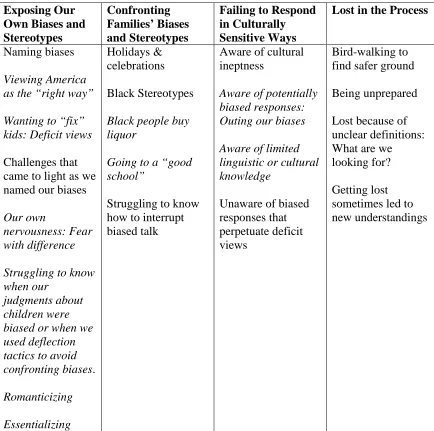
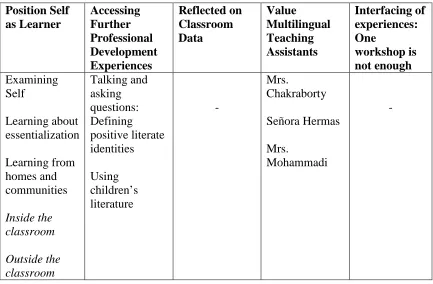
Table 4.2. Challenges encountered in the process of examining issues of race,
culture, and language ...116
Table 4.3. Elements of our experience that helped us begin to negotiate
challenges ...153
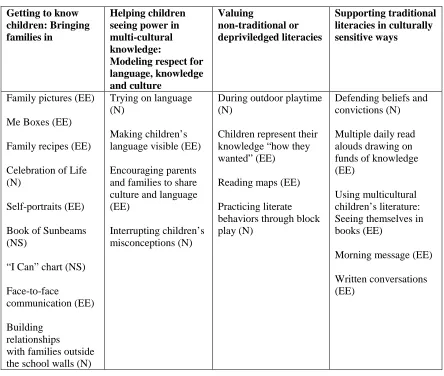
Table 5.1. Classroom practices: Using initial awareness to support students’ positive literate identities (EE- existing enhanced practice; N- new practice; NS- new practice- specific to a particular teacher) ...187
Table 6.1. Themes related to my role as administrator ...257
LIST OF FIGURES
Figure 1.1. Bodies of theory that undergird my theoretical frame and that are the lenses
through which the beliefs guiding this study were formed. ...15
Figure 3.1. An abbreviated chart of research timeline ...97
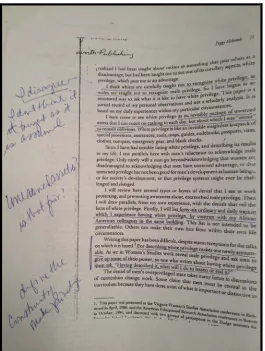
Figure 4.1. Excerpt from White Privilege and Male Privilege article (McIntosh, 1995) with my notes in the margins written 10 years prior to this study………..156
Figure 4.2. Sample letter/survey sent home to parent inviting them to share their culture, language or talents ...160
Figure 5.1. Family pictures displayed in Tammy’s classroom...189
Figure 5.2. Lyndsay’s letter to parents requesting items for children’s Me Box ...194
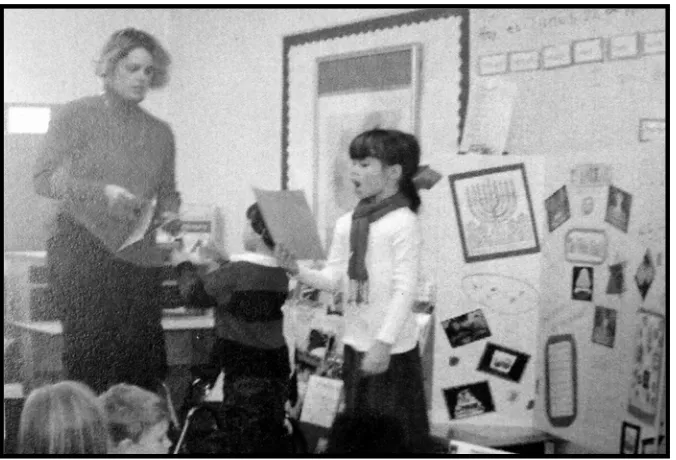
Figure 5.3. Sol, Kat and Mrs. Muller teach the class about Hanukkah ...197
Figure 5.4. Self-portraits displayed in Kim’s classroom ...205
Figure 5.5. Lyndsay’s “I Can” chart...209
Figure 5.6. Written conversation between Kim (teacher) and Kat (student) ...211
Figure 5.7. Kim’s use of Spanish during her calendar time ...224
Figure 5.8. Doctora López-Robertson singing and dancing with the children ...225
Figure 5.9. List of words Dr. Baghdadi wrote for the class ...229
Figure 5.10. Example of non-traditional literacy: Gale and Harry’s science structure...235
Figure 5.13. Using the morning message to support traditional literacy as
well as multiple languages ...245
Figure 5.14. Written conversation between Kim and Ella, age 5 ...249
Figure 6.1. Critical sound bite of racist language used in the media ...270
CHAPTER ONE
INTRODUCTION TO THE STUDY
A few years ago I was preparing the agenda for the first faculty meeting of the school year. I wondered what our Diversity Chairperson had in store for us since she had asked for time to share an activity. Later, when it was her turn to share, she engaged us in a game of ‘What is your geometric shape?’ Each shape had a personality trait assigned to it and we were asked to join with others who matched our shape. The discussion that ensued had more to do with how fun the activity was than with deeper reflection about self and others. I wondered, ‘How does this activity help us understand each other? How does it build the foundation for
understanding the rich diversity of our students and families? How does it help the teachers make the curriculum more meaningful?’ For the first time, as an administrator, I recognized a specific responsibility to myself, the teachers and the students to deepen our knowledge of issues of
diversity and what they might mean for us as a school supporting all children and families.
For the past six years, I have been the administrator of a Child Development
Program in a public school system in the southeastern United States. During this study I
worked with teachers of three-, four- and five-year-olds, in 13 classrooms throughout the
district. My experiences in various cultural settings - as a child growing up in Brooklyn,
New York, a Ph.D. student, a teacher, and an administrator - taught me about the
importance of valuing difference, but also about how easily educators can give lip service
to valuing others without deeply examining what that means in terms of their own biases
and day-to-day life in classrooms. I came to understand how school systems that are set
of: (a) children’s identities and opportunities as learners; and (b) the development of a
society that genuinely values difference as a resource rather than as a deficit.
In my graduate studies, I was introduced to sociocultural perspectives, culturally
relevant teaching, critical race theory, and issues of linguistic and cultural
marginalization. I wanted to use these bodies of knowledge to support my growth and the
growth of the teachers in the child development classrooms who worked with me. My
intentions were to go beyond surface level diversity experiences such as the one
described in the opening vignette, to deeply explore issues of education equity,
oppression, and discrimination and their impact on our ability to build children’s positive
identities, in particular, their literate identities.
I did not come to these concerns and goals alone. The need for teachers to explore
these issues and studies of teachers engaged in such explorations are widely documented
(Allen, 2010; Blackburn, 2011; Boutte, 1999; Hammond, 2010;
Darling-Hammond & Bransford, 2005; Delpit; 2006; 2012; Fine & Weis, 2003; Irvine, 2003;
Ladson-Billings, 1994; Nieto, 1999; Tatum, 2007; Torres-Guzmán, Mercado, Quintero &
Viera, 1994). It is also well documented that most new teachers report feeling unprepared
in terms of understanding how to teach children from backgrounds different from their
own (Delpit, 2006; 2012; Darling-Hammond, 2010; Ladson-Billings, 1994; Long et al.,
2006; Nieto, 1999). The literature is clear that this lack of understanding often leads to
inequitable, oppressive and discriminatory practices particularly for children of Color,
children from low-wealth communities, and speakers of languages other than English
(Cammarota & Romero, 2006; Howard, 2010; Macedo, 2006; Saifer, et al., 2011; Steele,
practices requires in-depth study that engages teachers and administrators in
understanding self and others in terms of issues of power and privilege regarding culture,
race and language - critical components to culturally responsive, equitable teaching
(Allen, 2007; 2010; Earick, 2009; Gay, 2000; G. Howard, 2006; Howard, 2010; Saifer, et
al., 2011).
From many sources, it is clear that administrators have an essential role to play in
this process (Boutte, 1999; Darling-Hammond, 2010; Espinosa, 2010; Gay, 2010a; Long,
et al., 2006; Meier, 2002a, 2002b; Michie, 2009; Milner, 2010; Nieto, 1999). However,
there is little documentation of what the administrator’s role might look, sound and feel
like, and few descriptions of the process and challenges of the work, particularly for
administrators in early childhood settings. For these reasons, my study sought to
understand: What happens when a school administrator and teachers of three- four- and
five-year-old children engage in long-term professional study designed to explore issues
of culture, race, language? What challenges are met? How are those challenges
negotiated? How is the experience reflected in day-to-day life in the classrooms,
particularly as it relates to supporting children’s positive literate identities? What is the
role of the administrator in this process?
The Significance of This Study
In the district in which I work, families from over 73 countries and more than 56
languages are currently represented in its schools (Robertson School District
(pseudonym) Annual Report, 2010). Fifty-nine percent of the children in the district’s
schools are African American. However, the curricula most often used in the schools are
English-speaking homes. The children marginalized in curricula typically represent
cultural and linguistic backgrounds different from the backgrounds of their teachers and
administrators. These are the same children who have been failed by the system (SEF,
2010). In 2010, 25.9 % of African American children and 31.3 % of Latino children in
the district scored not met in third grade, on the Language Arts portion of the Palmetto
Assessment of State Standards (PASS) test in comparison to 8.3% of White students who
scored not met on the same exam (Robertson School District PASS Data Report, 2010).
This reality is similar to situations across the country (Au, 2009; Cannella, 2002;
Delpit, 2012; Gay, 2000; 2010; Heath, 1983; Howard, 2010). Year after year, children of
Color and speakers of languages other than English, and children of poverty perform less
well in public schools than their White, middle-class peers (Nieto & Bode, 2008; SEF,
2010). Children from White, middle-class homes are regularly described – explicitly and
implicitly - by teachers, administrators, policy makers, and educational programs as those
with the most worth and knowledge. In all too many settings, cultures and languages
outside the narrowly-defined norm are perceived from deficit perspectives (Delpit, 2006;
2012; Gregory, et al., 2004; Ladson-Billings, 1994; López-Robertson, Long &
Turner-Nash, 2010; Tatum, 2007; Volk & Long, 2005). This hierarchy perpetuates a status quo
that privileges and therefore supports the success of some, while devaluing and
contributing to the failure of others (Darling-Hammond, 2010; Gay, 2010a; Tatum, 1997;
2007). These issues are at the heart of why this study is significant in the field of
education: As I designed the study, it was clear that there was much work to be done if
we were to understand how professional development and administrative leadership
In the following paragraphs, with the overwhelmingly White demographics of the
teaching force and the diverse classrooms of children across the country in mind, I
articulate the significance of this study by discussing issues considered by many
sociocultural and critical scholars as essential to promoting school success for all
children. I believe that this study is significant because of: (a) the need for professional
and curricular development grounded in sociocultural and critical theories, (b) the
pervasiveness of deficit views that obstruct the development of young children’s positive
literate identities, and (c) the importance of understanding the role of the school leader in
professional development surrounding these issues.
Sociocultural and Critical Theories in Professional Development and Curriculum
Building
By the time they are four years old, children’s understandings about language and
literacy are nothing short of genius. This is well documented in studies of young children
across the decades (Brown, 1970; Britton, 1973; Donaldson, 1978; Ferreiro & Teberosky,
1985; Glover, 2009; Halliday, 1978; Holdaway, 1979; Lindfors, 1991; Nelson, 2002; Ray
& Glover, 2008; Smith, 1997; Teale & Sulzby, 1986). Another vast body of research
describes the rich resources of knowledge, language, and literacies in homes and
communities across cultural and linguistic groups (Dantas & Manyak; 2010; de la Luz
Reyes, 2011; Delpit, 2006; 2012; Goodman & Martens, 2007; Gonzáles, Moll & Amanti,
2005; Gregory, Long & Volk, 2004; Ladson-Billings, 1994; Lindfors, 1991;
López-Robertson, Long & Turner-Nash, 2010; Nieto, 1999; Rogoff, 1990; Wells, 1986).
However, those very sociocultural resources, when different from dominant culture
devalued in classrooms (Heath, 1983; hooks, 1994; Santa Ana, 2004; Souto-Manning
2013; Taylor & Dorsey-Gaines, 1988; Valdés, 1996, 2001). Thus, while there is an
extensive body of research demonstrating not only the brilliance and capabilities of
young children but the legitimacy and efficiency of knowledge, language, and literacies
used in homes and communities (Compton-Lilly, 2003; Dantas & Manyak, 2010;
González, Moll, & Amanti, 2005; Gregory, et al., 2004; Long, Volk, Tisdale & Baines,
2013; Heath, 1983; Martens, 1996; Taylor & Dorsey-Gaines, 1988), we have only begun
to see the impact of that research in schools (Allen, 2007; 2010; Delpit, 2012; Dyson &
Genishi, 2005; Gay, 2010a; 2010b; Fassler, 2003; Long, et al, 2013; López-Robertson,
2008; Olmedo, 2004). Not only are multiple ways of being often missing from classroom
collections of books, resources, and other materials, they are also missing from curricula,
assessment, and classroom interactions. Too often classrooms continue to reflect a
narrow view of what counts as language, literacy, and knowledge which, in turn, impacts
opportunities for students’ success (Dantas & Manyak, 2010; Darling-Hammond, 2010;
de la Luz Reyes, 2011; Delpit, 2012; Valdés, 2001)
A limited focus on sociocultural and critical perspectives has been particularly
true in early childhood education. Traditionally, early childhood education has been
defined by its roots in developmental and constructivist perspectives (Lillard, 1972;
Montessori, 1965: Piaget, 1969). However, research in the last thirty years demonstrates
that what has been assumed by many educators to be developmentally appropriate for all
students has in fact, been based on research within only dominant cultural groups
(Cannella, 2002; Dyson, 2003; Espinosa, 2010; Gay, 2000; 2010b; Grieshaber &
children’s development is considered to be better or worse from one cultural context to
another, but that there is no one norm for what should be considered appropriate. This
view considers variation in language, interactional style, and literacies, parenting
strategies, and so on as a resource rather than as a deficiency and recognizes that children
learn due to their experiences with others in their worlds (Lindfors, 1999; Rogoff, 2003;
Vygotsky, 1978; Wells, 1986). Through these interactions they develop important
cultural tools (Bruner, 1996) or funds of knowledge (González, Moll, & Amanti, 2005).
However, when different from the dominant cultural norms, these tools and knowledge
are frequently dismissed in schools and in society, not recognized and/or not valued in
classrooms. This counters extensive research demonstrating that learning occurs when
children have opportunities to build on what they know and the strengths they possess
(Dantas & Manyak, 2010; Nieto, 1999; Valdés, 1996; 2001).
In contrast to the ideology that dominates classroom practice, in recent years
national professional organizations have placed greater emphasis on teachers’
understanding of identity and diversity. In 2006, the National Association for the
Education of Young Children revised their accreditation criteria for schools, childcare
settings, and higher education, to include a greater emphasis in the area of diversity
(NAEYC, 2005). The National Council of Teachers of English regularly includes articles
about the fallacies of marginalizing languages (Botelho, Turner & Wright, 2006;
Souto-Manning, 2007) and the importance of valuing home and community knowledge as
resources (Boutte & Hill, 2006; Haight, 2006; Mandrell & Dixon-Mokeba, 2007;
Romero-Little, 2006). Educational leadership journals also embrace the notion that much
status quo (Cummins, et al., 2005; Darling-Hammond & Friedlaender, 2008; Kohm &
Nance, 2009).
In spite of this emphasis on sociocultural and critical perspectives, the application
of these ideologies in professional development, curriculum building, and practice in
schools remain, for the most part, lip service (Dixson & Rousseau, 2006; Earick, 2009;
Howard, 2010; King, 2005; Ladson-Billings & Tate, 2006; Saifer, et al., 2011). Clearly
much more needs to be done to promote teachers’ and administrators’ understanding of
the importance of learning about and valuing difference, particularly as those
understandings impact the ability to recognize and transform discriminatory practices in
classrooms and promote success for all children. This study contributes to filling that gap
by describing what happens when professional development and curricular planning
focus explicitly on these issues, paying particular attention to the role of the school
administrator and the impact of the experience on the development of and support for
young children’s positive literate identities.
Pervasive Deficit Views and the Development of Positive Literate Identities
Taylor and Dorsey-Gaines’ (1988) landmark ethnographic study reveals powerful
insights into multiple ways that inner-city families, often viewed through deficit lenses
(seen as illiterate), use language and literacy practices proficiently in their homes and
communities. A variety of similar studies reveal ways that languages and literacies are
used across a range of cultural and linguistic communities (Compton-Lilly, 2003; Dantas
& Manyak, 2010; Duranti, Ochs & Ta’ase, 2004; Heath, 1983; Olmedo, 2004; Romero,
2004; Volk & de Acosta, 2004) as children recite long passages from religious texts,
follow recipes for cooking or baking. Compton-Lilly (2003) describes these literacies as
“alternate discourses that children bring to school [that] reflect useful, powerful, and
productive ways of being and making sense of the world” (p. 28).
In spite of this large body of literature, however, deficit views persist as children
of Color, children who speak languages other than English, and children from low-wealth
communities are repeatedly seen as lacking in literate abilities. Negative identities –
“Nobody reads in that home;” “There is no language in that home” - are imposed on
many children and their families, identities that are then internalized by the children
themselves (de la Luz Reyes, 2011; Delpit, 2006; 2012; Santa Ana, 2004). These deficit
views and negative literacy identities are further perpetuated when students’ home
languages, literacies, cultures, and families are not represented in the curricula, books, or
other materials in the classroom (Boutte, 1999; Gay, 2010b; Long, et al., 2013; Nieto &
Bode, 2008; Saifer, et al., 2011). This work goes hand-in-hand with the work of critical
race theorists who argue that issues of bias in education, particularly in relation to issues
of race, privilege, oppression, and voice, must be at the forefront in teacher education and
professional development (Ladson-Billings & Tate, 2006; Rousseau, 2006; Taylor,
Gillborn & Ladson-Billings, 2009).
Scholars propose that when educators recognize the existence and the
perpetuation of discriminatory practices and do something about it, for example, by
valuing and building on students’ in- and out-of-school literacies, students are more
likely to succeed (Dyson, 2003; Fassler, 2003; Goodman & Martens, 2007; Long, Bell &
Brown, 2004; López-Robertson, 2008). This work suggests that when children are
upon personal images of themselves as literate learners” (Taylor & Dorsey-Gaines, 1988,
p. 208). The research is undeniably powerful and has (as described in more detail in the
review of literature) positive implications for teaching practices in support of children’s
positive literate identities (Allen, 2007; 2010; González, et al., 2005; Gregory, et al.,
2004).
Once again, large bodies of research are all but ignored: In spite of the vast bodies
of work documenting the importance of positive literate identities, the validity of home
and community literacies, and related issues of bias and discrimination, power and
privilege, this ideology is rarely foundational to teachers’ inservice professional
development. As a result, deficit views persist. Because there are limited opportunities
for teachers to gain this kind of knowledge and to then use it to contradict deficit views
and support students’ positive literate identities, it follows that there is also limited
research that examines how teachers might be supported in this endeavor. My hope is for
this study to contribute to filling that gap by documenting the process of professional
development experiences designed to build knowledge about issues of culture, race, and
language while focusing on implications for building children’s literate identities in the
classroom.
The Role of the School Leader and Promoting Change
It is generally acknowledged that administrators are ultimately responsible for
creating cultures in their schools that encourage and support teachers’ professional
growth while deepening their own knowledge (Fullan, 2005; Jacobs & Rotholz, 2005;
Schmoker, 2006; 2011). However, there has been little in this work that focuses on the
educators are studying issues of race, language and culture and where changes in
curricula and impact on student identity are also documented. Existing studies of
educational administrators have typically focused on the characteristics of good leaders
(Evans, 1996; Fullan, 2001, 2005; Hargreaves & Fink, 2006; Marzano, Waters &
McNulty, 2005; Reeves, 2009; Robb, 2000) and, although some studies focus on the
importance of the administrator’s role in addressing diversity issues (Jacobs & Rotholz,
2005; Kohm & Nance, 2009; Meier, 2000a; Michie, 2009; Schmoker, 2006; 2011;
Wortman, 1995), few of them describe the process of teachers and administrators
learning together and the impact on curricular planning, teaching and learning.
Additionally, while many school leadership models attempt to promote teachers’ growth
and development, few have focused on diversity issues and some actually perpetuated
deficit perspectives. For example, in Redefining Staff Development: A Collaborative
Model for Teachers and Administrators, Robb (2000) discusses a professional
development program she developed with one school principal to “create a climate for
change” (p. 36). Using deficit language, she described how she and the administrator
“proposed a program for these literacy-deprived children” (p. 36) to ensure reading
success. The pervasive use of deficit language such as literacy-deprived necessitates the
need for research that looks at how administrators not only guide teachers in exploring
issues of race, culture and language, but address their own learning in the process. This
study did just that, as one administrator and teachers worked together to understand those
issues, reflected on their own learning, and created new possibilities for early childhood
Definition of Terms
This section highlights and provides explanations for some of the terms used
throughout this study.
Assimilation: I use the term assimilation to meanlosing one’s culture and
language to adopt the dominant culture and language (Nieto, 2010; Tatum, 1987).
Bias: In this study I use the term bias to refer to “any attitude, belief, or feeling
that results in, and helps to justify, unfair treatment of an individual because of his
or her identity” (Derman-Sparks, 1983, p. 3).
Children of Color: I use the term children of Color to refer to children who are
non-White including but not exclusive to African American, Native American,
Asian, or Latino/a children.
Critical: The term critical (as in, critical friends, critical literacy or critical
pedagogy) is used in this study to refer to a stance that requires questioning,
exploring, examining power structures with a focus on discrimination, silencing,
marginalization, privileging, or oppression and conversely, cultural relevance and
or cultural significance.
Culturally Relevant Pedagogy: In this study, the term culturally relevant
pedagogy or culturally responsive teaching refers to ways in which classroom
instruction centers on multicultural or “multiethnic frames of reference” (Gay,
2000, p. xix) as a tool for teaching to support learning and student outcomes (see
Review of Literature for more extensive definition).
Deficit view: The term deficit view is used throughout this study to describe
what they do not know or what they cannot do rather than coming from a
strengths-based perspective (Boutte, 1999; Ladson-Billings, 2009; Long, et al.,
2006; Nieto, 2010).
Discrimination: I use the term discrimination throughout this study to describe
the ways in which equal access or rights are denied to people based on biases or
stereotypes - rooted in the history of inequality in the United States and
particularly in schools (Nieto, 2010).
Equity Pedagogy: I refer to equity pedagogy as teaching in ways that challenge
the dominant discourse in schools by “questioning assumptions, paradigms and
hegemonic characteristics [in an attempt to help] students become reflective and
active citizens of a democratic society” (Banks & Banks, 1995, p. 152). I see
equity pedagogies as those that make it possible for all students to reach the
highest levels of success.
Essentializing: In my study, essentializing refers to the generalization, or
application of characteristics of one person as indicative of characteristics of all
people in a particular culture (Landsman, 2009; Nieto, 2010).
Funds of Knowledge: The term, funds of knowledge, (Moll, 2005) in this study
refers to the cultural/community knowledge children possess including the vast
amount of understanding about the world, how it works, and how to function
within it.
Hegemony: I use the term hegemony or hegemonic practices to mean dominant
Identity: I use the term identity to describe the felt, earned, and imposed
definitions of self and others in terms of how we see ourselves and others, and
how others see us (Grieshaber & Cannella, 2001; Tatum, 2007).
Literate identity: The term literate identity refers to the ways in which one is
viewed and views others/how we define ourselves and define others with a
particular focus on literate acts (speaking, reading, writing, etc.) – the ways we
express meaning and knowledge (Bartlett, 2005; Rowe, 2003).
Marginalization: I use the term marginalization to refer to therelegating of
human beings to the margins of what is considered (by dominant cultural groups),
to be normal - usually occurring when human beings from other than dominant
cultural and linguistic groups are not valued for their ways of being (Grieshaber
& Cannella, 2001; Nieto, 2010).
Romanticizing: The term romanticizing in this study refers to the ways in which
we assign positive attributes to actions about which our limited backgrounds do
not provide sufficient insights to allow us to interpret with confidence.
Stereotypes: In this study stereotypes is used as a belief that all people of a
particular culture or group behave, act in a particular way (Ramsey, 2004).
Theoretical Stance
Sociocultural theory is at the foundation of my theoretical frame and helps to
explain my beliefs about how children come to know, communicate, and make sense of
the world and includes an understanding of cultural and linguistic marginalization. My
theoretical stance is further informed by work in the areas of critical race theory which
and identity theory and the development of literate identities. I see these theories as
lenses that are foundational to my study (Figure 1.1). I designed and implemented the
study and analyzed data with attitudes and beliefs grounded in sociocultural knowledge,
issues of cultural and linguistic marginalization, critical race theory, identity development
theories, and thinking in the fields of culturally relevant practice and professional
development. These bodies of work are reviewed in detail in Chapter Two, but the beliefs
that guided this study as seen through these theoretical lenses are described in the
following sections.
Figure 1.1. Bodies of theory that undergird my theoretical frame and that are the lenses through which the beliefs guiding this study were formed.
Children Learn Legitimate, Rule-Governed Languages and Literacies from the
Time They are Born
I have come to believe that children learn much about language and literacy
practices from the time they are born through their purposeful interactions with
literacy users in their home and communities in various contexts and in meaningful ways
(Allen, 2007; González, et al., 2005; Gregory, et al., 2004; Long, et al., 2007). The
cornerstone of this belief is the understanding that, across cultural and linguistic
communities, there are important differences in languages and literacies and the ways in
which they are taught and learned, however, these differences do not constitute deficit. In
other words, one way is not better or worse than another. Hence, foundational to this
study is the notion that children learn languages and literacies that are legitimate,
rule-governed, and represent efficient ways of communication depending on the context in
which they are required and they learn those languages and literacies both at home and at
school.
Devaluing Multiple Ways of Being Can Have Detrimental Effects on Teachers’
Abilities to Teach and Children’s Opportunities to Learn
Through studies in cultural and linguistic marginalization (Boutte, 1999; de la Luz
Reyes, 2011; Delpit & Dowdy; 2002; López-Robertson, 2008; Nieto & Bode, 2008;
Santa Ana, 2004; Valdés, 1996; 2001) I have come to believe that when teachers do not
value multiple ways of being, it can have a serious detrimental impact on teachers’
abilities to teach all children. It is widely documented that, while many White,
middle-class children succeed in schools, there are more children of Color and speakers of
languages other than English who are not successful in schools (de la Luz Reyes, 2011;
Delpit, 2012; Nieto, 2010). The framework guiding this study draws from the belief that
it is not the children who are failing, but that schools are failing children, and that a
reason for this failure is a pervasive deficit attitude about children and families from
children as learners. This deficit attitude perpetuates a view that there is one right way of
being which is typically defined by White, middle-class, Christian, heterosexual norms
(Sleeter, 2009). Through my study and my experience, I have come to understand that too
often, those outside this dominant norm are devalued, whether intentionally or
unintentionally, in ways that strip human begins of their identity and that this has direct
implications for teaching and learning (Blackburn, 2011; Boulware, Carrier & Baker,
1991; Purcell-Gates, 2002; Suina, 2009; Toepke & Serrano, 1998).
Racism Exists and Teachers Have a Responsibility to Interrupt Discriminatory
Practices
Further reading in areas of identity development (Delpit, 2006, 2012; Tatum,
2003, 2007) and critical race theory help to build my understanding that racism continues
to exist in overt and covert ways (Bell, 1992; Delgado & Stefancic, 2001; Dixson &
Rousseau, 2006; Taylor, Gillborn & Ladson-Billings, 2009) and that teachers have a
moral and ethical obligation to interrupt oppressive and discriminatory language, ideas,
and structures which continue to privilege only some (Howard, 2010; King, 2005; Kozol,
1991). I believe that, in order for teachers to support students of Color and students from
cultural and marginalized groups - particularly in nurturing and developing positive
literate identities - they need to be able to look inward to uncover and explore their own
attitudes, beliefs, bias and stereotypes (Earick, 2009; Howard, 2006; Howard 2010;
Nieto, 1999). I believe that it is only through such examinations that teachers can begin to
understand why some practices discriminate and others do not and the effect that such
practices have on children’s opportunities for success. One way I believe teachers can
outcomes is through the implementation of culturally relevant practices
(Darling-Hammond, 2010; Gay, 2000; 2010b; Irvine, 2003; Ladson-Billings, 2009; Saifer, et al.,
2011).
Educational Leaders are Responsible to Support Teachers in Addressing Injustices
in Children’s Education
Undergirding this theoretical frame is the conviction that, as the educational
leader, I am responsible for creating professional development opportunities for teachers
that support learning for all students and that this can best be accomplished by addressing
the issues described above (Cochran-Smith, 2004; Darling-Hammond, 2010; Fine &
Weis, 2003; Irvine, 2003; Meier, 2000a; 2000b; Schmoker, 2011). This requires
administrators to engage in school-wide reform with teachers to: develop shared
understanding of the need for this work, identify effective and ineffective practices,
develop or uncover necessary resources, and make school improvement continuous
(Hawley, 2008; Schmoker, 2006). I have come to believe that administrators have a huge
role to play in these efforts that they can serve to increase teachers’ capacity to engage in
equitable teaching practices or they can serve to impede their ability to do so
(Darling-Hammond, 2010; Long, et al., 2006). Based in these beliefs, my theoretical framework
(Figure 1.1) shapes and informs my role as the researcher in the study. These beliefs form
the lenses through which I engaged in the research process and analyzed my data, as well
as the overall methodological design.
Conclusion
Jonathan Sacks (2002) wrote that, “difference does not diminish; it enlarges the
contributes to the field of education through its examination of the process of an
administrator and a group of early childhood educators engaged in long-term professional
study for the purpose of recognizing and countering deficit-based dispositions, curricula,
and classroom practices while generating practices that promote positive literate identities
in young children. More than 20 years ago, Johnathon Kozol (1991) wrote that
pedagogical texts written for teachers were designed to share strategies for success in the
classroom, but that they did not address essential issues of injustice or inequality. Today,
the field continues to call for professional development that supports careful examination
of race, culture, and language as they relate to classroom practice and to students’
positive identities as learners (Darling-Hammond, 2010; Gay, 2010b; Gregory, et al.,
2004; Howard, 2010).
As a White, Christian, middle-class, heterosexual, English-speaking woman, I
recognize that I have limited knowledge of what it means to be not like me in this world.
Because the teaching force across the United States is largely populated by White,
middle-class, English-only, Christian, heterosexual teachers, it is likely that my
experiences mirror those of many educators (Earick, 2009; Howard, 2006; Howard, 2010;
Irvine, 2003; Nieto & Bode, 2008). With diverse classrooms of students across the
country, it is also likely that many teachers fail to see the knowledge children possess, the
rich resources that they bring with them to school, and the various ways they understand
all that they do. This limits teachers’ abilities to support children in building and
sustaining positive learning identities, which in turn, limits the probability that schools
To challenge this status quo, administrators have a significant role to play. They
are charged with creating professional development experiences that fuel teachers’
understanding of how to value and utilize the knowledge children bring with them.
However, we know little from the administrator’s perspective about the process of
developing, implementing, and learning from such experiences as they learn alongside
teachers. Through this study I hope to contribute to the research in this area through my
examination of what happened when a school administrator and a group of teachers of
three- four- and five-year-old children engaged in long-term professional study designed
to explore issues of culture, race and language for the purpose of generating school
CHAPTER TWO
REVIEW OF RELATED LITERATURE
As described in Chapter One, several bodies of literature inform the belief system
that guides this work. Those bodies of work also constitute the research in which this
study is situated. Thus, to detail the work that undergirds my theoretical stance, and
situate this study within existing literature, reviews of the following bodies of work are
provided in this chapter: (a) sociocultural theory, (b) cultural and linguistic
marginalization, (c) critical race theory, (d) identity development, (d) professional
development and issues of diversity, and (e) culturally relevant pedagogy.
Sociocultural Theory
Socio refers to the social interactions in one’s worlds. The word culture describes
the many ways that one comes to understand the micro worlds in which each of us exist
and function each and every day. Geertz, (1973) believed that culture is essentially a
pattern of meanings embedded in symbols, which allow people to communicate and share
information about how to live. Likewise, Goodenough (1981) described culture as a way
to exist within a socially acceptable manner according to the members of the group. In
broader terms, culture encompasses the ways of knowing, believing, interacting, and
surviving in the world constructed and valued by groups of people (Gay, 2000; 2010b;
Nieto, 1999). Sociocultural theory brings together understandings about culture as
Work drawing on sociocultural foundations examines culture and social interactions as
the heart of understanding its link with cognition (Gregory, et al., 2004; McIntyre,
Roseberry & González, 2001). Sociocultural theory provides a perspective on how
human beings come to know (Bruner, 1996; Rogoff, 2003;Vygotsky, 1978; Wells, 1986)
with an emphasis on the people and cultural contexts that create and perpetuate this
knowledge (González, Moll & Amanti, 2004; Heath, 1983; McIntyre, Hulan &Layne,
2011). Sociocultural theory is often used to shape the understanding of how educators can
deepen their knowledge of self and others. Several concepts, described below, are crucial
to my understanding of sociocultural theory as foundational to the stance I take with me
into this study.
The Sociocultural Nature of Learning
The sociocultural nature of learning is a way of understanding the link between
culture and cognition through interaction primarily through engagement with other
human beings. From a sociocultural perspective, humans come to learn all that they do,
think or say through these interactions (Gregory, et al., 2004; Rogoff, 2003; Vygotsky,
1978; Wells, 1986). Many theorists suggest that, from the time children are born they are
natural problem solvers attempting to make sense of their world (Britton, 1973; Bruner,
1973; Donaldson, 1979; Lindfors, 1991). Sociocultural theory helps to illuminate how
children come to understand the world through relationships with people in their lives.
Rogoff (1990) describes this as an apprenticeship – learning through guided participation
with others. Vygotsky (1978) established the notion that this occurs within ever-changing
The zone of proximal development. Lev Vygotsky (1978) coined the term, zone
of proximal development (ZPD), to describe the distance between what children can do
alone (their actual development level) and their potential development through guidance
or collaboration with an adult or more capable peer. According to Vygotsky, this assumes
that if a child is capable of solving a problem then the accompanying functions for that
ability have matured in him. The zone of proximal development is the theoretical space
created when two or more learners interact (Lindfors, 1991). Within this space, functions
that are in the embryonic state, mature. Adults or more capable peers scaffold children as
they create this space when working to complete a task or solve a complex problem
(Wood, Bruner, & Ross, 1976). They do so by demonstrating, offering ideas, or making
suggestions to make it possible for learners to go beyond what they can do alone. Other
researchers (Rogoff, 1990; Wells, 1999) have extended Vygotsky’s notion of ZPD and
suggest that this interaction is not merely one-way, but that as two or more people
interact they go in and out of the roles of expert and novice teaching and learning from
each other. As such, there is reciprocity that occurs within the ZPD and there is no
designated teacher. Wells (1999) wrote:
Participants adjust their manner of participation to take account of each other’s current levels of knowledge and skill in carrying out the activity and, on the other, the transformation that takes place, in the process, is their individual potential for participation. (p. 322)
A critical point to make is that the ZPD is not static or measurable and changes as the
learners interact with others (Wells, 1999). Lindfors (1999) writes about the zone of
proximal development as the place where inquiry lives, meaning that as students interact
Social referencing, intersubjectivity, and guided participation. In addition to
the zone of proximal development, Rogoff (1990) discusses social referencing as a
strategy used by children as they use aspects of their existing schema to comprehend new
situations. Social referencing is anchored in intersubjectivity, which is the mutual
understanding between two people. Bruner (1996) writes that intersubjectivity emerges as
a pleasurable eye-to-eye encounter between a newborn infant and her mother and steadily
moves toward joint attention to objects and ultimately to exchanges of words, that
continues and is never finished. Social referencing and intersubjectivity among older
children and among adults occur when there is shared understanding of a situation which
is at the heart of communication (Rogoff, 1990).
Guided participation among learners and teachers (which can be adults and/or
children) provides learners with the guidance and support to “stretch [their]
understanding” (Rogoff, 1990, p. 18) as they work toward achieving goals or solving
problems. This guided practice occurs as learners are apprenticed to more experienced
partners and engage in activities meaningful to both learner and teacher (apprentice and
expert). For example, children learn to eat with a fork and knife, brush their teeth, potty,
wipe, etc., as they are guided through their participation in ways that increase in
complexity as children’s skills develop. Along with social referencing, guided
participation helps children become enculturated to/learn ways of being within and
beyond their cultural worlds – how to learn, teach, use language, and behave – within
cultural contexts that are important to them.
Syncretism. Gregory, et al. (2004) further this discussion by using the term
et al., 2004, p.3) and using the notion of syncretic literacies – or new literacies developed
as children appropriate knowledge from multiple worlds to create new spaces for learning
and teaching. The term syncretism has its roots in anthropological studies and is
described as the “process in which people reinvent culture as they draw on diverse
resources, both familiar and new” (Gregory, et al., 2004, p.4). Syncretism refers to the
activity of transformation and its resulting new outcome. For children, the process of
syncretism is most evident in play as they explore each other’s worlds and perspectives
and construct new ones. Understanding children’s ability in drawing on their own
knowledge to create new spaces for learning, teaching, and sharing (Long, Volk, &
Gregory, 2007; Long, et al., 2013) implies an understanding of children as competent and
intentional in the ways that they bring resources from all aspects of their lives to their
interactions (González, et al., 2005; Long, et al., 2013; Pahl & Rowsell, 2010). It follows
then that, if the zone of proximal development is the place where inquiry lives (Lindfors,
1999), then it may also be said that the ZPD is the place where syncretism lives as
children engage with peers, siblings, family and community members representing richly
diverse cultural and linguistic backgrounds.
Funds of knowledge. To further understand learning and teaching, it is critical to
recognize children’s “funds of knowledge” (González, et al., 2005, p. ix). The term was
coined by educational researcher, Luis Moll, who engaged groups of teachers in spending
time in the homes of students to learn more from families, asking questions with the
intent of learning more about community-based knowledge (González, et al., 2005). As
Moll writes, it was important for “teachers in these home-based contexts of learning [to]
knowledge about the multiple spheres of activity within which the child is enmeshed” (p.
74). The concept of funds of knowledge suggests that children are competent and that
they come to school with vast amounts of understanding about the world, how it works,
and how to function within it.
Moll and his team of researchers also looked at the teachers to learn more about
their pedagogy and its connection to families and communities. The teachers in this work,
and work that followed it, recognized the need to build relationships with families based
on confianzaor mutual trust and reciprocity and the need to see families and communities
as richest sources of information and insight (Allen, 2007; Dantas & Manyak, 2010;
Meier, 2002a; Rogoff, 2003). These insights were then used to inform classroom
instruction. In Moll’s study, for example, Cathy Amanti wrote about her role as both
teacher and researcher and how going into the homes of her students served to help her
not only understand her students’ culture but also inform her instruction:
Actually I never totally disengaged from my role as a teacher, and when such things as cross-border trade came up, I thought this would be a great topic to use in my classroom and I tried to figure out how I could capture this resource for teaching. (González, et al., 2005, p. 79)
The work of Moll and others, (Gregory, et al., 2004; Dantas & Manyak, 2010;
Yosso, 2006 to name a few) show the vast amount of knowledge children bring to school
with them as well as how they have come to learn that knowledge. Such studies
demonstrate how young children learn with siblings, grandparents, peers and
communities: the “cultural wealth” (Yosso, 2006, p. 176) that students bring with them to
schools; and how that knowledge needs to be utilized to counter pervasive deficit
The concepts explored here as foundational to sociocultural theory – the social
nature of learning, zone of proximal development, special referencing, intersubjectivity,
guided participation, syncretism, and funds of knowledge: (a) highlight the human
resources, the key people or mediators of learning in children’s lives; and (b) recognize
the potential for how these resources might inform teachers in transforming practice in
schools. These ideas further reveal culture’s inextricable link to cognition and learning
(Bruner, 1996; Donaldson, 1978; Lindfors, 1991; Rogoff, 1990). Sociocultural
perspectives have been used to support an educational stance that embraces children’s
cultural identities and employs practices that draw from their experiences as teaching and
learning resources.
Cultural and Linguistic Marginalization
Language is often regarded as a descriptor of who we are. With it comes
historical, cultural, and social experiences and particular ways of understanding the world
(Bruner, 1996; Rogoff, 2003; Vygotsky, 1978). When language is devalued, humans’
very core is devalued and opportunities to build new knowledge by drawing on what
Moll (2005) calls, funds of knowledge, are sharply diminished. Researchers such as
Halliday (2002), Purcell-Gates (1995) and Valdés (2001) among many, remind us that
language is learned as it is used meaningfully rather than in isolation from its function.
When learning a new language, multiple studies show that learners are supported when
they are allowed to use the meaningful context of their home language as a bridge to
learning new languages and to support their learning of content (de la Luz Reyes, 2011;
Fassler, 2003; Hollie, 2001; Long, 1998; López-Robertson, 2008; Nieto, 1999; Perry &
students grow in knowledge of both their home language and the new language, and
content knowledge when they are encouraged to use both languages to communicate (Fu,
2009; López-Robertson, 2008; Valdés, 2001). Therefore, marginalizing or eradicating
children’s home languages impact opportunities to learn in profound ways (de la Luz
Reyes, 2011; Delpit, 2006; Gregory, et al., 2004; Nieto, 1999; Souto-Manning, 2007;
Valdés, 2001) and are discussed below.
Assimilation: Stripping Away Culture
In the early part of the twentieth century it was thought that assimilation into the
existing, mainstream culture meant a better chance of getting along in society, fitting in
and succeeding in achieving the so-called American-Dream (Santa Ana, 2004; Valdés,
2001). This assimilation process also meant giving up one’s home language. Today,
however, sociocultural scholars suggest that assimilation actually holds back potential for
success and also limits possibilities for all human beings to broaden their world views.
Although many people of Color, and speakers of languages other than English, achieve
success despite the marginalization of their language (Dowdy, 2002), for many, this has
not been the case (Nieto, 1999). Multiple scholars write that this assimilationist view
does more than a disservice to children, it can negatively impact their identity and
thereby their opportunities for achievement (de la Luz Reyes, 2011; Delpit & Dowdy,
2002; Hilliard, 2002; López-Robertson, 2008; Santa Ana, 2004; Zentella, 2005). Ways in
which language or culture have been stripped away and further serve to marginalize
individuals are through: (a) changing or altering names; (b) not seeing the cultural
Changing or altering names. The research is filled with information regarding
how children of Color or speakers of other languages are asked to surrender their names
for more homogenized, American ones (Delpit, 2012; Martínez, 1993; Nathenson-Mejia
& Escamilla 2003; Souto-Manning, 2007). Altering children’s names is akin to
marginalizing language. Names are rooted in language as a part of culture, family, and
identity. In the children’s book, My Name is Maria Isabel, Alma Flor Ada (1995) wrote
of the historical familial connection her character, Maria Isabel Salazar Lopez’s name
held as it was derived from both her grandmothers, a grandfather and her father.
However, when Maria Isabel entered school, her teacher assigned her the name of Mary
Lopez. Flor Ada wrote about how Maria Isabel had great difficulty connecting to her
assigned name because her family history was deeply connected to her actual name.
Similarly, educational researcher, Mariana Souto-Manning (2007) wrote about adult
peers calling her Mary Ann instead of pronouncing the name, Mariana as it was given to
her in her heritage language of Portuguese. She warned that when teachers take away,
alter or mispronounce children’s names, it sends a message that their culture is less
desirable or lacking in some way and is another form of language marginalization and
disconnects children from their culture. She argued:
By not allowing these students to bring their home identities to the classroom, we attempt to assimilate them instead of embracing opportunities to enrich the school community. Consequently, everyone loses. (p. 2)
In other words, assimilation not only limits the opportunity for learning for people of
Color or speakers of languages other than English, it limits opportunities for White and/or
Songs and language hold cultural significance. In much the same way names
carry cultural meaning, songs also hold cultural and historical significance but can be
easily dismissed or marginalized. In the film, The Language You Cry in: A Mende Song
(Toepke & Serrano, 1998) a familiar song in an American Gullah family’s life was traced
back to the song and language of a village in West Africa. The song preserved cultural
and historical meaning for both the Gullah community and the people of Sierra Leone.
Sadly, the Gullah community in the United States was systematically stripped of its
identity when the Gullah of the song and their ancestors was viewed as exhibiting bad
English. At the same time, the Mende song and language were key to an important
cultural past. In the film, the comment is made that “to master a people, strip him of his
identity, his land, and the memory of his ancestors.” This quote perfectly sums up the
destructive nature of marginalization in the lives of children and their families. Because
language and culture are inextricably connected, the effects on children’s identities can
have detrimental affects on children’s opportunities as learners.
bell hooks (1994) wrote of her awareness of how the English language used in
schools and society served to marginalize and oppress. Describing this link she wrote:
Words impose themselves, take root in our memory against our will…standard English is not the speech of exile, it is the language of conquest and domination; in the United States, it is the mask which hides the loss of so many tongues, all those sounds of diverse, native
communities we will never hear, the speech of the Gullah, Yiddish, and so many other unremembered tongues. (p. 167,168)
hooks (1994) asserted that it is not the English language itself, but how it is used as a
weapon by oppressors who use it to humiliate and shame those with various dialects and
English only mentality. For far too long, American society has held an English
only mentality that maintains the notion that people from other cultures must learn and
use only English language in schools. Despite significant evidence that documents the
success students have in both learning English and in supporting academic achievement
when afforded the opportunity to use their home languages, many schools forbid speakers
of languages other than English from using their home language in schools and force
them to learn in an English only environment (de la Luz Reyes, 2011; Salas, 2009; Suina,
2009; Valdés, 2001).
Suina (2009) described in detail how as a young child in the 1950’s growing up in
a loving, supportive Pueblo community provided him with confidence and a sense of
pride in his Cochiti village and people. However, the confidence he felt was threatened as
his Pueblo culture and language were taken from him when he entered school for the first
time. Suina describes the attitude of the teachers at the time, when they instructed him to,
“’Leave your Indian at home!’” (p. 159) and further describes the confusion of that
experience:
This reprimand was for speaking the language of my grandmother, and I spoke so well. With it, I sang beautiful songs and prayed from the heart. At that young and tender age, it was most difficult for me to comprehend why I had to part with my language. (p. 159).
Suina wrote that the new English language that was often depicted in the Dick and Jane
reading series and the new values of how people should live, act and pray were artificial,
unnatural and painful experiences for him. This new English language and new ways of
being taught him that everything “[he] had, and was a part of, was not nearly as good as
was. He ultimately became more and more detached from his Cochiti community and
recognized he had to give up part of his life to “compete with the whiteman” (p. 161).
Over a half-century later, this whitewashing and stripping of cultures and
languages continues to exist in schools. Researchers such as de la Luz Reyes, 2011,
Krashen, (2009), Salas (2009) and Valdés (2001), to name a few, continue to shed light
on this issue. They particularly discuss the negative effects English only environments
have on students who are not only learning a new language but are often expected to
learn content knowledge in English only classes as well. Santa Ana (2004) points out that
the number of children who are speakers of languages other than English or non-standard
English constitute over 40% of our public school children, yet the nation’s policies
regarding English only classrooms are still the norm in most schools. He also believes
that teachers often unintentionally contribute to this through unexamined, “unquestioned
acceptance of the monolingual ideology” (p. 3).
Implications of Marginalization on Student Motivation and Performance
Educational researchers point out the disastrous implications of marginalization
on students’ motivation, performance, and opportunity (Delpit, 1995; 2012; Hilliard,
2002; Howard, 2010) and recognize the need to work toward generating practices that
value and support multiple languages in our schools and classrooms. The Southern
Education Foundation (SEF) (2010) report, A New Diverse Majority, points out that the
South is one of the most diverse areas in the country with one of the fastest growing
African American and Latino populations. From 2000-2008 the number of African
Americans in the south grew 13% compared to 7% in the rest of the nation; and for