University of South Carolina
Scholar Commons
Theses and Dissertations
1-1-2013
Quantifying the Impact of Various Radioactive
Background Sources On Germanium-76
Zero-Neutrino-Double-Beta-Decay Experiments
Katarina Leila Mizouni
University of South Carolina
Follow this and additional works at:https://scholarcommons.sc.edu/etd Part of thePhysics Commons
This Open Access Thesis is brought to you by Scholar Commons. It has been accepted for inclusion in Theses and Dissertations by an authorized administrator of Scholar Commons. For more information, please [email protected].
Recommended Citation
QUANTIFYING THE IMPACT OFVARIOUS RADIOACTIVE BACKGROUND
SOURCES ON76GE 0νββ-DECAYEXPERIMENTS
By
Katarina Leila Mizouni
International Baccalaureate
Champlain College, Quebec, Canada 1999 Bachelor of Science
University of New Hampshire 2003
Submitted in Partial Fulfillment of the Requirements
for the Degree of Doctor of Philosophy in
Physics and Astronomy
College of Arts and Sciences
University of South Carolina
2013
Accepted by:
Frank T. Avignone III, Major Professor
Richard J. Creswick, Committee Member
Joseph E. Johnson, Committee Member
Todd W. Hossbach, External Examiner
Harry S. Miley, External Examiner
D
EDICATION
A
CKNOWLEDGMENTS
There are many people who have inspired me and made this goal possible.
First and foremost, I would like to thank my sisters, Dr. Juliette S. Gervais
and Sophia K. Mizouni, for their unconditional love and support throughout
this journey; my parents, Hedi and Nadya, for raising me with a thirst for
knowledge and education; my PhD advisor, Dr. Frank T. Avignone III, for
be-ing the best mentor any graduate student could ever wish for; my quantum
physics professor, Dr. Richard J. Creswick, for simply being who he is; my good
friend, Dr. Todd W. Hossbach, for his eternal guidance, patience and help; my
research mentor in undergraduate school, Dr. Marc Lewis McConnell, for
be-lieving in me and giving me the confidence I needed; and finally, Dr. Albert
Einstein whose baffling theories intrigued me so much I had no other choice
A
BSTRACT
The goal of searching for 0νββ-decay is to probe an absolute neutrino mass
scale suggested by the mass-splitting parameters observed by neutrino
oscil-lation experiments. Furthermore, observation of 0νββ-decay is an explicit
in-stance of lepton-number non-conservation. To detect the rare events such as
0νββ-decay, half-lives of the order of 1025-1027 years have to be probed. Using
an active detector with a large volume, such as hundreds of kilograms of HPGe
in the case of MAJORANA, and taking efficient measures to mitigate
back-ground of cosmic and primordial origins are necessary for the success of a
sen-sitive 0νββ-decay experiment.
One focus of the present research is the analysis of data from Cascades,
a HPGe crystal array developed at Pacific Northwest National Laboratory in
Richland, WA, to determine an upper bound on primordial radiation levels
in the cryostat constructed with electroformed copper similar to that
electro-formed for MAJORANA. It will be shown, however, that there are sources
of background much more serious than cryostats in 76Ge experiments.
Addi-tionally, experimental applications of the Cascades detector were studied by
predicting the sensitivity for a 0νββ-decay experiment using GEANT4
simu-lations. Tellurium-130, an even-even nucleus that can undergo 0νββ-decay to
either the ground state or first 0+1 excited state of130Xe, was used as an
exam-ple. The present work developed techniques that will be used for a number of
measurements of ββ-decay half-lives for decays to excited states of the
C
ONTENTS
DEDICATION . . . ii
ACKNOWLEDGMENTS . . . iii
ABSTRACT . . . iv
LIST OF TABLES . . . vii
LIST OF FIGURES . . . ix
CHAPTER1. INTRODUCTION . . . 1
1.1. Neutrinos . . . 1
1.2. Double Beta-Decay . . . 5
1.3. The MAJORANA Project . . . 11
1.4. Summary . . . 20
CHAPTER2. TECHNICAL ASPECTS . . . 22
2.1. Brief Overview of Germanium Detectors . . . 22
2.2. Backgrounds . . . 24
2.3. Methods to Mitigate Backgrounds . . . 32
2.4. Summary . . . 37
CHAPTER3. THE CASCADES DETECTOR . . . 46
3.1. Overview . . . 46
3.2. Detector Assembly . . . 50
3.3. Vacuum and Thermal Performance . . . 53
3.4. Low-Background Front-End Electronics Package . . . 55
3.5. Passive and Active Shielding . . . 59
3.7. Summary . . . 67
CHAPTER4. SIMULATIONS . . . 69
4.1. Performance Modeling . . . 69
4.2. Simulations of Primordial Background . . . 74
4.3. Simulations of Tellurium-130 . . . 78
4.4. Summary . . . 83
CHAPTER5. ANALYSIS . . . 85
5.1. Primordial Radiation Activity in Cascades . . . 85
5.2. Sensitivity of a0νββ-Decay130Te Experiment . . . 101
5.3. Summary . . . 105
CHAPTER6. CONCLUSION . . . 107
6.1. Summary of Thesis . . . 107
6.2. Contributions . . . 110
L
IST OF
T
ABLES
1.1 Candidateββ-decay isotopes with their theoretical end-point
energies, limits for T0ν
1/2 andhmββivalues [10]. . . 11
1.2 Summary of current and proposed double-beta decay experiments.
The right arrow indicates the projected sensitivity [32]. . . 14
2.1 Common background lines observed in Ge-Spectra forγ-rays
with a probability of occurrence Iγ ≥5% for energies ranging
from 0 - 130 keV [40]. . . 38
2.2 Common background lines observed in Ge-Spectra forγ-rays
with a probability of occurrence Iγ ≥5% for energies ranging
from 130 - 220 keV [40]. . . 39
2.3 Common background lines observed in Ge-Spectra forγ-rays
with a probability of occurrence Iγ ≥5% for energies ranging
from 220 - 425 keV [40]. . . 40
2.4 Common background lines observed in Ge-Spectra forγ-rays
with a probability of occurrence Iγ ≥5% for energies ranging
from 425 - 610 keV [40]. . . 41
2.5 Common background lines observed in Ge-Spectra forγ-rays
with a probability of occurrence Iγ ≥5% for energies ranging
2.6 Common background lines observed in Ge-Spectra forγ-rays
with a probability of occurrence Iγ ≥5% for energies ranging
from 810 - 930 keV [40]. . . 43
2.7 Common background lines observed in Ge-Spectra forγ-rays
with a probability of occurrence Iγ ≥5% for energies ranging
from 930 - 1240 keV [40]. . . 44
2.8 Common background lines observed in Ge-Spectra forγ-rays
with a probability of occurrence Iγ ≥5% for energies ranging
from 1240 - 2615 keV [40]. . . 45
4.1 Experimental vs. simulated efficiencies () in Cascades for
the decay of137Cs. Xtal1 and Xtal2 refer to efficiencies of the
individual crystals. . . 75
4.2 Prominent energy lines from primordial radiation chains . 76
4.3 Run 1 (d = 14.5 cm): simulated peak and coincidence efficiencies
() in Cascades for the 0νββ-decay of130Te . . . . 84
4.4 Run 2 (d = 29.5 cm): simulated peak and coincidence efficiencies
() in Cascades for the 0νββ-decay of130Te . . . . 84
5.1 Activity (Act.) and upper limits (Act.+) levels of 232Th and
238U present in the electroformed copper of the upper cryostat 95
5.2 Activity (Act.) and upper limits (Act.+) levels of 232Th and
238U present in the electroformed copper of the lower cryostat 97
5.3 130Te disk parameters yielding the highest discovery potential
searching for the 536 keV, 1257 keV and coincident γ-rays
L
IST OF
F
IGURES
1.1 Normal (left) and inverted (right) mass hierarchies schemes 3
1.2 Transformations between neutrinos: Dirac and Majorana
neutrinos are depicted on the left and right respectively [5] 4
1.3 Mass parabola for A=76 [31] . . . 6
1.4 Feymann diagram of the 2νββ-decay mode . . . 7
1.5 Feymann diagram of the 0νββ-decay mode . . . 8
1.6 2νββ and 0νββ-beta spectra for an arbitrary isotope [44] . . 9
1.7 Feymann diagram of the 0νββ-decay mode . . . 9
1.8 One of the proposed MAJORANA modules [9] . . . 15
1.9 The MAJORANA Demonstrator [2] . . . 19
2.1 Flux of muons, tertiary neutrons, and neutrons produced
from fission and (α,n) reactions shielded in lead vs. the
shielding depth (m.w.e.) [41] . . . 27
2.2 Theβ-decay of40K [31] . . . . 28
2.3 40K undergoing electron capture [31] . . . . 29
2.4 Scheme of the 238U-chain to the stable 206Pb with energies
(keV) listed for the highest intensities (%) . . . 29
2.5 Scheme of the 232Th-chain to 208Pb (stable) with energies
2.6 Background spectra for a germanium detector with 0.5 kg of
active volume without shield (top spectra), with a 15-cm lead
shield (middle spectra) and with the same shield at around
500 m.w.e. [41]. . . 33
2.7 The pulling of a HPGe crystal from a melt contained in a
silica crucible at 936oC as hydrogen gas flows inside a quartz
envelope [69] . . . 35
3.1 Depiction of two 7-crystal arrays surrounded by the lead cave 47
3.2 Schematic of Cascades surrounded by its lead cave and
attached to the LN dewar . . . 48
3.3 Detailed parts of the lower cryostat . . . 48
3.4 Thin copper entrance window of the bottom cryostat . . . . 49
3.5 Lower detector array with seven crystals mounted on cold
plate and arranged in a hexagonal pattern . . . 50
3.6 Mounting packages for individual crystals . . . 51
3.7 Installation of HPGe crystals and crimping of HV wires [50] 52
3.8 The liquid nitrogen dewar of Cascades prior to being attached
to the lower cryostat with a thermal connection . . . 53
3.9 Ice on the cross arm after the first thermal testing . . . 54
3.10 Evolution of LFEPs from commercial units to LFEP-II for
Cascades [49] . . . 56
3.11 Assembled LFEP-II board . . . 57
3.12 Close-up of sockets into which LFEP-II boards are mounted 57
3.13 Location of LFEP-II boards in relation to the crystals, which
are pointing into the page . . . 58
3.15 Location of RG11B/C preamplifiers with respect to the sensitive
germanium elements . . . 59
3.16 Circuit design of the LFEP . . . 60
3.17 Electric motor used to roll the lead door in and out of the
cave . . . 61
3.18 Lead shield wrapped in a thin layer of cadmium . . . 61
3.19 Sample of high-density borated polyethylene . . . 62
3.20 Muon-spectrum collected by active-veto on the top surface of
the lead shield [49] . . . 63
3.21 Background features observed in a 16.59-day background
run measured with the 2 arrays of Cascades . . . 64
3.22 Cascades data processing steps [50] . . . 65
3.23 Multiplet fitting of Melusine code [51] . . . 67
4.1 Cross-section view of the Cascades detector with radioactive
sample in between the two arrays . . . 69
4.2 Decay Scheme of137Cs [31] . . . . 71
4.3 Numbered crystals in bottom array of Cascades . . . 71
4.4 Events summed in Crystal 1 from simulating the decay of a
137Cs source placed 10” above Crystal 4 . . . . 73
4.5 Experimental 661.66 keV peak in 7 crystals fitted with
Melusine . . . 74
4.6 Cross-sectional view of lower cryostat with dimensions . . . 76
4.7 Simulated background from232Th decay chain . . . . 77
4.8 Simulated background from238U decay chain . . . . 77
4.9 Simulated background from primordial radiation (232Th and
4.10 Decay scheme of130Te and relativeγ-ray intensities . . . . 80
4.11 Angular correlation W(θ) = 1 + 0.356p2(cosθ) + 1.14p4(θ)
between 1257 keV and 536 keVγ-rays [8] . . . 81
4.12 Three-dimensional view of a 130Te sample placed between
the 2 HPGe arrays . . . 82
4.13 Simulated energy spectrum of the 0νββ-decay of130Te to the
first 0+1 excited state of 130Xe with the 536 keV peak, 1257
keV peak and 1793 keV sum peak. The 586 keV, 672 keV
and 1122 keVγ-rays from other much less probable cascades
can also be seen. . . 83
5.1 Features of calibration spectrum with prominent 137Cs and
60Co peaks . . . . 86
5.2 Calibration coefficients for Crystals 1 - 14, with the exclusion
of Crystal 10 . . . 87
5.3 Background features observed in a 16.59-day background
run measured with the two arrays of Cascades . . . 88
5.4 Difference in resolution of the two HPGE arrays of Cascades,
with blue and red respectively representing the upper and
lower cryostats . . . 89
5.5 Parameters for peak searches in background spectra . . . . 90
5.6 911 keV peak from228Ac in the upper cryostat . . . . 90
5.7 969 keV peak from 228Ac with the interference of a 965 keV
peak in the upper cryostat . . . 91
5.8 583 keV peak from208Tl in the upper cryostat . . . . 91
5.10 63 keV peak from234Th with the interference of the production
of73mGe in the upper cryostat . . . . 92
5.11 186 keV peak from226Ra in the upper cryostat . . . . 93
5.12 609 keV peak from214Bi in the upper cryostat . . . . 93
5.13 1120 keV peak from 214Bi with the interference of 65Cu
production in the upper cryostat . . . 94
5.14 1765 keV energy peak from214Bi in the upper cryostat . . . 94
5.15 911 keV peak from228Ac in the lower cryostat . . . . 96
5.16 583 keV peak from 208Tl in the lower cryostat buried in
background . . . 96
5.17 2615 keV peak from208Tl in the lower cryostat . . . . 97
5.18 186 keV peak from 226Ra in the lower cryostat buried in
background . . . 97
5.19 609 keV peak from214Bi in the lower cryostat . . . . 98
5.20 1765 keV energy peak from214Bi in the lower cryostat . . . 98
5.21 Resolution curve of upper cryostat . . . 102
5.22 Background rate of a 16.59-day run in the 536 keV ROI . . 103
C
HAPTER
1
I
NTRODUCTION
1.1. N
EUTRINOS1.1.1. Overview. In the 1920’s, the observation of a continuous energy
spectrum of electrons emitted in beta-decay (β-decay) left physicists puzzled.
This continuous spectrum inferred the emitted electron was sharing its energy
with an unknown particle. Pauli explained this discrepancy in 1930 by
pos-tulating the existence of a neutral, spin-1/2 particle of small mass that would
ensure the conservation of energy, electric charge and angular momentum. He
theorized that this particle, which Fermi later dubbed “neutrino” (meaning
“lit-tle one” in Italian), was emitted with theβ-decay electron such that the sum of
the energies was always constant [55].
With this hypothesis, the birth of neutrino physics was born. In the years
that followed Pauli’s theory, nuclear physicists made significant progress in
un-raveling the properties of neutrinos. In 1932, Fermi proposed his theory of
β-decay, which concurred with experimental data [29]. In 1934, Bethe and
Critch-field described the role of β-decay in thermonuclear reaction chains powering
the stars, showing that a large neutrino flux should be produced by the sun [20].
In 1956, Reines and Cowan confirmed the existence of the electron neutrino by
detecting a flux of electron antineutrinos from a nuclear reactor [34]. Other
flavors of neutrinos were later discovered and subsequently divided into three
groups: the electron-neutrino (νe), muon-neutrino (νµ), and tau-neutrino (ντ).
the concept of “mixing” between different neutrino eigenstates in 1962 with
Maki.
In 1956, Lee and Yang introduced the idea that weak interactions violated
parity. Madame Wu and her coworkers proved this hypothesis to be correct
by observing theβ-decay of60Co from oriented nuclei, confirming that all
anti-neutrinos were found to be right-handed [75]. This experiment had profound
implications. Since a fixed helicity demonstrated that weak interactions
vio-lated parity, it was concluded that neutrinos were traveling at the speed of light
and were hence massless. This assumption was included in the development of
the Standard Model (Glascow 1961, Salam 1968, Weinberg 1967), which
uni-fied electromagnetic and weak interactions.
Although observations of the weak neutral currents and intermediate
vec-tor bosons Z0 and W± guaranteed the success of the Standard Model,
incom-pleteness in its formulism has been found throughout the years. In the late
1960’s, an experiment led by Davis of the Brookhaven National Laboratory
showed that the solar neutrino flux was between 1/3 and 1/2 of the predicted
flux [11]. This inconsistency, known as the solar-neutrino problem, was
sup-ported by Super-Kamiokande experiments in 1998 by the observation of the
oscillation of atmospheric neutrinos [33], followed by Subdury Neutrino
Obser-vatory experiments in 2000 [3]. The Kamioka Liquid scintillator Anti-Neutrino
Detector (KamLAND) experiment showed later showed that the large mixing
angle solution of the solar neutrino problem was strongly favored [25].
The mass of the neutrino has become a crucial topic in particle physics.
Neutrino oscillations take place because neutrinos of a definite flavor (νe, νµ,
ντ) are not necessarily states of a definite mass (ν1, ν2, ν3) but rather a
super-position of the mass eigenstates. To this day, neutrino oscillation experiments
have precisely measured the difference in the square of mass eigenvalues of
amplitudes, and have placed a lower limit on the absolute mass scale of the
neutrino (see Figure 1.1). To obtain the absolute mass scale of the neutrino,
FIGURE 1.1. Normal (left) and inverted (right) mass hierarchies schemes
it is necessary to turn to other types of experiments, i.e.- tritium
endpoint-energy measurements and neutrinoless double-beta decay (0νββ-decay). Since
0νββ-decay experiments already have a sensitivity corresponding to the small
neutrino mass scale, they are a much more sensitive probe to the neutrino
mass range [44]. In fact, if the mass scale is below ∼0.20 eV, 0νββ-decay
ex-periments could be the only way of measuring it [12]. However, for this process
to proceed, neutrinos must be their own anti-particles, i.e., Majorana particles.
Additionally, 0νββ-decay is the only practical experiment that can determine
the nature of the neutrino (Dirac or Majorana) and test for lepton-number
con-servation.
1.1.2. Dirac and Majorana Neutrinos. Particles differ from their
anti-particles through the property of charge. Charged leptons, for instance, have
opposite electrical charges from their anti-particles. In the case of electrically
neutral particles, other types of charge (for example baryon and lepton number)
have to be considered. The idea that some particles could be indistinguishable
to the definition of a Majorana particle; a Dirac particle, on the other hand, is
distinguishable from its anti-particle.
In the framework of the Standard Model, a Dirac neutrino has four different
states assuming that it has mass and a leptonic charge. These four states
consist of a left-handed neutrino (νL), which is equivalent under a CPT
trans-formation to a right-handed anti-neutrino (ν¯R). Since the Dirac neutrino has
mass, a Lorentz transformation can flip the helicity of νL and ν¯R to yield two
additional states- a right-handed neutrino νR and a left-handed anti-neutrino
¯
νL (refer to Figure 1.2). This quadruplet of states is what defines the Dirac
FIGURE 1.2. Transformations between neutrinos: Dirac and
Majorana neutrinos are depicted on the left and right respec-tively [5]
neutrino,νD.
The Majorana neutrino (νM), on the other hand, does not carry a leptonic
charge, hence it is only composed of two states defined by their opposite
helici-ties. The existence of such a neutrino is appealing for various reasons; for one
the Dirac theory cannot explain the large mass difference between the
neutri-nos and their charged leptons, which belong to the same weak doublet. The
mechanism- a mechanism first proposed in 1979 by Gell-Mann, Ramond,
Slan-sky and Yanagisawa in which left-handed and right-handed Majorana particles
acquire the small and large masses separately rather than form a Dirac
neu-trino [12].
1.2. D
OUBLEB
ETA-D
ECAY1.2.1. Overview. Double beta decay, first suggested by Wigner and
re-ported by Goeppert-Mayer in 1935 [37], is a second-order weak interaction and
one of the slowest processes in nature with half-lives usually surpassing 1018
years. This process would most probably be observable if singleβ-decay was not
possible energetically or strongly inhibited by an associated large spin change.
Complex nuclei become more stable by emitting electrons while the nucleus
changes atomic number by two and emits two beta particles:
(Z, A)→(Z + 2, A) + 2β−+ ¯2νe . (1)
To understand ββ-decay, we take a look at the parameterization of nuclear
mass M as a function of A and Z, known as the Weis ¨acker or semi-empirical
formula [14], [61], [74]. This formula predicts the mass of a nucleus and
ac-counts for the difference between its nucleons and their binding energies as
seen in the following equation:
M(A, Z) = N Mn+ZMp+Zme−avA+asA2/3 (2)
+ ac
Z2
A1/3 +aa
(N −Z)2
4A +
δ A1/2 ,
where Mp is the mass of the proton, me is the mass of the electron, Mn is the
mass of the neutron, A is the mass number andZ is the atomic number. The
volume term (av), surface term(as), Coulomb term (ac), asymmetry term (aa)
A nucleus is more stable when it is composed of an even number of nucleons
to allow for coupling in pairs. This fact is accounted for in the Weis ¨acker
for-mula by the pairing term δ. By considering isobars in Equation 2, the nuclear
mass M(A,Z) can be plotted as a quadratic function of Z. The pairing termδ is
of particular interest because it gives rises to different curves depending on the
mass number A. For an odd-odd nucleus,δ >0. For an odd-even nucleus,δ= 0.
Finally, for an even-even nucleus,δ <0. An example can be seen in Figure 1.3,
which plots Equation 2 for the case of A = 76. From this diagram, it can be
FIGURE 1.3. Mass parabola for A=76 [31]
noted how the decay of76Ge to76As is forbidden energetically, and that an
odd-odd nucleus always has at least one more strongly bound even-even neighbor
such that the nucleus mustββ-decay to reach a more stable configuration. In
most casesββ-decay proceeds from the 0+ ground state of a nucleus to the 0+
ground state of its daughter, however the decay to an excited state (0+and 2+)
is also possible energetically [62]. A list of several double-beta candidates can
be found in Table 1.1.
1.2.2. Double-Beta Decay Modes. There are three modes of ββ-decay
that are commonly considered, which can be distinguished by the particles
The first mode, which was introduced in Equation 1, releases two
anti-neutrinos and electrons while conserving lepton-number symmetry and
adhe-ring to the Standard Model (see Feymann diagram in Figure 1.4). This type of
ββ-decay yields a continuous electron spectrum (see Figure 1.6), in which the
position of the maximum peak is determined by the type of isotope undergoing
the decay, or more specifically, the Q-value (Qββ) of the isotope which is shared
by the two electrons and anti-neutrinos.
FIGURE 1.4. Feymann diagram of the 2νββ-decay mode
The second mode (0νββ-decay) was first suggested by Furry in 1939 [35]
and is forbidden in the Standard Model of electroweak interactions because of
its implied lepton-number violation. In this mode (see Figure 1.5 for Feynman
diagram), a left-handed neutrino being emitted is absorbed as a right-handed
neutrino by the opposite W− boson, and the decay is therefore neutrinoless.
Only two beta particles are emitted:
(Z, A)→(Z+ 2, A) + 2e−. (3)
FIGURE 1.5. Feymann diagram of the 0νββ-decay mode
is expected to yield a monoenergetic line (the sum of both the electron
ener-gies) at Qββ (see Figure 1.6). As discussed previously, observing this decay
would establish the neutrino as a Majorana particle and confirm the violation
of lepton-number symmetry.
Finally, the third type of double-beta decay (0νχββ) is also neutrinoless, but
is theorized to emit a massless Nambu-Goldstone boson known as the Majoron:
(Z, A)→(Z + 2, A) + 2e−+ ¯χ . (4)
This Majoron χis said to be created in the spectrum of possible excitations as
a result of the spontaneous breaking of a global symmetry, which results in
the Goldstone boson [28]. Refer to Figure 1.7 for the Feynman diagram of this
decay.
1.2.3. Extracting the Neutrino Mass. The objective of a 0νββ-decay
ex-periment is to measure the rate at which the parent nucleus decays to the
daughter, i.e. the half-life T0ν
1/2 of the decay. This rate can be expressed as
follows [52]:
[T10/ν2]−1 =G0ν(Qββ, Z)|M0ν|2hmββi
2
FIGURE 1.6. 2νββand 0νββ-beta spectra for an arbitrary isotope [44]
where G0ν(Qββ, Z) is the phase space factor for the emission of the two
elec-trons,M0ν is the 0νnuclear matrix element, andhmββiis the effective Majorana
mass of the electron neutrino given by:
hmββi ≡ |
X
k
mkUek2 | (6)
hmββi= m1|Ue1|2+m2|Ue2|2ei(α2−α1)+m3|Ue3|2ei(−α1−2δ), (7)
where Uek is the neutrino mixing matrix (also known as the
Maki-Nakagawa-Sakata matrix), which describes the probability that a neutrino of a given
fla-vor can be found in one of the three possible mass eigenstates. The imaginary
terms ei(α2−α1) and ei(−α1−2δ) introduce two phase angles, α and δ. The phase
factorαis present if the neutrino is a Majorana particle, while the phase factor
δis present if CP is violated [10].
Equation 5 can be used to combine the nuclear model-dependent
parame-ters into the nuclear structure functionFN, given by:
FN =G0ν(Qββ, Z)|M0ν|2m2e , (8)
and a simplified expression for the effective neutrino mass can be written as:
hmββi=me[T10/ν2FN]−1/2 . (9)
The neutrino mass can then be extracted from an experimental
measure-ment by making use of Equation 9. Table 1.1 lists elevenββ-decay candidates
along with the best-reported limits for T0ν
1/2 andhmββi.
As can be seen in Equation 5, 0νββ-decay rates and in their associated
ef-fective Majorana masses of the electron neutrino rely on the precise knowledge
of transition nuclear matrix elements. Unfortunately, nuclear matrix elements
are calculated and often have differing values depending on the model used for
TABLE 1.1. Candidate ββ-decay isotopes with their theoretical
end-point energies, limits for T0ν
1/2 andhmββivalues [10].
ββ-Decay Candidates Qββ (keV) T01ν/2 (yrs) hmββi(eV)
48Ca 4271 >1.4×10²² <7.2-44.7
76Ge 2039 >1.9×1025 <0.35
76Ge 2039 (2.23+0.44
−0.31)×1025 0.32±0.03 76Ge 2039 >1.57×1025 <(0.33−1.35)
82Se 2995 >2.1×10²³ <(1.2-3.2)
100Mo 3034 >5.8×10²³ <(0.6-2.7)
116Cd 2802 >1.7×10²³ <1.7
128Te 868 >7.7×1024 <(1.1-1.5)
130Te 2527 >3.0×1024 <(0.41-0.98)
136Xe 2479 >4.5×10²³ <(0.8-5.6)
150Nd 3367 >3.6×10²¹
due to the fast development of computer technologies, while the application
of the quasiparticle random phase approximation (QRPA) method and its
ex-tensions have allowed for much progress to be made over the past few years.
However, uncertainties and contradictions in the nuclear matrix elements
to-day still present a difficult problem to overcome for the interpretations of
0νββ-decay results. This remains one of the more important motivations behind
measuring 2νββ-decay transitions, which help test the calculations of the
nu-clear matrix elements in models similar to those used to extract the absolute
neutrino mass from 0νββ-decay experiments [64].
1.3. T
HEMAJORANA P
ROJECT1.3.1. Experimental Techniques. The experimental signatures for
ββ-decay are in principle very clear. A continuous spectrum with a well-defined
shape will result from 2νββ-decay, while the observation of a mono-energetic
characteristics can yield difficult identification. In general, several
considera-tions have to be made when designing an experiment to search for theββ-decay
of an isotope. These considerations are as follows:
•Since a peak identifying 0νββ-decay is superimposed on a continuum, the
detector must have excellent energy resolution. Not only does this increase the
signal-to-background ratio for the peak, but it also ensures that events in the
2νββ-decay tail do not extend into the 0νpeak and contribute to an irreducible
background [9].
•Experimental backgrounds from primordial and cosmogenic activity must
be strictly controlled so as not to interfere with the identification of a candidate
signal.
• Since cosmogenic activity can build up in the shielding, detector and
source over time through nuclear reactions of cosmic-ray neutrons and their
secondary products, building the detector underground will greatly reduce this
background.
•Finally, it is advantageous to minimize the detector size, since the total
ac-tivity of an impure material will scale with volume. This can be accomplished
by designing an “active” detector, which features using the source as the
detec-tor itself [38].
1.3.2. First-Generation 0νββ-Decay Experiments. Many experiments
have been designed to search forββ-decay, however they can be categorized into
three approaches: geochemical, radiochemical and direct counting
measure-ments [27]. Radiochemical and geochemical experimeasure-ments consist of searching
for the presence of the daughters ofββ-decay in old geological samples, or
loo-king for isotopic anomalies in these ββ-decay daughters [38]. While these
ex-periments have an increased sensitivity due to their long exposure time, they
cannot distinguish between the different modes of ββ-decay and therefore do
Direct counting measurements can distinguish between the 0νββand 2νββ
modes and consist of measuring theββ-decay energy and spectral shape while
sometimes allowing for event reconstruction. There are two distinct approaches
to these types of experiments: passive detectors, in which the source is distinct
from the detector, and active detectors, which have been previously explained
as building the detector with a material already containing the ββ active
nu-clei [38]. So far, direct experiments have consisted of various conventional
counters, such as solid state devices (germanium spectrometers and silicon
de-tector stacks), gas counters (time projection chambers, ionization and
multi-wire drift chambers) and scintillators (crystal scintillators and stacks of plastic
scintillators) [59]. Examples ofββ-emitters measured in direct counting
expe-riments include48Ca,76Ge,96Zr,82Se,100Mo,116Cd, 130Te,136Xe and150Nd [59].
Neutrinoless double-beta decay is even rarer than the 2νββmode with
half-lives that are predicted to range higher than 1025years. Consequently,
experi-ments aiming to measure these half-lives and their associated electron
neu-trino masses have to be designed with a very high sensitivity. Much progress
has been made throughout the years on placing limits on the electron
neu-trino mass for numerous isotopes (see Table 1.2). In particular, the
Heidelberg-Moscow (HM) and International Germanium Experiment (IGEX) experiments
have placed a limit for hmββi ranging from (0.3 - 1.0 eV) taking into account
uncertainties resulting from the variety in the values of the nuclear matrix
elements [38]. By using several kilograms of 86%-enriched 76Ge in a
conven-tional, close-ended coxial geometry, both experiments achieved extremely low
levels of background by operating deep underground, using radiopure
mate-rials with active and passive shielding, and employing pulse-shape analysis
techniques that reduced the background rate to approximately 0.1 counts
Next-generation strategies aim to push down limits on the electron
neu-trino mass by more than an order of magnitude. To reach these goals,
addi-tional techniques to suppress background events have to be developed on top
of excellent energy resolution and large detector size, while again operating the
experiment underground [71].
TABLE 1.2. Summary of current and proposed double-beta
de-cay experiments. The right arrow indicates the projected sensi-tivity [32].
Experiment Isotope Technique Mass Enriched Qββ hmββi
(kg) (MeV) (eV)
HDSM 76Ge Ge crystals 9.9 86% 2.04 <0.40
IGEX 76Ge Ge crystals 9 86% 2.04 <0.44
UCI 82Se TCP foils 0.014 97% 2.99 <7.7
ELEGANT 100Mo Drift chambers 0.20 94.5% 3.03 <2.7
Kiev 116Cd CdWO
4 crystals 0.09 83% 2.8 <3.3
Missouri 128Te Geochemical Te Ore No 0.87 <1.5
Milano 130Te Cryogenic TeO
2 2.3 No 2.53 <2.6
UCI 150Nd TCP foils 0.015 91% 3.37 <7.1
NEMO3 82Se, Drift chambers Varies Yes Varies →0.1
100Mo, 116Cd, 150Nd
Cuoricino 130Te Cryogenic TeO
2 2.3 No 2.53 →0.1
MAJORANA 76Ge Ge crystals 500 86% 2.04 →0.02
CAMEO 82Se, BOREXINO CTF 1 each Yes Varies →1
100Mo 116Cd
MOON 100Mo Scintillator foils 3400 No 3.03 →0.02
CUORE 130Te Cryogenic TeO
2 210 No 2.53 →0.02
EXO 136Xe TPC 1000- Yes 2.47 →
0.3-10000 →0.01
EXO-200 136Xe TPC 200 Yes 2.47 →1.5
DBCA-II 150Nd Drift chambers 18 Yes 3.37 →0.05
1.3.3. Second-Generation 0νββ-Decay Experiments. The idea of using
HPGE detectors enriched to 86% in 76Ge to yield a substantially higher
The originally proposed MAJORANA project planned to search for the
0νββ-decay of 76Ge to 76Se in high-purity Ge-diode active detectors with a
tech-nique improved by advances in signal processing, detector design, and
con-trolling intrinsic and external backgrounds [69], [68], [70]. The proposed
ex-periment consists of an array of Ge detectors isotopically enriched to 86% in
76Ge with a total mass of hundreds of kilograms, such that a sensitivity within
the quasi-degenerate neutrino mass region can be reached within a reasonable
time frame. These HPGe crystals measure 62 mm in diameter, are 70 mm
long, have a mass of 1.1 kg each, and will be housed in an ultra-low
back-ground electroformed cryostat cooled by liquid nitrogen. The configuration of
the MAJORANA experiment is not yet fixed, however many have been
evalu-ated based on their cryogenic performance and design to maximize background
reduction and rejection [9]. Figure 1.8 depicts one the several proposed
configu-rations consisting of 57 1-kg HPGe detectors arranged in an
electroformed-copper cryostat.
To probe the inverted mass hierarchy of the neutrino, the experiment must
be designed to reach sensitivities to the order of 1026 - 1027years. An
equa-tion measuring the discovery potential or sensitivity of a next-generaequa-tion0
νββ-decay experiment can be derived by requiring that:
Cββ =nσ
√
B , (10)
where Cββ is the number of 0νββ-decay events, nσ is the desired standard
de-viation of the measurement, and B is the number of background counts in the
region of interest (ROI). The following expression can then be obtained [9]:
T0ν
1/2(nσ) =
4.16×1026y
nσ εa W r M t
b∆E , (11)
where is the event-detection efficiency, a is the isotopic abundance in the
source material, W is the molecular weight of the source material (g/mol), M
is the total mass of the source (kg),bis the background rate in counts
(keV-kg-y)−1, and∆E is the spectral resolution of the experiment in keV. The factor 1026
results from Avogrado’s number and from expressing the relation as a half-life
(years).
As it can be seen in Equation 11, the parameters to optimize the
experi-ment consist of a large source mass with a high isotopic abundance to account
for the rarity of the decay, a long-enough exposure time, a high event detection
efficiency, and an excellent energy resolution, which is essential for the
dis-tinction between 2νββ and 0νββ events. Lastly, a low background in the ROI
(2039.006 keV [26]) remains the most crucial point to address for a successful
next-generation 0νββ-decay experiment.
The 0νββ-decay signal rate is expected to be extremely low due to the long
predicted half-life. Therefore, the only plausible way of obtaining a
large-enough signal-to-noise ratio is to reduce the background from all sources [17].
magnitude: 1) primordial radioactivity in the laboratory environment, 2)
cos-mic radiation, 3) primordial and manmade radioactivity in system components,
4) natural radon in the air, 5) 210Pb in modern lead shielding, 6) cosmogenic
radioactivities in system components, and 7) 2νββ-decay of 76Ge [17].
Back-grounds produced by cosmic-rays are found in the germanium crystal (54Mn,
57,58Co, 65Zn, 68Ge) and in the copper used in the cryostat and for shielding
(54Mn, 56,57,58,60Co,59Fe). Primordial contamination, on the other hand, consist
of the238U and232Th decay chains and bremsstrahlung radiation from the210Pb
daughter 210Bi [44]. This type of radiation is found in the cryostat, internal
electronics components, and shielding materials. Cosmogenic and primordial
backgrounds can both decay by emitting positrons or gamma rays with
high-energy values above the 0νββ-decay ROI, risking contamination in the ROI
by compton-scattered events. Methods to mitigate these backgrounds include
the use of ultra-pure materials, shielding, depth underground, good energy
resolution, detector granularity, pulse-shape analysis, detector design and time
correlations [69], some of which will be discussed thoroughly in Chapter 2. In
particular, sophisticated copper electroforming techniques have been developed
to ensure the use of ultra-low background material in building the copper
cryo-stat.
Copper is an ideal element to use for building ultra-low background
materi-als [69]. This is due to its excellent physical, chemical and electronic properties,
as well as the fact it only has one relatively long-lived radioisotope. However
efforts must still be made to ensure it is not contaminated by radioactive
impu-rities or cosmic-ray-generated radioisotopes. These efforts include producing
ultra-pure copper by an electroforming process deep underground for use in
MAJORANA [69], which will be discussed further in Chapter 2. The total
counts/ROI/(ton-yr), however based on simulations and assay capabilities, a
rate of 1 count/ROI/(ton-yr) could possibly be achieved [69].
The MAJORANA demonstrator, a project developed to establish the
fea-sibility of constructing a larger tonne-scale experiment with such a
low-back-ground rate, is currently under construction at the Stanford Underlow-back-ground
Labo-ratory in Lead, South Dakota. Due to the need for rejecting multiple energy
depositions and differentiating efficiently between multiple scattering gamma
backgrounds and single-site 0νββ-decays, the MAJORANA demonstrator will
use p-type point contact germanium detectors [45]. The demonstrator will
be-gin with the construction of a prototype cryostat consisting of a few detectors
comprised of non-enriched germanium. Eventually these will be replaced by
one, then by two low-background cryostats with a maximum sensitive
confi-guration of 40 kg of germanium, 30 kg of which will be enriched to >86% in
76Ge [2]. In order to achieve this, the MAJORANA collaboration has developed
its own method for checking the purity of the GeO2 powder and reducing it to
a metal that is zone refined (see Section 2.3.2 of Chapter 2 for a discussion on
zone refinement) to a resistivity of < 47 Ohm-cm, which indicates a low
con-centration of electrically active impurities (∼1013cm−3) [2]. To test the process,
29 kg of natural isotopic abundance GeO2 was obtained and reduced to metal
with a yield of 98.3%. It was fabricated into two point-contact detectors, both
of which have excellent energy resolution. In September 2011, 29 kg of GeO2
enriched to 86% in 76Ge arrived from Russia. It was reduced to metal, zone
refined and sent to ORTEC Inc. in Oak Ridge, Tennessee where it has been
made into point-contact detectors. On October 23 2012, the final 32.6 kg of
en-riched GeO2arrived from Russia and was reduced and zone refined just prior to
this writing. While not being processed, all of the enriched GeO2, germanium
facility in the Cherokee Caverns near Oak Ridge. This location has an
over-burden of 100 meters of water equivalent (m.w.e.) to shield against cosmogenic
backgrounds [2].
FIGURE 1.9. The MAJORANA Demonstrator [2]
The goals of the MAJORANA demonstrator are to achieve a background
rate of 4 counts/ROI/(ton-yr), which Monte-Carlo simulations predict will
re-sult in a background rate of 1 count/ROI/(ton-yr) for the final MAJORANA
experiment. Out of this estimated 4 counts/ROI/(ton-yr) rate, the copper
cryo-stat is expected to contribute 0.11 counts/ROI/(ton-yr) or 7% of the total
back-ground [69]. To meet this goal, very low levels of impurities caused by
primor-dial contamination can be present in the copper. More specifically, the levels of
232Th cannot exceed 0.3µBq/kg, which translates as an activity of 0.1 µBq/kg
for208Tl (the source of a problematic 2615 keVγ-ray line) [69].
Investigating the efficiency of background mitigation methods to reduce
natural levels of 238U and 232Th in 0νββ-decay76Ge experiments is one of the
motivations behind this dissertation. Simulations of the238U and232Th chains
were performed to predict levels of primordial radiation in the copper
Laboratory (PNNL), consisting of 14 HPGe crystals housed in two cryostats
made of copper electroformed with the same process that will be used in the
MAJORANA experiment [48]. These simulations were compared to actual
background data from Cascades to analyze the reduction in background due
to the copper electroforming process. As discussed later, however, it was
dis-covered through this effort that backgrounds in the copper were not the main
sources of background in Cascades. Other construction materials near the
detector, as well as the lack of careful low-background construction proticol
led to background levels well above those attributable to the copper. Lastly,
experimental applications of the Cascades detector were studied by predicting
the sensitivity for a ββ-experiment using as an example simulations of 130Te,
an even-even nucleus that can undergo 2νββ-decay and 0νββ-decay to the first
0+
1 excited state of 130Xe producing three possible γ-cascades as it transitions
to the ground state. Tellurium-130 will be discussed more thoroughly in
Chap-ter 4.
1.4. S
UMMARYOur understanding of neutrino physics is far from complete. The absolute
mass and nature of the neutrino, the observation of parity violation, possible
violation of lepton-number symmetry, the extreme mass differences between
neutrinos and their charged leptons, the existence of exotic particles such as
right-handed gauge bosons and of the Majoron, and what role the neutrino
would play as a Majorana particle in the baryon asymmetry of the universe via
leptogenesis are all important aspects of neutrino physics that could be probed
withββ-decay experiments.
MAJORANA, a next-generation 0νββ-decay experiment, proposes to search
for the 0νββ-decay of 76Ge to 76Se using hundreds of kilograms of high purity
depends on its capability to mitigate background caused by cosmogenic
activi-ty and primordial contamination, such as products of the238U and232Th decay
chains present in all materials. The use of ultra-pure copper in MAJORANA
could significantly lower these intrinsic levels of radiation. In the case of
Cas-cades, errors made in the construction techniques and neglecting to reduce
impurities in parts other than the copper cryostat led to high levels of
primor-dial background. This serves as important guidance and could help achieve
the goals of the MAJORANA experiment: to quantify the 0νββ-decay rate and
place a value on the effective Majorana electron neutrino mass by observing a
sharp peak at the ββ endpoint for 76Ge. This could open the door for a revised
Standard Model, altering our understanding of fundamental interactions and
C
HAPTER
2
T
ECHNICAL
A
SPECTS
2.1. B
RIEFO
VERVIEW OFG
ERMANIUMD
ETECTORSThe first germanium detector was built in the 1960’s using Li-donor
com-pensation of p-type germanium crystals [60]. Since then, germanium
detec-tors have undergone much development and remain today a detector of choice
forγ-ray detection with their high efficiency, excellent energy resolution, good
timing, and good signal-to-background ratio [71]. These characteristics are
achieved by a combination of crystal properties that include large electron and
hole mobilities, large lifetimes, the ability to grow crystals of large sizes with
high purity and low crystal defects, and a small band gap for the semiconductor
germanium [71].
Advances in electronics go hand-in-hand with the development of
germa-nium detectors [69]. Improved contact segmentation techniques have allowed
for high accuracy and efficiency measurements of the positions, energies and
paths of photon interactions in the detector, as well as the development of
low-noise electronics for better energy resolution (particularly at low energies),
low-noise signal amplification and filtering, and fast digitization [71]. Fast
digitization enables the precise analysis of pulse shapes in germanium
detec-tors to obtain additional information, such as the positions and energies of
interactions and the distinction between full-energy and partial-energy
depo-sition gamma-rays. Furthermore, the distinction between single and multiple
interactions allows for electrons and Compton-scattered γ-rays interacting in
backgrounds for sensitive experiments, such as searching for the 0νββ-decay
using HPGe detectors enriched in76Ge.
Today large-volume germanium detectors are built thanks to advances in
the field of crystal growth and purification [71]. First suggested in 1971 by
Hall, the idea of growing germanium crystals of high purity was developed as
a result of the main drawback of Ge(Li) detectors- the high mobility of lithium
donors in germanium which, to keep the detector operable, required a
time-consuming re-drifting process that would limit the size of the germanium
de-tectors [39]. It took another ten years for HPGe crystals to replace Ge(Li)
detec-tors. Today, refinement in the crystal growth process has allowed for crystals
to be grown up to almost 100 mm in diameter [71].
Gamma-ray detection in germanium detectors is detected through the
in-teraction of radiation with germanium atoms [53]. This can occur through
three different processes: photoelectric absorption, which is more significant
at low energies (<150 keV), Compton scattering, which dominates at energies
ranging between 150 keV and 8 MeV, and pair production, which is most likely
to occur for energies higher than 8 MeV [53]. Through the ionization of the
germanium atoms, these three interactions produce primary charge carriers
(electron-hole pairs). Electron-hole pairs drift under the influence of an
ex-ternal electric field towards their respective electrodes, where their motion is
recorded as displacement current provided this displacement current is larger
than the leakage current caused by the small band gap and thermal excitation
of the charge carriers [53]. To ensure this is the case, a germanium detector is
operated as a reverse-bias diode, in which a voltage Vdis applied to deplete the
crystal of most free charge carriers and increase the sensitive volume of the
detector. This voltage Vdis given by:
Vd=
N d2
where N is the electrically active net-impurity concentration in the crystal, d is
the depletion depth equal to the wafer thickness, and is the external electric
field [53]. The low leakage current is further reduced by cooling the HPGe
crystals to below 120 K [71].
2.2. B
ACKGROUNDSTo detect the rare 0νββ-decay of76Ge to 76Se, half-lives of the order of 1025
-1027 years have to be probed. Using an active detector with a large volume
(hundreds of kilograms in the case of MAJORANA) and further enriching the
7.83%-naturally abundant germanium to 86% is necessary for the success of
the experiment. More importantly, the detector must compete with processes
in the environment that are much more prolific, such as background [56].
Back-ground greatly reduces the sensitivity of a counting experiment. If an
experi-ment with counting time t is composed of a detector with N ββ-decay active
nuclei, the experimental upper limit on the effective majorana neutrino mass
hmββi scales as hmββi ≈ 1/(Nt)1/2 assuming zero-background, but as hmββi ≈
1/(Nt)1/4 assuming the background is directly proportional to Nt [32]. One can
easily see that it is necessary to make background mitigation a primary
objec-tive of any sensiobjec-tiveββ-decay experiment.
In order to take efficient measures, the causes and sources of backgrounds
must be well understood. The following sections deal with categorizing the
sources of background present in a germanium experiment, followed by an
in-depth discussion of experimental methods used to mitigate these backgrounds.
2.2.1. Background Sources. Backgrounds in germanium-based
experi-ments fall into two categories: cosmogenic backgrounds and primordial
con-tamination.
2.2.1.1. Cosmogenic Backgrounds. Cosmic radiation on Earth is a subject
extrasolar sources, such as active galactic nuclei, radio galaxies, quasars,
pul-sars, supernovae and black holes. These “primaries”, approximately composed
of 90% protons, 9%α-particles and 1% heavier particles, hit the Earth’s
atmo-sphere at a rate of 1000 m−2s−1 [66]. Their interactions with the atmosphere
at high altitude create showers composed of neutrons, electrons, neutrinos,
protons, muons and pions (secondaries). The relative intensity of charged
pi-ons:protons:electrons:neutrons:muons is approximately 1:13:340:480:1420 by
the time these particles reach sea level, although their flux depends on the
geomagnetic latitude and the 11-year solar cycle [41]. Secondary cosmic-rays
directly interact with the detector itself and/or with other secondary neutrons
and photons resulting from other showers produced in non-detector
compo-nents such as the rock or shielding [32]. Most photons and electrons are
ab-sorbed by the detector shielding or the amount of rock above the detector,
com-monly referred to as overburden, such that the relevant backgrounds of concern
for underground experiments are generally induced by muons, neutrons, and
the production of radioisotopes.
Muons created in the atmosphere lose energy through ionization,
brems-strahlung, e+e− pair production and photoproduction as they interact with the
overburden and shielding of the detector. This energy loss, however small
com-pared to the fraction of the primary energy, combined with the relativistic
ex-tended effects of the muons’ decay lifetime, enable the muons to penetrate deep
underground. The muon flux can therefore be significantly reduced at greater
depths, with a differential muon spectrum shifted to higher energies at larger
depths [21].
Although muon events can be vetoed as they pass through the detector by
using active shielding, they are still considered a nuisance as they contribute
to the experiment’s dead time and produce tertiary neutrons at the event site.
shielding at a depth of a few meters water equivalent (m.w.e.), while fission and
(α,n)-derived neutrons produced by the concentrations of 238U and232Th in the
continental upper crust (refer to Section 2.2.1.2) dominate at a depth of below
a few hundred meters water equivalent [41]. Neutrons from secondary
cosmic-rays can also directly interact with the detector through inelastic scattering
and radiative capture (see radioisotope production further below).
Tertiary neutrons are created via several different mechanisms, such as
electromagnetic showers produced by the passage of muons through matter
re-sulting in the emission of photons and electrons from bremsstrahlung and pair
production. Other processes that produce neutrons involve muon interactions
with nuclei through the exchange of virtual photons (muon spallation),
muon-nucleon quasielastic scattering and secondary neutron production from any of
these interactions [32]. Figure 2.1 shows the flux of secondary cosmic-rays and
tertiary neutrons in a typical lead shield vs. the overburden of the detector in
meters water equivalent.
Secondary cosmic-rays can also contribute to background by the production
of radioisotopes through neutron capture (the dominant process at the Earth’s
surface), photodisintegration, in which high-energy gammas knock out a
pro-ton or neutron from a nucleus, and other reactions due to muons and alpha
particles [32]. Radioisotopes produced in this manner in germanium-based
experiments include 54Mn, 57,58Co, 65Zn, 68Ge in the germanium crystal, and 54Mn, 56,57,58,60Co, 59Fe in copper used in the cryostat and for shielding.
Back-grounds created by these shorter-living radioisotopes generally dominate the
background at the beginning of an underground experiment [6]. For a detailed
listing of γ-ray lines caused by cosmogenic activity typical to germanium
ex-periments, refer to Tables 2.1 - 2.8 at the end of this chapter.
For the sake of completeness, we add that neutrinos can also contribute to
FIGURE 2.1. Flux of muons, tertiary neutrons, and neutrons
pro-duced from fission and (α,n) reactions shielded in lead vs. the shielding depth (m.w.e.) [41]
minimal compared to muons and neutrons. Neutrinos can interact with the
detector in the following ways:
¯
νl+ p→l++ n, (13)
νl + n→l−+p , (14)
¯
νl + N →ν¯l + N∗ , (15)
where l can take on any leptonic flavor (e,µ,τ) and N is a target nucleus [32].
Methods to mitigate cosmogenic backgrounds will be discussed in Section 2.3.
2.2.1.2. Primordial Backgrounds. On some level, primordial radiation
The most important primordials consist of three long-lived isotopes with
half-lives to the order of 109 years: 40K, 238U, and 232Th. They are found in the
continental upper crust with an average concentration of 850 Bq/kg, 36 Bq/kg
and 44 Bq/kg respectively, and their concentrations are approximately halved
in soil with the exception of 232Th which remains the same [41]. The three
primordials emit a variety of by-products (other types of nuclei, neutrons,
α-particles,β-particles andγ-rays) in a wide-ranged spectrum. Mostγ-rays from
which detectors must be shielded are emitted from the decays of these three
primordials, as the cosmic-ray flux only constitutes a small fraction (1%) of
the total photon flux (approximately 10 photons cm−2s−1 at sea level) [41].
Potassium-40 β-decays to the stable isotope of 40Ca or undergoes electron
capture to the stable isotope of 40Ar [31] as seen in Figures 2.2 and 2.3. The
FIGURE 2.2. Theβ-decay of40K [31]
natural abundance of 40K is only 0.0117% and normally occurs in rock and
concrete as K2O and K2CO3, both of which are present at a level of around
1% [32]. These low concentration levels and lowγ-ray energies render40K the
least troublesome of the three primordials.
More dangerous sources of background are the long-lived isotopes238U and
FIGURE 2.3. 40K undergoing electron capture [31]
a complex series of decays. Simplified schemes are depicted in Figures 2.4
and 2.5, along with a list ofγ-ray energies with intensities higher than 5%.
FIGURE 2.4. Scheme of the 238U-chain to the stable 206Pb with
energies (keV) listed for the highest intensities (%)
Decay chains of 232Th and 238U produce radon gas (222,220Rn), which is of
FIGURE 2.5. Scheme of the232Th-chain to208Pb (stable) with
en-ergies (keV) listed for the highest intensities (%)
of anα-particle or by diffusion, which threatens to contaminate the detector’s
sensitive region [41]. The concentration of radon present in the air varies, but
average levels of 40 Bq/m3 are common in underground experiments [41].
The most prominent source in airborne radioactivity is 222Rn, which is
re-leased at a rate of approximately 1300 Bq m−2day−1[46] through the238U decay
chain. Radon-222 feeds into214Bi, a problematic isotope with itsγ-ray lines of
2204.21 keV (4.86% intensity) and 2447.86 keV (1.5% intensity). The 222Rn
family dies out with the production of 214Pb (τ
1/2 = 26.8 m) which eventually
decays to the stable isotope 206Pb. Although222Rn has a relatively short
withτ1/2 = 22.3 years. Lead-210, which can also be a source of contamination
from the shielding of the detector, feeds into the daughter nuclides 210Bi and
210Po. Out of these two isotopes,210Po is the least problematic as its radiation
hardly ever escapes self-absorption [41]. The β-decay of 210Bi, however,
re-leases an electron with energy 1.16 MeV which produces bremsstrahlung and
characteristic x-rays in lead and can severely contaminate the background at
low energies. This can interfere with dark matter and axion searches.
Radon-220 has a shorter half-life than 222Rn with τ
1/2=55.6 s and a
con-centration level in air usually lower than 222Rn. Radon-220 eventually feeds
into the production of 208Tl, the source of another problematic 2614.53 keV
γ-ray emitted with a 99% relative intensity. Unlike 222Rn, the 220Rn family
dies out quickly with its daughter 212Pb (τ
1/2=10.64 h) which eventually
de-cays to the stable isotope of 208Pb [41]. The importance of eliminating radon
in low-level experiments cannot be overstated, and methods to mitigate
radon-induced backgrounds and other backgrounds from environmental activity and
radioimpurities in the detector will be discussed in Section 2.3.
Uranium-238 and 232Th are also responsible for low-energy neutron and
photon backgrounds in underground experiments throughα-decays present in
the decay chains [32]. For 238U, these alpha emitters include 216,212Po with
α-particles of energies 6.8 MeV and 6.0 MeV respectively. In the case of 232Th,
the most importantα emitters are 218,214,210Po with energies 6.0 MeV, 7.7 MeV
and 5.3 MeV. The dominant production mechanism is usually (α, n), but direct
fission neutrons can also be created from 238U and 232Th in the rock above the
detector [32]. The intensity and energy range of this neutron flux is dependent
upon the the type of rock and the natural levels of238U and232Th present.
For a detailed listing ofγ-ray lines caused by primordial backgrounds, refer
to Tables 2.1 - 2.8 at the end of this chapter. This list is neither complete nor
2.3. M
ETHODS TOM
ITIGATEB
ACKGROUNDSThe difficulty inherent to all 0νββ-decay experiments is the extremely
low-background levels required to reach the needed sensitivity. These necessary
low-background levels are driven by the extremely long half-lives of the
can-didate isotopes. Fortunately, most backgrounds can be mitigated in carefully
constructed experiments with the use of several techniques and methods of
analysis developed and studied over the years [69]. The specific techniques
discussed in this section will include passive shielding, underground depth,
radon purging and using ultra-pure materials through material treatment.
2.3.1. Passive Shielding.
2.3.1.1. Outer and Inner Shield. Although decay products of the 232Th and
238U chains make up the largest portion of background radiation, they are also
the easiest to mitigate by the use of a massive lead shield [69]. This will cause
an additional background source of bremsstrahlung radiation from the 210Bi
beta particle up to approximately 850 keV [15]. The shield should be lined
with ancient lead to minimize background from the few hundred Bq/kg of210Pb
that make up contemporary lead [16]. An inner shield of electroformed copper
is also generally used to screen out contributions from the bulk lead itself, as
well as any additional cosmic background [69].
2.3.1.2. Underground Depth. The most effective way to protect a sensitive
ββ-decay experiment against cosmic radiation is to operate the detector deep
underground as to reduce the background contribution from fast neutron elastic
and inelastic scattering, cosmogenic radioactive isotope production and muon
capture [69]. Figure 2.6 illustrates the importance of both depth underground
and proper passive shielding.
2.3.1.3. Radon Purging. In order to protect a germanium detector from
FIGURE 2.6. Background spectra for a germanium detector with
0.5 kg of active volume without shield (top spectra), with a 15-cm lead shield (middle spectra) and with the same shield at around 500 m.w.e. [41].
environment of radon. The physical properties of radon versus nitrogen, such
as radon being heavier than nitrogen and having a lower boiling point, ensure
that boil-off gas in a tank of liquid nitrogen remains adequately pure as radon
remains in liquid form and evaporates at a slower rate. The configuration
details of the radon purging system for a typical low-background germanium
experiment will be discussed in Chapter 3.
2.3.2. Ultra-Pure Materials. The use of ultra-pure materials in the
de-tector is crucial in background reduction, i.e.- the degree of radiopurity in the
detector assembly, which in turn is connected to the level of improvement that
can be achieved for all detector components [41]. In order to reduce levels of
refinement, crystal growth and copper electroforming have been developed over
the years.
The process of zone refinement involves melting a bar of polycrystalline
germanium by slowly moving a heat source (an RF induction coil) along its
length while sealing this bar in a vessel to prevent oxidation [69]. Since most
impurities in germanium have a segregation coefficient of less than 1, (their
concentrations are higher when melting at equilibrium rather than in the solid
form), electrochemical impurities are concentrated in the melt and swept down
to the ends of the bar, leaving a pure central region behind [69]. Multiple passes
are performed in order to reach the required low impurity concentration [69].
The Czochralski crystal growth method, named after its inventor Jan
Czoch-ralski, involves melting the zone-refined polycrystalline germanium into a silica
crucible [65]. A single germanium seed is dipped into the melt and rotated
while a single germanium crystal is grown onto the seed from the molten
ger-manium [65]. All gerger-manium in the crucible must be consumed during a
crys-tal growth run as any remaining germanium will freeze and crack the crucible
during the procedure [65]. The net impurity concentration of germanium
crys-tals must lie within a narrow range of (0.5 - 1.5 x 10¹⁰) cm−3 for the proper
fabrication of a large-volume coaxial germanium detector, although this range
depends on the detector’s diameter [69]. A highly non-uniform electric field will
result from an impurity concentration that is too low, while an impurity
concen-tration that is too high creates the need of an excessive high depletion voltage
and hence risks possible electrical breakdown [69]. Despite these
preventa-tive measures, products of the 238U and 232Th decay chains may still present
on some undetectable level in the germanium, and hazardous cosmogenic
iso-topes, i.e.- 56−60Co and 68Ge, are also accumulated while the germanium is
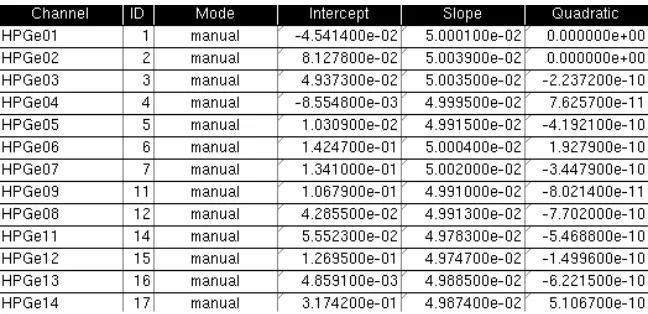
![FIGURE 3.22. Cascades data processing steps [50]](https://thumb-us.123doks.com/thumbv2/123dok_us/8455926.1389324/79.612.165.399.362.687/figure-cascades-data-processing-steps.webp)
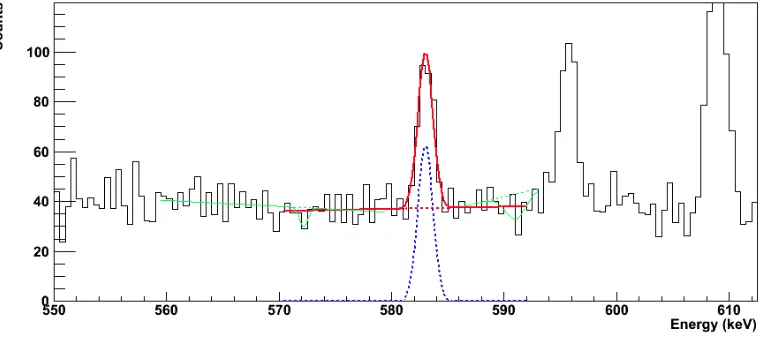
![FIGURE 3.23. Multiplet fitting of Melusine code [51]](https://thumb-us.123doks.com/thumbv2/123dok_us/8455926.1389324/81.612.101.516.213.380/figure-multiplet-tting-of-melusine-code.webp)