University of South Carolina
Scholar Commons
Theses and Dissertations
1-1-2013
A Preliminary Study Exploring Racial Differences
in Triage, Hospitalization Status, And Discharge
Medication in an Emergency Department in
Graniteville, SC
Clare Pollock
University of South Carolina
Follow this and additional works at:https://scholarcommons.sc.edu/etd
Part of theEpidemiology Commons
This Open Access Thesis is brought to you by Scholar Commons. It has been accepted for inclusion in Theses and Dissertations by an authorized administrator of Scholar Commons. For more information, please [email protected].
Recommended Citation
A PRELIMINARY STUDY EXPLORING RACIAL DIFFERENCES IN TRIAGE, HOSPITALIZATION STATUS, AND DISCHARGE MEDICATION IN AN
EMERGENCY DEPARTMENT IN GRANITEVILLE, SC
by
Clare Pollock
Bachelor of Arts McGill University, 2007
Submitted in Partial Fulfillment of the Requirements
For the Degree of Master of Science in Public Health in
Epidemiology
The Norman J. Arnold School of Public Health
University of South Carolina
2013
Accepted by:
Kellee White, Director of Thesis
Erik Svendsen, Reader
Joan Culley, Reader
Bo Cai, Reader
ii
iii
DEDICATION
I would like to dedicate this thesis to my mother, who discussed this topic with
me every morning on the phone as I walked to my office. In one of our final discussions
she told me, “I can‟t wait to read the final version because it looks like you are on your
iv
ACKNOWLEDGEMENTS
I would first like to acknowledge and thank Dr. Erik Svendsen, the unofficial
chair of my thesis committee, for his limitless patience and guidance as I wrote this
manuscript. In addition, I would like to thank Dr. Joan Culley, Dr. Kellee White, and Dr.
Bo Cai for their dedication and guidance in answering my abundance of emails, office
visits, and phone calls.
A special thanks to my peers, friends, and family members who have provided
and listened to both my problems and ideas having to do with writing this manuscript. In
the last two years, and particularly during a complicated first term, these people have
helped to make my graduate degree an exhilarating experience, and this would not have
v
ABSTRACT
Purpose
This study seeks to identify any racial differences present in assigned triage
scores, hospitalization status and discharge medications in a rural hospital likely
experiencing a surge after a mass casualty incident involving chlorine gas as a result of a
train derailment. Differences were examined between Non-Hispanic White and African
American adults who were moderately ill and who presented to the emergency
department of the closest hospital to the accident site within 24 hours of the incident.
Methods
Non-Hispanic White and African American adults who presented to the
emergency department of the closest hospital to the accident site and who complained of
chlorine exposure symptoms were included in this descriptive epidemiological study
(n=25). Data used was obtained from medical records, utilizing a standardized medical
abstraction form. Toxidrome, a compilation of five symptoms specific to chlorine
exposure: eye irritation or pain, ear, nose, and throat irritation or pain, cough/wheezing
and/or nausea/vomiting documented in the emergency room, was used as a proxy
variable for exposure to chlorine gas. Triage score is defined by classifying patients as
urgent or non-urgent based on the Simple Triage Rapid Treatment (START) algorithm.
vi
Control (CDC) and South Carolina Department of Health and Environmental Control (SC
DHEC) to evaluate the severity of patients‟ symptoms. Patients were assigned to a
hospitalization status group based on this coding system; hospitalized or not hospitalized.
Both groups consisted of patients with similar severity symptoms. Discharge medications
are defined by the prescribed biologic agents given to each patient upon discharge.
Patients were grouped in oral medication or non-oral medication categories. Frequency
distributions were calculated for all categorical variables and mean age was calculated for
the only continuous variable. All categorical variables were assessed with Chi square or
Fishers exact test to determine if racial differences were present in assigned triage scores,
hospitalization status, and discharge medications received. Age, the only continuous
variable, was assessed with a t-test.
Results
The data suggests that all victims sustained equal effects caused by exposure to
chlorine gas (p= 0.283) and that there was no significant difference between demographic
characteristics: age, sex, smoking status, and pre-existing pulmonary disease. There was
no statistically significant difference between Non-Hispanic Whites and African
Americans in discharge medications (p=0.131). The data suggests a significant difference
in hospitalization status (p=0.024) by race, where 100% of Non-Hispanic Whites and
62.5% of African Americans were hospitalized. For patients presenting with similar
injury severity, a statistically significant difference was observed between Non-Hispanic
Whites and African Americans (p=0.027). The percentage of Non-Hispanic Whites
(82.4%) was higher than that of African Americans (50.0%) who were given an urgent
vii Conclusion
The present work suggests a difference in triage scores assigned and
hospitalization status between Non-Hispanic White and African American adults, who
sought treatment at the closest hospital to the accident site during a mass casualty
incident. The differences observed may be attributed to non-clinical factors influencing
triage decisions and care provided. The implications of differential care based on race are
a critically important public health concern. Further research should is needed to
investigate why there are racial differences in hospitalization status and triage score
assignment for equally exposed patients with similar severity of injuries.
viii
TABLE OF CONTENTS
DEDICATION ... iii
ACKNOWLEDGEMENTS ... iv
ABSTRACT ... v
LIST OF TABLES ... ix
CHAPTER 1: INTRODUCTION ... 1
CHAPTER 2: LITERATURE REVIEW ... 3
CHLORINE ... 3
RACISM ... 8
TRIAGE ... 14
CHAPTER 3: METHODS ... 21
CHAPTER 4: RESULTS ... 29
CHAPTER 5: DISCUSSION ... 35
CHAPTER 6: DIRECTION OF FUTURE RESEARCH ... 43
REFERENCES ... 53
ix
LIST OF TABLES
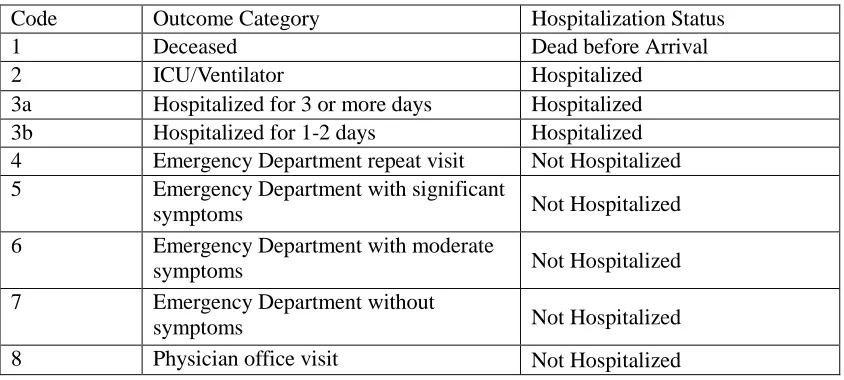
Table 3.1 Outcome Categories ... 26
Table 4.1 Frequencies and Column percentages for adults who sought treatment at Emergency Department of the closest Hospital to the Accident
Site within 24 hours of the Train Derailment ... 32
Table 4.2 Characteristics for Adults presenting to Emergency Department of the nearest Hospital to the accident site within 24 hours of Train Derailment
by Race... 33
Table 4.3 Racial Differences in Triage Score, Hospitalization Status and
Discharge Medications... 34
Table 4.4 Post-Hoc Power Calculation Using a Non-Central Chi Square
1
CHAPTER 1
INTRODUCTION
At approximately 2:40am on January 6, 2005, a train was inadvertently switched
onto an industrial spur and collided with a parked train outside of a textile mill in
Graniteville, South Carolina (1;2). A train tank car was derailed and punctured, resulting
in a leak of over 54,000 kg of liquid chlorine. Due to geographic positioning and calm
winds that morning, the released chlorine formed into a gas and created a plume that was
dispersed throughout the area. 630 people sought medical treatment due to direct chlorine
exposure: 8 fatalities at the scene; 72 were hospitalized (1 died in hospital); 525 were
examined as outpatients in hospital emergency departments or at a private physicians‟
office, and 25 were unaccounted for. Approximately 5400 people within a 1-mile radius
of the accident were subject to a 1-2 week mandatory evacuation (3). Immediately
following the train derailment, health care services in and surrounding Graniteville were
inundated with people seeking medical attention. Despite efforts made by medical
personnel, some community members repeatedly expressed concerns of differential
treatment in the health care setting to employees of the South Carolina Department of
Health and Environmental Control (SC DHEC) (1).
There is a copious amount of literature detailing the inequalities that exist within
the health care system; however, whether racial differences are present in the health care
2
concern. This study investigates whether racial differences in assigned triage scores,
hospitalization status, and discharge medication received were present in a hospital
setting immediately following a mass casualty chemical exposure resulting from a train
3
CHAPTER 2
LITERATURE REVIEW
CHLORINE
Chlorine is a reactive element that presents as a green-yellow gas or clear amber
liquid with a characteristic pungent odor at room temperature (5;6). If released into the
air, chlorine will form into a gas, which settles low to the ground due to its high density.
Chlorine has an intermediate water-solubility which relates to its toxicity mechanism.
Upon contact with water chlorine forms hydrochlorous (HC1O) and hydrochloric acid;
the unstable HC1O decomposes, forming oxygen free radicals at the cellular level (2).
As a result, exposure can cause acute damage to both the upper and lower respiratory
tracts.
Rotman et al. (1983) studied clinically significant changes in pulmonary function
tests (PFTs) following controlled chlorine exposure (3). Using 9 volunteers (8 with no
previous respiratory disease and 1 with allergic rhinitis), data was collected on several
PFTs following 4 and 8 hour exposures to 0, 0.5 and 1.0 part per million (ppm) chlorine.
The study observed that exposure to chlorine at 1 ppm resulted in nose, throat, and eye
irritation, and changes in pulmonary functions. Similar studies using human volunteers
have demonstrated that asthmatics or people with airway hypersensitivity have increased
4
concentration necessary for chlorine gas exposure to be lethal to 50% of the population
(LC50) with 30 minute exposure in rodents ranged from 504 ppm in the mouse to 700
ppm in the rat (5). Death at high exposure to chlorine will result mainly from respiratory
failure or cardiac arrest due to toxic pulmonary edema. The relationship between the
concentration and exposure duration of chlorine is related; therefore dependent on the
exposure concentration a person may develop sensory irritation, respiratory related
illnesses and even death.
Exposure Standards
A growing industrial sector coupled with workplace death and injury led the
federal government to create and instill regulating agencies to safeguard against exposure
to toxic airborne agents in the workplace. Each regulating agency has their own threshold
limit values (TLV) of what is deemed safe for each specific chemical agent. The current
Occupational Safety and Health Administration (OSHA) permissible exposure limit
(PEL) is based on an 8 hour (40 hour work week) Time Weighted Average (TWL).
OSHA‟s PEL for chlorine is 1.0 ppm as a ceiling limit and a worker at no time shall
exceed this limit (6). The National Institute of Occupational Safety and Health (NIOSH)
has established a recommended exposure limit (REL) for chlorine of 0.5 ppm for up to a
10-hour workday and a 40-hour work week ,and a short-term exposure limit (STEL) of 1
ppm (7). The American Conference of Governmental Industrial Hygienists (ACGIH), a
voluntary professional society, has a more conservative recommendation; a TLV of 0.5
ppm and STEL of 1.0 ppm for periods not exceeding 15 minutes and not to be repeated
5
mucous membrane and skin irritation (9). The ACGIH limits are based on the risk of eye
and mucous membrane irritation (9).
The United States Environmental Protection Agency (EPA) promulgates ambient
airborne levels known as Acute Exposure Guideline Levels (AEGLs). Chlorine irritant
properties have been studied in human volunteers and its acute inhalation toxicity has
been studied in several laboratory animal species (7;13). The data from the human and
laboratory animal studies was sufficient for developing AEGLs for five exposure
durations (e.g. 10 and 30 minutes, and 1, 4, and 8 hours) (9). These guidelines are more
applicable to our study as they were set by the EPA, which bases their limits on the
general public and not occupational exposure limits. The National Research Council of
the National Academies defined the AEGL classifications as: AEGL-1 - the airborne
concentration of a substance, where people may experience non-disabling discomfort,
irritation, or certain asymptomatic non-sensory effects; AEGL-2 the airborne
concentration of a substance, where individuals may experience irreversible adverse
health effects; AEGL-3 - the airborne concentration of a substance, where an individual
could experience life-threatening health effects or death (9). The AEGL information
pertaining to this sample was unavailable.
Transportation and Accidents involving Chlorine Gas
Chlorine is one of the most commonly manufactured and widely used chemicals
in the United States (US) (10). In the US, chlorine is produced at 44 plants in 21 states
and is then transported nationwide, predominately by rail (11). Unlike road
6
distances (12). For this reason, approximately 4,300 shipments of hazardous materials
travel by rail each day in the US (13). The US has over 140,000 miles of freight rail and
several hundred thousand workers handle over 1.2 million hazardous material movements
daily (14). Unbeknownst to the public, hazardous materials travel along the railroads
through areas which are densely populated by schools, parks, and homes, and
consequences of a train derailment can be catastrophic. To ensure extreme caution, the
US Department of Transportation (DOT) regularly updates their freight and rail
regulations (15). The DOT has created regulatory requirements to reduce the risk in
transporting hazardous materials by highway, rail vessel and air. The hazardous material
regulation (HMR) specifies appropriate packaging and handling requirements and
requires the shipper to communicate the material‟s hazards through the use of shipping
papers, package marking and labeling, and vehicle placarding (16). Additionally, the
DOT, coupled with other federal agencies including; OSHA, NIOSH, EPA and the
Federal Emergency Management Agency (FEMA), have created and maintain regulations
regarding training, protection, and disposal of hazardous materials (17). In the event of an
accident, the Hazardous Substances Emergency Events Surveillance (HSEES)
organization will collect and analyze information regarding the release of hazardous
materials. The goal of the organization is to reduce morbidity and mortality from
exposure to toxic materials in the public sector. Even with the advent of regulating
agencies and the stringent policies, the transportation of hazardous materials has become
a ubiquitous part of the industrialized world and accidents involving the release of these
7
Despite these regulations, the risk of a hazardous material disaster travelling by
rail is small; HSEES reported 49,450 events between 1999 and 2004, of those 1,165 (9%)
were rail events (19). To date, the available literature detailing the exposure to a high
concentration of chlorine gas resulting from a train derailment is scarce. With the
exception of the train derailment in Graniteville, SC discussed in this study, there have
been three notable cases of chlorine being released as a result of a train derailment: La
Barre, La (1961), Macdona, Texas (2004) and Festus Missouri (2002).
On January 31, 1961, in La Barre, LA, approximately 6,000 gallons of liquid
chlorine spilled from a train accident resulting in a cloud of chlorine gas covering 6
square miles (20). As a result, one human fatality, hundreds of animal fatalities, and
approximately 100 persons were treated for varying degrees of exposure related
problems. In Macdona, Texas, a town near San Antonio, a moving train struck a
stationary train at a rail substation, causing a derailment. One tanker car was punctured,
releasing approximately 90,000 pounds of chlorine. The accident resulted in 44 casualties
and 3 fatalities (21). In Festus, Missouri, approximately 16,900 pounds of chlorine was
released from a railroad tanker car when a flex hose ruptured during unloading at a
chemical plant. This accident resulted in 67 casualties (21). There are no estimates of
economic damage for these train accidents and the available information is limited to the
physical health effects, both acute and long-term (21;23;24). These reported train
incidents demonstrate the gravity a train derailment carrying hazardous materials may
have on a community. Abiding by the stringent policies set forth by the federal agencies
helps reduce the risks involved in the transportation of hazardous materials; however,
8
Given the widespread production and transportation of chlorine, coupled with the
potential physiological consequences associated with high concentration of chlorine
exposure, there are multiple opportunities for chlorine related disasters. This study builds
upon the available literature discussing both acute and long term health consequences
associated with exposure to high concentration of chlorine gas. Moreover, this study
provides emergency management and medical personnel a real life scenario of potential
impediments associated with a mass casualty disaster involving chlorine gas.
RACISM
A significant body of literature provides evidence of the growing health care
disparities among racial and ethnic minorities in the US (22). The Department of Health
and Human Services (DHHS) committed to the nation to “eliminate health disparities”
(23). It outlines an agenda to define and eliminate health disparities with respect to
disease patterns and prevalence, treatment outcomes by race, sex, ethnicity,
socioeconomic and educational status, place of residence, and sexual orientation. Despite
the efforts made by researchers, policy makers, health care professionals and health
advocacy groups, health care inequality is still present.
In 2002, the Institute of Medicine (IOM) developed a report, entitled Unequal
Treatment: Confronting Racial and Ethnic Disparities in Health Care (24). This report
outlined the inequalities present in the health care system. Detailing how inequalities
cannot be entirely attributed to the problem of health care access, clinical performance or
patient‟s personal characteristics, but are rooted in a complex mix of marginalization and
9
are present throughout health care and it is important to understand how and why these
differences are manifested. The following sections conceptualize the impact race has on
the health care system.
Distrust between the Races
A history of racial discrimination and segregation has long permeated the cultural
and medical landscape of the United States (26). Although the Civil Rights Act of 1964
(Pub.L. 88-352, 78 Stat. 241, enacted July 2, 1964), a landmark piece of legislation in the
United States, outlawed major forms of discrimination (namely by race, color, and
national origin), it did not prevent racism from occurring throughout several aspects of
life including employment, housing, and most importantly, health and healthcare (22).
For many African Americans, doubts concerning the trustworthiness of physicians and
healthcare institutions are related to abuses endured from largely white health care
professionals and researchers, particularly from the memory of the Tuskegee trials
(25;30). This legacy of distrust, which can be the catalyst for healthcare disparities by
discouraging minorities to seek the best care possible, is thus itself a by-product of racism
(27).
Racism and Health Effects
Members of racial and ethnic groups, particularly African Americans living in the
United States, tend to bear a disproportionate burden of death and illness compared to
non-minorities (22). For example, African Americans, regardless of income, tend to
suffer disproportionately from chronic diseases such as hypertension, heart disease,
10
Non-Hispanic Whites. According to recent data from the CDC, the life expectancy in the
United States for whites is 78.2 years and 73.2 for African Americans (29). Moreover,
African Americans have less access to quality care and experience a lower quality of
health care and services (22;30). For example, one-third (33%) of African Americans
were uninsured at some point during 2005, compared with 20 percent of working-age
whites (31). Moreover, the 2002 IOM reported significant variation in the rates of
routine medical procedures by race, even when insurance status, income, age, and
severity of conditions are comparable (22). The committee concluded that racism may
explain the variations in care received.
3 Types of Racism
Among the plethora of scientific articles describing health and health care
disparities in the US, there is an extensive literature explicitly investigating the
contribution of racism and how it is an important determinant of the observed health
disparities (34-36). Race-associated differences in health and health care outcomes may
be attributed to one of, or a combination of, three forms of racism: institutional,
personally mediated, or internalized racism (32). Institutional racism is defined as
differential access to the good, services, and opportunities of society by race. For
example, racial/ethnic residential segregation may be considered a form of
institutionalized racism (33). Personally mediated racism is defined as an individual‟s
ideologies regarding another ethnicity about their abilities, motives, and intentions. This
is the most common notion of racism; it is individually practiced and not inherent in the
institutions that surround them. Internalized racism is characterized by the acceptance of
11
intrinsic worth (34). This is often seen as embracing “whiteness” (e.g. using skin
bleaching creams or self-devaluation by using racial slurs as nicknames) (35).
Racism in Health Care
Dykes et al. (2009) reviewed the existing literature of personally mediated racism
and the impact on healthcare and found that there are many such studies already available
(36). Although the ethic of physicians is to provide equal and optimal care to all of their
patients, unfortunately, this may not always be the case. Prior literature observed the
presence of discriminatory racial treatment among health care providers (25;34;39;40).
Schulman et al. (1999) studied if race and gender were associated with differential
referral rates for cardiac catheterization (37). The study surveyed 720 physicians at two
national meetings. Each physician viewed a recorded interview and was given other data
about a hypothetical patient. All patients had similar insurance status and presentation of
disease. He/she then made recommendations about that patient's care. It was observed
that African Americans were recommended for cardiac cauterization 60% as often as
whites, particularly if the patient was female and of ethnicity
Racial Bias in hospitalization and treatment
The recent Institute of Medicine report, “Unequal Treatment: Confronting
Racial/Ethnic Disparities in Health Care” identified over 175 studies documenting
racial/ethnic disparities in the diagnosis and treatment of various conditions, even when
controlled for socioeconomic status, education, and access to care. There is an abundance
of literature detailing the presence of racial differences in the healthcare system;
12
Bach et al. (2004) performed a cross sectional analysis of primary care physicians who
treated Medicare beneficiaries (38). This study hypothesized that racial discrepancies
found in healthcare are in fact caused by a difference in physician qualifications and
clinical resources. The authors found that physicians treating African American patients
reported greater difficulty in obtaining access for their patients to high-quality
subspecialists, high-quality diagnostic imaging, and nonemergency admission to the
hospital. In addition, African American patients were more likely to be treated by
physicians who have not obtained board certification in their primary specialty than white
patients. These findings support the notion that minority patients have different rates of
hospitalization. Moreover, the quality of care that minorities are receiving is inferior to
that of their non-minority counters parts. Flaherty & Robert (1980) study supports this
claim (39). The authors conducted a retrospective chart audit of male schizophrenics
hospitalized in a psychiatric facility to determine if racial bias was associated with the
treatment received. After controlling for severity of disease, the authors found that
African American patients spent less time in the hospital, obtained a lower privilege
level, and were less likely to receive recreational and occupational therapy. Seclusion and
restraints were used more often in African American patients. A similar study by
Schneider et al. (2002) conducted an observational study to assess if racial disparities in
the quality of care for enrollees in Medicare managed care health plans was present (43).
The authors found that African Americans were less likely than whites to receive breast
cancer screenings, eye examinations for patients with diabetes, β-blocker use after
myocardial infarction, and follow-up after hospitalization for mental illness. As such,
13
differences in the hospitalization rates and the quality of treatment received differs by
race (42;44).
Racism in Disaster
Emergency situations are stressful and quick reactions play a key role in the
safety and recovery of the injured. Response should be addressed according to the
severity of the injuries and not based on any other non-clinical factors. Prior, literature
has confirmed that this is not the case and reveals how racial bias may play a role in an
emergency situation. Saucier et al. (2005) conducted a meta-analysis assessing whether
race played a role in the degree of help strangers give to each other in crisis situations
(40). They found that as the severity of the emergency situation increases, the likelihood
of an African American victim receiving help from strangers compared to a Caucasian
victim decreased. This study demonstrates how racial bias is present during a disaster
situation. Using a similar research scope, Kuntsman & Plant (2008) created a staged
emergency in order to measure the speed and quantity of help offered to the two racial
groups in different emergency levels (41). The evidence found that in a highly emergent
situations African American victims received significantly slower help than white
victims. When the emergency was not as significant, however, there was no difference in
time for received help between the races. In addition, they tested the motives for white
bystanders for their delayed helping of African Americans. They found that white
bystanders construed the situation as less severe and themselves as less responsible to
help than if the victim was white. Moreover, a Caucasian person‟s interpretation of the
14
pattern was observed in Wegner & Crano‟s (1975) study in which it was found that
African Americans provide more help to African American‟s than to white‟s (42).
While many studies have explored the relationship between race and health, the
body of literature is lacking when a disaster component is introduced to the dynamic. The
period post Hurricane Katrina launched a surge of research circumscribing the
relationship between health care disparities and disaster situations. Albeit a good addition
to the literature, very few studies discuss racial disparities in the context of a mass
casualty disaster. This study is the first of its kind to explore whether racial differences
exist in treating patients after a mass casualty exposure to chlorine gas in a hospital
setting.
TRIAGE
Simple Triage and Rapid Treatment (START)
During disasters, emergency responders have an obligation to treat as many
victims who have a chance of survival. The process of sorting and prioritizing victims
based on their medical needs is referred to as triage. The decision criteria for triage
management is based on the likelihood of medical success (43).
Pre-hospital casualty triage is the sorting and categorizing of casualties in the
initial phases of the response to a mass casualty incident (MCI) by the emergency
medical service (EMS) system. They determine the treatment priority of the casualties
(for transport) based upon their injury severity (44). More specifically, the goal of
15
each patient, within the constraints of limited resources. Triage may also be conducted
within a hospital setting. The principle of sorting and classifying persons based on the
severity of their injuries is the same. The first stage on arrival at the emergency
department is an assessment by a hospital triage nurse. This nurse will evaluate the
patient's medical condition, as well as any changes, and will determine their priority for
admission to the Emergency Room, as well as for treatment.
One of the most commonly used pre-hospital triage strategies is the Simple Triage
and Rapid Treatment (START) algorithm. It was developed by the Newport Beach Fire
Department and Hoag Hospital in California in 1983. The START algorithm uses the
ability to obey commands, respiratory rate, and capillary refill to categorize patients.
Once assessed, the patient is classified into one of the following four groups: green
(walking injured); red (immediate); yellow (delayed); and black (deceased). The EMS
first responders often use a triage tag, which helps organize the efficiency of victims
already processed. The algorithm was developed for those eight years and older.
Recognizing the physical and mental differences between children and adults,
JumpSTART is a pediatric offset of the START algorithm (45).
START Process
The advantage to using the START algorithm in a mass casualty incident is that
EMS first responders are able to triage large populations relatively quickly. It should
take no longer than 30 seconds to triage each person. The algorithm is as follows: firstly,
the EMS first responders instruct all persons able to walk to evacuate the scene to a
16
later point if resources permit. Secondly, they proceed to triage others by determining
their respirations. If a person is not breathing he or she is presumed dead or expectant and
tagged black. If the victim is breathing, however, they assess the rate at which he is
breathing. If the rate is greater than 30 breaths per minute, a person is tagged red and
must receive immediate care. For less than 30 breaths, EMS first responders will test for
adequate perfusion. A common method is capillary refill. This can be done by applying
pressure to the nail bed. If the color takes longer than 2 seconds to return, the patient is
showing signs of inadequate perfusion and must be tagged red. If the radial pulse is
present, they proceed onto the third assessment, mental status, i.e. can the victim follow
simple commands (what day is it, what is your name, etc.)? If the victim is able to follow
directions he or she is tagged yellow; medical attention can be delayed for a
recommended one hour. If the victim is not able to follow simple commands, then he or
she is labeled with the red tag; immediate care is needed because the situation may be life
threatening.
Limitations of START Triage
Although START triage may be efficacious in mass casualty disasters, it may not
be an optimal choice when a chemical exposure is involved (50;51). Cone and Koenig‟s
(2005) paper entitled “Mass casualty triage in the chemical, biological, radiological, or
nuclear environment” discusses the limitations of the START algorithm (46). The authors
suggest that an ideal mass casualty triage algorithm should include the following
characteristics: easily memorized, rapidly applied, little inter-rate variability, applicable
by rescuers with a variety of backgrounds and levels of education and experience, and
17
contain all of the previously mentioned characteristics for an ideal mass casualty triage
algorithm, it does not account for the clinical implication of a chemical exposure. Cone
and Koenig suggest that before any such scheme is applied, EMS first responders must
first detect the presence of the chemical agent and determine whether entry into the
questionable area is safe, either with or without personal protective equipment.
Other notable limitations of the START algorithm include a potentially long
latency period. Persons that have been exposed to hazardous chemicals may exhibit
symptoms hours after exposure. For instance, approximately, 2-24 hours after a high
concentration of chlorine exposure a person with high concentration of exposure may
start to experience shortness of breath and tightness in the chest (48). A long latency
period may be problematic if there is a surge of “worried well” patients that surge the
emergency department at the same time. In order to ensure that triage has been assessed
correctly, an additional step, which is specific for toxidrome, may be needed in the
algorithm. For the purpose of this study, a toxidrome is a grouping of signs and or
symptoms specific to a chlorine exposure. If a patient was observed or answered
positively to having any complaints/symptoms regarding ear nose and throat pain,
coughing, wheezing, nausea, and/or vomiting, he or she was categorized as experiencing
signs of toxidrome. Secondly, the threat of secondary contamination (or transmissibility)
to the rescuers from the chemical agent is a potential problem. It is important to
determine if the area is safe for the rescuers to enter, with or without protective
equipment. This is an important step in the rescue mission, as seen in the train derailment
examined in this text. Although rescue personnel did assess the type of exposure that was
18
later on in their rescue response and, in turn, were exposed to the chlorine gas (ER
Svendsen, personal communication, 2011). It is imperative to identify the type of
exposure at the earliest possible time point; if the identification of the chemical is
determined early on it will result in a reduction of accidental exposure and any
unnecessary confusion. Thirdly, it is important to have proper organizational and
logistical protocol set up in advance, which will reduce the amount of confusion
regarding operation of safety equipment and/or the likelihood of a multi-agency response
(49). Fourthly, during a disaster, the need for self-preservation is extremely prevalent.
Victims may bypass the established zones and decontamination systems and present
directly to the emergency department, thus resulting in a surge of patients in the
emergency department (50). Not only does this influx of people create a chaotic and
stressful environment, it can be potentially fatal for the hospital personnel. If a victim
does not go through the appropriate decontamination stations, it may result in
transference of the chemical exposure to others in the hospital. It is important for all
victims follow procedure; however in the event of a surge of victims in the emergency
room; hospital personnel should follow a predetermined protocol that facilitates the ease
of triaging patients, as well as reducing secondary contamination.
Bias in Triage Decision
Triage, if performed correctly, should be free of any bias; however, prior research
has demonstrated otherwise (56;57). For example, Arslanian-Engoren‟s (2000) study
“Gender and Age Bias in Triage Decisions” used four focus groups to examine the triage
decisions made by emergency department nurses for persons with symptoms suggestive
19
were less likely to be triaged as emergent. In addition, the focus groups revealed that
patient presentation, nursing knowledge and experience, practice environment, intuition,
the fear of liability, and gender-specific behaviors influence triage decisions, thus
demonstrating how non-clinical factors may influence triage assignment, causing patients
to be assigned incorrectly. It is an unfortunate reality that non-clinical factors may
influence triage decisions. Lopez et al. (2010) used a nationally representative sample
from the National Hospital Ambulatory Health Care Survey of Emergency Departments
(ED) for 1997-2006, studying if socio-demographic differences exist in triage assignment
and whether these differences affect initial diagnostic testing in the ED for patients
presenting with chest pain (59). They found that African Americans presenting with chest
pain were triaged as an emergency 70% less often than Non-Hispanic Whites. Albeit, in
their study insurance status played a role in triage assignment, however, they stated that
non-clinical factors may have influence the triage decision making. For instance, triage
nurses may be influenced by conscious or, more likely, by unconscious biases about
race/ethnicity, sex and other socio-demographic characteristics for triage assignment
(52). There are a number of laws and protocols that collectively instruct emergency-room
physicians and other health care professional to triage the more critical injured first (53).
However, infrastructure created by humans will inevitably encounter problems associated
with human error. Prior research has described a wide variation of error in the triage
practices of emergency medical providers (59;62-64). This study will add to the growing
body of literature discussing the association of non-clinical factors and triage
20
present in the triage prioritization of patients after a mass casualty exposure to chlorine
gas.
Gap in the literature
Theoretically, access to health care and the quality and treatment received is
distributed equally within today‟s society; however, prior research has demonstrated that
is not the case (45;46). There is undoubtedly a plethora of literature examining the
association of racial disparities and health care, but the literature is lacking when a mass
casualty component is added. The purpose of this study is to examine if racial
differences are present in a mass casualty incident. More specifically the study will
provide statistical evidence if racial differences are present in the hospitalization, triage
categorization, and treatment received after a mass casualty incident involving exposure
21
CHAPTER 3
METHODS
Research Question
This study answers the following question: was there any difference in assigned triage
scores, hospitalization status and discharge medications received between Non-Hispanic
Whites and African Americans adults in a rural hospital, likely experiencing a surge after
a mass casualty incident involving chlorine gas as a result of a train derailment. Research
hypotheses were as follows:
1. There will be a difference in triage scores between Non-Hispanics Whites and
African Americans. Non-Hispanic Whites will be assigned a triage score of
“urgent” more often than African Americans.
2. There will be a difference in hospitalization status between Non-Hispanic-Whites
and African Americans. Non-Hispanic Whites will be hospitalized more
frequently than African Americans, given both groups have similar severity of
symptoms.
3. There will be a difference in discharge medications between
Non-Hispanic-Whites and African Americans. Non-Hispanic Non-Hispanic-Whites will be discharged more
22
Data Source
Personnel from the Division of Acute Disease Epidemiology and the regional and
county offices of the South Carolina Department of Health and Environmental Control
(SC DHEC) and the Centers for Disease Control and Prevention (CDC) collaborated to
design and conduct a rapid assessment of the effects of the chlorine exposure. The data
used in this study was obtained from this collaboration and was collected exclusively for
public health purposes and not research (24). Therefore, the self-reported and voluntary
data has a considerable amount of missing information.
A case was defined as death or illness attributed to chlorine exposure, reported
within 6 weeks of the accident. A health alert was distributed through the South Carolina
Health Alert Network that mandated reporting for people treated for chlorine-related
symptoms in and surrounding areas of the accident site. Complete medical record
abstractions were performed for patients who were hospitalized and those examined
during multiple emergency department visits. Local Physicians reported information on
patients who were examined in their practice to an epidemiologist at the regional health
department. The collected data resides in SC DHEC and access to de-identified copies of
the data was granted to the University of South Carolina (USC) investigators for this
study by the SC DHEC International Review Board. Approval for this study was obtained
from the institutional review board at the University of South Carolina. The study was
23
Sample
Inclusion Criteria:
Those who presented to the emergency department at the closest hospital to the
train derailment site. This hospital was the only hospital likely to have
experienced a surge in the emergency department.
Male and Females aged 18 years and older.
Race/ethnicity was reported as Non-Hispanic or African American.
Patients who presented to the hospital experiencing of symptoms of toxidrome
associated with chlorine exposure.
Exclusion Criteria:
Any person who whose race or ethnicity was reported as mixed, other or
unknown.
Any person who did not present to the closest emergency department to the
accident site within 24 hours with chlorine related symptoms.
Appendix, figure 1, displays the inclusion/exclusion criteria for the sample.
Study Design
A descriptive study was used to examine racial differences in triage scores,
hospitalization status, and discharge medications between Non-Hispanic White and
African American adults who presented to the closest hospital of the accident site
24 Demographic characteristics:
Demographic and health status variables were collected from medical charts. The
following variables were examined:
Age: a continuous variable. Patients were asked, “What is your age?”
Sex: Patients were asked, “What is your sex?” Categories were male or female.
Race: Patients were asked “What race/ethnicity do you associate with?” The
Non-Hispanic Whites group included categories „White‟, „Caucasian‟, and „Non-Non-Hispanic
Whites.‟ The African American group included the categories „Black‟ or „African
American.‟ We grouped the patients as “Non-Hispanic Whites” or “African American.”
All patients who did not fall into the Non-Hispanic Whites or African American category
were excluded.
Smoking Status: Patients were asked, “Do you currently smoke any tobacco products?”
Categories were yes or no.
Preexisting Pulmonary Disease: Patients were asked, “Do you have any preexisting
pulmonary disease prior to the train derailment?” Categories were yes or no.
Health status:
Exposure to chlorine was assessed using a proxy variable toxidrome. By
definition, a toxidrome is a grouping of signs and or symptoms specific to a certain
chemical exposure. If a patient was observed or answered positively to having any
complaints/symptoms regarding ear, nose, and throat pain, eye irritation or pain,
25
signs of toxidrome. Toxidrome was used as a predictor for the severity for the appropriate
triage category because it has been validated in previous studies. The following is a
description of each factor used to create the toxidrome variable, how the information was
collected, and how it was coded:
Eye Pain: a person who entered the emergency department complaining of eye irritation
or pain. Categories were yes or no.
Ear Nose Throat Pain: a person who entered the emergency department complaining of
ear, nose, and throat pain or discomfort. Categories were yes or no.
Cough : a person who entered the emergency department complaining of a cough.
Categories were yes or no.
Wheeze: a person who entered the emergency department complaining of wheezing.
Categories were yes or no.
Nausea/vomiting: a person who entered the emergency department with initial symptoms
of nausea or vomiting. Categories were yes or no.
Outcome Variables:
Hospitalization Status: This variable was created by using a coding system created by the
CDC and SC DHEC to evaluate the severity of patients‟ symptoms. A patient was
categorized as “hospitalized” if their outcome category was deceased, in the intensive
care unit (ICU) or on a ventilator, hospitalized for 3 or more days or hospitalized for 1-2
days (outcome category 1-3b). “Not hospitalized” category included patients who have
26
department with significant, moderate or with no symptoms, or they went to a physician‟s
office (outcome category 4-8). Although one patient was dead before arrival, they were
still included in the hospitalized category, as they still obtained medical attention. The
way in which the values were coded may be referenced in Table 3.1.
Table 3.1 Outcome Categories
Code Outcome Category Hospitalization Status
1 Deceased Dead before Arrival
2 ICU/Ventilator Hospitalized
3a Hospitalized for 3 or more days Hospitalized 3b Hospitalized for 1-2 days Hospitalized 4 Emergency Department repeat visit Not Hospitalized 5 Emergency Department with significant
symptoms Not Hospitalized
6 Emergency Department with moderate
symptoms Not Hospitalized
7 Emergency Department without
symptoms Not Hospitalized
8 Physician office visit Not Hospitalized
Discharge medications: This was used as a measure for treatment received. Each
individual medication category had a low frequency; therefore we grouped the
medication into two categories: oral and non-oral medications. Oral medications included
corticosteroids, ipratropiums and any other type of steroid administered orally. Non-oral
medications included antibiotics, beta- agonist, and any other type of medication that was
administered in the form of an inhaler or liquid for use in a nebulizer. All information
collected was obtained from medical records. Each discharge medication was categorized
as yes and no.
Triage Score: The START triage algorithm has four categories (green, yellow, black, and
27
categories: non-urgent and urgent. „Non-urgent‟ included categories yellow and green,
and „urgent‟, included categories black and red. A prior research grant by Culley et al.
took the sample of patients and assigned them to categories based on analyses of the data
from previous research (54). The severity an individual‟s injuries vary within the sample;
therefore Culley et al., utilizing the START algorithm, assigned patients to the most
appropriate category based on their injuries. Within each triage category, patients
experienced similar severity of injuries. The triage score does not represent the actual
priority classification used by the emergency department but instead acts as a
representation of how the START triage algorithm may have classified victims of this
MCI.
Statistical Analysis
All analyses were performed using SAS software 9.2 by SAS Institute Inc., Cary,
NC. Descriptive statistics were computed for each measure. This included: age, sex,
smoking status, race, any preexisting pulmonary disease, hospitalization status, discharge
medications, and if they were categorized as experiencing symptoms of toxidrome.
Demographic characteristics, experiencing symptoms of toxidrome, triage score
assignment, hospitalization status and discharge medications were categorical and age
was the only continuous variable.
Chi-square (χ²) or Fishers exact (cell frequencies less than 5) tests were conducted
for categorical variables and a t-test was used for continuous variables to examine the
differences between Non-Hispanic Whites and African American patients. When
28
square distribution was used to test for sufficient power. All p-values reported are for two
29
CHAPTER 4
RESULTS
Characteristics
The sample consisted of 25 patients with a mean (Standard Deviation (SD)) age
of 42.56 (15.9) years and (84.0%) being male. Ages ranged between 20-73 years. There
were twice as many Non-Hispanic Whites (17 (68.0%)) as African Americans (8
(32.0%)). A smaller proportion of patients reported having preexisting pulmonary disease
(20.0% vs 80.0%) and being current smokers (36.0% vs 64.0%) than not. A
disproportionate amount of patients were assigned urgent triage scores (72.0% vs 28.0% )
compared to non-urgent and 88.0% of the sample was hospitalized. More patients were
discharged with non-oral medications (56.0%) than oral medications (24.0%).
Percentages are based on the total number of patients with available information in each
group; therefore column percent does not necessarily equal 100.0%. The frequencies and
column percentages for adults who sought treatment at the Emergency Department of the
closest hospital to the accident site immediately following the train derailment are shown
in Table 4.1.
Demographic and Health Characteristics by Race
The distribution of selected demographic and health characteristics for adults
30
Train Derailment by Race is shown in Table 4.2. The sample comprised 17 (68.0%)
Non-Hispanic Whites and 8 (32.0%) African Americans. It was observed that African
Americans had a higher mean (SD) age than Non-Hispanic Whites; 47.62 (13.9) and
40.18 (16.6), respectively. There was no significant difference in age between the two
racial groups (p=0.431). In both racial groups there were disproportionately more males
than females, with 14 (82.4%) Non-Hispanic White males and 3(17.6%) Non-Hispanic
White females. There were 7(87%) African American males and 1 (12%) females. There
was no significant difference in sex between the two racial groups (p=1.0). With the
available information, 5(29.4%) Non-Hispanic Whites had preexisting pulmonary
disease, compared to no African Americans 0 (0.0%) with the disease. There was no
statistical significant difference between the two racial groups for preexisting pulmonary
disease (p=0.278). More Non-Hispanic Whites were current smokers (41.2% vs. 25.0%)
than African Americans and the difference between the two racial groups was not
statically significant (p=0.661). More Non-Hispanic Whites experienced symptoms of
toxidrome than African Americans (88.2 % vs 62.5%, respectively). There was no
statistically significant difference between the two racial groups for experiencing
symptoms of toxidrome (p=0.283).
The frequencies and percentages of assigned triage scores, hospitalization status,
and discharge medications by race are presented in Table 4.3. The sample observed a
statistical difference in triage score between the two racial groups (p=0.027). Compared
to African Americans, more Non-Hispanic Whites were given urgent triage scores
(50.0% vs 82.4%). There was a statistically significant difference in hospitalization status
31
hospitalized, compared to 62.5% of African Americans. There was no significant
difference in discharge medication received between the two racial groups (p =0.131).
More Non-Hispanic Whites were discharged with non-oral medications when compared
to African Americans (70.6% vs 25.0%, respectively). More African Americans were
discharged with oral medications than Non-Hispanic Whites (37.5% vs 17.6%,
respectively).
The percentage of the sample that received non-oral medications as treatment was
greater in Hispanic Whites than in African Americans (70.6% vs. 25.0%).
Non-Hispanic Whites approximated almost half of the patients discharged with oral
medications (3 (17.6%)) compared to African Americans (3 (37.5%)). There was no
statistical difference in discharge medications between the two racial groups (p=0.131).
In order to test for sufficient power, we used a non-central chi-square distribution,
which resulted in a power of .87 for hospitalization status and 0.97 for triage score. This
demonstrates that there is an 87% likelihood that the test will correctly lead to the
rejection of false null hypotheses for hospital frequency and 97% for triage, respectively.
32
33
34
Table 4.3 Racial Differences in Triage Score, Hospitalization Status and Discharge Medications
Table 4.4 Post-Hoc Power Calculation Using a Non-Central Chi Square Distribution
35
CHAPTER 5
DISCUSSION
This study sought to examine if racial differences were present in patients with
injuries of similar severity in assigned triage score, hospitalization status, and discharge
medications received. It is quite probable a patient, if seriously ill, would be triaged more
urgently than a patient with lower priority illness. Therefore we compared patients with
similar injury severities. The findings suggest that there was a statistical difference in
assigned triage score and hospitalization status between Non-Hispanic whites and African
Americans. We did not observe any difference in discharge medications between the
groups.
This study suggests a racial difference in assigned triage scores. This is consistent
with previous literature demonstrating how non-clinical factors may influence triage
decision making (60;62;66). A patient‟s triage priority is decided by a triage nurse and,
although there are a set of guidelines to prioritize a patient based on clinical symptoms,
these guidelines are not always followed, nor do they encompass all situations that a
triage nurse may encounter. According to Beauchamp and Childress (1994), nurses
sometimes make decisions based on their personal opinions regarding whom or what
should take priority (55). Lopez et al. found that persistent racial and sex differences exist
in triage assignment. According to their research, minority patients were triaged less
36
triage priority may be influenced by non-clinical factors which may include and are not
limited to personal prejudice, intuition and prior clinical experience (60;62-64).
Ultimately, non-clinical factors play a role in triage priority assignment even though this
classification is supposed to be based solely on clinical symptoms.
The findings also suggest a statistical difference in hospitalization status between
the two race/ethnicity groups, where Non-Hispanic Whites were hospitalized more
frequently than African Americans. Shulman et al. conducted the first study to identify if
treatment differed where clinical presentations were the same (56). As previously
discussed in this report, physicians at the 1997 annual meeting of the American College
of Physicians (ACP) and the 1996 annual meeting of the American Academy of Family
Practice (AAFP) volunteered for a study which examined clinical decision making in
which they were required to randomly assess cases that they believed to be real, finding a
disparity in patient care based on race and sex which echoes our own findings. Likewise,
a 2002 report entitled Unequal Treatment: Confronting Racial and Ethnic Disparities in
Health Care concluded that even when all aspects are controlled for racial and ethnic
minorities receive lower quality healthcare (28). In this study, all patients experienced
similar symptoms of toxidrome, yet Non-Hispanic whites were hospitalized more often
than African Americans. Drawing from Shulman et al. research, it‟s possible that
non-clinical decision making may have contributed to this difference. More research is
necessary to determine the degree that non-clinical factors play on hospitalization status.
We found no difference between Non-Hispanic whites and African Americans
discharge medications received. The available literature on pharmacotherapy and race
37
a role in the pharmacotherapy received. Similar to our findings of no difference in
pharmacotherapy, Tsai and Cammaro (2009) conducted a prospective multicenter cohort
study involving 24 emergency departments in 15 U.S. states (57). They investigated
racial and ethnic differences in emergency care for patients with acute exacerbations of
chronic obstructive pulmonary disease (AECOPD). Despite pronounced racial and ethnic
differences, all racial and ethnic groups received comparable quality of emergency care
for AECOPD and had similar short-term outcomes. For every research article stating that
there are no racial differences present in pharmacotherapy, there is an article available
stating just the opposite. Hall-Lipsy et al. (2010) conducted a meta-analysis of the
disparities present in the available literature (58) . They found that of the 311 investigated
articles, 77% of them included significant disparity in drug treatment across race,
ethnicity and sex. The most frequent disparity, found in 73% of the articles, was a
difference in receipt of prescription drugs across racial groups, particularly in the type of
drug prescribed, the dosage, and the administrative wait time for the drug. Although
much of the available literature regarding racial disparities in pharmacotherapy deal with
mental illness, HIV and cardiovascular disease management, these findings still present a
disparity in prescribing patterns by physicians based on race. Kreyenbuhl et al. (2003)
conducted a retrospective cohort study of 344 persons with schizophrenia recruited from
outpatient psychiatric facilities in two states in the Schizophrenia Patient Outcomes
Research Team study (59) . They found that African-Americans were less than half as
likely to receive adjunctive psychopharmacologic treatments as Non-Hispanic Whites.
The differences in whether or not a study concluded with racial differences present can be
38
biologic used, geographical location etc. Rerunning our analyses with a larger sample
may provide results similar to researchers who discovered a racial disparity in
pharmacotherapy.
Our descriptive epidemiological study has several limitations. The first limitation
is the small sample size. The differences that were significant are more likely to be
spurious than if our sample size was larger. Thomas et al. conducted research on the
importance of statistical power and biological significance and concluded that in a small
sample size biologically interesting phenomena may be overlooked because statistical
tests are unlikely to yield significant statistical results (60) .When a sample size is small it
is important not to overlook the lack of statistical significance; it is instead better to
provide information where there is a suggestion of an effect, but missed statistical
significance. There needs to be a careful balance between not dismissing outright what
could be a real effect and also not making undue claims about the effect. Although
statistically significant, our results must be viewed with a critical eye; for such reasons it
is important to carry out a larger confirmatory study.
Second, our study is limited by the presence of potential information bias. The
most challenging aspect of this study was the high volume of missing information. The
information collected for this study was indented for public health purposes and not
research, therefore the available information was either incomplete or nonexistent. For
instance, there was no information collected regarding socioeconomic characteristics or
any proxy information such as available income. The study was restricted to utilizing the
available information. Typically, a researcher can increase the sample size in order to
39
a disaster situation. That being said, the direction and magnitude of the effect of the bias
may be difficult to anticipate. In our study it is likely that the lack of available covariates
would bias the results away from the null leading to an overestimation of the true
relationship between racial differences and the treatment received during a disaster
situation.
In addition, the information collected was abstracted from medical records and
much of the missing information may be a result of poor reporting. Although, the
information was abstracted from a standardized medical form, the triage nurse who
initially entered the information may have left certain information blank. This could
result in misclassification of any information included in this study; however, this would
be non-differential and would affect all patients equally. Poor reporting may be a result of
situational factors, such as a patient underreporting socially unacceptable behaviors or a
triage nurse not transcribing all information. A better trained reporting staff would be
needed to transcribe all information, even in the event of an emergency department surge.
It is also possible to misinterpret medical records due to the poor quality of available
information. Retrieving information from low-quality photocopies or ineligible
handwriting may further impede quality data. Likewise, medical records are limited to
occurrences in which a person presented for medical treatment. Perhaps the outcome
being researched is more prevalent than what is being recorded because the
documentation is being restricted to only patients who sought medical treatment. A priori
understanding of the limitations associated with using these records may help researchers
40
We did not control for any potential confounders due to insufficient data. The
information collected did not have data available to determine if confounding was an
issue. For instance, in similar types of studies, socioeconomic status or proxy information
is analyzed to determine if these differences contributed to the real association between
outcomes and racial differences often utilized in similar types of studies to determine if
confounding was present was not available (71;72). The data did not include information
on education, income, and insurance status, all of which are used as a proxy for
socioeconomic status. Given the available data, we examined the distribution of
important factors demonstrated in table 4.1 by race/ethnicity that could potentially
account for some racial/ethnic differences in hospitalization status, triage score and
discharge medication received.
Third, the treatment of patients in an emergency room is a complex process
involving many clinical and non-clinical decisions. We were unable to control for all
clinical co-morbidities that could influence the treatment received. Due to missing data,
we were unable to assess the complete vital signs at presentation that could influence
triage assignment. As a result, we are unable to differentiate whether the cause of
differential triage scores received is errors and misclassification of patients or if there was
inherent racial discrimination present.
Fourth, the results of our study have a limited generalization to racial/ethnic
groups beyond African Americans and Non-Hispanic Whites. We excluded patients
whose race was reported as “mixed” or other. It is possible that this subgroup may have
41
however, because there were few members who self-identified as mixed ethnicity we
were forced to exclude them in the sample.
Despite these limitations, there are several noteworthy strengths. First, our study
was the first of its kind to discuss the association between racial differences and triage
score, hospitalization status and discharge medications after a mass casualty incident a
rural south eastern town. Second, despite a limited sample size, we were still able to
achieve sufficient power, above 80%, to examine race differences in two outcomes of
hospitalization status and race and triage score received. Third, we used existing medical
records as a data source. Advantages of this type of data include cost, time, access, and
accuracy. The cost incurred with medical records is restricted to the fee (if any) to obtain
the records and the cost of reviewing the records. These costs are relatively minimal to
many other data collection forms, such as the interview process. In addition, using
existing medical records is very time efficient. A researcher does not have to wait for the
data to be collected, a process which can take upwards of years depending on the
information being collected. Furthermore, medical records allow greater access to patient
population that could be otherwise hard to collect. For instance, Richardson et al. (2003)
conducted a multi-city examination of the documentation practices of pediatric health
care (61). Medical records were reviewed for all subjects who had sought preventive
health services during a specific period. Outcome data was abstracted from the forms by
trained nurses. This type of research depends allows for an efficient and inexpensive
review of a large sample. Lastly, medical records provide a standard level of accuracy, in
42
The racial differences observed in this study regarding hospitalization status and
triage scores assigned demonstrate a need for future research to further investigate why
such disparities are present. The racial differences demonstrated in this research can be
applied to a future disaster setting in hopes of minimizing any forms of mistreatment felt
or realized in a hospital setting. Although we did not have socioeconomic information
available, many of the victims were employed by the same local cotton mill. Uniformity
among patients minimizes the possibility of confounding due to racial and ethnic
differences in socioeconomic status. While our sample was small and missing
information was prevalent, we chose variables with the most complete information. This
resulted in small sample with a sufficient statistical power for significant results.
Conclusion
The present works suggests that all persons were comparably exposed to chlorine
gas at the time of the accident between Non-Hispanic Whites and African Americans.
Similarly, there was no difference in discharge medications by race. The data does
suggest, however, that there was a statistical difference for hospitalization status and