University of South Carolina
Scholar Commons
Theses and Dissertations
1-1-2013
The Effects of Attentional Focus Cues and
Feedback On Motor Skill Learning In Children
Melanie Elizabeth Perreault
University of South Carolina
Follow this and additional works at:https://scholarcommons.sc.edu/etd Part of theOther Education Commons
This Open Access Dissertation is brought to you by Scholar Commons. It has been accepted for inclusion in Theses and Dissertations by an authorized administrator of Scholar Commons. For more information, please [email protected].
Recommended Citation
T
HEE
FFECTS OFA
TTENTIONALF
OCUSC
UES ANDF
EEDBACK ONM
OTORS
KILLL
EARNING INC
HILDRENby
Melanie Elizabeth Perreault
Bachelor of Science University of North Florida, 2006
Master of Science Florida State University, 2009
Submitted in Partial Fulfillment of the Requirements
For the Degree of Doctor of Philosophy in
Physical Education
College of Education
University of South Carolina
2013
Accepted by:
Karen French, Major Professor
Eva Monsma, Committee Member
Lynda Nilges-Charles, Committee Member
Kellah Edens, Committee Member
D
EDICATIONTo my husband and best friend, James: There are no words to express how
important you have been throughout this process. Thank you for your unconditional love
and support as well as all the sacrifices you have made that have allowed me to pursue
my professional goals. I hope I can make it up to you one day.
To our unborn daughter, Sylvie: Becoming your mom is by far my greatest and
A
CKNOWLEDGEMENTSDr. French: Thank you for allowing me the freedom to tackle challenges on my
own while still offering a safety net. Your guidance and trust throughout this experience
has provided me with a level of confidence I never could have achieved on my own.
Dr. Monsma: Thank you for providing me with opportunities to extend my
graduate experience beyond classroom walls. I feel much more able to take on the
challenges of my new academic role.
Dr. Nilges and Dr. Edens: Thank you both for the time, effort, and enthusiasm
you have contributed to this project. Your thoughtful insights and unique perspectives
have been invaluable.
Sergio Molina: Thank you for enduring all the various mishaps, complications,
and frustrations of data collection to help a fellow doctoral student. You have definitely
A
BSTRACTConsiderable research over the past decade has produced overwhelming evidence
to support the motor learning advantage associated with an external focus of attention.
Despite this robust finding, very few studies have investigated attentional focus effects
with children. This is surprising given that considerable information processing
differences exist between children and adults that have the potential to influence motor
performance and learning. Therefore, two studies were conducted to determine the effect
of attentional focus cues and feedback on motor learning in children. In the first study, 42
children ages 9 to 11 were recruited from an afterschool program and randomly assigned
to one of three gender-stratified groups: (1) control, (2) internal focus, or (3) external
focus. Following initial instructions and task demonstration, participants performed 100
modified free throws over two days while receiving additional cues respective to their
attentional focus condition and returned approximately 48 hours later to perform 20
additional free throws. Results revealed no significant learning differences between
groups. Although responses to retrospective verbal reports suggest that treatment
manipulations were somewhat effective, aiming cues used by the control group and goal
directed content used across groups could have potentially negated some treatment
effects. In the second study, an additional 28 children ages 9-11 were recruited from the
same afterschool program and randomly assigned to one of two gender-stratified groups:
participants received one of four feedback statements respective to their attentional focus
condition following every third trial during practice. Results indicated a significant
learning advantage for participants receiving external focus feedback. When compared to
the first study, possible explanations for these findings include the external focus group’s
greater reported use of feedback and aiming content and the additional benefits of
feedback over cues (e.g., frequency). Future research should continue to expand this body
of literature to other tasks and age groups as well as investigate explanations regarding
potential commonalities between mechanisms underlying aiming content (e.g., quiet eye)
T
ABLE OFC
ONTENTSDEDICATION ... iii
ACKNOWLEDGEMENTS ... iv
ABSTRACT ...v
LIST OF TABLES ... ix
CHAPTER 1:INTRODUCTION AND REVIEW OF LITERATURE ...1
THEORETICAL FRAMEWORK ...3
SUMMARIZATION OF STUDIES ...7
LIMITATION OF THE LITERATURE ...24
STATEMENT OF PURPOSE ...33
CHAPTER 2:JOURNAL ARTICLE 1...35
THE EFFECT OF ATTENTIONAL FOCUS CUES ON MOTOR SKILL LEARNING IN CHILDREN ...35
METHODS ...40
RESULTS ...43
DISCUSSION ...47
REFERENCES ...58
CHAPTER 3:JOURNAL ARTICLE 2...64
THE EFFECT OF ATTENTIONAL FOCUS FEEDBACK ON MOTOR SKILL LEARNING IN CHILDREN ...64
DISCUSSION ...76
REFERENCES ...86
CHAPTER 4:DISCUSSION ...91
REFERENCES ...93
APPENDIX A:INFORMED CONSENT FORM ...103
APPENDIX B:ASSENT FORM ...105
APPENDIX C:MEANS AND SDS FOR FREE THROW PERFORMANCE ...107
APPENDIX D:EXPERIMENTER CODING SHEET FOR STUDY 1 ...109
L
IST OFT
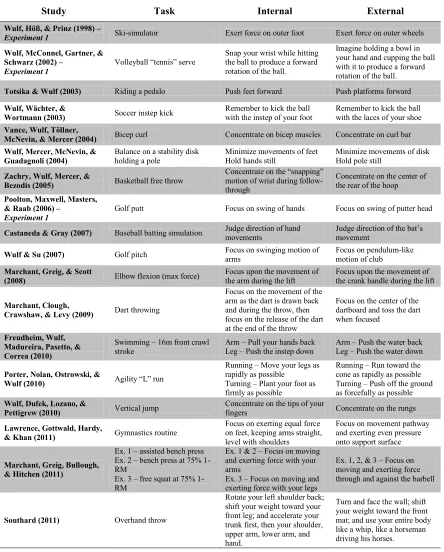
ABLESTable 1.1 Examples of Internal and External Attentional Foci ...34
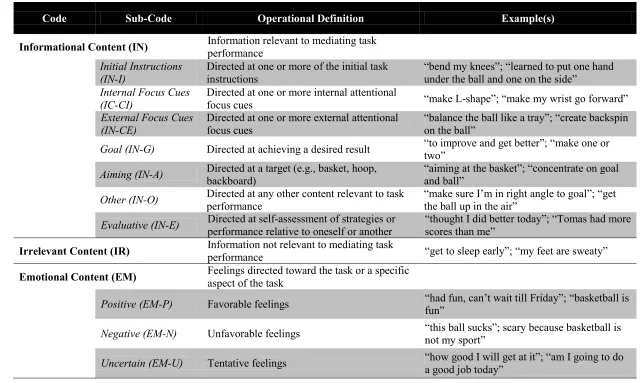
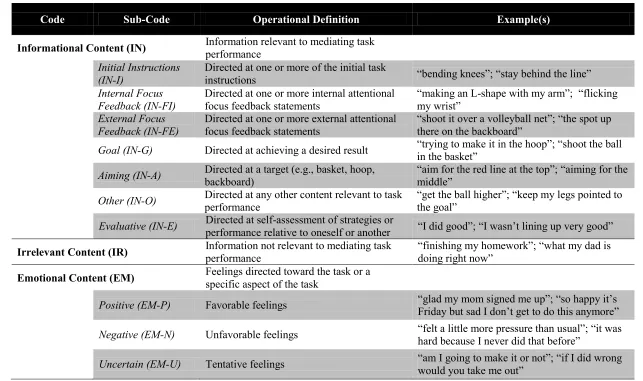
Table 2.1 Coding Scheme for Verbal Responses including Operational
Definitions and Examples ...55
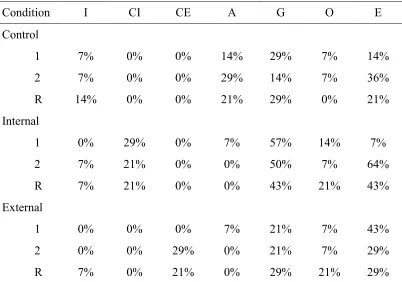
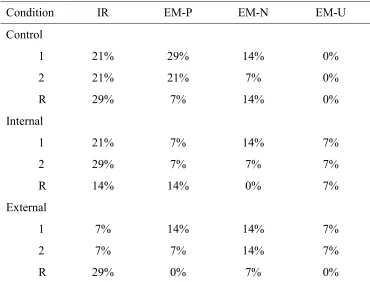
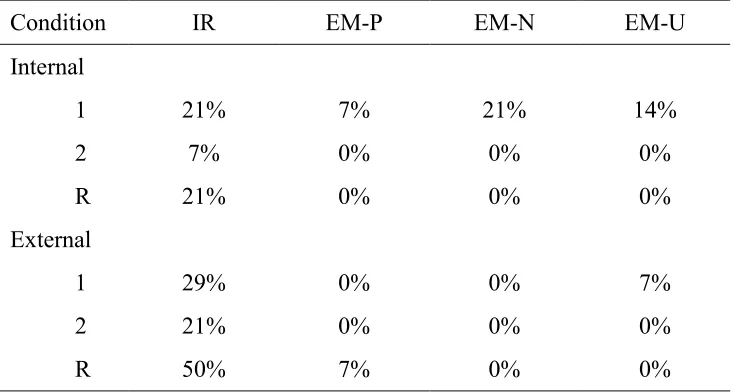
Table 2.2 Percentages of Participants Reporting Informational Content by
Subcategory across Practice Days (1 and 2) and Retention (R) for each Condition ...56
Table 2.3 Percentages of Participants Reporting Other Content by Subcategory
across Practice Days (1 and 2) and Retention (R) for each Condition ...57
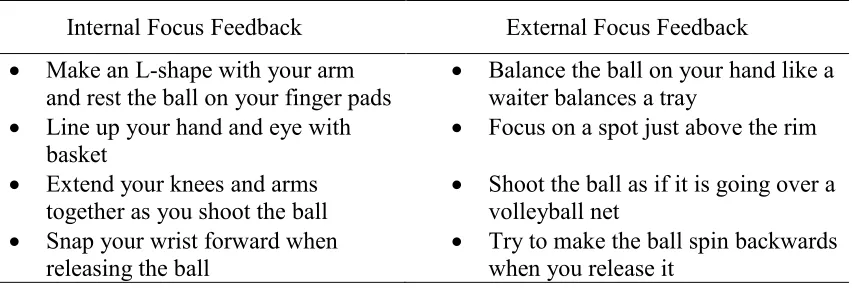
Table 3.1 Attentional Focus Feedback Statements by Condition ...82
Table 3.2 Coding Scheme for Verbal Responses including Operational
Definitions and Examples ...84
Table 3.3 Percentages of Participants Reporting Informational Content by
Subcategory across Practice Days (1 and 2) and Retention (R) for each Condition ...85
Table 3.4 Percentages of Participants Reporting Other Content by Subcategory
across Practice Days (1 and 2) and Retention (R) for each Condition ...85
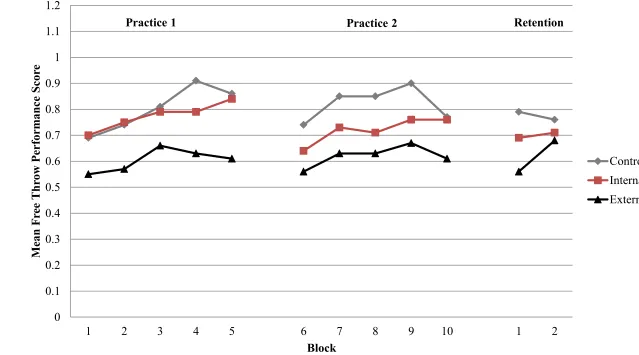
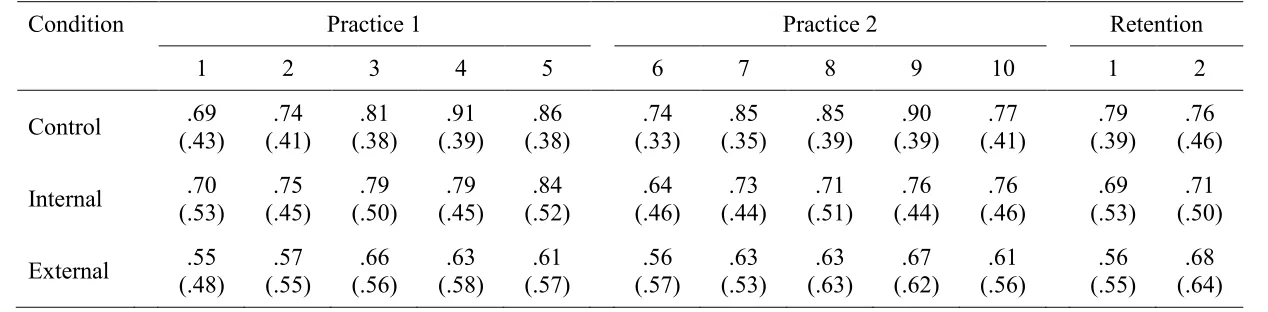
Table C.1 Study 1 Means and SDs for Free Throw Performance across Blocks ...107
C
HAPTER1:
I
NTRODUCTION ANDR
EVIEW OFL
ITERATURESome level of attention is required for learning and performing complex motor
skills. Given the limits on attentional resources early in learning, it is imperative that
researchers determine the types of attentional foci that have the most influential effect on
learning. Although counterintuitive, research has shown that participants given
instruction about skill execution were less effective during practice (Wulf & Weigelt,
1997) and transfer (Hodges & Lee, 1999) than those given no instruction at all. In
addition, “just do it” strategies (Singer, 1988) and implicit learning approaches (Masters,
1992) have proved problematic. In response, Wulf (2007) offered an alternative
approach. Through a combination of anecdotal and experimental evidence, she has shown
that an external focus of attention, whereby one directs attention to the effects of the
movement, is more beneficial than adopting an internal focus of attention, whereby one
directs attention to the movements (see Table 1.1 for examples). For example,
participants in a study by Wulf, McNevin, and Shea (2001) balanced on a stabilometer
while adopting either an internal (keep feet horizontal) or external (keep markers
horizontal) attentional focus. They found that participants who adopted an external focus
had less postural sway in retention than those who adopted an internal focus.
In addition to balance tasks, the advantage of an external focus has been
Zachry, Wulf, Mercer, & Bezodis, 2005), dart throws (Marchant, Clough, & Crawshaw,
2007; Marchant, Clough, Crawshaw, & Levy, 2009), and volleyball serves and soccer
passes (Wulf, McConnel, Gärtner, & Schwarz, 2002). An external focus has also proved
advantageous for improving vertical jump height (Wulf & Dufek, 2009; Wulf, Zachry,
Granados, & Dufek, 2007), swimming speed (Freudheim, Wulf, Madureira, Pasetto, &
Correa, 2010; Stoate & Wulf, 2011) agility running speed (Porter, Nolan, Ostrowski, &
Wulf, 2010), and muscular endurance (Marchant, Greig, Bullough, & Hitchen, 2011).
Despite the extant literature on the beneficial effects of adopting an external focus
of attention (see Wulf, 2007 for a review), very few studies have investigated attentional
focus effects with children. Of those that have, the findings have been mixed (Emanuel,
Jarus, & Bart, 2008; Thorn, 2006; Wulf, Chiviacowsky, Schiller, & Avila, 2010). There
are considerable information processing differences between children and adults that
have the potential to influence motor performance and learning. These include age related
improvements in processing speed (Gallagher & Thomas, 1980; Thomas, Gallagher, &
Purvis, 1981; Thomas, Mitchell, & Solmon, 1979), labeling of movements (Winther &
Thomas, 1981), rehearsal strategy usage (Gallagher & Thomas, 1984; Thomas, Thomas,
Lee, Testerman, & Ashy, 1983), memory organization (Gallagher & Thomas, 1986), and
selective attention (Ross, 1978).
There is already some evidence to suggest that children and adults are
differentially affected by attentional focus instructions (Emanuel et al., 2008) as well as
by reduced feedback (Goh, Kantak, & Sullivan, 2012; Sullivan, Kantak, & Burtner, 2008)
and contextual interference (Hall & Boyle, 1993; Jarus & Goverover, 1999). If a major
settings involving children and adolescents, it is premature to generalize from adult
populations regardless of how robust the findings may be. Instead, it is vital that
researchers attempt to replicate these findings in relevant populations for which they will
be applied. Therefore, the purpose of this research project is to determine the effect of
attentional focus instructions and feedback on motor learning in children.
The following literature review opens with a description and supporting evidence
of the major theoretical framework used to explain the advantage of an external focus of
attention for performance and learning. The subsequent section provides a comprehensive
review of research on attentional focus instructions and feedback, respectively. Finally, a
major limitation of the current literature is discussed along with an explanation of how
the two studies of this research project help to advance our current understanding of the
role attentional focus plays in children’s motor skill learning.
Theoretical Framework
The major theoretical framework used to explain the effects of attentional focus
on motor learning and performance is the constrained action hypothesis (e.g., McNevin,
Shea, & Wulf, 2003; Wulf et al., 2001; Wulf, Shea, & Park, 2001). This hypothesis
(CAH) was developed as an alternative to the original theoretical framework,
common-coding theory (Prinz, 1990, 1997), which Wulf and Prinz (2001) argued was too abstract
and did not make specific predictions relative to the differential effects of each attentional
focus on learning. According to the CAH, focusing on the effects of one’s movements
(external focus) allows unconscious, reflexive control processes to govern the action. In
contrast, focusing on one’s movements (internal focus) disrupts this automatic control by
attentional capacity, frequency of movement adjustments, and muscular activity. These
are discussed next.
Attentional Capacity
According to the CAH, an external focus should result in a reduced attentional
load due to automatic processing. A common method to examine the attentional
resources occupied by a skill is the dual-task paradigm. Under this paradigm, participants
perform a primary task simultaneously with another arbitrary task (e.g., responding to an
auditory tone). The attentional demands of the primary task are inferred from the
participant’s performance on the secondary task (e.g., probe RT). That is, a short RT
suggests that the primary task required little attentional resources. Wulf and colleagues
(2001) used this dual-task paradigm to examine the effect of attentional focus on
attentional capacity. Two groups of participants (internal and external) balanced on a
stabilometer while simultaneously responding to an auditory stimulus as quickly as
possible (i.e., probe RT). After two days of practice, the authors found that the external
group had faster RTs on the secondary task than the internal group both during practice
and on a retention test the next day. That is, the external group was able to respond to the
auditory stimulus faster because there were more attentional resources available. This
finding provides some preliminary support for the notion that an external focus promotes
the use of automatic control processes during motor performance.
Another way to assess demands on attentional capacity is to measure performance
on the primary task while performing a simultaneous secondary task. In one study
(Totsika & Wulf, 2003), participants were assigned to either an internal or external group
(1) speed pressure forward, (2) speed pressure backward, and (3) speed pressure forward
while counting backward in 3’s. The third transfer test was intended to increase the
attentional demands of the task. The authors found that the external group had faster
movement times than the internal group across all three transfer tests. These results
appear to corroborate those of the probe RT experiment above. However, opposing
evidence has also been found.
In a series of two experiments, Poolton, Maxwell, Masters, and Raab (2006) had
two groups of participants practice a golf putting task using either an internal or external
attentional focus. Attentional focus instructions in the first experiment were unequal (e.g.,
more internal than external) but was corrected in the second experiment (e.g., equal
number of each). Following practice, retention and transfer tests were conducted in an
A-B-A design. The retention test was identical to practice while the transfer test included
the addition of a secondary task (counting tones). They found that when the secondary
task was added (i.e., transfer), participants in the external group were more accurate in
putting than those in the internal group; however, this effect was not maintained in the
second experiment. In a similarly designed study, Maxwell and Masters (2002) also
found no group difference for participants’ wobble board performance while performing
a secondary task (counting tones) during transfer. Given the mixed findings using this
type of approach, there appears to be no clear consensus as be whether using an external
focus decreases attentional demands during motor performance. Thus, future
Frequency of Movement Adjustments
Another source of evidence to support the CAH comes from the frequency of
movement adjustments made during balance tasks, as analyzed by Fast Fourier
Transformations. If automatic control processes are responsible for the control of
movements under external focus, there should be high frequency adjustments made
during the movement in response to perturbations relative to the environment or one’s
actions. Several balance studies (McNevin et al., 2003; Wulf, McNevin et al., 2001;
Wulf, Shea et al., 2001) have provided evidence in support of this notion. In these
studies, participants who balanced on a stabilometer while adopting an external focus of
attention had higher frequency adjustments than those who adopted an internal focus.
Higher response frequencies were also observed when participants used an external focus
during supra-postural tasks (McNevin & Wulf, 2002; Wulf, Mercer, McNevin, &
Guadagnoli, 2004).
Muscular Activity
A final line of evidence in support of the CAH addresses the effect of attentional
focus at the neuromuscular level. If automatic control results from adopting an external
focus, it stands to reason that there would be less “noise” in the motor system and,
therefore, more efficient muscle use during the movement. Vance, Wulf, Töllner,
McNevin, and Mercer (2004) investigated this notion by examining participants’ muscle
activity while performing a bicep curl using either an internal (biceps) or external (curl
bar) focus of attention. They found that there was less muscular activity when
participants used an external focus than when an internal focus was used. Similar findings
jump (Wulf, Dufek, Lozano, & Pettigrew, 2010), and dart throw (Lohse, Sherwood, &
Healy, 2010). Interestingly, Marchant, Greig, and Scott (2008) found similar results with
an elbow flexion task even with the addition of a control condition. That is, muscular
activity was reduced using an external focus above and beyond what “naturally” occurs.
More recently, Wulf and Lewthwaite (2010) expanded on the CAH to address a
potentially related cause for the facilitation or disruption of automatic movement control.
Termed the self-invoking trigger, they posit that the mere mention of one’s body parts or
sensations (i.e., internal focus) is enough to trigger access to the self in the form of
self-evaluation and self-regulation processes. These processes, unconscious or potentially
conscious, are used to gain control over one’s cognitions and affective responses. If these
processes exceed the attentional capacity of the individual, automatic control may be
disrupted resulting in motor performance degradation. Preliminary evidence provides
some support for the self-invoking trigger (McKay, Wulf, & Lewthwaite, 2012);
however, further research is needed.
Summarization of Studies
The following section provides a summary of the extant literature examining
attentional focus effects on learning and performance. It is organized into two main parts:
instructions and feedback. Each part provides a general introduction and follows with
associated research.
Instructions
Instructors often pair a visual demonstration with verbal instructions when
introducing a new motor skill to learners. These instructions serve to orient learners to the
errors they may encounter (Schmidt & Lee, 2005). Instructions are often reduced to a few
concise words or phrases referred to in the pedagogy literature as verbal cues. According
to Rink (2010), good cues are accurate, critical to the intended task, limited in number,
and age and skill level appropriate. Verbal cues are thought to be effective for motor
learning because they draw attention to appropriate sensory information, reduce the
cognitive load needed to process information relevant to skill execution, and prepare
appropriate muscles and motor programs for action (Landin, 1994).
Instructions and/or verbal cues can be used to evoke either an internal (movement
related) or external (effect related) focus of attention. For example, a student learning a
golf putt could be instructed to focus on the swing of their hands (internal) or the swing
of the putter head (external). Previous research has consistently demonstrated a learning
and performance advantage for adopting an external focus across a variety of motor
skills. There is also evidence to suggest a preference for using an external focus after
obtaining some practice with the skill. These findings are discussed next.
Effects on learning. The majority of early research on attentional focus
instructions used balance tasks. In one of the first attentional focus studies, Wulf, Höß,
and Prinz (1998, Experiment 2) had participants balance on a stabilometer using either an
internal or external focus. Participants in the internal group were told to keep their feet
the same height while participants in the external group were told to keep markers located
on the platform the same height. After two days of practice, the external group had less
postural sway in retention than the internal group. These findings were replicated in a
similar study (Wulf, McNevin et al., 2001) even with the presence of a secondary probe
effect using a supra-postural task. In their experiment, participants balanced on a
stabilometer while holding a tube containing a tennis ball. The internal group focused on
keeping their hands horizontal while the external group focused on keeping the tube
horizontal. After two days of practice, the external group had less postural sway in
retention and transfer (no pole) than the internal group.
McNevin et al. (2003) extended the findings above by varying the distance of the
external cue from the performer. In their study, one internal (feet) and three external
(markers) focus groups practice balancing on a stabilometer over two days. The external
groups differed in the placement of the markers they were instructed to focus on. The
external near group focused on markers directly in front of their feet while the external
far groups focused on markers that were either on the far outside or far inside of their
feet. One day following practice, a retention test showed that the external groups had less
postural sway than the internal group and, more interestingly, both external far groups
had less postural sway than the external near group. This finding provides evidence to
suggest that, for balance tasks, increasing the distance of the external focus from the
participant increases the associated learning effect.
Along with internal and external focus conditions, some studies (Wulf et al.,
1998, Experiment 1; Wulf et al., 2003, Experiment 2) have included a control group to
more accurately determine the manner in which attentional focus affects learning. Wulf et
al. (1998, Experiment 1) had participants learn a ski-simulator task in which the internal
group focused on exerting force on their outer foot while the external group focused on
exerting force on the outer wheels. They found a learning advantage for the external
al. (2003, Experiment 2) found a similar effect in transfer for participants learning the
supra-postural task from Experiment 1. These findings lend support to the notion that an
external focus enhances learning rather than that an internal focus degrades learning.
In addition to adding a control group, Wulf and McNevin (2003) also included another
group designed to discourage participants from adopting an internal attentional focus.
Participants learned to balance on a stabilometer using either an internal focus (keep feet
horizontal), external focus (keep markers horizontal), shadowing (shadow story while
balancing), or control condition. After two days of practice, they found that the external
group had less postural sway in retention than all other groups. This suggests that
preventing an internal focus does not produce the same learning benefit as adopting an
external focus.
An early attempt to generalize the effect of attentional focus to a sport skill in a
realistic setting was made by Wulf et al. (1999). Participants performed a golf pitch while
focusing on either their mechanics (internal) or the pendulum-like motion of the club
(external). The authors found that the external group was more accurate than the internal
group both during practice and during a retention test one day later. A similar study was
conducted with the addition of a control group (Wulf & Su, 2007, Experiment 1).
Participants performed a golf pitch while focusing on either the swinging motion of their
arms (internal), the pendulum-like motion of the club (external), or no attentional focus
(control). After one day of practice, the external group was more accurate during
retention than the internal and control groups. These findings provide support for the
A different approach for manipulating attentional focus instructions was taken by
Al-Abood et al. (2002). In their study, participants performed a pre-test of five free
throws. They were then instructed to view a model performing a free throw while
focusing on either the model’s movement dynamics (internal) or the model’s movement
effects (external). They found that participants who focused on the model’s movement
effects had greater improvements in accuracy during a post-test than participants who
focused on the model’s movement dynamics.
Most studies have investigated attentional focus effects using outcome measures.
However, Lawrence, Gottwald, Hardy, and Khan (2011) used a gymnastic routine in their
study to determine whether attentional focus has an effect on movement form.
Participants practiced the routine over two days while focusing on either their mechanics
(internal relevant), facial muscles and facial expressions (internal irrelevant), the
movement pathway and keeping even pressure (external), or no attentional focus
(control). After a one week retention interval, the groups did not differ in technique
scores on a retention and transfer test. This seems to suggest that the learning advantage
of an external focus may be limited to skills in which outcome is of most importance.
Other researchers have examined the effect of attentional focus instructions on
movement form using more objective measures, namely kinematic analysis. In one study,
Zentgraf and Munzert (2009) had participants practice two-ball juggling while focusing
on either their arms and hands (internal), the balls (external), or no attentional focus
(control). Kinematic measures of elbow and ball height displacement were taken as well
as error and success rate as measured by three raters blind to the study. While there were
later, the internal group had less elbow displacement than the external group and the
external and control groups had less ball height discrepancy than the internal group. Their
findings indicate that the learning advantage for specific aspects of movement form
directly correspond with the type of attentional focus instructions used.
Southard (2011) took this design one step further by adding a control parameter to
the attentional focus instructions and using a predominately outcome based skill. In his
first experiment, participants practiced an overhand throw over six sessions under one of
six focus conditions: (1) internal, (2) external, (3) velocity only (throwing the ball as fast
as possible), (4) internal + velocity, (5) external + velocity, or (6) control. In additions to
receiving instructions, participants in the internal and external groups were given
feedback after every fifth trial respective to their attentional focus. Participants in the
velocity groups also received feedback regarding their average throwing velocity from
the previous five trials. Kinematic measures of elbow and wrist lag were recorded.
Southard found that the velocity groups maintained positive elbow lag during practice
over the other groups; however, the effect was not sustained during a retention test one
week following practice.
In the second experiment, Southard (2011) repeated the same design from
Experiment 1 but added an additional measure of accuracy. With regard to kinematics
measures, he found identical results to that of the first experiment for both practice and
retention. With regard to outcome, the velocity only group was more accurate during the
first four practice sessions; however, the external + velocity group was more accurate
during retention. The findings of these two experiments suggest that an emphasis on a
specific attentional focus. However, these effects do not hold entirely true when
movement outcome is a concern. In this case, it seems that velocity alone will not suffice
unless paired with an external attentional focus.
Although an external focus has proved advantageous for learning a variety of
motor skills, researchers became interested in determining if the type of external focus
plays a role in the effectiveness of this attentional focus strategy. Wulf, McNevin, Fuchs,
Ritter, and Toole (2000) conducted two experiments to examine this question. In the first
experiment, participants practiced a tennis forehand while focusing on either the
trajectory of the approaching ball (antecedent) or the anticipated ball arc and landing
location on target (effect). They found that the effect group was more accurate than the
antecedent group on a retention test the next day.
As a result of these findings, a second experiment (Wulf et al., 2000) was
conducted to determine if the type of movement effect has an impact on learning.
Participants in this experiment practiced a golf pitch while focusing on either the
pendulum-like movement of the club (movement related) or the anticipated ball arc and
landing location on the target (non-movement related). They found that the movement
related group was more accurate than the non-movement related group during practice
and a retention test the next day. In a similar study (Shafizadeh, McMorris, & Sproule,
2011), participants performed a golf putting task while either focusing on the target, the
club swing, or a combination of both. After one day of practice in which feedback was
given, the combined group (target and club swing) was more accurate in retention that the
other two groups. Although the findings of Shafizadeh et al. suggest that a combination
isolation, these two studies used different golf skills. As a result, it is difficult to ascertain
the generalizability of either finding to other skills without further investigation.
Effects on performance. Wulf, Töllner, and Shea (2007) conducted two experiments to determine the effect of attentional focus on balance performance using
tasks of varying difficulty. In their first experiment, participants balanced on a force plate
with and without a foam mat. For each task, participants performed one 15 s trial under
each condition of internal, external, and no attentional focus. They found that participants
balancing on the foam mat had less postural sway using the external focus than using
none, but there were no differences when balancing on the force plate itself. Given the
results of the first experiment, the authors concluded that the balance tasks may not have
been challenging enough to get an overall effect. Therefore, they conducted a second
study in which participants balanced on a rubber disk using two feet and then one foot
only. As before, participants performed one 15 s trial under each condition for both tasks.
They found for both tasks that participants had less postural sway using the external focus
than when using the internal or none.
Marchant et al. (2007) used a different approach to examine the effect of
attentional focus on performance of a sport skill. Three groups of participants practiced a
dart throw to a target while using either an internal, external, or no attentional focus.
Participants were measured on the accuracy of their throws and also filled out a
questionnaire designed to assess their experience with using the respective task
instructions. In regard to performance, the authors found that the external and control
groups were more accurate than the internal group. Responses to the questionnaire items
group and less mentally demanding than both the internal and external groups. More
interestingly, the internal and external groups appeared to be sensitive to how effective
the instructions were to their performance. Specifically, the internal group indicated
having less success using their instructions than the external group, which is in line with
the difference in group accuracy scores.
More recent studies have addressed the effect of attentional focus on performance
of fitness related tasks. In a series of studies, Wulf and colleagues investigated the effect
of attentional focus on force production using a vertical jump task. In their first
experiment, Wulf et al. (2007) measured jump-and-reach height of participants for five
vertical jumps under each condition of internal, external, and no attentional focus. They
found that participants jumped higher when using an external focus than when using an
internal or no attentional focus. The second experiment included a measure of COM
displacement in order to determine if the increased jump height was due to increased
force production. The authors found that participants not only jumped higher but had
greater COM displacement when using an external focus. Other studies found similar
results for jump-and-reach height (Wulf & Dufek, 2009; Wulf et al., 2010) and COM
displacement (Wulf & Dufek) when participants performed twice as many trials;
however, a control condition was not included.
In a more recent study, Porter et al. (2010) examined the effect of attentional
focus on agility performance. Participants were measured on movement time (MT) while
performing an agility “L” run over three non-consecutive days. Each day participants
performed five runs using either an internal, external, or no attentional focus. They found
internal or no attentional focus. An even more recent study examined the effects of
attentional focus on muscular endurance. Marchant et al. (2011) had one set of
participants perform an assisted bench press until failure under each condition of internal,
external, and no attentional focus. The control condition was always performed first
followed by the attentional focus conditions counterbalanced across participants. The
authors found that participants performed more reps to failure when using the external
focus than the internal. Another set of participants performed a bench press and free squat
both at 75% 1-RM until failure using the same design. Similar to the results of the
assisted bench press, participants performed more reps to failure when using the external
focus than the internal or no attentional focus.
Although evidence seems to suggest that an external focus enhances the motor
performance of novices across a variety of skills, it is unclear if this effect holds true for
skilled or expert performers. As a result, several studies have attempted to investigate the
performance effect on this population. For example, Wulf and Su (2007, Experiment 2)
conducted a study with expert golfers to determine the effect of attentional focus on
pitching accuracy. All participants performed 20 pitches to a target under each condition
of internal, external, and no attentional focus counterbalanced across participants. The
authors found that the golfers were more accurate when using the external focus than
when using the internal or no attentional focus.
Bell and Hardy (2009) added an additional dimension by having skilled golfers
practice pitching under neutral (3 blocks of 10) and anxiety (2 blocks of 10) conditions.
Anxiety was successfully manipulated using social evaluation and financial incentive as
condition as measured by the Competitive State Anxiety Inventory-2 Revised. The
golfers were assigned to either an internal, external-proximal (keep clubface square),
external-distal (direction of ball flight), or no attentional focus. For both conditions, they
found that both external groups were more accurate than the internal group with the
external-distal group being the most accurate.
In addition to golfers, a series of recent studies (Freudheim et al., 2010; Stoate &
Wulf, 2011) examined the effect of attentional focus on swimming speed of skilled
swimmers. In their first experiment, Freudheim and colleagues divided the swimmers
into two groups: arm stroke and leg kick. Participants performed a 16m front crawl stroke
one time each under an internal and external focus respective to their group,
counterbalanced across participants. The authors found that the external focus produced
faster swimming speeds than the internal focus irrespective of group. These findings were
followed up with a second experiment that included a control condition and only used the
arm stroke attentional focus instructions. They also found that the external focus
produced faster swimming speeds. In a similar study, Stoate and Wulf (2011) had skilled
swimmers perform a front crawl stroke for three lengths of 25 yards one time under each
condition of internal, external, and control counterbalanced across participants. They
found that the external and control conditions produced faster swimming speeds than the
internal.
The findings from golfers and swimmers appear to be in line with the predictions
of the CAH in that an internal focus, whereby attention is directed at one’s movements,
would likely disrupt the automatic control processes associated with skilled performance.
performers. For example, Wulf (2008) had world-class acrobats balance on a rubber disk
positioned on top of a force plate for four 15s trials under each condition of internal,
external, and control. Measures of postural sway and response frequencies were analyzed
and compared across condition. She found that there were no differences across
conditions for postural sway; however, the control condition produced higher response
frequencies associated with automatic control. Wulf argues that these results may be due
to a potential limit on the effectiveness of an external focus with expert performers.
In examining the impact of attentional focus on motor performance, some
researchers have used an expert-novice approach to directly compare the effects across
skill level. In one such study, Perkins-Ceccato, Passmore, and Lee (2003) had low and
high skilled golfers practice a golf pitch from four target distances for 10 trials each using
one attentional focus followed by another 4 blocks (target distances) of 10 trials using the
other attentional focus. The attentional focus order was counterbalanced across
participants. Average and variable error were calculated and compared across skill level.
The authors found no differences for average error; however, low skilled golfers were
more consistent when given internal instructions first while high skilled golfers were
more consistent when given external instructions first. This provides some preliminary
evidence that attentional focus effects may have differential effects based on the skill
level of the performer. However, given the study design, these findings are limited to
motor performance and do not provide any indication of learning effects.
In another study, Castaneda and Gray (2007) had low and high skilled baseball
players practice a batting simulation task for 20 trials under each of five conditions
on skill execution by either judging the direction of their hand movements (internal) or
the direction of the bat’s movements (external) at the onset of an auditory tone. Two
other conditions required participants to focus on environmental factors by either judging
the flight path of the ball at the onset of the auditory tone (external) or the frequency of
the auditory tone (irrelevant). A control condition was also incorporated. Mean temporal
swing error was calculated and compared across skill level. For both skill levels, the
authors found that the environmental/external condition produced less error than the
environmental/irrelevant condition and the environmental conditions produced less error
than the skill conditions. Interestingly, the skill/external condition produced less error
than the skill/internal condition for the high skilled players while there were no
differences for the low skilled players. This finding is contradictory to the predictions of
Wulf et al. (2000) in which a movement-relevant external focus (i.e., skill/external) is
more beneficial than a movement-irrelevant external focus (i.e., environmental/external).
Castaneda and Gray argue that their results may be due to the increased attentional
demands of the dual-task design, that their participants were not true novices as in other
studies, or that the attentional focus effect may be different for baseball than other sports.
However, this study is limited by the within participant design and only reflects motor
performance outcomes associated with initial attentional focus usage. Consequently, this
limits the generalizability of the findings to studies following a learning paradigm.
Attentional focus preference. A related area of interest has been participants’ attentional focus preference and the associated effects on motor performance and
learning. In a series of two experiments, Wulf, Shea et al. (2001) examined if there are
In the first experiment, participants alternated each trial between an internal and external
focus while balancing on a stabilometer. The next day participants performed the same
task using their preferred attentional focus condition. Participants’ were evaluated on
postural sway during practice on a retention test one day later. Although not significant,
10 of the 17 participants preferred an internal focus on the second practice day; however,
there were no performance differences between preferred internal and external.
Interestingly, in retention, only 5 of the 17 participants preferred an internal focus
(marginally significant) and the preferred external participants had less postural sway
than the preferred internal participants.
In their second experiment, Wulf, Shea et al. (2001) used a similar design in
which participants balanced on a stabilometer using both attentional foci before
specifying a preference to adopt during the second practice session. In contrast to
Experiment 1, participants were free to alternate between an internal and external focus
regardless of the trial. On the second day, participants only used their preferred attention
focus. Participants’ performance was scored similarly to experiment one during practice
and a retention test one day later. Although significantly more participants (16 of 20)
preferred an external focus following the second practice session, there were no group
performance differences. However, in retention, participants preferring an external focus
had less postural sway than the internal participants. The results from both experiments
indicate that not only did adopting an external focus have a learning advantage, but
participants also preferred an external focus after some practice.
Marchant et al. (2009) took the above design one step further by also examining
experimental session, participants performed a dart throw while adopting one attentional
focus for the first 20 trials and the other attentional focus during the next 20 trials. The
attentional focus order was counterbalanced across participants. Participants were scored
on accuracy and asked to indicate their attentional focus preference. Although no
performance differences were found based on attentional focus, more participants
preferred using the external focus. In the second experimental session, the same
participants were randomly assigned to either an internal or external focus and performed
an additional 40 trials of the dart throw. The authors found that the external group was
more accurate than the internal group, and those within the external group who preferred
an external focus were more accurate than those who preferred an internal focus. The
findings from both sessions appear to be in line with those of Wulf, Shea et al. (2001).
An interesting addition to the second experimental session (Marchant et al., 2009)
was a questionnaire completed by participants to assess their experience with using the
attentional focus instructions. The results of the questionnaire items indicated that those
who used an external focus attended more to the target and less to their arm and hand,
found the instructions more difficult to follow, and were more distracted than those who
used an internal focus. Although it is not surprising that an external focus would draw
more attention toward movement effects (i.e., the target), it is interesting that participants
found external instructions more difficult to use and were more distracted during task
performance. The authors argue that these two findings may be due to the participants’
Feedback
Another source of information available to learners about skill execution is
feedback. Feedback is provided after skill execution and based upon the learner’s prior
performance. There are two main forms of feedback: knowledge of results (KR) and
knowledge of performance (KP). KR is information available in the environment to the
learner about the outcome of the movement. This might be inherent to the task in the way
that a golfer can easily observe whether s/he missed a putt or augmented in the way that a
golfer might learn from a spectator that he or she had holed a long chip onto a “hidden”
green (Schmidt & Lee, 2005). KP, also termed kinematic feedback, is information about
the quality of the movement. As with KR, this information can be available inherently,
such as from the feel of the movement as it was executed, or be in an augmented form,
such as feedback from a coach about how the movement was poor at its beginning.
The predominate form of feedback provided to learners by teachers and coaches is
KP. Given the emphasis on movement form and technique, this form of feedback tends to
naturally evoke an internal focus of attention. However, some researchers have attempted
to manipulate the attentional focus of feedback statements to determine their potential
impact on learning. These findings are discussed next.
An early study by Shea and Wulf (1999) examined the generalizability of external
focus instructions to feedback. Four groups of participants practiced balancing on a
stabilometer over two days. Two groups were instructed to focus on either keeping their
feet the same height (internal) or keeping markers on the platform the same height
(external). The other two groups received concurrent feedback via computer monitor that
feedback/internal group were told the visual display represented their feet while
participants in the feedback/external group were told it represented the markers. The
authors found that both feedback groups had superior performance over the no feedback
groups during practice and a retention test one day later. More notably, both external
groups outperformed the internal groups during retention. This finding provides support
for the generalized learning advantage of an external focus via feedback in addition to
instructions.
In an attempt to determine the generalizability of attentional focus feedback for
learning more realistic sport skills, Wulf et al. (2002) conducted two experiments using a
volleyball serve and soccer pass. In the first experiment, novice and experienced
volleyball players practiced a “tennis” serve during two sessions separated by a week. All
participants were given one of four feedback statements following every fifth trial
respective to their attentional focus condition, 2 (novice/experienced) X 2
(internal/external focus). The statements provided to the internal groups focused on
mechanics while those provided to the external group were focused on movement effects
relative to the ball. Participants were scored on accuracy and form (two raters) during
practice and a retention test one week later. The authors found that the external groups
were more accurate and had better form scores than the internal groups during practice
and were more accurate than the internal groups during retention.
In their second experiment, Wulf et al. (2002) examined the interactive effects of
feedback frequency and attentional focus on learning a lofted soccer pass. Participants
with some soccer experience practiced the pass during a single session in which they
trial or every third trial, 2 (internal/external focus) X 2 (33%/100% feedback frequency).
Participants were scored on accuracy during practice and a retention test one week later.
The authors found that the external groups were more accurate than the internal groups
and the 33% internal group was more accurate than the 100% internal group for both
practice and retention. Interestingly, there were no differences between the two external
groups for both practice and retention. This finding is disparate with previous research
that supports the learning advantage of reduced feedback frequency. The authors argue
that the beneficial effect of reduced feedback frequency may have more to do with the
preponderance of internally focused feedback than the rate of delivery.
An area that had yet to be investigated is the potential interactive effect of gender
and attentional focus. As a result, Wulf, Wächter, and Wortmann (2003) assigned 20 high
school girls and 20 high school boys to either an internal or external condition. All
participants practiced a soccer instep kick using a stationary ball to a target during a
single session in which they received one of four feedback statements following every
other trial. Participants were scored on accuracy during practice and a retention and
transfer test (moving ball) the next day. The authors found no differences between groups
during practice; however, the female internal group had larger accuracy decrements from
retention to transfer than the female external group. As a result, these findings provide
some evidence to suggest that females may benefit more from an external focus than
males.
Limitation of the Literature
Despite the extensive literature and robust finding that an external attentional
an overwhelming majority of these studies have been limited to adult populations. This is
particularly problematic given that a prominent population of new movement learners is
left out: children. If a major purpose of motor learning research is to inform movement
practitioners (e.g., teachers, coaches), it is imperative that all populations of interest are
included. Moreover, it is inappropriate to generalize results from adult populations to
children regardless of how substantial the evidence. This is especially true given the
information processing differences between adults and children that have the potential to
differentially impact motor performance and learning. These are discussed next.
Information Processing Differences
A well-documented source of information processing differences between adults
and children is processing speed. Specifically, as children age, they are able to process
information more quickly. One way in which processing speed has been shown to
improve with age is the ability to process the same amount of information in a shorter
period of time. For example, Thomas and colleagues (1981) found that simple RT
improved across age for 7-, 9-, 11-, 13-, and 20-year-olds. Gallagher and Thomas (1980)
found a similar effect for the processing of feedback. In their study, post-KR intervals
were varied for children (7- and 11-year-olds) and adults performing a linear slide
movement. Specifically, participants received feedback after each trial with either a 3, 6,
or 12 s post-KR interval. Overall, the 7-year-olds benefited the most from longer post-KR
intervals in that there were significant performance improvements across the three
intervals. With regard to age differences, the 7-year-olds were less accurate than both the
11-year-olds and adults at 3 s but only less accurate than the adults at 6 s. However, at the
Thus, if given enough processing time, young children were able to perform as well as
adults.
Another way in which processing speed has been shown to increase with age is
the ability to process more information in the same amount of time. For example, Thomas
and colleagues (1979, Experiment 2) varied the complexity of feedback to two different
age groups to determine age related effects on performance due to processing
capabilities. Participants consisted of second and fourth graders who performed a
curvilinear positioning task followed by a fixed inter-response interval in which either no,
general (direction error), or precise feedback (direction and magnitude error) was given.
Although not significant, fourth graders who received precise feedback had improved
performance above those who received general feedback. Interestingly, the second
graders had the opposite effect; that is, those who received general feedback performed
slightly better than those who received precise feedback. Although this result was also
not significant, it suggests that an increased information load may be processed more
efficiently with age.
Another major source of difference between adults and children lies in the
functionality (i.e., control processes) of working memory. That is, as individuals age,
they make better use of strategies and knowledge rather than simply acquiring a greater
amount of memory storage. For example, young children do not typically make use of
strategies to encode information for later recall. This was evident in a study by Winther
and Thomas (1981) in which participants were asked to remember locations on an
apparatus resembling a clock face for later recall. Of those not instructed to use specific
my thinking cap.”) while most fifth graders reported using some type of image to label
the location (e.g., “I used a pie graph.”) and adults consistently reported using a clock
face. Under these conditions, the adults were more accurate than the fifth graders who
were more accurate than the kindergartners. However, when instructed to use a clock face
to label the locations, the kindergartners and fifth graders were just as accurate as the fifth
graders and adults, respectively, who used irrelevant images to label (i.e., animals).
Another control process that improves with age is rehearsal. Typically,
spontaneous rehearsal does not begin until around the age of 7 or 8 and becomes more
effective for performance with increased age (Thomas, 1984). For example, an
experiment by Thomas and colleagues (1983, Experiment 1) found that third graders’
recall of the distance an event occurred on a jogging route was superior to that of
preschools. When asked how they remembered the distance, 30% of the third graders
reported using a step-counting strategy while preschoolers reported no strategy use (e.g.,
used brain). In their follow-up experiment, 5-, 9-, and 12-year-olds were instructed to
replicate a specific walking distance using either no strategy (i.e., control) or a
step-counting strategy. When the control group was asked how they remembered the distance,
almost all the 5-year-olds reported using no strategy (e.g., tried hard to remember) while
67% of 9-year-olds and 83% of 12-year-olds reported strategy usage (e.g., counted steps).
These responses coincide with the performance data of the control group; that is, the
12-year-olds were more accurate than the 5- and 9-12-year-olds and the 9-12-year-olds were more
accurate than the 5-year-olds. However, when instructed to use a step-counting strategy,
There are also age related increases in the quality of rehearsal strategies. Children
tend to use more passive forms of rehearsal (e.g., rote memorization) while adults use
more active forms (e.g., rehearse current movement with previous movements).
Gallagher and Thomas (1984) demonstrated this in their study in which children (5-, 7-,
11-year-olds) and adults (19-year-olds) performed a linear arm positioning task using
either a mature, child-like, or subject-determined strategy. Using the mature strategy
improved the performance of the young children (5- and 7-year-olds) while the child-like
strategy somewhat decreased the performance of the older children (11-year-olds).
Interestingly, the young children in the self-determined group spontaneously used the
child-like strategy (e.g., rehearse current position) while the older children and adults
used more mature forms (e.g., previous positions).
Memory organization is also a control process that has been shown to increase
with age and consists of two aspects: grouping and recoding. Grouping involves
combining incoming information in a meaningful way for storage in long-term memory
while recoding involves taking pieces of previously stored information and combining
them (Thomas, 1984). A study by Gallagher and Thomas (1986) examined
developmental differences in memory organization of 5-, 7-, 11-, and 19-year-olds
learning a series of eight movements. Some participants received training in an
organizational strategy while others received no training or were presented with a
prearranged organization (shortest to longest). After the training period, participants were
instructed to reproduce a new series of eight movements presented in a random order.
The results indicated that the untrained 5- and 7-year-olds were unable to organize the
organize during training and to a slightly lesser extent during transfer. Interestingly, the
11-year-olds presented with the prearranged organization during training organized the
new movement series more frequently than their 7-year-old counterparts even though
both age groups organized similarly during training. This provides some evidence to
suggest that children may not be able to transfer this type of strategy to a novel situation
until sometime between the ages of 7 and 11.
Selective attention, the ability to attend to relevant stimuli in the environment, is a
final information processing difference between adults and children that improves with
age. According to Ross (1978), selective attention strategies progress in stages from
over-exclusion to over-inclusion to selective attention. Prior to first grade (ages 5-6), children
typically over-exclude in that they attend only to a single stimulus. As a result, the child
is able to recall very little incidental information from the environment. From first grade
to the beginning of adolescence (ages 5-12), over-inclusion tends to dominate; that is,
children attend to most of the available environmental stimuli, both relevant and
irrelevant, which results in higher recall of incidental information. During this phase, it is
particularly important that children are provided with appropriate cues in order to direct
their attention to the pertinent sensory information. The final stage, selective attention, is
typically reached during early adolescence (ages 11-12) and is marked by the ability to
attend to relevant stimuli while filtering out the irrelevant.
Given the information processing differences highlighted above, it is not
surprising that there is some evidence to support the differential effects of motor learning
Motor Learning Differences
The contextual interference effect, the motor learning advantage resulting from
practice of multiple task variations, has been consistently demonstrated in adult
populations. That is, adults learn motor skills better when they practice several variations
of a skill randomly than when they practice the same variation repeatedly. However, the
effect has not always been found for children. In one such study, Hall and Boyle (1993)
assigned 24 fifth graders (ages 10-12) to either a random, blocked, or mixed group who
practiced a modified shuffleboard task from three difference distances (25, 20, and 15 ft)
to a pyramid target. Following practice, two transfer tasks were performed from two
novel distances: 17 and 22 ft. They found no differences between groups at 17 ft;
however, the blocked group was more accurate than the random and mixed groups at 22
ft. In another study, Jarus and Goverover (1999) assigned children in three different age
groups (5-, 7-, and 11-years-old) to either a random, blocked, combined, or control group.
Participants performed a beanbag throw to three different targets in acquisition and
retention and an additional two targets in transfer. They found no differences between
groups in retention for the 5- and 11-year-olds; however, the 7-year-olds in the blocked
and combined groups were more accurate than those in the random group. Additionally,
no differences were found between groups for any of the age groups for transfer.
Although these two studies provide evidence to suggest that the contextual interference
effect may not hold true for children, one could argue that the authors failed to directly
compare the results to an adult sample.
Reduced feedback, the reduction in frequency of augmented feedback, is another
learning in adult populations. That is, adults learn motor skills better when feedback is
given intermittently than when it is given continuously. However, some recent evidence
suggests this effect may not hold entirely true for children. In a recent study, Sullivan et
al. (2008) directly compared adults and children on the effects of reduced feedback for
learning a discrete, horizontal arm movement with specific spatio-temporal parameters.
Participants in each age group were assigned to either a 100% feedback or reduced
feedback (62% faded) group. Participants performed four 50 trial sessions in acquisition
wherein the two reduced feedback groups received 100% feedback for session 1, 75% for
session 2, 50% for session 3, and 25% for session 4. One day following practice,
retention and reacquisition tests were performed. The authors found that adults with
reduced feedback were more consistent in retention whereas children were more accurate
and consistent with 100% feedback. In a recent follow up to their study, Goh et al. (2012)
found that the reduced feedback only contributed to an increase in timing errors for the
children’s performance in retention while the movement pattern did not differ between
groups. As a result, it appears that reduced feedback in children may have a more
influential effect on parameter learning than pattern learning.
As reviewed previously (see Summarization of Studies), research has shown that
an external focus of attention is advantageous for motor learning in adults; however,
results have been mixed with children. In one study, Thorn (2006) had 9 to 12 year old
children perform a balance task while adopting either an internal, external, or no
attentional focus. After controlling for instructional focus usage via a questionnaire, she
found that children who adopted an external focus had less postural sway in retention
results. In their study, 32 adults (ages 22-36 years) and 34 children (ages 8-9 years)
performed a dart throwing task while adopting either an internal or external attentional
focus. Although there were no differences between attentional focus conditions for either
adults or children in retention, there was an interesting finding for a transfer test.
Consistent with previous research, adults who adopted an external focus were more
accurate than those that used an internal focus; however, the reverse was true for
children. That is, children who adopted an internal focus were more accurate than those
who used an external focus.
Additionally, Wulf et al. (2010) investigated the interactive effect of attentional
focus feedback and feedback frequency in children learning a soccer throw-in.
Forty-eight children (ages 10-12 years) were assigned to one of four groups: (1) external 100%
feedback, (2) external 33% feedback, (3) internal 100% feedback, or (4) internal 33%
feedback. Participants were scored on both accuracy and form. Although there were no
differences between groups during an immediate and delayed retention test for both
accuracy and form, the external 100% feedback group had better form scores (but not
accuracy) than the other groups during an immediate and delayed transfer test. This result
is contrary to the reduced feedback literature; however, the authors argue that providing
feedback after every trial is only detrimental when statements are focused too much on
the body. It is interesting to note that Goh et al. (2012) found the opposite trend in their
study (i.e., parameter learning was improved by more frequent feedback while pattern
learning was unaffected) especially since one could argue that the feedback given was
external in nature (i.e., computer display of participant trajectory superimposed on target
Statement of Purpose
Given the dearth of research and inconclusive findings with children, further
investigation into the effects of attentional focus is needed. Therefore, the purpose of this
research project is to determine the effect of attentional focus instructions (cues) and
feedback on motor skill learning in children. Two separate studies were conducted. The
first study (see Chapter 2) was designed to examine the effect of attentional focus cues on
learning. Participants performed a complex sport skill using either an internal, external,
or no attentional focus. It was hypothesized that the external group would outperform the
internal focus and control groups on a retention test. The second study (see Chapter 3)
was designed to examine the effect of attentional focus feedback on learning. Participants
performed a complex sport skill while receiving either internal or external focus feedback
statements. It was hypothesized that the external group would outperform the internal
focus group on a retention test. Not only does this research project add to the current
attentional focus literature, but it also provides valuable insight regarding appropriate