381
Adapting Neural Single-Document Summarization Model for Abstractive
Multi-Document Summarization: A Pilot Study
Jianmin Zhang and Jiwei Tan and Xiaojun Wan Institute of Computer Science and Technology, Peking University The MOE Key Laboratory of Computational Linguistics, Peking University
{zhangjianmin2015,tanjiwei,wanxiaojun}@pku.edu.cn
Abstract
Till now, neural abstractive summarization methods have achieved great success for single document summarization (SDS). However, due to the lack of large scale multi-document summaries, such methods can be hardly applied to multi-document summarization (MDS). In this paper, we investigate neural abstractive methods for MDS by adapting a state-of-the-art neural abstractive summarization model for SDS. We propose an approach to extend the neural abstractive model trained on large scale SDS data to the MDS task. Our ap-proach only makes use of a small number of multi-document summaries for fine tun-ing. Experimental results on two bench-mark DUC datasets demonstrate that our approach can outperform a variety of base-line neural models.
1 Introduction
Document summarization is a task of automati-cally producing a summary for given documents. Different from Single Document Summarization (SDS) which generates a summary for each given document, Multi-Document Summarization (MDS) aims to generate a summary for a set of topic-related documents. Previous approaches to document summarization can be generally catego-rized to extractive methods and abstractive meth-ods. Extractive methods produce a summary by extracting and merging sentences from the original document(s), while abstractive methods generate a summary using arbitrary words and expressions based on understanding the document(s). Due to the difficulty of natural language understand-ing and generation, previous research on docu-ment summarization is more focused on
extrac-tive methods (Yao et al., 2017). However, ex-tractive methods suffer from the inherent draw-backs of discourse incoherence and long, redun-dant sentences, which hampers its application in reality (Tan et al., 2017). Recently, with the suc-cess of sequence-to-sequence (seq2seq) models in natural language generation tasks including ma-chine translation (Bahdanau et al., 2014) and di-alog systems (Mou et al.,2016), abstractive sum-marization methods has received increasing atten-tion. With the resource of large-scale corpus of human summaries, it is able to train an abstrac-tive summarization model in an end-to-end frame-work. Neural abstractive summarization models (See et al.,2017;Tan et al.,2017) have surpass the performance of extractive methods on single doc-ument summarization task with abundant training data.
Unfortunately, the extension of seq2seq models to MDS is not straightforward. Neural abstrac-tive summarization models are usually trained on about hundreds of thousands of gold summaries, but there are usually very few human summaries available for the MDS task. More specifically, in the news domain, there is only a few hundred multi-document summaries provided by DUC and TAC conferences in total, which are largely in-sufficient for training neural abstractive models. Apart from insufficient training data, neural mod-els for abstractive MDS also face the challenge of much more input content, and the study is still in the primary stage.
adapt the pre-trained model to the MDS task. We also study leveraging the few MDS training data to further improve the pre-trained model. We con-duct experiment on the benchmark DUC datasets, and experiment results demonstrate our approach is able to achieve considerable improvement over a variety of neural baselines.
The contributions of this study are summarized as follows:
• To the best of our knowledge, our work is one of the very few pioneering works to investi-gate adapting neural abstractive tion models of single document summariza-tion to the task of multi-document summa-rization.
• We propose a novel approach to adapt the neural model trained on the SDS data to the MDS task, and leverage the few MDS train-ing data to further improve the pre-trained model.
• Evaluation results demonstrate the efficacy of our proposed approach, which outperforms a variety of neural baselines.
We organize the paper as follows. In Section 2 we introduce related work. In Section 3 we de-scribe the previous neural abstractive summariza-tion model. Then we introduce our proposed ap-proach in Section 4. Experiment results and dis-cussion are presented in Section 5. Finally, we conclude this paper in Section 6.
2 Related Work
2.1 Extractive Summarization Methods
The study of MDS is pioneered by (McKeown and Radev, 1995), and early notable works also include (McKeown et al., 1999; Radev et al., 2000). Extractive summarization systems that compose a summary from a number of important sentences from the source documents are by far the most popular solution for MDS (Avinesh and Meyer, 2017). Redundancy is one of the biggest problems for extractive methods (Gambhir and Gupta, 2017), and the Maximal Marginal Rele-vance (MRR) (Carbonell and Goldstein,1998) is a well-known algorithm for reducing redundancy. In the past years various models under extrac-tive framework have been proposed (Tao et al., 2008; Wan and Yang, 2008; Wang et al., 2011; Tan et al., 2015). One important architecture is
to model MDS as a budgeted maximum cover-age problem, including the prior approach ( Mc-Donald, 2007) and improved models (Woodsend and Lapata, 2012; Li et al., 2013;Boudin et al., 2015). There are still recent studies under tradi-tional extractive framework (Peyrard and Eckle-Kohler,2017;Avinesh and Meyer,2017).
2.2 Abstractive Summarization Methods
Abstractive summarization methods aim at gen-erating the summary based on understanding the original documents. Sequence-to-sequence mod-els with attention mechanism have been applied to the abstractive summarization task. Success at-tempts are on sentence summarization (Rush et al., 2015;Chopra et al.,2016;Nallapati et al.,2016) or single document summarization (Tan et al.,2017; See et al.,2017;Paulus et al.,2017), which have abundant gold summaries to train an end-to-end system.
Until very recently, there occurs attempt for ab-stractive multi-document summarization under the seq2seq framework. The lack of enough train ex-amples is the major obstacle to this end. To ad-dress this,Liu et al.(2018) study the task of gen-erating English Wikipedia under a viewpoint of multi-document summarization. They construct a large corpus with reference summaries, so that end-to-end training of a seq2seq is capable. Their study reveals that seq2seq model works when there are abundant training data for MDS. Very re-centlyBaumel et al.(2018) try to apply pre-trained abstractive summarization model of SDS to the query-focused summarization task. They sort the input documents and then iteratively apply the SDS model to summarize each single document until the length limit is reached. Their major con-cern is incorporating query information into the abstractive model or using the query to filter the original documents, which is different from our work focusing on generic multi-document sum-marization. Moreover, the intuitive idea of using the SDS model for summarizing each single doc-ument in the multi-docdoc-ument set is adopted in the baseline models for comparison as well.
3 Preliminaries
h"# h$#
h%,%#
h%,"#
h%,$# h% h" h$
sentence encoder
h%# d
sentence decoder
h%,(%
h%,"
h%,%
wo
rd
e
n
co
d
e
r
graph ranking model
<eod>
wo
rd
d
e
co
d
e
r
[image:3.595.78.278.68.197.2]<eod>
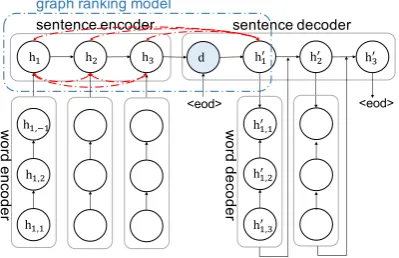
Figure 1: SinABS model. The figure is borrowed fromTan et al.(2017).
Tan et al. (2017) adopt a hierarchical encoder-decoder framework which we found is more scal-able to more and longer input documents. The model is named SinABSin this paper. SinABS uses a hierarchical encoder-decoder framework like Li et al. (2015), where a PageRank (Page et al., 1999) based attention mechanism is pro-posed to identify salient sentences in the original documents. The SinABS model is illustrated in Figure1.We introduce the SinABS model follow-ingTan et al.(2017).
3.1 Encoder
The target of the encoder is to encode the input documents into vector representations. SinABS adopts a hierarchical encoder framework, where a word encoder encword is used for encoding a sentence into the sentence representation from its words, as hi,k = encword(hi,k−1,ei,k), where
hi,k represents the hidden state when LSTM re-ceives wordei,k. Then a sentence encoderencsent is used for encoding an input document into the document representation from its sentences, as
hi = encsent(hi−1,xi), wherexi = hi,−1 is the last hidden state when word encoder receives the whole sentencei. The input to the word encoder is the word sequence of a sentence, appended with an “<eos>” token indicating the end of a sentence. The last hidden state after the word encoder re-ceives “<eos>” is used as the embedding repre-sentation of the sentence. A sentence encoder is used to sequentially receive the embeddings of the sentences. A pseudo sentence of an “<eod>” to-ken is appended at the end of the document to in-dicate the end of the whole document. The hidden state after the sentence encoder receives “<eod>” is treated as the representation of the input
doc-ument, denoted as c. Long Short-Term Memory (LSTM) (Hochreiter and Schmidhuber, 1997) is used as the word encoderencwordand also the sen-tence encoderencsent.
3.2 Decoder
Similar to the hierarchical encoder, The sentence decoder decsent receives the document represen-tation d as the initial state h00 = d, and pre-dicts the sentence representations sequentially, by
h0j = decsent(h
0 j−1,x
0
j−1), wherex 0
j−1 is the en-coded representation of the previously generated sentences0j−1. The word decoderdecwordreceives a sentence representation h0j as the initial state
h0j,0 = h0j, and predicts the word representations sequentially, by h0j,k = decword(h
0
j,k−1,ej,k−1), where ej,k−1 is the embedding of the previously generated word. The predicted word representa-tions are first concatenated with the context vector
cj, and then mapped to vectors of the vocabulary size dimension by a projection layer, and finally normalized by a softmax layer as the probability distribution of generating the words in the vocab-ulary. A word decoder stops when it generates the “<eos>” token and similarly the sentence decoder stops when it generates the “<eod>” token.
3.3 Attention Mechanism
The attention mechanism used in SinABS sets a different context vector cj when generating the words of sentencej, bycj =Piα
j
ihi. The graph-based attention mechanism in Tan et al. (2017) adopts the topic-sensitive PageRank algorithm to compute the attention weights, by
f = (1−λ)(I−λW D−1)−1y (1)
where f = [f1, . . . , fn] ∈ Rn denotes the rank scores of thenoriginal sentences.Dis a diagonal matrix with its(i, i)-element equal to the sum of thei-th column ofW. W(i, j) = hTi Phj where
Pis a parameter matrix to be learned.λis a damp-ing factor and set to 0.9. y ∈ Rn is a one hot vector and only y0 = 1. The ranked scores are then integrated with a distraction mechanism, and finally computed as:
αji = max(f
j i −f
j−1 i ,0)
P
l
sentence encoder d' h%# h"# h$#
sentence decoder
<eod>
d%
d"
word encoder
h",% h"," h%,% h%,"
at
tent
ion
docset encoder
<eod>
[image:4.595.77.289.61.154.2]word decoder <eod>
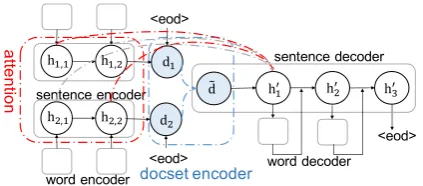
Figure 2: Framework of our model. The differ-ence from Figure1is the docset encoder and the concentrated attention mechanism.
4 Our Approach
4.1 Overview
In this section we introduce our approach. Our ab-stractive MDS model is the extension of the single document summarization model SinABS. It is an encoder-decoder framework, which takes all the documents of a document set as input, then en-codes the documents into a document set repre-sentation, and further generates the summary with a decoder. To adapt SinABS to the MDS task, our model is different from SinABS in the encoder model and the attention mechanism, and it will also be tuned on the MDS dataset to adapt to the MDS task. The framework of our model is illus-trated in Figure2.
4.2 Multi-Document Encoder
The major difference of MDS is that we need to generate a summary for multiple input documents. So our system needs to deal with the multiple in-put documents although SinABS is trained to gen-erate a summary for one document. Considering that the decoder generates the summary from the representation vector encoded by the encoder, we can generate a summary for a document set if the document set is encoded to a representation vector containing its key information. In our approach, we achieve this by adding a document set encoder, to encode a set of document representation vectors into a document set representation. Thus the hier-archical encoder structure becomes three levels.
The document set encoderencdocsettakes
docu-ment vectors{dm},m ∈ [1, M]whereM is the number of documents in a document set as input, produces a new document set vector d˜, and then
˜
dis provided to the decoder to generate the sum-mary for the document set. The decoder will be a two-level hierarchical framework similar to that
inTan et al. (2017). Since there is no order and dependency relationship between different docu-ments in a document set, it is not reasonable to use LSTM as the document set encoder. Instead, we define the document set encoder as:
˜
d=encdocset({dm}) =
X
m
wmdm (3)
wherew= [w1, . . . , wm]∈ Rm is a weight vec-tor to merge the document vecvec-tors into a document set representation. The weight vectorwcan be a fixed one asw = [1/m, . . . ,1/m], but in our sys-tem we hope to assign different wm to different
dm, since different documents may contribute dif-ferently to the overall summary. However, it is un-reasonable to treat w as a parameter vector and learn it directly, because the weight wm for dm should be based ondm. The position of a docu-ment should not affect its weight since there is no order in a document set.
In our system the weight for a document is de-cided based on the document itself, and its con-tribution to the representation of the overall docu-ment set. Therefore, we define:
wm =
qT[dm;dΣ]
P
m0qT[dm0;dΣ] (4)
wheredΣ =Pmdmand[dm;dΣ]is the concate-nation ofdmanddΣ. The intuitive explanation of Eq.4is that the weight ofdmis decided by its re-lationship (modeled by parameterized dot product) with the representation of the whole document set
dΣ. q is the parameter to be learned, whose di-mension is twice the didi-mension ofdmordΣ.
4.3 Attention
The decoder receives the document set vector d˜
all the input sentences, by conducting the topic-sensitive PageRank algorithm in Eq. 1and Eq. 2 on all the original sentences.
However, a problem does occur because the amount of original sentences is much larger than that of single document summarization task. Even though the graph-based attention mechanism is still able to rank the relevance and salience of orig-inal sentences, the attention distribution will be too disperse and even. This results in that too many sentences are considered to produce the con-text vector, making the concon-text vector contain too much information. We believe a more concen-trated attention distribution will be better. There-fore, when computing the attention weights, only the top K ranked sentences can have attention weights. This can be easily realized by switching the rank scores of sentences not in largestK sen-tences to minimum value and re-normalizing the attention weights.K is a hyper-parameter.
4.4 Model Tuning
SinABS is trained on the single document summa-rization corpus - CNN/DailyMail. Although both the CNN/DailyMail corpus and DUC datasets are news data, the reference summaries of the datasets differ much. In order to better adapt the Sin-ABS model on the MDS task, we attempt to fine tune the pre-trained SinABS model, although we have only a few reference summaries for the MDS task. In our approach we tune the decoders of the model. The parameters are the LSTM pa-rameters of the word and sentence decoders, and the weight vectorqin the document set encoder. The loss function and the optimization algorithm are the same with those of the original SinABS model, and we use the cross-entropy loss and the Adam (Kingma and Ba,2014) algorithm to train the model. To prevent overfitting the training is stopped when performance begins to decrease.
5 Experiments
5.1 Dataset
We conduct experiments on the DUC datasets which are widely used in document summariza-tion. We use the MDS tasks of DUC 2002 and 2004 as test sets, which contain 50 document sets and 59 document sets, respectively. When evaluat-ing on the DUC 2004 dataset, the DUC 2001-2003 and DUC 2005-2007 datasets are used for tun-ing the model, and DUC 2001, DUC 2003-2007
datasets are used when testing on the DUC 2002 dataset. The MDS tasks of DUC 2005-2007 are query focused summarization, but we ignore the query since these datasets are only used for train-ing. There are on average 10 documents per set in DUC 2004 and 9.58 documents per set in DUC 2002. For the datasets of DUC 2005-2007 we use only the top 10 documents which are most similar to the topic of a document set.
5.2 Implementation
We implement our approach based on the source code and pre-trained model on the CNN/DailyMail corpus provided by Tan et al. (2017). We process the DUC datasets similar to Tan et al.(2017), including tokenizing and lower-casing the text, replacing all digit characters with the “#” symbol and label all name entities with CoreNLP toolkit1. The “#” symbols are mapped back to the original digits after decoding accord-ing to the context. We also implement our model in Theano2based on the SinABS model. K is set to 15 based on developing on the training set.
5.3 Evaluation Metric
ROUGE: We use ROUGE-1.5.5 (Lin and Hovy, 2003) toolkit and report the Rouge-1, Rouge-2 and Rouge-SU4 F1-scores, which has been widely adopted by DUC and TAC for automatic summary quality evaluation. It measured summary quality by counting overlapping units such as then-gram, word sequences and word pairs between the can-didate summary and the reference summary.
Edit distance: In order to test if our model is truly abstractive, instead of simply copying rel-evant fragments verbatim from the input docu-ments, we compute the word edit-distance be-tween each generated sentence si and the most similar original sentence of it, as edi, and report the average ED= 1nPn
i=1edi.
Considering the significant difference of length between sentences, we also divide the word edit-distance for each generated sentence by its word numberwias ED/w= 1nPni=1edi/wi.
5.4 Baselines
To verify the effectiveness of our approach, we investigate various strategies to adapt SinABS to MDS task for comparison. Since SinABS takes
1
http://stanfordnlp.github.io/CoreNLP/
one document as input but there are multiple input documents in the MDS task, we explore four pos-sible approaches to address this (“ex.” indicates extractive method and “ab.” indicates abstractive method. SinABS is denoted as∆).
Single-ab.: One representative document of ev-ery document set is selected as the input document to the SinABS model. This is the most straightfor-ward way to adapt single document summariza-tion model to the MDS task. The representative document is chosen by conducting the PageRank (Page et al., 1999) algorithm on every document set. This baseline is denoted as P.R.+∆.
Single-ex.+Merge+Single-ab.: Different from selecting one representative document, we also in-vestigate constructing a pseudo document as the input to SinABS. We achieve this by first using extractive single document summarization method to summarize every input document, and then con-catenate these summaries to form a new document. The motivation of this strategy is to keep only the important content of original documents, so that the input is both the key information and suitable for SinABS to handle. The methods for extrac-tive summarization are Lead, LexRank, TextRank and Centroid. These four baselines are denoted as Lead/Lex./Text./Cent.+∆respectively.
Single-ab.+Merge+Single-ab.: Generate the abstractive summary for every original document with SinABS. Then the abstractive summaries are concatenated to form a pseudo document, as the input to SinABS again. The difference from Single-ex.+Merge+Single-ab. is that no extractive methods are required. This baseline his denoted as
∆+∆.
Single-ab.+Multi-ex.: Generate the summary for every original document, then summarize these summaries using some extractive MDS method instead of SinABS to get the final sum-mary. The extractive MDS methods used are Lead, LexRank, TextRank, Centroid and Cov-erage. Note that Coverage is specially de-signed for the MDS task, therefore it is not used in Single-ex.+Merge+Single-ab. base-lines. These five baselines are denoted as
∆+Lex./Text./Cent./Cov./Lead.
We introduce the extractive MDS methods used in previous baselines as follows. These extractive methods themselves can also be the baselines for comparison.
Lead: This baseline method takes the first
sen-tences one by one in single document or the first document in the document collection, where doc-uments in the collection are assumed to be ordered by name.
Coverage: It takes the first sentence one by one from the first document to the last document in the document collection.
LexRank: LexRank (Erkan and Radev, 2004) computes sentence importance based on the con-cept of eigenvector centrality in a graph represen-tation of sentences. In this model, a connectivity matrix based on intra-sentence cosine similarity is used as the adjacency matrix of the graph repre-sentation of sentences.
TextRank: TextRank (Mihalcea and Tarau, 2004) builds a graph and adds each sentence as vertices, the overlap of two sentences is treated as the relation that connects sentences. Then graph-based ranking algorithm is applied until conver-gence. Sentences are sorted based on their final score and a greedy algorithm is employed to im-pose diversity penalty on each sentence and select summary sentences.
Centroid: In centroid-based summarization (Radev et al.,2000) method, a pseudo-sentence of the document called centroid is calculated. The centroid consists of words with TF-IDF scores above a predefined threshold. The score of each sentence is defined by summing the scores based on different features including cosine similarity of sentences with the centroid, position weight and cosine similarity with the first sentence.
Method R-1 R-2 R-SU4 ED ED/w
P.R. +∆ 28.3 4.83 8.8 24 0.88
Lead+∆ 31.9 5.85 10.1 30 0.87 Lex. +∆ 31.0 5.52 9.8 25 0.87 Text.+∆ 32.3 5.68 10.4 34 0.89 Cent.+∆ 32.4 6.42 10.4 31 0.90
∆+Lead 31.5 5.34 9.9 27 0.87
∆+Cov. 32.4 5.65 10.3 29 0.88
∆+Lex. 32.7 5.80 10.5 20 0.96
∆+Text. 32.6 5.96 10.4 32 0.79
∆+Cent. 31.7 5.44 10.0 43 0.80
∆+∆ 31.5 5.30 10.0 48 0.88
[image:6.595.307.525.509.719.2]Our Model 34.0 6.96 11.4 22 1.01
5.5 Results
Method R-1 R-2 R-SU4 ED ED/w
P.R. +∆ 31.7 5.56 10.1 27 0.85
Lead+∆ 31.8 5.74 10.0 28 0.83 Lex. +∆ 32.9 6.28 10.8 33 0.89 Text.+∆ 33.3 6.10 10.7 41 0.90 Cent.+∆ 34.4 6.68 11.1 44 0.93
∆+Lead 33.2 6.12 10.6 27 0.83
∆+Cov. 34.4 6.84 11.2 27 0.84
∆+Lex. 34.0 6.30 11.0 20 0.91
∆+Text. 34.3 6.71 11.1 35 0.78
∆+Cent. 32.8 5.77 10.3 44 0.80
∆+∆ 31.3 4.70 9.6 52 0.88
[image:7.595.72.291.111.321.2]Our Model 36.7 7.83 12.4 22 1.10
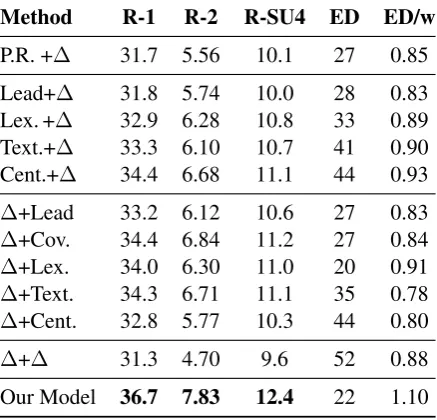
Table 2: Comparison results with abstractive base-lines on the DUC 2004 test set.
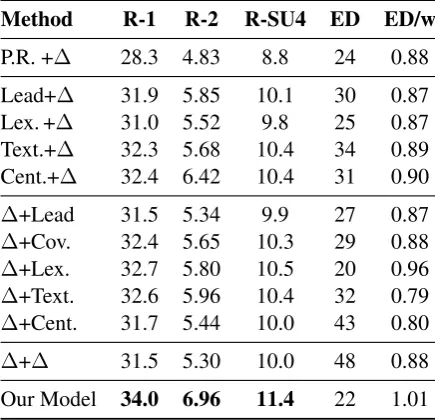
The comparison results with abstractive base-lines are presented in Table1and Table2, respec-tively. As seen from Table1and Table2, select-ing one document as the representation of a doc-ument set (Single-ab.) performs poorly. This in-dicates considering the information of all docu-ments is necessary for MDS task. Generally gen-erating the abstractive summary for every docu-ment first and then merging these summaries with extractive MDS methods (i.e. Single-ab.+Multi-ex.) performs slightly better than constructing pseudo single document by extractive summa-rization methods (i.e. Single-ex.+Merge+Single-ab.). It may be explained that Single-ab.+Multi-ex. keeps the integrity of a document, thus the Sin-ABS model will perform better. Similarly Single-ab.+Merge+Single-ab. does not perform well be-cause the constructed document is much different from a real one. Our system achieves the best per-formance on both datasets, since our model at the same time keeps the integrity of all original docu-ments and takes into consideration only the salient sentences by ranking all original sentences in the attention mechanism.
The edit distance results verify that our method produces sentences that are quite different from original sentences, indicating the property of ab-stractive summarization.
Method Encoder Attention Tuning
Model-1 fixed raw no
[image:7.595.307.525.178.257.2]Model-2 fixed concentrated no Model-3 fixed concentrated yes Our Model learned concentrated yes
Table 3: Details of model validation.
Method R-1 R-2 R-SU4 ED ED/w
Model-1 31.7 5.89 10.0 42 0.89 Model-2 32.2 6.16 10.3 43 0.90 Model-3 32.8 6.42 10.8 24 1.06 Our Model 34.0 6.96 11.4 22 1.01
Table 4: Model validation results on DUC 2002.
5.6 Model Validation
We conduct ablation experiments to verify the ef-fectiveness of our model. Since we make three ex-tensions to the SinABS model, namely the learned weights in the document set encoder, the attention mechanism and the tuning of the model. We val-idate their effect with three baseline models, by each changes one of the three parts. The difference of the three baselines are listed in Table3. Model-1 is the simplest model without tuning, which uses a fixed weight vector w = [1/m, . . . ,1/m], and uses the raw attention mechanism in Tan et al. (2017). Model-2 verifies the effectiveness of mak-ing the attention distribution more concentrated on the 15 most salient sentences. Model-3 verifies tuning the decoder but not the document set en-coder. Compared with Model-3, our model further learns different weights for different documents in the document encoder. Results are presented in Table 4 and Table 5. As seen from Table 4 and Table 5, all the three strategies considerably im-prove the performance, validating how to better adapt single abstractive summarization model to the MDS task.
Method R-1 R-2 R-SU4 ED ED/w
Model-1 33.9 6.64 11.0 45 0.90 Model-2 34.1 7.10 11.2 49 0.91 Model-3 34.9 7.52 11.8 21 1.06 Our Model 36.7 7.83 12.4 22 1.10
Method Coherence N.R. Readability
Lead+∆ 2.32 2.74 2.71
Cent.+∆ 2.63 2.84 3.29
∆+Cov. 2.30 3.53 2.92
∆+Text. 3.18 3.75 3.34
∆+∆ 2.23 2.57 2.57
Our Model 3.76 3.92 4.08
Table 6: Human evaluation results on 20 samples from the DUC 2002 and DUC 2004 datasets.
5.7 Human Evaluation
We also conduct human evaluation to evaluate the linguistic quality of the generated abstractive sum-maries, and compare with some significant base-lines. We randomly sample 10 document sets from the DUC 2002 dataset and another 10 document sets from the DUC 2004 dataset for human evalu-ation. Three volunteers who are fluent in English were asked to perform manual ratings on three di-mensions: Coherence, Non-Redundancy (N.R. for short) and Readability. The ratings are in the for-mat of 1-5 numerical scores (not necessarily in-tegral), with higher scores denote better quality. The average results are shown in Table6. It can be observed that our system also outperforms other abstractive summarization approaches in human evaluation, achieving good coherence and read-ability.
5.8 Case Study
We show the abstractive summaries generated for an example from the DUC 2004 test set in Fig-ure3. It can be seen that the abstractive summaries generally read well, and has the potential to better convey the key information of original documents.
6 Conclusion and Future Work
Abstractive Multi-Document Summarization (MDS) is still a challenging and open problem. Although sequence-to-sequence models have achieved great progress in single document summarization, the demands of large amount of training data makes it hard to apply it to the MDS task. In this paper, we address this problem from another direction, that we investigate leveraging pre-trained successful single document summa-rization model to the MDS task. We propose a framework to realize this goal by adding a docu-ment set encoder into the hierarchical framework,
Lead+∆:
politics , opposition leader hun sen and the prime minister were ousted <eos>in the u.s. khmer rouge , the government ’s prime minister ’s ruling party has had a lengthy majority of its leader in cambodia ’s human rights record . <eos>of the country ’s opposition party leaders and opposition members , the government have become prime minister<eos>of parlia-ment with its prime minister , the presidency of the khmer rouge has been ruled out by the government ’s leading opposition<eos>two political par-ties previously clashed with the government ’s top two parpar-ties<eod>
∆+Text:
king hun sen on tuesday praised by cambodia ’s top two political parties, a coalition government led by prime minister<eos>in a short letter sent to news agencies, the king said he had received copies of fiscal and his cambo-dian people ’s party in the government.<eos>cambodia ’s leading opposi-tion party ruled out sharing the top posiopposi-tion in the presidency of parliament with its opposition<eos>in talks between the two party opposition bloc and the cambodian people ’s party to form a new government.<eod>
Our System:
opposition leader cambodian people ’s party won the election. <eos>in the u.s. , they were arrested in bangkok and charged with a lengthy coup of human rights . <eos>leading opposition party , the top position in parliament with its political rights , was arrested in bangkok , insisting it would lead to the presidency of thailand ’s leading government . <eos> prime minister , political parties won a three - month agreement and agreed to a coalition government .<eos>the government would not end in a new coup vote and his arrest was rejected by the parties of parliament .<eod>
Figure 3: Example of generated abstractive sum-mary by our system.
and we propose three strategies to further improve the model performance. Experimental results demonstrate our approach is able to achieve promising results on standard MDS datasets.
Our study is still primary effort towards abstrac-tive MDS. Future work we can do includes alle-viating the requirement of a good pre-trained ab-stractive summarization model, designing better attention mechanism for MDS, and investigating our approach based on other model architectures.
Acknowledgment
This work was supported by National Natural Sci-ence Foundation of China (61772036, 61331011) and Key Laboratory of Science, Technology and Standard in Press Industry (Key Laboratory of In-telligent Press Media Technology). We thank the anonymous reviewers for their helpful comments. Xiaojun Wan is the corresponding author.
References
P. V. S. Avinesh and Christian M. Meyer. 2017.
Joint optimization of user-desired content in multi-document summaries by learning from user feed-back. InProceedings of the 55th Annual Meeting of the Association for Computational Linguistics, ACL 2017, Vancouver, Canada, July 30 - August 4, Vol-ume 1: Long Papers, pages 1353–1363.
learning to align and translate. arXiv preprint, arXiv:1409.0473.
Tal Baumel, Matan Eyal, and Michael Elhadad. 2018.
Query focused abstractive summarization: Incorpo-rating query relevance, multi-document coverage, and summary length constraints into seq2seq mod-els.arXiv preprint, arXiv:1801.07704.
Florian Boudin, Hugo Mougard, and Benoˆıt Favre. 2015. Concept-based summarization using integer linear programming: From concept pruning to mul-tiple optimal solutions. InProceedings of the 2015 Conference on Empirical Methods in Natural Lan-guage Processing, EMNLP 2015, Lisbon, Portugal, September 17-21, 2015, pages 1914–1918.
Jaime G. Carbonell and Jade Goldstein. 1998. The use of mmr, diversity-based reranking for reorder-ing documents and producreorder-ing summaries. InSIGIR ’98: Proceedings of the 21st Annual International ACM SIGIR Conference on Research and Develop-ment in Information Retrieval, August 24-28 1998, Melbourne, Australia, pages 335–336.
Sumit Chopra, Michael Auli, and M. Alexander Rush. 2016. Abstractive sentence summarization with at-tentive recurrent neural networks. InProceedings of the 2016 Conference of the North American Chap-ter of the Association for Computational Linguistics: Human Language Technologies, pages 93–98.
G¨unes Erkan and Dragomir R Radev. 2004. Lexrank: Graph-based lexical centrality as salience in text summarization. Journal of Artificial Intelligence Research, 22:457–479.
Mahak Gambhir and Vishal Gupta. 2017. Recent auto-matic text summarization techniques: a survey. Ar-tif. Intell. Rev., 47(1):1–66.
Sepp Hochreiter and J¨urgen Schmidhuber. 1997. Long short-term memory. Neural computation, 9(8):1735–1780.
Diederik P. Kingma and Jimmy Ba. 2014. Adam: A method for stochastic optimization. arXiv preprint, arXiv:1412.6980.
Chen Li, Xian Qian, and Yang Liu. 2013.Using super-vised bigram-based ILP for extractive summariza-tion. InProceedings of the 51st Annual Meeting of the Association for Computational Linguistics, ACL 2013, 4-9 August 2013, Sofia, Bulgaria, Volume 1: Long Papers, pages 1004–1013.
Jiwei Li, Minh-Thang Luong, and Dan Jurafsky. 2015.
A hierarchical neural autoencoder for paragraphs and documents. InProceedings of the 53rd Annual Meeting of the Association for Computational Lin-guistics and the 7th International Joint Conference on Natural Language Processing of the Asian Fed-eration of Natural Language Processing, ACL 2015, July 26-31, 2015, Beijing, China, Volume 1: Long Papers, pages 1106–1115.
Chin-Yew Lin and Eduard Hovy. 2003. Auto-matic evaluation of summaries using n-gram co-occurrence statistics. In Proceedings of the 2003 Conference of the North American Chapter of the Association for Computational Linguistics on Hu-man Language Technology-Volume 1, pages 71–78.
Peter J. Liu, Mohammad Saleh, Etienne Pot, Ben Goodrich, Ryan Sepassi, Lukasz Kaiser, and Noam Shazeer. 2018. Generating wikipedia by summarizing long sequences. arXiv preprint, arXiv:1801.10198.
Ryan T. McDonald. 2007. A study of global infer-ence algorithms in multi-document summarization. In Advances in Information Retrieval, 29th Euro-pean Conference on IR Research, ECIR 2007, Rome, Italy, April 2-5, 2007, Proceedings, pages 557–564.
Kathleen McKeown, Judith Klavans, Vasileios Hatzi-vassiloglou, Regina Barzilay, and Eleazar Eskin. 1999. Towards multidocument summarization by reformulation: Progress and prospects. In Proceed-ings of the Sixteenth National Conference on Arti-ficial Intelligence and Eleventh Conference on In-novative Applications of Artificial Intelligence, July 18-22, 1999, Orlando, Florida, USA., pages 453– 460.
Kathleen McKeown and Dragomir R. Radev. 1995.
Generating summaries of multiple news articles. In
SIGIR’95, Proceedings of the 18th Annual Interna-tional ACM SIGIR Conference on Research and De-velopment in Information Retrieval. Seattle, Wash-ington, USA, July 9-13, 1995 (Special Issue of the SIGIR Forum), pages 74–82.
Rada Mihalcea and Paul Tarau. 2004. Textrank: Bring-ing order into text. InProceedings of the 2004 con-ference on empirical methods in natural language processing.
Lili Mou, Yiping Song, Rui Yan, Ge Li, Lu Zhang, and Zhi Jin. 2016. Sequence to backward and for-ward sequences: A content-introducing approach to generative short-text conversation. In COLING 2016, 26th International Conference on Computa-tional Linguistics, Proceedings of the Conference: Technical Papers, December 11-16, 2016, Osaka, Japan, pages 3349–3358. ACL.
Ramesh Nallapati, Bowen Zhou, C´ıcero Nogueira dos Santos, C¸ aglar G¨ulc¸ehre, and Bing Xiang. 2016.
Abstractive text summarization using sequence-to-sequence rnns and beyond. InProceedings of the 20th SIGNLL Conference on Computational Natural Language Learning, CoNLL 2016, Berlin, Germany, August 11-12, 2016, pages 280–290. ACL.
Romain Paulus, Caiming Xiong, and Richard Socher. 2017. A deep reinforced model for abstractive sum-marization.arXiv preprint, arXiv:1705.04304.
Maxime Peyrard and Judith Eckle-Kohler. 2017.
Supervised learning of automatic pyramid for optimization-based multi-document summarization. InProceedings of the 55th Annual Meeting of the As-sociation for Computational Linguistics, ACL 2017, Vancouver, Canada, July 30 - August 4, Volume 1: Long Papers, pages 1084–1094.
Dragomir R Radev, Hongyan Jing, and Malgorzata Budzikowska. 2000. Centroid-based summarization of multiple documents: sentence extraction, utility-based evaluation, and user studies. InProceedings of the 2000 NAACL-ANLPWorkshop on Automatic summarization-Volume 4, pages 21–30. Association for Computational Linguistics.
Alexander M. Rush, Sumit Chopra, and Jason Weston. 2015. A neural attention model for abstractive sen-tence summarization. In Proceedings of the 2015 Conference on Empirical Methods in Natural Lan-guage Processing, EMNLP 2015, Lisbon, Portugal, September 17-21, 2015, pages 379–389.
Abigail See, Peter J. Liu, and Christopher D. Manning. 2017.Get to the point: Summarization with pointer-generator networks. InProceedings of the 55th An-nual Meeting of the Association for Computational Linguistics, ACL 2017, Vancouver, Canada, July 30 - August 4, Volume 1: Long Papers, pages 1073– 1083.
Jiwei Tan, Xiaojun Wan, and Jianguo Xiao. 2015.Joint matrix factorization and manifold-ranking for topic-focused multi-document summarization. In Pro-ceedings of the 38th International ACM SIGIR Con-ference on Research and Development in Informa-tion Retrieval, Santiago, Chile, August 9-13, 2015, pages 987–990. ACM.
Jiwei Tan, Xiaojun Wan, and Jianguo Xiao. 2017.
Abstractive document summarization with a graph-based attentional neural model. In Proceedings of the 55th Annual Meeting of the Association for Computational Linguistics, ACL 2017, Vancouver, Canada, July 30 - August 4, Volume 1: Long Pa-pers, pages 1171–1181. Association for Computa-tional Linguistics.
Yuhui Tao, Shuigeng Zhou, Wai Lam, and Jihong Guan. 2008. Towards more effective text sum-marization based on textual association networks. In Fourth International Conference on Semantics, Knowledge and Grid, SKG ’08, Beijing, China, De-cember 3-5, 2008, pages 235–240.
Xiaojun Wan and Jianwu Yang. 2008.Multi-document summarization using cluster-based link analysis. In
Proceedings of the 31st Annual International ACM SIGIR Conference on Research and Development in Information Retrieval, SIGIR 2008, Singapore, July 20-24, 2008, pages 299–306.
Dingding Wang, Shenghuo Zhu, Tao Li, Yun Chi, and Yihong Gong. 2011. Integrating document clus-tering and multidocument summarization. TKDD, 5(3):14:1–14:26.
Kristian Woodsend and Mirella Lapata. 2012. Multi-ple aspect summarization using integer linear pro-gramming. InProceedings of the 2012 Joint Con-ference on Empirical Methods in Natural Language Processing and Computational Natural Language Learning, EMNLP-CoNLL 2012, July 12-14, 2012, Jeju Island, Korea, pages 233–243.