World Maritime University
The Maritime Commons: Digital Repository of the World
Maritime University
World Maritime University Dissertations Dissertations
2016
The policy exploration of the South African
exclusive economic zone /
Thulile Khanyile
World Maritime University
Follow this and additional works at:http://commons.wmu.se/all_dissertations Part of theLaw of the Sea Commons
This Dissertation is brought to you courtesy of Maritime Commons. Open Access items may be downloaded for non-commercial, fair use academic purposes. No items may be hosted on another server or web site without express written permission from the World Maritime University. For more information, please [email protected].
Recommended Citation
Khanyile, Thulile, "The policy exploration of the South African exclusive economic zone /" (2016).World Maritime University Dissertations. 513.
Policy Exploration of the South African Exclusive Economic
Zone
THULILE KHANYILE
South Africa
A dissertation submitted to the world maritime University in partial
fulfillment of the requirements for the award of the degree of
MASTER OF SCIENCE
IN MARITIME AFFAIRS
MARITIME LAW AND POLICY
2016
iii
Acknowledgement
I would first like to thank God for the opportunity to learn and for the completion of this master‟s
thesis, my brother Sphephelo Khanyile for believing in me. I would also like to pass my gratitude
to TETA on behalf of the South African Government for sponsorship, my advisor Professor
Carolina Romero and Henrik Nilson and the World Marime University for help and knowledge
they have invested in me.
I would also like to thank the experts who were involved in this project:
Professor Michael Emmanuel
Professor Neil Bellefontaine
Professor Dong-Wook-Song
Professor Larry Hildebrand
Professor George Theocharidis
If it were not for their participation and input this project could not have been successfully
conducted, finally I must express my profound gratitude to my mother Nonhlanhla Khanyile, my
sister Fundisiwe Khanyile Mhlongo and my family at large for their support and encouragement.
Author
iv
Abstract
Tittle of dissertation: The Policy Exploration of the South African Exclusive
Economic Zone
Degree: MSc
This dissertation is a study regarding the promoting and limiting factors on the policies/national
legislation guiding the South African Maritime Sectors, sectors being: Marine Transport and
Manufacturing, Offshore Oil and Gas Exploration, the aquaculture work stream as well as the
Marine Protection Services.
A qualitative data collection method is performed for this study and an analysis will be done
through the help of theoretical framework which defines and discusses the sustainability concept
as well as legal framework in the national and international legislation; moreover Expert‟s views
are gathered in a form of Interviews that are conducted as part of data collection in addition to
literature review.
The scheduled oral interviews with the World Maritime University Professors- proceeded as
scheduled; the results were collected and summarized for dissertation analysis purposes.
The Analysis of this dissertation is based under the scope of theoretical framework, empirical
findings as well as interview results. Additionally, conclusions and recommendations are given
on education and new ideas about establishment of the renewable energy sectors
v
Table of Contents
Declaration ... Error! Bookmark not defined.
Acknowledgement ... iii
Abstract ... iv
Table of Contents ... v
List of figures ... vii
List of Abbreviations ... viii
1.1 Marine Transport and Manufacturing. ... 2
1.2 Off shore Oil and Gas ... 3
1.3 Aquaculture ... 4
1.4 Marine Protection ... 5
4.1 Method for Data collection ... 11
4.2 Sectors selection criteria ... 12
4.3 Gap Analysis ... 12
4.4 Material ... 13
4.5 Interviews ... 14
4.6 Limitations ... 14
5.1 Sustainable Development ... 15
5.1.1 Establishment of Sustainable development ... 15
5.1.2 Future responsibility for sustainability ... 19
5.1.3 Weak against strong sustainability ... 19
5.1.4 Millennium goals ... 20
5.2 Legal Framework ... 21
5.2.1 Renewal of the convention has headed to the following: ... 22
5.2.2 United Nations Convention on the Law of the Sea, (UNCLOS) ... 23
5.2.3 Maritime legislation ... 24
5.3 Natural resources ... 27
5.3.1 Oil and Gas ... 28
5.3.2 Diamonds ... 28
5.3.3 Fisheries ... 29
5.4 Current Activities ... 32
5.4.1 Offshore Oil and Gas ... 32
vi
5.4.3 Fisheries ... 33
5.4.4 Aquaculture ... 33
5.4.5 Marine Protected Areas ... 34
5.4.6 Tourism ... 35
5.4.7 Ocean Cultural and Social Use ... 36
5.5 Maritime Policies ... 36
5.5.1Marine spatial planning ... 38
6.1 Marine transport And Manufacturing ... 41
6.2 Oil and Gas Exploitation ... 41
6.3 Aquaculture ... 42
6.4 Marine Protection Services ... 42
7 Recommendations ... 45
7.1 Further Education ... 45
7.2 Renewable Energies ... 46
Appendices ... 48
Questionnaire ... 50
vii
List of figures
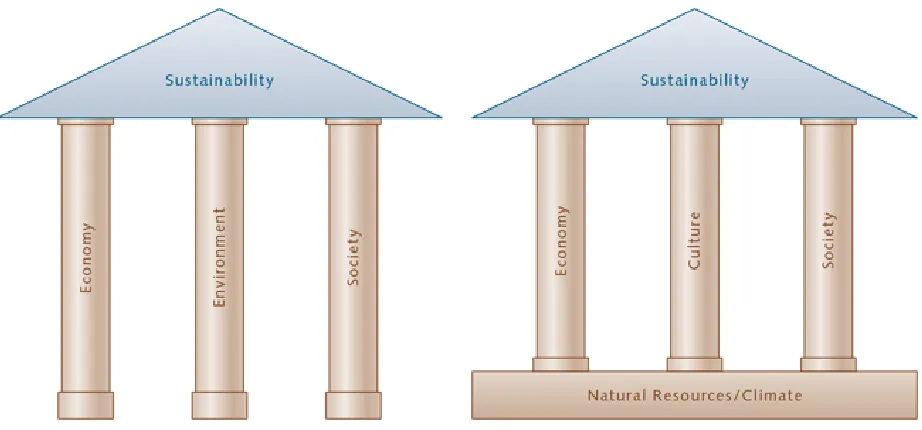
Figure 1 Model of Sustainability
viii
List of Abbreviations
BRICS Brazil, Russia, India, China and South Africa
DoAFF Department of Agriculture, Forestry and Fisheries
DoEA Department of Environmental Affairs
DOL Department of Labour
DoME Department of Minerals and Energy
DoT Department of Transport
DTI Department of Trade and Industry
EEZ Exclusive Economic Zone
FAO Food Agriculture Organization
GDP Gross Domestic Product
IMO International Maritime Organization
IPAP Industrial Policy Action Plan
MPA Marine Protected Area
NDP National Development Plan
RSA Republic of South Africa
SAIMI South African International Maritime Institute
SDG Sustainability Development Goals
SMME Small Medium and Micro Enterprise Sector
UN United Nations
UNCLOS United Nations Convention Law of the Sea
UNEP United Nations Environmental Program
UNMDG United Nations Millennium Development Goals
WCED World Commision on Environment and Development
1
1 Introduction
Accounting for over 80% of the global trade in volume, the maritime industry has experienced
significant growth over the past four decades. This is largely attributed to its large economy of
scale as well as its friendly environmental image which make it attractive for shippers of cargoes.
As a result of this development, in a search to maintain competitive advantage, players seek
continuously for innovation. Ships continue to get bigger and bigger, ports are constantly
expanding to allow for bigger ships and creation of alliances by various players are perpetually
taking place to remain relevant in the industry. In recent times, owing to its large multiplier
effect, the Maritime Industry has increasingly been widely recognized as a major catalyst to
economic development of any region, (Department of Transport, 2013).Offshore oil and gas
exploration; aquaculture, marine protection services and ocean governance are activities that
occur within the country's boundary of 200 nautical miles (370 kilometers) off the coast towards
the sea. Within this area, nations claim and exercise sovereign rights given to by the United
Nations Convention on the Law of the Sea (UNCLOS), this distance from the coastline is
referred to as Exclusive the Economic Zone (EEZ) and is defined as an area beyond and adjacent
to the territorial sea, under which the rights and jurisdiction of the coastal State and the rights and
freedoms of other States are governed by the relevant provisions of this Convention (Article 55,
UNCLOS)
According to South African (Maritime Zones Act, 1994). South Africa declared an Exclusive
Economic Zone (EEZ) out for 200 nautical miles to seaward from the coastal baselines of both
South Africa and its possessions in the Southern Ocean, the Marion and Prince Edward Islands,
with this declaration South Africa holds rights and obligations to Fisheries, Oil and Gas
Exploration and Exploitation as well as Marine Scientific Research. As supported by Article 56,
UNCLOS under Rights, jurisdiction and duties of the coastal State in the exclusive economic
zone in the exclusive economic zone, the coastal State has: sovereign rights for the purpose of
exploring and exploiting, conserving and managing the natural resources, whether living or
nonliving, of the waters superjacent to the seabed and of the seabed and its subsoil, and with
regard to other activities for the economic exploitation and exploration of the zone, such as the
production of energy from the water, currents and winds; jurisdiction as provided for in the
2
islands, installations and structures; marine scientific research; the protection and preservation of
the marine environment, (UNCLOS).
As the major role player of the National Development Plan, an overview of four sectors is given
below. Four sectors being:
Marine Transport and Manufacturing
Off shore oil and Gas
Aquaculture
Marine Protection
1.1 Marine Transport and Manufacturing.
The Marine Sector involves boat-building, oil and gas sector, as well as the shipbuilding and ship
repair division. The income of the boat-building industry is estimated to R1, 2billionn, with 85%
of manufactured goods being distributed to different parts of the world, counting the United
States and the Caribbean. South Africa is the second-biggest producers of catamarans
(multi-hulled watercraft featuring two parallel hulls of equal size) globally and manufactures 29% of the
30 to 40 feet catamarans. Traded products comprise kayaks, rigid inflatable boats, and sail and
power catamarans, (Republic of South Africa Department of Trade and Industry, 2016).
The Marine Transport industry in South Africa embraces cargo handling, national registry and
flagging, while marine manufacturing saw the building of maritime vessels, rig and ship repair, as
well as offshore oil and gas services, (RSA. DTI, 2016).
South Africa is preferably situated to attend the East-West cargo traffic and the growing African
offshore oil and gas industry, through marine manufacturing, which embraces ship and rig repair,
refurbishment and boatbuilding. Marine Transport and Manufacturing has not been exploited
South Africa‟s strategic location, infrastructure and skills base are essential to fast-track
development of this sector, (Republic of South Africa Department of Transport, 2016).
The representatives of Marine Transport and Manufacturing Sector have emphasized a concern
for the low number of ships that are registered in South Africa. This is regardless of the statistic
that annually, three hundred million (300 million) tons of cargo exchanges through our ports in
3
hurriedly growing offshore oil and gas undertakings need an assistance fleet of vessels,
(Republic of South Africa Department of Transport, 2016).
Apart from this competitive advantage, Marine Transport and Manufacturing captures only one/1
% of the international market of ship repair and refurbishment. Of the eighty oil rigs projected to
be in the range of the Western Cape, only four rigs are repaired per year, indicating substantial
potential for growth. As a solution, the marine transport work stream has developed eighteen
initiatives across three categories, infrastructure and operations, skills and capacity building as
well as market growth to accelerate sector growth, ( RSADoT, 2016).
1.2 Off shore Oil and Gas
South African coasts have been proven to have offshore oil and gas that can amount to nine
billions of barrels, that amount of oil is almost equivalent to 40 years of South Africa's oil
utilization, (Department of Environmental Affairs, 2016).The South African Government is
sentient that it has to make the allowing atmosphere to give industry the assurance to invest in
this capital- demanding sector. The workflow has outlined some primary goals towards this
initiative. Government needs to provide transparency and firmness in the legislative framework
governing offshore oil and gas, guaranteeing an equal benefit outcome for government, industry,
and society and to include together in one place a broad service offering –one stop shop,
(Department of Environmental Affairs, 2016).
According to (Shirley Miller, 2005). The South African industries, specifically the oil sector
have been molded by a nation‟s history. Development of oil industrialization in South Africa
emanated from product requirement from mining and agricultural sectors, the succeeding growth
has basically supported the nation‟s trade industrialization policy. The oil sector was defined by
its high controversy and a high level of national regulations, (Miller, 2005). The oil refinery
systems were appointed specifically under the national key point‟s act of 1980, and the
accessibility was closely monitored. Soon after democracy, the investments were directed to the
oil sector through the formation of Petro SA, (Miller, 2005).
Numerous Government departments‟ have contributions in the regulatory functions over the oil
industry. These are the Department of Labour (DOL), the Department of Minerals and Energy,
4
Forestry, the Department of Transport, and the Department of Trade and Industry. DOL is the
regulatory intervention; in this position, it works with all structures of business affairs. None the
less, other organizations advocate fundamental features of societal negotiation with regard to
other socio-economic subjects. For instance, the Department of Minerals and Energy
administered the development of the White Paper on Energy which guides the future of the oil
sector, the Department of Environmental Affairs and Tourism supports conservational legislation
which may entail technological modifications and thus restructuring at the workplace and the
Department of Trade and Industry‟s Competitions Act work with affiliations and acquisitions
that could distress occupation safety and conditions of work.
1.3 Aquaculture
Etienne Hinrichsen 2013 defines aquaculture as the propagation, growth, trade or nurturing of
aquatic organisms (plant and animal) in controlled or designated aquatic locations (fresh, sea or
brackish waters) for any money-making, sustenance, recreational or other public or private
reason. Aquaculture doesn‟t embrace capture fisheries which involves the gathering of aquatic
creatures from an environment in which no attempt has been made to manage or in some way
effect the organisms by control, feeding or application of any farming techniques, (Department
of Environmental Affairs, 2013). The consequential fish supply gap in countries like United
States of America, Spain, France, Italy, Japan and the Republic of Korea, has fallen in recent
years has been one of the pushing factors motivating the accelerating growth in other countries
with a strong focus on export-oriented types. World food fish aquaculture manufacture
developed at a normal yearly rate of 6.2 percent during the year of 2000–2012, much slower than
the year 1980–1990 (10.8 percent) and 1990–2000 (9.5 percent). Between 1980 and 2012, world
aquaculture production volume improved at an ordinary rate of 8.6 percent annually. World food
fish aquaculture production more than doubled up from 32.4 million tonnes in 2000 to 66.6
million tons in 2012, (Food and Agriculture Organization, 2012).
The importance in aquaculture has rapidly developed internationally; even though aquaculture is
still a developing sector in South Africa, the enhanced worldwide development shows the
likelihood that such development will occur locally, (Department of Environmental Affairs,
2013). As fisheries resources has become gradually exposed to over-exploitation and ecological
degradation, the farming of aquatic creatures is becoming more essential to preserve provisions
5
it is therefore vital and policies are well developed to safeguard that the aquaculture development
is carried out in a healthy environment, reliable and sustainable method. (Department of
Environmental Affairs, 2013). Aquaculture contributes to nearly half of the worldwide fish
stock; it contributes below 1% of South Africa‟s fish stock. The sector renders noteworthy
potential for rural development, especially for relegated coastal societies, (Department of
Environmental Affairs, 2013). If aquaculture in South Africa is guided by international trends,
the recent attainable from government, the growing requirement for integrated use of resources
such as water and the socio-economic necessities behind the modification of food production,
then the rapid development of the aquaculture industry is inevitable.
1.4 Marine Protection
The variety and efficiency of the world‟s oceans is a significant interest for humankind. Our
security, our economy, our very survival all necessitates healthy oceans, (marine conservation
institute, 2016). Ocean governance refers to the management of numerous usages of the ocean
and security of the marine environment, (Yoshifumi Tanaka 2008). Ocean governance is also
well-defined as the process that is compulsory to sustain ecosystem arrangement and purposes.
South Africa possess jurisdiction over a very large exclusive economic zone, over one and a half
million square kilometers, (Department of Environmental Affairs, 2016). With such a large
ocean jurisdiction, effective governance is critical but it is challenging based on the size and
complexity of our oceans and development of an overarching, integrated ocean governance
framework for the sustainable growth of the ocean economy. Ocean governance entails the
protection of the ocean environment from all illegal activities and to promote its multiple
socio-economic benefits, (Department of Environmental Affairs, 2016). National Marine Spatial
Planning Framework is essential in order to enable a sustainable ocean economy. Marine
protection services and governance objective is to develop an incremental and integrated
approach to planning, monitoring and execution of ocean governance through execution of
policy enforcement, (Department of Environmental Affairs, 2016).
The South African government has recognized the need to continuously balance the economic
opportunities which the ocean space affords, while maintaining its environmental integrity
management of South Africa‟s ocean space, improving the protection of South Africa‟s oceans
particularly around critically endangered ecosystems, and addressing the skills gap, among
6
internationally‐approved international guidelines and techniques, regional action based on
mutual principles, and national legal frameworks and integrated policies. Therefore, it would
also require having suitable open financial resources and effectively‐competent human resources,
as well as frequently‐updated information systems, (Department of Environmental Affairs,
2016). The formation of integrated approaches of the marine environment in maritime areas
within the limits of coastal States and territories, where coastal States exercise independent rights
linked with proficient and bendable instruments, allows a rational balance between the protection
and conservation of the environment and the liberty to utilize the seas and oceans, (Department
7
2 Aims and Problem description
Aim is to understand how different Policies can promote or limit exploitation of EEZ in South
Africa
Based on the depreciating exports that South Africa is facing yet having what seems to a
measurable amount of natural resources in the exclusive economic zone, it would be of a greater
interest to look into the potential of the EEZ and how current policies are addressing the
exploitation potential of the EEZ. This has been a motivation to discuss the specific question to
be analyzed in this Thesis.
Question
Within the four selected sectors: are the currently utilized policies promoting or limiting
exploitation of the EEZ in terms of the economic development and environmental protection?
The selected sectors are:
Transport
Aquaculture
Oil and gas extraction
8
3 Operation Phakisa
This chapter aims to give a description on the recently adopted operation Phakisa, which is
important to understand for the future development.
With an optimum goal of boosting the amplifying lucrative growth and job creation. The
National Development plan South Africa has implemented an oceans economy programme
called Operation Phakisa, this initiative is a National Socio Economic progress guidance plan to
help the Nation at large by addressing the three major problems that South Africa is facing, i.e.
Unemployment, poverty and inequality. Operation Phakisa is a framework for fast results that
focuses on the accessibility and the economic growth through the oceans. (Sefaku, 2015)
Introduction of Operation Phakisa took place in the month of July 2014, the focal point was to
execute a user friendly system that would help in the achievement of development goals and
project management. The Operation Phakisa idea is derived from the Malaysian Government
methodology which was set to improve the Malaysian economic status. South Africa is sharing
the same goal and using the same method as Malaysia to enhance the economic status of the
country, (Operation Phakisa lab, 2016).
Considerable amounts of progress on different spheres that are covered by Oceans Economy
have been achieved. Job creation, ports infrastructure improvement, boats refurbishment and dry
docking. The international Maritime Institute (SAIMI) has also been achieved through Operation
Phakisa; this institution was aimed for the implementation of all skills and development
initiatives of the Oceans Economy, (Operation Phakisa lab, 2016). High and secondary school
education has been launched recently in this year 2016. There are important partnerships
amongst the public and private sector, the involvement of extractive industries are a major
indication of progress since the operation was formally launched in July 2014, The Operation
Phakisa initiative focuses on four sectors:
Marine Transport and Manufacturing
Offshore Oil and Gas Exploration
The Aquaculture work stream
9
The Methodology derived from the Malaysian Government has not been transformed yet into the
policies since Operation Phakisa is still unfolding and some plans are still on the pipeline,
however measurable achievements that come as a result of this operation like research
consideration, compliance with the oceans economy enterprises, technology and innovation, all
is important for success and sustainability, (Sefaku, 2015).The adoption and amendment of
policies could be an advantage stride through the Operation Phakisa strategy implementation;
moreover the policies should be aligned with the ocean governance protocol for the benefit of
conservation and sustenance of the oceans resources during the exploitation process. The grey
areas prior the implementation of Operation Phakisa were preventing the developments of the
projects, these constraints and challenges were not specified in actual fact, And there hasn‟t been
any change or amendments in policies since Operation Phakisa is merely a programme to realize
South Africa's potential by utilizing oceans resources, only local legislations have been made
flexible for the purposes of Operation Phakisa implementation, several interventions have been
made regarding policy facilitation so as to execute a productive strategy accomplishment.
Authorizations, official improvements for incentives in policies have been modified in order to
accommodate this initiative.
All governmental departments are involved and participating especially for the implementation
of the modified local legislation. Vague procedures, bureaucracy, delays in project funding, skills
shortages, lack of infrastructure is being dealt away with or improved, (Operation Phakisa lab,
2016). South African coasts have been proven to have offshore oil and gas that can amount to
nine billions of barrels, that amount of oil is almost equivalent to 40 years of South Africa's oil
utilization, (Department of Environmental Affairs, 2016).The South African Government is
sentient that it has to make the allowing atmosphere to give industry the assurance to invest in
this capital- demanding sector. The workflow has outlined some primary goals towards this
initiative. Government needs to:
a) Provide transparency and firmness in the legislative framework governing offshore oil
and gas, guaranteeing an equal benefit outcome for government, industry, and society.
b) Put together in one place a broad service offering -stop shop inside the Department of
Mineral Resources to rationalize and standardize the licensing procedure for offshore oil and gas
10
c) Carry out emergency response drills also as an industry to initiate the establishment of a
world-class oil spill response competence in South Africa.
d) Make the International Oil Pollution and Compensation Fund operational.
e) Utilize research opportunities offered by offshore oil and gas explorations that will
release information ecosystems, marine resources, and ocean allied renewable energy.
The initial step of operation Phakisa is led by the Department of Environmental Affairs. This
department is set to concentrate and release the oceans economy in South Africa. The oceans
economy in South Africa has an approximate worth of one hundred and seventy billion Rands
contributing to the Gross domestic product by the year 2033, (Jacob Zuma, 2014).
Operation Phakisa is stressed as the drastic transformation agent for prosperity and job formation
in the budget vote address, this enterprise aims at hastening the implementation of the national
development plan, (department of monitoring and evaluation, 2014). Nine sectors were
considered to be a matter of agency as by order of their priority/ urgency:
Marine Transport
Off shore oil and Gas
Construction
Renewable Energy
Fisheries and aquaculture
Communication
Desalinations
Marine Protection Services
The criteria for selection was based on the total contribution to the Gross Domestic Product and
job creation, Geopolitical effects, importance for marine ecosystem, environmental effects and
security effects, (Department of Monitoring and evaluation, 2014). Operation Phakisa is the most
important initiative by the government to bring private and public sector together, it is a
11
4 Methodology
This chapter aims to describe how the principle question of the thesis will be investigated, the
kind of methods and materials that will be used. The chapter will be finalized with the
discussions about de limitations.
4.1 Method for Data collection
Qualitative data collection method will be used for this study because there will be descriptions, observations and no measurements.
Law is the framework for all the processes or formulation of National Legislation and adoption
of policies. The department of Environmental Affairs has proposed an expanded legislation to
revive and strengthen the country's oil and gas industry. However, the analysis will be done
through the help of theoretical framework. For the purpose of this dissertation focus will be on
policies for Marine Transport and Manufacturing, Offshore Oil and Gas Exploration, the
12
4.2 Sectors selection criteria
The afore mentioned policy sectors will be chosen to be a focal point in this dissertation due to
the order of priority in the South African Development Plan, and for a reasonable fact that it
stimulates the trade industry in more than one way i.e. South Africa as a country and engineering
skills and all the relevant skills the country doesn‟t have and again it will help South Africa not
to be reliant too much on buying oil or requisition of maritime skills from other countries, so the
afore mentioned sectors are the major sectors as they contribute significantly to the gross
domestic product of the country.
“The reason for Marine Transport and Manufacturing to be analyzed in South Africa is that it
might hurriedly get used to and settle permanently with the knowledge that theirs is a maritime
country whose vast oceans remain central to its economic development into the future”,
according to Department of Transport deputy Minister, Ms Sindisiwe Chikunga, 2016. South
African coasts have been proven to have offshore oil and gas that can amount to nine billions of
barrels, that amount of oil is almost equivalent to 40 years of South Africa's oil utilization,
(Department of Environmental Affairs, 2016).The South African Government is sentient that it
has to make the allowing atmosphere to give industry the assurance to invest in this capital-
demanding sector. The importance in aquaculture has rapidly developed internationally; even
though aquaculture is still a developing sector in South Africa, the enhanced worldwide
development shows the likelihood that such development will occur locally, (Department of
Environmental Affairs, 2013). Protecting the ocean environment from all illegal activities and
promoting its multiple socio-economic benefits is essential. Marine protection significance
includes a Marine Protected Area (MPA) representative network, reducing illegal activities and
monitoring water quality
4.3 Gap Analysis
A gap analysis was established in 1985 by Parasunaman as a technique to hypothesize service
quality necessities it matches how service performance measures up to client anticipations. Gap
analysis is used in relation to the existing gap model, (Parasunaman et al, 1990). Gap analysis
measures both tangible and intangible service components if there is a inconsistency between
what is projected and what is delivered, this denotes a gap. Gap analysis can function as a highly
13
healthcare, environmental, tourism and hospitality sectors, (Lowa Gap, 1997). Gap analysis is
broadly used as a scientific technique for pinpointing the degree to which nature animal species
and natural communities are characterized in our present day mix of preservation domains,
(Lowa Gap, 1997).
South African maritime sector policies was chosen for the exercise of gap-analysis against the
theoretical framework which discusses the issues of sustainability, development and legal
framework on international and national legislation. The vital factor is to collect expert‟s views
about successful maritime policies and regulations and to suggest possible insight for the
pending challenges and ideas to meet constraints on the South African Exclusive Economic Zone
operation. The assumption would be the recommendations made towards the maritime policies
that will benefit the country's trade balance at the same time preserving the resources on the
EEZ.
Literature review will be based on maritime policies for the Exclusive Economic Zone
Exploitation for a purpose to analyze and to see constraints and challenges. For the purposes of
this research and within the time frame to conduct this study, the focus and the analysis of this
study will be based on the promoting and limiting factors for policies on the Marine transport
and Manufacturing, Oil and Gas Exploration Sector, Aquaculture and Marine Protection
Services.
Since 2012, South Africa has been posting trade deficits mainly due to higher imports of fuel
and high value added goods while exports have been hurt by‟ several strikes in key mining
sectors in 2013 (Trading Economics, 2016). Nonetheless the oceans have the potential to
contribute up to 177 billion rand to the gross domestic product (GDP) and create just over one
million jobs by 2033. Offshore Oil and Gas Exploration has indicated that South Africa‟s coast
and adjoining waters have possible resources of approximately nine billion barrels of oil. This is
equivalent to 40 years of South African oil consumption (South African Maritime Safety
Authority, 2016).
4.4 Material
Internet, Government Gazettes for maritime policies, books and journals will be used as sources
14
Recommendations will be given based on the results collected and as well as implemented
maritime policies, regulations and the country's legislation
4.5 Interviews
Structured interviews with the maritime experts from World Maritime University (WMU) -
Malmo Sweden will be carried out. The selection of experts have been conducted in a very
subjective manner through a request to indicate experts that will be immediately available for
interviews and the interviewees were chosen because they are neutral and have no link with the
topic hence South African interviewees were not chosen. Interviews will be conducted with the
maritime experts from the World Maritime University (WMU) in Malmo
Professor Larry Hildebrand
Professor Neil Bellefontain
Professor Dong Wook Song
Professor George Theodrichis
Professor Michael Manuel
4.6 Limitations
Time and could be a limitation in this study due to the amount of data that needs to be analyzed.
15
3 Theory
This theory chapter will give an overview of sustainability issues as well as the discussion on
legal framework on International and National legislation and Abidjan Legal instrument; I have
chosen to focus on these theoretical legal frameworks because they are core issues for the native
development plan.
Theoretical framework is to help facilitate into understanding the case of South Africa‟s general
policies not based on ecological or economic policies, theoretical framework will look at the
sustainability over view issues internationally as well as the legal framework on the Abidjan
Convention, 2011.
5.1 Sustainable Development
The idea of “sustainability” initiated from forestry and originally meant something like:
consuming natural resources sensibly so that the source never runs dry. Nowadays, the
sustainability theory is ill-defined; firstly because there are numerous theories of sustainability
and secondly because the word has moved into inflationary practice. Hence, the experts now
analyze what is actually meant by “sustainability” and pursue to articulate solid strategies for
sustainable living and economic motion. Sustainability is a multifaceted issue. Economic growth
simulations, the global food supply, nature preservation, poverty reduction or distributive justice.
All these features contribute a part in the sustainability discussion, (World Ocean Review-page
10, Martin Visbeck, 2015).
5.1.1 Establishment of Sustainable development
Early in the year 1713, the head of mining in Germany named Hans Carl von Carlowitz,
published the forest treaty which discussed the principle of sustainability for the first time,
(Martin Visbeck, 2015). Von Carlowitz created the sustainability terminology during a period
when many sections of Europe needed enormous amounts of wood for industrialization.
Increasingly the environments of mining cities were being deforested. Wood deficiency was a
pending threat. Even at the beginning of the 18th century, wood had to be shipped from far away
through waterway, (Martin Visbeck, 2015).Von Carlowitz gave caution that, without wood,
societies would “suffer great hardship”. In his publication treaty he motivated for the forests to
16
and the emphasis on people to save wood, preserve forests by seeding and implanting trees, and
find alternatives/ substitutes to wood, (Martin Visbeck, 2015).
One of the survival strategies he placed on the platform was that generally, people should only
harvest as much wood as could regrow. The intention of forest management was to accomplish
the highest conceivable wood produce sustainably, which could be done steadily over time
without vandalizing the forest. The sustainability importance that was discussed by Von
Carlowitz three centuries ago is still crucial to the current sustainability debate.Although the
theory of sustainability was initially but clear and narrowly defined, it provided a platform for
stemming necessary rules, (Martin Visbeck, 2015).
According to John Elkington 1998, Sustainable development is a triple bottom line concept that
brings balance to economic prosperity, environmental quality and social justice. Different
governments have given support to this concept as well as Non-Government organizations
(NGOs) and industries, Sustainability permits workability in balancing the triple intentions or
targets based on the level of societal and fiscal maturity of communities, (Lyn Arscott, 2004).
The significance of sustainable development is gradually emphasized in non-binding documents
and also in agreements under international law regarding protection of marine living resources,
as a reason sustainable development has been set to be some sort of a governing principle in
International law within the oil and gas industry as well as a motivating guide promoting intra
discipline integrations. Sustainable development is change procedure where extraction of
resources, direction of investments, orientation of technologies development and institutional
change are all in harmony to improve the current and future potentials, (Yoshifumi Tanaka,
2008). Most likely the eight principle of Rio declaration stipulates that, „to accomplish
sustainable development and the best life quality for all people, the nations should do away with
unsustainable methods of production and utilization and encourage suitable demographic policies
bearing in mind that sustainable development is relatively connected to national policy of a state,
(Tanaka, 2008).
Even though sustainability was initially only implemented only to forestry, it was later linked to
features like population development, food, and preservation of environmental, (Martin Visbeck,
2015). Ever since the 1970s, characteristics of society have gradually come under the attention of
the sustainability discussion – as an example, the concern of how diverse investors groups can
17
liable for the well-being of future generations, (Martin Visbeck, 2015). To fight the backdrop, in
1980 the United Nations (UN) summoned the World Commission on Environment and
Development (WCED). It was given a task to find ways on how to accomplish numerous major
objectives concurrently, namely:
• To fight poverty in developing countries;
• To support developing countries in development in keeping with their traditions; • To master environmental challenges;
• To level out the contrast between Western market economics and state socialism.
The United Nations held a conference in 1972 in Stockholm, the first formal meeting concerning
the International environment and development needs. In this conference held in Stockholm, the
United Nations structured a commission referred to as world commission on Environment and
Development, another name for this commission was Brundtland Commission. The Brundtland
Commission produced a report in 1987 that was defining sustainable development, the report
was given a tittle; “Our Common Future”. In this feature, sustainable development was defined
as an obligation to meet and afford the necessities of the current generation without jeopardizing
the future generations‟ potential to afford their own needs.
The Brundtland definition of sustainability has been quoted as frequently, this wording
comprises the significant requirement that affording human necessities should be kept within the
carrying capability of the natural environment, (Brundtland Commision, 1987), The
Commission decided to use the phrase “sustainable development” at least partially with an effort
to draw together the different and in particular cases opposite objectives of environmental
protection, poverty reduction and economic development, (Brundtland Commission, 1987). The
usage of this definition was an effort to incorporate some of the divergent notions on the along
time that developing countries could take in future, (Brundtland Commission, 1987). The
phrasing “sustainable development” was envisioned to help:
To take account of the idea of the developing countries‟ ownership of processes without
veering too far towards socialist ideals;
To draw attention to the ecological limits to growth;
Not to lose sight of the old UN objective of fighting poverty; Not to fundamentally challenge Western lifestyles;
18
Generally, the Commission was intending to define the basic and common denominator of
sustainability that all its members could agree to. Further intention of the WCED report was to
bring the subject of sustainability into the public domain, which was accomplished. The report
was quite a motivating catalyst in igniting a new discussion about the implication of
sustainability, (Brundtland Commission, 1987).
Given direction by the publication of the WCED report, many nations accepted the idea that
sustainability could be attained by working towards the objectives framed by the Commission,
objectives being: Poverty reduction, equitable economic growth and environmental protection–
in equal measure, (WCED, 1970). In assuming those objectives as a common ground,
theoreticians derived what is known as the “three pillars” model. As by this model, sustainability
is placed equally on the three pillars of the environment, the economy and society, all three of
which amount equally in stature. However no strong judgment is given as to whether this equal
ranking is the case given, or whether it first has to be attained. Some theoretic also oppose that
the sustainability notion integrates a normative measurement. In their view, sustainability is more
than a philosophical theoretical model because eventually, such a theory ought to make it
probable to derive clear guidelines for action and to instrument suitable methods, (WECD,
1970).
Figure 1- Source: World Ocean Review, 2015
This figure elaborates how the model of sustainability is placed equally on the three pillars which
19 5.1.2 Future responsibility for sustainability
Constructing an attentive use of resources over the term period so as to ensure that they will still
be available in future is one of the fundamental ideas of sustainability. So sustainability links in
very closely with the accountability of the current generations for the future. How far this
responsibility goes has long been a matter of debate, (Martin Visbek, 2015). In the 1970s, a few
scientists protected the opinion that the generation existing in the present day had absolutely no
accountability for those born later. The argument was as follows: unborn persons do not exist,
Therefore there are no legal entities to obtain or any rights of any kind whatsoever. On that note,
the existing has no responsibility towards the unborn. Today, however, this extreme viewpoint
has few supporters, (Visbek, 2015). For the reason that future persons will have rights, the
critic‟s argument is enough to allow responsibilities to be derived for people living today. These
responsibilities would not relate to particular unborn persons but in a general way to generations
of human beings coming in the future, (Visbek, 2015). It follows that intergenerational
distributive justice is a necessary element of sustainable development. What legacy, or how
much resources are present today humankind should leave for future? Is nonetheless a arguable
matter.
5.1.3 Weak against strong sustainability
As to what extent certain forms of resources, particularly natural resources, should be preserved
for future has long been a contentiously controversial subject. From the 1970s, the debate has
been going around the following two opposing models: the model of weak sustainability and the
model of strong sustainability, (World Ocean Review, 2015). According to the weak
sustainability theory, specifically the sum total of a society‟s resource stocks needs to be held
constant. By that standard, it is probable for capital resources that have been spent to be replaced
with different types. In principle, then, there is a limitless scope for replacing natural capital with
original and human capital, (World Ocean Review, 2015). Under the weak sustainability model,
these replacement procedures are allowed almost without restriction. Even destroyed elements of
natural resource, such as rivers that are biologically dead resulting from pollution, can be
substituted under this model, (World Ocean Review, 2015). The recreational function of river
bathing, for instance, can be replaced by creating open-air or indoor swimming pools; attaining
drinking water not originally from groundwater but instead from detoxified seawater; or
substituting the artistic quality of natural landscapes with artificial, simulated worlds, (World
20
satisfy the total amount of people‟s requirements, regardless of which type of capital is used.
Particularly in the 1970s, a time of great environmental degradation, many economists assumed
in the idea of weak sustainability, (World Ocean Review, 2015).
5.1.4 Millennium goals
In the year 2000 a working group summoned by the United Nations formulated eight Millennium
Development Goals (UNMDGs) which were to be accomplished by the year 2015. These were
projected to bring about clear developments in the living condition of people in developing
countries and growing economies plus, at the same time, to preserve various forms of natural
resource, (UNMDG, 200). The MDGs undeniably gives attention to the reduction of poverty
and poverty-linked sufferings, and on facets like health and education. Today it is apparent that
these objectives have not yet been attained globally, (UNMDG, 2000). A further United Nations
working cluster has therefore now clarified Sustainable Development Goals (SDGs) for the time
period of 2015 to 2030 that frame intentions in more solid terms than the MDGs did. The SDGs
are no longer limited to the developing nations but attends to the whole world. Furthermore, by
taking the spheres of sustainable agriculture, energy and climate change and the oceans into
consideration, they are intended to have a sturdier effort on the preservation of natural resource,
(SDG, 2015). The following features are measured to be of vitality to the SDGs:
• Food security and sustainable agriculture,
• Water supply and improved hygiene,
• Energy,
• Education,
• Poverty reduction,
• Resources to conduct the SDG process,
• Health,
• Climate change,
• Environment and natural resource management,
• Employment.
These features are arranged by order of priority. Put together, they demonstrate evidently that the
United Nations working cluster has strived to give balanced attention to all the features that
make up the classic three-pillar model of sustainability, (SDG, 2015). Developments over the
21 5.2 Legal Framework
Abidjan Convention is a Convention for Cooperation in the Protection, Management and
Development of the Marine and Coastal Environment of the Atlantic Coast of the West, Central
and Southern Africa Region; it protects a marine area from Mauritania to South Africa which has
a coastal line of more than 14,000 km, (United Nations Environmental Programme, 2014).
The Convention offers a central legal context for all marine-relevant programs in West, Central
and Southern Africa, (United Nations Environmental programme, 2014).The Convention entails
the articles with the lists on sources of pollution that have a need of control such as: vessels,
discarding, land-based actions, exploration and exploitation of the seabed, and atmospheric
contamination, (United Nations Environmental programme, 2014). The Abidjan Convention
recognizes environmental management matters from which collaboration obligations are fields,
wetlands, barriers and lagoons. These well productive and varied ecosystems upkeep fisheries,
coastline tourism, industries, natural resources such as limestone and sand, busy ports and oil
extraction. Nevertheless, the region‟s hurried renovation has headed to the unsustainable usage
of natural resources and to widespread contamination. As a consequence, crucial habitats are
declining, (United Nations Environmental programme, 2014).
The Abidjan Conventions secretariat underlines its mission as to “Protect, Preserve and Develop
the Abidjan Convention Region and its Resources for the Profit and Welfare of its Societies.”
This is a mission that the secretariat is strong-minded to accomplish, (United Nations
Environmental programme, 2014). Recognizing the exclusivity of the coastline and marine
environment of the area, as well as its fiscal and technical boundaries years ago, the states
recognized the necessity for a regional methodology to meet transboundary marine ecological
challenges, (United Nations Environmental programme, 2014). Therefore, after an investigative
environmental evaluation operation to 14 regional states in 1976, United Nations Environment
Programme (UNEP) commended the development of an Action Plan. The Plan is intended to
connect evaluation of the value of the marine environment and the reasons of its weakening with
accomplishments for the supervision and expansion of the marine and coastal environment of
West, Central and, later, South Africa. The Strategy was accepted by 11 countries at a
conference in Abidjan, March 1981 and came into force on 5 August 1984, after the sixth nation
22
For ages, specifically from 1985 to 1999, the Abidjan Convention was in continual trouble by
many problems and, as an effect, produced sluggish development, (United Nations
Environmental programme, 2014). Currently, nonetheless, the Convention is strengthened,
attaining an accumulative amount of approved states, more payments to its Trust Fund, holding
consistent conferences and applying an amount of strategic activities, (United Nations
Environmental programme, 2014).
5.2.1 Renewal of the convention has headed to the following:
1. Adoption of a Regional Contingency Plans and other Means of Preventing and
Combatting Pollution Incidents (2011)
2. Additional Protocol to the Abidjan Convention Concerning Cooperation in the Protection
and Development of Marine and Coastal Environment from Land-based Sources and
Activities in the Western, Central and Southern African Region (the LSBA Protocol -
2012)
3. The Ad Hoc Committee on Science and Technology (created 2014)
4. Regional Coordination Centre for Marine Pollution Emergency of the Abidjan
Convention
(United Nations Environmental programme, 2014).
Blue Growth promotion in Africa towards Sustainable Management for Collaboration in the
Protection, Management and Development of the Marine and Coastal of Marine Resources was
the theme for the Abidjan 2014 convention. The blue growth promotion was for the 11th
Conference of Parties of the Convention Environment of the Atlantic Coast of the West, Central
and Southern Africa Region, commonly known as the Abidjan Convention, (Department of
Environmental Affairs, 2014).
Socio-economic factors are an understandable pointer of the human activities in ocean
governance, which include food security, finance, human health, livelihoods and other benefits.
Socioeconomic factors will allow ocean governance managers to:
Evaluate and supervise the impact of resolution on stakeholders
Recognize stakeholder concern and welfare and integrate them into ocean
governance
23
Indirect societal costs and benefits
Evaluate the cost benefits of using ocean spots and property Track long-term and short-term costs and benefits
The foundation of the socio-economic analysis must seek out to attain sustainable development,
striking a balance between economic, social and environmental concern. It is the responsibility
of ocean governance to evaluate up these aspects to settle on the best way onward for ocean
governance, (Department of Environmental Affairs, 2016). It may not always be the case that
sustainability is manageable, especially in the occasion of a non-renewable resource being
exploited. In these occasions it will be the function of ocean governance to make a decision if the
exploitation is reasonable, viable or up to standard and, based on these concerns, to take the
decision on whether to exploit a resource or not.
5.2.2 United Nations Convention on the Law of the Sea, (UNCLOS)
The law of the sea was established from the clashes among coastal states, who wanted to enlarge
their regulation over marine zones next to to their shorelines. At the end of the 18th century, it
was agreed that countries had control over their territorial sea, (United Nations Environmental
Protection, 2014). The extreme breadth of the territorial sea was normally measured to be three
miles - the distance that a shore-based cannon could grasp and that a sea state could consequently
control, (United Nations Environmental Protection, 2014). Following the Second World War, the
global community invited that the United Nations International law Commission consider
organizing the standing laws concerning the oceans, (United Nations Environmental Protection,
2014). The commission initiated operating towards this in 1949 and arranged four draft
conventions, which were accepted at the major United Nations Conference on the Law of the
Sea, (United Nations Environmental Protection, 2014).
The First United Nations Conference on the Law of the Sea (UNCLOS I) which started in
February 24 up until April 29, 1958. UNCLOS I agreed to the four conventions, which are
universally known as the 1958 Geneva Conventions:
The Convention on the Territorial Sea and Contiguous Zone;
The Convention on the High Seas;
The Convention on Fishing and Conservation of the Living Resources of the
24
The Convention on the Continental Shelf.
While measured to be a step onward, the conventions did not find the extreme breadth of the
territorial sea, (United Nations Environmental Protection, 2014). The Second United Nations
Conference on the Law of the Sea (UNCLOS II) from March 17 until April 26, 1960. UNCLOS
II did not conclude in any global settlements. The meeting once again was not successful to fix
an even breadth for the territorial or form agreement on sovereign fishing rights, (United Nations
Environmental Protection, 2014).
The Third United Nations Conference on the Law of the Sea (UNCLOS III), started from 1973
to 1982. UNCLOS III attended to the matters rising up from the former conferences. More than
160 states took part in the 9-year convention, which at lastly came into force on November 14,
1994, 21 years after the first conference of UNCLOS III and one year after agreement by the
sixtieth state. The first sixty agreements were nearly all developing countries, (United Nations
Environmental Protection, 2014).A major article of the convention involved the definition of
maritime zones- the territorial sea, the contiguous zone, the exclusive economic zone, the
continental shelf, the high sea, the international sea-bed area and archipelagic waters. The
convention also made provision for the passage of ships, protection of the marine environment,
freedom of scientific research, and exploitation of resources, (United Nations Environmental
Protection, 2014).
5.2.3 Maritime legislation
The requirement to present and implement Marine Spatial Planning in South Africa is
consequential from the Constitution of the Republic of South Africa, however it is not limited to
it. The South Africa‟s international conventions, treaties and protocols and the applicable
ocean-related sector legislation involves:
The National Environmental Management Act, 1998 (Act No. 107 of 1998)
The National Environmental Management: Protected Areas Act, 2003 (Act No. 57 of
2003)
The National Environmental Management: Biodiversity Act, 2004 (Act 10 of 2004)
The National Environmental Management: Integrated Coastal Management Act, 2008
(Act No. 24 of 2008)
The Marine Living Resources Act, 1998 (Act No.18 of 1998)
25
The Maritime Traffic Act , 1981 (Act No.2 of 1981)
The Marine Pollution (Intervention) Act, 1987 (Act No. 64 of 1987)
The Maritime Zones Act , 1994 (Act No.15 of 1994) Section 24 of the Constitution states that: everybody has the right:
To an environment that is not harmful to their health or well-being; and
To have the environment protected for the benefit of present and future
generations, through reasonable legislative and other measures that:
To prevent pollution and ecological degradation
26
South African Exclusive Economic Zone
Potential
This chapter will focus to describe the South African Exclusive Economic Zone, its natural
resources as well as current activities, further on -the focus on this chapter will be on description
of relevant maritime policies and structures.
The existing scope of South Africa's Exclusive Economic Zone is about 1 553 000 km2 and
South Africa has submitted requests for additional entitlements under international law to
lengthen its sea bed rights to specific parts of the continental shelf, (Government Gazette, 2014).
It is predicted that the success of these claims will further the continental shelf to 137 000 km2 of
sea bed privileges to South Africa's inland EEZ and 1 108 000 km2 to the EEZ nearby the Prince
Edward Islands, (RSA DoEA Government Gazette, 2014). As a moderate degree as compared to
other countries South Africa possesses 1 200 000 km2 of land authority. The ocean atmosphere
in South Africa is one of the most diverse globally, the resilient oceanographic diversity and
specifically the differences in temperature, production and dissolved oxygen content of the sea
are mirrored in the general partition of South African marine biodiversity into three wide-ranging
biogeographic regions apart from the Prince Edward Islands namely: the cool temperate West
Coast, the warm temperate South Coast and the subtropical East Coast, (RSA DoEA
Government Gazette, 2014South Africa is encircled by the sea on three sides - to the west, south
and east, (RSA DoEA Government Gazette, 2014). The South African Navy reckons South
Africa's coastline to be around 3 924km. The South African Navy‟s calculation embraces South
Africa's sovereign domination of the comparatively small Prince Edward and Marion Islands
which are both known as the "Prince Edward Islands" in the sub-Antarctic Indian Ocean, (RSA
DoEA Government Gazette, 2014). Normally many documents refer to South Africa's mainland
coastline to be 3 000 km, (RSA DoEA Government Gazette, 2014).
South Africa has the surrounding oceans with the potential to contribute up to R177 billion to the
Gross Domestic Product and generate at least over one million jobs by 2033 (Jacob G Zuma
2014). The working group for offshore oil and gas exploration has estimated a target of drilling
thirty exploration wells in the upcoming ten years it is probable that this work this work could
27
2014). The production outcome would result to be 130 000 jobs plus a contribution of 2.2 billion
USD to GDP. South Africa‟s coast and attached waters have potential resources of nearly nine
billion barrels of oil; the aquaculture sector emphasized the high development potential of South
Africa‟s aquaculture sector due to an accumulating demand for fish, (Zuma, 2014).
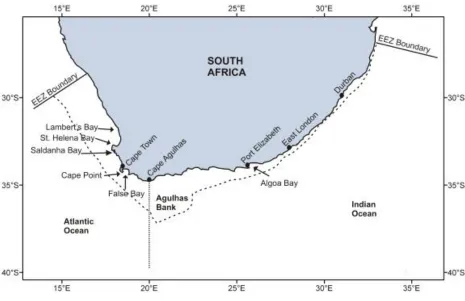
Figure 2: South African EEZ
Figure 2 above elaborates the South African Exclusive Zone location and Boundaries
5.3 Natural resources
Oil and gas capitals and other mineral sources counting diamonds off the western and
South-Western African coast, are a surplus and an essential economic capitals for coastline countries.
For example, in Benin, Ghana, Nigeria, Sierra Leone and Togo the majority of industries and oil
28 5.3.1 Oil and Gas
The South African Geographical Examination of South Africa carried out the first structured
exploration for fossil fuels during the year 1940; all searches were originally land based,
(Department of Environmental Affairs, 2016). The initial drill for an off-shore well was in 1969
and gas and condensate was revealed in the Pletmos basin between Plettenberg Bay and Mossel
Bay. Presently the Pletmos basin holds 2 unripe gas fields and an additional 6 gas findings. The
Bredasdorp basin has been the center of most seismic and drilling action since 1980. The South
African portion of the Orange bank and shelf also hold oil and gas sources that have not yet been
industrialized, (Department of Environmental Affairs, 2016).
5.3.2 Diamonds
In 1908 along the coastal line of Southern Namibia diamonds were discovered following that
was the year 1925, during which the discovery of diamonds was near Port Nolloth and also
another discovery in 1926 where rich sources were exposed next to Alexander Bay and then the
South African government started mining processes along this coast line, (Department of
Environmental Affairs, 2016). In the beginning of the year 1950, hunting for off-shore diamonds
initiated, currently off-shore mining of diamonds along the South African West Coast is a
significant business. Alluvial and marine diamonds contributed at least 10% of South Africa‟s
overall diamond harvest with oceanic diamonds precisely contributing 0.35 during the year 1997,
(Department of Environmental Affairs, 2016).Marine diamond extraction provide 0.0026% to
South Africa‟s yearly GDP, during the year of 1994, the South African Department of Minerals
and Energy started a grid network of marine mineral concession zones on the West Coast of
South Africa spreading from the high-water mark inward sea to 500 m deep, (Department of
Environmental Affairs, 2016). There is an increase for solid minerals globally and the
expectation is that the exploitation of South Africa‟s non-living marine resources will also
escalate, sources of 2 minerals that is essential for the creation of fertilizer (potassium and
glauconite) are commonly found in South Africa‟s Exclusive Economic Zone, (Department of
Environmental Affairs, 2016). Currently the costs of extraction continue to be expensive in the
perspective of obtainable terrestrial resources, however, as terrestrial resources weaken and
technology advances these sources may become economically sustainable, (Department of
29 5.3.3 Fisheries
South Africa presents a higher level of both land and marine biodiversity within a small area; ten
thousand species types of marine plants and animals have been noted in South Africa, which
amounts to nearly 15% of the recognized worldwide marine species variety, (Department of
Environmental Affairs, 2014). Generally, plants and animals are scattered based on the
distinguishing physical features of the different provinces. The oceanic environment alongside
the West Coast is described by cold upwelled waters and has low species variety and huge
populaces of some species, (RSA DoEA Government Gazette, 2014). The great production of
the West Coast permits for bulky volume offshore profit-making fisheries and inshore survival
and leisure fishing, (RSA DoEA Government Gazette, 2014). The South Coast is a conversion
section among the cool and the warm West Coast, (RSA DoEA Government Gazette, 2014).
The East Coast environment shows characteristics for both warm and cool areas. The marine
environment in East coast region has a great biological variety and adequate production, (RSA
DoEA Government Gazette, 2014). The East Coast gradually becomes warm, humid and tropical
northwards the marine biodiversity on the East Coast is described by growing species variety and
smaller species inhabitants; this area allows for survival and leisure fishing but it is not
appropriate for large offshore profitable fishing excluding prawns, (RSA DoEA Government
Gazette, 2014). South Africa has severely complementary currents on the West and East Coasts.
On the West Coast, is the Benguela Current System ocean and wind contacts carry nutrients from
deep waters to the outward where sunlight stimulates photosynthesis and the productivity of
phytoplankton, thus accumulating the total volume of animal and plant production, (RSA DoEA
Government Gazette, 2014). The areas of upwelling are established where the airstream is
robust and where the continental shelf is slimmer and deeper, this formulates the foundation of a
complex food web dominated by a collection of planktivorous fish, counting sardines and
anchovies, (RSA DoEA Government Gazette, 2014). Main predators on the minor species
include mackerel and hake, other predators on the small fish comprise squid, tuna, snoek,
seabirds, the Cape fur seal, dolphins and whales, (RSA DoEA Government Gazette, 2014).
Seabirds in the Benguela Current system comprise of the African penguin, Cape gannet and 3
endemic cormorants. Sea exterior temperatures in the Benguela ecosystem are naturally between
13 °C and 15 °C which is calmer than the East Coast, on the East Coast, the Agulhas Current
System becomes established between southern Mozambique and Durban, (RSA DoEA