World Maritime University
The Maritime Commons: Digital Repository of the World
Maritime University
World Maritime University Dissertations Dissertations
2016
South African owned shipping and potential
benefit for South Africa: A ship owners’ perspective
Tebogo Gift MabiletsaWorld Maritime University
Follow this and additional works at:http://commons.wmu.se/all_dissertations
Part of theTransportation Commons
This Dissertation is brought to you courtesy of Maritime Commons. Open Access items may be downloaded for non-commercial, fair use academic Recommended Citation
Mabiletsa, Tebogo Gift, "South African owned shipping and potential benefit for South Africa: A ship owners’ perspective" (2016).
WORLD MARITIME UNIVERSITY
Malmö, SwedenSOUTH AFRICAN OWNED SHIPPING AND
POTENTIAL BENEFIT FOR SOUTH AFRICA: A
SHIP OWNERS PERSPECTIVE
By
TEBOGO G. MABILETSA
South Africa
A dissertation submitted to World Maritime University in partial Fulfillment of the requirements for the award of the degree of
MASTER OF SCIENCE
In
MARITIME AFFAIRS
(SHIPPING MANAGEMENT AND LOGISTICS)
2016
DECLARATION
I certify that all the material in this dissertation that is not my own work has been identified, and that no material is included for which a degree has previously been conferred on me.
Supervised by: Professor IIias Visvikis World Maritime University
Assessor: Professor Devinder Grewal Institution/ organization: World Maritime University
ACKNOWLEDGEMENT
IN THE WORD I TRUST
ABSTRACT
Title of Dissertation: South African owned shipping and potential benefit for South Africa: A ship owners’ perspective
Degree: Master of Science in Maritime Affairs
The dissertation is a literature research study of South African owned shipping that aims to establish a theoretical framework in order to contribute partially to the area of study. It further attempts to evaluate how and to what extent South African owned shipping contributes to the country. A detailed layout of the current domestic maritime industry and maritime activities is drawn. Ship owning is prestigious and can be seen as a tool to forge economic growth and trade development through increased commercial participation.
In view of the current maritime environment, particularly ship owning, the study argues that South Africa can learn from experienced maritime nations, establish sustainable and forward-driven legislations and a focus body that will represent ship owning interests.
Table of Contents
DECLARATION ... i
ACKNOWLEDGEMENT ... ii
ABSTRACT ... iii
Table of Contents ... v
List of Tables ... vii
List of Figures ... viii
List of Abbreviations ... ix
Chapter 1 ... 1
1. Introduction ... 1
1.1 Research Problem Statement ... 3
1.2 Research Aim ... 3
1.3 Research Questions ... 4
1.4 Research Objectives ... 4
1.5 Research Design ... 5
Chapter 2 ... 7
Literature Review ... 7
Part A ... 7
2.1 Introduction ... 7
2.2 Economic Role of Shipping and Seaborne Trade ... 8
2.3 Supply of Shipping and Owned Shipping ... 12
2.4 Shipping Segments and Market Structures ... 13
2.5 Shipping Companies and Their Classes ... 15
2.6. The Structure of South African Shipping and Who Owns Ships ... 20
Part B ... 22
2.2.1 Geographical Location of South Africa for Shipping ... 22
2.2.2 Oil and Gas Exploration ... 24
2.2.3 The Importance of National Shipping ... 26
2.2.4 Significance of ports ... 28
2.2.5 The South African Government Perspective on Shipping ... 29
2.2.6 Broad Based Black Economic Empowerment (BBBEE) ... 32
2.2.7 South African Ship Registry ... 34
2.2.8 Cabotage in South African Maritime Industry ... 35
2.2.9 Factors Mitigating Against South African Owned Shipping ... 39
2.2. Conclusion ... 41
Chapter 3 ... 42
Research Methodology ... 42
3.1 Introduction ... 42
3.2 Research Limitations ... 42
3.3 Analysis of internal conditions for South African shipping industry ... 43
Chapter 4 ... 55
Results Analysis ... 55
4. 1 Introduction ... 55
4.2 Results generated from the SWOT analysis ... 56
4.3 Results analysis from literature review ... 64
4.4 The Future of South African Shipping ... 71
4.5 Conclusion ... 73
Chapter 5 ... 74
Conclusions ... 74
5.1 Introduction ... 74
5.2 Encountered Limitations ... 74
5.3 Question Analysis ... 75
5.4 Prospects of South Africa’s Shipping Industry ... 76
5.5 Employment ... 77
5.6 Ship registry ... 77
5.7 Recommendations ... 78
6. References ... 81
List of Tables
Table 2.1 Different Ship Classification and Sizes………..15
Table 2.2 Shipping lines serving South African Cabotage……….37
Table 2.3 Comparative Distances between Ports of South Africa………..38
List of Figures
Figure 1.1 South African exports focused on seaborne trade cargo………..…..2
Figure 2.1 Balance of Payment of South Africa.………..……….10
Figure 2.2 The Ship Owning Nations……….…………...13
Figure 2.3 Southern African Development Community………23
Figure 2.4 South Africa’s Main Crude Oil Supplier………..25
Figure 2.5 Main Entry Points for Crude Oil in South Africa……….26
Figure 2.6 Trading Merchant Ships in South Africa………..31
Figure 2.7 Ports in South Africa………39
Figure 3.1 Electricity Capacity………..48
Figure 3.2 South Africa’s Location as a Transshipment Point………..50
Figure 3.3 Developments in Southern African Oil and Gas………..51
Figure 4.1 Leading shipbuilding nation in 2015………...68
Figure 4.2 South African Cabotage Service (Container Carriage)………70
List of Abbreviations
The following abbreviations are used in the dissertation:
BBBEE Broad-Based Black Economic Empowerment BRICS Brazil, Russia, India, China and South Africa CEO Chief Executive Officer
CIF Cost, Insurance and Freight COA Contract of Affreightment
CPT Cape Town
DEA Department of Environment Affairs DNA Deoxyribonucleic acid
DBN Durban
DoT Department of Transport
DTI Department of Trade and Industry
EL East London
ESKOM Electricity Supply Commission (South Africa) FDI Foreign Direct Investments
FOB Free on Board
FOC Flag of Convenience FTZ Free Trade Zones
GDP Gross Domestic Production
IMO International Maritime Organisation IVS Island View Shipping
PDC Previously Disadvantage Community
PE Port Elizabeth
PPP Public and Private Partnership
MB Mossel Bay
MOL Mitsui O.S.K. Lines
MSC Mediterranean Shipping Company NDP National Development Plan
NQF National Qualifications Framework
OP Operation Phakisa
RB Richards Bay
R&D Research and Development
SA South Africa
SADC Southern African Development Community SAMSA South African Safety Authority
SAQA South African Qualifications Authority SASR South African Ship Registry
SFSBF Ship Financing and Ship Building Fund SPC Special Purpose Company
TCF Trillion Cubic Feet TEU Twenty-Equivalent Units
TC Time-Charter
TNPA Transnet National Ports Authority TTC Total Transportation Company
UNCLOS United Nations Convention of Law of Sea
Chapter 1
1. Introduction
The role of shipping as a driver of socio-economic development cannot be overly stressed. Socio-economic development simply would not be possible if it were not for ships and the maritime industry. The United Nations (2016) expressed on the same note that maritime activity maintains an important role in the alleviation of extreme poverty and hunger as it already offers an important source of employment and income for many developing countries, such as the supply of seafarer personnel and ship recycling, ship owning and operating, shipbuilding and repair and port services, among others (United Nations, 2016).
In the days of the Dutch settlement in the Cape, this period saw the birth of maritime activity in the region. As settlement grew along the Southern African coast with steam whalers operating off the coast of Cape Town, Saldanha Bay and Port Natal, a gradual phenomena of local ship owners began to emerge such as the Barrys, Thesen, Stephan Brothers Smith, Webster and Company, N. Price and Smith’s Coasters (Ingen, 2015). Although some of the ship owners’ experiences were short lived in shipping, like elsewhere, new opportunities arouse in South Africa. South Africans can confidently say that the nation has been linked to the shipping industry despite the size of its fleet always being disproportional to the traded volumes of goods.
South African. At the South African Maritime Industry Conference held in Cape Town, 2012, there was a call for the maritime industry to be separately governed due to concerns of no focus given to the sector. The emerging stakeholders further alluded that the sector is complex and the Department of Transport has too much to deal with. The Department of Transport manages the aviation, road freight and logistics, rail and maritime sector. The president of the South African Chamber of Mines added that mining conglomerates saw no intention in having offices in South Africa as the fact remained that at that time there were no South African owned ships/ companies to undertake cargo reservation if it were initiated (Transport World Africa, 2012).
Figure 1.1 depicts the South African exports focused on seaborne trade cargo. Source: Trading Economics (2016).
It is without a doubt that there is an urge to develop local participation in the maritime industry. It is believed that the improvement of local maritime participation would provide a reserve for trained seafarers, improve freight revenue for local shippers, earn and conserve foreign exchange and ultimately aid in developing local ship owning capacity to competitively compete globally.
changes are focused on transformation or not, it is still early days to say. It is however believed that the focus is on transformation as this paper’s interest is focused on the development and enhancing of South African owned ships.
1.1 Research Problem Statement
This research study explores the nature of the South African maritime industry and how the market structure can present opportunities for the development of local ship owning. The low growth rate of South African owned ships has been of extreme concern thus has prompted the formulation of the research questions. There seems to be no clear indicative tool or measure regarding the contribution that the South African maritime industry has on the country as a beneficiary.
There is an assumption that over the past years, it seems that the maritime industry in South Africa has not received adequate focus or attention from the government and the lack of maritime attentiveness has left the country’s maritime industry inactive. A further assumption is that the lack of maritime participation has accounted as one of the reasons for South Africa’s ship owning business being underdeveloped. Lastly, it is assumed that the spinoff of lack of maritime attentiveness has led to a deficiency of maritime professionals to lead and run maritime activities.
1.2 Research Aim
1.3 Research Questions
What can be the initiatives to re-industrialize ship ownership for South African shipping?
To assist in answering the primary question seven additional research sub-questions have arisen:
• How is the South African shipping market structured?
• How much of Government involvement does South African shipping need?
• Does the South African government have a detailed understanding to how the shipping segments work and how the dynamics of demand and supply can be crucial in the decision making process?
• How to attract South African entrepreneurs to become ship owner?
• Which shipping segment can entrepreneurs look into investing in?
• What contribution does South African owned ships add to the country?
1.4 Research Objectives
This research study seeks to explore and establish some findings on what initiatives are or intervention is required to aid the improvement of indigenous participation in developing South African owned shipping. The desired results of the research are pragmatic findings on potential approaches or methods for developing South African owned shipping.
The objectives of the study are as follows:
• To describe the radical change in the concept of Ship Owning and discuss South Africa’s perspective and applicability of the concept.
• To analyse the importance of the improvement of indigenous participation and ship owning development in South Africa as an instrument of socio-economic development.
To evaluate the significance of sustainable economic activities in the country that creates a platform for the growth of South African shipping.
1.5 Research Design
This research study is a qualitative study that follows a literature approach, which is going to concentrate on indigenous participation in ship owning within the South African maritime industry. The research further takes an exploratory strategic approach in attempt of producing results that are not presently known to the questions brought forth. In the process of unpacking the potential methods - the procedure undertaken will be exploratory in order to produce possible answers. In the first chapter, the introduction of the research is presented together with the principle motivation and research objectives. In addition, following the brief discussion the research questions and problem statement are presented. The chapter concludes with the outline of each chapter and structure of the research paper.
Based Black Economic Empowerment (BBBEE)1 is presented, a brief analysis of the adoption of the strategy and how its introduction to the South African maritime industry is incorporated.
The third chapter will discuss the research methodology. The SWOT Analysis framework will be used to present the data collection.
The fourth chapter is the most important chapter as it provides a comprehensive data analysis and a presentation of the analysis results. The data presented in chapter 3 is explored and discussed and an attempt is made to draw results from the exploratory discussion. This is to assist with producing results and answers to the questions presented in chapter 1 under the research questions section.
Finally, in the fifth chapter the conclusions is presented with an overview of the prospects that South Africa holds in the development of indigenous participation in its local ship owning. An analysis on the questions presented in chapter 1 is reviewed. In addition, a range of recommendations, which are related directly and indirectly to the development of indigenous ship owning and a presentation of supplementary strategic investments to the general South African maritime industry to ensure that each component plays a supportive role to each other to improve indigenous maritime participation will close off the dissertation.
1Broad Based Black Economic Empowerment (BBBEE) is the South African Government's
Chapter 2
Literature Review Part A
2.1 Introduction
The literature review section will present a platform to establish a theoretical framework of the topic in order to help address the research questions and goal. Firstly, there will be a review on the economic literature in relation to the role of ship owning, seaborne trade, and various other shipping components. Shipping has played a significant role in connecting markets and continues to contribute to the world economy development. In particular to South Africa, seaborne trade has formed quite an important component to the country’s economy but its development has lagged behind as a result to lack of investment and under-representation by the government (National Department of Transport, 2011 and 2015).
2.2 Economic Role of Shipping and Seaborne Trade
In order to understand the economic role of shipping and seaborne trade, it is paramount to understand what shipping and seaborne trade means first. Shipping is inevitably one of the most international industries in the world with about 90% of world trade being conveyed using ocean transport (International Chamber of Shipping, 2015). It is believed that shipping provides efficient and low-cost transportation whilst its effective use presents a significant role to economic development for countries. The latter accounts to the economic growth and contribution to their domestic production and consumption, lastly also to their foreign trade.
Seaborne trade has a dynamic relationship with economic growth as mature and maturing economies interact in trade transactions driving the need for sea transport. According to Stopford (2009); “seaborne trade has a central place in our lives in the twenty –first century. Walk into any shop, and much of what you see will have come from overseas” (p. 385). The statement is evidence of how seaborne trade is the backbone of economic activity and development. This could be seen with the 2008 financial crisis as markets crashed – the economic woes caused unrest in the shipping industry. Ship owners did not react to this in a very pleasant manner as the crisis rippled the industry to such an extent that some major and emerging players in the industry were on the verge of bankruptcy. This strongly highlights the entwined relationship between seaborne trade and economic activity as one variable has a spillover effect on the other.
seaborne trade activity increased (South African History, 2013; and CQ Press, 1991). However, it is believed that there is more to understand when it comes to shipping and the link that exist with global economic development.
On the same notion a country’s trade competitiveness is directly influenced by the efficiency of their maritime transport systems efficiency while simultaneously countries need to identify and assess the relevant issues that affect global seaborne trade and the demand for maritime transport. Thus the fundamental role shipping contributes to a country’s economy in terms of the balance of payments should be greatly understood (Branch, 2007).
The above statement reveals how shipping is the heart of a country’s ability and position to participate in trade with other countries. Shifting the focus to South Africa, as already mentioned in the opening paragraph, shipping has lagged behind due to lack of investments and as a result shipping has not had significant inputs and outputs towards the South African economy, see figure 2.1.
Figure 2.1 Balance of Trade of South Africa Source: Industrial Development Corporation, Department of Research (2016).
income receipts dropping from R96.5 billion in the third quarter to R77.2 billion in the last quarter of the year. Despite dividend outflows also declining over this period, subsequently, the deficit on the income account increased by R7 billion to R112.9 billion. The shortfall on the current account of the balance of payments denoted 5.1 percent of GDP in the fourth quarter of 2015, increased from 3.1 percent in the second quarter. However, looking at the entire year the current account deficit measured 4.4 percent of GDP (or R174.3 billion), a significant improvement from the 5.4 percent (R206.6 billion) recorded in 2014 (Industrial Development Corporation, 2016).
It is however of importance to mention that the South African president has encouraged the promotion of the re-industrialization of the shipping industry through a project known as ‘Operation Phakisa’2 that aims to address the country’s priorities as stipulated in the National Development Plan. This initiative is critical in creating a far more attractive phenomenon in doing business with South Africa. The first phase of the project is unlocking the economic potential of South African oceans through investments in the shipping industry (Department of Environmental Affairs, 2016). More detail about the project shall be discussed in part B of this paper.
Shipping is an integral part of the global economy, as resources are not always situated where the people most need them, therefore, shipping makes it possible for such resources to move to where they are desired (economically justified if consumer demand is great enough). Through this process the balance of payments of a country may become either healthy or unhealthy (deficit). Due to globalization low-labour markets overseas have been discovered, which encouraged shipping of intermediate products and semi-raw materials to where costs of manufacturing is economical. A common trend today is harvesting agricultural products at one continent, then shipping them to a different country for intermediate processing, and shipping them to a third continent for final production, and lastly delivered to
2Operation Phakisa is an adaptation of the Big Fast Results methodology that addresses the
market. In this regard, the importance of shipping as the heart of the global economy is again paved. For instance, iron ore exported through Saldanha to Shanghai.
Assuming that Island View Shipping (IVS)3 fixes a ship, loads it and sails on time,
the cargo reaches the port of unloading in time and all processes occur within the agreed and planned schedule. The final product gets sold and delivered to the market. Efficient productivity will give South Africa and China a good image and position as trading nations of the particular commodity, thus encouraging trade and demand for shipping.
2.3 Supply of Shipping and Owned Shipping
It has been more than 50 years in which shipping has transformed into a globalized business itself. This phenomenon led most countries to specialize in certain maritime businesses where a ship is built, owned, registered and manned in different countries. While other countries entrenched their market position through more than one maritime businesses especially developed and developing countries. However, this was not the case in the 1960s and 1970s where traditional maritime nations would have the ship built, owned, registered and manned in one country.
Ship owning has not been a seed of many nations as the countries with a traditional DNA for shipping have continued to play a major role in the industry. Countries like Greece continue to lead in terms of the largest ship owning country with a market share of about 16 percent, whilst Japan, China, Germany and Singapore make up the top five ship owning countries. In the African region, the country that maintains the largest fleet ownership is Angola with Nigeria and Egypt claiming their participation as well in the industry (Review of Maritime Transport, 2015).
3 Island view shipping was founded in 1976, acquired by Grindrod limited in 1999 and has
Therefore, it is very important to understand that ship owning by a country does not mean that the ship is necessarily registered in the ownership country. The complexity of ship owning has become more succinct where an owner based in country A will receive financing at advantageous rates from country B and the ship(s) would be registered under flag C with the management office located in country D. The employment of the ships can be chartered to charterers in country E whilst the manning crew is from country F, G and H. Some scholars would however disagree that the complexity of ship owning has become succinct but rather has become complicated due to the separation of the asset from the owner.
Figure 2.2 the ship owning nations by tonnage. Source: The Economist (2015)
2.4 Shipping Segments and Market Structures
the rough seas. According to Lorange (2009), successfully implementing a commodity strategy rests on three principles:
Ø Timing is everything: short-term (spot) and long-term (futures); entering and existing at the right time, and turning points in the markets are key.
Ø Margins: squeezing them out of the business; a low cost base is key.
Ø Cutting your losses: a stop-loss attitude; strive to win always, but don’t be greedy as good times don’t last forever.
On a wider view of the three principles it is vital to identify market segments in which there exists a strong demand for your unique competencies. Today a company can own vessels suitable for a particular market segment and although they are considered under the same umbrella of shipping it does not mean that the environments, issues, rules and fundamentals between them are the necessarily identical.
To clarify the above statement, Island View Shipping is utilized as an example to illustrate the fact that a company can own Tankers and Handysize bulkers, which are subject to different challenges and operations.
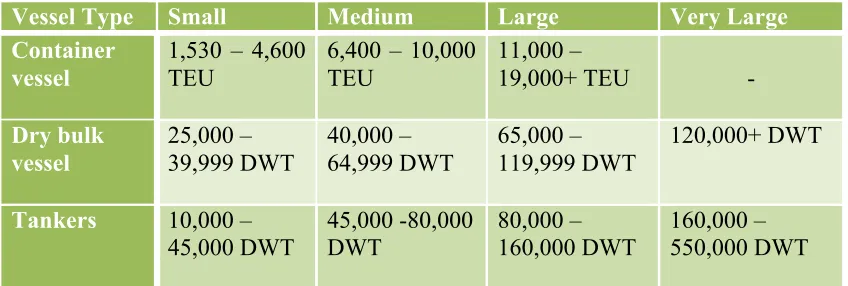
Table 2.1 shows the different ship classification and sizes
Vessel Type Small Medium Large Very Large
Container vessel
1,530 – 4,600 TEU
6,400 – 10,000 TEU
11,000 –
19,000+ TEU -
Dry bulk vessel 25,000 – 39,999 DWT 40,000 – 64,999 DWT 65,000 – 119,999 DWT 120,000+ DWT
Tankers 10,000 –
45,000 DWT 45,000 -80,000 DWT 80,000 – 160,000 DWT 160,000 – 550,000 DWT
Source: Compiled by Author based on Clarkson Research
The table above merely demonstrates the complexity involved in ship classifications, as different ship types and size are prone to different operations and challenges. Such differences may have ship owners feeling good or bad depending on the market conditions they are subject to. For example, when the market experiences an increase in freight rates, cargo rates tend to increase as well as a result of supply and demand issues moving the shipping markets up. For that reason, a shortage in tonnage to carry cargo will push freight rates up and eventually cargo freight rates will increase as well. According to Stopford (2009) this phenomenal principle is lateral mobility.
2.5 Shipping Companies and Their Classes
operators and charterers to carry out processes that will help manage the complexities involved in the day-to-day work of running a shipping company. The different shipping companies and their classes will be discussed at this juncture to give the reader more understanding of what kind of corporations run deep-sea vessels.
2.5.1 Tramp Shipping Company
The organization of a tramp shipping company is much simpler than that of a liner company. Due to the reason that tramp shipping solely deals with bulk goods transportation and normally chartered as a whole, this has allowed tramp shipping companies to operate without numerous departments and personnel. The organization of such companies mainly depends on the number of vessels owned. Where there are fewer vessels the simpler the organization of the company. If the company only has one vessel, the organization of the company can be run as a one-man business. However, when there is a reasonable number of about 10 vessels or more, a tramp company will have a similar company organization like a liner company. To some extent it will consist of an operations, administrative, financial and technical personnel. There will be certain departments that are of less importance to a tramp shipping company such as department for cargo handling and stowage, claims and insurance and Research and Development (R&D). This is primarily because this segment mainly carries homogeneous cargoes, which are less prone to damage and are cheaper (Maritime knowhow, 2014).
with brokers and other related shipping agencies using e-mail, fax, telephone, telex and data transmission services to receive latest data regarding the freight market and other markets of concern. Tramp owners are not quite influential in the fluctuations of the freight markets therefore tramp shipping is considered as a perfect market. They often try to juggle the market needs whilst they attempt to keep expenses as low as possible to ward off competition. This can seem like a good strategy but at times the freight is so low that only the operating costs are covered and no profit (Maritime knowhow, 2014; and Branch, 2007).
In a different context, smaller tramp companies often transfer their business division to the care of specialists such as shipping managers, shipping operators or managing companies. As a result of the type of market tramp ships operate in, investing in strong relationships with major industries/ and corporations is highly important as they are able to secure employment either for part of the fleet or whole fleet. For this reason, the organization of such companies is more simplified and manageable.
2.5.2 Liner Shipping Company and Liner Shipping Market
A liner company is very complex in nature as its business and trade to a large extent involve various countries and ports. It is however more organized in terms of staff and onshore support and normally have a general manager who manages the company and responsible to a board of directors. Some of the elements that liner companies have to undertake are establishing agents/ regional offices at all ports of operations and the inland area to foresee the marketing of its services.
extensive presence and dominance of foreign owned ships with an opportunity for the development of South African owned shipping presented in the South African shipping market.
Liner shipping offers cargo owners cargo space on a regular scheduled service between specific ports. The advantage with liner services would be that regardless of whether the ship is full or not, the ship will sail on scheduled dates and time. This is similar to the bus service where users know the published timetable in which the bus follows between different stops. In liner service ship owners prefer to maintain punctual sailing and arrival dates in order to sustain a prestige service and meet customer needs as well.
2.5.3 Special Purpose Shipping Company
A Special Purpose Company (SPC) is a company with specialized operations that involve specialized vessels designed to handle a certain type of cargo, either in bulk or packages. To give the reader an idea of specialized vessels, these are vessels that carry automobiles, trucks, and chemicals in liquefied form, liquefied natural and petroleum gas, paper products, forestry products to name a few.
2.5.4 Total Transportation Company
A Total Transportation Company (TTC) is a company that offers complete transportation solutions. They usually follow a departmental approach that divides company activities into different departments, i.e. freight services, shipping, financial services and ship brokering. Such companies render innovative ocean freight logistics solutions to its clients through adaptable unique single-source experience services from start to the end. Grindrod Shipping4 for example, operates from
Victoria Embankment in Durban and operates a fleet of more than 50 ships. It labels itself as a fully integrated freight logistics and shipping service provider that aims to create sustainable returns whilst achieving long-term value for its shareholders and its clients. Other examples of companies that are total transportation companies are; TTS Worldwide, China Shipping Container Lines and Intercargo etc.
Companies of such nature may also have different divisions that foresee bulk, liner and other shipping related services. As they are normally well established organizations they are heavily and very much involved in acquiring other companies that are of relevance to their business interests and nature. Through such investments they are able to expand their services and penetrate certain markets that weren’t easily accessible prior to acquiring ownership stakes in companies of aligned or related services. The key to TTC’s lies in the many years of experiences and relationships with different corporations around the world, thus, giving them the global advantage to fulfilling the shipping needs of their clients.
4Grindrod Shipping is based in Singapore and trades globally under two key brands – Island
2.6. The Structure of South African Shipping and Who Owns Ships
The South African maritime industry is lead by the Maritime Department within the Department of Transport (NDOT) and has mandated the South African Maritime Safety Authority (SAMSA) to manage and foresee the maritime affairs in a South African context. On the other hand, Transnet National Ports Authority is mandated with the task of managing and controlling all the eight ports in South Africa which are: Port of Durban, Port of Port Elizabeth, Nqgura, Port of Saldhana Bay, Mossel Bay, Port of Richards Bay, Port of Cape Town and lastly the Port of East London. In addition to port affairs there is the Ports Regulator of South Africa administers the
economic regulation of the ports system in South Africa, in accordance to the strategic development context of the state. In regards to ship owners there is ship owners association however there is a combined interest entity, known as the South African Association of Ship Operators and Agents (SAASOA), which is said to represents the maritime interests of ship owners, operators and local agents.
The South African shipping market has a currently active registry that is open to local and foreign ship owners. Presently, 3 ships that operate under the South African flag however only two are locally owned while one is foreign owned. The South Africa shipping market has cargo owners such as the mining and liquid fuel industry etc., who charter vessels e.g. long-term time charter, non-vessel owning cargo carrier. It is not clear as to what extent ship management services are offered; there are a few ship management companies. South Africa has no ship financing services for acquisition of ships.
entrant in the market. The company’s key function was founded on providing maritime transportation to the oil and gas sector. It is however unclear as to whether if MC5 Shipping do own ships or not yet.
South Africa has an enabling governance framework to allow for maritime activities to take place and this is seen with the birth of both Vuka Marine and MC5 Shipping during the 21st century. If maritime activities are properly harnessed South
Part B
2.2.1 Geographical Location of South Africa for Shipping
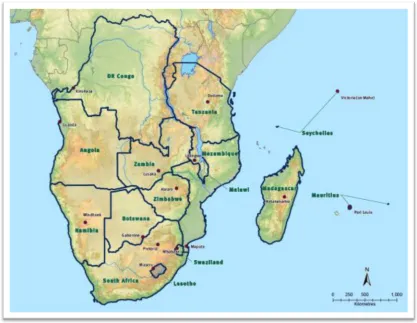
According to a 2012 publication by the South African Institute of International Affairs (SAIIA)5, the southern edge location of South Africa implies that it is not situated between other African states and extra-regional trading partners from Europe, the Far East and North America – erodes the prospective role of a gateway – although it may be outside of these main currents. As a hub for intra-African trade, South Africa’s location is unfavourable because it lacks centrality. However it is the only African country that consists of shores on the Atlantic and Indian Oceans. Thus can be easily reached by cargo ships sailing from the cores of the world economy, including the emerging cores of China, India and Brazil. South Africa is among the most diverse, sophisticated and promising emerging markets in the world. With it being strategically located it attracts key investments for both commercial opportunities within its borders and as a gateway to the rest of the continent especially the Southern African Development Community (SADC) region, made up of 15 countries as seen on the Figure 2.3. In addition, it can serve a market of about 1 billion people in the African continent.
5SAIIA is a South African research institute on regional and international issues. It is an
Figure 2.3 Southern African Development Community. Source: Southern African Development Community (2012).
To stress the emphasis again, South Africa has a national, regional and international presence. It is a destination that holds an enormous potential for investments with a unique recipe of a vibrant emerging market economy and highly developed first-world economic infrastructure to support trade. In addition, it is also considered as one of the most broad-based, advanced industrial and productive economies in the African continent. There are some reasons among others that will be discussed in the next chapter that ship owners and entrepreneurs may find as motivating factors to do business in South Africa, namely (South Africa info, 2016):
1. Sound economic policies
2. A favourable legal and business environment 3. Access to markets
5. The gateway to Africa
6. Trade reform and strategic alliances
7. The ease of doing business in South Africa 8. The cost of doing business in South Africa 9. Industrial capability and cutting-edge technology 10.Global competitiveness
Globalisation does not mean centralization but the connectivity and accessibility to markets around the world. Thus the author is of a different view than that of the South African Institute of International Affairs that South Africa’s location is unfavourable because it lacks centrality. Centrality is not globalisation but a contributing factor to accessibility and connectivity. The author is of the view that any market that is open to globalization regardless of location will attract investments and trade as integration and interaction of markets does not highly depend on location solely but the motive of trade to encourage economic development and growth is enough of a reason to over look centrality. In addition to the argument, Nel (2016) states that South Africa’s maritime industry has developed around its plentiful mineral reserves and favourable geographic location between major trade routes, meaning that, aside from commodity export purposes, vessels often call South African ports to refuel and take on supplies.
2.2.2 Oil and Gas Exploration
highlights the importance of maritime’s role in the country’s seaborne trade and its socio-economy development.
Figure 2.4 South Africa’s Main Suppliers of Crude Oil. Source: South African Market Insight (2016).
develop the nations ship owning capacity. Oil and gas projects are very labour-intensive and long-term as well thus such industries are able to provide sustainable projects that will not only keep ship owners fleet employed but offer growth opportunities as well.
Figure 2.5 indicates the main entry points for crude oil in South Africa. Source: South African Market Insights (2016).
2.2.3 The Importance of National Shipping
from 10 to 50 percent to the final product costs. From these very general estimates it is understandable why countries desire to lower the costs of sea transport wherever and whenever possible. South Africa is among the developing nations that wish to reduce the costs of sea transport as foreign owned ships carry most of South Africa’s cargo and much of this has been because there hasn’t been indigenous participation in the maritime industry. South Africa’s wish is to reduce the costs of sea transportation, typically paid to foreign owned ships, by developing its indigenous participation in ship owning. According to the former CEO of SAMSA, Tseitsie Mokhele (2015), “about 98 percent of the South African exports are caried by ships, which are dominantly foreign owned and operatored. Thus approximately R160 billion is paid annually to foreign owned ships for seaborne transportation”. At first this sounds irrational, however, the income earned from exports ends up paying for much of the sea carriage charged by foreign owned ships for the loaded export goods. In addition, the loss in revenue earned stems from the fact that South Africa has always shipped its exports under the Free on Board (FOB)6 agreement whereby the income earned from the sale of export goods to a foreign buyer in turn has to pay for the transportation cost of carriage, which at the end reduces the revenue earned by the exporting party. There is a view that foreign shipping companies can overcharge non-ship owning countries who are mostly dependent on foreign owned ships for the carriage of their goods, normally such cases are found with developing countries with inefficient shipping expertise.
South Africa is a nation that has a history with maritime activities, legacy of ships, ports, shipbuilding, ship repairing and engineering facilities as well as skills. In addition it possess established supportive structures such as maritime education and research institutions together with insurance companies, brokers and qualified seafarers. Shipping in essence is made up of complex interacting activities and any deficiencies in any of the activities can result in efficiency of a nation’s shipping
6Free on board (FOB) - the goods are placed on board the ship by the seller at a port of
service being difficult to achieve. For instance, South Africa has shipping services that are inefficient due to a number of reasons such as lack of: management skills, trained manpower, indigenous ship owning, ship financing, innovation and technology development, maritime awareness, organisational problems and investment difficulties etc.
2.2.4 Significance of ports
According to Cetin and Cerit (2010), traditionally a port is a place where ship operations and cargo handling are carried out. Despite being an intersection point between land and sea transport systems, nowadays they are regarded as more complex, multimodal transport, logistics centres and value-added organizations. Lastly, ports also act as the main link in supply chain systems that add value to port users and final customers. Shipping has always been a driver of economic growth while ports constitute a primary component of the transportation sector and lately serving as a means of integration to the world economic growth. As the world continues to welcome globalization, ports experience substantial business serving as important links of hinterlands to overseas points or other ports. Thus it is of common view that the more efficient a port is, such a port is associated with lower freight charges after all other factors have been considered. For a clear understanding the port efficiency factors are variables such as the container hourly loading rate, the annual average of containers loaded per vessel and waiting time, which are considered in the measurement of port efficiency. Whereas, tonnes per hour is applicable to both bulk carriers and tankers loading rate. Sánchez et al. (2002), states that a 24 percent improvement in one efficiency factor will result in a reduction of about 2 percent in total maritime transport costs.
assist the master of the ship with any repairs required to the ship, accessible dry-docking facilities and bunker service facilities. However it is vital that the port operates within national and international standards that allow for ease of business not just for the port but for the port users as well. Since shipping constitutes a driver of growth, port infrastructure is of great developmental importance therefore the relationship and integration between shipping and ports is paramount to collaborative efforts that boost economic growth. As per Dwarakish and Salim (2015), ports will continue to play an important role in the economic status of a country, as their effectiveness can result to significant economic benefits. Furthermore, countries that wish to increase their global economic footprint will confront challenges of constructing efficient large ports to assist in the facilitation of trade.
2.2.5 The South African Government Perspective on Shipping
According to a 2011 study by the National Department of Transport, the South African maritime industry was reported as no longer of existence domestically due to less significant contributions to the country and with no considerable measurable performances that could be rated. In response to the difficulties the South African government launched Operation Phakisa in July 2014, which aims at addressing challenges in accordance with the National Development Plan (NDP)7 2030 vision. The first phase of the project will draw attention to unlocking the economic potential of South African oceans. The word “Phakisa” is a Sesotho word, which means “Hurry Up” in light of this it expresses the urgency in which the government wants to focus on the priorities contained in the NDP.
The South African government has a view that long-term world development over the years has seen globalisation unlocking new resources onshore and offshore thus countries can no longer be solely dependent on land resources only but must explore their coasts and ocean resources. In expansion to offshore exploration, the
government looks into the untapped oil and gas exploration as they strive to enable and enhance its reserves and possible trade ventures. As a result, an environment with policies and legislative that will promote and allow for oil and gas activities will in turn boost economic growth and to some extent address the skills gap requirements. However significant challenges remain, especially in terms of infrastructure development. For this reason, infrastructure investment is key when it concerns pipeline opportunities such as oil and gas exploration that has the ability of transforming a country’s landscape and fuelling a widespread of socio-economic development.
Figure 2.6 Trade statistics of merchant ships in South Africa. Source: Department of Trade and Industry (2015).
2.2.6 Broad Based Black Economic Empowerment (BBBEE)
This is a strategy initiated by the South African government in attempt to involve and promote the participation of previously disadvantaged communities in the South African business environment. For a clear understanding, previously disadvantaged communities are those South African citizens who, due to the apartheid policy that was in place, had no rights to participate in national elections or benefit from the country’s economic wealth prior to the introduction of the Liberal Constitution.
As the state focuses on re-aligning the economic equality equilibrium by doing business with preferably entities that are BBBEE compliant. This has come as a surprise to some shipowners (carriers), for them to carry any state-owned cargo carriers have to deal with a BBBEE accredited operator that may require a certain relationship or chartering chain to be formed in order to carry state-owned cargo. Meanwhile South Africans acknowledge the attempts to re-align past inequalities it does not look likely that foreign shipowners and operators may be keen to take up the risks of additional expenditure associated with conducting business in South Africa, unless policies are revised in such a way that attracts foreign shipowners as well.
territories and the African continent has been identified as one of the future territories with a potential to attract increased trade volume traffic, therefore presenting further business opportunities to local ship owners. Due to shipping being derived from trade and shipping shadows trade wherever trade locates to, South Africa will have to structure its maritime activities readily to serve potential shifts in trade patterns to its shores or the African region.
2.2.7 South African Ship Registry
Laws that are specific, sensitive and highly obligatory govern shipping just like other economic industries. Although there is high seas open to all nations where no state can claim sovereignty, which means unrestricted access to all ships in these open seas to sail regardless of which National flag the ship is flying. It is quite astonishing how different countries accede to maritime law despite the fact that each country has unique legislations suitable to that nation - however these countries still find a balance in integrating maritime laws with national legislations for corporative governance. The complexity of how the freedom at open seas is exercised and the jurisdiction framework in which a ship is registered as well as the waters where the ship plies its trade form the cornerstone of maritime law. A brief discussion on the South African ship registry shall follow in hope of making the reader aware of the close relationship ship registration has with ship owning and the current status of ships registered in South Africa together with the opportunities presented for flying a South African flag on a ship.
Despite the disproportional tonnage owned against the volume of exports, South Africa can claim a proud history of owned ships that were once registered under its registry to fly the South African flag. It has also enjoyed popularity with its commercial ships such as Safmarine etc. The radical change come about when the Comprehensive Anti-Apartheid Act promulgated in the US in 1986 and drastically had an effect on South African ship owners like Safmarine, which removed its ships off the South African registry to flag of convenience states. In addition, of about 85 commercial ships that operated out of South Africa just four were registered in the South African registry. South African ship-owners deregistered their ships due to the inflexibility of the former registration regime, which obliged for registration of ships wholly owned by South Africans with little to zero benefit to ship-owners.
minimal links between the ship-owner and nationality of the ship, on the other hand, relaxed labour laws in regards to manning of a ship and lastly very competitive tax benefits. Over the years South Africa has been making strides in pursuit of reforming its national ship registry by welcoming foreign entrepreneurs to own a share in South African maritime industry. In doing so, the policy-makers amended the compulsory registration of ships owned by South Africans or any South African company. Thus foreign subsidized companies swiftly moved their ships to flag of convenience countries of the likes mentioned earlier. Previously, the registry did not accept bareboat charter ships however after the amendments ships under bareboat agreements may be registered in South Africa currently. Furthermore, amendments in the tax structure to encourage and attract South African flagged commercial ships has had a promising outcome thus far with three commercial ships being incorporated in the South African registry. The courageous approach to pursue on incentivizing commercial ships flying the South African flag has been bearing fruit however there are still areas that will continue to lessen local and foreign interest to the registry due to issues such as BBBEE compliance and liberal labour legislations.
2.2.8 Cabotage in South African Maritime Industry
It is believed that coastal shipping cannot compete with road freight over short distance unit costs and transit time. That has been one of the reasons, which has made cabotage in South Africa not reach substantial growth since its inception. The Cabotage8 Policy for Coastal, Regional, and Continental Waters (2015) stated that coastal shipping in South Africa has remained undeveloped due to it being the most misunderstood service undertaking and also less visible. It is not quite clear as to what is meant by ‘less visible’ but it shall be assumed that coastal shipping in the region offers insufficient cargo volumes that it presents no economical interest to large shipping lines to deploy their vessels in the region. According to Funke, Claassen, Nortjie and Meissner (2016), many South Africans have not been taught to
Table 2.2 shows the shipping lines that operate in South African cabotage market.
Name of Operator
Route Schedule Number of
Ships on Route
Cargo Type
Ocean Africa Container Lines
SA Ports to SA Ports
Fortnightly 4 General Cargo
and Containers
SA Ports to Mozambique
Fortnightly 4 General Cargo
and Containers
SA Ports to Namibia
Fortnightly 4 General Cargo
and Containers
Unicorn Calulo Shipping Services
DBN-EL-PE Monthly 2 Bulk Petroleum
MB-PE-EL Monthly 2 Bulk Petroleum
CT-PE-EL Monthly 2 Bulk Petroleum
DBN-RB Monthly 2 Bulk Petroleum
Source: Compiled by Author based on Cabotage Policy for Coastal, Regional and Continental Waters: South Africa Maritime Safety Authority (2015).
available cargo in the cabotage market.
According to the Department of Transport the economical route for coastal shipping in which shipping can compete with road freight transport is the Durban and Cape Town route. Conversely, it may be irrational to just look at the distance, as what makes cabotage successful is the availability of sustainable cargo. Thus it makes economical sense that a competitive route should have sustainable available cargo and be economical than when served by competing modes of transport.
Table 2.3 shows the comparative distances between ports in South Africa.
Route Sea (km) Road (km) Rail (km)
Cape Town - Durban 1,474 1,660 2,106
Cape Town – Port Elizabeth 787 756 1,068
Cape Town – East London 1,006 1,042 1,412
Port Elizabeth – Durban 250 300 740
Durban – East London 468 667 1,519
Source: Compiled by Author based on South African Maritime Transport Study, National Department of Transport (2011).
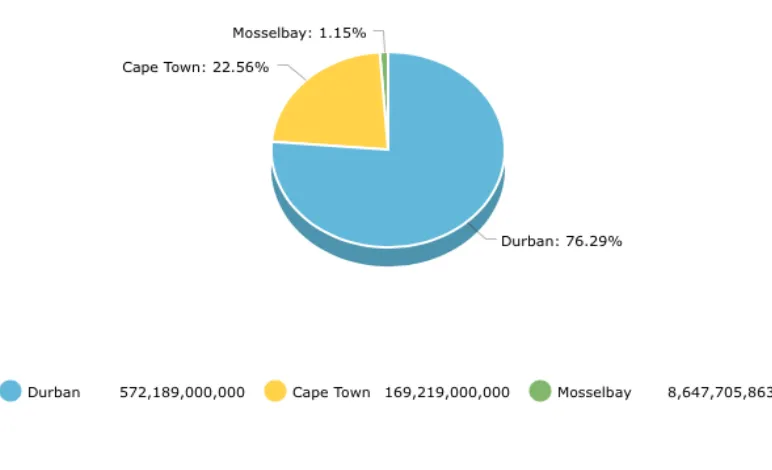
coastal trade could invest in multipurpose ships to serve the irregular cargo volumes as multipurpose ships provide space for dry cargo, refrigerated cargo, containers, passengers, mail as well as livestock (if required). Cabotage services can only be as efficient as the ports that serve cabotage services. South Africa has eight ports, which are not all equally productive however each port operates different kinds of cargo or a mix of cargo, see figure 2.7.
Figure 2.7 shows the different ports in South Africa with an exclusion of Mossel Bay Port. Source: Transnet (2013).
2.2.9 Factors Mitigating Against South African Owned Shipping
It is of view that there is no evidence to conclude that a correlation exists between ship registration and employment of seafarers (Lamb, 2013). For example, some of the leading ships owning nations continue to seek crew at ‘economic’ rates, which are normally of other nationalities than of the country of registry. Although there have been policy amendments in South Africa’s maritime industry, the liberal labour legislation could continue to weaken the employment of South African seafarers. Attempts for necessary amendments to the existing labour regime would probably be opposed by local labour unions. For that reason, the focus could be on training as demand for well-trained English-speaking seafarers, who are prepared to work for competitive wages will always be attractive.
According to the South African Department of Trade and Industry (2015), quite a number of key constraints such as the shortage of skilled labour, lack of a clear roadmap for future ports expansions, lack of innovation and technology development, skewness in industry needs and current available training and an extensive number of companies are undercapitalized and face difficulties in investing in product development; among other key constraints – these have continued to hamper the development of the South African maritime industry.
2.2. Conclusion
Chapter 3
Research Methodology
3.1 Introduction
This dissertation employs the SWOT analysis as a framework to help identify the current maritime situation in South Africa and its potential for growth and contribution to the local economy. The method delpoyed for data collection was a non-participant observation process of government reports, public records, journals, correspondence with industry practitioners, corporate studies, electronic issues of newspapers, reports of meetings and other related studies, which offer valuable information to assist in achieving the paper’s aim and objectives whilst on the other hand gives a better understanding the current shipping industry conditions.The author follows an inductive and pragmatic approach in analysing the qualitative data in attempt of contributing partially to the study phenomenon. The data collection comprises of reports and studies from the South African National Department of Transport (South African Maritime Transport Sector Study), South African Department of Trade and Industry (Industrial Policy Action Plan), South African Maritime Safety Authority (Skills Development Study), South African Institute of International Affairs, Swot Analysis Of South Africa’s Natural Resources Economics Essay and journals such as Maritime Review Africa, Maritime Transport Review. The author also relied on field notes collected during the academic field studies to different maritime organisations in Denmark, Greece, London, and Sweden.
3.2 Research Limitations
The challenges that were encountered were a lack of accurate statistics to evaluate and measure the contribution of maritime services in South African. An
indigenous ship owning/ participation in South Africa, the number of ships owned by South Africans.
3.3 Analysis of internal conditions for South African shipping industry
Table 3.1 shows a brief review of the South African shipping SWOT Analysis.
Strength
Weakness
Training Institutions
Service Offerings
English speaking nation
Favourable exchange rate
Strategic location
Political stability
Unfavourable legislative regime
Management skills
Lack of a consolidated national maritime database
Limited ability to berth seafarers
Shortage of skills development
Inadequate technology
Electricity problem
Opportunities
Threats
Global demand for cadets and officers is high
Shifts in trade routes
Grow shipping industry through costal shipping – Cabotage
Maritime law service offering
Improve ports services
Transshipment point
Pool of young unempoyed labour force
South African shipping is not cost competitive
Insufficient infrastracture
Low maritime awareness
Limited partnerships
Aging workforce & limited skills transfer
Hampering institutional arrangements – a fragmented industry
3.4.1 South Africa’s strength in shipping industry
Training: South Africa offers quality training to seafarers and training standards remain above International requirements. Considered as a skills hub especially by African countries, such countries go to South Africa to acquire and learn maritime skills e.g seafaring, naval architecture.
Services Offerings: The South African offshore oil, gas and mining service offerings is regarded as being exceptional. Some African countries head to South Africa for advice when they encounter challenges in any of the mentioned service offering matters.
Favourable exchange rate: It is believed that favourable exchange rates will increase opportunities for South Africa. This may attract foreign ship owners as they seek to reduce costs by sourcing affordable crew. For instance, ship owners from countries with a strong currency against the South African currency may find it cheaper to source some of its crew from South Africa.
Native skills: South Africa is an English-speaking nation. In addition, South Africa is a multi-cultural nation and this can be viewed as a competitive advantage as South Africans embody multi-cultural skills that shipping companies find difficulty in when sourcing a crew for a ship.
Strategic Location: The ports in South Africa constitute by far the largest and one of the most efficient network and best equipped on the African continent with approximately 500 million tons of cargo managed yearly. These ports serve as strategic transshipment hubs for traffic connecting Asia, Europe, Africa and America.
3.4.2 South Africa’s weaknesses in shipping industry
Unfavourable legislative regime: It is believed that excessive bureaucracy hampers international relations with South Africa’s maritime industry. For instance the South African registry prior to its recent reform was regarded as an uncompetitive registry due to the then practiced tax regime that obligated ship owners to pay general corporate tax together with secondary tax based on dividends. In additon, South Africa has less competitive and unattractive labour laws when compared to other maritime nations.
Limited ship finance: Ship financing in South Africa is quite limited as the private and government financial institutions have not been open to financing of maritime projects. Funke et al. (2016) stated in the South African Maritime Roadmap that although South Africa possess well established financing institutions capital investments in the maritime industry is low as banks and government seem not to understand the industry well. Furthermore, bank guarantees for maritime projects are more expensive in South Africa as compared to other maritime nations like China, Germany, Norway etc.
when it concerns information sharing of the country’s internal affairs of maritime industry.
Limited ability to berth seafarers: South Africa has about three merchant ships registered on its registry which is a milestone from having an empty registry in the past few years. However ship accessibility is limited when placement for seafarers is required as a result of low representation of ships on the registry. For example, foreign owned ships with a long term relationship for carrying South African goods from its ports make provision to accommodate a limited number of South African seafarers on board to acquire sea time training.
Shortage of skills development: The country has been faced with limitations in skills development particularly in management skills; executive leadership and maritime lawyers. Lack of training facilities and skills development systems have not facilitated adquate efficiency in the development of maritime professionals. It is also believed that the South African maritime industry business skills have not been maximised due to limited maritime professionals (Skills Development Study, 2011). According to the maritime studies conducted by Van Wezel, a senior curricula development specialist, some of the findings were that there is a need to develop the maritime modular content, training of staff to teach maritime courses, develop materials in the engineering curriculum and lastly to establish a business link between local martime tertiary instituion with reputable maritime institions around the globe (Maritime Review Africa, 2016).
Inadequate Technology: Due to lack of technology, South Africa has not efficiently utilized its naltural resources effectively. The lack of advanced technology has indirectly caused South Africa to a certain extent lose the opportunity of benefiting from employment and welfare generated from the resources.
has been among other reasons why the state-owned power outlet Eskom Holdings Ltd. has been pushed into a daily crisis as it battles to meet demand. Yelland (2015) highlights several reasons that partially contribute to the power supply shortfall as follows:
Ø A lack of clear policy decision.
Ø A lack of a funding plan. The construction of the Medupi and Kusile power
plants proceeded without a clear indication of where funds would come from to fund the projects. This resulted in delays until government intervened with a funding plan.
Ø Inadequate geological surveys at the Medupi and Kusile power plants prior to
construction. This caused serious delays in the construction of the foundation of the power plants.
Ø The welding quality of boilers was poor thus required significant rework to
be done.
Ø Shortage of skills and relevant personnel with adequate skills to get the job
done.
Ø Labour issues that led to significant strikes during the construction period and
this resulted in no work progression at the power plants. Yelland (2015) adds that part of the problem was due to Eskom not implementing a site-wide labour agreement to have a standardised wage for contracted workers. The different pay-outs by many contractors led to labour unrest and discontent.
Figure 3.1 gives an indication of the percentage of available electricity of the declining capacity. Source: Paton (2015).
3.4.3 South Africa’s opportunities in shipping industry
Global demand for cadets and officers is high: According to World Maritime News (2016), the shipping industry will need approximately 150,000 seafarers by 2025. South Africa has a large pool of young labour force that can help develop industries that are labour intensive like shipping, which is complex and needs the man power it can get to succeed.
Shifts in trade routes: With the Gulf of Aden being identified as one of the areas affected by piracy. Although it forms an important trading route leading into the Suez Canal, it is however geographically well-positioned with the anarchic of Somalia. The latter has led some carriers diverting around the Cape route in attempt of avoiding piracy. In addition, costly operating costs and insurance to use the Seuz Canal has also led other carriers to use different routes. South Africa is well positioned in the route carriers divert to and has port facilities and ancillary services that are available on a port call.