A QUASI EXPERIMENTAL STUDY TO ASSESS THE EFFECTIVENESS OF STRUCTURED TEACHING PROGRAMME ON KNOWLEDGE AND ATTITUDE REGARDING CERVICAL CANCER AMONG WOMEN AT
PRIMARY HEALTH CENTER KANNIVADI, DINDIGUL DISTRICT.
BY: 301423051
A DISSERTATION SUBMITTED TO THE TAMILNADU DR. M.G.R MEDICAL UNIVERSITY, CHENNAI, IN PARTIAL FULFILMENT OF
THE REQUIREMENT FOR THE AWARD OF THE DEGREE OF MASTER SCIENCE IN NURSING.
A QUASI EXPERIMENTAL STUDY TO ASSESS THE EFFECTIVENESS OF STRUCTURED TEACHING PROGRAMME ON KNOWLEDGE AND ATTITUDE REGARDING CERVICAL CANCER AMONG WOMEN AT
PRIMARY HEALTH CENTER KANNIVADI, DINDIGUL DISTRICT.
EXTERNAL EXAMINER INTERNAL EXAMINER
A DISSERTATION SUBMITTED TO THE TAMILNADU DR. M.G.R MEDICAL UNIVERSITY, CHENNAI, IN PARTIAL FULFILMENT OF
THE REQUIREMENT FOR THE AWARD OF THE DEGREE OF MASTER SCIENCE IN NURSING.
A QUASI EXPERIMENTAL STUDY TO ASSESS THE EFFECTIVENESS OF STRUCTURED TEACHING PROGRAMME ON KNOWLEDGE AND
ATTITUDE REGARDING CERVICAL CANCER AMONG WOMEN AT
PRIMARY HEALTH CENTER KANNIVADI, DINDIGUL DISTRICT.
APPROVED BY DISSERTATION COMMITTEE ON: PROFESSOR IN NURSING
RESEARCH :________________________________ Prof. Mrs. K. THILAGAVATHY, M.Sc (Nsg), P.hD., Principal&HOD, Department Psychiatric Nursing,
Jainee college of nursing, Dindigul.
CLINICAL SPECIALITY EXPERT :________________________________ Mrs. MEERA M. Sc Nursing,
Vice Principal&HOD,Department of OBG,
Jainee college of nursing, Dindigul.
MEDICAL EXPERT :________________________________ Dr. UMA RAMANATHAN, MBBS, MD.
Meenakshi hospital, Dindigul.
A DISSERTATION SUBMITTED TO THE TAMILNADU DR. M. G. R
MEDICAL UNIVERSITY, CHENNAI, IN PARTIAL FULFILMENT OF
THE REQUIREMENT FOR THE AWARD OF THE DEGREE OF
MASTER SCIENCE IN NURSING .
CERTIFICATE
This is the bonafide work of Mrs. ABIZHA M.sc., Nursing IInd Year student from Jainee college of Nursing, Dindigul, submitted in partial fulfillment for the degree of Master of science in Nursing, under the Tamilnadu
Dr. M.G.Rmedical university, Chennai.
Prof. Mrs. K. THILAGAVATHY, M.sc (Nsg), P.hD., Principal, Department Psychiatric Nursing,
Jainee college of nursing, Dindigul.
TABLE OF CONTENTS
CHAPTER NO
CONTENTS PAGE NO
I
II
INTRODUCTION
Background of the study Need for the study
Statement of the problem
Objectives of the study
Hypothesis
Operational Definitions
Assumptions
Limitations
REVIEW OF LITERATURE
Studies related to cervical cancer
Studies related to Knowledge on cervical cancer
Studies related to attitude on cervical cancer
III METHODOLOGY
Research Approach
Statement of Problem
Objectives
Research Design
Variables
Population
Sample and Sample size
Sampling Technique
Sampling Criteria
Development of the tool
Description of the tool
Try Out
Reliability
Validity of the tool
Data collection Procedure
Plan for Statistical analysis
IV
V
DATA ANALYSIS AND INTERPRETATION
The objectives of the study
Dependent variables
Independent variables
Results of logistic regression on change in
Knowledge
Recommendations
Conclusion
REFERENCES
APPENDICES ABSTRACT
LIST OF TABLES
SI. NO TABLES PAGE NO
1 2 3 4 5 6 7 8 9 10
Incidence of cervical cancer in India 2010 Research design
Social characteristics of women
Demographic and economic characteristics of women
Knowledge and attitude score of women at pre, post tests and their changes.
Test of significance of difference between pre and post test level Score
Descriptive statistics
Regression of background characteristics of women on change in Knowledge of cervical cancer from pre to post test
Regression of background characteristics of women on change in attitude towards cervical cancer from pre to post test
Chi–square test regarding association between Knowledge, attitude post test and back ground Factors among women
LIST OF FIGURES
SI. NO FIGURES PAGE NO
1 2 3 4 5 6 7 8 9 10 11
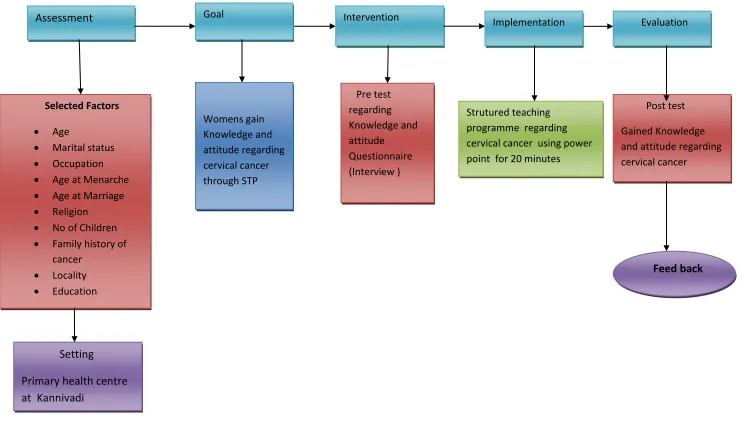
Conceptual frame work based on nursing process model
Religious wise frequencies and percentage distribution
Education wise frequencies and percentage distribution
Occupation wise frequencies and percentage distribution
Marital status wise frequencies and percentage distribution
Residence status wise frequencies and percentage distribution
Age wise frequencies and percentage distribution
Age at menarche wise frequencies and percentage distribution
Age at marriage wise frequencies and percentage distribution
Living children wise frequencies and percentage distribution
12
13
Cancer history wise frequencies and percentage distribution
Source of information on cervical cancer wise frequencies and percentage distribution
74
ACKNOWLEDGEMENT
“It is good to give thanks unto the LORD, and to sing praises unto Thy name O Most high, I Will go before Thee, I, LORD which call thee by thy name, I am the GOD of Israel”. Isaiah 45:2
I extremely thank our LORD almighty for his leading presence, abiding grace in abundance and renewing towards the processing of his entire dissertation.
First and foremost, I would like to express my sincere and heartfelt gratitude to Mr. SUKUMAR, Director, Jainee college of nursing, Dindigul, for all facilities he had provided me in his esteemed institution and enabled to do my research.
This study has been undertaken and completed under the enable supervision and expert guidance of Mrs. THILAGAVATHY, Principal, HOD, Nursing research and chief cornerstone, Jainee college of Nursing, for her unstinted support, Inspiring discussion, untiring efforts, Innovative ideas, Patient correction, guidance and challenging suggestions for Improvement and for looking closely at the final version, and bringing this research into shape and making it worthwhile.
I am extremely thankful to Mrs. Meera, Vice principal&HOD&my guide Department of OBG, Jainee college of Nursing, for her contribution, support, Interest and valuable hints she rendered during the course of this study
I extend my Special thanks toProf. JAYA SUNDARI M.sc Nursing professor &HOD department of Pediatrics nursing, for all the support encouragement and valuable guidance she has rendered during the course of this study.
I owe, my deep sense of gratitude to the Deputy Director, Dr. Jegaveer Pandiyan, and Administrator Mrs. Rebeckal Department of primary health, Dindigul District to gave permission for data collection in Primary health centre, Kannivadi.
The investigator extends her special thanks to the Medical officers, Health inspector, Superidentent, staff Nurses of Kannivadi Primary Health centre, for granting permission to commence this thesis, to do the necessary research work in their esteemed hospital.
I express my gratitude and sincere thanks to Ms. JANET ANBUMANI M.sc Nursing Lecturer, Jainee college of nursing for her excellent guidance and encouragement throughout the study period.
It’s my pleasure and heartfelt thanks to Mrs. Mageswari, M.Sc., (Nursing), Lecturer department of OBG, Jainee college of Nursing, for her suggestions to carry out the study successfully.
I would like express my gratitude to Mrs. Dhana Lakshmi B,sc., (Nursing), Nursing tutor, Jainee college of Nursing, for the timely help with her suggestions.
It is my pleasure and heartfelt thanks to Mrs. Angela Mary, PB.B.sc., (Nursing), Nursing Tutor, Jainee college of Nursing, who motivates in all occasions during the course of study.
I would like to express my gratitude to Dr. SAJEETHA RACHEL
Principal, Department of Education, for valuable guidance and support to carry out the dissertation work successfully. “The impossible becomes, to the endowed with resource fullness”.
Dr. C. RAMANUJAN Ph,D., statistician, Gandhigram University, Gandhigram, Chinnalapatti, deserves a word of thanks for the opinions, suggestions and guidance he has rendered in the statistical analysis and interpretation of the data.
Mr. SARAVANAN MA, M. Phil, M.Ed., HOD, K.P.National arts and science college, Bathlagundu, for Valuable opinion, suggestions and guidance he has rendered in the literature of this study.
I would like to express my gratitude to the librarian Mr. SARAVANAN Jainee college of nursing .
The Researcher extends her thanks to LASER POINT, MADURAI, for rendered their support to make this study as book.
would be possible for me. Besides them, I extend my thanks to my beloved husband Mr. ALLEN DANIEL for his constant encouragement and continuous prayers during the course of study.
The Investigator extends her overwhelming gratitude and sincere thanks to her valuable friend Mrs. SHANA, Mr. RAJESH, Mr. JEROLD for her support, patient love and her whole hearted encouragement which enabled me to complete this study.
I am at loss if I do not thank my CLASSMATES, friends, and loved ones for their encouragement and contributions during the study.
Above all the investigator owes her success to our Almighty LORD and savior
CHAPTER - I
1
CHAPTER I
INTRODUCTION
"A WIFE OF NOBLE CHARACTER WHO CAN FIND? SHE IS WORTH FAR MORE THAN RUBIES ".
PROVERBS: 31:10 “I admit I’m weak, But I have a strong God “
2
Cancer prevalence in India is estimated to be around 2.5 million, with over 8,00,000 new cases and 5,50,000 deaths occurring each year due to this disease.3 The last fifty years have seen an exploration in our understanding of this most fundamental of diseases, and new discoveries are occurring on an almost weekly basis. A trend analysis of the data on cancer incidence for the period 1975-2008 has demonstrated that the overall occurrence of cancer is increasing among females. The greatest increase among females was for cancer of the cervix and breast.
3
from the number of cases in 2002. Over the past decade, dedicated scientists, researchers, clinicians, frontline health workers, community leaders and advocates have worked tirelessly to bring the scourge of cervical cancer to the world’s attention and to develop and apply the necessary knowledge and technologies to reduce the number one cancer killer of women in most developing countries. From Mumbai to Mexico City, Kampala to Kathmandu, innovative programs have learned how to successfully deliver effective cervical cancer prevention programs to the women and girls who need them most.
4
This shows that in spite of lot s of effort put by health care sector still there is lack of knowledge and awareness regarding cervical cancer among women in our country. This outlook provoked me to take a glance in our society’s female awareness and attitude regarding cervical cancer and what all measures can be implemented to shake the hands with the experts who are constantly lending their support and encouragement to have a women world without cervical cancer.
NEED FOR THE STUDY:
The cervical cancer shows changes in the epidemiological pattern with a shift of incidence toward the younger age group. Due to this reason, cervical cancer ranks foremost among the health problems of women in the socially reproductive age group. The uterine cervix is the commonest site of malignancy among females in India, especially among the multiparous and women from socially background groups.
Awareness of women in rural areas regarding the cervical cancer is less. By educating them, their attitude can be changed and knowledge can be improved. Linder Michie (1993) suggest that population based health education campaigns can create awareness among the rural population regarding cervical cancer and its prevention through early detection.
5
Cervical cancer is the 5th most common cancer worldwide with approximately 471,000 new cases diagnosed each year. Globally every 2 minutes a women dies of cervical cancer and accounts for up to 300,000 deaths annually.
In India 366.58 million women are at risk of developing cervical cancer. Currently every year 134420 women are diagnosed with cervical cancer and 72825 deaths from the disease. Cervical cancer ranks as the 1st most frequent Cancer among women in India, and the 1st most frequent cancer among women between 15 to 44 Years age group.
In most of the countries, the incidence of invasive cervical cancer is very low in women under age 25. Incidence increases at about 35 to 40 years, and reaches a maximum in women in their fifties and sixties. Data from cancer registries in developing countries indicate that approximately 80-90 percent of confirmed cases in these countries occur among women aged 35 or older.
6
Central and South America and the Caribbean’s too report very high incidence of cervical cancer.
PBRC(population based registries cancer)
Crude Incidence Rate
Age-Adjusted Incidence Rate
Bangalore 18.8 21.7
Bharshi 22.7 20.2
Bhopal 42.17 22.4
Chennai 22.2 24.5
Delhi 16.3 22.7
Mumbai 14.6 18.0
Ahmadabad 16.2 13.4
Karunagapally 19.2 15.0
Kolkata 17.4 19.9
Nagpur 19.1 23.2
Pune 20.5 22.5
Thiruvananthapuram 13.1 10.9
Incidence of cervical cancer in India 2010.
7
one of the most dreaded cancer and the leading causes of death in women in the US but now it is the eighth most common cancer.
The exploratory study was conducted to assess the knowledge and beliefs among 30 women about cervical cancer and Pap smear tests using the Health Belief Model by administering questionnaire, 18 women who had at least one Pap smear test in their lifetime, eight (44%) had opportunistic testing as a result of having gynaecological symptoms. Twelve women (40%) had never had Pap smear tests. The study revealed that Knowledge of cervical cancer and the Pap smear test was inadequate among women with low incomes. Pap smear utilization was also limited among low-income women.
A Cross-sectional study was conducted to find out the prevalence of perceived morbidity and its confirmation among 435 women who attended cervical cancer awareness camps. Majority (95.7%) of the women attending the camp were in the reproductive age group (15-44 years) and illiterate (64.4%). The study reported cervical erosion (22%), cervicitis (13.1%), vaginitis (8.4%) and cervical hypertrophy (7.9%) which showed there is a significant association between high parity and cervical cancer. The study recommended that cancer cervix screening among the women at regular intervals through camp approach in the community is needed.
8
Cervical cancer is the cancer of the area that connects the uterus to the external female genital tract. The malignancy generally spread through Human papilloma virus during sexual contact and it has been proved that even preventive measures like contraceptives cannot stop it from entering womens body.
ACS (2011) Recent estimates states that in the year 2011 about 12,710 new cases of invasive cancer will be diagnosed and of these about 4,290 deaths will be recorded.
9
TCHK PAKISTAN(2010) cervical cancer is the one of the leading cause of mortality and morbidity amongst the gynaecological cancers world wide, especially in developing countries.It is imperative for atleast health professional in developing countries like Pakistan to have a sound knowledge about the disease.
Ronald et al (2009) Cervical cancer is a result of Human Papilloma Virus which is transmitted through sexual intercourse , in most cases the male is the carrier of papilloma virus that infects and generates in female. Despite the risk of the HPV virus both male and females are hardly aware of the virus and risk it carries.
Godfrey (2007) In America within an estimates of every six minutes a gynaecological cancer is diagnosed with the majority being cervical cancer among women of the ages 40-55 years of age. In 2007 the average of about 12,000 – 16,000 Females were diagnosed as cervical cancer.
Powe (2006) Cancer fatalism has continuedto increase among especially young women , this is the belief that women who have had that diagnosis of cancer directly translates to inevitable death therefore they find it better to avoid going for screening and are with no knowledge whatsoever on their health status. Education and knowledge on cervical cancer has continued to decrease as the cancer fatalism increases not because there is no available information but because the women who have been ignorant to enlighten themselves.
10
the 15 th most common cancer in Finland and the 4 th common cause among the women in Finland.
India, China, Brazil, Bangladesh, and Nigeria represent more than half of the ―Global Burden of cervical cancer deaths‖ says the US based body basing its study on Global rankings.
Recent data released by Indias health ministry based on the National cancer registry programme (NCRP) report in 2009 the number of cervical cancer cases were 101938 which has increased to 107690 in 2012.
In Uttarpradesh a total of 17367 cases were reported in 2009 and it increased to 18692 in 2012. After Uttar Pradesh the number of cases of cervical cancer in 2012 which has shown an increasing trend are Maharastra (9892) , Bihar (9824) , West Bengal (8396) , Andra Pradesh (7907) , Tamil Nadu (7077), and others.
Cervical cancer can happen to anyone. Certain women are at greater risk. These include women who started sexual activity at an early age, had multiple pregnancies, had multiple partners themselves, or their partners have multiple partners, said Dr Neeraja Bhatla, professor Department of Obstetrics and Gynaecology at( AIIMS).
11
―Cervical cancer, like all cancers, may be asymptomatic in its precancerous phase and while it is an early cancer.
Symptoms that point to the cancer include inter menstrual and post coital bleeding, postmenopausal bleeding and persistent vaginal discharge,‖ said
Dr. Bhatla. of cervical cancer.
Recently, Gulam Nabi Azad, Minister of health and family welfare had responded to a starred question in Lok sabha.
―Data of the Indian council of medical Research (ICMR) of the number of cervical cancer cases among women has increased in the country. At present the Government of India is looking for alternative techniques and afford ability to implement test to be used for detection of cervical cancer.‖ ―The Minister further added that while health is a state subject, the center has launched the national programme for prevention and control of cancer, diabetes, cardiovascular disease and stroke (NPCDCS) in2010 in 100 districts across 21 states.
Strengthening of government medical college and erstwhile regional cancer centers (RCC) across the country as Tertiary cancer center (TCC) for providing comprehensive cancer care was also undertaken as well as campaigns are carried out through print and electronic media ,he said.
12
health care facilities. But mostly lack of knowledge and awareness across the strata of socities.
Investigator found only few studies was published regarding cervical cancer knowledge and attitude assessment among mothers. Hence the investigator felt the need to do a study on knowledge and attitude towards cervical cancer. Present women are the most important in all over development of family. So this present study will be useful to prevent the cervical cancer treat women.
STATEMENT OF PROBLEM
A quasi experimental Study to assess the effectiveness of structured teaching programme on knowledge and attitude regarding cervical cancer among women at Primary health center Kannivadi, Dindigul district.
OBJECTIVES:
To assess the knowledge and attitude regarding the cervical cancer among women.
To determine the effectiveness of structured teaching programme on cervical cancer among women.
To associate the post test knowledge and attitude on cervical cancer with their selected demographic variables.
13 HYPOTHESIS:
H1: There will be a significant difference between pre and post test knowledge and attitude score after structured teaching programme on cervical cancer among womens.
H2: There will be a significant correlation between Knowledge and attitude on cervical cancer among womens.
H3: There will be a significant association between the knowledge on cervical cancer and background features among womens .
H4: There will be a significant association between the attitude on cervical cancer and background features among womens.
OPERATIONAL DEFINITIONS: 1) Effectiveness:
The degree to which something is successful in producing a desired result success.
In this study the effectiveness was measured by post test score of knowledge and attitude regarding cervical cancer among womens.
2) Cervical cancer:
14
3) Structured Teaching Programme:
It refers to systematically organized series of teaching content on cervical cancer which is delivered through power point discussion method for womens in Kannivadi PHC.
4) Women:
It refers to a female of age 25- 50 years who are attending OPD at selected Kannivadi PHC.
5) Knowledge:
It refers to knowledge is a familiarity , awareness or understanding of someone or something such as facts information descriptions or skills which is acquired through experience or education by perceiving discovering or learning regarding cervical cancer a mean used by scoring the items in the structured knowledge questionnaire.
6) Attitude:
It refers to the beliefs of women regarding cervical cancer can measured by their response to the items in the attitude scale.
ASSUMPTIONS:
Items in the questionnaire were be adequate to assess the knowledge and attitude of cervical cancer among womens.
Womens were respond honestly to the questionnaire Employed for the data collection.
15
Information were be provide by the womens were closely reflect their knowledge and attitude level towards cervical cancer.
LIMITATION:
A study settings selected was Kannivadi village in Dindigul district.
Womens who were present at the time of data collection.
Womens who were willingly participated in the study.
PROJECTED OUTCOME:
CHAPTER - II
16
CHAPTER II
REVIEW OF LITERATURE
Review of literature is a broad, comprehensive in depth, systematic and critical review of scholarly publications unpublished scholarly print materials, audio visual materials and personal communications. It is a continuing process in which knowledge gained from earlier studies is an integral part of research in general. Review of literature in this study is organized under the following headings.
1. Review of literature related to cervical cancer.
2. Review of literature related to knowledge on cervical cancer. 3. Review of literature related to attitude on cervical cancer. 4. Review of literature related to cervical cancer screening.
17
are available. In developing countries however the social economic state dose not allow the cervical cancer to be a lead consideration factor , however some significant decrease in mortality may be credited to availed cheaper methods of screening.
ACCP(2014) Cervical cancer has continuously been striking hard on the poorest countries such as central and south America, the Caribean, Sub-Saharan Africa, some parts of Oceania and Asia with rates as high as 30 per 100000 women , compared with North America and Europe that have reports of about 10 per 100,00 cases. approximately 1.4 million women worldwide living with cervical cancer and India may account for more that one fourth of the total reporting nearly 132,000 new cases annually. A small population of women from the poor and developed countries that receive cervical cancer treatments therefore having a window of 7 million women world wide inclusive of possible precancerous conditions that have not been identified.
Leyden (2013) cases of invasive cancer were analyzed among members of seven prepaid omprehensive health plans in the USA diagnosed between 1 January 1995 and 31 December 2000. Medical records were reviewed for the three years before diagnosis. Demographic charecteristics were independently associated with the odds of a case being ascribed to failure to screen (patient has no pap test during the 4-36 months prior to diagnosis). The study identified these, 24% were age 50-64 and 17% age at diagnosis, older women diagnosis attributed (3.89-10.79).
18
of the upper aero digestive tract is being investigated.In humans, specific papilloma virus types have been associated with over 99% of cervical cancer biopsies (Walboomers et al., 1999) These are considered the high risk types and include in order of prevalence, HPV types 16, 18, 31 and 45. HPVs have also been associated with other anogenital lesions and carcinomas, oral and pharyngeal papillomas and skin lesions in a rare genetic disorder called epidermodysplasia verruciforms. (EV)
Prussia(2012) Retrospective study in Barbodos to determine the types of paptest abnormalities and their clinical implications in girls aged 18 and under during the five year period January 1995 to December 1999. Gynaecological history and histology reports for these patients were analyzed.Two hudred and sixty-five pap smears were examined from 236 patients. Of the 236 first – visit samples 94(39.8%) were abnormal with 58(24.5%) reported as atypical cells of undetermined significance (ASCUS) 33 (14%) reported as low grade sqamous intra epithelial lesions (LSIL) and three (1%) reported as high grade squamous intra epithelial lesions (HSIL) . Twenty two (23.4%) of the 94 patients who had abnormal smears (either ASCUS or LSIL) were re evaluated within 6-12 months of the initial abnormal diagnosis. Eight of these 22 patients (36.4%) had a histological diagnosis of LSIL, including cervical intra epithelial neoplasia grade 1 (CIN1) ansd ondylomata. High risk HPV DNA types were detected in two of these eight patients (25%).
19
cancer cases occur in developing countries, which represents13% of all female cancers (WHO/ICO) Cervical cncer is subdivided into cervical squamous cell carcinoma and cervical adenoma carcinoma (Snijders et al., 2006). Majority of the cases of cervical cancer are squamous cell carcinoma (scc) and adenocarcinomas are rare. Cervical squamous carcinoma (scc) develops gradually over time from pre- existing non invasive squamous precursor lesions, also called cervical intraepithelial neoplasia (CIN) or squamous infections to establishment of cancer may take over a decade .
(Zurhausen 2010) Papilloma Virus infections in humans are known to cause a variety of benign proliferations; these includes warts, intraepithelial neoplasia, anogenital papillomas, oral laryngeal and pharyngeal papillomas.
Lowy et al., (2010) Molecular and epidemiological evidence has now established that HPV types associated with anogenital neoplasms, including condylomata, cervical dysplasia and cervical carcinoma, are almost always sexually transmitted.
Bernard et al.,(2010) Papilloma viruses (PVs) are epitheliotrpic viruses and infect the vertebrates, where they cause neoplasia or exist asymptomatically. Papilloma virus isolates are identified as ―types‖ when their L1 gene sequence differs from every other types by atleast 10 percent. the L1 gene is instrumental for PVs classification , as it is mostly conserved among the PVs , and this is one of the strong reasons for genom based classification PVs.
20
may be 1,15,171 which is almost 70% increase compared to the existing estimates for persistent HPV infection.
Bosch et al., Bruchell et al., (2009) After studying cervical cancer patients from 25 countries reported that HPV types 16 and 18 are detected in more than 70% of cervical cancer cases. The HPV type 16 prevalance in India is also reported to be high (70%) ( Das et al ., 2008) where as HPV 18 occurrence differs from 3-20% , followed by other high risk type such as HPV 45, 33, 35, 52, 58,59 and 73 (. The HPV type distribution varies depending on geographical regions and also cultural variations.
Schifman and Castle(2008) Sankaranarayanan et al., (2009) reported that the cervical cancer and HPV infection prevalence in India indicate that thye initiations as well as peak of HPV infection occurs at a slightly older age group (26-35 years ) women , when compared to the global incidence ( peak in 18-25 years ). It is observed that, while in the developed countries there was significant decrease of cervical cancer mortality after incorporation effective screening programs, no reduction in the incidence of cervical cancer was observed during past three decades in the developing countries.
21
number of deaths in 2025 may be 1,15,171 which is almost 70% increase compared to the existing estimates for persistent HPV infection.
J.Obel et al (2014) This study provides the first systematic literature review of cervical cancer incidence and mortality as well as human papilloma virus (HPV) genotype prevalence among women with cervical cancer in the pacific Island countries and territories . the cervical cancer burden in the Pacific region is substantial , with age standardized mortality rate from 2.7 to 23.9 per 100,000 women per year. The HPV genotype distribution suggest that 70-80% of these cancers could be preventable by the currently available bi-or quadrivalent HPV vaccines. There are only few comprehensive studies examining the epidemiology of cervical cancer in this region and no puplished data have hitherto described the current cervical cancer prevention initiatives in this region.
According to Parkin cervical cancer is an important public health problem for adult women in developing countries. The risk of cervical cancer remains high in many developing countries mostly due to lack or insufficiency of existing prevention programmes. This review attempts to give a brief picture about the scenario of cervical cancer identification and prevention of HPV epidemiology in India.
22
4304 cervical cancer cases were registered during 1982-89 in the Chennai registry, India.
In (2004) cervical cancer accounted for 247000 deaths in women Gajalakshmi in 2005 estimated that twenty percent of all female deaths from cancer inIndia, were from cervical cancer, amounting to an estimated 6100 deaths.
India is a country with the highest disease frequency of 1,34,000 cases and 73,000 deaths. The incidence of cervical cancer in Delhi at 26.6 per hundred thousand women of any age group tops the numbers due to any other womens cancer. The age distribution of cervical cancer is pyramidal with ahgher percentage of older women being diagnosed with pre cancer symptom and invasive disease. The number of cervical cancer deaths in India is projected to increase to 79,000 by the year 2010. Particularly, in Southern India, carcinoma of the uterine cervix is the most common form of cancer in females.
According to Curadoand cancer Atlas, it was estimated that, age standardized cervical cancer incidence rates range from 9 to 40 per 100,000 women in various regions of India. The estimated age standardized cervical canecr incidence and mortality rates around 2002 were 30.7 and 17.8 per 100,000 women repectively. The peak incidence was observed in older women 55-70 years of age (menopausal women).
In the state Karnataka , of all the cervical cancer 23% accounts to cervical cancer while that in Bangalore is 30.8%.
23
carcinoma (ICC), in Chennai, Southern India 205 cases (including 12 adenocarcinomas) and 213 frequency age-matched control women were included. Incidence rates in the country, varied between 11 per 100,000 in Trivandrum and 30 per 100,000 in Chennai in Southern India. In urban areas cancer of the cervix accounted for over 40% of the cancers while in rural areas it accounts for 65% of cancers as per the information from the cancer registry in India.
Based on a study by Chittaranjan Cancer Institute in Kolkata India, approximately 14% of the 6,000 new cases reported annually in Kolkata are cervical cancer. It is important to investigate women’s screening practices. Currently, there are no national guidelines in India for recommended cervical cancer screening or screening intervals. Pap tests are performed predominantly for diagnosis in the presence of problematic symptoms such as abnormal vaginal bleeding. Continued progress and education about screening may allow for earlier detection and higher cure rates.
2. REVIEW OF LITERATURE RELATED TO KNOWLEDGE ON CERVICAL CANCER:
24
informed consent to participate in the study were included. The response rate was 85%. The participants score of knowledge and practice. The participants median score on knowledge was 2.08 on a scale with a maximum of 6 (range 0-6) . The participants median score on practice was 3.66 on a scale with a maximum of 9 (range 0-9). Knowledge level knowledge score range from the lowest score 0 (11.32%) to the highest score of 6(2.36%) with the normal distribution. Mean (SD)core is 2.23(1.466). Eighty (37.7%) of respondents had a good knowledge score while 132(62.26%) 0f respondents had a poor knowledge score. The correlation between knowledge and practice was (p=0.038) significant. This finding adds to the growing body of evidences showing that increased knowledge is automatically translated into changes in attitude and practices.
25
dichotomous response, that is, correct and incorrect. Each correct response was scored as 1 and incorrect as 0. A score 50% (≥10 correct responses) was considered as optimal. Attitude was assessed by 7 statements regarding cervical cancer screening and risk factors responses to which were categorized as 3-point scale Disagree, Neutral, and Agree. Attitude was considered as favorable for screening if four or more ―Agree‖ responses were obtained. Those who had been screened for cervical cancer through pap-smear were regarded as having good practice.Sample size estimations were based on assumption that 50% women will have optimal knowledge score (>50%). Therefore, required sample size to estimate the proportion of women with optimum knowledge score with 95% confidence interval (CI) of 50% (95% CI 45-55%) 384. Final sample size with 5% nonresponse rate was 400.Data were entered into Epi-info version 7 (CDC, Atlanta). Qualitative variables were summarized as counts and proportions and numerical variables as mean and standard deviation. Univariate analysis using Chi-square test and t-test as appropriately was done to compare sociodemographic and other factors among optimal knowledge versus sub-optimal knowledge group, favorable attitude versus nonfavorable attitude group and takers of the screening test versus nontakers. We considered P < 0.05 as statistically significant. We performed binary logistic regression analysis separately to identify predictors of optimal knowledge, favorable attitude, and good practices. Independent factors for these three models were statistically significant variables of optimal knowledge, favorable attitude, and good practices groups on univariate analysis.
26
Sikkim. Questionnaire contained information about their demographics, knowledge of cervical cancer, its risk factors, screening methods, attitudes toward cervical cancer screening and practice of Pap smear amongst themselves. Overall, 90.4% nurses responded that they were aware of cancer cervix. Three quarter of the staff nurses were not aware of commonest site being cancer cervix in women. Of the 320 participants, who had heard of cancer cervix, 253 (79.1%) were aware of cancer cervix screening. Pap smear screening should start at 21 years or 3 years after sexual debut was known to only one-third of the nursing staff. Age was found to be a significant predictor of awareness of Pap smear screening among nursing staff. Awareness was significantly more prevalent among older staff (P < 0.007). Married nursing staffs were significantly more likely to be aware of screening methods, and nursing staff of Christian and Buddhist religion were 1.25 times and 2.03 times more likely to aware of screening methods than Hindu religion respectively. Only 16.6% nurses, who were aware of a Pap smear (11.9% of the total sample), had ever undergone a Pap smear test. Most common reason offered for not undergoing Pap smear test were, they felt they were not at risk (41%), uncomfortable pelvic examination (25%) and fear of a bad result (16.6%). Knowledge of cancer cervix, screening and practice of Pap smear was low among Sikkimese nursing staff in India. There is an urgent need for re-orientation course for working nurses and integration of cervical cancer prevention issues in the nurses’ existing curriculum in India and other developing countries.
27
open-ended responses was also made in the questionnaire. Department-wise stratification was carried out, and thereafter 15% of the total nursing staff from all departments were selected randomly so as to include a total of 100 nurses in the current study. Data entry was done in Microsoft Excel. SPSS statistical software was used to generate statistical parameters like proportion, mean, standard deviation, etc. The Z test was used as a test of significance, and a P value of <0.05 was considered as the level of significance.
P.Rajkumar (2012) A descriptive study was conducted to assess the risk factors of cancer in cervix among post menopausal women in Madhya Pradesh in India 214 women’s examined clinically with cervical erosion 22%, cervicitis 13.1%, vaginitis8.4% and cervical hypertrophy 7.9% were the most common pathological condition observed suspicious malignancy and atrophy of the cervix were found in the 4.2- 8.4% of patient . The percentage of the cases of diagnosed to the suffering from 1 or other morbidity decreased with increasing at the marriage and literacy level and also decreasing parity among the risk factors associated with morbidity of these women age at marriage less 18 years 31.45%, high parity 30 years. 56% and literacy leading to poor genital hygiene 41% were observed to the prominent risk factors. Some other studies have also reported a significant association of cancer cervix with these risk factors.
28
safer sex practices as well as periodic screening of the cervix cytology to reduce their risk of developing cervical cancer . HPV vaccination alone dose not offer full protection either, because only some HPV types are covered by the vaccine and the long term efficacy of the vaccines hs not been determined yet. Therefore , we did a survey at an International university in Japan to study the knoeledge and attitude of female college students towards prevention of cervical cancer , to examine the age when they start sexual activity and other related attributes that may influence the risk of cervical cancer. We discuss the result of our survey and what they imply for the possible impact of an HPV immunization plan on the risk of cervical cancer in Japan , and conclude by an emphasis on the nee to increase awareness among Japneese female adolescents and to enhance the cervical screening rates among older females who are already sexually active.
Pinky (2010) An evaluative study was conducted to determine effectiveness of a teaching programme on knowledge about cancer prevention and early detection of cancer among 99 teacher trainees in College of Education, UdupiTaluk, Karnataka State. The instruments used for the study were demographic questionnaire and knowledge questionnaire. The results found that the pretest score was 43.75% and posttest score was 79.15%. . This clearly indicated the effectiveness of structured teaching programme.
29
There was generally good attitude to cervical cancer screening (80.4%), but their level of practice was low(15.4%). There was a fair knowledge of cervical cancer and cervical cancer screening among Nigerian market women in this study , their practice of cervical cancer screening was poor.
A multicenter descriptive study was conducted in South Korean woman with cervical cancer to explore the prevention of cervical cancer. This multicenter descriptive study comprises 968 cervical cancer patients who had been treated from 1983 through 2004 at six South Korean hospitals. The study data were obtained through a mail-in self-responses questionnaire that asked about patients on prevention of cervical cancer. The result found that outof 968 cervical cancer patients, 404 (41.7%) had sought cancer information. When patients felt a need for information, their information-seeking behavior increased (overall risk = 4.053,95% confidence interval =2.139-7.680
30
more risk factors. Thirty seven percent recognized Pap smear as a screening test. In total only 37 out of 400 respondents were aware of the HPV vaccine. This study serves to highlight that ther majority of working health profeesionals are not adequately equipped with knowledge concerning cervical cancer. Continuing medical education programme shuld be started at the hospital level along with conferences to spread knowledge about this disease.
Sheila,Twin. (2005) conducted a study among chinese women from a total sample of 467 in order to identify the knowledge about cervical cancer. Evident suggested that women knowledge about cervical cancer and preventive strategies are significant their screening practices. The need for further knowledge about the cervical screening and preventive measure was demonstrated.
31
A qualitative study was carried out to analyze the role of different social and cultural factors in the timely detection of cervical cancer. As part of a multi-level, multi-method research effort, this particular study was based on individual interviews with women diagnosed with cervical cancer (identified as the "cases"), their female friends and relatives (identified as the "controls") and the cases' husbands.The results showed that both: denial and fear are two important components that regulate the behavior of both the women and their partners. Women with a small support network may have limited opportunities for taking action in favor of their own health and wellbeing. Women tend not to worry about their health, in general and neither about cervical cancer in particular, as a consequence of their conceptualizations regarding their body and feminine identify – both of which are socially determined. Furthermore, it is necessary to improve the quality of information provided in health services.
3.REVIEW OF LITERATURE RELATED TO ATTITUDE ON CERVICAL CANCER:
32
threaten their cultural and religious values. Equally important, many health care professionals contribute to the women's challenges by making inappropriate recommendations regarding physical exams and reproductive health. The women were enthusiastic and candid in discussing these highly sensitive and taboo topics.
Wong LP, Wong YL, (2012) In this qualitative study, in-depth interviews were conducted with 20 Malaysian women, ages 21 to 56 years, who have never had a Papanicolaou (Pap) smear. Respondents generally showed a lack of knowledge about cervical cancer screening using Pap smear, and the need for early detection for cervical cancer. Many believed the Pap smear was a diagnostic test for cervical cancer, and since they had no symptoms, they did not go for Pap screening. Other main reasons for not doing the screening included lack of awareness of Pap smear indications and benefits, perceived low susceptibility to cervical cancer, and embarrassment. Other reasons for not being screened were related to fear of pain, misconceptions about cervical cancer, fatalistic attitude, and undervaluation of own health needs versus those of the family. Women need to be educated about the benefits of cervical cancer screening. Health education, counseling, outreach programs, and community-based interventions are needed to improve the uptake of Pap smear in Malaysia.
33
of practice was low (15.4%). sThere was a fair knowledge of cervical cancer and cervical cancer screening among Nigerian market women in this study, their practice of cervical cancer screening was poor.
Anarado AN, Agunwah E.et al., (2010) The incidence of cervical cancer has declined in developed nations due to routine use of cervical cancer screening services. In developing nations opportunistic screening is the practice, and many women present with late-stage disease. This study was designed to ascertain the knowledge of the women in Nigeria to cervical cancer, their practice of cervical cancer screening and factors hindering the use of available screening services. A cross-sectional study was done with interviewer-administered questionnaire. Only the consenting women attending an annual Christian religious meeting in 2007 in three towns in Enugu, South Eastern Nigeria participated. Only 15.5% of the respondents were aware of availability of cervical cancer screening services. The awareness significantly varied with the level of educational attainment (P<0.0001). Only 4.2% had ever done Pap smear test and all were referred for screening. The most important factors hindering the use of available cervical cancer screening services were lack of knowledge (49.8%) and the feeling that they had no medical problems (32.0%). There is very poor knowledge and practice of cervical cancer screening among Nigerian women. Effective female education and free mass screening are necessary for any successful cervical cancer screening programme in Nigeria.
34
"cases"), their female friends and relatives (identified as the "controls") and the cases' husbands.The results showed that both: denial and fear are two important components that regulate the behavior of both the women and their partners. Women with a small support network may have limited opportunities for taking action in favor of their own health and wellbeing. Women tend not to worry about their health, in general and neither about cervical cancer in particular, as a consequence of their conceptualizations regarding their body and feminine identify – both of which are socially determined. Furthermore, it is necessary to improve the quality of information provided in health
A descriptive cross-sectional study conducted by Mutyaba etal. regarding knowledge, attitudes and practices on cervical cancer sreening among the medical workers of Mulago Hospital,Uganda. About 310 medical workers including nurses, doctors and final year medical students were interviewed using a self- administered questionnaire. Response rate was 92%(285).Of these 93 % considered cancer of the cervix a public health problem and knowledge about Pap smear was 83% among respondents. Less than 40% knew risk factors for cervical cancer, eligibility for and screening interval. Of the female respondents 65% did not feel susceptible to cervical cancer and 81% had never been screened. Of the male respondents only 26% had partners who had ever been screened. Only 14% of the final year medical students felt skilled enough to use a vaginal speculum and 87% had never performed pap smear. Medical students and nurses training curricula needs review to incorporate practical skills on cervical cancer screening.
35
nurses in Nnewi, South Eastern Nigeria A self administered questionnaire survey of all the female nurses .Among 140 nurses, 122 (87%) were aware of the existence of screening services. Although 9.3% had lost relations to cancer of the cervix, only 5.7% had ever undergone a pap smear. While 52 (37.1%) had no reason for not screening, 21 (15%) were afraid of the possible outcome and 35 (25%) felt they were not likely candidates for cancer of the cervix. Knowledge of cervical cancer screening services among female nurses in Nnewi is high while uptake rate is poor. There is need to further educate the nurses who will play a major role in enlightening the public on the availability and need for cervical screening services.
A descriptive study conducted by Nganwai P etal. regarding Knowledge, attitudes and practices on cervical cancer among registered nurses at the Faculty of Medicine, Khon Kaen University, Thailand. Systematic sampling was used and self-administered questionnaires were sent. Out of 149 registered nurses 133 (89.3%) of whom responded. The respondents' averaged 34.6 years of age while 54.6% had sexual partners and 61.4% had normal deliveries. About 66.2% would like to have prophylactic HPV vaccines because they thought that it would prevent HPV infection. Almost all of the registered nurses have a moderate level of knowledge regarding cervical cancer and HPV but there are still some major misunderstandings. Thus educational pamphlets, notices and hospital announcements would be useful in increasing their knowledge.
36
37
4.RVIEW OF LITERATURE RELATED TO CERVICAL CANCER SCREENING:
A study reported by MNTin 2015 called for urgent changes to the current cervical cancer screening guidelines; the authors said that the recommendation for screening to be ceased for women aged 65 and older should be revisited, after finding women who received regular screening between the ages of 50-64 were much less likely to develop cervical cancer aged 65-85. Lat year, a study reported by MNT even found that the HPV test may be more accurate than a Pap test for cervical cancer screening. study from researchers in India suggesting that a vinegar test may be a cheap and effective way of detecting cervical cancer
38
income. The knowledge was assessed using a 20 points scale which had dichotomous response, that is, correct and incorrect. Each correct response was scored as 1 and incorrect as 0. A score 50% (≥10 correct responses) was considered as optimal. Attitude was assessed by 7 statements regarding cervical cancer screening and risk factors responses to which were categorized as 3-point scale Disagree, Neutral, and Agree. Attitude was considered as favorable for screening if four or more ―Agree‖ responses were obtained. Those who had been screened for cervical cancer through pap-smear were regarded as having good practice. Sample size estimations were based on assumption that 50% women will have optimal knowledge score (>50%). Therefore, required sample size to estimate the proportion of women with optimum knowledge score with 95% confidence interval (CI) of 50% (95% CI 45-55%) 384. Final sample size with 5% nonresponse rate was 400. Data were entered into Epi-info version 7 (CDC, Atlanta). Qualitative variables were summarized as counts and proportions and numerical variables as mean and standard deviation. Univariate analysis using Chi-square test and t-test as appropriately was done to compare sociodemographic and other factors among optimal knowledge versus sub-optimal knowledge group, favorable attitude versus nonfavorable attitude group and takers of the screening test versus nontakers. We considered P < 0.05 as statistically significant. We performed binary logistic regression analysis separately to identify predictors of optimal knowledge, favorable attitude, and good practices. Independent factors for these three models were statistically significant variables of optimal knowledge, favorable attitude, and good practices groups on univariate analysis.
39
This test simultaneously detects 14 HPV types - including HPV-16 and HPV-18 from DNA. Current recommendations from the US Preventive Services Task Force (UPSTF), which were updated in March 2012, state that women aged between 21-65 years should undergo a Pap test every 3 years. Women aged
between 30-65 years can choose to have the Pap test every 3 years, or the Pap test and an HPV test (carried out the same way as a Pap test) every 5 years.
In 2013, Medical News Today reported on research from the Centers for Disease Control and Prevention (CDC) that claimed Pap tests are frequently wasted on women who do not need to undergo screening for cervical cancer.
In 2012, the US Preventive Services Task Force (UPSTF) updated their screening recommendations based on "sufficient evidence" suggesting that cervical cancer screening does not reduce the incidence of the disease in certain groups of women.
40
population will be studied. Social Acceptability Bias:, the women may not be truthful all the time in their responses in apprehension of hurting the sentiments of the interviewers. Recall Bias: The women need to respond to some of the survey questionnaires based on their memory where there is chance of error. However, attempts were made to minimize such errors as much as possible through appropriate research design and methodology. gynecological doctors (NGDs) group II. The mean age was 36 years. A total of 63 (90%) in group I, and 87 (60.5%) in group II knew that HPV is a cause for cervical cancer. Forty-five (64.3%) in group I, and 44 (33.8%) in group II believed that cervical cancer was curable .
41
education and free mass screening are necessary for any successful cervical cancer screening programme in Nigeria.
Syed A. Aziz (2010) A cross-sectional, interview based survey was conducted in June, 2009. Sample of 400 was divided between the three tertiary care centers. Convenience sampling was applied as no definitive data was available regarding the number of registered interns and nurses at each center. Of all the interviews conducted, 1.8% did not know cervical cancer as a disease. Only 23.3% of the respondents were aware that cervical cancer is the most common cause of gynecological cancers and 26% knew it is second in rank in mortality. Seventy-eight percent were aware that infection is the most common cause of cervical cancer, of these 62% said that virus is the cause and 61% of the respondents knew that the virus is Human Papilloma Virus (HPV). Majority recognized that it is sexually transmitted but only a minority (41%) knew that it can be detected by PCR. Only 26% of the study population was aware of one or more risk factors. Thirty seven percent recognized Pap smear as a screening test. In total only 37 out of 400 respondents were aware of the HPV vaccine.
Saslow explained that in most areas of the US, cervical cancer screening
rates are very high - at over 80%. But she notes that in some places, screening
rates are very low, and so there should be focus on increasing awareness in these
areas. "Their efforts should focus on less screening of the overscreened,
explaining why they don't need to be screened, and more screening of
women who have not been screened in the past or who have not been
screened recently," Saslow explained.
42
clinics in Sharjah. Demographic profile of women was noted and questions pertaining to KAP on screening for cervical cancer were asked. The study included 212 respondents, of which 29% of respondents knew about the disease, 74.5% had knowledge about the Pap smear test, while only 10% were aware of one or more of the risk factors. In addition, 2.73% of the participants had never been screened for cervical cancer. More than 70% of women had a positive attitude towards screening, however, 59.9% did not know that they can be vulnerable to cervical cancer. The awareness and practice of the screening procedure of cervical cancer (Pap smear) among married women in Sharjah, UAE was low. However, the attitude of women towards screening was positive. Therefore, there is a need for intensifying health education provision on cervical cancer screening in the city, by educating women on possible susceptibility to cervical cancer & the possibility to prevent it by early detection.
43
Maine, Hurlburt & Greeson, (2011) Cytology or ―Pap‖ smear is the most effective and common screening method. Cervical cytology consists of spreading and staining a smear of collected cervical cells and analyzing them under the microscope to detect lesions. The method enables professionals to accurately detect and stage high grade lesions. This approach can contribute to early detection, thereby decreasing the incidence of advanced cervical cancer and associated mortality. However, PAP smears are challenging to perform in developing countries because the process requires trained personnel and certified laboratories that are often unavailable.
Maine et al., (2011) The HPV-DNA test has shown promising results with high sensitivity and specificity to detect high grade lesions, and therefore is used as a primary screening test in women aged 30 years or older. Samples can be either self-collected or provider collected. However, there are some limitations: the test is expensive, requires a laboratory, and the time needed to process the test is at least 7 hours. Although suitable for low resource settings, it requires a sophisticated laboratory to read the samples. Unfortunately, most developing countries do not have reliable laboratory facilities .
44
Reis et al.,( 2009)A Turkish study explored knowledge, behaviors, and beliefs related to cervical cancer in Turkish’s women and revealed that the ineffective use of cervical cancer screening was due to poor knowledge and impractical behaviors of practitioners. The study indicated that nurse practitioners are needed to address cervical cancer screening, educate women and other health workers about attitudes, and explain the truths about cervical cancer screening .
A descriptive cross-sectional study conducted by Mutyaba etal. regarding knowledge, attitudes and practices on cervical cancer sreening among the medical workers of Mulago Hospital,Uganda. About 310 medical workers including nurses, doctors and final year medical students were interviewed using a self- administered questionnaire. Response rate was 92%(285).Of these 93 % considered cancer of the cervix a public health problem and knowledge about Pap smear was 83% among respondents. Less than 40% knew risk factors for cervical cancer, eligibility for and screening interval. Of the female respondents 65% did not feel susceptible to cervical cancer and 81% had never been screened. Of the male respondents only 26% had partners who had ever been screened. Only 14% of the final year medical students felt skilled enough to use a vaginal speculum and 87% had never performed pap smear. Medical students and nurses training curricula needs review to incorporate practical skills on cervical cancer screening.
45
women took no action during the 3 month after receiving the result. As many as 96% were not aware about localized cervical cancer. These analyzed results may prove useful in developing intervention strategies to assist women with positive Pap test results to choose treatment modalities and adopted health behaviors.
46
Raley, JC. (2008) suggested that Human papilloma virus (HPV) is the causative agent of cervical neoplasia and genital warts. A vaccine has recently been developed that may prevent infection with HPV. Vaccination for HPV may become a routine part of office gynecology. Researcher surveyed members of the American College of Obstetricians and Gynecologists (ACOG) to determine their attitudes to HPV vaccination. A survey was sent to Fellows of ACOG to evaluate gynecologists' attitudes. Vaccine acceptability was analyzed by using 13 scenarios with the following dimensions and respective attributes: age of patient (13, 17 and 22 years); efficacy of vaccine (50% or 80%); ACOG recommendation (yes or no); and disease targeted (cervical cancer, warts or both). Each scenario was rated by means of an 11-point response format (0 to 100). Responses were evaluated using conjoint analysis. Results of 1200 surveys that were sent out, 181 were returned and included in our analysis. ACOG recommendation was considered the most important variable in vaccine distribution (importance score = 32.2), followed by efficacy (24.5), age (22.4) and, lastly, disease targeted (20.9). Of these variables, higher efficacy was favored; preference was given to age 17 years, with a strong disinclination to vaccinate at age 13 years; and protection against cervical cancer, or genital warts, or both. Demographic characteristics of the gynecologists (i.e., age of physician, gender, and practice setting and community size) did not play an important role in the decision to recommend vaccination. Professional society recommendation is important for acceptability of a potential HPV vaccine. Gynecologists are willing to include this vaccine in their practice.
47
follow-up time was 33 months. At the last visit we took biopsy samples. Our primary endpoint was clinical progression, defined as cervical intraepithelial neoplasia (CIN) 3, covering three or more cervical quadrants on colposcopy, or a cervical-smear result of suspected cervical cancer.33 women reached clinical progression. All had persistent infection with high-risk human papillomavirus. The cumulative 6-year incidence of clinical progression among these women was 40% (95% CI 21–59). In women with end histology CIN 3, 98 (95%) of 103 had persistent infection with high-risk human papillomavirus from baseline. Among women with mild to moderate dyskaryosis at baseline, a second test for human papillomavirus at 6 months predicted end histology CIN 3 better than a second cervical smear.
Bradley et al., (2008).In Thailand, patients were very satisfied with the care they received from nurses. In South Africa, cervical screening was done by the female nurses from the same ethnic group and this was a key to overcoming barriers. Women in South Africa, who originally viewed screening as a service provided by men, were more satisfied when the screening was done by female nurses. They did not feel frightened or ashamed about challenges and societal objections to vaginal examinations .
48
Chamaraja Thippeveeranna et al., This cross sectional study was carried out with a questionnaire survey covering the socio demographic factors, knowledge,
attitude and practices about Pap smear screening among 224 nurses in Regional
Institute of Medical Sciences, Imphal, Manipur, India during December 2011. Two
hundred and twenty one participants (98.6%) had heard about cervical carcinoma
but 18.3% lacked adequate knowledge regarding risk factors. Knowledge about the
Pap smear was adequate in 88.8% of the respondents. Out of these, only 11.6% had
Pap smear at least once previously. The most common reasons for non-participation
in screening were lack of any symptoms (58.4%), lack of counselling (42.8%),
physician does not request (29.9%) and fear of vaginal examination (20.5%).
Conclusion: Although knowledge of Pap smear as a screening procedure for
cervical cancer is high, practice is still low. The nurses who should be responsible
for opportunistic screening of women they care for are not keen on getting screened
themselves. If we can improve the practice of Pap smear screening in such experts,
they should be able to readily provide appropriate and accurate information and
motivate the general population to join screening programs.
S.Santhi,Bharath Sorubha Rani and Jebamani Augustin A quasi- experimental study conducted by regarding effectiveness of STP on cervical cancer
among women in reproductive age in Milaganoor village, Tamil Nadu. Sample was
50 and collected data by using semi structured knowledge questionnaire and attitude
scale. The finding was overall mean post test Knowledge (17.7) and attitude score
(44.68) was significantly higher than the mean pretest knowledge (10.83) and
attitude score (34.2).1 Public knowledge about cervical cancer and its association
with HPV is limited in many countries. And should conduct community education
campaigns about cervical cancer and HPV are recommended as a strategy for