Available online: https://pen2print.org/index.php/ijr/ P a g e | 793
“Effectiveness of structured teaching programme on knowledge regarding
ABG analysis and its interpretation among B.Sc nursing students.”
Mrs. Deepa P D
(Assistant professor, Department of Medical surgical Nursing, Bombay Hospital College
of Nursing, Indore, M.P, India)
ABSTRACT
Available online: https://pen2print.org/index.php/ijr/ P a g e | 794 Teaching Programme regarding ABG analysis is very effective for improving the knowledge level of student Nurses, and it should be practiced in the clinical areas.
INTRODUCTION
An arterial blood gas analysis (ABG) is a test that measures the Oxygen tension, Carbon dioxide tension, acidity, Oxyhemoglobin saturation, and Bicarbonate concentration in arterial blood. Such information is vital when caring for patients with critical illness, respiratory, or metabolic diseases.
Arterial blood gas studies are concerned with the exchange of gases between the lungs and blood and between blood and tissues. An ABG can be safely and easily obtained and furnishes rapid and accurate information on how the lungs and kidneys are working. It is the single most useful laboratory test in patients with the respiratory and metabolic disorders.
Nurses play an important role in early detection of high-risk clients with a base drug therapy, oxygen therapy ad mechanical ventilation when it is indicated in extreme circumstances in which therapeutic compensation is required. The nurse should be knowledgeable about potential risks of these therapies and able to carefully monitor the administration rates and therapeutic responses. Normal pH of blood is 7.35-7.45. PaO2 has a
normal range of 70-100 mm Hg and PaCo2 is 35-45mm Hg; SaO2 is 93-98%. HCO3 has a
Available online: https://pen2print.org/index.php/ijr/ P a g e | 795
NEED FOR THE STUDY
Knowledge on ABG analysis is important for nurses in treating critically ill patients because underlying acid base disturbances are inevitable in these patients. It plays a significant role in documenting and monitoring respiratory failure and to detect the presence and severity of Hypoxemia and Hypercapnea.
A study was conducted among student nurses to find the concept of acid base balance. It presented a step by step approach to Arterial Blood Gas analysis along with the components of ABG (pH, PaCo2, and HCO3), metabolic and respiratory abnormalities (Acidosis and Alkalosis)
in relation to causes, signs and symptoms, concept and degree of compensation required, the five steps of ABG analysis and practice problems. The study concluded that the student nurses can analyse the ABG values confidently in order to make a wise choice regarding patient care.
Despite marked efforts, experts suggest that patient safely has not substantially improved. Efforts to improve safety has been hindered in part by the difficulty in recognizing and reporting events that routinely occur in complex and the lack of expertise in critical care and patient safety. Because these failures are more challenging to identify, they will most certainly require more diverse and innovative reporting method.
STATEMENT OF THE PROBLEM
Available online: https://pen2print.org/index.php/ijr/ P a g e | 796
OBJECTIVES OF THE STUDY
1.To assess the knowledge of BSc Nursing students of both experimental and control group before the implication of Structured Teaching Programme.
2. To assess the effectiveness of Structured Teaching Programme on knowledge regarding ABG analysis and its interpretation among B.Sc nursing students of experimental group.
3. To compare the post knowledge score among experimental and control group of BSc nursing students.
ASSUMPTION
The study assumes that the Structured Teaching Programme may be an effective method to improve the knowledge regarding ABG analysis and its interpretation among B.Sc Nursing students of Bombay Hospital College of Nursing, Indore.
HYPOTHESES
H1: There will be a significant difference in the pre test and post-test knowledge score after the administration of Structured Teaching Programme in the experimental group.
H2: There will be significant difference in the post test knowledge score among experimental and control group of BSc Nursing students.
Available online: https://pen2print.org/index.php/ijr/ P a g e | 797
OPERATIONAL DEFINITIONS
Quasi-experimental study: In this study, Quasi experimental refers to the manipulation of knowledge through Structured Teaching Programme (independent variables) to observe the effect on knowledge of B.Sc Nursing students.
Effectiveness: In this study, effectiveness refers to the degree to which Structured Teaching Programme achieve the desired effect in improving the knowledge regarding ABG analysis and its interpretation among B.Sc Nursing students.
ABG analysis: In this study, ABG analysis refers to a test done by puncturing an artery and drawing a small amount of blood, in order to measure the amount of oxygen, carbon dioxide and acidity (pH) of the blood
Interpretation: In this study, interpretation refers to an act of explaining the results of ABG analysis.
Bsc Nursing students: students of Bsc Nursing 2nd year and 3rd year of Bombay Hospital College of Nursing Indore.
DELIMITATION
This study is delimited to 40 B.Sc Nursing students of Bombay Hospital College of Nursing, Indore.
REVIEW OF RELATED LITERATURE
Available online: https://pen2print.org/index.php/ijr/ P a g e | 798 in the study. Two different tests labeled; Group A and Group B were constructed for the study. Each test took students approximately 10 min to complete. The pre-test was used to establish a baseline of content knowledge of a range of ABG parameters. Analysis of data were performed using t test, Pearson Correlation and ANOVA. The p value was ≤ 0.05. Thus, the study concluded that ABGA was a subject worthy to be included in a problem-based curriculum that significantly increases the confidence of the students. [25]
Schneiderman et al. (2009) conducted a study in Northern Illinois on the effectiveness of an online, computer based learning module for Arterial Blood Gas analysis. It was done over 58 student Nurses. Pre- test post-test only design was used for the study. Subjects were consented to participate and completed a pre-test measure of their knowledge regarding ABG interpretation. Then they participated in a Computer Based Learning Module on ABG interpretation and completed a post-test. The statistical analysis showed that the student Nurses’ knowledge increased significantly after viewing the computer Based Learning Module (p<0.001). This improvement was irrespective of batch. The conclusion of the study was that Computer Based Online Learning could emerge as a means to provide continuing education to student Nurses regarding ABG. [26]
Available online: https://pen2print.org/index.php/ijr/ P a g e | 799 significant difference between the groups (p =<0.001). Thus the study concluded that arterial puncture self-efficacy scale is effective during arterial puncture for ABG analysis.
RESEARCH METHODOLOGY
For any research work the methodology of investigation is of vital importance. Research methodology is a way to solve problems. It is systematic procedure in which the research starts from initial identification of the problems to final conclusion. Research methodology includes research approach, research design, setting, the population, sample, criteria for sample, method of sample selection, description of tool, testing of the tools, pilot study, procedure for data collection, plan for data analysis. Evaluative approach helps to explain the effect of independent variable on the depended variable. Pre-experimental, two-group pre-test, post test design ( ) was adopted for this study.
Accessible population (B.Sc Nursing students who fulfilled the inclusion
criteria)
Available online: https://pen2print.org/index.php/ijr/ P a g e | 800
Dependent variable (DV) knowledge
Independent variable (IV) training programme.
Setting- The study was conducted in Bombay Hospital College of nursing (Indore M.P).
Population- The target population in this study was students of Bsc nursing students.
Sample and sample size 40,Sample technique-convenient sampling is done in this study.
Sampling criteria
Inclusive criteria:-
Students who all are,
Bsc nursing students of Bombay Hospital College of nursing Gwalior MP. Willing to participate in this study.
Present at the time of study.
Exclusion criteria
Students who are,
Not willing to participate.
Bsc nursing students of other college.
Description of the tool
The following instruments tools were developed in order to generate data. 1. Demographic data.
2. Structured knowledge questionnaire to assess the knowledge of students in relation to ABG analysis.
DATA COLLECTION
The nursing students who met the criteria were included for the study. Data collection was started after obtaining permission from the college Authority. Written informed consent was obtained from all the nursing students participated in the study. The socio demographic data and knowledge was obtained using structured questionnare. The data was analyzed using descriptive and inferential statistics.
Available online: https://pen2print.org/index.php/ijr/ P a g e | 801
Distribution of Socio- Demographic Variable:-
The analysis of demographic data of the sample is described in terms of age,religion,area of clinical experience,previous knowledge using frequency and percentage. Pre-test score with selected demographic variable association was analysed using chi-square. Comparison between the pre-test, post-test knowledge score has shown by comparing the mean, median, mode, standard deviation.
1. DESCRIPTION OF THE SAMPLE ACCORDING TO THE DEMOGRAPHIC
VARIABLES
Table1: - Description of sample according to demographic characteristics
N=40
Demographic Characteristics Frequency Percentage
Age (in years)
16-17 0 0
18-19 13 32.5
20-21 27 67.5
Above 21 0 0
Religion
Hindu 1 2.5
Muslim 1 2.5
Christian 38 95
Others 0 0
Area of
Clinical
experience
ICU 14 35
CCU 11 27.5
Ward 9 22.5
None of the above 6 15
Previous
knowledge
Workshops 4 10
Seminars 14 35
Conferences 1 2.5
Available online: https://pen2print.org/index.php/ijr/ P a g e | 802 The above table describes the following findings
Majority of (67.5%) B.Sc Nursing students were in the age group of 20-21 yrs and 32.5% were in the age group of 18-19 years
Around (35%) of the B.Sc Nursing students had the experience from ICU, 27.5% from CCU, 22.5% from ward and 15% had no experience from the above-mentioned options.
Majority of the B.Sc Nursing students were Christians, 2.5% were Muslims and Hindus respectively.
2.5% of the B.Sc Nursing students mentioned that they gained knowledge through conferences, 10% from workshops, 35% from seminars and 52.5% gained knowledge from none of the above-mentioned options.
2. ASSESSMENT OF LEVEL OF KNOWLEDGE OF BOTH THE EXPERIMENTAL
AND CONTROL GROUP ON ABG ANALYSIS AND ITS INTERPRETATION BEFORE
INTERVENTION
This section deals with the assessment of level of knowledge of both the experimental and control group on ABG analysis and its interpretation. The level of knowledge is divided under following heading - poor, average, good.
TABLE-2: Distribution of level of knowledge of experimental group and control group on ABG analysis and its interpretation N=40
Scores
Pre-test
Experimental group Control group
Available online: https://pen2print.org/index.php/ijr/ P a g e | 803 Poor 2 10 14.10 2.81 6 30 11.85 2.9 Average
18 90 14 70
Good 0 - 0 -
During the pretest, in the experimental group, majority [90%] had average knowledge and 10% had poor knowledge; while in the control group, majority [70%] had average knowledge and 30% had poor knowledge.
3. ASSESSMENT OF LEVEL OF KNOWLEDGE OF BOTH THE EXPERIMENTAL AND CONTROL GROUP
ON ABG ANALYSIS AND ITS INTERPRETATION AFTER INTERVENTION ON EXPERIMENTAL
GROUP
Post-test
Experimental group Control group (without intervention)
F % Mean SD F % Mean SD
0 0
24.10 3.51 6 30 11.85 2.9
4 20 14 70
16 80 0 -
Available online: https://pen2print.org/index.php/ijr/ P a g e | 804 knowledge and 30% had poor knowledge which was similar to the pre test score The mean difference of the experimental group was 10. As the mean increased from 14.10 to 24.10 and standard deviation increased from 2.81 to 3.51 where as in control group mean and standard deviation remained same.
EFFECTIVENESS OF STRUCTURED TEACHING PROGRAMME ON ABG
ANALYSIS AND ITS INTERPRETATION
This section deals with the effectiveness of Structured Teaching Programme on ABG analysis and its interpretation. The level of knowledge of the experimental group during the pretest and post test was compared to prove the effectiveness of Structured Teaching Programme.
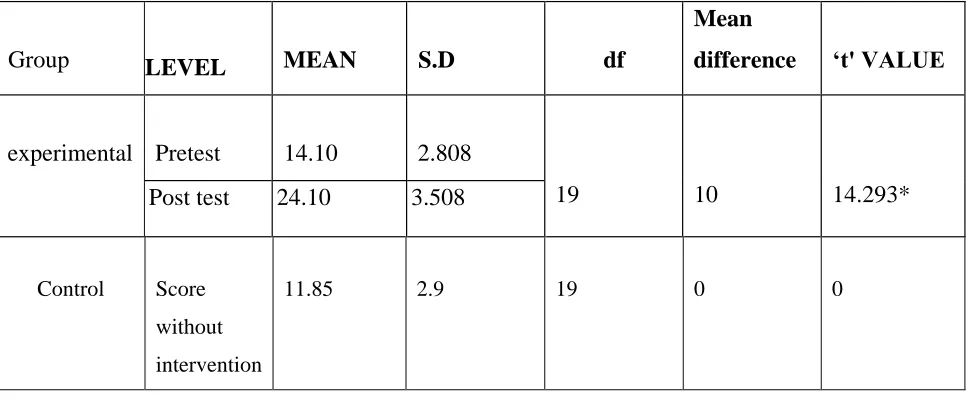
TABLE 3-Effectiveness of Structured Teaching Programme on ABG analysis and its
interpretation on the experimental groupand control group
Group LEVEL MEAN S.D df Mean difference ‘t' VALUE experimental Pretest 14.10 2.808 19 10 14.293* Post test 24.10 3.508
Control Score without intervention
11.85 2.9 19 0 0
Available online: https://pen2print.org/index.php/ijr/ P a g e | 805
The mean post-test knowledge level of experimental group (24.10) was higher as compared with the pre-test score (14.7). The calculated t value was 14.293 and was more than the table value, ‘t’ (2.09). The p value of experimental group was less than 0.05. Hence, there was a difference in the knowledge level of B.Sc Nursing students after the administration of Structured Teaching Programme. Hence research hypothesis (H1) was accepted.
Comparing the experimental group and control group BSc Nursing students mean, SD, df, mean difference and ‘t’ value H2 hypothesis was accepeted. This to results indicated that the Structured Teaching Programme was effective in increasing the knowledge of BSc Nursing students regarding ABG analysis and its interpretation.
Implications of the study
1. Specialized teaching modalities can be made for the enhancement of knowledge level of the student Nurses.
2. Teaching methods like Structured Teaching Programme can increase the level of confidence and skills of the student Nurses in their practical field.
3. Skilled practitioners can provide better care by reducing complications
4. Senior Nurses can pass on the knowledge gained to the next generation Nurses and thereby, improving their knowledge.
5. Findings of this study can be utilized for conducting research on various aspects related to ABG sampling.
6. This study can motivate other researchers to conduct similar researches on staff Nurses to assess the level of practice on ABG sampling on a large sample basis.
Available online: https://pen2print.org/index.php/ijr/ P a g e | 806
Recommendations
1. The study can be replicated on larger sample in different setting so that the findings can be generalized to larger population.
2. A similar study may be done on staff nurses.
3. A comparative study can be conducted to assess the effectiveness of other college nursing students.
Conclusion
By this study we came to know that there is no association between the demographic variables and there is a significant effectiveness of the training programme on the knowledge of the students of Bsc II and III year regarding ABG analysis.
BIBLIOGRAPHY
1. Morino PL. Arterial Blood Gas Interpretation. 2nd ed. USA: Lippincott Williams and
Wilkins publishers. 2008; 582-605
2. Smeltze. C. Suzzare. Textbook of Medical Surgical Nursing. 1st ed. Philadelphia: Lippincott company. 2003; 1350
Available online: https://pen2print.org/index.php/ijr/ P a g e | 807
3. Chintamani (et al). Lewis Medical Surgical Nursing. 7th ed. Philadelphia : Elsevier Publication. 2011; 130-131
4. Lewis Heitkember Drikson. Medical Surgical Nursing, Assessment and Management of Clinical Problems. 7th ed. Philadelphia: Mosby and Elsevier publication. 2007; 523-525
5. Timothy L Hudson (et.al). Use of local anesthesia for arterial punctures. 3rd ed.
Washington: J. American Journal of critical care.2006 ; 595-99
6. Sood P, Paul G. Inerpretation of arterial blood gas analysis. India : Jerit care med. (Internet). 2010 [cited 2016 may30] 5(10) ; Available from: http://www.ncbi.n/ m.nih.gov/ pmc/ articles/pmc4038813/log=activity