ORAL CONTROLLED RELEASE MATRIX TABLETS”
Submitted to
The Tamil Nadu Dr. M.G.R. Medical University
Chennai – 32
In Partial fulfillment of the requirements for the award of the Degree of
MASTER OF PHARMACY
In the Department of Pharmaceutics
Reg. No: 26106811
OCTOBER 2012
DEPARTMENT OF PHARMACEUTICS
PADMAVATHI COLLEGE OF PHARMACY & RESEARCH INSTITUTE PERIYANAHALLI, DHARMAPURI,
I thank the God’s Almighty for his blessings on the accomplishment of
this venture.
The task of preparing this dissertation has been fascinating experience
and it is really a moment of great pleasure for me to express my heartly
gratitude to those who have helped me in success full completion of this
dissertation.
I take it as a privilege in tendering my deep sense of gratitude and
indebtedness to my guide Dr. R.P. Ezhil Muthu, M.Pharm, Ph.D., Head, Department of Pharmaceutics, Padmavathi College of Pharmacy & Research Institute for his excellent suggestions, in valuable guidance, constant inspiration
and sustained interest throughout my work
I would like to express my sincere thanks to our principal, Dr. K.L. Senthil kumar, M. Pharm., Ph.D., Padmavathi College of Pharmacy & Research Institute for her kind co-operation and encouragement and for
providing us with all facilities required to proceed with my study.
My sincere and warm thanks to our Kalvi Kodai Vallal
Mr. M.G.Sekhar, B.A.,B.L., Ex.M.L.A.,Chairman,Sapthagiri,Padmavathi & Pee Gee Group of institutions for granting me permission to utilize all the
facilities and amenities to successfully achieve this task.
I am very much thankful to Dr. R.P. Ezhil Muthu, M.Pharm., Ph.D.,
Professor, Department of Pharmaceutics for her valuable suggestions and inspiration.
I also express my sincere thanks to Mr. Saravanan, M.pharm., Department of Analysis for his valuable suggestions.
I would like to thank Mr. Janakiraman, Head of the T.T Department,
Pondicherry for providing all facilities and help in my pharmaceutical work. My sincere thanks to Mr. Ravi, the Librarian who helped to utilize Library facilities of our college.
My sincere thanks to non teaching staff for their valuable suggestions
and support in completion of my project.
I express my sincere thanks to our friends for their support and help
during the work.
Words are not sufficient to express my deepest love and appreciation to
my affectionate to my beloved Mother, Father and my wife
Mrs.Gnanambiga who extended great support, love and care towards me during this great time.
S.NO. TITLE PAGE NO.
1. INTRODUCTION 1
1.1 Oral Drug Delivery Systems 3
1.2 Oral Controlled Release Drug Delivery Systems 5
1.3 Selection Of Drug Candidate For Controlled
Release Dosage Forms
8
1.4 Factors Influencing The Design And
Performance Of Controlled Release Products
9
1.5 Types of Oral Controlled Release Drug Delivery
Systems
17
1.6 Oral Controlled Release Drug Polymeric
Systems
26
2. LITERATURE REVIEW 30
3. AIM AND OBJECTIVE 35
4. PLAN OF WORK 37
5. DRUG PROFILE 40
6. EXCIPIENTS PROFILE 45
7. MATERIALS AND METHODS 52
7.1 Materials Used 53
7.2 Equipments Used 54
7.3 Calibration Curve Of Gabapentin 55
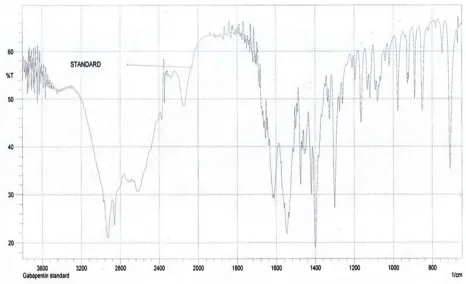
7.4 Identification of the drug with I.R spectrum 61
9. FORMULATION OF TABLETS 69
10. EVALUATION STUDIES 73
11. STABILITY STUDIES 89
12. RESULTS AND DISCUSSION 92
13. CONCLUSION 94
S.NO. TITLE PAGE NO.
1. Dissolution controlled release system (matrix) 18
2. Dissolution controlled release system (encapsulated) 19
3. Diffusion controlled release system (reservior) 20
4. Diffusion controlled release system (matrix) 22
5. Ion-exchange resins 26
6. Materials used 53
7. Equipments used 54
8. Calibration Curve Of Gabapentin with 0.1N HCl 57
9. Calibration Curve Of Gabapentin with 6.8 Phosphate
Buffer 59
10. Identification of Gabapentin with I.R. Spectrum 62
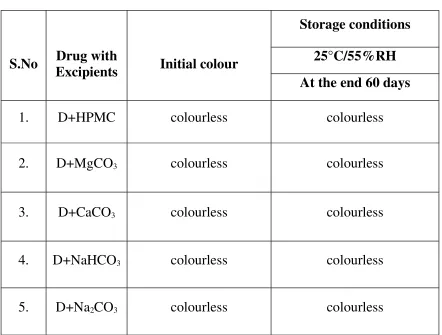
11. Compatability Studies of Gabapentin with excipients. 63
12. Preformulation Studies Results. 68
13. Composition of Gabapentin Tablets without electrolytes. 69
14. Composition of Gabapentin Tablets using Calcium
carbonate 70
15. Composition of Gabapentin Tablets using Magnesium
carbonate 70
16. Composition of Gabapentin Tablets using Sodium
carbonate
18. Weight variation tolerance for Tablet (USP) 74
19. Physical parameters of Gabapentin Tablets 76
20 Drug Release Kinetics 78
21 Diffusion Exponent and Solute Release Mechanism for
Cylindrical Shape 79
22 Coefficient Correlation (R) values of Gabapentin
dissolution studies. 80
23. Dissolution profile of Gabapentin Tablets with calcium
carbonate .(f1- f4) 81
24. Dissolution profile of Gabapentin Tablets with
magnesium carbonate .(f5- f8) 83
25. Dissolution profile of Gabapentin Tablets with sodium bi
carbonate .(f9- f12) 85
26. Dissolution profile of Gabapentin tablets with sodium
carbonate (f12- f16) 87
S.NO. TITLE PAGE NO.
1.
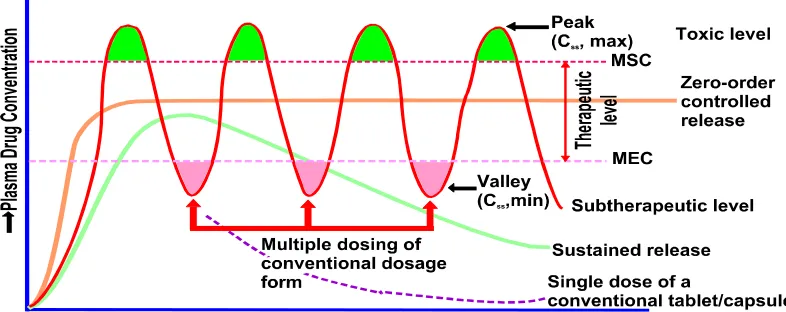
A Hypothetical Plasma Concentration-Time Profile From Conventional Multiple Dosing and Single Doses of Sustained and Controlled Drug Delivery Formulations
7
2. Calibration curve of Gabapentin with 0.1 N HCl 58
3. Calibration curve of Gabapentin with 6.8
Phosphate buffer. 60
4. Identification of Gabapentin with I.R. Spectrum 61
5 Dissolution profile of Gabapentin with Calcium
Carbonate 82
6. Dissolution profile of Gabapentin with
Magnesium Carbonate 84
7. Dissolution profile of Gabapentin with Sodium
biCarbonate 86
8. Dissolution profile of Gabapentin with Sodium
This is to certify that the dissertation entitled
FORMULATION AND EVALUATION OF GABAPENTIN
ORAL CONTROLLED RELEASE MATRIX TABLETS
Constitutes the original work carried out by
Reg. No-26106811
Under the guidance and supervision of
Dr. R.P.EzhilMuthu, M.Pharm., Ph.D.,
Head, Department of Pharmacuetics,
Padmavathi College of Pharmacy & Research Institute
Periyanahalli, Dharmapuri, Tamilnadu-635205
Place: Prof. Dr. K.L. Senthil Kumar, M.Pharm., Ph.D.,
Principal, Department of Pharmacuetics,
Padmavathi College of Pharmacy & Research Institute,
This is to certify that the dissertation entitled
FORMULATION AND EVALUATION OF GABAPENTIN
ORAL CONTROLLED RELEASE MATRIX TABLETS
Constitutes the original work carried out by
Reg. No-26106811
Under the guidance and supervision of
Dr. R.P.EzhilMuthu, M.Pharm., Ph.D.,
Head, Department of Pharmacuetics,
Padmavathi College of Pharmacy and Research Institute Periyanahalli, Dharmapuri, Tamilnadu-635205
Place: Dr. R.P.Ezhil Muthu, M.Pharm., Ph.D., Head, Department of Pharmacuetics,
Padmavathi College of Pharmacy & Research Institute,
This is to certify that the dissertation entitled
FORMULATION AND EVALUATION OF GABAPENTIN
ORAL CONTROLLED RELEASE MATRIX TABLETS
Constitutes the original work carried out by
Reg. No-26106811
For the partial fulfillment of the requirements for the award of degree of
Master of Pharmacy in Pharmaceutics, carried out in the Department of
Pharmaceutics, Padmavathi College of Pharmacy and Research Institute, and in
Department of Formulation, Research and Development, Shasun Pharmaceuticals
ltd. Pondicherry.
Under my guidance and supervision
GUIDE
Place: Dr. R.P.EzhilMuthu, M.Pharm., Ph.D.,
Head, Department of Pharmacuetics,
Department of Pharmaceutics,
Padmavathi College of Pharmacy and Research Institute,
This is to certify that this dissertation entitled Formulation and Evaluation of Gabapentin oral controlled release matrix tablets constitutes
the original work carried out by Mr.K.GOVINDASAMY, under the guidance
and supervision of Dr.R.P.EZHIL MUTHU M.PHARM., Ph.D., Head of the
department, Department of pharmaceutics, Padmavathi college of pharmacy &
Reasearch Institute, Periyanahalli, 635205 Dharmapuri has been evaluated on
-___________
Evaluaters:
1. INTRODUCTION
In recent years, considerable attention has been focused on the
development of new drug delivery systems. There are a number of reasons
for the intense interest in new systems. First, recognition of the possibility of
repatenting successful drugs by applying the concepts and techniques of
controlled release drug delivery systems, coupled with the increasing
expense in bringing new drug entities to market, has encouraged the
development of new drug delivery systems. Second, new systems are needed
to deliver the novel, genetically engineered pharmaceuticals, i.e., the
proteins and peptides, to their site of action without incurring significant
immunogenicity or biological inactivation. Third, treating enzyme deficient
diseases and cancer therapies can be improved by better targeting. Finally,
therapeutic efficacy and safety of drugs, administered by conventional
methods, can be improved by more precise spatial and temporal placement
within the body, thereby reducing both size and number of doses.1
ADVANTAGES OF CONVENTIONAL DOSAGE FORMS:
• This is the oldest and commonest mode of drug administration.
It is safer and more convenient than the other mode of drug
administration.
• This mode of drug administration does not need assistance and
non-invasive in nature.
• As mode of administration is non-invasive in nature, so no need
the competent medical personnel for drug administration.
• Inflammation and pain associated with parenteral
administration should be avoided.
• The medicament or the dosage forms need not to be sterile for
• As it is non-sterile in nature, so it is cheapest when compared
with other dosage forms.
DISADVANTAGES OF CONVENTIONAL DOSAGE FORMS:
• Action is slower and thus not suitable for emergencies.
• Unpalatable drugs are difficult to administer.
• May cause nausea and vomiting.
• This route of administration cannot be used for uncooperative,
unconscious and vomiting patients.
• Certain drugs are not absorbed from oral route. (E.g.
streptomycin)
• Some drugs are inactivated by gastric juice (E.g. penicillin G,
Insulin) or in liver (E.g. nitroglycerine, testosterone and
lidocaine) cannot be administered by oral route.
1.1 ORAL DRUG DELIVERY 2, 3
Most conventional oral drug products, such as tablets and
capsules, are formulated to release the active drug immediately after oral
administration, to obtain rapid and complete systemic drug absorption. Such
immediate-release products result in relatively rapid drug absorption and
onset of accompanying pharmacodynamic effects. However, after absorption of the drug from the dosage form is complete, plasma drug concentrations
decline according to the drug's pharmacokinetic profile. Eventually, plasma
drug concentrations fall below the Minimum Effective Plasma
Concentration (MEC), resulting in loss of therapeutic activity. Before this
point is reached, another dose is usually given if a sustained therapeutic
effect is desired. An alternative to administering another dose is to use a
dosage form that will provide sustained drug release, and therefore maintain
The term modified-release drug product is used to describe products
that alter the timing and/or the rate of release of the drug substance. A
modified-release dosage form is defined "as one for which the drug-release
characteristics of time course and/or location are chosen to accomplish
therapeutic or convenience objectives not offered by conventional dosage
forms such as solutions, ointments, or promptly dissolving dosage forms as
presently recognized". Several types of modified-release drug products are
recognized:
1. Extended-release drug products. A dosage form that allows at least a two fold reduction in dosage frequency as compared to that drug presented as an
immediate-release (conventional) dosage form. Examples of
extended-release dosage forms include controlled-extended-release, sustained-extended-release and
long-acting drug products.
2. Delayed-release drug products. A dosage form that releases a discrete portion or portions of drug, at a time or at times other than promptly after
administration, although one portion may be released promptly after
administration. Enteric-coated dosage forms are the most common
delayed-release products.
3. Targeted-release drug products. A dosage form that releases drug at or near the intended physiologic site of action. Targeted-release dosage forms
may have either immediate- or extended-release characteristics.
Modified-release drug products are designed for different routes of
administration based on the physiochemical, pharmacologic and
pharmacokinetic properties of the drug and on the properties of the materials
the available types of modified-release drug products based on the drug
release characteristics of the products.
1.2 ORAL CONTROLLED RELEASE DRUG DELIVERY SYSTEMS2,3
Oral ingestion is traditionally preferred route of drug administration,
providing a convenient method of effectively achieving both local and
systemic effects. In conventional oral drug delivery systems, there is very
little control over release of drug. The effective concentration at the target
site can be achieved by intermittent administration of grossly excessive
doses, which in most situations, often results in constantly changing,
unpredictable and often sub or supra therapeutic plasma concentrations
leaving the marked side effects.
Oral controlled release drug delivery is a system that provides
continuous oral delivery of drugs at predictable and reproducible kinetics for
a predetermined period throughout the course of GI transit and also the
system that target the delivery of a drug to a specific region within the GI
tract for either a local or systemic action.
An ideal oral drug delivery system should steadily deliver a
measurable and reproducible amount of drug to the target site over a
prolonged period. Controlled Release (CR) delivery system provides a
uniform concentration or amount of the drug at the absorption site and thus,
after absorption allow maintenance of plasma concentrations within a
therapeutic range, which minimizes side effects and also reduces the
In order to overcome the drawbacks of conventional drug delivery
systems, several technical advancements have led to the development of
controlled drug delivery system that could revolutionize method of
medication and provide a number of therapeutic benefits.
1.2.1 Advantages of Controlled Drug Delivery Systems:
• Maintenance of plasma drug concentration within an optimal
therapeutic range for prolonged duration of treatment.
• More consistent and prolonged therapeutic effect is observed.
• Maximization of efficiency-dose relationship.
• Employ less total drug than that in combined conventional
dosage forms.
• Reduction of adverse side effects.
• Minimization of the need for frequent dose intake.
• Improved patient compliance.
• Improves control of condition i.e., reduced fluctuation in drug
level.
• Minimize or eliminate local side effects.
• Minimize drug accumulation with chronic dosing.
• Make use of special effects, e.g. Sustained-release aspirin for
morning relief of arthritis by dosing before bed time.
• Economy i.e. reduction in health care costs. The average cost of
treatment over an extended time period may be less, with lesser
frequency of dosing, enhanced therapeutic benefits and reduced
side effects.
1.2.2 Disadvantages of Controlled Drug Delivery Systems:
• Increased variability among dosage units.
• Poor in vitro – in vivo correlation.
• Toxicity due to dose dumping may occur when more than usual
• Retrieval of drug is difficult in case of toxicity, poisoning or
hypersensitivity reactions.
• More rapid development of tolerance.
[image:19.612.90.483.293.449.2]• Need for additional patient education and counseling.
Figure No.1
A hypothetical plasma concentration-time profile from conventional multiple dosing and single doses of sustained and controlled delivery formulations. (MSC = Maximum Safe Concentration, MEC = Minimum Effective Concentration)
1.3 SELECTION OF DRUG CANDIDATE FOR CONTROLLED RELEASE DOSAGE FORMS4
The physico - chemical properties of the drug such as pKa,
partition coefficient, biological half life, molecular weight, dose of the drug
etc., have to be considered before selection.
Characteristics of drugs suitable for formulation as Sustained Release Products
• Exhibit moderate rates of absorption and excretion.
• Administered in relatively small doses.
• Possess good margin of safety.
• Used for treatment of chronic therapy.
Characteristics of drugs unsuitable for formulation as Sustained Release Products
• Not effectively absorbed in the lower intestine (Riboflavin).
• Absorbed and excreted rapidly i.e. short biological half lives, less
than one hour (Penicillin G, Frusemide).
• Long biological half lives greater than 12 hours (Diazepam,
Phenytoin).
• Large doses required, 1gm (Sulphonamides)
• Drugs with low therapeutic index (Phenobarbital, Digoxin).
• Precise dosage titrated to individuals required (anticoagulants)
• No clear advantage for sustained release formulation (griseofulvin)
1.4 FACTORS INFLUENCING THE DESIGN AND PERFORMANCE OF CONTROLLED RELEASE PRODUCTS4
The design of controlled - release delivery system is
subjected to several variables of considerable importance. Among these, the
properties of the drug, the route of drug delivery, and the disease being
treated and length of the therapy have major importance.
1. Physicochemical factors
a. Aqueous solubility
b. Partition coefficient
c. Drug stability
d. Protein binding
e. Molecular size and Diffusivity
2. Biological factors
b) Distribution c) Elimination
d) Biological half life and Duration of action e) Side effects and Margin of safety
f) Dose size g) Disease state
1.4.1 PHYSICOCHEMICAL FACTORS4 a. Aqueous solubility:
The aqueous solubility of a drug influences its dissolution rate, which in turn establishes its concentration in solution and hence the
driving force for diffusion across membrane. The choice of mechanism for
oral sustained release systems is limited by aqueous solubility of the drug.
Diffusion systems will be poor choices for slightly soluble drugs since the
driving force for diffusion; the concentration in aqueous solution will be
low. Such drugs may be effectively incorporated in matrix system.
Partition coefficient:
Partition coefficient (Ko/w) is defined as the ratio of the fraction
of the drug in an oil phase to that of an adjacent aqueous phase.
K=C0/Cw
Where,
C0 = Equilibrium concentration of all forms of the drug e.g. ionized
Cw = Equilibrium concentration of all forms in aqueous phase
Accordingly, compounds with a relatively high Ko/w are predominantly
lipid-soluble and consequently, have very low aqueous solubility.
Furthermore, these compounds can usually persist in the body for long
periods as they can localize in the lipid membranes of cells. (e.g.:
Phenothiazines). Compounds with very low Ko/w will have difficulty in
penetrating membranes, resulting in poor bioavailability. Furthermore,
partitioning effects apply equally to diffusion through polymer membranes.
The choice of diffusion-limiting membranes must largely depend on
partitioning characteristics of the drug. Drugs with a partition coefficient that
is higher or lower than the optimum (i.e., 1000/1) in general, are poor
candidates for formulation into Controlled Release dosage forms.
b. Drug stability:
Orally administered drugs can be subject to both acid base
hydrolysis and enzymatic degradation. For drugs like Propanthline that are
unstable in the stomach, the most appropriate controlling unit would be the
one that releases its contents only in the intestine. The reverse in the case for
drugs like Propanthline that are unstable in the environment of the intestine,
the most appropriate controlling unit in this case would be one that releases
its contents only in the stomach. In general, drugs with significant stability
problems in any particular area of the gastrointestinal tract are less suitable
for formulation into controlled release systems.
c. Protein binding:
Many drugs bind to plasma proteins with a significant
with a particular protein, then the distribution of the drug into the
extravascular space is governed by the equilibrium process of dissociation of
the drug from the protein. The drug-protein complex can serve therefore as a
reservoir in the vascular space for controlled drug release to extravascular
tissues, but only for those drugs that exhibit a high degree of binding.
Extensive binding to plasma proteins will be evidenced by a long half-life of
elimination for the drug and such drugs generally do not require a controlled
release dosage form.
d. Molecular size and Diffusivity:
Drugs in most of the sustained release systems must diffuse
through a rate controlling membrane or matrix. The ability of a drug to
diffuse through these membranes is known as diffusivity (diffusion
coefficient). This diffusivity is a function of its molecular size (or molecular
weight) and is related by the equation.
Log D = SvlogV +Kv = SmlogM + Km
Where,
D = Diffusivity
M = Molecular weight
V = Molecular volume
Sv, Sm, Kv and Km = Constants in a particular system.
In general the denser the medium, the smaller is the diffusivity.
The design of sustained release products should be based on a
comprehensive picture of drug disposition. This would entail a complete
examination of the ADME characteristics of a drug following multiple
dosing.
i. Absorption:
The rate, extent and uniformity of absorption of a drug are
important factors when considering it’s formulation into a sustained release
dosage form. To maintain a constant blood or tissue level of drug, it must be
uniformly released from the sustained release system and then uniformly
absorbed. Since the rate-limiting step in drug delivery from a controlled
release product is its release from a dosage form, a rapid rate of absorption
of drug relative to its release is essential if the system is to be successful. In
case of sustained release dosage form, the rate constant for drug release is
much less than the constant for drug absorption (i.e., Kr <<<Ka). Assuming
that the transit time of a drug through the absorption area of the gastro
intestinal tract is between 9 and 12 hrs, the maximum absorption half-life
should be 3 to 4 hrs.
This corresponds to a minimum absorption rate constant Ka of
0.17 to 0.23 hr-1 necessary for about 80 to 95 % absorption over a 9 to 12 hr
transit time. For a drug with a very rapid rate of absorption (i.e., Ka >> 0.23
hr-1), the above discussion implies that a first order release rate constant K r <
0.17 hr-1 is likely to result in unacceptably poor bioavailability in many
patients. Therefore, slowly absorbed drugs will be difficult to formulate into
ii. Distribution:
Two parameters that are used to describe the distribution
characteristics of a drug are its apparent volume of distribution (Vd) and the
ratio of drug concentration in the tissue to that in plasma (T/P ratio) at the
steady state. In general, the bound portion of drug can be considered inactive
and unable to cross membranes. At high binding one sees prolonged drug
action. The apparent volume of distribution of a drug is frequently used to
describe the magnitude of distribution, including binding, within the body.
The total apparent volume of distribution for a drug at steady state can be
calculated from the following equation.
Vdss = [(k12+k21)/k21]Vp
Where,
Vdss is the apparent volume of distribution at steady state.
K12 and K21 are the constants for the distribution of drug from the central to
peripheral compartment and from peripheral to central compartments
respectively.
Vp is the volume of central compartment.
iii. Elimination:
Elimination of a drug involves two aspects i.e., metabolism
and excretion. Metabolism of a drug can either inactivate an active drug or
convert an inactive drug to an active metabolite. Drugs that are significantly
metabolized before absorption, either in the lumen or tissue of the intestine,
can show decreased bioavailability particularly from slowly releasing dosage
of a drug or by the appearance of a metabolite. It is possible to incorporate
this pharmacokinetic property into the design of controlled release product,
provided that the rate and extent of metabolism are predictable and that the
rate constant(s) for the process are not too large. Undoubtedly, complex
metabolic patterns would make the design much more difficult, particularly
when biological activity is wholly or partly due to a metabolite, as is the
case of Isosorbide 2,5-dinitrate.
iv. Biological half life and Duration of action:
The usual goal of an oral sustained release product is to
maintain therapeutic blood levels over an extended period. The elimination
rate is quantitatively described by the half-life. The biological half-life and
hence duration of action of a drug obviously play a major role in the process
of considering a drug for sustained release. Therapeutic compounds with a
short half-life are excellent candidates for sustained-release preparations,
since this can reduce dosage frequency. However, this is limited, in that
drugs with very short biological half life as it may require excessively large
amounts of drug in each dosage unit to maintain controlled effect.
In general, drugs with half-life shorter than two hours
are poor candidates for sustained release preparations. Drugs with long
half-life, more than 8 hrs, are also generally not used in sustaining forms, since
their effect is already controlled.
v. Side effects and Margin of safety:
Theoretically, the incidence of side effects can be
minimized by controlling the concentration at which the drug exists in
to offer a solution to this problem. By slowing the rate at which the drugs are
released, the chances of gastrointestinal irritation will be reduced due to a
smaller amount of drug exposed to the gastrointestinal mucosa at the given
time. The most widely used measure of the margin of safety of a drug is its
Therapeutic Index (TI).
TI = TD50/ED50
Where,
TD50 = Median toxic dose
ED50 = Median effective dose
Drugs with very small value of therapeutic index usually are poor candidates
as controlled release products.
vi. Dose Size:
For orally administered systems, there is an upper limit to the
bulk size of the dose to be administered. In general a single dose of 0.5 to
1gm is considered maximum for conventional dosage form. This also holds
for controlled release dosage forms.
Vii. Disease State:
Sometimes the disease states are considered before the designing
of an oral controlled release dosage form. This can be explained by taking
the example of Aspirin (for rheumatic arthritis) which is not a suitable
candidate for sustained release dosage form. Still an aspirin sustained release
dosage from could be advantageous to maintain therapeutic concentrations,
1.5 TYPES OF ORAL CONTROLLED RELEASE DRUG DELIVERY SYSTEMS2, 3, 4
A number of techniques are used to achieve controlled release
of drugs via the oral cavity. The majority of the oral controlled release
systems relay on dissolution, diffusion or a combination of both mechanisms
to generate slow release of drug.
A. Dissolution controlled release systems B. Diffusion controlled release systems C. Diffusion and dissolution systems D. Osmotically controlled release systems
E. Gastro retentive drug delivery systems
F. Electrically stimulated release devices G. Ion-exchange resins
A) DISSOLUTION CONTROLLED RELEASE SYSTEMS5
A drug with a slow dissolution rate will sustain release rate of
the drug from the dosage form. Here the rate-limiting step is dissolution.
This being true, sustained release preparation of drugs could be made by
decreasing their rate of dissolution.
Dissolution controlled systems can be made either by
• Varying concentration of rate controlling coats or polymers
(Matrix Dissolution Systems) or
• By administering the drug as a group of beads that have coating
• Matrix Dissolution Systems are prepared by compressing the
tablet with a slowly soluble polymer carrier into tablet form.
Wax matrices are prepared either by congealing or dispersion
the drug - wax mixture in water.
Table No.1
Dissolution controlled release system(matrix)
Commercially available products belonging to this category are given below:
Product Active ingredient Manufacturer
Dimetane Extentabs Brompheniramine
maleate
Robins
Quinidex Extentabs Quinidine sulfate Robins
Encapsulated Dissolution Systems contain beads that have different
coating thickness, their release will occur in a progressive manner. Those
with the thinnest layer will provide the initial dose and the maintenance of
drug levels at later times will be achieved from those with thicker coating.
This dissolution process at steady state is described by the Noyes-Whitney
equation.
dc = KDA(Cs-C) =DA(Cs-C)
dt h
Where,
dc/dt = dissolution rate.
KD = Dissolution rate constant.
Cs = Saturation solubility of the solid.
[image:30.612.86.529.204.293.2]C = Concentration of solute in the bulk solution
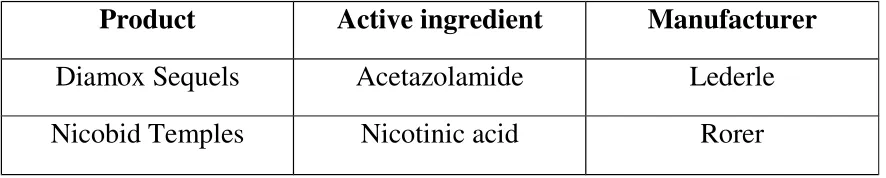
Table No.2
Dissolution controlled release system(encapsulated)
Commercially available products belonging to this category are given below:
Product Active ingredient Manufacturer
Diamox Sequels Acetazolamide Lederle
Nicobid Temples Nicotinic acid Rorer
B) DIFFUSION CONTROLLED RELEASE SYSTEMS5
In these systems the release rate of drug is determined by its
diffusion through a water insoluble polymer. There are basically two types
of diffusion devices.
RESERVOIR DEVICES:
Reservoir devices are characterized by a core of drug, the
reservoir, surrounded by a polymeric membrane. The nature of the
membrane determines the rate of release of drug.
The methods used to develop reservoir type devices include
micro-encapsulation of drug particles and coating of tablets containing drug
cores.
Advantages:
Disadvantages:
• System must be physically removed from implant sites.
• Difficult to deliver high molecular weight compounds.
Table No.3
Diffusion controlled release system (reservior)
Commercially available products belonging to this category are given below:
Product Active ingredient Manufacturer
Nico-400 Nicotinic acid Jones
Nitrospan Nitroglycerin Rorer
MATRIX DEVICES:
The three major types of materials used in the preparation
of matrix devices are insoluble plastics, hydrophilic polymers and fatty
compounds. The most common method of preparation is to mix the drug
with the matrix material and then compress the mixture. The drug release
from a porous or granular matrix can be described by
M = (Ds.Ca.{P/T}.[2C0-PCa]t)1/2
Where,
P = Porosity of the matrix
T = Tortuosity
Ca= Solubility of the drug in the release medium
Advantages:
• Can deliver high molecular weight compounds.
Disadvantages:
• Cannot obtain zero order release
• Removal of remaining matrix is necessary for implanted systems
Table No.4
Diffusion controlled release system (matrix)
Commercially available products belonging to this category are given below:
Product Active ingredient Manufacturer
Fero-Gradumet Ferrous sulfate Abbott
Choledyl SA Oxtriphylline Parke-Davis
C) DIFFUSION AND DISSOLUTION CONTROLLED SYSTEMS6 In these systems the release rate of drug is determined by both
the diffusion and dissolution mechanisms.
D) OSMOTICALLY CONTROLLED RELEASE SYSTEMS3
The osmotic pump represents a newer concept in
extended-release preparations. Drug delivery is controlled by the use of an osmotically
controlled device that promotes a constant amount of water into the system,
either by dissolving and releasing a constant amount of drug per unit time or
by the use of a "push–pull" system that pushes the drug out at a constant rate
as water flows into an expandable osmotic compartment. Drug is released
A representative osmotic oral drug product is the "push–pull"
system called Gastrointestinal Therapeutic System (GITS), developed by
Alza Corporation for nifedipine (Procardia XL) and other drugs. The system
consists of a semipermeable membrane and a two-layer core of osmotic
ingredient and active drug. As water enters the system, the osmotic pressure
builds up from the inner layer, pushing the drug out through a laser-drilled
orifice in the drug layer.
E) GASTRORETENTIVE DRUG DELIVERY SYSTEMS6
Dosage forms that can be retained in stomach are called Gastro
retentive Drug Delivery Systems (GRDDS). GRDDS can improve the
controlled delivery of drugs that have an absorption window by continuously
releasing the drug for a prolonged period of time before it reaches its
absorption site thus ensuring its optimal bioavailability.
The approaches that have been pursued to increase the
retention of an oral dosage form in the stomach include Bioadhesive
systems, swelling and expanding systems, High density systems and Low
density (Floating) systems.
1. Bioadhesive systems:
Bioadhesion is the process whereby synthetic and natural
macromolecules adhere to the biological membranes in the body and remain
there for an extended period of time. If the membrane substrate is mucosal
layer then the process is referred to as mucoadhesion. The bioadhesives
increase the residence time and contact time at the area of absorption and
2. Swelling and Expanding Systems
These systems increase the residence time of the dosage
form in the stomach. Particles greater than 10mm are unable to enter the
duodenum and are retained in the stomach. The swelling systems incorporate
hydrogels which are polymers that can swell up to 100 times their dry
weight. The hydrogels used must be biodegradable.
3. High density systems
In High density systems the bulk density of the dosage
form must exceed that of normal stomach and should be at least 1.40. In
preparing such formulations, drug can be coated on a core with heavy, inert
materials such as barium sulfate and titanium dioxide. The weighed pellet
can then be covered with a diffusion controlled membrane.
4. Low density (Floating) systems
Floating Drug Delivery Systems (FDDS) have a bulk
density less than gastric fluids and so remain buoyant in the stomach without
affecting the gastric emptying rate for a prolonged period of time. While the
system is floating on the gastric contents, the drug is released slowly at the
desired rate from the system. After release of drug, the residual system is
emptied from the stomach. This results in an increased GRT and a better
control of fluctuations in plasma drug concentration. These systems are
suitable for drugs that are poorly soluble or unstable in the intestinal
F) ELECTRICALLY STIMULATED RELEASE DEVICES7
These are monolithic devices prepared by using polyelectrolyte gels
which swell when an external electrical stimulus is applied, causing a
change in pH. The release could be modulated, by the current, giving a
pulsatile release profile. Precise control over the release of drug from
devices implanted in the body, such as quantity, timing, is highly desirable
in order to optimize drug therapy. Electrically-controllable drug release from
polyelectrolyte hydrogels is helpful in achieving these goals.
The mechanisms of drug release include ejection of the drug from the
gel as the fluid phase synereses out, drug diffusion along a concentration
gradient, electrophoresis of charged drugs towards an oppositely charged
electrode and liberation of the entrapped drug as the gel complex erodes.
G) ION-EXCHANGE RESINS7
Ion exchange systems use resins composed of water insoluble cross
linked polymers. These polymers contain salt-forming functional groups in
repeating positions on the polymer chain. The drug is bound to the resin and
released by exchanging with appropriately charged ions in contact with the
ion-exchange groups.
Resin+
- Drug-- + X-- Resin+ - X-- + Drug—
Conversely,
Resin---- Drug+ + Y+ Resin
- Y+ + Drug+
X—and Y+ are ions in the GI tract. The free drug then diffuses out of the
resin. The drug-resin complex is prepared either by repeated exposure of the
resin to the drug in a chromatography column or by prolonged contact in
solution.
The rate of drug diffusing out of the resin is controlled by the area of
diffusion, diffusional path length and rigidity of the resin, which is a
function of the amount of cross-linking agent used to prepare the resin. An
improvement in this system is to coat the ion-exchange resin with a
hydrophobic rate-limiting polymer, such as ethylcellulose or wax. These
systems rely on the polymer coat to govern the rate of drug availability.
Table No.5
A representative listing of ion-exchange resins is given below
Product Active ingredient Manufacturer
Biphetamine capsules Amphetamine,
Dextroamphetamine
Fisons
Ionamin capsules Phenteramine Pennwalt
1.6 ORAL CONTROLLED DRUG RELEASE POLYMERIC SYSTEMS8
For many years, the major focus of drug related
of biological activity, which this continues to be an important area of
research, increasing attention is being devoted to the manner in which these
drugs are delivered. One way has been incorporation of drugs in solid
polymers. Controlled release polymeric systems are the most promising as
they increase efficacy of drugs substance and reduced undesirable side
effects. The number of polymers and the range of formulation variables
available to control the rates of drugs release from controlled release devices
are broad. Selection among these variables is based upon the desired release
rate and duration, the physical and chemical properties of the drug and the
intended site of administration.
CHARACTERISTICS OF IDEAL POLYMERIC SYSTEM:
An ideal polymer system should possess the following characteristics:
• It should be inert and compatible with the environment.
• It should be non-toxic.
• It should be easily administered.
• It should be easy and inexpensive to fabricate.
• It should have good mechanical strength.
Criteria followed in polymer selection:
Polymer chosen as potential drug carrier must exhibit certain
properties, as listed below:
• The polymer must be soluble and easy to synthesize, it must
• It should provide drug attachment or release sites for the
possibility of incorporation of drug –polymer linkages.
• The polymer should be compatible with the biological
environment, i.e. non-toxic, non-antigenic and non-provocative
in any other respect.
• It should be biodegradable or to be eliminated from the
organism after the fulfillment of its function.
Types of polymers9
Polymers have been broadly classified as,
Natural polymers: These include acids, proteins, polysaccharides and complexes of proteins and polysaccharides.
Synthetic polymers: These include polyesters, polyurethane, polyamides, polycarbonates, polysiloxanes, polyolefins, polyvinyl compounds and
acrylics.
Polymers can also be classified on the basis of their interaction with
water, into non-biodegradable hydrophobic polymers.
1. Hydro gels.
2. Soluble polymers.
3. Biodegradable polymers.
Non-biodegradable polymers: These are inert in the environment of use, are eliminated or extracted intact from the site of administration and serve
essentially as a rate-limiting barrier to the transport and release of drug from
the device. Common examples of such materials includes polyethylene vinyl
acetate (PVA), polydimethylsiloxane (PDS), polyurethane(PEU) ethyl
Hydro gels: These swell but not dissolve when brought in contact with water. They are inert, remove intact from the site of administration and
function by forming a rate limiting barrier to the transport and release of
drugs.
Common examples include ployhydroxyethylmethylacrylate (p-HEMA),
cross-linked polyvinyl alcohol, cross-linked polyvinyl pyrolidone,
polyacrylamide and dextran.
Soluble polymers: These are moderate molecular weight uncross-linked polymers that dissolve in water. These materials can be used alone or in
combination with hydrophobic polymers to provide devices that slowly
erode over time. Common examples include polyethylene glycol (PEG),
polyvinylalcohol, Hydroxypropylmethylcellulose (HPMC) and copolymers
of methacrylic acid.
Biodegradable polymers: These slowly disappear from the site of administration. However, this disappearance occurs in response to a
chemical reaction such as hydrolysis. Common examples include polylactic
acid (PLA), polyglycolic acid (PGA), polycaprolactone (PCL) and several
LITERATURE REVIEW
Aiman A, et. al., (2000), reported controlled release of Gabapentin from matrices using glyceryl benzoate11
Yagi Naomi, et. Al., (2000), reported the compatibility of combining sustained release fine granules of nifedipine (SRN) with 32 kinds of drugs was studied of
SRN and drugs in heat sealed packages (polyethylene laminated glassine paper)
were kept at either 20◦C and 75 % R.H. or 30 ◦C and 92% R.H. for 30 days.12
Shyamala Baskaran, et. al., (2002), reported the novel approach to zero order drug delivery via hydro gel for diltiazem with HPMC followed by Higuchi
pattern. Hydro gel matrix tablets of the drug were formulated using
HPMC,SCMC with aim to attain a zero order release.13
Pandy, et. al., (2003), reported formulation and release systems of sustained release of Diltiazem using HPMC at polymer ratio 1:60, using HPMC, ethyl
cellulose and eudragit as a sustaining materials in various proportions. The
hardness showed almost required result in the present study.14
Hajare, et. al., (2004), reported a design of oral matrix formulation using guargum, NaCMC and HPMC. The data obtained were fitted into the Higuchi
Model. Analysis of ‘n’ values of korsmeyer equation indicated that the drug
release involved the diffusion.15
Srinath, et. al., (2004), reported a complete study on the kinetics and mechanism of drug release from bilayer tablets of Diltiazem HCL. Matrix
Almeida S, et. al., (2006), reported comparative study on the bio equivalence of two different Gabapentin formulations. A randomised, two periods, two
sequence, crossover clinical trial in healthy volunteers.17
Supeecha Wittayalertpanya, et. al., (2008), reported Bioequivalence study of two different formulations of 300 mg Gabapentin capsule in Thai healthy
volunteers.18
Gorden A Irving, et. al., (2008), reported tolerability and safety of gastrorententive once daily Gabapentin tablets for the treatment of post
therapetic neuralgia.19
Gordi T, et. al., (2008), reported Pharmacokinetics of gabapentin after a single day and at steady state following the administration of gastric-retentive-extended-release and immediate-release tablets: a randomized, open-label, multiple-dose, three-way crossover, exploratory study in healthy subjects20
Pfizer, (2009), reported bioequivalence study of gabapentin between tablet and liquid formulation and the food effect study of liquid formulation.21
David Sandercock, et. al., (2009) reported Gabapentin Extended Release for
the Treatment of Painful Diabetic Peripheral Neuropathy.22
P M Ramdas Bhandarkar, et. al., (2009), reported oxidative clavage of
Gabapentin with N2 bromosuccinimide in acid medium.23
Wallace, et. al., (2010) reported Gabapentin Extended-Release Tablets for the Treatment of Patients with Post herpetic Neuralgia: A Randomized,
Double-Blind, Placebo-Controlled, Multicenter Study.24
Swati jagdale, et. al., (2010), reported pharmaceutical equivalence of Gabapentin tablets with various extra granular binders.26
Cheng-hung Hsu, et. al., (2010) reported progressive steps of polymorphic transformation of Gabapentin polymorphs studied by Hot stage FTIR
microscopy.27
Abdollah Yari, et. al.,(2011), reported Voltammetric Determination of Trace Antiepileptic Gabapentin with a Silver-Nanoparticle Modified Multiwalled
Carbon Nanotube Paste Electrode28
Butch KuKanich, et, al., (2011), reported Pharmacokinetics of oral
Gabapentin in greyhound dogs.29
Zhixin Zong, et. al., (2011) reported the Stabilizing Effect of Moisture on the
Solid-State Degradation of Gabapentin.30
Ben Achrai, et. al., (2011) reported Solubilization of Gabapentin into HII
Mesophases.31
Ahmed N, et. al., (2011) reported preparation and Invitro evaluation of floating
microsphere of Gabapentin.32
Argoft CE, et. al., (2012), reported clinical development of a once daily gastrorententive formulation of Gabapentin tablets for the treatment of post
therapetic neuralgia.33
Yun-Seok Rhee, et. al., (2012), reported Invivo/Invitro relationship of Gabapentin from a sustain release tablet formulation: A pharmacokinetic study
Swetha, et. al., (2012), reported formulation and invitro evaluation of
gastrorentive dosage form of Gabapentin.35
Cowels, et, al., (2012), reported steady state pharmacokinetics of Gabapentin after administration of a novel gastrorentive Extended release formulation in
postmenopausal women with vasomotor symptoms.36
Beal B, et. al.,(2012), reported Gabapentin for once-daily treatment of post-herpetic neuralgia.37
James Tovera, et. al., (2012), reported population pharmacokinetics and pharmacodynamics of gabapentin After Administration of Gabapentin Enacarbil.38
3. AIM AND OBJECTIVE
In recent years, controlled release formulations have received
considerable attention because of number of advantages that are offered in
the field of pharmaceuticals. One of the applications of this technology is
alteration of drug release profile with optimized effect.
Gabapentin is an anti-epileptic medication, also called an
anticonvulsant. It affects chemicals and nerves in the body that are involved
in the cause of seizures and some types of pain. It has been proved to be
effective in both experimental and clinical pain without causing serious
cardiovascular or respiratory side effects. The usual oral dosage regimen is
50-100mg every 4-6hrs with a maximum dosage of 400mg per day. To
reduce the frequency of administration and to improve patient compliance a
sustained release formulation of Gabapentin is desirable.
The aim of this work is to formulate and develop a novel oral
controlled release tablet dosage form of Gabapentin to provide a steady state
drug release over an extended period of time.
The rationale behind the mechanism and dynamics of electrolytes
induced matrix stiffening and structural changes to the gel are the basis of
controlled drug release.
The scope and objective behind this work is to prepare and evaluate
Gabapentin tablets in order to control the drug release using different
4. PLAN OF WORK
The following experimental protocol was therefore designed to all
systematic approach to the study.
1) Drug selection.
2) Selection of excipients.
3) Preformulation study: Compatibility evaluation was carried out between
drug and polymers in physical observation and by using Infra Red spectrum
study.
4) Formulation of controlled release matrix tablets of using different release
retardant.
5) The following evaluation parameters were studied based on laboratory
experiments.
i) In-process Evaluation of granules:
1. Angle of repose.
2. Apparent bulk density.
3. Tapped bulk density.
4. Percent compressibility.
ii) Evaluation of tablets:
i. Hardness.
ii. Friability.
iii. Weight variation.
iv. Content uniformity of active ingredient.
v. In-vitro dissolution study.
5. DRUG PROFILE
Drug Profile of Gabapentin
Chemical Structure:
Chemical Name : 2-[1-(aminomethyl)cyclohexyl]acetic acid
Molecular weight : 171.237 g/mol
Molecular formula : C9H17NO2 Physical properties
Description : White to off white
Form : Crystalline solid
Category : Anticonvulsant, neuropathic pain and hot flashes.
Solubility : Freely soluble in water and acidic and basic solutions.
Storage : Store in the refrigerator
Melting Point : 122 to 167°C.
Pka : 3.7
Pharmacokinetics Profile:
Bioavailability : 60% to 27%. (According to Dose increasing)
Biological half life : 5 to 7 hrs.
Plasma protein
binding : It is less than 3% bound to human serum proteins.
Excretion : Urinary excretion. 60% to 88% (unchanged drug and metabolites)
Pharmacodynamics Profile: Mechanism of Action:
Gabapentin is structurally related to the neurotransmitter GABA
(gamma-amino butyric acid) but it does not modify GABAA or
GABAB radioligand binding, it is not converted metabolically into
GABA or a GABA agonist, and it is not an inhibitor of GABA uptake
or degradation.
Gabapentin was formed by the addition of a cyclohexyl group to
gamma-aminobutyric acid (GABA), which allowed this form of GABA
to cross the blood-brain barrier.
Despite its structural similarity to GABA, Gabapentin does not bind to
GABA receptors in the CNS. Its mechanism of action is unknown, but may
Absorption and Bioavailability: It is rapidly and extensively absorbed (at least 60 to 76% of dose) when administered orally. To maximize
bioavailability and reduce the risk of gastrointestinal (GI) upset.
Distribution: Less than 3% of gabapentin circulates bound to plasma protein.
Metabolism:
The pharmacokinetic profile of Gabapentin is complicated due to rapid and extensive first-pass metabolism, which is species and dose-rate
specific. In humans, a number of pathways, including Cytochrome P-450
isozyme, CYP2D6 and CYP3A4, as well as by conjugation of parent and
metabolites. Phase II hepatic metabolism renders the metabolites
water-soluble, which are excreted by the kidneys. Thus, reduced doses may be
used in renal and hepatic impairment.
Elimination:
Gabapentin is eliminated from the systemic circulation by renal excretion as unchanged drug. Gabapentin is not appreciably metabolized in humans.
Contraindications:
Gabapentin controlled release tablets causes serious or fatal
side-effects in a newbornincluding neonatal withdrawal syndrome, if the mother
uses the medication during pregnancy or labor. Use of Gabapentin by
nursing mothers is not recommended by the manufacturer because the drug
passes into breast milk.
300-600 mg daily. Maintenance: 1200 mg daily (37-50 kg); 900 mg
daily (26-36 kg).
Precaution:
Patients should be advised that gabapentin may cause dizziness,
somnolence and other symptoms and signs of CNS depression. Accordingly,
they should be advised neither to drive a car nor to operate other complex
machinery until they have gained sufficient experience on gabapentin to
gauge whether or not it affects their mental and/or motor performance
6. EXCIPIENTS PROFILE
6.1 HYDROXY PROPYLMETHYL CELLULOSE41
1 Synonym : Cellulose, E464, HPMC, methocel.
2 Chemical name : Cellulose, 2-hydroxy propyl methyl ether.
3 Empirical formula : (OCH2CH (OH) CH3) 4 Molecular weight : 1, 00, 00 to 1, 50, 00
5 Structural Formula :
6. Functional category : Coating agent, film former, stabilizing agent, suspending agent, binding agent
8. Typical Properties:
1. Bulk density : 0.341 g/cm
2. Tapped density : 0.557 g/cm
3. True density : 1.326 g/cm
4. Melting point : 190 to 200°C
5. PH : 5.5 – 8.0
9. Solubility : Soluble in cold water, practically insoluble in ethanol, ether.
10. Stability and storage conditions : Its stable material, it’s hygroscopic after drying. Stored in well-closed container. Protected from light
11. Incompatibilities : Incompatible with some oxidizing agents.
12. Safety: Nontoxic and nonirritant.
6.2 CALCIUM CARBONATE 1. Molecular Formula: CaCO3.
2. Molecular Weight: 100.09.
3. Functional category: Buffering agent, Diluent, Therapeutic agent.
4. Description: Occurs as an odorless and tasteless, white powdered crystals.
a. Employed as a pharmaceutical excipient.
b. Also used as a base for medicated dental preparations. c. Used as bulking agent in tablet sugar coating processes. d. Used as an opacifier in tablet film coating.
e. Used as a food additive.
f. Used as an antacid and calcium supplement.
6 .Typical Properties:
1. Bulk density -- 0.8 g/cm 2. Tapped density – 1.2 g/cm 3. Flow ability—cohesive. 4. Melting point – 825°C.
7. Solubility: Soluble in ethanol, water, insoluble in mineral oil and vegetable oil.
8. Stability and storage conditions: It’s stable. Stored in well-closed container. Protected from light.
9. Safety: Nontoxic and Non- mucosal irritant.
6.3 MAGNESIUM CARBONATE
1. Molecular formula: MgCO3.
2. Molecular weight: 84.32.
3. Functional category: Diluent, Antacid and Adsorbent.
4. Applications:
a) As an excipient, it is mainly used as directly compressible tablet
diluents.
b) Also used in microsphere formulations.
c) Used to absorb liquids, such as flavours in tableting process.
6. Typical Properties:
1. Bulk density – 0.56 g/cm 2. Tapped density – 0.783 g/cm 3. Flow ability—Cohesive. 4. Melting point – 350°C.
7. Solubility: Soluble in water, insoluble in miner oil and vegetable oil.
8. Stability and storage conditions: It’s stable. Stored in well-closed container. protected from light.
9. Safety: Nontoxic.
6.4 SODIUM BICARBONATE 1. Molecular formula: NaHCO3.
2. Molecular weight: 84.01.
3. Functional category: Alkalizing agent and therapeutic agent.
4. Applications:
a) Employed as a source of carbon dioxide in effervescent
tablets and granules.
b) Also used to buffer the drug molecules that are weak acids.
c) Also used as freeze-drying stabilizer.
6. Typical Properties:
1. Bulk density – 0.869 g/cm
2. Tapped density – 1.369 g/cm
3. Flow ability—Cohesive.
4. Melting point – 270°C.
7. Solubility: Soluble in water, insoluble in mineral oil and vegetable oil.
8. Stability and storage conditions: It’s stable. Stored in well-closed container. Protected from light.
9. Safety: Nontoxic.
6.5 SODIUM CARBONATE 1. Molecular formula: Na2CO3.
2. Molecular weight: 105.99.
3. Functional category: Therapeutic agent.
4. Applications:
a) Employed as a food additive.
b) As a pharmaceutical excipient.
c) As an antacid.
6. Typical Properties:
1. Bulk density – 2.5 g/cm
2. Flow ability—Cohesive.
3. Melting point –851°C.
7. Solubility: Soluble in water, insoluble in mineral oil and vegetable oil.
8. Stability and storage conditions: It’s stable. Stored in well-closed container. Protected from light.
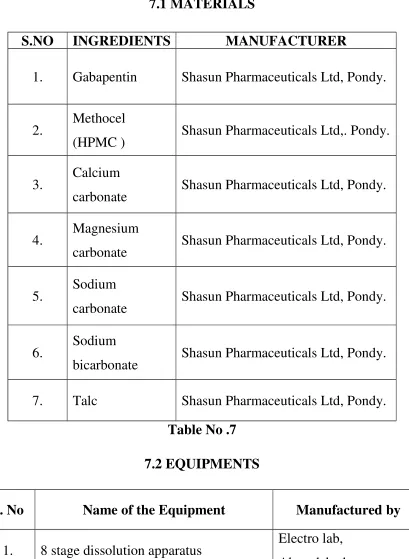
Table No. 6 7.1 MATERIALS
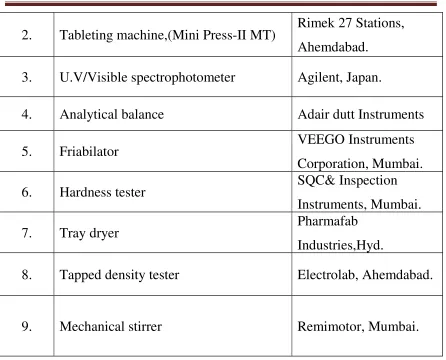
Table No .7 7.2 EQUIPMENTS
S. No Name of the Equipment Manufactured by
1. 8 stage dissolution apparatus Electro lab,
Ahmedabad.
S.NO INGREDIENTS MANUFACTURER
1. Gabapentin Shasun Pharmaceuticals Ltd, Pondy.
2. Methocel
(HPMC ) Shasun Pharmaceuticals Ltd,. Pondy.
3. Calcium
carbonate Shasun Pharmaceuticals Ltd, Pondy.
4. Magnesium
carbonate Shasun Pharmaceuticals Ltd, Pondy.
5. Sodium
carbonate Shasun Pharmaceuticals Ltd, Pondy.
6. Sodium
bicarbonate Shasun Pharmaceuticals Ltd, Pondy.
2. Tableting machine,(Mini Press-II MT) Rimek 27 Stations, Ahemdabad.
3. U.V/Visible spectrophotometer Agilent, Japan.
4. Analytical balance Adair dutt Instruments
5. Friabilator VEEGO Instruments
Corporation, Mumbai.
6. Hardness tester SQC& Inspection
Instruments, Mumbai.
7. Tray dryer Pharmafab
Industries,Hyd.
8. Tapped density tester Electrolab, Ahemdabad.
9. Mechanical stirrer Remimotor, Mumbai.
7.3 CALIBRATION CURVE OF GABAPENTIN 1. Preparation of 0.1N HCl
8.5 ml of concentrated hydrochloric acid was diluted up to 1000 ml
with distilled water.
[image:64.612.85.531.60.420.2]Accurately weighted quantity of 6.8 g of potassium dihydrogen
phosphate and 0.89 gms of sodium hydroxide pellets were dissolved in
distilled water and diluted with distilled water up to 1000 ml.
3. Preparation of standard curve in 0.1 N HCl
Accurately weigh one hundred mg of Gabapentin was taken in 100 ml
volumetric flask and dissolved in 20 ml of methanol. Then the above
solution was further diluted up to 100 ml with 0.1 N HCl. The resulting
solution of 10 ml was taken and diluted up to 100ml to give a stock solution
of 100 µg/ml with 0.1NHCl to get drug concentration
2,4,6,8,10,20,30,40,50 µg/ml. The absorbances of the solutions were
measured against 0.1 N HCl (distilled water) as a blank at 270 nm using
double beam UV visible spectrophotometer. The plot of absorbance v/s
concentration (µg/ml) was plotted and data was subjected to weighed linear
regression analysis in Microsoft excel.
Observation:
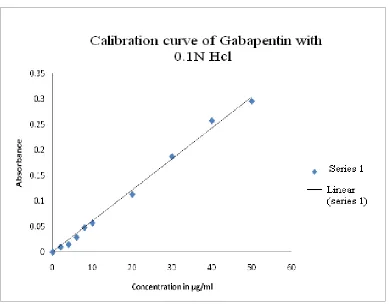
The standard calibration curve of drug in 0.1 N HCl depicted as Fig.2.
The data of absorbance was shown in Table 8. The data had correlation
coefficient of 0.9995 and the equation of regressed line depicted as eq.1
Y= 0.006 X + 0.0026, R²= 0.9986.
Accurately weigh one hundred mg of Gabapentin was dissolved
in 100 ml volumetric flask and dissolved in 20ml of methanol. Then the
above solution was further diluted up to 100ml with 6.8phosphate buffer.
The resulting solution of 10ml was taken and diluted up to 100ml to give a
stock solution of 100µg/ml with 6.8phosphate buffer to get drug
concentration of 2,4 ,6,8 ,10,20, 30, 40, 50µg/ml. The absorbances of the
solutions were measured against 6.8phosphate buffer as a blank at 270nm
using double beam UV visible spectrophotometer. The plot of absorbance
v/s concentration (µg/ml) was plotted and data was subjected to weighed
linear regression analysis in Microsoft excel®
Observation
The standard calibration curve of drug in phosphate buffer pH 6.8
depicted as Fig.3. The data of absorbance was shown in Table 9. The data
had correlation coefficient of 0.9993 and the equation of regressed line
depicted as eq.3
Y= 0.006 X + 0.0042, R²= 0.9963.
Table No.8
Calibration curve of Gabapentin in 0.1 N HCl at 270nm.
Sample No Concentration (µg/ml) Absorbance (nm)
1. 0 0
3. 4 0.015
4. 6 0.029
5. 8 0.048
6. 10 0.057
7. 20 0.113
8. 30 0.187
9. 40 0.257
[image:67.612.121.493.63.301.2]10. 50 0.295
Figure No.2
Table No.9
Calibration curve of Gabapentin with 6.8 phosphate buffer at 270nm. Sample No Concentration (µg/ml) Absorbance (nm)
1. 0 0
2. 2 0.018
3. 4 0.030
4. 6 0.041
5. 8 0.054
6. 10 0.059
7. 20 0.116
9. 40 0.246
[image:69.612.106.497.66.127.2]10. 50 0.307
Figure No.3