Original Research Article.
Prevalence and Risk Factors of Diabetic Foot among Type 2 Diabetic
Patients Attending Diabetic Center in Al-Noor Specialist Hospital in
Makkah Al-Mukarramah, Saudi Arabia
Faizah Atiah Allah Al-Ghamdi
Alshatea Primary Health Care, Ministry of Health, Jeddah, Saudi Arabia.
ABSTRACT
Background: Diabetic foot complications remain a major
problem among patients with diabetes and the health care system. Identification of the risk factors related to the development of diabetic foot is essential in order to develop strategies for avoiding the expected deterioration in the quality of life following amputation. However, in Saudi Arabia, limited data are available on the risk factors for DF.
Objectives: To determine prevalence and associated risk factors of diabetic foot among type 2 diabetic patient attending diabetic center at Alnoor specialist hospital in Makkah Al-Mukarramah, June, 2013.
Methods: This study is a cross- sectional study including a representative sample of type 2 diabetic patients who attending the diabetic center, Alnoor specialist hospital in Makkah. Data were collected through two tools; checklist: including information that was accessed through the patient’s medical file registry and patient themselves. It included: treatment of diabetes, last reading of HbA1c and fasting blood glucose, lipid profile, peripheral neuropathy, peripheral vascular diseases, evidence of chronic renal disease, retinopathy, ischaemic heart disease, stroke and hypertension. Interview questionnaire: It included information about patient`s age, gender, nationality, marital status, level of education, Body Mass Index (calculated from the height and weight), smoking history, duration of diabetes, family history of diabetes and previous DF or amputation.
Results: The study included 300 type 2 diabetic patients. Their age ranged between 20 and 85 years with a mean±SD of 51.6±11.3 years. Males represent 70.3% of the sample. The prevalence of diabetic foot among them was 33%. Compared to Saudi diabetic patients, non-Saudis were less likely to develop DF (OR=0.24; 95%CI:0.07-0.76, p=0.015). As opposed to illiterate patients, those with secondary school and university educational level were at lower significant risk for developing DF (OR=0.10; 95%CI: 0.03-0.40, p=0.001 and OR=0.11; 95%CI:0.03-0.45, p=0.002 respectively). Patients who had family history of diabetic foot were at almost
four folded risk for developing DF as compared to those without such history (OR=3.70; 95%CI:1.13-12.12, p=0.031). Similarly, patients who had history of peripheral neuropathy were at almost four-folded risk for developing DF as compared to those without such history (OR=3.90; 95%CI:1.77-8.57, p=0.001). Taking always/often compliance with diabetic diet regimen as a reference category, patients who sometimes, rarely or never compliant with it were at significantly higher risk for developing DF (OR=3.48; 95%CI:1.09-14.28, p=0.002, OR=3.99; 95%CI:1.66-9.28 and OR=8.38; 95%CI:3.26-19.33, p=0.049 respectively). Compared to patients who had less than one year of diabetes, those having diabetes for a period ranged between one anfd five years were at significantly lower risk for developing DF (OR=0.43; 95%CI:0.29-0.91, p=0.001) whereas those having a duration of diabetes of more than ten years were at almost 8-folded risk for developing DF (OR=7.67; 95%CI:2.06-16.29, p=0.001).
Conclusions: Diabetic foot is a common health problem among patients with type 2 diabetes attended the diabetic center of Alnoor hospital, Makkah which can lead to high cost for the health care system.
Keywords: Diabetic Foot; Peripheral Neuropathy; Prevalence; Risk Factors; Saudi Arabia.
*Correspondence to:
Faizah Atiah Allah Al-Ghamdi,
Family Medicine Senior Registrar, Alshatea Primary Health Care,
Ministry of Health, Jeddah,, Saudi Arabia.
Article History:
Received: 11-11-2017, Revised: 28-11-2017, Accepted: 20-12-2017
Access this article online Website:
www.ijmrp.com
Quick Response code
DOI:
10.21276/ijmrp.2018.4.1.016
INTRODUCTION
The Kingdom of Saudi Arabia (KSA) is rapidly developing country with a change that influenced the lifestyle of the people towards urbanization, particularly over the past 3 decades. Previous surveys from KSA suggested that diabetes is present in epidemic
proportions throughout the country with exceedingly high rates concentrated in urban areas.1 In Saudi Arabia (2004), the overall
prevalence of DM in adults in KSA was 23.7%.2 Diabetic
diabetes and the health care system. The interest to manage diabetic foot problems is sub-optimal for many factors shared by patients themselves, the community, health care professionals and policy makers.3 Diabetic foot (DF) is defined as a
full-thickness penetration of the dermis of the foot in a person with diabetes. Studies suggest that 2.5% of diabetic patients develop DF each year, and 15% of them develop DF during their life.4 In
Saudi Arabia, DF was prevalent in 13.5% of the diabetic patients referred to the nephrology clinic,5 and 7.7% of the patients
undergoing chronic hemodialysis.6 Diabetic foot is the most
frequent cause of hospitalization for the patients with diabetes, representing up to 25% of all diabetic hospital admissions.7 Also, it
is the most common cause of non-traumatic lower limb amputation,8 and precedes 85% of the cases.4 The mortality rate
is higher in the patients with DF, and represents approximately twice the number of diabetic patients without DF.8
The majority of the DF patients have retinopathy, representing 90%, while 88.1% of them have coronary arterial diseases, 85% have nephropathy, and only 70% of DF patients have neuropathy.9 The development of DF is significantly associated
with the severity of neuropathy, high levels of hemoglobin A1c (HbA1c), high levels of blood sugar, and history of amputation.10,11
On the other hand, some studies stated that there is no significant increase of new DF development for the patients with vascular diseases, renal diseases, smoking, alcohol consumption, and low socioeconomic status.12 Targeting patients who are at high risk of
developing DF may constitute a cost-effective strategy in controlling progression to end stage complications.
Foot examination and risk categorization were among the least concerning examination by most of the physicians dealing with diabetes in the developing countries. In a cross sectional study conducted in Gurayat province. Saudi Arabia among primary care physicians to evaluate the current referral system between the diabetic center and the primary health care centers, only 3 referral forms (from a total of 215 forms) contained data about foot examination.13 In KSA, DFUs continue to be an important cause of
morbidity and resulted in an amputation rate of 19%.14
Neuropathy and vasculaopathy were the main determinant risk factors for the occurrence of diabetic foot. Loss of protective sensation stands behind many of diabetic foot ulcers. It is clear from the literature that peripheral neuropathy is highly prevalent in people with diabetes in tropical countries, at levels similar to those found in developed countries and there are data to suggest that the prevalence of peripheral vascular disease tends to be lower in developing tropical countries compared to most developed countries.15 Poor glycemic control is considered one of the poor
predictors of diabetic foot lesions. Qari and Akbar reported that 79% (27/34) of their studied patients were uncontrolled.16
Observational studies in type 2 diabetes have shown that these increased risks are related to the degree of glycaemic control.17,18
Findings from randomized trials in diabetes have confirmed that improving glycaemic control lowers the risk of microvascular complications.19-21 Prospective epidemiological studies, on the
other hand, have suggested the presence of a graded relationship between level of glycaemia and lower extremity amputation (LEA),18,22 but individual studies did not have adequate power to
estimate the magnitude of this association precisely.
In the West, various reports are available on the risk factors related to the complications of diabetes in order to develop
strategies for avoiding the expected deterioration in the quality of life following amputation.23-25 However, in the Arab world
generally, and in Saudi Arabia particularly, limited data are available on the risk factors for DF.
This study aimed to evaluate diabetic foot among type 2 diabetic patient attending diabetic center at Alnoor specialist hospital in Makkah Al-Mukarramah 2013.
SUBJECTS AND METHODS
A cross-sectional study was carried out among type 2 diabetic patients attending diabetic center of Alnoor hospital, Makkak Almukarramah city, Saudi Arabia throughout the year 2013. Makkah Al-Mukarramah is the holy capital located in the western region of the Kingdom of Saudi Arabia (KSA). Total population in Makkah Al-Mukarramah city in the last statistics in 2010 is around 1,675,368. 26 Al-noor Specialist Hospital is a 550-bedded referral
teaching hospital delivering tertiary care throughout the Makkah region of Saudi Arabia.
The total number of type 2 diabetic patients attending diabetic center, Alnoor specialist hospital, Makkah Al-Mukarramah throughout a year is approximately 5000 patients. The sample size was calculated by using the single proportion equation in Raosoft software package, the required sample size is 289 type 2 diabetic patients at 95% confidence intervals (expected frequency 15%,4 margin of error accepted was 4%. The sample was
increased to 320 to compensate for drop out. All legible type 2 diabetic patients from both genders and all nationalities, were invited to participate in the study till the sample size completed.
Data were collected through two tools:
1. Checklist: including information that was accessed through the patient’s medical file registry and patient themselves. It included: treatment of diabetes, last reading of HbA1c and fasting blood glucose, lipid profile, peripheral neuropathy, Peripheral vascular diseases, evidence of chronic renal disease, retinopathy, ischaemic heart disease, stroke, hypertension.
2. Interview Questionnaire: It included information about patient`s age, gender, nationality, marital status, level of education, Body Mass Index (calculated from the height and weight), smoking history, duration of diabetes, family history of diabetes and previous DF or amputation.
Peripheral neuropathy was considered to be present if there was a history of numbness in the foot, absence of the pain in the foot, or altered fine touch sensation, and proprioception.27 Peripheral
vascular disease was defined as the presence of ischemic symptoms such as, or a combination of, intermittent claudication, absence of pedial pulse, arterial occlusion, or decreased blood circulation to the foot on Doplar study.28 A history of chronic renal
diseases, retinopathy, IHD, stroke, and hypertension were considered to be present according to the doctor’s diagnosis. The quality of diabetic control was classified according to the average HbA1c of the last 2 readings. An average HbA1c <6.5 will be considered as good control, while an average HbA1c >6.5 was considered to be poor control.29
Obesity (‘total obesity’) was defined as a body mass index (BMI) of 30 kg/m2 or greater. For some analyses, obesity is further
nature and purpose of study. Their files were reviewed to fill in the required information in the accompanied checklist.Written permission from the Joint program of Family and Community Medicine was obtained. Permission from authorities in Alnoor specialist hospital was obtained in order to facilitate the conduction of research. Individual verbal consent is a prerequisite for data collection. Data were entered to a personal computer and analyzed by using Statistical Package for the Social sciences (SPSS) program version 20. Categorical variables were presented as frequencies and percentages whereas continuous variables were presented as mean and standard deviation (SD). Chi square
test was applied to test for the association and/or difference between categorical variables. Fisher exact test was applied instead of chi-square in case of small frequencies. Multiple associations were evaluated in multiple logistic regression models based on the backward stepwise selection. This process allowed the estimation of the strength of the association between each independent variable and the dependent variable taking into account the potential confounding effects of the other independent variables. An adjusted odds ratio with 95% CI that did not include 1.0 was considered significant. The significance level of P value was set at 0.05.
Table 1: Personal characteristics of type 2 diabetes mellitus (n=300)
Variables Categories Frequency Percentage
Age (years) 20-30
31-40 41-50 51-60 >60 Mean ±SD
11 40 76 112
61
3.7 13.3 25.3 37.3 20.3
51.6±11.3
Gender Male
Female
211 89
70.3 29.7
Nationality Saudi
Non-Saudi
254 46
84.7 15.3
Marital status Married
Single Widowed Divorced
241 21 17 21
80.3 7.0 5.7 7.0
Number of children (n=279) No
≤5
6-10 >10
12 117 113 37
4.3 41.9 40.5 13.3
Family hosting One
> one Nothing
221 46 33
73.7 15.3 11.0
Family member working in health field Yes
No Don`t know
57 201
42
19.0 67.0 14.0
Place of residence Rural
Urban
36 264
12.0 88.0
Type of residence Private
Governmental Rented
135 4 161
45.0 1.3 53.7
Job status Working
Not working
199 101
66.3 33.7
Income (SR/month) <3000
3000-5000 5001-10000 10001-15000 >15000
77 53 93 61 16
25.7 17.7 31.0 20.3 5.3
Highest educational level Illiterate
Primary Intermediate Secondary University Post-graduate
39 18 39 100 101 3
Table 2: Medical characteristics of type 2 diabetes mellitus (n=300)
Variables Categories Frequency Percentage
Duration of diabetes (years) <1
1-5 6-10 >10
18 108
99 75
6.0 36.0 33.0 25.0
Diabetic therapy Diet regimen
Oral hypoglycemic Insulin
Insulin +Oral hypoglycemics
12 208
29 51
4.0 69.3
9.7 17.0
Satisfaction with diabetic therapy Very satisfied
Somewhat satisfied Neutral
Somewhat dissatisfied Very dissatisfied
16 79 69 82 54
5.3 26.3 23.0 27.4 18.0 Compliance with diabetic diet regimen Always
Often Sometimes Rarely Never
5 87 94 66 48
1.7 29.0 31.3 22.0 16.0
Family history of diabetes mellitus Yes
No
175 125
58.3 41.7
Family history of diabetic foot Yes
No
38 262
12.7 87.3
Figure 1: Prevalence of diabetic foot among type 2 diabetic patients, Diabetic Center, Alnoor specialist hospital, Makkah Al-Mukarramah, 2013
RESULTS
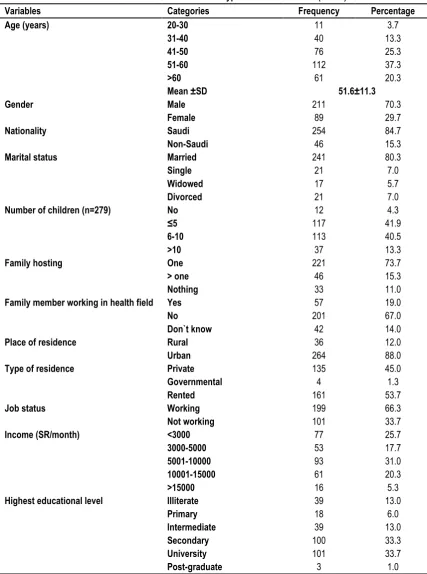
The study included 300 type 2 diabetic patients out of 320 recruited for inclusion in the study giving a response rate of 93.8%. Table 1 presents their personal characteristics. Their age ranged between 20 and 85 years with a mean±SD of 51.6±11.3 years. Males represent 70.3% of the sample. Most of them (84.7%) were Saudis and married (80.3%). Among those having children, 41.9% had 5 or less whereas 13.3% had more than 10 children. Almost three-quarters of them (73.7%) were hosting only one family. Almost fifth of them (19%) had a family member working in health field. Majority of them (88%) resided urban areas and more than half of them (53.7%) had rented houses. Almost
two-thirds of them (66.3%) were working and 31% of them earned between 5001 and 10000 SR/month. Almost a third of them (34.7%) were at least university graduated whereas 13% were illiterate. Most of patients were obese (82.9%), regardless severity of obesity. Morbid obesity was reported among 8.3% of type 2 diabetic patients.
Table 2 summarizes the medical characteristics of type 2 diabetic patients. The duration of diabetes ranged between one and five years among 36% of them and between 6 and 10 years among 33% while it exceeds 10 years among 25% of them. Almost two thirds of them (69.3%) were treated by oral hypoglycemic whereas 17% were treated by a combination of insulin and oral
99, 33.0%
hypoglycemic tablets. Only 5.3% of them reported that they were very satisfied with diabetic therapy compared to18% were very dissatisfied. Only 1.7% of diabetic patients were always compliant with diabetic diet regimen compared to 16% were never compliant with it. More than half of them (58.3%) had family history of DM and only 12.7% had family history of DF.
From figure 1, it is evident that the prevalence of diabetic foot among type 2 diabetic patients, Diabetic Center, Alnoor specialist hospital, Makkah Al-Mukarramah, 2013 was 33%. The prevalence of other diabetic complications, other than DF among them was 33.7%. Regarding the level of HbA1c%, it was normal (<7%) among only 4 patients (1.3%).
Table 3: Co-morbidity and complications among type 2 diabetic patients (n=300)
Variables Categories Frequency Percentage
Peripheral neuropathy Yes
No
110 190
36.7 63.3
Peripheral vascular disease Yes
No
27 273
9.0 91.0
Chronic renal disease Yes
No
39 261
13.0 87.0
Retinopathy Yes
No
110 190
36.7 63.3
Ischemic heart diseases Yes
No
71 229
23.7 76.3
Stroke Yes
No
14 286
4.7 95.3
Hypertension Yes
No
188 112
62.7 37.3
Table 4: Lipid profile among type 2 diabetic patients (n=300)
Variables Categories Frequency Percentage
Triglycerides (mg/dl) <150
≥150
47 253
15.7 84.3
Total cholesterol (mg/dl) <200
≥200
16 284
5.3 94.7
HDL cholesterol (mg/dl) (n=299) <40
≥40
189 110
63.2 36.8
LDL cholesterol (mg/dl) (n=299) <100
≥100
4 295
1.3 98.7
Table 5: Social and habitual characteristics of type 2 diabetes mellitus (n=300)
Variables Categories Frequency Percentage
Family support in DM management Always
Often Sometimes Rarely Never
15 76 110
49 50
5.0 25.3 36.7 16.3 16.7
History of social stress Yes
No
275 25
91.7 8.3
History of current smoking Yes
No Ex-smoker
145 103 52
48.4 34.3 17.3
History of practicing regular exercise Always
Often Sometimes Rarely Never
1 18 119
60 102
0.3 6.0 39.7 20.0 34.0
From table 3, it is shown that peripheral neuropathy and retinopathy were reported among almost a third of type 2 diabetic patients (36.7%). Almost two-thirds of patients were hypertensive patients (62.7%) and a fourth had ischemic heart diseases (23.7%). Chronic renal diseases, peripheral vascular diseases and stroke were reported among 13%, 9% and 4.7% of the patients, respectively.
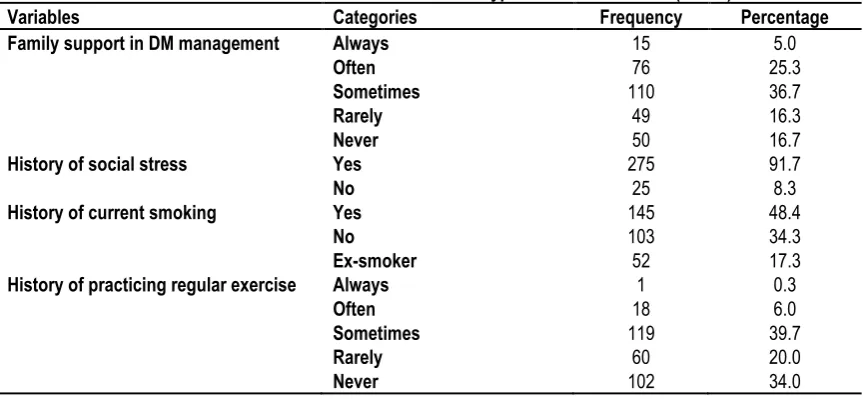
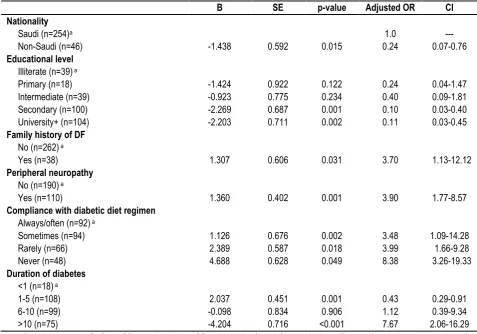
by 25.3% of them whereas it was described as rarely or never existed by 16.3% and 16.7% of them, respectively. History of social stress was reported by majority of patients (91.7%). Almost half of them (48.4%) were current smokers and only 34.3% were non-smokers. Regarding practicing of physical exercise, only one patient (0.3%) practices it always compared to 34% never practiced it. Multivariate logistic regression analysis revealed that compared to Saudi diabetic patients, non-Saudis were less likely to develop DF (OR=0.24; 95%CI: 0.07-0.76, p=0.015). As opposed to illiterate patients, those with secondary school and
university educational level were at lower significant risk for developing DF (OR=0.10; 95%CI: 0.03-0.40, p=0.001 and OR=0.11; 95%CI:0.03-0.45, p=0.002 respectively). Patients who had family history of diabetic foot were at almost four-folded risk for developing DF as compared to those without such history
(OR=3.70; 95%CI:1.13-12.12, p=0.031). Similarly, patients who had history of peripheral neuropathy were at almost four-folded risk for developing DF as compared to those without such history (OR=3.90; 95%CI:1.77-8.57, p=0.001). Taking always/often compliance with diabetic diet regimen as a reference category, patients who sometimes, rarely or never compliant with it were at significantly higher risk for developing DF (OR=3.48; 95%CI:1.09-14.28, p=0.002, OR=3.99; 95%CI:1.66-9.28 and OR=8.38; 95%CI:3.26-19.33, p=0.049 respectively). Compared to patients who had less than one year of diabetes, those having diabetes for a period ranged between one and five years were at significantly lower risk for developing DF (OR=0.43; 95%CI: 0.29-0.91, p=0.001) whereas those having a duration of diabetes of more than ten years were at almost 8-folded risk for developing DF (OR=7.67; 95%CI: 2.06-16.29, p=0.001). (Table 6)
Table 6: Predictors of diabetic foot: Results of multivariate logistic regression analysis.
B SE p-value Adjusted OR CI
Nationality Saudi (n=254)a
Non-Saudi (n=46) -1.438 0.592 0.015
1.0 0.24
--- 0.07-0.76
Educational level
Illiterate (n=39) a
Primary (n=18) Intermediate (n=39) Secondary (n=100) University+ (n=104)
-1.424 -0.923 -2.269 -2.203
0.922 0.775 0.687 0.711
0.122 0.234 0.001 0.002
0.24 0.40 0.10 0.11
0.04-1.47 0.09-1.81 0.03-0.40 0.03-0.45
Family history of DF
No (n=262) a
Yes (n=38) 1.307 0.606 0.031 3.70 1.13-12.12
Peripheral neuropathy
No (n=190) a
Yes (n=110) 1.360 0.402 0.001 3.90 1.77-8.57
Compliance with diabetic diet regimen
Always/often (n=92) a
Sometimes (n=94) Rarely (n=66) Never (n=48)
1.126 2.389 4.688
0.676 0.587 0.628
0.002 0.018 0.049
3.48 3.99 8.38
1.09-14.28 1.66-9.28 3.26-19.33
Duration of diabetes <1 (n=18) a
1-5 (n=108) 6-10 (n=99) >10 (n=75)
2.037 -0.098 -4.204
0.451 0.834 0.716
0.001 0.906 <0.001
0.43 1.12 7.67
0.29-0.91 0.39-9.34 2.06-16.29
a: reference category; B: Slop; SE: standard error; OR: odds ratio; CI: confidence interval; Terms of marital status, number of
children, family hosting, type of residence, job status, income, other diabetic complications, diabetic therapy, satisfaction with diabetic therapy family history of DM, family support, practicing exercise, chronic renal diseases, retinopathy, IHD, stroke & hypertension were removed from the final logistic regression model (insignificant)
DISCUSSION
As proved elsewhere, our results, clearly demonstrated that DM eventually led to chronic complications, including peripheral neuropathy (PN) and peripheral vascular diseases (PVS). It is known that PVD and PN are potential risk factors for foot complications. Indeed, with the high prevalence rates of DM in the KSA population and the high rates of PN and to lesser extent PVD among patients which has been revealed in this study, it is vital to investigate for diabetes foot complications in our community.
The results of this study showed that the overall prevalence of PN was 36.7%, which was higher than the equivalent rates reported in other populations29-33 and comparable to what has been reported
in UAE (39%).7 Comparatively, the rate revealed for PVD (9%) in
our population was far lower than that reported in other populations34-36 and close to what had been reported in UAE
(12%).7 The high prevalence of PN compared with the relatively
been reported in a study conducted in UAE.7 They attributed this
to methodological biases for diagnosing neuropathy and/or PVS as the symptom scores may be less reliable due to their subjectivity.
Regarding the prevalence of diabetic foot, it was 33% in the present study among type 2 diabetic patients which is higher than those reported elsewhere in Saudi Arabia. DF was prevalent in 13.5% of the diabetic patients referred to the nephrology clinic,5
and 7.7% of the patients undergoing chronic hemodialysis.6 A
review of the records of 1010 diabetic patients seen at King Khalid University Hospital, Riyadh, revealed an overall prevalence of 10.4% for diabetic foot lesions.37 In addition, this rate is higher
than those reported outside the kingdom as diabetic foot ulcer prevalence was 4.6%, sensory neuropathy 14.9%, lower limb ischemia 7.5%, and amputation 1.7% among patients attending the National Center for Diabetes, Endocrinology, and Genetics (Amman, Jordan).38 One thousand
seven hundred and eighty eight patients with diabetes mellitus were screened and 82 (4.6%) were found to have foot ulcers in patients with both type 1 and 2 diabetes mellitus in a clinic-based setting in Kenya.39 In a cohort of patients presented to the
outpatient diabetes clinic at Mansoura University Specialized Medical Hospital, Egypt, the prevalence of active or past foot ulceration was 1.2% and 5.7% respectively. Monofilament insensitivity was found in 124 patients (10.2%). Only 38 patients (3.1%) had absent foot pulses. They found dry skin in 544 patients (44.6%), calluses in 69 (5.7%), tinea pedis in 532 (43.6%) and thick nails in 215 (17.6%); 61.6% of patients used inappropriate footwear and 93.8% received no prior foot education.
This high prevalence observed in the present study could be attributed to two main factors; first the criteria for definition of diabetic foot in the present study could be a reason for inclusion of more patients. Second, we recruited our patients from those attended diabetic center of Alnoor hospital rather than general diabetic population or those attended outpatient follow up clinics. The multivariate logistic regression analysis further showed that the main risk factors for foot complications were Saudi nationality, poor level of education, increased disease duration (<10years), presence of family history of diabetic foot, peripheral neuropathy and being not compliant with diabetic diet regimen. The results are consistent with findings elsewhere.7,31,40-44 It is known that the risk
of ulcers and lower limb amputations is higher in patients with diabetes duration of 10 years or more and those have other cardiovascular, retinal or renal complications.45 In bivariate
analysis, other diabetic complications were significantly associated with DF. However, this disappeared in multivariate analysis.
Compliance is the cornerstone of diabetes management. In the present study, non-compliance with diabetic diet regimen was proved to be a significant risk factor for DF in both bivariate and multivariate analyses. While non-compliance with physical exercise was proved to be a risk factor in bivariate analysis. However, it disappeared in multivariate analysis. A study conducted in Abha, KSA revealed a suboptimal compliance with all aspects, especially with diet and exercise among diabetic patients.46A study done in Al-Hasa region, Saudi Arabia, indicated
that there was a high rate of non-compliance among diabetic patients.47 Poor compliance regarding diet and exercise has also
been found in studies done in UAE,48 Palestine,49 and Egypt.50,51
These findings could indicate that health care professionals may be failing to emphasize the importance of dietary and lifestyle changes along with medication and follow up advice.
Nationality was found to be a significant determinant of DF in the present study. The same has been reported in UAE.7 In a study
conducted in Abha, they reported that Saudis were more compliant with medication, while non-Saudis were more compliant with exercise and diet regimen.46 This could be due to more
availability of resources to Saudis, along with a sedentary lifestyle. Educational status was a significant determinant of compliance and consequently it plays an important role in protection against DF. In the present study, higher educated patients were less likely to develop DF. In another Saudi study, they reported that university educated patients had more compliance with diabetic regimen than other groups.52 This finding emphasized the fact that
level of education played a role in better understanding of the doctors’ advice.
Among limitations of the current study, the design used in this study depends on completeness and accuracy of the documentation in patient files. Therefore, the type of data included in the abstraction form was limited to the information present in these files. However, the inclusion of a relatively large sample size was taken to compensate for this limitation. Also, the prevalence of DR might be overestimated, based on the accuracy of diagnosis of DF and its reporting.
In conclusion, diabetic foot is a common health problem among patients with type 2 diabetes attended the diabetic center of Alnoor hospital, Makkah which can lead to high cost for the health care system. Regular screening for foot complications is recommended to all diabetic patients in view of the high rates reported for PN and PVD in the population.
REFERENCES
1. Alzaid A. Time to declare war on diabetes. Annals of Saudi Medicine 1997; 17: 154-155.
2. Al-Nozha MM, Al-Maatouq MA, Al-Mazrou YY, Al-Harthi SS, Arafah MR, Khalil MZ, et al. Diabetes mellitus in Saudi Arabia. Saudi Med J 2004; 25 (11): 1603-1610
3. Al-Wahbi AM. The diabetic foot in the Arab world. Saudi Med J 2006; 27 (2): 147-153
4. Shojaiefard A, Khorgami Z, Larijani B. Independent risk factorsfor amputation in diabetic foot. Int J Diabetes Dev Ctries 2008;28: 32-37.
5. Al-Wakeel JS, Hammad D, Al Suwaida A, Mitwalli AH, MemonNA, Sulimani F. Microvascular and macrovascular complications in diabetic nephropathy patients referred to nephrology clinic. Saudi J Kidney Dis Transpl 2009; 20: 77-85. 6. Qari FA. Profile of Diabetic Patients with End-stage Renal Failure Requiring Dialysis Treatment at the King Abdulaziz University Hospital, Jeddah. Saudi J Kidney Dis Transpl 2002;13: 199-202.
7. Al-Maskari F, El-Sadig M. Prevalence of risk factors for diabetic foot complications. BMC Fam Pract 2007 10; 8: 59.
8. Hunt D. Diabetes: foot ulcers and amputations. Clin Evid 2009; 1: 1-16.
10. Al-Mahroos F, Al-Roomi K. Diabetic neuropathy, foot ulceration, peripheral vascular disease and potential risk factors among patients with diabetes in Bahrain: a nationwide primary care diabetes clinic-based study. Ann Saudi Med 2007; 27: 25-31. 11. Crawford F, Inkster M, Kleijnen J, Fahey T. Predicting foot ulcers in patients with diabetes: a systematic review and metaanalysis. Q J M 2007; 100: 65-86.
12. Abbott CA, Carrington AL, Ashe H, Bath S, Every LC, Griffiths J, et al. The North-West Diabetes Foot Care Study: incidence of, and risk factors for, new diabetic foot ulceration in a community-based patient cohort. Diabet Med 2002; 19:377-384.
13. Almoutaz A Ahmed. Is it a proper referral form. MEJFM. 2007; 5(1):27-30.
14. Al-Tawfiq JA, Johndrow JA. Presentation and outcome of diabetic foot ulcers in Saudi Arabian patients. Advances in skin & wound care 2009; 22(3):119-2
15. Unwin N. The diabetic foot in the developing world. Diabetes Metab Res Rev 2008; 24(suppl 1): S31-S33.
16. Qari FA, Akbar D. Diabetic foot: presentation and treatment. Saudi Med J 2007; 21(5):443-446.
17. Selvin E, Marinopoulos S, Berkenblit G et al. Metaanalysis: glycosylated hemoglobin and cardiovascular disease in diabetes mellitus. Ann Intern Med 2004; 141:421–431.
18. Stratton IM, Adler AI, Neil HA et al. Association of glycaemia with macrovascular and microvascular complications of type 2 diabetes (UKPDS 35): prospective observational study. BMJ 2000; 321:405–412.
19. UK Prospective Diabetes Study (UKPDS) Group (1998) Intensive blood-glucose control with sulphonylureas or insulin compared with conventional treatment and risk of complications in patients with type 2 diabetes (UKPDS 33). Lancet 1998; 352: 837–53.
20. The Diabetes Control and Complications Trial Research Group. The effect of intensive treatment of diabetes on the development and progression of long-term complications in insulin - dependent diabetes mellitus. N Engl J Med 1993; 329: 977–86. 21. Shichiri M, Kishikawa H, Ohkubo Y, Wake N. Long-term results of the Kumamoto Study on optimal diabetes control in type 2 diabetic patients. Diabetes Care 2000; 23(Suppl 2):B21–B29. 22. Moss SE, Klein R, Klein BE. Long-term incidence oflower-extremity amputations in a diabetic population. Arch Fam Med 1996; 5:391–398.
23. Chaturvedi N, Stevens LK, Fuller JH, Lee ET, Lu M. Risk factors, ethnic differences and mortality associated with lower-extremity gangrene and amputation in diabetes. The WHO Multinational Study of Vascular Disease in Diabetes. Diabetologia 2001; 44:S65-S71.
24. Markowitz JS, Gutterman EM, Magee G, Margolis DJ. Risk of amputation in patients with diabetic foot ulcers: a claims-based study. Wound Repair Regen 2006; 14: 11-17.
25. Carlson T, Reed JF 3rd. A case-control study of the risk factors for toe amputation in a diabetic population. Int J Low Extrem Wounds 2003; 2: 19-21.
26. Holy Makkah Municipality website, Makkah statistics, available at: http://www.holymakkah.gov.sa/Makka/Statistics.aspx.
27. Meijer JW, Smit AJ, Sonderen EV, Groothoff JW, Eisma WH, Links TP. Symptom scoring systems to diagnose distal polyneuropathy in diabetes: the Diabetic Neuropathy Symptom score. Diabet Med 2002; 19: 962-965.
28. Novo S. Classification, epidemiology, risk factors, and natural history of peripheral arterial disease. Diabetes Obes Metab 2002; 4: S1-S6.
29. Jbour AS, Jarrah NS, Radaideh AM, Shegem NS, Bader IM, Batieha AM, et al. Prevalence and predictors of diabetic foot syndrome in type 2 diabetes mellitus in Jordan. Saudi Med J2003; 24: 761-764.
30. Global Lower Extremity Amputation Study Group. Epidemiology of lower extremity amputation in centres in Europe, North America and East Asia. The Global Lower Extremity Amputation Study Group. Br J Surg 2000; 87(3):328-37
31. Barbosa AP, Medina JL, Ramos EP, Barros HP. Prevalence and risk factors of clinical diabetic polyneuropathy in a Portuguese primary health care population. Diabetes Metab 2001; 27(4 Pt1):496-502.
32. Shaw JE, Hodge AM, de Courten M, Dowse GK, Gareeboo H, Tuomilehto J, et al. Diabetic neuropathy in Mauritius: prevalence and risk factors. Diabetes Res Clin Pract 1998; 42(2):131-9. 33. Fedele D, Comi G, Coscelli C, Cucinotta D, Feldman EL, Ghirlanda G, et al. A multicenter study on the prevalence of diabetic neuropathy in Italy. Italian Diabetic Neuropathy Committee. Diabetes Care 1997, 20(5):836-43.
34. Tapp RJ, Shaw JE, de Courten MP, Dunstan DW, Welborn TA, Zimmet PZ, et al. Foot complications in Type 2 diabetes: an Australian population-based study. Diabet Med2003;20(2):105-13. 35. Simmons D, Scott D, Kenealy T, Scragg R. Foot care among diabetic patients in south Auckland. N Z Med J 108(996):106-8. 1995 Mar 22.
36. Ndip EA, Tchakonte B, Mbanya JC. A study of the prevalence and risk factors of foot problems in a population of diabetic patients in cameroon. Int J Low Extrem Wounds 2006; 5(2):83-8. 37. Sulimani RA, Famuyiwa OO, Mekki MO. Pattern of diabetic foot lesions in Saudi Arabia: Experience from King Khalid University Hospital, Riyadh. Ann Saudi Med. 1991;11(1):47-50. 38. Bakri FG, Allan AH, Khader YS, Younes NA, Ajlouni KM. Prevalence of diabetic foot ulcer and itsassociated risk factors among diabetic patients in Jordan. Jordan Medical Journal 2012; 46 (2):312-18.
39. Nyamu PN, Otieno CF, Amayo EO, McLigeyo SO. Risk factors and prevalence of diabetic foot ulcers at Kenyatta National Hospital, Nairobi. East Afr Med J. 2005; 82(12 Suppl):S163-72. 40. Adler AI, Boyko EJ, Ahroni JH, Stensel V, Forsberg RC, Smith DG. Risk factors for diabetic peripheral sensory neuropathy. Results of the Seattle Prospective Diabetic Foot Study. Diabetes Care 1997; 20(7):1162-7.
41. Tesfaye S, Stevens LK et al. Prevalence of diabetic peripheral neuropathy and its relation to glycaemic control and potential risk factors: the EURODIAB IDDM Complications Study. Diabetologia 1996; 39(11):1377-84.
42. Wandell PE: Risk factors for microvascular and macrovascular complications in men and women with type 2 diabetes. Scand J Prim Health Care 1999; 17(2):116-21.
43. Cheng WY, Jiang YD, Chuang LM, Huang CN, Heng LT, Wu HP, et al. Quantitative sensory testing and risk factors of diabetic sensory neuropathy. J Neurol 1999; 246(5):394-8.
45. National Diabetes Data Group. Diabetes in America. Bethesda, MD, Department of Health and Human Services, 1995. 46. Abdul-Salam M, Siddiqui AF. Socio-demographic determinants of compliance among type 2 diabetic patients in Abha, Saudi Arabia. Journal of Clinical and Diagnostic Research. 2013 Dec; Vol-7(12): 2810-2813.
47. Khan AR, Al-Abdul Lateef ZN et al. Factors contributing to non-compliance among diabetics attending primary health centers in the Al Hasa district of Saudi Arabia. J Family Community Med. 2012 Jan; 19 (1):26-32.
48. Al-Maskari F, El-Sadig M. Prevalence of risk factors for diabetic foot complications. BMC Fam. Pract. 2007; 8:59. 49. Waleed M. Sweileh, Ola Aker, Saed Hamooz. Rate of compliance among patients with diabetes mellitus and yypertension. An-Najah Univ. J. Res. (N. Sc.). 2005; 19.
50. Ayman, S. Abd-Elhady, Abd-El-Aziz, A. El-Sadek. Degree of Compliance towards Therapeutic Tasks among Diabetic Patients Attending a Health Insurance Setting In Cairo. The Egyptian Journal of Hospital Medicine. 2007; 27: 234–44.
51. Kamel NM, Badawy YA et al. Socio-demographic determinants of management behavior of diabetic patients. Part I Behaviour of Patients in relation to management of their disease. Eastern Mediterranean Health Journal. 1999; 5(5): 967-73.
52. Abolfotouh MA, Alfaifi SA, Al-Gannas AS. Risk factors of diabetic foot in central Saudi Arabia. Saudi Med J 2011; 32 (7): 708-713.
[
Source of Support: Nil.
Conflict of Interest: None Declared.
Copyright: © the author(s) and publisher. IJMRP is an official publication of Ibn Sina Academy of Medieval Medicine & Sciences, registered in 2001 under Indian Trusts Act, 1882. This is an open access article distributed under the terms of the Creative Commons Attribution Non-commercial License, which permits unrestricted non-commercial use, distribution, and reproduction in any medium, provided the original work is properly cited.